Breaking News
MI vs RCB Live Streaming: When and Where to Watch WPL 2026 Opener Online and on TV | Cricket News


MI vs RCB Live Streaming: When and Where to Watch WPL 2026 Opener Online and on TV
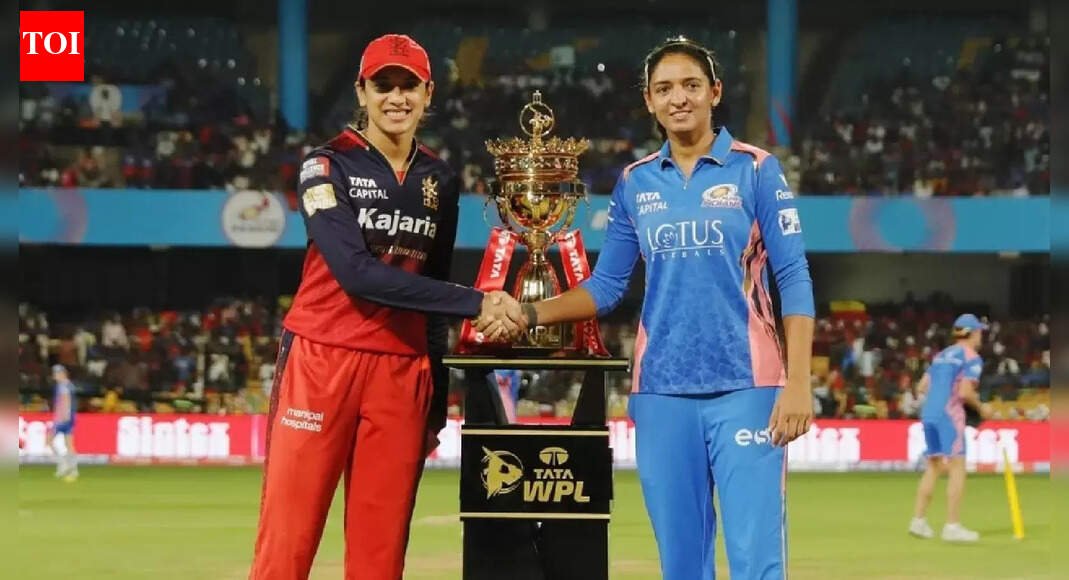
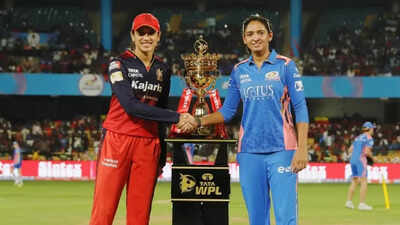
RCB’s Smriti Mandhana and MI’s Harmanpreet Kaur

Still riding high on the afterglow of their maiden ODI World Cup triumph, India’s women cricketers return to the spotlight as the fourth edition of the Women’s Premier League (WPL) gets underway on Friday. The tournament opener promises fireworks, with defending champions Mumbai Indians (MI) locking horns with Royal Challengers Bengaluru (RCB) at the DY Patil Stadium, widely regarded as the home of Indian women’s cricket.Go Beyond The Boundary with our YouTube channel. SUBSCRIBE NOW!The high-profile clash also marks the beginning of the teams’ preparations for the T20 World Cup later this year. MI, led by Harmanpreet Kaur, enter the season as clear favourites, boasting arguably the most balanced squad in the league. With world-class all-rounders like Nat Sciver-Brunt, Hayley Matthews and Amelia Kerr, Mumbai combine power, depth and experience across departments. Their strong Indian core, including Amanjot Kaur and Saika Ishaque, further adds to their title credentials.

WPL Auction 2026: Full Breakdown of Every Major Number

RCB, the 2024 champions, will look to counter MI’s dominance under the leadership of Smriti Mandhana. While the absence of Ellyse Perry is a significant blow, Mandhana’s form at the top and the presence of explosive names like Richa Ghosh, Grace Harris and Georgia Voll ensure RCB remain a serious threat. With both teams stacked with match-winners, the opener sets the tone for a fiercely competitive WPL season to be staged across Navi Mumbai and Vadodara.CLICK FOR FULL WPL COVERAGE Match Details

  • Match: Mumbai Indians vs Royal Challengers Bengaluru, Match 1
  • Date: January 9, 2026
  • Venue: Dr DY Patil Sports Academy, Navi Mumbai
  • Time: 7:30 PM IST

MI vs RCB Live Streaming & Telecast Details

  • The Women’s Premier League 2026 will be broadcast live on the Star Sports Network.
  • Live streaming of all matches will be available on the Jio Hotstar app and website.

Squads

  • Mumbai Indians: Harmanpreet Kaur (C), Nat Sciver-Brunt, Amelia Kerr, Hayley Matthews, Amanjot Kaur, Sajeevan Sajana, Shabnim Ismail, Gunalan Kulkarni, Nicola Carey, Sanskriti Gupta, Rahil Firdous, Poonam Khemnar, Triveni Vasistha, Nalla Reddy, Saika Ishaque, Milly Illingworth.
  • Royal Challengers Bengaluru: Smriti Mandhana (C), Richa Ghosh, Ellyse Perry, Lauren Bell, Pooja Vastrakar, Arundhati Reddy, Radha Yadav, Nadine de Klerk, Shreyanka Patil, Georgia Voll, Linsey Smith, Prema Rawat, Gautami Naik, Prathyoosha Kumar, Dayalan Hemalatha.


Source link

Thorium key to expanding India’s energy independent nuclear programme, says Anil Kakodkar | Mumbai News


MUMBAI: Former chairman of the Atomic Energy Commission Anil Kakodkar, and its current member, emphasised the use and importance of thorium for expanding India’s nuclear programme.Kakodkar delivered the Dr M R Srinivasan Memorial Lecture, jointly organised by the Thakur College of Engineering And Technology and the National Centre For Science Communicators, to mark the 95th birth anniversary of Dr Srinivasan. Dr Srinivasan, a pioneer of India’s nuclear energy programme, passed away on May 20, 2025. Kakodkar emphasised that if India had to become energy independent thorium was the answer. According to him, India had the largest amount of thorium globally, the world figure being six million tonnes and that of India being one million tonnes. He said the importance of thorium assumed further importance because the world figure of uranium was six to eight million tonnes, while that of India was 0.4 million tonnes. It was because of the limited amount of uranium availability that India signed the Indo-US civil nuclear agreement. “After this agreement was signed, India got global access to uranium,” he said. Kakodkar said thorium in pressurised heavy water reactors would be safer, cheaper and fuel efficient. The transistion to thorium would enable faster growth. ” Thorium will allow continuity of nuclear energy programme,” he told the large audience. Among the benefits of the use of thorium were the lower reprocessing burden, greater proliferation resistance, greater accident tolerent and more safety.


Source link

Between the staircase and the see-saw: Did PM Modi’s reluctance to call Trump cost India a trade deal?


Between the staircase and the see-saw: Did PM Modi’s reluctance to call Trump cost India a trade deal?

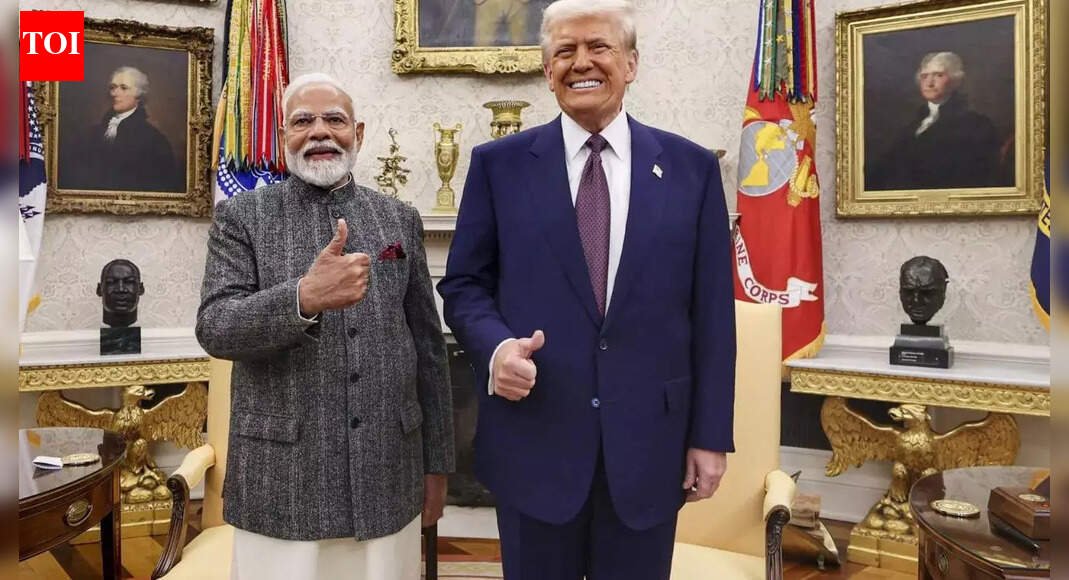
The TOI correspondent from Washington: US commerce secretary Howard Lutnick has offered a blunt and unusually personal account of why a long-anticipated US–India trade agreement failed to materialise, placing the blame squarely on timing, political hesitation in New Delhi, and what he described as President Donald Trump’s deliberately competitive approach to deal-making. Among the reasons the deal did not happen: Prime Minister Modi’s reluctance to call the US President. Speaking to the All-In podcast hosted by Sri Lankan-origin venture capitalist Chamath Palihapitiya, Lutnick said India “did not grab the opportunity the United States presented” and waited too long to conclude negotiations, only to later seek terms comparable to those secured by the United Kingdom. By then, he said, the moment had passed.

Trump Clears Russia Sanctions Bill, 500% Tariff Threat Looms As India Reworks Oil Import Strategy

At the heart of Lutnick’s explanation is what he called Trump’s “staircase” model of trade negotiations — a strategy designed to reward speed and decisiveness while penalising hesitation. Under this approach, the first country to conclude a deal receives the most favorable terms, setting a baseline that subsequent agreements must exceed. Each new deal, Lutnick said, moves “up and to the right,” making later bargains progressively more expensive or restrictive.“The first stair gets the best,” Lutnick explained. “After that, everyone says, ‘I want the UK deal.’ And the answer is no — they were first.”The United Kingdom, he said, moved quickly under a tight deadline. Lutnick recalled telling British officials they had “two Fridays” to finalise the agreement before the opportunity disappeared. Prime Minister Keir Starmer, he said, personally called Trump as the deadline approached, and the deal was concluded and publicly announced within days.India, by contrast, was given what Lutnick described as three Fridays — a “shot clock” to complete negotiations. During that window, Trump publicly signaled that India could be next, a message Lutnick said was meant to encourage urgency. But New Delhi hesitated, in part because of internal political considerations and discomfort with the optics of Prime Minister Narendra Modi personally calling Trump to seal the agreement.“I said, you’ve got to have Modi call the president,” Lutnick recounted. “They were uncomfortable doing so. Modi didn’t call.”As the deadline passed, the administration moved on. Over the following weeks, Washington announced a series of trade deals across Asia, including agreements with Indonesia, the Philippines and Vietnam. Those deals, Lutnick said, were negotiated at higher tariff and market-access levels than what India had been offered, precisely because the staircase had already moved upward.When Indian officials later returned to the table, Lutnick said, they were seeking terms that no longer existed — effectively asking for a deal “in between the UK and Vietnam,” which would have between 15 per cent and 20 per cent tariff. That, he said, was impossible.“They said, ‘But you agreed,’” Lutnick recalled. “And I said, then — not now.”Lutnick framed India’s predicament through an extended metaphor drawn from his early career as a trader, likening it to being stuck on the wrong side of a seesaw — a position where every move seems to make matters worse. In his telling, India repeatedly missed the moment when action would have paid off, while other countries stepped in and secured agreements.Despite the sharp tone, Lutnick suggested the breakdown was not the result of hostility but of misaligned timing and domestic political constraints. He acknowledged that trade negotiations are “deeply complex,” often requiring parliamentary approval and consensus-building that can slow decision-making. Still, he emphasised that the Trump administration had little patience for delay.“There are a lot of countries,” Lutnick said, “and each has its own deep internal politics. But the train doesn’t wait.”The episode underscores a broader shift in US trade policy under Trump, one that prioritises leverage, speed and visible wins over protracted negotiations. Lutnick portrayed the president as the ultimate “closer,” with himself as the “table setter” who structures deals but leaves final decisions to Trump. While Lutnick expressed confidence that the US and India would “work it out” eventually, his remarks make clear that any future agreement would come on less favorable terms than those once on offer. Trump too has not expressed any overt hostility towards India or Modi, insisting that the Prime Minister is a “great guy” and a “good friend.” But for India, the missed deal has become a cautionary tale about the cost of hesitation in a White House that sees trade not as a slow diplomatic process or a strategic subset, but as a competitive race with clear winners and losers.


Source link

Access Denied


Access Denied

You don’t have permission to access “http://www.ndtv.com/world-news/3-indians-among-crew-on-board-russian-oil-tanker-seized-by-us-10548646” on this server.

Reference #18.2ef63717.1767941118.1ad105f1

https://errors.edgesuite.net/18.2ef63717.1767941118.1ad105f1


Source link

Double-decker buses to return to city after 17 yrs | Chennai News


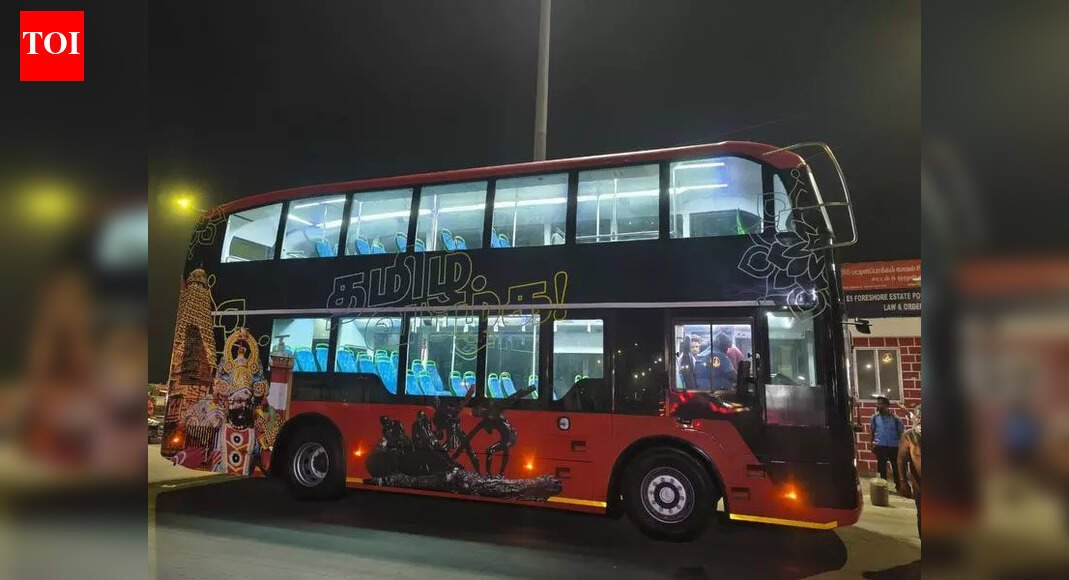
Chennai: Double-decker buses are set to make a comeback in Chennai after 17 years in a swanky, modern form, as Metropolitan Transport Corporation (MTC) invited bids to procure 20 air-conditioned electric buses, pushing forward its fleet electrification plans. The tender was floated days after a red electric double-decker bus manufactured by Switch Mobility, the electric vehicle arm of Ashok Leyland, was tested on city roads. Videos of the bus quickly went viral, sparking curiosity and nostalgia among residents.Officials said the buses will be operated only on select routes. Adequate vertical clearance and the absence of overhead obstructions such as electric cables, flyovers and signage will determine route feasibility.R Sundarapandian, joint managing director of MTC, said operations were narrowed down to two routes—A18 from Broadway to Tambaram and M-70 from Koyambedu to Broadway—both of which had the service earlier. “The operator will have to conduct a vertical clearance study to ensure there are no obstructions from wires or tree branches,” he said.The city bus operator introduced 120 electric buses as part of its larger plan to electrify its fleet. At present, MTC has a fleet strength of 3,751 with 3,563 scheduled services.Double-decker buses have a long association with the city. Introduced in the 1970s, they were phased out in the 1980s due to operational challenges. A brief comeback in 1997 on the 18A route ended in 2008.


Source link

Access Denied


Access Denied

You don’t have permission to access “http://www.ndtv.com/india-news/from-peaceful-to-screams-trinamool-mps-protest-outside-amit-shah-office-10564114” on this server.

Reference #18.2ef63717.1767942909.1ad844be

https://errors.edgesuite.net/18.2ef63717.1767942909.1ad844be


Source link

Pakistan Super League adds two teams for 2026 edition; check out the record prices and new owners


The Pakistan Super League (PSL) has officially embarked on its most ambitious chapter yet, evolving from a six-team competition into a robust eight-franchise league for the 2026 season. This expansion marks the first multi-team addition since the league’s inception, signaling a strategic shift to capture broader regional markets and boost commercial revenue.

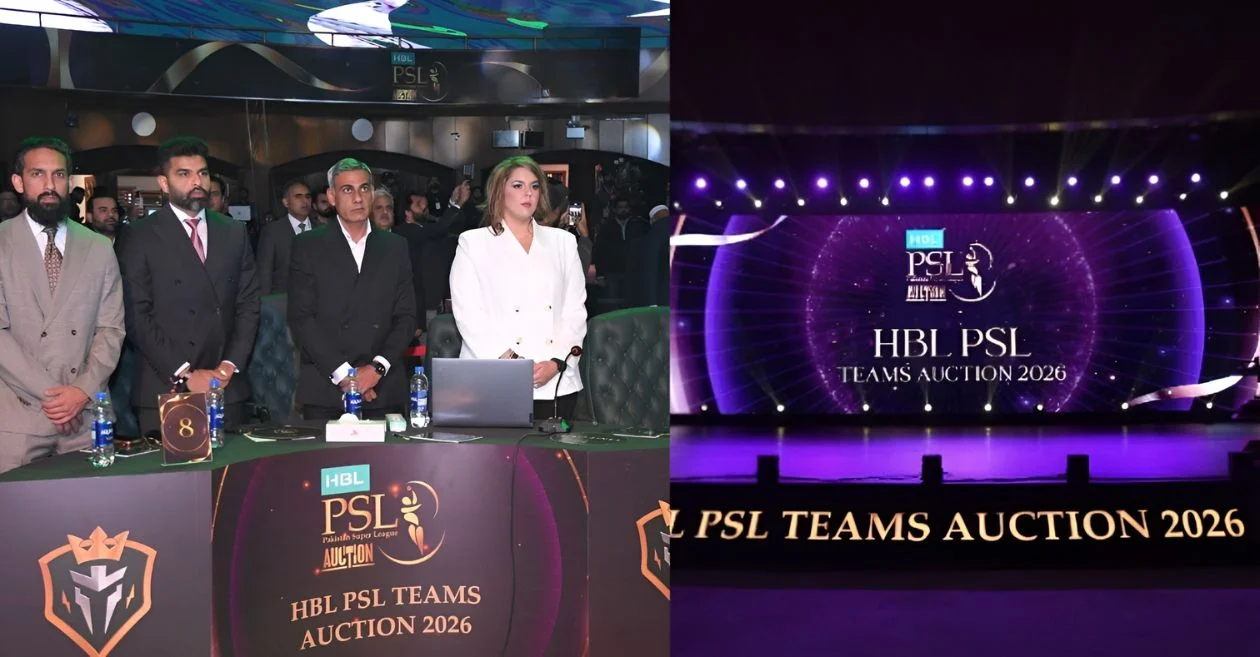
Following a high-profile auction held on January 8, 2026, at the Jinnah Convention Centre in Islamabad, the Pakistan Cricket Board (PCB) confirmed that Hyderabad and Sialkot will be the new battlegrounds for T20 cricket. The auction, overseen by PCB Chairman Mohsin Naqvi and legendary moderator Wasim Akram, saw record-breaking bids from global conglomerates and real estate giants.

PSL 2026 sees two new teams join the league; learn about the record prices and new ownerships

Hyderabad rising: FKS group secures the seventh franchise

The auction for the seventh PSL franchise witnessed an intense bidding war that eventually saw the US-based aviation and healthcare conglomerate, FKS Group, emerge victorious with a staggering bid of PKR 1.75 billion (approximately $6.2 million). Led by CEO Fawad Sarwar, who also operates the Chicago Kingsmen in Minor League Cricket, the group officially named the team Hyderabad, reviving the city’s rich cricketing legacy on a global platform.

The bidding process for this slot was particularly aggressive, starting at a base price of PKR 1.1 billion and quickly escalating as corporate heavyweights like the i2c Group pushed the valuation to nearly triple the annual fees paid by original franchises like the Lahore Qalandars. This monumental investment reflects the FKS Group’s commitment to building world-class facilities in Sindh and nurturing local talent through their existing international sports network.

During the post-auction press conference, Sarwar described the acquisition as a ‘childhood dream’ fulfilled, emphasizing that the Hyderabad franchise would serve as a beacon for street cricketers aspiring to reach the professional ranks. The PCB has lauded this high-value sale as a testament to the PSL’s growing commercial appeal, with Hyderabad’s annual fee now representing a massive jump in operational commitment. As the seventh team, Hyderabad is expected to draw a massive following from the interior Sindh region, providing a new rivalry for the Karachi Kings and adding a fresh layer of regional pride to the tournament.

“I still can’t believe [we’re owners of a PSL team]. This is a childhood dream. We all started playing street cricket and backyard cricket, practicing in front of the mirror, trying to be the next big thing. I’m very proud, and I’d like to thank everyone who put us in a position to come where we are today.” Fawad Sarwar said at a press conference.

Also READ: WPL 2026 Opening Ceremony: Date, Time, Performers and Live Streaming details

Sialkot stunner: OZ developers claim the record bid

Following the momentum of the first sale, the auction for the eighth franchise reached even loftier heights when OZ Developers, a prominent Australian-Pakistan real estate consortium, secured the Sialkot franchise for a record-shattering PKR 1.85 billion ($6.55 million). This bid officially made Sialkot the most expensive franchise in the history of the Pakistan Super League, surpassing all previous ownership records in terms of annual franchise fees.

CEO Hamza Majeed, an overseas Pakistani who has successfully led large-scale infrastructure projects abroad, stated that the decision to represent Sialkot was a tribute to the city’s global reputation as a sporting goods hub. Sialkot, which famously has its own private airport and airline, finally has a flagship cricket team to match its industrial prestige, filling a long-standing void in the PSL’s regional lineup.

The bidding for Sialkot was a clinical affair, starting at a revised base price of PKR 1.7 billion and seeing OZ Developers outlast finalists like i2c in a series of steady, high-stakes increments. The entry of Sialkot is viewed by the PCB as a “guardian” move for Pakistan cricket, ensuring that one of the country’s most fertile talent-producing regions is now directly integrated into the country’s premier domestic competition.

“God gave us the chance to be successful. As an overseas Pakistani, it’s everyone’s dream to do something for Pakistan. Cricket runs in our blood. I’m looking forward to this PSL Get ready, Sialkot. Sialkot had its own airport, its own airline. Now it’s got its cricket team. The Sialkot sports industry will be elevated by our PSL team, and we’d love to win this title in PSL XI.” Hamza Majeed, the OZ group CEO, said.

The Road to PSL 11: Expansion dynamics and the Multan Status

With the addition of Hyderabad and Sialkot, the PSL 11 season, scheduled to run from March 26 to May 3, 2026, will be the longest and most comprehensive edition of the tournament to date. The move to an eight-team format necessitates a revamped schedule that will likely include more double-headers and a longer playoff structure to accommodate the increased number of matches.

While the expansion dominated headlines, the status of the Multan Sultans remained a key point of discussion during the Islamabad auction; the PCB confirmed it would operate the Sultans directly for the 2026 season following the expiration of the previous agreement and a rift with former owner Ali Tareen. Tareen, who withdrew from the expansion bidding at the last minute, expressed his desire to re-acquire a Multan-based side when it goes up for a dedicated sale in April 2026, citing his heart remains in South Punjab.

This temporary stewardship by the PCB ensures that all eight teams will be active for the upcoming season, maintaining the league’s competitive balance while the board finalizes long-term ownership for the Multan region. Financially, the total intake of $12.75 million (INR 114.7 crore) for the two new teams has sparked comparisons with global leagues, but within the domestic context, it represents a massive surge in annual fee revenue for the PCB.

Also READ: WPL 2026 Schedule: TV channels, Live Streaming details: When and where to watch in India, Australia, US, UK & other countries | Women’s Premier League

Source link

BMC polls: Teachers, school staff seek paid rest day after election duty; cite long hours and exhaustion | Mumbai News


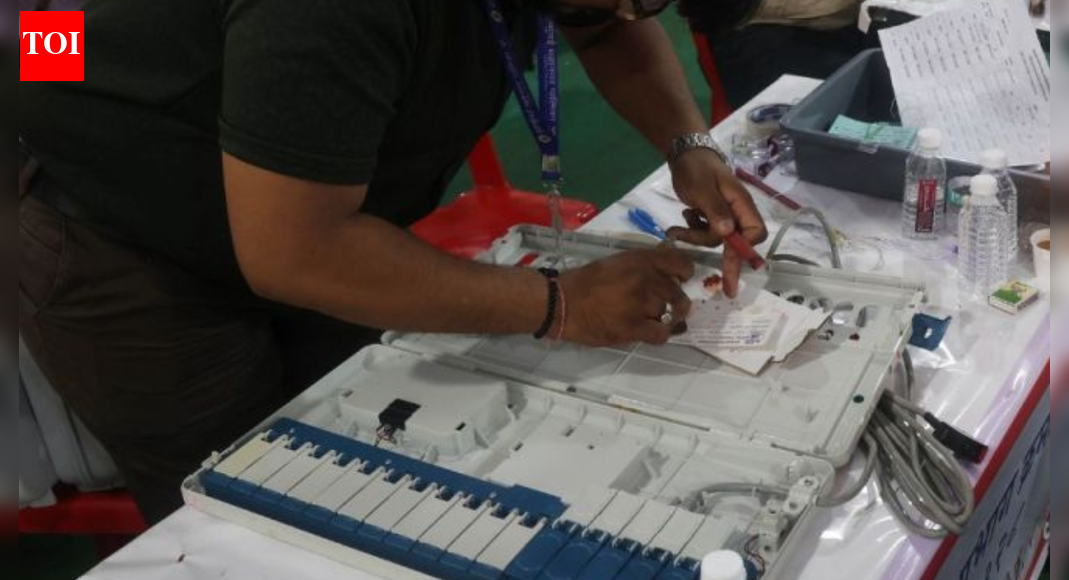
MUMBAI: Teachers and non-teaching school staff deployed on election duty have urged the state government to declare a paid rest day after polling, citing prolonged working hours, physical exhaustion and late-night travel.The Maharashtra Progressive Teachers Association (MPTA), in a representation to the chief minister, election commissioner and education minister, said that although polling officially ends at 5 pm, election-related work routinely continues well into the night. Staff are required to remain on duty until the last voter has cast their ballot, followed by sealing of EVMs, completing documentation and transporting election material to designated collection centres.As a result, many teachers and non-teaching employees work for nearly 30 to 35 hours at a stretch, but are still expected to report for regular school duties the very next day. The association also pointed out that in previous elections, a rest day is usually declared for teachers assigned election duty, and said the absence of such relief this time has added to staff distress.The issue is particularly acute in Mumbai, where many election personnel commute from distant suburban and peripheral areas such as Vasai, Virar, Mira Road, Bhayander, Kalyan, Karjat, Badlapur and Ambernath, making late-night travel unavoidable.MPTA president Tanaji Kamble said teachers often have to travel long distances and reach their designated polling stations by 5 am, while post-polling responsibilities can stretch well beyond midnight. “In effect, teachers end up working for nearly 35 hours with little or no rest. In earlier elections, a rest day was usually given, but this time even Makar Sankranti was treated as a working day for those on election duty. At least one day of rest should be granted after such near-continuous work,” he said.Supporting the demand, Dr Madhav Suryavanshi, chief coordinator of Shikshan Vikas Manch at the Yashwantrao Chavan Centre, described it as reasonable and humanitarian, and urged the state to take a positive policy decision granting a sanctioned paid rest day to all school staff deployed on election duty.


Source link

‘Instead of Mustafizur, had it been Litton Das or Soumya Sarkar, would they have done the same thing?’ – asks Ex-BCB administrator | Cricket News


'Instead of Mustafizur, had it been Litton Das or Soumya Sarkar, would they have done the same thing?' - asks Ex-BCB administrator

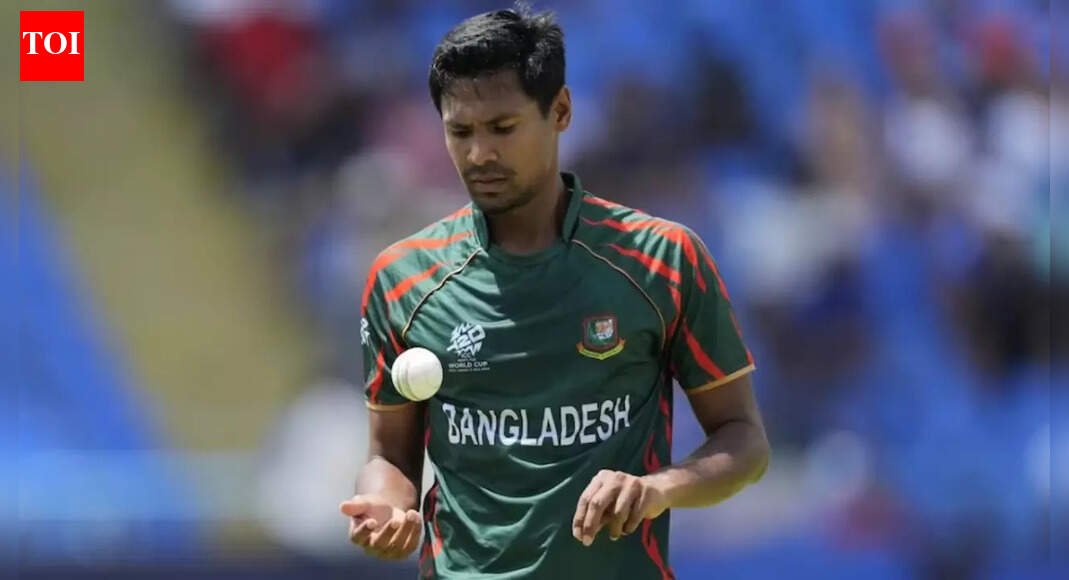
New Delhi: Former Bangladesh Cricket Board (BCB) general secretary and ex-Asian Cricket Council (ACC) CEO Syed Ashraful Haque has launched a scathing critique of political interference in cricket administration, calling the ongoing controversy involving Mustafizur Rahman and Bangladesh’s participation in the T20 World Cup “ridiculous” and “a parody”.Speaking at length on the debate surrounding Bangladesh’s matches in India and the demand for a hybrid model, Haque said the sport across the subcontinent has been “hijacked by politicians” who neither understand cricket nor its wider implications.

Bangladesh seek T20 WC match shift from India after Mustafizur Rahman’s IPL exit

“The whole cricket ecosystem in India, Bangladesh, Pakistan, everywhere has been hijacked by politicians. Just think about it. Would this ever have happened if people like Mr Jagmohan Dalmia, Mr IS Bindra, Mr Madhavrao Scindia, Mr NKP Salve or even Mr N Srinivasan were in charge? This would never have happened because they were mature people. They understood the game and they understood the implications,” Haque tells TimesofIndia.com from Kuala Lumpur.Go Beyond The Boundary with our YouTube channel. SUBSCRIBE NOW!“Now it has been hijacked completely. You have people who have never held a bat. In your case, you have Jay Shah, who has never even held a cricket bat in a competitive match.”

Our sports advisor gives a statement that Bangladesh should not go to India. Think about it. This is a World Cup event. This is not the IPL. IPL is a domestic tournament. This is an international World Cup event. You cannot come out with rash statements like this.

Syed Ashraful Haque | Ex- BCB & ACC aministrator

He didn’t hesitate from questioning the leadership in his country as well.“We have the same thing here. The government is run by people who are not politicians, nor are they experienced in sports. Our sports advisor gives a statement that Bangladesh should not go to India. Think about it. This is a World Cup event. This is not the IPL. IPL is a domestic tournament. This is an international World Cup event. You cannot come out with rash statements like this.”“Instead of Mustafizur, had it been Litton Das or Soumya Sarkar, would they have done the same thing? They wouldn’t.”Calling the controversy politically motivated, Haque said, “It is all cheap religious sentiment that politicians are playing.”Haque argued that solutions have existed in the past.

You cannot compare India-Pakistan relations with India-Bangladesh. It’s very different. India and Bangladesh are like brothers. It’s very old. India came to play Test matches in Bangladesh. BCCI played a big role in helping us getting the Test status.

Syed Ashraful Haque | Ex-BCB & ACC administrator

“This is a world event. You want all the countries in the world to play. It has happened in the past as well. Earlier, points were forfeited. Here, the tricky thing is Bangladesh is playing all matches in India. If they were playing half the matches in Sri Lanka or somewhere else, that would have sufficed.”“We could give walkovers in two matches and play the others, like England did, like West Indies did. A lot of teams did that. But now the whole hybrid thing has been done because of security reasons.”Haque described the current scenario as farcical. “If India threatens that Mustafizur is in the team, then he will be there. But our team is captained by Litton Das. Isn’t this a parody?”The veteran administrator blamed election-driven politics for the impasse.

We have a sports advisor who has never held a cricket bat. He is a teacher and a revolutionary. What does he care about cricket? He is after publicity and he is there only for the next two months

Syed Ashraful Haque | Ex-BCB & ACC administrator

“It’s what happens when immature politicians take over. You have elections in West Bengal and Assam, so you play this political card to get votes. And you put an international event of World Cup stature into difficulty.”Haque said shifting matches to Sri Lanka would solve the issue.“If they can move it to Sri Lanka, it’s a win-win situation for everybody. If they can’t, I doubt whether Bangladesh will come to India to play this.”Asked about the financial implications for Bangladesh, if the ICC doesn’t listen to BCB’s demand and Bangladesh government refuses to send the team to India.“Maybe it will cost us financially. But national pride is much bigger than financial losses.”

Poll

Do you agree that political interference in cricket administration is detrimental to the sport?

Drawing a comparison with past crises, Haque recalled the aftermath of the 2008 Mumbai attacks, when he was at helm of ACC.“You cannot compare India-Pakistan relations with India-Bangladesh. It’s very different. India and Bangladesh are like brothers. It’s very old. India came to play Test matches in Bangladesh. BCCI played a big role in helping us getting the Test status.”He added, “The 2008 was much more delicate than this, and we got out of it. We got out of it because we had good, sane people as administrators of all three bodies.”“Now we don’t have that. We have a sports advisor who has never held a cricket bat. He is a teacher and a revolutionary. What does he care about cricket? He is after publicity and he is there only for the next two months.”


Source link

Union Budget 2026: Building India’s financial security architecture


Union Budget 2026: Building India’s financial security architecture
For a “Viksit Bharat” to endure, national success must be measured by the financial resilience of Indian families. (AI image)

By Sumit Madan The Union Budget 2026 arrives at a defining juncture of India’s ascent, where progress must be measured not merely by the velocity of our growth, but by the resilience of the nation’s foundation. Over the past few decades, India has undergone a historic transformation, scaling from a $1 trillion economy to a global powerhouse through massive, sustained investments in physical and digital infrastructure. Yet, as the nation targets the $5 trillion milestone and beyond, we must recognize that swift economic expansion without robust household financial security is inherently fragile. As India enters this next chapter of growth, life insurance must be positioned as a national priority and a strategic pillar that transforms prosperity into permanence and shields the aspirations of a billion-plus people from the headwinds of uncertainty.The Resilience Gap: Why Household Security Matters NowFor a “Viksit Bharat” to endure, national success must be measured by the financial resilience of Indian families. However, recent data signals a dual vulnerability where according to the Economic Survey 2024-25, India’s gross domestic savings as a percentage of GDP fell from 31.2% in 2021-22 to 30.2% in 2022-23 (First Revised Estimate). This decline in savings is mirrored by a stagnation in financial protection, leaving households exposed. This downward shift is more than just a statistic, and signals an impending vulnerability in the nation’s financial foundation. To address this, the Union Budget 2026 must serve as a critical demand-side engine to rebuild this foundation through a two-pronged fiscal strategy. First, to bolster overall household savings, a comprehensive overhaul of Sections 80C, 80CCC, and 80CCD is required, featuring higher, inflation-indexed limits.As it stands, India’s total sum assured as a percentage of GDP stands at just 24%, a stark contrast to Singapore (332%) or Malaysia (153%). Consequently, India’s protection gap remains the highest in the region at 83%, compared to just 55% in Singapore.Hence, to specifically bridge this protection gap, the government should introduce a dedicated tax deduction for pure term insurance premiums, independent of the current ₹1.5 lakh limit of Section 80C. By establishing an exclusive incentive similar to Section 80D’s treatment of health insurance, the Budget can elevate life protection from a discretionary expense to a fundamental pillar of financial planning, ensuring a secure household base for a developed India.India’s Impending Challenge: Ageing with DignityDespite rising disposable incomes, a significant share of Indian households, especially those dependent on a single breadwinner, remains one income shock or medical emergency away from financial distress. The need for reform is made more urgent by a looming demographic shift: India is set to age faster than it grows rich. By 2050, one in five Indians will be over the age of 60, yet retirement preparedness continues to lag behind aspiration. Addressing India’s impending demographic and financial challenges requires moving beyond fragmented, legacy frameworks. The Union Budget 2026 should create a dedicated tax bucket for annuities and pension products, recognizing retirement planning as a non-negotiable social necessity. Crucially, this reform must create parity with the National Pension System (NPS), ensuring that all pension-linked instruments benefit from a level playing field to encourage long-term disciplined saving.Central to this overhaul should be the inclusion of annuities under Section 10(10D) as tax-exempt instruments. Currently, Section 10(10D) explicitly excludes retirement payouts, treating annuity income as taxable at the individual’s slab rate, which creates a significant deterrent to retirement security. Granting tax-free status to these payouts will ensure protection remains meaningful in an evolving economy. By aligning the annuity tax treatment, India’s financial architecture can evolve into a credible social security platform, shifting life insurance from a discretionary purchase to an essential safety net. From Reform to Execution: Making Policy Work for HouseholdsTo deliver these targeted solutions at scale, the regulatory framework must undergo a commensurate evolution. The government’s recognition of life insurance as an essential service under the GST framework is a progressive measure that serves as a vital precursor to the sector’s overarching reform. This fiscal alignment effectively anchors the Sabka Bima Sabki Raksha Bill 2025, which has already established the strategic direction for universal coverage. To translate this vision into impact, the upcoming Union Budget 2026 must now provide a concrete execution roadmap, formalizing the transition toward 100% FDI while ensuring robust governance remains paramount.Furthermore, there is significant anticipation for a clear roadmap regarding Composite Licensing. By enabling a “one-stop-shop” model integrating life and health insurance, the industry can lower distribution costs and simplify the consumer journey, fostering a more holistic protection ecosystem for all Indians.Today, it is time to recognize life insurance as a vital fiscal stabilizer, with the Union Budget 2026 representing an opportunity to institutionalize financial security as a national priority. Together, policymakers and the industry can ensure that by 2047, every Indian household stands protected.(Sumit Madan is Managing Director and CEO, Axis Max Life Insurance)


Source link