Breaking News
Mobiles to appliances: Samsung set for AI play


Mobiles to appliances: Samsung set for AI play

LAS VEGAS: With artificial intelligence the dominant theme of the world’s largest consumer electronics show, CES 2026 , Samsung Electronics unveiled its ‘Companion to AI living’ vision at The First Look, its preview event.“Samsung is building a more unified, more personal experience across mobile, visual display, home appliances and services,” said T M Roh, CEO and head of Samsung’s device eXperience division. “The voice assistant is even more intelligent, offering context-aware systems working seamlessly across our devices. For AI to become a true companion, trust and privacy are essential. Our security platforms set the standard and are at the heart of all our experiences.S W Yong, president and head of the visual display business at Samsung, and Sukhmani Mohta, chief marketing and partnerships officer for the visual display business at Samsung Electronics America, said Samsung has built a full AI TV lineup that introduces new ways for users to interact with their screens.Cheolgi Kim, executive VP and head of the digital appliances division at Samsung Electronics, and Elizabeth Anderson, head of integrated marketing for the division at Samsung Electronics America, outlined Samsung’s shift from providing home appliances to developing true home companions that reduce the stress of daily chores. Kim announced that as of Dec 2025, SmartThings serves more than 430 million users globally.(The writer was in Las Vegas at the invitation of Samsung)


Source link

Kolkata Rapid & Blitz Chess: Five-time world champion Viswanathan Anand, American Hans Niemann share lead after Day 1 | Chess News


Kolkata Rapid & Blitz Chess: Five-time world champion Viswanathan Anand, American Hans Niemann share lead after Day 1
Viswanathan Anand in Kolkata (Photo by Lennart Ootes)

KOLKATA: Five-time world champion Viswanathan Anand showed he remains a force to reckon with in a field increasingly dominated by youngsters, notching up two wins to emerge joint leader with 2.5 points after three rounds of the Rapid games on the opening day of the Tata Steel Chess India here on Wednesday.The 56-year-old Anand, who is returning to the tournament after six years, defeated the highly-rated American Grandmaster Wesley So by putting him in serious time trouble in the opening round to earn a full point.

GM Raunak Sadhwani Exclusive: Becoming Grandmaster at 13, hidden costs of the game, and more #chess

He then split the point with China’s Wei Yi before beating country-mate Aravindh Chithambaram in round three.Anand is sharing the lead with American GM Hans Niemann, who overcame former World Rapid champion Volodar Murzin in the opening round, drew with India’s Vidit Gujrathi and then beat young R. Praggnanandhaa, who got into a time crunch to lose the match.In a classic game between two of India’s top players, Gujrathi made a strong statement with the black pieces, dominating Arjun Erigaisi — the double bronze medallist at the World Rapid and Blitz championships in Doha recently — to seal the win with a rare knight-and-bishop checkmate.The second round saw Praggnanandhaa control both wings before breaking through on the kingside to defeat Erigaisi.However, it was Anand, the Blitz champion here six year back, who held centrestage. In round three, the player-cum-administrator once again showed his class, using clever rook play to defeat Aravindh with black.In the women’s section, American International Master (IM) Carissa Yip emerged as the sole leader with 2.5 points out of three.Among the Indian players, Vantika Agrawal was impressive, scoring two out of three points and standing as the top performer from the country. She showed excellent endgame technique in round one, converting a material advantage to defeat R. Vaishali.The event began with a dramatic 114-move marathon draw between Dronavalli Harika and Women’s World Cup winner Divya Deshmukh.Round two featured three decisive games, highlighted by Stavroula Tsolakidou’s victory over Divya in a complex struggle. Kateryna Lagno outplayed Vantika in a knight versus bishop endgame, while Aleksandra Goryachkina took advantage of an exposed king to score her first win against Vaishali.In Round 3, Carissa claimed the lead by calmly converting an early exchange advantage against Goryachkina. Nana Dzagnidze prevailed in a dramatic queen endgame against Tsolakidou, while Vantika capped the day with an aggressive win over Harika.

Standings after Day 1:

Open category (Indians unless mentioned): 2.5 points – Viswanathan Anand, Hans Niemann (USA). 2 points: Wesley So (USA), Vidit Gujrathi. 1.5 points: Nihal Sarin, R Praggnnanandhaa. 1 point: Wei Yi (CHN), Arjun Erigaisi. 0.5 points: Aravindh Chithambaram, Volodar Murzin (RUS).Women: 2.5 points: Carissa Yip (USA). 2 points: Nana Dzagnidze (GEO), Kateryna Lagno (RUS), Vantika Agarwal. 1.5 points: Aleksandra Goryachkina (RUS), Rakshitta Ravi. 1 point: D Harika, Stavroula Tsolakidou (GRE), Divya Deshmukh. 0.5 points: R Vaishali.


Source link

I-T department flags crypto risks, opposes entry | India News


I-T department flags crypto risks, opposes entry

NEW DELHI: The income tax department on Wednesday flagged major risks associated with virtual digital assets (VDA), such as cryptocurrency, joining the Reserve Bank of India in opposing the entry of these instruments.In a presentation to the parliamentary standing committee of finance, the tax authorities flagged as to how anonymous, borderless and near-instant value transfer made it possible to move funds through a system without regulated financial intermediaries, a person familiar with the discussions told TOI.Besides, offshore exchanges, private wallets and decentralised platforms made it very difficult for the authorities to detect taxable income and also made the holdings opaque since the beneficial owners were not easily known.Jurisdictional limitations with offshore VDA activity were also flagged as multiple jurisdictions may be involved, with little ability to check flows, making verification and recovery of tax dues virtually impossible. Although there have been efforts in recent months on sharing of information, it remains difficult, inhibiting the ability of tax officials to undertake proper assessment and reconstruction of transaction chains.India is among a group of countries which have so far been reluctant to allow cryptocurrency and stablecoin despite intense lobbying and pressure from some govts. Earlier, on multiple occasions, RBI had flagged its concerns, including the lack of any underlying asset making it a risky bet for investors, and even enforcement agencies are wary especially due to VDAs being instruments that can be used for money laundering and terror financing.The tax department said that since crypto platforms operate overseas, enforcement action may be tough, including issuing summons, or TDS collection. Many of the exchanges are also unregistered with the Financial Intelligence Unit and are outside the ambit of the tax department.Indian tax authorities have sought to build in safeguards, including TDS, to track beneficiaries and have also mandated registration of entities dealing in crypto and other VDAs.


Source link

‘Diamond exports to US halve as 50% tariffs bite’


‘Diamond exports to US halve as 50% tariffs bite’

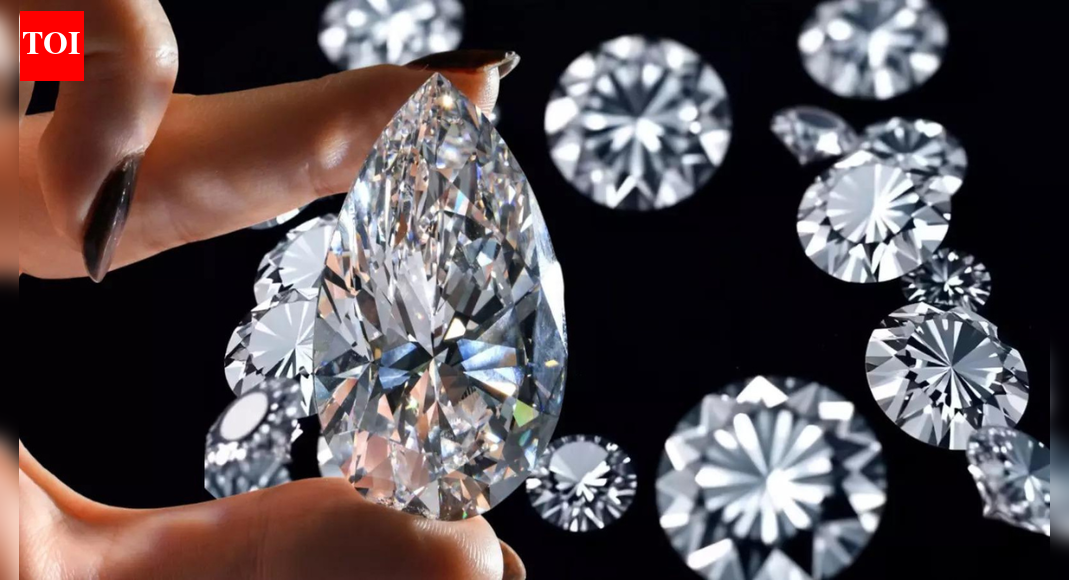
MUMBAI: Export of diamonds from India to the US has nearly halved after President Trump slapped a 50% tariff on the country, plunging the industry into a crisis, said Al Cook, CEO at De Beers Group, adding that there hasn’t been a large scale “relocation” of Indian industry to other countries, though, as stakeholders are hopeful of a trade deal between India and the US.“We just need to see the right time, right place and right politics for that (deal) to happen. The good news is that the US has announced that once there’s a deal, there will be a 0% tariff on natural diamonds. People do expect tariffs to end,” Cook said here.London-based De Beers Group which owns the Forevermark diamond brand supplies rough diamonds to several Indian partners who then cut and polish them here and export to the US. “The US put 50% tariffs on India and that’s challenging for the diamond industry because if you have got 90% of the world’s diamonds cut and polished in India and 50% of the world’s diamonds bought in America, that’s a huge market,” said Cook who met commerce minister Piyush Goyal.In 2024, total diamond exports from India stood at about $13 billion of which about 50% was shipped to the US, Cook said.A growing economy, expanding middle class which is willing to spen d more helped by higher disposable incomes, a new crop of high earning consumers and India’s love for jewellery will allow the country to retain its place as the second largest market for natural diamond consumption after the US, said Cook as the company launched its largest global flagship Forevermark store in Mumbai this week.Demand for natural diamonds grew 11% in India last year which overtook China where a declining rate of marriages—down by about 50% over the last decade has crippled sales of (diamond) engagement rings, said Cook. “In the short-term, we see stronger growth in India. It is just one of the most important countries on the earth right now and certainly, one of the most important countries in the diamond industry,” said Cook under whose watch, the company is localising offerings for Indian shoppers. More women are now buying diamond jewellery for themselves and taking to everyday pieces, a trend Forevermark is betting on with a target to close 2026 with 25 stores.


Source link

Mastiii 4 faces legal scrutiny as content creator flags similarities with viral reel, Delhi HC issues notice to producers |


Mastiii 4 faces legal scrutiny as content creator flags similarities with viral reel, Delhi HC issues notice to producers

Mastiii 4 has come under legal scrutiny after popular content creator Ashish Sharma approached the Delhi High Court, flagging similarities between a comedy sequence in the film and his viral Instagram reel that clocked over 11 million views.As per Live Law, Ashish contended that a scene in the film closely resembles his reel titled “Shaq Karne Ka Nateeja”, which he shared in January 2024. In his petition, the creator claimed that the idea, narrative flow, character dynamics, and punchline in the film mirror his original content, raising concerns over unauthorised use.In his plea, Ashish Sharma has sought a permanent injunction, monetary relief, and a detailed statement of profits, arguing that his work was used without permission or acknowledgement.The plea comes at a crucial time, with the film reportedly nearing its OTT release.

Court issues notice, allows makers to respond

Justice Tushar Rao Gedela, hearing the matter, took note of the film’s release timeline while considering the request for urgent relief. The court issued a notice to the producers, observing that they should be given an opportunity to place their response on record before any interim directions are passed.The judge noted that a short notice period was appropriate given the circumstances. The matter is expected to be taken up next on January 13, 2026.

Riteish Deshmukh, Aftab Shivdasani & Vivek Oberoi Bring Laughter to Mastiii 4 Song Launch

Mixed theatrical response for the film

Released theatrically on November 21, 2025, Mastiii 4 witnessed a modest box-office performance, earning approximately Rs 19.25 crore worldwide, according to Sacnilk.The legal development unfolds just days ahead of the film’s expected digital premiere on January 16.Mastiii 4 brings back the franchise’s core trio — Riteish Deshmukh, Vivek Oberoi, and Aftab Shivdasani — alongside Arshad Warsi, Tusshar Kapoor, Nargis Fakhri, Elnaaz Norouzi, Ruhi Singh, Shreya Sharma, and Shaad Randhawa. Produced by A Jhunhunwala, Ekta Kapoor, and Indra Kumar, the Masti franchise has previously seen success with Grand Masti and Great Grand Masti.


Source link

‘People live in homes, not corporations’: Trump to ban large investors from buying single‑family homes in US


'People live in homes, not corporations': Trump to ban large investors from buying single‑family homes in US

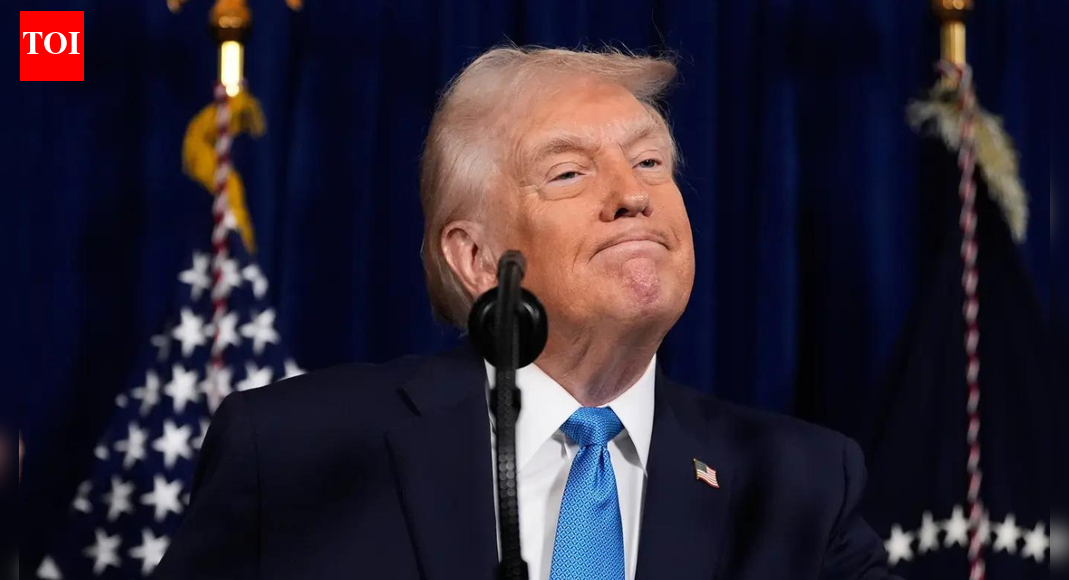
US President Donald Trump announced on Truth Social that he is taking steps to ban large institutional investors from buying single‑family homes in US. The MAGA chief said he will also ask Congress to codify the measure and plans to discuss broader housing and affordability proposals during his upcoming speech at the World Economic Forum in Davos.“For a very long time, buying and owning a home was considered the pinnacle of the American Dream. It was the reward for working hard, and doing the right thing, but now, because of the Record High Inflation caused by Joe Biden and the Democrats in Congress, that American Dream is increasingly out of reach for far too many people, especially younger Americans,” Trump posted.Trump and some conservative supporters argue that large investors buying homes for rent have reduced availability for ordinary buyers and pushed up prices and rents. This has frustrated potential homebuyers, particularly younger Americans trying to enter the market.Large institutional investors include private equity firms, real estate investment trusts, and major asset managers such as Blackstone and Cerberus that purchase residential properties to lease. Trump’s announcement targets these large players.The market reacted quickly to this update, with shares in companies heavily involved in single‑family rentals, including Blackstone, Invitation Homes, and American Homes 4 Rent, falling sharply after the announcement. Details on how the ban would be enforced have not yet been clarified.Despite the focus on institutional investors, data suggests they own a relatively small portion of the market. Blackstone has reported that such investors currently own about 0.5 percent of all single‑family homes in the US. According to a 2022 report from the US Government Accountability Office, investors owning 1,000 or more properties accounted for only 2–3 per cent of single‑family rental homes. Most investor-owned properties are held by smaller landlords who own between one and five homes, representing around 85 per cent of investor-owned homes.According to data provided by Newswire and Housingwire, Investor activity varies across the country and over time. Reports indicate that investors purchased nearly one-third of all single-family residential properties sold in mid‑2025, influenced by high mortgage rates and affordability challenges for traditional buyers. Out-of-state investors also remain active, accounting for around 5.56 per cent of single-family home purchases in 2025.The GOP leader said the ban is intended to make housing more affordable and protect the idea that “people live in homes, not corporations.”


Source link

At 7%, mfg expected to stay robust


At 7%, mfg expected to stay robust

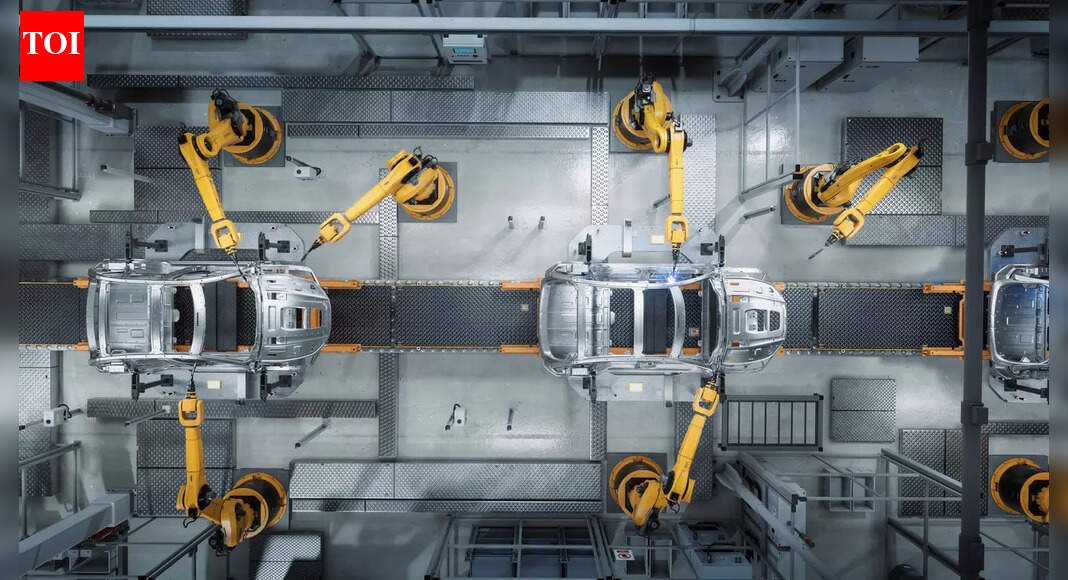
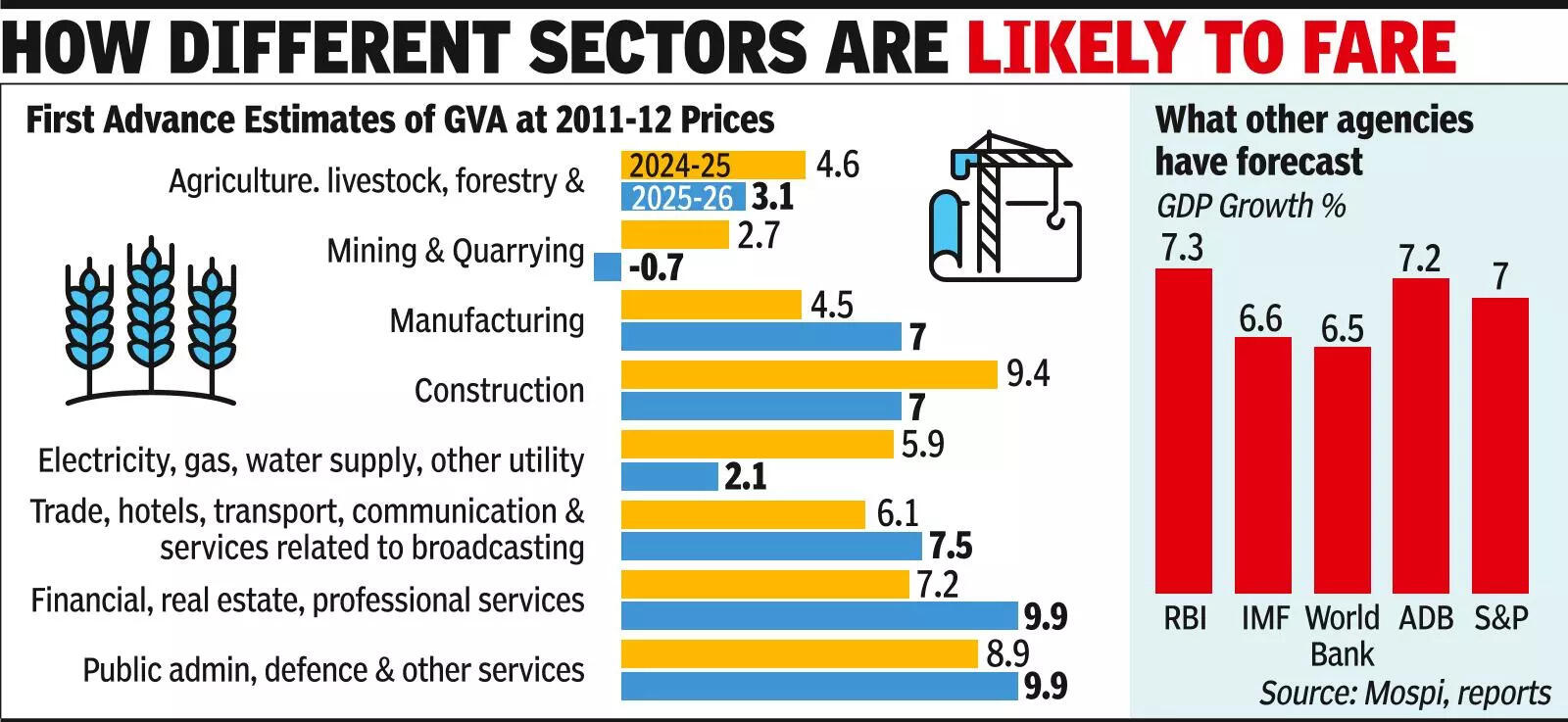
The manufacturing sector remained robust and is estimated to grow by 7% in 2025-26 as opposed to 4.5% last fiscal while construction continued to be healthy at a growth rate of 7%, compared with an increase of 9.4% in 2024-25. Nominal GDP, which accounts for inflation, is estimated to grow by 8% in 2025-26.The crucial farm sector is estimated to grow by 3.1% in 2025-26, slower than the 4.6% registered last year but still robust. The mining sector is seen contracting by 0.7% in 2025-26 compared with a growth of 2.7% last year.

At 7%, manufacturing is  expected to stay robust

“The first advance estimates of the GDP in general show a flat aggregate demand in FY26. The heads that have positively contributed include govt consumption with a growth of 5.2% in real terms. Exports have also held the forte with positive growth of 6.4%. Private consumption growth was tad lower at 7.0%, possibly due to slowdown in the agriculture sector. Per capita consumption registered a growth of 6.1%,” said Soumya Kanti Ghosh, group chief economic adviser at State Bank of India.“Uptick in govt consumption, traction in services has held up the demand in FY26, cushioning the impact of external headwinds,” Ghosh said in a note.


Source link

Access Denied


Access Denied

You don’t have permission to access “http://www.ndtv.com/education/aibe-20-result-2025-declared-69-21-per-cent-pass-download-link-here-10471113” on this server.

Reference #18.4cfdd417.1767821864.54ac4644

https://errors.edgesuite.net/18.4cfdd417.1767821864.54ac4644


Source link

Auto players seek EV protection in EU pact


Auto players seek EV protection in EU pact

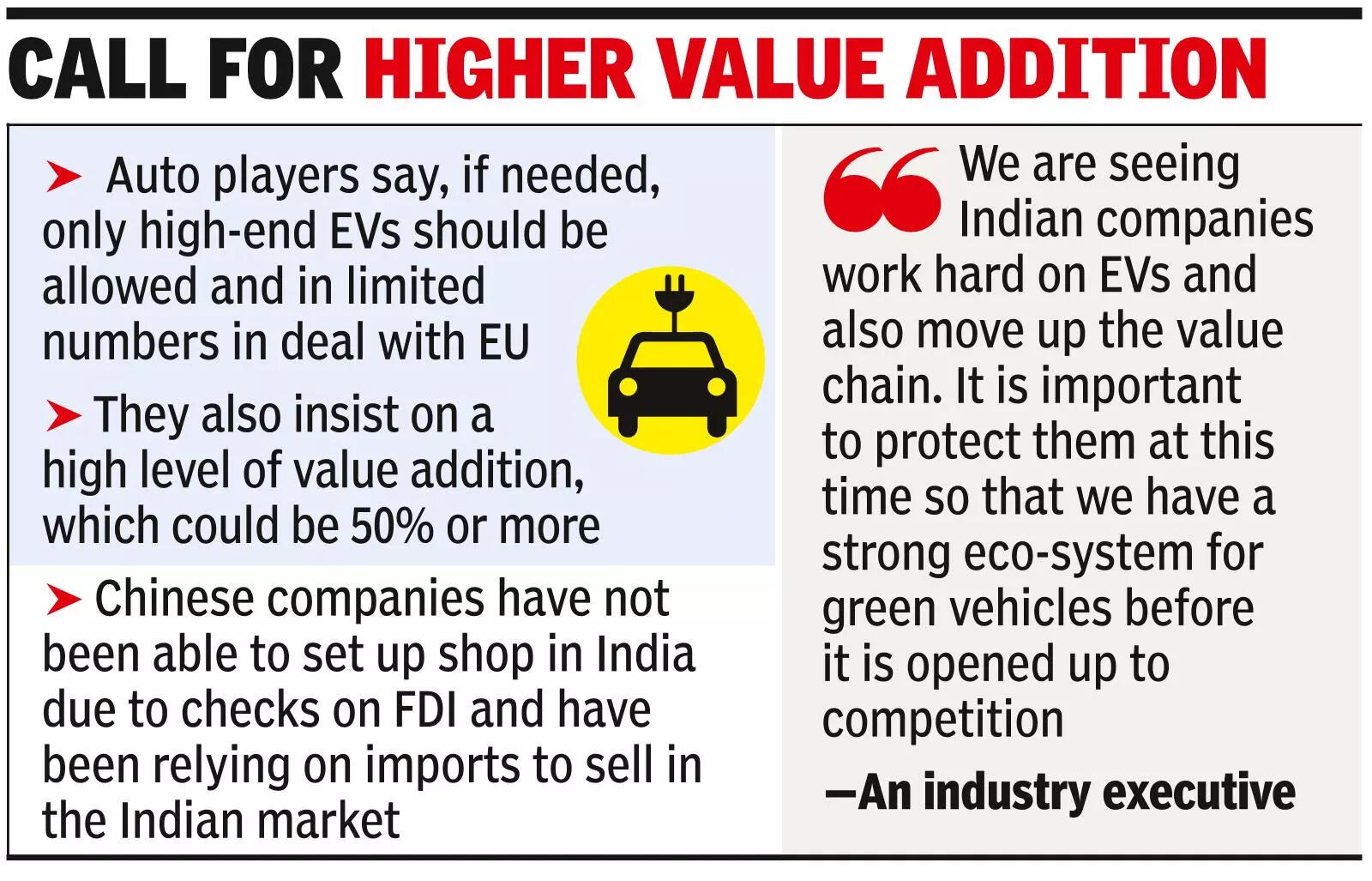
NEW DELHI: As Indian and European negotiators enter what is seen to be the final rounds of talks for a free trade agreement (FTA), the local auto companies are wary of Chinese electric vehicles using European Union as a gateway to enter the domestic market at lower duty.As a result, auto players have demanded that govt negotiate the agreement in such as way that if needed, only high-end EVs are allowed into the country — with a high price threshold and in limited numbers — while also insisting on a high level of value addition, which could be 50% or more, people familiar with the deliberations told TOI.In the trade deal with the UK, which was signed last year, govt had protected EVs but the auto industry also realises that there are trade-offs to be made for a successful outcome.

Auto players seek EV protection in EU pact

Industry Wary Of Chinese Cos Bringing Electrics Through Europe At A Lower Duty

The worry, however, is bigger in the case of the European Union, given that some of the Chinese companies could use member nations of the trading bloc to locate assembly units and ship goods to India, taking advantage of the duty benefit. Some of the Chinese companies that have been hovering around have not been able to set up shop in the country due to checks on FDI and have been relying on imports to sell in the Indian market. “We are seeing Indian companies work hard on EVs and also move up the value chain. It is important to protect them at this time so that we have a strong eco-system for green vehicles before it is opened up to competition,” said an industry executive.Several global majors, including the likes of Tesla, Mercedes and BMW, are expected to use their European facilities to export EVs to India, a large and growing market where govt is also keen on a transition to green fuel. While Tesla is currently importing its vehicles from its Chinese facilities, lower tariffs are expected to result in shipments from the company’s German plant.The Centre’s scheme to allow lower duty import of electric cars for a limited period in return for investment in three years saw no response as some of the auto makers are waiting for the trade deals to be finalised before taking a call on their plans.

Goyal seeks investment from Liechtenstein

Commerce and industry minister Piyush Goyal on Wednesday invited companies from Liechtenstein to invest in India and leverage the India-EFTA trade pact to expand their presence. India and the four-nation European bloc EFTA implemented a free trade agreement last year. Goyal was in Liechtenstein for an official visit.


Source link

GDP data shows govt set to meet fiscal deficit target


GDP data shows govt set to meet fiscal deficit target

NEW DELHI: The latest GDP numbers at current prices will provide cheer to the Centre’s budget team as it works out the final set of numbers for the current fiscal year.Although the nominal GDP growth was estimated at 8%, slower than the 10.1% assumed at the time of presenting the budget, the latest data released by the National Statistics Office on Wednesday estimated full year GDP at Rs 3,57,13,886 crore, marginally higher than the Centre’s projection of Rs 3,56,97,923 crore.

GDP data shows govt set to meet fiscal deficit target

Sticking To Receipts, Spending Projections Seen Holding Key

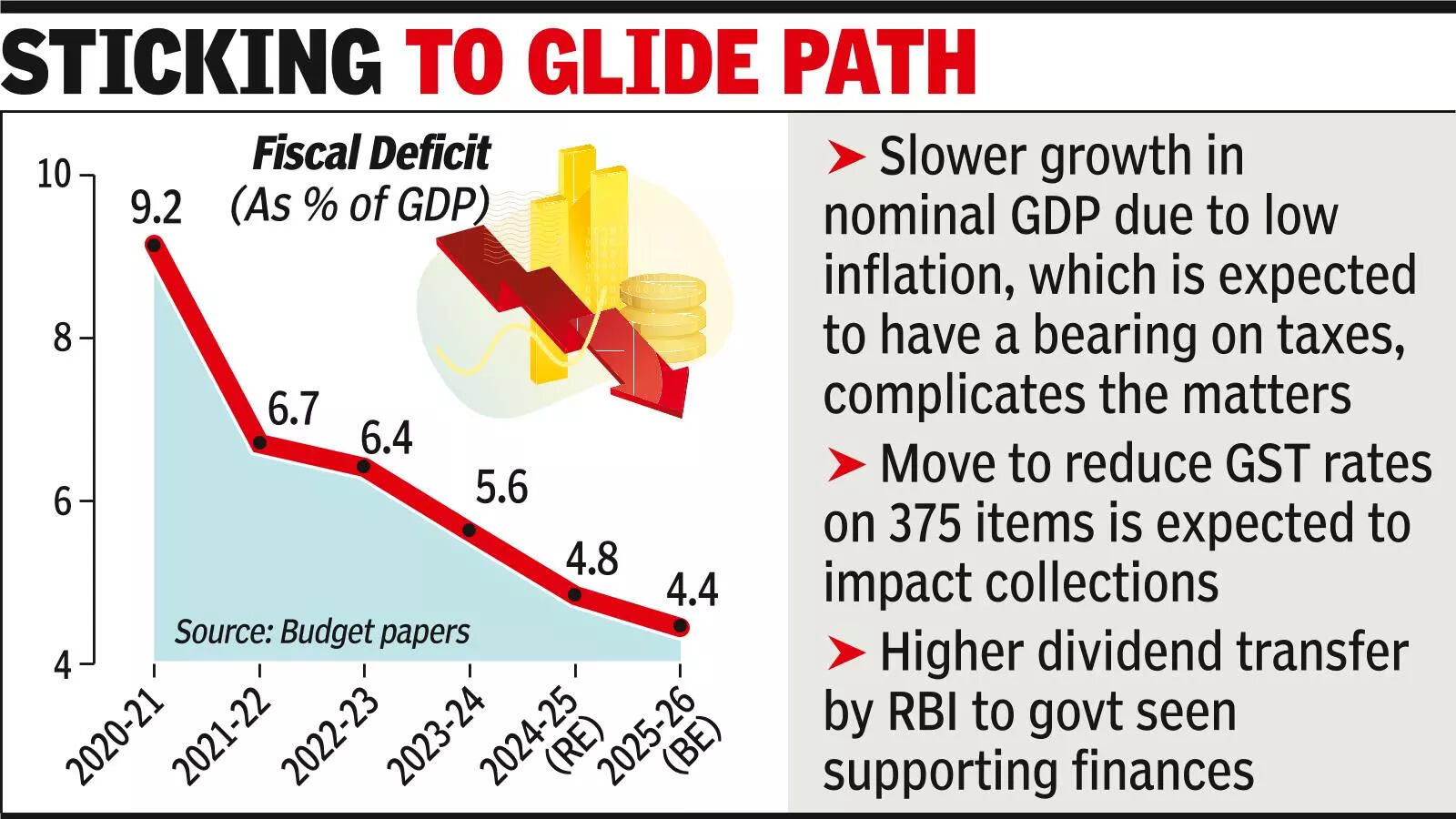
The Centre had budgeted for a fiscal deficit of Rs 5,23,846 crore, or 4.4% of GDP. Based on the NSO’s first advance estimate, it will be marginally lower, provided govt is able to stick to its receipts and expenditure projections.While the tax revenue growth has been weak, there is support from higher dividend transfer by RBI to govt. Moreover, in the fiscal year so far, govt has gone slow on revenue expenditure, while strongly pushing capital expenditure.What complicates matters is the slower growth in nominal GDP due to low inflation that will have a bearing on taxes.“While the tax revenue growth has been weak, there is support from higher dividend transfer by RBI to govt. Moreover, in the fiscal year so far, govt has gone slow on revenue expenditure, even while strongly pushing the capital expenditure,” added Rajni Sinha, chief economist at CareEdge.In the last budget, finance minister Nirmala Sitharaman had announced direct tax cuts and yet budgeted to stick to the deficit reduction plan. But the move to reduce GST rates on 375 items is expected to impact collections, both for the Centre and the states.Sitharaman has, however, stuck to her deficit targets in the post-Covid period, giving analysts hope that this year’s revised estimates will be no different.“Nominal growth, on the other hand, will be softer at 8% this fiscal compared with 9.8% in fiscal 2025. The gap between real and nominal GDP growth estimates, at 0.6 percentage point, is at its lowest level in the 2011-12 series. The lower nominal GDP growth puts some pressure on deficit targets as these are measured as a percentage of nominal GDP,” ratings agency Crisil said in a note.


Source link