Breaking News
‘We will take all the oil’: US reveals plan for Venezuela; what are the 3 phases?


'We will take all the oil': US reveals plan for Venezuela; what are the 3 phases?

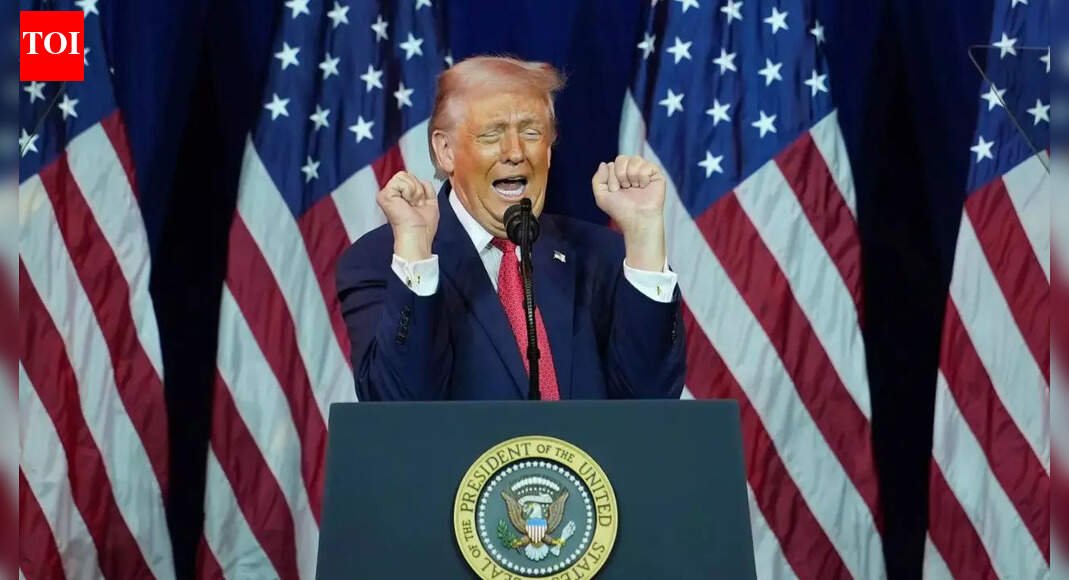
US secretary of state Marco Rubio on Wednesday said the United States has a “three-fold process” planned for Venezuela following the removal of President Nicolás Maduro, outlining steps focused on stabilisation, recovery and political transition.“We have a three-fold process in Venezuela,” Rubio told reporters after briefing lawmakers on Capitol Hill. He said the first phase would focus on stabilising the country to prevent chaos.“Step 1 is the stabilisation of the country; we don’t want it descending into chaos. Part of that stabilisation, and the reason why we understand and believe that we have the strongest leverage possible is our quarantine. Two more ships were seized today. We are in the midst right now and about to execute on a deal to take all the oil – they have oil that is stuck in Venezuela. They can’t move it because of our quarantine and because it’s sanctioned,” he said.Rubio said the US is preparing to take between 30 and 50 million barrels of Venezuelan oil that remains stranded due to sanctions.“We are going to take between 30 and 50 million barrels of oil. We are going to sell it in the market place at market rates, not at the discounts Venezuela was getting. That money will then be handled in such a way that we will control how it is dispersed ” he said, further adding that the proceeds would be managed in a way “that benefits the Venezuelan people.”The second phase, Rubio said, would focus on economic recovery and reconciliation ensuring fair access for American, Western and other companies to Venezuela’s market sector.“The second phase will be a phase of what we call recovery – ensuring that American, western and other companies have access to the Venezuelan market oil that is fair, also at the same time, we begin to create the process of reconciliation nationally within Venezuela so that the Opposition forces can be released from prisons or brought back to the country, and we begin to rebuild civil society,” he said.“The third phase will be one of transition,” Rubio added, noting “some of these will overlap, I have described this to them in great detail. We will have more detail in the days to follow but we feel like we are moving forward here in a very positive way.”Further on the Greenland crisis, Rubio said he plans to meet Danish officials next week, amid renewed assertions by the Trump administration that the US intends to acquire the strategic Arctic island. “I will be meeting them (Government of Denmark) next week,” he said, adding, “I am not here to talk about Denmark or military intervention… We will have those conversations with them then.”Rubio said the administration’s preference was to eventually purchase Greenland rather than use force. He also told reporters that Trump has spoken about acquiring Greenland since his first term. “That’s always been the president’s intent from the very beginning,” he said, adding that Trump was “not the first US president that has examined or looked at how we could acquire Greenland.”

Source link

Oil tanker row: Moscow condemns US seizure of Russian-flagged vessel; cites violation of maritime law


Oil tanker row: Moscow condemns US seizure of Russian-flagged vessel; cites violation of maritime law
Moscow condemns US seizure of Russian-flagged vessel

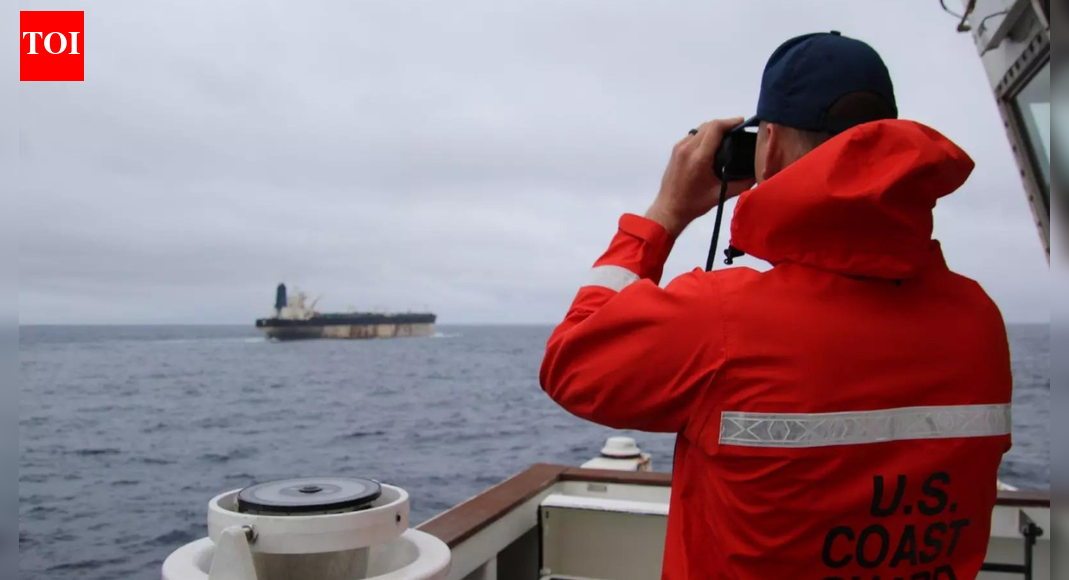
Russia on Wednesday strongly condemned the seizure of a Russian-flagged oil tanker by US military forces, asserting that Washington had no legal right to use force against a vessel lawfully registered under another country’s jurisdiction on the high seas.In a statement issued on Telegram, Russia’s ministry of transport said the tanker Marinera, formerly known as Bella 1, had been granted a temporary permit to sail under the Russian flag on December 24, 2025, in accordance with Russian and international law. As per news agency ANI, the ministry said the vessel was boarded by US naval forces outside the territorial waters of any state, after which contact with the ship was lost.“On December 24, 2025, the Marinera received a temporary permit to sail under the Russian Federation flag, issued in accordance with Russian law and international law. Today, at approximately 3:00 pm Moscow time, the vessel was boarded by US Navy forces in the high seas outside the territorial waters of any state, and contact with the vessel was lost,” the statement read.Quoting the 1982 United Nations Convention on the Law of the Sea, the ministry stressed that freedom of navigation applies in international waters. “In accordance with the 1982 UN Convention on the Law of the Sea, freedom of navigation applies in high seas waters, and no state has the right to use force against vessels duly registered in the jurisdictions of other states,” the statement added.The Russian statement came shortly after the US European Command announced that it had seized the Russian-flagged oil tanker M/V Bella 1 in the North Atlantic Ocean. According to a post on X by the command, the vessel was seized under a warrant issued by a US federal court for violations of US sanctions, after being tracked for weeks by the US Coast Guard cutter Munro.US authorities said the tanker had evaded a US blockade of sanctioned oil vessels near Venezuela for over a fortnight. The operation was carried out by the department of homeland security with support from the department of war, reflecting what officials described as a “whole-of-government approach” to protecting US national security.According to AP, the ship had been sanctioned by the US in 2024 and was later renamed Marinera and reflagged to Russia. The seizure has added to tensions between Washington and Moscow, with reports indicating that Russia had also deployed naval assets to escort the tanker amid the standoff.


Source link

BMC polls: 2 Borivli-Dahisar candidates promise redevelopment, better infrastructure | Mumbai News


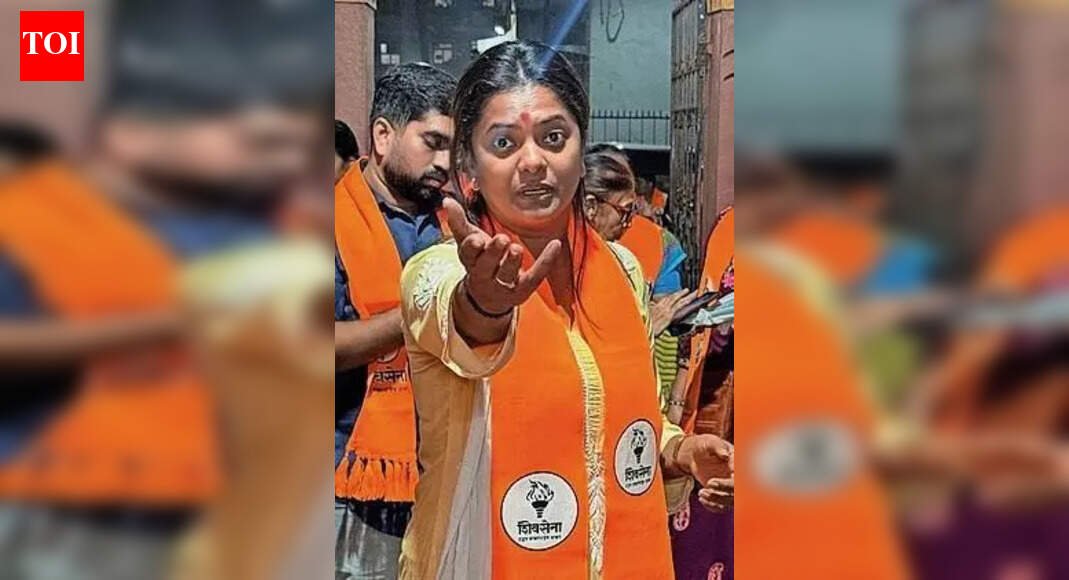
Mumbai: At the Bhablipada chawl in Dahisar East, a bunch of sari-clad women with saffron scarves made the rounds of narrow bylanes on Tuesday evening. In the centre of the group was former corporator Tejasvee Ghosalkar, who recently moved from Shiv Sena (UBT) to the BJP and is contesting the municipal election from Ward 2 (comprising parts of Borivli and Dahisar). As door curtains slid and residents peeked out of their homes, Ghosalkar folded her hands to the chants of ‘”kamal hamara lucky hai, jeet hamari pakki hai'” from her supporters.For Bhablipada, stalled redevelopment has been a key issue, due to building height restrictions imposed by high-frequency radar installations operated by Airport Authorities of India. “Kai builder aaye aur gaye… hum intezaar kar rahe hai,” said an elderly resident. Last month, the state govt decided to relocate the radar stations which will unlock acres for affordable housing and redevelopment projects. Ghosalkar, 38, promised to permanently resolve radar-related issues if elected.“People know the work I did as a corporator in Ward Number 1 in the past,” Ghosalkar said. “My late husband, former corporator Abhishek Ghosalkar, and I had a close connect with the Catholic community in Ward Number 1 and I will have a similar connect with Maharashtrian and Gujarati communities in Ward Number 2. Marathi voters are happy to know that the BJP has fielded a Marathi candidate here,” she added.As Ghosalkar continued her campaign in housing societies off New Link Road, she was hugged by an elderly woman. “I have always received love and support from you all. Ensure the next mayor comes from BJP,” she said on a mic, as party workers led by former BJP corporator Jagdish Ojha, waved flags and shouted slogans in her support.Less than a kilometre away, Sena UBT’s candidate for Ward 2, Dhanashree Kolge, was going door-to-door at Dahisar’s Anand Nagar and Sambhaji Nagar, urging residents to vote for the party. A Yuva Sena member, this would be 34-year-old Kolge’s first time contesting an election.“I have worked for 12 years on the ground with Yuva Sena and being a local resident, I understand civic issues faced here better than anyone else,” Kolge, a graduate in home science and nutrition, said. At Jay Gokul society in Anand Nagar, residents pointed to choked gutters, bad roads and water-logging. Kolge suggested solutions like underground water holding tanks— which UBT leader Aditya Thackeray conceptualised in Hindmata—could be replicated in low-lying areas of Dahisar.Youngsters, including Yuva Sena members, friends and family, were a prominent part of her campaign. “We are confident of a good lead for UBT,” a Yuva Sena member said. Besides Ghosalkar and Kolge, Congress’s Menaka Singh and Independent Sunita Bhatia will contest from the ward.


Source link

Anil Agarwal’s son dies in US


Anil Agarwal's son dies in US

Agnivesh Agarwal, the eldest son of mining billionaire Anil Agarwal, passed away in the US. He was 49.Agnivesh, who was on the board of Vedanta group firm Talwandi Sabo Power Limited (TSPL), was recovering from an undisclosed illness at the time of his death.Anil Agarwal has two children: his late son, Agnivesh, and a daughter, Priya, who is on the board of Vedanta and chairperson of Hindustan Zinc Limited.


Source link

Access Denied


Access Denied

You don’t have permission to access “http://www.ndtv.com/india-news/rs-91-crore-in-assets-seized-by-probe-agency-ed-in-mahadev-betting-app-case-10482262” on this server.

Reference #18.2ef63717.1767809915.19671a56

https://errors.edgesuite.net/18.2ef63717.1767809915.19671a56


Source link

IndiGo disruptions: CCI seeks details from airline, DGCA; probe on dominant position underway


IndiGo disruptions: CCI seeks details from airline, DGCA; probe on dominant position underway

The Competition Commission of India (CCI) has sought information from IndiGo and aviation regulator DGCA to assess whether the country’s largest airline indulged in unfair business practices following widespread flight cancellations last month, PTI reported citing sources.In early December, IndiGo, which commands over 63% share of the domestic aviation market, faced major operational disruptions that led to the cancellation of thousands of flights before services stabilised. In response, the Directorate General of Civil Aviation (DGCA) curtailed the airline’s winter schedule by 10%.

‘Worst Is Behind Us’: IndiGo CEO Says Airline Back on Track After Operational Crisis

Sources said the anti-trust regulator has sent a set of queries to IndiGo as part of its preliminary examination of the airline’s conduct. The CCI has also sought information from the DGCA, including data on airfares, to gain a broader understanding of market conditions before deciding its next course of action.The Competition Commission is currently assessing whether there is prima facie evidence that IndiGo violated competition norms by abusing its dominant position in the market. As part of its process, the watchdog first undertakes an initial assessment before ordering a detailed investigation by its Director General (DG), if required.On December 18, the CCI said it had taken cognisance of information filed against IndiGo in connection with the recent flight disruptions across multiple routes. “Based on the initial assessment, the Commission has decided to proceed further in the matter in accordance with the provisions of the Competition Act, 2002,” it said in a release.A day later, CCI Chairperson Ravneet Kaur told PTI that the regulator had decided to examine the matter further based on the information available. “We have information which has come to us, and based on that information, the matter was placed before the commission. The commission has taken a view that in the initial assessment, it looks like we can go into further detail,” she said.The DGCA has already completed its probe into the operational disruptions, while the CCI continues to evaluate whether IndiGo’s conduct warrants a full-fledged investigation under competition law.


Source link

Mustafizur Rahman controversy: ‘Big loss for Bangladesh cricket not playing in India’ — Rajin Saleh urges politics be kept aside | EXCLUSIVE | Cricket News


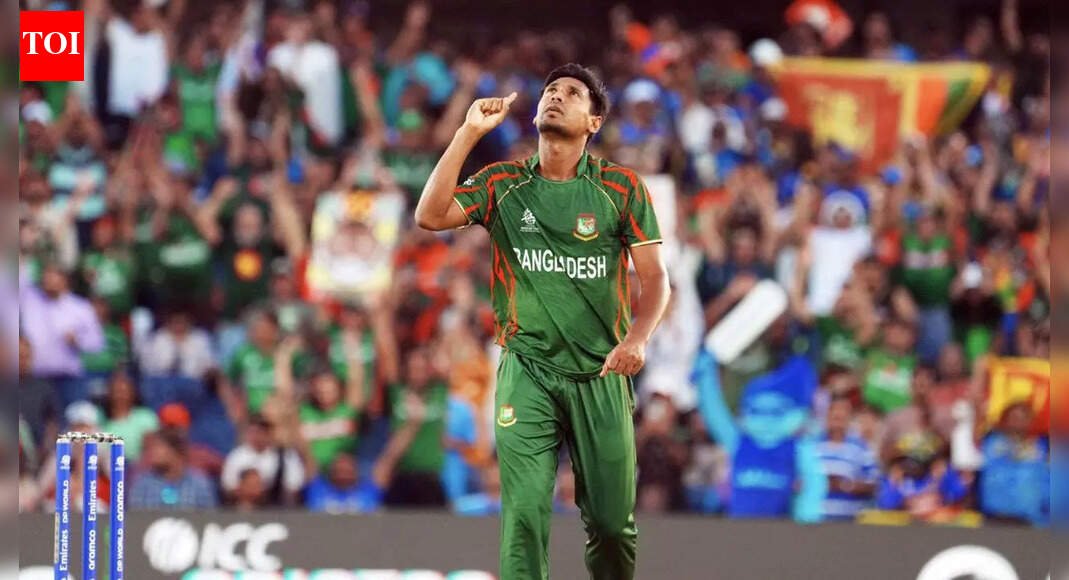
Mustafizur Rahman (Image credit: BCB)

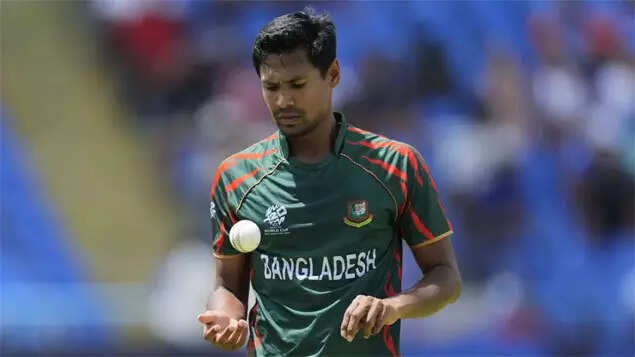
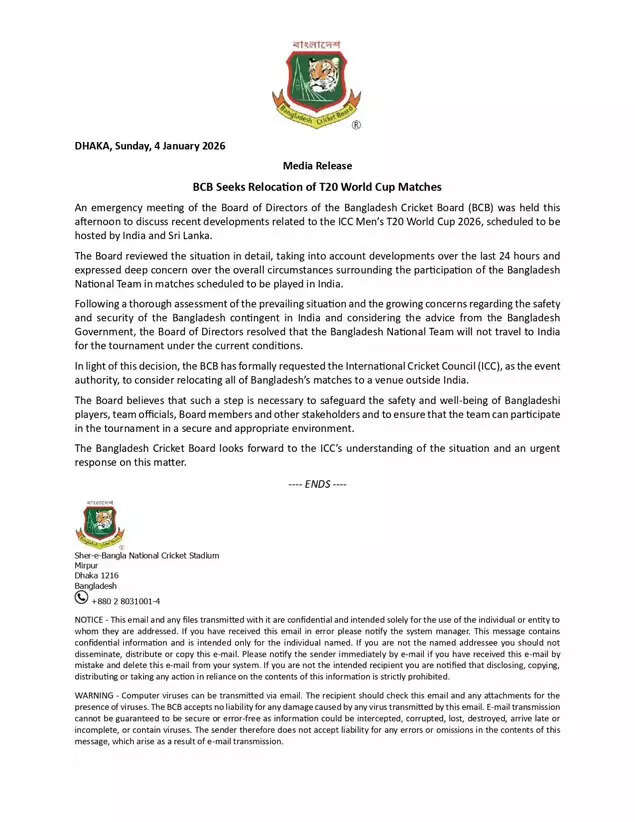
NEW DELHI: Mustafizur Rahman’s release by Kolkata Knight Riders from the IPL, following directives issued by the BCCI, sparked widespread debate and criticism in Bangladesh. In the latest developments, the Bangladesh Cricket Board (BCB) on Sunday announced that the national team will not travel to India for the ICC Men’s T20 World Cup 2026. The Bangladesh government also ordered a suspension of all IPL broadcasts and telecasts in the country.Mustafizur, who previously represented Sunrisers Hyderabad, Mumbai Indians, Rajasthan Royals, Delhi Capitals and Chennai Super Kings, has taken 65 wickets in 60 IPL matches. KKR bought him for a hefty Rs 9.2 crore at the IPL 2026 auction, making him the only Bangladesh cricketer to secure a contract this season. However, the BCCI issued a directive that led to his release.

Mohammed Kaif breaks silence on Mustafizur Rahman–KKR debate

Former Bangladesh batter Rajin Saleh believes the move will prove to be a major setback for Bangladesh cricket, especially given the strong cricketing relationship the country has shared with the Indian board.“Previously, many Bangladesh players like Mushfiqur, Taskin and Shakib played in the IPL. But this time, no Bangladesh player will play. It’s a big setback for Bangladesh cricket. Definitely, for Bangladesh, it’s a huge loss,” Saleh told TimesofIndia.com in an exclusive interview.“Politics should be kept aside and cricket should be played. We shouldn’t do it any other way. The ground may be different, but cricket is separate. Cricket should be played. Look, in India there are Hindus and Muslims — in fact, there are many Muslims. In Bangladesh, there are many Hindus too. My closest friends are Hindu as well. I have two friends, Shimmer and Tushar, and I always talk to them. Politics should remain separate from cricket. This situation is sad. Why does cricket get involved? Cricket should stay separate,” said Saleh, who played 24 Tests and 43 ODIs between 2003 and 2008.SECURITY CONCERNS FOR BANGLADESH TEAMBilateral relations between the two countries have remained strained since the mass uprising in Bangladesh in 2024 that led to the removal of then Prime Minister Sheikh Hasina.Citing security concerns, the Bangladesh Cricket Board has decided not to send its team to India for the T20 World Cup. The BCB said the decision was taken “to safeguard the safety and well-being of Bangladeshi players, team officials and board members.”

Mustafizur Rahman (AFP Photo)

“Security is the main concern. If good security is provided to Mustafizur and the Bangladesh team, why not go? Definitely, they will go. How will the 25 players play in the World Cup? How will security be provided? If positive signals are given, why not? But there has been no word yet,” Saleh said.“The issue is that proper security cannot be provided. We share a good friendship with India. Bangladesh are preparing for the World Cup and practising. The board has taken a decision regarding India, and we are actually sad. We are hurt by this news and these developments. India are very important to us. Bangladesh have gained a lot from India. We have learnt a lot from India,” he added.

.

‘BANGLADESH WILL BEAT INDIA’The T20 World Cup will begin on February 7, with defending champions India set to face the USA in the opening match in Mumbai. The 20-team tournament will be co-hosted by India and Sri Lanka over 29 days across eight venues — five in India and three in Sri Lanka.A total of 40 group-stage matches will be played between February 7 and February 20, after which the top two teams from each group will advance to the Super Eights, starting on February 21. The top four sides at the end of the Super Eights will qualify for the knockout stages.In Group A, India are drawn alongside the USA, Pakistan, Netherlands and Namibia, and will take on arch-rivals Pakistan in Colombo on February 15. Group B features Sri Lanka, 2021 champions Australia, Ireland, Zimbabwe and Oman. Group C includes two-time champions England and West Indies, first-timers Italy, and Asian sides Bangladesh and Nepal. Group D comprises New Zealand, South Africa, Afghanistan, Canada and the UAE.If India and Bangladesh were to meet in the Super Eights, Saleh believes Bangladesh would emerge victorious, with Mustafizur playing the role of wrecker-in-chief in his team’s win.“Mustafizur will do well. I am confident. He is a good player and has been performing well. The IPL and world cricket will see him do well. If he plays against India, he should perform even better. Bangladesh should aim to beat India. I am sure Bangladesh will beat India if they meet in the Super Eights,” Saleh signed off.


Source link

‘Democratic institutions thrive on trust, not procedure alone’: VP Radhakrishnan | India News


‘Democratic institutions thrive on trust, not procedure alone’: VP Radhakrishnan

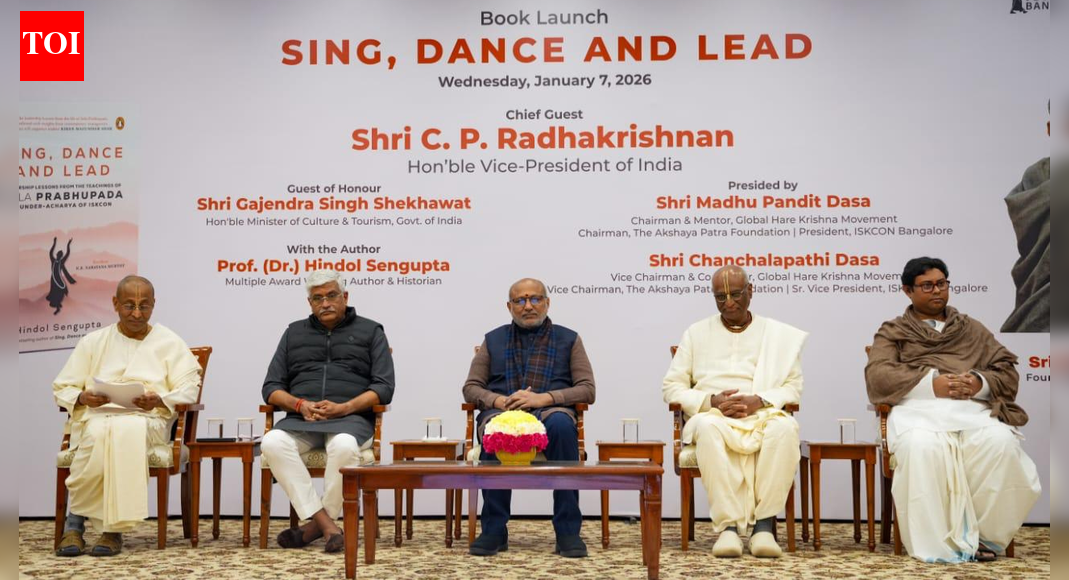
NEW DELHI: Vice President CP Radhakrishnan on Wednesday said that democratic institutions derive their strength from trust and moral responsibility, not from procedures alone.Radhakrishnan was speaking in New Delhi at the release of a book titled, ‘Sing, Dance and Lead: Leadership Lessons from the Life of Srila Prabhupada.’

‘Survived Drowning, Escaped A Bomb Blast, Gave Up Non-Veg’: PM Modi On VP Radhakrishnan’s Early Life

“Leadership, particularly in public life, is the force that shapes society’s direction. Democratic institutions thrive not merely on procedures, but on trust and moral responsibility,” he said.Speaking at the event, the Vice President described the book as a timely reflection on leadership rooted in values rather than authority. “Today’s launch of Sing, Dance and Lead marks a moment of reflection on leadership as a way of life, rooted in values, service, discipline, and joy, rather than authority or power,” he said. Referring to Srila Prabhupada’s life journey, he added, “His leadership proves that nothing is ever too late – only values and effort matter, as demonstrated by his historic journey at the age of 70.”Union minister for culture and tourism Gajendra Singh Shekhawat also attended the event, along with Madhu Pandit Dasa, founder and chairman of The Akshaya Patra Foundation and president of Iskcon Bengaluru, and Chanchalapathi Dasa, vice-chairman and co-founder of The Akshaya Patra Foundation and senior vice president of Iskcon Bengaluru.


Source link

Access Denied


Access Denied

You don’t have permission to access “http://www.ndtv.com/world-news/us-denmark-to-discuss-greenland-next-week-marco-rubio-10480747” on this server.

Reference #18.2ef63717.1767805197.194dc05f

https://errors.edgesuite.net/18.2ef63717.1767805197.194dc05f


Source link

Harry Brook, Yashasvi Jaiswal or Rachin Ravindra? Mark Waugh names the next greatest Test batter


The era of the “Fab Four” is slowly transitioning, and a new dawn is breaking over Test cricket. The red-ball format, often questioned for its survival in the age of T20s, has found its guardians in a crop of fearless, technically gifted, and dynamic young batters. Fans are, in fact, witnessing a generational shift where players don’t just survive sessions; they dictate them. In recent years, as several modern-day greats near the twilight of their careers, a new crop of young stars has emerged with the skill set and fearlessness to dominate the red-ball format.

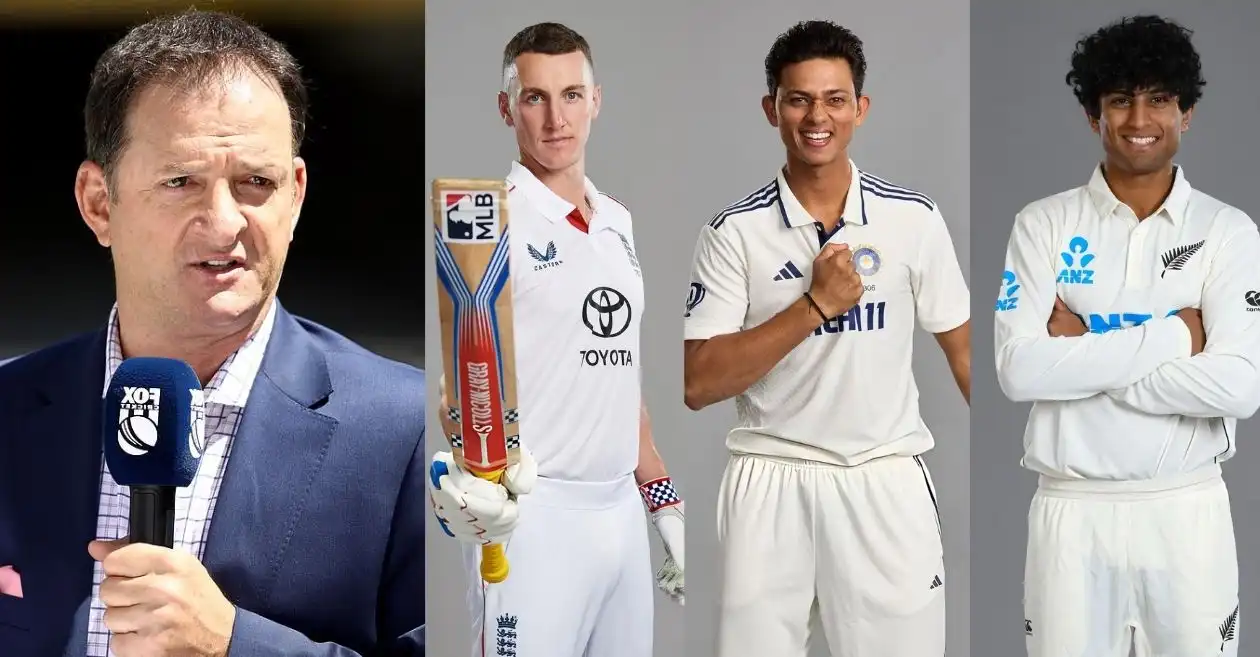
These players are not just surviving at the highest level; they are reshaping how Test cricket is played—combining classical foundations with modern aggression. Among the multitude of rising stars, three names have separated themselves from the pack, consistently turning match situations on their heads and piling up runs with an authority that belies their age. The conversation for the “next greatest” has narrowed down to a thrilling trident of talent: England’s Harry Brook, New Zealand’s Rachin Ravindra, and India’s Yashasvi Jaiswal.

Mark Waugh picks the next champion batter in Test cricket

The debate on who will rule the next decade of Test cricket is fierce, but Australian legend Mark Waugh has made his stance clear. When asked by Kayo Sports to identify the successor to the modern greats, Waugh didn’t hesitate to back the young Indian opener. He backed Jaiswal as the frontrunner, highlighting the Indian opener’s age, temperament, and early achievements in Test cricket.

At just 24, Jaiswal already boasts a double century and an average hovering around the elite mark of 50—numbers that underline both consistency and hunger for big scores. Waugh described him as a “special” talent and tipped him to join the elite club of champion Test batters in the years to come. Coming from a former great who thrived in the toughest conditions, such praise carries significant weight.

“There are three in the running: Jaiswal, Brook, and Ravindra. I am going with Jaiswal, 24 years of age. He has already got a double hundred and averages just under 50. There’s something special about this kid. I’ve got Jaiswal as the next champion batter joining the elite group. Brilliant player, so that’s my pick, the young Indian,” said Waugh.

Also READ: IPL 2026: Not Yashasvi Jaiswal! Robin Uthappa names his two picks for Rajasthan Royals’ captaincy

How the trio changed the red-ball scene?

While Waugh has made his pick, the reality is that all three of these cricketers have fundamentally altered the landscape of Test cricket. They represent a modern evolution of batting where defense is solid, but attack is the primary instinct.

  • Jaiswal (The domineering opener): Jaiswal has redefined what it means to open in Test cricket for India. Unlike the traditional approach of seeing off the new ball, he treats it as a scoring opportunity. His ability to convert starts into “Daddy Hundreds” and double centuries at a rapid clip has solved India’s long-standing desire for a destructive left-hander at the top. His fearless lofted shots against world-class fast bowlers have forced captains to spread fields early, disrupting the rhythm of opposition attacks.
  • Brook (The Bazball engine): Brook is the personification of England’s aggressive “Bazball” philosophy. He doesn’t just score runs; he scores them at a demoralizing pace. With a strike rate that rivals ODI cricket and a propensity for massive scores—including a triple century that showcased his hunger—Brook has proven that you can score fast without being reckless. He has made the middle order a launchpad rather than a consolidation zone.
  • Ravindra (The elegant accumulator): Named after Rahul Dravid and Sachin Tendulkar, Ravindra carries the burden of that legacy with grace. He brings a classical, fluid elegance to the trio. After a record-breaking ODI World Cup, his transition to red-ball cricket has been seamless. He offers a calm counterpoint to the aggression of Jaiswal and Brook, dismantling bowling attacks with precision timing and supreme technique rather than brute force. He has become the linchpin of the Kiwi batting lineup, capable of playing long, match-saving innings in foreign conditions.

Also READ: Alastair Cook names the top 4 greatest opening batters of all time


Source link