Breaking News
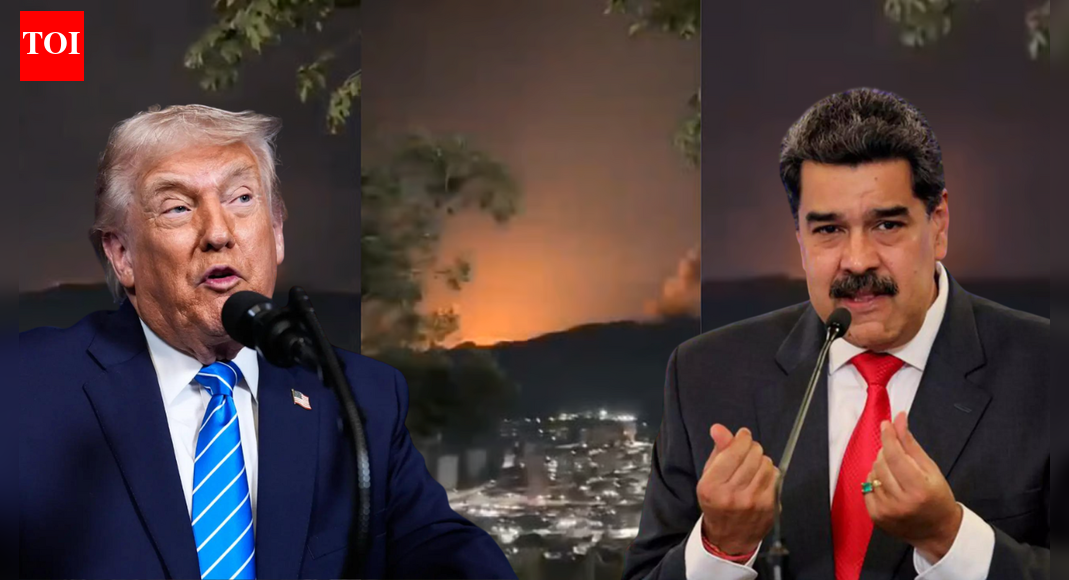
Venezuela crisis: Donald Trump says US oil firms will enter country; vows ‘strong involvement’ in energy sector


Venezuela crisis: Donald Trump says US oil firms will enter country; vows ‘strong involvement’ in energy sector
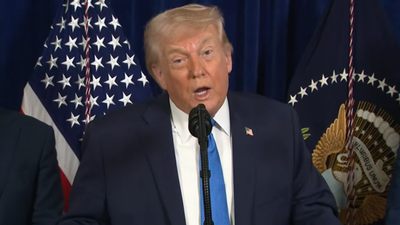
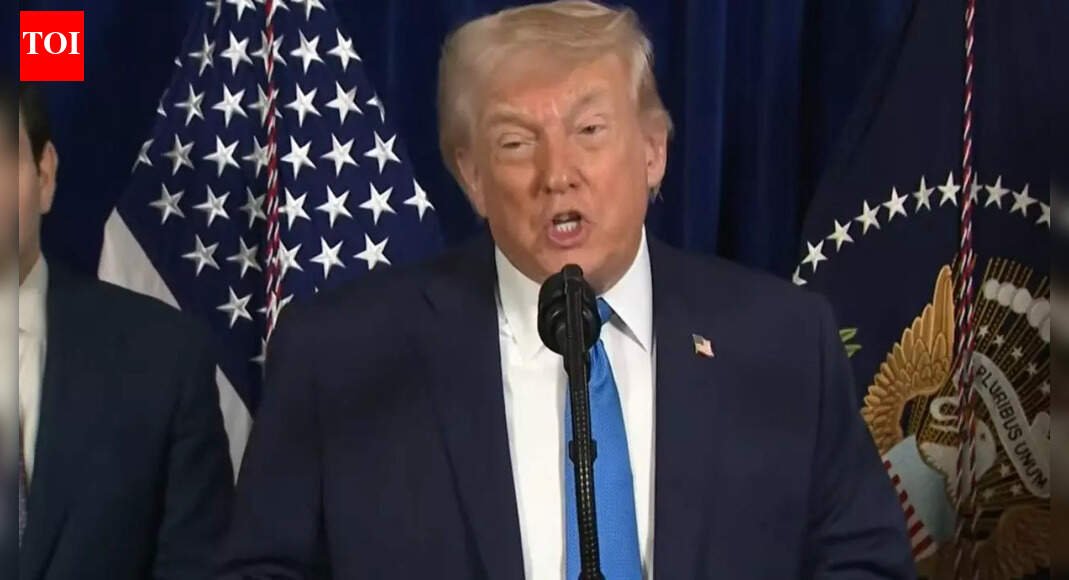
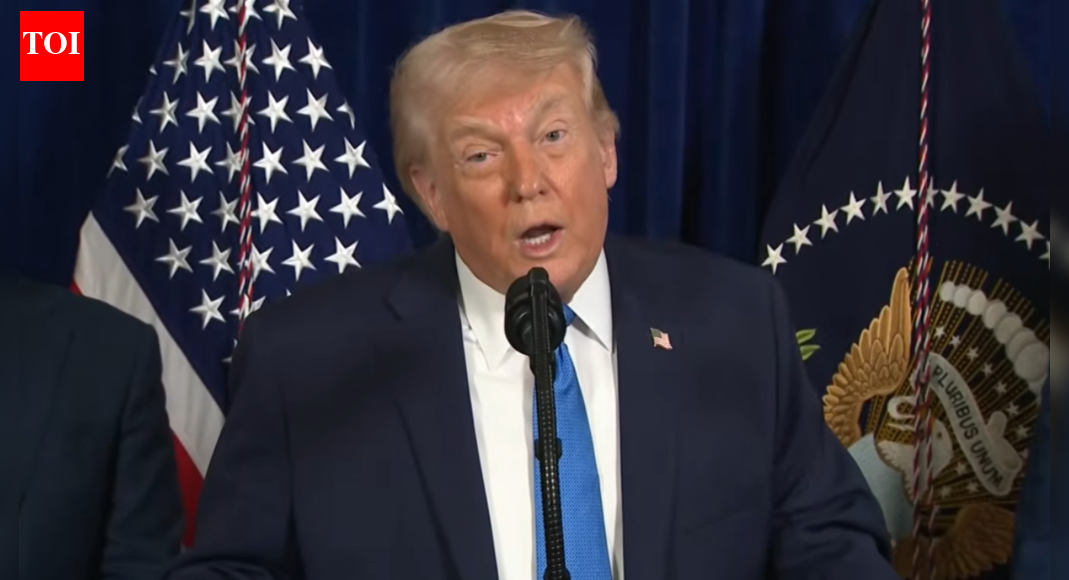
File photo: US President Donald Trump

US President Donald Trump has said American oil companies will be allowed to move into Venezuela to tap its vast crude reserves following a US military operation that led to the capture of President Nicolás Maduro.Speaking at a press conference on Saturday, Trump said major US energy firms would invest billions of dollars to repair Venezuela’s damaged oil infrastructure and restart production. “We’re going to have our very large United States oil companies, the biggest anywhere in the world, go in, spend billions of dollars, fix the badly broken infrastructure, the oil infrastructure, and start making money for the country,” he said.Trump added that the United States would then sell “large amounts” of Venezuelan oil to other countries, according to AP.“We’re in the oil business. We’re going to sell it to them,” Trump said during the news conference. He added that oil companies will pay to rebuild Venezuela’s oil infrastructure.At the same time, he made it clear that US sanctions remain in place. “The embargo on all Venezuelan oil remains in full effect,” Trump said. Venezuela has been under US oil sanctions since 2019 and currently produces about one million barrels of crude per day, much of which is sold on the black market at heavy discounts, as per AFP.Trump described Venezuela’s oil sector as a “total bust” for years despite holding the world’s largest proven crude reserves. He said the proposed US “partnership” would make Venezuelans “rich, independent and safe”, adding that Venezuelans living in the US would be “extremely happy” and “not going to suffer any more”, reported AFP.The president repeated similar remarks in a television interview, saying the US would be “very strongly involved” in Venezuela’s oil industry, without spelling out the details.Venezuela’s proven reserves are estimated at around 303 billion barrels, accounting for about 17 per cent of global reserves, as per The Hill.Trump’s comments came hours after Washington announced it had captured Maduro in an overnight military operation. Maduro and his wife were taken from a military base and flown out of the country aboard a US warship, with Trump saying they were headed to New York to face criminal charges. He also said the US planned to run Venezuela temporarily until a “safe, proper and judicious transition” of power could take place, reported AP.As part of a weeks-long military pressure campaign ahead of the raid, US forces seized at least two oil tankers that Washington said were operating in violation of sanctions.Trump also issued a warning to other political and military figures in Venezuela, saying “what happened to Maduro can happen to them,” according to AFP. He again accused Caracas of using oil revenues to finance “drug terrorism, human trafficking, murder and kidnapping”, allegations long denied by the Venezuelan government, as per AFP.Trump said he personally watched the military operation in real time and praised it as “extremely successful”, adding that US forces were prepared for further action if required.While US oil major Chevron already operates in Venezuela under limited sanctions waivers, Trump’s remarks signal a far deeper American role in the country’s energy sector once political control is restructured. How and when US oil firms would enter Venezuela, and under what legal framework, remains unclear.


Source link

‘Over 150 aircraft’: From Trump’s go-ahead to handcuffed Maduro — how US carried out Operation ‘Absolute Resolve’ in under five hours


'Over 150 aircraft': From Trump’s go-ahead to handcuffed Maduro — how US carried out Operation 'Absolute Resolve' in under five hours
Inside operation Absolute Resolve

The United States revealed new details of the covert military mission that led to the capture of Venezuelan President Nicolás Maduro, with senior officials describing an operation of unprecedented scale and precision involving more than 150 aircraft across the Western Hemisphere.According to General Dan Caine, chairman of the joint chiefs of staff, the mission, known as Operation Absolute Resolve, was carried out “during the darkest hours of January 2nd” and was the result of months of planning, rehearsals and interagency coordination.He said that President Trump gave a go-ahead for the mission at 10:46pm (ET).He described it as “an audacious operation that only the United States could do”, stressing that it integrated air, ground, maritime, space and intelligence capabilities on a scale rarely seen.“The Force included F-22s, F-35s, F-18s, EA-18s, E-2s, B-1 bombers, and other support aircraft, as well as numerous remotely piloted drones,” he said.“We arrived at Maduro’s compound at 1:01 a.m. Eastern Standard Time, or 2:01 a.m. Caracas local time, and the apprehension force descended into Maduro’s compound and moved with speed, precision and discipline towards their objective and isolated the area to ensure the safety and security of the ground force,” Caine added.Caine said the operation relied on the combined efforts of soldiers, sailors, airmen, marines and guardians working alongside intelligence agencies and law enforcement partners. “We watched, we waited, we prepared, we remained patient and professional,” he said, adding that the mission drew on decades of experience in complex joint operations and counter-terrorism efforts. Intelligence support from agencies including the CIA, NSA and NGA was described as critical to its success.At the core of the mission was an exceptionally precise extraction plan. “An extraction so precise it involved more than 150 aircraft launching across the Western Hemisphere in close coordination, all coming together in time and place to layer effects for a single purpose,” Caine said. That purpose was “to get an interdiction force into downtown Caracas while maintaining the element of tactical surprise”. He warned that failure by any single component “would have endangered the entire mission”, adding that “failure is never an option for America’s joint force”.President Donald Trump praised the military’s role, calling the operation one of “breathtaking speed, power, precision and competence”. Speaking at his Mar-a-Lago club and later in interviews with Fox News, Trump said the raid took place under cover of darkness, claiming that “the lights of Caracas were largely turned off”. “It was dark and it was deadly,” he said, adding: “No nation in the world could achieve what America achieved yesterday.Trump said Maduro had been “highly guarded” inside a palace “like a fortress”, and that US forces had rehearsed the raid on a full-scale replica of the building. He said troops were prepared to breach reinforced rooms using “massive blowtorches”, but that Maduro failed to reach a secure space in time. The assault, according to Trump, lasted less than 30 minutes, with at least seven explosions reported across the capital.Venezuelan officials said civilians and members of the military were killed, though no figures were provided. Trump said only “a couple of guys were hit” on the US side, adding that no American personnel were killed and no equipment was lost. General Caine said those involved in the operation “were willing to give their lives for those on the ground and in the helicopters”.Following the capture, Trump said the United States would assume control of Venezuela in the immediate aftermath. “We’re going to run the country until such time as we can do a safe, proper and judicious transition,” he said, though he offered no timetable. The Justice Department later confirmed that Maduro and his wife, Cilia Flores, face narco-terrorism charges in the United States.


Source link

Meetings at breakfast cascade into doorstep visits & late-night sabhas | Pune News


Pune: Candidates from across party lines in the Pune and Pimpri Chinchwad municipal elections have hit the ground with intensive outreach campaigns to attract voters ahead of a packed weekend.While a few candidates flagged off their campaigns on New Year’s Day, many formally began on Friday, setting the tone for a demanding schedule aimed at reaching as many voters as possible in the initial phase.

Pune Headlines Today — Key Stories You Shouldn’t Miss.

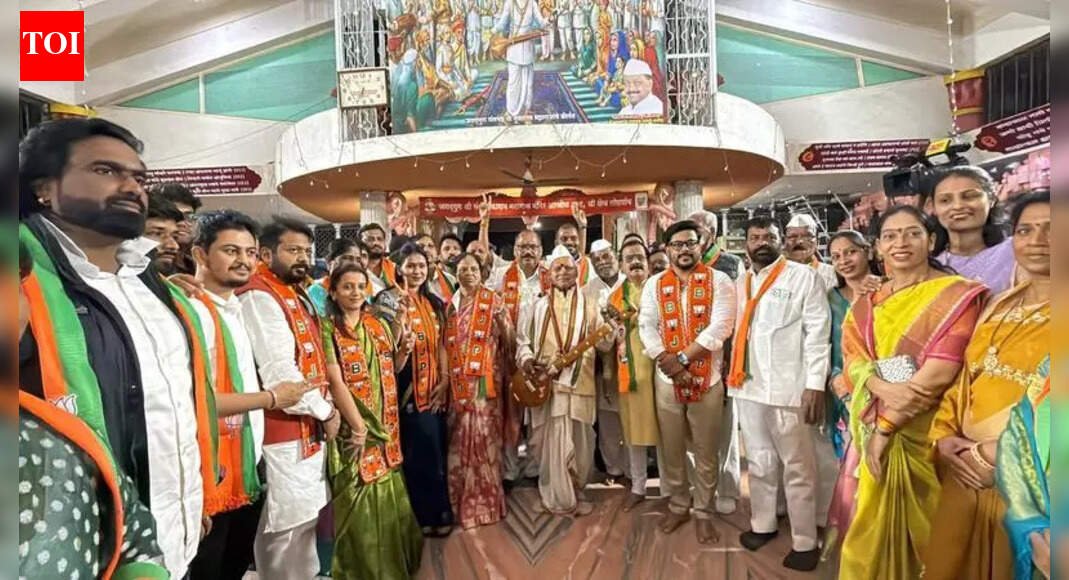
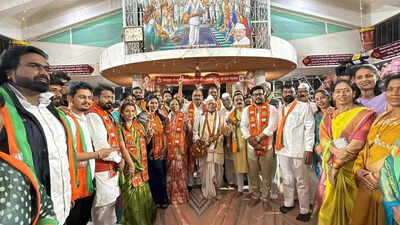
Shiv Sena (UBT) candidate from Ward No 33 (Shivane-Khadakwasala-Dhayri), Rahul Ghule, said, “These early interactions are followed by breakfast meetings at nearby hotels and restaurants, which often double up as networking sessions with local residents, traders and party workers. By late morning, most of us return to party offices to review feedback, fine-tune daily plans and coordinate volunteer teams.”The second half of the day is equally demanding. Evening hours are reserved for door-to-door visits across housing societies and old neighbourhoods, with candidates personally seeking support from families. Corner meetings and small sabhas at chowks and lanes continue late into the night, allowing candidates to address local issues in a direct and personalised manner before returning to party offices to plan the next day.Women candidates, on the other hand, are focusing on meetings with women’s groups, self-help collectives and neighbourhood associations, drawing large participation and discussing issues such as safety, water supply, health and education. In Ward No 3 of Pune, the Bharatiya Janata Party panel members formally launched their campaign on Friday evening with a traditional ceremony at the Jagadguru Sant Tukaram Maharaj Temple in Lohgaon.BJP’s candidates Shreyas Khandve, Anil Satav, Aishwarya Pathare and Ramdas Dabhade marked the occasion by breaking a ceremonial coconut, seeking blessings before beginning their outreach.The panel members of Ward No 3 said the weekend will be dedicated to maximum voter outreach. “Over the next 2 days, we will cover Lohegaon Gaothan, Sant Nagar, Wadachi Wadi, Airport Road stretches and nearby housing societies through door-to-door visits, corner meetings and interactions with senior citizens and women’s groups to understand local priorities,” they said.In Ward No 38 (Balajinagar Ambegaon Katraj), BJP candidate Rani Bhosale flagged off the campaign by visiting Shri Sadguru Shankar Maharaj Math. Bhosale said the presence of senior leaders and the support shown by the citizens boosted morale. She highlighted development works carried out in the ward such as roads, water supply, education and healthcare. She added that this time the focus would be on taking the ward to greater heights.Meanwhile, political activity was also visible in Ward No 2 (Phule Nagar-Nagpur Chawl), where a workers’ interaction meet was held at the residence of former MLA Sunil Tingre. Addressing party workers, Tingre said, “We remain committed to development and public welfare. We will effectively implement govt schemes, strengthening infrastructure and giving priority to local issues.”


Source link

Who is Usman Khawaja’s wife Rachel McLellan? Here’s why she is trending now


The spotlight has  turned toward Usman Khawaja’s wife, Rachel Khawaja, following the veteran batter’s announcement of his retirement from international cricket. While Khawaja’s decision marked the end of a distinguished red-ball career, it also renewed public interest in his family – particularly Rachel’s personal journey, professional life and her outspoken stance against online abuse.

Usman Khawaja with his wife Rachel (PC: X.com)

Rachel Khawaja, formerly known as Rachel McLellan, has become a widely discussed figure among cricket fans and the broader Australian public, not only because of her association with the cricketer but also due to her independent career and principled public voice.

Who is Rachel McLellan?

Background and education

Rachel was born and raised in Australia, with reports often linking her upbringing to cities such as Sydney or Brisbane. She pursued higher education at the University of New South Wales, where she completed a degree in Marketing.

Rachel Khawaja
Rachel Khawaja | Instagram

It was during her university years that Rachel met Usman Khawaja around 2015. Their relationship grew steadily, leading to an engagement in 2016. Before their marriage, Rachel made the deeply personal decision to convert from Catholicism to Islam, a choice she has consistently described as her own and rooted in understanding and faith.

Rachel Khawaja
Rachel Khawaja | Instagram

Marriage and family life 

The couple formalized their relationship with a nikah ceremony in 2017, followed by a wedding celebration in 2018. Since then, Rachel and Usman have built a family together and are parents to two daughters, Aisha Rahil and Ayla Fozia.

Rachel Khawaja
Rachel Khawaja | Instagram

Despite Usman’s demanding international cricket schedule, Rachel has often spoken about maintaining balance between family life and professional commitments. The couple are widely regarded for their openness and mutual respect, often sharing glimpses of their family life while maintaining clear boundaries around privacy.

Career in Media and Business Development

Beyond being a cricketer’s spouse, Rachel Khawaja has established her own professional identity. She works as a Business Development Manager and is also a reporter and presenter with 7Cricket. Viewers regularly see her covering matches, producing cricket-related content, and engaging with fans through thoughtful storytelling.

Rachel Khawaja
Rachel Khawaja | Instagram

Her visibility in sports media, combined with her role as a mother, has made her a relatable figure for many women navigating high-profile careers alongside family responsibilities.

Also READ: Maheesh Theekshana set to become father, shares baby bump photo with wife Arthika

Rachel has recently been in the public eye for reasons beyond cricket. Following a Bondi Beach shooting incident in December 2025, she revealed that her family became the target of Islamophobic abuse on social media. Rachel shared screenshots of vile comments directed at her daughters, condemning the sustained hatred they face because of Usman’s faith.

Rachel Khawaja
Rachel Khawaja | Instagram

Her decision to speak out drew widespread support from fans, fellow journalists and members of the sporting community. Many praised her courage in confronting online hate head-on and using her platform to highlight the real-world impact of Islamophobia on families.

Also READ: In pics – Meet Andrew Strauss’ new wife Antonia Linnaeus-Peat


Source link

‘401 life members added before MCA elections’ | Mumbai News


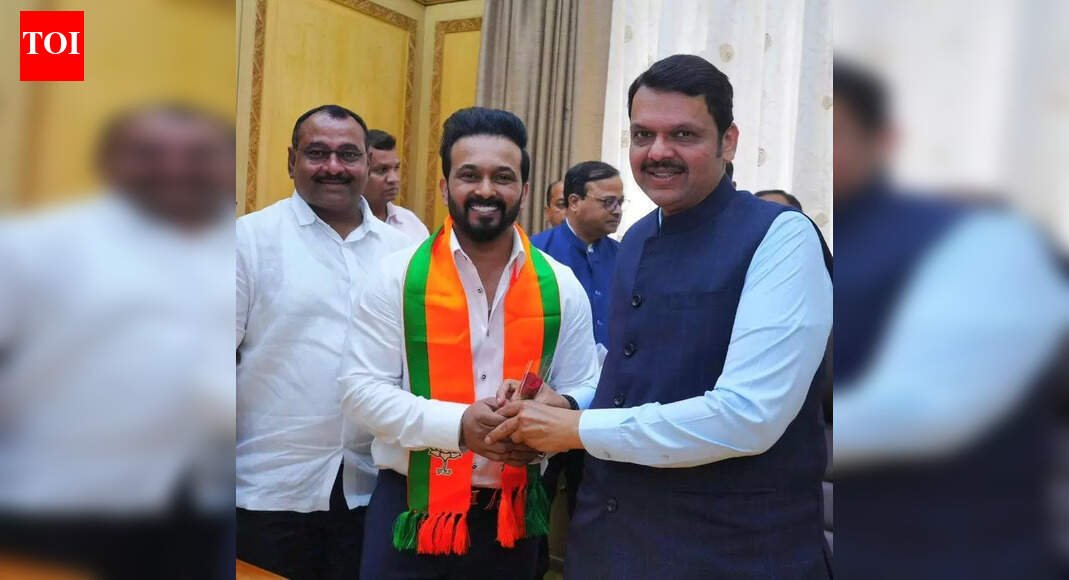
Mumbai: The NCP (SP) MLA Rohit Pawar-led Maharashtra Cricket Association (MCA) election has turned political as former India cricketer and BJP functionary Kedar Jadhav has alleged norms and orders of the Supreme Court (SC) are being flouted and favouritism in adding members. Jadhav alleged the new voter’s list released on Dec 25 revealed that 401 new life members were ‘suddenly inducted’ to raise the general body’s strength from around 150 to over 600. Of the new members, Jadhav alleged 25 members are close relatives or associates of the outgoing apex council members. Another 18 are relatives of Rohit Pawar and 56 members are directly or indirectly connected to him in his business or personal capacity as workers or employees. The list also includes 37 NCP netas, Jadhav alleged. Voting is scheduled on Jan 6. Jadhav who joined the BJP in April last year, filed his nomination papers in the ‘Category A’ meant for ‘Patrons, Benefactors, International Players and Life Members’.While Rohit Pawar was not available for comment, an MCA functionary said the matter is sub judice and there is nothing illegal or irregular about the membership. “All new members were inducted as per norms and under a committee led by a senior HC judge. We are fighting the polls on merit. Some people are unnecessarily politicising the issue,” a former MCA official said.Jadhav and Kamlesh Thakkar of Latur Cricket Association have filed separate writ petitions in Bombay high court, challenging certain decisions by Rohit. The hearing is scheduled for Monday. The voter list allegedly includes Rohit’s wife Kunti Pawar, his father-in-law Satish Magar, Revati Sadanand Sule, daughter of NCP (SP) MP Supriya Sule, Subhash Gulave of Baramati Agro, among others. The MCA is headquartered in Pune. Scrutiny of candidates was carried out on Saturday.Jadhav said the cricket administration had undergone a major scrutiny under what was famously referred to as the Lodha Committee recommendations which essentially were directed to ensure that dynasties and cozy clubs were not established in cricket administration. “The process followed by the MCA completely flouts all rules and recommendations of SC and in fact appears to be a disgraceful attempt to muscle majority in sports administration. Several key recommendations of the Lodha Committee are blatantly flouted and these members have been made without amending the Constitution and taking leave of SC to do so, which is a directive of SC applicable to BCCI and all the member state associations. A search carried out in this regard reveals that a number of cases filed by other associations including BCCI were ruled upon by SC when amendments or changes in their Constitution were required to be made. All these directives of SC have been thrown into the dustbin and a ‘might is right’ approach appears to have been adopted,” Jadhav said.Jadhav said another key recommendation of the Lodha Committee was that any office bearer of a cricket association is specifically barred from holding office in any other sports or athletic association but Rohit Pawar has flouted even this directive as he simultaneously holds the post of the president of the Maharashtra State Wrestling Association.


Source link

Structural shifts to skilling and tech, 2025 saw big education reforms | Mumbai News


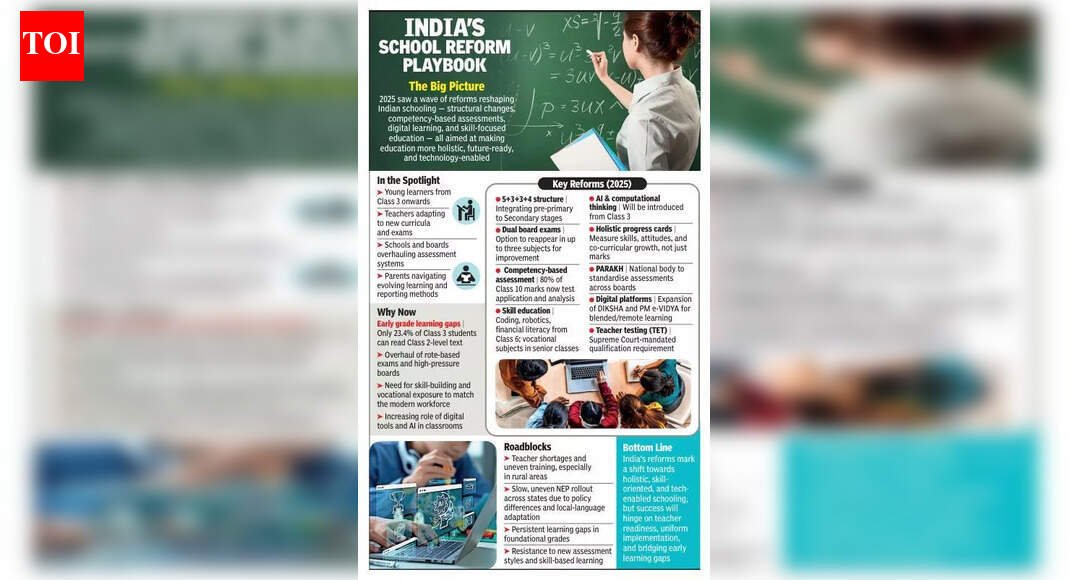
Mumbai: School education in India rarely changes all at once. Yet through 2025, a series of reforms that had moved gradually through policy pipelines began appearing simultaneously in classrooms, examination systems, and administrative frameworks. Structural reorganisation, shifts in assessment patterns, and the expanding role of technology unfolded in parallel across school boards and states. The year stood out less for a single headline reform than for the cumulative effect of multiple transitions — structural, technological, and administrative.New structure for schoolingMaharashtra, the first state in the country to adopt the Kothari Commission’s 1966 recommendation of a 10+2+3 education structure, conducted its first Class 10 board examination in 1975. Five decades later, school education across each educational board in India has undergone another major structural reset. By Sept 2025, most CBSE, state, and private schools began transitioning to the 5+3+3+4 stage structure, reorganising schooling into four phases — Foundational (ages 3–8), Preparatory (8–11), Middle (11–14), and Secondary (14–18) — formally replacing the long-standing 10+2 system.“The transition has been quite smooth. This classification is actually better because it includes pre-primary education into the formal educational setup, allowing us to build the foundational stage from nursery to the second standard together for the first time,” said Hari Vishwanath, principal of Delhi Public School (DPS), Nerul.Two board examsIn July, the CBSE announced that Class 10 students would be allowed to appear for two board examinations to seek improvement in up to three subjects — chosen from science, mathematics, social science, and languages. While the first exam remains mandatory, students may reappear for three papers to improve their scores. The board notification said the move aims to “reduce the high-stakes nature of board examinations and the coaching culture,” adding that modular models for conducting board exams could be explored in the future.However, as the first exams under the new system are yet to be held, teachers and academicians have questioned its practical impact, pointing out that the roughly two-month gap between the two windows may be insufficient for meaningful improvement. “It’s old wine in a new bottle,” said the principal of a CBSE school in Madhya Pradesh. “There used to be two sets of exams before also; children who used to fail could reappear. Now only the ‘compartment’ or repeater tag has been removed.” Different state boards though still continue to have a single board exam.Beyond rote learningThe shift away from rote memorisation toward competency and conceptual understanding is being phased in at many different levels across education boards, with CBSE’s revised examination pattern serving as one of the clearest illustrations. Up to 80% of the Class 10 board paper will now be competency-driven, with marks allocated to questions testing analysis, application, and conceptual clarity rather than factual recall. Similar reforms are underway across state boards, alongside the rollout of competency-based and reduced-content curricula for Classes 7, 9, and 11. This shift in methodology is also visible in state boards, at a gradual pace.“Questions from the end of every chapter have disappeared in the textbooks. Now we have to emphasise the concepts and work on the understanding a child develops,” said Latha Janardhan, head teacher of the Anthony D’Souza School, in Byculla Mumbai.School meets skill economyThe push toward vocational and skill-based education gained momentum in 2025 across all boards, with mandatory exposure introduced from Class 6 in CBSE schools and a sharper focus on employability-linked learning in senior classes. Union education minister Dharmendra Pradhan announced at IIT Madras that skill-based subjects would be introduced at the Class 11 and 12 levels.Schools are expanding structured skill programmes across all boards and mediums “We have introduced learning modules in areas such as communication, coding, robotics, and financial literacy,” said Sonal Mittal, principal of EuroSchool, Bengaluru. Parveen Cassad, senior principal of Centre Point School, Nagpur, explained the rationale: employers and universities now expect students to be adaptable and capable beyond textbooks, as rapid changes in technology and the job market demand transferable skills.Testing the teachersA Supreme Court ruling on Sept 1, 2025, brought the Teacher Eligibility Test (TET) into focus, invoking Article 142 to declare the exam a constitutional requirement linked to the right to quality education under Article 21A. The verdict placed an estimated 20–30 lakh teachers in the public sector under a two-year deadline, mandating that those with more than five years of service remaining clear the TET with at least 60% marks by Sept 2027, failing which they could face compulsory retirement or termination.The decision triggered protests across several states, particularly among veteran teachers, who termed the move unfair and disruptive. Madhav Suryavanshi of the Shikshan Vikas Manch noted that the TET’s historical pass rate of just 3–4% raises fears of widespread job losses and heightened insecurity within an already understaffed public education system. He argued that a differentiated or moderated difficulty level for teachers with 15–20 years of service could have ensured quality benchmarks without destabilising schools.Other reformsAmong other key reforms in 2025, artificial intelligence and computational thinking will be introduced into the curriculum from Class 3 onwards. Schools began rolling out holistic progress cards that assess skills, attitudes, and co-curricular development alongside academic performance. The year also saw the establishment of PARAKH, a national body to standardise assessments and monitor learning outcomes, alongside the continued expansion of digital learning platforms such as DIKSHA and PM e-VIDYA to support blended and remote education.ChallengesDespite these reforms, significant challenges remain. The Annual Status of Education Report by NGO Pratham found that only 23.4% of Class 3 students in government schools could read a Class 2-level text, highlighting persistent learning gaps. A report by the Centre for Teacher Accreditation pointed to a shortage of qualified teachers, particularly in rural areas, and insufficient training in NEP-aligned pedagogy. Additionally, the uneven rollout of the NEP across states — due to policy differences, teacher resistance, and the need to adapt content to regional languages — continues to slow the pace of reform.


Source link

No bail in case of sex exploitation on marriage promise | Mumbai News


Mumbai: Pointing to the need to protect the woman as the accused’s friends and relatives pressurised her to take back the case after his arrest, a sessions court rejected the bail plea of a senior software developer (28) accused of sexually exploiting a woman under the false promise of marriage.“The offence is serious in nature and against the woman. The investigation is now in progress and yet the chargesheet is not filed. Hence, the applicant is not entitled for grant of bail,” Judge Shilpa S Todkar said on Friday.The accused was arrested following an FIR registered at the Kurar police station. According to the prosecution, the man befriended the woman while residing as a paying guest at her residence. The woman, who has been living separately from her husband for seven years and has a nine-year-old daughter, alleged the man gained her confidence by promising to marry her once her pending divorce proceedings were finalised. According to the FIR, the woman told the accused her divorce was nearing completion and requested he inform his family of their marriage plans. The accused subsequently began avoiding her and, on the night of Dec 7, 2025, refused to marry her. Following an overnight dispute, the accused allegedly threatened to implicate her in a false case and summoned the police. Upon their arrival the next morning, the woman reported the breach of promise, resulting in the FIR.The lawyer appearing for the accused, argued the relationship was a consensual extramarital affair between two educated adults. The defence contended the woman had been pressurising the man to marry her, and he had been the one to call the police and lodge online complaints when the situation turned sour. The accused also claimed the woman had tampered with his mobile phone to delete chat records and argued since he was a permanent resident of Mumbai with no criminal antecedents, he should be released.The prosecution and the woman opposed the plea. She filed an affidavit alleging since the accused’s friends and relatives have been pressurising her to withdraw the case. The investigating officer expressed concern the accused might tamper with evidence if released before the chargesheet is filed. The judge took note of allegations that intimacy occurred at hotels and guest houses in Malad, Jogeshwari, Nasik, and Ujjain based on the assurance of marriage. The judge noted the accused was aware of the woman’s marital status and pending divorce when he made the promise.“On perusal, the FIR it appears that there are allegations against the applicant that under the pretext of false promise of marriage, applicant has sexual intercourse with informant at several times and thereafter refused to marry with her,” the judge said.


Source link

Jio dominates November subscriber count with 1.2 million additions; extends lead over Airtel for 9th consecutive month | India News


Jio dominates November subscriber count with 1.2 million additions; extends lead over Airtel for 9th consecutive month

NEW DELHI: Reliance Jio continued its subscriber growth in November 2025, leading the industry in overall wireless additions and active user gains as per the latest monthly subscription data released by the Telecom Regulatory Authority of India (TRAI).The TRAI data showed that Jio added 1.2 million subscribers, extending its lead over Bharti Airtel for the ninth consecutive month. The performance came during a period when the industry’s total active (Visitor Location Register) subscribers fell by 3.4 million to 1,091 million. While other major operators reported net losses in active users, Jio was the only player to post positive gains.Specifically, Vodafone Idea (VIL) saw a drop of 2.2 million active users, while Bharti Airtel recorded a decline of 1.7 million. The momentum for Jio was reflected in its market share, with the operator gaining VLR share in 17 out of 22 telecom circles. The most significant gains were observed in the Jammu & Kashmir and Punjab regions.Morgan Stanley noted that “RJio’s market share rose to 43.7% (+25bps MoM), while all other operators lost market share MoM.” This trend further reduced the active subscriber share gap between Jio and Bharti Airtel to an all-time low. In the broadband segment, Jio maintained its dominance by capturing approximately 68 per cent of the total additions across mobile broadband, fixed wireless access (FWA), and unlicensed band radio (UBR). Jio remained ahead of Bharti Airtel in overall broadband rollouts primarily due to its UBR expansion, which added 0.35 million users during the month. The data also highlighted Jio’s strength in the fixed wireless segment. Morgan Stanley reported that “on FWA, Jio added almost 2.5x FWA subs (FWA 5G+ FWA UBR) vs Airtel.” Both Jio and Bharti Airtel added 0.25 million 5G FWA subscribers each, but Jio’s additional UBR gains solidified its lead in the home broadband category. Despite the pullback in active subscribers during November, the sector’s active additions for the 2025 calendar year to date remain at a nine-year high. Industry observers expect that the current subscriber additions and rising data penetration will support future growth in Average Revenue Per User (ARPU) as the market construct remains favourable.


Source link

‘Hindu or Muslim comes later’: Rinku Singh’s coach Masood reacts to KKR releasing Mustafizur Rahman | Cricket News


'Hindu or Muslim comes later': Rinku Singh's coach Masood reacts to KKR releasing Mustafizur Rahman
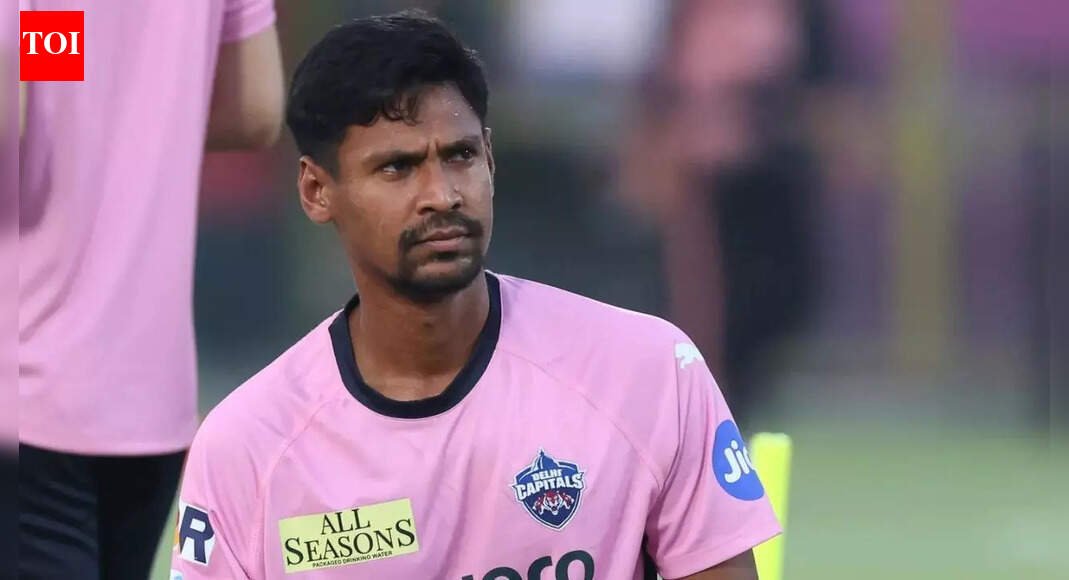
Mustafizur Rahman (PTI Photo)

Masood Uz Zafar Amini, the coach of Indian batter Rinku Singh, has shared his views on the BCCI’s decision to release Bangladesh fast bowler Mustafizur Rahman from the 2026 Indian Premier League season. Amini said that while opinions may differ, the decision taken by the BCCI must be respected by everyone.His comments came after Kolkata Knight Riders confirmed that Mustafizur Rahman was released from their squad following instructions from the BCCI. The decision was taken amid recent developments and growing criticism from several political and spiritual groups.

Mohammed Kaif breaks silence on Mustafizur Rahman–KKR debate

These groups had questioned KKR and team owner Shah Rukh Khan for signing the Bangladeshi pacer during the IPL auction in Abu Dhabi, especially in the backdrop of reports about attacks on Hindu minorities in Bangladesh.Speaking on the issue, Amini stressed that cricket and religion should not be mixed.“If the BCCI has given permission to change the player, then it can be done. But Mustafizur Rahman is a cricketer first; Hindu or Muslim comes later. Other teams in the IPL had also bid for Mustafizur, so as KKR and they eventually took him in. I would like to say that he is a player first and any religion is later. So whatever is the decision of the BCCI, it has to be accepted,” he told news agency IANS. “There should be no politics with players. Playing and politics are different things. People of every religion live and such incidents keep happening. But this should not be associated with the game. However, it’s a decision of the nation and since the BCCI has taken a decision, we have to abide by it,” he further added.Mustafizur Rahman was bought by KKR for Rs 9.2 crore in the December 2025 IPL auction. He has played for several teams over the years. The list includes the likes of Sunrisers Hyderabad, Mumbai Indians, Rajasthan Royals, Delhi Capitals and Chennai Super Kings.Since making his IPL debut in 2016, the Bangladeshi pacer has taken 65 wickets in 60 matches.


Source link

‘Venezuelan forces were waiting’: Trump details how US carried out Caracas strikes; gives ‘larger attack’ warning


'Venezuelan forces were waiting': Trump details how US carried out Caracas strikes; gives 'larger attack' warning
US president Donald Trump

United States President Donald Trump on Saturday claimed that Venezuelan forces were “waiting” for the American forces with “many ships out”.Trump said that despite being in a “ready position”, Venezuelan forces were “completely overwhelmed and very quickly incapacitated”.He said that the US was “ready” to stage a second “and much larger” attack on the country if needed, saying Washington was initially prepared to do a “second wave” and had assumed it would be necessary – but given the success of last night’s attack, it “probably would now not be”.The US President also said the US has “knocked out 97 per cent of drugs coming in by sea”, and claimed that each boat carrying drugs killed 25,000 people on average. Trump said that the lights in Caracas were shut off as the Venezuelan President Nicolas Maduro was captured overnight, praising those involved for executing the mission.“No nation in the world could achieve what America achieved yesterday, or frankly, in just a short period of time, all Venezuelan military capacities were rendered powerless as the men and women of our military, working with us, law enforcement, successfully captured Maduro in the dead of night. It was dark, the lights of Caracas were largely turned off due to a certain expertise that we have,” Trump said in a news conference, adding that “it was dark and it was deadly”.Just minutes before the press brief, Trump posted a photo of Nicolas Maduro in custody on a US naval ship and wearing both a blindfold and handcuffs.“Nicolas Maduro on board the USS Iwo Jima,” Trump wrote on his Truth Social platform, along with a picture showing Maduro hours after he was snatched by US forces.The Venezuelan leader had on what appeared to be noise-cancelling ear muffs and grey Nike-branded sweatpants and a jacket.


Source link