Breaking News
“Miss him everyday”: Jeanie Buss pays heartfelt tribute to Kobe Bryant ahead of escalating controversy with LeBron James | NBA News


"Miss him everyday": Jeanie Buss pays heartfelt tribute to Kobe Bryant ahead of escalating controversy with LeBron James
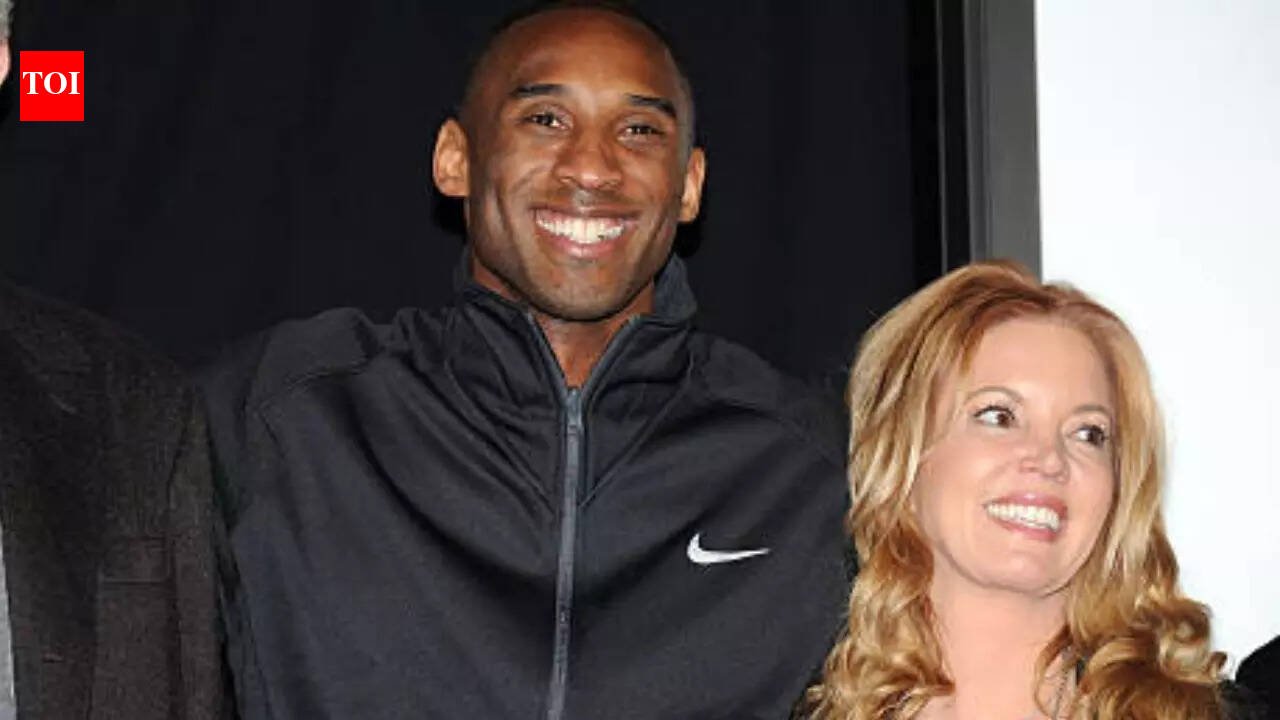
Kobe Bryant and Jeanie Buss. Image via: Getty Images

The James-Buss drama has recently resurfaced and sparked controversy all over the internet. The intense beef between Jeanie Buss and LeBron James has created all sorts of fuss for the Los Angeles Lakers. However, in a similar occurrence of events, Jeanie Buss decided to pay her heartfelt respect to the late Lakers’ legend Kobe Bryant with a heartwarming video that featured the NBA star with Jalen Rose. Rumor has it that the ongoing controversy between LeBron James and Jeanie Buss might cost James his Lakers journey, and he might end up getting traded to a different team. However, again, it’s just a rumor and hence might not be true. But Buss’ relationship with Bryant has always been one step ahead of what she has with James. Let us dive deep into what the Lakers’ governor has tweeted about Kobe Bryant.

Jeanie Buss pens emotional message to Kobe Bryant over growing clash with LeBron James

In a certain occurrence of events, Jeanie Buss paid her heartfelt tribute to the late Los Angeles Lakers legend, Kobe Bryant, saying how she misses the NBA star. “Miss him everyday. Love this clip. #81 @chineseguy88”, Buss tweeted on X. Many fans are speculating over the fact that Buss has shared this clip just to get back at James amid their ongoing beef. She has also claimed that James was ungrateful after Buss traded Bronny James to the Los Angeles Lakers.Jeanie Buss was devastated by the sudden and early demise of the NBA legend Kobe Bryant. As a result, she posted a tweet on X back in 2022, “I miss KB. He would understand and explain everything that I’m not allowed to. Honestly he was the greatest Laker ever. He understood team over self. Meaning your rewards would come if you valued team goals over your own then everything would fall into place. All can reply”.

Jeanie Buss nearly traded LeBron James to rival team over growing beef with Lakers star

According to ESPN’s Baxter Holmes, the Los Angeles Lakers’ governor, Jeanie Buss, nearly crossed a line amid her ongoing beef with LeBron James. She was very close to trading him to their rival team in the NBA. Holmes said, “Jeanie privately bristled at LeBron James’ outsized influence with the organisation, even considering trading him in 2022”. “James wasn’t grateful enough for the team drafting his son, Bronny, in 2014”, continued Baxter Holmes. He confirmed that Buss was just trying to get back at James, as he remained ungrateful over Bronny James’ trade and never took accountability for Russell Westbrook’s infamous trade.


Source link

Navi Mumbai mayor: Ex-civic panel chief, Naik kin frontrunners | Mumbai News


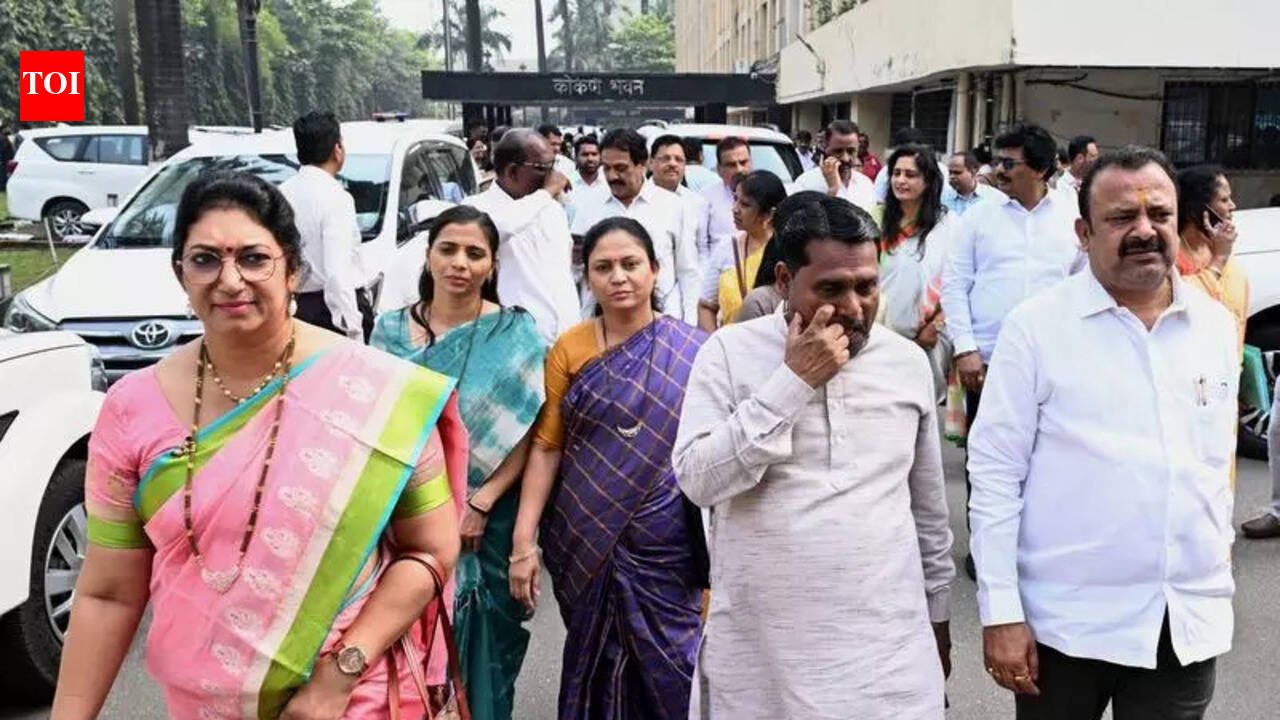
Navi Mumbai: With the Navi Mumbai mayor’s post reserved for a woman after 15 years, former civic standing committee chairperson Netra Shirke emerged as the frontrunner. Rekha Mhatre, a close relative of local heavyweight Ganesh Naik, is another claimant. Other contenders include Shubhangi Patil (Turbhe), Madhuri Sutar (Nerul) and Aditi Naik (Koparkhairane), as well as Vaishnavi Naik, wife of Vaibhav Naik, a nephew of Ganesh Naik. Mhatre’s mother-in-law, Vijaya Mhatre, had served as Navi Mumbai’s second woman mayor in 1998. With the reservation, Sagar Naik, another nephew of Ganesh Naik, missed the bus for the post, but was on Friday appointed BJP’s group leader in NMMC. The party registered 66 corporators, including Independent Bharat Bhoir who extended support, at Konkan Bhavan. In Panvel, Mamata Mhatre, wife of former LoP in the civic body Pritam Mhatre, is leading the race for the mayor’s post reserved for OBC. —B B Nayak


Source link

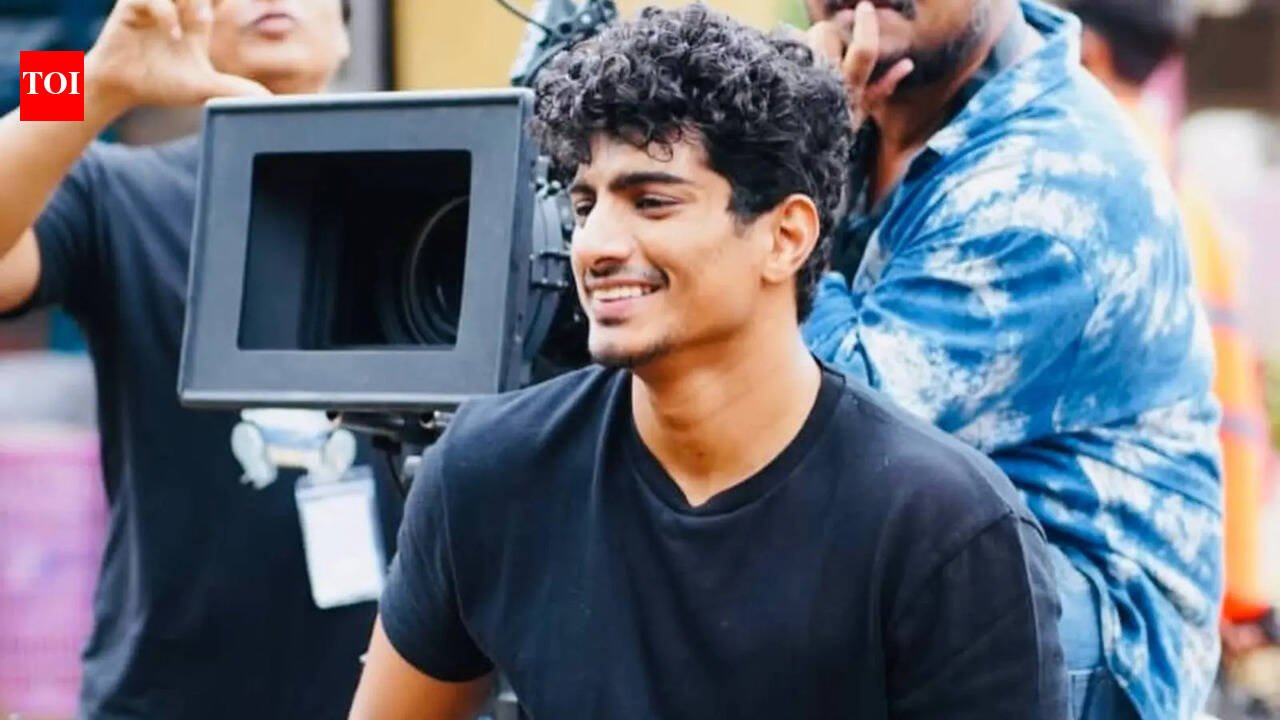
Complaint filed against Palaash Muchhal in Sangli over Rs 40 lakh cheating case by actor-producer; police begin preliminary probe |


A 34-year-old actor and producer has approached the police in Maharashtra’s Sangli district, alleging that he was cheated of Rs 40 lakh by composer and filmmaker Palaash Muchhal. Police confirmed on Thursday that no First Information Report (FIR) has been registered so far in the matter. The complainant, identified as Vidnyan Mane, a local resident, submitted an application seeking the registration of an FIR against Muchhal to the Sangli Superintendent of Police on Tuesday, an official told PTI.

Did Palash Muchhal Cheat On Smriti Mandhana? Speculations Go Viral!

According to the complaint, Palaash Muchhal met Mane in Sangli on December 5, 2023. During their meeting, Mane reportedly expressed interest in investing in film production. Muchhal allegedly offered him the opportunity to invest as a producer in his upcoming project, Nazaria.

Alleged promise of profit and acting role

As per the complaint, Muchhal told Mane that after the film’s release on OTT platforms, he could earn a profit of Rs 12 lakh on an investment of Rs 25 lakh. He also allegedly offered Mane a role in the film. The two reportedly met twice after that, following which Mane allegedly transferred a total of Rs 40 lakh to Muchhal by March 2025.The complaint states that the project did not get completed. When Mane demanded his money back, he allegedly received no response. He then approached the Sangli police seeking action in the matter. Police officials said that a preliminary probe is currently underway.

Smriti Mandhana’s Close Friend, Radha Unfollows Palash Muchhal Amid Cheating Controversy!

Controversy follows personal setback

This development comes barely a month after Palaash Muchhal’s wedding to Smriti Mandhana was called off. The couple was scheduled to get married on November 23, but the wedding was postponed after Smriti’s father, Shriniwas, was hospitalised due to a heart ailment.Later, Palaash issued a statement saying that he had “decided to move on” and expressed anguish over what he described as baseless online chatter. He had urged people to reflect before amplifying unverified claims.After the high-profile wedding to cricketer Smriti Mandhana was called off, filmmaker Palash Muchhal was recently reported returning to work. He announced a new directorial project starring Shreyas Talpade, who will portray a common man in a Mumbai-based story. This film marks Mucchal’s first creative venture following the recent personal setback.

Palaash Muchhal shifts focus back to films

After maintaining a relatively low profile in recent weeks, Palaash Muchhal has now shifted his attention back to professional commitments. The composer-turned-filmmaker is set to begin work on his next directorial project, marking a return to cinema following a period of heightened public attention.The yet-untitled film will feature Shreyas Talpade in a key role and is expected to go on floors soon. Set against the backdrop of Mumbai, the project will see Shreyas Talpade playing a common man, with Palaash Muchhal directing the film himself.Details regarding the storyline, supporting cast, and even release timeline haven’t been disclosed yet. However, it is believed that the shoot will shortly go on the floors in Mumbai.


Source link

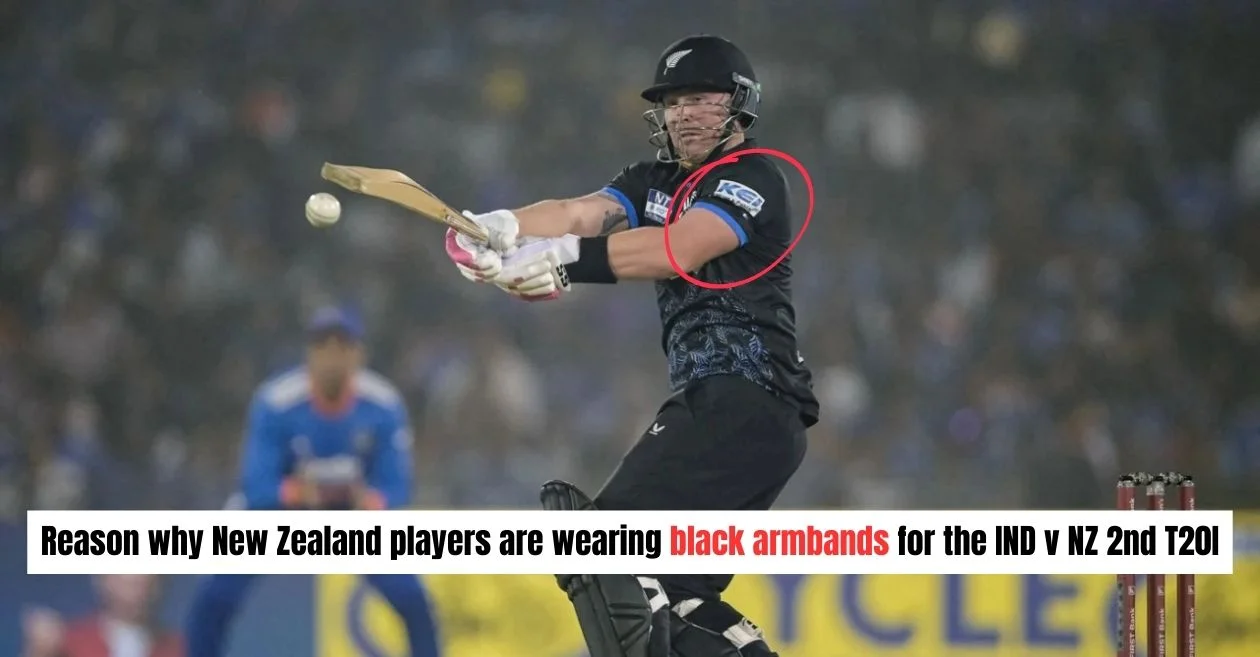
EXPLAINED: Why New Zealand players are wearing black armbands during IND v NZ 2nd T20I in Raipur


Fans at the Shaheed Veer Narayan Singh International Stadium in Raipur quickly noticed a somber detail as the New Zealand players took the field for the second T20I against India on January 23. The Black Caps players were seen wearing black armbands, a gesture that stood in stark contrast to the high-energy atmosphere of the five-match series.

Reason why New Zealand players are wearing black armbands for the IND v NZ 2nd T20I in Raipur

As per Sportsdunia report, During the live broadcast, legendary commentator and former cricketer Ian Smith provided a somber clarification for the tribute, noting that the team is playing with heavy hearts. Smith explained that the black armbands are being worn to honor the victims and support those affected by the catastrophic storms and landslides currently ravaging the North Island On January 22, record-breaking rainfall triggered a massive landslide at a popular holiday campsite at the base of Mount Maunganui.

The disaster struck the Beachside Holiday Park during the peak summer holiday season, burying cabins and campervans under tonnes of mud. At least two people have been confirmed dead in a separate landslide in nearby Welcome Bay, while several others, including children, remain missing at the Mount Maunganui site. Emergency Management Minister Mark Mitchell has described the affected areas as resembling a ‘war zone,’ with a state of emergency declared across five regions, including Northland and the East Cape.

Also READ: IND vs NZ: Here’s why Jasprit Bumrah, Axar Patel and others are not playing today’s 2nd T20I match in Raipur

A blistering start for New Zealand in Raipur against India

Despite the heavy hearts, the Black Caps started the second T20I with aggressive intent after being asked to bat first by Indian captain Suryakumar Yadav. Devon Conway set the tone immediately, smashing Arshdeep Singh for 18 runs in the opening over, including a signature six over backward point. However, the breakthrough for India came in the fourth over when Harshit Rana, replacing a rested Jasprit Bumrah, removed Conway for 19. Tim Seifert followed shortly after, falling to Varun Chakaravarthy for 24 off 13 balls. At the 10-over mark, New Zealand reached 111/3, with Rachin Ravindra nearing a half-century and keeping the visitors in the hunt to level the series following their 48-run defeat in the opening game at Nagpur.

Also READ: IPL 2026: RCB’s new owner revealed? Billionaire vaccine mogul confirms bid for Bengaluru franchise


Source link

Access Denied


Access Denied

You don’t have permission to access “http://www.ndtv.com/india-news/on-camera-2-die-as-speeding-bike-veers-rams-highway-railing-in-telangana-10864437” on this server.

Reference #18.adf5d217.1769179835.1782cbe8

https://errors.edgesuite.net/18.adf5d217.1769179835.1782cbe8


Source link

Bloodbath on D-Street! Investors lose over Rs 16 lakh crore this week as Nifty, Sensex crash; market down 5% from lifetime highs


Bloodbath on D-Street! Investors lose over Rs 16 lakh crore this week as Nifty, Sensex crash; market down 5% from lifetime highs
Market participants said sentiment was further undermined by a shift towards safe-haven assets and persistent foreign fund outflows. (AI image)

It’s a bloodbath on Dalal Street! Indian stock market indices, Nifty50 and BSE Sensex, have crashed over 2% this week, leading to investors losing over Rs 16 lakh crore. Even as US President Donald Trump’s tariff threats on the EU and ongoing geopolitical uncertainties frayed global market nerves at the start of the week, Indian equities did not recover once the tensions eased.Indian stock markets witnessed sharp volatility this week, and ended significantly lower. The week started with heavy selling, dragging Nifty close to 25,000 and Sensex below 81,500, followed by a brief mid-week rebound where Nifty recovered to around 25,290 and Sensex moved above 82,300. However, the recovery was short-lived, and selling pressure returned, pushing Nifty back near 25,050 and Sensex to around 81,540 by the end of the week. On a weekly basis, the Sensex declined 2,032.65 points, or 2.43 per cent, while the Nifty shed 645.7 points, or 2.51 per cent.Reflecting the sharp correction, the market capitalisation of BSE-listed companies dropped by Rs 6,95,963.98 crore on Friday to Rs 4,51,56,045.07 crore, or $4.93 trillion. Over the course of the week, total market value eroded by Rs 16,28,561.85 crore. Equity benchmarks Sensex and Nifty extended their slide on Friday, closing around 1% lower as broad-based selling pressure intensified alongside the rupee sinking to an all-time low against the US dollar. For the first time, the rupee depreciated to a level of 92 per dollar intra-day, before showing a marginal recovery to close at 91.88.BSE Sensex dropped 769.67 points, or 0.94 per cent, to finish at 81,537.70. Market breadth remained weak on the BSE, with 2,989 stocks ending in the red, 1,229 advancing and 143 closing unchanged.The NSE Nifty also ended sharply lower, falling 241.25 points, or 0.95 per cent, to settle at 25,048.65. Markets slipped sharply despite a firm start, as steep declines in several heavyweight stocks, including shares of the Adani Group, amplified selling pressure through the session. Within the Sensex pack, stocks such as Adani Ports, Eternal, IndiGo, Axis Bank, Bajaj Finserv, Power Grid, Bharat Electronics, State Bank of India, Maruti Suzuki India, Bajaj Finance, NTPC, Trent, Larsen & Toubro and Reliance Industries ended as the major drags.

Why are stock markets crashing?

Muted quarterly performances from index heavyweights such as ICICI Bank and HCL Technologies dampened market mood, strengthening concerns that a strong turnaround in earnings remains distant. At the same time, rising crude oil prices and a sharp slide in the rupee, which slipped to a new record low despite intervention by the Reserve Bank of India, intensified macroeconomic worries related to inflationary pressures and the trade gap, said Gaurav Garg of the Lemonn Markets Desk.Market participants said sentiment was further undermined by a shift towards safe-haven assets and persistent foreign fund outflows, with the absence of any strong domestic cues adding to the unease.Apart from this, one of the other cited factors for Indian stock markets lagging compared to global peers over the last year has been the absence of any major visible players in the field of artificial intelligence. India has remained on the sidelines of the powerful AI-driven rally that has shaped global equity markets in 2025, missing out on gains seen across several major economies. On the other hand AI winners like the US, China, Taiwan and South Korea gained substantially.

What are experts saying?

Mehul Kothari, DVP – Technical Research, Anand Rathi Shares and Stock Brokers says that the decline is driven by persistent FII outflows, weak Q3 earnings trends—especially in IT and consumption sectors—continued rupee weakness, and lingering global trade-related uncertainties, which collectively outweighed intermittent positive global cues and kept sentiment firmly risk-averse.Thomas V Abraham, Research Analyst, Mirae Asset ShareKhan also said that markets faced selling pressure fueled by ongoing FII outflows and profit-taking before an extended weekend. “Market participants adopted a risk-averse posture due to geopolitical risks stemming from stalled US trade talks and intensifying US-Europe frictions, with overseas funds’ persistent selling magnifying the broader downturn,” he told TOI.“Adani group stocks represent roughly 2.93% of the Nifty 50’s total weight. Their substantial 8-13% declines today magnified the index’s roughly 1% retreat, outpacing positive moves in other areas during the session’s pervasive sell-off,” he said.According to a Reuters report, Adani group stocks shed $12.5 billion in market capitalisation after the US SEC sought court nod to issue summons.Vinod Nair, Head of Research, Geojit Investments Limited is of the view that the market direction in the coming week is likely to be driven by global macroeconomic signals and domestic fiscal expectations. “Investors will closely track guidance from the Fed on the trajectory of interest rate cuts, while positioning may be influenced by anticipation surrounding the Union Budget, particularly any measures aimed at easing external trade pressures and supporting capital flows,” he says. “With the Q3 earnings season still underway, stock-specific movements are expected to remain prominent. Overall sentiment is likely to stay cautious, shaped by global developments, currency trends, and earnings outcomes, with selective opportunities emerging in segments supported by resilient domestic demand,” he added.(Disclaimer: Recommendations and views on the stock market, other asset classes or personal finance management tips given by experts are their own. These opinions do not represent the views of The Times of India)


Source link

T20 World Cup row: ICC considers ‘strict action’ against Bangladesh; Jay Shah in Dubai for final decision | Cricket News


T20 World Cup row: ICC considers 'strict action' against Bangladesh; Jay Shah in Dubai for final decision
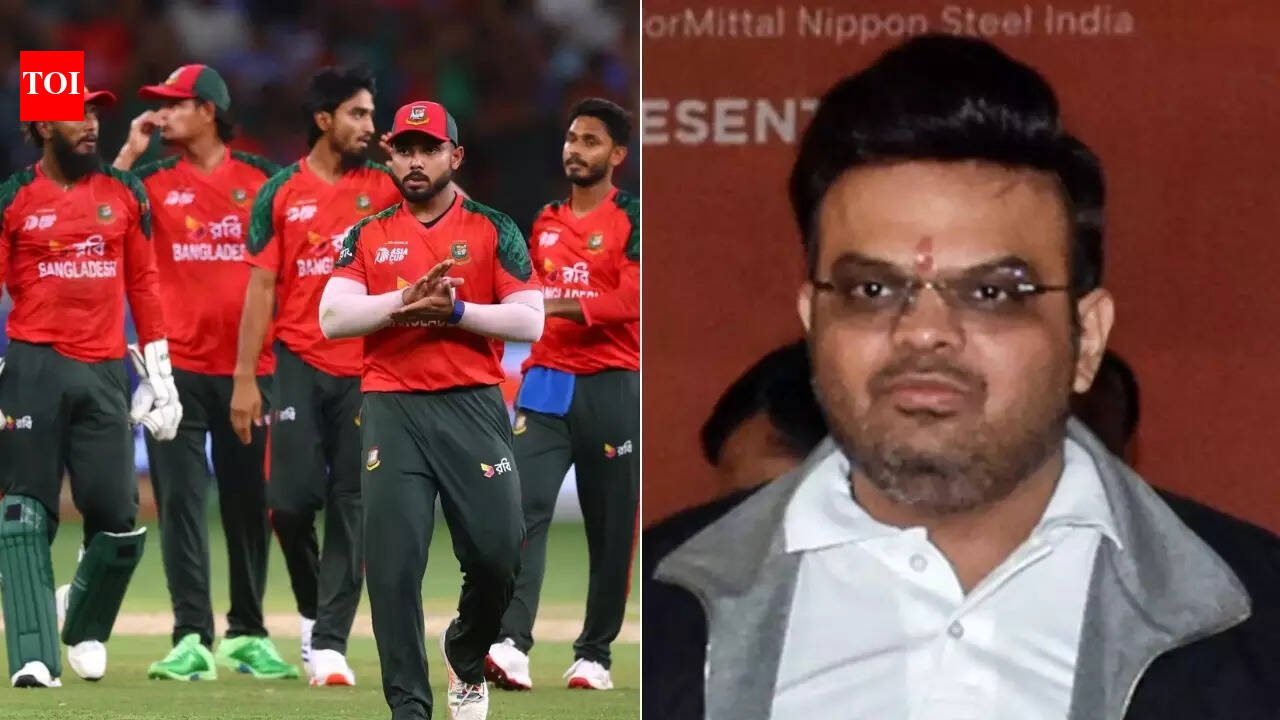
Bangladesh Cricket team players (left) and Jay Shah

The ICC is considering action against Bangladesh after the country refused to tour India for the ICC Men’s T20 World Cup 2026, news agency ANI reported on Friday, quoting sources. ICC chairman Jay Shah is currently in Dubai, where a final decision on the matter is expected.The development comes a day after Bangladesh declined to send its national team to India for next month’s T20 World Cup after the ICC rejected its request to shift matches out of the country. The refusal has opened the possibility of Scotland replacing Bangladesh in the tournament.

Jay Shah’s 2036 Olympic blueprint for India: ‘8 Medals won’t cut it’

The ICC had earlier issued an ultimatum to Bangladesh on Wednesday, asking it to either agree to travel to India or risk being replaced. The world body said there was no credible threat to the safety of Bangladesh players, officials or fans. Bangladesh was given time until Thursday to respond. Scotland is next in line based on rankings for the tournament, which begins on February 7 in India and Sri Lanka.After a meeting with national team players, Bangladesh sports adviser Asif Nazrul said Thursday that the ICC’s security assessment was not acceptable to them.“While our cricketers have worked hard to qualify for the World Cup, the security risk regarding playing in India remains unchanged. This concern is not based on abstract analysis…,” Nazrul said at a press conference while announcing that Bangladesh would not play in India.“…we are not convinced that they can ensure the safety of our entire team, journalists, and spectators.”“We are not giving up hope yet; our team is ready. We expect the ICC to provide justice by considering our genuine security risks and allowing us to play in Sri Lanka,” he added.The Bangladesh Cricket Board (BCB) has also approached the ICC’s independent Dispute Resolution Committee (DRC) seeking relocation of Bangladesh’s matches outside India for the ICC Men’s T20 World Cup 2026, according to The Daily Star.The ICC Dispute Resolution Committee is an independent arbitration body that deals with disputes involving the ICC, its member boards, players and officials.If Bangladesh withdraws from the tournament, Scotland is likely to replace them based on current rankings.The issue began after Bangladesh pacer Mustafizur Rahman was removed from Kolkata Knight Riders’ squad for the upcoming Indian Premier League (IPL) 2026 season on the BCCI’s instructions, citing unspecified “developments all around”.Following Rahman’s removal, the BCB said its team would not travel to India for its T20 World Cup group matches scheduled in Kolkata and Mumbai, citing security concerns.The BCB has sought permission to play all four of its group-stage matches in Sri Lanka, where the India-Pakistan match will also be played under the agreed hybrid arrangement for ICC events until 2027.


Source link

Trump tariffs, falling rupee: What are the biggest risks to India’s growth story & can the Budget protect it?


Trump tariffs, falling rupee: What are the biggest risks to India’s growth story & can the Budget protect it?
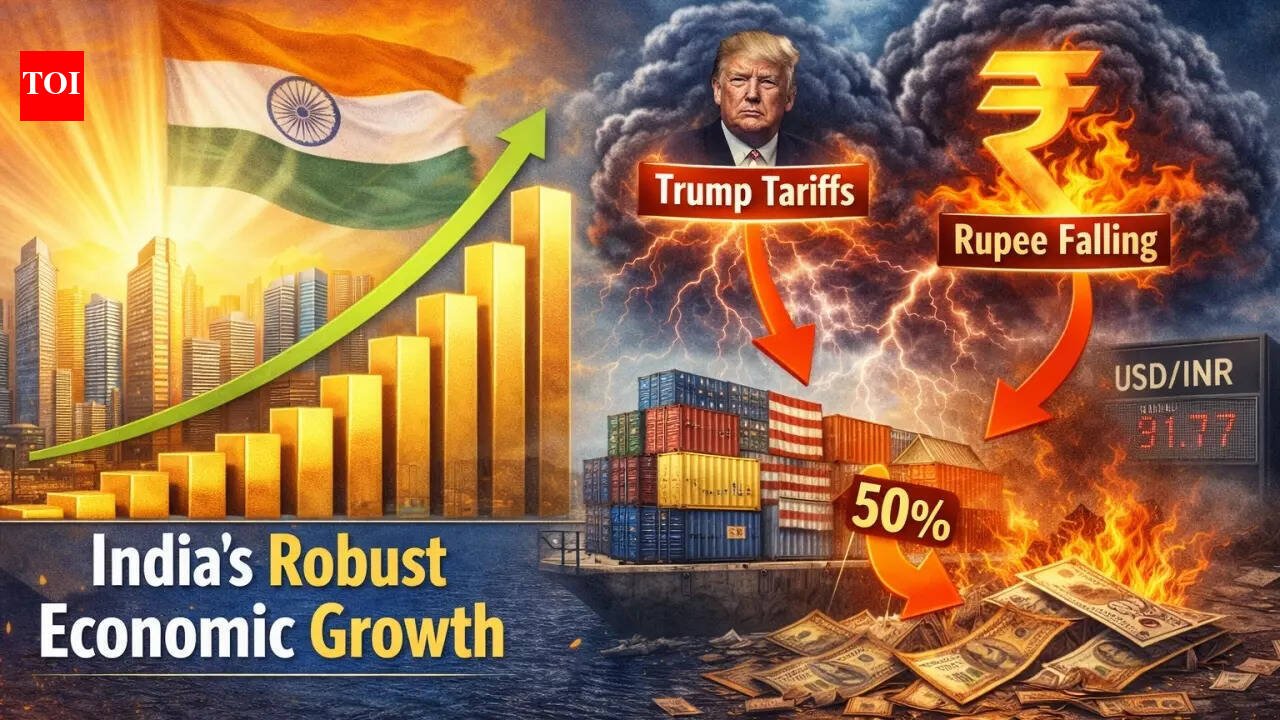
Even as India’s GDP growth has beaten forecasts so far this financial year – the big question is can it continue to grow well amidst the global economic storm? (AI image)

India is the world’s fastest growing economy – with an over 6-7% GDP growth rate – the world’s fifth largest economy is driving global growth. The International Monetary Fund (IMF) has acknowledged India as a key growth engine for the world. But amidst increasing geopolitical and economic risks, especially US President Donald Trump’s policy uncertainty and tariff war, India’s growth story faces external headwinds.Even as India’s GDP growth has beaten forecasts so far this financial year – the big question is can it continue to grow well amidst the global economic storm? Indian stock markets had a poor 2025, the rupee was the worst performing currency in 2025, and an India-US trade deal is yet to be finalised. Adding to injury, India faces 50% tariffs from the Trump administration, denting its exports. India’s growth is majorly domestic driven, yet global turbulence plays a key role in an increasingly interconnected world.

Why India Is Cautious Of Donald Trump’s Board Of Peace Despite A Direct Invite To PM Modi

In this backdrop, Finance Minister Nirmala Sitharaman’s Union Budget 2026 assumes significance. What are the risks to India’s robust and resilient growth story, and what can Budget 2026 do to mitigate them? We ask economists:

What Are The Biggest Risks To India’s Growth Story?

Most economists surveyed by the Times of India Online point to two main risks: rupee depreciation, and Trump’s trade war and tariffs. The challenging external environment may weigh on India’s growth story, even though it is largely domestic demand driven.Economists believe that the rupee’s free fall may lead to imported inflation. They stress the need for the government to stick to the path of fiscal credibility. Economists warn of trade and tariff-led shocks unless an India-US trade deal is finalised. Madan Sabnavis, Chief Economist at Bank of Baroda doesn’t see any domestic headwinds. “The Indian economy is largely a domestic economy and here we do not see any major risk besides the usual assumption of a normal monsoon. The risk on the external side is still in the realm of tariffs as the affected industries are dependent on export markets of which the USA is a major player. This can be addressed by incentives on the credit side as well as direct support based on performance,” he tells TOI. Yuvika Singhal, Economist at QuantEco tells TOI, “The biggest macro risk India faces is from global uncertainty and rupee depreciation. In a global environment marked by heightened escalation of trade wars and economic policy uncertainty, it is essential to remain steadfast towards preserving domestic macro stability.”Ranen Banerjee, Partner, Government Sector Leader at PwC India agrees that the macroeconomic risks that India faces is on the exchange rate front as in the event the outflow of capital continues combined with headwinds to exports, the currency will be under pressure. “This could inflate the import bills and feed into inflation and put pressure on the current account balance. Since the monetary policy is outside the purview of the budget, the only way the budget can support the macro is through continued adherence to fiscal prudence by keeping the deficit in check, reducing the debt GDP ratio and keeping the quality of budgetary spend high,” he explains.Sujan Hajra, Chief Economist & Executive Director at Anand Rathi Group says that the biggest macro risk he sees in FY27 is the trade shock from higher US tariffs, given India’s export dependence on a few advanced economies.According to Rumki Majumdar, Economist at Deloitte India the biggest risks to India’s growth story are weak credit transmission despite RBI easing (MSME/household lending lag), inflation resurgence as demand accelerates (imported inflation from tariffs/INR depreciation), fiscal pressure from slower revenues amid external headwinds and reforms, and external shocks such as tariff hikes, FPI outflows, currency volatility; delayed India–US trade deal. For Dr DK Srivastava, Chief Policy Advisor, EY India buoyancy of tax collections is a factor that the government should keep in mind. “GST collections will go down and continue to remain low even in the next year. So there is a risk to fiscal consolidation that may emanate because of the fact that GST revisions took place and the rate effect has been immediate. The expectation was that the tax base will improve as consumption demand improves, but although it is improving, it is not enough to wipe out the GST reduction. This will have an impact on the budgetary, fiscal consolidation. So that is one risk to the other,” he tells TOI.Yet another factor he points to is: longer term risk related to household financial savings that have been falling relative to GDP over time now.Rishi Shah, Partner and Economic Advisory Services Leader at Grant Thornton Bharat flags the volatile geopolitical environment, fragmented global trade and increasingly fragile capital flows as risks for India. “While spending on AI and technology has supported growth across developed markets, this cycle seems narrow and possibly vulnerable. Any disruption could trigger risk-off behaviour, with capital flowing back to perceived safe havens, raising volatility in emerging-market currencies and asset prices,” he says.Sachchidanand Shukla – Group Chief Economist at Larsen & Toubro also cautions that resurgence of geopolitical risks and uncertainty over tariffs even though the IMF’s World Economic Outlook of January 2026 hints that the global economy has shaken off this shock are risks.

What Can Budget 2026 Do To Mitigate Macro Risks?

Crediting the government for sticking to the fiscal consolidation path, Yuvika Singhal says, “Post the initial COVID shock, India has displayed remarkable fiscal prudence in gradually scaling back the pandemic-era stimulus along with reinvigorating appetite for reforms. It is also imperative that the entrepreneurs’ animal spirits are rekindled to build real businesses. On the fiscal side, although the level of deficit/debt for India remains higher than that of its peers in advanced/emerging economies, the resolve and the pace of fiscal consolidation has been commendable.“We believe the government should uphold the ethos of prudent fiscal consolidation and target a 1 percentage point reduction in its Gross Debt-to-GDP ratio from 56.1% in FY26 BE to 55.1% in FY27. Assuming Nominal GDP to grow by 10.0-10.5% in FY27, this could translate into an effective fiscal deficit range of 4.1-4.3% of GDP. In our opinion, the broader fiscal arithmetic would be formulated with an implied baseline target of 4.2% fiscal deficit/GDP ratio, which will provide two-way fiscal flexibility to the government. If growth momentum disappoints, then fiscal compression could go easy, with the deficit veering towards 4.3% of GDP by the end of FY27. On the other hand, if growth momentum surprises on the upside, the government could utilize the opportunity to deepen the counter-cyclical thrust by tightening the fiscal deficit to 4.1% of GDP by the end of FY27,” she adds.Sujan Hajra of Anand Rathi Group explains that since exports support over 40 million jobs, Budget 2026 needs to focus on targeted support for labour-intensive sectors such as textiles, leather and electronics to protect employment and competitiveness.“At the same time, the sharp increase in welfare spending by states is crowding out productive capex, with revenue expenditure dominating state budgets. The Budget can address this by linking central loans and additional borrowing space to capex utilisation, while creating capex-linked incentives for states, ensuring fiscal support strengthens medium-term growth rather than consumption-led pressures,” he tells TOI. Rumki Majumdar of Deloitte India prescribes the following responses from Budget 2026 for the economy:

  • Credit pipes: strengthen cashflow for MSMEs that are facing export stress, enforce payment timelines, and use targeted credit guarantees to help scale MSMEs
  • Supplyside disinflation: invest in logistics, power reliability, fixing legacy infrastructure issues, better service delivery in driving investment decisions. Already on the cards, customs reforms to ease bottlenecks
  • Fiscal anchor: Keep deficit to the target, disinvestments, better asset utilization, communicate a medium-term debt-to-GDP glide path while preserving capex multipliers
  • External diversification: accelerate FTA sequencing and utilization, and services mobility to offset single market risks.

Rishi Shah of Grant Thornton Bharat feels that Budget 2026 should prioritise resilience and sustainability. “Maintaining a strong pipeline of public capital expenditure remains critical to anchor growth and crowd in private investment when global capital flows turn cautious. At the same time, improving efficiency of expenditure and maintaining credible deficit trajectories will be key to preserving investor confidence. Finally, a sustained push on productivity, innovation and capability building—rather than incremental incentives—will be essential to ensure durable, domestically driven growth that can withstand external shocks,” he tells TOI.


Source link

Tension in Tarana after clashes between two groups; bus torched, shops damaged | Bhopal News


Tension in Tarana after clashes between two groups; bus torched, shops damaged

INDORE: Tension continued in Tarana town of Madhya Pradesh’s Ujjain district on Friday following clashes between two groups that erupted a day earlier, leading to incidents of arson, stone pelting and damage to public and private property.The situation escalated on Friday when unknown elements allegedly pelted stones at houses, breaking window panes. Miscreants also targeted a bus, which was set on fire, while some shops were damaged, police said.The clashes had first broken out on Thursday evening in Tarana, located around 35 km from the Ujjain district headquarters, leaving around six people injured. The atmosphere remained tense on Friday as protests intensified in the town.Police said incidents of violence were reported on Friday, following which security arrangements were strengthened. A crowd gathered after Friday prayers, during which roads were blocked and sporadic incidents of violence were reported, further escalating tensions.Videos showing a bus being torched and damage to property circulated on social media, adding to concern among residents. Police officials said the videos are being examined as part of the investigation.Ujjain superintendent of police Pradeep Sharma said the situation is under control. “Violence was reported on Friday. Around 15 to 20 people have been arrested so far, and additional police force has been deployed in sensitive areas,” Sharma said.Police have registered cases related to stone pelting, arson and rioting. Five accused have already been arrested in connection with Thursday’s assault incident, while a search is on for another accused, officials said.As a precautionary measure, prohibitory orders under Section 163 of the Bharatiya Nyaya Sanhita (BNS) have been imposed in the town to prevent further escalation.Senior officials said continuous patrolling and flag marches are being carried out, and residents have been urged to maintain peace and refrain from spreading rumours.


Source link

J&K encounter: Jaish terrorist killed in Kathua; was a Pakistani national | India News


J&K encounter: Jaish terrorist killed in Kathua; was a Pakistani national

NEW DELHI: A Pakistani terrorist was killed in an anti-terror operation in Jammu and Kashmir‘s Kathua, police said on Friday. The terrorist was from the Pakistan-based Jaish-e-Mohammed (JeM) terror outfit.“A Pakistani Jaish terrorist has been neutralised by a small JKP team in a joint operation with the Army and CRPF in the general area of Billawar, Kathua district,” IGP Jammu said in a post on its X handle.According to the Army’s White Knight Corps, the anti-terror operation is still underway.“Acting on specific intelligence inputs, Joint Operation was launched by the Army and Police on 23 Jan in the general area Parhetar, Kathua. The area was cordoned, and contact was established. In a precise strike by the joint forces, 1 foreign terrorist has been eliminated. Search operations are continuing,” Security forces have intensified search operations in the area to ensure there are no remaining terrorists hiding in the vicinity.


Source link