Breaking News
Navi Mumbai doctor uses dialysis catheter for heart, drains 1.5-litre fluid buildup | Mumbai News


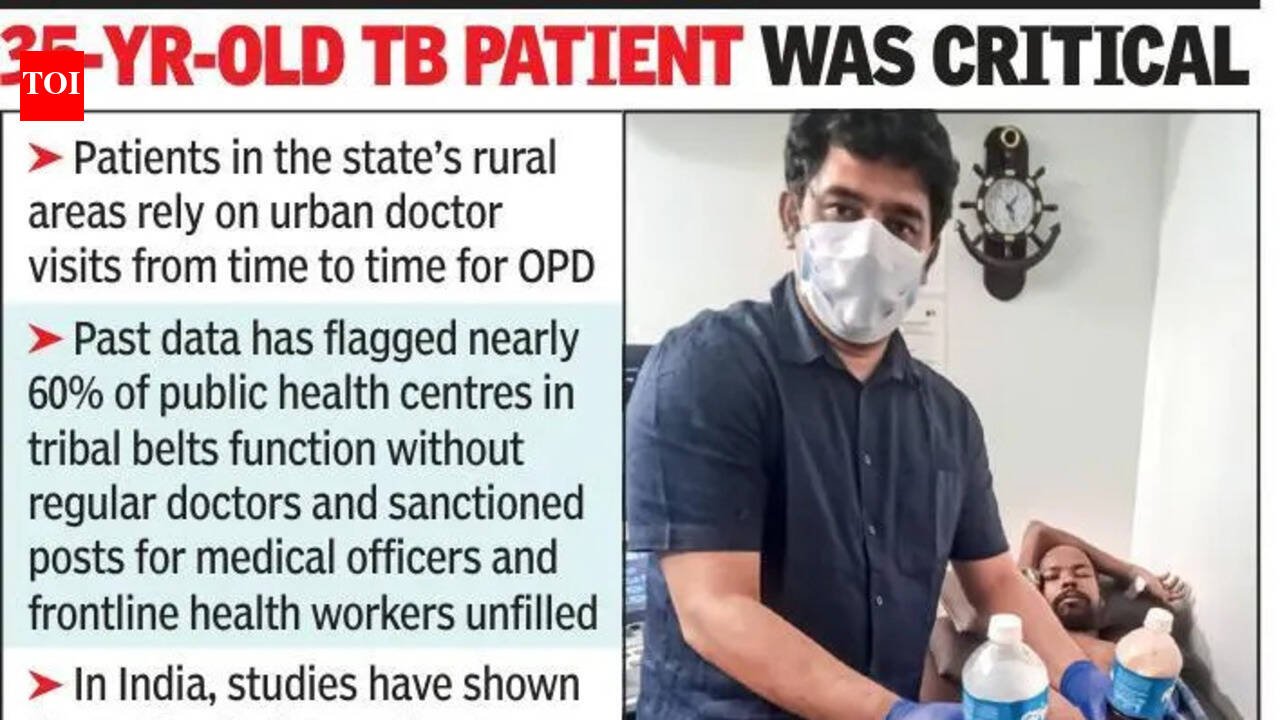
Mumbai: Forced to improvise in a rural setting with no cardiac cath lab anywhere within 70 km, a Navi Mumbai doctor saved a man from the brink of death using a kidney dialysis catheter to drain fluid suffocating his heart. The 35-year-old TB patient from a tribal community arrived at his Sunday OPD in Roha critical.Manohar Pawar and his family reached Dr Anup Mahajani’s OPD at Jadhav Nursing Home from Nandgaon, 25 km away. “I was about to leave when a group arrived with a man lying in the back of a van,” Dr Mahajani recalled. A 2D echo showed cardiac tamponade, which is severe fluid build-up in the pericardial sac, putting deadly pressure on the heart.“The family was informed the procedure required further travel, but they insisted on immediate treatment due to lack of funds and the realisation that time was running out,” said Dr Mahajani, who is attached to Medicover Hospital in Navi Mumbai. Manohar’s wife, Vinita, said residents in her hamlet usually have no choice but to travel long distances to J J Hospital or MGM in Kamothe for advanced care.The standard procedure, pericardiocentesis, involves inserting a needle and guidewire into the pericardium to drain fluid. However, specialised equipment, which is common in cath labs, was unavailable at local pharmacies.“We called around, but no one had the cardiac kit. It clicked that a dialysis catheter functions similarly. The pharmacist had one in stock by luck, so we decided to move forward,” Dr Mahajani said.This was risky. While a cardiac catheter is thin and flexible, a dialysis catheter is thicker and stiffer. Furthermore, Dr Mahajani lacked fluoroscopy, which provides continuous X-ray imaging during such procedures. Working in a sonography room with adapted infection control, Dr Mahajani performed the procedure “blind”, relying solely on a 2D echo in one hand to guide the needle with the other. “Once the needle was inside, I had to confirm placement via echo while simultaneously operating,” he said. As the fluid drained, the pressure eased. Manohar’s blood pressure stabilised at 100/70 mm Hg, his breathing improved, and he regained consciousness. There was more fluid to drain, but to avoid further risk, just 1.5 litres was drained. He was moved to JJ Hospital to drain the rest. “He is getting better,” his family confirmed. Dr Ajay Mahajan, head, cardiac department, KEM Hospital, said, “It is a very easy procedure, but can be a challenge in resource-scarce setups. Anything can go wrong when it comes to the heart if using a dialysis catheter. The doctor had no choice but to save a life.”


Source link

Times Internet Half Marathon 2026: The men who defined the 21K with power & precision | India News


Times Internet Half Marathon 2026: The men who defined the 21K with power & precision

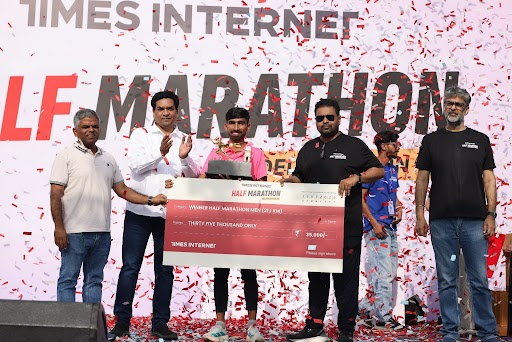
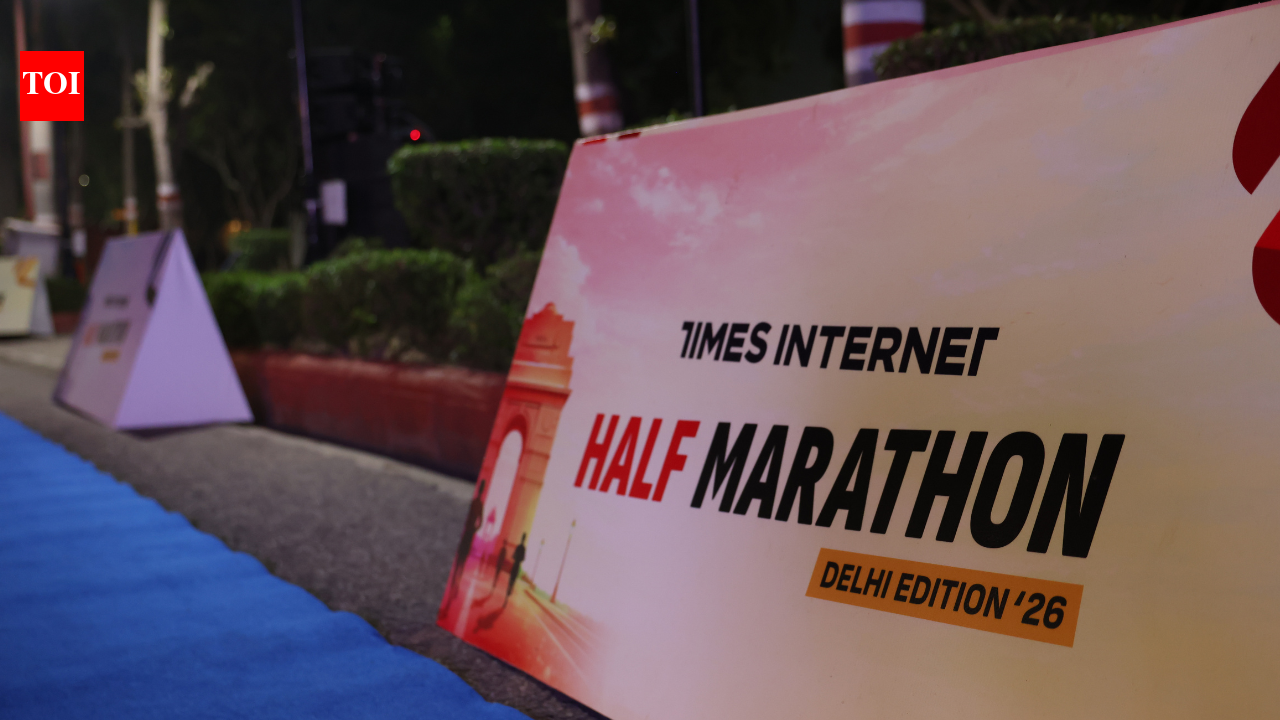
The Times Internet Half Marathon 2026 brought Delhi to life in a spectacle of endurance, discipline, and collective energy, as over 15,000 runners gathered to test their limits on one of the city’s most iconic routes.The build-up began on March 27th and 28th at the Marathon Expo – a vibrant convergence of athletes, enthusiasts, and fitness communities. The venue buzzed with anticipation, conversations, and a shared commitment to the run. It was more than a pre-race ritual; it was the ignition point of a movement that would soon take over the city.On the morning of March 29th, as the first light broke over India Gate, that anticipation transformed into action. Thousands of runners lined up, each carrying a personal goal, a story, and a reason to run. The early kilometres were marked by energy and momentum, but as the race progressed, the true nature of the half marathon revealed itself. The 21K is not merely a test of speed – it is a measure of resilience, pacing, and mental strength. As fatigue set in and the distance began to challenge even the most prepared, the race separated the determined from the exceptional. Amidst this, three runners rose above the rest – not just as winners, but as defining figures of the race.

Mukesh Kumar: Experience that led from the front

Mukesh Kumar’s run was a masterclass in control and composure. From the outset, he displayed the calm assurance of a seasoned athlete, maintaining a steady pace while others surged ahead in bursts of early enthusiasm.As the race entered its demanding middle phase, Mukesh began to assert his presence. With calculated precision, he increased his pace, capitalising on the fatigue creeping into the field. There was no visible urgency – only confidence, built on experience and deep understanding of long-distance racing.He crossed the finish line in 1:07:24, securing first place with authority and reinforcing the value of patience and strategy in a race defined by endurance.

Mukesh Kumar

Vishnu Kumar: The emergence of a new force

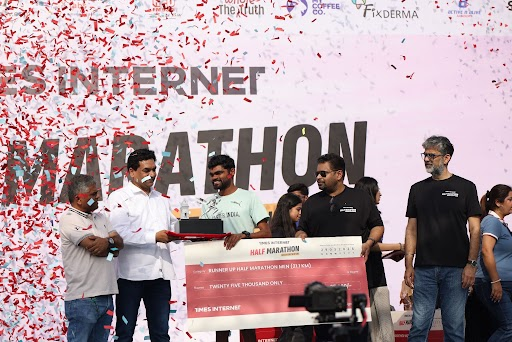
In a field dominated by seasoned runners, Vishnu Kumar delivered a performance that signalled the arrival of a promising new contender.Running with discipline and intent, he stayed within striking distance of the lead pack through the early and middle stages of the race. His approach reflected maturity – measured pacing, controlled breathing, and a clear focus on sustaining momentum.As the race intensified in its final stretch, Vishnu held his ground with remarkable consistency, refusing to yield under pressure. He secured second place with a timing of 1:08:26, marking a breakthrough moment in his running journey.More than a podium finish, it was a statement of potential – one that positions him as a runner to watch in the seasons ahead.

Vishnu Kumar

Shivam: Precision, patience, and a perfect finish

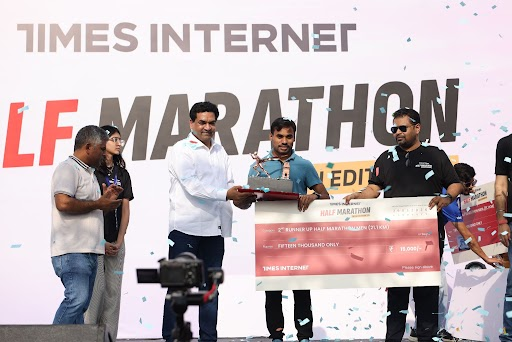
Shivam’s race was defined by strategy – a calculated approach that paid off when it mattered most.Opting for in the early kilometres, he resisted the temptation to match the initial pace of the leaders. Instead, he conserved energy, focusing on maintaining rhythm and efficiency.That decision proved decisive in the latter stages of the race. As fatigue began to impact others, Shivam accelerated with purpose. His late surge saw him overtake multiple runners, turning patience into performance.He finished third with a timing of 1:08:59, delivering a run that highlighted the importance of timing, discipline, and tactical awareness in long-distance racing.

Shivam

More than a race, a benchmark of excellence

The Times Internet Half Marathon 2026 was not just about crossing the finish line – it was about pushing boundaries, embracing challenges, and redefining what is possible.In a race that saw thousands participate, Mukesh Kumar, Vishnu Kumar, and Shivam stood apart – not just for their timings, but for the stories their runs told. Stories of preparation, perseverance, and the relentless pursuit of excellence.They did not simply win the race.They set the standard.


Source link

Times Internet half marathon: Women who stood strong in the 21K | India News


Times Internet half marathon: Women who stood strong in the 21K

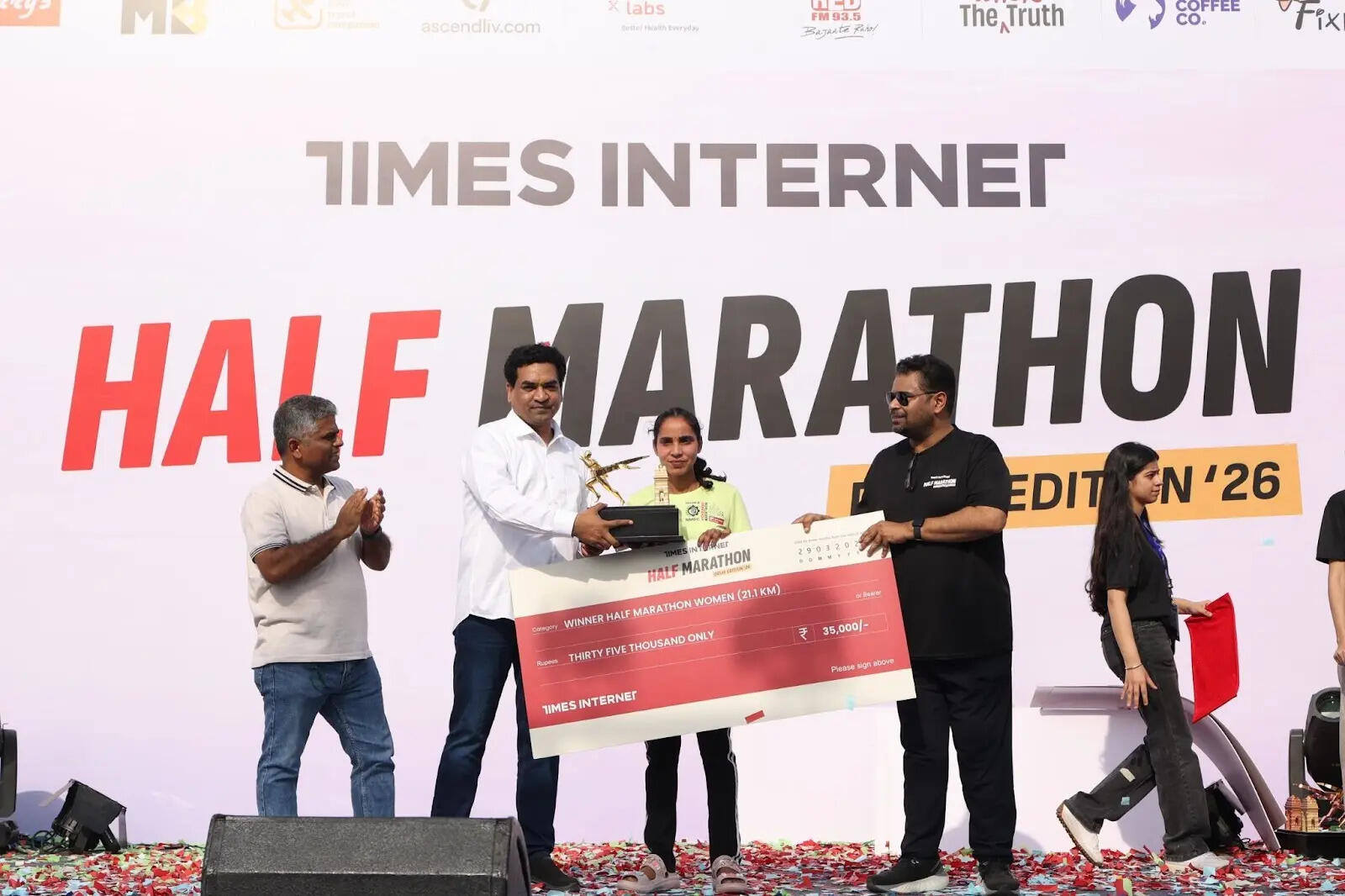
In the quiet stillness of early morning at India Gate, the city held its breath before the surge. At precisely 5.30 am, the 21K race of the Times Internet Half Marathon 2026 flagged off, releasing a field of 2,639 runners onto one of the capital’s most evocative stretches.The opening kilometres were steady and controlled. Runners settled into their pace, saving energy for the later stages. As Delhi slowly woke up, its wide roads and historic surroundings set the stage for a race that would soon become a true test of endurance.Because a half-marathon never reveals itself at the start.The 21K course cut through the ceremonial heart of the capital, along wide, tree-lined boulevards linking key centres of governance. Long, open stretches tested pacing, while gentle turns demanded control – making it a route that challenged not just endurance, but composure at every step.

Arpita Saini: Composure at the front

Arpita Saini claimed the top position with a chip time of 01:25:01, delivering a race built on control and clarity.At 30, her journey into running began only a few years ago, sparked by a simple yet powerful image – young aspirants in her village preparing for army recruitment. What began as curiosity soon turned into commitment. Initial hesitation at home gradually gave way to belief, as her persistence reshaped perceptions.On race day, there was no excess, no haste. She settled early, held her rhythm through the middle stages, and when the race demanded resilience, she responded with authority. In the final stretch, she did not chase the race – she commanded it.

.

Ruksaana: Precision through discipline

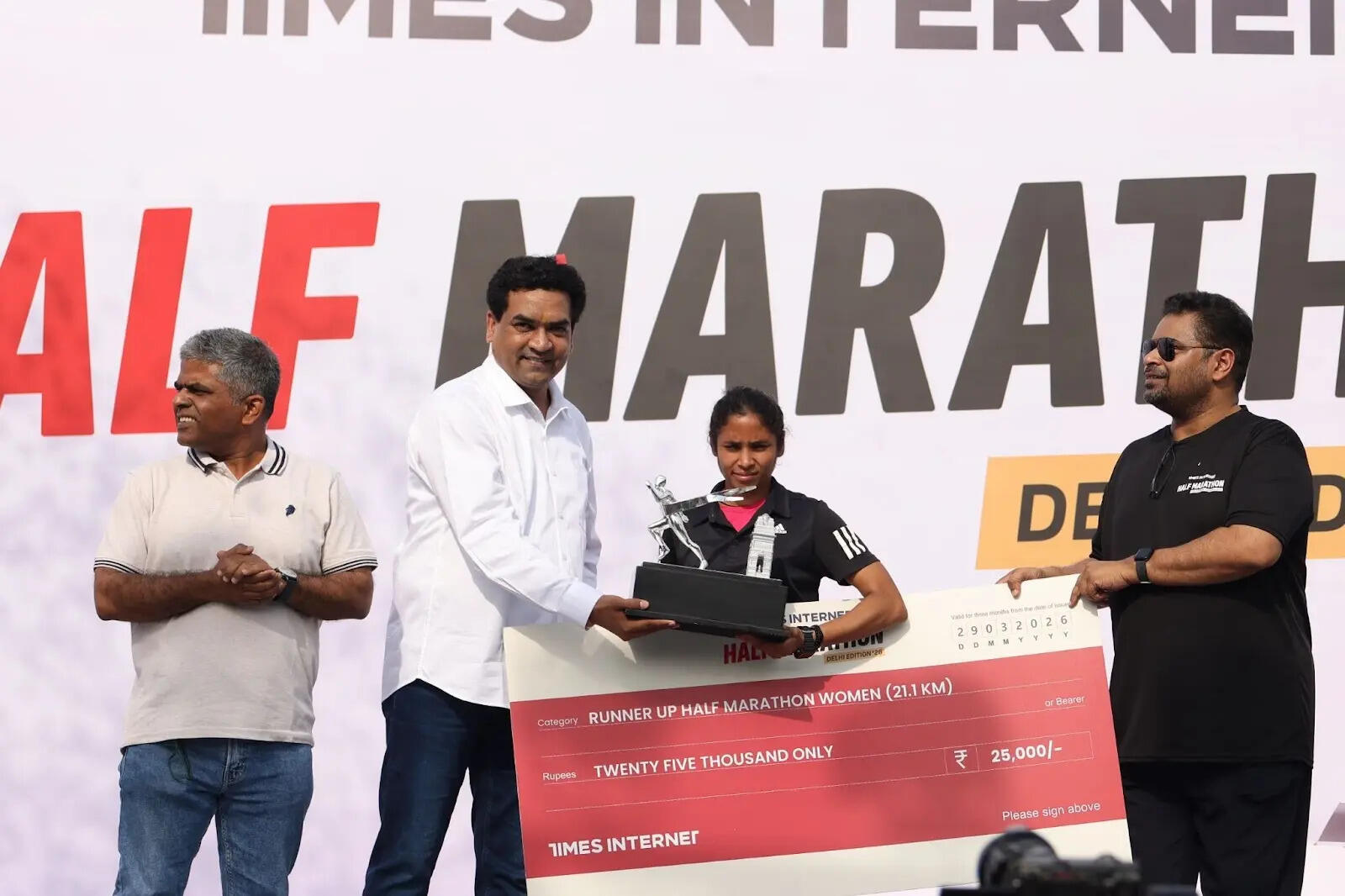
Finishing second with a chip time of 01:27:38, Ruksaana’s performance was a study in structure and steadiness.A national-level distance runner and a Khelo India Games medallist, she continues to balance the rigours of competitive sport with academics as a second-year college student. Training under the watchful guidance of her father, a PT teacher, her foundation is rooted in discipline.Her preparation reflects this methodical approach. On race day, it translated seamlessly – controlled early kilometres, a steady build-up, and an unwavering hold through the demanding final phases. There was no visible struggle, only quiet execution.

.

.

Bhumi Negi: Strength in progression

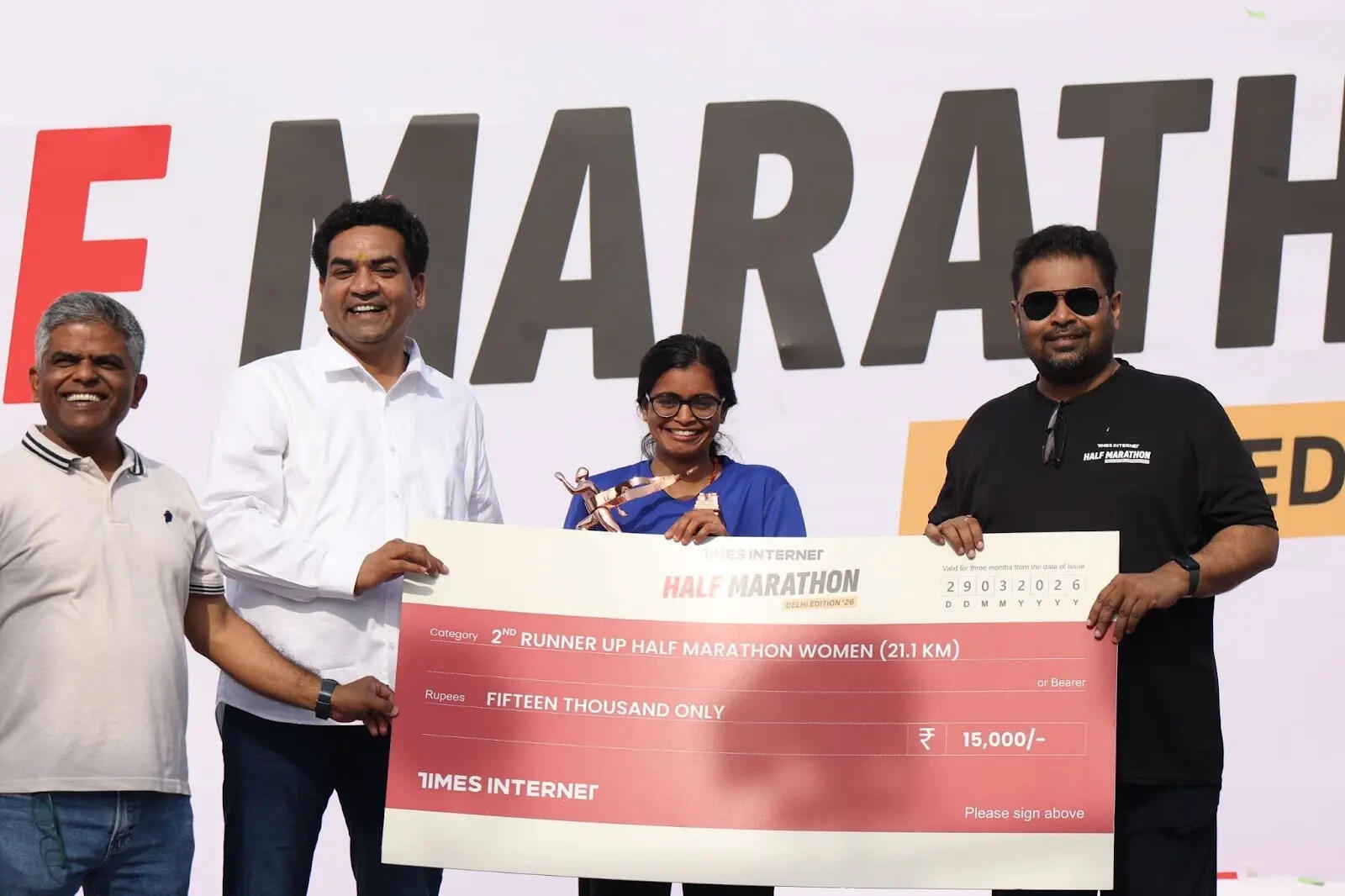
Bhumi Negi secured third place with a chip time of 01:34:33, completing the podium with a performance that underscored patience and progression.Having begun her running journey at a young age, she has steadily transitioned from shorter distances to longer formats, earning recognition at both national and international levels. Her growth has been incremental, but assured.Her race mirrored that evolution. Conservative at the start, calculated through the middle, and resilient when the race tightened its grip. As fatigue set in across the field, she found another gear – one driven not by urgency, but by experience.

.

.

Where the race is won

After the 17th kilometre, the race became really tough. Runners started to feel tired, and every step needed more effort. This is where true strength shows – not in how fast you run, but in your ability to keep going.Arpita Saini, Ruksaana, and Bhumi Negi did more than navigate these final kilometres.They defined them.In a field of thousands, on a course that tested both body and mind, these women did not merely finish the 21K – they elevated it, setting a benchmark not just for performance, but for what it means to endure, adapt, and ultimately, prevail.


Source link

Senior citizen from Navi Mumbai put under digital arrest for 9 hours, conned of Rs 1.5 crore over alleged links to Delhi blast in 2025 | Mumbai News


Navi Mumbai: A 62-year-old senior citizen from Panvel was defrauded of Rs 1.5 crore by a fraudster posing as an ATS officer who placed him under digital arrest for nine days by claiming the victim was linked to the Delhi bomb blast last year and the NIA had registered a case against him. Vinayak Deshmukh, a retired market assistant, lodged a complaint and an FIR was registered on Wednesday. The unidentified accused has been booked under the BNS and the IT Act.As per the FIR, on March 23, Deshmukh received a WhatsApp video call from a number with the Cambodia country code. The caller claimed he was from Delhi headquarters, and told him NIA had registered a case against Deshmukh for his links to the Delhi bomb blast last year. The caller said that one‘Dr Sahani’ had procured a mobile SIM card in Deshmukh’s name and used it to open a bank account which is linked with Deshmukh’s Aadhaar card, KYC details and email ID. The caller claimed that Rs 2.7 crore was transferred to that account, and the NIA suspected terror funding. As part of probe, Deshmukh was made to download ‘Signal’ app. Deshmukh was told he was under digital arrest and the next day, he was made to provide details of his bank account, property, gold ornaments and other investments on the app.Deshmukh was made to transfer Rs 1.5 crore to several bank accounts to get out of the case. The caller told him that after verification, the amount would be returned to his bank account. On March 30, Deshmukh got a video call from a mobile number with India’s country code and the caller told Deshmukh that his papers had been emailed to Panvel police station. While Deshmukh was on the way to collect it, the fraudster called again and told the victim that all documents had been sent to his residence by speed post. When Deshmukh tried to contact the caller, his mobile was switched off which made him realise that he was cheated.


Source link

No permit, no pass: Iran plans new navigation regime in Strait of Hormuz


No permit, no pass: Iran plans new navigation regime in Strait of Hormuz

Iranian deputy foreign minister Kazem Gharibabadi on Thursday said that Tehran has nearly completed its first draft to establish a new navigation regime in the Strait of Hormuz.In an interview with the Sputnik, Gharibabadi said that Tehran is planning to begin talks with Oman to develop a joint solution.

Watch

‘New Fronts’: Iran’s Supreme Leaders Warning Sends Shockwaves Across The World | Watch

“The draft of this protocol is currently in the final stages of preparation. Once we have it ready, we will begin negotiations with Oman so that we can draft a joint protocol,” Gharibabadi said.Gharibabadi said that the new protocol will require all vessels to have necessary agreements with the coastal states – Iran and Oman. He added that security of the strait will be ensured, and Iran and Oman will bear greater responsibility for it.The requirements will not be applied in the form of restrictions, but rather with the aim of facilitating traffic and ensuring the safe passage of ships, as well as providing services to ships wishing to pass through the Strait of Hormuz without any problems, the deputy foreign minister said.

Stay updated with our Live Blog for minute-by-minute coverage of the Israel Iran War including breaking news, missile attacks, and Middle East crisis Latest Updates


Source link

Yuvraj Singh apologises to MS Dhoni and Kapil Dev after father Yograj Singh’s aggressive outbursts


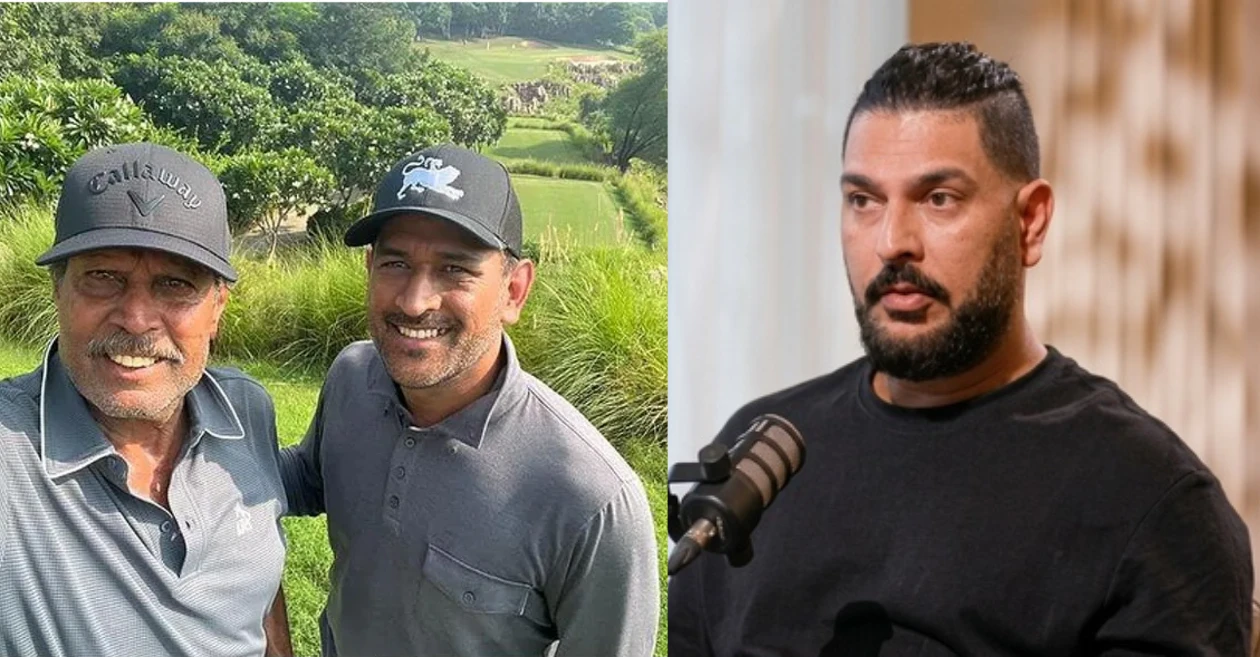
In a rare and heartfelt moment, former India all-rounder Yuvraj Singh has publicly apologised to two of Indian cricket’s most respected figures – MS Dhoni and Kapil Dev. The apology comes after years of controversial and often uncomfortable remarks made by his father, Yograj Singh, directed at the two legends.

Yuvraj Singh breaks silence with emotional apology

For the first time, Yuvraj chose to address the issue openly during a teaser for the ‘Sports Tak’ podcast, where he spoke candidly about how he feels hearing his father’s statements. His response was calm, honest, and aimed at bringing closure to a long-standing controversy.

“I would like to apologise to Kapil Dev and MS Dhoni,” Yuvraj said in the teaser video.

These words carry weight, especially considering Yuvraj’s own history with Dhoni. As a key player in India’s 2007 T20 World Cup and 2011 ODI World Cup triumphs, he shared some of his biggest career moments under Dhoni’s captaincy. Yet, despite his father’s repeated criticism of Dhoni over the years, Yuvraj had largely chosen to remain silent – until now.

His statement signals a clear attempt to separate his personal views from his father’s opinions while also acknowledging the discomfort the situation has created within the cricketing community.

Yuvraj’s apology goes beyond just words – it reflects a deeper effort to distance himself from a narrative that has followed him for years. Yograj Singh, a former cricketer and coach, has often made headlines for his outspoken and, at times, explosive comments about Dhoni and Kapil.

By admitting that he has spoken to his father privately about his behaviour, Yuvraj revealed that this has not been an easy situation for him to handle.

“I have told dad that it’s not OK.”

This simple yet powerful statement shows that Yuvraj has tried to address the issue within his family, even if it meant confronting uncomfortable truths. It also highlights his intention to move forward, focusing on respect and reconciliation rather than lingering controversies.

The shocking allegations made by Yograj Singh against MS Dhoni and Kapil Dev

The apology also comes in the backdrop of some shocking claims made by Yograj in the past. He has accused Dhoni of deliberately sidelining Yuvraj from the Indian team – allegations that were strongly denied by former chief selector Sandeep Patil.

Even more alarming were his statements about Kapil. Yograj once claimed that he had gone to Kapil’s house with a pistol during the 1980s, intending to harm him, but stopped himself because Kapil’s mother was present.

“I told him, ‘I want to put a bullet through your head, but I am not doing it because you have a very pious mother who is standing here.’ That was the moment I decided I would not play cricket – Yuvi will play.”

The statement shocked fans and the cricketing world alike, bringing renewed attention to a decades-old grievance.

Also READ: “I’m meeting a girl during match time” – Yuvraj Singh spills the beans on link-up rumours

Kapil Dev, however, chose not to engage with the controversy and dismissed it casually, saying, “Kiski baatey kar rahe ho, kaun hai? (Who are you talking about, who is he?).

Despite Yograj’s tone softening in recent times – even praising Dhoni’s longevity and fitness – the impact of his earlier remarks has lingered.

Yuvraj’s public apology, therefore, is being seen as a mature and much-needed step. It not only acknowledges the hurt caused but also reflects his desire to close this chapter with dignity. For fans, it’s a reminder of the values that defined Yuvraj’s career – honesty, courage, and respect.

Also WATCH: Suryakumar Yadav nails Akshaye Khanna’s viral ‘Dhurandhar’ dance steps ahead of MI vs DC clash in IPL 2026


Source link

Tamil Nadu Election: The politics of giving: How Tamil Nadu set the template for India’s freebies race | India News


The politics of giving: How Tamil Nadu set the template for India's freebies race

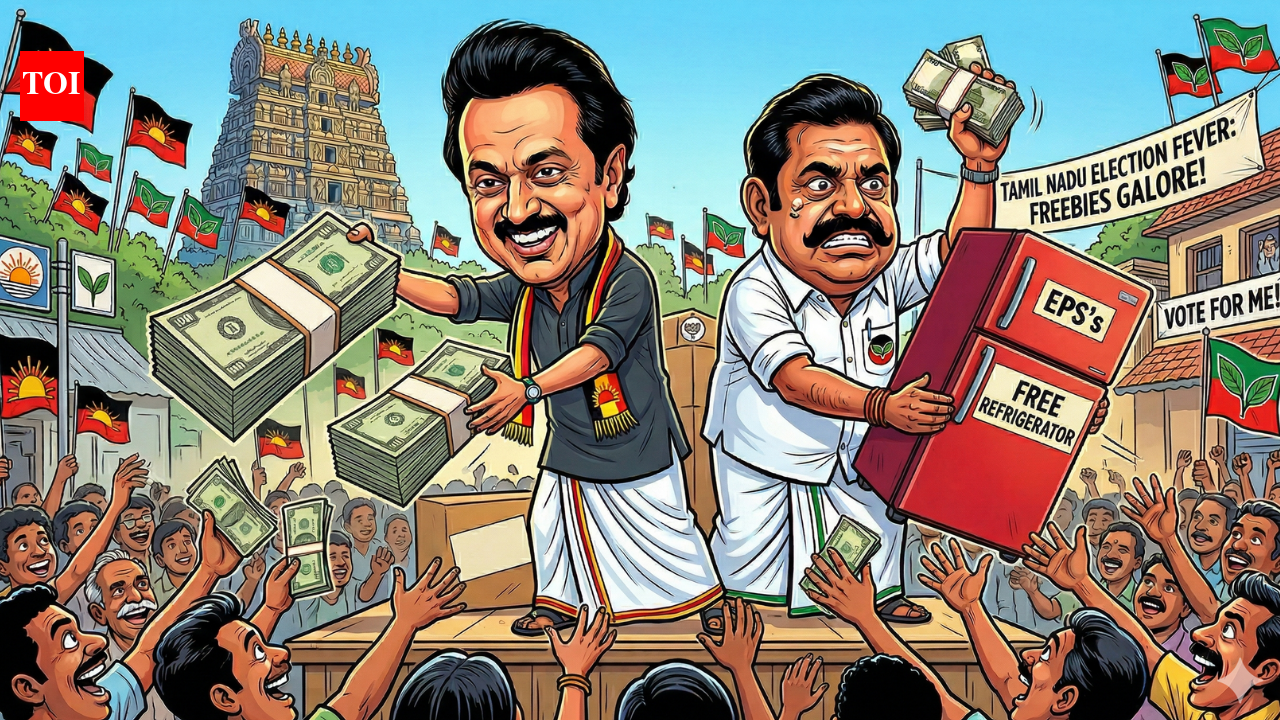
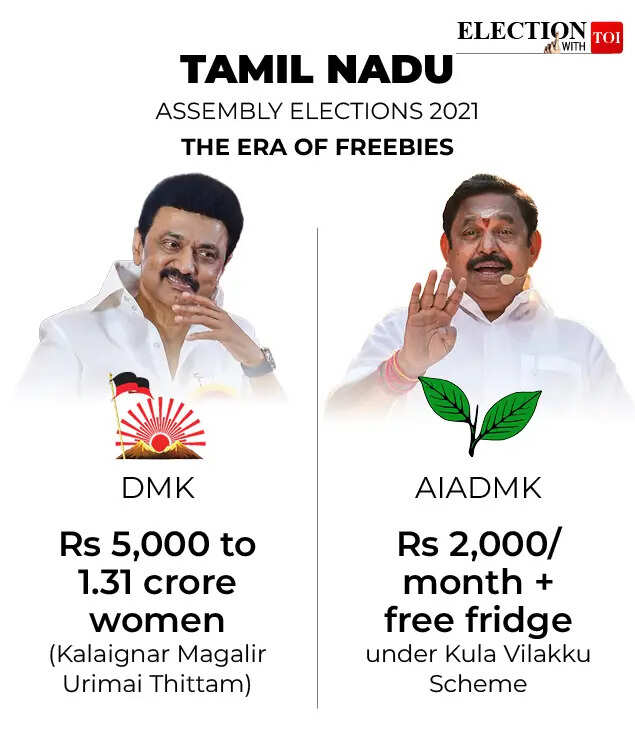
NEW DELHI: Politics in India seems to be in an era of freebies, where every party offers cash doles or concessions ahead of elections. Last year, the NDA offered Rs 10,000 to over 75 lakh women in Bihar just before the polls, which helped the alliance to achieve an overwhelming majority.Riding this trend, AIADMK and DMK have also placed their bets ahead of the upcoming assembly elections. In what the DMK calls the single largest financial aid extended to women in the state’s history, the government credited Rs 5,000 last month to 1.31 crore women under the ‘Kalaignar Magalir Urimai Thittam’.

.

Meanwhile, AIADMK’s manifesto promises Rs 2,000 per month under the ‘Kula Vilakku Scheme’ for all ration cardholders, to be deposited directly into the bank accounts of female heads of households. The party also pledged a “free refrigerator” for every rice ration-card holder if it returns to power.Interestingly, this is not the first time parties have tried to lure voters with pre-poll gifts. Welfare politics in Tamil Nadu dates back to the Dravidian movement, which framed the state as an active instrument of social justice.

Tamil Nadu Elections 2026: M.K. Stalin vs AIADMK — Will Vijay Be the X-Factor?

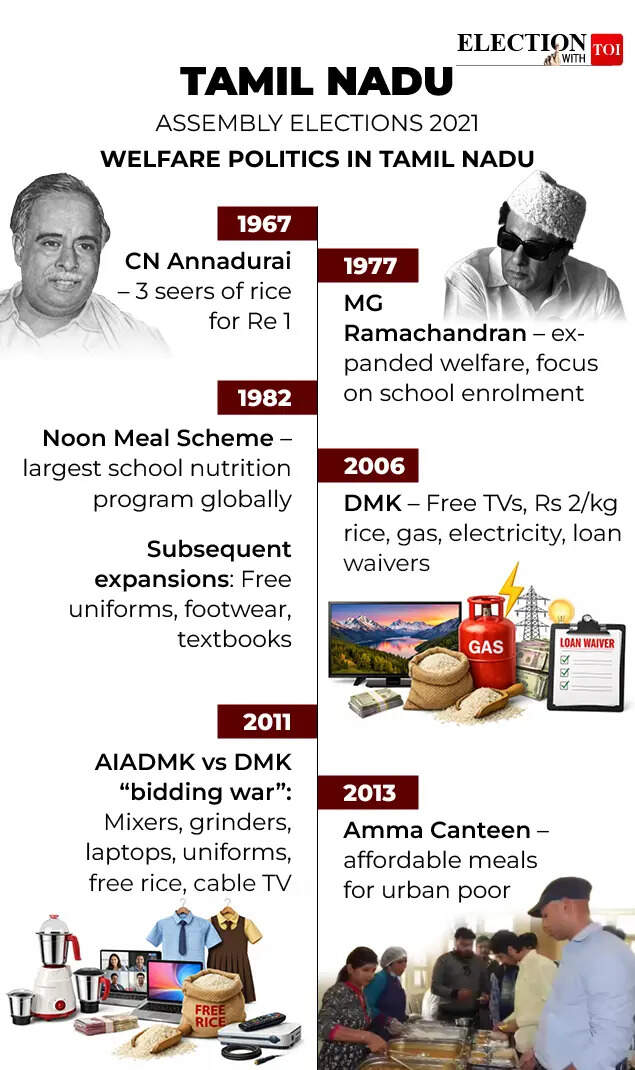
Chief minister from Congress K Kamraj can be seen as a pioneer of populist schemes in the state. He introduced Midday meal scheme along with free school uniforms for students.The scheme – designed to address malnutrition and encourage low-income families to send their children to school – significantly increased school enrolment and attendance, reducing dropout rates.Three seers of rice for Re 1In 1967, CN Annadurai promised three seers of rice for Re 1 through the state public distribution system (PDS). Though the scheme proved expensive and difficult for the government to sustain.After winning elections, Annadurai became the chief minister and implemented the scheme for sometime in a few pockets but later scrapped it owing to the financial burden. However, the move establsihed welfare as a political tool still used today.Noon meal scheme experimentAIADMK founder MG Ramachandran became chief minister in 1977 and extended welfare measures to improve school participation. The landmark noon meal scheme of 1982, later expanded, became one of the largest such programs globally, significantly boosting enrolment among children from poorer families.Subsequent governments led by M Karunanidhi and J Jayalalithaa built on this model, adding benefits like free uniforms, footwear, and educational support.

.

By the late 1980s and 1990s, welfare schemes also included consumer goods, reaching a turning point in 2006 when the DMK promised free colour TVs, rice at Rs 2 per kg, cooking gas connections, free electricity, and loan waivers for farmers and weavers. The TV scheme alone costs around Rs 3,600 crore and reached nearly 45 lakh households.Jayalalitha’s Amma canteen schemeIn 2011, promises escalated into a bidding war. DMK offered a mixer or grinder, AIADMK promised both; when free laptops were proposed for college students, Jayalalithaa extended it to high school students. Additional offerings included uniforms, footwear, 20 kg of free rice per month, and free cable TV.After returning to power, Jayalalithaa expanded welfare further, distributing mixers, grinders, fans, laptops, textbooks, goats and cows for rural households, gold for mangalsutras, subsidised scooters, and free electricity up to a set limit.Jayalalitha’s government also launched the Amma Canteen scheme in 2013. These canteens were designed to provide nutritious, hygienic food at heavily discounted prices to the urban poor, daily wage labourers, and students. Despite political changes in the state, the canteens have largely continued to operate due to their immense popularity and the essential service they provide to the working class.By 2016, the DMK promised milk at Rs 7 per litre, while AIADMK countered with farm loan waivers, 100 units of free electricity, two-wheeler subsidies for women, and gold for brides-to-be.Evolution of the social service schemesNow, the social justice schemes seem to shift toward cash transfers and universal benefits. The DMK’s free bus travel for women, introduced in 2021, saw 4–5 crore trips monthly, improving mobility for low-income women.AIADMK now proposes extending such benefits to men and offering Rs 2,000 per month to female household heads.The fiscal question, however, cannot be ignored. Tamil Nadu is not a poor state, but it cannot perform fiscal magic. The state has long defended borrowing as productive and growth-linked—a rationale that can more easily support schemes like subsidised breakfast and bus travel than promises such as a refrigerator for every ration-card holder.Such schemes carry substantial fiscal implications. Reportedly, the monthly cash transfer alone could cost around Rs 36,000 crore annually, while Tamil Nadu’s total welfare expenditure already ranges between Rs 45,000–50,000 crore per year. The state’s outstanding debt exceeds Rs 8 lakh crore, with annual interest payments of roughly Rs 40,000 crore.According to veteran journalist Arun Ram it is important to distinguish between welfare measures and populist handouts. Programs like free bus travel for women, he explains, are more than just perks—they increase mobility, open up access to education and jobs, and empower women socially and economically. “Jayalalitha popularised Tamil Nadu’s Populism outside Tamil Nadu. But if you look at the history, it started with Annadurai. 1967 was a turning point in Tamil Nadu politics, not just because Dravidian Party DMK got into the power. It was also the beginning of the welfarism and freebies. Karunanidhi was the first one to offer Television sets. Then Jayalalitha offered grinders, goats, cycles and laptops,” he said.“We have to have a clear distinction between welfarism and populism. For example, he has introduced free bus travel for women across the state. So I think that is a welfare measure, not just a door, because you know mobility of women—historically, if you look at it, more women move around, commute, they find free transport, they find education, they find new jobs that leads to kind of a social raising, the social equities of women, and empowering women. You have to distinguish. In fact, Kamaraj was the first one to introduce a free meal in schools. Do you call it a freebie? No, I won’t call it, because there were so many children going empty, I mean hungry on an empty stomach, unable to study,” he added.“So, she changed everything. Of course, MGR brought it back. He claimed the legacy of that. But then it continues. So, Karunanidhi added two eggs to that meal. Stalin now introduced a breakfast. So all these things are good welfare measures, I would say, but giving a grinder or a goat, I don’t think that is kind of empowering people. But I think the Tamil Nadu electorate have been so pampered that they think it’s the birthright to get a few things in their kitchen, in their living room, free whenever an election comes. That’s a sad state of affairs,” he added.Tamil Nadu will vote in a single phase on April 23 for all 234 constituencies, with counting scheduled for May 4.


Source link

‘Not everything you see is true’: LSG release full video after Goenka-Pant clip goes viral | Cricket News


‘Not everything you see is true’: LSG release full video after Goenka-Pant clip goes viral
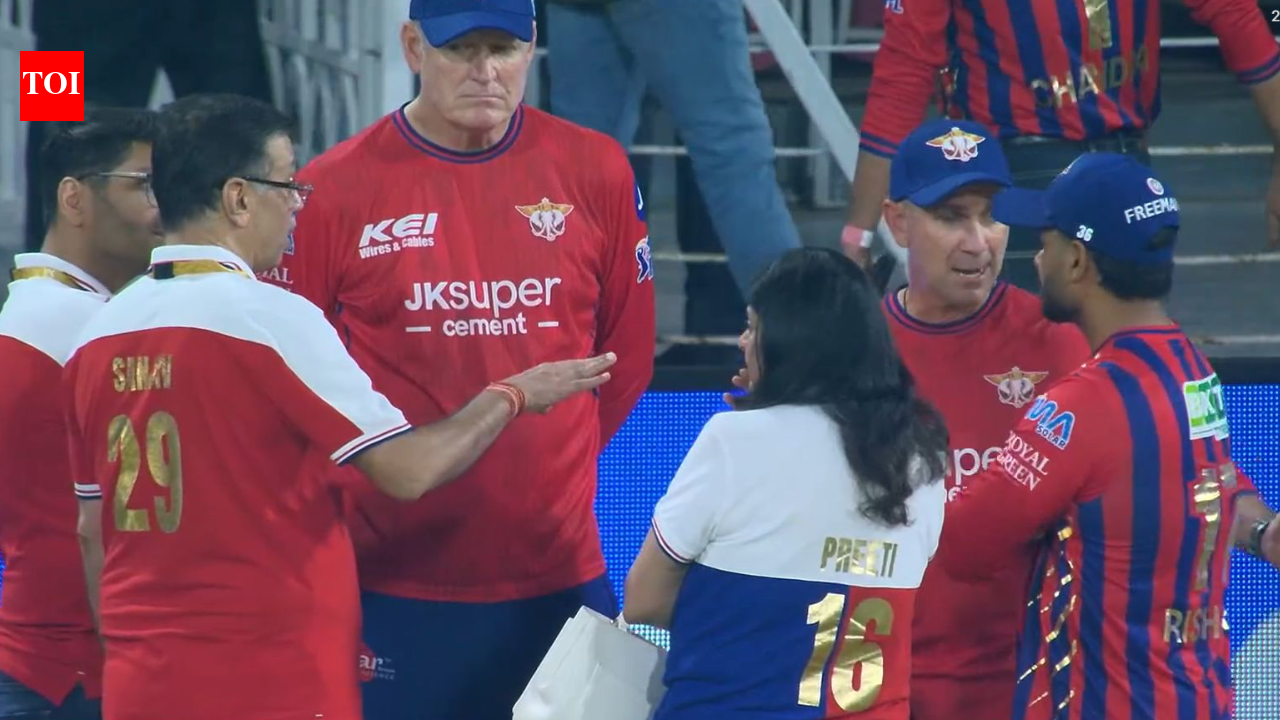
Sanjiv Goenka interaction with Rishabh Pant (Image: X)

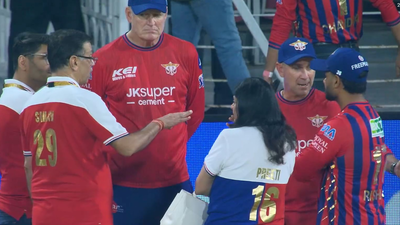
Lucknow Super Giants have clarified the much-discussed on-field interaction between owner Sanjiv Goenka and captain Rishabh Pant following their defeat to Delhi Capitals.After the loss, Goenka was seen in an animated conversation with Pant, with head coach Justin Langer also part of the exchange. While no audio was available, the visuals suggested a serious discussion, quickly going viral across social media and sparking widespread speculation among fans and experts.The moment also revived memories of a similar incident in the 2024 IPL season, when Goenka was seen having a public exchange with then-captain KL Rahul after a defeat, an episode that had drawn considerable criticism at the time.However, addressing the narrative, Lucknow Super Giants shared a video on their official social media, stating:“Not everything you see is the true story, here’s the unfiltered post-match vibes when the cameras don’t cut.” Match HighlightDelhi Capitals pulled off a remarkable six-wicket win over Lucknow Super Giants in Match 5 of IPL 2026, chasing down a modest target of 142 in 17.1 overs. LSG were bowled out for 141 after a disappointing batting display, with Delhi’s bowlers, led by Lungi Ngidi and T Natarajan, keeping them in check. In reply, DC suffered an early collapse to 26/4 inside the powerplay, but Sameer Rizvi (70* off 47) and Tristan Stubbs (39* off 32) stitched an unbeaten 119-run partnership to turn the game around. Rizvi anchored the chase with maturity and finished it in style, earning Player of the Match honours as Delhi completed a stunning comeback.


Source link

Boy assault case: Victim out of danger; accused autorickshaw driver’s police custody extended till April 4 | Mumbai News


Palghar: The four-year-old boy, who was brutally assaulted by an autorickshaw driver in Vasai earlier this week, is out of danger and is recovering at a hospital, police said on Thursday.The accused in the case, Sandeep Pawar, was on Thursday produced in a local court, which extended his police custody till April 4.The incident took place on April 30, in which the autorickshaw driver lifted the boy by his legs and slammed him to the ground before hitting his head on an iron rod following an argument with the minor’s father. The crime was captured on a CCTV camera.The minor was admitted to the intensive care unit (ICU) of a hospital in Mira Road as he sustained severe head injuries.“The boy is now recovering at the hospital and is out of danger. The accused was produced before a magistrate’s court, which extended his police custody till Saturday,” senior inspector Balkrishna Ghadigaonkar of the Vasai police station said.Meanwhile, local MLA Sneha Dubey Pandit demanded strictest possible action against the accused.She discussed the issue with Maharashtra Chief Minister Devendra Fadnavis, who assured that the perpetrator will face severe punishment, a release issued by her office said.


Source link

Ranjith Balakrishnan Arrest: WCC slams ‘non-functioning system’ after Ranjith Balakrishnan’s arrest in sexual assault case: ‘The industry can no longer hide behind ignorance or inertia’ |


WCC slams ‘non-functioning system’ after Ranjith Balakrishnan's arrest in sexual assault case: 'The industry can no longer hide behind ignorance or inertia'
Malayalam filmmaker Ranjith Balakrishnan faces arrest following a sexual assault complaint by an actress. Allegedly, he entered her caravan without consent on a film set. The Women in Cinema Collective has voiced strong criticism, questioning systemic failures in protecting women. Ranjith denies the charges, asserting his innocence and preparing a bail plea.

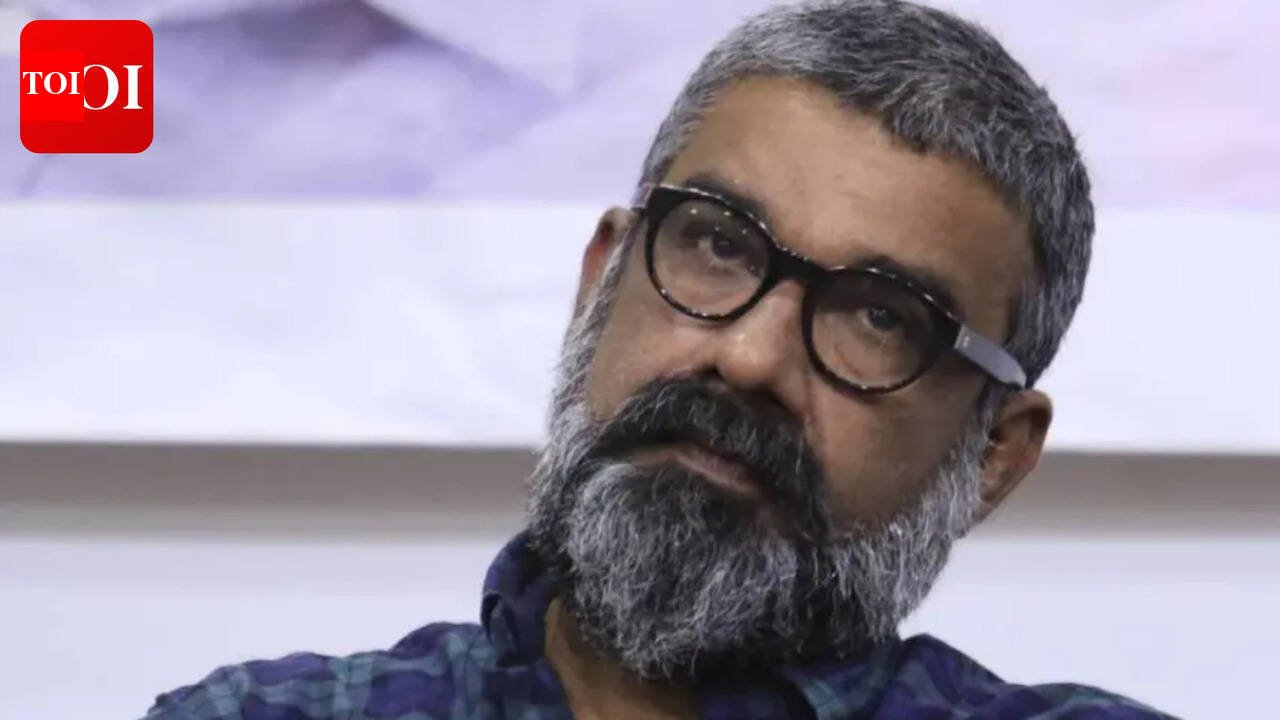
Trigger warning: This article includes references to sexual abuse.Malayalam filmmaker Ranjith Balakrishnan has been arrested after an actress filed a sexual assault complaint against him. According to reports, the police acted on her statement, and he has been sent to judicial custody for 14 days. He is currently lodged in Ernakulam Sub Jail.

Women in Cinema Collective reacts to the issue

Amid his arrest, the Women in Cinema Collective shared a long note on their official Instagram handle. Reacting to the development, they said, “Yet another grave allegation by a young actress has shaken Kerala.” They further questioned the system, asking, “Where does this audacity of perpetrators come from? From a system that simply does not function.”

Watch

How Malayalam Cinema Quietly Dominated Indian Cinema in 2025

The group also raised concerns about the lack of implementation of safety measures despite existing rules. “Why are safety systems not working even after rules were made? These systems cannot exist merely on paper,” they stated.They concluded their note by urging accountability: “The industry can no longer hide behind ignorance or inertia. Implement ICs. Follow POSH. Prioritise safety.”

Allegations at film shoot location

For the unversed, the young actress, who is working on Ranjith’s current film, has alleged that he entered her caravan without permission at a shooting location in Fort Kochi and attempted to sexually assault her. The police have registered a case under the relevant provisions of the Bharatiya Nyaya Sanhita. The cops stated that the actress was deeply affected by the incident. They said she was “traumatised” and required counselling and psychiatric treatment before she could come forward and file a complaint.After being sent to jail, Ranjith spoke to the media, stating that the accusations against him are “false.” He added that he would prove his innocence in court.His lawyer has confirmed that they are preparing to file a bail plea soon. The case will now move forward as the legal process continues.Disclaimer: If you or someone you know is experiencing domestic violence, assault, or abuse, please seek immediate help. Reach out to a mental health professional, NGO, or a trusted individual. Several helplines are available to offer assistance.


Source link