Breaking News
Shreyas Iyer in trouble: PBKS captain fined, one step away from ban | Cricket News


Shreyas Iyer in trouble: PBKS captain fined, one step away from ban
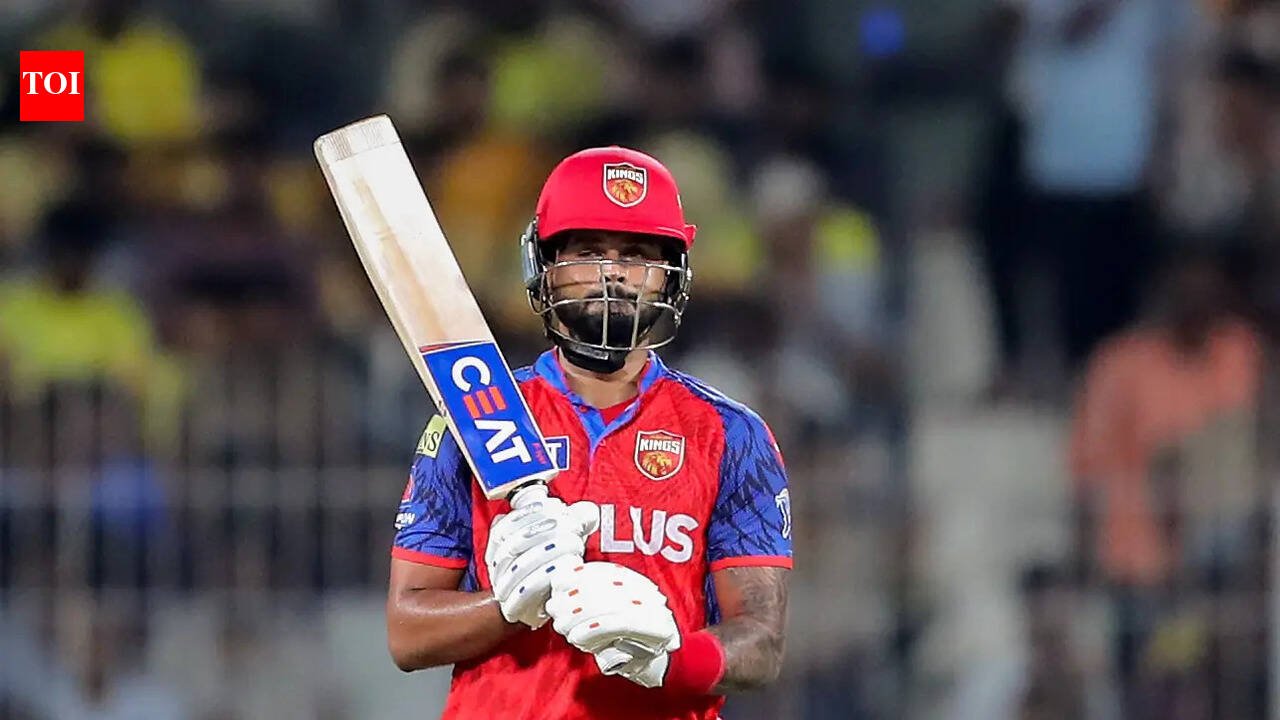
Punjab Kings’ skipper Shreyas Iyer (ANI Photo)

Punjab Kings may be riding high on the field, but skipper Shreyas Iyer has landed in trouble off it after being fined ₹24 lakh for maintaining a slow over-rate during their win over Chennai Super Kings. The penalty comes as Punjab’s second over-rate offence of the season, which means the consequences extend beyond the captain. The rest of the playing XI, including the Impact Player, have also been fined ₹6 lakh or 25 per cent of their match fees, whichever is lesser. The bigger concern for Punjab, however, lies ahead. As per IPL regulations, another breach during the remainder of the season will result in Iyer being fined ₹30 lakh and handed a one-match suspension. With PBKS still having at least 12 matches left in the league stage, the margin for error is now extremely slim. The fine comes on a night when Iyer led from the front with the bat, scoring a fluent 50 off 29 balls to anchor Punjab’s five-wicket win while chasing 209. His 59-run stand with Nehal Wadhera proved decisive as Punjab chased down the target with composure. Punjab’s chase was set up early by Priyansh Arya’s explosive 39 off 11 balls, while Prabhsimran Singh and Cooper Connolly ensured steady progress through the middle overs. But it was Iyer who took control after a cautious start, accelerating against the spinners and playing a range of authoritative shots, including a standout inside-out six off Rahul Chahar. Earlier, Chennai Super Kings had posted 209 for five, powered by Ayush Mhatre’s impressive 73 off 43 balls. He shared a 96-run partnership with skipper Ruturaj Gaikwad, who made 28, after an early setback with the dismissal of Sanju Samson. Despite the strong total, CSK were unable to contain Punjab’s batting depth, as late contributions from Sarfaraz Khan and Shivam Dube proved insufficient in the end. While the result strengthened Punjab’s position with a second consecutive win, the slow over-rate offence has added a layer of pressure on Iyer’s captaincy. With a long season still ahead, Punjab will need to be cautious, as another slip-up could see their skipper miss a crucial match at a decisive stage of the tournament.


Source link

Microfinance replaces informal credit: Report


Microfinance replaces informal credit: Report

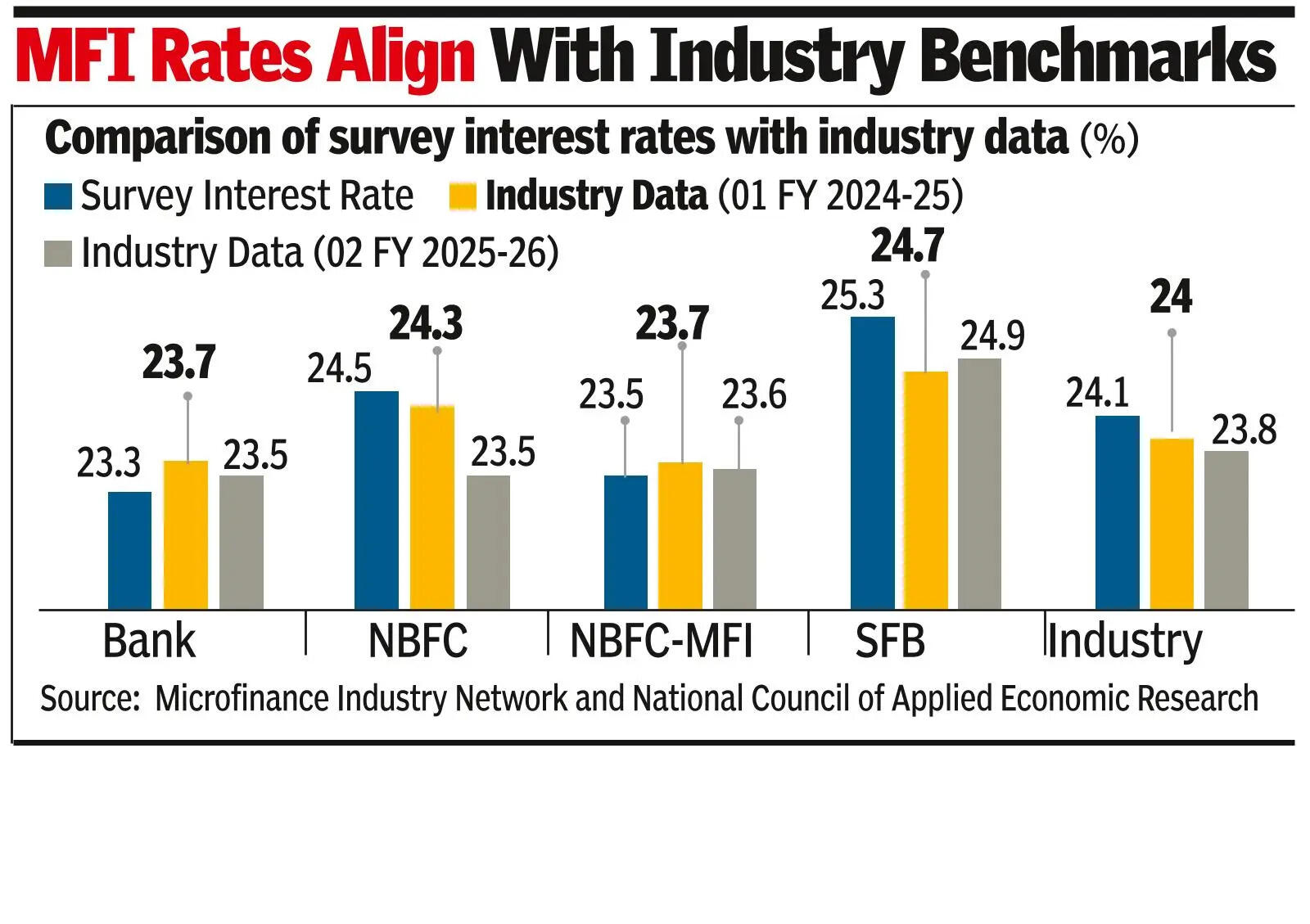
MUMBAI: A structural shift is reshaping India’s microfinance sector, with regulated lenders displacing informal sources as borrowing from moneylenders fell to 1% in 2024–25 from 46% in 2011, according to a survey by Microfinance Industry Network and National Council of Applied Economic Research.The survey, which covered 10,342 borrowers across 10 states, shows a maturing market where formal credit has become the primary source of finance for rural and semi-urban households. According to the report, microfinance now serves as the main driver of livelihoods rather than a fallback option.Digital adoption has reshaped disbursement, with nearly 100% of loans now credited directly into bank accounts of around 75 million women borrowers. According to the survey, this has reduced leakages and improved turnaround time, with average loan disbursal completed within six days. However, repayments remain largely cashbased. Only 12% of borrowers use digital modes such as UPI, while 88% continue to repay through cash collections conducted during group meetings. The report said this gap reflects a digital divide, as 61% of borrowers own smartphones but remain reluctant to transact digitally due to low financial literacy and concerns over fraud.The survey finds that microfinance lending is predominantly income-generating rather than consumption-led. Over 75% of loans are used for enterprise activities. According to the data, 48.1% of borrowers used credit to expand existing businesses, 14.4% to start new ventures, and around 13% for agriculture and allied activities. “Microfinance has become a bridge to opportunity and financial independence,” the report said, adding that 78% of borrowers contribute to household income.

Microfin India’s main credit source: Report

Informal Borrowing Collapses 45pp In 14 Yrs

Cost arbitrage remains a key driver of the shift away from informal credit. The average effective interest rate for regulated microfinance is around 33%, far lower than rates charged by informal lenders. According to the report’s qualitative findings, moneylenders charge between 97% and 178% annually and often demand gold as collateral.


Source link

Steep slide: Forex reserves decline over $10bn in a week


Steep slide: Forex reserves decline over $10bn in a week

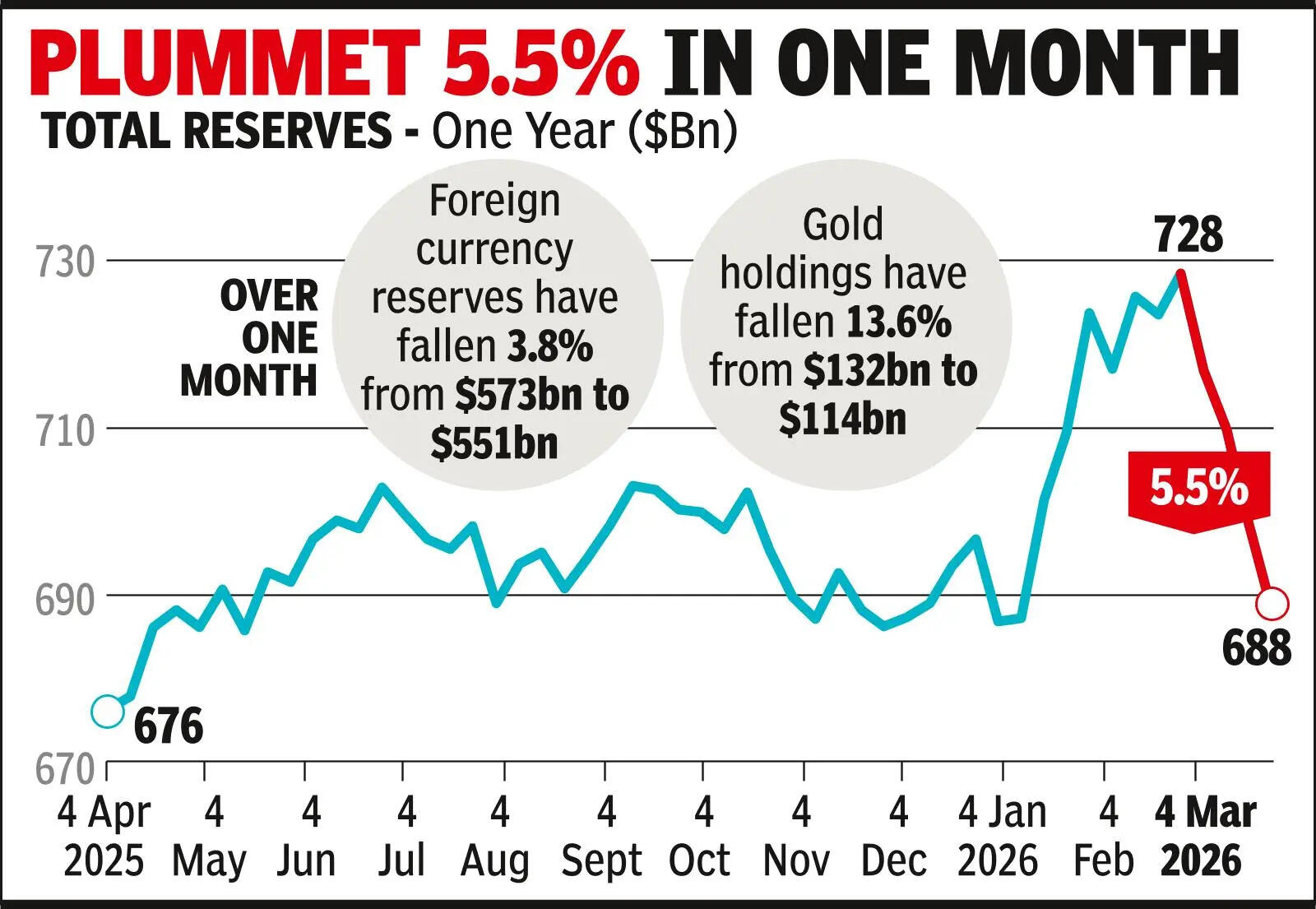
MUMBAI: India’s foreign exchange reserves fell sharply by $10.3 billion in the week ended March 27, 2026, taking the total to $688.1 billion, driven largely by a decline in foreign currency assets and gold holdings amid currency market intervention by RBI.The fall was led by foreign currency assets, which dropped by $6.6 billion. These assets, the largest component of reserves, reflect valuation changes in non-dollar currencies such as the euro, pound, and yen, and include the impact of RBI’s intervention to stabilise the rupee. Gold reserves declined by $3.7 billion during the week. The fall in gold, despite its smaller share in total reserves, points to a correction in global gold prices over the period. Other components showed limited movement. Special Drawing Rights rose marginally by $17 million, while the reserve position in the IMF declined by $17 million. These changes did not offset the losses in foreign currency assets and gold.With this week’s decline, forex reserves have dropped for four consecutive weeks by over $40 billion. RBI said India’s forex reserves fell by $11.4 billion last week (ended March 20, 2026) to $698.4 billion. The prior week (ended March 13) saw a $7.1 billion fall to $709.8 billion. This has led to talk among commentators about special measures that could be undertaken to attract foreign exchange flows.The rupee had weakened by over 4% until Wednesday before recovering 1.8% on Thursday after RBI tightened rules to curb speculative bets. The central bank asked banks to unwind long dollar positions. After some lenders shifted these positions to clients, RBI issued another directive on Tuesday asking banks not to offer hedging services in the nondeliverable forward market.

Steep slide: Forex reserves decline over $10bn in a week

Analysts are also concerned about RBI’s liabilities in the forward market. To defend the rupee, the central bank’s net short dollar forward position is estimated to have hit $77 billion in Feb 2026, and may have risen further in March. While this preserves immediate spot reserves, it creates a large future dollar liability. Maturing contracts can drain reserves and tighten liquidity. Despite the recovery on Thursday, dealers expect volatility to persist next week following the escalation of conflict.


Source link

Mehli Mistry challenges eligibility of 2 trustees


Mehli Mistry challenges eligibility of 2 trustees

MUMBAI: Months after his exit, former Sir Ratan Tata Trust (SRTT) trustee Mehli Mistry has challenged the positions of Venu Srinivasan and Vijay Singh on the board of the Bai Hirabai Jamsetji Tata Navsari Charitable Institution, arguing they are ineligible under the 1923 deed, which bars non-Zoroastrians and non-Mumbai residents, and has called for an official enquiry.The Bai Hirabai Institution is an associate trust of SRTT, a major shareholder in Tata Sons, which runs the $180 billion Tata conglomerate. It was established under the will of Sir Ratanji Tata, the second son of Tata Group founder Jamsetji Tata, who bequeathed properties in Navsari, Gujarat—the Tata family’s ancestral home—to the institution. The real estate was intended for the Parsi community’s use, serving as a recreation ground, nursing home, or hospital.In his objection application filed with the Maharashtra charity commissioner on Friday, Mistry said that given the alleged “illegalities” in the institution’s governance, an administrator should be appointed to replace the current board of trustees, which includes Noel Tata, Jimmy Tata, Jehangir Jehangir, and Darius Khambata. His trusteeship at the institution was not renewed last year following a vote by Noel, Srinivasan, and Singh against it. All six of these individuals also serve on the board of SRTT, where his term was likewise not extended. Mistry cited clauses 6 and 18 of the 1923 deed, saying: “No person who is not of Zoroastrian faith shall be appointed as a trustee, and if any trustee ceases to profess the Zoroastrian faith, he shall cease to be a trustee, as if he were ‘dead’. Similarly, any person who ceases to be a permanent resident of the Bombay Presidency shall also cease to be a trustee.”He contended that Srinivasan, chairman emeritus of TVS Motor, and Singh, a former defence secretary, have “never been, and cannot be, of Parsi Zoroastrian faith” and do not have any permanent residence in Mumbai. Both never met the two clauses and are “expressly disqualified from acting as trustees.”Mistry, a Parsi Zoroastrian with a permanent residence in Mumbai, said all trustees should submit affidavits confirming they meet the qualifications under clauses 6 and 18, ensuring strict compliance with the trust deed. He urged the commissioner to “initiate a detailed inquiry…by calling for an affidavit from each applicant.”Mistry asserted that Srinivasan and Singh’s appointments are void from inception, and any actions they took as trustees including their votes against his trusteeship extension are non est in law and without authority. His Friday objection follows the Bai Hirabai Institution’s submission of a change report to the commissioner, reflecting the revised board composition after his trusteeship extension was rejected. Mistry said his tenure was not renewed “without assigning any reason” and argued that the change report is not maintainable, as it is contrary to the trust deed.According to him, if the unqualified trustees are excluded, the total number of trustees would fall below the minimum of five required under the trust deed. He further submitted that “no meetings have been conducted” at the Bai Hirabai Institution “over the past two years, with no regard for the consequences for the beneficiaries of the trust or its legacy of public and charitable works.” He asked the commissioner to call for minutes of all meetings held during this period and to inspect all records.Mistry clarified that his objective is solely to expose the alleged illegal functioning of the institution and is not aimed at seeking his reinstatement. Mistry said his move is motivated by a commitment to uphold the principles of Sir Ratanji Tata’s will, honour the legacy of predecessors, and safeguard the institution’s charitable mandate entrusted to him by former chairman Ratan Tata for the welfare of the Parsi community. Noel and Srinivasan did not respond to an emailed query, while Singh declined to comment.


Source link

GI applications cross 2,000 mark on Centre’s push


GI applications cross 2,000 mark on Centre’s push

HYDERABAD: The Centre’s push to ensure 10,000 geographical indication (GI)-tagged products by 2030 seems to have moved into a higher gear, with the total number of GI applications finally crossing the 2,000 mark to reach 2,013 as on April 2, 2026.While Kashmir Kagzi Badam was the 2,000th application to be filed on April 2 this year, Sikkim’s Chyabrung was the 2,013th application to be filed on the same day. Since April 1, 2025, when Khavda pottery of Kutch became the 1,482nd application to be filed, the highest number of GI applications, at 510, have been filed in FY25-26 alone, the highest in a single fiscal since the first GI for Darjeeling tea was filed in Oct 2003.In fact, if the past two fiscal years saw over 780 GI applications being filed, just the past three days saw 21 GI applications being filed. Till date, as many as 724 GI-tagged products have been registered across the country. GI experts attributed the acceleration in application filing to the govt push that involved slashing the fees from Rs 5,000 to Rs 1,000 last year.


Source link

Jobs in informal manufacturing sector below 2015-16 levels: Survey


Jobs in informal manufacturing sector below 2015-16 levels: Survey

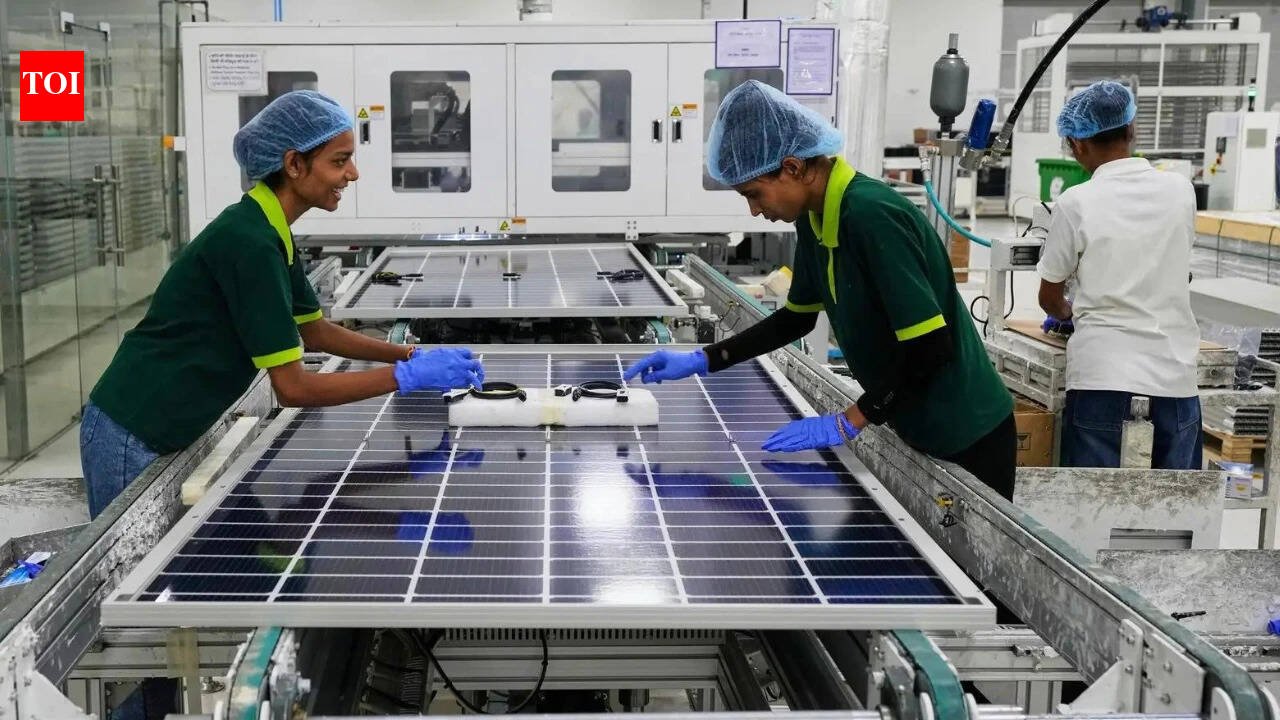
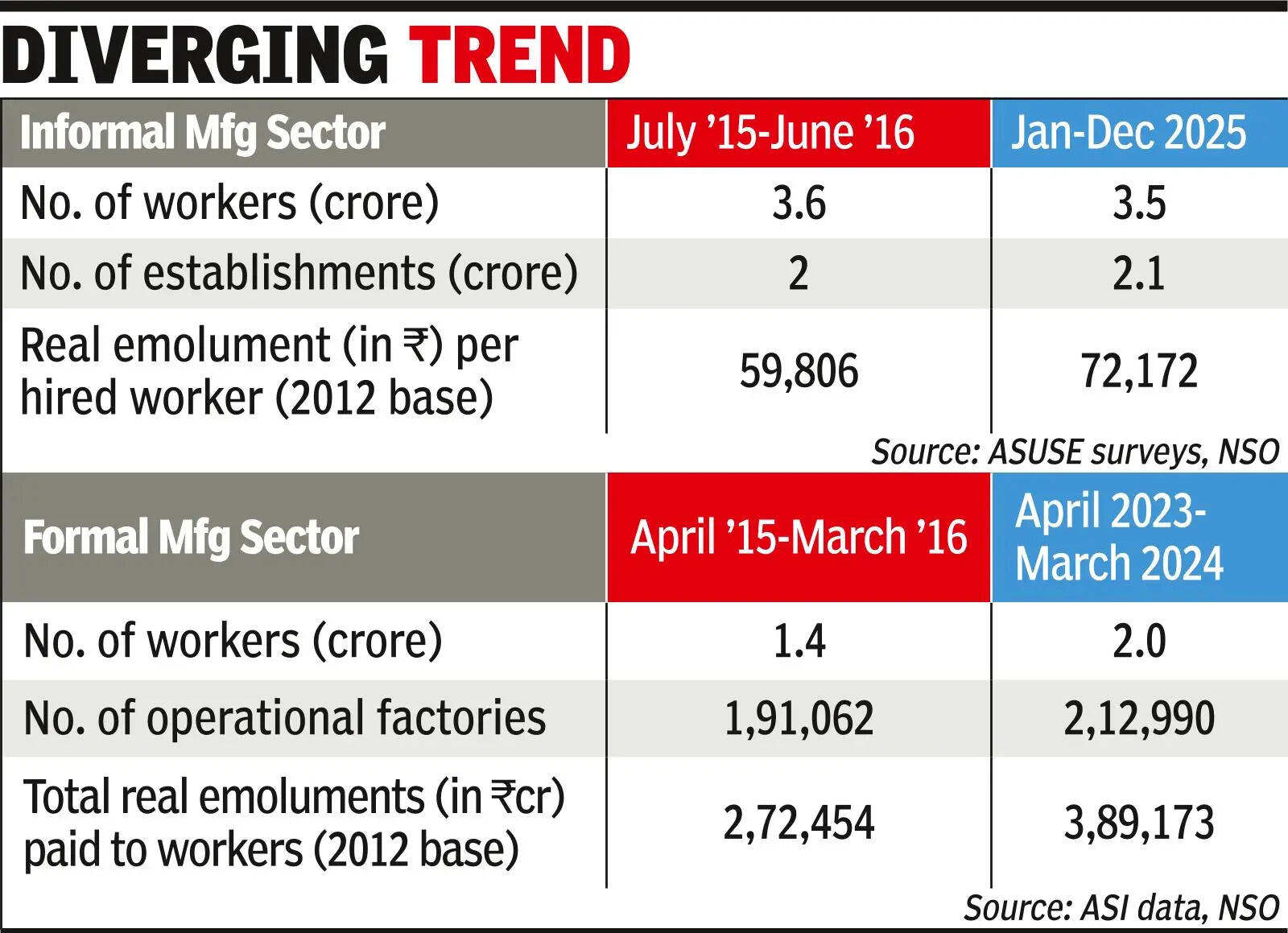
NEW DELHI: India’s vast informal manufacturing sector has seen jobs stay flat for nearly a decade, while the formal manufacturing sector has seen an increase, marking a sharp divergence in the growth trajectory of the two segments.An analysis of the latest unincorporated enterprises survey released last month showed that 3.5 crore people were employed in informal manufacturing in 2025, as compared to 3.6 crore in 201516, while the number of enterprises rose to 2.1 crore from 2 crore.In contrast, data from the latest annual survey of industries (ASI), which tracks the formal manufacturing sector, showed that a little under 2 crore were employed in 2023-24, up 37% over 201516 (see graphic).Santosh Mehrotra, visiting professor at the University of Bath, said that in the past few years, the organised sector has gained at the expense of the unorganised sector, but added that this does not imply formalisation of the economy. “Instead, it reflects the growing stratification of the economy, wherein a relatively small formal sector is witnessing a spurt in productivity and growth and the vast informal sector which is the mainstay of the vast population is facing stagnation,” he added.The divergence between the two sectors is also visible in the worker’s earnings.Between 2015-16 and 2025, in real terms, the emoluments per hired worker in informal manufacturing enterprises grew at a compound annual growth rate (CAGR) of 2.1% to Rs 72,172 from Rs 59,806.

Jobs in informal mfg sector below 2015-16 levels: Survey

In contrast, total emoluments paid to workers in real terms in the formal manufacturing sector grew at 4.5% CAGR between 2015-16 and 2023-24. The net profit in the formal manufacturing sector, meanwhile, grew at 4.4% CAGR during this period.


Source link

Mumbai man held for biting samosa seller’s fingers over food bill | Mumbai News


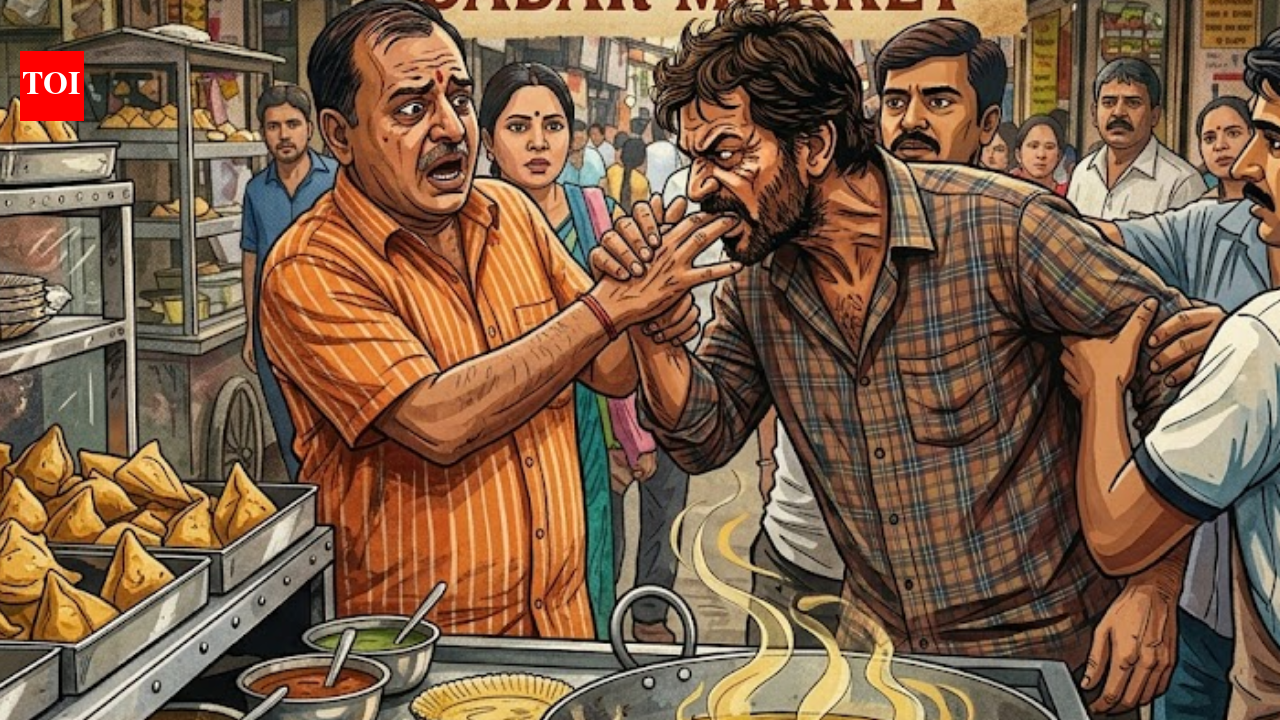
MUMBAI: A man was arrested by Dindoshi Police for allegedly biting a samosa vendor’s fingers till they bled during a dispute over a bill in Malad East on March 28.The victim, Ranjit Singh, who runs a vada pav and samosa stall in Shivaji Nagar, was taken to KEM Hospital for treatment after the attack. Singh’s son Aryan was present at the shop during the incident. Around 8.30 pm, the accused, Lakshmidhar Malik, ordered a samosa cutlet. When asked to pay, he allegedly objected to the price, used abusive language, and created a scene. Though he eventually paid online, the argument escalated. Singh asked Malik to leave and stop abusing, following which Malik allegedly assaulted him. During the scuffle, he bit two of Singh’s fingers, causing bleeding. Singh’s cries alerted his son and staff, who intervened. The victim later approached Dindoshi Police Station, where an FIR was registered.


Source link

Contract workers face job loss risks on fuel, input supply woes


Contract workers face job loss risks on fuel, input supply woes

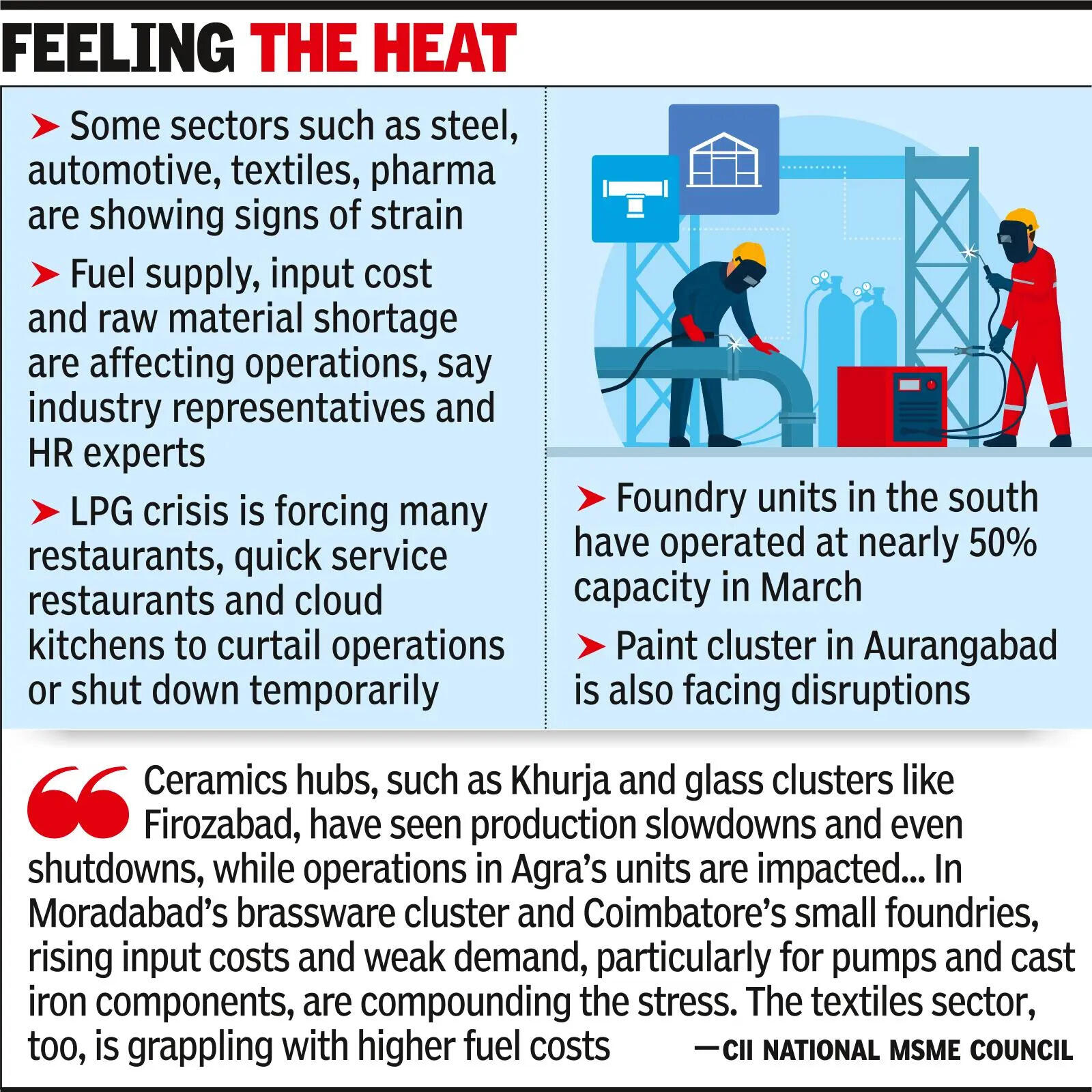
NEW DELHI: Fuel and raw material supply constraints, which have forced shutdowns in certain segments of manufacturing, especially small businesses, may hurt contractual and gig workers.Some signs of strain are visible in certain sectors, including steel, automotive, textiles, pharma, medical devices as fuel supply, input cost and availability (shortage) bite into operations, industry representatives and HR experts told TOI .

Watch

Big Fuel Tax Cut By Centre, But No Price Relief: Why Petrol And Diesel Still Cost The Same In India

Restaurants, quick service restaurants (QSRs) and cloud kitchens are also feeling the heat, with the LPG crisis forcing many to curtail operations or shut down temporarily.

Contract workers face job loss risks on fuel, input supply woes

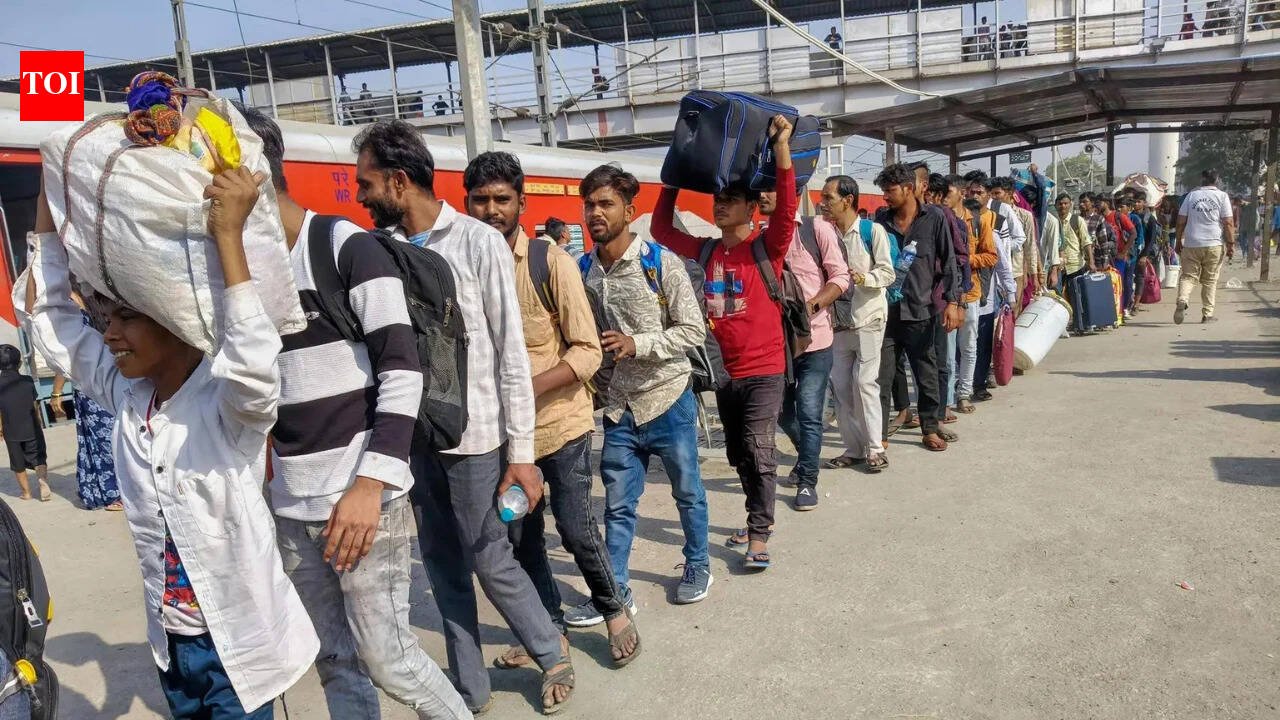
The disruption has forced larger players to halt operations and switch to alternate fuels, according to stock exchange filings by certain companies. Kirloskar Ferrous Industries resumed one of its plants on March 21 after an LPG-driven shutdown, while Jubilant FoodWorks, which operates Domino’s, is accelerating a shift to electricity and piped natural gas.While no hard data is available yet on the scale of job losses, multiple companies and industry experts across sectors confirmed the trend.“Supply chain disruptions triggered by the LPG crisis are beginning to hit a wide swathe of MSME clusters and labourintensive sectors. Small and medium automotive component makers, critical to the car industry’s supply chain, are among those worst affected, given their dependence on gas. Ceramics hubs, such as Khurja and glass clusters like Firozabad, have seen production slowdowns and even shutdowns, while operations in Agra’s units are impacted. Glass, packaging, paints and plastics are facing supply shortages, with a cascading effect on downstream industries, including automobile and pharma. In Moradabad’s brassware cluster and Coimbatore’s small foundries, rising input costs and weak demand, particularly for pumps and cast iron components, are compounding the stress. The textiles sector, too, is grappling with higher fuel costs,” said Ashok Saigal, chairman of CII National MSME Council.Foundry units in the south operated at nearly 50% capacity during March, while the paint cluster in Aurangabad were also disrupted. Adding to the strain is migrant labour distress, with LPG (cooking gas) cylinder refill costs surging from around Rs 150 to Rs 450 per kg, many workers are opting to return to their villages, deepening labour shortages, he added.The pressure is equally visible in India’s gig economy. The gig workforce is estimated at around 1.2 crore, a majority concentrated in last-mile delivery and those with cab aggregators, making this segment particularly sensitive to both demand shocks and workforce fluctuations, says Balasubramanian A, senior VP with TeamLease Services, an HR firm.“Platforms are likely to push toward multi-category roles for workers, reducing dependence on a single segment like food delivery. Also, during elections, harvest seasons and key festivals, a section of workers typically returns to home states, further tightening availability. With polls this month in several states, this (labour) pool could get tightened,” he said.“While no immediate structural change is expected from companies, gig workers are already adversely impacted by the slowdown in operations,” says Sonal Agrawal, managing partner, Accord India/AltoPartners.

Poll

How do you think the LPG crisis will impact small businesses in India?

Organisations are currently moving beyond reactive measures toward a more resilient recalibration of their workforce models, particularly within the gig and delivery ecosystems, says Yeshab Giri, chief commercial officer, operational talent solutions, Randstad India, a talent company.


Source link

10 injured as fire breaks out at ONGC Mumbai High platform | Mumbai News


Image Used For Representational Purpose Only

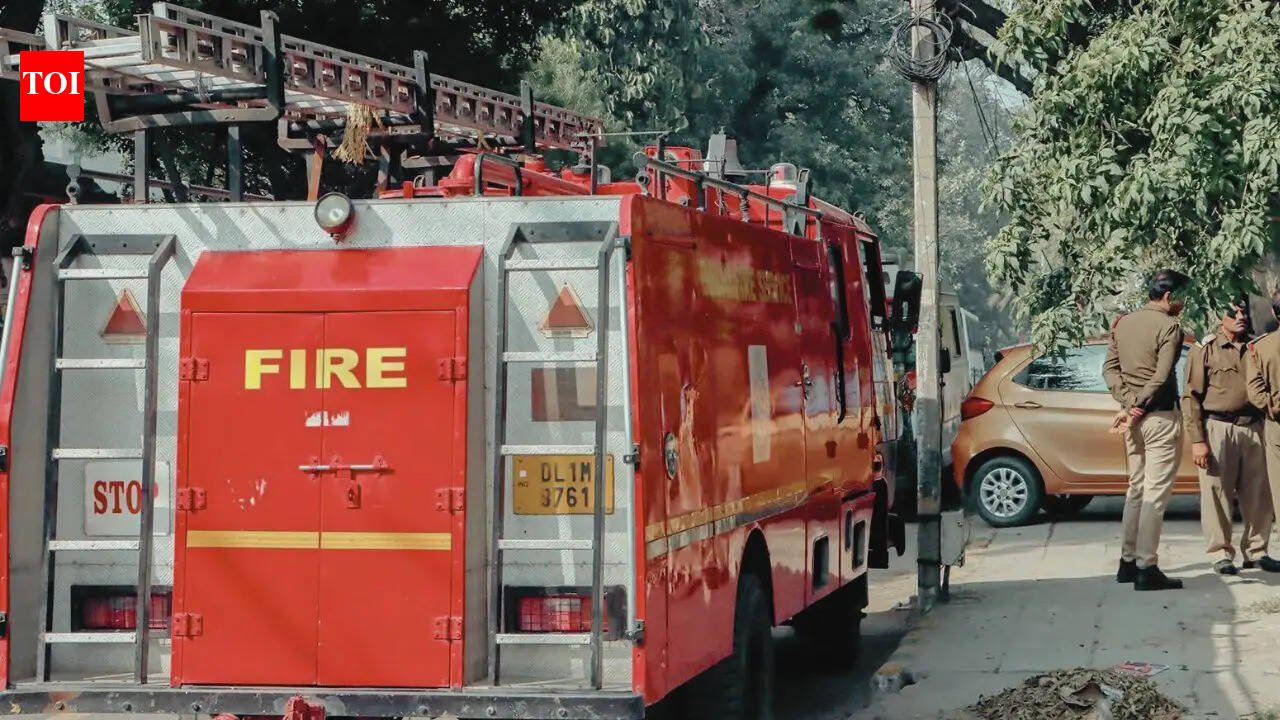
MUMBAI: Ten personnel were injured in a fire at the ONGC South Field at Bombay High on Friday evening. The cause was not known at the time of going to press.A tweet from ONGC late night said, “A fire was reported at 5.45 pm at ONGC’s SHP Platform, Mumbai High Asset. The situation was brought under control and the fire extinguished. Ten personnel sustained minor injuries. All are stable. Ops have been normalised. (sic)”However, no distress call was activated by ONGC till 10pm and no agencies — Navy or Coast Guard — got the alert. “After learning about it via the tweet, we checked with ONGC and were informed that there was no emergency as the situation has been brought under control,” said a Coast Guard official.The official said during such emergency distress calls are related to Mumbai’s Maritime Rescue Coordination Centre (MRCC). But the centre did not receive any such call from ONGC.


Source link

‘My issue with Sanju was…’ Yuvraj Singh on flaw that had Samson struggling | Cricket News


Sanju Samson and Yuvraj Singh

Yuvraj Singh has revealed how a crucial conversation with Sanju Samson helped shape the wicketkeeper-batter’s turnaround, especially during a difficult phase in his career.Speaking on a podcast with Sports Tak, Yuvraj reflected on Samson’s struggles, pointing out that a string of failures forced the batter to rethink his approach.

Watch

Sanju Samson opens up on T20 World Cup journey, and title win

“Coming to Sanju Samson, who failed in 8-10 innings, was going through failure. That’s where you need to say, I need to change something. Sanju had reached that stage where he felt he was not finding a place in the XI. He had scored two hundreds in South Africa, so I felt… the conversation I had with him happened in 2024 when India won that World Cup in Barbados. In that World Cup, Sanju was not playing. I had been watching his batting for 2-3 IPL seasons. I told him we would speak whenever he had time.”Yuvraj highlighted a key technical flaw that he believed was holding Samson back.“So my issue with Sanju was, you have to improve your footwork. If you don’t improve your footwork, you will consistently land in trouble. Scoring runs or not is different, but you have to improve your footwork. I gave him some ideas on how to improve it.”While the initial results did not change immediately, Yuvraj noticed a clear improvement as Samson spent more time at the crease in high-pressure matches.“After that he played, didn’t do well, but then got another opportunity. I felt in the quarter-final, semi-final and final, the more balls he faced, his footwork kept getting better. The more time he spent on the wicket, his footwork improved. So I felt obviously he must have done something in his practice.”Yuvraj also spoke about the nature of the game and how a single innings can shift momentum and confidence.“Cricket is such a game, one innings can take you up or down. The game keeps you balanced in life, that’s what I have learnt. I am very happy for Sanju. He has been playing for so many years and had such an amazing World Cup. He is a very good kid and I am very happy for his success.”Samson’s performances in the 2026 T20 World Cup backed up Yuvraj’s observations. Despite playing only five matches, he emerged as India’s top scorer and was named Player of the Tournament.In the final, Samson delivered a stunning knock of 89 off 45 balls, giving India a blazing start and setting the tone for the title win. His innings is now the highest individual score in a T20 World Cup final, surpassing Marlon Samuels’ unbeaten 85 in 2016 and Kane Williamson’ 85 in 2021.The 31-year-old also rewrote the record books with his six-hitting, smashing 24 sixes in the tournament — the most in a single edition, going past Finn Allen’s previous mark of 20.

Poll

Do you believe Sanju Samson footwork improvement was the key to his success in the T20 World Cup?

Consistency became Samson’s hallmark as he registered half-centuries, scoring 97* in a virtual quarter-final and 89 each in the semi-final and final, joining an elite list featuring Shahid Afridi and Virat Kohli, who have also scored fifties in both the semi-final and final.He also matched the record for most consecutive fifty-plus scores in a T20 World Cup, with three in a row, alongside names like Mahela Jayawardene, Kohli, Babar Azam, KL Rahul, Kusal Mendis and Sahibzada Farhan.In doing so, Samson also became the highest-scoring Indian in a single edition of the ICC Men’s T20 World Cup, surpassing Kohli’s long-standing tally of 319 runs from 2014.


Source link