Breaking News
AAP rift out in open: Raghav Chadha attacks leadership; party hits back | India News


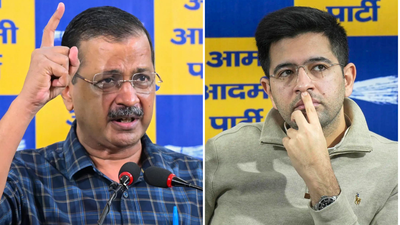
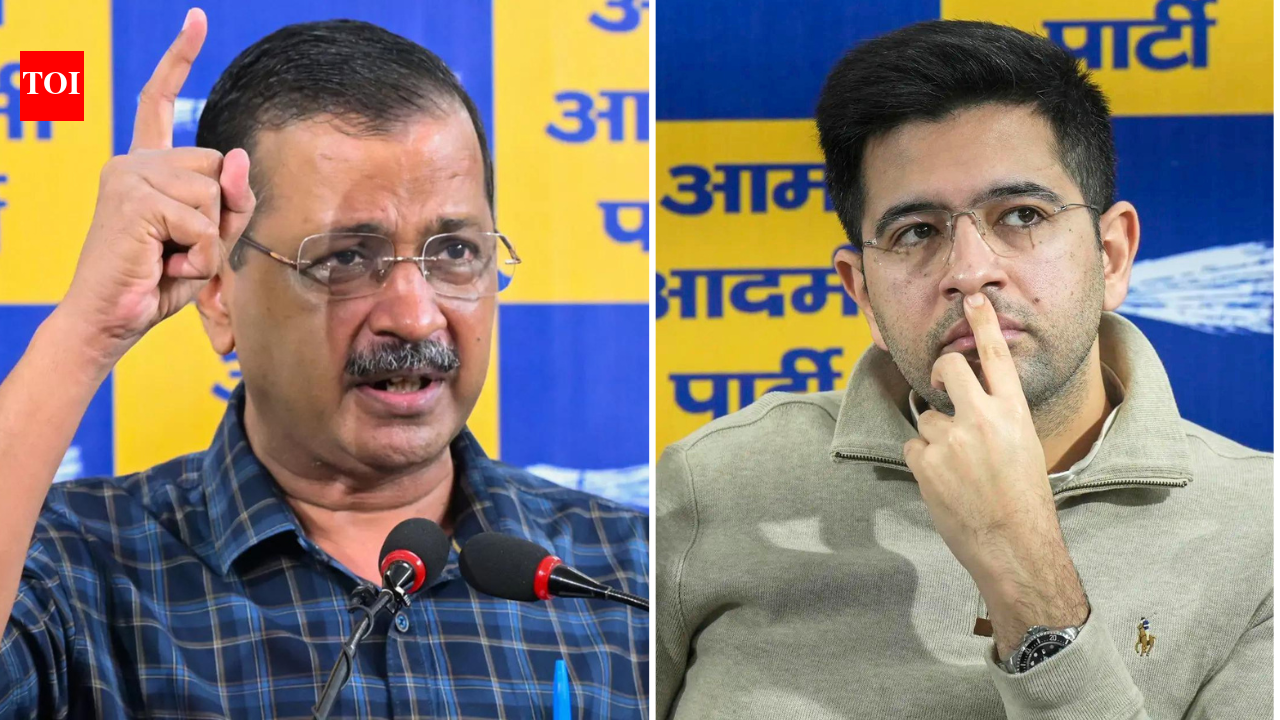
Arvind Kejriwal (L) and Raghav Chadha (R)

NEW DELHI: A day after the Aam Aadmi Party removed Raghav Chadha as its Rajya Sabha deputy leader, the MP launched a pointed attack on the Arvind Kejriwal-led party, asserting that his silence in Parliament should not be mistaken for defeat.Once seen as a Kejriwal loyalist, Chadha, without directly naming individuals, raised questions over the party’s high command, especially after AAP requested the Rajya Sabha Secretariat to not allot him speaking time in the House.Taking to social media, Chadha shared a video clip shot against the backdrop of the old Parliament building, titled “Silenced, not defeated,” which he described as his “message to aam aadmi.”

Watch

“Silenced Not Defeated”: Raghav Chadha Hits Back After AAP Drops Him From RS Post

He said in the video, “Whenever I get a chance to speak in the Parliament, I raise public issues. And perhaps I raise topics that are not usually raised in the Parliament. But is raising public issues a crime? Have I committed a crime? Have I made a mistake? Have I done something wrong?”“AAP has told the Rajya Sabha Secretariat that Raghav Chadha should be stopped from speaking in the Parliament. Yes, the AAP has informed the Parliament that Raghav Chadda should not be given a chance to speak in the Parliament,” he added.Stressing that his parliamentary interventions have consistently focused on issues affecting ordinary citizens, Chadha said that while his right to speak may have been curtailed, his silence should not be mistaken for defeat.“And the people who took away my right to speak in the Parliament today, silenced me. I want to say something to them, too. Do not consider my silence as my defeat. Do not consider my silence as my defeat. I am that river which becomes a flood when the time comes,” Chadha said.The Aam Aadmi Party MP underlined that his interventions in Parliament have centred on everyday concerns, from high food prices at airports and the struggles of delivery workers to food adulteration, toll and banking charges, and taxation issues affecting content creators. He also flagged telecom practices such as frequent recharge cycles and the absence of data rollover benefits.“I talk about the problem of Zomato Blinkit delivery riders. I raise the issue of adulteration in food. I talk about the loot of toll plazas and bank charges. I even talk about the strike on content creators due to the burden of taxes on the middle class. I talk about how telecom companies make us recharge 13 times in 12 months. They do not give data rollover. They stop the incoming after the recharge is over,” he said.Chadha argued that these issues directly benefit the public and questioned how raising them could harm the party.“I raised all these issues in the Parliament. And after raising these issues, the common man of the country benefited. But how did that harm the Aam Aadmi Party? Why would anyone want to stop me from speaking? Why would anyone want to silence my voice? Anyway, you people give me unlimited love. Whenever I raise your issues, you support me, praise me, and encourage me. I want to say thank you to you. In the same way, hold my hand and support me. Do not leave me. I am with you. And I am for you,” he said.A day earlier, the party had formally informed the Rajya Sabha secretariat that Ashok Kumar Mittal would replace Chadha as its deputy leader in the Upper House, marking a significant shift within the party ranks.In recent years, the Punjab-elected Rajya Sabha member had built a strong public profile by consistently raising “public issues” in Parliament, ranging from gig workers’ rights and rising mobile recharge costs to paternity leave and pricing of eatery menus at airports.Chadha entered politics with the rise of the Aam Aadmi Party, an unconventional political startup that quickly grew into a national force. Much of the momentum behind Arvind Kejriwal’s emergence was driven directly by the Jan Lokpal movement led by Anna Hazare.As AAP expanded and consolidated its position, forming three successive governments in Delhi, including two with sweeping majorities, Chadha’s stature within the party also rose. He became one of Kejriwal’s trusted lieutenants and a prominent public face of the party.When AAP pushed beyond Delhi and made a decisive breakthrough in Punjab, Chadha was entrusted with key organisational responsibilities. He played a significant role in the party’s expansion and in the formation of the government which is being led by chief minister Bhagwant Mann.Raghav Chadha, also a chartered accountant, has long identified himself as a product of the “Arvind Kejriwal school of politics”, aligning his rise with the leadership and ideology of AAP supremo Kejriwal.

‘Jo darr gaya, samjho marr gaya’: AAP top brass targets Raghav Chadha

As Chadha raised questions on party leadership, the AAP hit back swiftly, with senior leaders publicly countering their now, a distant colleague.AAP leader Saurabh Bharadwaj responded to Chadha’s video with one of his own on X, invoking a famous Sholay dialogue in a pointed swipe: “jo darr gaya, samjho marr gaya.”The party’s IT cell chief Anurag Dhanda also launched a sharp critique, accusing Chadha of failing to perform his duties in the party’s interest. Taking aim at the issues Chadha raised in Parliament, he remarked, “In Parliament, the party gets just a little time to speak—in that, we can either struggle to save the country or haggle to make the samosas cheaper in the airport canteen.”Dhanda went further, questioning Chadha’s political stance and resolve. “If someone fears Modi, will they fight for the country?” he said, alleging that Chadha had avoided taking strong positions on key national issues.

Poll

Do you think internal conflicts affect a party’s image?

He cited multiple instances to back his charge, alleging silence during the arrest of party workers in Gujarat, inaction over voting rights concerns in West Bengal, and refusal to support a motion against the Chief Election Commissioner. Dhanda also accused Chadha of staying back in the House during party walkouts.“For the past few years, you’ve grown afraid, Raghav. You hesitate to speak against Modi. You hesitate to speak on the country’s real issues,” he said, ending with a pointed remark: “He who is afraid…”


Source link

CM Rekha Gupta unveils Delhi’s air pollution mitigation plan for 2026 | India News


CM Rekha Gupta unveils Delhi's air pollution mitigation plan for 2026

NEW DELHI: Delhi chief minister Rekha Gupta on Friday unveiled the Air Pollution Mitigation Action Plan 2026, announcing a series of measures including strict enforcement of the “No PUC, No Fuel” rule, curbs on polluting vehicles and a push for cleaner transport and dust control.Announcing the rollout of the plan, Gupta said the initiative builds on the government’s ‘historic’ Green Budget for 2026-27 and aims to translate clean air goals into measurable outcomes.The action plan, announced after a high-level review meeting held at the Mukhyamantri Janseva Sadan, is aimed at tackling key sources of pollution such as vehicular emissions, road dust, construction activity, industrial discharge and biomass burning, officials said.

Watch

‘Can’t Stay Two Days In Delhi’: Gadkari On Severe Pollution, Transport Sector Role

Addressing the meeting, the chief minister said clean air and environmental protection were now central to the government’s policy framework and would be backed by dedicated budgetary allocations and strict enforcement.“This is not just a policy announcement, it is an enforcement-driven campaign powered by resources, technology and strict oversight,” she said.Taking a tough stance on vehicular pollution, Gupta said the “No PUC (Pollution Under Control), No Fuel” rule would be strictly implemented with support from Automatic Number Plate Recognition cameras and digital tracking systems.From November 1, entry of goods vehicles into the national capital will be restricted to those compliant with Bharat Stage (BS)-VI norms or powered by CNG or electricity, officials said.The government will also regulate non-essential traffic inflow and may consider staggered office timings, work-from-home directives and additional restrictions on polluting vehicles during periods of severe air pollution, they added.As part of efforts to reduce vehicular emissions, the government plans to expand the city’s bus fleet to 13,760 by 2028-29, with priority being given to electric buses.Officials further said the government also plans to improve last-mile connectivity through better integration of metro and Regional Rapid Transit System (RRTS) networks with feeder buses, e-autos and shared mobility services.To accelerate electric mobility, 32,000 electric vehicle (EV) charging points will be installed over the next four years, while the proposed EV Policy 2026 will focus on two-wheelers, commercial vehicles and the transition of government fleets to cleaner fuels, they said.The chief minister also announced measures to ease traffic congestion at 62 identified hotspots through time-bound interventions and the rollout of an Intelligent Traffic Management System, along with smart parking solutions and pricing reforms.Recognising road dust as a major contributor to pollution, the government said it would deploy mechanical road sweepers, water sprinklers, anti-smog guns and mist spray systems on a large scale, with all operations monitored through GPS tracking and a centralised dashboard.Nearly 3,500 km of roads are to be redeveloped with paved surfaces, green buffers and utility ducts, while construction-related pollution will be monitored through an artificial intelligence (AI)-enabled C&D Portal 2.0 for real-time tracking, geo-tagging and enforcement, officials said.The government has also set deadlines for clearing legacy landfill sites, such as Okhla by July 2026, Bhalswa by December 2026 and Ghazipur by December 2027, and have said that strict action would be taken against biomass burning and non-compliant industrial units.The city’s air quality monitoring network will be expanded, and a centralised Green War Room and Integrated Command and Control Centre will be set up to strengthen environmental governance, they added.Ward-level “Vayu Rakshak” teams will also be deployed and the 311 platform upgraded to improve citizen reporting and participation, they said.The government has set a target of planting 70 lakh trees, shrubs and bamboo in 2026-27, with a long-term goal of over one crore plantations across the city.Gupta said the action plan would also rely on innovation and public participation, with research institutions, technical experts and startups being involved in developing solutions to curb pollution.“The Action Plan 2026 is not just about intent; it is a robust execution model with financial backing, strict timelines and accountability at every level. Clean air is not a luxury; it is a fundamental right, and we are committed to delivering it,” she said.The meeting was attended by cabinet ministers Pravesh Sahib Singh, Manjinder Singh Sirsa and Pankaj Kumar Singh, chief secretary Rajiv Verma, representatives of the Delhi Metro Rail Corporation and Traffic Police, and senior government officials, officials said.


Source link

Pakistan Petrol Crisis: Petrol shock, free rides & more: How is Pakistan dealing with Hormuz energy crisis


Petrol shock, free rides & more: How is Pakistan dealing with Hormuz energy crisis

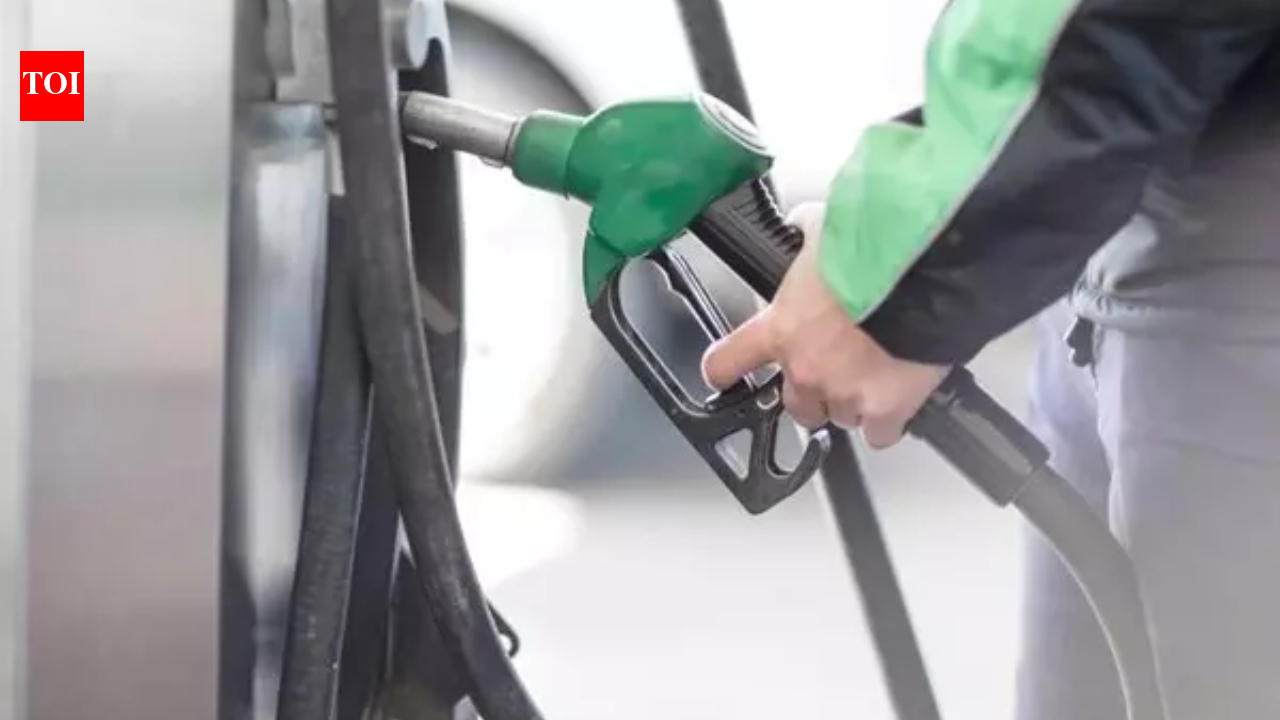
The Middle East crisis has stretched beyond the one month mark, sending ripples across the globe. While somes nations are hiking fuel prices, others are introducing other measures to cushion consumers from the impact while balancing energy reserves. Pakistan is no stranger to the ongoing energy volitality as the country imports almost 85% of its supplies through the Strait of Hormuz. Pakistan government has already raised petrol prices multiple times since the conflict began, with the last raise being on Friday. The sharp rise in fuel prices pushed the government to roll out emergency relief measures, including free public transport in key regions, as public anger spilled onto the streets. Authorities announced on Friday that commuters in Islamabad and Punjab will not have to pay fares on state-run transport for the next 30 days.

Watch

‘Petrol, Diesel Crisis Developing Worldwide’: PM Modi Urges Unity Amid West Asia Conflict

Balancing Hormuz crisis and consumer interest

The decision follows widespread unrest after petrol prices were raised overnight by 42.7% to 485 rupees per litre, triggering protests and long queues at fuel stations. However, after public outrage, Pakistan’s PM Shehbaz Sharif later revised the hike, bringing petrol down to 378 rupees per litre. “This decrease will be applicable for at least one month,” he said during a televised address, adding, “I promise I will not rest until your life is back to normal.Coming to diesel prices, the government had increased HSD price by PKR 184.49 per litre, from PKR 335.86 to PKR 520.35, but abolished the levy, providing some relief to citizens.Detailing the relief measures, interior minister Mohsin Naqvi said, “All public transport in Islamabad will be made free of cost for the general public for the next 30 days, starting tomorrow (Saturday),” noting that the government would shoulder a cost of 350 million rupees.Punjab has mirrored the move, removing fares on public transport and introducing “targeted subsidies” for trucks and buses. CM Maryam Nawaz Sharif also appealed to transport operators not to shift the burden onto passengers, saying, “We promise to relieve the public of economic burden as soon as conditions improve.”In Karachi, similar steps have been taken by the Sindh government, which announced subsidies aimed at motorcyclists and small farmers.

Middle East tensions strain Pakistan

The developments come against the backdrop of rising global energy disruptions linked to the US-Israel war on Iran, which began on February 28. The conflict has led to retaliatory strikes across the Gulf and disrupted movement through the Strait of Hormuz, a vital route for energy supplies, particularly to Asia.To manage the strain, Pakistan has introduced a series of fuel-saving steps, including a four-day workweek for many government offices, extended school holidays and a shift to online classes in some cases.The economic pressure is being felt acutely in a country where about 25% of the population of 240 million lives in poverty, according to World Bank figures. Earlier in March, fuel prices had already been increased by 20 percent, with authorities initially resisting further hikes.Protests broke out on Friday in Lahore, where demonstrators called for the government to withdraw the increase. “The government, overnight, has dropped a ‘petrol bomb’ on its people,” said Naveed Ahmed, a 39-year-old protestor. “Our nation cannot bear this situation right now. This storm of inflation must be stopped, and relief should be provided to the public.”Hafiz Abdul Rauf, another protester, questioned the reasoning behind the hike, saying, “The rise we are seeing is not due to the (Iran) war, but to pressure from the IMF, pressure that must be resisted. For God’s sake, step back from these demands and show some compassion for the people.”The pressure is not limited to Pakistan. Bangladesh has also raised prices of liquefied petroleum gas and compressed natural gas by 29%. Meanwhile, the International Monetary Fund warned earlier this week that vulnerable economies face not only rising energy costs but also disruptions in supply chains. On March 28, it said it had reached an initial agreement with Pakistan on a $1.2-billion support package.


Source link

Rohit Sharma had clear plan about his fitness, form: Mahela Jayawardene | Cricket News


Rohit Sharma had clear plan about his fitness, form: Mahela Jayawardene
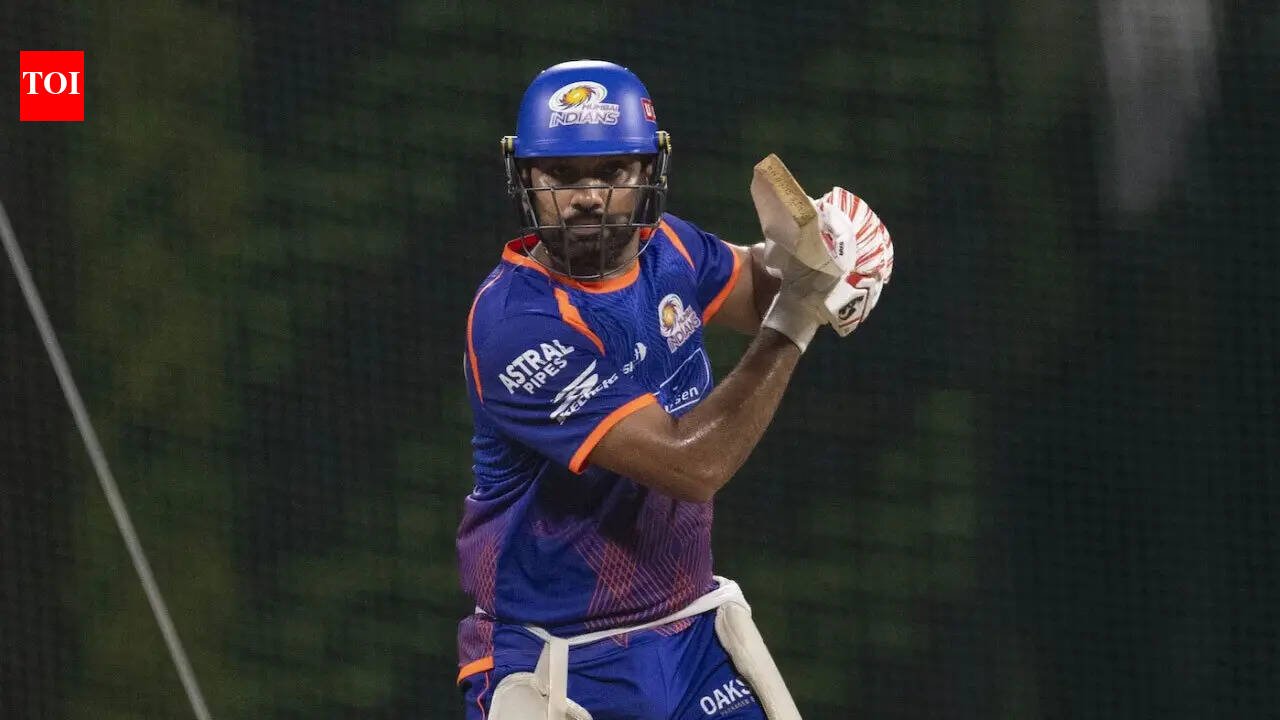
Rohit Sharma (Image credit: BCCI/IPL)

NEW DELHI: Rohit Sharma isn’t missing any practice sessions with the Mumbai Indians team. In the nets on Friday afternoon at the Arun Jaitley stadium, he put his head down and mostly worked on perfecting his defensive technique. He refrained from playing the booming hits down the ground.Rohit is 26 days short of turning 39 but the 15 kgs shed by him make him look younger, almost unrecognisable. He is clearly on a mission to prove his worth as an international class cricketer even as he faces constant scrutiny over his place in the Indian team for the 2027 ODI World Cup. The journey started with honest conversations with the Mumbai Indians management last year.

Watch

Ajinkya Rahane press conference: KKR captain backs bowlers, hits back at SR critics

“He had a clear plan regarding his fitness. Some members of our set-up were involved in his training and he worked towards reaching a level he was comfortable with,” Mumbai Indians head coach Mahela Jayawardene said on Friday.“Even though he didn’t play much competitive cricket, he did a lot of skill work in the off-season. He joined us from first day of the camp and we had discussions on how to start. We ran several simulations and practice matches. For someone with his experience, a lot comes down to muscle memory and understanding situations,” he added.One of the major concerns around him is the lack of cricket he plays around the year after retiring from Tests and T20Is. He allayed those concerns in MI’s opening game against KKR with a explosive 38-ball 78.“Rohit’s case was slightly different since he hadn’t played much cricket. He focused on his fitness for a couple of months and then resumed skill work. Since he was in Mumbai, he used our facilities whenever possible but largely he knows what works best for him. He has stayed focused and relaxed and his presence has been very positive for the group. When I watched him in the nets, he looked in very good touch — his hand speed was excellent,” Jayawardene said.The true test of Rohit’s endurance, ability and fitness will be judged by his run-scoring consistency throughout the long IPL season.


Source link

Access Denied


Access Denied

You don’t have permission to access “http://www.ndtv.com/india-news/kerala-assembly-election-2026-shashi-tharoors-convoy-blocked-security-staffer-attacked-in-kerala-11309244” on this server.

Reference #18.adf5d217.1775274681.47015a7

https://errors.edgesuite.net/18.adf5d217.1775274681.47015a7


Source link

Those hit by ‘kissing disease’ are 3 times more likely to develop multiple sclerosis | India News


Those hit by 'kissing disease' are 3 times more likely to develop multiple sclerosis

NEW DELHI: Next time you wake up with crushing fatigue, a high fever, a raw throat and swollen glands, take note. The trigger behind it could be something as simple as a kiss.Infectious mononucleosis, or the ‘kissing disease’, is caused by the Epstein-Barr Virus (EBV) – one of the most common human infections worldwide. It spreads through saliva, not just kissing, but every day close contact.A US study using records from the Mayo Clinic-led Rochester Epidemiology Project, tracking nearly 19,000 people, has found those who develop mono are over three times more likely to develop multiple sclerosis (MS) later. The risk remains small – 0.17% among those with mono versus 0.07% without – but the disease also appeared earlier in those infected.MS is a chronic condition in which the immune system attacks the protective covering of nerves, disrupting signals between the brain and body. It can begin with fatigue, vision problems, numbness and imbalance and may worsen over time.Experts said the link is strong but not causal. Dr Sudhir Kumar, neurologist at Apollo Hospital, Hyderabad, said the apparent rise in younger MS cases likely reflects better awareness and earlier MRI-based diagnosis, not a true shift in onset. While EBV is closely linked to MS, it infects most people, whereas the disease remains uncommon. “EBV may act as a trigger in genetically susceptible individuals, but it is not sufficient on its own to cause MS,” he said, adding it is still unclear if earlier infection leads to earlier disease in practice.He cautioned against routine long-term monitoring after mono, noting the absolute risk is low and over-testing may cause unnecessary anxiety. Instead, awareness is key. Early symptoms – such as blurred or painful vision, tingling or numbness, unexplained fatigue, brief weakness, imbalance, or a shock-like sensation down the spine – are often missed as they come and go, but any neurological symptom lasting over 24 hours should be evaluated.Prof Manjari Tripathi, head of neurology at AIIMS, Delhi, said EBV is widespread in India, especially among children and adolescents. She said, “MS is a complex disease with multiple risk factors – genetic, environmental and immune. EBV may act as a trigger, but it is not the sole cause, and most people with the infection will never develop MS.”Scientists say the findings strengthen the case for preventive strategies, including a potential EBV vaccine.


Source link

Shashi Tharoor’s convoy blocked in Kerala’s Wandoor, five men assault his gunman, driver | India News


Congress MP Shashi Tharoor's Convoy Blocked In Kerala, Security Staff Assaulted During Poll Campaign

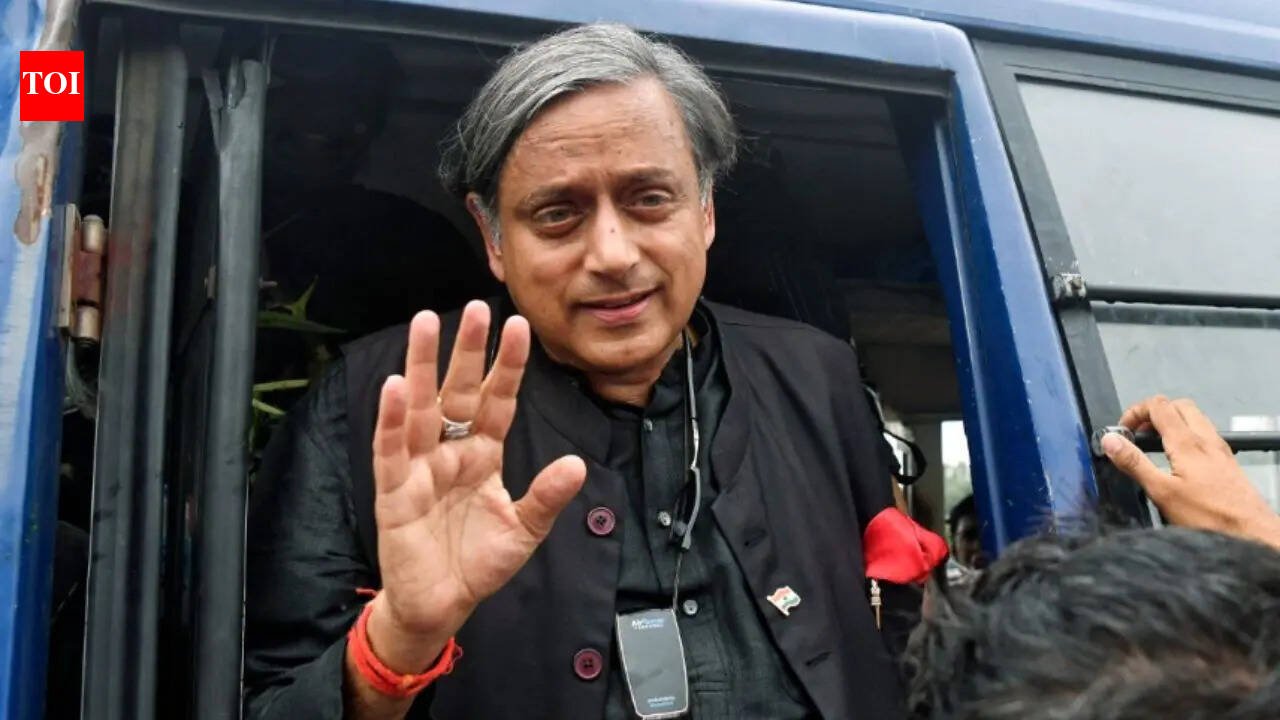
Tharoor (ANI file photo)

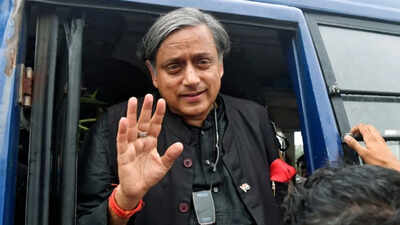
NEW DELHI: Congress MP Shashi Tharoor’s convoy was reportedly attacked in Kerala’s Wandoor on Friday. One of the five accused has been arrested.The five gang members attacked Tharoor’s gunman and driver at Chellithode, near Thiruvali in Wandoor, at around 7.30 pm.The incident took place at a roadblock on the Chelithode bridge when two vehicles blocked Tharoor’s vehicle. When the gunman attempted to clear the obstruction, he and the driver were allegedly attacked.

Watch

Congress MP Shashi Tharoor’s Convoy Blocked In Kerala, Security Staff Assaulted During Poll Campaign

According to the police, the road was narrow, and Tharoor’s gunman had only asked the vehicle ahead to move faster to ensure smooth passage for the MP’s convoy.Police said that while one of the accused was taken into custody, the remaining have been identified and will soon be apprehended.The Congress MP was on his way to attend an election campaign of Congress leader A P Anilkumar.Tharoor said on his social media on Saturday that he and his security guard were fine. “Truly touched by all the messages and calls expressing concern about the untoward incident last night when my security guard was attacked. He is well and I was untouched. Thank you to all friends and well-wishers. We carried on undaunted yesterday and concluded two more events as planned. And our ongoing programme remains unaffected,” the Congress MP said.

Watch

Kerala Elections 2026: Who Holds The Master Key? Decoding Mood Of Communities


Source link

India set to get 3rd nuclear-powered ballistic missile submarine INS Aridhaman; Rajnath drops hint


NEW DELHI: India is set to commission its third indigenous nuclear-powered ballistic missile submarine, INS Aridhaman, into the Indian Navy on Friday, news agency ANI reported, marking a major boost to the country’s strategic deterrence capabilities.Hinting at the induction, defence minister Rajnath Singh posted on X in Hindi: “It’s not a word, it’s power, ‘Aridhaman’!”INS Aridhaman, part of India’s Arihant-class submarines, is a 7,000-tonne vessel, making it larger and more advanced than its predecessors INS Arihant and INS Arighaat. Built under the Advanced Technology Vessel programme at Visakhapatnam, the submarine represents a key milestone in India’s indigenous defence capabilities.

India’s Defence Exports Jump to ₹38,424 Crore, Marking Record Growth in FY26

Equipped with an 83 MW Compact Light Water Reactor, the submarine is designed for enhanced stealth and endurance. It features advanced indigenous sonar systems and acoustic suppression technologies, improving its underwater detection and survivability.A major upgrade over earlier platforms is its increased missile capacity. INS Aridhaman is fitted with eight vertical launch system tubes, double that of earlier submarines, allowing it to carry up to 24 K-15 Sagarika missiles with a range of 750 km or eight K-4 missiles with a range of 3,500 km. It is also expected to support future K-5 missiles with a range of around 6,000 km.With its induction, India will operate three nuclear-powered ballistic missile submarines under the Strategic Forces Command. This strengthens the country’s sea-based leg of the nuclear triad and moves it closer to achieving continuous at-sea deterrence, ensuring at least one nuclear submarine remains deployed at all times.The submarine is expected to be based at Project Varsha near Visakhapatnam, a high-security naval facility designed to house India’s nuclear fleet.India is also progressing on additional naval capabilities, including the planned induction of the Russian Akula-class nuclear-powered attack submarine, Chakra III, and negotiations for advanced diesel-electric submarines under Project-75(I).


Source link

Access Denied


Access Denied

You don’t have permission to access “http://www.ndtv.com/india-news/fire-at-ongcs-mumbai-high-offshore-oil-field-10-injured-11308685” on this server.

Reference #18.56fdd417.1775278945.87b5a089

https://errors.edgesuite.net/18.56fdd417.1775278945.87b5a089


Source link

PNB, Union & IDFC Bank see credit outpace deposit growth


PNB, Union & IDFC Bank see credit outpace deposit growth

MUMBAI: Credit growth continued to outpace deposit mobilisation for Punjab National Bank, Union Bank of India and IDFC FIRST Bank at the end of the March quarter, reflecting sustained loan demand in a tight liquidity environment.Punjab National Bank reported global advances of Rs 12,61,420 crore as of March 31, 2026, up nearly 13% year-onyear, while global deposits rose 9.3% to Rs 17,11,476 crore. The bank’s total global business stood at Rs 29,72,896 crore, reflecting a 10.8% increase. Domestic advances grew 12.2% to Rs 11,95,811 crore and domestic deposits rose 9.2% to Rs 16,49,409 crore. The global credit-deposit ratio stood at 73.7% at the end of the quarter.Union Bank of India reported global advances of Rs 10,78,779 crore, marking a 9.8% year-on-year increase, while global deposits rose 2.7% to Rs 13,06,900 crore. Total global business stood at Rs 23,85,679 crore, up 5.8%. Growth was led by the retail, agriculture and MSME segments, where advances rose 12.6% to Rs 5,98,620 crore. Domestic CASA deposits increased 7.9% to Rs 4,59,988 crore, with the CASA ratio improving to 35.2%.IDFC FIRST Bank reported loans and advances of Rs 2,90,362 crore at the end of March, up 20% year-on-year, while customer deposits rose 17.2% to Rs 2,84,327 crore. The bank’s CASA ratio improved to 49.8% from 46.9% a year earlier. It said customer acquisition remained stable through March despite year-end tax outflows and tight system liquidity. It said asset quality stress in its microfinance portfolio has normalised, supporting further credit growth.


Source link