Breaking News
‘India’s debt-to-GDP ratio lowest among major economies’: FM Sitharaman sees fiscal space, hints at rate cut


'India’s debt-to-GDP ratio lowest among major economies': FM Sitharaman sees fiscal space, hints at rate cut

Finance Minister Nirmala Sitharaman on Monday said India stands out in debt management among major economies, with an overall debt-to-GDP ratio of about 81%, even as the global economy faces rising volatility and uncertainty, PTI reported.Speaking at an event organised by the National Institute of Public Finance and Policy (NIPFP), Sitharaman warned that the ongoing Middle East conflict has evolved into a “systemic tremor threatening vital arteries of global energy”.She said the global economic environment is increasingly marked by volatility, uncertainty, complexity and ambiguity, alongside a sharp surge in public debt across countries.“World economy witnessing volatility, uncertainty, complexity, and ambiguity; global public debt has surged,” the finance minister said.On India’s fiscal position, Sitharaman noted that the country remains relatively well-placed compared to other major economies in terms of debt sustainability.“India stands out in debt management with overall debt-to-GDP ratio at 81 per cent, lowest among major economies,” she said.The finance minister also said India has sufficient fiscal space to respond to emerging challenges.“India has fiscal space; there’s room to support affected sectors, expand capex, and interest rate cut by RBI,” she said.Sitharaman underlined that geopolitical tensions, particularly in West Asia, are not just regional disruptions but have wider implications for global energy supply chains and economic stability.“Middle East conflict evolved into systemic tremor threatening vital arteries of global energy,” she said.Her remarks come at a time when global markets are grappling with elevated crude oil prices, supply chain disruptions and tightening financial conditions driven by geopolitical conflicts.

MPC meet begins amid inflation concerns

The Reserve Bank’s rate-setting panel on Monday began its three-day deliberations for the first bi-monthly monetary policy of the fiscal, with expectations of a status quo on the benchmark lending rate amid concerns of a potential spike in inflation due to the ongoing Middle East crisis.The outcome of the six-member Monetary Policy Committee (MPC), headed by RBI Governor Sanjay Malhotra, is scheduled to be announced on Wednesday.The RBI has reduced the policy rate by a cumulative 125 basis points since February 2025, marking its most aggressive easing cycle since 2019. The last cut of 25 basis points came in December, while the central bank maintained a pause in its February policy.Experts said the MPC will factor in geopolitical tensions in Middle East, volatility in commodity prices and sharp currency movements, which have impacted the rupee.While retail inflation has moved closer to the RBI’s medium-term target of 4%, the recent surge in global crude oil prices has raised concerns about second-round effects on domestic prices, especially fuel, transportation and core inflation.Estimates suggest that every $10 per barrel increase in crude prices can push inflation higher by up to 0.60%. Crude, which had hovered around $60 per barrel for an extended period, has risen above $100 since the conflict began in late February.The rupee has also depreciated by over 4% since the start of the war, adding to imported inflation pressures.

Inflation targeting framework

The government has mandated the RBI to maintain retail inflation at 4%, with a tolerance band of +/-2%, for another five-year period ending March 2031.India adopted the inflation-targeting framework in 2016, with the MPC tasked to maintain annual inflation at 4% within a band of 2% to 6%. The framework has continued since then. As per the latest data, retail inflation rose to 3.21% in February from 2.74% in January.



Source link

Access Denied


Access Denied

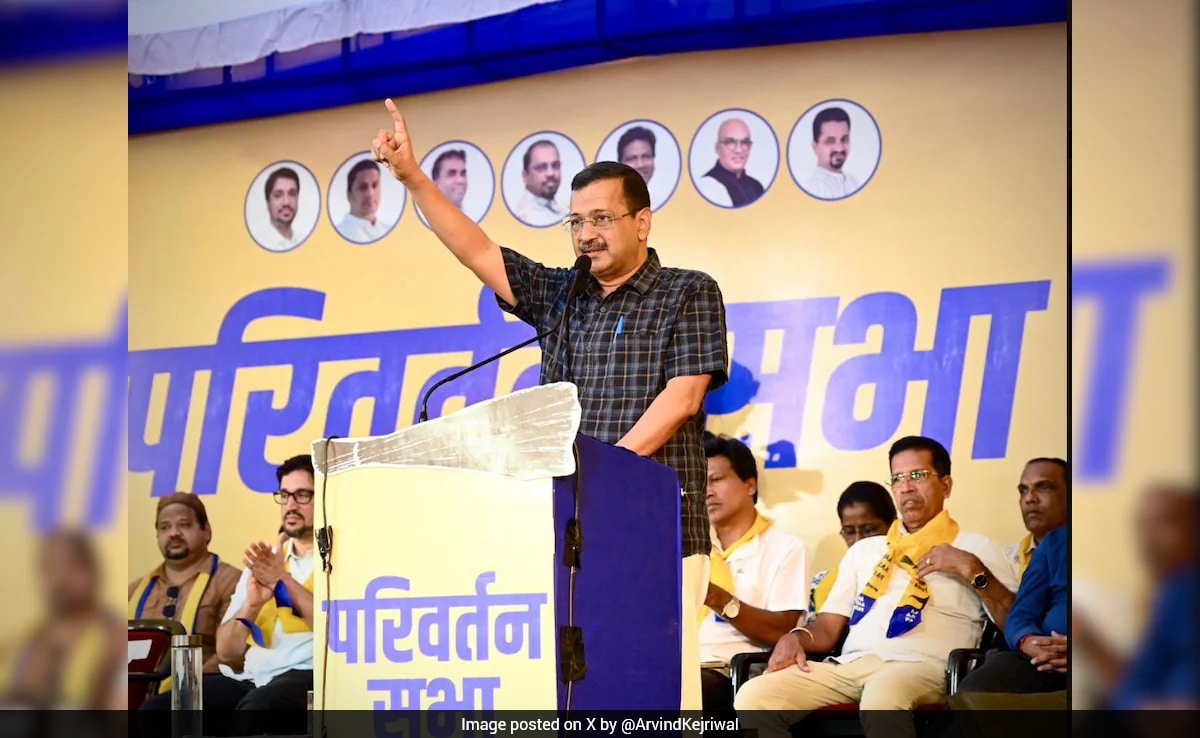
You don’t have permission to access “http://www.ndtv.com/india-news/will-argue-my-own-case-arvind-kejriwal-seeks-delhi-high-court-judges-recusal-in-liquor-policy-case-11318583” on this server.

Reference #18.adf5d217.1775481814.497d8de7

https://errors.edgesuite.net/18.adf5d217.1775481814.497d8de7


Source link

Ipl Ticket Scam: IPL craze costs techie Rs 1.46 lakh in fake RCB vs CSK ticket scam | Cricket News


IPL craze costs techie Rs 1.46 lakh in fake RCB vs CSK ticket scam
Image credit: AI generated pic

NEW DELHI: IPL comes and the demand for tickets and passes go soaring up by the fans. The desperation to get inside the stadium to watch their favourite teams in action in the IPL go high and high. When the tickets get sold out, the demand gets too hig, and the cricket fans even ask for tickets in black. But for a 25-year-old techie the craze for IPL tickets for RCB vs CSK turned too costly and he was duped for a massive Rs. 1.46 lakh. The techie, a resident of B Narayanapura, fell into a trap by a post posted by a fraudster who posed himself as a ticket seller on Instagram.As per a report in Deccan Herald, the techie alleged in a complaint to Mahadevapura Police that an individual claiming to be Sumit Biswal promised he could arrange IPL tickets along with food coupons. As per the techie, Biswal was introduced him as a senior supervisor for ticket counter at M Chinnaswamy Stadium

Watch

Devdutt Padikkal press conference: Chinnaswamy pitch, Tim David’s power & RCB’s batting strategy

“He asked me to come near the stadium gate number 10, saying someone would deliver the tickets within minutes, and even sent an email confirmation to gain my trust,” the complainant told Deccan Herald. “Initially, I agreed to buy two tickets for Rs 3,700 each,but he kept asking for more money under various pretexts such as refundable security deposits, additional ID cards and food coupons. Trusting him, I made multiple payments – even using my mother’s bank account after exhausting my own limits—and ended up transferring around Rs 1.46 lakh,” he added.RCB register their second winBhuvneshwar Kumar’s incisive spell of 3-41, coming after a marauding batting show from Tim David, Rajat Patidar and Devdutt Padikkal, propelled Royal Challengers Bengaluru (RCB) to a commanding 43-run victory over Chennai Super Kings (CSK) in their IPL 2026 encounter at the M Chinnaswamy Stadium on Sunday.The contest saw RCB’s batting unit dismantle CSK’s attack with relentless hitting, as David’s 70 not out off just 25 balls and Patidar’s unbeaten 48 off only 19 balls provided for the late fireworks after Padikkal’s fluent 50 off 29 balls had set the tone for the daunting total.Their combined effort lifted RCB to a daunting 250/3, thus setting a new record for highest total in IPL 2026. In reply, CSK faltered under scoreboard pressure, with Sarfaraz Khan’s 50 off 24 balls and Prashant Veer’s 43 the lone acts of resistance amid a string of failures from the top order.Bhuvneshwar was at his disciplined best and even crossed the 200-mark in terms of wickets in IPL, with others also chipping in as CSK were bowled out for 207 in 19.4 overs. The comprehensive win also meant RCB have registered four consecutive triumphs over CSK for the first time in the IPL’s history.


Source link

Iran war risk: JPMorgan CEO Jamie Dimon warns of oil shocks, sticky inflation and higher interest rates


Iran war risk: JPMorgan CEO Jamie Dimon warns of oil shocks, sticky inflation and higher interest rates

JPMorgan Chase CEO Jamie Dimon has warned that the ongoing war in Iran could trigger oil and commodity price shocks, keeping inflation elevated and pushing interest rates higher than current market expectations, Reuters reported.The warning came in his annual letter to shareholders, a day after US President Donald Trump escalated pressure on Iran by threatening to target key infrastructure if the Strait of Hormuz is not reopened.“Now, because of the war in Iran, we additionally face the potential for significant ongoing oil and commodity price shocks, along with the reshaping of global supply chains, which may lead to stickier inflation and ultimately higher interest rates than markets currently expect,” Dimon said, news agency Reuters quoted as saying. Dimon, who has led JPMorgan for two decades, also highlighted broader geopolitical risks, including the war in Ukraine, tensions in the Middle East and friction with China.“The challenges we all face are significant,” he added.He said it remains uncertain whether the Iran war will achieve US objectives, while warning that nuclear proliferation remains the biggest risk linked to Iran.Markets have already begun pricing in these risks, with expectations of interest rate cuts this year largely fading amid rising inflation concerns triggered by the conflict.Last week, the benchmark S&P 500 index recorded its worst quarterly performance since 2022, weighed down by rising energy prices and geopolitical uncertainty since late February.Dimon noted that the US economy remains resilient, with consumers continuing to earn and spend, and businesses staying broadly healthy, though signs of weakening have emerged.He cautioned that economic strength has been supported by significant government deficit spending and past stimulus, while infrastructure investment needs continue to grow.At the same time, he pointed to positives such as fiscal stimulus under President Trump’s “Big, Beautiful Bill”, deregulation policies and rising capital expenditure driven by artificial intelligence.On financial stability, Dimon said the $1.8-trillion private credit market “probably” does not pose a systemic risk, despite investor concerns and recent withdrawals from such funds.However, he warned that in a downturn, losses across leveraged lending could exceed expectations as credit standards have weakened.Private credit markets also lack transparency and rigorous valuation benchmarks, increasing the risk of investor exits if conditions worsen, he said.Separately, Dimon criticised revised US capital rules, including Basel III and GSIB surcharge norms, calling aspects of the proposals “nonsensical” and “very flawed”.He said JPMorgan’s GSIB surcharge would fall only to 5.0%, a level he described as “absurd” and “un-American”, arguing it penalises the bank’s scale and performance.


Source link

Stock market today (April 6, 2026): Which are the top gainers and losers in BSE Sensex and Nifty50 today? Check list


Stock market today (April 6, 2026): Which are the top gainers and losers in BSE Sensex and Nifty50 today? Check list

Benchmark indices Sensex and Nifty staged a sharp rebound on Monday after early losses, supported by a correction in crude oil prices and strong buying in banking stocks.The 30-share BSE Sensex jumped 787.30 points, or 1.07%, to settle at 74,106.85. During the session, it climbed as much as 887.91 points, or 1.21%, to 74,207.46.The 50-share NSE Nifty advanced 255.15 points, or 1.12%, to close at 22,968.25, nearing the 23,000 mark.

Nifty50 top gainers

  • Trent (7.98%)
  • Shriram Finance (4.09%)
  • Axis Bank (3.96%)
  • Adani Enterprises (3.71%)
  • Titan Company (3.64%)
  • SBI Life (3.55%)
  • Larsen & Toubro (3.18%)
  • UltraTech Cement (3.16%)
  • Bajaj Finance (2.91%)
  • InterGlobe Aviation (2.84%)

Nifty50 top losers

  • Reliance Industries (-3.40%)
  • ONGC (-1.87%)
  • Max Healthcare (-1.38%)
  • Eicher Motors (-0.81%)
  • JSW Steel (-0.68%)

BSE Sensex top gainers

  • Trent (7.98%)
  • Axis Bank (3.96%)
  • Titan Company (3.64%)
  • Larsen & Toubro (3.18%)
  • UltraTech Cement (3.16%)
  • Bajaj Finance (2.91%)
  • InterGlobe Aviation (2.84%)
  • HDFC Bank (2.68%)
  • Kwality Wall’s (2.23%)

BSE Sensex top losers

  • Reliance Industries (-3.40%)

Brent crude, the global oil benchmark, declined 0.71% to USD 108.3 per barrel, offering some relief to markets.Asian markets ended mostly higher, with South Korea’s Kospi and Japan’s Nikkei 225 closing in the green, while Hong Kong and Shanghai markets remained shut for a holiday.“Domestic equities staged a strong rally as value buying gained traction across the board. Crude prices softened marginally on reports of ceasefire efforts, while encouraging provisional banking data supported interest in rate-sensitive segments,” said Vinod Nair, Head of Research, Geojit Investments Limited.He added that overall risk appetite remains cautious amid inflation concerns and potential disruptions to global trade.“Today’s recovery was driven primarily by a modest pullback in crude oil prices, with Brent slipping below the USD 105 mark amid reports of a proposed temporary ceasefire from Middle East mediators. Additionally, domestic institutional investors continued to provide stability at lower levels, absorbing selling pressure and supporting the broader market structure,” said Ponmudi R, CEO of Enrich Money.Foreign Institutional Investors (FIIs) sold equities worth Rs 9,931.13 crore on Thursday, while Domestic Institutional Investors (DIIs) bought shares worth Rs 7,208.41 crore, as per exchange data.


Source link

KKR vs PBKS clash in danger! Rain and Kalbaishakhi storm threat looms over IPL 2026 match | Cricket News


KKR vs PBKS clash in danger! Rain and Kalbaishakhi storm threat looms over IPL 2026 match

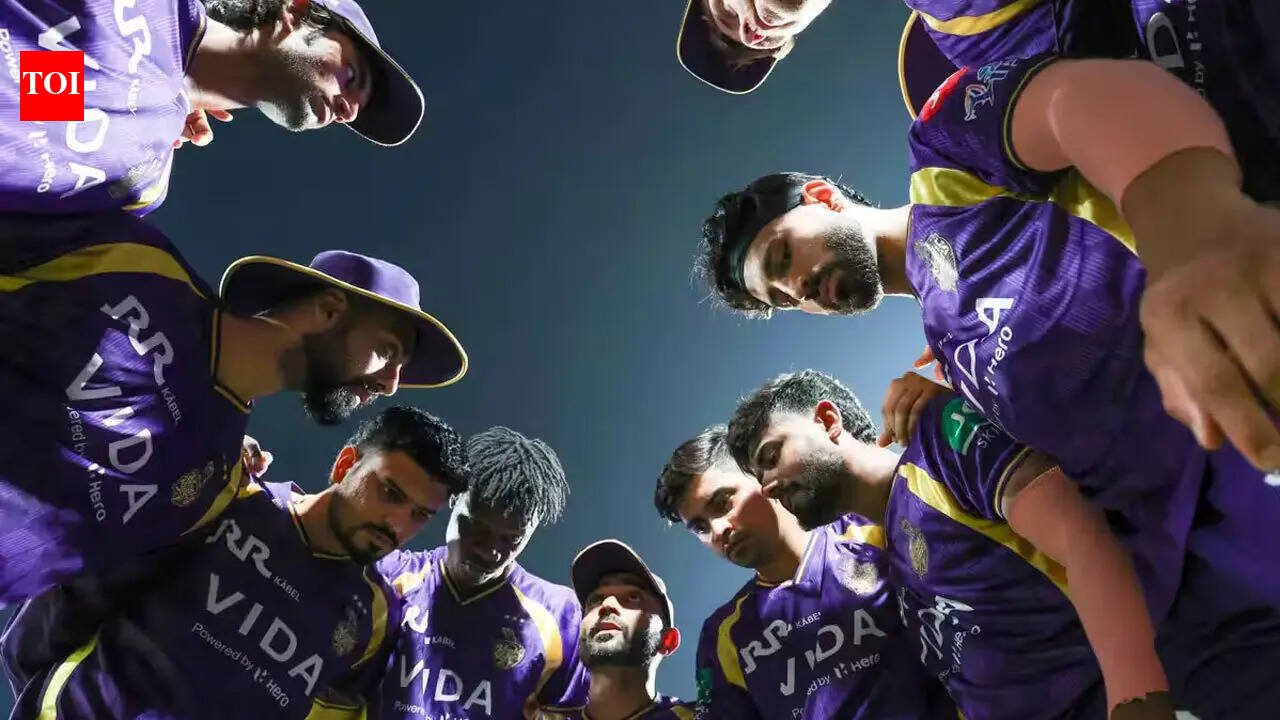
NEW DELHI: Two matches and two defeats – that’s the story of Kolkata Knight Riders so far in the IPL 2026. Now, desperate for a win and open their account in the tournament, KKR might face another challenge – rain – in their third match. KKR are set to face Punjab Kings in their third match of the IPL 2026 at the Eden Gardens and will hope rain gods stay away from the crucial clash.According to the IMD weather bulletin, there is a high likelihood of rain impacting the match at the Eden Gardens.There has been persistent cloud cover since morning following a “low-pressure trough stretching from Bihar to Manipur, passing over North Bengal, Assam and Bangladesh”, as per the IMD.“The state is likely to witness another round of Kalbaishakhi storms, with the possibility of hail and thunderstorms from Sunday through Thursday. The intensity and spread of rainfall are expected to peak on Tuesday and Wednesday,” the IMD said.“The weather is expected to turn more severe on Tuesday, when Kalbaishakhi storms accompanied by winds of 50-60 kmph, lightning and rain are likely to impact Kolkata and adjoining areas.”

Watch

Devdutt Padikkal press conference: Chinnaswamy pitch, Tim David’s power & RCB’s batting strategy

KKR, after their match against Punjab Kings on Monday, are scheduled to take on Lucknow Super Giants next at the same venue, and that game too carries a rain forecast. This means after two defeats, weather may add to KKR’s early-season worries.The scheduled practice sessions of both teams were cancelled on the eve of the match following a heavy afternoon downpour, with the Eden Gardens outfield remaining under covers and patches of water visible.

What if KKR vs PBKS IPL 2026 match is washed out?

With rain threatening to play spoilsport, the cut-off timings leave a narrow window for even a shortened contest.A minimum five-overs-a-side match can only be played if action begins by 10.56 pm, the absolute deadline to ensure a result.In such a scenario, the toss would need to take place by 10.46 pm.A five-over shootout, if it comes to that, turns into a high-intensity contest with little room for consolidation, placing a premium on power-hitting.However, if no play is possible by the cut-off time, the match will be abandoned, with both teams sharing one point each.Incidentally, the KKR vs PBKS clash last season on April 26 was also hit by rain, with both teams forced to settle for a point each.The Shreyas Iyer-led Punjab Kings had posted 201/4 before KKR reached 7/0 when rain dashed hopes of a result.


Source link

Samson, Bumrah in ICC Player of the Month race after T20 World Cup heroics | Cricket News


Samson, Bumrah in ICC Player of the Month race after T20 World Cup heroics
Jasprit Bumrah and Sanju Samson (ANI Photo)

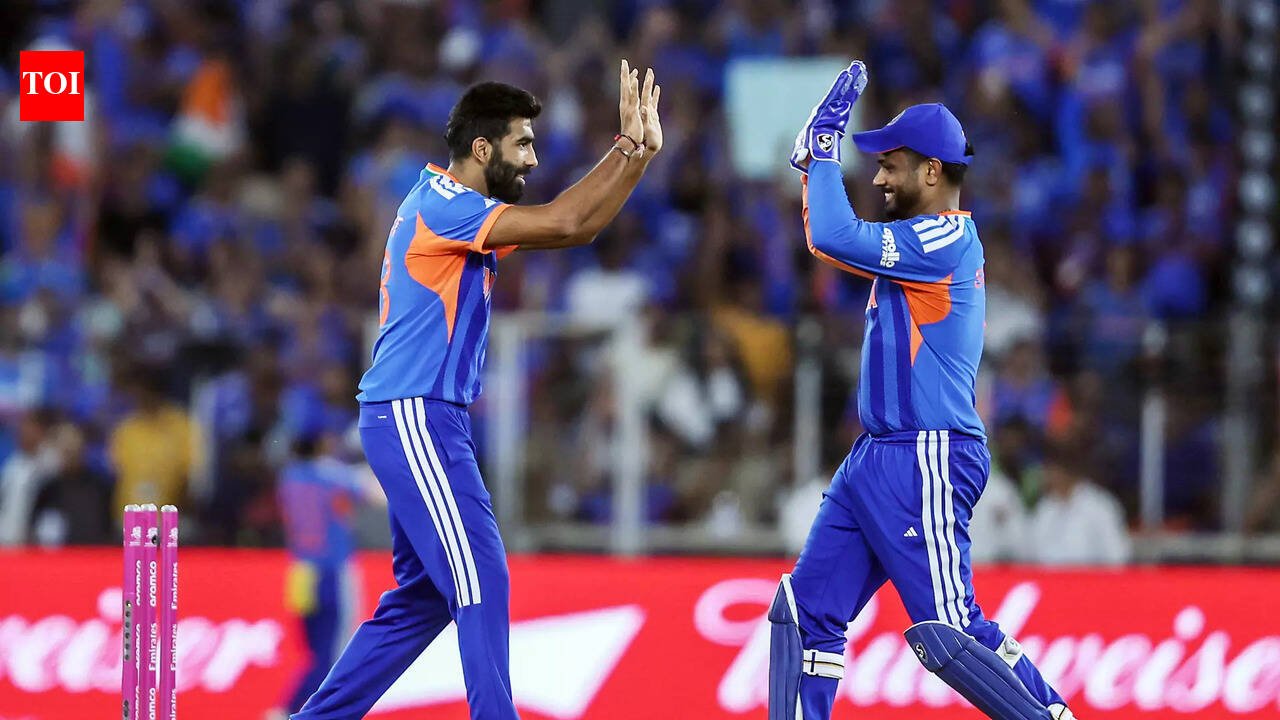
NEW DELHI: Two Indian stars have been shortlisted for the ICC Men’s Player of the Month award for March 2026, underlining the country’s dominance during their triumphant T20 World Cup campaign. Joining them in the three-man shortlist is a rising South African batter who impressed in a bilateral series.The nominations reflect a month dominated by high-pressure performances, particularly in the knockout stages of the T20 World Cup, where India successfully defended their title on home soil.World Cup performances dominate shortlistIndia’s campaign was defined by match-winning contributions in crunch situations, and the two nominees played pivotal roles in sealing the title. One of the nominees, Sanju Samson scripted a remarkable turnaround, going from the sidelines to becoming the tournament’s standout performer.Once included during the Super Eights, the wicketkeeper-batter produced a stunning run of scores — 97 in a must-win clash, followed by back-to-back 89s in the semifinal and final. His tally of 275 runs in three crucial matches came at a staggering average of 137.50 and a strike rate nearing 200, earning him the Player of the Tournament award.Complementing that batting brilliance was India’s pace spearhead, Jasprit Bumrah, who once again proved decisive in knockout cricket. In a high-scoring semifinal, he stood out with tight, pressure-building overs that turned the game. He then delivered a match-winning spell in the final, claiming four wickets while conceding just 15 runs to seal victory and earn the Player of the Match honour.Across the last three matches of the tournament, Bumrah picked up seven wickets at an exceptional average, reinforcing his reputation as one of the most reliable performers in global events.South African challenger impressesThe third nominee, Connor Esterhuizen, a young South African batter, made a strong case with a breakthrough T20I series against New Zealand. He amassed 200 runs in five matches, including a maiden fifty and a blistering unbeaten 75 in the decider, helping his side clinch a 3-2 series win.With two Player of the Match awards and a rapid rise in the ICC rankings, his performances ensured a competitive edge to the shortlist.The final award now hinges on a contest between proven match-winners and an emerging talent who made a big statement on the international stage.


Source link

Access Denied


Access Denied

You don’t have permission to access “http://www.ndtv.com/india-news/car-breaks-barrier-enters-delhi-assembly-ink-thrown-at-speakers-vehicle-11317676” on this server.

Reference #18.c7f5d217.1775471048.4f0a3bd

https://errors.edgesuite.net/18.c7f5d217.1775471048.4f0a3bd


Source link

SC refuses interim relief to Vedanta in the Jaiprakash Associates resolution plan matter


SC refuses interim relief to Vedanta in the Jaiprakash Associates resolution plan matter

The Supreme Court of India on Monday declined to stay proceedings in a plea filed by Vedanta Limited challenging the approval of AdGroup’s resolution plan for the takeover of insolvent Jaiprakash Associates Limited.A Bench led by Chief Justice of India Surya Kant observed that since the appeal is likely to be decided shortly by the National Company Law Appellate Tribunal (NCLAT), and Vedanta’s interests have been adequately safeguarded through interim measures, there was no necessity to grant any interim relief.“The appeal is likely to be addressed soon, and we see no legal necessity to issue any interim direction,” the Court noted, while requesting the NCLAT to hear the matter on an out-of-turn basis on the scheduled date or immediately thereafter if arguments remain incomplete.The NCLAT is scheduled to hear Vedanta petition on Friday 10th April.Vedanta, in its petition, has challenged the decision of the Committee of Creditors (CoC) to accept Adani Group‘s resolution plan. It contended that its revised addendum bid offers over Rs 3,400 crore higher gross value compared to Adani’s proposal.Senior Advocate Kapil Sibal appeared for Vedanta, while Senior Advocate Mukul Rohatgi represented Adani Group. Tushar Mehta appeared on behalf of the lenders’ consortium (CoC) at the apex court.During the hearing, Vedanta submitted that it proposed to pay Rs 17,926 crore to creditors, as against Rs 14,535 crore under Adani’s plan. It argued that the CoC was effectively accepting a resolution plan that was around Rs 3,000 crore lower in value. However, the CoC countered that the practical difference between the two bids would amount to only about Rs 500 crore.The Court recorded submissions that the matter is listed before the NCLAT this week, and implementation of the resolution plan would take approximately 50 days, with little likely to change in the interim period of a few days.Observing that the NCLAT interim order had already addressed Vedanta’s concerns, the Supreme Court stated it would not halt the process at this stage. It added that any policy decision taken by the resolution professional or monitoring committee during this period must be in accordance with law and subject to NCLAT’s approval.The apex court further noted that the resolution process remains subject to approval by the adjudicating authority, and emphasised that if any action outside the legal framework is undertaken, appropriate recourse would be available.Both sides agreed before the apex court for an expeditious hearing before the NCLAT.


Source link

Aurobindo Pharma gets board nod for Rs 800 crore share buyback plan


Aurobindo Pharma gets board nod for Rs 800 crore share buyback plan

Hyderabad: Aurobindo Pharma’s board on Monday approved a Rs 800 crore share proposal to buy back up to 54.23 lakh fully paid-up equity shares of the company of face value Rs 1 each at Rs 1,475 a share.The proposed buyback, which is subject to regulatory and statutory approvals, represents up to 0.93% of the total number of equity shares in the company’s total paid-up equity share capital.The Hyderabad-based generics drug maker informed the bourses that April 17, 2026, has been fixed as the record date to determine shareholder eligibility and entitlement for the buyback, which will be carried out through the tender offer route on a proportionate basis, in line with SEBI’s Buyback Regulations and the Companies Act.All eligible equity shareholders, including promoters and promoter group entities holding shares on the record date, will be entitled to participate in the offer for which the company has already constituted a buyback committee.The company also said the board or buyback committee may increase the buyback price and correspondingly reduce the number of shares to be bought back up to one working day before the record date but the overall size will remain unchanged.The Rs 800 crore buyback size excludes transaction costs and related expenses such as brokerage, taxes, filing fees, legal charges and publication expenses, it said.The latest buyback comes less than two years after the last buyback offer aggregating to Rs 750 crore that was made at Rs 1,460 a piece in August 2024 by the company.As of December 31, 2025, promoters and promoter group entities held 51.82% stake in the company, mutual funds 19.52%, foreign portfolio investors 13.94%, insurance companies 5.50%, and public shareholders and others 7.93%.


Source link