Breaking News
Gold and silver outlook: Where are prices headed in FY27? Here’s what analysts say


Gold and silver outlook: Where are prices headed in FY27? Here's what analysts say

Precious metal prices in India are expected to remain moderately strong in fiscal year 2026–27, supported by ongoing global uncertainty. Geopolitical tensions, fears of trade wars and concerns about a possible global recession are likely to boost demand for safe-haven assets like gold and silver. However, high interest rates may limit sharp price gains. The outlook comes after a strong performance in FY26. Silver futures jumped by Rs 1,41,431, or 142.2%, rising from Rs 99,461 per kg on April 1, 2025. Gold also rose sharply by Rs 60,258, or 67%, from Rs 90,503 per 10 grams during the same period. This strong rise was driven by several global factors, including trade tensions linked to Trump’s tariff policies, geopolitical issues, strong buying by central banks, limited supply and overall global economic uncertainty. “The outlook for gold and silver for fiscal 2026-27 will remain moderately bullish. Since the global economy is going through a rough patch due to geopolitical tensions, trade wars and fear of global recession, demand for safe-haven assets will rise,” Aamir Makda, Commodity & Currency Analyst at Choice Broking told PTI in an interview. Even after strong gains, prices saw a sharp fall towards the end of FY26. In March, gold fell by Rs 11,343, or 7%, while silver dropped by Rs 41,752, or 15% on the Multi Commodity Exchange. On this correction, he said, “Historically gold’s demand as a safe-haven asset will likely increase in the second phase of war situations when dollar gains get limited.” However, he added that if interest rates in the US and other major economies stay high for longer, it could limit further upside in bullion prices. Silver’s strong performance in FY26 was supported by a supply shortage that has continued for five years, rising demand from solar panels and electric vehicles, and higher investment through ETFs, which increased price movements in the smaller silver market. Looking ahead, silver is expected to stay moderately strong in FY27. Domestic prices may range between Rs 2.75–3.5 lakh per kg, depending on currency movements. In global markets, silver could trade between $85 and $100 per ounce. For gold, demand from central banks is expected to remain an important support factor. Purchases are likely to average 750–850 tonnes in 2026 and stay stable in 2027. “Economies such as India, Poland and Turkey will continue to lead the charge as they are replacing US dollar reserves with gold to bolster monetary sovereignty and hedge against geopolitical sanctions,” he added. In crude oil, supply is expected to rise in FY27 due to higher production from non-OPEC countries and slower global demand. This may reduce inflation, which can put pressure on gold and silver. A stronger rupee due to lower oil prices may also make precious metals cheaper in India. The US dollar is expected to remain unstable due to uncertainty around Federal Reserve policy. A stronger dollar, however, could limit gains, especially in silver. Overall, prices are expected to stay supported by global risks, central bank buying and industrial demand, even though volatility is likely to continue.


Source link

‘Nobody intervened’: Ambati Rayudu questions CSK’s on-field decisions | Cricket News


'Nobody intervened': Ambati Rayudu questions CSK’s on-field decisions
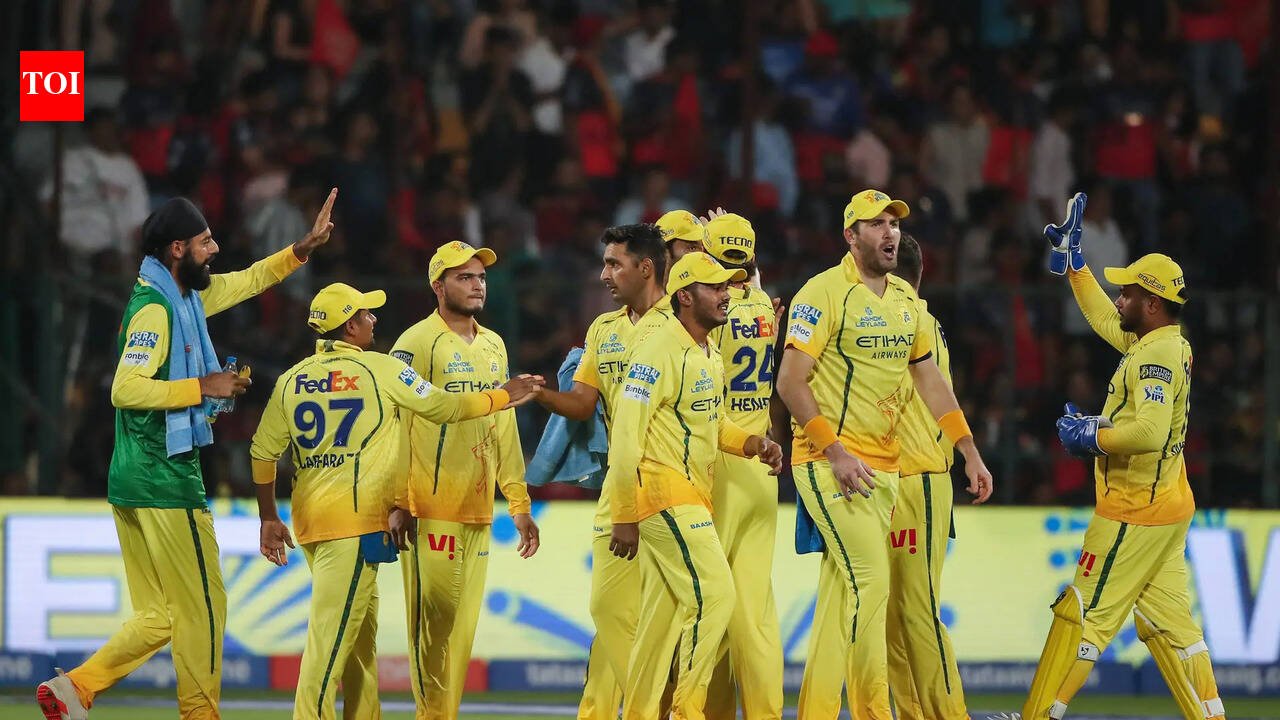
Chennai Super Kings (ANI Photo)

Former Chennai Super Kings batter Ambati Rayudu has criticised the side’s approach with the ball after their 43-run loss to Royal Challengers Bengaluru in IPL 2026, suggesting a lack of adaptability cost them dearly. CSK were put under immense pressure after RCB posted a daunting 250/3 at the M Chinnaswamy Stadium. The late assault from Tim David and Rajat Patidar proved decisive, with the duo stitching together a blistering 99-run stand in just 35 balls. Despite a spirited effort with the bat, CSK were eventually bowled out for 207. Reflecting on the bowling performance, Rayudu felt the problem was not just the initial plan but the failure to reassess when things began slipping away. “More than a bad plan, they just stuck to that bad plan. There was nobody to intervene and to just take some time off, take those 20-30 seconds, just make it slightly more slow and then guide the bowler with a message. I think they should have slowed it down a little bit,” Rayudu said. The closing stages of the innings, where RCB hammered 97 runs in the final five overs, highlighted CSK’s struggles at the death. Rayudu pointed out that the bowlers were unable to respond effectively after being hit. “Their follow-up balls after a boundary or a six aren’t great,” he added. “Generally, as a bowler, you need to be aware that, okay, I have been hit for a six, but it’s the next ball that matters. Whenever you see good death bowlers, they always follow up with a very good ball. But their powerplay bowling and middle-overs bowling was much better than what it was last game.” While CSK faltered in key moments, Rayudu lauded RCB’s sharp awareness and control throughout the contest, which has been a hallmark of their recent dominance, including a fourth straight win over CSK. “RCB, meanwhile, are not letting anything just pass by; they just want to control every scenario, every over,” he said. The contrast in execution and in-game decision-making ultimately proved decisive, as CSK’s inability to adapt under pressure allowed RCB to take complete control of the match.


Source link

Mumbai Sailor Death: Dixit Solanki : Mumbai Sailor’s Funeral Delayed Due to Identity Doubts After Missile Attack | Mumbai News


The remains of seafarer Dixit Solanki arrived in Mumbai from Sharjah on Sunday. Solanki died in an alleged missile strike off the Oman coast on March 1

MUMBAI: A day after the charred remains of seafarer Dixit Solanki were brought to Mumbai from Sharjah, his family has refused to perform the last rites, insisting on DNA confirmation to establish his identity. Solanki, who was killed in a suspected missile or drone attack on an oil tanker off the Oman coast during the ongoing West Asia conflict, is believed to be among the first Indian casualties in the maritime tensions. His father, Amratlal Solanki, and sister Mitali received the remains at Mumbai airport early Sunday after securing clearance from Sahar police. Instead of taking the body home to their Kandivli residence, the family transported it directly to JJ Hospital in Byculla, seeking scientific verification. “We want a DNA test and written confirmation,” Mitali said, adding that the family is in touch with authorities.The family’s advocate is expected to move the Bombay high court seeking directions to send samples to the Kalina forensic laboratory, arguing that there is no conclusive proof yet establishing the identity of the remains. Officials from the Directorate General of Shipping and the shipping ministry have maintained that there was only one casualty onboard and identification has already been established. However, the family claims they have not been provided with any documented DNA confirmation. Police said all formalities, including death certificate, embalming certificate and consulate clearances, were completed before the remains were handed over. “The body was released within 30 minutes of arrival after due verification,” an officer said. The case traces back to March 1, when the vessel MT MKD Vyom was hit by an explosive-laden drone boat in the Gulf of Oman. Solanki, who worked as an oiler, died in the blast. The family had earlier approached the high court seeking expeditious repatriation of the remains, citing lack of clarity and delay by authorities. The coffin reached Mumbai within three days of the plea, but the focus has now shifted to confirming identity before the final rites. Adding to the family’s distress, this is the second bereavement in recent months, with Solanki’s mother having passed away just three months ago.


Source link

India seeks 2.5 million metric tons of urea amid Middle East supply amid Hormuz supply hit


India seeks 2.5 million metric tons of urea amid Middle East supply amid Hormuz supply hit

India is stepping up efforts to secure fertiliser supplies, with plans to import 2.5 million metric tonnes of urea as it works to stabilise availability in the domestic market amid tightening conditions linked to the US-Israeli war with Iran.This comes as ongoing tensions in the Middle East have been disrupting global energy flows and shipping routes, creating ripple effects across supply chains. As global markets remain unsettled, the pressure on fertiliser supply chains has increased, prompting India, world’s largest urea importer, to safeguard availability and prevent any shortfall at a critical time.State-owned Indian Potash Ltd (IPL) has floated a tender for the procurement, with 1.5 million tonnes scheduled to be brought in through the west coast and 1 million tonnes through the east coast, according to details published on the company’s website. The shipments are expected to be loaded by June 14, while bids for the tender are due by April 15, Reuters reported.The imports are critical as the country continues to rely on global tenders to meet its urea demand, particularly ahead of the key sowing period that begins in June with the onset of the monsoon. The fertiliser is essential for crops such as rice, maize and soybeans.Agriculture remains a major part of the Indian economy, with the country also importing other key fertilisers including diammonium phosphate (DAP) and muriate of potash, along with liquefied natural gas (LNG), which is used in domestic urea production. The Middle East supplies about half of India’s DAP and urea imports, with Saudi Arabia being the largest supplier of DAP and Oman the leading supplier of urea.Separately, the government has moved to raise gas supply to urea manufacturing plants to around 90% of their average consumption starting Monday, compared with the current level of 70–75 per cent.The increase has been justified on the basis of available inventories and scheduled LNG cargo arrivals. Authorities have also decided to enhance gas allocation to industrial and commercial users, including city gas distribution networks, by an additional 10% from Monday.“All industrial consumers, including fertiliser plants, have been advised to provide their additional requirement on spot basis so that the same may be arranged by the gas marketing companies,” an official statement said.According to the fertiliser ministry, domestic urea production fell to 18 lakh tonnes in March from an earlier average of 24 lakh tonnes, though output is expected to improve with higher LNG availability and more frequent spot purchases.


Source link

‘We could go hard at every ball’: Padikkal reveals RCB’s new batting mantra | Cricket News


'We could go hard at every ball': Padikkal reveals RCB’s new batting mantra
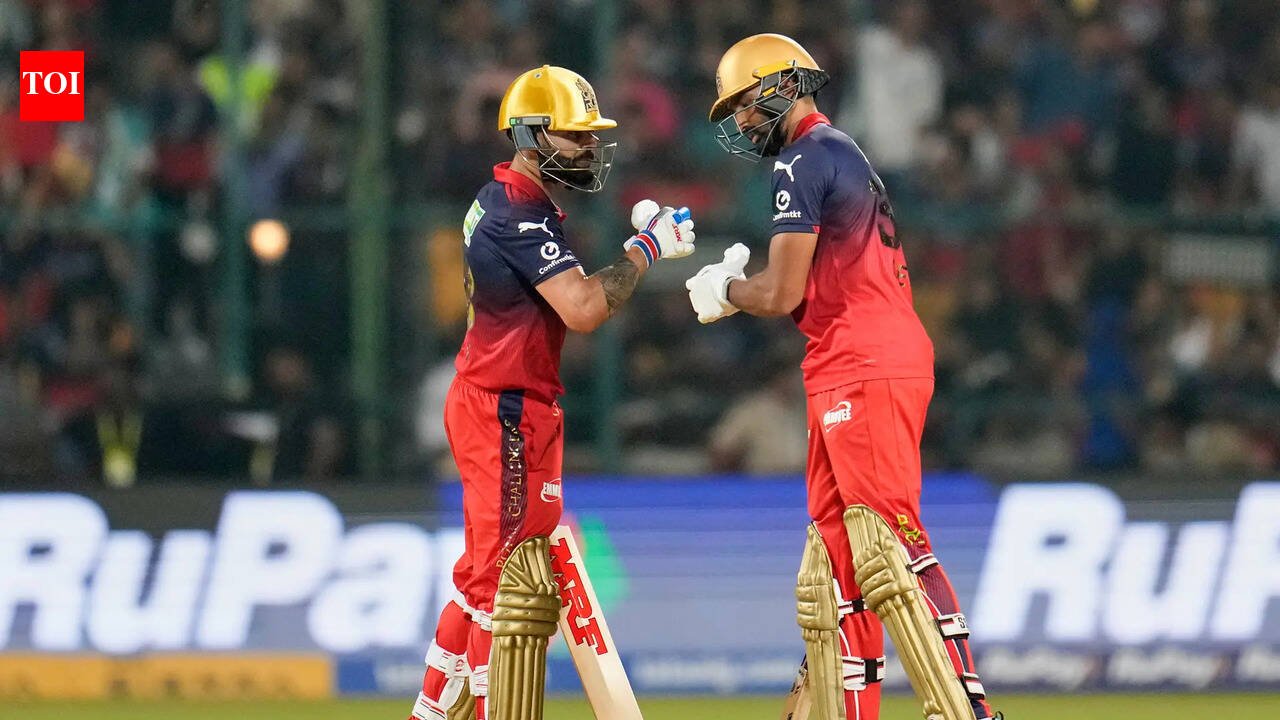
Royal Challengers Bengaluru’s Devdutt Padikkal, right, with Virat Kohli. (AP Photo)

NEW DELHI: Defending champions Royal Challengers Bengaluru have begun their IPL 2026 campaign in commanding fashion, and batter Devdutt Padikkal has revealed the tactical shift behind their early success. With two wins in two matches, RCB sit atop the standings, showcasing a refined batting approach that blends caution with calculated aggression.Speaking after their convincing 43-run win over Chennai Super Kings in Bengaluru, Padikkal explained that the team has consciously addressed its past batting frailties. The new strategy revolves around preserving wickets in the first half of the innings before unleashing an all-out assault in the latter stages.‘Keep wickets, then attack’Padikkal highlighted that the change in approach stems from lessons learned last season. “Even last season we had a couple of games early on where we struggled and ended up losing maybe three or four wickets and then it put us on the back foot,” he said.“We had a conversation midway through last year that we needed to make sure that when the wicket is behaving in such a way, you have to ensure you have wickets in hand. Once the ball gets older, it becomes much easier to bat on,” he added.The left-hander stressed that avoiding early collapses has been key. “We had to make sure we are not three or four down by the 10-over mark. Once we were able to do that, we could go hard at every ball. The way the entire unit has been batting since then has been incredible,” he noted.This approach has already paid dividends, with RCB posting big totals and maintaining pressure on opposition bowlers through well-timed acceleration.Padikkal’s evolution and confidence boostPadikkal, who has been in fine form with scores of 61 and 50 in the first two games, credited his improvement in white-ball formats to a conscious shift in mindset and technique.“It’s a lot of hard work and self-belief. It wasn’t easy to make that change because I had to alter the foundation of the kind of cricket I wanted to play growing up,” he admitted.“The change was something I had to make consciously, and RCB’s support staff have been brilliant in guiding me in the right way,” he added, underlining the role of the team environment in his transformation.Power-hitting balance and Tim David factorWhile T20 batting has seen an increasing emphasis on power-hitting, Padikkal believes the evolution is part of a natural progression. “Batting has gone to another level. Everyone is working hard to hit big sixes and fours. It’s now on the bowlers to raise their game as well,” he said, adding that conditions could eventually balance the contest.Padikkal also reserved special praise for teammate Tim David, whose explosive 70 off 25 balls dismantled Chennai’s attack. “We see him do this every day in practice. He’s very clear about which bowler to target and when. That clarity makes a huge difference,” he said.


Source link

Saudi raises Arab Light crude to record premium as Iran war disrupts markets


Saudi raises Arab Light crude to record premium as Iran war disrupts markets

Saudi Arabia has raised the price of its main crude grade for Asian buyers to a record high, as the Middle East conflict enters its sixth week and continues to disrupt global energy flows worldwide.The kingdom’s oil giant Saudi Aramco has set the cost of its Arab Light crude for May sales to Asia at a premium of $19.50 per barrel over the benchmark. However, even with this hike, the premium is still lower than the $40 per barrel expected by traders and refiners in a Bloomberg survey.The move comes amid escalating tensions in the region, with no immediate signs of de-escalation. Earlier on Saturday, US President Donald Trump had threatened to strike Iranian infrastructure if it does not opens the Strait. In a post on Truth Social on Sunday, he said, “Tuesday will be Power Plant Day, and Bridge Day, all wrapped up in one, in Iran. There will be nothing like it!!!” He later told Fox News there was a “good chance” Iran would agree to a deal on Monday. Iran also hit back sharply, threatening that it will react “in kind,” in case its sites are attacked. “Our armed forces have made it clear that in case Iran’s infrastructure is attacked, we would react in kind,” Esmail Baghaei said.As the crisis continues to boil, oil prices have stayed well above the $100 per barrel cost, jumping to $110. Brent crude prices have risen by more than 50%, with fuel prices also increasing across the US, Europe and Asia.On Monday, West Texas Intermediate rose 1.86% to $113.62 per barrel in early trade, while Brent crude gained 1.16% to $110.30 per barrel, staying above the $100 mark.Markets had already reacted before the weekend. On Thursday, ahead of Good Friday, both oil benchmarks saw sharp gains. WTI rose more than 11%, while Brent climbed nearly 8%, marking their biggest increases since 2020 after signals that attacks on Iran would continue.


Source link

Ravichandran Ashwin: ‘Mentally disturbing’: R Ashwin recalls ‘painful’ CSK stint after RCB thrashing | Cricket News


‘Mentally disturbing': R Ashwin recalls ‘painful’ CSK stint after RCB thrashing
Chennai Super Kings (ANI Photo)

Chennai Super Kings’ poor start to IPL 2026 continued with a heavy defeat to Royal Challengers Bengaluru, and former star Ravichandran Ashwin did not hold back while reflecting on the team’s struggles and his own difficult final season. CSK slumped to their third straight loss after being outplayed at the M Chinnaswamy Stadium. RCB piled up a massive 250/3, powered by explosive knocks from Tim David (70* off 25), Rajat Patidar (48* off 19) and Devdutt Padikkal (50 off 29). In response, CSK never quite recovered from early blows despite resistance from Sarfaraz Khan and Prashant Veer, eventually getting bowled out for 207. As the defeat exposed deeper issues within the side, Ashwin reflected on his own decision to step away from the IPL, admitting that he could have continued but was mentally drained after a disappointing campaign. “Any suggestions for sad songs? I am watching the match from a neutral point of view, but remember that I recently spent a disappointing season with CSK, it was a disappointing season for me personally as well. Honestly, in my mind, I could have played more, because emotionally, I just did not have the bandwidth to play,” Ashwin said on his YouTube channel. When asked to revisit that phase, Ashwin made it clear that it remains a sensitive subject for him. “I don’t want to go there, it’s mentally disturbing. It was very painful for me. I don’t want to go there. I discussed a little then I said, I started in Chennai, I am finishing in my hometown, it’s fine. I decided to retire myself as it would not have created a headache for them (the management) over whether to retain me or release. They would also save Rs 10 crore if I go. I am still disappointed. I had expectations, I had hope,” he added. Despite predicting an RCB win, Ashwin admitted he expected a stronger showing from CSK, especially after signs of improvement in their previous outing. “I had expectations from today. I know, I picked RCB to win, because they have strength. But, I banked on the improvement that CSK showed in the last game. I had a little faith on the fact that RCB were coming into this match after a break. The way RCB played, they warned everyone,” he said. CSK’s current approach has also come under scrutiny, particularly their shift towards a younger squad. Ashwin questioned how effectively these players are being nurtured in a high-pressure environment. “These young boys, you have to give them good practice, you have to give them intensity, you have to give them atmosphere from here on. How are they going to do this?” he remarked. The veteran spinner was also critical of certain tactical calls, especially how bowlers are being utilised. He pointed out that some players are being asked to execute skills that may not suit their strengths. “You can watch SA20 to plan against. Jamie Overton isn’t good at bowling yorkers. You are making him do that. You have to play according to the bowler’s strengths. You are making him bowl wide yorkers from around the stumps. Tim David smashed them hard,” he said. With results going against them and questions mounting over both strategy and execution, CSK now face an early-season challenge to regroup and find direction before the campaign slips further away.


Source link

Approach to investing when bond yields begin to move up


Approach to investing when bond yields begin to move up

Why are bond yields rising?Bond yields are climbing due to a combination of rising crude oil prices and a weakening rupee, both of which add to inflationary pressures. India’s 10-year benchmark yield has risen to around 7% from 6.68% a month ago. Crude oil prices have surged to $115–$120 per barrel, and with India importing nearly 85% of its oil needs, higher prices feed directly into domestic inflation through increased transportation and production costs. At the same time, the rupee has depreciated to around 95 against the US dollar, making imports more expensive. In such an environment, investors demand higher yields to compensate for inflation and currency risks. Tightening liquidity conditions and expectations of higher interest rates further push bond prices lower and yields higher. When bond prices fall, yields rise and vice versa.Impact of rising yields on debt MFsThe impact varies depending on the type of fund and the maturity of securities it holds. Long-duration funds, such as gilt and long-term bond funds, are the most affected. These funds invest in bonds with longer maturities, making them more sensitive to interest rate movements. Even a small rise in yields can lead to sharper price declines, resulting in noticeable short-term losses. Short-duration funds, such as liquid, ultra-short, and low-duration funds, are far less impacted. Since they invest in short-maturity instruments, price fluctuations are limited. As older securities mature, these funds are able to invest in newer bonds offering higher interest rates, which gradually improves their returns. According to Value Research data, values of long-duration funds have shrunk about 2.5% over the past three months. Gilt funds are down around 1.4%, while dynamic bond funds have seen relatively limited declines of about 0.4% over the same period.What should investors do?Investors in long duration or gilt funds should avoid panic selling if their investment horizon is 3–5 years. Over time, accrual income and potential yield softening can help offset interim losses. For investors with a shorter time horizon, such as less than a year, liquid and ultra-short duration funds are more suitable. These funds carry lower interest rate risk and offer relatively stable returns. Investors looking to benefit from potential capital appreciation in gilt funds should wait for clearer signs of stability in crude oil prices.


Source link

Access Denied


Access Denied

You don’t have permission to access “http://www.ndtv.com/india-news/top-court-orders-probe-into-firms-linked-to-arunachal-chief-minister-pema-khandu-s-family-11316583” on this server.

Reference #18.c4f5d217.1775459766.890f4ae6

https://errors.edgesuite.net/18.c4f5d217.1775459766.890f4ae6


Source link

Ravichandran Ashwin: ‘If he cannot then I don’t know…’: Ashwin’s blunt take on Ajinkya Rahane | Cricket News


‘If he cannot then I don’t know...’: Ashwin's blunt take on Ajinkya Rahane
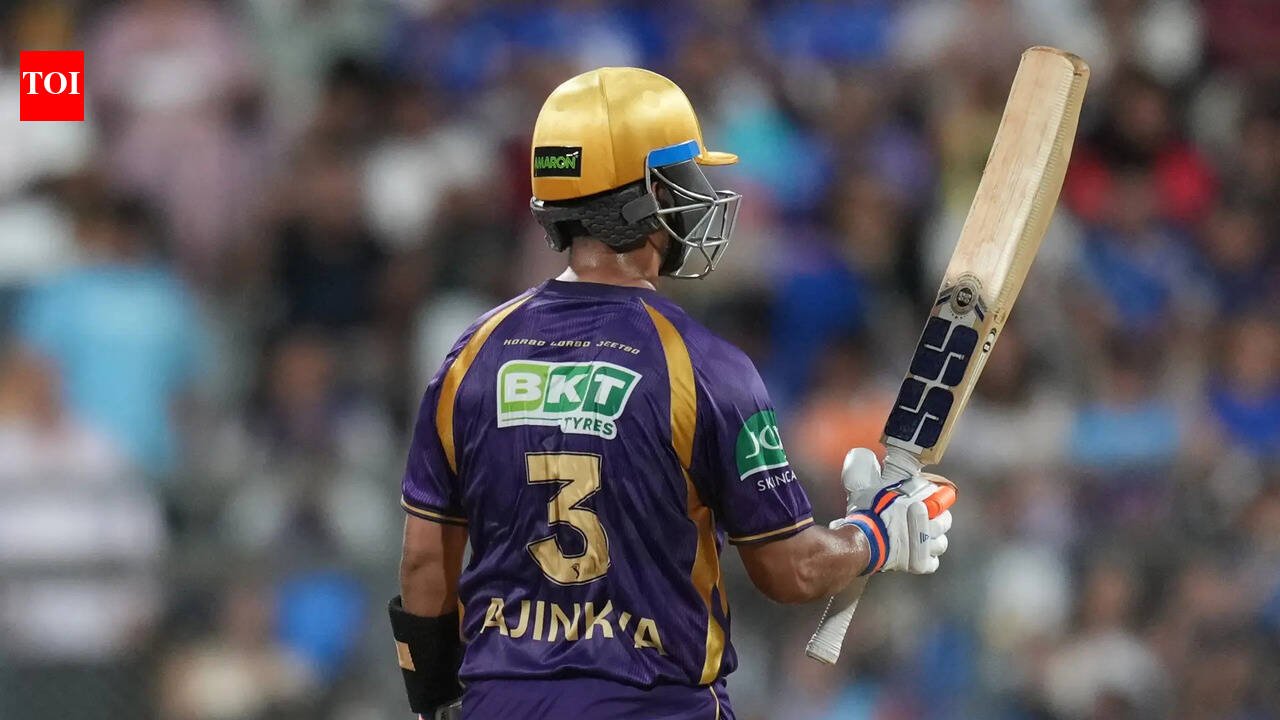
Kolkata Knight Riders’ captain Ajinkya Rahane (AP Photo/Rafiq Maqbool)

With Kolkata Knight Riders enduring a tough start to IPL 2026, Ajinkya Rahane has found himself under increasing scrutiny following defeats to Mumbai Indians and Sunrisers Hyderabad. Rahane began the season on a positive note with a fluent 67 off 40 balls against Mumbai Indians, but his effort came in a losing cause as KKR failed to defend a strong total. In the next game, which also marked his 200th IPL appearance, he struggled for rhythm during a chase, managing just 8 off 10 balls against SRH. The criticism around his captaincy has also been fuelled by off-field moments, including his remark on Cameron Green not bowling, where he said the question should be directed to Cricket Australia. Rahane later pushed back at critics, defending his intent and pointing to his improved strike rate in recent seasons. Amid the noise, veteran spinner Ravichandran Ashwin has stepped in to back Rahane, offering a strong endorsement of his leadership. “Honestly, I was reading a lot about Ajinkya Rahane, but he is a very good person, a very good human being. I have played under his captaincy and I am telling you, no bowler will get a more supportive captain. He is very supportive and a very calm captain. If he cannot get the best out of a bowler, then I don’t know who can.” While defending Rahane, Ashwin made it clear that KKR’s struggles are not solely down to captaincy. Instead, he pointed to tactical limitations, particularly in the bowling department. “He can maybe do one thing — use Sunil Narine in the powerplay and give Varun Chakravarthy a break, then bring him after the powerplay. If he does well, then confidence will come back. But that’s all he can do. What else can he do? He cannot go and bowl himself.” Ashwin also highlighted the complications around match-ups, especially against left-handers, suggesting that avoiding certain bowlers could create further imbalance. “He can also maybe avoid giving him the ball against left-handers. But if you avoid him against left-handers, then who will bowl? Sunil Narine will bowl from one end, but who will bowl from the other? So there are a lot of problems in KKR.” He added that if Cameron Green starts contributing with the ball, it could ease some of the burden on the attack. With two defeats in their opening matches, KKR are already under pressure early in the season. Ashwin’s comments underline that while Rahane remains under the spotlight, the issues within the side run deeper than just leadership concerns.


Source link