Breaking News
SWAGAT-FI: Sebi unveils single-window gateway for low risk foreign investors; framework aims to cut compliance load


SWAGAT-FI: Sebi unveils single-window gateway for low risk foreign investors; framework aims to cut compliance load

Markets regulator Sebi has introduced a single-window access framework for low-risk foreign investors, aiming to simplify regulatory processes and make India a more attractive investment destination, according to PTI. The new system is designed to streamline compliance, ease multiple registrations and reduce repetitive documentation across investment routes.Called the Single Window Automatic & Generalised Access for Trusted Foreign Investors (SWAGAT-FI), the framework applies to entities such as sovereign wealth funds, central banks, multilateral bodies, government-owned funds, regulated public retail funds, insurance companies and pension funds. Sebi notified amendments to the FPI and FVCI regulations on December 1, which come into effect on June 1, 2026.Under the new structure, SWAGAT-FIs can register simultaneously as Foreign Portfolio Investors (FPIs) and Foreign Venture Capital Investors (FVCIs) without additional documentation. This dual route will allow them to invest in listed equities and debt as FPIs, and in unlisted companies, specified sectors and startups as FVCIs.Sebi has also extended the validity period for continuance of registration — including fee payment and KYC review — to 10 years, up from the current three or five years. The regulator said the move is aimed at reducing operational friction and supporting long-term participation.For FPIs operating from International Financial Services Centres (IFSCs), Sebi has allowed retail schemes with a resident Indian sponsor or manager to register as FPIs, bringing them on par with alternative investment funds that already enjoy this facility. The regulator also addressed inconsistencies between Sebi and the International Financial Services Centres Authority (IFSCA) by capping sponsor contributions at 10% of a fund’s corpus or assets under management.As of June 30, 2025, India had 11,913 registered FPIs with assets worth Rs 80.83 lakh crore, Sebi said, adding that SWAGAT-FIs account for over 70% of FPI assets under custody.


Source link

IND vs SA: Virat Kohli, Ruturaj Gaikwad tons in vain; South Africa beat India by four wickets to level series 1-1 | Cricket News


IND vs SA: Virat Kohli, Ruturaj Gaikwad tons in vain; South Africa beat India by four wickets to level series 1-1
India vs South Africa (AP Photo/Rafiq Maqbool)

NEW DELHI: South Africa secured a four-wicket victory in the second ODI against India, despite outstanding centuries from Virat Kohli and Ruturaj Gaikwad. The visitors successfully chased down a target of 359 runs.The South African chase was led by Aiden Markram’s brilliant 110, supported by Dewald Brevis’s explosive 54 off 34 balls and Matthew Breetzke’s solid 68. The series now stands level at 1-1.

Still have doubts? Virat Kohli blows World Cup trumpet with another masterclass

The final ODI will take place in Visakhapatnam on Saturday, which will determine the series winner.India’s bowling struggled as heavy dew made conditions difficult for spinners. Prasidh Krishna’s expensive figures of 2/79 further complicated their defense of the total.The match remained competitive until the end. Prasidh Krishna dismissed Breetzke leg-before, and Arshdeep Singh removed Marco Jansen, but Corbin Bosch and Keshav Maharaj guided South Africa to victory with four balls remaining.Markram dominated the innings with his first century against India. He established a strong foundation despite losing Quinton de Kock early to Arshdeep Singh.A 101-run partnership developed between Markram and Bavuma for the second wicket. Markram maintained an aggressive approach while Bavuma rotated the strike effectively.Markram’s innings featured powerful hitting and skilful shot placement. He particularly excelled against the Indian spinners, taking advantage of the dewy conditions.Fortune favoured Markram when Yashasvi Jaiswal dropped a catch at long-on off Kuldeep Yadav‘s bowling when he was on 53. After Markram’s dismissal by Harshit Rana, Brevis and Breetzke formed a crucial partnership. They scored 92 runs in 64 balls, putting South Africa in a commanding position.Brevis fell after his quick half-century, while Breetzke continued his good form with a second consecutive fifty.This match marked only the second time India lost an ODI after scoring over 350 runs. The previous instance was against Australia in March 2019 at Mohali.In India’s innings, Kohli scored 102 off 93 balls, while Gaikwad made 105 off 83 balls. Their 195-run partnership for the third wicket set a new record against South Africa.KL Rahul’s unbeaten 66 off 43 balls helped India reach 358/5. India experimented with their batting order, sending Rahul at number five ahead of Washington Sundar.Gaikwad complemented Kohli perfectly during their partnership. Their batting partnership surpassed the previous record of 189 runs set by Kohli and Ajinkya Rahane in Durban in 2018.The partnership featured excellent running between wickets and consistent rotation of strike. Gaikwad matched Kohli’s stroke play and grew more confident after reaching his fifty.Kohli continued his remarkable form, beginning with a perfect pull shot for six and maintaining his excellence throughout his innings to achieve his 53rd ODI century.


Source link

‘Strong wicket’: Piyush Goyal says November exports show healthy rise; merchandise trade picks up after October slump


'Strong wicket': Piyush Goyal says November exports show healthy rise; merchandise trade picks up after October slump

India’s exports posted a healthy rise in November after a sharp fall in October, Commerce and Industry Minister Piyush Goyal said on Wednesday, indicating that outbound shipments had regained momentum despite global volatility. He did not reveal the numbers, with the commerce ministry set to release official data on December 15.According to PTI, Goyal said merchandise shipments had strengthened across categories. “Merchandise exports are also on a strong wicket. Merchandise exports went down in October. Incidentally, November has gone up by a greater amount than what went down in October. If I aggregate October and November, there is growth in merchandise exports despite the global turmoil,” he told reporters.The minister said India is working towards deeper integration with global trading partners through ongoing free trade agreement (FTA) negotiations with countries and regions including the US, European Union, New Zealand, Oman, Chile and Peru. “In the months and days to come, you will hear a lot more about our own successful engagements with many of our trading countries,” he said.On the rupee’s sharp slide to a historic low of 90.15 against the US dollar on Wednesday, Goyal said the broader economic picture remained robust. “The growth is at 8.2 per cent in Q2, beating all estimates. We have seen the lowest-ever inflation in the last few months. Foreign exchange reserves continue to be strong. Capital inflows and investments in infrastructure, consumer spending, and all the levers of the economy have demonstrated a great deal of positivity,” he said.October’s export contraction of 11.8 per cent to $34.38 billion, driven by higher US tariffs, widened the trade deficit to a record $41.68 billion due to a surge in gold imports. For April–October this fiscal year, exports rose 0.63 per cent to $254.25 billion, while imports increased 6.37 per cent to $451.08 billion, PTI reported.


Source link

Rs 90 to a dollar: What’s driving the fall and why it matters to you – explained


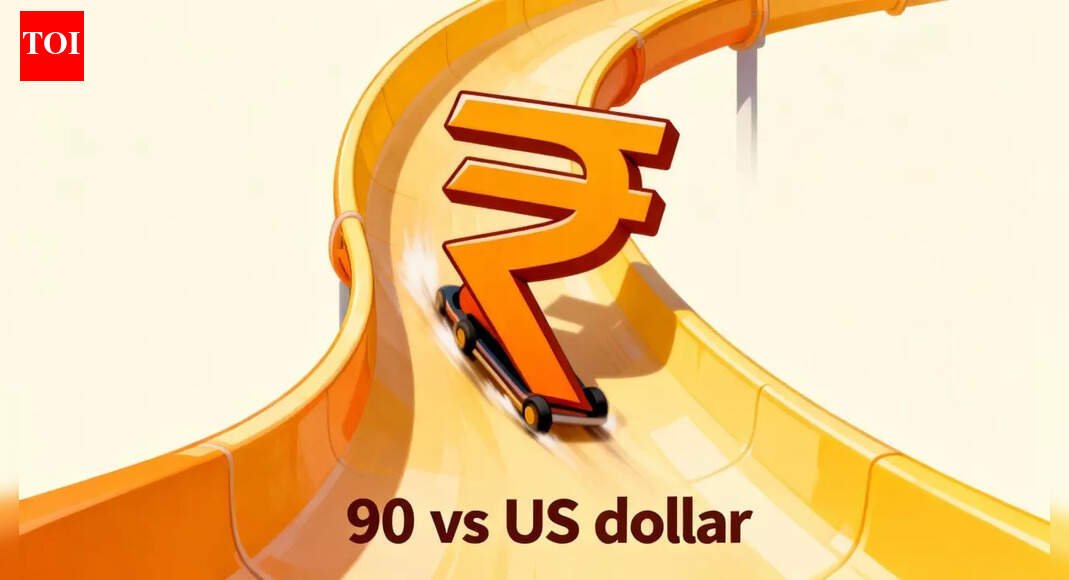
The rupee’s fall past 90 is more than a number-it’s a marker of a new phase in India’s economic story. (AI image)

Driving the newsOn Wednesday, the Indian rupee broke a historic barrier, falling below Rs 90 to the US dollar for the first time. Though the drop from Tuesday’s 89.94 may seem minor, the implications aren’t.This milestone isn’t just psychological-it signals a shift in how India’s economy is perceived, managed, and felt by its citizens.

Rupee Slides To Record Low Of 90 Per Dollar As Trade Uncertainty, Dollar Demand And Oil Costs Spike

Why it mattersThe ripple effects stretch far beyond Dalal Street or forex traders. The rupee’s weakness is now hitting the average Indian household – from their fuel bills to EMIs, tuition fees, and travel costs.Micro meets macro: Imports = inflation: India imports 90% of its oil, and also depends on overseas suppliers for electronics, fertilizers, and edible oil. A weak rupee inflates these bills.Your next iPhone, fridge, or car? Costlier.Foreign education: Students studying abroad could be shelling out Rs 5–10 lakh more annually compared to 2023, especially those paying USD tuition and living costs.Zoom in: Why did the rupee drop?Three main reasons:Trade tensions with the US: Recent trade negotiations failed, and US tariffs on Indian exports-some rising by 50%-hit business confidence hard.Investor exodus: Despite steady inflation and GDP growth, foreign investors pulled out $17 billion from Indian equities in 2025, adding pressure on the rupee.Policy shift at the RBI: The International Monetary Fund reclassified India’s exchange rate regime from “stabilized” to “crawl-like.” This suggests the RBI is now guiding, not guarding, the rupee. The big picture: What makes this different from earlier rupee crises?The dollar isn’t the main villain: In 2022, a strong dollar weakened currencies across the globe. This time, the rupee is down even as the dollar remains steady.India’s war chest is full: The RBI has $690 billion in reserves-unlike the 2013 taper tantrum or the 2018 oil price shock. This creates strategic patience.Philosophy shift at RBI: Instead of fire-fighting, the central bank now aims for long-term resilience. Its goal is no longer to defend Rs 90 at all costs, but to allow natural depreciation based on fundamentals-like inflation differentials and trade shifts.“For now, the central bank may be letting the rupee weaken a little more to make exports more competitive in light of US tariffs,” said David Forrester of Crédit Agricole.
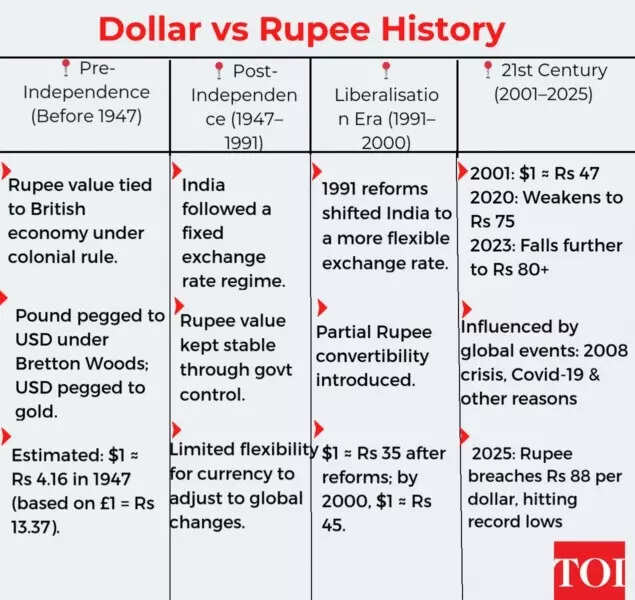
Dollar vs Rupee History

Dollar vs Rupee History

What they’re sayingBloomberg dubbed the rupee “Asia’s worst-performing currency this year.”“If they allow the rupee to close above 90, we could see further speculative bets and the possibility of the rupee heading to 91,”Anindya Banerjee, currency analyst at Kotak Securities, told Bloomberg. The recent slide is “hard to justify on a fundamental basis,” he added.“The weak macro picture in India makes weak currency performance inevitable, there has been a slide in so many data points recently – rising trade deficits, weakening nominal GDP growth, weak FDI and foreigner selling down domestic equities, etc,” Sat Duhra, portfolio manager at Janus Henderson Investors in Singapore, told Reuters.The RBI’s stance? Let it float-for now. With over $690 billion in reserves, India can act if needed, but the central bank prefers gradual adjustment to aggressive defense.Between the lines: Life is already getting more expensiveThe depreciation isn’t academic-it’s household.Oil & energy: India imports 90% of its crude and over 60% of its edible oils. A weaker rupee makes them costlier.Electronics & appliances: Imported items-laptops, fridges, smartphones-will now come with steeper price tags.Everyday inflation: Cooking oil, LPG, and petrol will squeeze budgets further, especially for lower- and middle-income households.Zoom in: Families, students, and borrowers are hurtingFor students abroad: Tuition at $50,000/year was Rs 40 lakh at ₹80/$, but now it’s Rs 45 lakh. That’s a ₹5 lakh hike-several months’ salary for many middle-class families.Education loans hurt more: A student repaying a dollar loan taken at Rs 80 now owes 12–13% more in rupee terms.Borrowers and consumers: A family earning Rs1.5 lakh/month may now have to dip into savings or cut essentials to meet new EMI demands of student loans. What’s next: The pressure is widespreadVacations abroad? That $2,000 family trip just went from Rs 1.6 lakh to Rs 1.8 lakh.Small businesses: Those reliant on imported components or foreign travel now face higher costs and tighter margins.Is this good for exporters?The textbook answer: Yes. The reality: It’s complicated.

  • Winners: IT and business service firms paid in rupees but billing in dollars see better margins-though many hedge currency exposure, which limits gains.
  • Mixed bag: Pharma exporters benefit from the exchange rate but are squeezed by global price pressures and rising import costs of raw materials.
  • Losers: Textile and light manufacturing should win-but US tariffs blunt their advantage.

“If your goods hit a tariff wall of 25% or 50%, it’s less helpful,” said one trade economist.Silver lining: Remittance recipients are smilingIndia received $137–138 billion in remittances in 2024-more than double any other country.A $500 monthly remittance now brings in Rs 45,000 instead of Rs 40,000.For rural and low-income families, this extra Rs 5,000/month is real uplift-sometimes funding education, healthcare, or property investments.What Indian families should do now

  • Match currency of income and loans: If you earn in rupees, avoid dollar loans.
  • Hedge wisely: For tuition and foreign payments, consider forward contracts or staggered payments to limit exchange rate shocks.
  • Plan with a cushion: Assume the rupee could drop further. Many consultants now suggest budgeting with Rs 93–95/$ in mind for 2026 plans.
  • Leverage remittances smartly: Fixed deposits and short-term debt funds offer high real returns right now-worth exploring.
  • Diversify investments: Global mutual funds or India-focused funds heavy in export sectors (like IT or pharma) may offer better protection.

The bottom line:The rupee’s fall past 90 is more than a number-it’s a marker of a new phase in India’s economic story.In letting the rupee float, policymakers are betting on long-term gains over short-term defense. But for millions of Indian families, that bet is already affecting daily life, monthly budgets, and multi-year plans.(With inputs from agencies)



Source link

TMC MPs hold protest in Parliament complex over central dues | India News


TMC MPs hold protest in Parliament complex over central dues

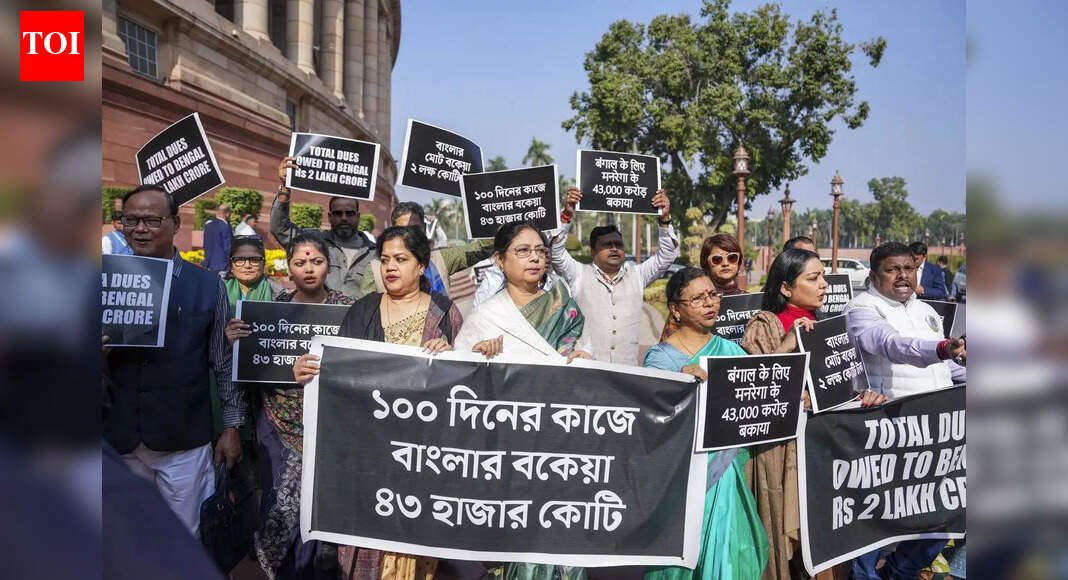
NEW DELHI: All India Trinamool Congress MPs held a protest in Parliament complex on Wednesday over pending Central dues across schemes, including the delay in resumption of MGNREGS in the state and release of funds for the same in West Bengal in compliance with Calcutta high court orders.The TMC MPs gathered near Mahatma Gandhi’s statue at Prerna Sthal in Parliament complex, holding banners and placards alleging that Centre owed West Bengal Rs 2 lakh crore in all. In a post on X, TMC said, “Bengal’s rightful money must be returned! The Bangla Birodhi Modi Government has shamelessly blocked Rs 2 lakh crore owed to our people. But today, at the foot of Gandhi’s statue in Parliament, our MPs rose as one, a united roar against injustice.It added, “Bengal will not bow. Bengal will not stop. And every single rupee that belongs to our people, we will take back.”In Oct, the Supreme Court had dismissed the Central government’s plea to continue holding back the funds, upholding the HC’s directive that while investigations into past irregularities can continue, the scheme cannot be indefinitely stalled.On Tuesday, the govt, in response to a question, informed Parliament that the department of rural development is “currently in the process of reworking and refining the necessary modalities and procedures” to comply with the June-18 HC order.While no timeline was given for release of dues in the reply, minister of state for rural development Kamlesh Paswan, in the written response, said that the total pending liability pertaining to Bengal stands at over Rs 3,000 crore as of Mar 8, 2022. “The admissibility of this liability is subject to verification by the Central government,” he added.The minister further said, “The release of funds to West Bengal under MGNREGS was stopped with effect from March 9, 2022, by invoking the provisions of Section 27 of the Mahatma Gandhi National Rural Employment Guarantee Act, 2005, owing to continued non-compliance with the directives of the Central government by the State.”


Source link

BMC announces 15% water cut in 17 wards in Mumbai on December 8 and 9, will replace Tansa pipeline supplying water to Bhandup treatment plant | Mumbai News


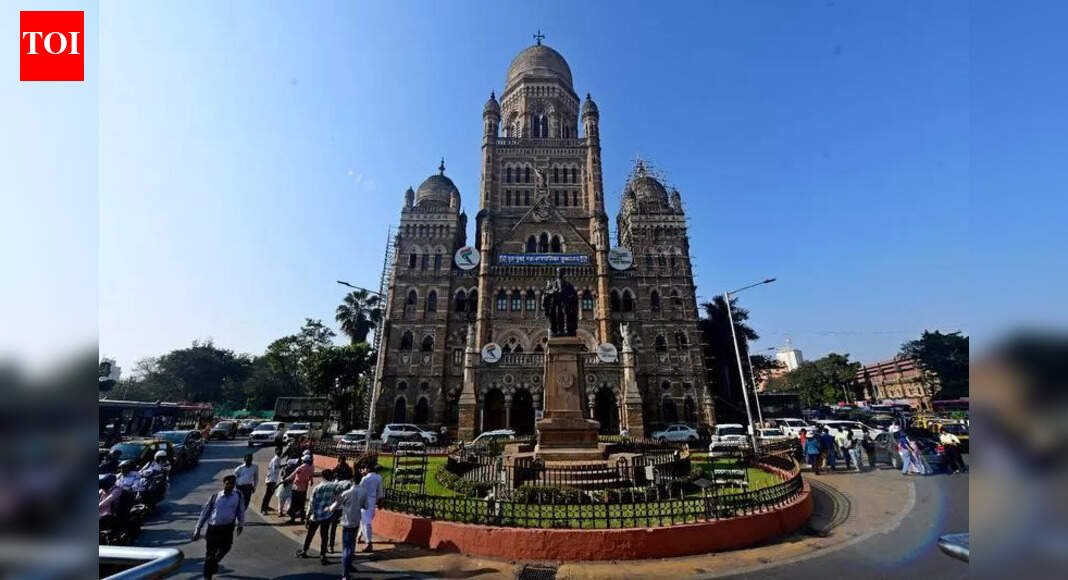
Mumbai: The BMC on Wednesday announced 15% water cut in 17 civic wards of the city from 10am on December 8 to 10am on December 9.The BMC said it will be undertaking work to replace the 2,750mm- diameter Tansa water pipeline that supplies water from Tansa Dam to the Bhandup Water Purification Plant, which will require approximately 24 hours. Due to this work, there will be an estimated 15% reduction in supply to the water treatment plant. The wards that will be affected are A, C, D, G-South, G-North divisions in the island city; H-East, H-West, K-East, K-West, P-South, P-North, R-South, R-North, and R-Central in western suburbs; and N, L and S in the eastern suburbs.Earlier, a 15% water cut was planned from 10am on December 3 to 10 am on December 4, but it was cancelled and the pipeline replacement work was postponed to avoid inconvenience to the lakhs of people who come to Mumbai on the occasion of Dr Babasaheb Ambedkar’s Mahaparinirvan Day.The civic administration has appealed to residents of the affected areas to store sufficient water, use water sparingly on December 8 and 9, and cooperate with the BMC.


Source link

IND vs SA: Fans react as South Africa pulls of a record chase in 2nd ODI at Raipur


The second ODI in Raipur turned into a high-scoring thriller, but it was South Africa who walked away with one of their greatest away wins in ODI history. Chasing a stiff target of 359 vs India, the Proteas displayed remarkable composure under lights as dew made India’s task increasingly difficult. Aiden Markram led from the front with a superb century, while Matthew Breetzke and Dewald Brevis provided the firepower needed to keep the chase alive. India, despite centuries from Virat Kohli and Ruturaj Gaikwad, fell short with the ball and on the field. The visitors levelled the series 1–1 with four balls remaining. The stage is now set for a high-stakes decider in Visakhapatnam.

Centuries for India from Virat Kohli and Ruturaj Gaikwad in Raipur

India’s innings began in style with Rohit Sharma’s brisk cameo and Yashasvi Jaiswal’s steady hand, but the real fireworks came from Kohli and Gaikwad, who stitched a majestic 195-run partnership. Kohli’s 53rd ODI ton was vintage, built on strike rotation and late acceleration, while Gaikwad’s maiden ODI century showcased his all-format adaptability. India appeared poised for a 380+ total when KL Rahul walked in and blasted a 43-ball 66, but crucially, India slowed down in the final five overs, scoring far fewer than expected. That missing buffer proved costly once dew took over in Raipur.

Aiden Markram’s authoritative hundred keeps South Africa in the hunt

Markram produced one of the finest ODI knocks by a visiting opener in India, a 98-ball 110 filled with fluency, precision and remarkable control under pressure. He began cautiously after the early loss of Quinton de Kock, before smoothly shifting gears, finding gaps through cover and extra cover with memorable timing. His fifty came off 52 balls, and from there he increasingly targeted India’s inexperienced pace attack, especially Prasidh Krishna, whose lengths repeatedly fed Markram’s strengths. The South African batter used the sweep and slog-sweep effectively against Ravindra Jadeja and Kuldeep Yadav, forcing India to alter their fields constantly.

Even as Bavuma and later Breetzke rotated strike efficiently, Markram remained the axis of the chase, dictating the tempo and refusing to let the required rate climb. He struck 10 fours and four sixes, each of them clean and commanding, becoming the first African opener since 2010 to score an ODI hundred in India. His eventual dismissal, a miscued stroke off Harshit Rana’s slower ball, came just after crossing three figures, but by then he had irreversibly tilted the match in South Africa’s favour. The foundation he laid allowed Brevis and Breetzke to attack freely, ensuring that South Africa stayed comfortably ahead of the chasing curve even under high scoreboard pressure.

Also READ: Virat Kohli’s 53rd ODI century: Anushka Sharma reacts after India legend steals the show in Raipur – IND vs SA

Dewald Brevis and Matthew Breetzke firepower and India’s fielding woes hand South Africa a famous win

The turning point arrived when the wet ball repeatedly slipped from Indian hands, forcing two ball changes and neutralizing swing and grip for spinners. Bavuma’s 46, Matthew Breetzke’s composed 68, and Dewald Brevis’s explosive 34-ball 54 added relentless momentum, with the pair adding 92 runs in just 69 balls. India’s fielding further deteriorated, misfields, wet-ball fumbles, and at least 25 extra runs aided SA’s chase.

Although Prasidh and Rana picked key wickets, they leaked heavily at crucial phases. Arshdeep Singh was the pick of the bowlers but received little support. Even late setbacks, injuries to de Zorzi and Nandre Burger, could not derail the Proteas as Corbin Bosch calmly finished the chase in the final over. India paid the price for a soft finish with the bat and an error-ridden display with the ball, setting up a high-stakes decider in Visakhapatnam on December 6.

Here’s how fans reacted: 

Also READ: Brother Vikas and Sister Bhawna express their jubilation on social media after Virat Kohli’s 84th international century | IND vs SA, 2nd ODI


Source link

Trump calls Somalis in US ‘garbage,’ warns of mass deportation


Trump calls Somalis in US 'garbage,' warns of mass deportation
US President Donald Trump

WASHINGTON: US President Donald Trump held nothing back in a xenophobic tirade against Somali immigrants during a White House Cabinet meeting on Tuesday, calling them “garbage” and vowing mass deportations.The remarks, aimed squarely at a large Somali community in Minnesota and Somali-American Democratic lawmaker Ilhan Omar, came amid rising anti-immigrant sentiment following last week’s fatal shooting of a National Guard soldier by an Afghan national, with racist outbursts proliferating online against Indians too for unrelated job losses. With ICE preparing targeted raids in in Minnesota, Trump’s comments have intensified fear among the roughly 80,000 Somali Americans—the largest Somali diaspora in the United States—who call the state home.“They contribute nothing. I don’t want them in our country,” Trump raged near the end of the two-hour meeting, pivoting abruptly from routine updates to a sweeping denunciation of Somalia as a nation that “stinks” and is “no good for a reason.” He described it as a lawless place where people “run around killing each other,” dismissing its decades-long civil war and US-backed stabiliSation efforts going back to the Bush Sr era when Washington launched Operation Restore Hope to prevent a humanitarian crisis after famine and civil war.Such benevolence is now a distant memory in MAGA- infused America with the US President disparaging Congresswoman Ilhan Omar – who came to the US as a refugee when she was eight – as “garbage” who complained too much about America, and suggesting she should go back and rebuild Somalia. He has also frequently aired long- discredited conspiracy theories accusing Omar of immigration fraud—allegations she has denied and courts have dismissed as baseless – and invoked racist tropes about Minnesota Somalis, including false claims that they are “taking over” the state.Tensions against immigrants have been heightened by the November 26 shooting in Washington, DC, in which Rahmanullah Lakanwal, a 29-year-old Afghan national who entered the US through the Biden-era Operation Allies Welcome, killed National Guard soldier Sarah Beckstrom and critically wounded Staff Sgt. Andrew Wolfe. Lakanwal, a former CIA interpreter granted asylum in April 2025, has pleaded not guilty to first-degree murder. Investigators cite mental-health struggles and isolation, not terrorism, as contributing factors.Nevertheless, the incident has fueled a wave of xenophobia. Trump halted all Afghan asylum and visa processing and blamed “third-world” immigration for the attack. Afghan families in Oregon and Texas report being called to ICE offices for “routine checks,” heightening panic. Polls show a 15-point rise in support for stricter refugee vetting, as Republicans echo MAGA demands to “pause migration from all third-world countries.Trump’s broadside also ignores the contributions of Somali Americans – like that of other immigrant communities – not to speak of Washington’s intervention in distant lands like Afghanistan that resulted in refugees and asylum seekers coming to the U.S. Minnesota’s Somali community took shape in the 1990s as refugees fleeing the civil war arrived and built thriving neighborhoods like Cedar-Riverside, home to mosques, halal markets, and a growing entrepreneurial class. A 2024 University of Minnesota study found the community contributes $1.5 billion annually to the state economy and has a homeownership rate of 60 per cent.Politically, Somali Americans have become a force in the state. Omar made history in 2018 as the first Somali American and one of the first Muslim women in Congress. Minnesota also has state-level Somali-origin legislators and representatives, bolstered by voter turnout that reached 75 per cent in 2024. Such civic engagement, inspired by democratic ideals, also extends to Somalia where expats like former Prime Minister Ali Khalif Galaydh have returned home to seek office or support democratic reforms. In 2024, Minnesota-raised environmental advocate Fatima Jibrell ran for parliament in Jubaland, in Southern Somalia, citing her American education as inspiration for sustainable development. Abdullahi Ali, a Somali immigrant who built a career in Maine, relocated to Nairobi in 2024 to run for president of Jubaland, driven by a sense of duty to improve governance. These stories counter Trump’s narrative of unassimilated “complainers” and disparage America’s own contribution to improving lives abroad.


Source link

‘Outdated base year’: FM Sitharaman explains IMF’s ‘C’ grade on national accounts; says GDP growth figures not questioned


‘Outdated base year’: FM Sitharaman explains IMF’s ‘C’ grade on national accounts; says GDP growth figures not questioned
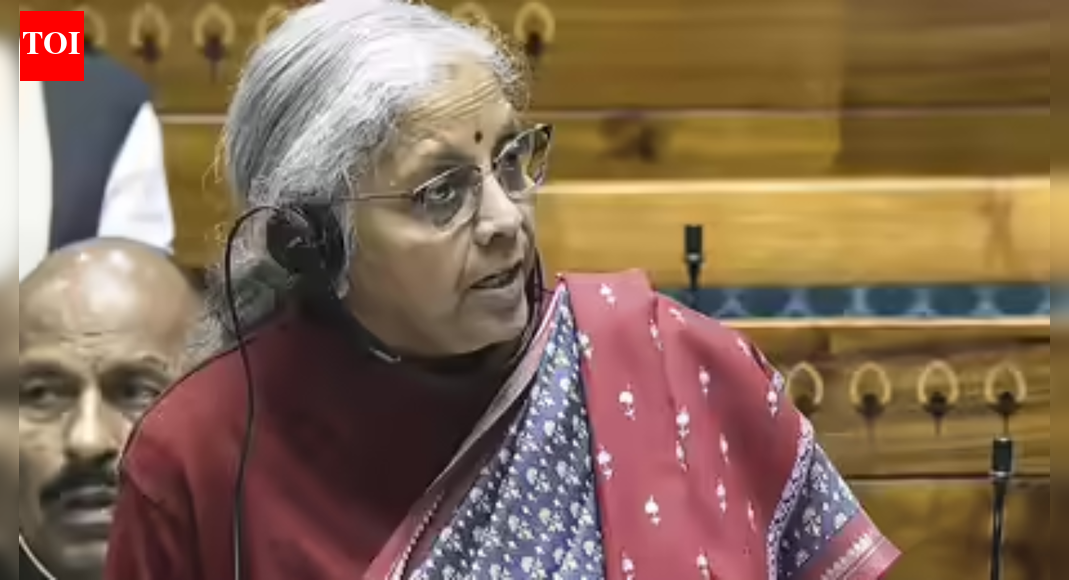
Finance Minister Nirmala Sitharaman (File photo)

Finance Minister Nirmala Sitharaman on Wednesday clarified that the International Monetary Fund (IMF) did not question India’s growth figures, and said the Fund’s ‘C’ grade on national accounts stems solely from the use of an outdated base year. She said the IMF, in fact, acknowledged India’s healthy economic performance and the resilience of its financial sector, according to PTI.Responding to concerns raised by NCP MP Supriya Sule during a Lok Sabha discussion on the Central Excise (Amendment) Bill, 2025, Sitharaman told the House that India will shift to a new base year of 2022-23 for national accounts from February 27, 2026. She said the current assessments rely on data based on the 2011-12 base year, which the IMF flagged as outdated while assigning the ‘C’ grade.According to PTI, the Minister emphasised that the IMF’s report focuses largely on India’s robust growth outlook. The Fund expects GDP to expand 6.5 per cent in 2025-26 and highlighted private-sector activity, macroeconomic stability and financial-sector strength as key drivers. It also noted inflation remains below the RBI’s tolerance band and projected it at 4.3 per cent for the full year.Sitharaman said the lower grade was tied specifically to statistical parameters. “The ‘C’ grade is assigned to the National Accounts data because it is based on an outdated base year, 2011-12,” she said, adding that the shift to the updated base year in 2026 will address the issue. “The IMF report does not question the growth figures,” she reiterated.Citing latest economic data, she said the Indian economy grew 8.2 per cent in the July-September quarter — a six-quarter high — after expanding 7.8 per cent in the April-June period. “It (IMF) didn’t question the growth figures we have given. On the contrary, they said we will be growing at 6.5 per cent. They appreciated our inflation management,” she said.The Minister added that India received a ‘B’ grade on all other statistical fronts, including inflation data, external-sector statistics, and monetary and financial statistics. “So, the median rate we have got is B,” she said, noting this is in line with countries such as China and Brazil.The IMF grades national accounts across A, B, C and D categories. While an ‘A’ rating indicates data adequate for surveillance, a ‘B’ means the data is broadly adequate despite some shortcomings. A ‘C’ suggests shortcomings that could somewhat hamper surveillance, and a ‘D’ signals serious issues that impede surveillance.


Source link

EU’s €3 Billion Plan to End Dependence on China for Rare Earths | Business


EU rare earth push: Brussels rolls out €3-bn plan to slash China dependence; new supply hub and export curbs in pipeline

The European Union on Wednesday rolled out a multi-billion-euro strategy to reduce its dependence on China for rare earths, unveiling measures to boost domestic mining, refining and recycling capacity amid rising geopolitical pressure on critical supply chains.The plan comes after months of turbulence triggered by Beijing’s export controls, according to AFP, which have disrupted manufacturers in autos, electronics and defence and exposed the bloc’s vulnerability to raw-materials shocks.EU industry chief Stephane Sejourne said the bloc was “responding to the new global geopolitical reality” as the European Commission announced nearly €3 billion to support strategic projects both within the EU and in partner countries. He has previously likened China’s dominance to a rare-earths “racket”.

‘Hostile…’: Explosive Europe Vs China Standoff Over Rare Earths; Ursula Vows ‘Retaliation’ With G7

A central feature of the new push is a European Centre for Critical Raw Materials, designed as a supply-hub modelled on Japan’s state-run JOGMEC. The centre will monitor demand, coordinate joint procurement for member states, and manage stockpiles and emergency deliveries to companies.Brussels also proposed curbing exports of scrap and waste from permanent magnets starting next year, to stimulate domestic recycling. Targeted restrictions on aluminium waste will follow, and copper could be added later.Squeezed between China and USDespite adopting a critical raw-materials law two years ago, the bloc finds itself caught between Beijing’s tightening export regime and intensified US efforts under President Donald Trump to secure mineral access through bilateral deals.A new survey by the EU Chamber of Commerce in China found that 60% of European firms expect supply-chain disruptions due to Chinese government restrictions, while 13% fear they may need to halt or slow production.Updating its “economic security” doctrine the same day, the Commission said global trade tensions had made existing vulnerabilities sharper. “Trade is being weaponised. Supply chains are under pressure,” EU trade chief Maros Sefcovic said while presenting the plan.“Strategic choke points are turning economic dependency into political pressure, and this hits our companies every single day,” he added.The revised doctrine calls for more assertive use of tools such as foreign-investment screening, export controls and supplier diversification — and for developing new mechanisms where gaps persist.“Europe will continue to champion open trade,” Sefcovic said, “but our openness must be backed by security.”


Source link