Breaking News
Putin’s two-day visit: Advanced BrahMos missiles, hypersonic systems on table; India, Russia to enhance defence ties | India News


Putin's two-day visit: Advanced BrahMos missiles, hypersonic systems on table; India, Russia to enhance defence ties

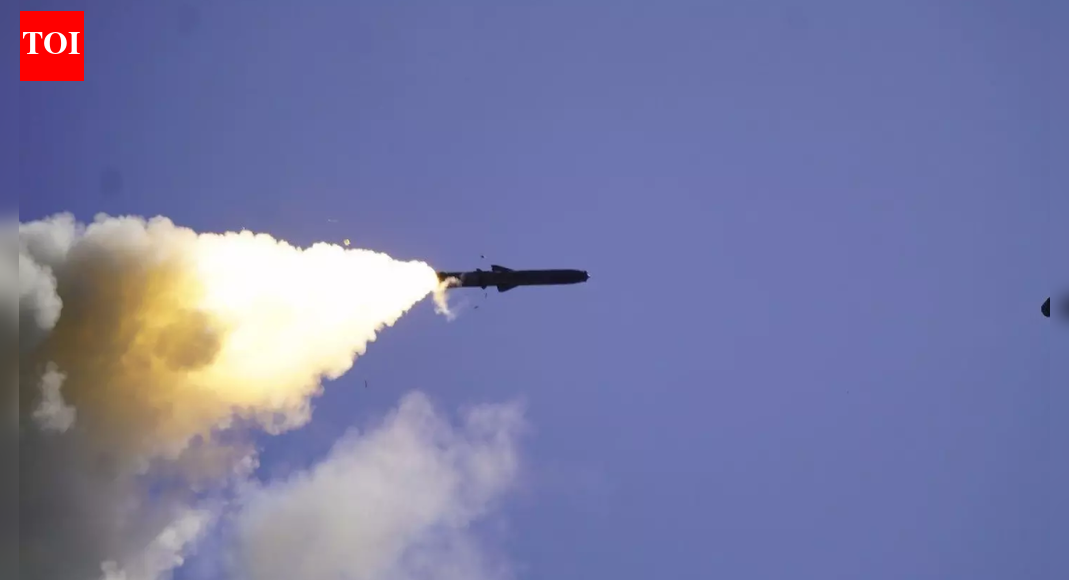
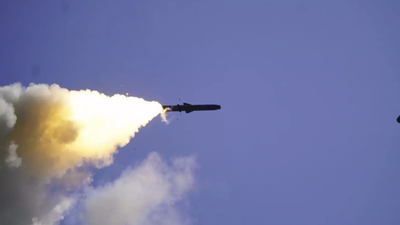
NEW DELHI: India and Russia are expected to discuss the joint development of advanced variants of the BrahMos supersonic cruise missile during Russian President Vladimir Putin’s visit to New Delhi beginning Thursday. BrahMos emerged as a pivotal weapon for the Indian armed forces during the recent four-day Operation Sindoor against Pakistan. Building on this success, India has identified the need for lighter and more versatile versions, including the BrahMos-NG, which can be fitted across the Indian Air Force’s fighter fleet and strike targets over 400 kilometres away, reported ANI, citing souces.The two sides are also likely to explore work on extended-range BrahMos systems capable of hitting targets at more than three times the missile’s current range. “These discussions are likely to take place between the two sides during the Russian President’s visit,” the sources said.BrahMos remains one of the most successful examples of Indo-Russian defence collaboration, symbolising the long-standing strategic partnership between the two nations. Ahead of the summit, the countries have also been in talks on co-developing next-generation hypersonic and long-range air-to-air missile systems.India is further expected to finalise the procurement of 280 S-400 Sudarshan Chakra air defence missiles, which were successfully deployed against multiple Pakistani targets earlier this year.The Indian armed forces have equipped the Navy and other services extensively with BrahMos missiles. The missile has also been successfully exported to the Philippines, and further sales in the Asian region are expected.With its supersonic speed and precision strike capability, the missile is extremely hard to intercept and has repeatedly demonstrated high accuracy in operational use, including during the May conflict with Pakistan.


Source link

Tension at Bhopal tragedy rally: BJP alleges plan to burn RSS effigy; police intervene | India News


Tension at Bhopal tragedy rally: BJP alleges plan to burn RSS effigy; police intervene
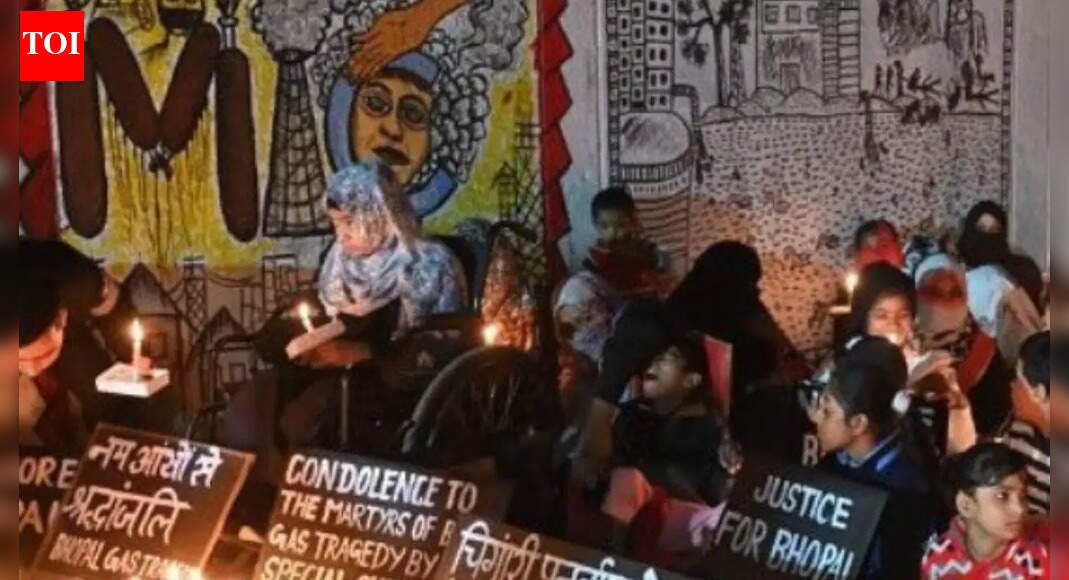
Representational file photo

A rally held in Bhopal on Wednesday to mark 41 years of the Bhopal gas tragedy turned tense after BJP supporters alleged that protesters were preparing to burn an “RSS effigy” along with one representing Dow Chemical, the current owner of Union Carbide. The rally was organised by four survivor groups and began at Bharat Talkies, but it was stopped midway following the dispute. The march was meant to pass the city bus stand and end at the gas memorial near the closed Union Carbide factory in JP Nagar, where protesters planned to burn the effigies. Assistant police commissioner Rakesh Singh Baghel told PTI that a complaint was received during the rally about an effigy that looked like it depicted workers of a particular organisation. After verifying the complaint, police removed the effigy, saying some people found it offensive. Baghel warned that any attempt to target an organisation or ideology would lead to action.“If any attempt was made to create a controversy at the rally, strict action will be taken,” the police officer maintained. RSS worker and BJP mandal president Ashish Singh Thakur claimed the effigy showed an RSS “sevak” and accused protesters of planning to burn it. He called it “anti-national” work and demanded a case against those involved. Survivor groups rejected the charge and said their effigies represented people responsible for the 1984 disaster, not any group. The gas leak on the night of December 2–3, 1984, killed at least 5,479 people and left thousands injured. As every year, an interfaith prayer was held on Wednesday at Barkatullah Bhawan.


Source link

Anushka Sharma’s adorable reaction to Virat Kohli’s 53rd ODI century goes viral — See post | Cricket News


Anushka Sharma's adorable reaction to Virat Kohli's 53rd ODI century goes viral — See post

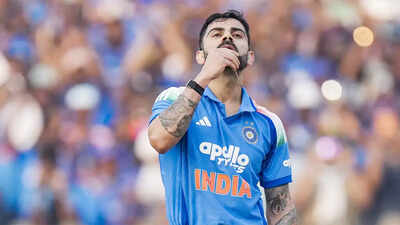
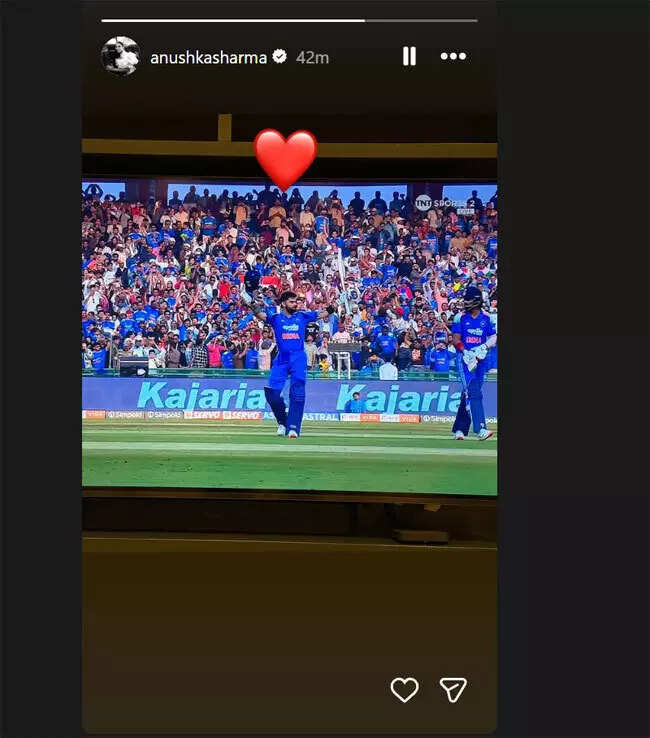
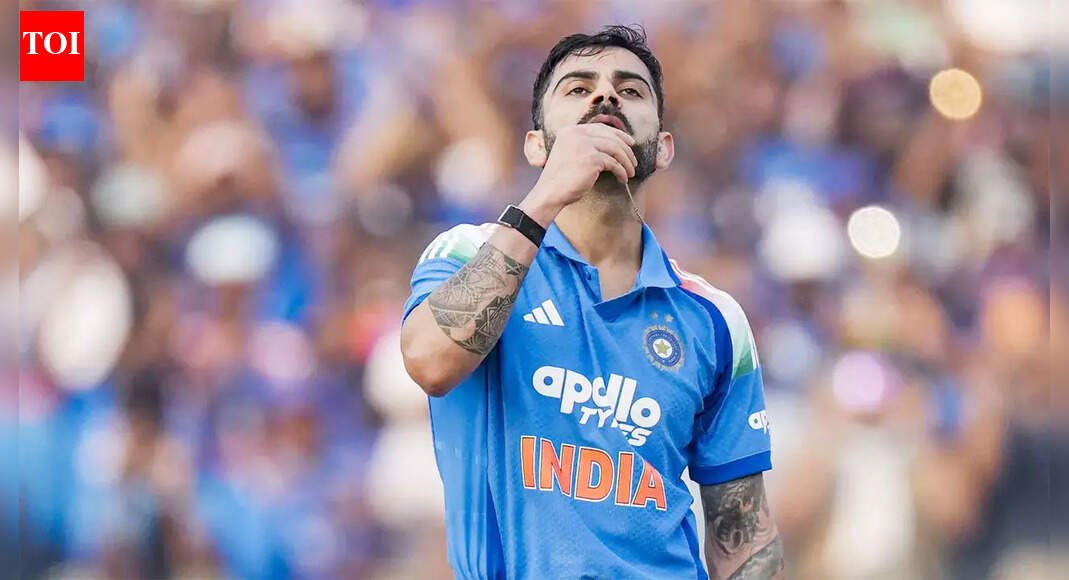
NEW DELHI: Virat Kohli continued his incredible run of form, bringing up his 53rd ODI century in the second match against South Africa in Raipur on Wednesday. The milestone came off 90 balls and marked his second straight hundred of the series, following his superb 135 in the opening ODI in Ranchi. Go Beyond The Boundary with our YouTube channel. SUBSCRIBE NOW!His achievement quickly drew reactions on and off the field, with wife Anushka Sharma sharing a heart emoji on Instagram to celebrate the moment.

Inside details of Shubman Gill’s rehab at BCCI CoE, set to return for SA T20Is

This century lifted Kohli’s tally to 84 international hundreds, inching him closer to Sachin Tendulkar’s all-time record of 100. It also saw him register an unprecedented 11th instance of scoring consecutive ODI centuries — the most by any cricketer, surpassing AB de Villiers’ six.

.

Kohli’s innings of 102 off 93 balls, featuring seven fours and two sixes, played a pivotal role in India posting a formidable 358/5. Supporting him brilliantly was Ruturaj Gaikwad, who scored his maiden ODI century, a superb 105 off 83 balls. Together, the pair stitched a record-breaking 195-run stand for the third wicket, the highest ODI partnership for India against South Africa.Their alliance came after India stumbled to 62/2, losing openers Yashasvi Jaiswal (22) and Rohit Sharma (14) early. The partnership surpassed Sachin Tendulkar and Dinesh Karthik’s 194-run stand in Gwalior in 2010. Gaikwad also registered the second-fastest ODI hundred by an Indian against South Africa, getting there in 77 balls — only behind Yusuf Pathan’s 68-ball ton in 2011.KL Rahul later added finishing touches with an unbeaten 66, ensuring India crossed the 350-run mark.For South Africa, Marco Jansen was the most effective bowler with 2/63, though their task became tougher when Nandre Burger left the field midway due to an ankle niggle.With this knock, Kohli now has seven or more ODI centuries against four different opponents — South Africa, Australia, Sri Lanka and West Indies — a feat previously achieved only by Sachin Tendulkar.


Source link

Trump tariff impact: India’s exports to US down 28.5% in 5 months; key sectors battered


Trump tariff impact: India's exports to US down 28.5% in 5 months; key sectors battered

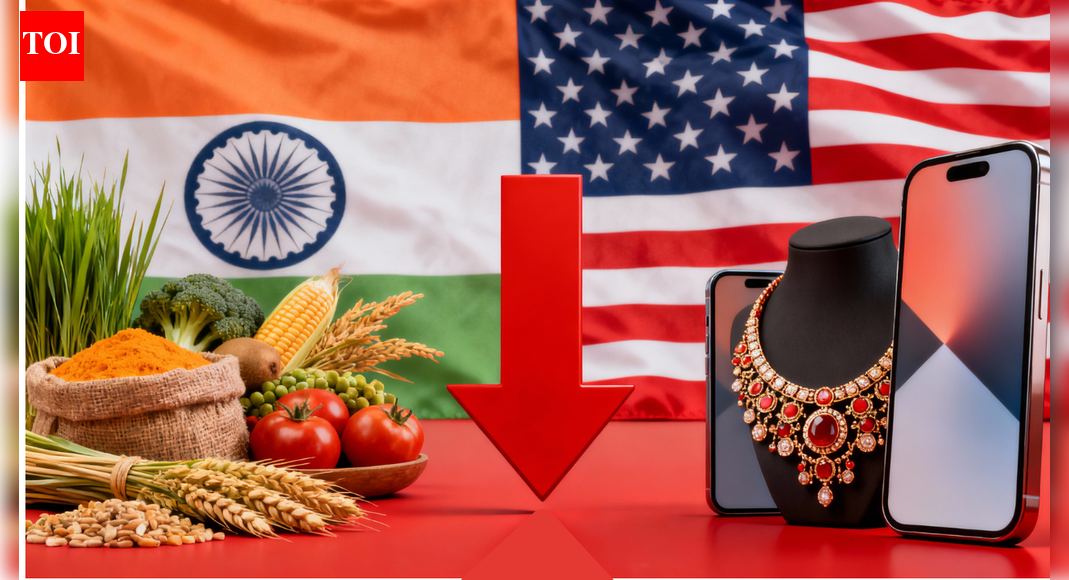
India’s exports to the United States have dropped sharply over the last five months after the US increased import tariffs on Indian goods, doubling them from 25% to 50%. A report by the Global Trade Research Initiative (GTRI) shows that exports fell 28.5%, from $8.83 billion in May 2025 to $6.31 billion in October 2025. The decline began after the US imposed a series of steep tariff hikes on Indian goods — 10% on April 2, 25% on August 7, and finally 50% by the end of August. The latest increase followed US President Donald Trump’s allegations that India was helping fuel Russia’s war effort in Ukraine.

Rupee Slides To Record Low Of 90 Per Dollar As Trade Uncertainty, Dollar Demand And Oil Costs Spike

With these duties, Indian products have now become some of the most heavily taxed in the American market. In contrast, Chinese goods face about 30% tariffs, while Japanese exports are taxed at roughly 15%.GTRI grouped India’s exports to the US into three categories:Tariff-free goodsThese include smartphones, medicines and petroleum products. They made up 40.3% of exports in October, but still fell 25.8%, from $3.42 billion in May to $2.54 billion in October.Goods facing the same tariff as other countriesThese include iron, steel, aluminium, copper and auto parts. They formed 7.6% of exports in October and fell 23.8%, from $629 million to $480 million.Labour-intensive goods facing 50% tariffThese form 52.1% of exports in October and dropped the most, 31.2% to $3.29 billion from $4.78 billion. Almost $1.5 billion worth of exports were lost in just five months.

Zero tariffs…but these exports still fell

Smartphones: India’s most exported product to the US, fell 36%, from $2.29 billion in May to $1.50 billion in October. Monthly exports went from $2.0 billion in June and $1.52 billion in July to $964.8 million in August, $884.6 million in September, before rising to $1.5 billion in October.Medicines: Pharmaceutical exports dipped 1.6%, while petroleum products dropped 15.5%, from $291 million to $246 million. Fuel: Motor gasoline exports also declined from $68.3 million to zero.

What about products with same tariffs?

Metals and auto parts also hitEven though tariffs for these goods remained the same for all exporting countries, India’s exports still dropped due to slowing demand in the US:

Category May exports October exports Decline (%)
Overall Metals & Auto-Linked Products $629 million $480 million -23.8%
Aluminium $102.6 million $58.2 million -43.3%
Iron & Steel $261.9 million $211 million -19.5%
Auto Parts $183.3 million $142.5 million -22.2%
Copper $31.8 million $27.5 million -13.5%

Labour-dependent took the hardest hit

Gems and jewellery The exports of gems and precious jewellery fell 27.3%, from $500.2 million to $363.8 million.

Category May exports October exports Decline (%)
Overall Gems & Jewellery $500.2 million $363.8 million -27.3%
Traditional Gold Jewellery $251.1 million $211.3 million -15.9%
Diamond-Studded Jewellery $92.8 million $74.9 million -19.3%
Cut & Polished Diamonds $193.5 million $138.1 million -28.7%
Jewellery Made With Lab-Grown Diamonds $62.5 million $76 million +21.5%
Raw Lab-Grown Diamonds $34.9 million $7.1 million -79.5%

Solar panelsExports crashed 75.7%, taking the figure from $202.6 million to $49.2 million. Meanwhile, China and Vietnam, which pay only 20% tariffs, took over the market and pushed India’s renewable exports at risk. Textiles and garmentsExports fell 31.9%, from $944 million to $643 million.

Category May exports October exports Decline (%)
Overall Textiles & Garments $944 million $643 million -31.9%
Garments $515.4 million $306.1 million -40.6%
Home Textiles $230 million $201 million -13%
Fabrics, Yarn & Carpets $198 million $136.4 million -31%

Orders for garments rerouted to Bangladesh, Vietnam and Vietnam, hitting production centers in Tiruppur, Panipat, Noida and Ludhiana. Many are also facing job losses as the sector reels under pressure. ChemicalsExports dropped 38%, from $537 million to $333 million. The biggest declines were in organic chemicals, agro-chemicals, and essential oils and cosmetics. The affected areas include Vapi, Dahej, Ankleshwar and Vizag.Marine productsShipments fell 38.7%, from $223 million to $136.9 million.

Category May exports October exports Decline (%)
Overall Marine Products $223 million $136.9 million -38.7%
Vannamei Shrimp $206.4 million $123.4 million -40.3%
Processed Seafood & Meat $66.4 million $63 million -5.1%

Buyers are now shifting to Ecuador and Vietnam, forcing job losses across coastal hubs from Nellore to Veraval.US losses appetite for Indian agri productsExports of agriculture and food products slumped 45.4%, from $292.8 million to $160 million. The drop has left agriculture workers from Gujarat to Kerala facing cancelled shipments.

Category May exports October exports Decline (%)
Overall Agriculture & Food Products $292.8 million $160 million -45.4%
Cocoa $16.7 million $0.1 million -99%
Dairy & Honey $24.4 million $6.9 million -71.9%
Oilseeds $22.6 million $10 million -56%
Coffee, Tea & Spices $37 million $23.3 million -36.7%
Lac, Gums & Resins $40 million $14 million -64.6%

Regions including Nashik, Gujarat, Kerala, Karnataka and Jharkhand are seeing cancelled orders and rising unsold stocks.

How to help exporters deal with the pressure?

GTRI says the government should focus on two key steps:Roll out the export promotion mission quicklyThe Mission was announced in March and approved on November 12, but no schemes have been implemented yet. Funds are limited to Rs 4,200 crore, and other programmes such as the Market Access Initiative and the Interest Equalisation Scheme have made no payments this year. The think tank warned that the government will miss its expectations if it does not issues any guidelines to restore regular disbursals and provides exporters with clear rules and timelinesAsk US to remove the extra 25% tariffUS President Trump claimed that India has “very substantially” reduced purchases from sanctioned Russian firms, the reason the surcharge was added. Hence India should ask for an early rollback of the tariffs which would reduce the tariff substantially, from 50% to 25%. This would help sectors like textiles, leather, gems and jewellery and pharmaceuticals.


Source link

Putin’s visit under Trump tariff shadow: What’s at stake for India and Russia? Explained


Putin’s visit under Trump tariff shadow: What’s at stake for India and Russia? Explained
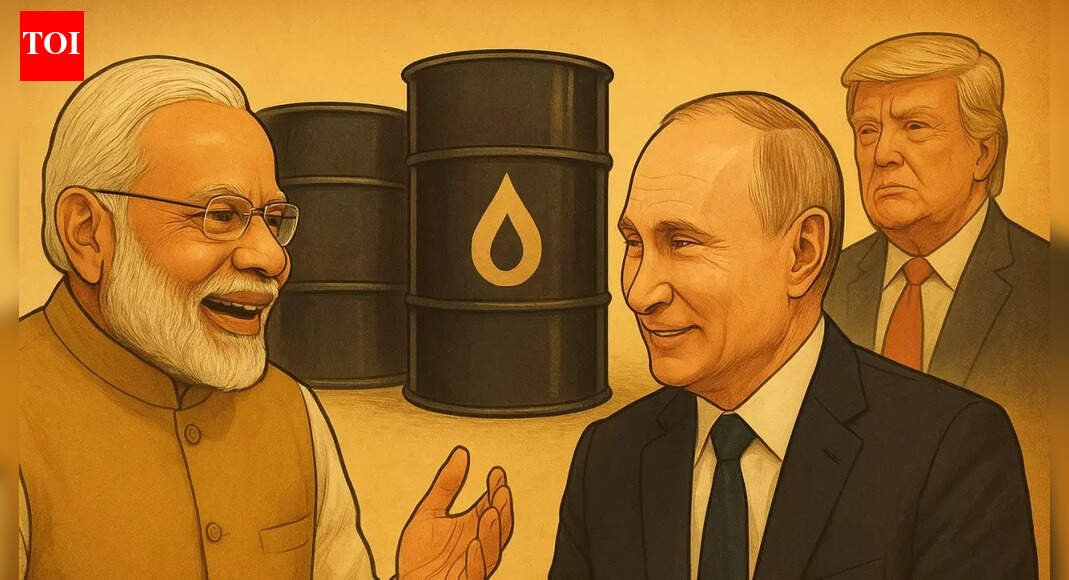
Putin is making his first diplomatic visit to India since the conflict in Ukraine started. (AI image)

Russian President Vladimir Putin’s India visit this week is being closely watched by the world – what will it mean for India’s trade dynamics with both Russia and the US. Will India bring down its crude oil imports from Russia or look to maintain its autonomy while navigating pressure from US President Donald Trump? The answer is not straightforward – laced in geopolitical, economic and diplomatic issues!Putin is making his first diplomatic visit to India since the conflict in Ukraine started, marking a crucial diplomatic milestone amidst complex geopolitical circumstances. Discounted Russian crude has reshaped India’s energy security but deepened its exposure to sanctions and geopolitical risk, says Ajay Srivastava, founder of Global Trade Research Initiative.The visit occurs at a complex time. India faces continuous US pressure regarding its Russian oil purchases whilst being urged to increase access for American products and defence equipment in its markets.“Putin’s visit is not a nostalgic return to Cold War diplomacy. It is a negotiation over risk, supply chains and economic insulation. A modest outcome will secure oil and defence; an ambitious one will reshape regional economics. The visit is ultimately not about choosing sides—but about managing dependence in a fractured world,” GTRI says.History explains the resilience of the partnership. During the Cold War, the United States backed Pakistan and deployed the USS Enterprise during the 1971 war. The Soviet Union responded with weapons support and diplomatic shielding at the United Nations. Moscow stood by India after its 1962 war with China, provided repeated diplomatic backing over Kashmir, and remained a defence partner after India’s 1998 nuclear tests brought Western sanctions. “ Over decades, Russia transferred strategic technologies the West withheld. Even today, about 60–70% of India’s military platforms remain of Russian origin. The partnership was built in conflict, not commerce,” the think tank says.Also Read | Trump sanctions: India’s crude imports from Russia at 5-month high – can it continue?According to GTRI, India’s current engagement with Russia rests on three pillars—energy, defence and diplomacy. Energy now dominates the relationship.Russia has become India’s largest crude oil supplier, accounting for as much as 30–35% of total oil imports, turning discounted crude into the foundation of the partnership. Defence forms the second pillar. Russia continues to supply and service a majority of India’s frontline platforms—fighter jets, submarines, tanks and air defence systems—and talks continue on maintenance support and future acquisitions. The third pillar is diplomatic coordination through multilaterals including BRICS, the Shanghai Cooperation Organisation, and the Eastern Economic Forum, alongside cooperation in nuclear power, space exploration, fertilizers and connectivity.Even as India deepens relations with Washington, Brussels and Tokyo, it treats Moscow as essential to its strategic autonomy, notes GTRI.

India’s Growing Imports of Russian Crude Oil

Russia has emerged as India’s main oil supplier, making up approximately one-third of total crude imports in 2024. A substantial increase in India’s expenditure on Russian oil is evident, rising from $2.3bn in 2021 to $52.7bn in 2024 – a significant shift in energy procurement patterns.

  • Russia’s position in India’s oil procurement landscape has seen a substantial shift since the Ukraine conflict. Prior to 2021, Russian supply was minimal, with yearly crude purchases hovering around $2-3 billion, constituting just 1-2% of India’s total oil acquisitions.
  • This scenario altered significantly in 2022, with purchases reaching $25.5 billion, increasing Russia’s contribution to approximately 15% of India’s crude imports, as sanctions redirected Russian oil towards Asian markets at reduced prices.
  • The figures escalated in 2023, with imports reaching $48.6 billion, pushing Russia’s share to 34.6%, establishing it as India’s primary oil supplier, surpassing traditional Gulf sources.
  • In 2024, the value increased to $52.7 billion, with Russia’s portion reaching 37.3% of total crude imports. This three-year transition has fundamentally altered India’s energy security considerations and increased its involvement in global oil sanctions politics.

India’s Crude Oil Imports-US$ Billion

Year Import Oil from Russia Import Oil from World Share of Russian oil in India oil imports Imports total from Russia
2017 1.3 82.1 1.6 8
2018 1.2 114.7 1.1 6.8
2019 1.5 101.9 1.4 6.2
2020 0.9 64.6 1.4 5.9
2021 2.3 106.4 2.2 8.7
2022 25.5 173.5 14.7 40.6
2023 48.6 140.4 34.6 67.1
2024 52.7 141.5 37.3 67.2
2025(Jan-Sep) 33.5 105.3 31.8 45.3

Financial sanctions have necessitated alternative payment arrangements. Following Russia’s partial SWIFT exclusion, payments now involve multiple currencies: dirhams (60-65%), rupees (25-30%), and yuan (5-10%). Approximately ₹60,000 crore in rupees remain largely unutilised in dedicated Indian accounts. Russian preference has shifted towards UAE dirham settlements, offering better spending and conversion flexibility. Yuan transactions occur periodically. While functional, this arrangement remains susceptible to instability and political pressures.“In energy, New Delhi is expected to pursue long-term crude contracts with Non US sanctioned Russian firms like Lukoil and Roseneft, revival of Indian investments in Russian energy projects, and advancement of nuclear cooperation beyond Kudankulam. Cooperation in critical minerals, manufacturing and maritime connectivity linking India with Russia’s Far East may also be discussed,” says GTRI.Also Read | India’s love for Russian oil continues? State refiners pick non-sanctioned crude at higher discounts; but will Moscow remain top supplier?

India-Russia: Trade & Defence Dynamics

GTRI points out the defence relationship remains vital, as approximately two-thirds of India’s military equipment comes from Russia, linking operational capability to Russian components and modernisation programmes.Indian defence officials plan to request faster delivery of additional S-400 Triumf systems whilst seeking assurances regarding maintenance and upgrades for Russian-origin equipment. Discussions about the Su-57 stealth fighter are anticipated, though primarily as a long-term prospect rather than immediate acquisition.India’s exports to Russia stand at approximately $5bn annually, whilst imports, primarily energy-related, reach nearly $64bn. India’s export footprint in Russia is narrow, with pharmaceuticals and machinery strong but garments, electronics and consumer goods negligible. Payments are increasingly de-dollarised, routed through UAE dirhams, rupees and yuan, reflecting the workaround economy created by sanctions, says GTRI.Trade figures between India and Russia show a significant imbalance, with limited export expansion but substantial energy-focused imports. Indian exports increased from $4.3 billion in FY24 to $4.9 billion in FY25, achieving $2.25 billion during April-September 2025.The exports concentrate primarily on industrial and chemical products, with machinery ($367.8 million), pharmaceuticals ($246 million), and organic chemicals ($165.8 million) constituting the main share in FY26’s first half. Other sectors show minimal presence: smartphones ($75.9 million), Vannamei shrimp ($75.7 million), meat ($63 million), and garments ($20.94 million), reflecting India’s restricted access to Russian consumer markets and electronics sectors despite strategic shifts.Russian imports maintain their dominance, reaching $63.2 billion in FY24 and $63.8 billion in FY25, with April-September 2025 recording $31.2 billion. The import composition heavily features petroleum, specifically crude oil ($23.1 billion) and petroleum products ($2.5 billion), alongside coal ($1.9 billion). Essential imports include fertilisers ($1.3 billion), sunflower seed oil ($633 million), and diamonds ($202 million).This creates an unbalanced trading relationship where India depends on Russia for crucial energy resources and raw materials whilst facing challenges in expanding its value-added exports, creating a trade dynamic susceptible to international commodity price fluctuations.

What will be the outcome of Putin’s India visit?

GTRI envisions two scenarios as outcomes of Putin’s visit to India:The most likely outcome is a cautious strengthening of existing ties. India could secure firm timelines on defence deliveries, maintenance contracts, and technology upgrades for aircraft, tanks and submarines. Russia, in turn, may lock in long-term energy commitments—including revived Indian equity in LNG fields, multi-year crude supply agreements, and accelerated nuclear plant construction, says GTRI. The two countries may also formalize a new payment framework using the dirham or integrate Russia’s SPFS system with India’s RuPay network. This scenario stabilizes the relationship without significantly raising diplomatic costs, it says.The more ambitious alternative would mark a deeper realignment. “India and Russia could agree on joint production of defence equipment, Indian investment in Russian oil and gas projects such as Arctic LNG 2 or Vostok, and expansion of nuclear cooperation beyond existing reactors,” says the think tank. “Connectivity initiatives like the Chennai–Vladivostok corridor or nodes of the International North–South Transport Corridor could also gain momentum. A structured settlement framework could be unveiled to reduce idle rupee balances. This scenario would reshape India’s Eurasian integration—but potentially provoke sharper Western response,” it adds.“Beyond optics, the summit is about securing fuel, weapons and payments against a world of financial and political fragmentation. For India, the challenge is strategic balance—protecting autonomy while navigating pressure from Washington and dependence on Moscow,” concludes GTRI.

Source link

‘Attack on privacy’: Arvind Kejriwal on Sanchar Saathi app order; calls for rollback | India News


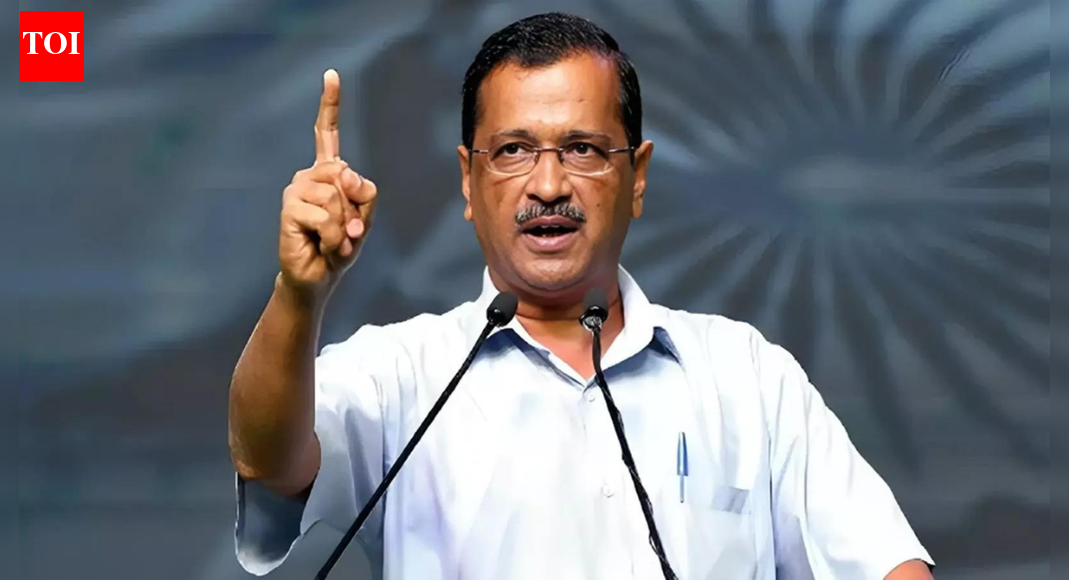
File photo: AAP supremo Arvind Kejriwal

NEW DELHI: AAP supremo Arvind Kejriwal on Tuesday termed the DoT-mandated preloading of the Sanchar Saathi app on all new smartphones a “brazen attack on individual privacy” and demanded immediate withdrawal of the “diktat.The department of telecom (DoT) has directed manufacturers and importers of mobile handsets to ensure that its, as claimed, fraud reporting app Sanchar Saathi is pre-installed in all new devices within 90 days.

Sanchar Saathi App Optional Says Centre Amid Fierce Pegasus-Like Snooping Charges and Privacy Debate

“The Modi government’s diktat to all mobile manufacturers to install Sanchar Saarthi app on all new and existing phones is a brazen attack on individual privacy and liberty. No democracy in the world has ever attempted to do so,” Kejriwal said in a post on X.“The notification issued by the government has no mention of seeking individual consent to install the app”, or “providing the option to delete it at any time,” he said.“@AamAadmiParty condemns such gross dictatorial actions and demands immediate withdrawal of the notification,” the former Delhi chief minister said.


Source link

Architects, lawyers, former Judge debate the architectural design of the new Bombay HC building to come up in Mumbai; ‘missed opportunity” says Justice (retd) Gautam Patel | Mumbai News


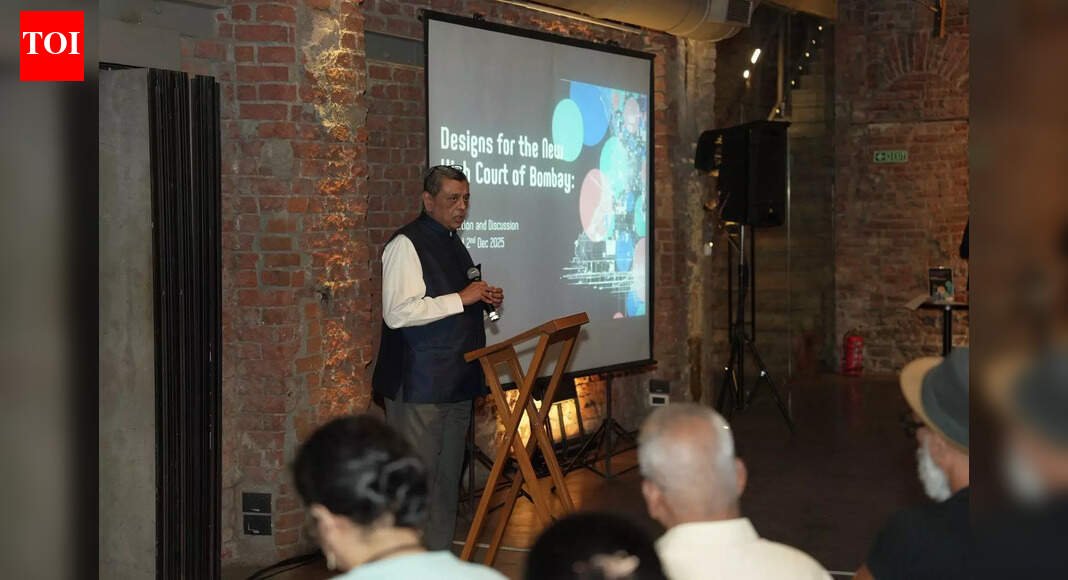
MUMBAI: Weeks after the former Chief Justice of India, BR Gavai, when laying its foundation stone, suggested that the new proposed Bombay High Court building should invoke democratic principles and not resemble a 7-star hotel, former HC Judge Justice Gautam Patel on Tuesday said it was a “missed opportunity’’ and “fundamentally undemocratic’’.At an exhibition and discussion of the Architectural Competition Proposals for the new high court building in Mumbai, the former judge said, “This is a classic example of an opportunity missed… this should be litigant-centric.’’ He suggested that the HC building should be “climate resilient’’ and have spaces where lawyers and litigants can also have privacy to discuss matters. He added, “I don’t know whether judges have been consulted on whether they need chambers next to the courtroom or at a distance to walk…’’. The question asked by Justice Patel is whether the new proposed building to come up in Bandra addresses “critical issues’’ faced in the old building by lawyers and litigants, including the growing digital needs, as the “computer centre is the heartbeat’’.“This is a monument, not efficient, not climate resilient, and it also does not address the issue of the old building… also, who will clean the dome?’’ he asked. Justice Patel said the entire court is meant for the litigants, who should be placed at the top of the pyramid. What seems to have happened is “an inversion of the pyramid.’’Sharing the example of Delhi HC, Justice Patel said it has ramps connecting the various sections of the court to make it easy to navigate and transfer heavy bags full of petition copies, which a lawyer or his clerk carries. Practicality was the focus of the talk and questions that were raised later. Justice Patel said the “entire edifice of the judicial system is steeped in a colonial pervasive mindset’’, but courtrooms need quiet, non-reflective lights, natural lighting as much as possible, and need to be mainly accessible for litigants.Mustansir Dalvi, former professor at the JJ School of Art and Architecture, who also addressed the gathering largely of architects and architecture students, also said court architecture the world over prioritises litigants. He said, “Grand staircases are often awe-inspiring and indicate grandeur but questioned their practicality. He also said that “contemporary buildings and usages don’t mean we can create symmetry or a central element and excellent proportions. Why do we need to look back at the past?’’“Good manners in architecture’’, the height to which it rises, the overall aspects of a building can be achieved as much with modern material and design techniques as with revivalist techniques, said Dalvi.Conservation architect Abha Lamba, who was among the audience, however, said the entire selection process for the architectural design and architect was fair. “The process was fair. We were eight or six entries, who made the presentation before 30-odd judges and other judges had joined in via VC.’’ She said the judges mentioned “monumentality’’ and architect Hafeez Contractor, whose design was finalised, gave that.Justice Patel made it clear that the selection process was not under discussion. “That ship has sailed,’’ he said. Lamba later said, “They chose fairly.’’While a few other architects also questioned the design’s practicality, one noted how no architect or architects’ body had raised the issue earlier. The exhibition, which showcased the entries of Lamba and architect PK Das, and the talk and the debate it attracted, some felt, may lead to a revival of a discussion on architectural designs of public buildings.Justice Patel reminded everyone present of what James Baldwin, American writer and civil rights activist, once said, “If one really wishes to know how justice is administered in a country, one does not question the policeman, the lawyers, the judges, or the protected members of the middle class. One goes to the unprotected – those, precisely, who need the law’s protection the most! – and listens to their testimony…’’


Source link

Is Washington Sundar dating Sahiba Bali? Details inside


Team India all-rounder Washington Sundar and actress-cum-sports presenter Sahiba Bali have become the latest subjects of celebrity dating speculation after a video of the two sharing coffee at a cafe went viral. The short clip, widely circulated on social media platforms, instantly triggering fan theories and online chatter about a possible relationship between Sundar and Sahiba.

Are Sahiba Bali and Washington Sundar in a romantic relationship?

The footage, captured by fans and reshared across Instagram and X, ignited a wave of comments, with many users prematurely referring to Sahiba as “Washington Sundar’s girlfriend.” As the video gained traction, both Sundar and Sahiba maintained silence, neither confirming nor addressing the rumours in public.

https://twitter.com/AdamDhoni1/status/1996107689479524414

Despite the rising buzz, sources close to the cricketer have indicated that Sundar prefers to keep his personal life private, which explains the lack of response from his end. Similarly, Sahiba has not posted anything hinting at a romantic connection.

Both personalities have remained focused on their professional commitments – Sundar on international cricket duties, and Sahiba on her expanding presence in sports broadcasting and digital entertainment. .

Lesser know facts about Sahiba Bali

Sahiba Bali is a rising multi-hyphenate talent in the Indian entertainment industry – a blend of actor, host, digital creator and marketing professional. Born on 5 December 1994 into a Kashmiri family, she has built a unique cross-industry profile spanning film, OTT platforms, brand strategy and live sports coverage.

She completed her education in Economics at Delhi University, where she was deeply involved in theatre and street performances. Her subsequent business-school training led her into marketing roles, which later shaped her identity as a strong corporate-creative crossover personality.

Sahiba eventually transitioned into front-of-camera roles, earning recognition for her natural screen presence and relatable charm. She appeared in films and web series while simultaneously taking on content strategy roles for startups and brands.

Sahiba Bali

Her popularity surged further when she joined the Indian Premier League (IPL) broadcast team in 2024, becoming one of the familiar faces of match-day coverage. She later contributed as a digital insider and anchor for cricket-related content during the Champions Trophy 2025, expanding her reach in sports broadcasting.

Also READ: Is Mrunal Thakur dating Shreyas Iyer? Bollywood actress responds with a humorous post

Sahiba Bali

Sahiba is highly active on Instagram and YouTube, where she blends lifestyle content, humour, relationship commentary and career advice. Her mix of entertainment and authenticity has earned her a loyal following, cementing her status as a relatable digital diva.

Also READ: Actress Shehnaaz Gill opens up on the idea of marrying star pacer Arshdeep Singh


Source link

‘Time to bring in Olympic medals’: Coach Santiago Nieva returns with a blueprint to ensure podium finish for Indian boxers | Boxing News


'Time to bring in Olympic medals': Coach Santiago Nieva returns with a blueprint to ensure podium finish for Indian boxers
File pic: India coach Santiago Nieva

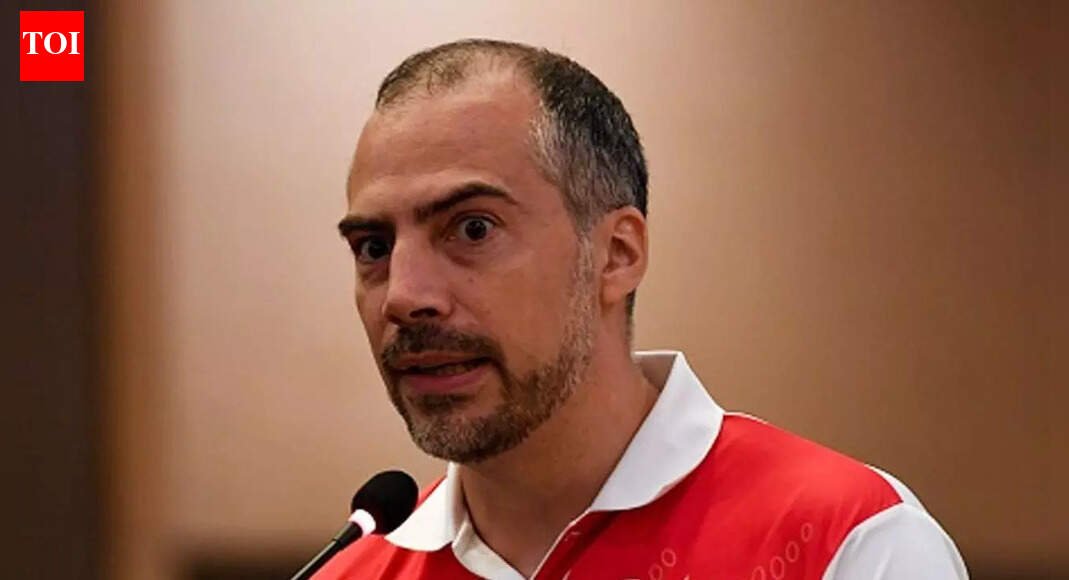
NEW DELHI: Boxing coach Santiago Nieva returns to Indian women’s boxing with what he calls “tremendous energy”, and a clear mission. In an interview with TOI, Nieva outlined his philosophy for the road to 2028 Los Angeles Olympics. Excerpts…Go Beyond The Boundary with our YouTube channel. SUBSCRIBE NOW!You were with men’s boxing in your previous stint in India, why did you choose the women this time?I’m super excited, coming with tremendous energy. Hopefully, I can do good work and get the desired results. Indian women boxers are already doing pretty well, and they’ve great potential. Now it’s time to transfer the potential into Olympic medals. I had great results with the Australian women, winning medals at the Olympics, gold at world championships. I am confident I can do a good job with the Indian women too.

Vidit Gujrathi Exclusive: Indian Grandmaster Hits Out At Goa Criticism During FIDE World Cup

Indian boxers have done well this year. Are we on the right track?There were four medals at the world championships in Liverpool, but only one in the Olympic weights — Jaismine’s gold in the 57kg. We need to be very strong in the Olympic weights. That’s my priority. There is no question that the Indian team is considered as one of the strongest in the world. But we also know that China is very strong. Asia is very strong in general. So, we need to be better than our competition.Is there a roadmap, blueprint that you have prepared?We need to have systematic, organized training of high quality. I was in India for five years and I think I had great success with the work I did. When I came to Australia, it worked the same or even better maybe. So I’m confident that I can adapt to the Indian environment once more. Of course, there are changes here and there, things evolve. It cannot be the same in 2025 or 2026 like it was in 2017.Indian boxers are inconsistent in world championships and Olympics. Can there be competition periodization?We need to make sure that we have plenty of boxers who are really good at the highest level. So that if someone gets a bad draw, or someone loses due to wrong decision, someone doesn’t perform, we still have enough good boxers to win medals. That’s the way we had Lovlina’s medal in Tokyo, when Amit (Panghal) didn’t win a medal, Mary Kom didn’t win, Vikas didn’t win, boom, Lovlina was good enough to win a medal! So if we do a good job, we will have plenty of boxers who can qualify, and those who can are good enough to win medals.You were never a fan of trials…?My philosophy is that the coach should be able to pick his team. But the more teams started training with full-time programmes, training together, it lost purpose of going for a trial because the coaches see the boxers every day in training. And then you realize that international competitions play a big role because you want to see how they fare against other international boxers. We need to select the No. 1 boxer.What is your expectation this time around?My aim is that when we go into a world championships, we win three or four gold medals. And I want to do the same in the Olympics.


Source link

Nifty to cross 29,000 levels! Here’s what Nomura said about the index; check top picks for your portfolio


Nifty to cross 29,000 levels! Here’s what Nomura said about the index; check top picks for your portfolio

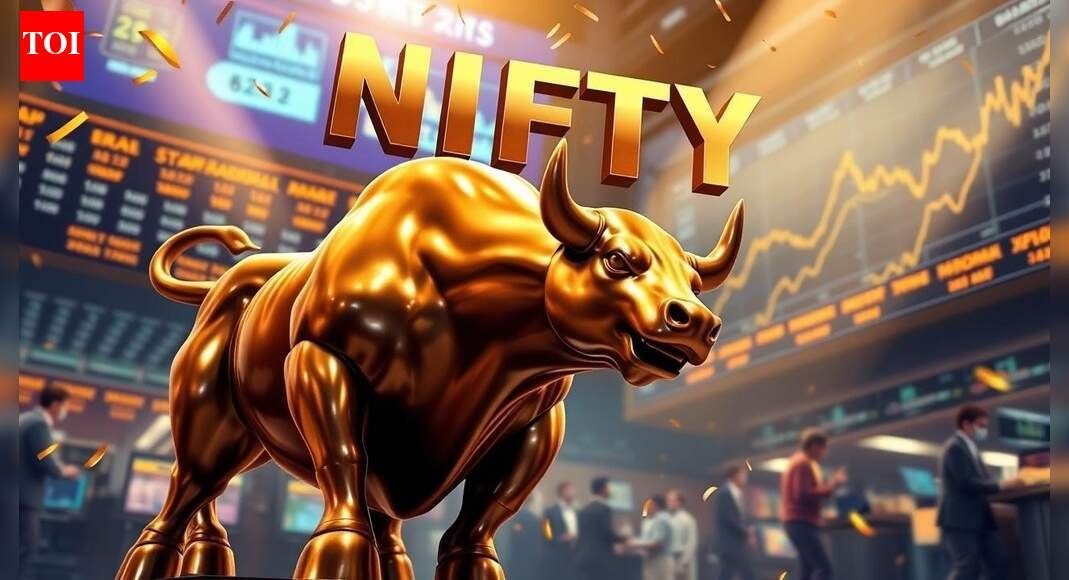
Nifty might be in for a roller coaster ride in 2026 as several projections have forecasted an upside of over 10% for the index. Nomura pegged the NSE benchmark Nifty at 29,300 for the next year, a level that signals almost 13% upside from Tuesday’s closing mark of 26,032.20, when the index slipped 144 points, or 0.6%.The brokerage also released its list of top picks: ICICI Bank, Infosys, Bajaj Finance, Mahindra & Mahindra, Axis Bank, Titan, Ultratech Cement, Godrej Consumer Products, LG Electronics, CG Power, Swiggy, Dr Reddy’s, Dixon Technologies, Alkem, Mahindra Finance, Sona Comstar, eClerx, Aditya Birla Real Estate and MedPlus.Nomura attributed its optimism to improving conditions at home and abroad. “A positive view on valuation is now underpinned by calmer geopolitics, stable macros, and a cyclical recovery in economic and corporate earnings growth,” the firm said in its client note cited by ET. It also highlighted that the Indian equity market has trailed most global markets for 14 months, bringing the valuation premium “aligned to historical averages.The brokerage’s estimates come as other global institutions like Goldman Sachs and HSBC predict a bullish stance. The entities recently predicted gains of 12% and 10% in the Nifty and Sensex respectively in 2026.Even so, Nomura struck a cautious tone on overseas capital flows. It does not foresee a sharp increase in foreign portfolio investments, although it expects marginal improvement next year. “In case there is a moderation in global rally and AI trade, FII interest is likely to improve as valuation premium is now in line with the long-term average,” it said.(Disclaimer: Recommendations and views on the stock market, other asset classes or personal finance management tips given by experts are their own. These opinions do not represent the views of The Times of India)


Source link