Breaking News
MPC meet: Low inflation, high growth – why did RBI still cut repo rate? Sanjay Malhotra explains


MPC meet: Low inflation, high growth - why did RBI still cut repo rate? Sanjay Malhotra explains
Inflation at a benign 2.2 per cent and growth at 8.0 per cent in H1:2025-26 present a rare goldilocks period, said RBI.

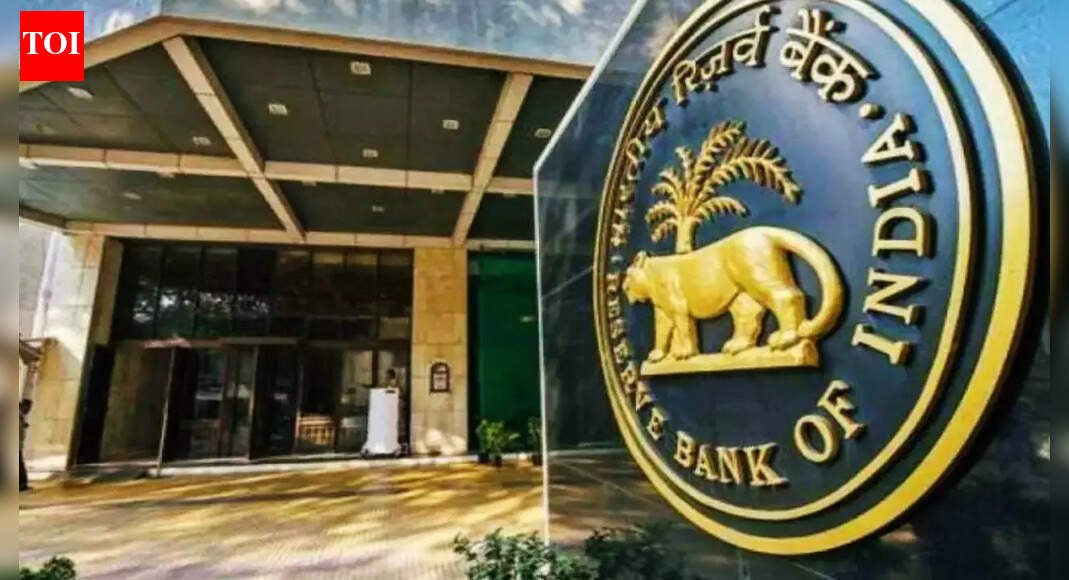
RBI monetary policy: The Reserve Bank of India (RBI) decided to cut the repo rate by 25 basis points to 5.25% in the December meeting of the Monetary Policy Committee (MPC). While most economists and experts had expected a 25 basis points cut after the October inflation came in at a record low of 0.25%, the recent better-than-expected GDP growth number of 8.2% for the second quarter had tapered these expectations.“The Monetary Policy Committee met on the 3rd, 4th and 5th of December to deliberate and decide on the policy repo rate. After a detailed assessment of the evolving macroeconomic conditions and the outlook, the MPC voted unanimously to reduce the policy repo rate by 25 basis points to 5.25 per cent with immediate effect. Consequently, the standing deposit facility rate under the liquidity adjustment facility shall stand adjusted to 5.00 per cent and the marginal standing facility rate and the Bank Rate to 5.50 per cent. The MPC also decided to continue with the neutral stance,” said RBI governor Sanjay Malhotra.

After India’s 8.2% GDP Jump, Piyush Goyal Credits Reforms And Predicts Strong, Sustained Expansion

Why did the RBI cut the repo rate despite strong GDP growth?

Inflation at a benign 2.2 per cent and growth at 8.0 per cent in H1:2025-26 present a rare goldilocks period, said RBI. The RBI governor noted that while inflation remains benign, and is expected to be within RBI’s comfort zone, the GDP growth may soften in the coming quarters. “Growth, while remaining resilient, is expected to soften somewhat,” said Sanjay Malhotra.Also Check | RBI MPC Meeting: Top Highlights“High-frequency indicators suggest that domestic economic activity is holding up in Q3, although there are some emerging signs of weakness in few leading indicators. External uncertainties continue to pose downside risks to the outlook, while speedy conclusion of various ongoing trade and investment negotiations present upside potential,” RBI cautioned.

  • The MPC noted that headline inflation has eased significantly and is likely to be softer than the earlier projections, primarily on account of the exceptionally benign food prices. Reflecting these favourable conditions, the projections for average headline inflation in 2025-26 and Q1:2026-27 have been further revised downwards.
  • Core inflation, which had been rising steadily since Q1:2024-25, eased at the margin in Q2:2025-26 and is expected to remain anchored in the period ahead.
  • Both headline and core inflation are expected to be at or below the 4 per cent target during the first half of 2026-27.
  • The underlying inflation pressures are even lower as the impact of increase in price of precious metals is about 50 basis points.

“Accordingly, the MPC unanimously voted to reduce the policy repo rate by 25 bps to 5.25 per cent. The MPC also decided to continue with the neutral stance,” Sanjay Malhotra said.However, despite the softening outlook, RBI has raised its GDP growth forecast for this financial year from 6.8% in the last policy meeting to 7.3% today. This is a revision of 50 basis points.RBI-led MPC is of the view that the growth-inflation balance, especially the benign inflation outlook on both headline and core, continues to provide the policy space to support the growth momentum.“Despite an unfavourable and challenging external environment, the Indian economy has shown remarkable resilience and is poised to register high growth. The headroom provided by the inflation outlook has allowed us to remain growth supportive. We will continue to meet the productive requirements of the economy in a proactive manner while ensuring macroeconomic stability,” Malhotra said.


Source link

‘Ordinary Indians are paying the price’: Rahul targets Centre over IndiGo crisis; calls it ‘cost of monopoly model’ | India News


‘Ordinary Indians are paying the price’: Rahul targets Centre over IndiGo crisis; calls it ‘cost of monopoly model’
Rahul targets Centre over IndiGo crisis

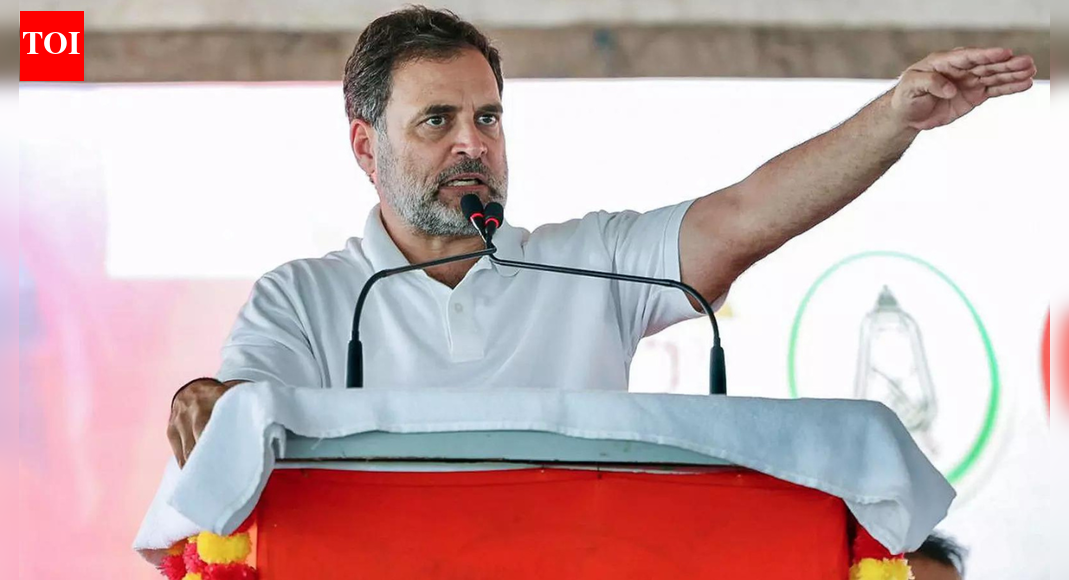
NEW DELHI: Leader of opposition Rahul Gandhi weighed in on the IndiGo disruption, stating that it is a consequence of the monopoly model promoted by the government, for which ordinary citizens are paying the price. He took to X to share a post emphasising the need for fair competition across all sectors rather than allowing monopolies to dominate.“IndiGo fiasco is the cost of this Govt’s monopoly model,” wrote Gandhi, “Once again, it’s ordinary Indians who pay the price – in delays, cancellations and helplessness. India deserves fair competition in every sector, not match-fixing monopolies.”

IndiGo Crisis: Inside Pilot Shortage, Rule Change and Winter Delays Behind Over 200 Cancellations

https://x.com/RahulGandhi/status/1996793416383160562?s=20IndiGo flights have triggered major disruptions at key airports across India. The airline is grappling with significant operational challenges, resulting in widespread flight cancellations, confusion among passengers, and considerable frustration as travellers are stranded, with many also losing their luggage.The flight disturbances have now escalated into a political issue, with the Opposition likely to raise the matter in Parliament.Earlier today, Shiv Sena (UBT) MP Priyanka Chaturvedi submitted a notice under Rule 180 in the Rajya Sabha, urging Civil Aviation Minister Ram Mohan Naidu to make a statement regarding the disruption of IndiGo’s operations, which has been causing severe inconvenience to passengers nationwide.In her notice, she stated, “The extensive disruption in IndiGo Airlines’ operations on Wednesday, which led to delays of up to seven hours and the cancellation of more than 70 flights across the country, including major hubs like Mumbai, Bengaluru, and Hyderabad, was due to a critical shortage of crew and other operational challenges. This situation caused substantial hardship for passengers, with several prominent domestic routes and international services, including the Mumbai-Maldives flight, severely impacted during peak hours.She added, “This issue is of urgent public importance, as thousands of passengers were stranded, normal airport operations were disrupted, and recurring large-scale disturbances in airline services underscore the need for immediate government intervention, accountability, and measures to prevent such incidents in the future. I request that the Minister provide a statement on this matter at the earliest opportunity.Meanwhile, IndiGo has requested temporary operational exemptions from certain Flight Duty Time Limitations (FDTL) for its A320 fleet until February 10, 2026, and assured that full operational stability will be restored by that date, according to a statement from the Directorate General of Civil Aviation (DGCA).


Source link

‘Blinded Pakistan air’s defences’: IAF recalls day 3 of 1971 war; shares rare images | India News


'Blinded Pakistan air's defences': IAF recalls day 3 of 1971 war; shares rare images

NEW DELHI: The Indian Air Force (IAF) on Thursday marked the historic air operations carried out on December 5, the third day of the 1971 war, underscoring how air power proved decisive in shaping the conflict’s outcome and paving the way for India’s victory and the creation of Bangladesh.In a post on X, the IAF recalled its strike on the Sakesar radar station, which crippled Pakistan’s key western air defences for two days.“On the third day of the 1971 war, the IAF was everywhere the enemy looked — and many places where they didn’t expect. Hunters tore through Drigh Road and Karachi, smashing storage hangars. Canberras kept up relentless pressure, delivering 1,44,000 lbs of ordnance across four major airfields,” the post said.The IAF added that 132 missions were flown on the western front, with An-12s and Canberras “raining devastation on enemy concentrations.” On the eastern front, with the Pakistan Air Force effectively grounded, 104 offensive sorties by the IAF cleared the way for the Indian Army’s rapid march into East Pakistan, ultimately leading to the birth of Bangladesh.It also recalled the legendary Battle of Longewala, fought from December 4 to 7, 1971, in Rajasthan’s Longewala sector, where heavily outnumbered Indian troops held their ground against a major Pakistani assault — a defence in which the IAF also played a crucial role.“Four Hunters rewrote history — shattering an enemy armoured thrust and leaving 27 tanks destroyed and 10 more damaged. Jaisalmer stood safe because air power arrived when it mattered,” the post highlighted.The 1971 India–Pakistan war began on December 3 with Pakistan launching pre-emptive strikes on Indian air bases amid the Bangladesh Liberation War in East Pakistan. The conflict ended on December 16 with Pakistan’s defeat, the surrender of 93,000 troops — the largest military capitulation since World War II — and the emergence of Bangladesh as an independent nation.


Source link

Vasai gas leak: VVMC forms inquiry committee after death of 59-year-old | Thane News


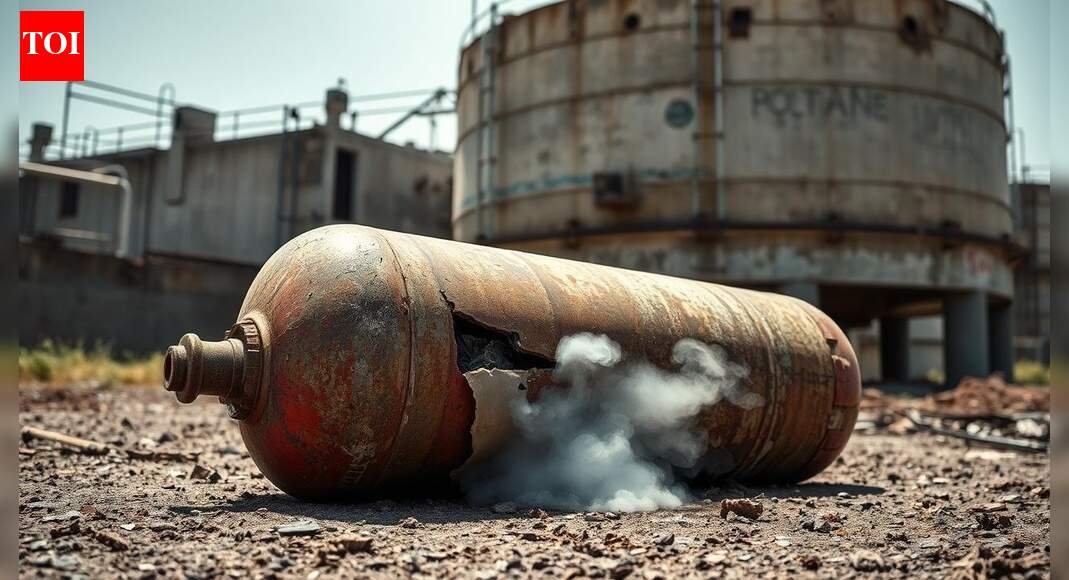
VASAI: The VVCMC has formed an inquiry committee to investigate the lapses in last week’s Chlorine Gas leak in Vasai west, which killed a 59-year-old man. This committee is headed by Dr. Dipak Sawant (Additional Municipal Commissioner), City Engineer Pradeep Pachange, Medical Officer of Health Bhakti Choudhary, one assistant municipal commissioner (AMC) and an industry expert. This team will investigate the entire episode of the chlorine gas leak and the presence of the chlorine gas cylinder. The vvcmc had confirmed that the November 25 gas leak occurred from a chlorine gas cylinder which was kept in the Diwanman (Vasai west) water tank premises since the Municipal Council days.Sources have confirmed that there is no data of this gas cylinder and other such cylinders in the vvcmc, which automatically became part of the vvcmc when it was formed in July 2009, after municipal councils and villages were merged to form a municipal corporation. The vvcmc has also confirmed that this accident occurred when 5 labourers and one valveman were repairing the outlet of the water tank, when this chlorine gas cylinder accidently got pushed and after falling its valve broke-off, leading to gas leak. 18, including 6 vvcmc staff, were admitted to various hospitals in Vasai after they complained of vomiting and dizziness, while one 59 year old Dev Pardiwala died allegedly due to the gas leak. Currently there is no FIR filed in this case. Cops at the Manikpur police station (vasai west) said that as of now we have filed an Accidental Death Report (ADR) regarding the death of the 59yr old person. He also confirmed that they have written to the vvcmc asking them details about this incident post which they will proceed with further investigations.Dr. Dipak Sawant did not respond to calls and messages.


Source link

ILT20: Nissanka, Omarzai star as Gulf Giants clinch dominant six-wicket win over MI Emirates | Cricket News


ILT20: Nissanka, Omarzai star as Gulf Giants clinch dominant six-wicket win over MI Emirates
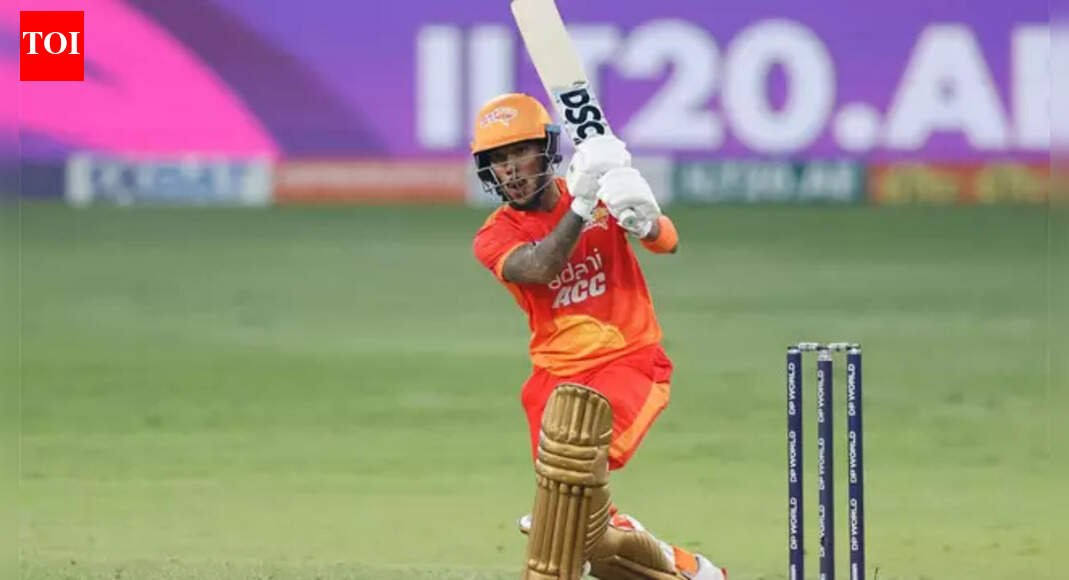
Pathum Nissanka (Pic credit: ILT20)

Gulf Giants defeated MI Emirates by six wickets in their opening match of ILT20 Season 4 at Dubai International Stadium, powered by Pathum Nissanka‘s explosive 81 runs off 42 balls and Azmatullah Omarzai‘s all-round performance, ending their six-match losing streak at the venue.Go Beyond The Boundary with our YouTube channel. SUBSCRIBE NOW!The Giants’ bowling attack effectively contained MI Emirates to 163/6 in 20 overs, with Omarzai and Nuwan Thushara each claiming two wickets. MI Emirates lost three early wickets during the powerplay.Kieron Pollard and Nicholas Pooran stabilised the MI Emirates innings with a 78-run partnership, with Pollard scoring 50 off 33 balls and Pooran contributing 46 off 39 balls.

JP Duminy Interview_ Opens up on the art of finishing, why Tim David is special, coaching in ILT20

Romario Shepherd’s quick 18 runs off 6 balls and Rashid Khan’s 6 runs off 1 ball provided a late boost to MI Emirates’ total.The Giants’ chase faced early challenges when Chris Woakes dismissed Rahmanullah Gurbaz and Gerhard Erasmus cheaply. However, Nissanka and Moeen Ali steadied the innings with a partnership that took the team to 67 runs.Nissanka reached his half-century in 30 balls, while Omarzai launched an aggressive attack against Rashid Khan, scoring 23 runs in a single over.The Giants successfully reached their target in 14.4 overs, with Omarzai remaining unbeaten on 39 off 16 balls. MI Emirates’ bowling struggled as four of their five bowlers conceded more than 10 runs per over.“It’s a great performance. The toss was huge. We bowled very well in the first 10 overs. They have three players who can take it away, and we held them back nicely, and then Nissanka and Omarzai were incredible. Nissanka is a brilliant player. He is one of the best in the world. He is very calm, doesn’t say much, but packs a punch. Omarzai gave us the momentum to finish the game by taking on Rashid Khan,” said stand-in captain Moeen Ali.“Losing three wickets in the powerplay, and having to rebuild, we were short in the first innings. The ball was moving around quite a bit in the first 10 overs, and we couldn’t finish it off as well as we wanted. We just need to be better in terms of execution,” said MI Emirates captain Kieron Pollard.The Giants’ early bowling success included Thushara dismissing Mohammed Waseem and Jonny Bairstow, while Omarzai removed Tom Banton in the third over.Nicholas Pooran and Tajinder Singh attempted to rebuild with a 27-run partnership before Moeen Ali dismissed Tajinder, leaving MI Emirates at 58/4 in 10 overs.Brief Scores

  • MI Emirates 163/6 in 20 overs (Kieron Pollard 50, Nicholas Pooran 46, Romario Shepherd 18 not out, Nuwan Thushara 2 for 41, Azmatullah Omarzai 2 for 32)
  • Gulf Giants 164/4 in 20 overs (Pathum Nissanka 81, Azmatullah Omarzai 39 not out, Moeen Ali 26, Chris Woakes 2 for 49, AM Ghazanfar 1 for 18)


Source link

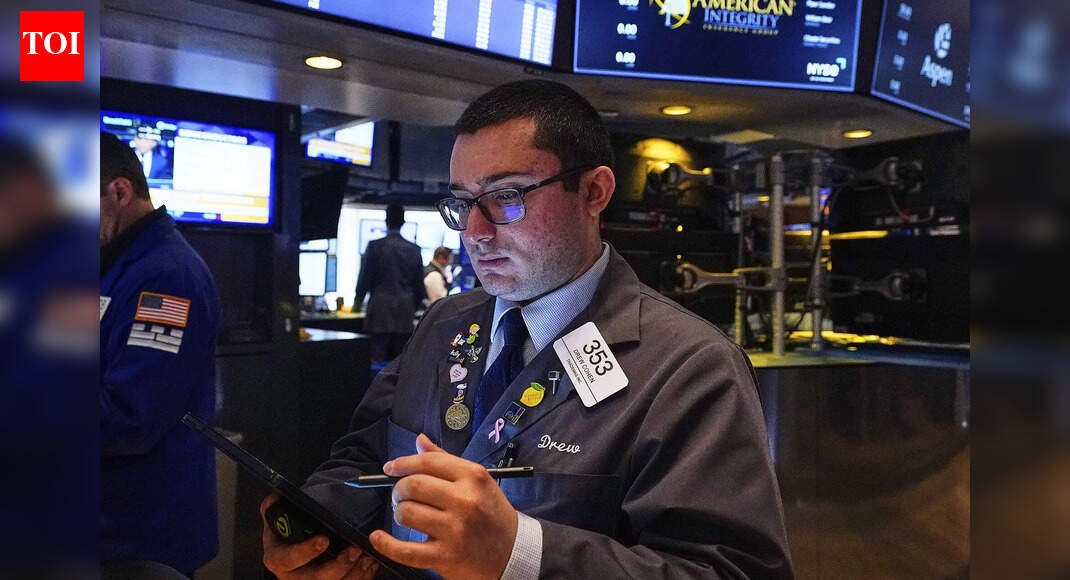
Asian stocks today: Markets trade mixed ahead of US economic data; Kospi nears 1% gains, Nikkei sheds 700 points


Asian stocks today: Markets trade mixed ahead of US economic data; Kospi nears 1% gains, Nikkei sheds 700 points

Asian stocks traded mixed on Friday, following a muted pattern on Wall Street as the latest US economic data left investors with little clarity about Federal Reserve’s plans for interest rate cuts nex week.Hong Kong’s HSI was down 63 points or 0.24% reaching 25,872. Nikkei also trimmed its gains, falling 702 points to trade at 50,326. Meanwhile, Shanghai and Shenzhen gained 0.08% and 0.39%, reaching 3,878 and 13,057 points, respectively. In South Korea, Kospi gained 0.99% gains at 9:50 AM IST, rising to 4,068 points. Recent market gains, lifted by comments from central bank officials signalling possible monetary easing, have stalled amid mixed economic signals. Payrolls firm ADP reported that over 30,000 jobs were lost in November, reinforcing signs that the US labour market is softening. Thursday’s figures on jobless claims and layoffs were slightly better than expected, yet markets remain highly confident of a rate cut at the Fed’s Wednesday meeting, with probabilities hovering around 90%. All eyes are now on the personal consumption expenditures (PCE) index, the Fed’s preferred inflation measure, due later on Friday. Analysts expect that a below-forecast reading could strengthen hopes for additional rate reductions in 2026. Data on income and consumer spending is also set for release. Wall Street ended the session on a muted note, with the S&P 500 and Nasdaq posting small gains, while the Dow slipped marginally.Back in Asia, the focus will be on RBI’s monetary policy announcement, whre the apex bank might announce a rate cut. According to a Bloomberg survey that included 44 economists, the interest rates might go down a quarter point to 5.25%.


Source link

Godfather of AI: Bill Gates and Elon Musk right about AI replacing humans, but they forget that …


Godfather of AI: Bill Gates and Elon Musk right about AI replacing humans, but they forget that ...

Godfather of AI Geoffrey Hinton is back with another prediction of AI. Hinton believes that AI will lead to massive unemployment. Recently, Nvidia CEO Jensen Huang said that AI will not lead to mass layoffs, but it will transform the nature of various jobs. On the other hand, Bill Gates feels that humans may soon not be needed “for most things,” while Elon Musk believes most people won’t have to work at all within 20 years. But Godfather of AI feels that all these predictions are overlooking one major reality that AI may cause economic upheaval which may lead to mass unemployment.

Geoffrey Hinton’s warning: Jobs at Risk

As reported by Fortune, speaking at the Georgetown University along with Bernie Sanders, Hinton said that the rise of AI could leave millions of workers behind. “It seems very likely to a large number of people that we will get massive unemployment caused by AI,” he said.

AI-Powered Future: Next Gen Careers You Should Watch

Hinton further noted that the tech giants are busy investing trillions in data centres and chips and are heavily betting on AI systems which can replace human labor at lower cost. Hinton has become increasingly vocal about what he sees as Big Tech’s misplaced priorities, arguing that the industry is driven more by short-term profits than scientific progress.

Economics of AI under scrutiny

The financial realities of AI are also becoming a cause of concern. ChatGPT creator OpenAI is not expected to turn a profit until at least 2030 and may need more than $207 billion to sustain growth, according to HSBC estimates.Godfather of AI, who left Google in 2023 in order to speak freely about the risks of AI. He warned that AI will lead to new job creation but it will not offset the scale of losses. “Trying to predict the future of it is going to be very difficult,” he said, likening the uncertainty to driving in fog.

Job and humanity at risk

Same has Bill Gates, Bernie Sanders also echoed the warnings from tech leaders including Tesla CEO Elon Musk and Anthropic CEO Dario Amodei that AI could displace millions of jobs. “If I’m a factory worker today, if I’m working in an office, how am I going to feed my family? How am I going to pay the rent? Who is talking about that?”Sanders also raised concerns about AI’s impact on human relationships, noting that teenagers increasingly rely on AI companions. “If kids today have AI as their best friends… what kind of change does that mean for humanity?”Sanders also warned about the cooperation between AI companies and the U.S. military could erode privacy. “How far away are we from a small number of people having access to the email that you’ve sent out, every phone call that you’ve been on, really every aspect of your life? We’re not far.”While Gates and Musk envision a future where humans are freed from work, Hinton insists the conversation must also address the social and economic consequences of mass displacement.


Source link

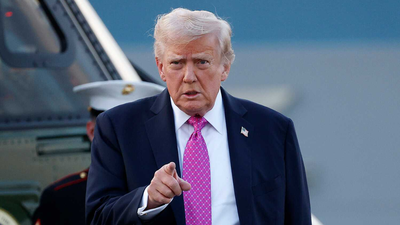
Kill Baby Kill: Trump rolls back US fuel economy standards calling it ‘green new scam’


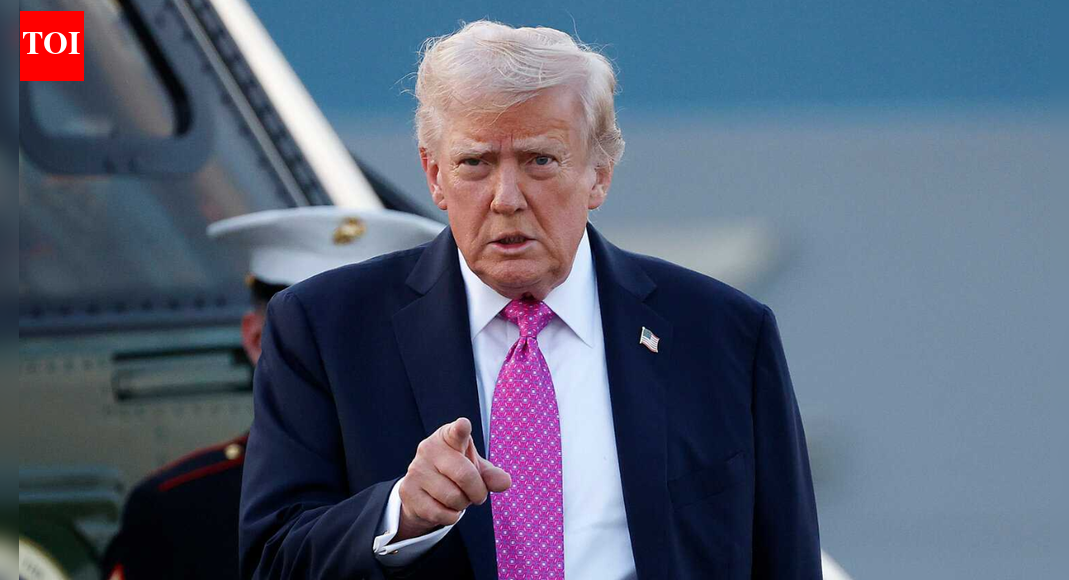
TOI Correspondent from Washington: In a move that deepens the environmental divide between the United States and much of the world—particularly fast-growing green economies such as China and India—US President Donald Trump on Wednesday announced a sweeping rollback of American fuel-economy standards. The decision, experts say, effectively shifts a significant portion of the global decarbonisation burden onto other nations at a time when developing countries are accelerating the transition to electric mobility and renewable energy.At a White House meeting flanked by the CEOs of Ford and Stellantis, Trump dismissed longstanding US climate commitments under the Obama and Biden administrations as a “green new scam” and slashed Corporate Average Fuel Economy (CAFE) targets from 50.4 miles per gallon (mpg) by 2031 to just 34.5 mpg—returning to levels last seen in 2022. The rollback builds on the earlier Safer Affordable Fuel-Efficient (SAFE) Vehicles Rule, which had already replaced Obama-era efficiency gains of roughly 5% annually with a lenient 1.5% requirement.

Heartburn For Trump As Modi-Putin Mega ‘Stunt’ Vexes US; India BOLDY ‘Defies’ US ‘Diktat’

Analysts warn the regulatory retreat locks the US into greater petroleum dependence throughout the next decade, ensuring American drivers consume billions of additional barrels of oil and emit hundreds of millions of tonnes of avoidable carbon dioxide. This stands in sharp contrast, they note, to rapid clean-energy transitions underway across Asia, where developing economies are outpacing the US in electric-vehicle production, adoption and renewable-energy deployment.Trump framed the rollback as a win for workers and consumers, calling previous standards “ridiculously burdensome” and costly. Backed by automakers that have lagged in the global EV race, the administration argued that stringent rules forced companies to integrate expensive technologies, raising sticker prices for new cars. By easing compliance, the White House said, automakers would be able to offer cheaper, newer and safer fuel-powered vehicles. The administration also cast older standards as part of what it claimed was an overzealous national push toward electric vehicles. “It’s a quest to end the gasoline-powered car,” Trump said, hailing the reversal as a repudiation of the “Green New Scam.”For China and India, the US decision is both a geopolitical setback and a source of frustration. Between them, the two countries—home to nearly a third of the global population—have made major strides in renewable expansion and electrified transport, often surpassing expectations under the Paris Agreement.China remains the world’s undisputed EV leader, whupping U.S in the field despite Elon Musk’s effort. It sold more than 11 million electric vehicles in 2024—a 40% surge—with 2025 projections showing EV sales poised to overtake internal combustion engines for the first time. The country added 510 gigawatts of renewable capacity in 2024 alone, while wind and solar generation climbed to 2,073 terawatt-hours as of mid-2025. China invested $625 billion in clean energy in 2024—31% of the global total—achieving its 2030 renewable targets six years early. India, on its part, is expanding renewables at an even faster clip than China. With annual clean-energy growth of 16%, New Delhi is on track to double renewable capacity to about 360–380 GW by 2030. It added 17 GW of solar capacity last year and is pushing toward a 500 GW non-fossil target. EV sales crossed two million units in 2024, largely driven by two-wheelers that are helping cut pollution in cities such as New Delhi, which again made international headlines this week for hazardous air quality.Globally, the US reversal is widely viewed as climate indulgence—prioritising short-term domestic cost savings over long-term planetary stability. Even within the US, several states criticised the move. Washington State Senator Maria Cantwell called it “short-sighted,” warning it would worsen pollution, undermine public health and stall job growth in clean-tech industries.Analysts say the rollback sends a clear geopolitical signal: by resisting domestic climate action, Washington is effectively shifting a disproportionate share of global emissions-reduction responsibility onto developing nations that are already bearing the brunt of climate-related disasters. For countries balancing economic growth with severe pollution challenges, the US stance is viewed as strategic abandonment by the world’s largest historical emitter—one that risks widening the global climate gap at a critical moment.


Source link

IPL 2026: 5 franchises that can target Jacob Duffy in the mini-auction


Jacob Duffy, the New Zealand fast-medium bowler, has registered his name in the INR 2 crore base price category for the IPL 2026 mini-auction. Duffy is in spectacular form, having recently achieved a maiden five-wicket haul (5/34) in his first Test match on home soil against the West Indies in Christchurch, putting New Zealand in a commanding position.

Duffy is known for his consistency, ability to swing the new ball, and exceptional wicket-taking skills, boasting a T20I average of 17.06  with 53 wickets. He is particularly effective in bowling the tough overs at the death in New Zealand’s domestic T20 competition. His proven quality makes him a prime target for teams needing a reliable overseas fast bowler. Duffy’s consistency, ability to swing the new ball, and demonstrated high-impact wicket-taking ability across formats make him a prime target for franchises seeking a reliable overseas fast bowler, willing to overlook his previous focus on red-ball cricket to acquire a player in such blistering form.

IPL 2026: 5 franchises that can target Jacob Duffy in the Indian Premier League mini-auction

1. Mumbai Indians (MI)

Mumbai Indians enter the auction with the smallest purse of ₹2.75 crore and only one crucial overseas slot to fill. This limited budget forces them to target a single, high-impact overseas player whose acquisition can be managed within their financial constraints. Given Duffy’s ₹2 crore base price, he is one of the few high-quality overseas players MI can realistically target and afford. His recent five-wicket haul demonstrates his class and ability to perform in high-stakes situations. He provides the new-ball threat and reliability MI needs to maximize their limited overseas budget, making him an immediate and high-value addition.

2. Chennai Super Kings (CSK)

Chennai Super Kings (CSK) hold the second-largest purse of ₹43.40 crore and have four overseas slots to fill. After releasing several pacers, including Matheesha Pathirana, CSK is in critical need of overseas fast bowling reinforcements. While they value death-overs specialists, Duffy offers the valuable alternative of consistent control and swing in the powerplay. CSK values players who perform reliably in high-pressure matches, and Duffy’s recent Test fifer reinforces his big-match temperament. Their massive budget allows them to bid aggressively for Duffy to easily secure a reliable pace option to balance their reconstructed bowling attack.

3. Rajasthan Royals (RR)

Rajasthan Royals (RR) have a purse of ₹16.05 crore and need to fill nine slots, including one crucial overseas slot. RR released several key players and needs a dependable overseas fast bowler who can partner their retained Indian pacers. Duffy, with his right-arm fast-medium pace, provides the perfect combination of swing and control. His consistent wicket-taking ability and, more recently, his stellar performance in Test cricket make him an attractive option for a team looking for a specialist overseas bowler to bolster their core bowling unit, allowing their all-rounders to focus on their primary roles.

Also READ: IPL 2026: 5 franchises that can target Anrich Nortje in the mini-auction

4. Royal Challengers Bengaluru (RCB)

RCB has a purse of ₹16.40 crore and two overseas slots left to fill. Having released pacers like Lungi Ngidi, RCB needs a quality overseas pacer to back up their retained fast bowler, Josh Hazlewood. Duffy is an excellent candidate who offers a different style of right-arm fast-medium bowling that can thrive on Indian pitches. His reputation as a reliable new-ball bowler and his recent red-ball heroics indicate he is in peak form. His reasonable base price means RCB can secure him without committing a massive portion of their budget, keeping funds available for their priority targets (like Renuka Singh Thakur via RTM or an overseas all-rounder).

5. Delhi Capitals (DC)

Delhi Capitals (DC) have a solid purse of ₹21.80 crore and five overseas slots to fill. DC’s bowling attack has often lacked a high-quality overseas pacer who can deliver consistently without being overly expensive. Duffy provides a strong, proven overseas option to balance their pace attack. His ability to take wickets and maintain a good economy rate would offer vital support to their retained Indian bowlers. DC will see Duffy’s current form as a golden opportunity to acquire a high-ranking, specialist pacer for a base price of ₹2 crore, adding much-needed depth and quality to their fast-bowling unit.

Also READ: IPL 2026: 5 teams that can target Shai Hope in the Indian Premier League auction


Source link

Stock market today: Nifty50 opens above 26,000; BSE Sensex flat


Stock market today: Nifty50 opens above 26,000; BSE Sensex flat
Market experts anticipate a period of sideways movement. (AI image)

Stock market today: Nifty50 and BSE Sensex, the Indian equity benchmark indices, opened flat in trade ahead of the RBI policy. While Nifty50 was above 26,000, BSE Sensex was around 85,250. At 9:18 AM, Nifty50 was trading at 26,037.90, up 4 points or 0.016%. BSE Sensex was at 85,243.19, down 22 points or 0.026%.Nifty managed a slight uptick on Thursday, breaking a four-day declining streak, though upside remained limited due to continued foreign investor outflows and the rupee touching historic lows. Experts anticipate a period of sideways movement.Dr. VK Vijayakumar, Chief Investment Strategist, Geojit Investments Limited says, “Today the market focus will be on the monetary policy. More important than the rate action, which is very tricky in the context of low inflation, high growth and depreciating rupee, the market will be keen to know what the governor says about the emerging macro trends. RBI’s action on the liquidity front will be keenly watched. If there is a rate cut, that will be the last cut in this rate cutting cycle. A rate cut in the present context will be negative for banks since it will impact their NIMs and ability to mobilise deposits. On the contrary, a rate cut will be positive for rate sensitives like autos and real estate. If there is no rate cut, banking stocks will rally.”“Rupee’s sharp recovery yesterday to 89.97 from the low of 90.42 is signalling some sort of stability in the currency market. The RBI governor’s views on the rupee today will significantly influence the near-term direction of the currency.”US stocks finished largely flat on Thursday as investors assessed labour market reports and additional economic indicators, whilst market sentiment remained buoyed by expectations of a Federal Reserve rate reduction next week.Regional Asian shares declined in early deals following an uninspiring US session that impacted technology shares and bonds, as attention shifted to upcoming US inflation figures on Friday.WTI oil prices approached weekly gains of nearly 2% during early Friday trading. The rise was supported by anticipated Federal Reserve interest rate reductions, heightening US-Venezuela tensions and halted peace negotiations in Moscow.Gold prices maintained stability on Friday, with increasing US Treasury yields counteracting benefits from a weakening dollar. Markets awaited US inflation data later in the day to understand the Federal Reserve’s policy direction before next week’s meeting.Foreign portfolio investors sold shares worth Rs 1,944 crore net on Thursday. Meanwhile, DIIs were net purchasers at Rs 3,661 crore.(Disclaimer: Recommendations and views on the stock market, other asset classes or personal finance management tips given by experts are their own. These opinions do not represent the views of The Times of India)


Source link