Breaking News
People living near mines showing lung damage | India News


People living near mines showing lung damage

NEW DELHI: Communities living around areas in India that witness mining operations are showing measurable signs of lung impairment and heavy-metal exposure, according to new data tabled in Lok Sabha.The health ministry, citing Indian Council of Medical Research studies, has confirmed that residents in mining belts face risks comparable to those for workers directly involved in extraction.A National Institute of Occupational Health study of 1,202 people living near coal mines found abnormal pulmonary function in 14.3% of miners, 10% of supervisory staff and 7.8% of residents. Chest X-rays showed interstitial lung fibrosis in 2.5% of miners, 2.3% of supervisors and 2.7% of residents. Mercury levels above the permissible exposure limit (<5.8 Mu/dl) were detected in 6.8% of miners and 8% of residents, indicating exposure well beyond workplace boundaries.“These patterns tell us that fine coal dust and silica are travelling far into homes, schools and community spaces,” said Dr Dhiren Gupta, paediatric pulmonologist and allergy specialist at Sir Ganga Ram Hospital. “When non-workers show lung abnormalities comparable to miners, it means even children and families are facing occupational-level exposure without protection.”In Bhilwara district, Rajasthan, children living near the Rampura Agucha mine had higher blood lead levels than control groups, though researchers did not detect toxicity or IQ decline. In Angul and Damanjodi in Odisha, an ICMR assessment found 2.35% and 2.04% respiratory impairment, respectively, among community members.Experts warn that such findings suggest deeper environmental lapses. “If residents show structural lung changes, it strongly indicates that dust suppression and emission control measures are nowhere near sufficient,” said Dr Pritpal Kaur, senior consultant, Pulmonology, Apollo Spectra Hospital, Delhi. She added that community-level exposure points to presence of fugitive dust, inadequate green buffers and outdated dust-control technology.Despite the red flags, mining companies told govt they already provided wide-ranging healthcare in affected areas. Coal India Limited runs 64 hospitals, 300 dispensaries and 18 mobile vans, while NLC India Ltd and Singareni Collieries conduct periodic screening through Occupational Health Centres.But public health specialists say these initiatives fall short of the long-term surveillance mining communities need. “Health camps and mobile units are episodic and basic,” said Dr Neetu Jain of PSRI Hospital. “Only structured programmes with regular screenings, specialist clinics and environmental audits can catch disease early and prevent irreversible damage.”The health ministry said it maintained coordination with the ministry of coal and district authorities to run national programmes relating to respiratory diseases, but experts believe the new data underscores the need for more rigorous monitoring and stronger environmental safeguards in India’s mining belts.


Source link

Mumbai: Civic body war blamed for Ghodbunder Road’s poor state | Mumbai News


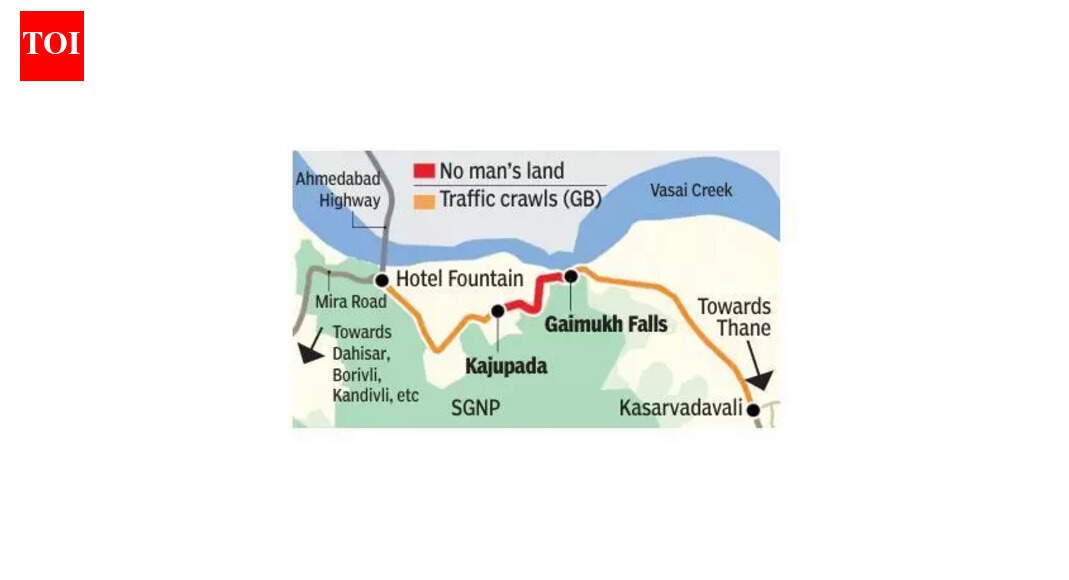
Mumbai: Trust Mumbai’s civic agencies to excel at one thing — passing the buck. And thanks to that, the Mumbai Metropolitan Region’s most critical Thane–Western Suburbs road link continues to crawl over a battered, pockmarked 9km stretch of Ghodbunder Road, with its worst 3km section slicing through the Sanjay Gandhi National Park (SGNP).For years, the Mira Bhayander Municipal Corporation (MBMC), Thane Municipal Corporation (TMC) and the state PWD have been locked in a bureaucratic tug-of-war over who exactly owns barely a kilometre of an arterial stretch on this 3 km stretch — a dispute that has left the road in shambles and forced lakhs of commuters to endure hour-long peak-time snarls, spewing unprecedented pollution over one of the city’s greenest zones.MBMC had initially refused to take up the contentious 1km patch between Kajupada Mahadev temple and Gaimukh Falls near J K Infraprojects Ltd — the summit point of the hilly SGNP section — while TMC has formally not responded yet to a fresh proposal asking it to maintain the piece.According to PWD officials, about 4.1km from Hotel Fountain on NH-48 to the Landmark Jeep Service Point near Kajupada falls under MBMC limits. From Kajupada to Gaimukh Falls — the disputed kilometre — is technically “no man’s land” as it was once private property while the road was carved through it, revealed an official. The next 4.1km up to Kasarvadavali flyover lies with the state PWD.A senior govt official said the 800m–1km hilltop segment between Kajupada and Gaimukh Falls originally needed forest clearance for concretisation. “Because this is the summit and heavy vehicle pressure is high, the surface deteriorates rapidly. Instead of fixing it, agencies were busy shoving responsibility onto each other for a year or two now,” a senior PWD engineer said, pointing out that getting forest clearance was another challenge for them.Divisional commissioner Vijay Suryavanshi has directed MBMC and TMC to split the disputed stretch equally and jointly maintain it, effectively removing the PWD from the equation. “I’m confident both corporations will do justice and resolve this permanently, not just by re-carpeting but by widening the stretch,” he said. Meanwhile, a PWD engineer said TMC has, though verbally agreed to take up the second half towards Thane, there are no formal confirmation letters for the same.Motorist Swarup Prabhune said the indifference was predictable since MBMC and TMC each owned 4.1km while the middle kilometre was nobody’s responsibility. “Now, after motorists filed repeated complaints and with local elections nearing, officials have suddenly woken up. They want both the civic corporations to handle half the stretch. Hopefully, this translates into real relief while we wait endlessly for the Thane–Borivli tunnel,” he said, adding that thousands of litres of fuel are wasted daily in the crawl.


Source link

Reverse kidney damage: A breakthrough treatment that may transform kidney treatment |


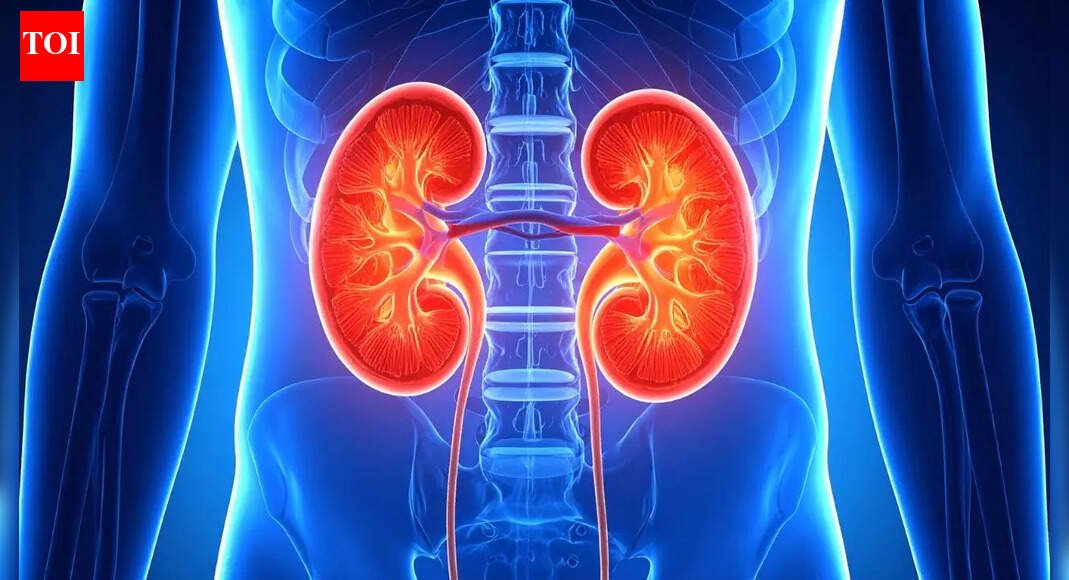
Kidney disease has long been considered a progressive and irreversible condition, where treatment focuses only on slowing decline rather than restoring lost function. However, a promising scientific discovery challenges that belief. Researchers have identified a potential way to reverse kidney damage by blocking the activity of ceramides, a type of fat molecule linked to cellular injury inside the kidney. In animal trials, targeting ceramides protected kidney cells from damage entirely and allowed renal function to return to normal. If future studies confirm similar results in humans, this breakthrough could transform how kidney disease is treated and provide new hope for millions of patients worldwide. Take a look…A peer-reviewed study published in JCI Insight investigated the role of ceramides in acute kidney injury. The researchers demonstrated that suppressing ceramide production in mice preserved mitochondrial function in kidney cells and prevented injury. They reported significantly improved kidney structure and function in treated animals.

How the potential to reverse kidney damage could change future treatment

The role of ceramides in kidney injury

Ceramides are lipid molecules that rise sharply in kidney tissue when the organs are under stress. High ceramide levels interfere with mitochondrial function inside kidney cells. Mitochondria provide the energy cells need to survive and recover, so once they fail, cells begin to die. This leads to inflammation, scarring and long-term loss of kidney function. Researchers believe that stopping ceramide accumulation may prevent early injury from becoming permanent damage.

Protecting kidney cells by reducing ceramides

In the recent animal study, scientists treated mice with a compound that reduced ceramide production before inducing acute kidney injury. The treated mice maintained healthy mitochondrial function and experienced no significant loss of kidney performance. In contrast, untreated mice developed severe damage typical of acute kidney injury. This suggests that kidney cells may be able to recover if they are protected at the cellular level.

Why this matters for patient care

If treatments based on ceramide control can be proven safe and effective in humans, the implications are significant. Instead of waiting for damage to accumulate and eventually relying on dialysis or transplantation, patients may one day receive targeted therapy to restore healthy kidney function shortly after injury. This could dramatically change clinical outcomes for individuals affected by sudden kidney failure caused by infection, surgery complications or medication side effects.

What reversing kidney damage could mean for patients

  • Hope for recovery after acute kidney injury rather than long-term decline
  • Less progression to chronic kidney disease and fewer cases of end-stage kidney failure
  • Reduced need for dialysis or kidney transplantation
  • Improved quality of life and reduced healthcare burden
  • Earlier intervention guided by future biomarkers, like urinary ceramide levels

Why caution and further research are essential

Although results are promising, research is still in early stages. The treatment has only been tested in mice, and human kidneys may respond differently. The studies also examined injury prevention rather than full reversal of long-standing kidney damage. Clinical trials will need to confirm safety, dosage, and effectiveness in humans, and it remains unclear how well this method might work for chronic kidney disease with established scarring.

What scientists plan to explore next

Research groups are now preparing to test ceramide-targeting drugs in human cell models and, later, early-stage clinical trials. Scientists are also exploring whether combining metabolic therapies, cell regeneration strategies, and anti-fibrosis treatments could enhance kidney repair even further. Another focus is the development of early detection tools, so patients receive support before irreversible scarring forms.The discovery that kidney function can be restored in animal studies challenges one of the longest-held assumptions in nephrology. If researchers succeed in translating these findings to human treatment, the future of kidney care may shift from slowing damage to restoring health. Though there is a long road ahead, the progress already achieved marks an important step toward a future where kidney damage does not have to be permanent.Disclaimer: This content is intended purely for informational use and is not a substitute for professional medical, nutritional or scientific advice. Always seek support from certified professionals for personalised recommendations.Also read| Your poop is more valuable than you think: Why stool donors are in demand and how it can save lives


Source link

File ping-pong triggers Omar-LG spat over J&K civil services exam | India News


File ping-pong triggers Omar-LG spat over J&K civil services exam

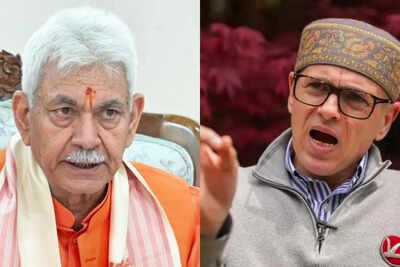
LG Sinha and CM Abdullah (File photo)

SRINAGAR: A political face-off erupted Saturday over age relaxation for J&K’s civil services exam, with chief minister Omar Abdullah accusing LG Manoj Sinha of stalling a crucial file and the latter’s office firing back that “misleading” claims are being spread as the Dec 7 test looms.Abdullah said that uncertainty has gripped aspirants because of “Lok Bhavan’s delay in approving age relaxation, a provision granted multiple times in the past”, and urged J&K Public Service Commission (JKPSC) to postpone the combined competitive (preliminary) exam. He also cited travel chaos caused by ongoing airline disruptions.The row comes amid student protests seeking an increase in the age limit. J&K currently caps the age at 32 for open-category candidates and 37 for reserved categories. Aspirants said other states such as Uttarakhand and Haryana allow candidates up to 42 years, while UP, MP and Rajasthan set the limit at 40.With five days left for the exam, thousands of candidates remain caught between a stalled decision and the risk of missing what many call a once-in-a-year chance.The LG’s office said it received the age relaxation file on Dec 2 and returned it the same day with a query on whether it was “logistically possible” to alter eligibility criteria so close to the exam. “Despite lapse of four days Lok Bhavan did not receive any response. I fully sympathise with young aspirants,” the statement said, adding that social media posts on the issue were “misleading”.The LG’s office also underlined that JKPSC had published the exam advertisement on Aug 22 and notified Dec 7 as the exam date on Oct 6.NC spokesperson Tanvir Sadiq had earlier claimed the CM had already approved the age relaxation proposal and forwarded it to the LG on Dec 2. After the LG’s statement, Sadiq said there was “absolutely no reason for any further queries” if the file had already been cleared by the CM.Parties trained fire on both sides. “JKAS age relaxation issue is turning out yet another classical case of passing the buck at the cost of young aspirants,” Peoples Conference chief Sajad Lone said. Congress urged both LG and CM to resolve the standoff without further delay, while PDP president Mehbooba Mufti called it “passing of responsibility”.


Source link

WBBL|11: Beth Mooney steers Perth Scorchers into the play-offs with emphatic win over Brisbane Heat


Beth Mooney once again demonstrated why she remains one of the elite performers in women’s T20 cricket, crafting a sublime 94* off 61 balls to propel Perth Scorchers to a commanding seven-wicket victory over Brisbane Heat and seal a place in the WBBL|11 playoffs.

Beth Mooney dominates Perth Scorchers’ chase with class and control

Chasing 165, Mooney anchored the innings with signature calmness and precision, taking the Scorchers home with four balls to spare at the WACA on Saturday, December 6.

The triumph not only strengthens Perth’s position in the finals race but also eliminates any lingering hope for the Heat, who finish the season without a single win.

Opening the innings, Mooney was in complete command from ball one, striking 12 fours in a fluent knock that showcased her ability to shift gears effortlessly. Her innings was a blend of touch and timing, ensuring the Scorchers never lost grip on the required rate while also shielding her inexperienced middle order from scoreboard pressure.

Mooney built three crucial partnerships throughout the chase:

  • 42 for the first wicket with Katie Mack (10 off 13), laying the platform
  • 67 for the second wicket with Maddy Darke (24 off 22), stabilising after early innings movement
  • 37 for the third wicket with skipper Sophie Devine (13 off 14), pushing the chase into the death overs

England all-rounder Freya Kemp provided a late flourish, staying unbeaten on 12 off 6 balls, as the Scorchers crossed the line with a confident finish.

Mooney’s unbeaten 94 – one of her finest innings in orange – puts her firmly in the conversation for the WBBL|11 Player of the Tournament, especially given her consistency at the top of the order.

Georgia Redmayne leads Brisbane Heat’s effort, but winless season ends bitterly

Earlier, Brisbane Heat posted 164/7, a competitive total built around Georgia Redmayne’s excellently paced 57 off 47 balls. Redmayne found pockets of momentum through the middle overs, but regular wickets prevented the Heat from accelerating into the 170-180 region needed to challenge a strong Scorchers top order.

Despite useful cameos, Heat’s inability to convert starts once again cost them dearly – a recurring theme in a campaign that ends without a win. Their bowling attack showed initial discipline but had no answers to Mooney’s measured assault.

Also READ: Georgia Voll’s brilliant all-round performance leads Sydney Thunder to a dominant victory over Melbourne Stars in the WBBL|11 clash

WBBL|11 finals scenario: Scorchers’ knockout path hinges on Sydney Sixers and Adelaide Strikers result

With the victory, the Scorchers have guaranteed a spot in the WBBL|11 knockout phase, but their exact route to the final will be determined by the result of Sydney Sixers versus Adelaide Strikers on Sunday.

If Sixers win:

  • Sixers finish 2nd
  • Scorchers drop to 3rd
  • Scorchers must win both the knockout and challenger to reach the final

If Sixers lose:

  • Scorchers secure 2nd place
  • They go straight into the Challenger, needing only one win to face Hobart Hurricanes in the 13 December final

Regardless of results elsewhere, Perth’s emphatic display has sent a strong message: with Beth Mooney in peak form and their batting unit clicking, the Scorchers are a major threat heading into the playoffs of WBBL|11.

Also READ: Fans react as Laura Wolvaardt’s century powers South Africa to commanding 105-run victory over Ireland in 1st T20I

This article was first published at WomenCricket.com, a Cricket Times company.


Source link

IND vs SA: ‘No right to interfere’ — After ODI series win, India head coach Gautam Gambhir fires back at IPL team owner for criticism over Tests loss | Cricket News


IND vs SA: 'No right to interfere' — After ODI series win, India head coach Gautam Gambhir fires back at IPL team owner for criticism over Tests loss
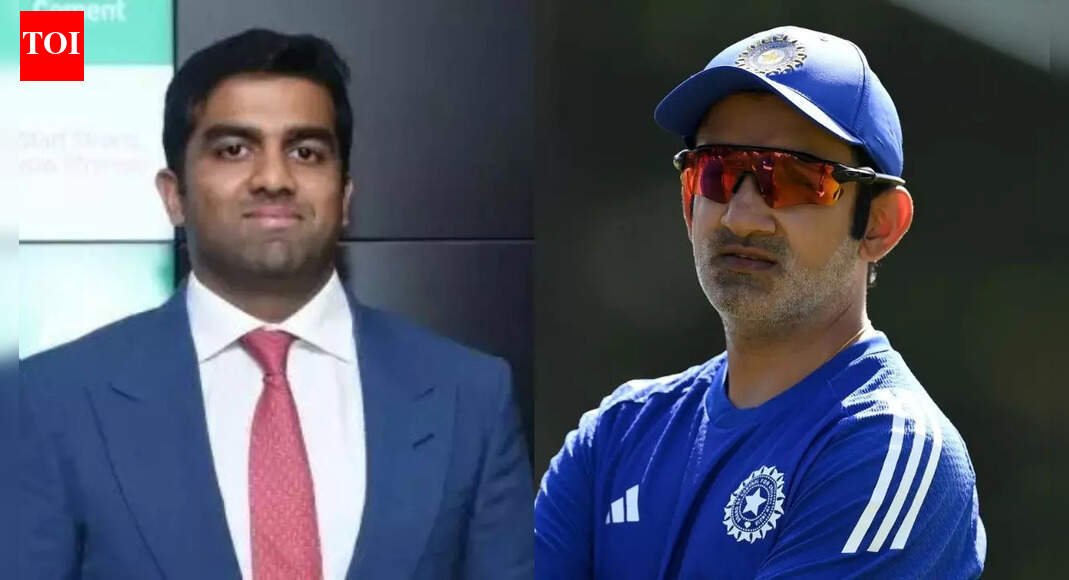
Parth Jindal, Gautam Gambhir

NEW DELHI: Indian men’s cricket team head coach Gautam Gambhir on Saturday used the post-match press conference after the third ODI win against South Africa to respond to the criticism that followed India’s 2-0 Test series defeat. Gambhir said the reaction to the Test losses ignored key details. He said: “There were so many things said and written after we lost the Test series against South Africa, but nobody spoke about the fact that in the first Test we played without our captain, who didn’t bat in either innings (Shubman Gill, who was out after playng three balls in the first innings due to neck injury) and we lost the match by just 30 runs. If you are going through a transition and lose your captain, who is also an in-form batter, it’s tough. No one talked about this.”

Saurabh Netravalkar Interview: Gets emotional about playing at Wankhede, for USA; ILT20 and more

Gambhir also responded to comments made by Delhi Capitals co-owner Parth Jindal, who had called for split coaching in Indian cricket after the Test series defeat. Gambhir said: “A lot was said. Even people who have nothing to do with cricket spoke up. An IPL owner also wrote about split captaincy.” He added: “Everyone should remain in their domain. If we don’t interfere in other’s domain, then they don’t have the right to interfere in our domain”.Jindal had criticised India’s Test performance after the 2-0 loss against South Africa. He posted on X: “Not even close, what a complete thrashing at home! Don’t remember seeing our test side being so weak at home!!! This is what happens when red ball specialists are not picked.” He also wrote: “This team is nowhere near reflective of the deep strength we possess in the red ball format. Time for India to move to a specialist red-ball coach for Test cricket.”India defeated South Africa in the third ODI and sealed the ODI series 2-1. In the match, India won the toss and elected to field first, sending South Africa in to bat. The Proteas posted 270 all out in 47.5 overs. While chasing 271, India’s batters put on an excellent show. Jaiswal remained unbeaten on 116, supported by Rohit’s 75 and Virat Kohli’s 65, guiding India to a comfortable nine-wicket victory and sealing the series 2-1.


Source link

India witnessing a ‘psychological renaissance’: PM Modi | India News


India witnessing a ‘psychological renaissance’: PM Modi

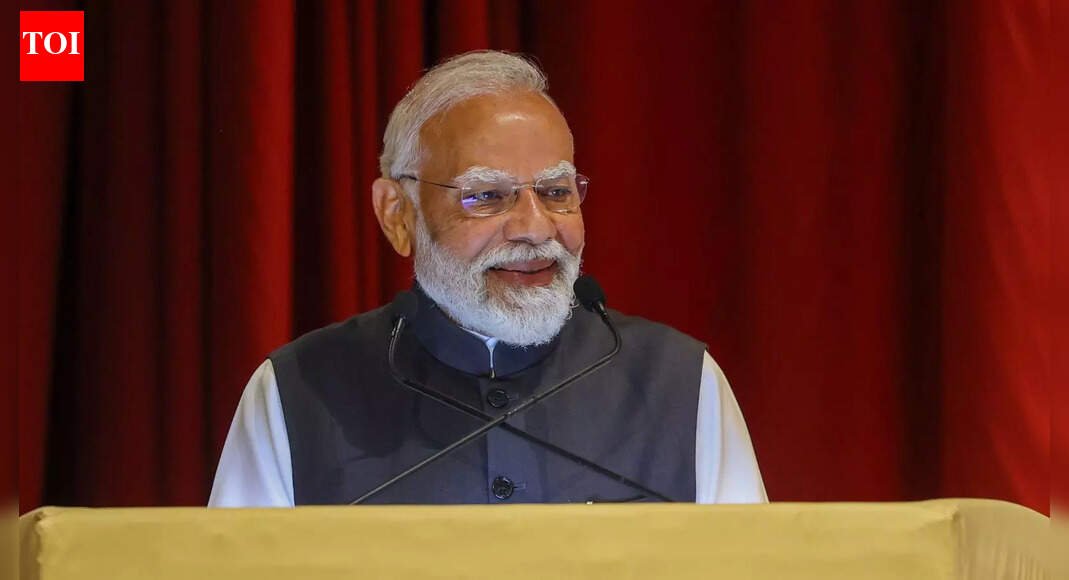
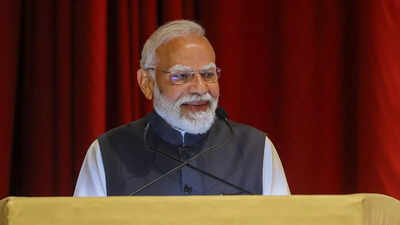
Prime Minister Narendra Modi

NEW DELHI: PM Narendra Modi Saturday said India was witnessing a “psychological renaissance” as it shook off the slavery mindset, which was reflected in its slow pace of development being termed as Hindu rate of growth, and asserted that the country was now the growth-driver of the global economy.The PM said India was being showered with plaudits like “global powerhouse” or “global growth engine” when it was the fastest growing major economy. But when it gr-ew at a rate between 2% and 3%, the term “Hindu rate of growth” was coined to describe its slow pace, he said.“Do you think the act of linking a country’s economic growth to the faith of its people and their identity was without any reason? No, it was reflective of the mindset of slavery,” he said at the HT Leadership Summit, adding no one was using the term when India clocked a high rate of gro-wth. GDP grew at a robust 8.2% in the second quarter.The so-called intellectuals saw no communalism in a phrase like “Hindu rate of growth” that made Hindu civilisation and culture synonymous with poverty and unproductivity, he said.The British mocked Indian tradition to strip people of self-confidence, Modi said, adding that his govt was working to restore the country’s prominence in a host of sectors. Modi said India was now in a different league at a time when the world was talking of a slowdown. India was scripting the chapter of growth and has become a pillar of trust amid “crisis of trust” in the world, he added. “India’s journey today is not merely about development. It is also about a change of mindset. It is also a journey of psychological renaissance,” the PM said.


Source link

Customs reforms next big thing on govt agenda: FM | India News


Customs reforms next big thing on govt agenda: FM

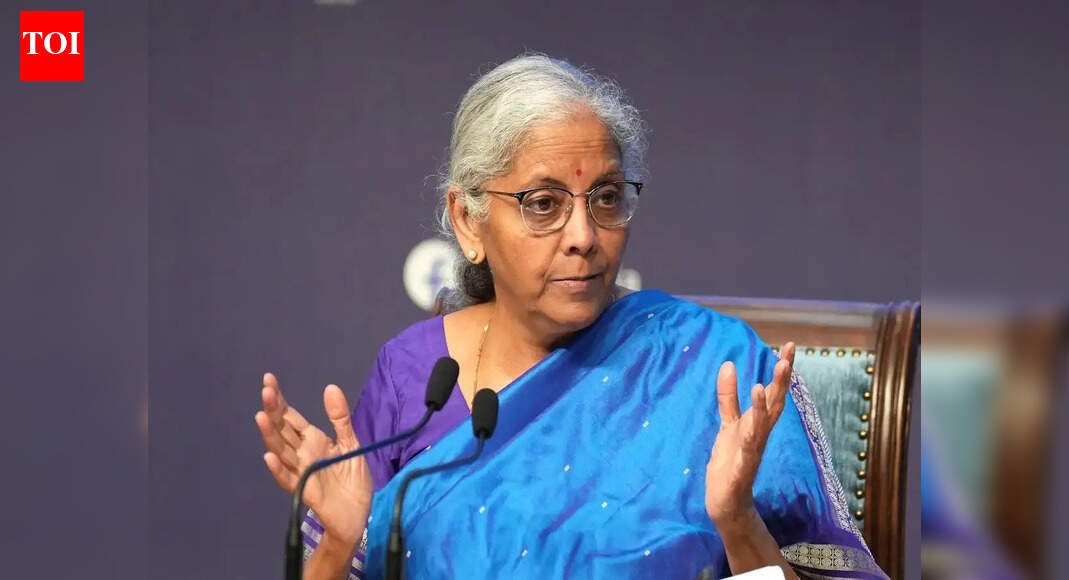
Finance Minister Nirmala Sitharaman

NEW DELHI: Govt will soon undertake “comprehensive” reforms of Customs to make it more transparent and ease compliance, Union finance minister Nirmala Sitharaman said Saturday.“There are quite a few things to do. There is the complete overhaul of the Customs area. We need to have a lot more simplified Customs department for people to feel that it is not tiresome and cumbersome for them to comply with the expectations in the rules, to make it more transparent,” Sitharaman said at an event here.The FM said govt had undertaken reforms of the Income Tax Act and ensured that income tax is no longer seen as a “tiresome exercise”. She said measures had been taken to ensure transparency, faceless assessment had been introduced and reforms in tax administration had been undertaken.“Now the same virtues have to be brought to Customs…” she said, adding that the aim was to introduce technology to scan and clear goods with minimal interference of officials and end “discretion”.“We are looking at it in that sort of way comprehensively… We have brought down Customs duties over the last two years steadily, but in those few items where we are still considered to be over the optimal rate, we will bring them down as well. So, Customs is my next big cleaning up assignment if I can say,” Sitharaman said when asked about the next “big bang” reforms that govt was planning to undertake.


Source link

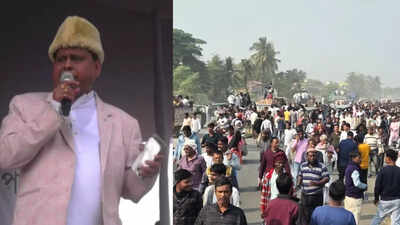
Suspended TMC MLA Humayun Kabir lays foundation stone for ‘Babri Masjid’ | Kolkata News


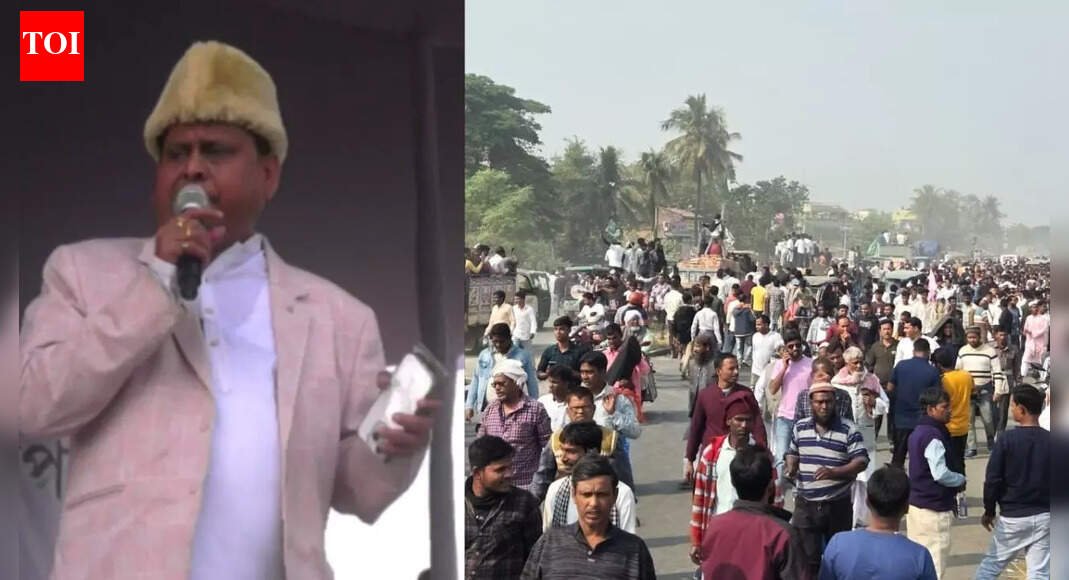
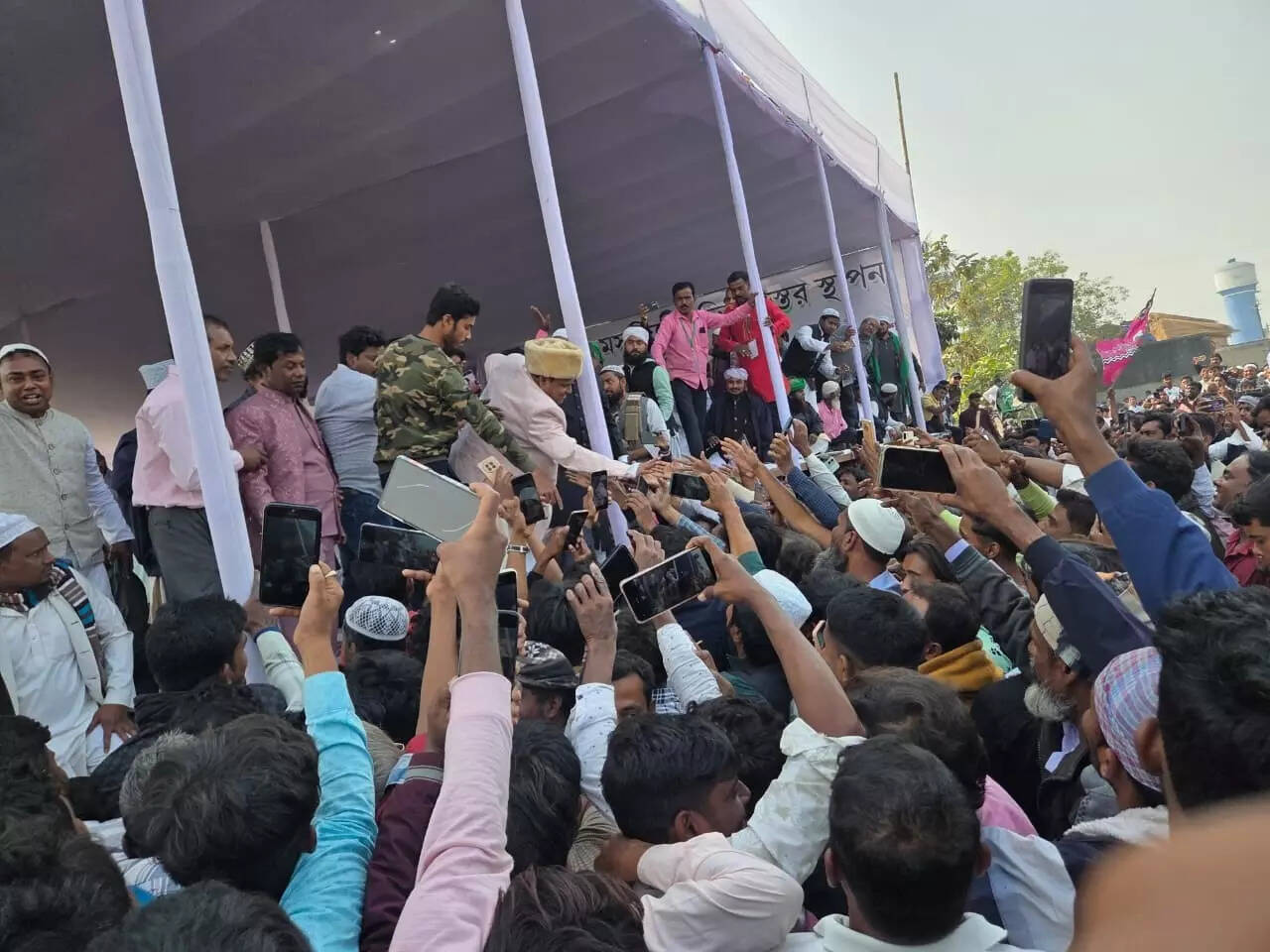
MURSHIDABAD: Suspended TMC MLA Humayun Kabir laid foundation stone for ”Babri Masjid-style” mosque in West Bengal”s Murshidabad on Saturday.Kabir cut a ceremonial ribbon alongside visiting clerics on the dais as slogans of “Nara-e-Takbeer, Allahu Akbar” were raised at the venue, where thousands had gathered since morning.

Murshidabad Tense as Humayun Kabir Faces Heat Over ‘Babri Masjid’ Foundation and Heavy Deployment

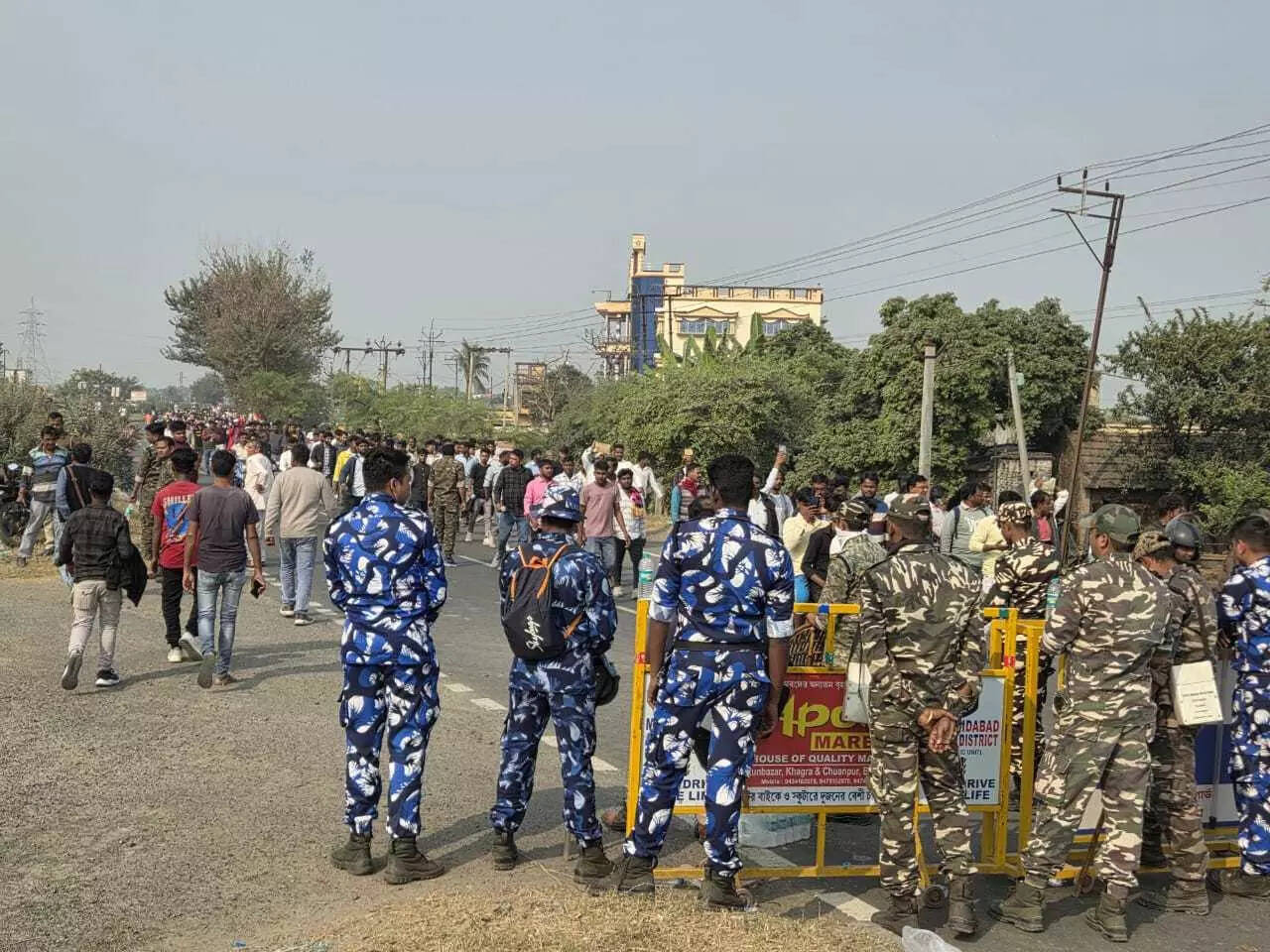
The foundation-laying ceremony took place under a heavy security blanket, with large contingents of police, RAF and central forces deployed across Rejinagar and the adjoining Beldanga area to maintain law and order.Conspiracies were hatchedKabir claimed that conspiracies were hatched to disrupt the foundation-laying ceremony but asserted that lakhs of people would foil such attempts.

-

Image Credit: TOI

Earlier in the day, Kabir said, “I will lay the foundation stone for the mosque at Beldanga. No force can stop it. We will go by the orders of the Calcutta high court,” Kabir told reporters before visiting the spot.He also alleged, “There are conspiracies to disrupt the programme by instigating violence. Lakhs of people from across south Bengal districts will foil such attempts. It will be a peaceful ceremony. We have every right to have a place of worship as per the Constitution. Over 2000 volunteers are on duty.”Also read: HC tells Bengal govt to pull out all stops ahead of ‘Babri’ eventNot only a mosque at Beldanga, but there will also be a hospital, an educational institution and a guest house for people of all communities visiting the place, he said.Kabir accused the TMC of “polarising the issue on religious lines that the BJP follows”.“They are hatching conspiracies,” he claimed.Massive build-up on ground Local residents and volunteers began assembling at the site early, with people like Safiqul Islam from Uttar Barasat transporting bricks as part of preparations for the proposed mosque.

-

Kabir claimed that close to 3 lakh people may gather across a 25-bigha area. He said religious leaders from multiple states had confirmed attendance and added, “Two qazis from Saudi Arabia will arrive in a special convoy from Kolkata airport in the morning.”Biryani for 40,000 people The sprawling venue off NH-12 has seen extensive arrangements. Seven catering groups have reportedly been hired to prepare shahi biryani for the crowd. About 40,000 food packets are being made for visitors and another 20,000 for locals, pushing the food bill beyond Rs 30 lakh. The event’s total expenditure is expected to reach Rs 60–70 lakh. A 150-ft by 80-ft dais, set up above the fields, will host nearly 400 guests and is expected to cost Rs 10 lakh alone. More than 3,000 volunteers—2,000 of them mobilised on Friday—will manage entry points, regulate traffic and oversee crowd dispersal. Kabir said the day’s proceedings would begin with Quran recitation at 10am, followed by the foundation ceremony at noon. “Formalities will start two hours earlier. By 4 pm, the ground will be cleared as per police directives,” he added.

Security concerns

Authorities, anticipating a massive turnout, have raised concerns about crowd management and uninterrupted traffic flow on NH-12. A senior police officer said their top priority is ensuring the highway remains operational. Additional forces have been sent to the district and multiple diversion routes are ready if required.Kabir insisted turnout would be high, remarking that “People will come because this is a historic moment for the area,” dismissing both political backlash and the heavy security bandobast.


Source link

‘SC ruling on wedding gifts a win for all Muslim women’ | India News


‘SC ruling on wedding gifts a win for all Muslim women’

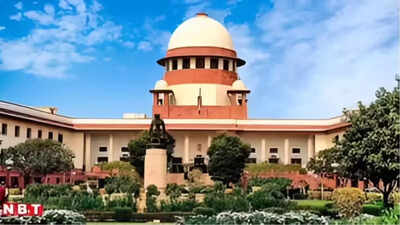
NEW DELHI: More than 20 years after her marriage, Rousanara Begum finally heard the words she had waited for when the Supreme Court recently ruled that a divorced Muslim woman can reclaim the wedding gifts her parents gave her at the time of marriage.Now nearly 45, she told TOI on Saturday: “It started two decades ago. I had to fight a lot for the victory.” For her, the SC’s decision is not just a legal victory. It is the closing of a wound she has carried since 2005. Rousanara was barely married when her marital life collapsed. According to her case records, she was married in 2005 but the relationship fell apart almost immediately.By late 2005, the first cracks had appeared. In 2008, after allegations of dowry harassment, mental cruelty, and being forced out of her marital home, she returned to her parents. The talaq eventually came in 2011. The gifts her father had given — 7 lakh rupees in cash and some gold that were part of her wedding — were never returned to her. “(Rs) Seven lakh is a lot of money for folks like us,” she said in broken Urdu.Unlike many families who fear the social judgement that comes with a daughter’s divorce, her parents stood rock-solid behind her. However, despite winning in the lower courts more than once, Rousanara’s fight ran into a wall at Calcutta HC, which in Jan 2024 reversed the earlier orders and denied her the right to reclaim the cash and gold her parents had given when she married. HC ruled in favour of the divorced husband, SK Salahuddin. This prompted Rousanara to move the SC.Through the years of litigation, Rousanara rebuilt her life even as she walked in and out of courtrooms. Today she works as a primary school teacher in a govt school, is remarried, and has two sons.For her lawyer, Syed Mehdi Imam, it is one of the most meaningful victories he has seen. “This was a grey area. Till today, no clear judgment existed on whether the money and gold given to a bride at marriage, but kept with the groom, must be returned after divorce,” he told TOI. “I urged the court: decide this once and for all.” Imam said there was hesitation in some quarters because the matter could have been misread as a religious flashpoint. “There could potentially have been pushback from some corners,” he said. “Some feared it could flare into a religious controversy since this issue had never been adjudicated before. It could have blown out of proportion as it was sensitive.” Then, finally on Dec 2, SC placed equality and dignity at the heart of its interpretation of the Muslim Women (Protection of Rights on Divorce) Act, observing that law must be read in light of the lived experiences of women, especially in rural and small-town India, where patriarchal discrimination remains embedded.Muslim bodies have welcomed the ruling. Maulana Raziul Islam Nadwi, national secretary of JIH and its Shari’ah Council, said, “Husband’s gifts to the wife, even if the marriage does not last, cannot be taken back under Islamic law. Women’s gifts have a different status. Shari’at gives the wife this right, unless she or her family willingly relinquishes it. There is no contradiction in the SC order.” When the verdict came, Imam typed three words to her during the court lunch break: “Won the matter.” That night, his phone rang. She was in tears. “I am very happy,” she said. “This win is for all Muslim women like me.” For many divorced Muslim women across India, this case from rural Bengal is a precedent: one that finally clarifies that what is given to a bride at marriage belongs to her alone.


Source link