Breaking News
Will Trump make Buddha ‘smile’ again? 27 years after Pokhran nuclear tests, India at critical point | India News


Will Trump make Buddha 'smile' again? 27 years after Pokhran nuclear tests, India at critical point

In an era where global powers are flexing their nuclear muscles and dormant arsenals hum with renewed urgency, India stands at a perilous crossroads: should it reignite the fire of nuclear testing to assert its strategic sovereignty, or maintain the delicate restraint that has balanced diplomacy and deterrence for decades? The shadow of India’s 1998 Pokhran-II tests still lingers, marked by geopolitical reverberations and economic sanctions. Yet today, with US President Donald Trump publicly accusing rival states like Pakistan and China of clandestine nuclear tests, India faces a high-stakes dilemma.

Putin, Modi Supercharge India’s Atomic Future With Big Reactor Push And Next-Gen Mini Reactors

India’s nuclear journey began with its first nuclear test, code-named ‘Smiling Buddha’, in 1974, which stunned the world with a bold demonstration of atomic capability. However, there was then a long gap of 24 years before India conducted its next round of tests, the definitive Pokhran-II in 1998.
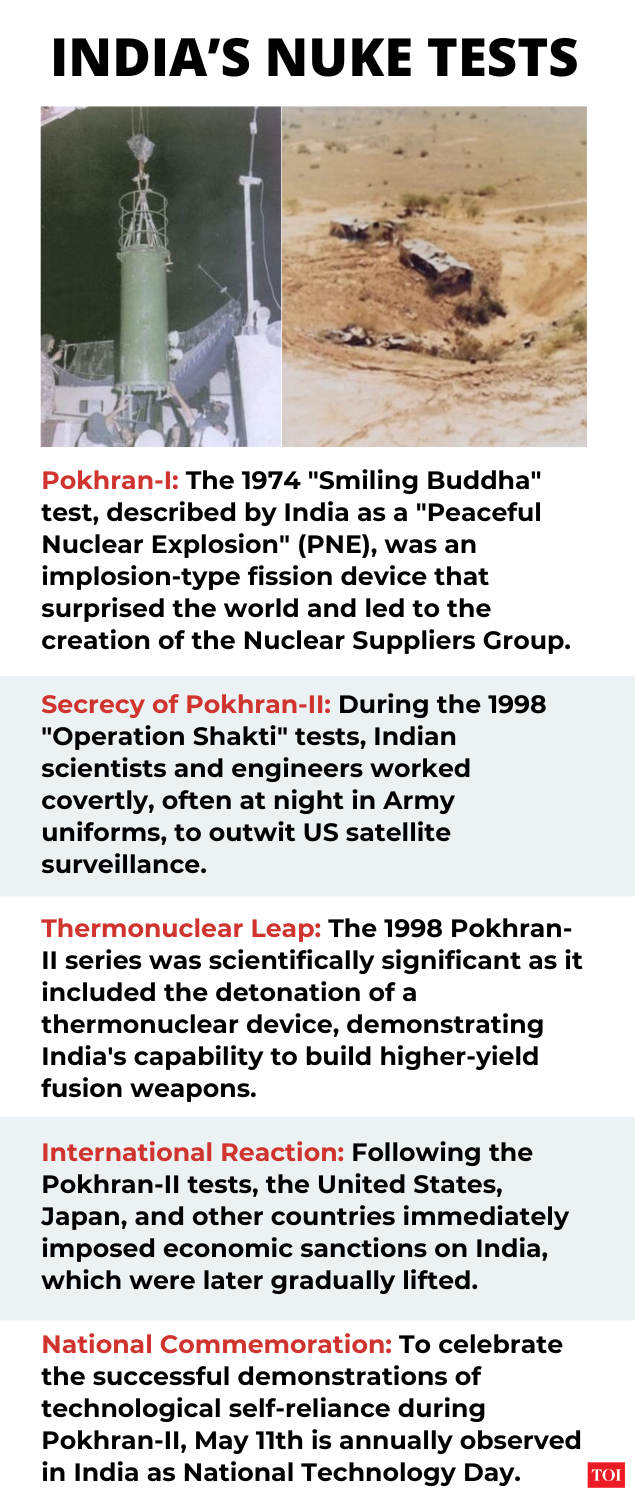
India's nuke tests

Now, 27 years after that landmark moment, the clock ticks again — prompting a crucial question: Is it time for India to conduct another series of nuclear tests to secure its place amid a shifting geopolitical order? The answer may shape not just India’s nuclear strategy, but the future stability of South Asia and its global standing.Daryl Kimball, executive director of the Arms Control Association in Washington, said that a resumption of US atomic tests would “open the door for states with less nuclear testing experience to conduct full-scale tests that could help them perfect smaller, lighter warhead designs”.Joseph Rodgers, fellow at the Washington-based Centre for Strategic and International Studies, said that states such as China or India stand to profit from a resumption of nuclear tests.“It makes more sense for them to test” than it does for the US or Russia, the two states that have conducted most atomic tests to date, Rodgers said.

Tump triggers debate

Ahead of his meeting with Chinese president Xi Jinping in South Korea on October 29–30, 2025, Trump posted on social media that, because other countries were conducting nuclear tests, he had instructed the US military to begin testing nuclear weapons again on “an equal basis” with those nations, and that this process would “commence immediately”.Trump’s comments were interpreted by many as a sign the US was preparing to restart full-scale nuclear blasts for the first time since 1992.

Tsar Bomba

In an interview with 60 Minutes on CBS, Trump reiterated his position. “I am saying that we’re going to test nuclear weapons like other countries do, yes,” Trump said when asked by if he planned for the US to detonate a nuclear weapon for the first time in more than 30 years.“Russia’s testing, and China’s testing, but they don’t talk about it,” he added. “I don’t want to be the only country that doesn’t test,” he said, adding North Korea and Pakistan to the list of nations allegedly testing their arsenals.

What he probably meant

Just days after Trump’s remark, US Energy Secretary Chris Wright clarified that America is not planning to conduct nuclear explosions.“These are not nuclear explosions,” Wright told Fox News on Sunday. “These are what we call sub-critical explosions.” But Wright, whose agency oversees testing, said people living in the Nevada desert should have “no worries” about seeing a mushroom cloud.“Americans near historic test sites such as the Nevada National Security Site have no cause for concern,” Wright said. “So we’re testing all the other parts of a nuclear weapon to make sure they deliver the appropriate geometry, and they set up the nuclear explosion.”

What are sub-critical nuclear tests

Sub-critical nuclear testing refers to experiments that involve nuclear materials like plutonium but use less than the amount necessary to start a chain reaction that would cause a nuclear explosion. No nuclear explosion occurs because the test does not achieve “criticality,” the point at which a self-sustaining nuclear reaction happens.These tests involve compressing or shocking small amounts of fissile material with high explosives to study how the material behaves under extreme conditions.Subcritical tests help scientists validate computer models and ensure the safety, security, and reliability of nuclear weapons without performing full nuclear detonations.They are usually done underground to contain any radioactive byproducts and prevent a nuclear blast.Countries like the US, Russia, and China use subcritical tests to maintain their nuclear stockpiles under international test bans like the CTBT.Thus, subcritical tests are a way to “test” the components of nuclear weapons at a small, safe scale without violating nuclear test bans or triggering nuclear explosions.

Can sub-critical nuke tests be detected

Sub-critical nuclear tests are generally very low-yield and do not produce a nuclear explosion, so they release minimal energy and radiation. Because of this, subcritical tests are often difficult or impossible to detect by international monitoring systems like the Comprehensive Nuclear-Test-Ban Treaty (CTBT) International Monitoring System (IMS).The IMS uses seismic, hydroacoustic, infrasound, and radionuclide stations to detect nuclear explosions worldwide. While it can detect all full-scale nuclear tests, the very low yield of subcritical tests—often below a threshold of about 1 kiloton equivalent—means they usually do not produce detectable seismic or atmospheric signatures. Radionuclide detectors also rely on gases released during an explosion, which do not occur in subcritical tests.Sub-critical tests are mostly not picked up by the IMS or satellite monitoring, making them effectively clandestine from the perspective of existing international nuclear test detection systems unless detected through other intelligence sources or on-site inspections after the CTBT enters into force.

What India’s next nuclear test could look like

If India were to conduct a nuclear test today, it would reflect significantly evolved scientific, strategic, and geopolitical conditions compared to the 1998 Pokhran-II tests. The characteristics of a modern Indian nuclear test would likely include:

  • Advanced Warhead Designs India’s nuclear program has progressed since 1998, including development of thermonuclear weapons and miniaturised warheads suitable for its ballistic missile arsenal like the Agni series. Tests today would likely focus on validating thermonuclear yield and sophisticated warhead designs to ensure reliability and accuracy.
  • Subcritical and Computer-Simulated Testing While explosive nuclear tests are possible, India might also incorporate subcritical tests — experiments that do not produce a self-sustaining chain reaction — and extensive computer simulations. These methods enhance warhead performance confidence without a full-scale test, but a full test could be opted for if strategic or political signals require it.
  • Test Site and Environmental Measures Like Pokhran in Rajasthan, the test would likely occur at a well-established test site with extensive monitoring and safety protocols. Satelite and seismic detection globally would instantly detect the test, making secrecy impossible.
  • International Fallout India would anticipate immediate diplomatic repercussions, including likely suspension of nuclear cooperation with the US under the 123 Agreement and possible sanctions.

What is the 123 Agreement

The 123 Agreement, formally called the India–United States Civil Nuclear Agreement, is a bilateral pact signed in 2008 that allows civil nuclear trade and cooperation between India and the United States. It was a landmark deal that ended decades of nuclear isolation for India, enabling it to engage in global nuclear commerce despite not being a signatory to the Nuclear Non-Proliferation Treaty (NPT). The agreement requires India to separate its civilian and military nuclear facilities, with civilian reactors subject to International Atomic Energy Agency (IAEA) safeguards while retaining control of its nuclear weapons program. The 123 Agreement facilitates technology transfer, fuel supply, and nuclear commerce, strengthening India’s civilian nuclear energy capabilities and strategic partnership with the US.

What happens if India tests nukes

Per Article 14 of the 123 Agreement, should India conduct a nuclear test explosion, the United States holds the right to immediately terminate all nuclear cooperation. This has significant ramifications for India’s civilian nuclear energy expansion plans and international standing. Past statements by US policymakers, including former US president Barack Obama, emphasized pushing for India’s eventual ratification of the Comprehensive Nuclear-Test-Ban Treaty (CTBT) as part of broader nonproliferation goals.

Are sub-critical tests covered under 123 Agreement?

The 123 Agreement between India and the United States does not explicitly mention subcritical nuclear testing. The agreement is primarily focused on prohibiting “nuclear explosive devices” testing and maintaining a moratorium on nuclear testing as a condition for continued civil nuclear cooperation.Subcritical tests, which do not involve a self-sustaining nuclear chain reaction or an actual nuclear explosion, typically fall outside the scope of what is conventionally defined as nuclear explosive testing. This nuance means subcritical tests are not explicitly banned under the 123 Agreement’s terms related to nuclear testing moratoriums.However, any full nuclear explosive test would constitute a breach, prompting the US to have the right to terminate cooperation and possibly impose sanctions.

World’s nuclear arsenal

At present there are 9 countries (Russia, US, China, France, UK, Pakistan, India, Israel and North Korea) that possess nuclear weapons. These countries have roughly 12,331 nuclear warheads, with over 9,600 in active military stockpiles, according to the Federation of Atomic Scientists’ 2025 Status of the Worlds Nuclear Forces. While this is a significant decline from the approximately 70,000 warheads owned by the nuclear-armed states during the Cold War, nuclear arsenals are expected to grow over the coming decade.Russia has the most confirmed nuclear weapons, with nearly 5,500 nuclear warheads. The US follows behind with 5,177 nuclear weapons. Total nuclear warheads owned by these 2 countries alone counts for nearly 90% of nuclear weapons in the world.Over 2,000 nuclear weapons tests have been carried out since 1945. The first nuclear device was detonated as a test by the United States at the Trinity site in New Mexico on July 16, 1945, with a yield approximately equivalent to 20 kilotons of TNT.The largest nuclear weapon ever tested was the Tsar Bomba of the Soviet Union at Novaya Zemlya on October 30, 1961, with the largest yield ever seen, an estimated 50–58 megatons.


Source link

‘Rs 500-crore suitcase for CM chair’: Sidhu’s wife claims pay-to-play in Punjab Congress; hints ex cricketer may switch parties | India News


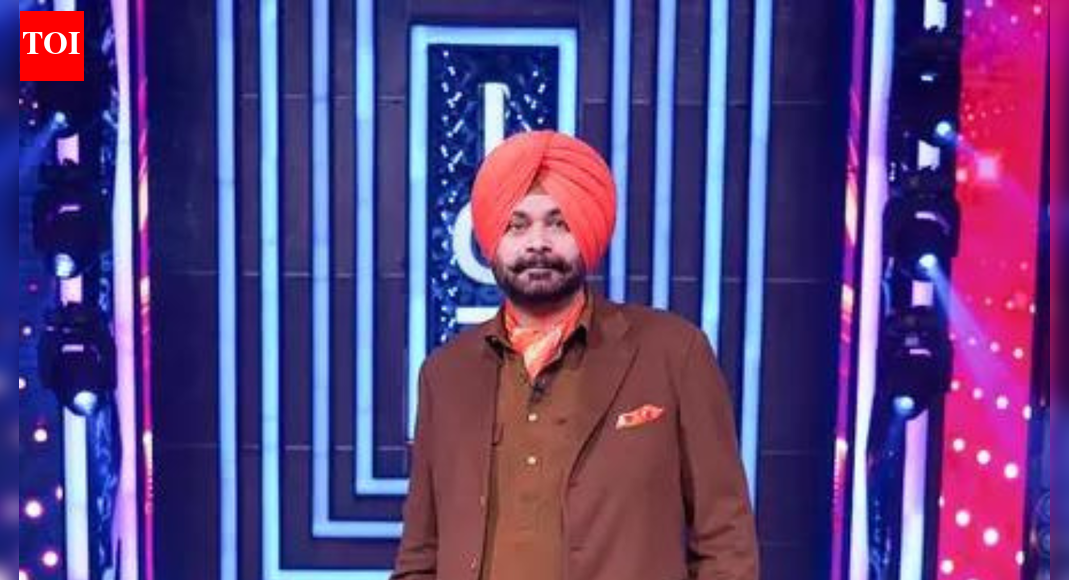
NEW DELHI: Navjot Singh Sidhu‘s wife, Navjot Kaur Sidhu, triggered a controversy after claiming that someone who wishes to become Congress‘ chief ministerial face in Punjab has to offer a suitcase of Rs 500 crore in the party.While talking to reporters on Saturday, Navjot said that she and her husband do not have such a large sum of money which they can give to sit in the chief minister’s chair.“We always speak for Punjab and Punjabiyat… but do not have Rs 500 crore which we can give to sit in the chief minister’s chair,” she said.When asked if anybody demanded money from them, she said nobody has demanded but “the one who gives a suitcase of Rs 500 crore, he becomes the CM.”She also hinted that the ex-cricketer may change party in future, saying, “If any party gives him that power so that he can improve Punjab. We do not have money to give it to any party but we will give results and we will turn Punjab into a golden state.”She further pointed towards “infighting” within Congress and claimed that there are five leaders aspiring for the chief minister’s position.“But with so much infighting, I do not feel that they will let Navjot Sidhu be promoted as there are already five CM faces and they are hell bent on defeating the Congress. If they (high command) understand this then it is a different matter,” she said.Former Punjab Congress chief Sidhu has not been participating in the party’s events and activities for the past many months. He did not campaign in the 2024 Lok Sabha polls also.Sidhu had made a comeback to cricket commentary in the Indian Premier League (IPL) 2024 season.In April, Sidhu launched his new YouTube channel ‘Navjot Sidhu Official’ for sharing his life experiences, talking about cricket, commentary, motivational talks, and lifestyle.At that time, when Sidhu was asked about returning to active politics, he had said time will tell, stating that he did politics for people’s welfare and it was never a business for him.Assembly polls are due in Punjab in 2027.


Source link

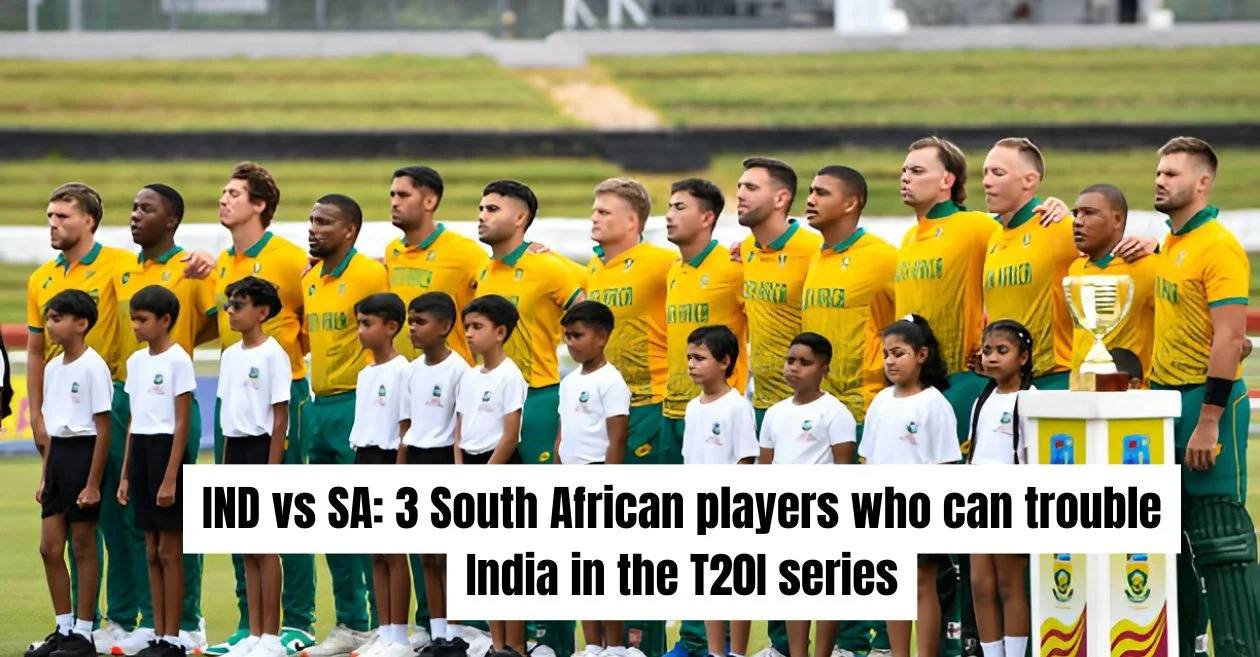
IND vs SA: 3 South African players who can trouble India in the T20I series


The final and most explosive leg of the South Africa Tour of India 2025 is set to begin. Following a hard-fought Test series and a gripping ODI contest, the two cricketing powerhouses now lock horns in a five-match T20 International series.

India vs South Africa T20I Series 2025

Beginning on Tuesday, December 9, in Cuttack, this series carries immense significance beyond the bilateral trophy. With the T20 World Cup 2026 on the horizon, this is a crucial opportunity for both teams to fine-tune their strategies, solidify their playing XIs, and test their bench strength under genuine pressure.

Led by the world’s top-ranked T20 batter, Suryakumar Yadav, the reigning T20 World Champions, India, look to leverage their dominant track record in the format at home. They receive a massive boost with the return of star players like vice-captain Shubman Gill and all-rounder Hardik Pandya, adding serious firepower to an already explosive line-up.

However, the Aiden Markram-led Proteas are a formidable T20 unit, often considered better suited to the shortest format than the others. With lethal pace from Anrich Nortje and devastating finishers like David Miller and Tristan Stubbs (as we discussed), South Africa possesses the ammunition to challenge India’s supremacy on their home turf. The series promises a high-octane battle of contrasting styles: India’s high-intent batting and spin wizardry versus South Africa’s express pace and unbridled middle-order hitting. As the teams traverse the country, the fight for T20 supremacy will be fierce and spectacular.

IND vs SA: 3 South African players who can trouble India in the T20I series

1. Dewald Brevis (Middle-Order Batter)

Dewald Brevis, or ‘Baby AB,’ is an explosive six-hitter whose T20I career has started with an astonishing T20I Strike Rate of 180.18, underpinned by a record-breaking century against Australia. His transfer to the Chennai Super Kings for Indian Premier League (IPL) 2025 provided him with invaluable experience in the heart of Indian conditions. He was highly successful in his six matches for CSK, scoring 225 runs at an average of 37.50 and a devastating Strike Rate of 180.00.

This success, featuring two half-centuries, proves he can handle the pressure and quality of the IPL, facing India’s top bowlers consistently. Brevis’s ability to play the reverse-sweep and switch-hit against spin, coupled with his power hitting against pace, makes him a highly unpredictable and dangerous prospect for the Indian bowling unit in this bilateral series.

Category Matches Runs Highest Score (HS) Batting Average Strike Rate 50s / 100s
T20I Career Stats 15 40 125* 30.77 180.18 1 / 1
IPL 2025 Stats 6 225 57 37.50 180.00 2 /0

Also READ: IND vs SA: Tony de Zorzi and Kwena Maphaka ruled of T20I series vs India; South Africa announce updated squad

2. Anrich Nortje (Fast Bowler)

Anrich Nortje is South Africa’s pace spearhead, and his sheer express pace remains his biggest weapon against any opposition. On Indian pitches, which are typically slow, his ability to rush the batters and hit awkward short-of-a-length areas is a significant advantage. Indian batters, who are accustomed to playing against pace on faster wickets, can sometimes struggle against raw, unforgiving speed on slightly slower surfaces.

Furthermore, Nortje has extensive experience playing in the IPL for the Delhi Capitals and Kolkata Knight Riders, giving him intimate knowledge of the venues and specific Indian batter tendencies. His skill in bowling rapid, pinpoint yorkers in the death overs, a phase where the Indian team is looking to maximize runs, makes him a tough proposition to score against, often leading to dot balls and subsequent wicket-taking opportunities.

Category Matches Wickets Best Bowling (BB) Bowling Average Economy Rate (ER) Strike Rate (SR)
T20I Career Stats 42 53 4/7 19.16 7.01 16.3
IPL 2025 Stats  2 1 1/23 83.00 11.16 42.00

3. Tristan Stubbs (Finisher/Middle-Order Batter)

Tristan Stubbs is one of the most exciting young finishers in world cricket, possessing immense power and a 360-degree range of shots. Like Klaasen, his biggest asset is his high strike rate, which he maintains even under pressure. Stubbs has played an instrumental role in many of his domestic and franchise T20 teams (including Delhi in the IPL 2025) due to his ability to launch from ball one, especially against spin.

His performance in the IPL 2025, where he made key contributions in high-pressure chases, highlights his growing maturity as a finisher. In the middle and late overs, where India will deploy their fast bowlers and all-rounders, Stubbs’s innovative strokeplay, like reverse sweeps and scoops, can completely demoralize the opposition. He represents the modern, fearless T20 batter capable of turning a decent total into a match-winning one in the final four overs.

Category Matches Runs Highest Score (HS) Batting Average Strike Rate 50s / 100s
T20I Career Stats 40 799 76 28.53 133.16 2 /0
IPL 2025 Stats  14 300 41* 50.00 150.75 0 /0

Also READ: Virat Kohli picks his favourite innings from the South Africa ODI series


Source link

How bhadralok Dharmendra had a strong Bengali connection |


How bhadralok Dharmendra had a strong Bengali connection

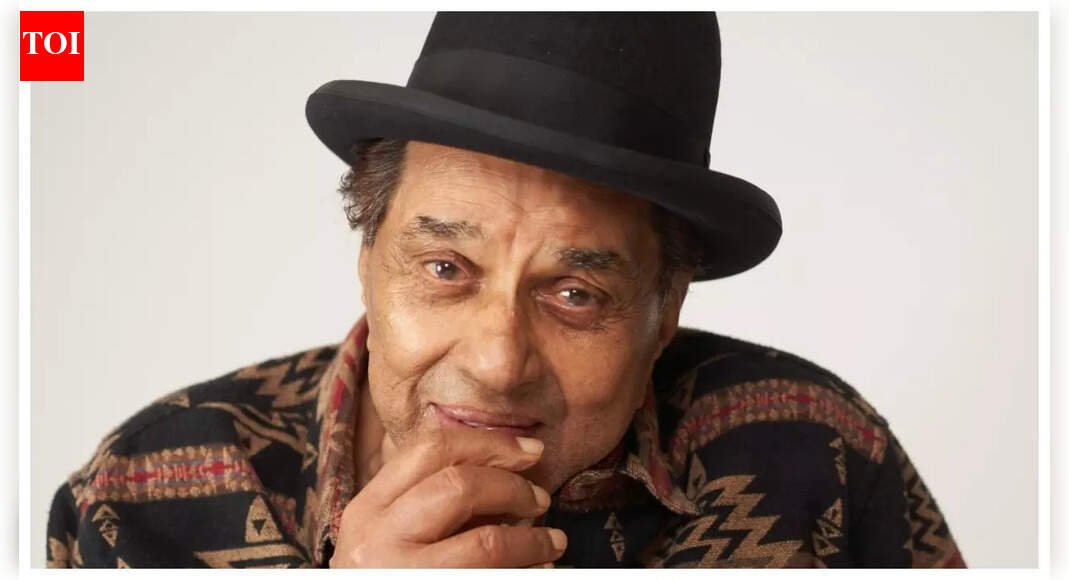
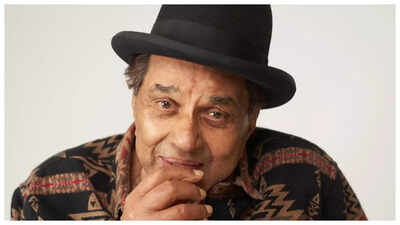
They called him the He-Man. Most of his major solo hits – ‘Phool Aur Patthar’ (to a lesser extent), ‘Ankhen’, ‘Mera Gaon Mera Desh’, ‘Jugnu’, ‘Pratigya’ – were breathless action yarns. These movies made Dharmendra a star of the masses. Audiences would stand in queues for hours to watch him snarl and scream, “Ek ek ko chun chun kar maroonga.” Dialogues like these became a template repeated over countless movies in a career that spanned nearly six and a half decades.It is, therefore, quite interesting that Bollywood’s action hero also played a range of genteel and refined characters, especially in the first two decades of his career. And one is not referring only to botany professor Parimal Tripathi in Hrishikesh Mukherjee’s ‘Chupke Chupke’ (1975), or, for that matter, the Sanskrit teacher who teaches Kalidas’ Abhigyan Shakuntalam in Basu Chatterjee’s ‘Dillagi’ (1978) — a rare film in which Dharmendra gets beaten up by the bad guys. Director Basu da once told this reporter that distributors were nervous at the film’s release because in the posters, Dharmendra held a rose, not a gun.

Dharmendra’s Ashes Immersed In Ganga At Haridwar!

There are many other films where Dharmendra didn’t play a cop or an outlaw. Instead, he played a poet, a writer, a trade unionist or a journalist. A majority of these films were directed by Bengali filmmakers.In 1966, Dharmendra played a struggling poet in Hrishikesh Mukherjee’s Anupama. At the time, the image of a celluloid poet was largely defined by Guru Dutt’s Vijay in ‘Pyaasa’ — hungry, unshaven and pessimistic. Dharmendra too described himself as one of “khoon, pasina aur aansoo” (blood, sweat and tears). But he looked the exact opposite. At one point, the script in ‘Anupama’ even provided an explanation for his well-nourished body. If you compare the picturization of “Jaane woh kaise log thhe jinko” (Pyaasa) with “Ya dil ki suno duniya walon” (‘Anupama’), there are distinct stylistic similarities. Both are filmed in an indoor mehfil. Guru Dutt is dressed in dhoti-kurta with a shawl, while Dharmendra wears kurta-pyjama with a shawl. Both songs are rendered by Hemant Kumar, and both create a similar mood.In Shahid Lateef’s ‘Baharen Phir Bhi Aayengi’ (1966), the Punjab da puttar played a conscientious journalist. This was originally a Guru Dutt project. After the maker of Pyaasa and Kaagaz Ke Phool passed away, many thought Dev Anand would step in — but it was Dharmendra who did. The film is largely forgotten now, though songs such as “Aap Ke Haseen Rukh Par” (singer: Mohd Rafi; music: O.P. Nayyar; lyrics: Anjaan) are appreciated to this day.Dharmendra’s tryst with literary characters continued in the Seventies. In Pramod Chakraborty’s ‘Naya Zamana’ (1971), he was a morally upright writer who believes that books can change the world. The poet in Devendra Goel’s ‘Ek Mahal Ho Sapnon Ka’ (1975) is unable to sell his work. When he finally does, it is at the cost of his identity — much like Vijay in ‘Pyaasa’.The audience was first introduced to a celluloid version of the bhadralok Dharmendra in Bimal Roy’s ‘Bandini’ (1964). His portrayal of the kind-hearted doctor earned Dharmendra notice as an actor of promise. Another Bengali director, Phani Majumdar, cast him as a trade union leader in ‘Akashdeep’ (1965). And he was a college professor in Asit Sen’s romantic drama, ‘Sharafat’ (1970).Interestingly, Bengali directors also cast him in mainstream masala films. For example, ‘Jugnu’ (1973) was directed by Pramod Chakraborty and ‘Pratigya’ (1975) by Dulal Guha.Few know that Dharmendra also wrote poetry. During an interview with TOI, he once recited a few lines from his poem “Main Kaun Hoon”: “Pyar, mohabbat, duayein aapki sejte hain jazbaat mere / Isi liye aaj bhi jawan hoon main / Khata agar ho jaye, baksh dena yaaron /Galtiyon ka putla aakhir ek insaan hoon main.” (“Your love, affection and prayers nurture my emotions / That’s why I’m still young / Please forgive me if I’ve ever erred / After all, I am only human.”)Dharmendra also played the male lead in ‘Dulhan Ek Raat Ki’ (1970), a romantic tragedy based on Victorian writer Thomas Hardy’s evocative novel, ‘Tess of the D’Urbervilles’.


Source link

‘Ro de, ro de!’: Virat Kohli teases Kuldeep Yadav as spinner wins Impact Player of the Series — Watch | Cricket News


'Ro de, ro de!': Virat Kohli teases Kuldeep Yadav as spinner wins Impact Player of the Series — Watch
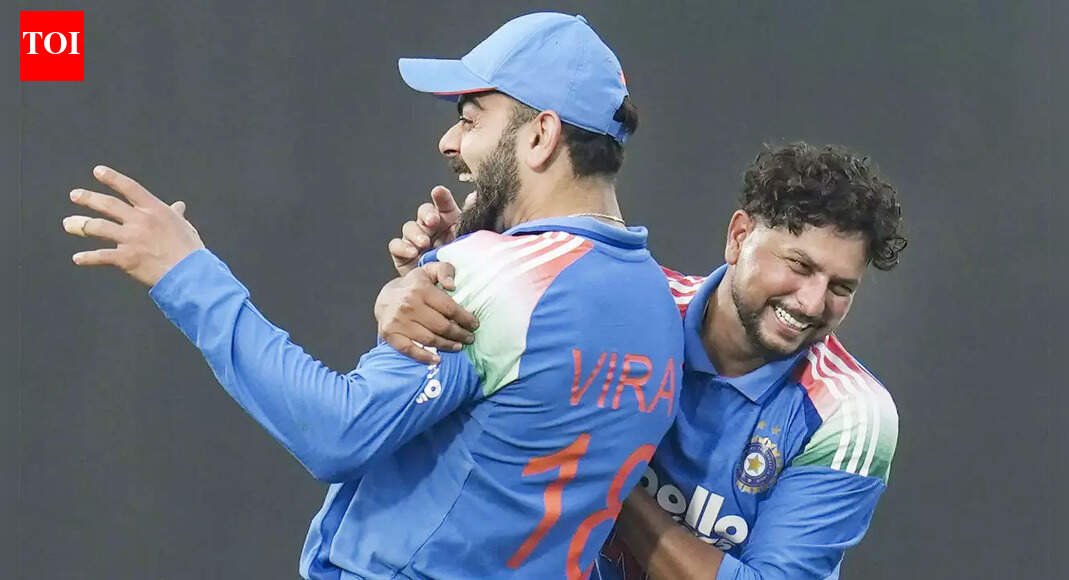
Virat Kohli and Kuldeep Yadav (PTI Photo)

NEW DELHI: India’s 2-1 ODI series win over South Africa on Saturday ended with fireworks on the field — and laughter inside the dressing room — thanks to Virat Kohli’s cheeky dig at Kuldeep Yadav. While the hosts dominated the series decider in Visakhapatnam, it was a moment of light-hearted banter after the match that stole social media’s attention.Go Beyond The Boundary with our YouTube channel. SUBSCRIBE NOW!Kuldeep, who bagged nine wickets and finished as the highest wicket-taker of the series, was named Impact Player of the Series. When India bowling coach Ryan ten Doeschate invited him to speak after presenting the medal, the left-arm spinner struggled to find words. Teammates erupted into playful teasing — and Kohli led the fun with a hilarious taunt: “Ro de, ro de!” (Cry, cry!)

Team India arrive in Cuttack for T20Is | Fans will miss Virat Kohli, Rohit Sharma

The entire room burst into laughter as Kuldeep shyly managed a short speech: “Nothing much to say from my side… Congrats to Virat bhai and Jaisu. He played an unbelievable innings… Yeah, let’s enjoy this.”Click to watch the dressing room videoKohli, who was named Player of the Series with 302 runs including back-to-back centuries and an unbeaten 65 in the final ODI, grinned as the shy spinner expressed his appreciation. Earlier, opener Yashasvi Jaiswal scored his maiden ODI hundred, partnering with Rohit Sharma (75) and Kohli’s composed 65 to script a nine-wicket victory.India had first restricted South Africa to 270, with both Prasidh Krishna and Kuldeep picking four wickets each. Prasidh bounced back after a shaky start to dismantle South Africa’s middle order, while Kuldeep delivered yet another magical spell. For the Proteas, only Quinton de Kock resisted with a superb 106.Doeschate summed up Kuldeep’s impact perfectly: “In a series where batters dominated, the impact player is Kuldeep Yadav.”Team India now shifts focus to the five-match T20I series starting December 9 at the Barabati Stadium in Cuttack.


Source link

Asian stocks today: Markets trade mixed ahead of Fed rate cut decision; HSI dips over 1%, Nikkei flat adding over 40 points


Asian stocks today: Markets trade mixed ahead of Fed rate cut decision; HSI dips over 1%, Nikkei flat adding over 40 points

Stock markets across Asia traded mixed on Monday as investors await an interest rate cut decision from the US Federal Reserve, scheduled for later this week.In Hong Kong, HSI dropped over 255 points, nearing 1% loss to trade at 25,829.Nikkei, meanwhile, added 44 points to 50,535. Shanghai and Shenzhen also gained 0.8% or 1.74%, respectively. South Korea’s Kospi also traded in green, adding 0.71% to 4,129.Geopolitics remained a drag on sentiment. Rising tensions between two Asian giants, Japan and China also dragged the markets in red. According to officials, Chinese military aircraft locked radar on Japanese fighter jets, an escalation that followed weeks of heightened friction after a remark about Taiwan by Japanese Prime Minister Sanae Takaichi.Japan’s defence minister Shinjiro Koizumi said the government had lodged a formal protest and denounced the incident as “an extremely regrettable” act and “a dangerous” one that “exceeded the scope necessary for safe aircraft operations.”The episode did little to help Japanese shares. Domestic data added to investors’ caution: revised figures released on Monday showed Japan’s economy shrinking at an annual pace of 2.3% during July–September, worse than the previously reported 1.8% contraction. Chinese markets also painted a split picture. Chinese leaders are due to convene a major annual conference to map out economic policy in the coming days.A handful of corporate movers stood out. Ulta Beauty climbed 12.7% after beating expectations on quarterly profit and revenue, while Victoria’s Secret & Co. jumped 18% following a quarterly loss that was milder than analysts predicted. Warner Bros. Discovery rallied 6.3% after Netflix announced plans to buy Warner Bros. for $72 billion in cash and stock once the company completes its separation from Discovery Global. Netflix shares slipped 2.9% and Paramount Skydance — previously viewed as a leading contender to snap up Warner Bros. — dropped 9.8%.Attention now turns squarely to Washington. Traders mostly believe the Federal Reserve will cut interest rates on Wednesday to support the slowing US job market, which would mark the third cut this year. Lower rates tend to lift financial markets and economic activity, but they also risk aggravating inflation, which remains above the Fed’s 2% target.Oil prices were slightly firmer in early Monday trading, with US benchmark crude adding 11 cents to $60.19 per barrel and Brent gaining the same amount to $63.86. In currency dealings, the dollar eased to 155.09 Japanese yen from 155.30 yen late Friday, while the euro strengthened to $1.1651 from $1.1639.


Source link

Mumbai: Thane man gets 20 years of RI for sexually assaulting and impregnating minor girl | Mumbai News


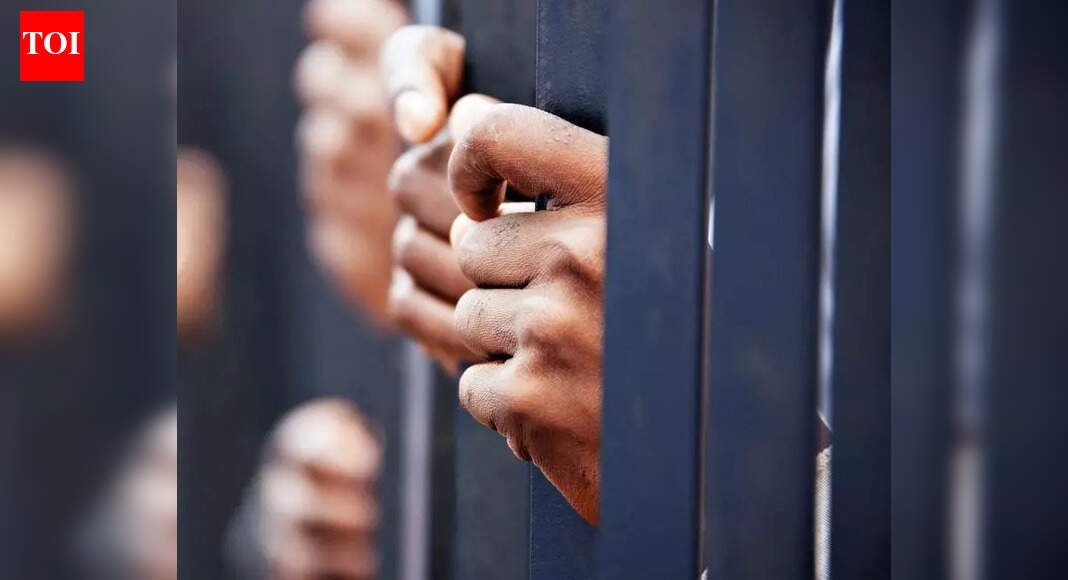
Thane: Court sentenced a man to 20 years of rigorous imprisonment for sexually assaulting a 13-year-old girl in 2021, which led to her pregnancy, observing that the crime was “heinous” and must be dealt with stringently.Additional sessions judge-3, DS Deshmukh, in the judgment on Friday, said the act of the 34-year-old accused, who is married and also has a son, has to be viewed seriously and he is not entitled to leniency. The court convicted the accused, Sahid Mohammad Ramzan Hasmi, under the Protection of Children from Sexual Offences (Pocso) Act section 5 (aggravated penetrative sexual assault) and also imposed a fine of Rs 50,000 on him.According to the prosecuter, the victim had lodged a complaint alleging that in May 2021, the accused, who resided in her neighbourhood, sexually assaulted her after offering to drop her home and later calling her to his house. The accused also allegedly threatened to kill her if she informed anyone about the offence. The victim suffered severe stomach pain in July 2021, and a subsequent medical examination in Aug revealed she was pregnant.The victim later told her mother about the offence committed by the accused. The judge rejected the defence’s claim that the case was false due to a monetary dispute and directed that the fine amount, if recovered, be given to the victim.


Source link

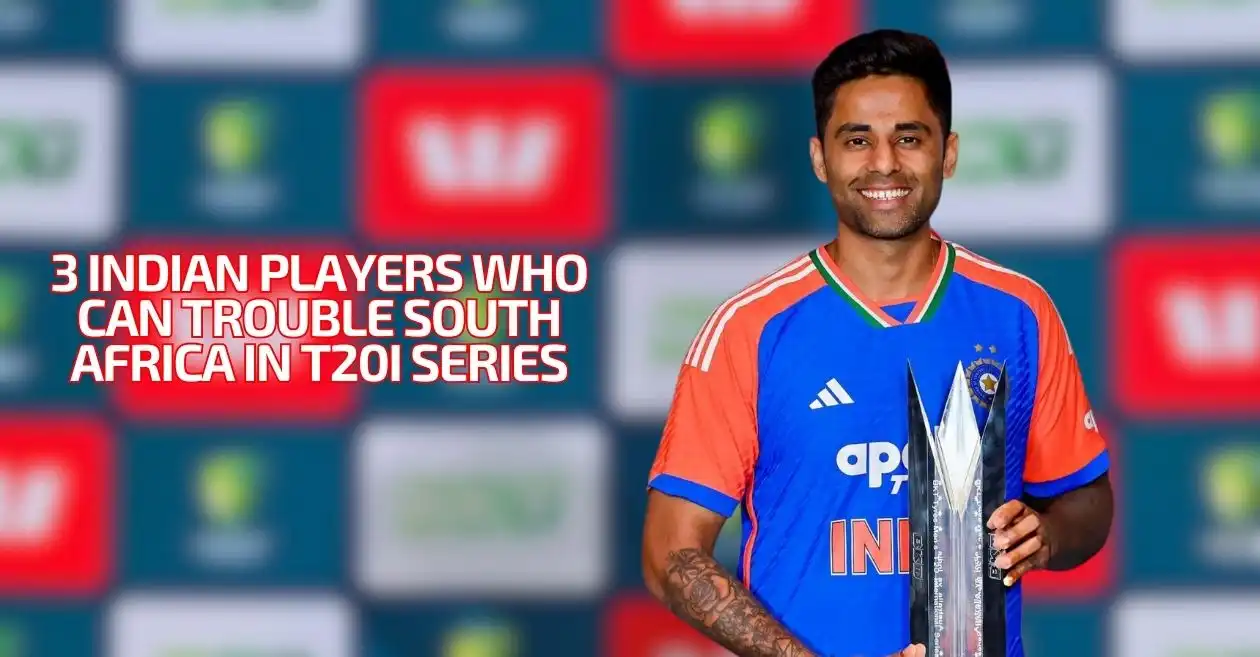
IND vs SA: 3 Indian players who can trouble South Africa in the T20I series


As the Men in Blue gear up to face the Proteas in the five-match T20I series starting tomorrow, December 9, at the Barabati Stadium, anticipation is at an all-time high. Fresh off a spirited 2-1 victory in the ODI leg, India transitions to the shortest format with a squad brimming with explosive talent and tactical mystery.

With the T20 World Cup 2026 on the horizon, this series serves as a critical litmus test for Suryakumar Yadav‘s leadership and India’s aggressive template. While the visitors possess a formidable lineup, some Indian stars, in particular, look poised to dismantle the South African challenge.

3 Indian players who can trouble Proteas in the T20I leg

1) Abhishek Sharma

If there is one name that has redefined T20 batting in 2025, it is Abhishek Sharma. The Punjab southpaw recently etched his name in history books during the Syed Mushtaq Ali Trophy, becoming the first Indian batter ever to smash over 100 sixes in T20s in a single calendar year. His numbers this year are nothing short of video-game figures: in 36 innings, he has amassed nearly 1,500 runs at a staggering strike rate of 204.22, including three centuries and nine fifties.

Abhishek enters this series in red-hot form, fresh off a blistering campaign in the domestic circuit where he struck at nearly 250 and registered a career-best 148. South Africa’s pace attack, usually their biggest strength, faces a severe test against Abhishek’s high-risk template. Having already hit 47 sixes in just 17 T20Is this year, his ability to clear the ropes from ball one makes him the primary threat the Proteas must neutralize early to avoid a Powerplay demolition.

2) Varun Chakaravarthy

Varun Chakaravarthy‘s resurgence has been the tactical headline of India’s bowling attack this year. The mystery spinner is currently enjoying the form of his life, having been named Player of the Series against England earlier in 2025 where he claimed 14 wickets, including a mesmerising 5/24. His consistency was further cemented in IPL 2025, where he picked up 17 wickets in 13 matches with an economy rate of just 7.66—gold dust in modern T20 cricket.

Crucially for this series, Chakaravarthy has a psychological edge over the hosts. In his last T20I outing against the Proteas in November 2024, he spun a web around their middle order to claim a career-best 5/17. With the Cuttack pitch expected to offer some grip, his unique ability to turn the ball both ways without a discernible change in action makes him India’s trump card to choke the run flow in the middle overs.

Also WATCH: Rohit Sharma hilariously refuses to eat cake after India’s ODI series win over South Africa

3) Suryakumar Yadav

While Suryakumar remains the most feared name on the team sheet, the Indian skipper enters this series with a massive point to prove. The year 2025 has been a tale of two distinct halves for SKY: a sensational IPL campaign where he amassed a staggering 717 runs—including a record-breaking streak of consecutive 25+ scores—versus a perplexing dip in international colors.

The recent stats paint a concerning picture for ‘Mr. 360.’ By late October, Surya had managed only 100 runs in 11 T20Is, languishing with an uncharacteristic average of around 11.11. His struggles to convert starts were evident during the Asia Cup, where he totaled just 65 runs with a high score of 47*, and continued into the series against Australia with modest returns of 39*, 1, 24, and 20.

However, South Africa should not underestimate him based on this slump. With the T20 World Cup approaching, the pressure is on, and SKY is desperate to bridge the gap between his IPL dominance and his international output. A wounded tiger is often the most dangerous, and this series presents the perfect stage for the captain to silence his critics and return to his destructive best.

Also READ: Virat Kohli picks his favourite innings from the South Africa ODI series


Source link

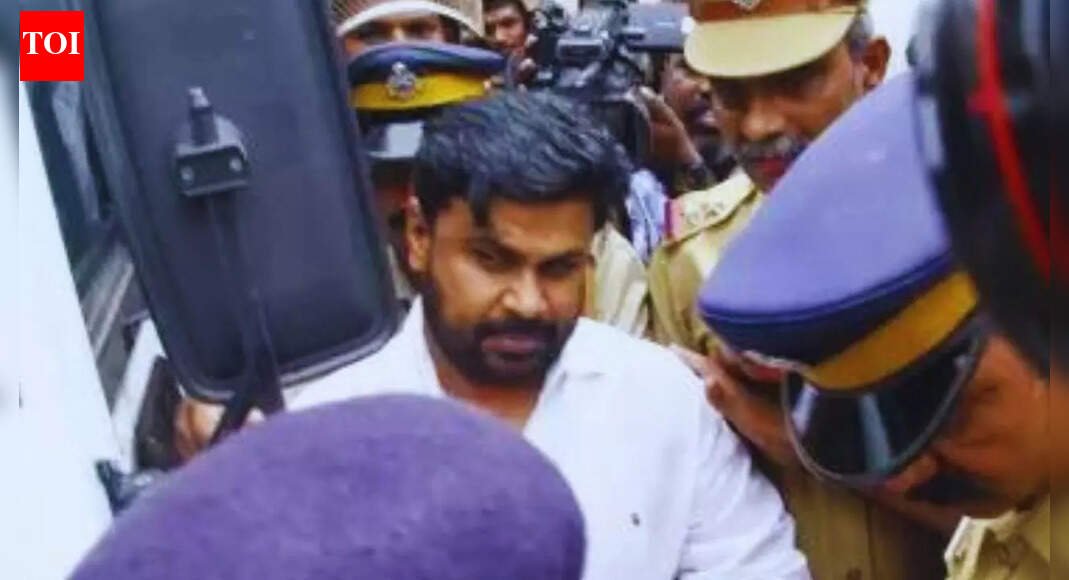
2017 abduction and rape case: Kerala actor Dileep acquitted; Pulsar Suni among 5 found guilty | Kochi News


2017 abduction and rape case: Kerala actor Dileep acquitted; Pulsar Suni among 5 found guilty

KOCHI: The Ernakulam principal sessions court on Monday acquitted Actor Dileepin the high-profile 2017 abduction and rape case.The court found six others, including the prime accused Sunil N S, popularly known as Pulsar Suni, guilty for directly committing the crime.The court also acquitted three other persons in the case. The verdict was delivered by Ernakulam Principal Sessions Judge Honey M Varghese, who had concluded the hearing in the prolonged trial on November 25. The 2017 assault on the actress, who has appeared in Tamil, Telugu, and Malayalam films, shook Kerala’s society. She was allegedly abducted in her car for two hours, during which several persons forced their way into the vehicle before escaping in a crowded area. The ten accused who faced trial were Sunil N S alias Pulsar Suni, Martin Antony, Manikandan B, Vijesh V P, Salim H, Pradeep, Charly Thomas, actor Dileep (real name P Gopalakrishnan), Sanil Kumar alias Mesthri Sanil, and G Sarath. Police arrested several accused soon after the incident and filed the first chargesheet against seven individuals in April 2017. During the ongoing investigation, Dileep was arrested on July 10, 2017, after authorities alleged that Suni had sent him a letter from jail. He was later granted bail on October 3, 2017.The actress-victim, who has appeared in Tamil, Telugu, and Malayalam films, was abducted and allegedly molested in her car for two hours on the night of February 17, 2017, while traveling from Thrissur to Kochi.


Source link

Token seats, missing voices: What a new report reveals about India’s corporate gender gap


Token seats, missing voices: What a new report reveals about India’s corporate gender gap
Women in leadership positions

For more than a decade, Indian companies have showcased their lone woman director as a badge of compliance, the corporate equivalent of checking a box and calling it progress. But behind the polished annual reports and celebratory statements lies a quieter, more uncomfortable truth: women have finally entered the boardroom, yet the boardroom has not opened its doors to them.A new report by Khaitan & Co., Aon, and Ladies Who Lead – Presence to Influence: Advancing Women in Indian Boardrooms, forces India Inc. to confront this reality. It reveals that while 98% of BSE-200 companies now have at least one woman director, mandated by the Companies Act 2013, the mandate has birthed visibility, not voice. Representation has risen, but relevance has not.This is the heart of India’s corporate paradox: Women are present, yet power remains elsewhere.

The illusion of progress: When presence becomes symbolic

The data strips away any remaining illusions. Seventy-seven percent of BSE-200 boards have only one or two women, even when board sizes stretch to 15 members or more. These numbers do not reflect diversity; they reflect minimalism, inclusion measured by the smallest acceptable unit.And the disparity deepens as one moves up the ladder of influence. Only 11% of women directors occupy executive roles, compared with 65% of men. This means the overwhelming majority of women on boards are kept at the periphery of strategic decision-making, rarely entrusted with the operational levers that shape a company’s future.The top job is even further away. Just 7% of BSE-200 board chairpersons are women. In the NIFTY-500, the number falls to 5%. These are not simply titles; they are positions that set culture, steer debate, and outline vision. When women are missing from these chairs, they are missing from the command centre of corporate India.

Corporate India’s silent norm: Bias dressed as culture

One of the most striking findings comes not from statistics but from lived experience. More than one in three women directors report persistent stereotyping, dismissive behaviour, and subtle but damaging undercurrents of tokenism, the report reveals. Their presence is acknowledged; their authority is doubted.Interviewees describe interruptions, minimisation of expertise, and unspoken assumptions that they are present to satisfy a statutory checkbox. Many say they must over-prepare, over-deliver, and over-exert simply to be seen as equal. Bias, instead of fading with progress, has evolved — becoming quieter, more coded, and more resistant.This is the emotional labour that never appears in corporate disclosures.Where women lead, diversity follows, the data is unmistakableThe report reveals a telling correlation: Companies helmed by women CEOs have nearly double the female board representation of male-led firms, 31% versus 17.7%. This is not coincidence. It is a cultural cause and effect.When leadership reflects diversity, boardrooms follow. When leadership does not, the board becomes a mirror of entrenched norms.Yet the irony is stark. Women CEOs account for only 6% of leadership across BSE-200 companies, a figure far too small to drive systemic change at scale. The system needs more than outliers; it needs an overhaul.

Four women, five women, six women: The tipping point

Another insight stands out: Companies with 4–6 women directors show stronger, more consistent gender diversity across the organisation. This suggests that diversity has a threshold, a point at which it shifts from symbolic to structural.One woman in the boardroom is compliance.Two is optics.Four or more begin to rewrite norms.It is at this threshold that women stop being “the only one” and start being a collective force, influencing strategy, challenging assumptions, and redefining leadership culture.

The deeper question: What does representation without voice achieve?

India has spent a decade celebrating the presence of women in the boardroom. But presence alone cannot ensure perspective, power, or participation. A seat at the table means little if the chair doesn’t swivel when you speak.The report forces us to confront a harder truth: Compliance laws can open doors, but only culture can let women walk through them with influence.

What must change now

For meaningful gender equity in corporate India, three fundamental shifts are needed:Move beyond the “minimum woman” mindsetMandated representation must evolve into deliberate, strategic inclusion. Companies must expand the number of women on boards, not simply appoint one or two.Build the pipeline to leadership, not just to the boardroomThe scarcity of women CEOs and executive directors is not an accident, it is the result of a broken leadership pipeline. Fixing it requires intentional mentorship, succession planning, and structural support.Dismantle entrenched bias, loudly and publiclyBoards must acknowledge gender bias as a governance issue, not a social one. Blind spots must be named before they can be corrected.

The bottom line: India doesn’t have a talent problem; it has a gatekeeping problem

Indian companies do not lack qualified women. They lack the will to put them in positions that shape decisions rather than decorate them.Meaningful representation is not a moral aspiration, it is a business imperative. Companies that include women meaningfully in leadership consistently outperform those that don’t. The data proves it. The global evidence confirms it.India has made progress. But progress without power is performative.If corporate India truly wants to modernise its boardrooms, it must confront its own contradictions, and recognise that the future of governance cannot be built on a foundation that keeps half the talent pool waiting in the corridor of influence.The question now is not whether women deserve a place in leadership.It is whether India Inc. is finally ready to listen when they get there.


Source link