Breaking News
WATCH: Arshdeep Singh removes Reeza Hendricks with a beauty in 3rd T20I – IND vs SA


India continued their strong hold over South Africa in the third T20I at the Himachal Pradesh Cricket Association Stadium, Dharamsala, as Arshdeep Singh produced a moment of sheer class to dismiss Reeza Hendricks early. Opting to bowl first after winning the toss, India’s pace attack made full use of the helpful conditions, leaving the visitors struggling at the halfway mark of the innings.

Arshdeep Singh’s perfect setup floors Reeza Hendricks

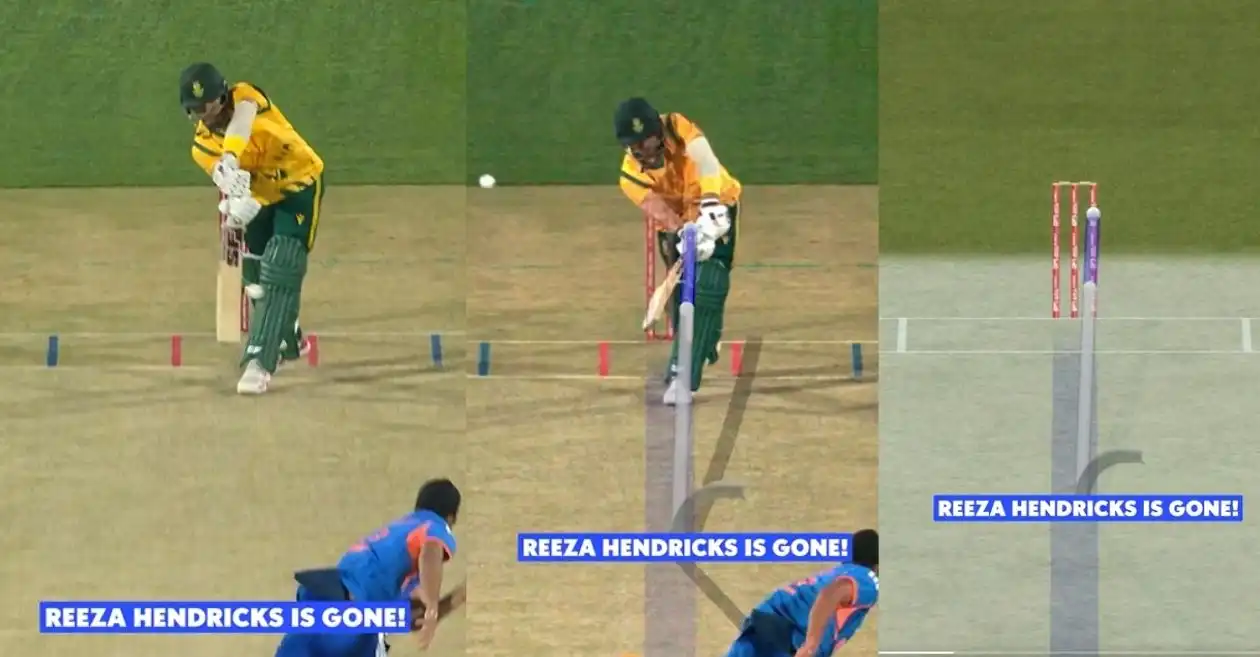
The standout moment of the first half came courtesy of Arshdeep, who showcased his growing maturity with the new ball. Bowling to Hendricks, Arshdeep first teased the South African opener with two outswingers that shaped away, forcing him to play cautiously. Having planted doubt in the batter’s mind, the left-arm pacer then delivered the decisive blow — a delivery on a length that nipped back sharply.

Hendricks was caught on the crease as the ball struck him on the pads. The on-field decision was reviewed by India, and replays left no room for debate. There was no bat involved, the ball pitched in line, the impact was in line, and it was hitting the leg stump. The review was upheld, and Hendricks departed without scoring, underlining the precision of Arshdeep’s planning and execution.

Here’s the video:

Also READ: GOAT India tour 2025: When Virat Kohli, Sachin Tendulkar and MS Dhoni picked between Lionel Messi and Cristiano Ronaldo

India dominate the halfway session

By the midway point of the innings, India had firmly seized control of the contest. Arshdeep’s wicket set the tone for India’s bowlers, who applied relentless pressure throughout the powerplay and beyond. South Africa found it difficult to build momentum as wickets fell at regular intervals. Harshit Rana emerged as another key contributor, picking up two important wickets to dent the Proteas’ top order.

Hardik Pandya also chipped in with a crucial breakthrough, ensuring that South Africa never truly settled. The disciplined bowling effort was backed by sharp fielding, which further tightened the screws on the visiting batters. Amid the chaos, South Africa skipper Aiden Markram tried to anchor the innings. Batting with composure, Markram remained unbeaten on 28, showing intent without taking unnecessary risks. However, the lack of support from the other end meant South Africa were unable to capitalise on his presence at the crease.

Also READ: ‘Got message from Anushka’: R Madhavan recalls the viral AI-generated clip of Cristiano Ronaldo applauding Virat Kohli


Source link

Pink tax, safety tax, health tax & more: The ‘hidden cost’ of being a woman no one counts | India News


Pink tax, safety tax, health tax & more: The 'hidden cost' of being a woman no one counts
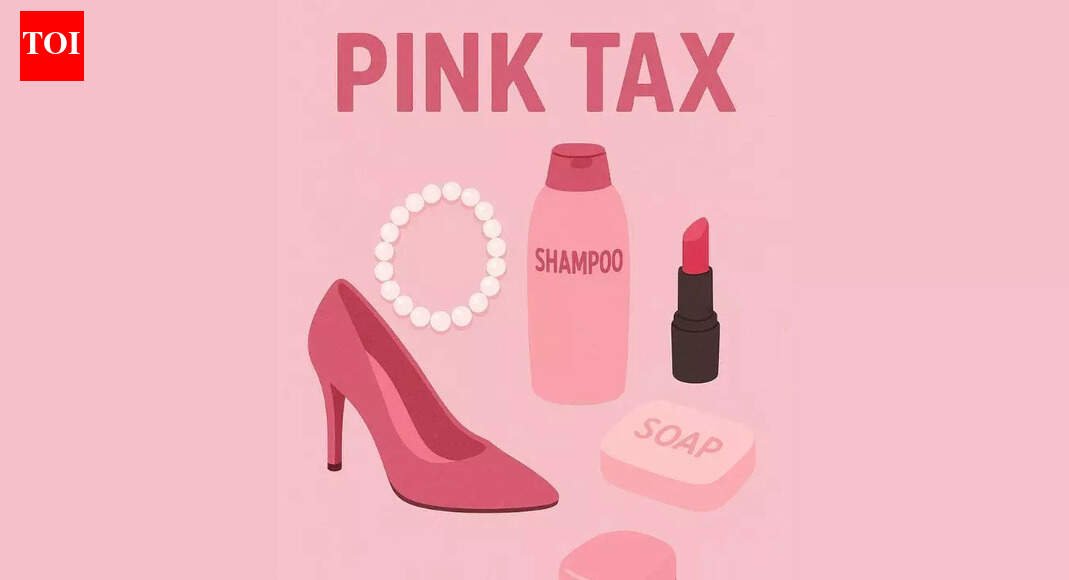
This is a representative AI image

What is luxury?For a woman, simply being able to take a walk at night is often considered a luxury. But this freedom isn’t free. It comes at a cost most people never see, the extra money, effort and emotional labour women pay every day just to exist.Every rupee women spend is backed by labour, yet when it comes to buying everyday essentials, its value seems to shrink. Every morning, as I get ready for office, I inevitably spend more than a man would and not because I am extravagant, but because of the hidden taxes I pay every time I buy something.Why? Because a moisturiser packaged in lavender tones, promising “smooth skin” , costs more than a man’s basic black bottle offering the same function. When I calculated my spending on personal care, clothing, services and daily necessities, the pattern became impossible to ignore.How? Because women consistently pay more year after year simply because products are marketed to them. And no, this isn’t just a Western problem. India isn’t exempt.

What is Pink Tax?

It may sound like a trivial question, but the answer points to a deeper issue: the Pink Tax. It is not a government levy or an official surcharge. Instead, it is the invisible premium women pay for products and services marketed “for women” , even when they are nearly identical to men’s versions.Simply put, it’s the cost of being a woman. Many everyday products aimed at women are priced higher than their male counterparts despite serving the same purpose.“I think most people have little idea of the extra costs a woman has to bear simply to exist. There is a concept of ‘Pink Tax’ that few men are aware of, as it mainly involves women’s personal care products. Beyond the monetary aspect, there is also a safety angle to all this,” said Aashish Saxena.That’s the Pink Tax — and that’s why a pink razor costs more than a man’s black one.The Pink Tax shows up across everyday life:Personal care products: Women’s shampoos, conditioners and moisturisers routinely cost more than men’s, even when the difference is limited to packaging or colour.Fashion and accessories: Women’s formalwear and accessories are often priced higher despite similar materials and construction. The markup is usually explained away as “fashion” or “finishing” .Cosmetic procedures: Aggressively marketed to women, adding to the financial burden.Healthcare: Gynaecological check-ups, fertility consultations and reproductive healthcare come with higher recurring costs.“If you book a full comprehensive check-up for men on the health/medical app, it costs Rs 4,999, but for women, it costs Rs 5,999,” said Pallavi, pointing to the hidden cost.

How marketing makes femininity costlier

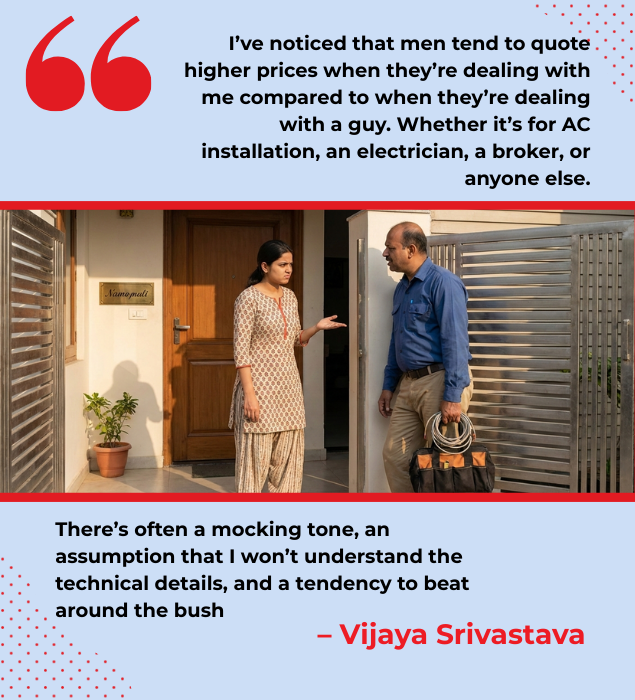
Women are often seen as less price-sensitive when it comes to personal care, not because they want to be, but because many of these products are framed as necessities. Companies exploit this shift. What was once optional is now presented as baseline: SPF, retinol, serums, AM/PM routines, laser treatments, Botox, hair removal, marketed as “permanent” solutions that never truly end.“If we look at the market, the range of products available for women the variants and the overall maintenance and is far wider compared to men. The skincare industry largely targets women, giving men limited space under the idea of toughness,” said Vijaya Srivastava.Pallavi also points to fashion as another quiet contributor to the hidden tax. “Why can’t I have jeans with normal-sized pockets that can fit today’s phones?” she asks.“Men can just slip their phones into their pockets and walk freely. Why do we have to carry a handbag just to hold a phone? Because we don’t have pockets.” Her frustration reflects how design choices, driven by fashion norms and commercial interests, create yet another invisible cost: one paid in convenience, money and everyday freedom.

The safety tax: Paying to feel safe

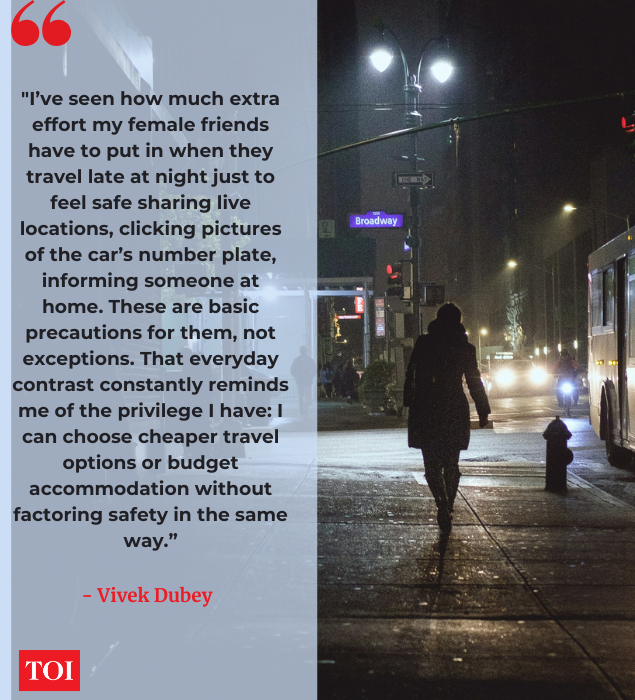
Beyond products, women quietly absorb another cost, the safety tax! In urban India, women often pay a premium simply to move through the city. Public transport that is cheaper for men is not always an option. Cabs, safer buses or higher travel classes become necessities, not luxuries.Ignoring buses, trains and shared autos “just to feel safe” is common and expensive. “While men don’t have to think twice about getting into a crowded metro or bus, a woman might opt for a far more expensive cab just to avoid harassment,” said Aashish.Aastha Jha explains the cost she absorbs every month. “I pay Rs 6,000 for travel to office every month. I haven’t used shared autos, buses or the metro enough to even compare. My area is quite secluded with poor connectivity, so sharing doesn’t feel safe.” She adds that this expense isn’t consciously planned. “I don’t budget for it deliberately, but I’ve been doing it subconsciously for years.” While men may think about safety during odd hours, Aastha notes the difference during the day. “Men my age think about safety late at night. During normal hours, they don’t have to factor it in.”For women, even basic freedoms come with anxiety. “Being able to take a walk at night feels like a luxury. Whether you live in a gated society or a secluded area, you never really know who could harm you.” Her colleague Vivek Dubey agrees. “Safety matters to everyone, but not in the same way. I can book a cab at midnight without much thought. My main concern is the driver’s driving, not my personal safety.” He admits this is a privilege men often overlook. “I can take a bike taxi because it’s cheaper. I wouldn’t recommend the same to my female friends because of harassment risks.”

.

Housing: Where safety overrides affordability

Safety also dictates where women live.“When I came to New Delhi, my priorities were safety and security,” recalls Jyoti, a college student. “I looked at high-rise societies with rents far above my budget, but I had no choice,” she said.Natasha Singh adds, “Safety plays a huge role in evaluating cost of living.” After a robbery at her home, she and her flatmate were more concerned about security than stolen items. “When my flatmate was not in town, I used to travel all the way from Noida to Gurgaon to live with my parents because I didn’t feel safe living alone.”

The unpaid labour tax

Women also bear the burden of unpaid domestic and emotional labour: cooking, cleaning, caregiving and emotional management, the work that doesn’t show up in GDP calculations.

Healthcare and fertility pressure

Menstrual products are unavoidable expenses men do not face. Beyond that, women incur ongoing costs linked to reproductive health, PCOS, fertility testing, supplements and preventive check-ups.“Women experience more frequent health milestones and transitions, which leads to higher spending on routine medical care and supplements — costs that are rarely framed as healthcare burdens,” said Priyanka Mukherjee.“The biggest hidden tax that I pay, I think, is healthcare tax. Firstly, female health is the least talked about. And because of that, even the most basic tests cost thousands. And I am just talking about tests, have not even started on medication, consultation,” said Aastha.Period poverty adds another layer. Despite GST removal on sanitary pads in 2018, one in ten girls under 21 in rural areas still cannot afford menstrual products.

The pay gap makes the burden heavier

Women earn less but pay more.In India, women earn approximately Rs 40 for every Rs 100 earned by men. The country ranks 131 out of 148 in the Global Gender Gap Report 2025.“Yes, I do believe women are often paid less than male colleagues with similar experience or output, though the gap is not always obvious on paper. It shows up in slower growth, fewer leadership opportunities, or being expected to “prove” consistency over time,” said Priyanka reflecting on the disparity that only makes the burden of the Pink Tax feel heavier.Vijaya highlighted what she sees as one of the biggest hidden taxes women pay at work. “I’ve had colleagues with the same or even less work experience earn a higher CTC than me. I’ve also seen my female colleagues having to switch jobs more frequently than men simply because companies don’t make retention offers to them,” she said.“Men, on the other hand, are often retained. There’s never been an official declaration, but the pattern is quite evident. Having to repeatedly adjust to new environments is another hidden tax I’ve noticed,” she added.The Pink Tax doesn’t just hurt wallets — it reinforces inequality!

The ‘career loss’ tax

Safety concerns also push many women out of high-paying night shifts or demanding roles altogether. A budding journalist, Oshin, said she considered quitting because late working hours didn’t feel feasible for her. Living far from work, she didn’t want to take on the additional financial and emotional burden of arranging safety every night.

Does simply existing as a woman cost more?

Smriti Jain believes it does. “Simply being a woman comes with higher, unavoidable expenses. While awareness is growing, the true economic impact is still not fully acknowledged,” she said.Natasha echoed the sentiment, saying, “From daily transport to monthly periods, our lives are forced to be comparatively more expensive. Whether it is shopping for toiletries or simply getting a haircut, everything is more costly, marketed as a better lifestyle choice.”Priyanka, speaking candidly, agreed. “Honestly, yes. Simply existing as a woman costs more — financially, emotionally and mentally. From safety planning and health spending to clothing choices shaped by social scrutiny, there are constant micro-costs attached to being cautious, prepared and presentable,” she said.She added that one of the biggest hidden taxes rarely discussed is mental bandwidth. “The cost of constantly thinking ahead. ‘Is this safe?’ ‘Should I stay late?’ ‘Do I need a cab?’ ‘Will this be misread?’ That constant vigilance has an economic value we never calculate.”“For many women, safety often feels like something you have to plan and pay for, rather than something that simply exists,” she added.

.

Vivek acknowledged the disparity. “Yes, I do think simply existing as a woman costs more, financially, mentally and emotionally. But I don’t think society truly acknowledges it. There’s a kind of collective blindness around this issue. It’s almost as if society has accepted that it’s expensive to be a woman and decided this is just how things are,” he said.Rajeev Singh another male colleague of Vivek also agreed. “Men generally have greater flexibility to compromise on comfort or safety. Social norms, lower levels of harassment and fewer restrictions on movement allow men to accept risks that would be unreasonable or dangerous for women. Womanhood does appear costly — even if you subtract safety-related expenses,” he said.

Does society acknowledge how expensive womanhood is?

Aastha believes the issue is deeply structural. “Absolutely. Society itself has made womanhood expensive by keeping research and technological development that could genuinely benefit women scarce,” she said. “An HPV vaccine that could prevent cervical cancer costs thousands. These are exactly the areas that should be mass-produced, considering women make up nearly half the country’s population,” she added.Priyanka, however, feels the burden remains largely invisible.

I don’t think society fully acknowledges how expensive womanhood is because many of these costs are normalised and invisible. They’re framed as ‘choices’, not necessities. Until we recognise these expenses as structural rather than personal, women will continue to bear them quietly, without much conversation.

Priyanka Mukherjee

Is safety treated as a luxury rather than a right?

Natasha believes it is. “It’s a known fact that women feel more restricted even if it’s self-imposed, after a safety incident occurs in their vicinity. When a DU student was harassed outside a girls’ college, the response was to put up posters listing ‘dos and don’ts’ for women. That tells you everything. Our safety is treated like a joke, not a basic right,” she said.Vivek added that meaningful change requires structural effort. “Real change would require going back to the basics, changing policies, enforcing laws, redesigning public spaces, and challenging everyday behaviour. That takes effort and intent. And perhaps that’s why the issue is often ignored, even though it affects the dignity and daily lives of nearly half the population,” he said.Taken together, these everyday choices where women live, how they travel, the work they take on and the risks they avoid rarely show up as line items in budgets or policy discussions. Yet they quietly shape women’s freedom, mobility and opportunities in ways that are easy to overlook but hard to escape.The bill may be invisible, but it’s paid daily.


Source link

Gold rate outlook: Gold, silver hit lifetime highs on Fed signals; will inflation data fuel further gains?


Gold rate outlook: Gold, silver hit lifetime highs on Fed signals; will inflation data fuel further gains?

Gold and silver are expected to prolong their record-setting surge in the coming week as traders turn their attention to a heavy line-up of global inflation data and macroeconomic indicators that will shape central bank policy expectations, analysts said. The focus will be on inflation prints from India, the US, Europe and the UK, along with provisional manufacturing and services PMI readings across major economies.In the US, investors will also monitor non-farm payroll and weekly jobless claims data, housing indicators and consumer sentiment surveys, all of which could influence bullion prices in the near term.“Gold and silver’s momentum will remain positive as (traders) focus on key data from China, followed by inflation numbers from India, the US, and the UK, along with provisional manufacturing/ services PMI data from across regions,” said Pranav Mer, Vice President, EBG – Commodity & Currency Research, JM Financial Services.On the Multi Commodity Exchange (MCX), gold futures rose Rs 3,160, or 2.42 per cent over the past week, closing at record levels. “Gold prices continued their positive momentum after Fed rate cuts, and liquidity boost measures. However, the central bank maintained a cautious tone, signalling it would wait for more data before additional easing. This stance triggered a sharp sell-off in US treasuries and pressured the dollar index, which in turn helped gold prices,” Mer added, PTI quoted.He also noted that geopolitical tensions between the US and Venezuela, along with concerns over unwinding of yen carry trades ahead of the Bank of Japan’s expected 25-basis-point rate hike on December 18, have boosted gold’s safe-haven appeal. On Friday, MCX gold touched a lifetime high of Rs 1,35,263 per 10 grams, aided by a weaker dollar and strong investor buying.Pankaj Singh, smallcase manager and SmartWealth AI Founder and Principal Researcher, said the rupee’s recent depreciation has amplified domestic gold returns. “Gold prices extended their upward momentum last week, as the rupee fell to record lows against the US dollar amid trade frictions, tariff uncertainty, and persistent capital outflows. The currency’s weakness continues to reinforce gold’s role as an foreign exchange hedge for Indian investors,” he said, adding that the medium-term outlook remains constructive.Internationally, Comex gold futures gained USD 85.3, or 2.01 per cent last week. “Gold extended its gains as the US Treasury and the dollar softened after the Federal Reserve’s third consecutive 25 basis point rate cut, signalling potential further easing in 2026 despite internal dissent,” said Riya Singh, Research Analyst, Commodities and Currency, Emkay Global Financial Services.Silver, too, continued its rally, marking a third consecutive week of gains. MCX silver futures climbed Rs 9,443, or 5.15 per cent, to hit an all-time high of Rs 2,01,615 per kg on Friday before easing on profit booking. Overseas silver futures jumped USD 2.95, or 5 per cent, breaching USD 65 per ounce for the first time.“Silver prices surged to yet another all-time high on Friday, breaching past Rs 2,00,000-level in the domestic market. However, the metal pared gains in a sharp sell-off of more than 4 per cent during the US trading session,” Mer said.Riya Singh added that investor participation remains strong. “India continues to see record ETF participation, while China’s silver market shows elevated speculative interest, with Shanghai trading volumes returning to levels seen during past supply squeezes,” she said.According to her, silver remains supported by falling yields, ample liquidity, central-bank buying, ETF inflows and firm industrial demand from solar and electronics. “The volatility may persist, unless US monetary expectations shift meaningfully, precious metals are poised to retain an upward bias into early 2026,” she added.Mer said silver is likely to stay bullish in the near term. “Silver prices look positive and may move further up towards Rs 2,25,000-2,40,000 per kilogram level,” he said.(Disclaimer: Recommendations and views on the stock market, other asset classes or personal finance management tips given by experts are their own. These opinions do not represent the views of The Times of India)


Source link

Sachin Tendulkar calls Lionel Messi’s Mumbai visit a ‘golden moment’ for India | Cricket News


Sachin Tendulkar calls Lionel Messi’s Mumbai visit a 'golden moment' for India
Sachin Tendulkar and Lionel Messi (X)

Cricket icon Sachin Tendulkar described Lionel Messi’s visit to Mumbai as a “golden moment” for both the city and the country, as the Argentine football superstar continued his India tour on Sunday. Tendulkar drew a parallel between Messi’s presence at the venue and India’s 2011 Cricket World Cup triumph, a historic moment that unfolded at the same ground. Addressing the gathering, Tendulkar recalled the memories associated with Mumbai, calling it a city where countless dreams have reached their destination. He referenced India’s ODI World Cup victory in 2011 and acknowledged the role of fans in making those moments possible. Tendulkar said the arrival of Messi, along with Inter Miami teammates Luis Suarez and Rodrigo de Paul, added another special chapter to the venue’s history and praised the warm reception given to the footballers by the city.

Inside a champion’s mind | ft. Shafali, Deepti and Saiyami | TOI’s Ideas for India

Speaking about Messi, Tendulkar said there was little left to say about a player who has achieved everything the sport can offer. He highlighted Messi’s dedication, determination and commitment, while also stressing the humility he brings as a person. Tendulkar extended his best wishes to Messi and his family on behalf of Indians and thanked him for inspiring young athletes. He also expressed hope that Indian football would one day reach the heights it aspires to. During the interaction, Tendulkar presented Messi with a No.10 jersey signed by him, while the World Cup-winning Argentine captain returned the gesture by gifting a football. Messi arrived in Mumbai around noon amid World Cup-level security arrangements, marking the second day of his four-city “GOAT India Tour 2025”. He is scheduled to conclude the tour on Monday in New Delhi, where he will meet Prime Minister Narendra Modi. The Mumbai event followed a mixed start to the tour. While the Kolkata leg on Saturday was marred by crowd management issues and security lapses, the evening programme in Hyderabad ran smoothly and ended on a positive note.


Source link

“Going to do Vipassana is not called running away”: Arvind Kejriwal replies to Delhi CM’s jibe at AAP over pollution | India News


"Going to do Vipassana is not called running away": Arvind Kejriwal replies to Delhi CM's jibe at AAP over pollution

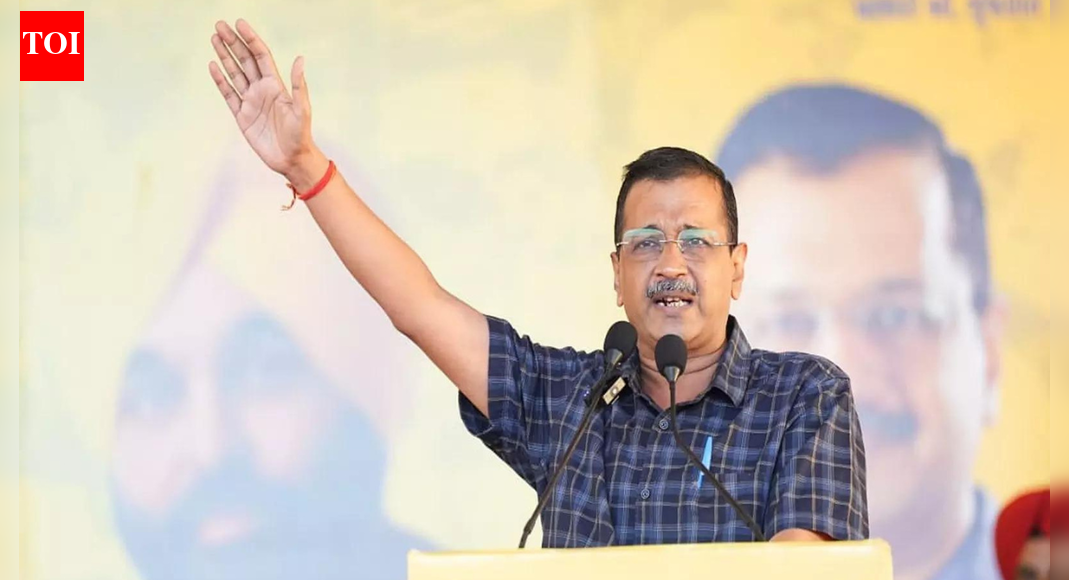
NEW DELHI: Aam Aadmi Party (AAP) national convenor Arvind Kejriwal on Sunday criticised Delhi chief minister Rekha Gupta, saying that it is not appropriate to mock anyone taking a “Vipassana,” despite both of them having political differences over the handling of the pollution crisis in the national capital region. “You (Rekha Gupta) harbor political enmity towards me. Due to this, it does not behove you to mock the divine Vipassana meditation method taught by Lord Buddha in this manner. You too should certainly try Vipassana once. You will like it a lot, and you will experience boundless peace. Going to do Vipassana is not called “running away.” Only those with great fortune are blessed with Vipassana,” Kejriwal wrote on X, replying to an earlier post by CM Gupta.The AAP leader’s comments come a day after CM Gupta alleged that while Bharatiya Janata Party (BJP) leaders are trying to fight pollution by staying in Delhi, Kejriwal simply abandons Delhi by taking a Vipassana every six months.“We are finding solutions to the pollution problem in Delhi by living in Delhi itself. We are not like them who abandon Delhi to its fate and run off for Vipassana every 6 months. My Delhi, My Responsibility-we are working with this sentiment. The problem is here too, and the solution will also emerge from here…for Delhi, by staying in Delhi,” the Delhi CM said. Meanwhile, AAP’s Delhi president Saurabh Bharadwaj also hit out at the Delhi government for the illnesses people are getting due to increased pollution. He criticised CM Rekha Gupta over the worsening air quality in the national capital, stating that she is unaware of the air quality index (AQI) and its parameters, adding that she must leave the pollution problem for the experts to deal with.Speaking to ANI, Bharadwaj said, “This government has been in power for almost a year. Nowhere in this country are there incidents of stubble burning. The condition of pollution is that even inside a closed room, we can see smog. The CM of Delhi doesn’t know what AQI is? She says any instrument can measure AQI. She can’t even properly pronounce AQI. What will the people of Delhi expect from the chief minister for the next 4 years?”“I think experts should come in front and the Chief Minister should take a step back,” he added.Residents of Delhi on Sunday expressed deep concern over deteriorating air quality as the city’s AQI surged to 497, remaining in the ‘severe’ category, according to the central pollution control board (CPCB).In response to the severe pollution, the Delhi Government’s Directorate of Education on Saturday directed that schools conduct classes for grades IX and XI in hybrid mode. This decision followed the Commission for Air Quality Management (CAQM) invoking Stage IV of the Graded Response Action Plan (GRAP) as AQI levels approached the ‘severe’ mark.


Source link

Rohtak bodybuilder murder case: After 15 days on the run, 3 accused, including 2 brothers arrested in Bengaluru | Chandigarh News


Rohtak bodybuilder murder case: After 15 days on the run, 3 accused, including 2 brothers arrested in Bengaluru
15 days after Rohtak bodybuilder’s murder, 3 arrested in Bengaluru

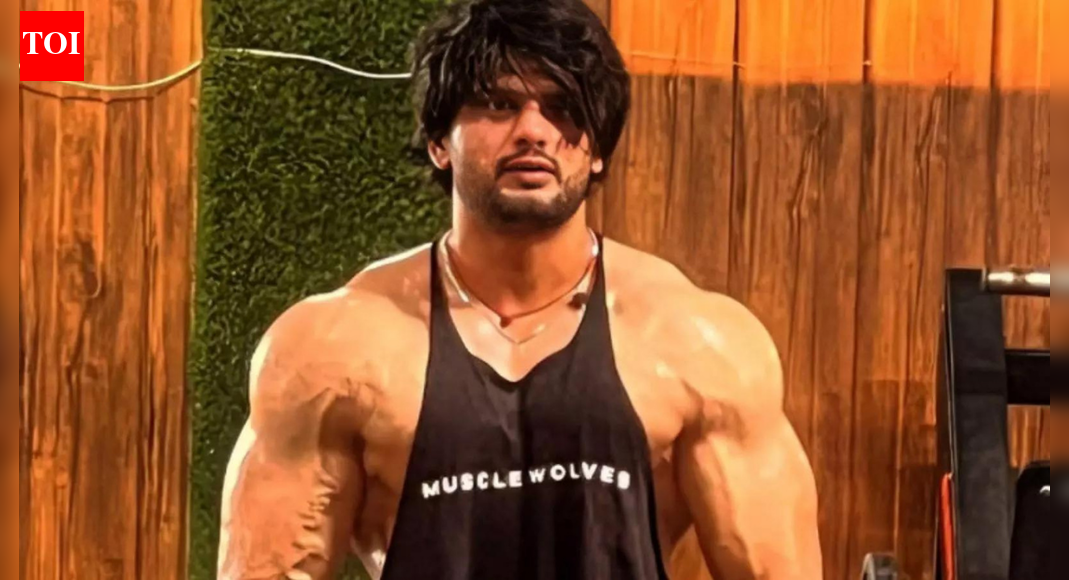
ROHTAK: Haryana Police have arrested three men from Bengaluru, Karnataka, in connection with the Nov 28 murder of Rohtak-based bodybuilder Rohit Dhankhar in Bhiwani, an official said on Saturday.Director general of police (DGP) O P Singh announced the arrests in a post on X, stating that “two main killers” had been caught in Bengaluru. He added that the remaining accused would be nabbed soon and would “rot in jail for years”. Later, a statement issued by Bhiwani police said three men — Varun, his brother Tarun, and Deepak, all residents of Tigadana village in Bhiwani district — had been arrested.Dhankhar was killed in an alleged reprisal attack after he reportedly objected to some men using obscene words for women at a wedding. The arrests came on a day when the state’s Sarv Khap, during a mahapanchayat at Rohtak’s Jat Bhawan, issued a Dec 16 ultimatum to the govt to act in the case. It also demanded a govt job for a family member of the deceased and financial assistance of Rs 1 crore.According to police, Dhankhar, a resident of Humayunpur village in Rohtak, had gone to Bhiwani with his friend Jatin, a resident of Charkhi Dadri, to attend a wedding at Rewari Kheda village. A dispute broke out during the wedding procession after some youths allegedly used obscene words for women, to which Rohit objected.As per the complaint lodged by Rohit’s mother Saroj at Bhiwani Sadar police station, the argument escalated into a clash. Later, when Rohit and Jatin were returning home around 11 pm, the same persons allegedly rammed their vehicle near the railway crossing on Bawmla Road. The attackers allegedly assaulted Rohit, inflicting injuries to his head and body. He was taken to PGIMER, Rohtak, for treatment, where he died the next day.Bhiwani SP said all three arrested accused would be produced in court and taken into police custody.Rohit’s uncle Satish said the DGP had informed the family about the arrests. He added that the family hoped police would complete the investigation promptly and also accept the decision taken by the Sarv Khap.


Source link

Jewellery sector recovers: Exports up nearly 20% in November; GJEPC says demand returning in China, Hong Kong, Middle East


Jewellery sector recovers: Exports up nearly 20% in November; GJEPC says demand returning in China, Hong Kong, Middle East

India’s gems and jewellery exports rose nearly 20 per cent year-on-year to $2.5 billion in November, buoyed by higher shipments of cut and polished diamonds, studded gold jewellery and silver items, according to provisional data released by the Gem and Jewellery Export Promotion Council (GJEPC), PTI reported.Exports stood at $2.1 billion in November last year. However, cumulative exports for April–November remained broadly unchanged at $18.86 billion compared with $18.85 billion in the corresponding period of 2023–24, reflecting uneven global demand conditions across major markets.Cut and polished diamonds logged a sharp increase in November, with gross exports rising to $919.74 million from $666.34 million a year earlier. Lab-grown polished diamonds also registered growth of 10.55 per cent, touching $76.09 million against $68.83 million last year.Gold jewellery exports remained largely flat at $1.21 billion versus $1.23 billion a year ago as volatility in global prices continued to weigh on orders. In contrast, studded gold jewellery exports surged to $828.89 million from $555.39 million on the back of higher job-work demand in India.Silver jewellery shipments posted one of the strongest recoveries, soaring to $197.97 million from $63.99 million after supply constraints in previous months eased.“Markets are stabilising and demand in many export destinations is picking up, including Hong Kong, China and the Middle East. Even as performance in the US remains slow, robust demand elsewhere is supporting growth,” GJEPC chairman Kirit Bhansali told PTI. He added that gold-studded jewellery exports surged as job-work orders increased, while silver shipments rebounded with supply chains normalising.Despite the mixed trend across categories, industry leaders expect export momentum to improve in the coming months as inventories stabilise and global retail demand turns more favourable.


Source link

‘Yeh constable ka ghar hai?: Dismissed UP cop’s bungalow in posh Lucknow locality sparks outrage; earned Rs 40,000 a month | Lucknow News


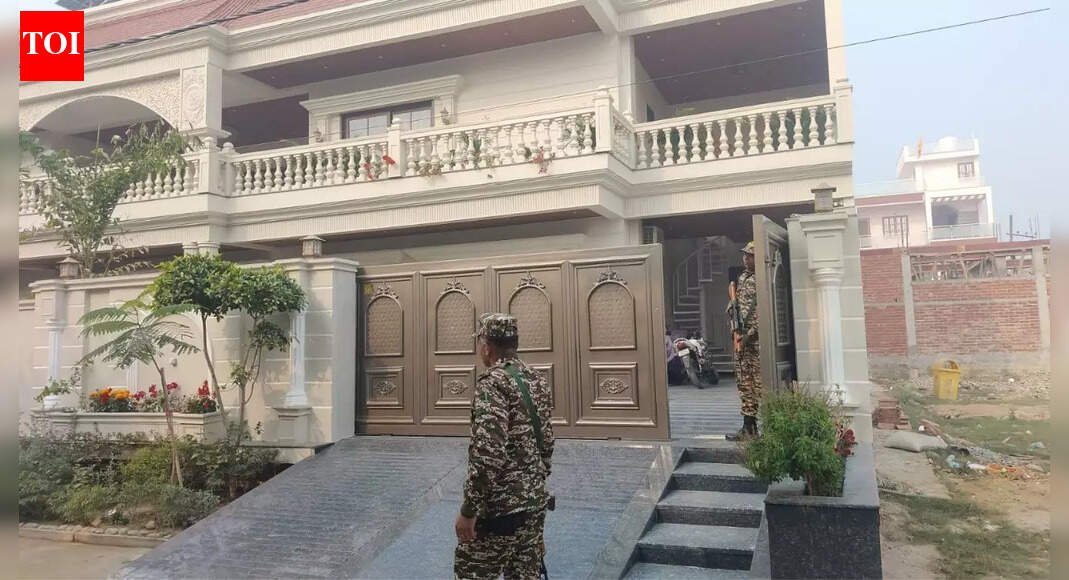
LUCKNOW: ‘Yeh constable ka ghar hai? Social media users were left stunned after a video of a dismissed Uttar Pradesh police constable’s lavish Lucknow residence went viral this week. The video, shared widely as the Enforcement Directorate (ED) conducted raids linked to a codeine-based cough syrup smuggling network, shows a sprawling multi-storey bungalow with interiors and a facade that appear far beyond the means of a constable earning roughly Rs 40,000 a month. “Yeh constable ka ghar hai? If this is the home of a constable, imagine…” commented one user, reflecting the disbelief shared by thousands online. Alok Pratap Singh, dismissed from the UP police, was arrested by the State Task Force on 2 December for his alleged role in an interstate network involved in the illegal storage, diversion and trafficking of Fensidyl and other codeine-based syrups. Investigations revealed that Singh was introduced to kingpin Shubham Jaiswal of Varanasi through Vikas Singh of Azamgarh. Jaiswal reportedly ran a major diversion operation from Ranchi under the front firm Shaili Traders, trafficking syrups to West Bengal and Bangladesh. Singh, along with associate Amit Kumar Singh, invested in the trade and allegedly made profits far exceeding their official earnings. Authorities said bogus medical firms, Shreyasi Medical Agency in Dhanbad and Maa Sharda Medical in Varanasi, were created using Singh’s identity and forged licences. These companies generated fake invoices and e-way bills to facilitate the illegal sale of the controlled substances. Singh admitted that he and Amit invested Rs 5 lakh each and earned Rs 20–22 lakh from the illicit trade. The ED has widened its financial probe, while the viral images of Singh’s home continue to spark debate over corruption and misuse of power in law enforcement.


Source link

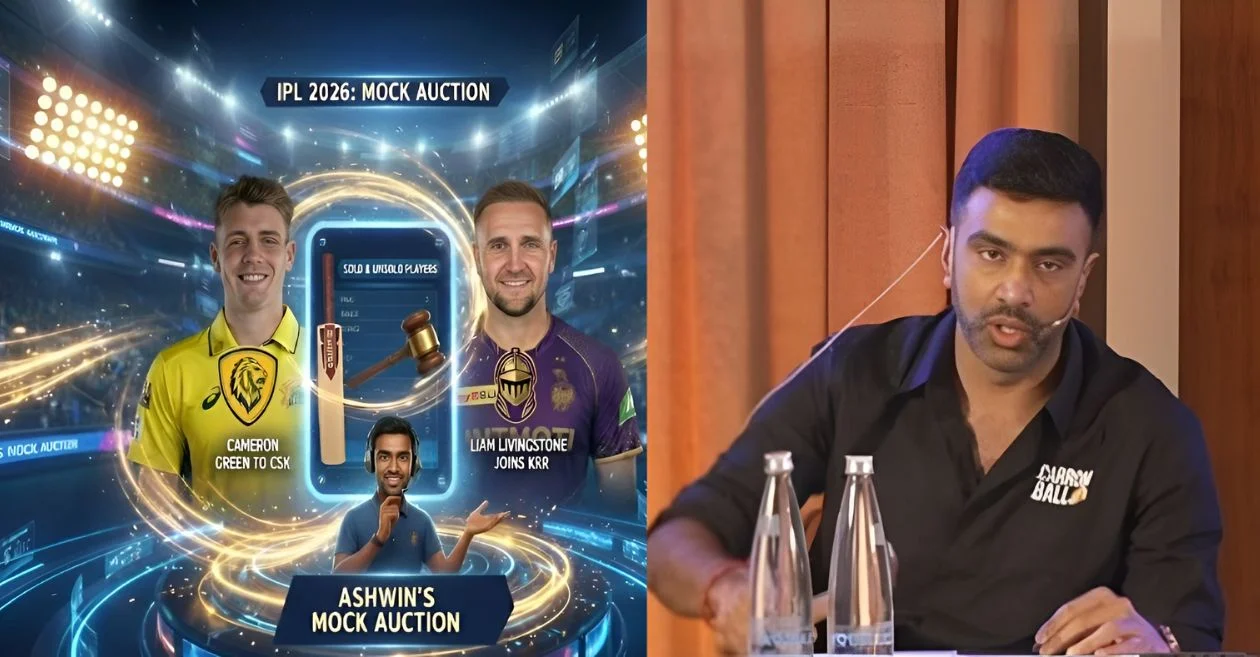
IPL 2026: Cameron Green to CSK, Liam Livingstone joins KKR – Full list of sold and unsold players in Ravichandran Ashwin’s mock auction


The official IPL 2026 mini-auction is scheduled for December 16, but the pre-auction frenzy has already begun, thanks to former Indian  cricketer Ravichandran Ashwin.

Ravichandran Ashwin conducts a high-stakes IPL 2026 mock auction 

Ahead of the real-life bidding war, Ashwin conducted a high-stakes mock auction on his YouTube channel, titled “Winning Bid,” designed to replicate the drama and strategic decisions of the IPL room. This simulated event, featuring invited panels bidding as franchise representatives, immediately became the focus of the IPL chatter. It showcased the immense valuation of high-impact all-rounders and the critical need for quality Indian spinners, offering a clear, non-poetic preview of the dynamics likely to unfold in Abu Dhabi. With only 77 slots available for 359 shortlisted players, the mock auction demonstrated that competition for elite talent will be intense, setting the stage for major financial headlines.

Cameron Green triggers record bidding frenzy

The mock auction’s first major blockbuster was the Australian all-rounder, Cameron Green. Walking in with a base price of ₹2 crore, Green’s value rapidly escalated due to his rare profile as a middle-order batter, seam bowler, and strong fielder. The bidding quickly became a fierce contest, initially between Delhi and Lucknow, before the heavyweights, Chennai Super Kings (CSK) and Kolkata Knight Riders (KKR), jumped in. The ultimate bidding war ended with CSK securing Green for a whopping ₹21 crore, making him the most expensive player of the mock auction. KKR pushed hard but strategically stepped away at this price, acknowledging that Green’s purchase forces a team to build the rest of its XI around his cost. This massive bid underscores the premium franchises are willing to pay for versatile, game-changing overseas all-rounders who offer unique balance to a squad structure.

KKR’s tactical counter in form of Liam Livingstone

Having exited the Green race, KKR executed a strategic “counterpunch” by redirecting their significant purse towards other high-impact all-rounders. KKR’s first major acquisition was England’s Liam Livingstone, whom they successfully landed for ₹18.5 crore after another intense tug-of-war. This move highlighted a deliberate choice: trading Green’s structural balance for Livingstone’s pure impact and “chaos value”, the ability to change a game instantly with boundary-hitting. KKR didn’t stop there, also securing Indian all-rounder Venkatesh Iyer for a substantial ₹17.5 crore. This aggressive double-swoop demonstrated KKR’s intent to load up on powerful all-rounders who can provide flexibility and match-winning performances, even if it meant letting CSK take the headline-grabbing Green signing. KKR further strengthened their Indian core by acquiring opener Prithvi Shaw for ₹5.25 crore.

Also READ: Cameron Green reveals the real reason behind being listed as a ‘batter’ in IPL 2026 auction

Key acquisitions for specific team needs

Beyond the major all-rounder battles, the mock auction saw franchises targeting specific team needs, particularly for established Indian players. Sunrisers Hyderabad (SRH), identified as being in dire need of a quality spinner, successfully acquired the talented Indian leg-spinner Ravi Bishnoi for ₹10.5 crore, a key strategic fix for their bowling unit. Similarly, Delhi Capitals bolstered their death-bowling by signing Sri Lankan speedster Matheesha Pathirana for ₹7 crore. On the batting front, Sarfaraz Khan, following a maiden T20 hundred, found a buyer in Bengaluru for ₹1.50 crore, showing teams are willing to back in-form capped Indian talent. Finally, the highest price for an uncapped player went to wicketkeeper-batter Kartik Sharma, demonstrating the intense competition for young Indian wicketkeeping prospects

Also READ: GOAT India tour 2025: When Virat Kohli, Sachin Tendulkar and MS Dhoni picked between Lionel Messi and Cristiano Ronaldo

Full list of sold and unsold players in Ravichandran Ashwin’s IPL 2026 mock auction

Player Status Team Price Notes
Steve Smith Unsold Remained unsold
Devon Conway Unsold Remained unsold
Cameron Green Sold Chennai ₹21 crore Highest buy
Liam Livingstone Sold Kolkata ₹18.50 crore Power all-rounder
Ravi Bishnoi Sold Hyderabad ₹10.50 crore Lead spinner
Venkatesh Iyer Sold Kolkata ₹17.50 crore Top-order option
Matheesha Pathirana Sold Delhi ₹7 crore Death specialist
Prithvi Shaw Sold Kolkata ₹5.25 crore Opener
Jake Fraser-McGurk Sold Hyderabad ₹2 crore Explosive batter
David Miller Sold Punjab ₹4.50 crore Finisher
Wanindu Hasaranga Sold Lucknow ₹2 crore Spin all-rounder
Rachin Ravindra Sold Punjab ₹2.25 crore Bat-spin option
Jason Holder Sold Lucknow ₹9 crore Pace all-rounder
Jonny Bairstow Sold Kolkata ₹3.75 crore WK-batter
Ben Duckett Sold Kolkata ₹4 crore Left-hand bat
Josh Inglis Sold Chennai ₹2 crore WK-batter
Sachin Baby Unsold No bids
Abhinav Manohar Sold Lucknow ₹1.75 crore Middle-order bat
Kartik Sharma Sold Hyderabad ₹7.50 crore Major surprise buy
Ashok Sharma Sold Gujarat ₹4.25 crore Pace option
Akash Madhwal Sold Chennai ₹4.50 crore Death overs
Vignesh Puthur Sold Chennai ₹3.50 crore Uncapped talent
Matt Henry Sold Kolkata ₹8 crore Strike bowler
Prashant Veer Sold Lucknow ₹4.75 crore Domestic standout
Krains Fuletra Sold Bengaluru ₹7.50 crore Big uncapped buy
Shubham Rana Sold Rajasthan ₹6 crore Spin all-rounder
Shivam Shukla Sold Hyderabad ₹1.75 crore Bowling depth
Gerald Coetzee Sold Lucknow ₹4 crore Fast bowler
Shai Hope Sold Gujarat ₹2 crore Top-order bat
Kyle Jamieson Sold Rajasthan ₹2 crore Fast-bowling all-rounder
Deepak Hooda Sold Rajasthan ₹75 lakh Indian all-rounder


Source link

‘There’s no need for…’: Former India coach sends clear message to Shubman Gill | Cricket News


'There’s no need for…': Former India coach sends clear message to Shubman Gill

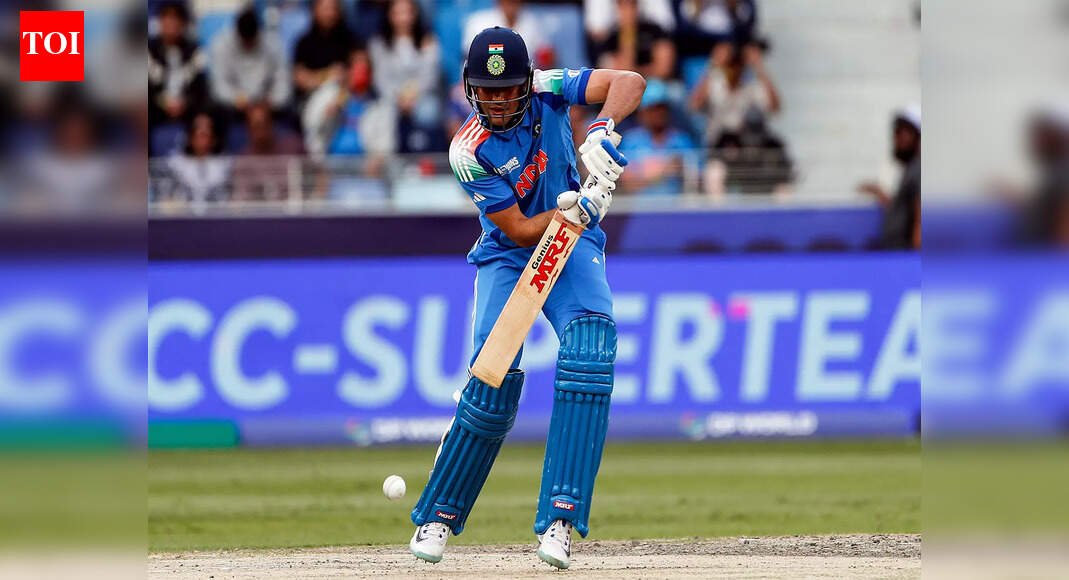
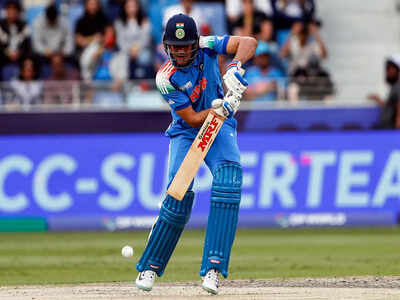
Former India batter Sanjay Bangar has underlined the importance of clearly defining Shubman Gill’s role at the top of the order, urging the opener to concentrate on sound cricketing shots rather than chasing big hits. Bangar believes Gill’s value lies in providing stability, especially with explosive batters like Hardik Pandya, Jitesh Sharma and Shivam Dube waiting in the middle and lower order. Speaking on JioStar, Bangar said Gill should be entrusted with seeing off the new ball, managing difficult overs and absorbing early pressure in tight or low-scoring contests. “I’d clarify his role: there’s no need for big shots. Stick to proper cricketing strokes when you have so many fast scorers behind you. Lay the platform, particularly in crunch situations or low-scoring games. India needs someone who can handle the new ball and survive early breakthroughs, like that first-ball dismissal,” Bangar said.

Ashish Nehra interview: Gujarat Titans head coach backs out of form Shubman Gill

The comments come after Gill endured a tough start to the ongoing five-match T20I series against South Africa. He managed only four runs in the opening match and was dismissed for a golden duck in the second, as the series stands level at 1-1 heading into Sunday’s third T20I in Dharamsala. Gill’s recent numbers have raised concerns. In his last 14 T20I innings, he has scored 263 runs at an average of 23.90 and a strike rate of 142.93, figures that fall short of expectations given his stature. India’s earlier dominance at the top following their T20 World Cup 2024 triumph and the start of 2025 was powered by the opening pair of Sanju Samson and Abhishek Sharma. The duo averaged 33.43 across 16 innings and scored at a striking rate of 193.84, setting up strong middle and death-over returns. A change in strategy saw Gill replace Samson at the top, with selectors viewing him as a future all-format captain. However, the Gill–Abhishek combination has yet to deliver on its promise. While their numbers on paper appear healthy, the partnership has not translated into consistent impact for India so far.


Source link