Breaking News
‘It’s not about form’: Suryakumar Yadav reveals real reason for Shubman Gill’s omission from T20 World Cup squad | Cricket News


'It's not about form': Suryakumar Yadav reveals real reason for Shubman Gill's omission from T20 World Cup squad
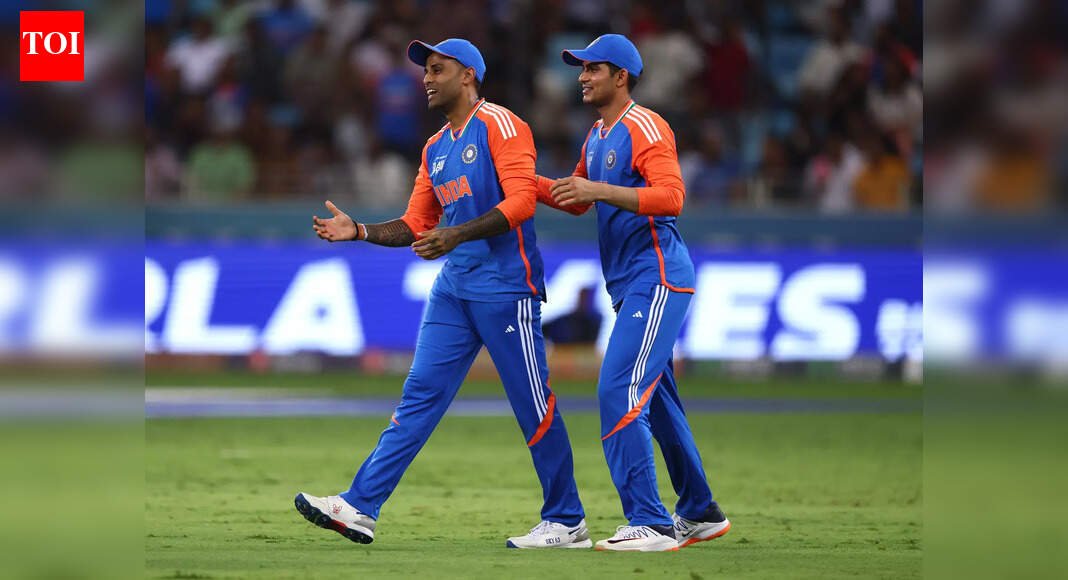
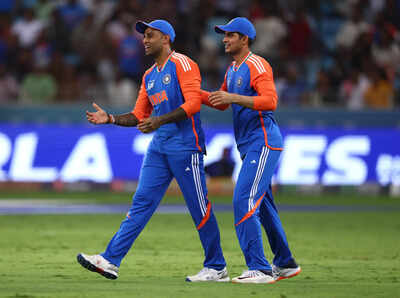
Suryakumar Yadav and Shubman Gill of India (Photo by Francois Nel/Getty Images)

India’s T20 World Cup squad announcement on Saturday sparked widespread debate, with the biggest talking point being the exclusion of Shubman Gill. While Gill currently captains India in both Tests and ODIs, he was surprisingly left out of the squad for cricket’s shortest format. Captain Suryakumar Yadav has now shed light on the reasoning behind the decision. “It’s not about form, it’s about combination. We wanted to have a keeper at the top. We know the quality that Gill brings,” Suryakumar explained. The decision, he added, was driven by team balance rather than a reflection on Gill’s abilities.

Curious case! Why Ajit Agarkar & Co. continue to ignore Ishan Kishan

Gill, 26, had missed the fifth T20I against South Africa due to a foot injury sustained before the fourth T20I, which was itself cancelled due to fog. Since his return to the T20 side during the Asia Cup, where he was also vice-captain, he has struggled to replicate his consistent Test form. In 15 T20 matches since his comeback, Gill scored 291 runs at an average of 24.25 and a strike rate of 137, without a single fifty and a highest score of 47. The reshuffle has also affected other batters. Sanju Samson, who had done well as an opener, including scoring three centuries, was moved down the order when Gill was drafted back and ultimately got dropped as well. In the last T20 against South Africa, Samson opened again and made a solid 37 off 22 balls, giving India a strong start. The team management now plans to revert to their original combination, with a wicketkeeper at the top. Consequently, Jitesh Sharma has been dropped, while Ishan Kishan has been drafted as the second keeper and reserve opener. Kishan comes off a brilliant domestic season in the Syed Mushtaq Ali Trophy, where he captained Jharkhand to their maiden title. He scored 517 runs in 10 matches at an average of 57.44 and a strike rate of 197, including two centuries and two fifties, with a hundred in the final against Haryana. Rinku Singh, part of the Asia Cup-winning squad, returns as the designated finisher in place of Jitesh. All-rounder Axar Patel has been named vice-captain, stepping into the leadership role alongside captain Suryakumar Yadav, who will lead India in both the T20 World Cup and the five-match T20I series against New Zealand starting January 21.India T20 World Cup squad: Suryakumar Yadav (capt), Axar Patel (vice-capt) Abhishek Sharma, Sanju Samson, Tilak Varma, Hardik Pandya, Shivam Dube, Rinku Singh, Jasprit Bumrah, Harshit Rana, Arshdeep Singh, Kuldeep Yadav, Varun Chakaravarthy, Washington Sundar, Ishan Kishan. India, the defending champions after a thrilling 2024 final victory over South Africa in Barbados, will open their T20 World Cup campaign against the USA on February 7 in Mumbai.


Source link

‘Attack on poor’: Sonia Gandhi slams PM Modi over VB-G RAM G Bill; criticises repealing of MGNREGA | India News


'Attack on poor': Sonia Gandhi slams PM Modi over VB-G RAM G Bill; criticises repealing of MGNREGA
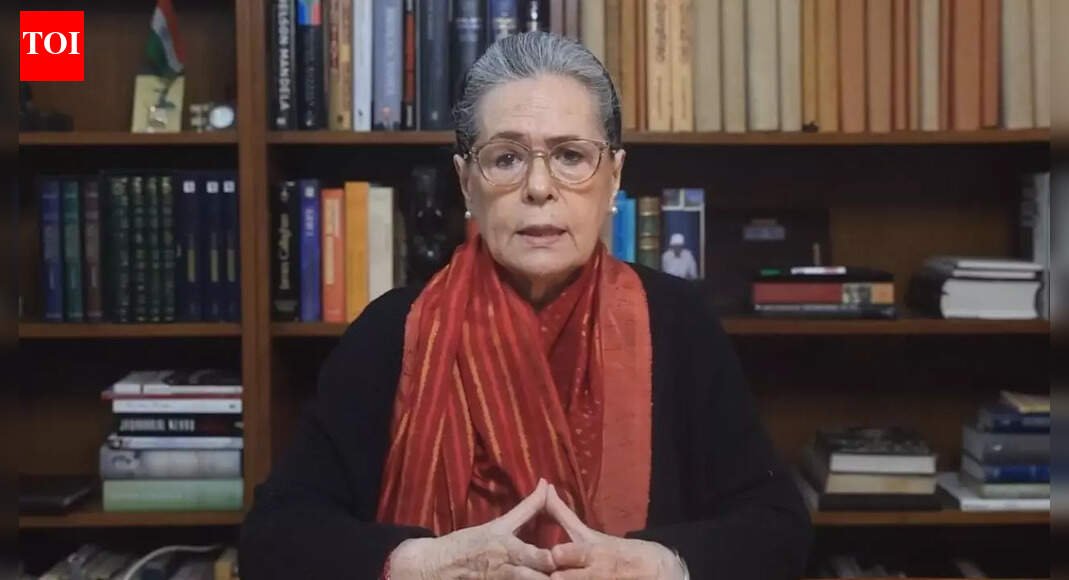
Congress leader Sonia Gandhi (Photo: Screengrab)

NEW DELHI: Congress Rajya Sabha member Sonia Gandhi, reacting to the VB-G RAM G Bill, criticised Prime Minister Narendra Modi, accusing the central government of attacking the interests of the poor by “running a bulldozer over MGNREGA“.Sonia Gandhi alleged that the Modi government, over the past 11 years, has “consistently tried to weaken MGNREGA by neglecting the interests of the rural unemployed, the poor and the marginalised, even though the scheme proved to be a lifeline for these sections during the Covid crisis”.

Midnight Drama Over VB-G RAM G Bill, Opposition Stage Overnight Protest, Sleep Outside Parliament

“While the Congress played a major role in bringing MGNREGA into existence and implementing it, the scheme was never about a political party. It was about national interest and public welfare. By weakening this law, the Modi government has attacked the interests of crores of farmers, workers and landless rural poor,” the former Congress chief claimed.The Rajya Sabha MP further said: “The Congress had a major contribution in bringing and implementing MGNREGA. It was a scheme connected to the interest of the country and the people. The Modi government has attacked the interests of the poor through this.”‘VB-G Ram G’ bill, which awaits the President’s nod, was passed amid fierce protest by the opposition, particularly the INDIA bloc during the Winter Session of the Parliament.On Thursday, rural development minister Shivraj Singh Chouhan, speaking in favour of the bill, claimed that the legislation improves substantially on MGNREGA, which was “riddled” by corruption and inefficiency.The opposition was demanding that the bill be sent to a parliamentary committee for scrutiny and assailed the government for removing Mahatma Gandhi‘s name from the rural employment guarantee scheme.As Chouhan began his reply after Congress MP KC Venugopal’s demand for sending Viksit Bharat-Guarantee for Rozgar and Ajeevika Mission-Gramin (VB-G RAM G) Bill to the committee went unheeded, opposition members trooped into the well, tore its copies and continued their protest till the House passed the bill.The government has repealed the two-decade-old Mahatma Gandhi National Rural Employment Guarantee Act (MGNREGA) with another legislation, titled the Viksit Bharat Guarantee for Rozgar and Ajeevika Mission (Gramin) (VB–G RAM G) Bill, 2025.The bill seeks to replace the MGNREGA with a revamped framework aimed at aligning rural employment and development with the national vision of Viksit Bharat 2047.What is VB–G RAM G?The Viksit Bharat Guarantee for Rozgar and Ajeevika Mission (Gramin) Act, 2025 represents a major overhaul of MNREGA. Under the proposed law, the government “establishes a modern statutory framework aligned with Viksit Bharat 2047, guaranteeing 125 days of wage employment per rural household whose adult members volunteer to do unskilled manual work,” as per a statement released.ALSO READ | MGNREGA to be replaced with VB–G Ram G: What it is and how it’s different — key FAQs answered


Source link

Global Group Proposes Nobel Peace Prize Nomination for PM Narendra Modi, Puts Spotlight on Consciousness-Based Governance | India News


A California-based nonprofit advocacy group, the Declaration of Consciousness Movement (DoCM) (signdc.org), has announced a proposal to nominate Prime Minister Narendra Modi for the 2026 Nobel Peace Prize, citing his leadership in diplomacy, climate action, digital inclusion and inclusive development. The announcement reflects a growing global discourse around what the organisation describes as “consciousness-based governance” — a framework that places ethical leadership, collective wellbeing and inner awareness at the centre of public policy and global cooperation.Members of the public who wish to express their support for the nomination of Honorable Prime Minister Narendra Modi for the 2026 Nobel Peace Prize are invited to visit https://signdc.org/ and add their voice to this global declaration.The DoCM principles consist of the following principles:

  1. Humanitarian Solidarity Across 150+ Countries
  2. Operation Sindoor & Peaceful Diplomacy
  3. Environmental Stewardship & Climate Leadership
  4. Economic Development & Poverty Alleviation
  5. Women’s Empowerment & Naari Shakthi
  6. Digital Public Infrastructure & Governance Transformation
  7. Cultural Diplomacy, Yoga & Soft Power
  8. Innovation & Entrepreneurship
  9. Democratic Mandate & People’s Trust

Together, these principles are the foundation and guiding seeds of wisdom upon which DoCM functions and moves towards conscious progress in unity.

Image

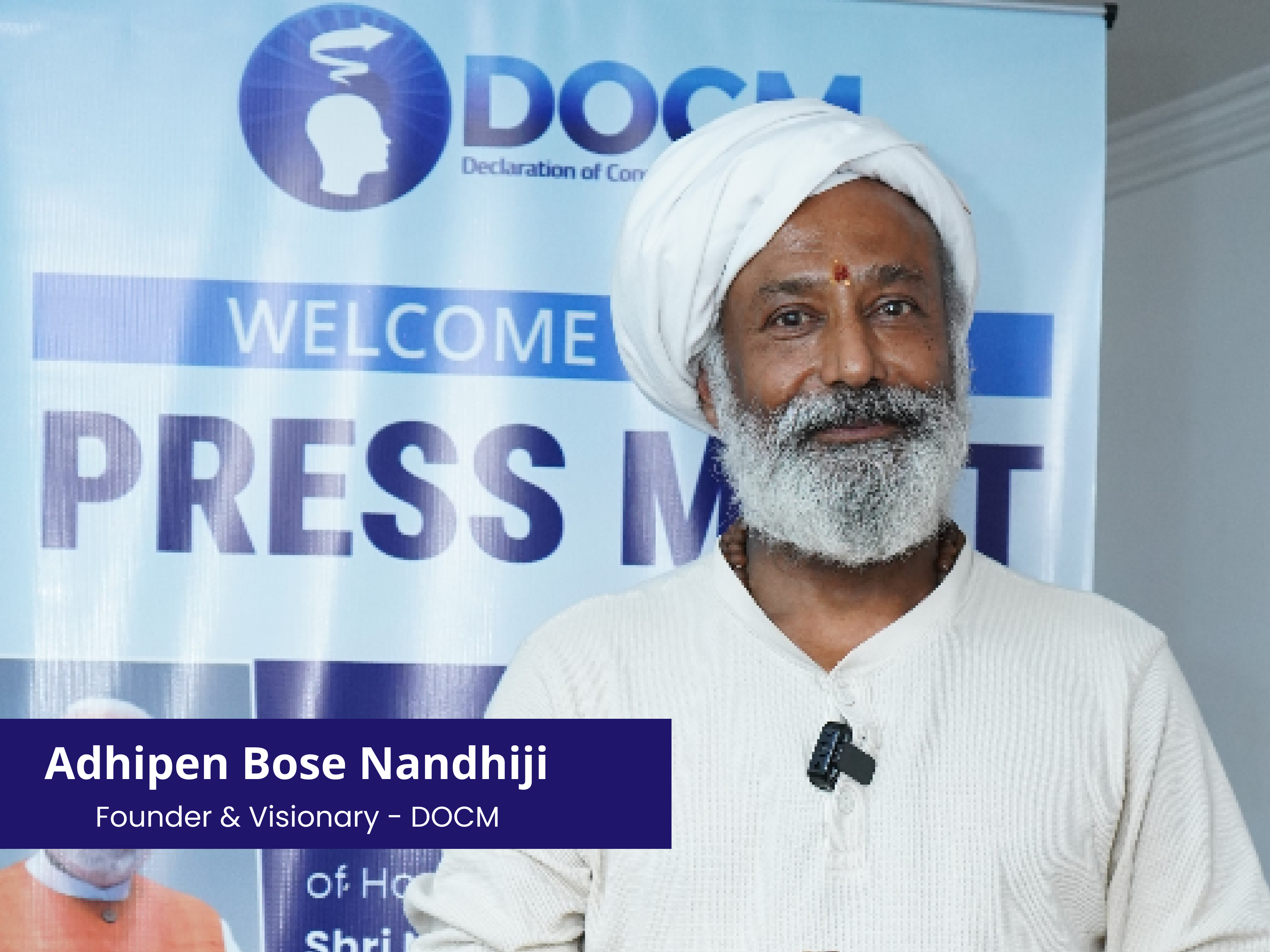
The proposal was unveiled at a press conference in Chennai, where DoCM leaders outlined their rationale for the nomination and their broader vision for peace-led global governance. While Nobel Peace Prize nominations are submitted confidentially by qualified individuals and institutions and are not publicly confirmed by the Norwegian Nobel Committee, DoCM said its proposal is intended to spark dialogue on alternative leadership models at a time of rising geopolitical tensions and social polarisation.DoCM was founded by Adhipen Bose Nandhiji, a proponent of values-based leadership and societal transformation. The organisation describes itself as a global nonprofit working across governance, education and civic life, blending traditional contemplative practices with contemporary behavioural and social research. According to DoCM, its work focuses on translating inner awareness and ethical intent into measurable social and institutional outcomes.

image

Explaining the basis for its proposal, the organisation said Prime Minister Modi’s leadership aligns with several principles it advocates, including peace-oriented diplomacy, environmental responsibility, digital empowerment and inclusive growth. DoCM argues that these elements reflect a governance style rooted in compassion, ethical action and collective upliftment — values it believes are increasingly essential in addressing global challenges such as climate change, inequality and conflict.A key element of DoCM’s initiative is its proposal for the establishment of a World Consciousness Day, envisioned as a global observance inspired by India’s philosophical and spiritual traditions. The organisation noted that the idea builds on existing international observances such as World Yoga Day, which has gained widespread global recognition, as well as the growing international awareness of Maha Shivratri. According to DoCM, such observances symbolise introspection, clarity and compassionate engagement, which it considers foundational to sustainable peace.Central to DoCM’s framework are nine guiding principles that it describes as the foundation of an ethical global society. These include nonviolence, equality, freedom, women’s rights, children’s rights, respect for elders, ethical and conscious institutions, environmental responsibility and unity beyond cultural or ideological divisions. The organisation says these principles are designed to transcend religious, political and national boundaries, offering a shared moral compass for societies navigating rapid technological and social change.To operationalise these ideals, DoCM works through four international programmes focused on peace dialogue and diplomacy, education and cultural transformation, consciousness research, and planetary awareness. The organisation has stated its intention to encourage national adoption of its Declaration in India, with the longer-term goal of seeking consideration of the framework as a resolution at the United Nations.

image

DoCM leaders emphasised that their proposal should be viewed within a broader context of evolving global leadership paradigms. In a world marked by climate uncertainty, social fragmentation and escalating geopolitical risks, the organisation argues that conventional approaches to governance may no longer be sufficient. Instead, it calls for leadership that integrates awareness, cooperation and ethical responsibility into decision-making processes at both national and international levels.While the Nobel Peace Prize process itself remains confidential and independent, the proposal has added to ongoing discussions about India’s growing role in shaping global narratives around peace, sustainability and inclusive development. For DoCM, the initiative represents not just a nomination, but an attempt to foreground consciousness-led governance as a viable framework for addressing the complex challenges of the 21st century. As the organisation’s guiding philosophy suggests, lasting peace, it argues, begins with an elevation of collective awareness.Learn More of the nine citations of Honorable Prime Minister Shri Narendra Modiji for the Nobel Peace Prize.https://signdc.org/Disclaimer: Content Produced by Declaration of Consciousness Movement


Source link

India’s delayed $5-trillion dream: What IMF’s new timeline means for your wallet


AI image (For representative purposes only)

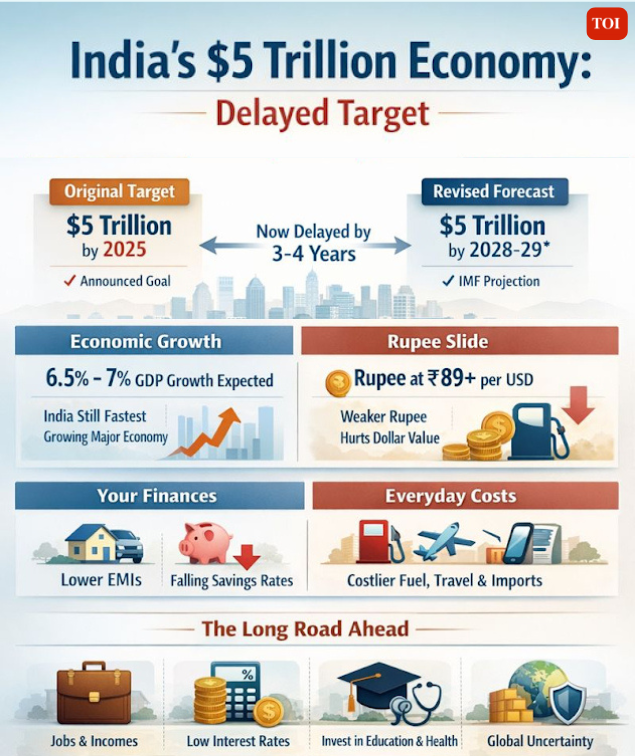
When senior ministers began promising a $5-trillion Indian economy by 2024–25, it was sold as a near-term milestone that would change everyday life — more jobs, better infrastructure, bigger pay packets. In late 2022, home minister Amit Shah even declared that “India will become a 5 trillion dollar economy by 2025.”Three years on, the goalpost has quietly shifted.The IMF’s latest numbers now suggest India is likely to cross the $5-trillion mark only around 2028–29, not mid-decade. A widely cited analysis of the IMF’s October 2025 database, for instance, projects India’s nominal GDP at about $4.125 trillion in 2025-26 and roughly $4.96 trillion in 2027-28 — just shy of the magic figure, implying $5 trillion only in FY29.

India's $5 trillion economy

So the headline target is delayed by roughly three to four years. But what does that actually do to your money life — your salary hikes, EMIs, investments and the price of everyday goods?

The numbers behind the slippage

First, it’s worth stressing what hasn’t changed.The IMF still expects India to be the world’s fastest-growing major economy, with real GDP growth around 6.2–6.6% in 2025–26, even after modest downgrades. The RBI is even more upbeat, pegging FY26 growth at 7.3%, and projecting inflation at just 2% — well below its 4% target. The delay is less about growth collapsing, and more about how we count “$5 trillion”:

  • The target is in US dollars, so it depends heavily on the rupee–dollar exchange rate.
  • It uses nominal GDP, which includes inflation. If inflation is unusually low, nominal GDP (in rupees) grows more slowly than real GDP.
  • A weaker rupee and softer inflation together drag down dollar GDP, even if the real economy is chugging along.

In April 2025, the IMF’s World Economic Outlook projected India’s nominal GDP at around $4.19 trillion in 2025, enough to nudge past Japan and become the world’s fourth-largest economy. That sounds impressive — but it still leaves a gap of roughly $800 billion before the 5-trillion milestone.On top of that, the rupee has slid to record lows near Rs 91 to the dollar, and the IMF has just reclassified India’s exchange-rate regime as a “crawl-like arrangement,” noting that the currency has weakened about 4% this year with higher volatility. A cheaper rupee means that the same rupee GDP translates into fewer dollars, pushing the 5-trillion finish line further out.Put simply: the real economy is doing decently; the dollar math is not.

1. Jobs and salaries: Slower sprint, not a halt

For your paycheque, the good news is that a delay in the $5-trillion headline doesn’t automatically mean fewer jobs or pay cuts.

  • The IMF, RBI and private forecasters like Moody’s all see India growing around 6.5–7% in 2025, still the standout among large economies
  • Domestic demand and investment are holding up, helped by government capex and tax cuts on consumer goods.

In practice, that suggests:

  • White-collar sectors like IT, financial services and digital platforms may not see the manic hiring of the post-Covid boom, but they are unlikely to fall off a cliff either.
  • Manufacturing, construction, infrastructure and logistics, which benefit from public capex and PLI schemes, could keep adding jobs — though unevenly across states.
  • The real squeeze is in informal and low-skill urban work, where global trade headwinds and US tariffs are hurting export-linked sectors, limiting high-quality job creation.

So your salary hike may not suddenly vanish because we hit $5 trillion in 2029 instead of 2026-27. But the longer it takes to scale up the economy, the longer it takes for per-capita incomes to meaningfully rise. IMF-based estimates already show India’s per-capita income doubling from about $1,400 in 2013–14 to around $2,880 in 2025 — progress, but still far from upper-middle-income comfort.

2. EMIs, interest rates and your bank deposits

The delayed 5-trillion timeline is emerging just as India enters a low-inflation, low-rate phase.

  • CPI inflation has plunged to near-zero (about 0.25–0.3%) in October 2025, helped by a collapse in food prices and tax cuts on consumer goods.
  • The RBI had recently slashed the repo rate by a quarter basis point to 5.25%, taking the cumulative cut throughout the year to 1.25%.
  • With the US Federal Reserve cutting rates, there are expectations that the RBI may cut interest rates again in 2026.

For your wallet, that has a clear split:

  • Borrowers win: Home loan and car loan EMIs should ease compared to the tight-money phase after Covid. Even if the next cut is modest, borrowers rolling over floating-rate loans will see relief over the next year or two.
  • Savers lose: Bank FD rates and small-savings yields will trend lower. With inflation near 2–3%, your real return may still be positive, but the days of 7–8% risk-free rates might be behind us for now.

The twist: a weaker rupee and US tariffs put a ceiling on how far the RBI can cut. If the rupee slides too fast, imported inflation (especially fuel) can come back, forcing the central bank to pause.So don’t plan your finances around an endless rate-cut party. Think of this as a window to refinance expensive loans and rebalance your savings, not a permanent new normal.

3. Rupee at 91: Imported dreams get pricier

The rupee’s fall to around Rs 91 per dollar is not just a headline for traders; it shows up across middle-class budgets. Here’s where you’re likely to feel it most:

  • Fuel & transport: Petrol and diesel prices are influenced by global crude and the rupee. Even if global oil is soft, a weaker rupee limits how much pump prices can drop, keeping commuting and logistics costs elevated.
  • Imported gadgets: Smartphones, laptops, high-end TVs and gaming gear are heavily import-dependent. A sustained rupee slide makes each upgrade a little costlier, or shrinks discounts.
  • Foreign education and travel: Fees billed in dollars or euros, plus airfare and local costs, become sharply more expensive in rupees. Families planning overseas degrees will need bigger education-loan top-ups or deeper savings.
  • Online subscriptions: Many streaming, software and cloud services charge in foreign currency; expect a slow creep up in rupee prices.

There are winners too:

  • Exporters and IT services companies often benefit from a weaker rupee, since a large share of their revenue is in dollars.
  • Households receiving remittances from abroad get more rupees per dollar, cushioning domestic budgets.

From a 5-trillion-dollar perspective, though, a weaker rupee is precisely what delays the milestone, because every rupee of GDP converts into fewer dollars.

4. Taxes, welfare and public services

Another, less visible effect of delayed dollar GDP is on government finances.

  • With nominal GDP in dollar terms growing more slowly, India’s tax-to-GDP ratio and debt-to-GDP ratio look less flattering in international comparisons, even if real activity is firm.
  • The Centre has committed to a gradual fiscal consolidation path; IMF directors back this but say it should stay flexible given trade shocks and tariffs.

For citizens, that could mean:

  • Less room for big-bang new subsidies or freebies without offsetting spending cuts or new taxes.
  • Continued focus on capital expenditure (roads, railways, defence, digital infra) over blanket consumption stimulus.
  • Possible pressure to widen the tax base — better compliance on GST and income tax — rather than simply hiking rates.

The risk is that if growth disappoints or tariffs bite harder than expected, future governments may resort to “stealth” revenue raisers: higher sin taxes, user charges, or fewer exemptions. That’s where a slower march to $5 trillion can intersect harshly with everyday budgets.

5. Your investment plan in a “longer runway” economy

For investors, the IMF’s new timeline is less a reason to panic and more a cue to adjust expectations.None of this is personalised financial advice, but the broad message is clear: build plans around realistic 6–7% growth and a gently weakening rupee, not around political timelines for $5 trillion.

Beyond the headline: Real prosperity vs round numbers

Finally, the uncomfortable but important point: crossing $5 trillion changes very little overnight.Even today, at a little over $4 trillion in GDP and per-capita income of under $3,000, India hosts both a booming elite consumer class and millions still stuck in precarious informal work. Whether the macro number hits five twelve quarters earlier or later matters far less than:

  • how quickly good jobs are created,
  • how reliably inflation stays low and stable,
  • how efficiently the state delivers health, education and infrastructure, and
  • how well households are equipped to save and invest.

The IMF’s new timetable is a reality check: you can’t wish away exchange-rate arithmetic and global shocks with slogans. But it’s not a verdict of failure either. India is still on course to be the world’s third-largest economy within a decade; it will just get there via a slightly longer, more volatile road than originally advertised.For your wallet, that means this: plan for a marathon, not a sprint — steady income upskilling, disciplined saving, diversified investments, and realistic expectations. The $5-trillion headline will eventually come. Whether you personally feel prosperous when it does will depend far more on the financial choices you make in the years in between.

Source link

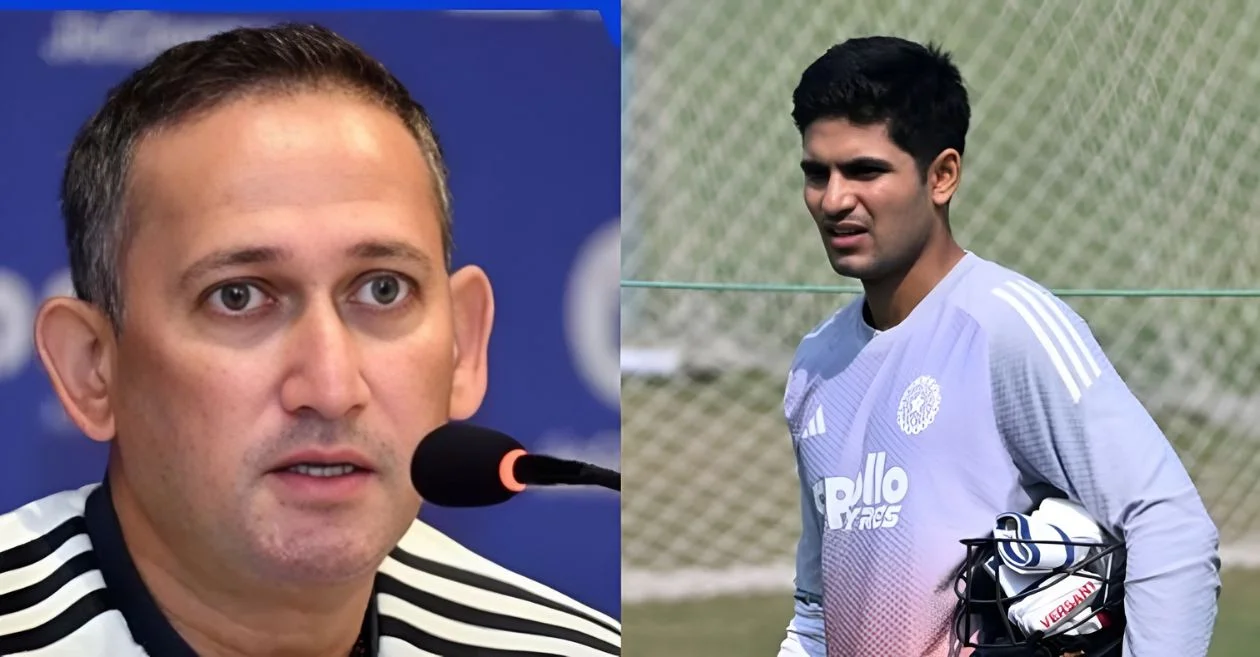
Why Shubman Gill was left out of India’s T20 World Cup 2026 squad? Ajit Agarkar explains


In a surprising turn of events, Shubman Gill was left out of India’s T20 World Cup 2026 squad, despite being a vice-captain earlier in the year. His exclusion comes as part of a strategic decision based on recent form, injury setbacks, and team combinations.

Ajit Agarkar explains the reasons behind Shubman Gill’s exclusion from India’s T20 World Cup squad

BCCI Chairman of Selectors, Ajit Agarkar, shared insights into the rationale behind the choice, shedding light on the factors influencing the selection.

“Obviously, Shubman was the vice-captain, and with him not in the team, we had to appoint someone else. Axar Patel had already stepped in as vice-captain when Shubman was unavailable, and we’ve decided to continue with that role,” Agarkar explained.

Despite being a key player in India’s setup, Gill’s struggles with form were the primary reason behind his exclusion. His recent scores 4, 0, and 28 in the South Africa series didn’t meet the team’s expectations. Gill, who had been recovering from a neck sprain, missed several matches and couldn’t regain his momentum in T20Is. “We know he is a quality player, but with his ongoing injury issues and the lack of substantial runs, it became difficult to select him,” Agarkar remarked. This series of challenges, coupled with inconsistent performances, led to his exclusion from the T20 World Cup squad.

The BCCI’s focus was not just on individual performances but also on crafting an ideal team combination. Agarkar further explained, “We were looking for certain combinations, and having two wicketkeepers at the top was one of the key strategies. Players like Rinku Singh were included to strengthen the middle order, offering more depth.” This strategic shift resulted in the decision to omit Gill despite his previous contributions to the team.

Also READ: Shubman Gill dropped, Ishan Kishan & Rinku Singh return as India unveil squad for T20 World Cup 2026

Suryakumar Yadav on role fixation and team management’s approach

India’s captain Suryakumar Yadav supported Agarkar’s stance, emphasizing the importance of role clarity. “We have fixed roles for players now, with Tilak Varma at number 3 and myself at number 4. The left-right combination is somewhat overrated,” Yadav said. The team’s emphasis is on stability, with players like Varma and Yadav securing key spots in the batting lineup.

Gill’s omission is not a reflection of his lack of ability but more about the balance of the squad. “Sometimes, the team management needs to make tough choices, and in this case, Shubman had to miss out. It’s not because he’s not a good player, but because of the combinations we want to play,” Agarkar explained. The inclusion of players like Rinku Singh, who add depth to the lower middle order, meant there was no space for Gill in the 15-player squad.

In line with the team management’s thinking, Agarkar further highlighted the need for balance in the squad. “When selecting a team, it’s not just about one or two players but how the team as a whole fits together. Having another keeper at the top provides us with options and flexibility elsewhere in the lineup,” Agarkar concluded. This strategic move was essential for India to play with a balanced combination, and unfortunately, it meant that Gill had to be left out.

Also READ: Top 5 fastest fifties for India in T20I cricket ft. Hardik Pandya – IND vs SA


Source link

World Bank funding boost for Pakistan: $700 million tranche approved under multi-phase plan – check details


World Bank funding boost for Pakistan: $700 million tranche approved under multi-phase plan - check details

The World Bank has approved $700 million in fresh financing for Pakistan as part of a longer-term programme aimed at supporting macroeconomic stability and improving public service delivery.As per Reuters, the funding has been cleared under the Public Resources for Inclusive Development – Multiphase Programmatic Approach (PRID-MPA), a framework through which Pakistan could receive up to $1.35 billion over multiple phases. The lender said the latest approval represents a major tranche under this broader initiative.Out of the $700 million, $600 million will be directed towards federal-level programmes, while the remaining $100 million will support a provincial initiative in Sindh, Pakistan’s southern province. The focus of the financing is to strengthen public resources and improve the delivery of essential services at both national and provincial levels.The approval comes months after the World Bank extended a $47.9 million grant in August to support primary education reforms in Punjab, the country’s most populous province. Together, the funding decisions signal continued engagement by multilateral lenders with Pakistan as it works to stabilise its economy and manage long-standing structural challenges.However, concerns over governance and institutional weaknesses remain. An IMF–World Bank report uploaded by Pakistan’s finance ministry in November flagged serious issues, including fragmented regulation, opaque budgeting practices and political capture of public resources. According to the report, these factors continue to deter investment and weaken the country’s revenue base, limiting the effectiveness of economic reforms.The latest World Bank financing also comes at a time when Pakistan remains heavily dependent on external funding to support its economy. Public debt has continued to rise, driven by slower economic growth and sustained borrowing from multilateral institutions. Recent inflows from bodies such as the IMF and other lenders have helped shore up external reserves and support fiscal consolidation efforts, but debt pressures remain elevated.Despite these challenges, Pakistan’s economy has shown signs of gradual recovery following two years of volatility. Growth has picked up modestly, the current account has moved into surplus, and foreign exchange reserves have improved, helped by multilateral disbursements and higher remittance inflows.The World Bank’s phased financing approach allows it to retain leverage over future funding while continuing to support Pakistan’s economic stabilisation efforts. How effectively the new funds translate into lasting reforms and improved service delivery will likely determine the pace and scale of further disbursements under the $1.35 billion programme, as per Reuters.


Source link

Access Denied


Access Denied

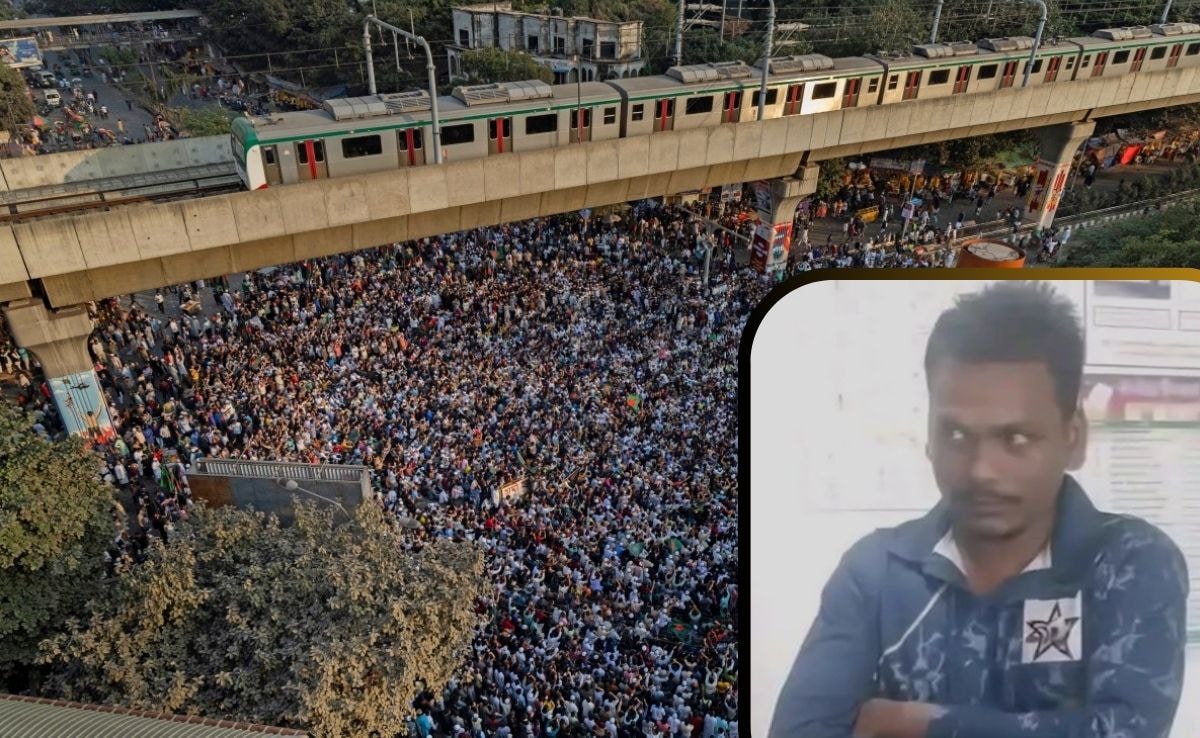
You don’t have permission to access “http://www.ndtv.com/world-news/bangladesh-violence-live-dipu-chandra-das-hindu-man-lynched-father-ravilal-das-exclusive-9853757” on this server.

Reference #18.acf856b8.1766226955.11545ce8

https://errors.edgesuite.net/18.acf856b8.1766226955.11545ce8


Source link

India squad for T20 World Cup: Shubman Gill dropped; Ishan Kishan included in 15-member squad | Cricket News


India squad for T20 World Cup: Shubman Gill dropped; Ishan Kishan included in 15-member squad
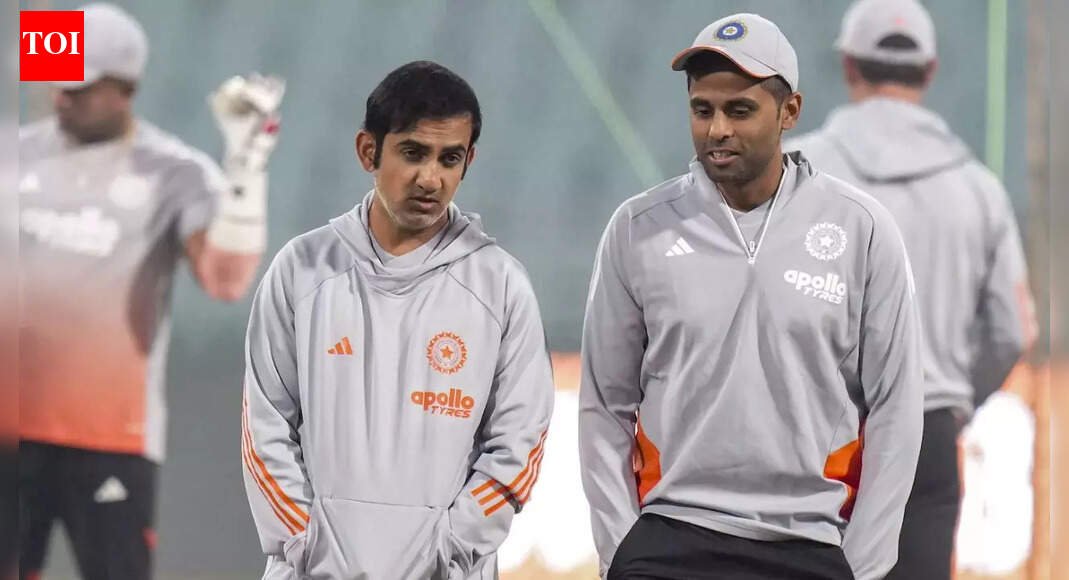
Suryakumar Yadav and Gautam Gambhir (BCCI Photo)

NEW DELHI: Chief selector Ajit Agarkar on Saturday announced India’s squads for the upcoming ICC T20 World Cup and the five-match T20I series against New Zealand. The T20I series will begin on January 21 in Nagpur and will serve as India’s final assignment in the format before the global tournament, scheduled from February 7 to March 8. India have been drawn in Group A for the T20 World Cup, alongside Namibia, the Netherlands, Pakistan, and the United States. The hosts will open their campaign against the USA on February 7 in Mumbai.

Curious case! Why Ajit Agarkar & Co. continue to ignore Ishan Kishan

Despite a lean run with the bat in the recently concluded T20I series against South Africa, which India won 3–1, Suryakumar Yadav has been entrusted with the captaincy for the marquee event. In 20 matches and 18 innings this year, Suryakumar has scored 213 runs at an average of 14.20, striking at just over 125, without registering a single half-century.

Full Squads

India T20Is vs New Zealand: Suryakumar Yadav (c), Abhishek Sharma, Sanju Samson (wk), Tilak Varma, Hardik Pandya, Shivam Dube, Axar Patel, Jasprit Bumrah, Rinku Singh, Harshit Rana, Arshdeep Singh, Kuldeep Yadav, Varun Chakaravarthy, Washington Sundar, Ishan Kishan India T20 World Cup: Suryakumar Yadav (c), Abhishek Sharma, Sanju Samson (wk), Tilak Varma, Hardik Pandya, Shivam Dube, Axar Patel, Jasprit Bumrah, Rinku Singh, Harshit Rana, Arshdeep Singh, Kuldeep Yadav, Varun Chakaravarthy, Washington Sundar, Ishan Kishan India’s T20 World Cup squad sees some major changes. Notably, Shubman Gill, who was India’s vice-captain in the T20 setup, has been dropped, with all-rounder Axar Patel named as the new vice-captain. Gill had struggled to find form since opening the innings. Brought back into the playing XI as part of the management’s long-term leadership plan, his performances remained underwhelming. In 15 T20 matches since his comeback, Gill has scored 291 runs at an average of 24.25 and a strike rate of 137, failing to register a single fifty.Meanwhile, Sanju Samson, who had performed exceptionally well, including scoring three centuries as an opener, was moved down the order. His Asia Cup performance was mixed, though he finished as India’s third-highest run-scorer with 132 runs, behind Abhishek Sharma (314) and Tilak Varma (213). A solitary outing in Australia at No. 3 yielded little impact, after which Samson was dropped from the playing XI. In the last T20 against South Africa, Samson opened the innings again and scored a solid 37 off 22 balls, giving India a good start. The team management now plans to return to their original composition of playing a wicketkeeper at the top. Consequently, Jitesh Sharma has been dropped, and Ishan Kishan has been drafted as the second keeper. Ishan Kishan and Rinku Singh make the T20 World Cup squad, while Shubman Gill and Jitesh Sharma miss out. Kishan comes off a stellar domestic season in the Syed Mushtaq Ali Trophy, where he captained Jharkhand to their maiden T20 title. He finished the season as the highest run-scorer, amassing 517 runs in 10 games at an average of 57.44 and a strike rate of 197.


Source link

‘Infiltrators enjoy TMC’s patronage’: PM Modi targets TMC in virtual Nadia rally address – top quotes | India News


‘Infiltrators enjoy TMC’s patronage’: PM Modi targets TMC in virtual Nadia rally address – top quotes

Prime Minister Narendra Modi on Saturday virtually addressed a public rally in West Bengal’s Nadia district after low visibility due to fog prevented his helicopter from landing. Pitching the BJP as the engine of development for the state, PM Modi urged voters in the poll-bound state to give the party a chance to form a “double-engine government” in Bengal.In his first virtual rally of the day, PM Modi launched a sharp attack on the ruling Trinamool Congress, alleging that infiltrators were enjoying the party’s “patronage” and accusing it of obstructing Bengal’s development for political reasons.The Prime Minister said opposition to him or the BJP should not come at the cost of the state’s progress, stressing that Bengal’s development must not be stalled due to partisan politics.

Here are the top quotes from PM Modi’s virtual address

  • “The TMC wants to oppose the BJP. Let them oppose us as fiercely as they want. But why should Bengal’s development be stopped? You may oppose Modi, but do not make the people of Bengal unhappy. Do not deprive them of their rights.”

  • “Our attempts aim to ensure modern connectivity to Bengal’s remote and far-flung regions that have suffered for years on account of backwardness.”

  • “The Left destroyed Tripura during its three decades of rule. Today, after embracing the BJP, the state is developing rapidly.”
  • “Infiltrators enjoy TMC’s patronage in Bengal.”

  • “Bihar has once again given a massive mandate for development. It has rejected ‘jungle raj’ with one voice, and this has opened the doors for the BJP’s victory in Bengal as well.”

  • “We will end TMC’s ‘maha jungle raj’ in Bengal, where corruption, nepotism and appeasement politics are ruling the roost.”

  • “Let TMC oppose me and the BJP as much as it wants, but Bengal’s progress should not be stopped.”

  • “Bengal is falling behind on the development graph compared to BJP-ruled Tripura, which is striding ahead.”


Source link

Infosys stock shock! Why did ADRs jump nearly 40% in minutes on NYSE? Explained


Infosys stock shock! Why did ADRs jump nearly 40% in minutes on NYSE? Explained

US-listed shares of Infosys shot up as much as 40% within minutes of the market opening on Friday, briefly adding tens of billions of dollars to the Indian IT major’s market value. The sudden surge pushed the American Depositary Receipts (ADRs) to a 52-week high of $30 and forced the New York Stock Exchange to halt trading due to extreme volatility, according to ET. The sharp move took place during a low-liquidity holiday session and was not linked to any new announcement from the company.Why did the rally raise eyebrows?The speed and scale of the rise caught traders off guard because there was no obvious trigger. Analysts pointed out that such extreme swings are unusual for a large, widely tracked stock like Infosys. The trading halt itself highlighted how fragile markets can become when liquidity is thin and automated systems dominate activity.Was a short squeeze involved?One of the main explanations doing the rounds was a possible short squeeze. This happens when investors betting against a stock are forced to buy it back quickly as prices rise, pushing the stock even higher. Traders quoted by Moneycontrol said a major lender may have recalled 45–50 million Infosys ADR shares that had been lent out. That number is far higher than the usual daily trading volume of about seven to eight million shares. In a thin market, such a recall could have forced short sellers to rush for shares, accelerating the spike.Did a technical glitch play a role?Another theory is centred on a data error. According to The Chronicle Journal, several market data platforms mislabelled the Infosys ticker ‘INFY’ as ‘American Noble Gas Inc’. While the company name was wrong, the financial data and news attached to the ticker still referred to Infosys, including details about its AI investments and $75 billion market value. This mismatch may have confused algorithmic trading systems, triggering automated buying and adding fuel to the rally.Did the sector backdrop help?Indian IT stocks had received some support after Accenture posted better-than-expected results. However, analysts said this alone could not explain such a dramatic move in Infosys ADRs, as per ET.Infosys clarified that there was no material reason behind the volatility. In an exchange filing, the company said the ADRs saw sharp price movements on December 19, triggering two volatility trading pauses on the NYSE, but added that there were “no material events that require disclosure” under listing regulations.Whether driven by short covering, a technical glitch or both, the episode underlines how quickly markets can spiral when low liquidity, automated trading and data errors collide — even for blue-chip stocks.


Source link