Breaking News
‘Blaming India is preposterous’: Shashi Tharoor on Bangladesh violence; flags concern over upcoming election | India News


'Blaming India is preposterous’: Shashi Tharoor on Bangladesh violence; flags concern over upcoming election

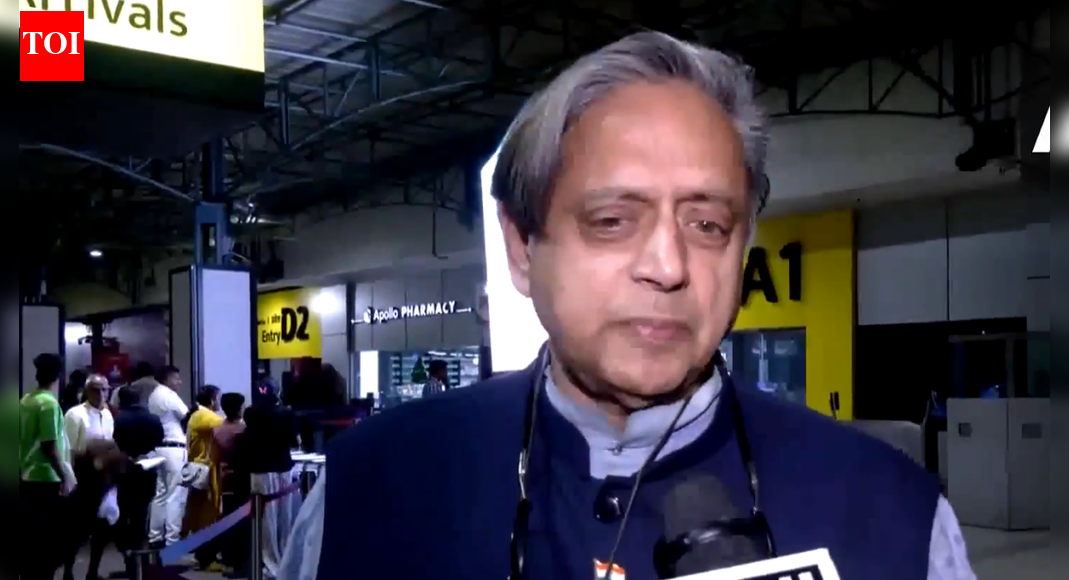
NEW DELHI: Congress MP Shashi Tharoor on Thursday expressed serious concern over the unrest in Bangladesh, saying the violence, including the lynching of a person in police custody, was an outrage and warning that the deteriorating law-and-order situation could undermine the country’s scheduled elections.“Look, it’s a very serious problem because obviously, from our point of view, we want Bangladesh to be stable and calm and we do want the minorities there to feel safe. This lynching was truly an outrage because it was completely unwarranted. There was no question of any act of blasphemy by this person. And he even was in the custody of the police. He should not have been handed over to the mob and lynched in this horrible way,” Tharoor said.Tharoor said the broader street violence and protests across Bangladesh, including demonstrations outside Indian diplomatic missions, had created an atmosphere of instability ahead of elections scheduled for February.“But the other disturbances across the streets in many parts of Bangladesh, including protests outside our consulates, which we call Assistant High Commissions there, all of this have created, unfortunately, an atmosphere which is not conducive to the kind of calm and stability we would all like to see leading up to the elections that are scheduled for February,” he said.The Congress leader also rejected allegations blaming India for the death of a student leader in Bangladesh, calling such claims baseless and harmful.“At the same time, the unnecessary rhetoric blaming India for the death of the student leader, which is preposterous. There’s no reason why India would have any interest in creating destabilization in Bangladesh. That has also created an atmosphere of hostility towards the minorities, which obviously has raised concerns across the country,” Tharoor said.Referring to protests in India triggered by developments across the border, Tharoor said such demonstrations were within democratic rights but must remain peaceful.“It’s not entirely surprising that with this kind of volatile atmosphere across the border, that in India also, some groups have organized protests in return. In our democracy, they have a right to do so. I don’t think anyone has felt that these protests are getting out of hand. There has been no violence, no lynching, and certainly any attempted violence will and should be clamped down upon by our police,” he said.Speaking separately in Thiruvananthapuram, Kerala, Tharoor said the Bangladesh government must move beyond statements of regret and take firm action to restore order.“What we want to see is for the Bangladeshis to do the same thing. That is, they must curb the violence. There’s not enough for the government of Bangladesh to just express regrets or condemnation. They have to take action because controlling the violence on the streets is their obligation as a government,” he said.He warned that holding elections in the current atmosphere would be difficult. “They need to ensure that the streets are calm again, that people can feel safe again. How can you have an election in less than two months’ time in an atmosphere of lawlessness and intimidation, where the voters may not even feel safe?” Tharoor said.Calling for decisive measures, he added, “We’re urging the government to take matters into its hands. If the police can’t do it, send the army, but stop this nonsense.”Tharoor also stressed that protests in India would not be allowed to cross democratic limits. “And in India, of course, the protests are protests, but they will not be allowed to cross any of the boundaries of a democratic protest. Certainly no violence will be encouraged or permitted,” he said.


Source link

‘Not going to criticise them’: Former captain defends England players amid Noosa ‘drinking’ storm | Cricket News


'Not going to criticise them': Former captain defends England players amid Noosa 'drinking' storm
Ben Duckett (right) during an England training session on December 25, 2025 in Melbourne. (Getty Images)

England’s Ashes tour has been engulfed by controversy off the field, but former captain Michael Vaughan has urged restraint, arguing that outrage over the team’s mid-series beach break in Noosa misses the bigger picture of cricket’s long-standing culture.Go Beyond The Boundary with our YouTube channel. SUBSCRIBE NOW!Captain Ben Stokes faced pointed questions on Wednesday after British media reports likened England’s downtime between the second and third Tests to a “stag-do”, with unverified social media footage appearing to show opener Ben Duckett drunk and disoriented. Stokes did not address the specific allegations, instead stressing that player welfare was his overriding concern as England prepare for the fourth Test in Melbourne.

India T20 World Cup squad: In search of ideal combination, Agarkar & Co. drop Shubman Gill

England cricket chief Rob Key has since pledged to investigate the claims, while the ECB said it is intent on establishing the facts.Writing in his Telegraph column, Vaughan cut through the noise with a blunt defence of the players. “I am not going to criticise England for what they got up to in Noosa,” Vaughan wrote. “I criticise what they do on the cricket field, the way they play, and the way they prepare to play cricket.”Vaughan admitted the footage was not flattering, but said singling out Duckett was unfair. “I am not going to point the finger at a group of young people who have had a few beers on a couple of days off,” he said. “I did exactly the same as them when I played for England, although I did at least know when it was time to go home, and that is probably what Ben Duckett needs to learn.”

Poll

Should media scrutiny influence team behavior during off days?

The former skipper then added that it is a systemic issue rather than an individual failing. “Duckett should not be reprimanded at all on the evidence we have seen, and neither should the other players,” Vaughan argued. “It is a wider issue: the game of cricket has created this drinking culture.”According to Vaughan, this culture is not unique to England. “England, Australia, New Zealand and South Africa all have the same culture,” he wrote. “You give a group of young people three or four days off to relax, and they’re going to do something like this.”


Source link

The new logic of rural welfare: Why VB-G RAM G makes sense for a $4 trillion economy


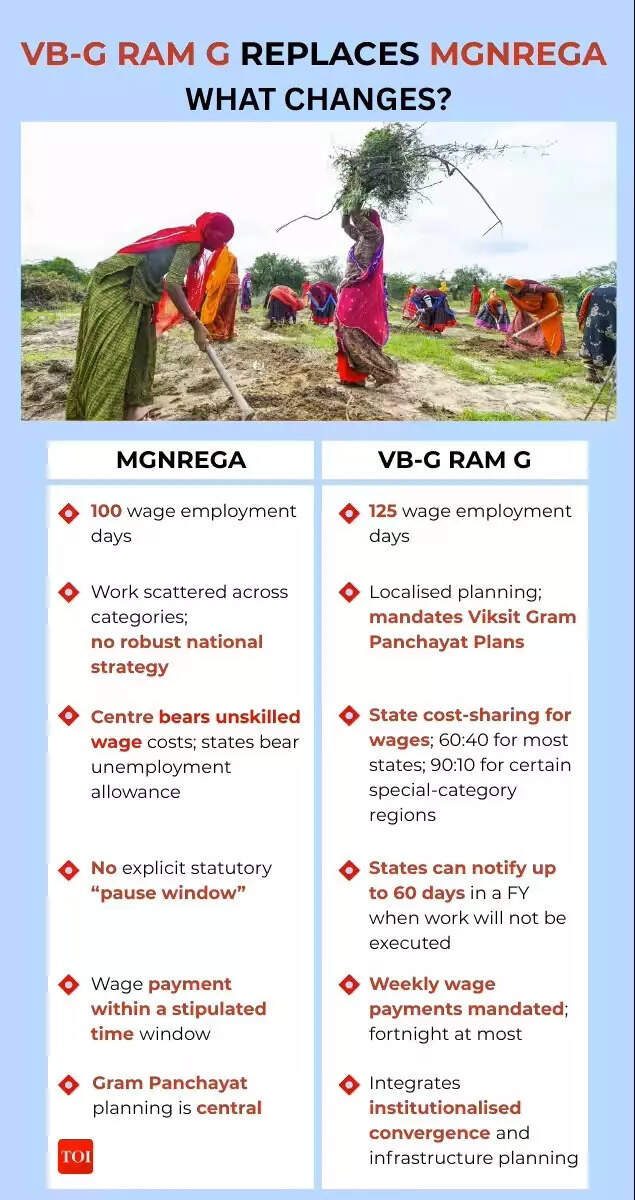
Driving the newsThe MGNREGA – a flagship UPA-era program that guaranteed 100 days of wage employment to rural households – has been replaced by the Viksit Bharat–Guarantee for Rozgar and Ajeevika Mission (Gramin) or VB-G RAM G Act.Union minister Shivraj Singh Chouhan framed it as a bold leap forward: “This is a far better scheme that will completely transform villages.”

End Of MGNREGA? What VB–G Ram G Means For Rural Workers, Farmers And Viksit Bharat Plan

Critics, led by Congress leader Sonia Gandhi, allege it’s a stealth demolition of rights-based welfare: “The very structure of MGNREGA… has been annihilated.”But beyond the political heat, the quiet engine driving this reform is economic evolution. India’s welfare state – and rural labour market – has changed dramatically since 2005. The logic behind G RAM G isn’t just political; it’s economic.

Why it matters

MGNREGA was designed as a safety valve. Its purpose was simple: if private work dried up, the state would step in and guarantee wages. It was meant to stabilise consumption in bad years and give the rural poor bargaining power in the labour market. On those terms, it succeeded.But it is no longer the India of the mid-2000s.

  • In 2005: Rural safety nets were thin, bank accounts rare, and the idea of digital transfers futuristic.
  • In 2025: Over 80 crore people get free food grain for the next five years. DBT has matured.
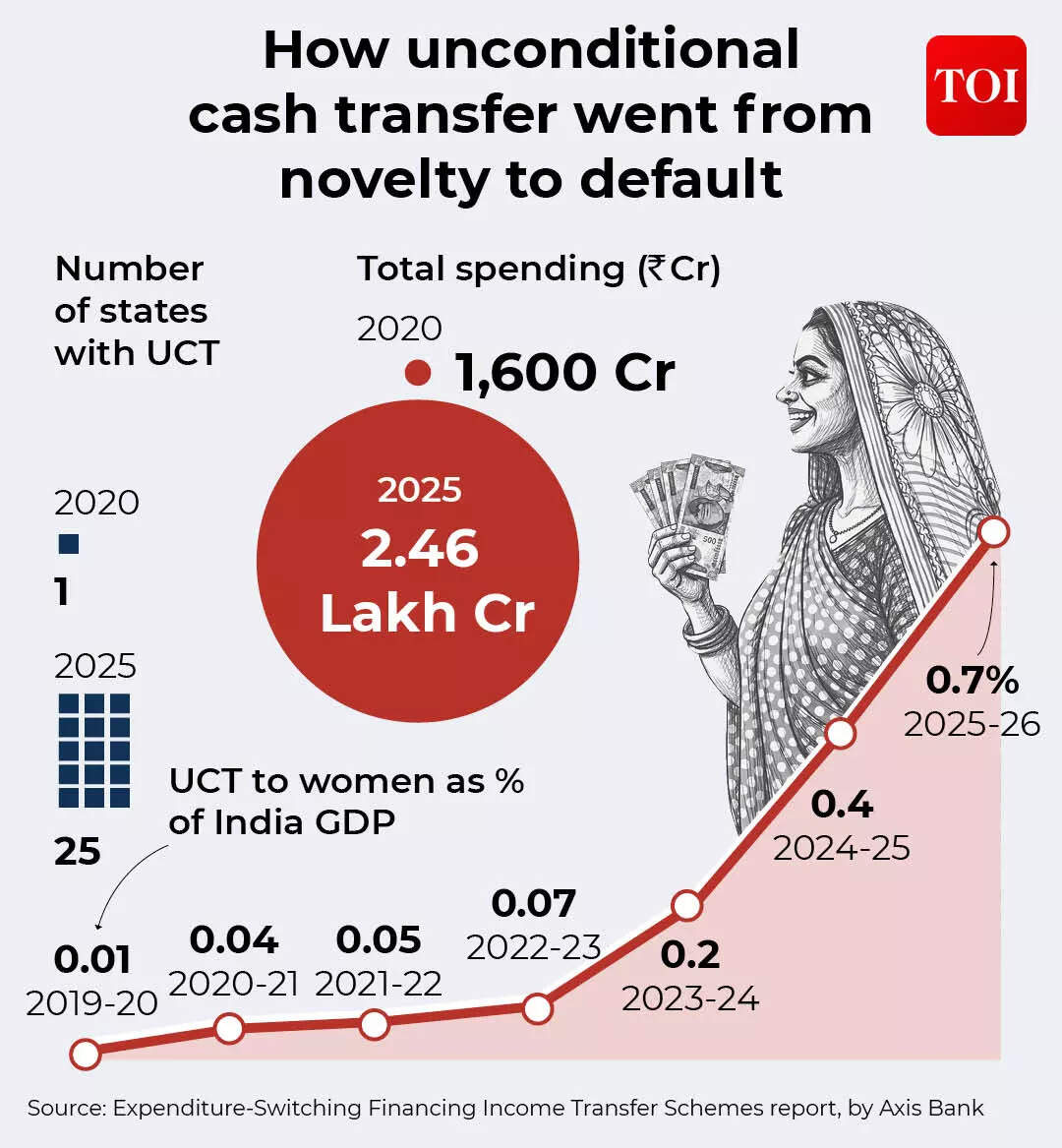
  • States are pumping Rs2.46 lakh crore annually into direct cash transfers to women.

MGNREGA, while historic in its impact, was built for an older economy. G RAM G is designed for a digitally connected, subsidy-rich, rural India where the challenge isn’t only poverty relief – it’s productivity, asset creation, and aligning with farm realities.
125978775 (3)

.

The big picture: Not a tweak, but a rethink

At a farmer rally in Rajasthan, Chouhan underlined the new mission:“We have not reduced it but increased it… Labourers will get wages and villages will see comprehensive development. Roads, drains, schools, everything can be built.”That shift – from emergency wage distribution to rural asset generation – reflects a deeper economic change.

What they’re saying

Sonia Gandhi calls G RAM G a “collective moral failure,” warning of job loss and loss of dignity: “The removal of the Mahatma’s name was only the tip of the iceberg.”The BJP’s Amit Malviya hit back: “Her arguments rest on mischaracterisations, selective memory, and outright falsehoods.”The divide is ideological – but also generational, rooted in two welfare philosophies: permanent subsidy vs productivity-driven support.Rahul Gandhi called it an ‘insult to the ideals of Mahatma Gandhi‘ and said the law bulldozes “both MGNREGA and democracy.”

Between the lines: The real economic logic of G RAM G

1. The safety net is now a floor, not a fallbackMGNREGA was built to prevent rural starvation and mass migration during crop failures and lean seasons. That logic worked in 2005.But today:

  • PMGKAY offers free food grain to 80 crore people until 2029.
  • NFSA guarantees subsidised food to two-thirds of India.
  • DBT infrastructure reaches 45 crore beneficiaries.

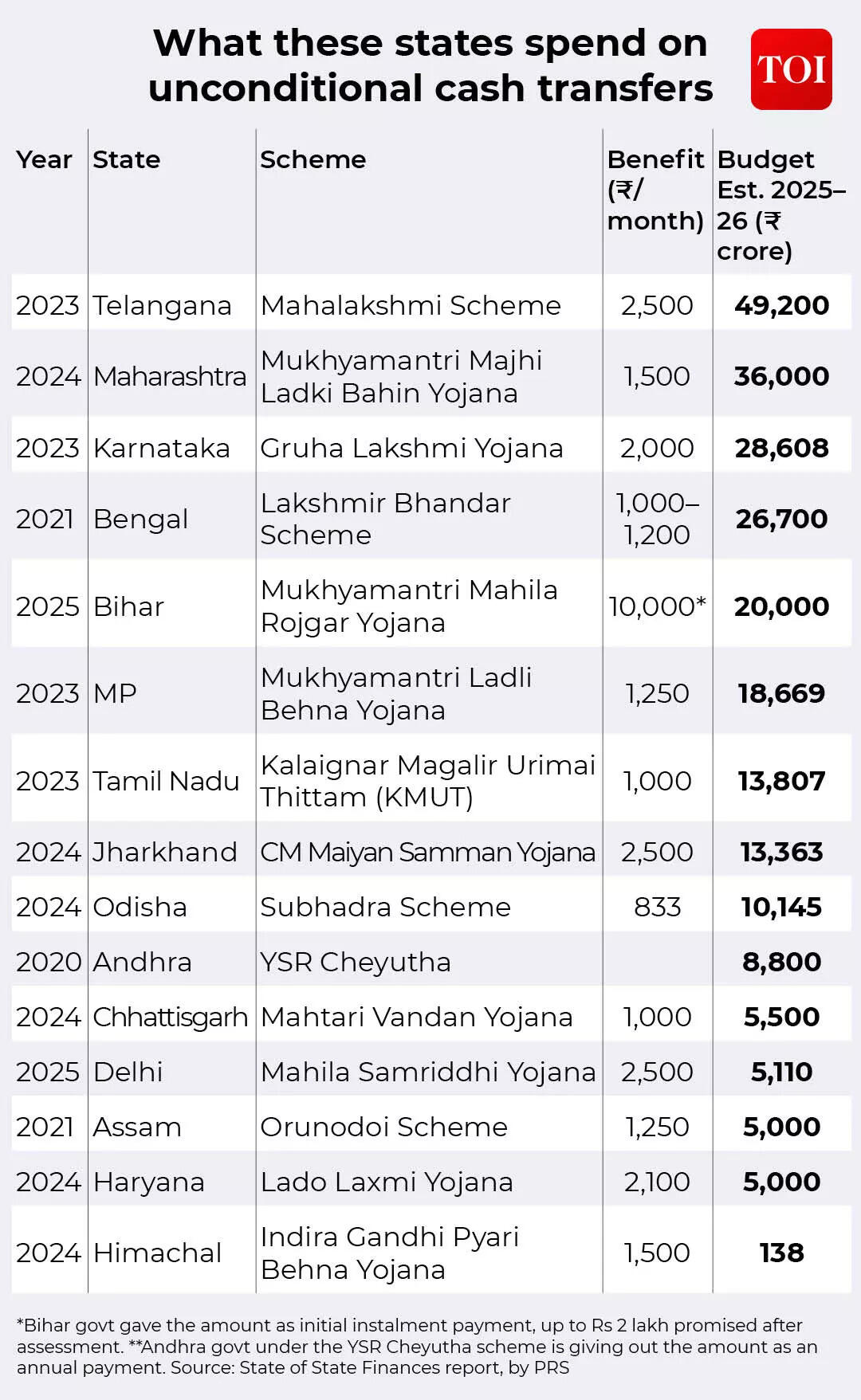
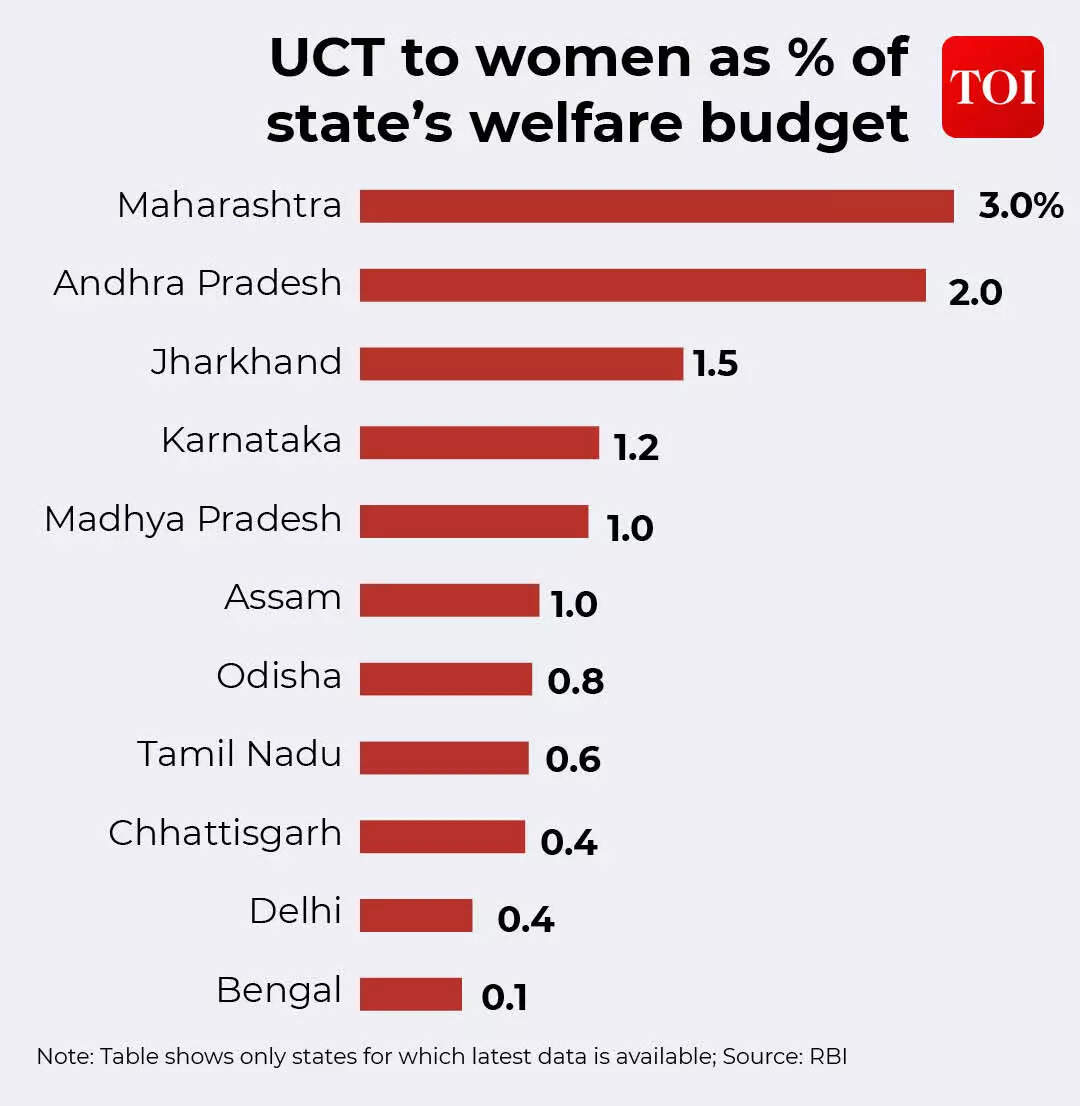
Implication: With calories protected, the role of employment guarantee schemes can shift from consumption smoothing to income generation through durable assets.In Chouhan’s words, “If needed, farm roads can also be constructed… everything can be built.”2. States are already flooding households with cash – so duplication is inefficient.From 1 state in 2020 to 15 states in 2025, unconditional cash transfers (UCTs) to women are now a Rs 2.46 lakh crore juggernaut.

  • Madhya Pradesh: Ladli Behna Scheme – Rs 1,000–Rs1,500/month.
  • Karnataka: Gruh Lakshmi – Rs 2,000/month.
  • Telangana: Mahalakshmi – Rs 2,500 + LPG subsidy + free bus rides.
women cash transfer desk gfx5

.

Why this matters: In villages where households already get regular cash + free food, demand for physical labour schemes changes.Women – the primary MGNREGA participants – are less likely to show up for work at Rs 220/day when cash arrives in their bank.
women cash transfer desk gfx

.

G RAM G acknowledges this by focusing on village development outcomes, not just labour targets.
women cash transfer desk gfx4

.

3. G RAM G fixes a paradox MGNREGA helped create: Labour shortages during harvestOne of the least discussed but most consequential changes is also one of the most controversial: The ability of states to suspend works for up to 60 days during peak sowing and harvesting seasons.Under MGNREGA, this was effectively taboo. Work was meant to be available year-round, on demand. But over time, farmers across states complained that the programme had become a rival employer. During peak agricultural seasons, when labour was needed most, workers often chose guaranteed public works instead. Wages rose. Harvests were delayed. Small farmers paid the price.The new law openly acknowledges this tension. By allowing a notified pause during peak seasons, it treats the employment guarantee not just as welfare, but as a labour-market instrument that must coexist with agriculture rather than crowd it out.States can pause work for 60 days to prevent a labour squeeze during critical farming periods.This reflects labour market realism, not policy retreat. In today’s India.

  • Farm productivity is vital.
  • Labour availability during key agri windows is essential.

G RAM G helps re-sync the rural workforce with agri cycles, rather than cannibalising farm labour.“They (MGNREGA) are trying to scare labourers… but we have increased the days to 125,” said Chouhan.4. India needs to move from “supporting poverty” to “building capacity”India’s economy is set to cross $4 trillion soon, but per capita income remains modest – around $2,800/year.That creates a challenge: How do we support vulnerable households without freezing them in place?“The real nature of the Modi government’s intentions can be understood from its decade-long track record of throttling MGNREGA,” Sonia Gandhi wrote in an article in a national daily.But G RAM G’s supporters argue the opposite: the scheme is not abandoning rights but upgrading them

  • From income support to income generation
  • From person-days to water tanks, roads, climate resilience
  • From centralised bureaucratic design to village-level planning

By raising guaranteed work to 125 days and channeling it into productive, measurable outputs, G RAM G aims to raise village capability – not just survival.

What next: Execution is the litmus test

Even the most elegant economic theory fails if delivery falters. G RAM G’s success hinges on four critical design principles:1. Avoid stealth caps: Centre determines normative funding per state – but must ensure that does not limit the legal guarantee.2. Use the 60-day pause wisely: It should match local agri calendars, not become a loophole to under-provide work.3. Biometrics must include – not exclude: With tech-driven tracking, grievance redress and offline options must remain strong.4. Measure outcomes, not just inputs: Focus must shift from how many people worked to what got built, how it’s used, and what productivity gains it generates.

Zoom out: The economics of co-ownership

The 60:40 Centre-State cost sharing is controversial but crucial. It ends the previous model where states authorised spending and the Centre paid the bill.Now:

  • States must co-own work quality.
  • Panchayats get more voice in planning.
  • Centre retains unemployment allowance provision – if work isn’t provided in 15 days.

Chouhan assured at the rally, “Funds won’t be swindled. Wages will be paid with interest if delayed.”It’s a governance pivot: from passive disbursement to performance-driven delivery.

The bottom line:

VB-G RAM G is not just a renamed MGNREGA. It’s a fundamentally new compact between India’s rural poor, its states, and its economy.In a welfare-rich, DBT-driven, digitally connected India:

  • Safety nets must become springboards.
  • Cash cannot replace infrastructure.
  • Relief must evolve into resilience.

G RAM G, with all its caveats and criticism, tries to answer a simple but vital question: What should rural employment guarantee look like – in a $4T India where the real challenge is not food or cash, but opportunity?


Source link

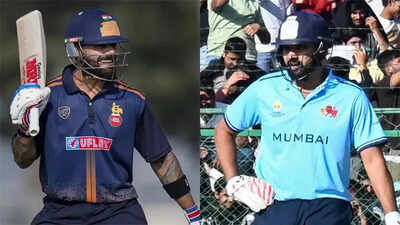
WATCH: Rohit Sharma’s cute reaction to fans ‘vada pav khaoge’ query during Vijay Hazare Trophy match


Indian cricket icon Rohit Sharma once again won hearts during a Vijay Hazare Trophy match, this time not just with his bat but with a light-hearted interaction that quickly took over social media.

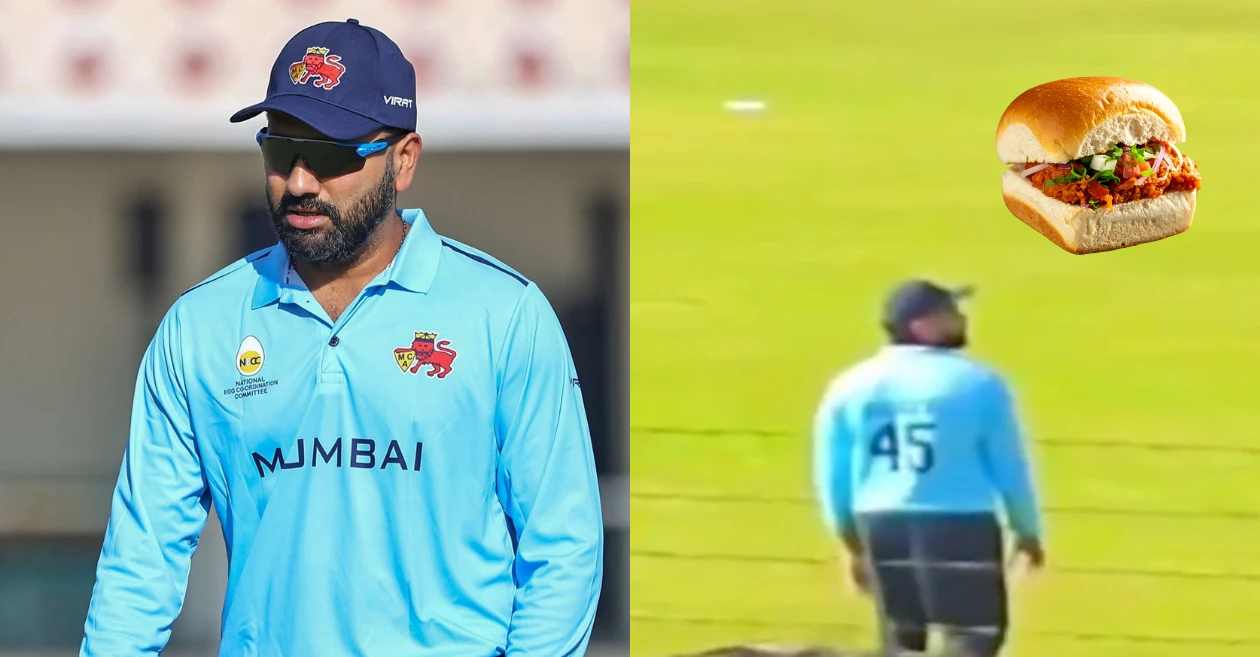
During Mumbai’s Elite Group C clash against Sikkim in Jaipur, Rohit’s cute reaction to a fan’s shout of “Rohit bhai, vada pav khaoge?” became an instant viral hit.

The moment unfolded in front of thousands at the Sawai Mansingh Stadium, highlighting Rohit’s enduring popularity and his ability to connect effortlessly with fans even in domestic cricket.

Boundary-line banter lights up the stadium

Rohit responds with a smile, not annoyance

While fielding near the boundary rope, Rohit became the focus of attention when a group of fans loudly offered him home-made vada pav, a snack long associated with him through memes and fan culture. Instead of ignoring the call or appearing irritated, Rohit turned toward the stand with a broad smile.

He raised his hand and made a playful “no” or “not now” gesture, acknowledging the fans with warmth. The response drew a massive cheer from the crowd, instantly turning the exchange into a feel-good moment.

Short clips captured from the stands spread rapidly across Instagram Reels, X (formerly Twitter), and YouTube Shorts, with fans praising Rohit’s humour and down-to-earth nature.


Rohit’s association with vada pav has long been a running joke among Indian cricket fans, symbolising both his Mumbai roots and his approachable public image. The Jaipur moment showed how that meme culture has now blended seamlessly into live stadium experiences.

Rather than distancing himself from the joke, Rohit embraced it in good spirit, reinforcing why he remains one of the most beloved figures in Indian cricket.

Also READ: Reason behind BCCI moving Virat Kohli’s Vijay Hazare Trophy matches from Chinnaswamy to CoE

Rohit’s dominant on-field performance follows viral moment

The light-hearted interaction was followed by a commanding cricketing statement. Later in the match, Rohit produced a sensational 155 off just 94 balls while chasing 237 against Sikkim, steering Mumbai to a dominant win.

The innings marked a stunning return to List A cricket, reminding everyone that even while enjoying fan banter, Rohit’s focus and hunger for runs remain intact.

Reports from the venue noted that over 10,000 fans turned up in Jaipur, many specifically to watch Rohit bat. Throughout the game, chants of “Rohit, Rohit” echoed around the stadium, creating an atmosphere more typical of an international fixture than a domestic one-day match.

Also READ: Fans go berserk as Rohit Sharma smashes an explosive century against Sikkim in Vijay Hazare Trophy 2025-26


Source link

Mumbai high-rise fire scare: Blaze erupts on 14th floor at Sorrento Tower, several residents trapped; 40 rescued so far | Mumbai News


Blaze erupts on 14th floor at Sorrento Tower

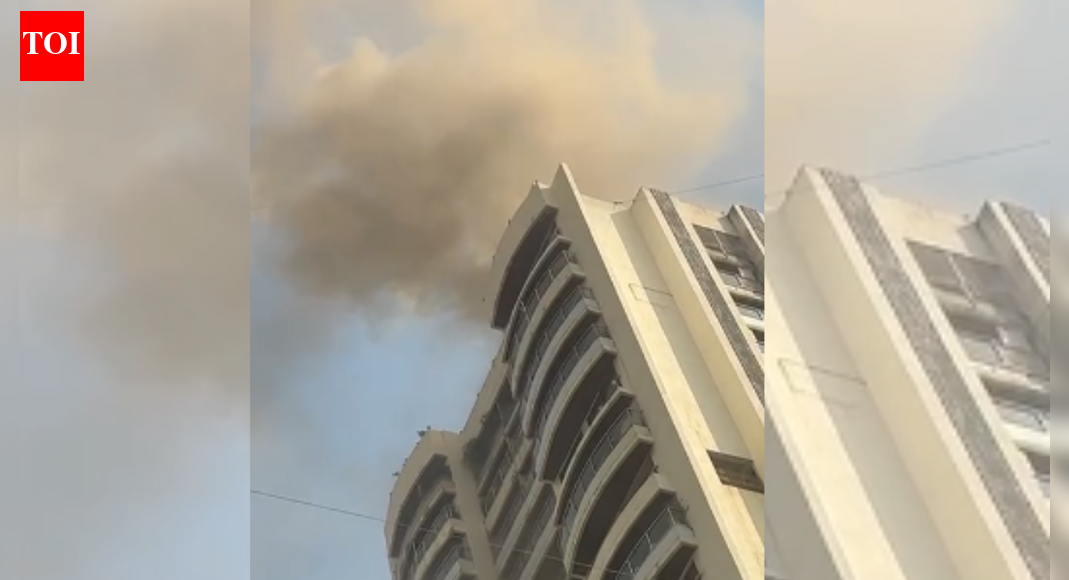
MUMBAI: A fire broke out on the 14th floor of a 23-storey residential building in Andheri West on Thursday morning, leading to heavy smoke logging and leaving several residents stranded on the upper floors.Around 30 to 40 residents who had gathered at the refuge area on the 16th floor were safely evacuated through the staircase.The incident was reported to the Mumbai Fire Brigade (MFB) control room at around 10.05 am.The fire occurred at Sorrento Tower on Veera Desai Road, near the Country Club. Firefighters rushed to the spot and declared it a Level-I fire at 10.20 am. The fire was confined to the 14th floor of the ground-plus-23-storey structure, but smoke spread through the building.Multiple agencies, including the Mumbai Fire Brigade, local police, Adani Electricity, 108 ambulance services and ward-level civic staff, were mobilised to handle the situation and ensure the safety of residents. Fire personnel were engaged in rescue and ventilation operations to clear the smoke and assist those stranded on higher floors.As of the latest update at 10.43 am, no injuries or casualties had been reported. Fire officials said operations were underway and the situation was being closely monitored. Further details on the cause of the fire were awaited.


Source link

India to miss $1 trillion exports target? Exports struggle despite the FTA push — Here’s what’s happening


India to miss $1 trillion exports target? Exports struggle despite the FTA push — Here’s what’s happening

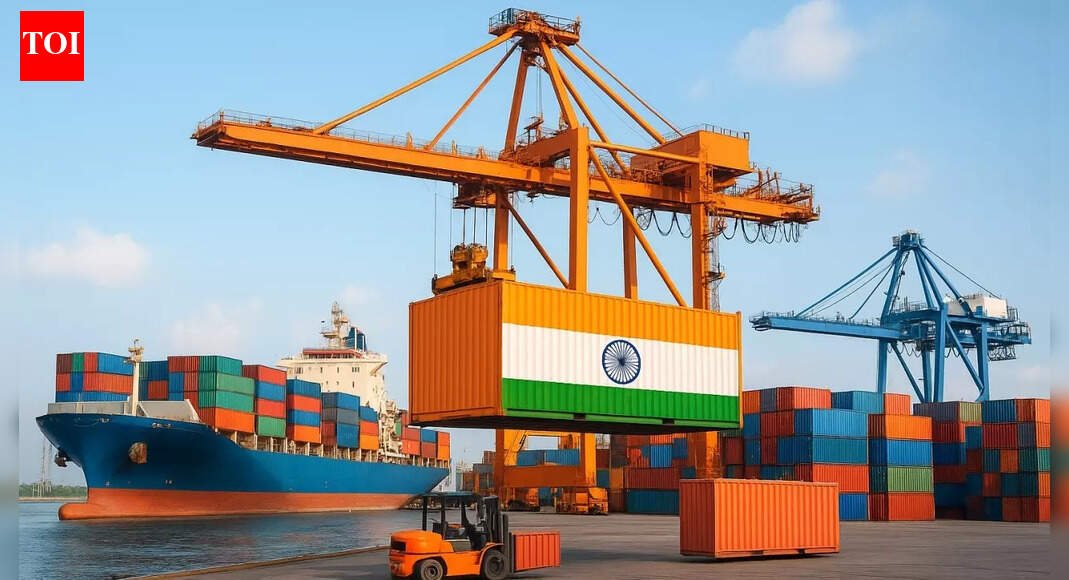
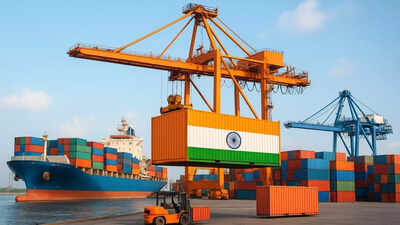
India’s ambition of exporting goods and services worth $1 trillion by the end of FY26 is likely to remain out of reach, Global Trade Research Initiative (GTRI) predicted in its latest report on Thursday, pointing to weak merchandise shipments due to weak global demand and increasing protectionist trends.Ajay Shrivastava, founder of the economic think tank, said that India is expected to record flat increase in exports this year with goods outflows showing almost no growth. Total exports in FY26 are expected to rise only to almost $850 billion, missing the $1 trillion number by $150 billion. The think tank predicted that services exports might be able to cross $400 billion, providing “the only meaningful growth cushion for India’s trade,” as the overall growth struggles with weak global demand. Meanwhile, Shrivastava highlighted that the target may be achieved if India succeeds in sealing major trade deals. “That I think we may achieve once our trade deal with the US and EU comes. That is maybe next year, not this year,” he said.While exports face sustained pressure, Shrivastava said that domestic economic conditions remain stable. “The domestic economy is working fine,” he said, adding, “The GDP numbers are telling; low inflation numbers are telling. The only pressure on the GDP will be the pressure on the export side.”

India’s trade with US and EU — a different picture

Despite the overall slowdown, recent trade figures suggest that India has begun to diversify its export destinations. Shrivastava pointed out that exports to the United States declined sharply between May and November, even as shipments to other regions rose.Exports to the US dipped almost 21% amid President Donald Trump’s 50% tariffs imposition on Indian shipments.“We have seen that between May and November, our exports to the US are down by 20.7%” he said. The report added that unless Washington rolls back the extra 25% duties on India or locks in a trade deal, “exports to India’s largest market risk further erosion.”For India’s trade with the European Union, the think tank highlighted a difference with exports dropping even before duties came into play with the bloc’s compliance and reporting requirements dragging down the country’s steep shipments by almost 24%.EU will “activate its Carbon Border Adjustment Mechanism (CBAM) on January 1, 2026, effectively imposing a carbon tax on imports.” From the next year, 2026, EU importers will lable Indian goods inclusive of the CBAM costs, “with payments settled through certificate surrender in 2027.”

India is diversying its export destinations

Shrivastava said, “During this time, our exports to the rest of the world increased by 5.5%. That means diversification already started happening in a small way.”However, he cautioned that geographical diversification must be accompanied by changes in the composition of India’s exports. “For more diversification, for more exports to these countries, we have to focus on diversifying our export basket also,” Shrivastava said. “Right now, our export basket needs inclusion of more medium to high-tech products.” The think tank said that while the country has already signed 18 FTAs and more possible in 2026, India’s priority must change, going from signing agreements to “making FTAs deliver real export gains, especially in electronics, engineering and textiles.”

What should be India’s strategy for 2026?

  • For the next year, India’s export strategy needs to focus inward, as there is limited influence over global geopolitics.
  • Export growth will depend on improving product quality, improving the value chain and bringing production costs down.
  • Electronics, engineering and textiles will emerge as the strongest opportunities, as higher value addition can sustain exports when the global trade environment is hostile.
  • Using trade agreements effectively.
  • Execution of policies and schemes should be in focus, with emphasis on operationalising the Export Promotion Mission, simplifying regulations and improving ease of doing business.

The think tank cautioned that tariffs, climate-related taxes and geopolitical uncertainty will continue to weigh on global trade conditions. Export survival and growth will depend on competitiveness at home, including better products, deeper manufacturing capabilities and lower costs.Back in FY25, India’s overall exports stood at $825 billion, including $438 billion in merchandise outflows and $387 billion in services.


Source link

‘No one knows where missile came from’: Nitin Gadkari recalls meeting Hamas leader Ismail Haniyeh hours before assassination; how he reacted | India News


‘No one knows where missile came from’: Nitin Gadkari recalls meeting Hamas leader Ismail Haniyeh hours before assassination; how he reacted

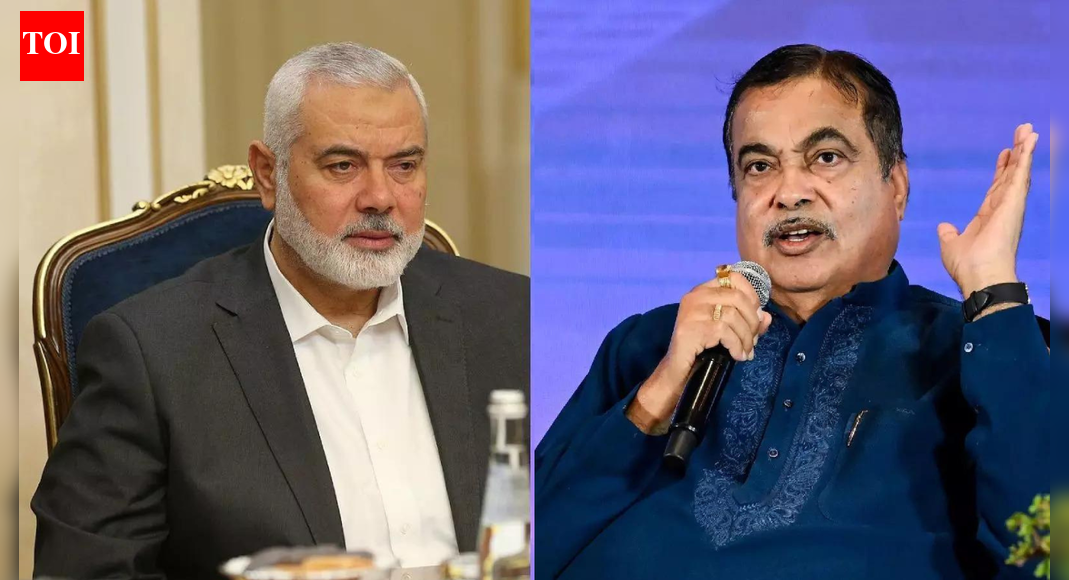
NEW DELHI: Union minister Nitin Gadkari has recounted how he came face to face with Hamas political chief Ismail Haniyeh just hours before the latter was assassinated in Tehran, linking the incident to what he described as the growing role of technology in modern conflict and national security.Speaking at a book launch event, Gadkari said he had travelled to Iran at the request of Prime Minister Narendra Modi to represent India at the swearing-in ceremony of Iran’s newly elected president, Masoud Pezeshkian. According to the minister, foreign dignitaries were staying at a five-star hotel in Tehran ahead of the ceremony.

‘Israel-India Defense Ties Are Long-Standing And Strategic’: Expert Danny Citrinowicz

“I had gone for the Iranian Prime Minister’s ceremony. There is a 5-star hotel there where all heads of state stayed. Modi ji had sent me,” Gadkari said.He recalled noticing one individual among the dignitaries who was not a head of state. “I wondered who he was. I also shook hands and asked. He was the head of Hamas,” he said, adding that Haniyeh later walked into the ceremony alongside Iran’s president and chief justice, while other delegates followed.Gadkari further described how he was woken early in the morning amid the chaos of Haniyeh’s assassinations. “I also came to my hotel and after eating dinner, went to sleep. At 4 o’clock, the ambassador came and knocked on the door saying “Sir, we have to evacuate.” I asked why. He said there’s been a big problem. What happened? He said the Hamas leader who was here yesterday, a powerful man, was killed in his room.”Iranian authorities later confirmed that Haniyeh was killed at around 1.15am on July 31, 2024, while staying in a highly secure military complex under the supervision of the Islamic Revolutionary Guard Corps (IRGC). His bodyguard was also killed in the attack, according to official statements cited by the Associated Press.Gadkari told the audience that the exact method of the assassination remained unclear. He went on to suggest how the future high-tech is important from the perspective of national security, modern warfare, and critical infrastructure. “No one knows from where the missile was fired, where it entered – now some say it was his mobile phone number, he was specially hidden in one place in a bungalow, went to that room and killed him there. So the coming time is futuristic, technology and futuristic vision for development in defence, agriculture, industry, trade, business export – we will have to do all this.” At the same event, Gadkari remarked that strong nations are difficult to target, citing Israel as an example of how technological and military capability translate into global influence.Iran’s revolutionary guards authorities had said a short-range missile was used to strike the building where Haniyeh was staying. The Telegraph claimed that Israel’s intelligence agency Mossad may have orchestrated the killing by planting explosives inside the guesthouse, citing Iranian officials. Iranian authorities have not publicly confirmed that account.


Source link

‘I get fans’ frustration, but…’: Ashwin explains why Vijay Hazare Trophy matches weren’t televised | Cricket News


'I get fans' frustration, but…': Ashwin explains why Vijay Hazare Trophy matches weren’t televised
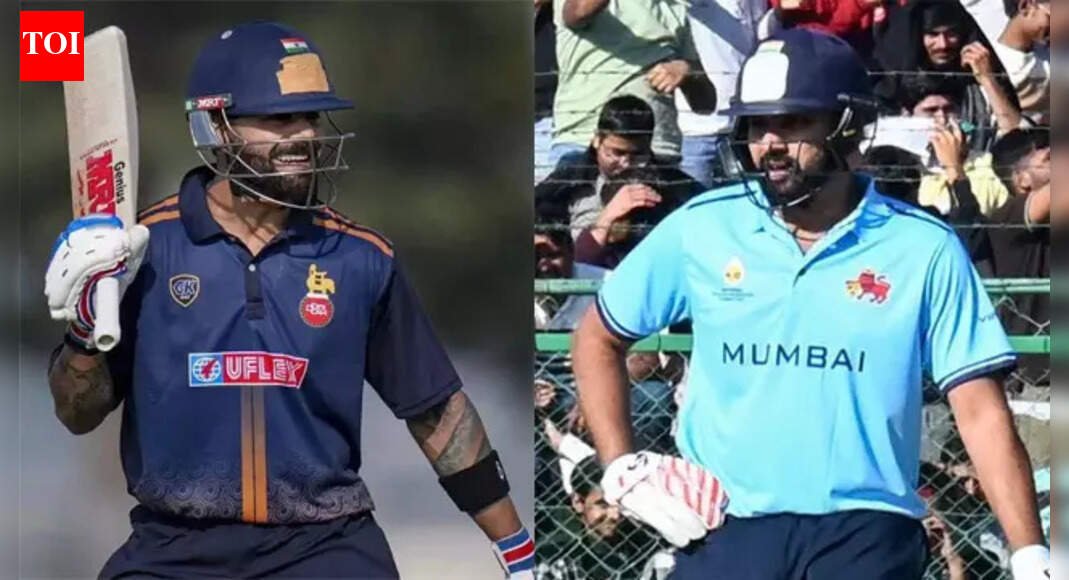
Virat Kohli and Rohit Sharma

NEW DELHI: Former India spinner Ravichandran Ashwin has weighed in on the growing frustration among fans over the limited television coverage of the Vijay Hazare Trophy 2025–26 group-stage matches, saying the disappointment is understandable but urging supporters to appreciate the logistical constraints faced by the BCCI.Go Beyond The Boundary with our YouTube channel. SUBSCRIBE NOW!The domestic one-day tournament began on Wednesday with rare star power, as India stalwarts Rohit Sharma and Virat Kohli returned to the domestic circuit after years. Rohit turned out for Mumbai and Kohli for Delhi, lighting up the competition with big hundreds. Yet, to the dismay of fans, several marquee fixtures — including those featuring the two superstars — were not televised.

Why Rohit Sharma got really emotional at a promotional event

Speaking on his YouTube channel, Ashwin acknowledged the anger among supporters desperate to watch their heroes.“Fans are asking what the hell? Only Elon Musk can telecast these matches on X,” Ashwin said with a smile. “Everyone wants to follow Rohit Sharma and Virat Kohli, no doubt. They had a great series and will be facing New Zealand next. They both have turned up, and turned up how! One scores 150 and the other 130, both with incredible strike rates. When players like these come and play, the matches become more exciting.”Rohit smashed a breathtaking 155 off just 94 balls for Mumbai against Sikkim, smashing 18 fours and nine sixes. Kohli was equally dominant, scoring 131 off 101 deliveries for Delhi against Andhra, including 14 fours and three sixes.

Poll

Do you think the limited television coverage of the Vijay Hazare Trophy is disappointing?

However, Ashwin also came to the defence of the BCCI, explaining that broadcasting decisions are made well in advance and cannot always account for late selection calls.“Everyone wants to see Rohit and Virat in action, sure. But we have to see how early they got the information that Rohit and Virat will play,” he said. “When the international calendar is given, the domestic calendar is given at the same time. Once it is set, the BCCI and broadcasters decide which venues are easy to cover and which matches can be televised.”Ashwin stressed that last-minute changes are rarely feasible. “So the conversation was Rohit and Virat will play, but when? Making that last-minute switch is difficult,” he said.While sympathising with fans, Ashwin underlined the broader reality of Indian domestic cricket. “I can understand the frustration. But there are limitations,” he said. “India has the maximum first-class teams. You cannot televise all matches. Other players also want to showcase their talent and are equally important to the ecosystem. I think we should cut some slack there.”


Source link

Income tax refund: Your refund may be delayed if revised return not filed by December 31, 2025 deadline – here’s why


Income tax refund: Your refund may be delayed if revised return not filed by December 31, 2025 deadline - here’s why
The December 31, 2025 deadline is significant as it marks the last date for filing both revised and belated income tax returns. (AI image)

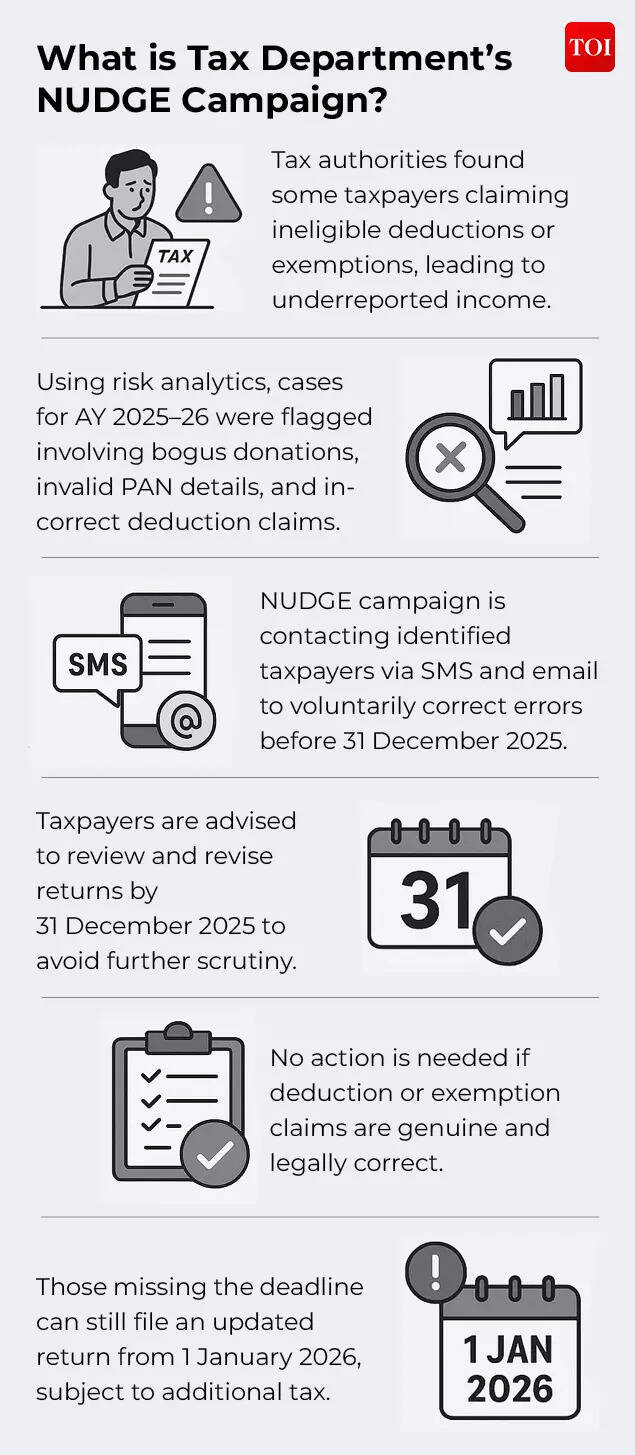
Income tax refund status: The Income Tax Department has stepped up scrutiny for tax returns and several taxpayers have not received their income tax refunds this year. The delay in tax refunds is a result of greater vigilance on tax deductions and exemptions that have been claimed by taxpayers.Ahead of the December 31, 2025 deadline for filing an updated or belated return, the Income Tax Department has also launched a NUDGE (Non-intrusive Usage of Data to Guide and Enable) campaign, urging taxpayers to file updated tax returns since their exemptions, deduction and refund claims have been found to be ineligible.

ITR December 31, 2025 Deadline Important For Tax Refunds

According to an ET report, the income tax refunds for those taxpayers may face a delay if they fail to file a revised Income Tax Return by the December 31, 2025 deadline for Assessment Year 2025-26, particularly in cases where errors or missing information have resulted in incorrect refund claims or data mismatches.The Income Tax Department has begun sending emails and SMS to taxpayers who have claimed what the tax department has called ‘ineligible’ deductions or exemptions they are not entitled to. These taxpayers have been asked to correct the errors if any, and submit a revised return by December 31, 2025.Also Read | ITR filing: Received ‘nudge’ from Income Tax Department for tax return & refund claims? Here’s what you need to do The December 31, 2025 deadline is significant as it marks the last date for filing both revised and belated income tax returns. Once a return is processed by the Centralised Processing Centre, any discrepancies or mistakes that are flagged and communicated to the taxpayer will invite detailed scrutiny. However, if the return is processed only after the deadline, the intimation highlighting the error may also be received after December 31, leaving the taxpayer without the option to revise the return, the ET report said.As a result, taxpayers whose returns contain mistakes that are identified after the deadline may have to face further verification or assessment proceedings, even if the error was unintentional.

Nudge Campaign

Nudge Campaign

Chartered Accountant Suresh Surana was quoted as saying, “Accordingly, once this date has elapsed, a taxpayer can no longer revise the return of income to correct errors or omissions, even if the return has not yet been processed by the Centralised Processing Centre.”Income tax refunds are at the risk of being delayed for taxpayers who fail to file a revised Income Tax Return by the December 31, 2025 deadline, particularly salaried employees whose tax filings contain mismatches with employer records.Abhishek Soni, CEO & co-founder, Tax2win, said many salaried individuals have received intimation notices from the Income Tax Department. These cases largely involve employees who claimed deductions such as those under Sections 80C, 80D or House Rent Allowance in their returns but did not disclose these claims to their employers at the time tax was deducted at source.Maneesh Bawa, Partner, Nangia Global, noted that these mismatches are common and can occur when tax has been deducted under the new regime, but the return is filed under the old regime with deductions claimed.Jigar Suba, founder of JC Suba & Associates told ET that such intimations may be triggered by a range of errors, including incorrect or excessive deduction claims, mismatches in income reported against data reflected in the Annual Information Statement or Tax Information Summary, and discrepancies between the Income Tax Return and Form 26AS. Other common reasons include incorrect House Rent Allowance or leave travel claims, unsupported deductions for life or medical insurance, and ineligible donations claimed for charitable trusts or political parties.He added that failure to disclose income beyond salary is another major trigger, with omissions often relating to the sale of mutual funds, equity shares, crypto assets, as well as other capital gains or interest income.Abhishek Soni said that such intimations are significant as they indicate that the Income Tax Department has identified a mismatch in the return and that its data does not fully support the deductions claimed. He warned that ignoring the notice could result in tax demands, interest liabilities or further communications from the department.Maneesh Bawa said that if the Income Tax Department has identified an error, taxpayers should file a revised return within the permitted timeline, which is currently open until December 31, 2025. He cautioned that ignoring a genuine discrepancy may lead to disallowance of claims and could invite closer scrutiny, resulting in additional tax liabilities along with interest and penalties.


Source link

How the longest venomous King Cobra in history became a casualty of the Second World War |


The king cobra occupies a singular position in the natural world-one defined not just by its biology but also by an unlikely linkage to human history. As the longest venomous snake ever recorded with reliability, it has long occupied a position of scientific interest for scholars researching reptile evolution, venom systems, and behavioural adaptation. One individual specimen, measured and preserved early in the twentieth century, came to represent the outer physical limits of the species. Its existence provided tangible evidence of what nature was able to create under the proper conditions. Yet this magnificent animal did not survive as a lasting scientific reference. During the Second World War, it became an unintended casualty of aerial bombing in Britain; its preserved remains were reduced to destruction. The story is poignantly subdued, a reminder of just how tenuous scientific knowledge can be when the forces shaping it lie far beyond the laboratory.

What makes the king cobra the longest venomous snake on record

The king cobra, also known as Ophiophagus hannah, differs from other venomous snakes in its morphology and physiology. Most of the venomous species depend on ambush and camouflage for hunting, but the king cobra is a brave hunter, and it feeds on snakes mostly. This highly selective diet maintains a very strong and long body, which can even be longer than that of other venomous reptiles. The longest individual that has ever been recorded was far over five meters, and this size has never been confirmingly exceeded. Several studies that reviewed the old records and checked the preserved specimens concluded that this specimen is the longest venomous snake ever documented, a distinction that is still uncontestable. Its venom is mainly neurotoxic; however, it is also produced in large amounts, thus, one bite is capable of causing the death of a large animal, and it is very helpful to researchers to understand the evolution of toxins.

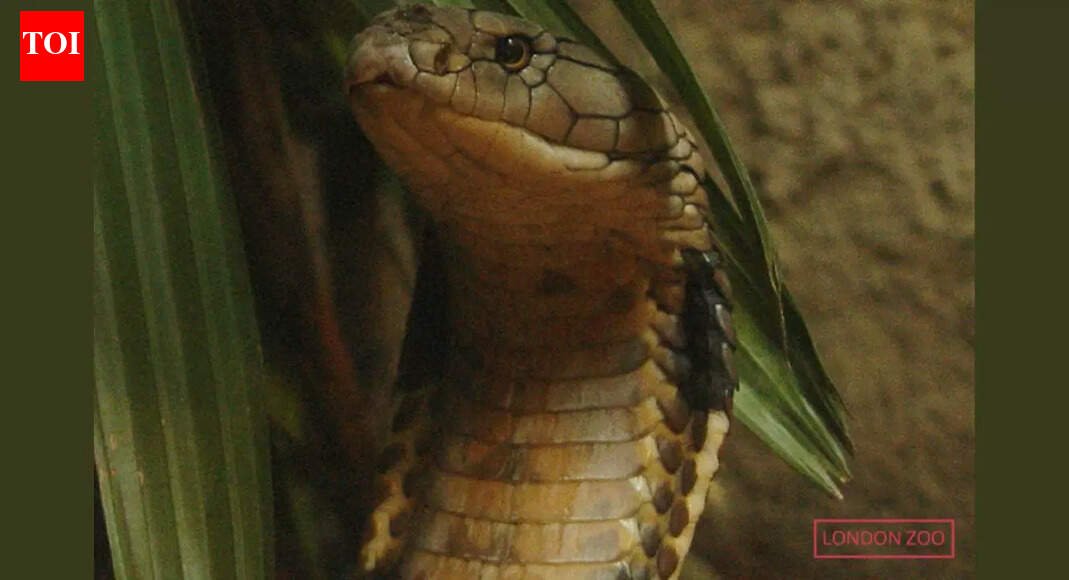
What journey brought the record-holding king cobra to London

From forest to museum, the journey of the specimen epitomises scientific practices of the early twentieth century. In an age of colonial exploration, natural history institutions were actively seeking out rare and extreme examples of wildlife that would extend their collections. The record-holding king cobra was caught in Southeast Asia and transported alive to Britain. It was placed on display at London Zoo. Its size immediately made it stand out, the centre of attention among both zoologists and visitors. It was carefully measured repeatedly to make sure that the measurements were accurate, and photographs were made to visually document this evidence. Observations of its behaviour while in captivity contributed to early descriptions of the king cobra’s temperament and feeding behaviour. After death, the snake was preserved and moved into a museum collection that was supposed to serve as a permanent scientific reference. At the time, preservation equated to stability-a belief that once recorded and stored, knowledge could endure indefinitely.

Did the Second World War erase a once-in-history snake specimen forever?

That expectation of permanence collapsed during the Second World War. As London withstood months on end of bombing during the Blitz, the destruction extended far beyond industrial and military targets. Cultural and scientific institutions were hit, sometimes with disastrous repercussions. The museum where the pickled king cobra was kept sustained a direct hit, and the specimen was destroyed in the subsequent confusion. Its glass container broke, the preservation liquids leaked out, and what was left was irretrievable. Given the enormous losses of human life during the war, the disappearance of a snake did not attract much attention. To science, on the other hand, the loss came as a serious blow. The longest venomous snake on record ceased to exist as a physical object and remained only in the form of written measurements and photographs. The incident serves as a silent reminder of the ways in which war is able to destroy not just lives and buildings but also fragments of natural history that can never be recovered.

How the destruction of one snake affects scientific memory

The loss of the king cobra specimen still resonates in ways as stealthy. Specimens afford scientists the opportunity to revisit earlier conclusions, apply new techniques, and confirm records from the past when standards evolve. With the destruction of this snake, all such opportunities vanished, permanently. Its recognition by Guinness World Records now rests entirely on historical documentation, serving as a reminder of just how fragile verification can become without material evidence. The story has even influenced modern approaches to preservation, encouraging greater emphasis on duplication, digitisation, and global data sharing. Beyond museums, it reverberates with contemporary concerns about conservation. King cobras today face shrinking habitats and increased human conflict across parts of Asia, placing stress on a species already misunderstood and often feared. The fate of the longest venomous snake carries a muted sadness, not simply because of its size alone, but because it reflects how easily even knowledge, once thought secure, can be lost to forces entirely unrelated to science itself.In remembering this vanished giant, the episode urges renewed respect for both living species and preserved knowledge, highlighting why safeguarding biodiversity and scientific archives is essential in a world where conflict and environmental change continue to threaten both.Also Read | The snake whose invisible bite can be fatal; why the Common Krait is called the silent killer


Source link