Breaking News
Jahnavi Mehta reveals why KKR spent INR 18 crore on Matheesha Pathirana at IPL 2026 Auction


The IPL 2026 auction saw one of its most debated moments when Kolkata Knight Riders (KKR) splurged ₹18 crore on Sri Lankan fast bowler Matheesha Pathirana, a player released by Chennai Super Kings (CSK) just months earlier. Now, KKR co-owner Jahnavi Mehta has revealed the clear thinking behind what many initially labelled a risky move.

Jahnavi Mehta explains KKR’s bold call for Matheesha Pathirana

According to Mehta, the decision was not emotional or reactive, but a calculated response to KKR’s biggest weakness during the IPL 2025 season – ineffective death bowling.

Speaking about the auction strategy in an interview with MyKhel, Mehta explained that KKR’s management conducted a detailed review of the previous season and found a recurring issue.

“I think one of the key gaps we identified last year was the lack of an experienced death bowler, and it cost us in several crucial situations,” she said.

KKR lost multiple tight games in the final overs in IPL 2025, where an inability to close out innings proved costly. Fixing that specific role became the franchise’s top priority heading into the mini-auction.

After analysing the auction pool, KKR felt the market offered very few reliable death-overs specialists with proven IPL credentials.

Mehta revealed that only Pathirana and Mustafizur Rahman fit the profile KKR were looking for.

“When there’s such limited supply, only Pathirana and Mustafizur truly fit that proven IPL profile with death bowling expertise,” she said.

With almost every franchise hunting for a reliable finisher with the ball, KKR anticipated intense bidding. Their internal valuation hovered around ₹15-16 crore, but they were prepared to stretch further to avoid missing out.

Why KKR pushed to ₹18 crore for Pathirana?

As the bidding escalated, KKR decided to go beyond their initial comfort zone.

“Everyone wants a reliable death bowler, so we knew it would be around 15-16 crores. We pushed a bit harder because he was a top priority, stretching to 18 crores, and we managed to secure him,” Mehta explained.

The franchise believes the premium price reflects scarcity rather than overvaluation, especially in a league where death-overs specialists can directly swing results.

Also READ: Here’s how long KKR’s ₹9.2 crore pacer Mustafizur Rahman will be out of IPL 2026 – Details inside

Why CSK let Pathirana go and why KKR still believe in him?

CSK released Pathirana after a modest 2025 season, partly to free up around ₹13 crore in purse space. However, KKR are backing the bowler’s earlier body of work, particularly his standout IPL 2023 campaign, where he picked up 19 wickets in 12 matches and played a key role in CSK’s title run.

Pathirana’s Lasith Malinga-style slingy action, extreme yorker accuracy and raw pace are skills KKR see as rare commodities in the current market.

KKR also believe Pathirana’s skill set is tailor-made for Eden Gardens, where flat pitches and short boundaries regularly produce high-scoring contests.

At such venues, a bowler who can nail yorkers under pressure becomes invaluable. KKR view Pathirana as a potential match-winner in tight finishes, capable of defending slim totals or stopping last-over chases.

Also READ: IPL 2026 Auction – Here’s why Cameron Green will receive only INR 18 crore even though KKR bought him for INR 25.2 crore


Source link

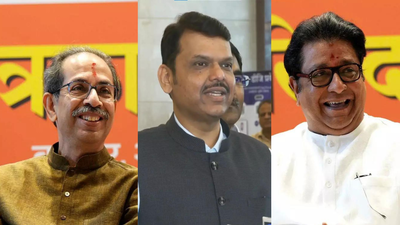
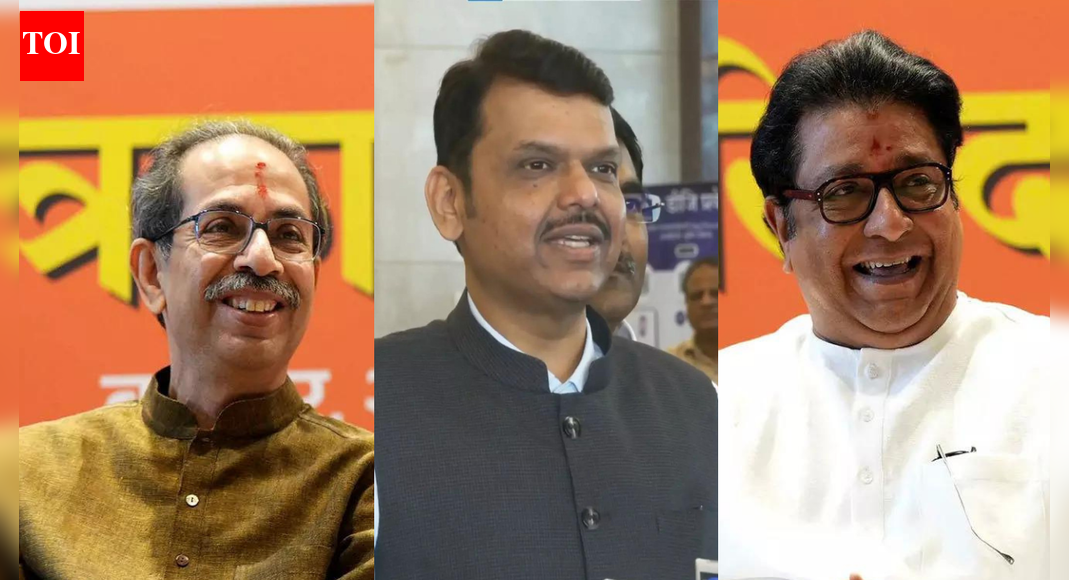
BMC polls: Devendra Fadnavis likens Thackeray cousins’ bonhomie to ‘Putin-Zelenskyy’ peace talks; rivals calls hype ‘manufactured’ | Mumbai News


Devendra Fadnavis likens Thackeray cousins’ bonhomie to ‘Putin-Zelenskyy’ peace talks

MUMBAI: The political reunion of the estranged Thackeray cousins ahead of the BMC polls has triggered sharp reactions across Maharashtra’s political spectrum, with the ruling Mahayuti likening the tie-up to a “Putin–Zelensky moment” and dismissing it as hype, while supporters call it “historic”.Chief minister Devendra Fadnavis said the alliance between Shiv Sena (UBT) and the Raj Thackeray-led Maharashtra Navnirman Sena (MNS) was being portrayed as if Russian President Vladimir Putin and Ukrainian President Volodymyr Zelenskyy had come together, arguing that the political relevance of the reunion was being overstated.

‘Batenge Toh Katenge’: Uddhav & Raj Thackeray Unite For Mumbai Civic Polls | Shiv Sena (UBT) | MNS

“They are trying to create hype as if something as historic as peace talks between Russia and Ukraine are taking place, with President Volodymyr Zelenskyy and President Vladimir Putin finally sitting across the table,” Fadnavis told reporters.Even as the Mahayuti questioned the impact of the alliance, Thackeray loyalists hailed the coming together of Uddhav and Raj Thackeray as a turning point that could revive the “son of the soil” ideology in Mumbai politics ahead of the civic polls.Shiv Sena (UBT) chief Uddhav Thackeray on Wednesday called for Marathi unity after his party announced an alliance with the MNS for the upcoming BMC elections, scheduled to be held on January 15, with results to be declared the next day.In a post on X, Raj Thackeray said the alliance was not merely about seat sharing but about “burying the forces that are today attempting to erase the existence of the Marathi people in Mumbai and its surroundings, and tomorrow in other parts of the state”.The MNS chief also asserted that Mumbai’s mayor would be a Marathi person.“The mayor of Mumbai will be a Marathi and will be ours,” Raj Thackeray said while addressing a press conference along with his cousin Uddhav.Uddhav Thackeray, meanwhile, accused the Bharatiya Janata Party of dividing Marathi voters during the assembly elections.“During the assembly elections, the Bharatiya Janata Party engaged in negative campaigning. With the slogan ‘If we divide, we will be cut,’ an attempt was made to sow discord among the Marathi people. Now, if a mistake has been made, its consequences will be serious. If division happens again, we will be finished. Therefore, the Marathi people should not break, should not divide,” he said.As the cousins joined hands, Shiv Sena (UBT) MP Sanjay Raut said the Congress must also come together to defeat the BJP.“We have urged the Congress many times that if we have to defeat the BJP, we must come together,” Raut told reporters.When asked about seat-sharing between Shiv Sena (UBT) and the MNS, Raut declined to comment.“In politics, number sharing is a business. Here, there is no business among brothers. This is a family. We will see what we have to do,” he said.Shiv Sena (UBT) MP Priyanka Chaturvedi launched a scathing attack on the BJP-led Mahayuti, calling it “Mahajhoothi” and accusing it of treating politics as a tool for power rather than public service.Speaking to news agency ANI, she alleged that the ruling alliance had failed to work for people and had “looted the treasury”.“We will work towards eliminating the troubles caused to people by this Mahajhoothi gathbandhan. BMC elections haven’t been held for the last 3.5 years. They have looted the treasury, and no work has been done for the people. We will bring these issues to the fore and gain the trust of the people,” Chaturvedi said.“This is not Mahayuti, but Mahajhoothi. They have come only for money and power. For us, politics is a means of public service. For them, politics means only to grab power. People understand this,” she added.Chaturvedi also described the reunion of the Thackeray brothers as “historic”.“It is a historic moment, and we will head towards a historic victory when these two brothers announce the alliance of their parties. This is the need of the hour,” she said.Reacting sharply, Chief Minister Fadnavis accused both Uddhav and Raj Thackeray of abandoning ideology and indulging in opportunistic politics.“Nothing will happen with their coming together. Nobody will join hands with them in Mumbai. Their track record is one of corruption and self-interest. Uddhav and Raj have no ideological positioning. They indulge in the politics of opportunism,” he said.He also dismissed Uddhav Thackeray’s remarks against Prime Minister Narendra Modi and Union Home Minister Amit Shah.“Uddhav Thackeray is a disappointed and frustrated person. I feel that his statements shouldn’t be given any attention,” Fadnavis said.Fadnavis further argued that both Shiv Sena (UBT) and the MNS had weakened themselves due to “appeasement politics”.“These are parties that have lost relevance due to their inclination towards appeasement politics and have lost their support base. Their coming together offers no benefit to the people,” he added.Shiv Sena leader Shaina NC also expressed confidence that the Mahayuti would emerge victorious and that the opposition Maha Vikas Aghadi (MVA) would be wiped out.“History will be made because the victory of Mahayuti will be such that nothing will remain of this Mahavinash Aghadi. For selfish reasons, you can do anything, form alliances, and then make big talks. I want to ask what you have done for the Marathi people? Our leader, Eknath Shinde, has given 17,000 houses to the Marathi people and provided many schemes. We will continue to work in the direction of progress,” she told news agency ANI.Maharashtra Social Justice Minister Sanjay Shirsat said the alliance was born out of “helplessness” as Congress and Sharad Pawar’s party were unwilling to join hands with Uddhav Thackeray.“If these people had real strength, why did they suffer such a crushing defeat in the recent municipal council elections? This alliance is formed today due to majboori, as Congress is not with Uddhav Thackeray, and Sharad Pawar is not with them, so they need someone or the other. Just as a drowning man clings to a straw, in the same way, they (Uddhav Thackeray) want to take the support of Raj Thackeray. However, I don’t think this will benefit them much,” Shirsat said.The State Election Commission has announced elections to 29 municipal corporations across Maharashtra, including the BMC, Pune Municipal Corporation (PMC) and Pimpri-Chinchwad Municipal Corporation (PCMC). Polling will be held on January 15, with counting scheduled for January 16.(With agency inputs)


Source link

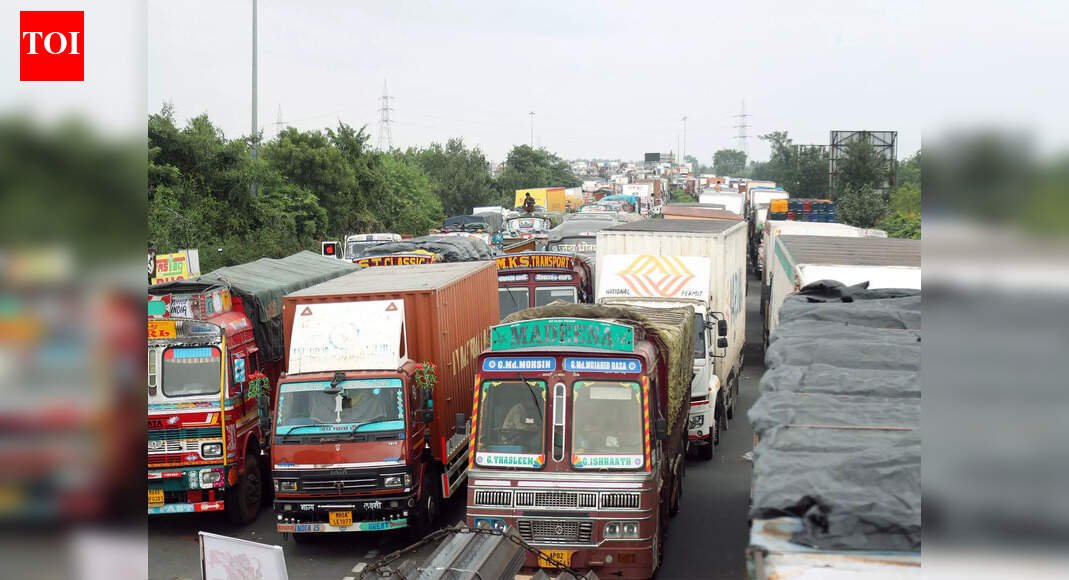
Indian commercial vehicle industry poised for upcycle as replacement demand builds: Nomura


Indian commercial vehicle industry poised for upcycle as replacement demand builds: Nomura

The Indian medium and heavy commercial vehicle (M&HCV) industry appears to be entering the next upcycle, with industry volumes estimated to grow by around 8 per cent year-on-year in FY26 and 10 per cent in FY27, following a period of modest growth, according to a report by Nomura.The report highlighted that improving industry fundamentals are likely to support demand over the medium term. It added that rising freight rates, lower GST-led affordability and a high average age of trucks–currently estimated at around 10 years, are expected to drive replacement demand, particularly during FY27-28.It stated “M&HCV industry appears to be entering the next upcycle……. we believe these are still early stages of a CV upcycle”.These factors together are improving fleet operator economics and supporting a recovery in volumes.Nomura’s analysis points to a clear improvement in fleet operator profitability, driven by better freight rates and the benefits of GST-related cost efficiencies.As a result, fleet operators are witnessing stronger cash flows, which is translating into improved replacement demand and higher confidence in new vehicle purchases.The report said it remains positive on the commercial vehicle sector, citing strong potential for a cyclical upturn and improving demand visibility.The report also noted that the current phase still represents the early stages of a CV upcycle, as industry volumes have not yet crossed the peak levels seen in FY19.According to Nomura, industry growth in FY27 could be much stronger if economic growth accelerates, supported by higher consumption and lower interest rates.Addressing concerns around the impact of the Dedicated Freight Corridor (DFC), Nomura said demand risks from the DFC remain limited. The Eastern and Western DFCs are now around 96 per cent operational, but non-bulk cargo–which accounts for nearly 30 per cent of total freight–continues to rely heavily on road transportation.Given the large and diversified freight base served by commercial vehicles, the report does not expect any significant impact on overall truck demand.However, Nomura cautioned that some normalisation could be seen in specific sub-segments. Tractor-trailers, which compete directly with bulk rail movement, have seen a sharp increase in their share of the industry mix, rising from about 9 per cent in FY21 to 22 per cent in FY25.Overall, the report highlighted that structural drivers such as replacement demand, improving fleet economics and supportive macro conditions position the Indian M&HCV industry for a sustained recovery in the coming years.


Source link

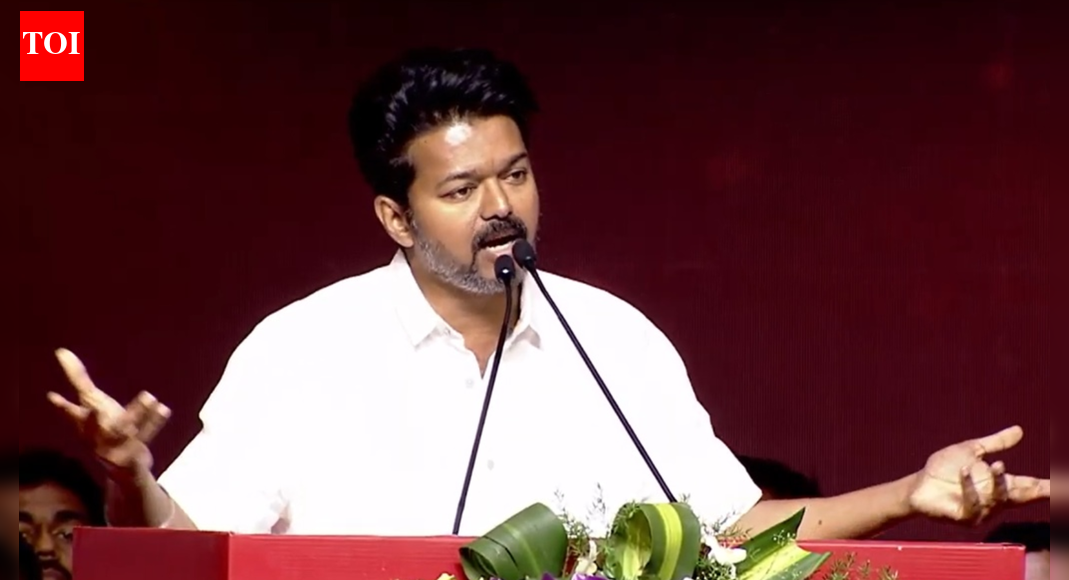
In veiled swipe, Vijay says DMK rattled by TVK”s rallies, claims party allowed lotus to bloom in TN | India News


In veiled swipe, Vijay says DMK rattled by TVK''s rallies, claims party allowed lotus to bloom in TN

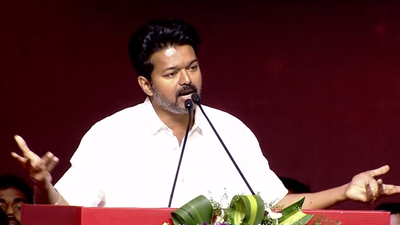
CHENNAI: TVK’s political adversaries were rattled by the party’s successful meetings, and they were beginning to unmask themselves, actor Vijay claimed in a veiled reference to the DMK.Firing a salvo at the ruling DMK, the founder of the fledgling party accused the DMK of allowing the “Lotus” (BJP’s symbol) to bloom in Tamil Nadu and alleged that the Dravidian major had confused the people on the “common minimum agenda.” “After an unsuccessful conspiracy to bring us down, we witnessed three successful public meetings in Kanchipuram, Puducherry and Erode. Those who wanted to shut us down are rattled upon seeing the people standing with us,” Vijay said in a statement here.

‘If Pakistan Comes in Dowry…’: Rajnath Singh Recalls The Humorous Side of Atal Bihari Vajpayee

He took strong exception to an article in the DMK’s organ Murasoli, and said the editorial piece attempted to defame and bring disrepute to the TVK.“They are now beginning to unmask themselves. The leader of their party, the Chief Minister (M K Stalin), talks and throws stones, forgetting that he is standing in front of the mirror,” Vijay said in a hard-hitting statement on December 24.“The DMK,” he said, “had confused the people with the so-called common minimum agenda and became a slave from 1999 to 2003 (during the Vajpayee-led regime). They ensured the Lotus to bloom in Tamil Nadu.” The TVK members should ignore the DMK’s “rhetoric and monologues” and join hands with the people and make the latter realise that the TVK is the only party qualified to strive for their cause, he said.


Source link

Access Denied


Access Denied

You don’t have permission to access “http://www.ndtv.com/india-news/karnataka-bus-accident-news-truck-jumped-divider-rammed-bus-witnesses-recount-karnataka-bus-tragedy-9946614” on this server.

Reference #18.ef493417.1766647869.1a767165

https://errors.edgesuite.net/18.ef493417.1766647869.1a767165


Source link

GCL: Of friendships & rivalries on the board | Chess News


GCL: Of friendships & rivalries on the board
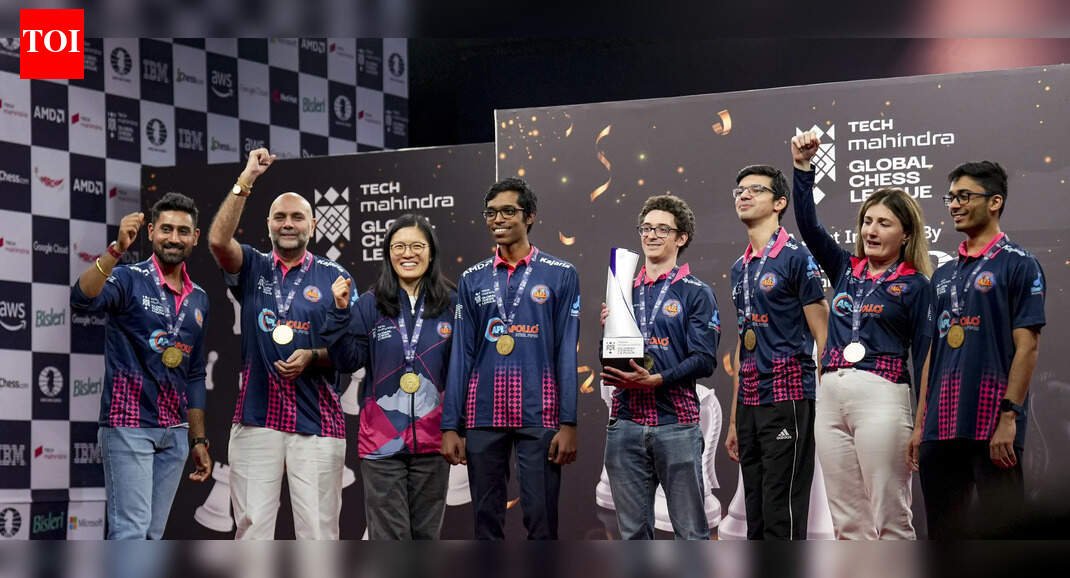
Players of Alpine SG Pipers pose with trophy after winning the Global Chess League 2025. (PTI Photo)

NAGPUR: Two of the three Global Chess League (GCL) debutants, and three Candidates who will soon become opponents, took time to settle into their groove. Once they started gelling well, they underlined their supremacy in the third edition of the world’s first and official franchise-based team tournament in Mumbai on Tuesday.Go Beyond The Boundary with our YouTube channel. SUBSCRIBE NOW!The fast-paced rapid chess tournament featured 36 rated players, including 14 of the world’s top 15 masters, divided into six mixed-gender teams. World rapid No. 6 Fabiano Caruana replaced top-ranked Magnus Carlsen in the Pipers’ outfit and made his debut in the league alongside Indian prodigy Leon Luke Mendonca.

GM Volodar Murzin Exclusive: GCL, Playing in India, Russia, Candidates 2026, and more

While Pipers hogged the limelight, the concluding day saw four games played between the two Indian World Champions — Vishy Anand and D Gukesh. When Gukesh was asked about playing four games in a day against his great Indian predecessor, he said “It’s tricky to play against him is what I realised. It’s like you are playing against God, I have always seen him like that. The killer instinct is tough to bring against him. I just have too much respect for him.The champion team also had three players who qualified for the Candidates tournament. The 10-day friendship and team bonding between Piper’s top three — American Grandmaster Caruana, fivetime Dutch champion Anish Giri, and India’s Rameshbabu Praggnanandhaa — will turn into rivalry from Friday when they compete in the World Rapid and Blitz championships in Doha.All three will also be fighting against each other during the Candidates next year, from where the challenger to Gukesh will be identified. The trio was a bit hesitant to share their ideas before the start of the GCL. But once they started sharing pleasantries, Caruana, Giri, and Pragg played like a united bunch along with world women’s No. 1 Hou Yifan to emerge triumphant.On his debut, Caruana said, “We’re playing a team event, which is rare and fun. There’s responsibility to perform for your team, and even if things don’t go your way individually, your team can support you. It’s a great format.”Pragg added, “It feels great. I’ve been part of this team for three years, and after missing out earlier, we finally made it this year — by just one point. It’s a strong support system.”


Source link

‘National Total War’: America’s Growing Vulnerability Amid China’s Military Ascent | World News


'National total war': How China's military buildup up is making US more vulnerable
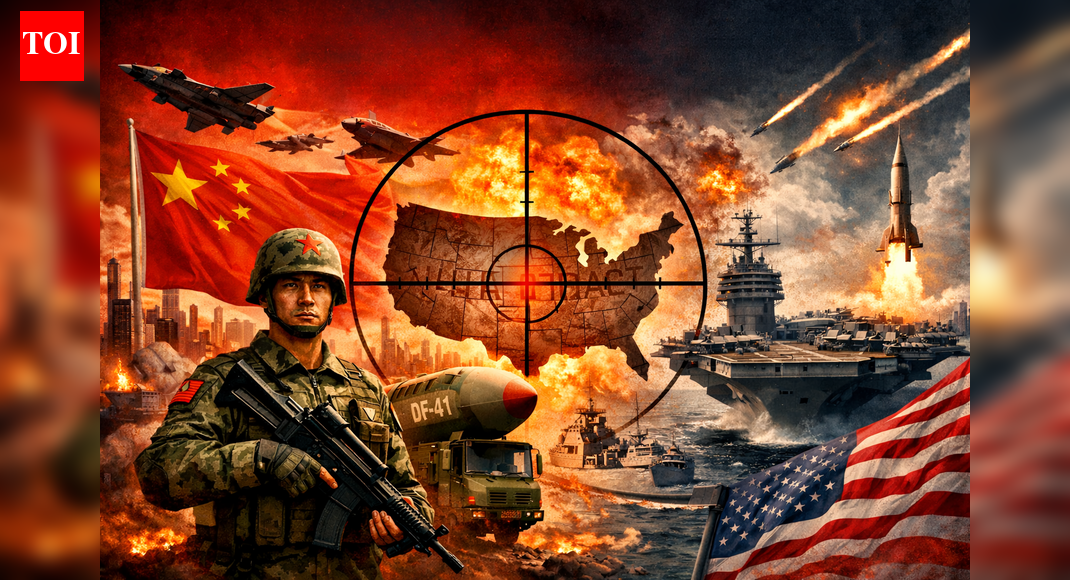
A new Pentagon report reveals China’s military buildup increasingly threatens the US homeland. Beijing is developing capabilities for direct attacks on critical infrastructure, cyber systems, and space assets, aiming to disrupt American decision-making during a Taiwan crisis. This signifies a shift from regional deterrence to direct homeland vulnerability, fundamentally altering US defense calculations.

For the first time, a Pentagon report says plainly what had long been implied. China’s “historic military buildup” has made the US homeland “increasingly vulnerable.” The phrase appears early in the Defense Department’s 2025 annual assessment of China’s military power, and it is not rhetorical flourish. It marks a shift in how the US government wants Americans to understand the problem Beijing poses. This is no longer only about aircraft carriers in the Pacific or missile ranges around Taiwan. It is about the United States itself as a target.The report, formally titled Military and Security Developments Involving the People’s Republic of China, describes a Chinese military that is no longer content with regional deterrence. The People’s Liberation Army is now measuring its capabilities against what it calls the “strong enemy,” an unmistakable reference to the United States. In doing so, it is building ways to pressure American decision-making directly, including through cyber access to critical infrastructure, long-range conventional and nuclear strikes, and attacks on the space systems that underpin US military power.The effect, the report argues, is a new vulnerability equation. Washington must now think not only about whether it can intervene in a conflict near Taiwan, but whether it can do so while absorbing disruption at home.Why it matters

  • The Pentagon’s core point isn’t just that China is getting stronger. It’s that Beijing is building multiple ways to shape US decision-making in a crisis-by threatening the homeland directly while also complicating US military intervention in the Indo-Pacific.
  • That shift widens the problem from “Can the US win near Taiwan?” to “Can the US sustain domestic stability, critical infrastructure, and space-enabled warfighting while intervening?” The report’s framing of vulnerability is deliberately multi-domain. The latest benchmark: 2027
  • The report says the PLA is making “steady progress” toward its 2027 goals, including achieving “strategic decisive victory” over Taiwan and building “strategic counterbalance” against the US in nuclear and other strategic domains. Then it translates the implication plainly: “China expects to be able to fight and win a war on Taiwan by the end of 2027.”
  • To get there, the report says the PLA is refining options to force unification, including “most dangerously” an amphibious invasion, “firepower strike,” and possibly a maritime blockade-testing “essential components” through 2024 exercises, including striking sea/land targets and striking US forces in the Pacific.

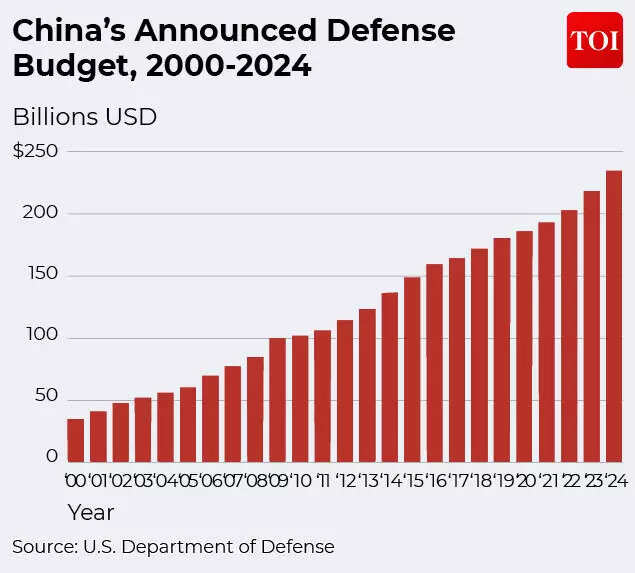
‘National total war’The most striking doctrinal shift described in the report is Beijing’s embrace of what Chinese military writings call “national total war.” The idea treats future conflict not as a discrete military contest but as a clash between entire national systems. Political authority, economic resilience, civilian infrastructure, information control, and military power are all part of the same battlefield.The Pentagon links this thinking directly to China’s long-term political goal of “national rejuvenation” by 2049 and to its nearer-term military benchmarks. Defense spending has nearly doubled since Xi Jinping took power. Civil-military integration reforms are designed to ensure that commercial sectors and local governments can be rapidly mobilized in wartime. Chinese planners, the report notes, have studied the war in Ukraine closely, drawing lessons about industrial capacity, sanctions resistance, and the risks of a prolonged fight.

China defence budget over the years

This is not abstract theory. The report repeatedly emphasizes integration. China’s “core operational concept,” known as Multi-Domain Precision Warfare, is built around fusing data from space, cyber, air, sea, and land sensors into a single targeting system. The aim is to identify weak points in an adversary’s operational system and strike them quickly, at scale, and in coordination.

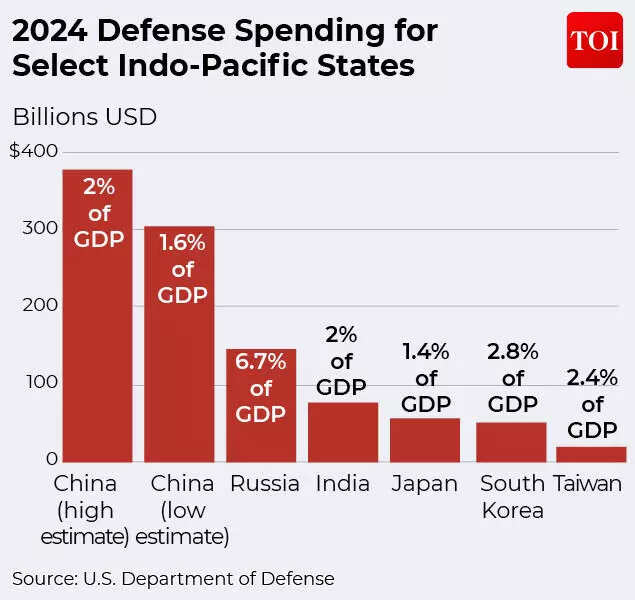
Defence budget: China and other Asian powers

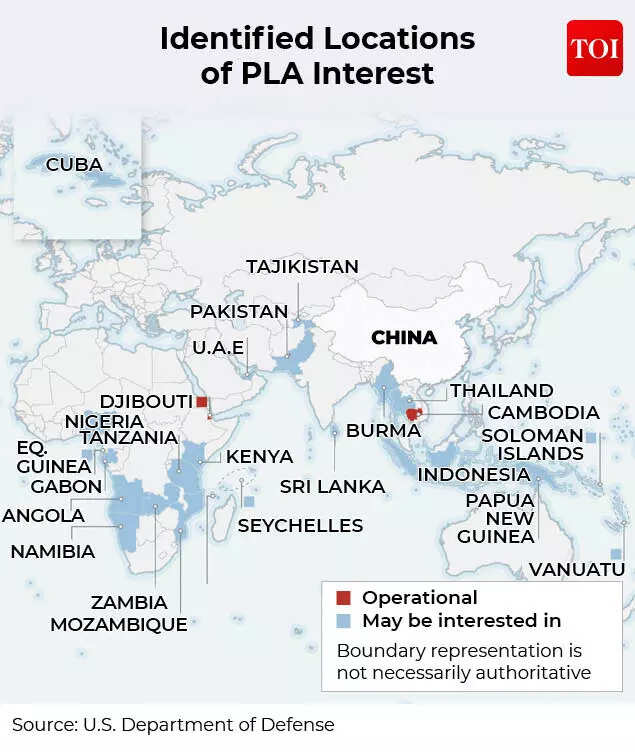
Taiwan as the pacing scenarioEverything in the report ultimately bends back toward Taiwan. The Pentagon reiterates that the PLA is making “steady progress” toward its 2027 goals, which are explicitly tied to the ability to force unification with the island. The assessment translates the implication without hedging: China expects to be able to “fight and win” a war over Taiwan by the end of 2027.To get there, Beijing is refining multiple military options. A maritime blockade. A joint firepower strike campaign. A full-scale amphibious invasion. In 2024, the PLA’s “JOINT SWORD” exercises rehearsed the encirclement of the island, simulated strikes on sea and land targets, and practiced blocking key ports. These were not symbolic displays. They were stress tests of command-and-control, logistics, and coordination under realistic conditions.Crucially, Taiwan planning is inseparable from counter-intervention. The PLA’s growing missile forces can now range 1,500 to 2,000 nautical miles from China’s shores. In sufficient volume, the report warns, those strikes could seriously disrupt US operations across the western Pacific. Chinese units train against professional “blue forces” that replicate US equipment and tactics. The point is explicit preparation for a fight with American forces, not a generic regional contingency.Cyber as a homeland leverIf Taiwan is the likely trigger, cyber operations are the lever that reaches home. The report calls China the most persistent cyber threat to US government, military, and civilian networks in 2024. What distinguishes the current assessment is its emphasis on pre-positioning.Chinese cyber actors associated with campaigns such as “Volt Typhoon” have “burrowed into US critical infrastructure,” the report says. These intrusions go beyond espionage. They demonstrate the ability to disrupt systems during a crisis, including those needed to mobilize and deploy US forces. Likely targets include military command networks and civilian infrastructure with political or economic significance.The Pentagon’s language is careful but unsettling. Disruptions might be localized and temporary, lasting days or weeks. But the strategic effect could be outsized. Interruptions to pipelines, power, or telecommunications during a Taiwan crisis could slow military response and generate public pressure at home. Another campaign, known as “Salt Typhoon,” targeted US telecommunications providers in 2024, highlighting vulnerabilities in the backbone of American communications.Taken together, cyber operations are portrayed as a way to impose costs below the nuclear threshold while shaping the domestic environment in which US leaders make decisions.The ‘kill chain’The report is equally blunt about space. China sees space superiority as decisive. Its intelligence, surveillance, and reconnaissance satellite fleet has more than tripled since 2018, reaching over 359 systems by early 2024. That constellation dramatically improves China’s ability to track US aircraft carriers and expeditionary forces across the Pacific.These satellites are not passive observers. They are integral to closing what the military calls the kill chain: finding targets, tracking them, and delivering long-range precision strikes. Without space-based sensors and communications, that chain breaks.China is therefore building multiple ways to sever its adversary’s access to space. The report describes kinetic antisatellite missiles capable of destroying satellites in low Earth orbit, with ambitions to reach higher orbits. It highlights “dual-use” satellites equipped with robotic arms, such as Shijian-21, that can grapple and reposition other satellites. Ground-based lasers can disrupt or damage sensors. Jammers target military satellite communications across frequency bands.Cyber plays a role here too. Chinese actors have been implicated in attacks on foreign satellite networks, particularly those of the United States. The goal is not necessarily to destroy everything, but to degrade enough systems to slow decision-making and blunt operational advantage at the outset of a conflict.Nuclear growth and signalingOverlaying all of this is a rapidly expanding nuclear force. China’s warhead stockpile remained in the low 600s through 2024, the report says, but it is on track to exceed 1,000 by 2030. New silo fields in western China, a growing fleet of mobile intercontinental ballistic missiles, and advances in early warning systems point to a shift toward higher readiness.The report also notes Chinese interest in lower-yield nuclear weapons, suggesting a strategy that contemplates limited nuclear use rather than only massive retaliation.The effect is to thicken the strategic layer. Nuclear expansion does not replace cyber or conventional pressure. It sits alongside them, complicating escalation dynamics and shortening decision timelines.Ships, reach, and presenceNaval power provides the endurance behind this posture. China’s third aircraft carrier, Fujian, completed its first sea trials in 2024. The navy aims to field six carriers by 2035, for a total of nine. In October, China’s two operational carriers conducted their first dual-carrier operations, a milestone in integrated combat capability.The relevance to homeland vulnerability is indirect but real. Maritime power supports blockade options around Taiwan and sustained airpower projection. It also helps keep US forces at distance while other tools apply pressure elsewhere.China’s ambitions are not confined to the Indo-Pacific. The report details a growing global logistics network, from Djibouti to Cambodia’s Ream Naval Base, with potential future sites in Africa and the Pacific islands. Access to the Atlantic, the Pentagon warns, would pose new challenges for US planners.

PLA is continuously expanding its interest areas

Russia and the outer perimeterChina’s partnership with Russia adds another layer. Combined bomber patrols near Alaska, joint coast guard operations in the Bering Sea, and expanded exercises signal a shared interest in countering the United States. These activities are not decisive on their own, but they stretch attention and resources, reinforcing the report’s central theme of multi-directional pressure.What the warning really meansThe Pentagon’s core message is not simply that China is stronger. It is that Beijing is building an integrated system designed to shape US choices in a crisis. The question is no longer only whether the United States can prevail militarily near Taiwan. It is whether it can do so while managing cyber disruption at home, threats to space systems, and a more complex nuclear backdrop.China is not betting on a single knockout blow. It is constructing multiple pressure points, many of them far from the Taiwan Strait, to raise the cost and uncertainty of American intervention.The report does not offer easy solutions. It does, however, make clear that the era in which the US homeland could be treated as a sanctuary in great-power conflict is ending. The competition, as Beijing’s own doctrine suggests, is becoming a contest between entire systems. And in that contest, distance alone is no longer protection.



Source link

Guntha of land, SUVs, Thailand trips: It’s a freebie fest on Pune civic poll pitch | Pune News


Guntha of land, SUVs, Thailand trips: It’s a freebie fest on Pune civic poll pitch

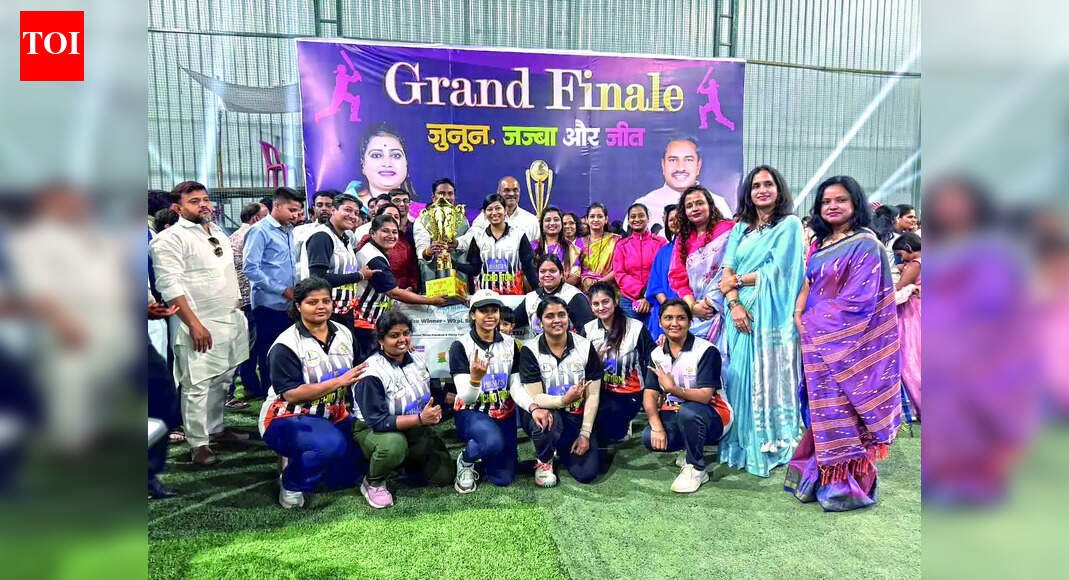
PUNE:That signature smile of netas, the usual “namaskars” and umpteen vows seem outdated to win voters’ favour. The run-up to the PMC polls is witnessing a redefined way to entice voters — offering Paithani saris, highend vehicles, plots of land and even holiday trips to Thailand in lucky draws.With the local polls in Maharashtra taking place after a prolonged gap, the pitch to voters is no longer subtle and aspirants across party lines are escalating their campaign strategies to levels rarely seen in urban civic politics.The scenario in Pune is in no way different. What were once modest outreach efforts have transformed into high-value inducements, with sponsored cricket leagues offering Rs 1 lakh prizes, and twoand four-wheeler draws becoming routine features of ward-level poll campaigns.Political analysts are of the view that land promises and luxury vehicles signal how fiercely contested the civic race has become, driven by overcrowded tickets, entry of new aspirants and intense intra-party competitions.In PMC’s Ward No. 1, which covers parts of Lohegaon and Dhanori, NCP aspirant Shashi Tingre has drawn much attention after completing registrations for a lucky draw, offering land plot measuring one guntha (roughly 1,100 sqft) each for 11 women.Tingre said the land offer should be seen as social empowerment and not inducement. “This is about giving women security and dignity through land ownership, not about buying votes.”In Wagholi, the scale of campaign has taken an even more extravagant turn with some aspirants sponsoring a five-day Thailand (Phuket-Krabi) tour for couples. In Ward No. 3 (Vimannagar), Sakhi Prerna Manch held a “home minister”-style contest for women, where winners walked away with Paithani saris.In ward No. 10 (Bavdhan and Bhusari Colony), around 500 girls got bicycles, while women got sewing machines through an initiative by Kiran Dagade Patil Foundation. In the same ward, Dilip Vede Patil, an aspirant, organised a free-of-cost music concert.In Pimpri Chinchwad, a candidate, Sanket Barne, organised a draw with the top prize of an SUV. He said, “We had over 5,000 participants attending our event which featured a music concert by leading artists from Bollywood.” Another aspirant from Pimpri, Ashwini More, sponsored a cricket tourney with a Rs 1 lakh cash prize. Many aspirants are privately admitting that such offers raise the stakes for everyone in the fray.Urban policy expert Jyoti Kanade said, “When campaigns revolve around gifts, it signals a transactional approach to democracy where voters are treated as consumers and polls as investments.”Political commentator Anand Puntambekar said, “Delayed elections, overcrowded tickets, and intense competition have pushed candidates to adopt a mindset where visibility matters more than ideology or governance.”A senior BJP leader said there is a growing pressure on contenders to match or exceed the rivals’ offers. “But there has to be a limit to all this and action must be taken against those crossing the line.”


Source link

Delhi Metro expansion: Cabinet clears Delhi Metro Phase-VA with 13 new stations; network to cross 400 km


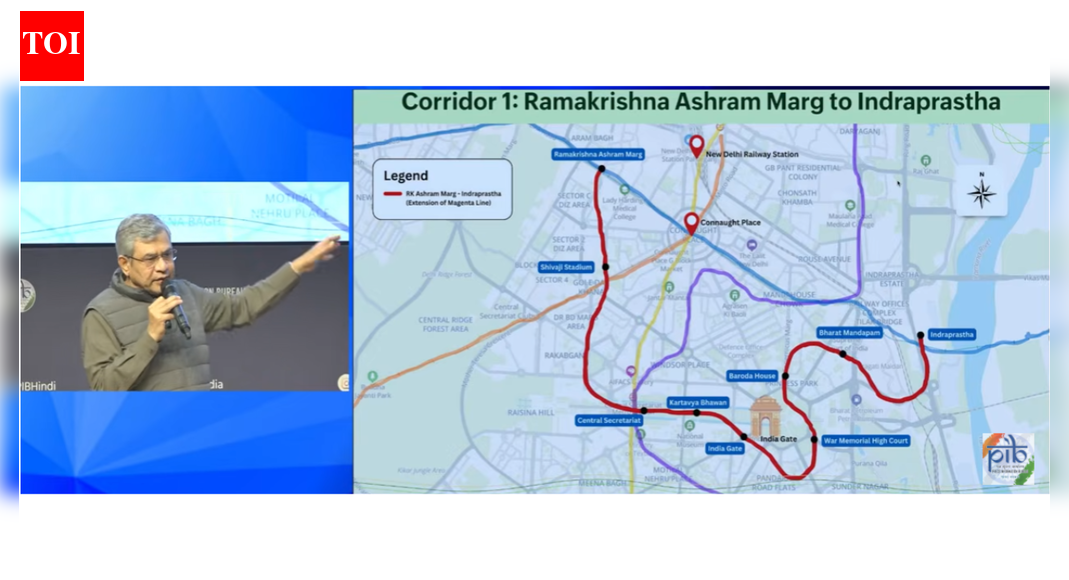
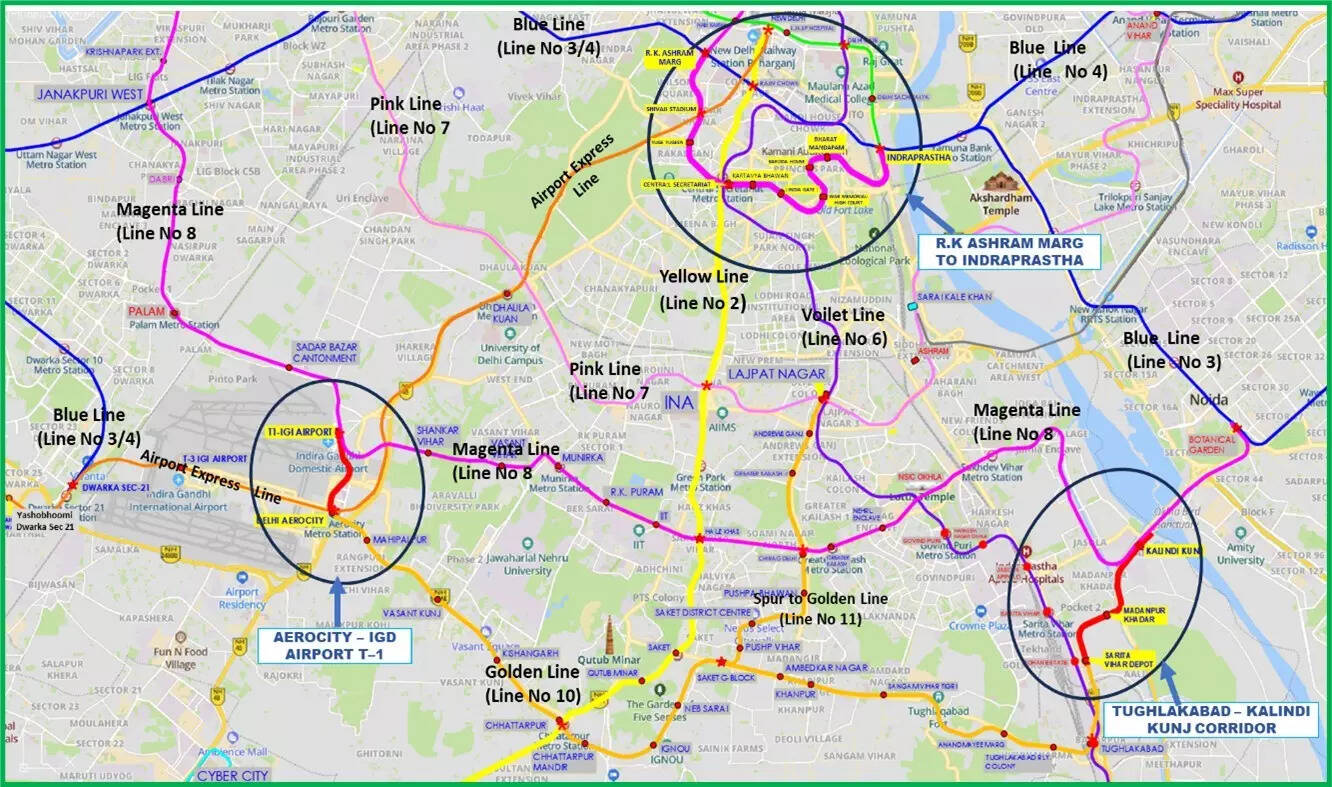
Delhi Metro: The Union Cabinet has approved the Delhi Metro Rail Project Phase-VA, paving the way for the construction of 13 new stations and extending the capital’s metro network beyond the 400-km mark, union minister Ashwini Vaishnaw said. According to details presented, the Phase-VA project will involve the construction of 13 stations, of which 10 will be underground and three elevated. The total length of the approved corridors will be 16 km, and the project is scheduled to be completed within three years.

-

Announcing the Cabinet decision, Union Minister Ashwini Vaishnaw said, “We all know how the Delhi Metro has positively transformed the lives of residents of Delhi and everyone who travels in and out of the city. With this expansion, a new chapter will be added to the Delhi Metro. For this purpose, a project worth Rs 12,015 crore has been sanctioned.” The estimated cost of the Phase-VA expansion has been pegged at Rs 12,015 crore. Once completed, the expansion will take the total operational length of the Delhi Metro network to over 400 km. The approved Phase-VA includes three corridors. The Ramakrishna Ashram Marg to Indraprastha corridor will span 9.9 km at an estimated cost of Rs 9,570.4 crore. The Aerocity to Airport Terminal-1 corridor will cover 2.3 km with a projected cost of Rs 1,419.6 crore. The Tughlakabad to Kalindi Kunj corridor will have a length of 3.9 km and an estimated cost of Rs 1,024.8 crore.The Phase-V (A) extensions of the Delhi Metro will expand connectivity in Central Delhi and the Domestic Airport area, reduce road congestion and help cut vehicular pollution, according to an official release. The extensions, part of the Magenta Line and the Golden Line, are expected to improve access to key administrative and transport hubs while supporting economic activity in the national capital. Under the Phase-V (A) project, stations on the R.K. Ashram Marg–Indraprastha section will include R.K. Ashram Marg, Shivaji Stadium, Central Secretariat, Kartavya Bhawan, India Gate, War Memorial–High Court, Baroda House, Bharat Mandapam and Indraprastha, the release said. The Tughlakabad–Kalindi Kunj section will have stations at Sarita Vihar Depot, Madanpur Khadar and Kalindi Kunj. The existing Aerocity station will also be extended to connect with Indira Gandhi Domestic Airport Terminal-1. Construction under Phase-IV of the Delhi Metro, comprising 111 km of track and 83 stations, is currently underway. About 80.43% of civil construction work on the three priority corridors under Phase-IV has been completed so far, according to the release. The Phase-IV priority corridors are expected to be completed in stages by December 2026. The release said the Delhi Metro currently handles an average of 65 lakh passenger journeys per day. The highest ridership recorded so far was 81.87 lakh passenger journeys on August 8, 2025. At present, the Delhi Metro Rail Corporation operates 12 metro lines spanning about 395 km with 289 stations across Delhi and the National Capital Region. The network is the largest metro system in India and among the largest in the world.


Source link

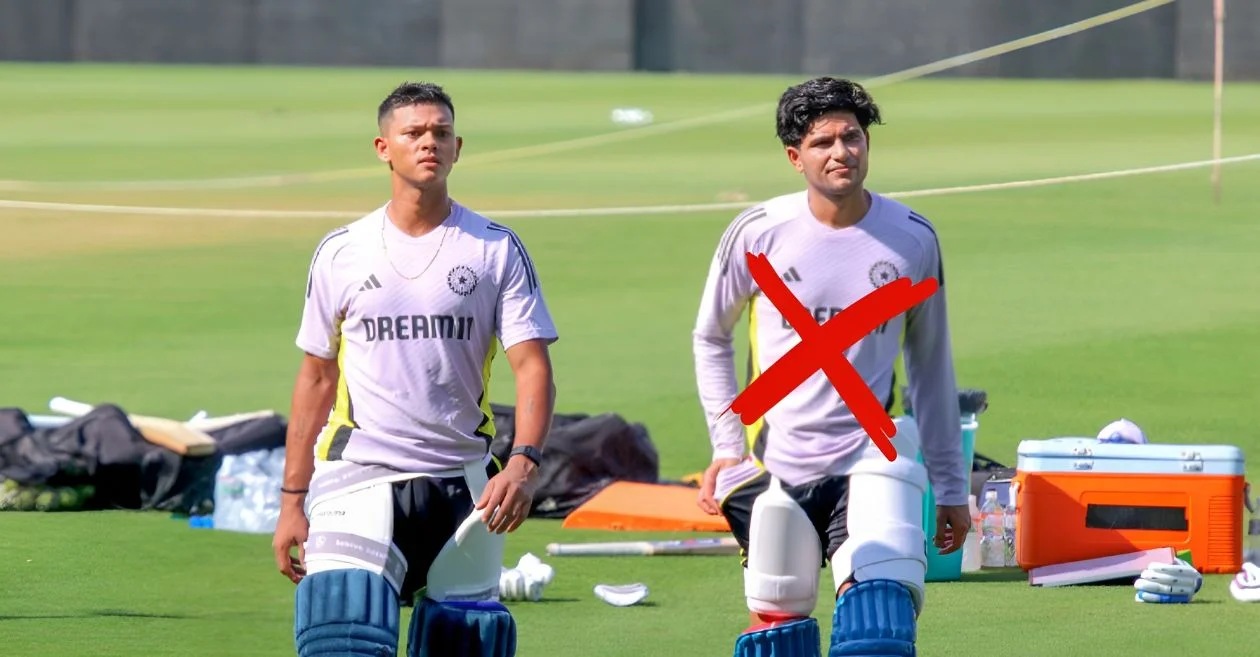
Not Shubman Gill! Yashasvi Jaiswal reveals his dream ‘super over’ batting partner


In a revealing rapid-fire session on journalist Vimal Kumar’s YouTube channel, Indian opener Yashasvi Jaiswal provided a rare glimpse into the dynamics of the national dressing room and his personal life. The 23-year-old, who has quickly become a mainstay in the national setup, shared his perspectives on high-pressure match scenarios and the off-field camaraderie he enjoys with his teammates. By sharing these lighthearted details, Jaiswal allowed fans to see the grounded personality behind his explosive batting performances on the world stage.

Yashasvi Jaiswal reveals his ‘super over’ batting partner in the rapid-fire round

During the interview, Jaiswal was put on the spot with a series of quick-fire questions, revealing his deep trust in senior leadership and the playful side of his relationships with fellow young stars.

  • Super Over Batting Partner: Jaiswal chose legendary batter Rohit Sharma.
  • The “Superman” of the Team: He assigned this nickname to Tilak Varma.
  • The “Spider-Man” of the Team: Wicketkeeper-batter Dhruv Jurel was his pick for this title.
  • A Hidden Talent: Jaiswal revealed he is an avid cook: “I love cooking… whatever I feel like, mainly eggs, tea, coffee, and sometimes meat.”

Also READ: Amit Mishra opens up on rumours claiming MS Dhoni hindered his career

A landmark 2025 year for the Indian southpaw Jaiswal

The year 2025 has been a defining period for Jaiswal, during which he officially joined the elite list of Indian batters to score centuries across all three international formats. He reached this milestone on December 6, 2025, in Visakhapatnam, where he struck a patient yet commanding maiden ODI century of 116 off 121 balls* against South Africa. This performance not only helped India clinch the series 2–1 but also saw him join legendary names like Rohit Sharma and Virat Kohli as one of only six Indians to achieve the triple-format ton feat.

Beyond the international arena, Jaiswal’s 2025 season has been marked by record-breaking domestic displays and significant Test milestones. In July 2025, he dominated the Anderson-Tendulkar Trophy against England, amassing over 700 runs in the series, including notable centuries at Leeds and The Oval. More recently, in December 2024, he lit up the Syed Mushtaq Ali Trophy for Mumbai by smashing a blistering 48-ball century against Haryana, facilitating a record successful chase of 235. Despite a recent bout of acute gastroenteritis that briefly sidelined him, his stats for 2025, including three Test tons and his maiden ODI century, confirm his status as a cornerstone of India’s future batting lineup.

Also READ: New Zealand announces white-ball squads for the India tour; no Kane Williamson and Jacob Duffy in ODIs


Source link