Breaking News
Could global warming paradoxically freeze the planet: How tiny ocean organisms could flip Earth’s climate |


Could global warming paradoxically freeze the planet: How tiny ocean organisms could flip Earth’s climate

A world in warming, under most circumstances, tipping toward deep cooling does seem counterintuitive; yet, Earth’s geological record is replete with such episodes when rising greenhouse gases were followed by abrupt climatic reversals. Today, scientists increasingly look to the oceans for an explanation, where the quiet work of microscopic organisms regulates the exchange of carbon between the atmosphere, water, and rocks. Long timescales are involved, but their cumulative effects can be dramatic. How ancient climate shifts unfolded has become crucial to understanding future risk, as modern warming alters marine ecosystems that once helped nudge the planet into an ice age.

How ancient oceans pulled carbon from the air and cooled the planet

Over the years, evidence has sharpened for a dramatic climate transition during the Ordovician period through various synthesis works, like the review in the Annual Review of Earth and Planetary Sciences on the causes and consequences of Ordovician cooling. About 445 million yrs ago, Earth moved from a warm greenhouse state to widespread glaciation without any obvious decline in atmospheric carbon dioxide at the outset. Geological proxies suggest that enhanced carbon removal and not reduced volcanic emissions played a decisive role. This cooled concurrently with major changes in marine life, indicating a biological driver located within the ocean carbon cycle.The Ordovician seas were dominated by planktonic organisms that fixed carbon through photosynthesis. As these organisms proliferated, more organic carbon sank to the seafloor, reducing the amount returned to the atmosphere. As this biological pump developed, it essentially helped to energise chemical weathering on land by lowering atmospheric carbon dioxide, and more carbon was pulled down through the reactions of rocks. The result was a tightly coupled system where marine biology and geochemistry were interlaced in a feedback capable of reshaping global climate, a sobering example of how life itself can become a planetary force.

How microscopic marine organisms influence global temperatures

Phytoplankton, though perhaps invisible to the naked eye, represent one of the most vital elements in marine food chains and are considered capable of exerting strong controls over climate. While they are growing, these organisms absorb carbon dioxide from the atmosphere as they are a sink for it, which eventually gets stored in both ocean waters and sediments. If environmental conditions are right for big blooms, the efficiency of this transfer will be higher, thus the cooling effects will be stronger. During the Ordovician, evolutionary changes likely improved plankton productivity, enabling larger volumes of carbon to be locked away for long periods.Modern climate research shows that plankton respond sensitively to temperature, nutrient supply, and ocean circulation. Warming can initially stimulate growth in some regions, but sustained heat alters species composition and nutrient mixing. If future oceans experience changes in the same order of magnitude as in the geological past, the balance between the transport of carbon to depth and the transport to the atmosphere may become unpredictable. The Ordovician example suggests that biological responses do not always stabilise climate, and under specific thresholds, they may accelerate transitions toward cooler states.

When oceans changed composition and ice began to spread

The Ordovician cooling was not a story of carbon removal alone. Changes in ocean chemistry and the distribution of oxygen supplemented this path toward the climate outcome. Increased burial of organic carbon raised atmospheric oxygen levels, which in turn intensified wildfires on land and changed terrestrial vegetation. Such changes further amplified weathering rates and drew down additional carbon dioxide. Cascading effects linked marine productivity with atmospheric composition and surface processes, generating conditions favourable for the formation of ice sheets.The cooling oceans also changed the circulation patterns that led to the production of cold, dense waters at high latitudes. As the polar regions became colder, ice sheets expanded rapidly and reflected more of the sunlight back to space, thus global cooling was strengthened. This albedo feedback is what keeps the planet at a glacial state, at least until higher carbon dioxide levels can be returned by volcanic emissions and reduced weathering. The sequence underscores how tightly coupled Earth systems are, in which changes in ocean life can flow through to the atmosphere and cryosphere.

What ancient ice ages reveal about today’s warming oceans

Drawing lessons from the Ordovician does not mean that global warming today will soon pitch the planet into an ice age. Timescales are very different, and human-driven emissions are unfolding much faster than ancient biological feedbacks. Yet history does show that the Earth’s climate can respond nonlinearly when important thresholds are crossed. Small marine organisms, through the power of cumulative action, have in the past changed atmospheric chemistry enough to alter global conditions.Today’s oceans are undergoing rapid change, including warming, acidification, and deoxygenation-all drivers that impact plankton behaviour. If these changes alter the efficiency of the biological carbon pump, then long-term climate trajectories could shift in unexpected directions. The Ordovician record illustrates that gradual trends alone do not ensure climate stability and that the tiny forms of life can, when conditions are right, serve to help guide the planet toward radically different states.Also Read | A hidden Arctic world: Methane mounds and life found 3.6 km below the Greenland Sea


Source link

Aligarh Muslim University teacher shot dead on campus; hunt on for attackers | Agra News


ALIGARH: A teacher at Aligarh Muslim University (AMU) in Uttar Pradesh was shot in the head by unidentified assailants, officials said on Thursday.The victim was out for a walk.

‘You’ll Know Me Now’: Gunman’s Chilling Threat Before Killing AMU Teacher Inside Campus In UP

The university’s Proctor, Professor Mohd. Wasim Ali, confirmed that Rao Danish Ali, a faculty member at the ABK School of AMU, was targeted in the attack.

‘You’ll Know Me Now’: Gunman’s Chilling Threat Before Killing AMU Teacher Inside Campus In UP

“Around 9 pm, we received information that there had been a shooting near the library and that a man had been injured and was being taken for medical treatment. We learned that the man who had been shot has been identified as Rao Danish Ali, and he was a teacher at the ABK School of the university. He was shot in the head. He died there at the medical college,” the Proctor told the media.He further stated that the exact number of shots fired remains uncertain, with reports varying between three and five.Police arrived at the scene promptly after being alerted, and Rao was rushed to Jawaharlal Nehru Medical College, where he later succumbed to his injuries.SSP Neeraj Jadon confirmed that two unidentified men carried out the shooting. Investigations are ongoing, and the search for the assailants has begun.Recently, Uttar Pradesh chief minister Yogi Adityanath had asserted in the state assembly that law and order in the state have improved.“An atmosphere of security is essential for every person. Today, every person can say that investment is coming to UP because of the improved security environment,” he said.Taking a dig at the Samajwadi Party, the chief minister said they became disorganised, creating an identity crisis in the state. “I would like to say to the Samajwadi Party and the opposition, ‘tu idhar udhar ki baatein mat kar, yah toh bata ki yeh kaafila kyu loota’… The Samajwadi Party became scattered and disorganised. It created an identity crisis for the entire state. Who was responsible for the dance of anarchy that was unleashed?” the Chief Minister asked.CM Yogi stated that the rule of law is firmly upheld in Uttar Pradesh and that there have been no communal riots.“If anyone wants to know how rioters are dealt with, they should ask the maulana from Bareilly. There is neither a curfew nor any riot now. Everything is fine in Uttar Pradesh. This is the new UP,” the CM said. (With agency inputs)


Source link

New BIS standard for incense sticks: Govt bans certain substances; flags ‘potential impact on human health’


New BIS standard for incense sticks: Govt bans certain substances; flags 'potential impact on human health'

NEW DELHI: The government issued a notification announcing a new Indian Standard for incense sticks (agarbatti), laying down quality norms and specifying a list of substances prohibited for use in their manufacture.The standard has been developed by the Bureau of Indian Standards (BIS) to ensure safer products and promote responsible and sustainable practices in the incense stick industry, the minister for consumer affairs said in a statement released on National Consumer Day 2025.The ministry released a list of harmful substances. “This includes certain insecticidal chemicals such as alethrin, permethrin, cypermethrin, deltamethrin, and fipronil, as well as synthetic fragrance intermediates like benzyl cyanide, ethyl acrylate, and diphenylamine. Many of these substances are restricted or banned internationally due to their potential impact on human health, indoor air quality, and ecological safety,” it said.According to the notification, the standard classifies agarbattis into machine-made, hand-made, and traditional masala agarbattis, and prescribes norms for raw materials, burning quality, fragrance performance and chemical parameters. This, the ministry said, will ensure safer products and consistent quality for consumers.Agarbattis are deeply embedded in India’s cultural and religious life and are widely used in homes, places of worship, meditation centres.With rising global demand for incense products growing steadily in India and overseas, the international studies and regulatory developments, “particularly in Europe have raised concerns over the use of certain synthetic chemicals in fragranced products, including incense sticks,” the release stated.Some of these substances have been linked to respiratory irritation, allergic reactions, neurological effects and environmental harm when used repeatedly in indoor environments, it added.The standard has been developed by the Fragrance and Flavour Sectional Committee (PCD 18) of BIS after extensive consultations with stakeholders.India is the world’s largest producer and exporter of agarbattis. The industry is estimated at around Rs 8,000 crore annually, with exports worth nearly Rs 1,200 crore to over 150 countries, including the US, Malaysia, Nigeria, Brazil and Mexico.The sector supports a large network of artisans, micro-entrepreneurs and MSMEs, especially in rural and semi-urban areas, and plays a key role in generating employment, particularly for women.The government said the new standard is “expected to enhance consumer confidence, promote ethical and sustainable manufacturing practices, support traditional artisans, and improve access to global markets. The standard reinforces India’s commitment to protecting its cultural heritage while aligning indigenous industries with modern quality and safety expectations. Products complying with this standard can also carry the BIS Standard Mark, helping consumers make informed choices with confidence.


Source link

SA20 2026 Squads: Players list and captains of all six teams


The SA20 2025-26 season marks the fourth edition of South Africa‘s premier T20 league, and it promises another high-octane summer of franchise cricket. Scheduled to run from December 26, 2025, to January 25, 2026, the tournament will once again feature six franchises, all backed by IPL parent groups, competing in a double round-robin format followed by the playoffs.

This season carries extra intrigue as MI Cape Town begin their title defence after ending Sunrisers Eastern Cape’s two-year dominance last year. With star-studded squads, experienced international captains, and exciting young South African talent, SA20 2026 is shaping up to be one of the most competitive editions yet.

Key players to watch out for in SA20

SA20 2026 will feature some of the biggest names in world cricket, capable of turning games on their own. Rashid Khan remains MI Cape Town’s trump card with his match-winning leg-spin and handy late-order hitting, while Jos Buttler and Heinrich Klaasen add explosive firepower to Durban’s Super Giants. Sunrisers Eastern Cape will once again bank on pace duo Anrich Nortje and Marco Jansen, while David Miller leads Paarl Royals with his proven finishing pedigree.

For Pretoria Capitals, the spotlight will be firmly on Andre Russell and young sensation Dewald Brevis, both capable of producing game-changing moments. Together, these stars ensure SA20 2026 delivers elite-quality cricket from start to finish.

Full squads and captains of each team in SA20 2026

Durban’s Super Giants

Captain: Aiden Markram

Squad: Noor Ahmad, Marques Ackerman, David Bedingham, Eathan Bosch, Jos Buttler, Gerald Coetzee, Devon Conway, Tony de Zorzi, Daryn Dupavillon, Dayyaan Galiem, Evan Jones, Heinrich Klaasen, Kwena Maphaka, Sunil Narine, Andile Simelane, Gysbert Wege, David Wiese, Kane Williamson

Overview: Durban boast one of the most balanced squads in the league, combining elite international batters with proven all-rounders and a formidable spin attack.

Joburg Super Kings

Captain: Faf du Plessis

Squad: Jarren Bacher, Nandre Burger, Matthew de Villiers, Donovan Ferreira, Dian Forrester, Richard Gleeson, Akeal Hosein, Duan Jansen, Rivaldo Moonsamy, Wiaan Mulder, Shubham Ranjane, Rilee Rossouw, Janco Smit, Steve Stolk, Prenelan Subrayen, Imran Tahir, Neil Timmers, Reece Topley, James Vince, Dan Worrall

Overview: Led by the ever-reliable du Plessis, the Super Kings lean heavily on experience, particularly in their bowling unit and middle order.

MI Cape Town

Captain: Rashid Khan

Squad: Corbin Bosch, Trent Boult, Reeza Hendricks, Karim Janat, Thomas Kaber, Dan Lategan, George Linde, Tristan Luus, Tom Moores, Dane Piedt, Nicholas Pooran, Dwaine Pretorius, Kagiso Rabada, Ryan Rickelton, Jason Smith, Jacques Snyman, Rassie van der Dussen, Tiaan van Vuuren

Overview: The defending champions are stacked once again, with world-class bowlers and explosive batting depth making them strong title contenders.

Also READ: THIS IPL team to send their bowlers to Durban for training in SA20

Paarl Royals

Captain: David Miller

Squad: Ottneil Baartman, Okhule Cele, Bjorn Fortuin, Vishen Halambage, Rubin Hermann, Daniel Lawrence, Keagan Lion-Cachet, Eshan Malinga, Nqobani Mokoena, Gudakesh Motie, Nqaba Peter, Delano Potgieter, Lhuan-dre Pretorius, Sikandar Raza, Thomas Rew, Asa Tribe, Mujeeb Ur Rahman, Kyle Verreynne, Hardus Viljoen

Overview: Paarl Royals have opted for versatility, with multiple spin options and all-rounders capable of adapting to different match situations.

Pretoria Capitals

Captain: Keshav Maharaj

Squad: Dewald Brevis, Roston Chase, Jordan Cox, Junaid Dawood, Keith Dudgeon, Connor Esterhuizen, Shai Hope, Wihan Lubbe, Sibonelo Makhanya, Tymal Mills, Lungi Ngidi, Bryce Parsons, Gideon Peters, Meeka-eel Prince, Andre Russell, Sherfane Rutherford, Will Smeed, Daniel Smith, Lizaad Williams, Codi Yusuf

Overview: Pretoria Capitals bring serious firepower, with match-winners like Russell and Brevis complemented by a strong pace and spin mix.

Sunrisers Eastern Cape

Captain: Tristan Stubbs

Squad: Jonny Bairstow, Matthew Breetzke, James Coles, Quinton de Kock, Allah Mohammad Ghazanfar, Lewis Gregory, Jordan Hermann, Marco Jansen, CJ King, JP King, Patrick Kruger, Adam Milne, Senuran Muthusamy, Anrich Nortje, Taridu Rathnayake, Lutho Sipamla, Beyers Swanepoel, Mitchell van Buuren, Chris Wood

Overview: Former champions Sunrisers Eastern Cape remain a formidable outfit, blending explosive batting with one of the most intimidating fast-bowling attacks in the league.

Also READ: SA20 2026: TV channels, live streaming details – When and where to watch in India, Australia, Pakistan, USA, UK & other countries


Source link

Your money in 2026: Maintain allocation to gold and silver in 2026 – here’s why


Your money in 2026: Maintain allocation to gold and silver in 2026 - here’s why
Whenever global risks rise, investors seek assets that preserve value, and bullion has historically played that role well. (AI image)

Gold and silver dazzled investors in 2025. Gold prices surged close to 80% while silver outshone all asset classes with gains of nearly 150%. Such spectacular returns naturally lead to the question: should one load up on precious metals in 2026?The short answer is yes, but with restraint. The fundamental factors that powered the rally in 2025 are not only intact, but have grown stronger. Geopolitical tensions remain elevated across regions, from prolonged conflicts to renewed strategic rivalries among major powers. The US moves in the Caribbean can put oil on the boil. China’s trade rivalry with the US and the European Union is intensifying. And the Middle East continues to simmer under a fragile ceasefire.In such uncertain times, gold’s role as a safe-haven asset comes to the fore. Whenever global risks rise, investors seek assets that preserve value, and bullion has historically played that role well.Inflation, too, refuses to fade quietly. While headline numbers may moderate in phases, the risk of inflationary flare-ups persists due to supply-chain disruptions, energy shocks and high fiscal spending by governments worldwide. Gold and silver tend to do well when real returns on financial assets are under pressure, acting as a hedge against the erosion of purchasing power.Silver enjoys an additional tailwind. Unlike gold, which is primarily a store of value, silver has significant industrial applications—ranging from electronics to renewable energy and electric vehicles. As the global energy transition gathers pace, demand for silver could remain robust, lending further support to prices.All this suggests that gold and silver can continue to play a useful role in portfolios in 2026. But investors should guard against the mistake of extrapolating recent returns too far into the future. Precious metals rarely move in a straight line. Gold, in particular, is known for long periods of stagnation punctuated by sharp rallies. After a strong run, prices can consolidate for years before the next upswing.That is why allocation matters more than enthusiasm. A prudent approach is to cap combined exposure to gold and silver at around 20–25% of the overall portfolio. This ensures that investors benefit from diversification and downside protection without becoming overly dependent on one asset class.Best ways to investFor most investors, gold and silver ETFs offer the easiest and most cost-effective route. They provide purity, liquidity and transparency, without the hassles of storage or concerns about quality. Sovereign Gold Bonds (SGBs) are even more attractive for long-term investors. Apart from tracking gold prices, they pay a fixed interest and offer complete capital gains tax exemption if held till maturity, making them tax-efficient.Physical gold still has a place, especially for those who value its universal liquidity. In times of extreme stress, physical gold can be sold almost anywhere in the world. Jewellery, though not the most efficient investment due to making charges, carries its own non-financial returns—emotional satisfaction and social utility—which many households value.The key message for 2026 is balance. Gold and silver remain relevant in a world marked by uncertainty and inflation risks. Maintain your allocation, rebalance if prices run ahead of fundamentals, and use the right investment vehicles. Precious metals work best not as speculative bets, but as steady anchors in a well-diversified portfolio. (Disclaimer: Times of India does not give any personal finance or stock market investment advice. Always consult an expert before taking investment decisions)


Source link

Twenty wickets fall on a wild opening day: Boxing Day Test explodes into Ashes chaos | Cricket News


Twenty wickets fall on a wild opening day: Boxing Day Test explodes into Ashes chaos
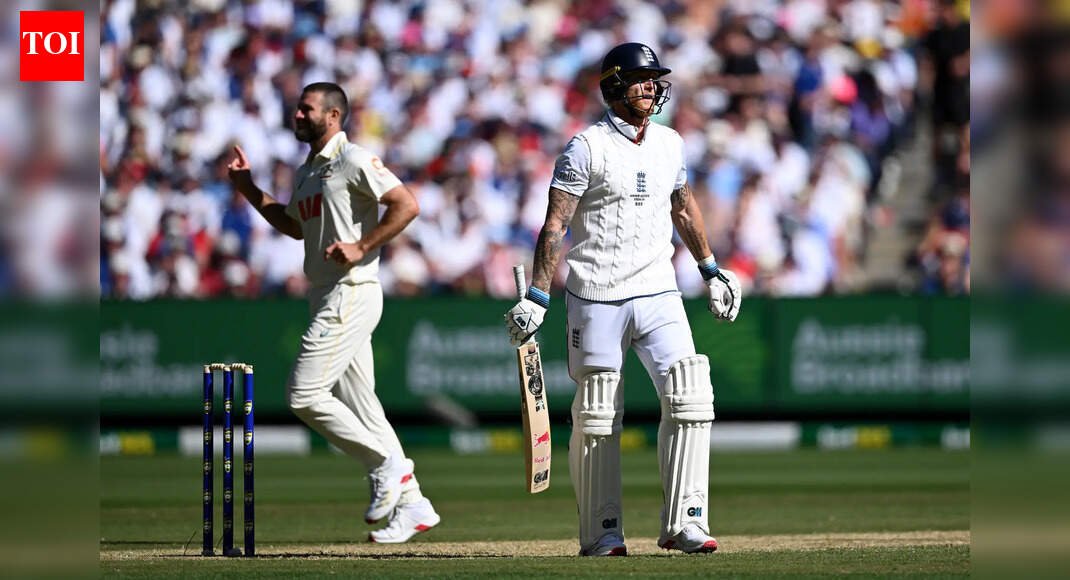
England captain Ben Stokes is dismissed by Michael Neser of Australia. (Getty Images)

An astonishing 20 wickets tumbled on a frenetic opening day of the fourth Ashes Test at the Melbourne Cricket Ground on Friday, leaving the Boxing Day clash delicately poised and the record crowd on the edge of their seats.Go Beyond The Boundary with our YouTube channel. SUBSCRIBE NOW!Under heavy cloud cover and on a lively green surface, England skipper Ben Stokes made the most of a crucial toss, inserting Australia and unleashing his pace attack. In front of a staggering 94,199 spectators — the largest cricket crowd ever recorded at the MCG — Australia were skittled for 152 before roaring back to bowl England out for just 110 in an action-packed day dominated by fast bowlers.

Why Rohit Sharma got really emotional at a promotional event

Josh Tongue was England’s standout performer with the ball, returning superb figures of 5 for 45 as Australia collapsed despite brief resistance. But any advantage England gained was swiftly erased by their own dramatic batting implosion, slipping to 16 for 4 and never truly recovering.Mitchell Starc and Michael Neser struck early blows, with England opener Ben Duckett enduring another miserable moment in a difficult week, falling for two after lobbing a simple catch to mid-on. Neser then removed Jacob Bethell, recalled in place of Ollie Pope, before Starc and Neser combined to rip through the top order. Zak Crawley and Joe Root departed in quick succession, plunging England into freefall.Harry Brook counter-attacked with a breezy 41, striking sixes to momentarily halt the collapse alongside Stokes, but Scott Boland turned the screws yet again at his favourite venue. The 36-year-old, who famously took 6 for 7 at the MCG in 2021, produced another devastating spell, dismissing Brook lbw before removing Jamie Smith and Will Jacks in the space of 10 deliveries.

Poll

Do you think England can recover from their batting collapse in the fourth Ashes Test?

Neser capped off England’s misery by dismissing Stokes for 16, finishing with 4 for 45 as the tourists folded cheaply. Australia were left to safely negotiate a single over before stumps, with nightwatchman Boland and Travis Head taking the hosts to 4 without loss, a slender but valuable 46-run lead.Earlier, England’s bowlers had set the tone after lunch, with Tongue and Gus Atkinson exploiting movement to dismantle Australia’s top order. Travis Head’s brisk cameo ended early, while Marnus Labuschagne and Steve Smith fell cheaply, the latter bowled by Tongue. Usman Khawaja fought back with a fluent 29, but edges and soft dismissals kept Australia on the back foot.With the Ashes already retained by Australia following dominant wins in Perth, Brisbane and Adelaide, England arrived in Melbourne desperate for pride.


Source link

Maharashtra horror: Shiv Sena corporator’s husband hacked to death; attackers strike with choppers | Mumbai News


MUMBAI: Mangesh Kalokhe, husband of Shiv Sena (Eknath Shinde faction) corporator Manasi Kalokhe, who recently won in the Khopoli Municipal Council elections, was murdered on Friday morning in Khopoli.According to reports, Kalokhe was returning home on his bike after dropping his son at school when he was ambushed by two unidentified assailants in a black car. The attackers struck him with choppers and then fled the scene.Kalokhe succumbed to his injuries on the spot. Police have registered a case and initiated an investigation into the incident.


Source link

From recession fears to double-digit GDP growth, Elon Musk ‘shares good news’ for Americans with one of the biggest US investors


Elon Musk predicts a significant economic boom for the US, forecasting double-digit GDP growth within 18 months, driven by advancements in artificial intelligence. He believes AI will act as a productivity proxy, potentially leading to triple-digit growth in five years. This optimistic outlook contrasts with concerns about wealth disparity and economic risks.

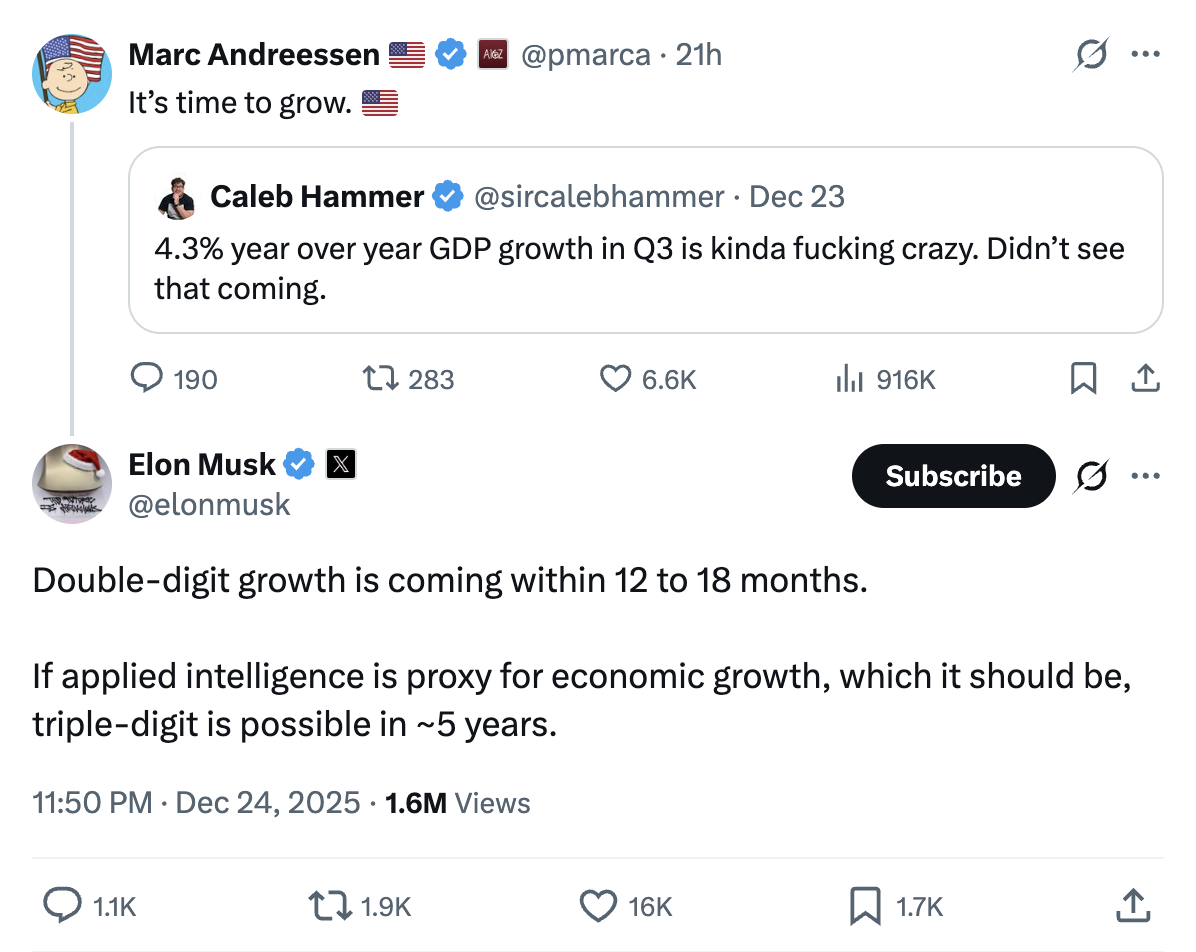
Tesla CEO Elon Musk has made a major economic prediction about the United States. The world’s richest man is optimistic that the US economy will achieve double-digit GDP growth over the next 12 to 18 months. He claimed that rapid advances in artificial intelligence (AI) will drive this growth. Musk’s prediction came in response to the news that the GDP in the United States grew at an annual rate of 4.3% during the third quarter of 2025. In response, he suggested that “applied intelligence” from AI will serve as the primary engine for this acceleration. He further speculated that if AI continues to scale as a proxy for productivity, triple-digit growth could be possible within approximately 5 years.In a post shared on the microblogging site X (formerly Twitter), Musk wrote: “Double-digit growth is coming within 12 to 18 months. If applied intelligence is proxy for economic growth, which it should be, triple-digit is possible in ~5 years.”The forecast came from a social media discussion that began with a post from Caleb Hammer, a member of X, about US GDP growth in Q3 2025. He wrote: “4.3% year over year GDP growth in Q3 is kinda f**king crazy. Didn’t see that coming.”

Elon Musk predicts double digit US GDP growth

Marc Andreessen, one of the most prominent US investors and co-founder of the Silicon Valley venture capital firm Andreessen Horowitz, responded to this post that revealed the unexpectedly high growth for US GDP. He wrote, “It’s time to grow. 🇺🇸”. Musk’s prediction came as a reply to Andreessen’s reaction.

‘American Lives At Risk, Economy Under Threat’: Kristi Noem’s Shocking House Homeland Testimony

What’s behind Elon Musk’s double-digit US economy growth prediction

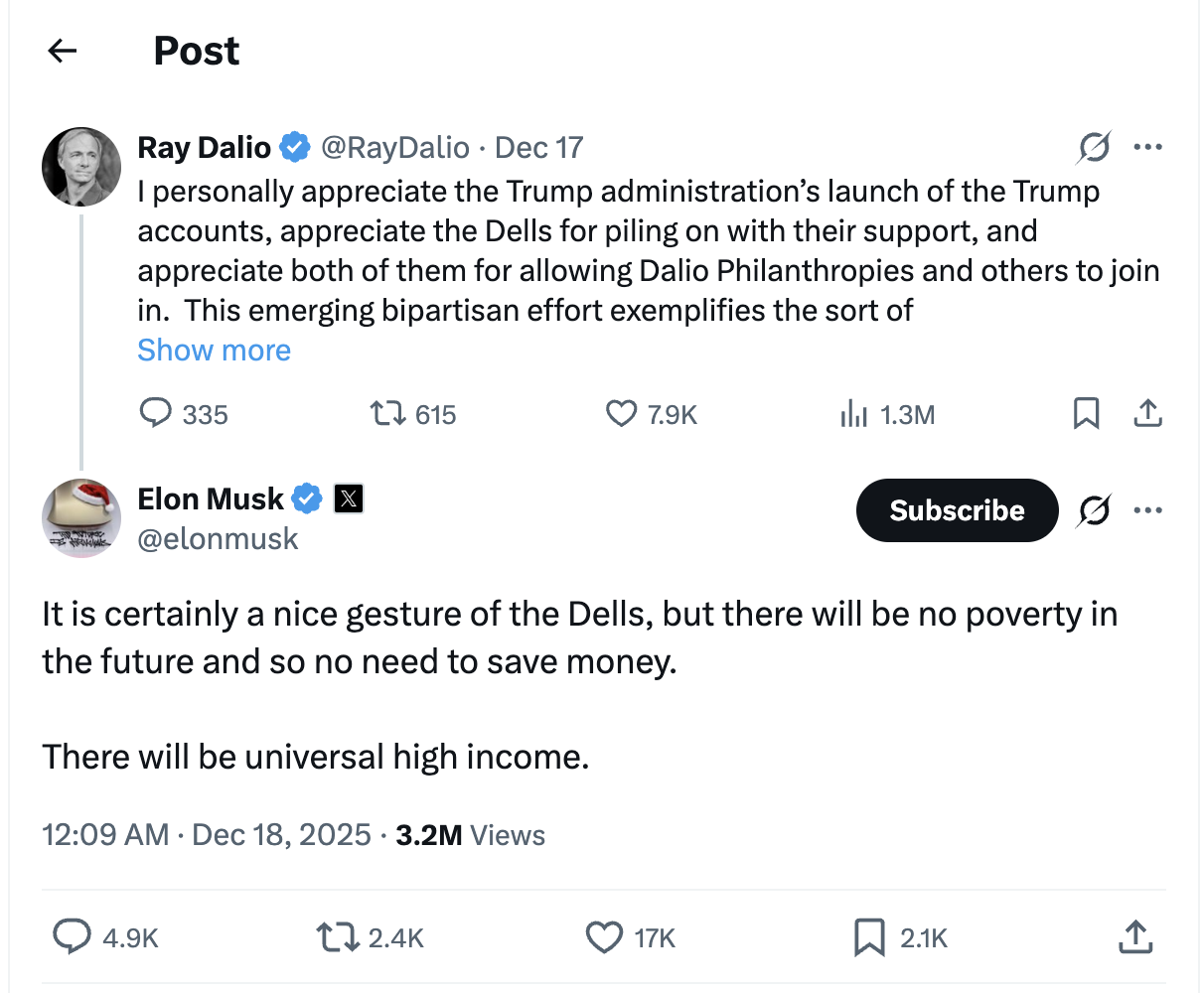
Musk’s optimism relates to his work at xAI and Tesla’s robotics division, as well as to his expectation of soon being deregulated. Although his fans see a positive change in his 2025 growth statistics, some might be a little apprehensive about it.Meanwhile, investor Mark Cuban has expressed concerns about potential wealth disparities arising from such dramatic growth. In contrast, others who hold the opposite view argue that growth at this pace may lead to spiking interest rates or debt risks. Typically, double-digit GDP growth is sporadic, except during the short-term period after a recession, as in 2020’s 34.9% high.Earlier this month, Musk also predicted that “there will be no poverty” in the coming years. Instead, he said that there will be a universal high income. Apart from this, the only tech billionaire to reach a net worth of $700 billion also stated that saving money would become unnecessary for people.Based on investors’ reactions to Ray Dalio’s post about the newly formed Trump accounts initiative, it appears Dalio appreciated it because it involves a bipartisan effort “to help young Americans learn money management skills and start saving and investing early in life.”He also thanked Michael and Susan Dell for their support of the programme. Dalio noted the initiative reflected concepts he had outlined six years earlier in “Why and How Capitalism Needs To Be Reformed.”In his X post, Dalio wrote that the Trump accounts are helpful because they teach young people basic money skills and help them learn how markets and businesses work. He said that understanding and managing money well are essential to a strong economy and that he plans to support both the accounts and the teaching programmes related to them.

Musk predicts a future without poverty

Replying to this, Musk wrote, “It is certainly a nice gesture of the Dells, but there will be no poverty in the future and so no need to save money. There will be universal high income.”


Source link

Ashes 2025-26, AUS vs ENG: Fast bowlers dominate as 20 wickets fall on Day 1 of Boxing Day Test at MCG


The first day of the fourth Ashes Test between Australia and England at the Melbourne Cricket Ground (MCG) saw fast bowlers dominate as 20 wickets fell in a thrilling contest. England’s decision to bowl first after winning the toss paid off handsomely, with Josh Tongue leading the way by claiming five wickets and dismantling Australia’s top order. Despite brief resistance from Michael Neser and Cameron Green, Australia were bundled out for 152 runs in just 45.2 overs. England’s response was equally disastrous as Mitchell Starc and Michael Neser ripped through their batting lineup, reducing the visitors to 110 all out in 29.5 overs. At the end of the day, Australia led by 46 runs with 4/0 in their second innings.

Australia’s struggles as top order collapses against Josh Tongue

Australia’s batting on Day 1 was a tale of frustration, as the hosts struggled to cope with the pace and movement offered by the England bowlers. After being put in to bat, Australia lost wickets at regular intervals, starting with Travis Head, who was dismissed for just 12 by Gus Atkinson. The middle order failed to build any partnerships, with Jake Weatherald (10), Marnus Labuschagne (6) and Steve Smith (9) all departing cheaply.

Smith’s dismissal was particularly painful, as Josh Tongue cleaned him up with a perfect delivery that nipped back and shattered the stumps. Usman Khawaja (29) and Alex Carey (20) were the only other notable contributors, while Michael Neser top-scored with 35. Australia were bowled out for 152 in 45.2 overs, with Tongue finishing with impressive figures of 5/45, as England’s bowlers enjoyed excellent conditions throughout the day.

Also WATCH: Ashes 2025-26: Josh Tongue stuns Steve Smith with unplayable delivery on Day 1 of Boxing Day Test | AUS vs ENG

England’s response: Collapse to Mitchell Starc and Michael Neser’s prowess

England’s chase of 153 was always going to be a challenging task, and they were quickly brought to their knees by Australia’s seam attack. Zak Crawley (5) and Ben Duckett (2) were dismissed early by Mitchell Starc, with the latter caught by Neser at second slip. The key wicket of Joe Root for a duck further derailed England’s hopes as they found themselves struggling at 8/3. Harry Brook (41) tried to fight back with a rapid innings, hitting two boundaries and two sixes, but the pressure was relentless. Ben Stokes (16) also failed to make a significant impact, and after Brook was dismissed, England’s batting crumbled further. Neser took 4 wickets, while Scott Boland and Jhye Richardson each chipped in with a wicket. England were dismissed for 110 in just 29.5 overs, handing Australia a vital 46-run lead at the close of play on Day 1.

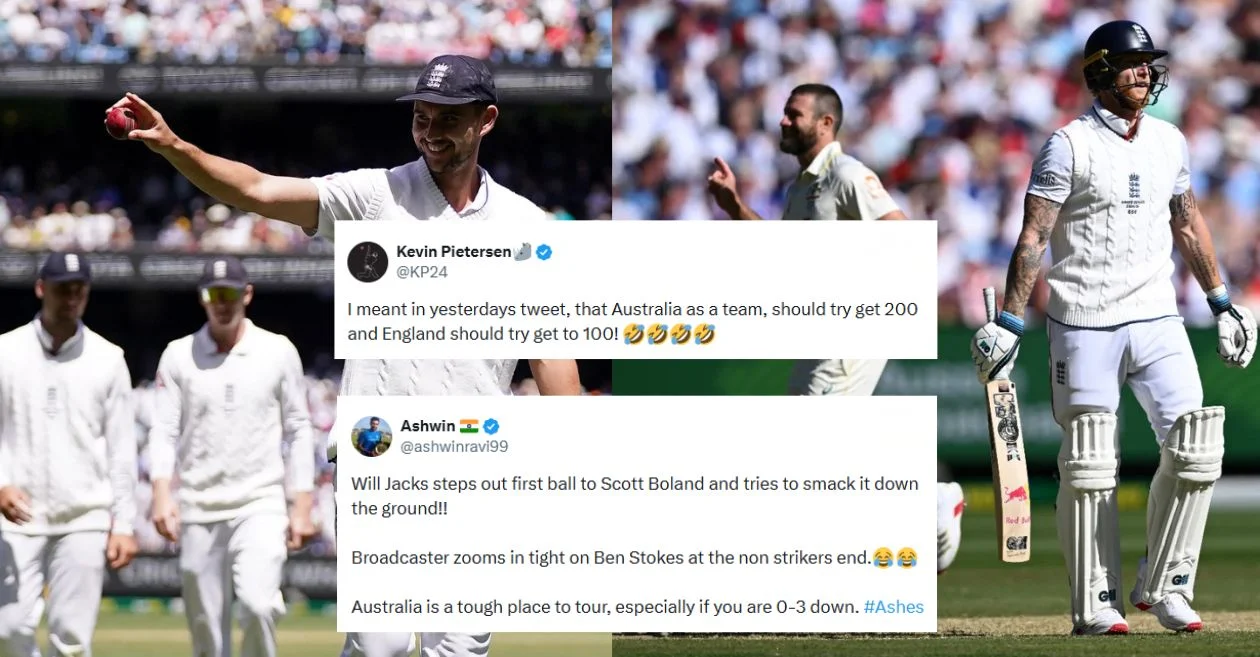
Here’s how fans reacted:

Also WATCH: Ashes 2025-26: Brydon Carse’ breathtaking run out of Cameron Green steals the show on Day 1 of Boxing Day Test match | AUS vs ENG


Source link

Watch: Hindu group protests in Dhaka; demand action over minority lynchings in Bangladesh


Watch: Hindu group protests in Dhaka; demand action over minority lynchings in Bangladesh
Members of the National Hindu Mahajot stage a protest in Dhaka.

The National Hindu Mahajot on Friday held a protest in Dhaka at the National Press Club, condemning the brutal killing of Dipu Das and alleged atrocities against Hindus in Bangladesh.Meanwhile, The North American Punjabi Association (NAPA) condemned the lynching of another Hindu man in Bangladesh, describing the incidents as deeply disturbing and indicative of a broader pattern of violence against religious minorities.

Bangladesh Unrest: Another Hindu Man Lynched; Police Claim Extortion Bid

A Hindu man identified as Amrit Mondal was lynched over allegations of extortion. The killing came just a week after Dipu Das was lynched and his body set on fire in Mymensingh following accusations of blasphemy.NAPA executive director Satnam Singh Chahal said the repeated attacks have raised serious concerns about the safety, dignity and human rights of Hindu minorities in Bangladesh. “The killing of another Hindu man so soon after the murder of Dipu Chandra Das points to a growing climate of fear and intolerance,” Chahal told PTI.He urged the Bangladesh government to carry out swift, transparent and impartial investigations and ensure strict punishment for those responsible.NAPA also expressed concern over reports of continued intimidation and violence against minority communities, stressing that condemnation alone is insufficient without concrete action on the ground.Dipu Das’ killing triggered widespread protests by factory workers, students and rights groups in Dhaka and other parts of Bangladesh.The Hindu community in Bangladesh has faced a series of attacks in recent months, particularly following the ouster of then prime minister Sheikh Hasina in August last year.


Source link