Breaking News
When Indian football descended into chaos | Football News


When Indian football descended into chaos
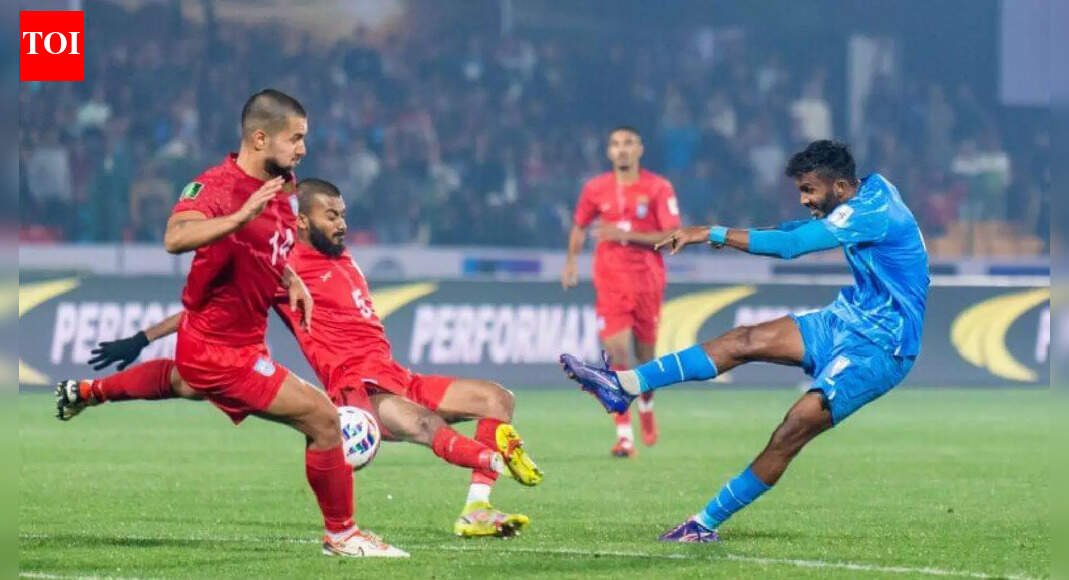
India vs. Bangladesh. (Image: Agencies)

This year, most scrambled to check the Google Maps to find Curacao when the smallest-ever nation, in terms of population and size, qualified for next year’s mammoth World Cup 2026. With 155,000 inhabitants, the Caribbean island was guided to the top tier by Dick Advocaat, the former Rangers and PSV boss who has also worked with eight national teams including his native Netherlands (1992-94). Sebastian Migne never set foot on Haiti, another Caribbean nation, because international flights do not land there. They played all their World Cup home qualifiers in Curacao, some 500 miles across the sea.

The Untold Football Journey of Ranjeet Bajaj That Will Ignite Your Inner Champion | MINERVA

These football stories are the brightest beacon of 2025. In contrast, the darkness around Indian football seems to have grown deeper, unfathomable, with no light at the end of the tunnel. Annus horribilis. The year gone by has seen All India Football Federation officials spend more time making rounds of the courts than the national team spent on the field. It might delight a research scholar to know that AIFF has presented itself to the Supreme Court 16 times and counting. The national team has played only 12 matches. None of it, though, will bring cheer to the fans. Never since Independence has Indian football slipped into such a deep abyss. For the first time since 1996, when the national league was begun by then-AIFF president Priya Ranjan Das Munshi, it has stalled. One can say with a heavy heart that the league is an orphan now. The sponsorship ran out. The new occupants of Football House, who took charge in 2022, were aware of the matter. But the negotiations just refused to yield any money, assurance, or hope. Since 2010, the AIFF received Rs 50 crore every year from Football Sports Development Limited (FSDL), a Reliance Industries subsidiary, as part of an agreement. The 15-year contract ran out on Dec 8. It was obvious to all, except those in Football House, that no one wants to waste money to keep Indian football – once called a sleeping giant by Sepp Blatter just over a decade and a half ago – alive and awake. Till reports last came in, the AIFF plans to start the elite league around Feb 7-8 after presenting a 20-year plan to the ISL clubs. In accordance with the constitution, the league will be owned and operated by the AIFF and will “implement the principles of promotion and relegation.” “I am convinced we can start the league and then work out a long-term solution,” said IFA secy Anirban Dutta, a member of the committee to resolve the ISL crisis. All year, the stakeholders went into hair-splitting debates and nuanced offerings but the outcome, sadly, has been zero. Even a few clubs had temporarily stopped paying salaries to the players. There has been a frustrating sense of ennui. Last heard, there was some warmth shown by the beleaguered clubs towards the AIFF’s proposals. The format for a truncated league is expected to be confirmed in the year’s final week. Add to it the dismal performance of the national team. Hours after India lost to Bangladesh in their last Asian Cup qualification engagement, Haiti’s ticket to the World Cup sent euphoric shock waves around the world. To watch India’s matches this year, under coaches Manolo Marquez and Khalid Jamil, was like visiting the dentist with a severe toothache. The Indian senior men’s team failed to qualify for the 2027 AFC Asian Cup, which means no competitive football until at least Nov 2027. That is nearly three years without meaningful matches. One wonders what will be Khalid Jamil’s work schedule now? One question keeps haunting, though. If Curacao are able to hire the services of a world-renowned coach like Advocaat, why could India, claimed to be the fourth-largest economy in the world, never reach beyond the Manolos and the Stimacs and the Koevermans? One can keep waiting for an answer but there will only be silence from the All India Football Federation. Following some creditable performances against Bahrain (2-0) and Brunei (6-0), U-23 coach Naushad Moosa got stuck in Doha. Not one to be easily perturbed, even by the sudden bombing of the Qatari capital, Moosa showered rousing praise on the boys. But his enthusiasm was laced with bleakness. “What’s next for the boys? They will go back to their clubs and warm the bench. They won’t be getting any minutes,” he had said in Sept. With the U-17s, Bibiano Fernandes also made headlines by helping the boys cross the Asian Cup qualification hurdles. Repeating himself, Moosa confirmed his apprehensions in Dec. “Nothing is happening. The players too are sadly cooling their heels.” And we couldn’t but recall the days not too long ago, when the AIFF had to put a cap of 45 matches on the national team players. One may point out that these are silver linings. If so, then why can’t Manolo or Jamil do without Sunil Chhetri, India’s weather-beaten warhorse who is past 40? The striker had to break his retirement vows and don the India shirt again, confirming that Indian football’s cupboard is starkly bare.The year 2025 will stay in memory as the lowest point in Indian football. PLUMBING THE DEPTHS LEAGUE UNCERTAINTY: It’s the end of December, half-time in most football seasons, a time when clubs redraw their strategies, depending on the progress they’ve made in the league. This year, nothing. Indian football has never seen anything like this. There’s no word on the top tier ISL or the I-League, because the AIFF has simply failed to find a commercial partner. Everything’s at a standstill: clubs have paused first team operations, players have stopped training and many foreigners plan to move elsewhere once the transfer window opens on Jan 1. One club has told players they will have to “forego salaries” for months and they’d be “happy to resume payments” only from the date of restart. CAMPS WITHOUT PLAYERS: National team camps often kicked off without half the players. Coach Khalid Jamil wanted more time with the boys, but clubs refused to release players outside the FIFA international windows. It was no different for U-23 assignments. The trust deficit between the two parties has grown so much that Mohun Bagan SG, who have the maximum players at national camps, even accused the federation of negligence over the handling of their captain Subhashish Bose. MONUMENTAL FAILURE: In the 15 months between May 2024 and August 2025, the national team had three coaches — Igor Stimac, Manolo Marquez, Khalid Jamil — none of whom could ensure that India makes it to the AFC Asian Cup, the country’s first failure since the tournament was expanded to accommodate 24 teams. In the final round of qualifiers, India were the highest-ranked side but finished at the bottom, unable to register a single win and in five matches, scoring just twice. The defeat to Bangladesh in Dhaka, the first in 22 years, rankled the most. THE BIG EXIT: The City Football Group’s exit from Mumbai City FC was probably the biggest reflection of the mess that is Indian football. CFG, the world’s leading private owner and operator of 13 clubs, including Manchester City, had joined hands with Mumbai City with much fanfare. Their decision to divest its shareholding in the club is a huge blow. The reason: “CFG made this decision following a comprehensive commercial review and in light of the ongoing uncertainty surrounding the future of the Indian Super League (ISL).BUT, A SILVER LINING: The women’s team provided joy in an otherwise grim state. The senior team defied the odds to defeat World Cuppers Thailand and qualify for the AFC Asian Cup. The U-17 and U-20 teams also left India with three continental competitions to play for in the opening months of 2026. At club level, East Bengal’s SAFF Club Championship triumph and a first group stage win in the AFC Women’s Champions League brought cheer.INDIA IN 2025UNDER MANOLO MARQUEZ

  • Mar 19: (Friendly, Shillong): India 3 Maldives 0 (Rahul Bheke, Liston Colaco, Sunil Chhetri)
  • Mar 25: (AFC Asian Cup Qualifier, Shillong): India 0 Bangladesh 0
  • June 4: (Friendly, Pathum Thani): Thailand 2 India 0
  • June 10: (AFC Asian Cup Q, Hong Kong): Hong Kong 1 India 0.

UNDER KHALID JAMIL

  • Aug 29: (CAFA Nations Cup, Hisor): India 2 Tajikistan 1. (Anwar Ali, Sandesh Jhingan)
  • Sept 1: (CAFA Nations Cup): Iran 3 India 0.
  • Sept 4: (CAFA Nations Cup): India 0 Afghanistan 0.
  • Sept 8: (CAFA Nations Cup): India 1 (3) Oman 1 (2) (Udanta Singh)

India won Bronze Medal at CAFA Nations Cup

  • Oct 9: (AFC Asian Cup Q, Singapore): Singapore 1 India 1 (Rahim Ali)
  • Oct 14: (AFC Asian Cup Q, Margao): India 1 Singapore 2 (Chhangte)
  • Nov 18: (AFC Asian Cup Q, Dhaka): Bangladesh 1 India 0

TOTAL MATCHES: 11India Won: 3India Lost: 5Drawn: 3Goals Scored: 8Goals Conceded: 12


Source link

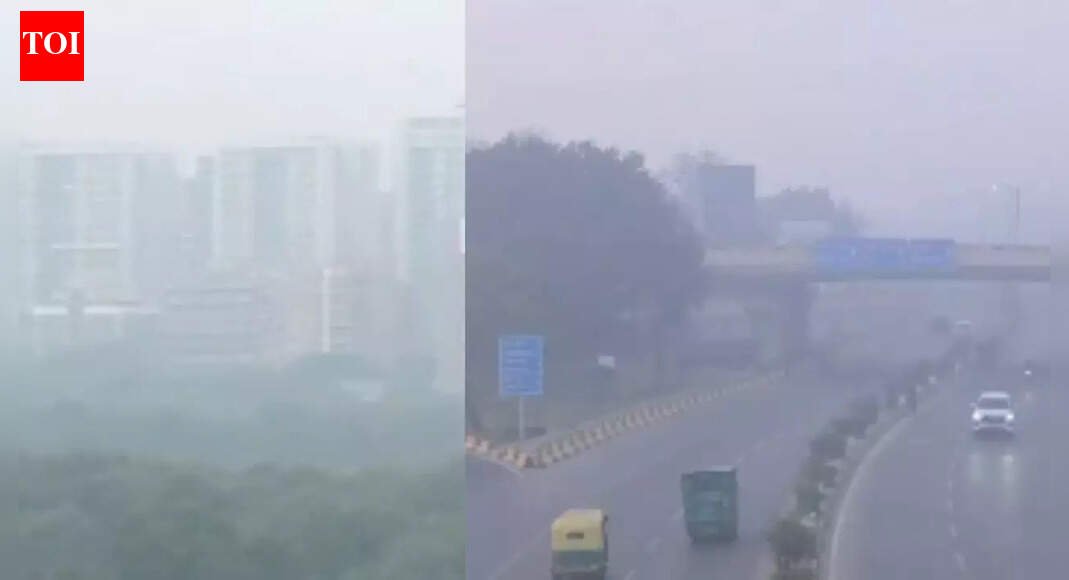
Delhi air pollution: AQI hits 391, city back in ‘severe’ category; Mumbai’s Bandra records ‘moderate’ 123 | Delhi News


Delhi air pollution: AQI hits 391, city back in ‘severe’ category; Mumbai’s Bandra records 'moderate' 123

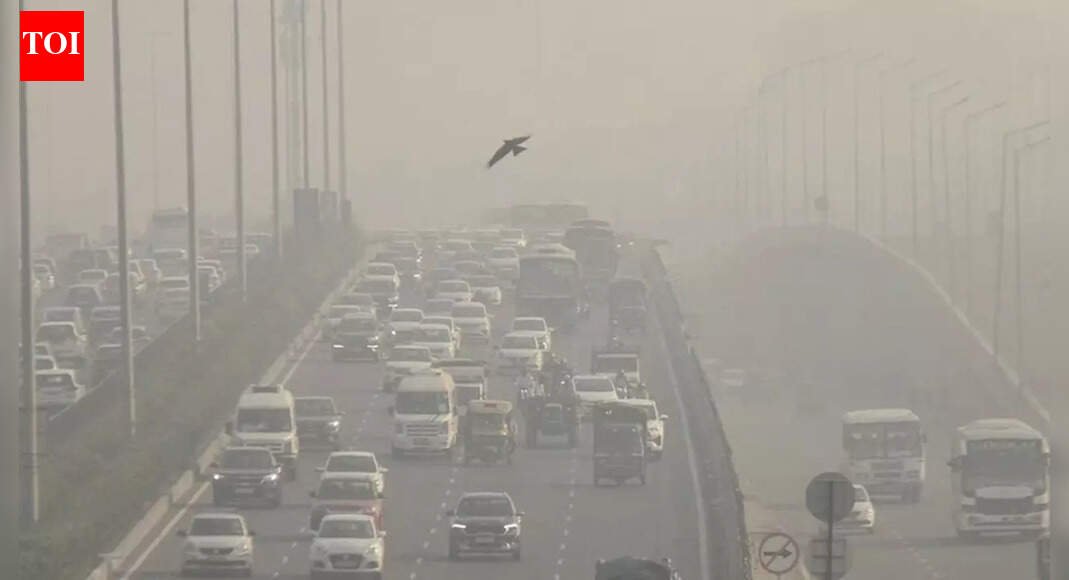
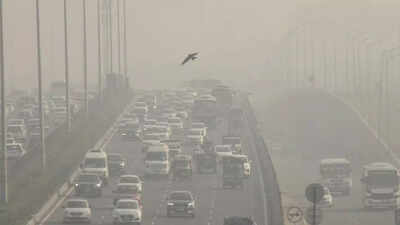
NEW DELHI: Delhi continued to struggle with toxic air on Sunday, with several areas recording ‘very poor’ and ‘severe’ air quality levels, as a dense layer of smog blanketed the city.The overall Air Quality Index (AQI) in Delhi on Sunday reached 391, entering the ‘severe’ category, with some regions exceeding 400, according to the Central Pollution Control Board (CPCB).Morning visuals from Akshardham Temple showed the iconic structure fading into a thick, dense layer of smog that drastically reduced visibility. The AQI (Air Quality Index) in the area stood at 445, placing it in the ‘severe’ category, according to the Central Pollution Control Board (CPCB). Around AIIMS, the AQI was measured at 340, categorised as ‘very poor’. Meanwhile, visuals from the ITO area showed the city shrouded in a thick blanket of smog, with hazy conditions reducing visibility. The AQI there had crossed 400, also falling under the ‘severe’ category.Meanwhile, in Mumbai, a light layer of fog enveloped the Bandra Kurla Complex, where the AQI was measured at 123, classified as ‘moderate’.Authorities have invoked Stage III measures under the Graded Response Action Plan (GRAP), which include restrictions on construction and industrial activities. The ‘No PUC, No Fuel’ rule is being enforced to curb emissions. Officials attributed the worsening conditions to a combination of cold weather, calm winds, and dense fog that trap pollutants close to the ground. Experts warn that the cycle of poor air quality is expected to continue under current weather patterns. The Commission for Air Quality Management has advised vulnerable groups, including children, the elderly, and people with respiratory issues, to limit prolonged outdoor exposure and wear masks.


Source link

‘People will die…’: Elon Musk slams Zohran Mamdani’s appointment of first openly gay FDNY commissioner | World News


Elon Musk has criticised New York City mayor-elect Zohran Mamdani over his decision to appoint Lillian Bonsignore as commissioner of the Fire Department of New York, warning that the choice could have serious consequences for public safety.Reacting to a news clip announcing the appointment, Musk wrote on social media, “People will die because of this. Proven experience matters when lives are at stake.” The clip highlighted that Bonsignore will become the FDNY’s first openly gay commissioner, a milestone that Mamdani has framed as part of his broader leadership vision.

Mamdani Distances Himself As NYC Official Quits In Disgrace Over ‘Indefensible’ Anti-Jew Posts

Musk’s criticism focused on the fact that Bonsignore, despite decades of service within the department, has never worked as a firefighter. His comments quickly spread online, intensifying debate over whether top leadership of the FDNY should come from a firefighting background or whether broader emergency management experience is sufficient.Bonsignore is a 31-year veteran of the FDNY who began their career as an emergency medical technician in 1991 and later rose through the ranks to become chief of the department’s emergency medical services. They oversaw EMS operations during the COVID-19 pandemic and retired in 2022. FDNY data shows that EMS units now respond to more than 70 per cent of the department’s emergency calls, a statistic supporters cite as evidence of their extensive operational and administrative experience.Mamdani has described the appointment as historic, noting both the symbolic and practical significance of elevating a long-serving EMS leader to the commissioner role. Supporters argue that the position is primarily managerial, with responsibility for strategy, budgets and coordination across the department, while frontline firefighting decisions are handled by senior uniformed officers with specialised expertise.Critics maintain that leading one of the world’s largest fire departments requires direct firefighting experience, particularly during major fires, large-scale disasters and complex rescue operations. Musk’s remarks have amplified those concerns and pushed the appointment into a wider national discussion about leadership standards, public safety and how political priorities shape senior emergency service roles in New York City.


Source link

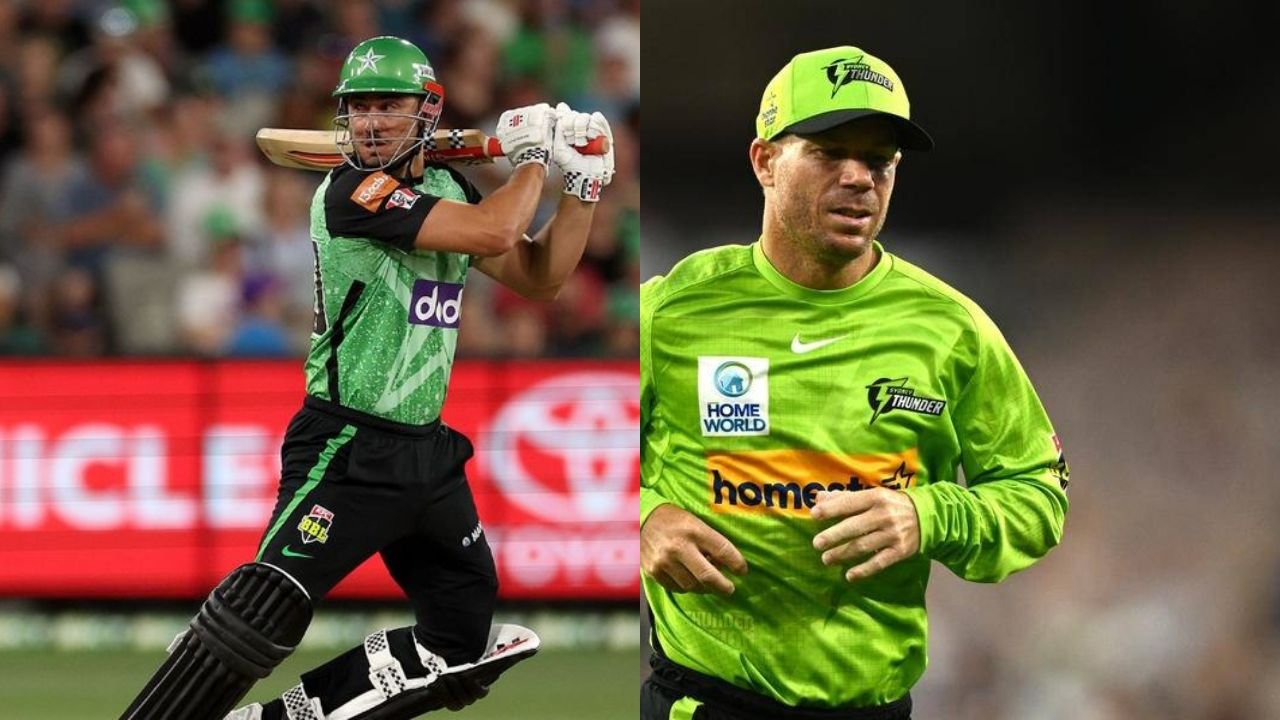
MLS vs SYT Weather Report, Pitch Report Of Canberra- BBL 2025-26, Match 14


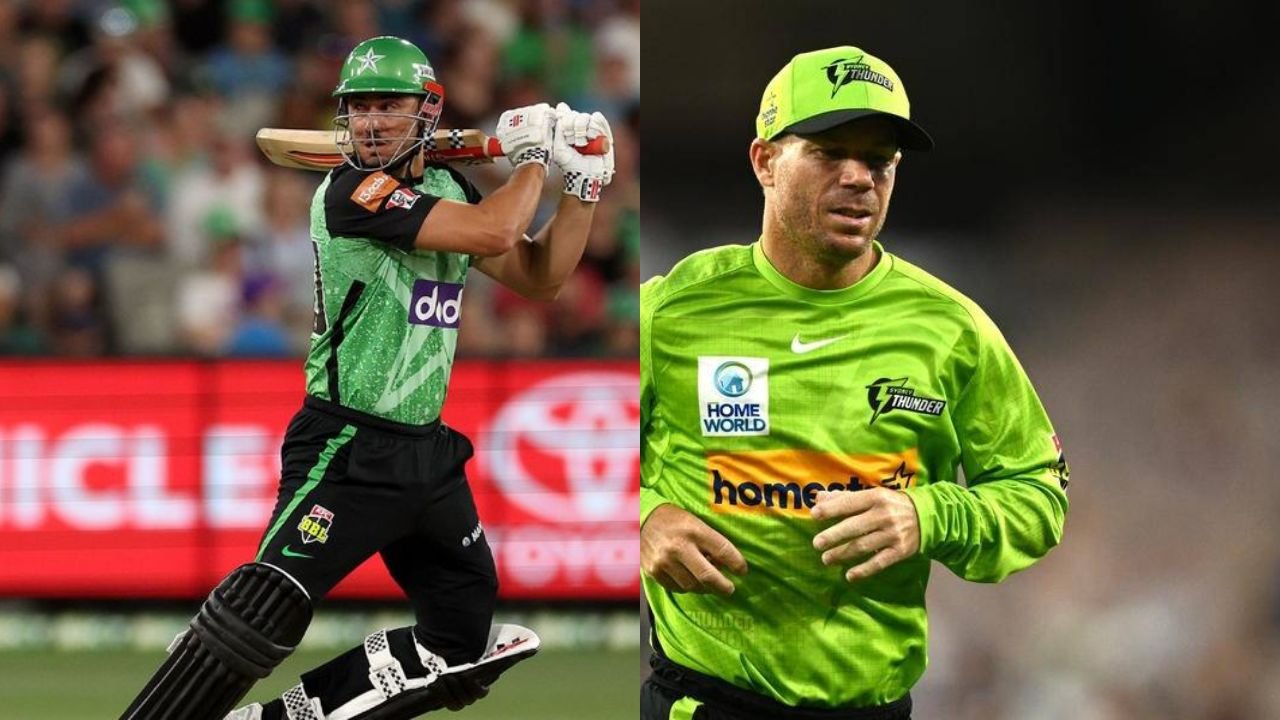
Melbourne Stars will go head-to-head against the Sydney Thunder in the fourteenth match of the Big Bash League. In this article, we determine the MLS vs SYT Weather Report and Pitch Report of Manuka Oval for the fourteenth game of the tournament.

MLS vs SYT Weather Report, Pitch Report Of Canberra- BBL 2025-26, Match 14:

MLS vs SYT Weather Report of Canberra:

There is no chance of rain during the MLS vs SYT game in Canberra. The maximum temperature is predicted to be 26°C, while the minimum temperature would be 8°C.

MLS vs SYT Pitch Report of Manuka Oval:

The pitch for the upcoming game between Melbourne Stars and Sydney Thunder, scheduled to be played at the Manuka Oval in Canberra, is expected to be a good one for a game of T20 cricket.

Your daily dose of cricket!

next

Meaning that it should have something in it for both batters and bowlers, which makes for an even contest between bat and ball, which isn’t the case too often in this format.

The batters will enjoy batting on the wicket after they negotiate the initial help for the bowlers that will be present when the ball is new, as it might swing a bit, posing a good challenge for them, especially in the powerplay.

As far as the bowlers are concerned, they will have to pick wickets early in the innings, as failing to do so may result in the batters dictating terms once they get set.

The pacers can use the assistance available in the wickets with the hard new ball by getting it to swing and pitching it fuller to induce an edge from the batter to get him out caught in the slips or by the keeper.

As far as the spinners are concerned they will be entrusted to control the flow of runs in the middle overs, but for that to happen, they will also rely on the fast bowlers to provide at least a couple of breakthroughs before they come to bowl.

The pacemen will also be banked upon to restrict the batters from freeing their arms at the backend of the innings.

If we talk about what an ideal decision for the team that wins the toss in the upcoming game should it should be to bowl first, as it has been the way to go in T20 cricket in the last few years.

A score of 180-190 is what the team that bats first in the MLS vs SYT game should look to post on the board and bank on their bowlers to pick early wickets for them in order to stay ahead in the contest.

Conclusion

Melbourne Stars would hope to keep up the good work that the team has done in the ongoing edition of the Big Bash League by registering another win in the tournament against the Sydney Thunder, having been unbeaten so far.

Sydney Thunder, on the other hand, would also aim to earn back-to-back wins having got the better of Brisbane Heat in their last match.


Source link

Chilean firms partner to form giant company to exploit lithium


Chilean firms partner to form giant company to exploit lithium

Chile’s state-owned Codelco, the world’s leading copper producer, and private miner SQM, which features Chinese capital, announced Saturday the creation of a giant company to exploit lithium, a lightweight metal used in batteries for electric vehicles.The South American country is the world’s second-largest producer of lithium, a key component of EVs and other clean technologies, and has about 40 percent of the world’s lithium reserves.The partnership between the firms will allow them to jointly ramp up the exploitation of lithium in the Atacama salt flat region of northern Chile. The public-private partnership will be called Nova Andino Litio SpA, said Codelco, which described the deal as “one of the most significant in the history of Chilean business.”The Chinese firm Tianqi holds a 22 percent stake in SQM.The new company “will carry out lithium exploration, extraction, production, and commercialization activities in the Atacama salt flat until 2060,” Codelco said in a statement. Chilean regulators authorized the alliance earlier in December.The agreement was approved by more than 20 national and international regulatory bodies, including in China, Brazil, Saudi Arabia, and the European Union. Chile was the last of the countries to clear the deal. Last month, China gave the green light to the planned partnership between Codelco and SQM.The partnership aims to restore Chile’s leadership in lithium production, a title it lost to Australia nearly a decade ago. The new company aims to increase production by about 300,000 tons per year in the Atacama salt flat. In 2022, Chile produced 243,100 tons of the so-called white gold. “This joint venture makes it possible to plan the development of the Atacama salt flat,” and for the benefit of global markets, said Ricardo Ramos, CEO of SQM, one of the world’s leading lithium producers. The partnership is part of the National Lithium Strategy announced by the leftist government of Gabriel Boric in 2023, aimed at reclaiming Chile’s global leadership in lithium production.According to Codelco, with this agreement the Chilean state will receive around 70 percent of the operating margin generated by the new production between 2025 and 2030, and starting in 2031, 85 percent of that margin. Lithium accounted for three percent of Chile’s exports in 2024.


Source link

‘No fuel without PUCC, restricts entry of non-BS6 vehicles’: Delhi environment minister enforces permanent curbs to tackle pollution | Delhi News


'No fuel without PUCC, restricts entry of non-BS6 vehicles': Delhi environment minister enforces permanent curbs to tackle pollution

NEW DELHI: Delhi Environment Minister Manjinder Singh Sirsa announced on Saturday that two key restrictions under the Graded Response Action Plan (GRAP-4) will now be permanent, in a bid to tackle the city’s persistent severe air pollution. Speaking to the media, Sirsa said vehicles will not be provided petrol without a valid Pollution Under Control Certificate (PUCC) until further notice, according to news agency ANI.

Delhi’s Air Pollution Gets Attention, But Most Indian Cities Are As Bad Or Worse | I Witness

“Out of the restrictions under GRAP-4, we have decided to make two permanent. First, the PUCC requirement: you will not get petrol anywhere without a PUCC certificate until the next orders,” he stated. The minister also confirmed that vehicles entering Delhi from outside the city that do not meet Bharat Stage VI (BS6) emission standards will face restrictions. “Vehicles from outside Delhi that are below BS6 will also be restricted from entering the city,” he added. Sirsa noted that authorities are closely monitoring the weather, as the Western Disturbance may lead to adverse conditions. “The possibility of bad weather is being indicated. Therefore, we are continuously monitoring the situation,” he said, emphasizing that the government’s priority is to minimize pollution-related hardships for Delhi residents. Delhi’s air quality has deteriorated, with the Air Quality Index (AQI) reaching 390 at 6 pm on Saturday, placing it in the ‘Very Poor’ category, according to the Central Pollution Control Board (CPCB). Experts advise vulnerable groups, including children, the elderly, and those with respiratory conditions, to limit outdoor exposure and use protective masks. Thick smog and fog are trapping pollutants, reducing visibility, and disrupting daily life. Authorities are enforcing measures such as the ‘No PUC, No Fuel’ rule and Stage III restrictions under GRAP, including limits on construction and industrial activities. Earlier, the Delhi Cabinet, led by chief minister Rekha Gupta, approved measures to strengthen environmental governance in the capital. A key decision includes allocating Rs. 100 crore for the rejuvenation of water bodies across the city. Delhi has around 1,000 water bodies, 160 of which fall under the government’s jurisdiction. Sirsa said, “The rejuvenation of Delhi’s water bodies will play a crucial role in pollution control. The chief minister has directed that full financial support be provided to complete this work within the year.” The Cabinet also approved the establishment of Delhi’s first E-Waste Park at Holambi Kalan, spanning 11.5 acres. The facility will follow strict pollution-control standards and operate on a 100 per cent circular, zero-waste model. Sirsa explained, “This will be India’s first state-of-the-art e-waste facility built on zero pollution and zero wastage principles. The plant will fully recycle and reuse water through an advanced recirculation system.”


Source link

Watch: 7k flower pots looted after PM Modi opens Rashtra Prerna Sthal in UP; 30 security personnel deployed | Lucknow News


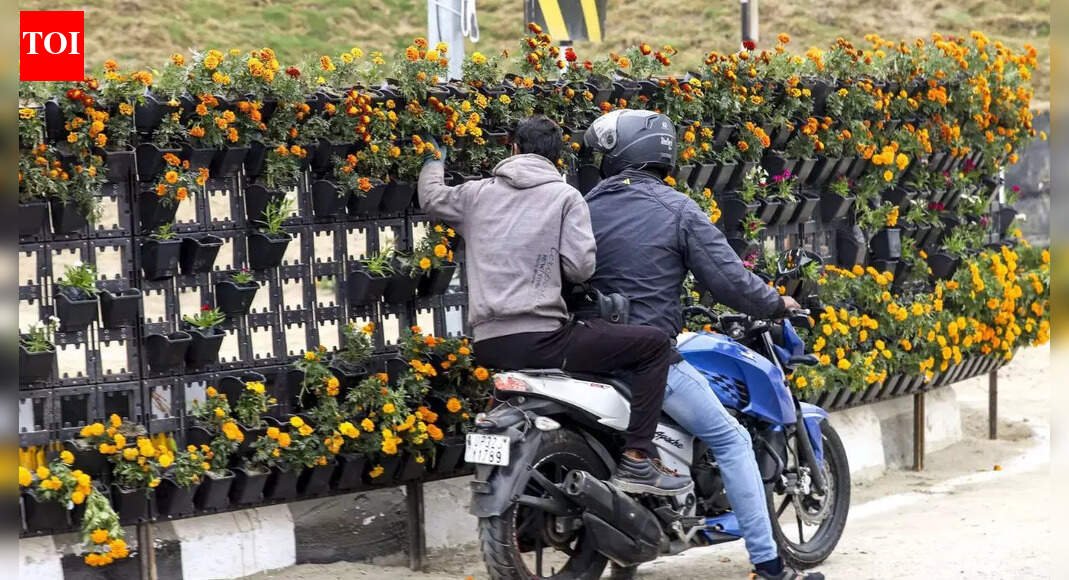
LUCKNOW: Nearly 7,000 potted plants worth around Rs 10 lakh were looted within 24 hours of the inauguration of Rashtra Prerna Sthal. The stolen plants were part of a Rs 60 lakh horticulture project executed for the event.LDA officials said the thefts began on Thursday evening, soon after the programme concluded. People were seen removing flower pots and leaving the area in cars and on scooters. Several videos of the incident circulated on social media.

Lucknow Headlines Today — The Biggest Updates You Need to Know.

A shopkeeper from the area said, “I saw people coming on scooters, quickly lifting two or three pots and leaving. Even when police were around, the theft did not stop initially.”LDA has deployed 30 security personnel around the site to protect the remaining plants. Police presence has also been strengthened. In some stretches, LDA started shifting pots to the Lohia park.LDA vice-chairman Prathamesh Kumar said a written complaint is being submitted and FIRs will be registered against those involved. “We are initiating legal action in the matter. As a precautionary step, the remaining flower pots are being removed from vulnerable locations,” he said.


Source link

Why India’s betting on new tactic against digital arrest | India News


Why India’s betting on new tactic against digital arrest

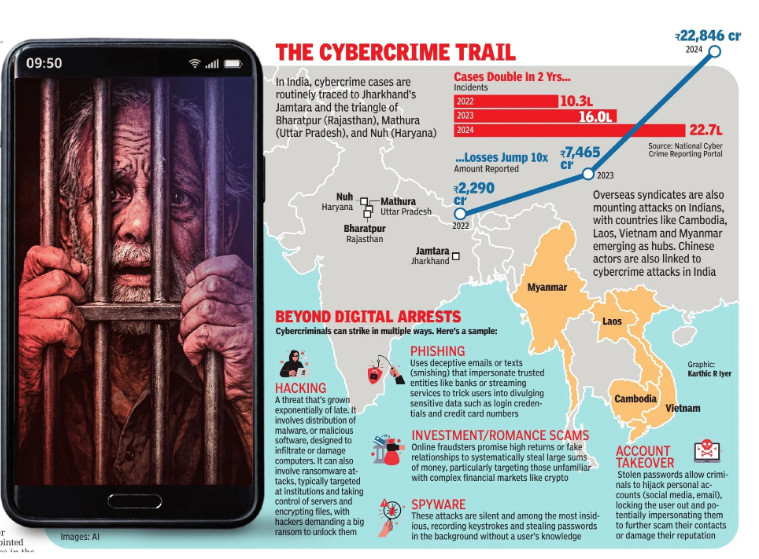
As another year winds down, a cybercrime epidemic of mindboggling proportions continues unabated in India. Striking with impunity and alarming frequency, there is seemingly no tactic that’s too bizarre and no target that’s out of reach for cyber fraudsters. Earlier this year, a doctor in Gujarat was kept under video surveillance for three months, reportedly losing Rs 19 crore during her digital-arrest ordeal. More recently, a former Punjab Police IG was defrauded of more than Rs 8 crore in an investment scam. The shock led him to shoot himself in the chest.While the law of the land does not specifically recognise the concept of “digital arrest”, cases are reported every day from across India — mostly, instances of cybercriminals impersonating police and central security officials and using panic and manipulation to wipe people’s bank accounts clean.But there are many more ways in which they come for your money (see box), like infecting your phone with forwards that transfer control, catching you by surprise with a video call and morphing the footage for blackmail, or ‘pig butchering’ you with texts about lucrative investment returns.The number of cases, and the swindled cash involved in those, has seen an exponential rise: 23 lakh cybercrime complaints were registered on the National Cybercrime Reporting Portal (NCRP) in 2024, a 42% jump over 2023. And the money lost to such frauds in 2024 was estimated to be Rs 23,000 crore, a 200% jump from Rs 7,500 crore in 2023. As a hydra-headed monster that takes new forms virtually every month, cybercrime is no longer a battle that state police can fight within their own limited jurisdictions and win. Which would explain why Supreme Court this month ordered CBI to launch a sweeping probe into all digital arrest scams.Central teeth for national problemBringing in the might of a central agency was an overdue move. As a senior cyber cell officer in Delhi pointed out, “the core challenge lies in the complex inter-state and geographical nexus of these operations, where the victim and the perpetrator are separated not just by distance but also by an intricate web of digital and financial layering.”Cybercrime presents a challenge entirely different from that posed by conventional crime. In a ‘digital arrest’ scam, which is perpetrated over a video call that can last hours, weeks, days, or even months, the money moves quickly through a series of what are known as ‘mule accounts’.These are usually located in places far apart and opened using forged documents or with the connivance of bankers. For example, money from a ‘digital arrest’ in Delhi, Gurgaon, Bengaluru or Hyderabad could be routed to mule accounts in West Bengal, Uttarakhand and Gujarat. That is why recoveries are only a fraction of the defrauded cash because, by the time the labyrinth of transactions has been decoded, the money has vanished.In India, two key hubs of cybercrime have been identified in Jharkhand’s Jamtara and the triangle of Bharatpur (Rajasthan), Mathura (Uttar Pradesh), and Nuh (Haryana). But an even more concerning dimension is the rise of large organised overseas operations in countries like Cambodia, Laos, Vietnam and, of late, Myanmar.

Cybercrime trail

These are operations that run call-centre-style scam compounds, drawing their manpower from human trafficking victims, including Indians who are snared by local placement agents with the lure of foreign jobs in data entry, IT and management. “Once trapped, these recruits are held in prisonlike conditions and coerced into undertaking cybercrimes targeting their own countrymen,” said a Delhi Police officer.Several of these international operations have been traced to Chinese criminal syndicates that provide technical infrastructure like apps and VoIP. “CBI is uniquely positioned to connect these disparate dots: like a SIM card issued in one state, a bank account opened in another, and an IP address originating at a third location,” said a government official.Banking, telecom breachesThe digital epidemic has fed on an explosive growth of the internet user base. While India has become an increasingly digital society, large sections of people remain digitally naïve because initiation to new technology and devices happened at a later stage in life. But cybercrime’s uncontrolled spiral has also exposed major vulnerabilities in two critical pillars — the telecom sector and the banking system. Both have failed to build adequate safeguards.“Fraudsters routinely exploit lax Know Your Customer (KYC) norms to illegally procure huge numbers of SIM cards. They are similarly also able to open mule bank accounts, the lifeblood of their operations,” said a Delhi cyber cell investigator. Systematic targeting of senior citizens with pension funds in their accounts and women makes it clear that scammers have access to banks’ customer data, investigators said.Recently, CBI arrested the manager of a prominent bank in Mumbai for allegedly accepting illegal gratification to process account-opening forms, creating channels for rapid layering of cybercrime proceeds. The accused is said to have facilitated the use of accounts that are linked to multiple cybercrime cases.Similar crackdowns across states, like ‘Operation Insider’ by Telangana Police, have led to the arrest of many bank officials for opening current accounts without due diligence in exchange for commissions from fraudsters.It’s the transnational cybercrime syndicates in Laos, Cambodia, Myanmar and Vietnam that execute the most complex frauds, increasingly deploying AI and deepfakes. These are the crimes that have so far proved the hardest to crack for police across Indian states. “Funds siphoned from Indian victims are quickly laundered, often converted into cryptocurrency and then moved internationally to accounts in countries like China, Singapore and Vietnam to evade detection,” explained a senior police officer.What’s the counterpunch?Sleuths may still have to play catch-up with new tactics, but the fight against cybercrime is much more organised now than it was two years back, which will help CBI.The Indian Cyber Crime Coordination Centre (I4C), through its Citizen Financial Cyber Fraud Reporting and Management System, has helped save around Rs 7,130 crore by facilitating rapid freezing of funds. NPCI (National Payments Corporation of India), too, has helped freeze scam proceeds in real time. A centralised toll-free helpline number, 1930, has been operationalised for quick assistance in lodging cybercrime complaints.Govt has blocked over 11 lakh SIMs and around 3 lakh IMEI numbers linked to frauds, underscoring the necessity of a coordinated, technological counteroffensive. Creation of a ‘Suspect Registry’ by I4C to flag suspect bank accounts and use of the ‘Pratibimb’ module to map criminal locations based on telecom and crime data are among other tech responses that have taken shape.“A state-of-the-art Cyber Fraud Mitigation Centre has been set up at I4C. It has brought together representatives of major banks, financial intermediaries, payment aggregators, telecom service providers, IT intermediaries and representatives of states/UTs and police to tackle cybercrime,” a government official said.Over to CBIBy combining domestic reach and collaborations with security agencies globally, CBI can serve as the lead enforcer and nodal point for busting complex, transnational cybercrime networks. Through specialised initiatives like Operation Chakra, CBI has been coordinating simultaneous raids on financial nerve centres of cybercrime with organisations like FBI and Europol. This is something that no state police force can do.CBI can ensure that the digital trail of a crime — which might involve a victim in Delhi, a server in Europe, and a perpetrator in Southeast Asia — is traced and documented for prosecution. By utilising the Bharatpol portal and its Global Operations Centre, CBI can also create a bridge between state police forces and international intelligence, allowing real-time sharing of data. CBI’s strength also lies in its role as National Central Bureau for Interpol in India, which gives it a direct line to law enforcement in over 190 countries.The agency is also equipped to lead large-scale crackdowns on illegal call centres that have been operating as hubs for international extortion. Besides, it has extraterritorial mandate under Section 75 of the IT Act, which gives it legal authority to investigate any individual, regardless of nationality, whose digital actions impact systems within India.


Source link

MLS vs SYT Head-to-Head Records- BBL 2025-26, Match 14


Melbourne Stars will face the Sydney Thunder in the fourteenth match of the Big Bash League. This article contains information regarding the MLS vs SYT Head-to-Head records in this particular competition.

MLS vs SYT Head-to-Head Records- BBL 2025-26, Match 14:

Stats Matches MLS won SYT won Draw Tied NR
Overall 22 10 12 0 0 0
At Manuka Oval 5 1 4 0 0 0
In the last 5 matches 5 0 5 0 0 0

MLS vs SYT Head-to-Head Records- Key Statistics

Melbourne Stars and Sydney Thunder have faced each other in 22 matches so far in the history of the Big Bash League, and the upcoming match will be the 23rd outing between the two sides.

As far as the number of mayhem won by each team is concerned, it paints a picture of the Stars and the Thunder being involved in some tightly contested games that have gone right down to the wire.

Your daily dose of cricket!

next

Although the Sydney Thunder has the lead in the overall head-to-head record against the Melbourne Stars, it is a slim one.

The Thunder have won 12 games as compared to the Melbourne Stars, who have got the better of their opponent on 10 occasions.

Having said that, the story is a lot different when it comes to the results of the last five MLS vs SYT matches in the BBL.

Sydney Thunder have won each of the last five games that they have played against the Stars, while the Stars are in desperate need of a win to break the losing streak that they are experiencing against this particular opposition.

The series is quite similar in the matches featuring the two teams at the Manuka Oval, the ground which is going to host the next game between them, with Thunder once again dominating the Stars in terms of number of wins.

Sydney Thunder have come out on the right side of the result in four of the five games that they have played against the Stars at the Manuka Oval, with the Stars getting rid of the Thunder once.

Each of the last five games between Melbourne Stars and Sydney Thunder has gone in favour of the latter, while the Stars are in search of their first win over the Thunder in that time period.

Melbourne Stars would aim to break their string of losses against the Sydney Thunder when the two teams go head-to-head against each other in the upcoming game, having lost the last five games that they have played against them in this competition.

Sydney Thunder, on the other hand, would look to strengthen their record against the Melbourne Stars even further by registering a win in the next game.


Source link

‘Rs 763 for 28 deliveries’: Raghav Chadha invites Blinkit delivery partner for lunch after low-pay video goes viral; watch | Delhi News


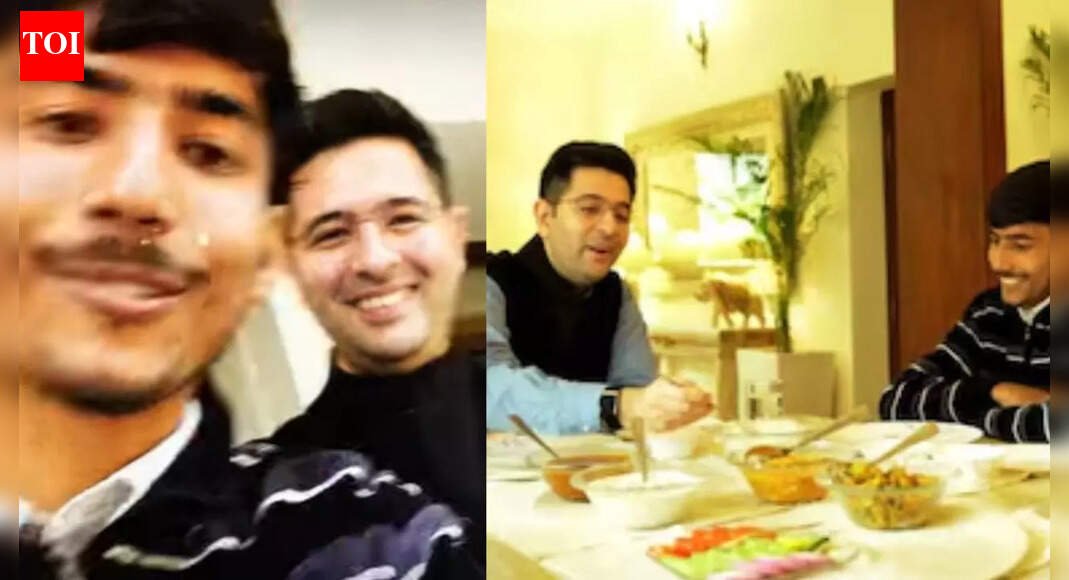
NEW DELHI: A Blinkit delivery partner whose video highlighting meagre daily earnings went viral recently met Rajya Sabha MP Raghav Chadha, days after the lawmaker raised concerns in Parliament over the working conditions of gig workers.Chadha invited the delivery executive, Thapliyal Ji, a native of Uttarakhand, to his residence for lunch. The meeting followed the MP’s intervention in the Rajya Sabha, where he flagged issues such as low pay, excessive working hours and the absence of social security for gig economy workers.

AAP’s Raghav Chadha Recites Moving Poem On 150 Years Of Vande Mataram

During the interaction, Thapliyal Ji shared the challenges faced by delivery partners on a daily basis. He spoke about long and unpredictable work hours, fluctuating income, pressure arising from algorithm-driven targets, and the lack of effective grievance redressal mechanisms or basic workplace protections.The meeting came days after a video of Thapliyal Ji resurfaced on social media and triggered widespread outrage. In the clip, he revealed that he earned just Rs 763 after completing 28 deliveries over nearly 15 hours of work in a single day.The video drew sharp reactions online, with many users questioning the fairness and sustainability of earnings in the gig economy, particularly in the absence of adequate safeguards for workers.


Source link