Arvind Fashions to buy Flipkart’s stake in youth brands arm for Rs 135cr


Arvind Fashions to buy Flipkart’s stake in youth brands arm for Rs 135cr

BENGALURU: Arvind Fashions said on Monday it will acquire Flipkart Group’s stake in Arvind Youth Brands Pvt Ltd for Rs 135 crore, making the entity a wholly owned subsidiary of the company.Arvind Youth Brands houses Flying Machine, the company’s youth-focused denim and casual wear brand. Arvind Fashions said Flying Machine has re-established itself over the past five years as a digitally strong brand, with the Flipkart partnership helping it scale on online platforms and emerge as one of the leading casual wear brands in the digital channel.Amisha Jain, managing director and chief executive officer of Arvind Fashions, said the company’s relationship with Flipkart would continue, with Flying Machine remaining available on Flipkart platforms even after the transaction. She added that the brand would also be sold through other digital channels and portals.Flying Machine, which has a four-decade presence in the Indian denim market, has been retailing online for more than ten years and targets youth consumers across metro and tier-II markets, the company said.Arvind Fashions, which operates brands including US Polo Assn., Arrow, Tommy Hilfiger, Calvin Klein and Flying Machine, described the transaction as part of its strategy to consolidate ownership of its youth-focused business.


Source link

Flight chaos continues: IndiGo cancels over 50 flights due to ‘forecasted bad weather’; Air India issues advisory


Flight chaos continues: IndiGo cancels over 50 flights due to 'forecasted bad weather'; Air India issues advisory

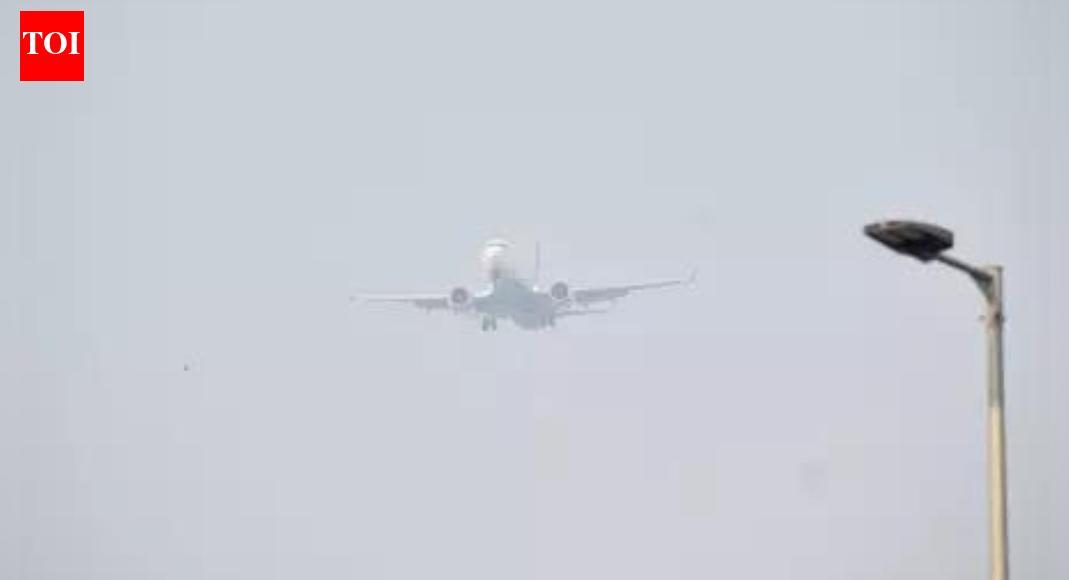
NEW DELHI: Flight travel across India remain disrupted for another day on Monday with several flights cancelled and many cancellations set for tuesday as well.As per the IndiGo’s cancelled flight data, 59 flights, scheduled for December 30 have now been cancelled. 116 flights were cancelled on Monday, majorly due to bad weather while 5 were due to operational reasons.Earlier in the day, ministry of civil aviation had also issued an advisory warning of possible delays. “Due to fog conditions across parts of Northern India, flight operations at select airports may be impacted, leading to possible delays. Passengers are advised to stay updated through official airline communication channels, allow additional time for airport arrival and check-in procedures, and plan their travel accordingly,” it had said.Air India also issued its advisory during the day saying, “Weather forecast continues to indicate dense fog for tomorrow morning with significantly reduced visibility at Delhi and parts of northern India. This will affect flight schedules to and from Delhi with cascading effects likely across our network. We are closely monitoring the situation and have taken proactive steps to minimise disruptions . In the event of unexpected delays, diversions or cancellations resulting from fog, please rest assured that our ground teams are available at key touchpoints in the airports to extend assistance to you. We understand how frustrating such disruption to travel plans can be and are making every possible effort to minimise the inconvenience,” it said, while explaining its “FogCare initiate” to help the passengers. Under DGCA fog operations (CAT-IIIB) norms, airlines are required to mandatorily roster pilots trained for low-visibility operations and deploy aircraft that are compliant with CAT-IIIB standards. Category-III refers to an advanced instrument landing system that enables aircraft to operate in foggy conditions. Category-III-A is a precision approach and landing system that allows operations with a runway visual range (RVR) of up to 200 metres, while Category-III-B permits landings when the RVR drops below 50 metres.


Source link

‘Smriti Mandhana threatened never to speak to Harmanpreet Kaur’: Jemimah Rodrigues reveals why | Cricket News


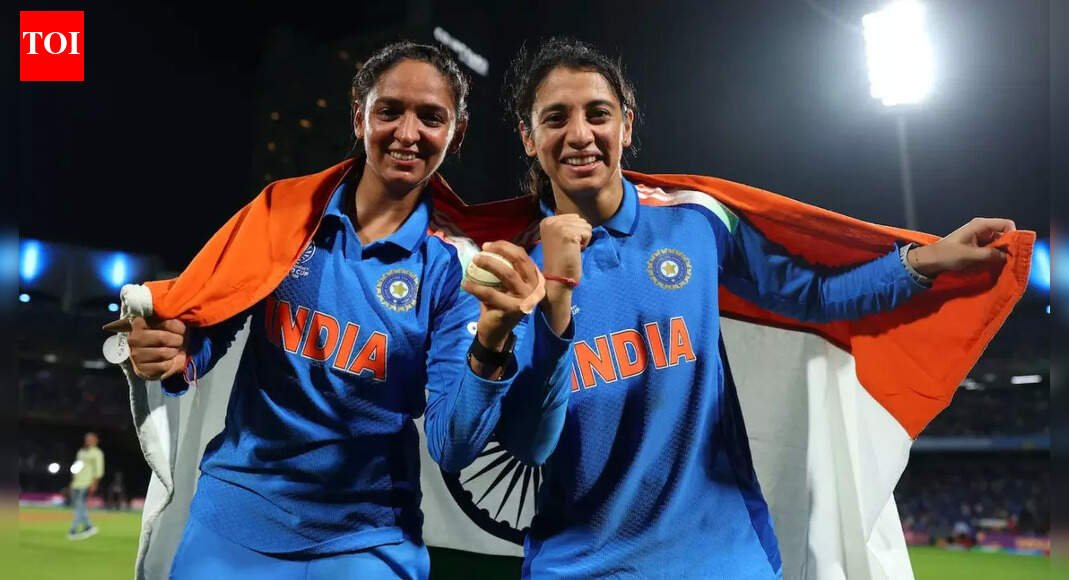
Smriti Mandhana and Harmanpreet Kaur (ICC Photo)

India women’s team captain Harmanpreet Kaur was seen breaking into a bhangra celebration while lifting the Women’s T20 World Cup trophy — a moment that quickly went viral and drew widespread admiration. However, the jubilant scene had a light-hearted backstory behind it. On a recent episode of The Great Indian Kapil Show, co-hosted by Kapil Sharma, batter Jemimah Rodrigues revealed that Harmanpreet’s dance was the result of a playful ultimatum from teammate Smriti Mandhana just moments before the trophy presentation.Although Smriti was not present on the show, her teammates shared anecdotes highlighting her influence within the squad.

Why Mumbai’s iconic Azad Maidan is no longer safe for cricket | Bombay Sport Exchange

Jemimah explained that Harmanpreet rarely takes instructions from younger players. “Harry Di doesn’t listen to us anyway,” she said jokingly. However, Smriti appears to hold a special place with the captain, prompting Harmanpreet to go along with her request. During Season 4 of the show, Jemimah confirmed that it was Smriti who urged Harmanpreet to perform the bhangra, and the players also opened up about how the team celebrated their World Cup triumph.When Kapil praised Harmanpreet for her spontaneous dance during the trophy ceremony, the skipper responded, “Jemimah and Harleen had planned it.” Jemimah was quick to clarify the story, saying, “No, it was actually Smriti. Harry Di doesn’t listen to us anyway. Initially, she was reluctant, but then Smriti declared, ‘If you don’t do the bhangra while lifting the trophy, I will never communicate with you again throughout my life.’”Kapil later asked the team about their post-title celebrations, and the players described a night filled with joy and excitement. “After we triumphed, we couldn’t contain our excitement and kept dancing, and it felt almost impossible to think about sleeping. We had a festive dinner, and then we continued to celebrate on the field until 3:30 am. However, the stadium lights were turned off, compelling us to leave, but we stayed together until sunrise, experiencing it for the very first time along with one another.The conversation then turned playful when Kapil asked who among them was the biggest party lover, with most of the team pointing towards Renuka. Jemimah added with a laugh, “Whenever she gets in the mood, she exclusively speaks in English.”


Source link

Ashes 2025-26: Australia coach Andrew McDonald opens up on Usman Khawaja’s retirement talks ahead of Sydney Test


Veteran cricketers nearing the twilight of their careers often find themselves surrounded by speculation, and Australia’s ongoing Ashes campaign is no different. With the fifth and final Ashes 2025-26 Test set to be played at the iconic Sydney Cricket Ground, discussions around farewells and future plans have inevitably surfaced. Among the names at the center of such chatter is experienced opener Usman Khawaja. Now, Australia head coach Andrew McDonald has stepped in to address the growing curiosity, offering clarity on Khawaja’s immediate future and the team’s broader selection thinking.

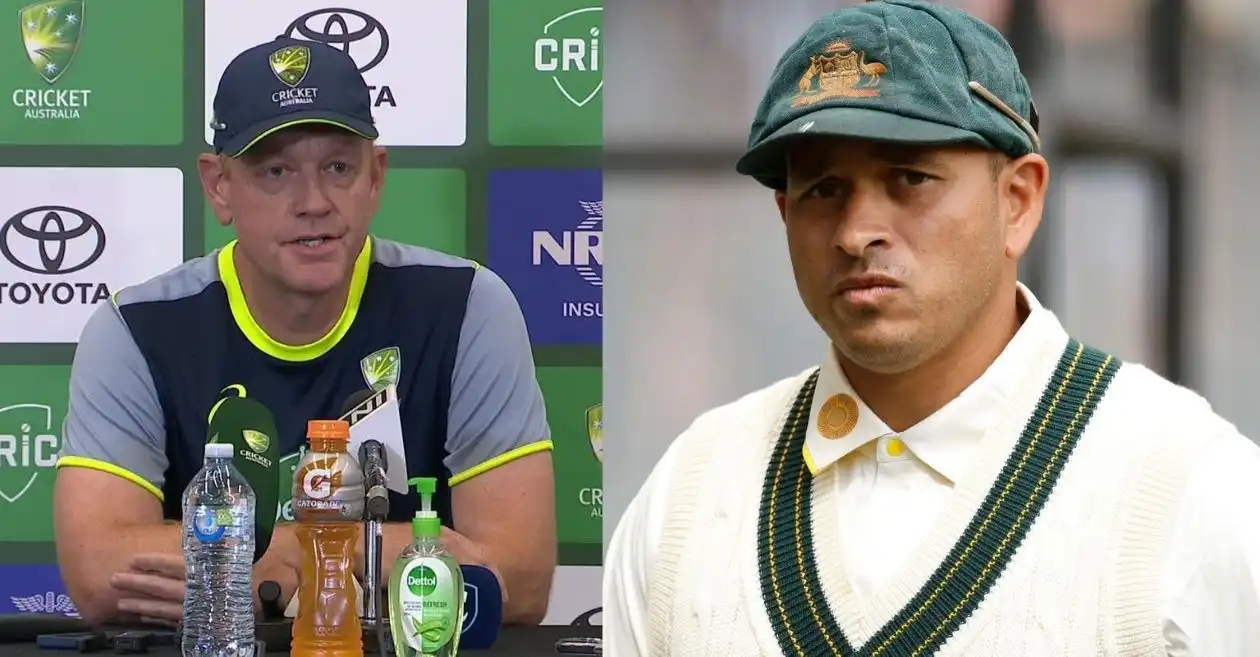
Andrew McDonald shares his take on Usman Khawaja’s retirement talks ahead of Sydney Test

McDonald has firmly played down any immediate talk surrounding Khawaja’s retirement following the fifth and final Ashes Test against England. Addressing the media ahead of the Sydney clash, McDonald clarified that there have been no internal discussions pointing toward Khawaja calling time on his international career.

The Australian opener is currently spending a short break with his family, but according to McDonald, there has been no indication from the senior batter that Sydney will mark his final appearance in Test whites. The coach stressed that conversations around retirement usually come directly from the player, and in Khawaja’s case, nothing of that sort has been communicated.

McDonald underlined that Khawaja’s place in the side remains secure due to his performances over the course of the year. Despite being 39, the left-hander has continued to deliver at the highest level, ensuring that selection decisions remain performance-based rather than influenced by age or external speculation. From the team management’s perspective, Khawaja has done enough to warrant selection for the Sydney Test, with McDonald confidently stating that the opener is expected to be out in the middle once again at the start of the match.

“He’s with his family at the moment having a couple of days off. We’re always having conversations about where players are at, there’s no indication at my end that he’s calling it in Sydney. But his performance in this calendar year has been good enough to warrant selection, so I’d say he’ll be there marking centre in Sydney,” McDonald said as quoted by cricbuzz.

Also READ: Ashes 2025-26: Brett Lee explains why Sydney Test could be a fitting farewell for Usman Khawaja

Khawaja’s call will be respected: McDonald

One of the key factors easing pressure on any immediate decision is Australia’s upcoming Test schedule. Following the Sydney Test, the national side will not play another Test until August, when Bangladesh tour Australia. That series will be followed by a packed calendar, including a tour of South Africa, a home series against New Zealand, and a challenging tour of India.

In total, Australia are set to play 13 Tests between October and March, but the eight-month gap after the Ashes provides selectors with valuable time. McDonald explained that this extended break allows the selection panel to calmly evaluate future combinations and plan for the next phase without rushing into decisions about senior players.

McDonald made it clear that the decision ultimately lies with Khawaja. If the opener feels the time is right to step away, the team management expects he will approach them directly. Until then, Australia are content to focus on the immediate task at hand rather than speculate about long-term changes.

“I think Uz will come to us if he’s going to retire, there’s no doubt about that. And then after this Test match, we’ve got eight months until the next one, so we’ve got a lot of time as a selection group to make that decision. If there was a series straight off the back of this, then it would be a little bit different. But with the eight-month gap, as a selection panel, we’ve got a lot of time to think about our next Test team should Uz push forward,” added McDonald.

Also READ: “I was in a state of shock”: MCG curator breaks silence after farce of two-day Boxing Day Test – Ashes 2025-26



Source link

Access Denied


Access Denied

You don’t have permission to access “http://www.ndtv.com/india-news/mumbai-police-seized-drugs-worth-a-massive-rs-814-crore-this-year-10064130” on this server.

Reference #18.44fdd417.1767031459.379b62d4

https://errors.edgesuite.net/18.44fdd417.1767031459.379b62d4


Source link

IndiGo chaos aftermath: Airline to increase pilot allowances; aim to boost staff morale


IndiGo chaos aftermath: Airline to increase pilot allowances; aim to boost staff morale

IndiGo will pilot allowances and add new ones from January 1 to boost staff morale, according to PTI sources. This comes weeks after the airline faced massive disruptions with 4,500 flight cancellations due to rostering issues. The move follows meetings between executives and pilots at various bases, as the carrier also faces pressure from foreign airlines trying to recruit its pilots.The airline is increasing several key benefits for its pilots which includes Captains getting upto Rs 3,000 rupees instead of Rs 2,000 for layovers, while first officers will receive Rs 1,500, up from Rs 1,000, revealed the sources cited by PTI. For deadheading trips, where crew travel as passengers for their next duty, captains will get Rs 4,000, up from Rs 3,000 and first officers will receive Rs 2,000 rupees, a Rs 500 increase.The changes affect IndiGo’s roughly 5,000 pilots and come at a critical time. The airline, which controls 65 per cent of India’s domestic market, is under close watch from regulators. A special committee has already submitted its report about the recent flight cancellations to the civil aviation ministry.Additonally, Moody’s Ratings has cautioned that the airline might face “significant financial damage” from lost revenue, customer refunds, and potential government penalties following the cancellations, as quoted by Reuters.The airline is also dealing with a broader industry challenge. Foreign airlines are luring Indian pilots to join them with better remuneration and lifestyle packages. This has become a problem to the extent that the government is now promoting a code of conduct internationally for recruiting pilots, according to Reuters.The recent mass cancellations at the beginning of this month caused chaos at the airports, leaving many stranded passengers across the country in India.The mass cancellations earlier this month caused widespread chaos at airports and left thousands of passengers stranded across India. Despite the airline’s dominance in the domestic market, this incident has triggered both regulatory scrutiny and a competition investigation.


Source link

Ronaldo wants to reach 1,000 goals before ending his soccer career. He’s up to 956 | Football News


Ronaldo wants to reach 1,000 goals before ending his soccer career. He's up to 956
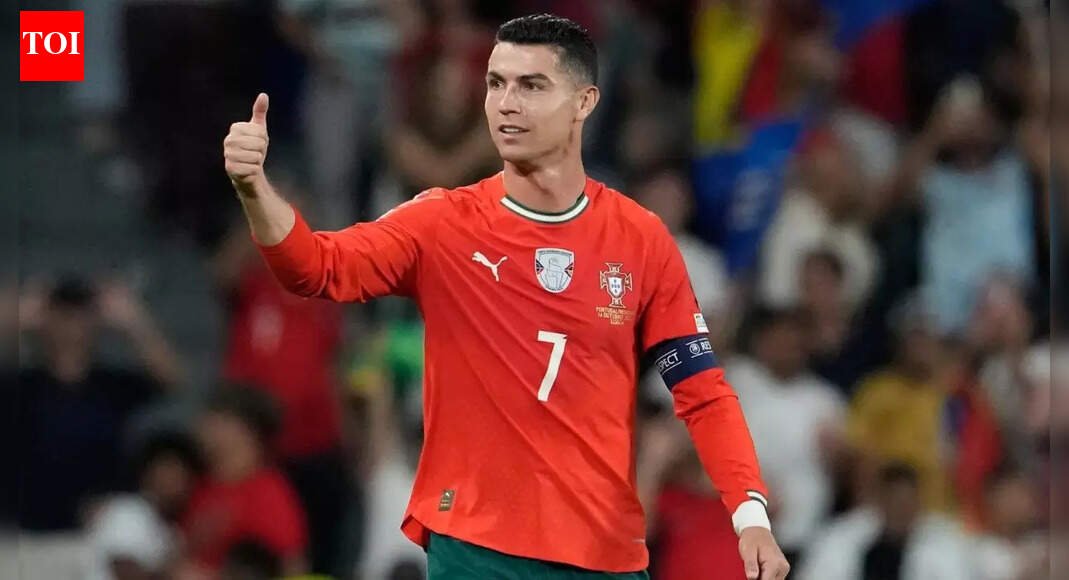
File Photo – Portugal’s Cristiano Ronaldo celebrates after scoring during a World Cup 2026 group F qualifying Football match between Portugal and Hungary in Lisbon, Oct. 14, 2025. (AP Photo)

DUBAI: Cristiano Ronaldo has expressed his determination to score 1,000 goals by the end of his career. And the 40-year-old Portugal superstar is in no doubt he’ll get there. “I will reach that number for sure, if no injuries,” Ronaldo said late Sunday at the Globe Soccer Awards in Dubai, where he was named as the best player in the Middle East. Ronaldo moved onto 956 career goals by scoring twice for Al-Nassr in the Saudi Pro League on Saturday. His tally includes men’s international record of 143 goals for Portugal, which Ronaldo is set to lead into next year’s World Cup in the United States, Canada and Mexico. By the time the World Cup begins, Ronaldo – a five-time world player of the year – will be aged 41. “I am still very motivated to carry on,” the former Real Madrid, Manchester United and Juventus striker said on stage after receiving his award. “It doesn’t matter (where) I play – Middle East, in Europe – I always enjoy to play football, to win trophies, to score goals and I want to carry on. “You know what my goal is: I want to win more trophies and I want to reach the number that you will all know.” The World Cup is one of the few trophies missing from Ronaldo’s collection. He won the European Championship with Portugal in 2016.


Source link

Tariff headwinds and trade in transition: Amid turmoil, India demonstrates notable resilience in 2025


Tariff headwinds and trade in transition: Amid turmoil, India demonstrates notable resilience in 2025
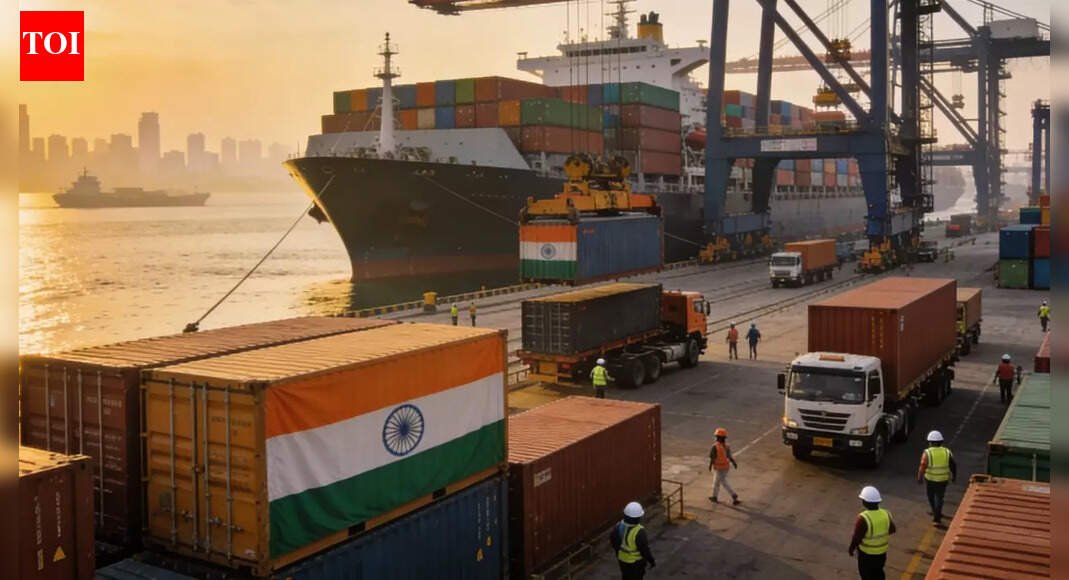
A defining feature of 2025 was India’s renewed emphasis on Free Trade Agreements as strategic resilience tools. (AI image)

By Agneshwar SenThe year 2025 marked a decisive turning point in global trade. Slower growth in major economies, sudden tariff escalations and growing concentration of critical supply chains made international commerce more fragmented and unpredictable. Yet, amid this turbulence, India demonstrated notable resilience and began a deliberate recalibration of its global economic integration.India’s total exports in FY 2024–25 reached $824.9 billion, registering a 6% year-on-year increase despite muted global demand. This performance did not reflect insulation from global headwinds, but a conscious strategic shift combining market diversification, supply-chain repositioning and institutional reform.One of the disruptions of 2025 came from the United States’ reciprocal tariff announcements across sensitive sectors such as metals, chemicals and machinery. These measures had a material impact: India’s exports to the US declined by approximately 37.5% between May and September 2025. India’s response focused on containment rather than confrontation. While the bilateral trade deal with the US may now be concluded in 2026, India moved on to face the disruptions. Trade defence instruments such as anti-dumping and safeguard duties were deployed to prevent destabilising import surges, while export support schemes were recalibrated to favour value-added manufacturing. Customs processes were streamlined through wider risk-based clearances to save time and improve competitiveness.A defining feature of 2025 was India’s renewed emphasis on Free Trade Agreements as strategic resilience tools. The India–EFTA Trade and Economic Partnership Agreement, signed in March 2024 and in force from 1 October 2025, marked India’s first operational FTA with developed European nations. Under this agreement, India secured duty concessions on more than 92% of tariff lines, and the partnership is projected to attract $100 billion in investment and create one million jobs over 15 years.In parallel, India and the United Kingdom signed the Comprehensive Economic and Trade Agreement on 24 July 2025, with implementation expected in mid-2026. Once operational, it will provide duty-free access to 99% of India’s exports to the UK by value. Negotiations with the European Union, Canada, New Zealand, the GCC, The Eurasian Economic Union, Israel and Oman progressed steadily, creating a wider, rules-based network of trade partnerships.To boost domestic exports through upgrading export infrastructure, strengthening trade finance availability, improving market intelligence and enabling MSMEs to meet global standards, the government launched a ₹25,060-crore mission. This marks a structural shift from episodic incentives to systematic export capability building.Global supply-chain diversification further shaped India’s trade trajectory. Companies in electronics, pharmaceuticals, auto components and solar equipment accelerated strategies to hedge geopolitical and tariff risks. India emerged as a key beneficiary through targeted production-linked incentives and a strengthening manufacturing ecosystem. Indian firms increasingly integrated into wider global production networks, moving steadily up the value chain.India also broadened its export geography. Shipments to Africa, West Asia and Latin America grew steadily, reducing dependence on traditional Western markets and acting as a natural buffer when US-bound exports slowed down. Geographic diversification functioned as a practical risk-management tool rather than a purely aspirational objective. Export diversification helped control the damage from the uncertain US market conditions.Domestic policy reforms strengthened India’s ability to absorb external shocks. The roll-out of GST 2.0 simplified the indirect tax structure from a four-slab system to a two-slab framework, lowering compliance burdens and reducing classification disputes. A high-level committee recommended targeted rollback of the Quality Control Order regime, which by 2025 covered about 790 products, easing input-cost pressures and supply bottlenecks. The government also signalled reforms to the customs duty regime through lower rates on selected goods, greater transparency and reduced discretion.Looking ahead to 2026, two structural priorities will define India’s trade position: access to critical minerals and logistics competitiveness. India has approved a ₹7,280-crore production linked incentive scheme to promote domestic rare-earth magnet manufacturing, along with strategic arrangements with mineral-rich partners such as Australia and selected African economies.Logistics reform is the second critical lever. Under the PM Gati Shakti initiative, multiple multimodal logistics parks and dedicated cargo terminals linked to freight corridors and major ports are under construction. The Indian Ports Act, 2025 has introduced a modern regulatory framework to streamline port operations, enhance tariff transparency and align India’s maritime ecosystem with global standards.The central lesson of 2025 is that resilience in global trade does not come from inward retreat, but from strategic integration. India is shifting from reacting to volatility towards shaping outcomes. Through diversified markets, stronger trade agreements, secure critical mineral access and competitive logistics. India is positioning itself not merely to participate in global commerce, but to influence its future direction.(Agneshwar Sen is Trade Policy Leader, EY India. Shiv Ashish, Senior Tax Professional, EY India, also contributed to the article)


Source link

‘We are worried’: What SC said on convict Kuldeep Sengar’s bail; the ‘public servant’ question | India News


NEW DELHI: The Supreme Court on Monday stepped in to stay the Delhi high court order that suspended the former BJP leader Kuldeep Singh Sengar’s life sentence in the 2017 Unnao rape case. On the Central Investigation Bureau’s plea challenging the HC order, Supreme Court bench flagged serious legal concerns over the interpretation of the law and the implications it could have for accountability of elected representatives.A three-judge vacation bench led by Chief Justice Surya Kant, along with Justices JK Maheshwari and Augustine George Masih, stayed the execution of the high court’s December 23 order that had suspended Sengar’s life sentence under the POCSO Act.

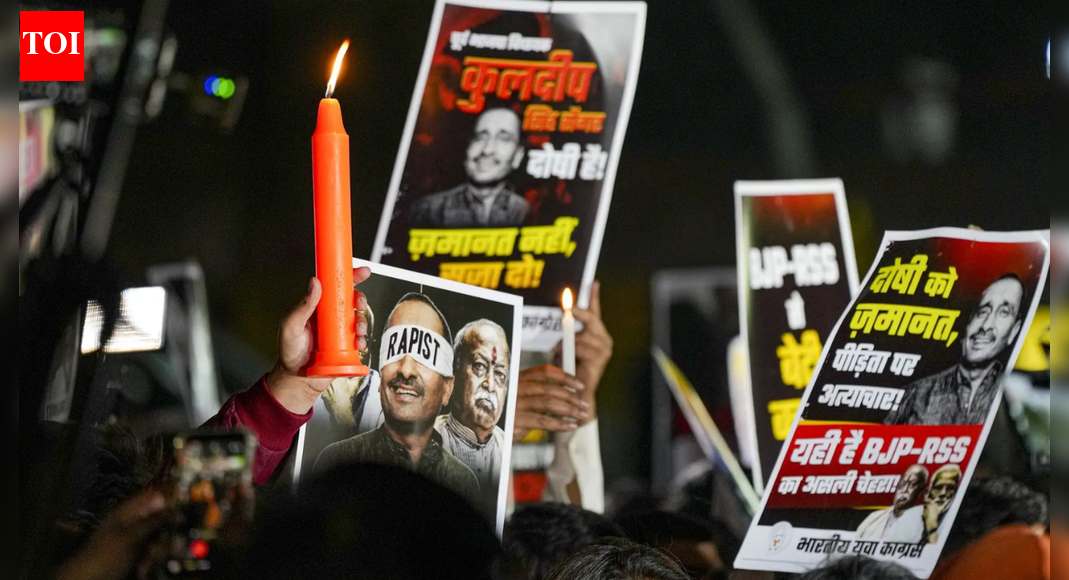
Unnao Rape Case: Activists Protest Outside Delhi High Court Over Sengar Bail

Supreme Court made it clear that Sengar would not be released from jail, noting that he continues to remain in custody in another case related to the custodial death of the rape survivor’s father.While acknowledging that sentence suspensions are not usually stayed without hearing the convict, the bench said the “peculiar facts” of the case warranted immediate intervention.“Issue notice. We have heard solicitor general Tushar Mehta for CBI and senior advocate for the convict… Counter will be filed in four weeks. We are conscious of the fact that when a convict or an undertrial has been released, such orders are not ordinarily stayed by this court without hearing such persons. But in view of peculiar facts where the convict is convicted for a separate offence, we stay the operation of the Delhi high court order dated December 23, and thus the respondent shall not be released pursuant to the said order,” the bench ordered.

The ‘public servant’ interpretation

At the heart of the CBI plea is whether an MLA can be treated as a “public servant” for the purpose of aggravated offences under the POCSO Act.Appearing for the CBI, solicitor general Tushar Mehta argued that Sengar, who was a powerful MLA at the time of the crime, exercised dominance over the minor survivor and squarely fell within the scope of aggravated sexual assault under the law.Sengar’s counsel, senior advocates Siddharth Dave and N Hariharan, countered this by arguing that an MLA could not automatically be treated as a public servant under POCSO.The Supreme Court, however, expressed unease with the high court’s reasoning, warning that such an interpretation could lead to lawmakers being exempted from stricter punishment.“We are worried that a constable or patwari will be a public servant under the Act, but an MLA or MP will not be and get exempted,” the bench observed.

Why it matters

Section 5 of the POCSO Act treats sexual assault as “aggravated” if committed by a public servant or a person in a position of authority, attracting a minimum punishment of 20 years that can extend to life imprisonment.In 2019, a Delhi trial court had held that Sengar qualified as a public servant and sentenced him to imprisonment for the remainder of his natural life. The high court’s suspension of that sentence had triggered sharp criticism, with the CBI arguing that it diluted the intent of the law.The Supreme Court has now issued notice to Sengar and will examine whether the high court erred in excluding legislators from the definition of “public servant” under POCSO Act.

Survivor welcomes SC intervention

Meanwhile, the Unnao rape survivor welcomed the Supreme Court’s order, saying she had full faith in the justice system and felt reassured by the apex court’s intervention.“I am very happy. I had faith in the Supreme Court. I will ensure that he is given a death sentence,” she said speaking to the reporters.The survivor’s mother has asked for security for her family and advocate saying, “My family needs security. Our advocates need security. I request that the government keep us all safe.”(With agency inputs)


Source link

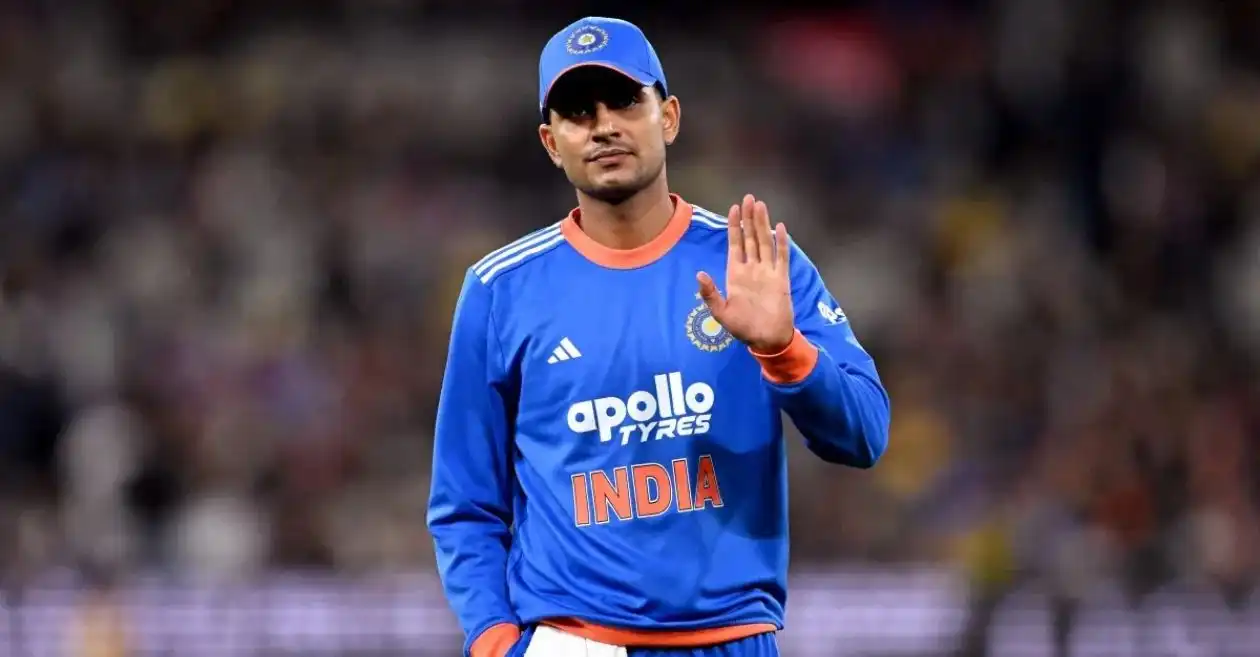
Former cricketer explains why Shubman Gill cannot be all-format captain of India


The debate around India’s future leadership has intensified after former England spinner questioned whether Shubman Gill is ready to shoulder the responsibility of being India’s all-format captain. While acknowledging Gill’s immense batting talent, the ex-cricketer believes the young star lacks the intensity and mental edge required to lead the national side consistently across Tests, ODIs, and T20Is.

Former cricketer questions Shubman Gill’s temperament for leadership across formats

Speaking candidly, Monty Panesar argued that captaincy at the highest level demands more than runs and technique. According to him, Gill’s approach under pressure often drifts toward complacency, something that could become a liability when combined with the tactical and emotional demands of leadership. The former left-arm spinner stressed that being an all-format captain in modern cricket is an “all-consuming role” that only a handful of players can truly manage.

Panesar drew a sharp comparison between Gill and former India captain Virat Kohli, widely regarded as one of India’s most intense leaders. He pointed out that Kohli’s aggression, energy, and relentless standards were visible regardless of the format or match situation, setting a benchmark for leadership.

“He is a complacent cricketer. He has a lot of talent, but he starts playing lazy shots in the game. Virat Kohli’s intensity and aggression are evident in all formats. Shubman Gill can’t do that. It’s too much burden for him. He can’t be the captain of all formats,” Panesar said, as quoted by India Today.

According to Panesar, the issue is not Gill’s skill set but the additional mental load that comes with leadership. He suggested that piling captaincy responsibilities across formats could dilute Gill’s batting focus, potentially stalling his growth as a premier batter.

Also READ: Top 5 contenders for the 2025 ICC Cricketer of the Year Award

Concerns over India’s red-ball structure

Beyond individual leadership, Panesar also highlighted deeper structural issues within Indian cricket, particularly in the red-ball format. He believes India is still some distance away from rebuilding a dominant Test side, citing a widening gap between domestic cricket and the international level.

Panesar emphasized that the transition from the Ranji Trophy to Test cricket remains steep, with four-day cricket demanding patience, discipline, and sustained hard work. He further noted that financial and structural challenges in domestic red-ball cricket affect player motivation. With Test cricket and domestic four-day competitions offering less financial incentive compared to T20 leagues, maintaining focus and commitment becomes harder for emerging players.

“Indian players are not ready for Test cricket. Players who do well in T20s and ODIs don’t necessarily perform in Tests. The gap between the Ranji Trophy and the Indian Test team is big. Four-day cricket takes hard work and patience. Test cricket pays less, and that affects focus. The Ranji Trophy system is weak at the moment. India will need patience to make a proper comeback in Test cricket,” added Panesar.

Also READ: Monty Panesar predicts the semifinalists of T20 World Cup 2026


Source link