Pahalgam terror attack, Delhi blast, Air India plane crash & more: Why 2025 felt like a year of endless crises | India News


Pahalgam terror attack, Delhi blast, Air India plane crash & more: Why 2025 felt like a year of endless crises

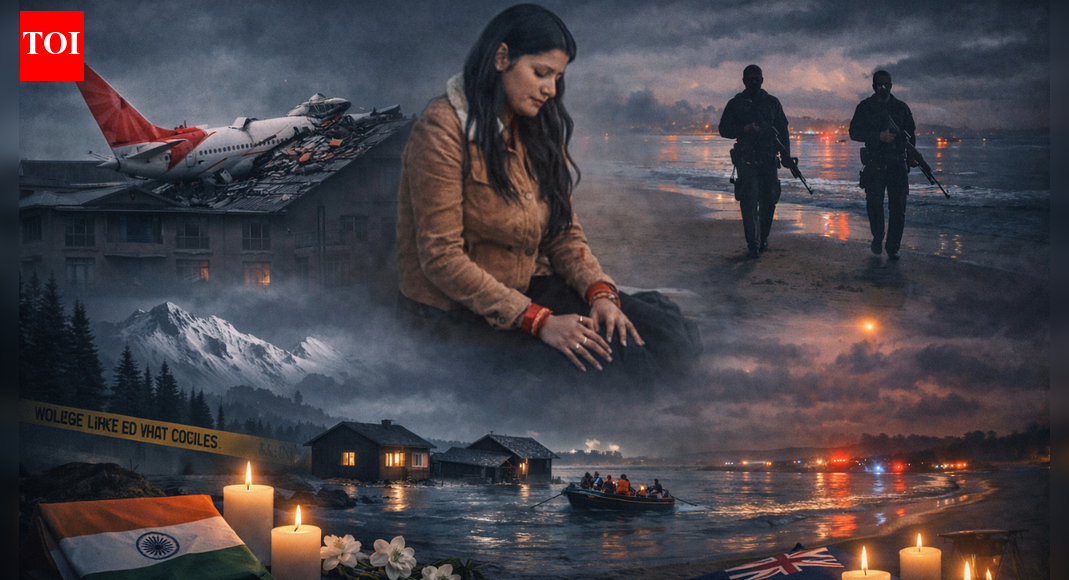
Murphy’s law worked hard in 2025.A year full of “what else can go wrong”, and then the wrong proceeds to make its way in, perfectly settling down, even stretching through months. A year that felt like a series of hypnic jerks, rather than just dates or headlines changing.Not to sound pessimistic, but 2025, ultimately, became a collision of the good, the bad and the devastating. India celebrated moments of pride — sporting triumphs, economic reforms, scientific milestones — even as it grappled with stampedes, terror attacks, aviation disasters and climate-fuelled catastrophes at home and abroad.

January 22: Jalgaon train tragedy

At least 12 people were killed in a tragic railway accident in Maharashtra’s Jalgaon district on January 22 after panic spread over a rumour of fire onboard the Lucknow–Mumbai Pushpak Express.

  • The train made an unscheduled halt around 5 pm after someone pulled the emergency chain, prompting frightened passengers to jump onto the tracks.
  • Unaware of an oncoming train on the adjacent line, several were struck by the Karnataka Express approaching from the opposite direction.
  • The incident occurred between Maheji and Pardhade stations near Pachora, more than 400 km from Mumbai, turning panic and confusion into a deadly accident.

‘India Faces Two War Realities: Counter Terror Strikes And Long Conflicts’, Says CDS Anil Chauhan

January 29: Maha Kumbh stampede

.

Maha Kumbh, the event that literally drew people from across India and the world to Prayagraj in Uttar Pradesh. Politicians, business leaders, film stars and millions of devotees gathered along the riverbanks, hoping for a calm and spiritual start to the year.

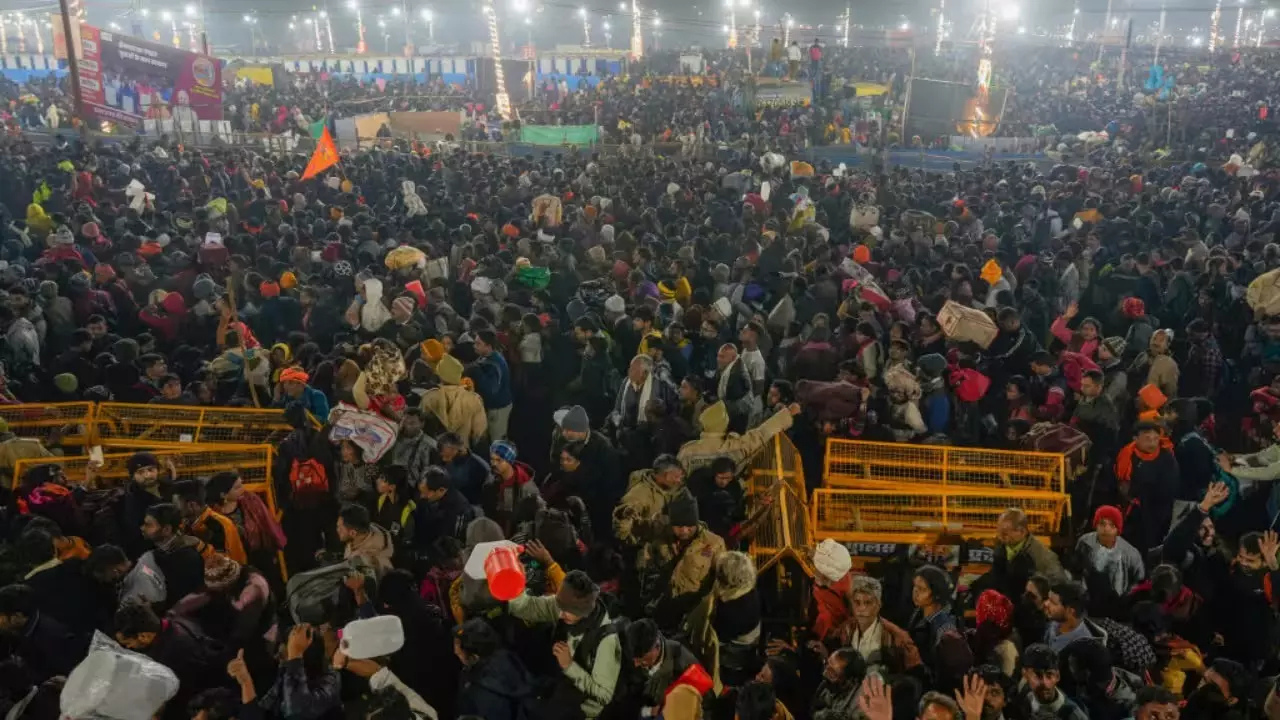
  • The month-long Prayagraj Maha Kumbh Mela saw tens of millions of pilgrims arrive, with authorities estimating that nearly 10 crore devotees turned up on Mauni Amavasya alone.
  • In the early hours of January 29, at around 1 am, a crush broke out near the Sangam nose area, close to a main bathing ghat. As devotees moved through narrow and crowded paths ahead of the Amrit Snan, panic spread, and a stampede followed.
  • Ambulances rushed the injured to the central hospital inside the Mela grounds, where nearly 30 people died, and several others were injured.

February 15: New Delhi railway station stampede

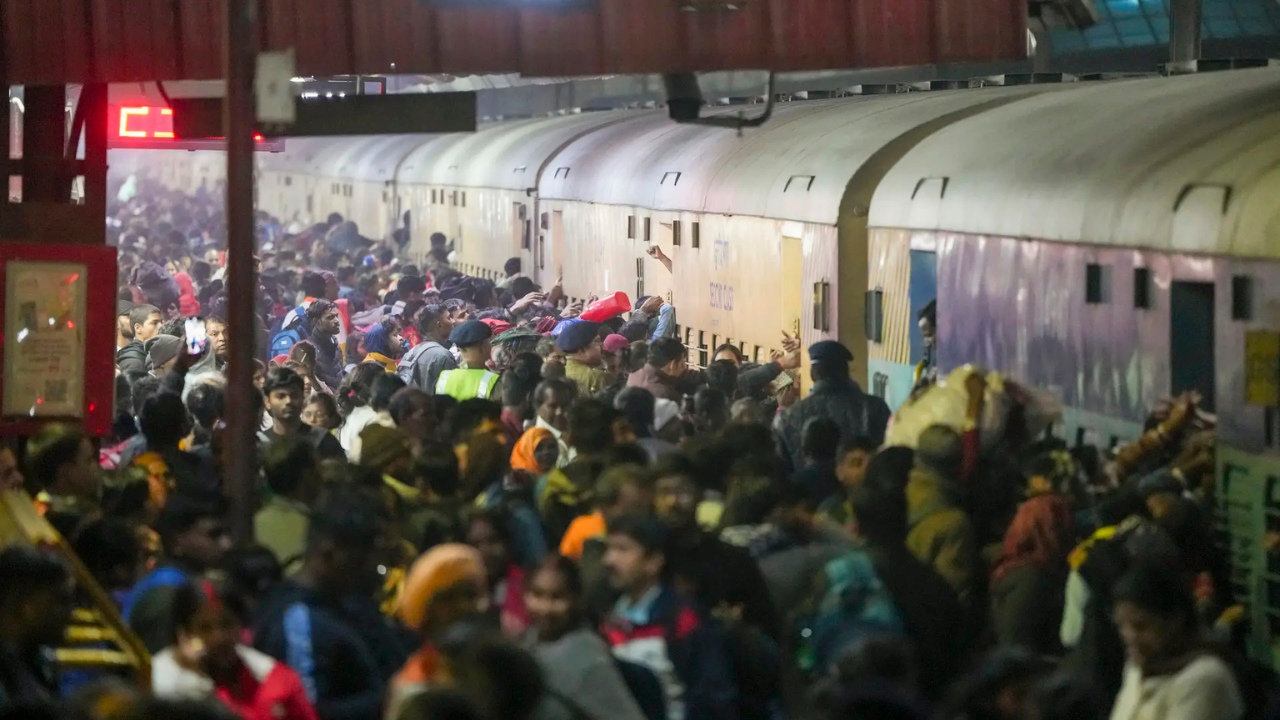
The tragedy does not end here. Days later, another stampede claimed lives, this time at New Delhi Railway Station, where at least 18 people, including 14 women and three children, were killed and several others were left injured.
.

  • On the night of February 15, a massive rush of passengers waited to board trains to Prayagraj, where the Maha Kumbh was underway.
  • As several trains were delayed, the already overcrowded platforms 14 and 15 turned chaotic within a few minutes, as people rushed forward, resulting in multiple casualties.
  • The government later told the Lok Sabha that 49,000 general or unreserved tickets were sold at the New Delhi Railway Station counter at around 13,000 more than the usual daily figure.

March 28: Myanmar – Thailand earthquake
.

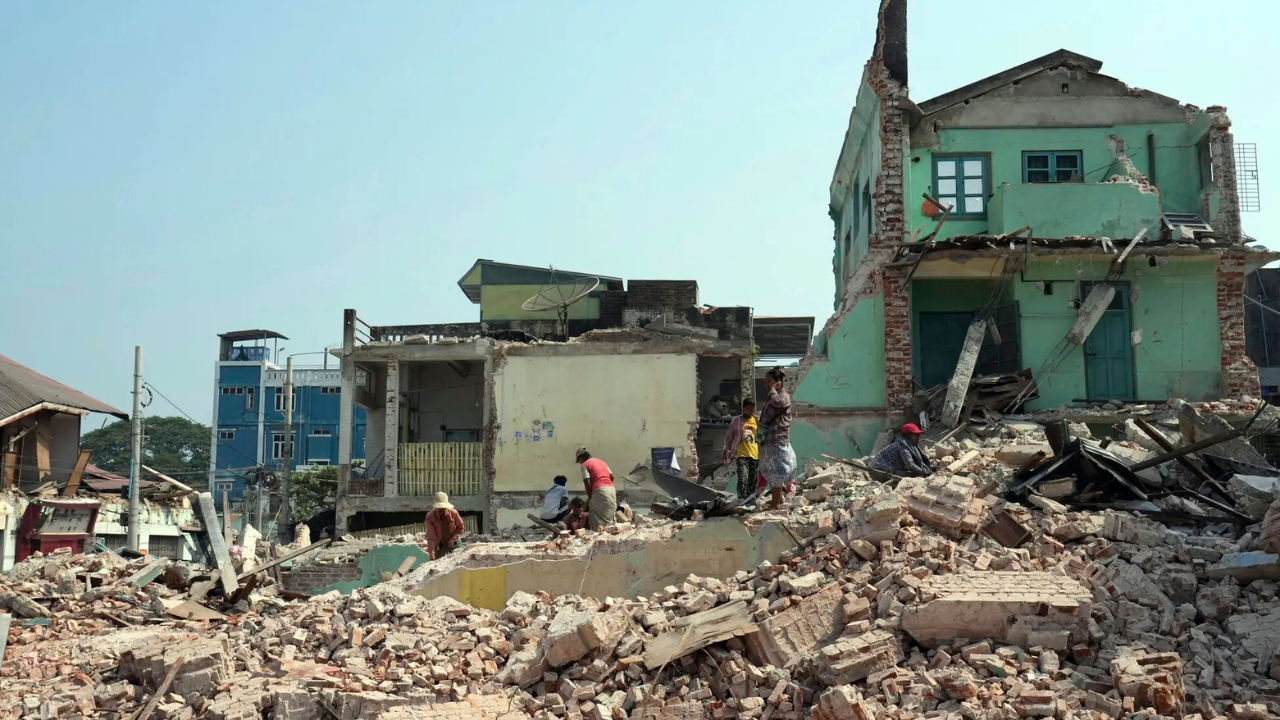
On March 28, Myanmar and Thailand were shaken by a 7.7-magnitude earthquake, causing widespread damage to buildings and key infrastructure.

  • Myanmar’s military government said at least 1,002 people were killed and over 2,300 were injured. Meanwhile, in Thailand, a high-rise building under construction collapsed, killing at least eight people and leaving dozens missing.
  • Centred near Mandalay, the quake was followed by a strong aftershock and damaged roads, a bridge and a dam, hampering rescue efforts in Myanmar, which is already grappling with civil war and a humanitarian crisis.
  • Tremors were felt in China’s Yunnan and Sichuan provinces, where houses were damaged, and people were injured near the Myanmar border.

April 1: Gujarat firecracker factory explosion

A powerful explosion at a firecracker factory and godown in Deesa, north Gujarat, on April 1 claimed 21 lives, with the impact so severe that body parts were found up to 300 metres away.

  • Most of those killed were migrant workers from Madhya Pradesh who had arrived only two days earlier and were staying with their families inside the premises.
  • Survivors and local sources said children as young as six were made to work with explosives for very low wages. They were assigned risky tasks such as tying fuses, packing gunpowder and assembling fireworks, often because their small hands were considered suitable for the work.
  • Many of those killed in Deesa had survived a similar firecracker factory explosion in Harda, Madhya Pradesh, in February 2024, highlighting how the same workers were exposed to deadly risks more than once.

April 22: Pahalgam terror attack
Pahalgam, Apr 23 (Source: ANI)

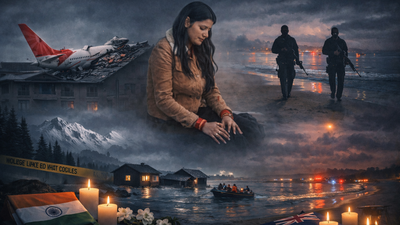
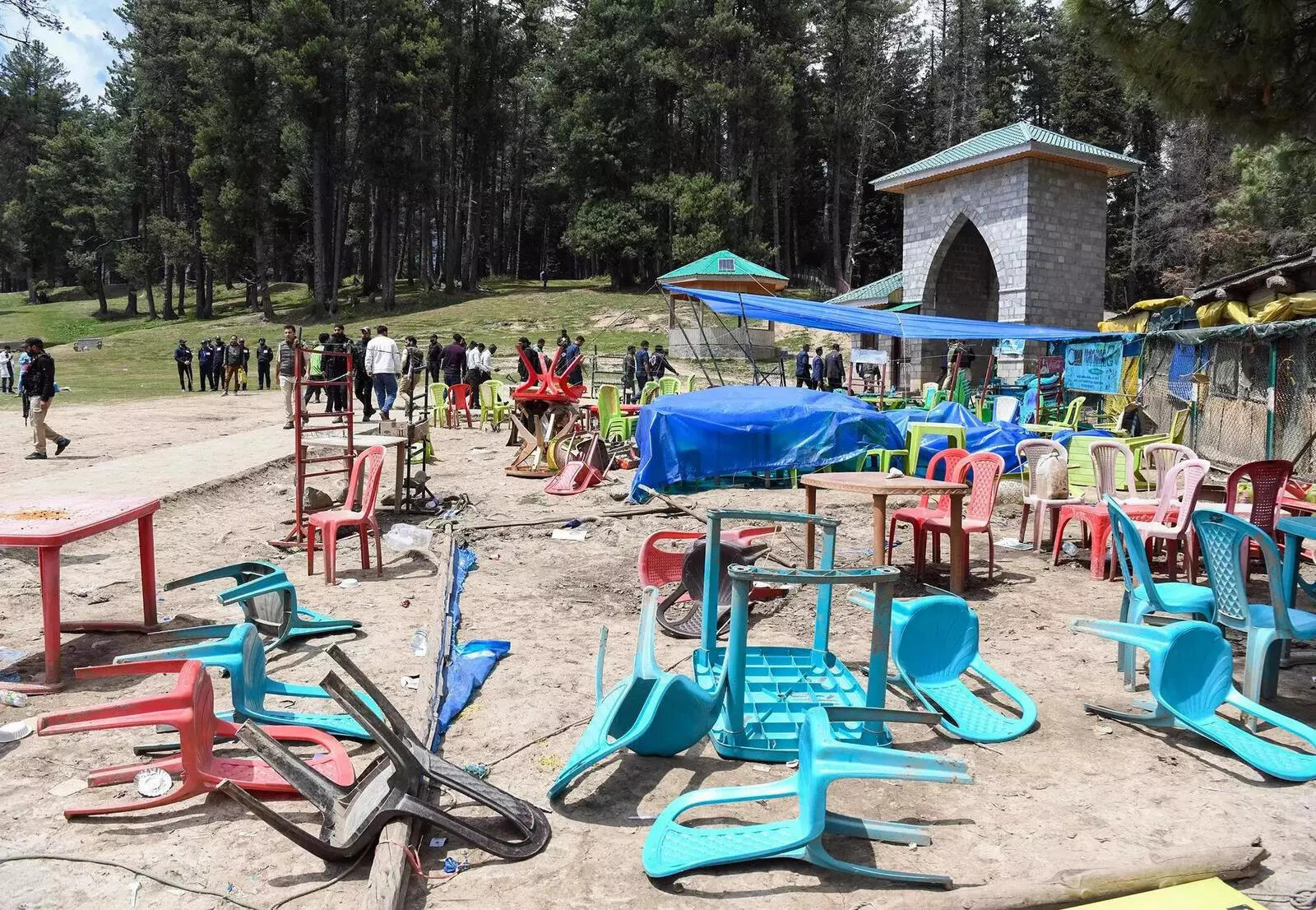
A pleasant vacation in Jammu and Kashmir’s Pahalgam turned tragic when 26 people, including one Nepali citizen, died in a terror attack. Terrorists opened fire in Baisaran Valley on April 22, marking one of the deadliest attacks in the Kashmir Valley since the Pulwama carnage in 2019.

  • Around 3 PM, terrorists descended from the mountains of Baisaran Valley and opened fire on tourists in the area, known as ‘mini Switzerland’ for its scenic meadows. Panicked women were seen weeping and searching for their loved ones amid pools of blood as cries for help echoed across the valley.
  • The attack was claimed by The Resistance Front (TRF), a proxy of the banned Pakistan-based terror group Lashkar-e-Taiba (LeT). Following the attack, the government suspended the Indus Waters Treaty, shut the Attari-Wagah border and halted visas.
  • India launched Operation Sindoor on May 6–7 in retaliation, targeting terror hideouts in Pakistan and Pakistan-occupied Kashmir. Indian officials later said over 100 terrorists were killed during the operation.

June 4: RCB’s victory celebrations turn tragic
RCB stampede

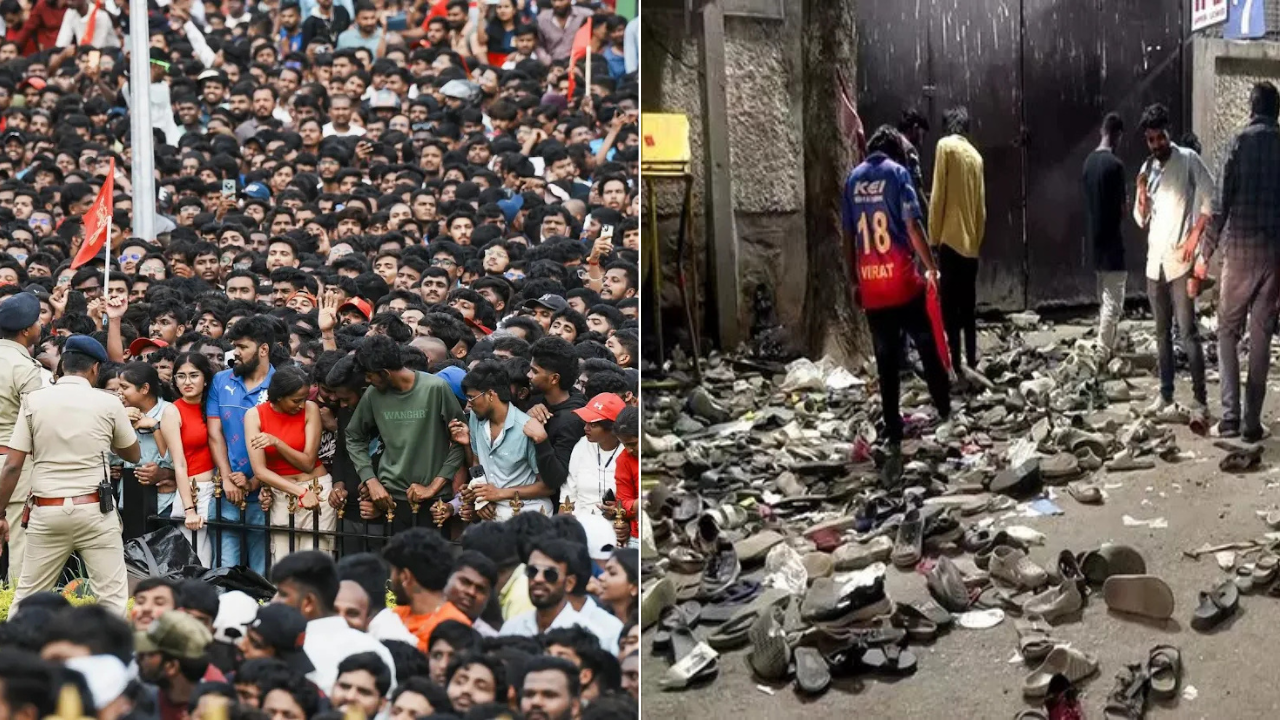
What was meant to be a celebration turned deadly when a stampede near Chinnaswamy Stadium in Bengaluru on June 4 killed 11 people and injured more than 30 during RCB’s first-ever IPL title celebrations.

  • The police had deployed a large contingent, but managing the crowd proved extremely difficult. The stadium had a capacity of holding 35,000 people, yet around 2 to 3 lakh fans showed up, far exceeding expectations.
  • Thousands of fans thronged the stadium and surrounding areas, overwhelming security personnel. Many attempted to climb gates, trees, and fences to get a view of the players.
  • At Vidhana Soudha, Karnataka police used mild cane charges to disperse surging fans during the felicitation program. Panic spread quickly as crowds surged, with people scrambling to climb fences and trees in desperation.

June 12: Ahmedabad Air India crash
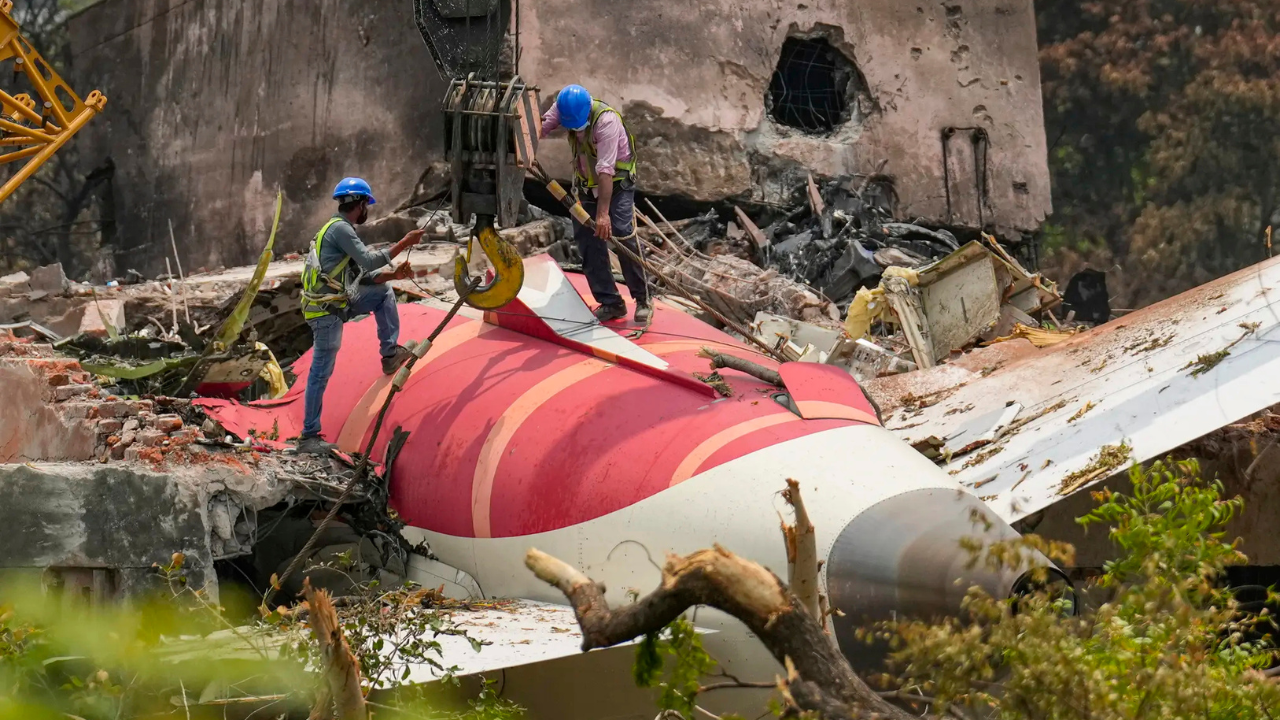
.

A tragic crash of Air India Flight AI 171 on June 12 claimed 260 lives when the Boeing 787-8 Dreamliner plunged seconds after taking off from Ahmedabad on its way to London. The aircraft struck the hostel of Ahmedabad’s BJ Medical College, where young doctors were having their lunch.

  • Both pilots, senior captain Sumeet Sabharwal and co-pilot Clive Kunder, were fully cleared for duty, and the aircraft’s initial climb seemed normal.
  • However, within moments, a sudden loss of engine power triggered a series of events that the crew were unable to control.
  • The flight was carrying 242 people, including 229 passengers and 12 crew members, along with 19 people on the ground who were killed in the impact. The disaster left only one survivor, Indian-origin British national Vishwash Kumar Ramesh.
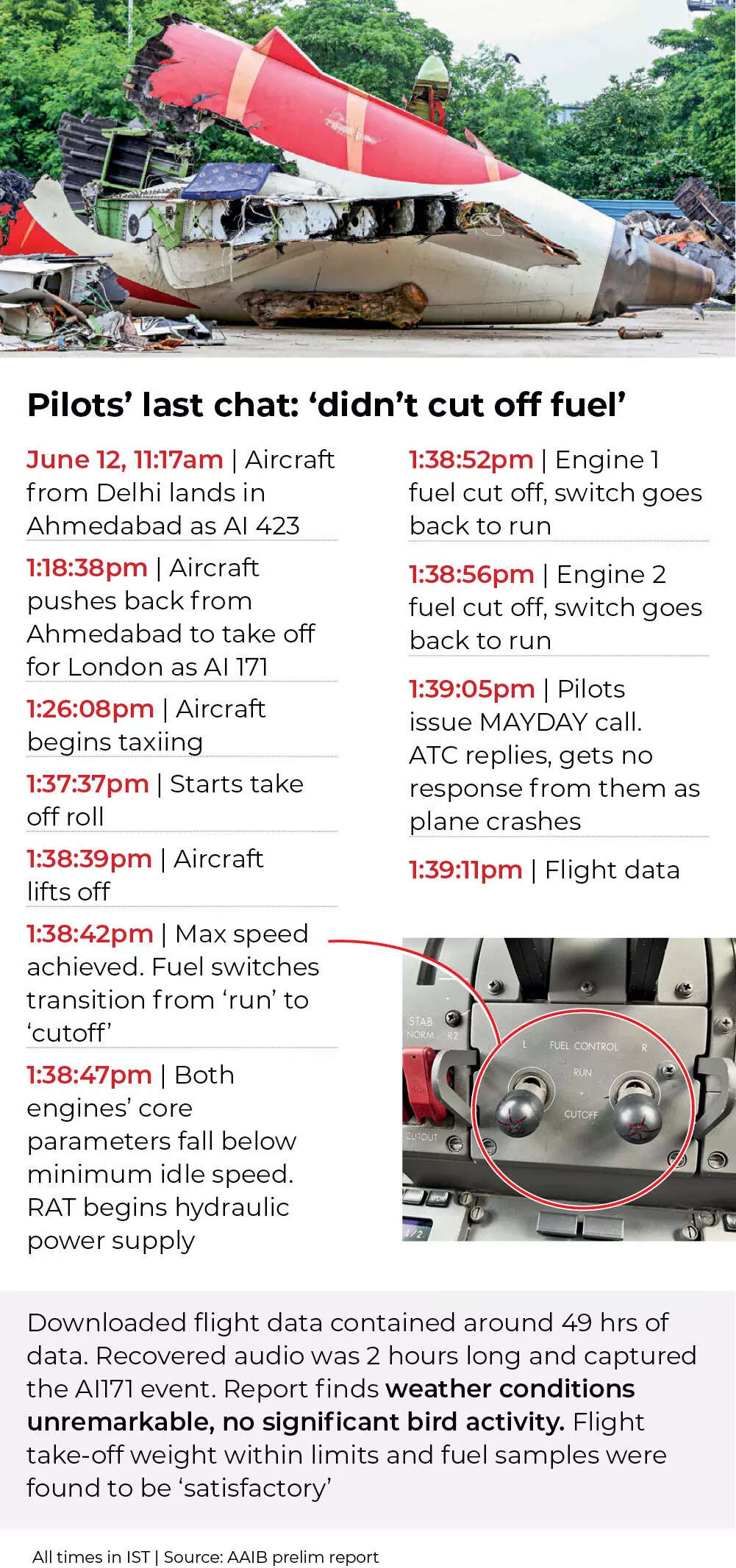
.

July 9: Texas Hill country flash flood

On July 9, parts of Texas were submerged under rapid floodwaters, after an intense storm system, marking an ominous start to the second half of the year.

  • The disaster resulted in over 135 confirmed fatalities and estimated economic losses of approximately $1 billion.
  • Remnants of a tropical storm system stalled over the region, dumping record rainfall in short durations that overwhelmed the Colorado River basin.
  • The disaster exposed severe vulnerabilities in local drainage infrastructure, prompting a state-wide “Flood Zone Reassessment” by the Texas government.

August-September: Monsoon battered the subcontinent
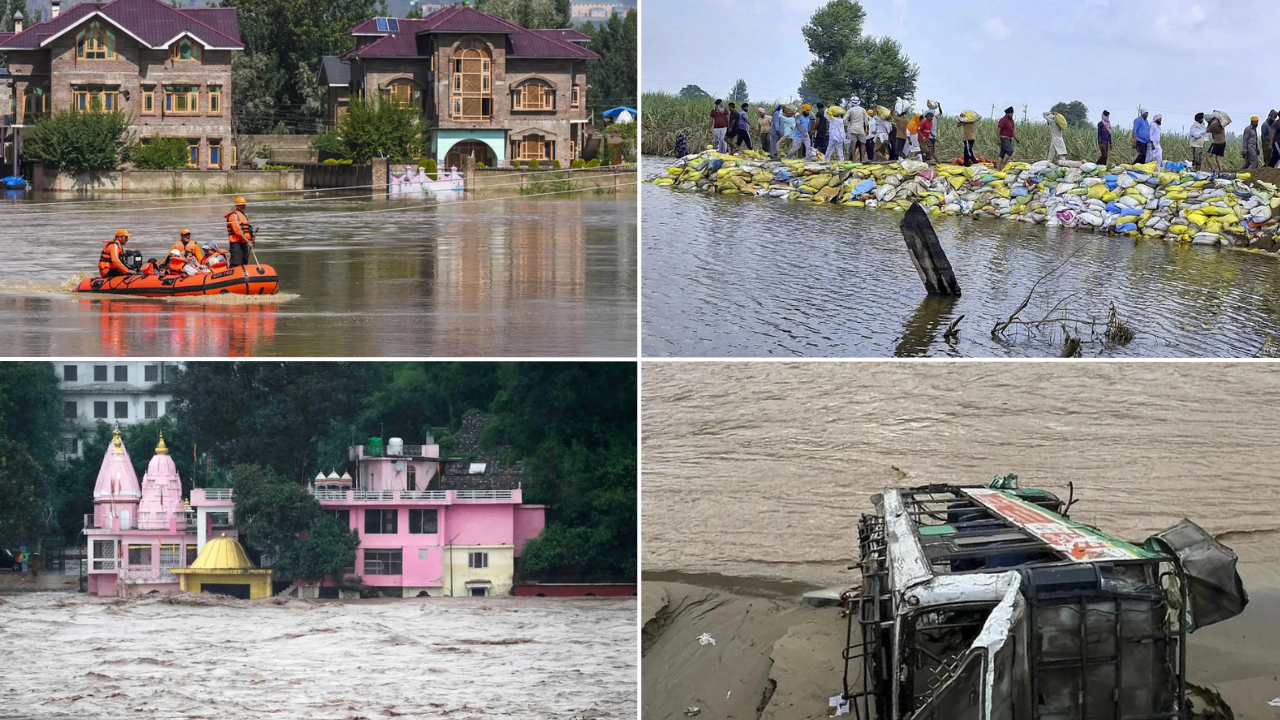
Flood battered northern India

From August through September, the Indian subcontinent was brought to a standstill by a devastatingly erratic monsoon season. Torrential rains, landslides and cloudbursts wrecked havoc in northern India and other regions.

  • Uttarakhand was hit by flash floods beginning August 5, a disaster that left over 70 people dead or missing, including 11 Indian Army soldiers. Cloudbursts in the Himalayas triggered massive landslides in Kishtwar and Chamoli.
  • In Punjab and Haryana, the Sutlej and Yamuna rivers overflowed, submerging hundreds of acres of paddy fields just before harvest. From mid to late August, Punjab grappled with the “Great Punjab Flood”, the worst flood crisis since 1988. Over 1,400 villages were inundated, and the death toll in Punjab alone stood at 57, with over 3.5 million residents affected and 4.8 lakh acres of crops destroyed. The effect was seen in Pakistan too, where over 2 million people were displaced.
  • In late August, 138 people were killed in the Jammu division due to torrential downpours. Udhampur recorded a historic 629.4 mm of rain in 24 hours on August 27, shattering a record.

September 27: Karur stampede
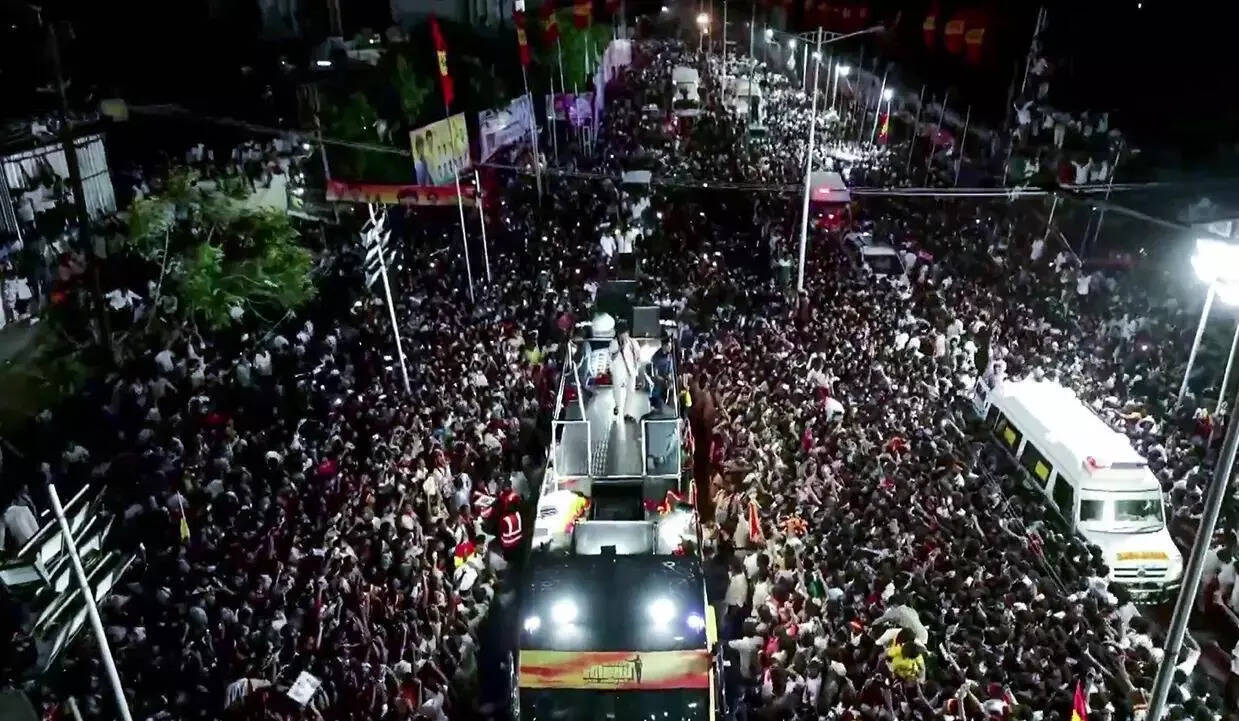
Karur, Sep 27 (Source: ANI)

A political rally, a superstar and a huge turnout of people. A scene unfolded on September 27, with a thought: what could have possibly gone wrong? Except that a lot of it did. It only needs a special infrastructure to manage a massive crowd stretched over 2km. 39 people, including many women and children, never made it out alive. Multiple injuries and trauma for many more affected.

  • During a rally for actor-turned-politician Vijay’s party, Tamilaga Vettri Kazhagam (TVK), at Velusamypuram, a crowd crush occurred around 7.45 pm as supporters surged forward to catch a glimpse of the leader’s convoy. The tragedy claimed 39 lives, including at least nine children and 18 women. Additionally, over 100 people sustained crush injuries ranging from suffocation to fractures.
  • The venue, which anticipated 15,000–30,000 attendees, saw a massive influx of over 50,000 people. The chaos was exacerbated by the leader’s 7-hour delay, a failure of the sound system/microphones, and inadequate barricading along the Karur-Erode highway.
  • Rescue operations were severely hampered as the massive convoy of vehicles and the dense crowd blocked the entry of ambulances. Reports indicated that several attendees had already begun fainting from dehydration and heat exhaustion hours before the crush began.

October 21-October 31: Hurricane Melissa (Category 5)

The Caribbean region saw devastation in the form of one of the most powerful storms of the decade. Rapidly intensifying into a Category 5 storm, Melissa began its trail from October 21 as a tropical storm, gradually upgrading into a Category 1 storm in four days. However, within two days, the storm rapidly intensified into a Category 5 storm, causing historical devastation.

  • The storm made a catastrophic landfall in Jamaica at New Hope on October 28, making it the most devastating landfall in history. with wind speeds exceeding 250 km/h, effectively shutting down the island’s power grid for weeks. The slow-moving storm caused at least 45 deaths there and more than $130M in infrastructure damage, while over 90,000 people were displaced.
  • After devastating Jamaica, the storm battered Cuba and the Bahamas, and even though Melissa weakened before reaching here, Haiti suffered severely with 23 confirmed deaths and thousands displaced due to mudslides. The southern islands faced “salt spray burn,” where hurricane-force winds coated agricultural land in salt, destroying 80% of the local crop yield for the 2026 harvest season.
  • Insured losses were estimated at nearly $8 billion. The Caribbean tourism industry faced a complete seasonal shutdown, with cancellations extending well into 2026.

November 3: Northern Afghanistan earthquake

Deep within the Hindu Kush’s tectonic fault lines, a seismic jolt shook the northern Afghanistan region. This crisis triggered massive landslides, severing vital transit corridors and cutting power across provinces. Settlements crumbled during the late-night tremor, and international monitoring agencies issued orange alert through the PAGER system.

  • A magnitude 6.3 earthquake struck near the border of Samangan and Balkh provinces at a depth of 28km, catching residents asleep in the early hours.
  • Reports confirmed over 20 fatalities and 300+ injuries, with the number rising as rescuers reached remote mountain villages cut off by landslides.
  • Significant damage was reported to historical infrastructure in Mazar-i-Sharif, including structural cracks in the outer walls of the Blue Mosque complex.

November 10: Red Fort car bomb blast
.

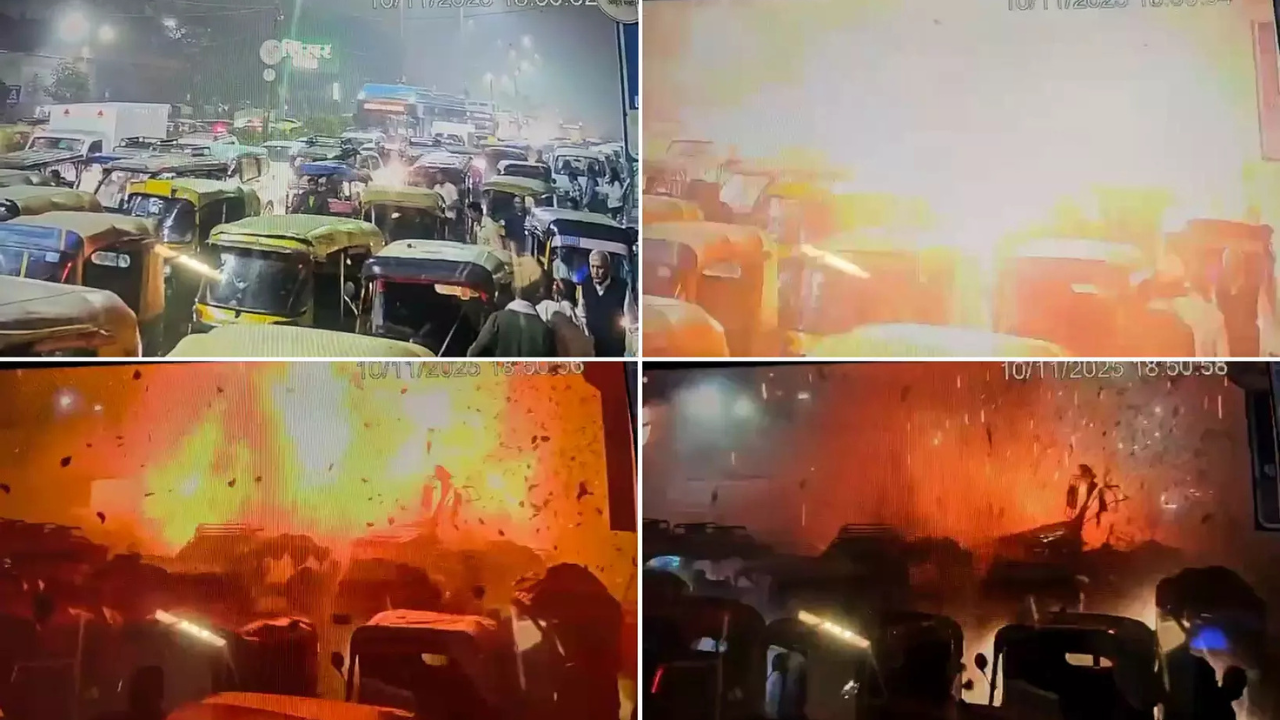
A busy evening on November 10 turned out to be a day that would shake the entire nation. A terror incident in the heart of New Delhi that shattered the nation’s capital. An attack that later went on to uncover a far more disturbing truth, a “white coat nexus”. The very entities entrusted with lives would later be complicit in a larger, sinister plot. One that stood in a direction opposite to the safety and security of the people they were meant to serve.

  • At 6:52 pm, a high-intensity vehicle-borne IED exploded in a white i20 car near Gate No. 1 of the Lal Qila Metro Station, just outside the historic Red Fort complex.
  • The powerful blast killed 15 people, mostly tourists and security personnel, injured dozens more, shattered windowpanes of buildings up to 500 metres away, and burned nearly a dozen nearby vehicles, including e-rickshaws and autos.
  • Intelligence agencies linked the attack to a “doctor’s module” terror cell and utilised high-grade explosives, indicating sophisticated logistical support. Afterwards, the National Capital Region (NCR) was placed under a high-security grid. New checkpoints and facial recognition surveillance were permanently installed around all UNESCO heritage sites in Delhi.

November 26-December 2: Cyclone Ditwah

From November 26 to December 2, 2025, a weak but hydrologically catastrophic tropical storm unleashed unprecedented rainfall on Sri Lanka and Southern India.

  • The storm stalled over the island nation of Sri Lanka, causing 410+ deaths and displacing nearly 230,000 people. The economic damage was estimated at $4.1 billion (approx. 4% of GDP).
  • In India, Chennai’s IT corridor faced severe inundation, disrupting operations for global tech firms for 4 days. Reservoirs in coastal Andhra Pradesh breached, flooding the delta farmlands.
  • The receding waters triggered outbreaks of waterborne diseases in both countries, overwhelming local healthcare systems already strained by the monsoon.

December 14: Bondi Beach mass shooting

A happy gathering for “Chanukah by the sea” at one of the most popular beaches in Sydney fell prone to one of the most horrific terror attacks. Bondi Beach, a tourist hotspot, became the location witnessing one of the darkest days for the country on December 14.

  • Two gunmen, a father and son, opened fire at the crowded beachfront event, resulting in 16 deaths, including one perpetrator, and creating mass panic among holidaymakers.
  • Authorities classified it as an ISIS-linked terror attack. Police recovered pipe bombs, other explosives and an ISIS flag from the truck belonging to the attackers at the scene that, fortunately, failed to fully detonate.
  • Australia declared a National Day of Reflection. The incident led to an immediate bipartisan review of hate-group designations and stricter monitoring of online radicalisation hubs.

December 2-December 15: Indigo airline operational collapse

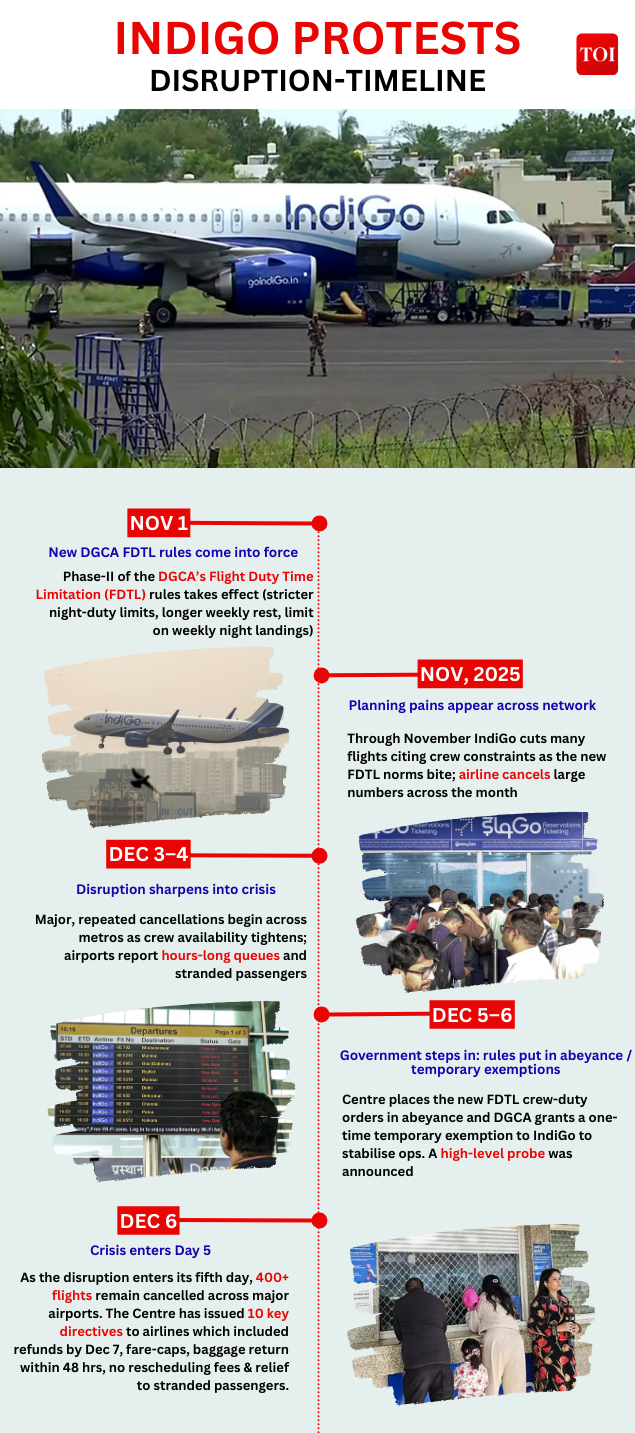
December began with aviation troubles that crippled peak holiday season travelling, triggering nationwide chaos. One of India’s largest carriers by market share, IndiGo, fell into an operational crisis, after which began a series of delayed flights, cancellations, and much more!

  • December 3 marked the “initial meltdown” phase, where the airline was forced to cancel roughly 200 flights in a single day, signalling the start of a week-long systemic failure. 2 days later, the cancellation number rose to over 1000 flights.
  • IndiGo’s size, high night-flight dependence, and razor-thin utilisation margins made recovery slower than expected. When one pilot timed out, it triggered a ‘domino effect.’ As IndiGo was packed with passengers but no pilots, fares for other aviation giants also went up.
  • Major airports saw queues of passengers lined up, as some waited for over 12 hours. The crisis struck many major cities, including Bengaluru, Delhi, Kolkata, and Hyderabad. However, operations normalised later following the government’s introduction of a price cap and DGCA’s probe.
.

December 6: Goa nightclub fire

The Birch by Romeo Lane nightclub fire in Arpora, North Goa, is recorded as one of the deadliest fire tragedies in the state’s history. Occurring on December 6, at the peak of the 2025 tourist season, the incident exposed a massive web of illegalities and administrative failures.

  • The fire broke out at approximately 11:45 PM on a Saturday night during a crowded dance party. While initially thought to be a gas cylinder explosion, investigators later confirmed the fire was triggered by the improper use of indoor electrical firecrackers and spread within seconds due to dried palm leaves.
  • The tragedy was particularly lethal because the building lacked emergency exits, and the main entrance was a narrow lane that prevented fire trucks from getting closer than 400 meters. 23 of the 25 victims died of smoke inhalation/suffocation rather than burns.
  • The Magisterial Inquiry revealed the club’s trade license had expired in March 2024. Meanwhile, the owners, Saurabh and Gaurav Luthra, flew to Phuket, Thailand, but were arrested after an Interpol Blue Corner Notice.

2025 tested the resilience, the limits across borders and institutions. It also forced uncomfortable reckonings. Each tragedy sparked questions that could no longer be postponed about preparedness, accountability, infrastructure, governance and collective responsibility. In many cases, they also triggered change: tighter safety norms, renewed probes, policy corrections, and communities stepping up for one another in moments of collapse.Each tragedy, each crisis has only strengthened the bounce-backs. Pandemic felt like ‘the story’ to tell the succeeding generation, but the reel is ongoing, and the list goes on.As the year draws to a close, the grief it leaves behind is undeniable, but so is the resolve it has shaped. If 2025 was a reminder of how fragile life and systems can be, it was also a quiet call to build better — with memory, empathy and caution guiding the road ahead.


Source link

Chess drama! Magnus Carlsen knocks over pieces, handed defeat at World Blitz Championship – Watch | Chess News


Chess drama! Magnus Carlsen knocks over pieces, handed defeat at World Blitz Championship - Watch
Magnus Carlsen again makes the headlines for all the wrong reasons (Screengrabs)

NEW DELHI: World No. 1 Magnus Carlsen was involved in another dramatic incident at the FIDE World Blitz Championship 2025 in Doha, where he lost his Round 14 game by forfeit after knocking over several pieces on the board on Tuesday. The episode added to a difficult few days for the former world champion, who has struggled to control his emotions under intense time pressure.

Levon Aronian opens up on Goa, FIDE World Cup 2025, Total Chess C’ship, and more | Exclusive

The incident happened when Carlsen was playing Armenian grandmaster Haik Martirosyan. With just two seconds left on his clock, Carlsen tried to make a move but accidentally knocked over four pieces at the same time. In a hurry, he pressed the clock before properly placing the pieces back on the board. Martirosyan immediately stopped the clock and called arbiter Chris Bird to the table.Watch:After a long discussion between the officials, the decision went against Carlsen. He accepted the ruling and lost the game by forfeit. At the time of the incident, Martirosyan still had ten seconds on his clock, giving him a clear advantage.As the moment unfolded live, a Chess.com commentator summed up the chaos at the board. “What on earth is happening. Magnus has no control over pieces. Every single piece just tumbled. Even trying to set them back up, he knocked more pieces down,” the commentator said.The unusual scene attracted the attention of several top players nearby. Grandmasters Fabiano Caruana, Arjun Erigaisi, Alexander Grischuk and Wesley So all stopped to watch. While Wesley So appeared amused, Erigaisi paused his own game to see what was happening.Carlsen badly needed a win in this round to stay in the title race. He had nine points after 13 rounds and was already trailing the leaders by one point. The loss further hurt his chances in the Blitz event, where he has found it hard to match his usual standards. He is currently placed fifth with 12 points.On Monday, he slammed the table, showing frustration after losing on time to India’s Arjun Erigaisi. SEE ALSO: World Blitz Championship: Magnus Carlsen slams table, this time after loss to Arjun Erigaisi


Source link

China adds new rule for chipmakers as part of its ‘Whole Nation’ approach and the ‘reason’ once again is America


China adds new rule for chipmakers as part of its 'Whole Nation' approach and the 'reason' once again is America

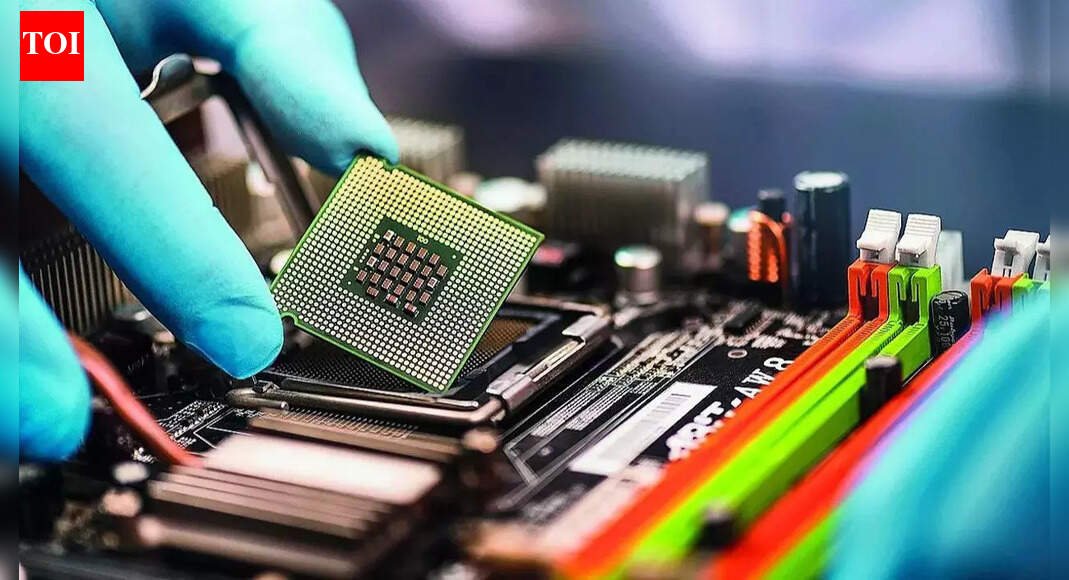
China has reportedly issued a new mandate under which domestic chipmakers will be required to source at least 50% of their equipment from local suppliers. Insiders describe the move as a core component of President Xi Jinping’s ‘Whole Nation’ approach to technology, and it is seen as is a direct response to tightening US export restrictions that have sought to cripple China’s computing capabilities.According to news agency Reuters, the rule remains a “silent” policy (which means undocumented in public records), industry sources say that chipmakers seeking state approval to build or expand plants must now prove they meet the 50% threshold through procurement tenders.“Authorities prefer if it is much higher than 50%. Eventually they are aiming for the plants to use 100% domestic equipment,” Reuters quoted one source as saying.

How US pushed China to bring ‘new chipmaking rule’

Historically, Chinese fabs such as SMIC have preferred American or Japanese equipment. However, the 2023 US export bans on advanced AI chips and tools shifted China’s stance from encouraging domestic growth to mandating it.“Before, domestic fabs like SMIC would prefer U.S. equipment and would not really give Chinese firms a chance. But that changed starting with the 2023 U.S export restrictions, when Chinese fabs had no choice but to work with domestic suppliers,” a former employee at local equipment maker Naura Technology was quoted as saying.

China plans to use 100% domestic equipment

The Reuters report has also said that while the government allows “flexibility” for advanced production lines where local alternatives do not yet exist, China’s ultimate goal is total independence. The “Whole Nation” effort is reportedly producing technical milestones, for example, Chinese scientists are said to be prototyping indigenous machines capable of cutting-edge lithography.This requirement is effectively squeezing global competitors out of the world’s largest semiconductor market, the report said, adding that Chinese firms like Naura and AMEC are already improve through forced domestic partnership. Meanwhile, foreign players like Lam Research and Tokyo Electron now face a shaky footprint in China.


Source link

Vande Bharat sleeper clocks 180 kmph! Ashwini Vaishnaw shares video of train’s ‘water test’; watch


Vande Bharat sleeper clocks 180 kmph! Ashwini Vaishnaw shares video of train’s ‘water test’; watch
Vande Bharat sleeper prototype

Vande Bharat sleeper train launch soon! Railway Minister Ashwini Vaishnaw on Tuesday shared an important update on the Vande Bharat sleeper train, posting a video on X (formerly Twitter) of the train’s speed trial. The new train touched 180 kmph speeds – its maximum- during trial runs between the Kota-Nagda section of the Indian Railways network.What caught the attention was the finely balanced glasses of water from which not a drop of spilt despite the train touching its maximum design speed of 180 kmph. “Vande Bharat Sleeper tested today by Commissioner Railway Safety. It ran at 180 kmph between Kota Nagda section. And our own water test demonstrated the technological features of this new generation train,” Ashwini Vaishnaw posted on X.

Vande Bharat Sleeper Clocks 180 Kmph Speed: Watch Video

Vande Bharat sleeper train is set to be launched soon for long-distance overnight travel. As the name suggests, the train is a sleeper class variant of the Vande Bharat chair car train that is currently in service on the Indian Railways network. Two prototype rakes of the all air-conditioned Vande Bharat sleeper train have been manufactured by BEML and are currently in testing phase.Indian Railways is preparing a major overhaul of long-distance rail travel, with plans to introduce more than 200 Vande Bharat sleeper trains over the next few years. Multiple manufacturing programmes are underway to support this initiative.Also Read | Vande Bharat sleeper, Amrit Bharat with AC coaches & more – what will train travel on Indian Railways look like in 2026? BEML, in collaboration with the Integral Coach Factory (ICF), is manufacturing 10 sleeper train sets. Another 10 sets are being developed by Kinet, a joint venture between Indian and Russian partners. In addition, a consortium comprising Titagarh Rail Systems and BHEL has been awarded a contract to build 80 sleeper variants. Separately, ICF is also working on an in-house sleeper version of the Vande Bharat train.

Vande Bharat Sleeper Train Features

  • The first two prototypes of the Vande Bharat sleeper have 16 coaches, including 11 air-conditioned three-tier coaches, four air-conditioned two-tier coaches, and one air-conditioned first-class coach.
  • Designed as a semi-high-speed service, the train can operate at speeds of up to 160 kmph, with testing conducted at 180 kmph. However, actual operating speeds will depend on track capabilities across the Indian Railways network.
  • Drawing on design elements from European rolling stock, the sleeper coaches will offer cushioned berths for improved comfort, along with redesigned upper-berth access to make climbing easier.
  • Passenger amenities include low-intensity night lighting, audio announcements supported by visual display systems, CCTV surveillance, and modular pantry arrangements.
  • The train will be fitted with advanced bio-vacuum toilets similar to those used in aircraft. Facilities will include an accessible toilet for persons with disabilities, a baby care unit, and shower cubicles with hot water in the AC First Class coach.
  • Safety systems include the indigenous KAVACH anti-collision technology. Like the chair car version, the sleeper variant will also feature regenerative braking to enhance energy efficiency.
  • Coaches are equipped with fully sealed gangways and automatic interconnecting doors, helping maintain interior air quality and stable temperature levels.
  • Each coach offers individual reading lamps, charging sockets, foldable refreshment tables, and interiors finished with GFRP panels. Train doors will open automatically at designated stations.
  • A Centralised Coach Monitoring System has been installed, along with emergency communication facilities that allow passengers to directly contact the locomotive driver.


Source link

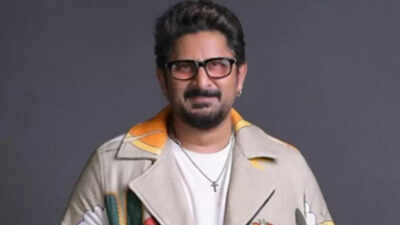
Arshad Warsi opens up on ‘Hulchul’; calls it a bad experience: ‘I don’t think Priyadarshan knew about it’ | Hindi Movie News


Actor Arshad Warsi recently spoke about his experience while working on the 2004 film ‘Hulchul’. He called it a bad experience but said he handled it in a professional way.Arshad shared these moments during a talk on The Lallantop. He spoke honestly and in a calm way. He said he is not angry now and looks back with learning and gratitude.

Pune court summons Akshay Kumar, Arshad Warsi over alleged disrespect in ‘Jolly LLB 3’

He made it clear that he was only talking about the film work. He said it was not about his personal life. He also said he does not like to complain anymore.

What he was told at first

Arshad said the late Neeraj Vora first told him about the film. At that time Arshad was looking for strong roles. Neeraj Vora told him that Priyadarshan was the director. Arshad asked what kind of role it was.He recalled Neeraj Vora’s words clearly. He said, “There was our Neeraj Vora sir he told me Arshad there is a film Priyadarshan is the director. I asked what is the role. He said have you seen Hera Pheri. I said yes. He said the role that Akshay Kumar has in Hera Pheri is the same role identical”Hearing this Arshad agreed to do the film.

Reality on the set

Once the shoot started Arshad understood things were different. He realised that the role was not what he thought it was. He explained this with a simple line. He said“In that film I learnt that there is a term like you both are friends or you are his friend. There is a world of difference between the two”He felt his role was more of a supporting one. This made him feel confused and upset but he stayed calm.

The strange costume moment

Arshad also spoke about a funny but uncomfortable costume issue. He said the shirt given to him had very long sleeves and strange fitting. He said“The sleeves of my shirt were up to here my shirt was long I was actually covered up to here”Later he saw the chief assistant director wearing the same shirt. He joked about it and said, “I couldn’t tell if that shirt was a nightie or a shirt. After a while my inner woman started coming out so I said I should start wearing men’s clothes”After that he started wearing his own clothes.

No blame and no regret

Arshad said he finished the film because he had given his word. He also said“I don’t think Priyan (Priyadarshan) knew about it either. It’s not his fault”He ended by saying he does not crib anymore. He said, “I personally feel where I was and where I am now. I have no reason to crib”Today Arshad looks back without bitterness and with peace.Coming to the work front Arshad was recently seen in ‘Jolly LLB 3’. His role as the underworld don Gaffoor in Aryan Khan’s debut series ‘The Bastards of Bollywood’ received much love from the audiences.


Source link

‘To return home’: After horrific BBL stint, PCB calls back star Pakistan cricketer mid-season; here’s why | Cricket News


'To return home': After horrific BBL stint, PCB calls back star Pakistan cricketer mid-season; here's why
Shaheen Afridi, Babar Azam

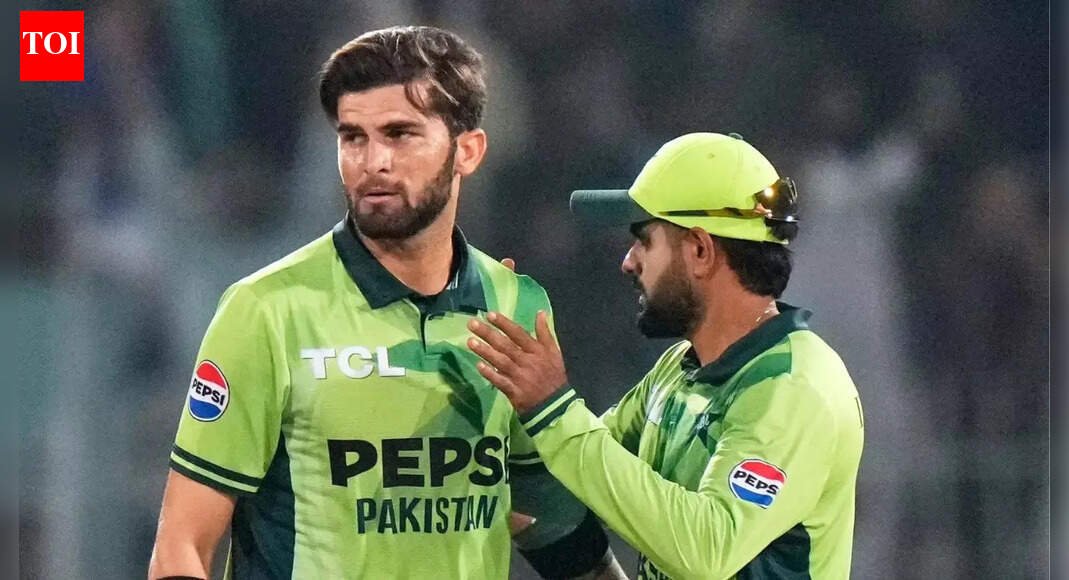
The Brisbane Heat have said that Pakistan fast bowler Shaheen Shah Afridi will return home because of a knee injury and will not take part in the remaining matches of the ongoing Big Bash League, according to a release issued by the franchise.The Pakistan Cricket Board (PCB) has asked Afridi to return from Australia to begin rehabilitation, keeping in mind the T20 World Cup scheduled for February–March in India and Sri Lanka.

Inside details of why Shreyas Iyer’s return to cricket has been DELAYED

Afridi suffered a knee cartilage injury while fielding during Brisbane Heat’s last-over win against Adelaide Strikers at the Gabba on Saturday night.“After consulting with the Pakistan Cricket Board’s medical staff during the past 24 hours, it was agreed that Shaheen would cut short his Big Bash League stint to return home for further treatment ahead of the upcoming ICC T20 World Cup,” the team said in a statement on Tuesday.Afridi is the third fast bowler Heat have lost to injury, after Spencer Johnson and Callum Vidler, both sidelined with back problems. With Michael Neser away on international duty, Heat now have limited fast-bowling options. Stand-in captain Xavier Bartlett, all-rounder Jack Wildermuth and uncapped left-arm pacer Oli Patterson are the only fit fast bowlers left in the squad of 18 players.“I have enjoyed myself a lot playing for Brisbane and I am sad that I will not be able to finish the season with the team,” Shaheen said in a statement. “The BBL was everything I had heard it would be – lots of good, skilful cricket (and) I have enjoyed the challenge. I wish all the players and coaches the very best for the rest of the Big Bash and will applaud their efforts as they get closer to the finals.”This was Afridi’s first season in the BBL. He was part of a group of Pakistani players that included Babar Azam, Mohammad Rizwan and Haris Rauf. Afridi played four matches, picked up two wickets and had an economy rate of 11.19.In his first match for Heat, Afridi was taken out of the bowling attack for dangerous bowling after he bowled two waist-high full tosses to Tim Seifert and Oliver Peake in the 18th over of Melbourne Renegades’ innings.Afridi appeared to have suffered the injury while bowling the 14th over during Adelaide Strikers’ chase of Heat’s 179 for 9 on December 27, when he limped off the field pointing to his right knee.


Source link

Ellyse Perry, Annabel Sutherland pull out of WPL 2026 due to personal reasons


The Women’s Premier League (WPL) 2026 has been hit by a major late setback with Australian stars Ellyse Perry and Annabel Sutherland pulling out of the tournament due to personal reasons. Their withdrawals come less than two weeks before the start of the fourth edition, forcing Royal Challengers Bengaluru (RCB) and Delhi Capitals (DC) into last-minute squad adjustments.

RCB lose their talisman as Ellyse Perry withdraws from WPL 2026

Perry’s withdrawal is a particularly heavy blow for RCB, who have built much of their recent success around the veteran all-rounder. The Australian was instrumental in Bengaluru’s title-winning campaign in 2024, finishing the season as the Orange Cap holder with 347 runs at a staggering average of 69.40, while also contributing seven wickets in nine matches.

Even during an injury-disrupted 2025 season, Perry remained RCB’s most reliable performer, scoring 372 runs in just eight matches, including four half-centuries. Her consistency with the bat and calm leadership presence made her a cornerstone of the franchise, which retained her for INR 2 crore ahead of WPL 2026.

To fill the void, RCB have signed Indian all-rounder Sayali Satghare at her reserve price of INR 30 lakh. While Satghare brings domestic experience and versatility, replacing Perry’s impact will be a daunting challenge for the defending champions.

Also READ: Delhi Capitals appoints a new captain ahead of Women’s Premier League (WPL) 2026

Annabel Sutherland’s absence reshapes Delhi Capitals’ plans

Delhi Capitals have also been forced to rethink their balance following Sutherland’s exit. The Australian all-rounder played a vital role in DC’s run to the final last season, picking up nine wickets at an impressive economy rate of 7.57 while offering depth with the bat. Her performances earned her a retention worth INR 2.2 crore, underlining the franchise’s faith in her abilities.

In response, DC have roped in Australian leg-spinner Alana King for INR 60 lakh. King, who previously represented UP Warriorz, adds significant international experience to the Capitals’ bowling attack, having claimed 27 wickets in 27 T20Is. Her inclusion strengthens DC’s spin resources, though Sutherland’s all-round value will be hard to replicate.

UP Warriorz make a forced change

Meanwhile, UP Warriorz have also announced a squad update, with USA pacer Tara Norris set to miss the season after being selected for the ICC Women’s T20 World Cup Qualifier in Nepal, scheduled from January 18 to February 1. The Warriorz have named uncapped Australian all-rounder Charli Knott as her replacement at a reserve price of INR 10 lakh.

Also READ: WPL 2026 Mega Auction: Complete list of unsold players

This article was first published at WomenCricket.com, a Cricket Times company.


Source link

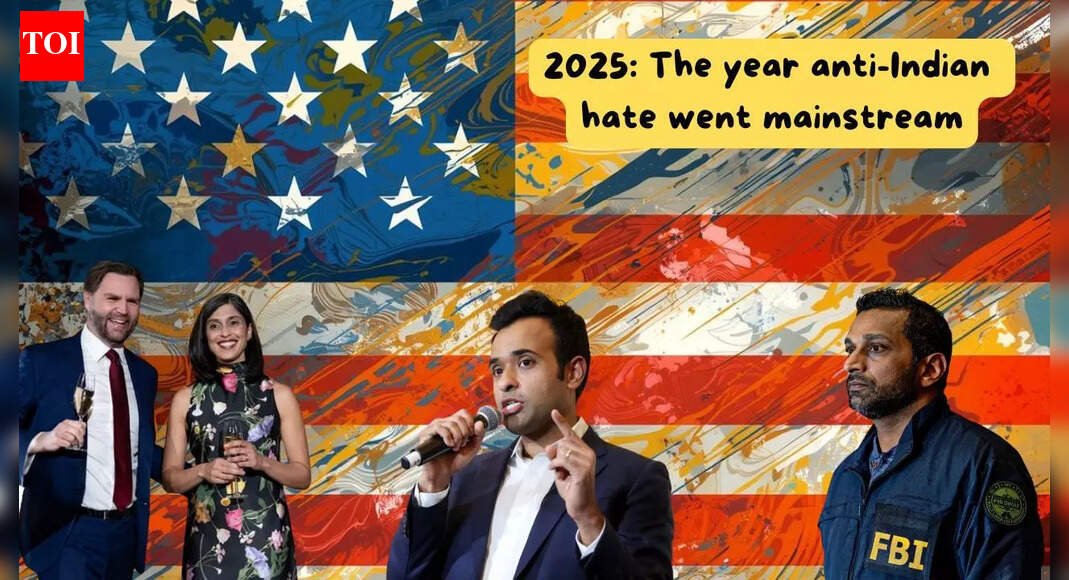
2025: The year America normalised anti-India hate | World News


2025: The year America normalised anti-India hate

There are bad stoner movies, good stoner movies, and elite stoner movies. Harold and Kumar go to White Castle firmly falls in the third category, the first proper coming-of-age movies that shows that second-generation Asian-Americans are just as assimilated as other races and have the same American dream: getting high, meeting girls, and binging on hamburgers. What set Harold and Kumar apart, was that it showed that the Asian experience wasn’t that different from the American one, epitomised by the scene where Kumar explains to Harold – while urging him to paraglide to a White Castle outlet – that their immigrant parents had come here because they were hungry, providing an adequate noughties update to the American dream. For a long time, Indian-Americans believed their story was headed there too. Not to White Castle specifically, but to a sort of ‘white castle’: where you are so integrated and assimilated that you are considered a beacon of society, an upstanding member of the Shining City on the Top of The Hill. A place where your faith was acceptable as all the other faiths that existed in the American tapestry.

Harold and Kumar go to White Castle – The American Dream

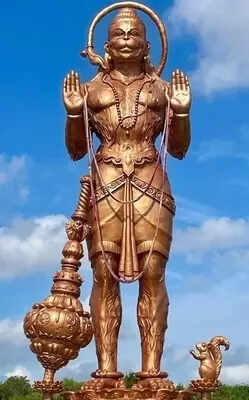
And then one Hanuman statue in Texas shattered that carefully crafted delusion. The statue built on private land, became a reminder that America’s promise of welcome often frays the moment difference stops being discreet. Even as Vande Mataram and The Star-Spangled Banner played on temple grounds, conservative Christian protesters gathered outside, denouncing Hanuman as a “demon god”. One local politician asked publicly: “Why are we allowing a false statue of a false Hindu God to be here in Texas? We are a CHRISTIAN nation.Srinivasachary Tamirisa, a doctor who spent decades practising in the United States and quietly supported the statue project for more than twenty-five years, told the New York Times that he once viewed the country as a kind of promised land. When confronted by protesters, he said he tried to explain the figure they were objecting to. To him, Hanuman was not a demonic symbol but a spiritual guide, one meant to convey courage rather than fear.For the uninitiated, Lord Hanuman is not a god of domination or conquest. In Hindu tradition, he is the embodiment of strength governed by humility, power exercised in service rather than rule. He is the devoted follower of Vishnu in his incarnation as Lord Rama, remembered less for authority than for loyalty, courage, and self-restraint. The Hanuman Chalisa, recited daily by millions, is not a hymn of supremacy but of reassurance, invoking fearlessness, discipline, and moral clarity in moments of doubt.But what perhaps the disquiet that has been bothering Indian-Americans isn’t the protest. America has always had its fair share of protesters, a right enshrined in First Amendment. The tragedy was the timing which neatly folded into the rise of anti-Indian sentiment: online and offline, often juxtaposed with gleeful Hinduphobia.Read: The rise of anti-India hate online Just when Indians thought they were in, the newest adherents promising to make America great have been mainstreaming anti-Indian sentiment. To put it frankly, this wasn’t how it was supposed to be.

“Gas, beds and meds”

Indians Have Dominated America | Nimesh Patel #standupcomedy #shorts

There is a comedian’s line that captures the Indian-American arc with more accuracy than any novel or academic paper. Nimesh Patel, a stand-up comic who was the first Indian-American to write for Saturday Night Live, explained how Indians had spent time looking at Americans and surmised: “They like to sleep, they like to eat, they like to drive. So they’re going to need gas stations, motels and cardiologists. Gas, beds and meds, baby.”So Indian-Americans arrived to fill the gap by becoming doctors, motel owners, convenience store operators, and more. Gas, beds and meds. A pithy line to explain the early immigrant experience. And Americans were very happy to accept these foreigners who fulfilled their basic needs handing them a funny accent and a recurring role in sitcoms. The Indian immigrant was perfectly welcome till he stayed inside the deal, as long as he remained industrious, grateful and most importantly socially quiet. As long as they remained a model minority who didn’t make too much noise, didn’t commit crimes and didn’t voice its displeasure too loudly. All that was set to change.

ABCD: American-Born Confident Desi

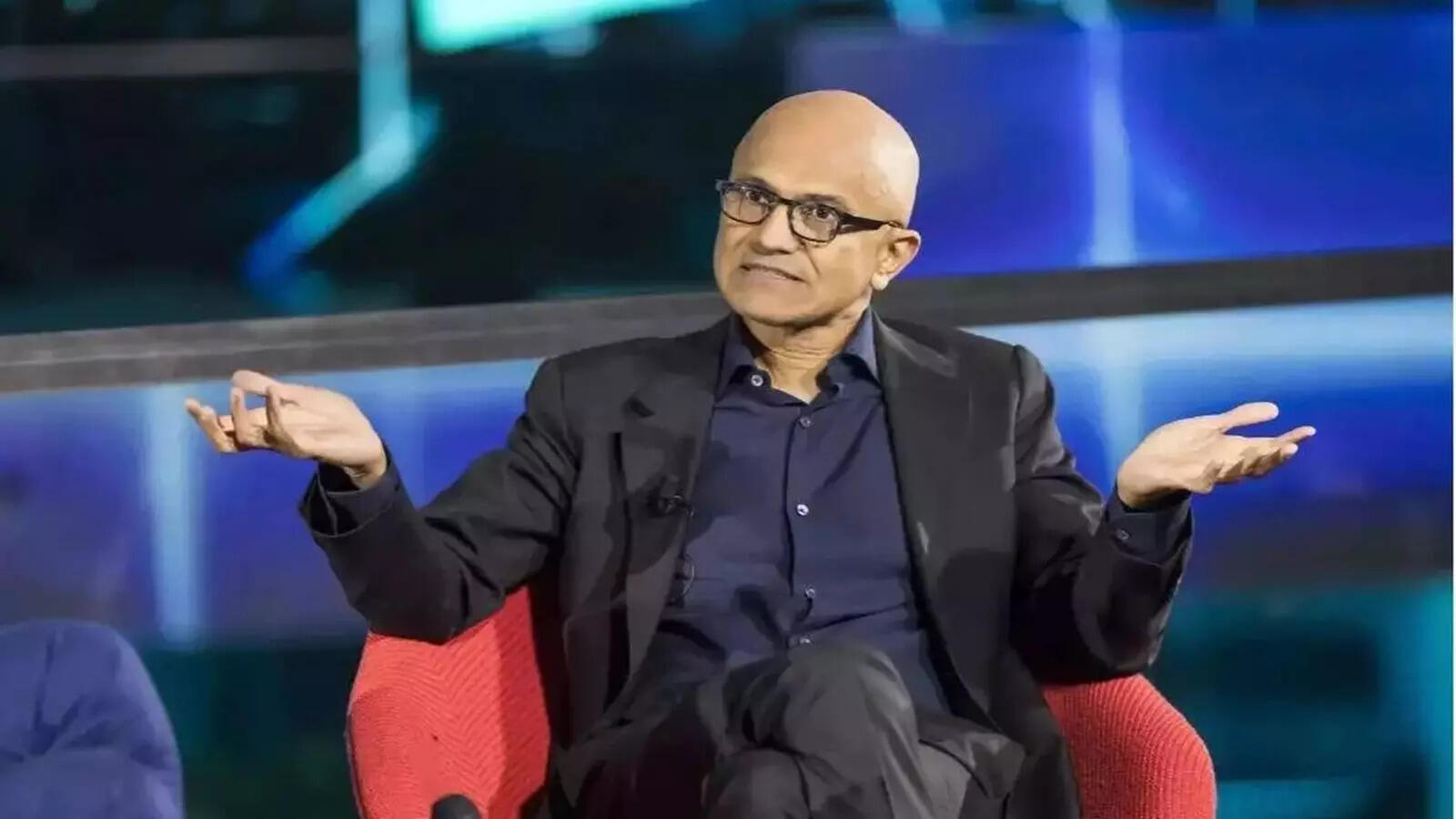
Satya Nadella

The second generation did not assimilate quietly. By the late 2010s, Indian-Americans were no longer clustered in a handful of “safe” professions. They were everywhere power accumulated.Technology was the most obvious arena. Satya Nadella at Microsoft and Sundar Pichai at Google were no longer immigrant success stories wheeled out to reassure America about diversity. They were the system itself. Shantanu Narayen at Adobe and Arvind Krishna at IBM reinforced the same quiet shock.Indians were no longer helping America run. They were deciding how it ran, or were deeply embedded in the operating systems that ran it.The spread did not stop at Silicon Valley.In science and academia, Indian-Americans occupied intellectual ground that did not require translation or apology. Venkatraman Ramakrishnan and Manjul Bhargava were not decorative achievements in a diversity brochure. They represented authority in the deepest traditions of Western knowledge. In engineering, Ajay V. Bhatt quietly underpinned everyday modern life. Nothing dramatic. Just infrastructure.Business followed the same arc. Entrepreneurs like Jay Chaudhry were no longer framed as immigrant hustlers. They were founders building companies central to American cybersecurity and defence. The Indian-American presence stopped being anecdotal. It became structural.Culture, too, shifted tone. Hasan Minhaj, Aziz Ansari, and Mindy Kaling did not explain Indianness to America. They assumed it. Their work treated Indian-American identity as an unremarkable fact of life, not an obstacle to be overcome. Representation stopped asking for permission.This should have been a celebratory moment in the immigrant imagination. Proof that quiet diligence eventually leads to acceptance.

The New Jews?

Instead, it became uniquely combustible. Because Indian success no longer looked like contribution. It looked like consolidation. And consolidation, when performed by a group long expected to remain grateful and invisible, unsettles even confident societies.By 2024, that unease could no longer be contained within boardrooms or culture pages. It spilled into politics.The US presidential election became the most India-coded contest in modern memory, with people joking that it was a Telugu–Tamil tussle between Second Lady–in-waiting Usha Vance (Telugu) and Kamala Harris (Tamil).During the GOP debates, Vivek Ramaswamy tangled with Nikki Haley, two Indian-American Republicans of different vintages. JD Vance, whom Donald Trump picked as his running mate, even waxed lyrical about how his wife’s parents’ Hindu faith helped him find Christ again. Trump went out of his way to court Indian-American and Hindu voters, wishing them Happy Diwali and promising to protect Hindu-Americans from the “radical Left”, a line often linked to California’s caste discrimination bill, which was ultimately vetoed by Governor Gavin Newsom. Some claimed the decision to veto the bill came directly from the White House while Kamala Harris was vice president.Meanwhile, the Indian-American contingent around the White House grew. Tulsi Gabbard, often considered an honorary Indian, was made head of the Office of the Director of National Intelligence. Kash Patel became chief of the Federal Bureau of Investigation. Jay Bhattacharya was appointed director of the National Institutes of Health. Vivek Ramaswamy was brought in to spearhead Trump’s government-efficiency push. Harmeet Dhillon joined the Justice Department in a senior civil rights role. Sriram Krishnan emerged as a key White House voice on AI. S. Paul Kapur took charge of South and Central Asia at the State Department. A younger cohort, including Kush Desai and Ricky Gill, filled out the administration’s communications and national security benches.Across the aisle, Zohran Mamdani led a remarkable underdog campaign to emerge as New York’s mayor-elect, beating the likes of Andrew Cuomo and Eric Adams. It appeared that Indian-Americans were no longer power-adjacent. They were calling the shots.

The Hate Machine

What changed was not Indian behaviour. It was American permission. For years, resentment towards Indian-Americans existed as background static. It surfaced as jokes about accents, casual remarks about outsourcing, the quiet assumption that Indians were useful but culturally odd. What has changed since 2023–24 is scale and legitimacy. Hostility has been systematised. It now moves fluidly between online ecosystems, mainstream media commentary, campaign rhetoric, and offline intimidation. What once lived at the edges has been invited in.

Anti-India Hate

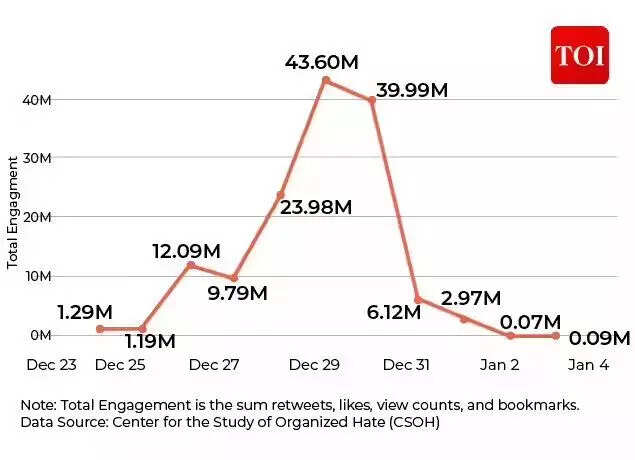
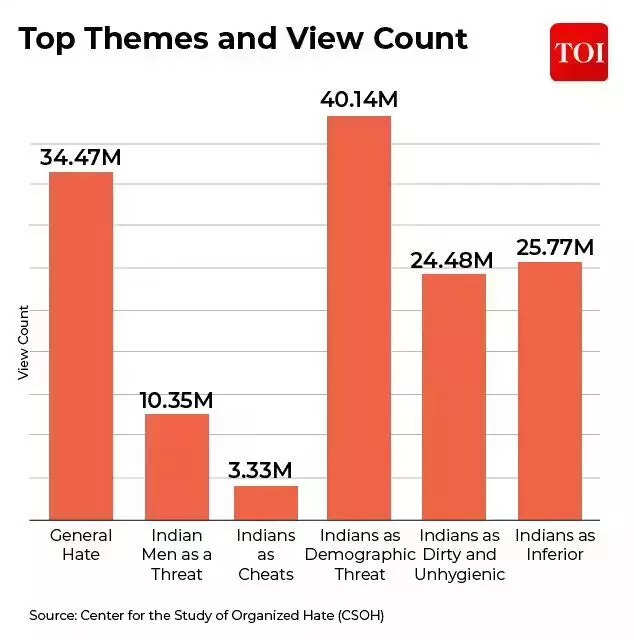
The most comprehensive documentation of this shift comes from the Center for the Study of Organized Hate (CSOH), whose report showed how anti-Indian and anti-Hindu narratives exploded across social platforms before spilling into real-world consequences. The study tracked 128 high-impact posts attacking Indians and Hindu identity over a short window, accumulating more than 138 million views. The numbers matter less than the pattern. Online rhetoric primes offline behaviour. Contempt becomes consensus. Consensus becomes action.The CSOH report shows that Hinduism is no longer treated merely as a religion in these narratives. It is reframed as an ideology, a civilisational threat, something incompatible with American identity. Indians are no longer just immigrants or professionals. They are recoded as infiltrators, beneficiaries of unfair systems, demographic threats hiding behind legality. That framing explains why symbolic flashpoints now trigger disproportionate outrage.

The rise of anti-India hate

The backlash against the Hanuman statue in Sugar Land, Texas was not really about zoning laws or religious neutrality. It was about visibility. A Hindu god that refused to stay private. A faith that declined to remain ornamental. When a Republican Senate candidate publicly dismissed Hanuman as a “false Hindu god” and declared America a Christian nation, it was not an outlier moment. It was the logical endpoint of months of narrative conditioning.On the right, this hostility increasingly flows from Trump-era ideological infrastructure. Immigration debates have shifted from illegality to legality itself. High-skilled migration is no longer framed as economic policy but as demographic subversion. Figures like Stephen Miller have repeatedly argued that legal immigration is a loophole exploited to change America from within. Indians, because they arrive legally, in large numbers, and into elite professions, become uniquely convenient targets.

That language filters down

Far-right provocateurs like Nick Fuentes make the subtext explicit. Fuentes has attacked Vivek Ramaswamy for his Hindu faith, telling him to “go back to India”. He has also targeted JD Vance, mocking him for hosting a “traditional Indian dinner” and telling him to “eat shit” for what Fuentes framed as civilisational betrayal. The target was not policy. It was cultural permission. Who gets to belong, and on what terms.What makes this moment distinct is that the hostility does not remain quarantined on the fringe. It circulates upward.On the liberal side, the same permission structure manifests differently. Hindu identity is collapsed into caricature. Indian success is reframed as proximity to power. Hinduphobia is expressed through irony, mockery, and “analysis”. The Joy Reid episode captured this perfectly. When Reid speculated on air that Republicans could not accept a successor with a “brown Hindu wife”, before fantasising about a “white queen” replacement, she was not critiquing racism. She was reproducing it, using Hindu identity as a punchline. The fact that this passed largely without consequence speaks volumes.This is where Usha Vance becomes central to the story. Her elevation to Second Lady should have been unremarkable. Instead, her Hindu faith became something to be managed, joked about, explained away. Across the spectrum, reassurance carried an undertone of discomfort. Faith, when Christian, is tradition. Faith, when Hindu, is complication.The CSOH report makes clear that this dual hostility is not accidental. Indians and Hindus now occupy an uncomfortable position. Too successful to be ignored. Too visible to remain ornamental. Too assimilated to be dismissed as outsiders. And not yet protected by the reflexive moral guardrails that trigger immediate outrage for others.This is how the hate machine works. Not through a single ideology, but through convergence. Different vocabularies. Same permission.

What defines an American

This is where the argument inevitably lands. Not on immigration policy or social media outrage, but on the older, unresolved question that America has never quite settled. Who gets to be American, and on what terms.For much of the late twentieth century, the answer appeared settled. Ronald Reagan liked to say that while you could live in France or Japan without ever becoming French or Japanese, anyone from any corner of the world could come to America and become an American. It was a civic definition, expansive and reassuring, and it allowed the country to absorb wave after wave of newcomers without interrogating bloodlines. Belief mattered more than ancestry. Allegiance more than origin.The hate machine described above feeds on the erosion of that consensus. In recent years, conservative debates have drifted back towards inheritance, towards what is often described — sometimes openly — as Mayflower logic. The idea that Americanness is not simply a creed but a legacy, something passed down rather than opted into. That turn became visible in the Trump era and hardened by 2024.JD Vance has argued that America is not merely an idea but a people shaped by history, religion, and culture. It is a claim that sounds descriptive but functions as a gate. It asks not only what you believe, but where you come from, who came before you, and how comfortably you fit into a civilisational story.It is against this backdrop that Vivek Ramaswamy’s interventions at conservative gatherings like Turning Point USA became so charged. Ramaswamy insisted that Americanness is binary, not hierarchical. That no citizen is more American than another. That the Constitution does not recognise first-class and second-class belonging. When a Hindu son of immigrants has to defend civic nationalism to a movement increasingly nostalgic for inherited identity, the tension becomes impossible to ignore.The scrutiny surrounding Usha Vance makes the same point more quietly. Her presence at the centre of power has been treated not as routine, but as something that needs explanation. Her faith, her background, her marriage have been discussed in ways that suggest belonging is still conditional, still subject to review.This is why the hate machine matters. It is not merely about prejudice or online abuse. It is about a country renegotiating the boundaries of itself, and doing so at the precise moment when Indian-Americans, long convinced that assimilation was enough, discover that the definition of American is once again up for debate.

The White Castle dream

None of this is unique to Indian-Americans. That is the uncomfortable truth beneath the outrage.Every group that has passed through America’s gates has been told, at some point, that it has overstayed its welcome. Irish Catholics were once warned that their churches threatened Protestant civilisation. Jews were caricatured as alien elites who controlled finance and corrupted culture. Italians were dismissed as criminals, Chinese migrants as contaminants, Japanese-Americans as permanent suspects. Each wave was tolerated for its labour and distrusted for its difference. Each was told, in different ways, that assimilation was conditional.The White Castle dream was never a guarantee. It was a hope.Indian-Americans believed, perhaps longer than most, that utility would buy permanence. That if you studied hard enough, worked long enough, stayed legal enough, success would eventually dissolve suspicion. That you would arrive at the point where your presence no longer needed justification. Where you could be ordinary. Where you could waste time.What the last few years have revealed is not that Indian-Americans are uniquely targeted, but that they have finally reached the stage every visible minority reaches: the point where success itself becomes the provocation.

Statue of Union

This is why the Hanuman statue matters, and why it unsettled people far more than its defenders expected.Hanuman is not a god of conquest. He is not a god of domination. In Indian tradition, he is the embodiment of strength without arrogance, devotion without spectacle, power held in service rather than display. He is remembered not for ruling kingdoms but for carrying mountains, crossing oceans, and choosing humility over triumph. Hanuman kneels even when he is invincible. He exists to remind power of its duty.For generations, Hindu practice in America mirrored that ethos. Discreet. Contained. Basements and borrowed halls. Faith folded neatly into private life so as not to make anyone uncomfortable. Hanuman was worshipped quietly, kept small, kept safe.A 90-foot statue breaks that grammar.It was a visible reminder – at least to the more rabid adherents of MAGA – that there was an immigrant who wasn’t being polite. And that, more than theology, is what triggered the backlash. The discomfort was not about idolatry or zoning laws. It was about the collapse of an unspoken rule: you may belong here, but only if you remain invisible.The White Castle dream was never about hamburgers. It was about the promise that one day you would not have to perform gratitude or manage your difference. That your faith, your culture, your presence would not be treated as an interruption.What the Hanuman moment reveals is that Indian-Americans are discovering, late and painfully, what every other group eventually learns. Acceptance is not a destination you reach by working harder. It is a condition that must be defended once visibility arrives. And visibility, once achieved, cannot be put back in the basement.


Source link

Budget 2026: PM Modi meets economists; aims mission-mode reforms to sustain long-term growth


Budget 2026: PM Modi meets economists; aims mission-mode reforms to sustain long-term growth

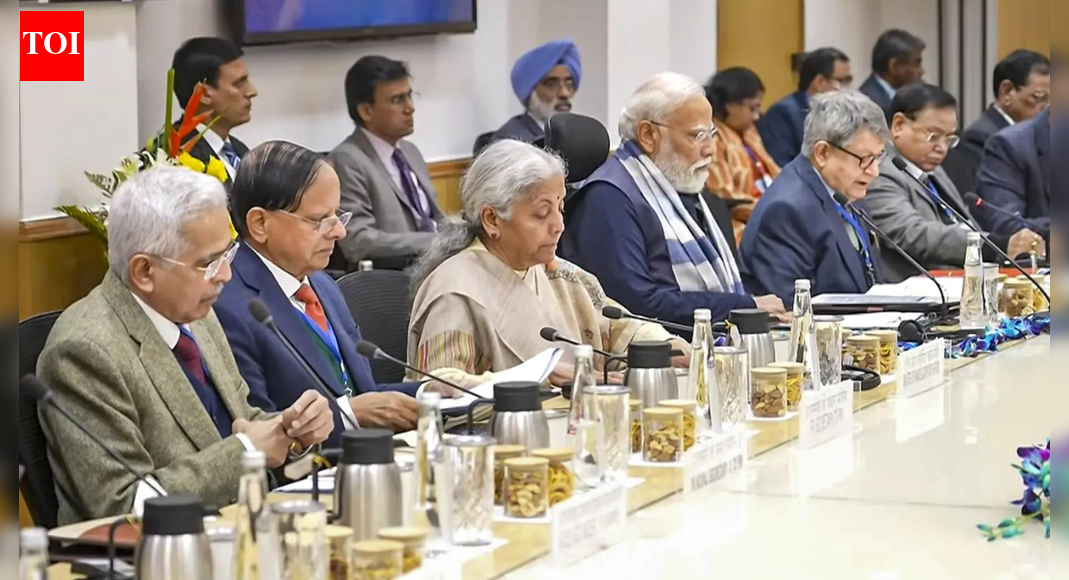
Prime Minister Narendra Modi on Tuesday met eminent economists and sectoral experts to seek their views on the upcoming Budget, a senior government official said. The meeting started at 11am chaired finance minister Nirmala Sitharaman, Niti Aayog vice chairman Suman Bery, Niti Aayog CEO BVR Subrahmanyam, other members of the Aayog, economists and sectoral experts are also present in the meeting. Finance minister Nirmala Sitharaman is likely to present the Union budget for 2026-27 on February 1.Interacting with a group of eminent economists and experts PM Modi also made a case for building world- class capabilities and attaining global integration.The theme of the interaction was ‘Aatmanirbharta and Structural Transformation: Agenda for Viksit Bharat’.He stressed that India’s policy making and budgeting must remain anchored with the vision for 2047.The Prime Minister spoke about the need to ensure that the nation remains a vital hub for the global workforce and international markets.Speaking about Viksit Bharat as a national aspiration, the Prime Minister noted that the vision of a developed India by 2047 has transcended government policy to become a genuine mass aspiration.


Source link

India Women 4/0 in 0.2 Overs | India vs Sri Lanka Live Score, 5th Women’s T20I: Sri Lanka Women win toss, opt to bowl against India


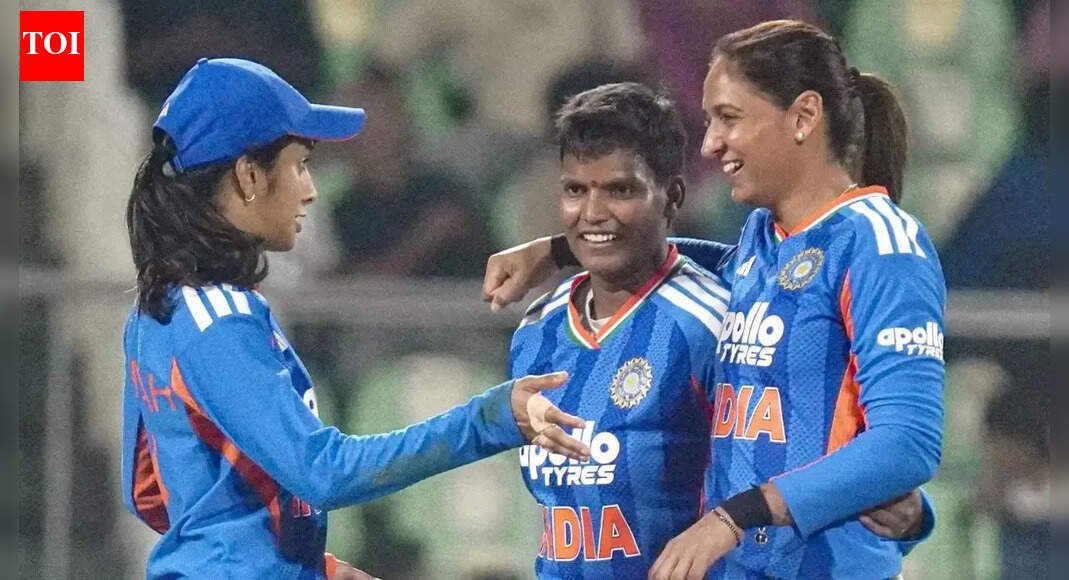
India vs Sri Lanka Live Score, 5th Women’s T20I: India’s women are on a commanding 4–0 lead against Sri Lanka, showcasing the kind of dominance expected from a side several levels above their opponents.

The batters played with freedom, boundaries came in clusters, and the bowlers applied constant pressure. On paper, it was a flawless series. On the field, however, a familiar weakness resurfaced — sloppy fielding.

Despite controlling every major moment, India repeatedly let themselves down in the basics. These were not difficult chances or athletic dives gone wrong. They were regulation catches that should be taken every time at international level. In the fourth T20I, Smriti Mandhana dropped a simple catch at long-on after a mistimed shot ballooned into her hands.

Soon after, Deepti Sharma spilled another straightforward chance, allowing the ball to trickle away for four instead of ending the over with a dot or wicket.

Such moments were not isolated. India dropped five catches in the series opener in Visakhapatnam, three of them straightforward. The pattern continued through the series, with missed chances punctuating otherwise dominant performances. That these errors did not change results is both reassuring and concerning. India’s depth in batting and discipline with the ball ensured Sri Lanka never capitalised, but repeated mistakes risk becoming habits when they go unpunished.

Wicketkeeper Richa Ghosh tried to put things in perspective after the fourth T20I.

“We had an off day in the field. It’s understandable, but everyone in this team is working really hard on their fielding drills. I won’t say anything about the fielding for this one game,” she said.

Head coach Amol Muzumdar will likely see this series as a reminder that dominance alone is not enough. India’s batting looks fearless and the bowling unit increasingly sharp, but fielding remains the missing piece. At the highest level, matches and tournaments are decided by moments — sharp catches, quick stops and saved runs.

With the T20 World Cup just six months away, India have time to address the issue. Sri Lanka were forgiving. Stronger opponents will not be.

SLW vs INDW Squads:

Sri Lanka Women Squad: Hasini Perera, Chamari Athapaththu(c), Imesha Dulani, Harshitha Samarawickrama, Kavisha Dilhari, Nilakshika Silva, Rashmika Sewwandi, Kaushani Nuthyangana(w), Malsha Shehani, Kawya Kavindi, Nimasha Madushani, Malki Madara, Shashini Gimhani, Vishmi Gunaratne, Inoka Ranaweera

India Women Squad: Smriti Mandhana, Shafali Verma, Richa Ghosh(w), Harmanpreet Kaur(c), Harleen Deol, Deepti Sharma, Amanjot Kaur, Arundhati Reddy, Vaishnavi Sharma, Renuka Singh Thakur, Shree Charani, Jemimah Rodrigues, G Kamalini, Kranti Gaud, Sneh Rana


Source link