Breaking News
‘Multi-door courthouse’: CJI Kant’s vision for holistic dispute resolution; calls for alternatives beyond trials | India News


‘Multi-door courthouse’: CJI Kant's vision for holistic dispute resolution; calls for alternatives beyond trials

NEW DELHI: CJI Surya Kant on Friday said he envisions a transition towards a “multi-door courthouse,” where courts function as comprehensive centres for dispute resolution and not merely for trials.The CJI said courts should offer multiple pathways such as mediation, arbitration and litigation, depending on the nature of the dispute.

Justice Surya Kant, Known For Article 370 Ruling And Pegasus Scrutiny, Takes Oath As India’s New CJI

“As we look forward towards the horizon, I envision a transition towards the multi-door courthouse. What I mean to say is that this is a visionary concept where the court ceases to be a singular venue for trials. Rather, it becomes a comprehensive centre for dispute resolution,” he said.When a person approaches a court, “they must find the doors to mediation, arbitration, and ultimately litigation, each tailored to the specific nature of their grievance,” he said.However, he noted that some disputes will still require adjudication. “We must acknowledge that there are bound to be some cases which cannot be resolved through arbitration or mediation. Therefore, the judicial system will always be prepared for fair litigation trials to adjudicate those disputes.”Describing the idea as the “ultimate empowerment of litigants”, the CJI stressed that mediation can significantly reduce judicial pendency. He reiterated that mediation should not be seen as a weakness of the legal system. “Mediation is not a sign of the law’s weakness, but rather its highest evolution,” he said.The CJI said for effective implementation of mediation at all levels, India needs more than 2,50,000 trained mediators. The country currently has around 39,000 trained mediators, facing a serious gap between demand and supply. He cautioned that training mediators requires careful selection and preparation. Mediation, he said, is not merely an art, as the “temperament, behaviour, compassion, passion, commitment, and devotion” of a mediator play a crucial role in ensuring success.CJI Kant was addressing the inaugural session of the Bar Council of India’s national conference and symposium on mediation in South Goa.


Source link

‘Back in Bangladesh skies’: Tarique Rahman returns with wife, daughter & cat after years in exile; gets rousing welcome


Tarique Rahman with his wife Zubaida Rahman and daughter Zaima Rahman (Image/Facebook@BNPmedia)

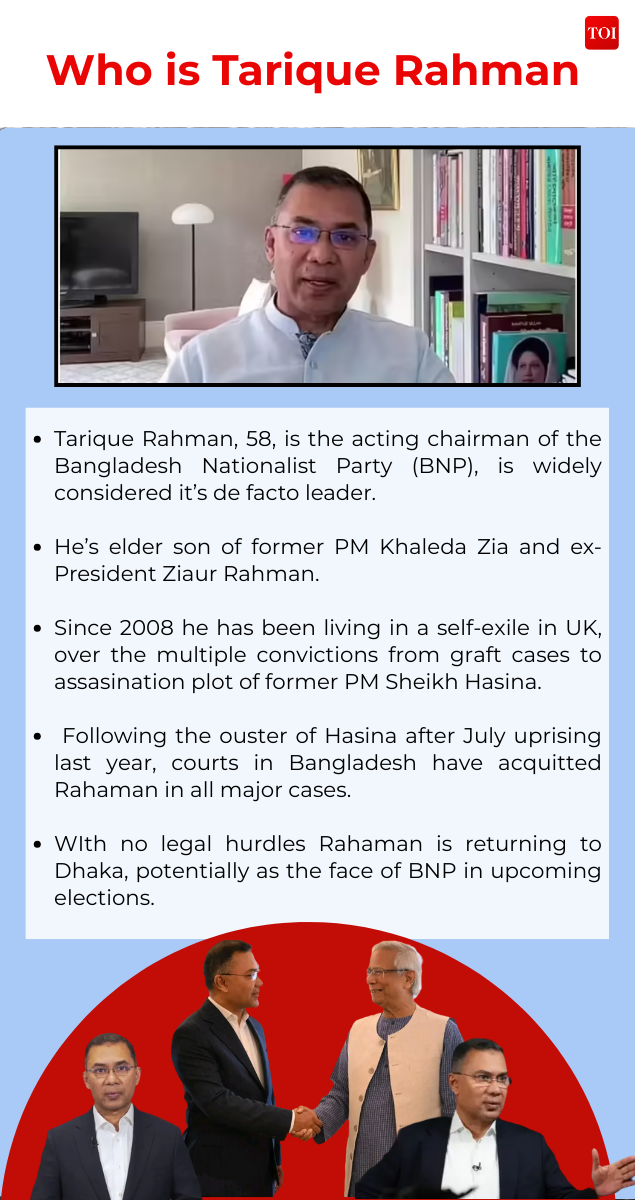
BNP acting chairman Tarique Rahman returned to Bangladesh from London on Thursday with his wife Zubaida Rahman, daughter Zaima Rahman and pet cat Zeebu after more than 17 years in exile. His homecoming drew massive crowds of supporters, who lined streets across Dhaka to welcome the family.The Biman Bangladesh Airlines flight carrying the family landed at Sylhet’s Osmani International Airport before proceeding to Hazrat Shahjalal International Airport in Dhaka, where it touched down around 11.42 am, airport officials confirmed.

Why Tarique Rahman’s Return To Dhaka After 17 Years Could Reshape Bangladesh Politics After Hasina

Soon after landing, Rahman shared a photograph on his Facebook account with the caption, “Back in Bangladesh skies after 6,314 days!”At the airport, BNP Standing Committee members received Rahman and his family before he departed for a public reception. Several visuals surfaced as supporters shared images and videos of celebrations.

Supporters call return ‘Eid-like’ moment

Supporters from across the country began gathering in Dhaka from midnight, many walking long distances to reach the reception venue near the 300 Feet Road in Purbachal.“Today feels like Eid for us,” said Toyeb Ali Babu, an upazila BNP leader from Nilphamari, who travelled overnight to attend the programme.Sixty-year-old Ruhul Amin, who arrived from Mymensingh early in the morning, said he had endured the cold and long hours just to see the BNP leader. “For 17 years, I have only seen him on a screen. Seeing him return today is a moment of joy for us,” he said.Parveen Akter, a ward-level BNP leader from Dhaka’s Shyampur area, said around 500 women activists from her locality had joined the gathering. “We wanted to be part of this historic day,” she said.Another supporter, Kawsar from Dinajpur, described the return as deeply emotional. “To see our leader in person after so many years feels like a dream coming true,” he said.Rahman returned with his immediate family, along with two close aides, Abdur Rahman Suny and Kamal Uddin.

Mass reception planned amid tight security

Rahman travelled in a bulletproof vehicle chosen over central locations to minimise disruption to city traffic. Party leaders and activists lined up to greet him, the Daily Star reported.Rahman will also address the gathering, while senior BNP leaders and representatives of allied political groups will be present on the stage. The party estimates that up to 50 lakh people may gather across Dhaka through the day.The Dhaka Metropolitan Police has implemented multi-layered security arrangements, while the BNP’s own security units, including the Chairperson’s Security Force, have also been deployed. Overall responsibility for Rahman’s security has been assigned to AKM Shamsul Islam.

City-wide arrangements for supporters

The BNP has installed nearly 1,000 loudspeakers across key areas including the airport, Purbachal, Banani, Mohakhali and Abdullahpur to broadcast Rahman’s speech. Thirty large LED screens have been set up across the capital, along with hundreds of posters and billboards.To manage the crowds, the party has arranged medical camps, mobile toilets, drinking water facilities and a temporary field hospital near the venue. Separate bus parking zones and help desks have been created to ease traffic movement, particularly for ambulances and international travellers.After addressing supporters, Rahman is expected to visit Evercare Hospital to see his ailing mother, former prime minister Khaleda Zia, who has been undergoing treatment there for over a month. He will then proceed to the family residence, Firoza, in Gulshan-2.

Political journey and significance of return

Rahman, the elder son of former president Ziaur Rahman and former prime minister Khaleda Zia, left Bangladesh in 2008 following his arrest during the 1/11 government and later moved to London for medical treatment. During the previous Awami League government, he was convicted in absentia in several cases, all of which have since been dropped.

.

.

He has served as BNP’s acting chairman since 2018 while living abroad. His return comes ahead of parliamentary elections expected next year and is widely seen as strengthening the BNP’s position during a period of political transition under the interim government.


Source link

FII selloff: Rs 2 lakh crore pulled out from six sectors; will the bleeding stop in 2026?


FII selloff: Rs 2 lakh crore pulled out from six sectors; will the bleeding stop in 2026?

Foreign investors have sharply pared their exposure to Indian equities in 2025, pulling out close to Rs 2 lakh crore from six key sectors, in what has emerged as one of the harshest bouts of selling seen in recent years. The scale and concentration of the exits have intensified debate on whether the pressure will ease as the year draws to a close or spill into 2026.Data from the National Securities Depository Ltd (NSDL), as reported ET, shows that foreign institutional investors (FIIs) have withdrawn Rs 1.6 lakh crore from Indian equities so far this year, signalling a decisive shift in risk appetite after a prolonged period of steady inflows.

Heavy exits concentrated in IT, FMCG and power

The selloff has been led by the information technology sector, which recorded outflows of Rs 79,155 crore. FMCG followed with Rs 32,361 crore, while power stocks saw Rs 25,887 crore exit the segment. Healthcare witnessed withdrawals of Rs 24,324 crore, consumer durables Rs 21,567 crore, and consumer services Rs 19,914 crore, underscoring the breadth of the retreat.“Foreign institutional investors have been net sellers of Indian equities to the tune of US$17.8 billion in CY25, as this liquidity has flowed into other global equity markets such as China, Japan, Europe and the US,” ICICI Securities said, ET quoted. The brokerage added that while Indian markets delivered muted returns, global peers posted gains in the range of 12–61%, with emerging markets returning around 23%.Selling was not limited to the worst-hit sectors. Realty stocks saw outflows of Rs 12,364 crore, financial services Rs 10,894 crore, and automobiles Rs 9,242 crore. In contrast, only a few pockets attracted foreign inflows. Telecom led the list with Rs 47,109 crore, followed by oil and gas at Rs 9,076 crore and services at Rs 8,112 crore.

Will foreign flows turn as 2026 approaches?

Despite the intensity of the exits, some strategists believe the worst of the foreign selling could be nearing an end. Amish Shah, Bank of America’s head of India research, said a reversal in flows is possible, even if inflows take longer to materialise.“We do think that the outflows will at least reverse. Whether that leads to inflows is the debate. But the probability of that $18 billion outflow moving towards zero is quite high,” Shah told ET. He pointed to three potential triggers: expected Nifty returns of around 12%, compared with 4% for the S&P 500, the likelihood of 75 basis points of US Federal Reserve rate cuts, and a possible weakening of the US dollar, which has historically supported emerging market allocations.Another factor weighing on secondary market flows has been the surge in IPO activity. “FIIs, in CY25, have invested US$7.1 billion in IPOs, which is around 40% of the proceeds they sold in secondary markets,” ICICI Securities noted. At the same time, domestic mutual funds continued to attract strong systematic investment plan (SIP) inflows of Rs 3.2 lakh crore during the year. However, much of this capital was channelled into large-cap stocks and new listings, leaving broader segments exposed to sharper corrections.

Outlook for 2026

Global brokerages remain divided on the outlook. Morgan Stanley said FII positioning is close to cyclical lows but cautioned that sustained buying would depend on a recovery in growth, cooling equity markets elsewhere, or an increase in corporate issuances.Nomura struck a more guarded tone. “We do not anticipate a surge in FII flows, as market valuation at 20.7x one-year forward earnings is close to the recent peak, and earnings growth of 10–15% is not very compelling in our view,” the brokerage said, while adding that sentiment could improve modestly as India’s valuation premium relative to global peers has returned to its historical average.Looking ahead, Axis Securities expects conditions to turn more supportive in the next year. “The year 2026 is expected to be more constructive for Indian equities, transitioning from a period of valuation-led consolidation to an earnings-led market,” it said. The firm advised a ‘buy on dips’ approach with a long-term horizon, favouring financials, domestic consumption plays, selective cyclicals, healthcare and diversified exposure across market capitalisations.ICICI Securities highlighted PSU banks as offering an attractive risk-reward, citing a “revival of credit growth, strong asset quality and valuations at historical means”. It also said IT stocks merit a fresh look after recent corrections, adding that “valuations have hit a floor and CY26E will see growth bouncing back”.Jefferies, meanwhile, maintained an overweight stance on financials, telecom, autos, real estate, cement and utilities, while remaining underweight on IT, consumer staples, industrials and healthcare.


Source link

MICT vs DSG, SA20 2025-26, Match Prediction: Who will win today’s game between MI Cape Town and Durban Super Giants?


MI Cape Town launch their title defence at home against a revamped Durban Super Giants in a mouth-watering SA20 2025-26 opener at Newlands, with batters set to enjoy a true surface under lights.​

MI Cape Town enter as defending champions and begin Season 4 at their Newlands fortress under Rashid Khan, looking to set the tone early in front of home support.​ Durban Super Giants, who finished bottom last season, start afresh with a significantly strengthened core and an impressive 3-1 head-to-head edge over MICT in T20s.

MICT vs DSG, SA20 2025-26: Match details

  • Date and Time: December 26 (Friday); 9:00 pm IST / 03:30 pm GMT / 5:30 pm Local
  • Venue: Newlands Cricket Ground, Cape Town

Head-to-Head Record in SA20 2025-26:

Matches played: 5 | MI Cape Town won: 1 | Durban Super Giants won: 3 | No result/Tied: 1

Newlands Cricket Ground Pitch Report

The Newlands pitch in Cape Town typically offers early assistance to fast bowlers with swing and bounce during the first few overs, but it soon settles into a true surface ideal for stroke play. Batters can trust the bounce and play through the line once the shine fades. Spinners come into play as the match progresses, especially under dry conditions. The average first-innings score here ranges between 160 and 175, making it a balanced wicket that rewards both disciplines. Given the evening conditions, chasing teams have enjoyed more success, so captains winning the toss often prefer to bowl first.

Squads

Durban Super Giants: Devon Conway, Jos Buttler (wk), Kane Williamson, Aiden Markram (c), Heinrich Klaasen, David Wiese, Dayyaan Galiem, Sunil Narine, Gerald Coetzee, Noor Ahmad, Kwena Maphaka, David Bedingham, Marques Ackerman, Gysbert Wege, Evan Jones, Andile Simelane, Eathan Bosch, Tony de Zorzi, Daryn Dupavillon, Taijul Islam

MI Cape Town: Reeza Hendricks, Rassie van der Dussen, Nicholas Pooran (wk), Jason Smith, Ryan Rickelton, George Linde, Rashid Khan (c), Trent Boult, Kagiso Rabada, Dane Piedt, Tristan Luus, Dwaine Pretorius, Corbin Bosch, Tom Moores, Karim Janat, Thomas Kaber, Jacques Snyman, Tiaan van Vuuren, Daniel Lategan

Also READ: SA20 2026: Complete squads of all six teams after the players’ auction

MICT vs DSG, SA20 2025-26: Today’s Match Prediction

Case 1:

  • MI Cape Town wins the toss and bowls first
  • Durban Super Giants’ powerplay score: 45-55 (6 overs)
  • Durban Super Giants’ total score: 155-165

Case 2:

  • Durban Super Giants wins the toss and bowls first
  • MI Cape Town’ powerplay score: 55-65 (6 overs)
  • MI Cape Town’ total score: 170-180

Match result: Team bowling first to win the contest

Also READ: THIS IPL team to send their bowlers to Durban for training in SA20


Source link

Access Denied


Access Denied

You don’t have permission to access “http://www.ndtv.com/india-news/ajit-pawar-sharad-pawar-alliance-pune-municipal-elections-brihanmumbai-municipal-elections-9983744” on this server.

Reference #18.1dd92c31.1766747619.3043ede7

https://errors.edgesuite.net/18.1dd92c31.1766747619.3043ede7


Source link

Japan: 14 injured in stabbing attack, ‘unspecified liquid’ sprayed; attacker in custody


Japan: 14 injured in stabbing attack, 'unspecified liquid' sprayed; attacker in custody

At least fourteen people were injured in a stabbing attack in a factory in central Japan on Friday. In the attack, an unspecified liquid was also sprayed.“Fourteen people are subject to transportation by emergency services,” Tomoharu Sugiyama, a firefighting department official in the city of Mishima, Shizuoka region, told news agency AFP.He said a call was received at about 4.30 pm (0730 GMT) from a nearby rubber factory saying “five or six people were stabbed by someone” and that a “spray-like liquid” had also been used. The person responsible for the attack is already in custody.This is a developing story…


Source link

I love riding on Goan roads: Fatima Sana Shaikh | Mumbai News


Fatima Sana Shaikh, fond of Goa’s scenic streets, spoke with Goa Times during her visit for the International Film Festival of India

Fatima Sana Shaikh reminisced about her very first friends’ trip to Goa, a whirlwind of laughter, bike rides along sunlit streets, and carefree adventures, as she spoke with Goa Times during her recent visit to the coastal state for IFFI. Dressed in a white beaded and mirror-work saree, the actor bedazzled the crowd on the red carpet, alongside the cast and crew of Gustaakh Ishq. ‘Riding in Goa is a must’ “My first friends trip was planned in Goa, we did everything, like ride bikes here on Goan streets. It was a fun time. So every time I come to Goa, I hire a bike and I ride it, it’s mostly because the roads are good and there is not much traffic. I feel that in Goa, people don’t judge you, it could be because there are many women riders here. In cities, when you ride usually you have other people honking or following. I don’t see that here,” said Fatima Sana Shaikh. Ratna Pathak and Naseeruddin Shah are opposite – energy wise’ Talking of her co-actor Naseeruddin Shah in Gustaakh Ishq, and Ratna Pathak, who she worked with in Dhak Dhak, Fatima said they are opposite. “She is very chill and bindaas while Naseeruddin ji is very shant and poised and he doesn’t talk a lot. So, in my head I had made quite some narratives that he is going to judge me. I was very scared. But he was absolutely the opposite of that. He was extremely warm, very giving,” added the actress. She added, “If he felt ki agar ye scene kisi aur direction mein ja sakta hai, he would always give interesting suggestions and protect you. So, that was nice. He is a good teacher. I had a wonderful experience.” ‘This is a different genre of film’ Talking of her character in Gustaakh Ishq, Fatima said she took some time to get adjusted to the role as she came to set immediately after shooting for Nyaya, where she is cast as a police officer. “The very next day after playing a cop, I had to play the character of Minni which was a complete shift and a different world. The pace of this world is different, the language is also different. It’s very disorienting if you come from a place where you are playing a cop and suddenly this. So, when Vijay saw that I am a little all over the place emotionally he told me ke tension mat le and guided me through the process,” added Fatima as she smiled. On OTT’s democratic nature Talking of OTT, she said, “OTT is open to different kinds of genres and it doesn’t matter if you are a star. Box office ka stress nahi hota. When there is no stress of box office, there is freedom to make whatever you want and eventually the audience decides whether they like it or not. So, that’s a very democratic process,” said Fatima as she sipped on a cup of tea.


Source link

‘Fast-track him now’: Ex-India captain compares teenage sensation Vaibhav Suryavanshi to Sachin Tendulkar | Cricket News


'Fast-track him now': Ex-India captain compares teenage sensation Vaibhav Suryavanshi to Sachin Tendulkar
Vaibhav Suryavanshi (PTI Photo/Swapan Mahapatra)

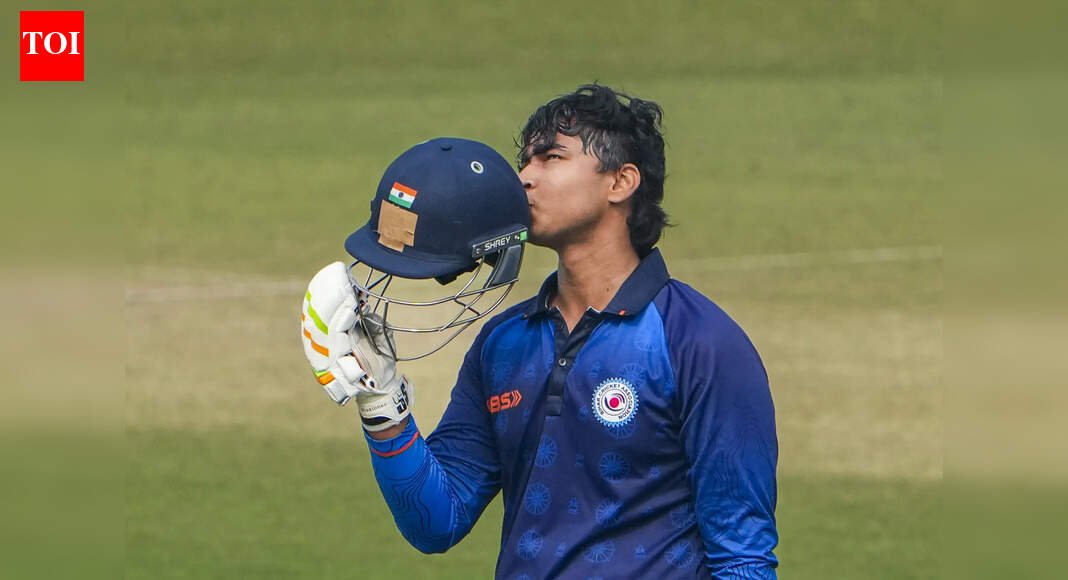
Former India opener Krishnamachari Srikkanth has strongly advocated for Vaibhav Suryavanshi to be pushed quickly into the senior Indian setup, comparing the teenager’s rise to the early days of Sachin Tendulkar. Srikkanth believes the selectors should show boldness and back rare talent early, rather than delaying opportunities for a player who has already shown maturity beyond his years.Srikkanth highlighted Suryavanshi’s swift journey through age-group cricket and his growing impact in domestic competitions. According to him, the youngster stands out for his calmness at the crease, sound technique and an evident desire to dominate attacks. Much like Tendulkar, who made his India debut at the age of 16, Suryavanshi has consistently taken on older and more experienced opponents, adapted rapidly to higher standards and delivered under pressure.

Gautam Gambhir’s year as India coach ends like it started – on a chaotic note

The teenage batter recently made headlines by becoming the youngest player to score a List A century. In a Vijay Hazare Trophy match, Suryavanshi produced a stunning 190 off just 84 balls. His innings was marked by fearless strokeplay and raw power as he smashed 15 sixes and brought up his hundred in only 36 deliveries, completely overwhelming the bowling attack and reinforcing the buzz around his rapid rise.Srikkanth has now doubled down on his support for Suryavanshi, urging the BCCI to act swiftly. He pointed to the batter’s string of big scores across formats and levels as clear evidence that the youngster is ready for a bigger challenge.“Vaibhav is scoring centuries everywhere, be it the IPL, U19, anywhere. You can say it is against Arunachal Pradesh but that is a different story. This boy has been hammering everybody across all kinds of matches. I had told last year also that they should fast-track him for the T20 World Cup. Maybe it is too late for that now, but they still fast-track him into the team. This boy has got tremendous potential. He should be fast-tracked and brought into the Indian team soon,” Srikkanth said on his YouTube channel Cheeky Cheeka.Suryavanshi’s numbers at the youth level further strengthen the argument. In 15 youth ODIs, he averages 51.13, with two hundreds and three fifties, striking at an impressive rate of 158.79.Addressing suggestions that the youngster should be given more time, Srikkanth dismissed the cautious approach. He reiterated that exceptional players deserve early faith, drawing a direct comparison with Tendulkar’s own rise.“People say let him play for some more time, let him do this, let him do that. Sachin also played at such a young age. Of course, he played for India after scoring hundreds at all levels, but the same thing can be done for this boy in white-ball cricket,” he added.


Source link

‘Not medical devices’: Centre defers slashing GST on air purifiers; warns of ‘Pandora’s Box’ of similar requests | India News


'Not medical devices': Centre defers slashing GST on air purifiers; warns of 'Pandora's Box' of similar requests

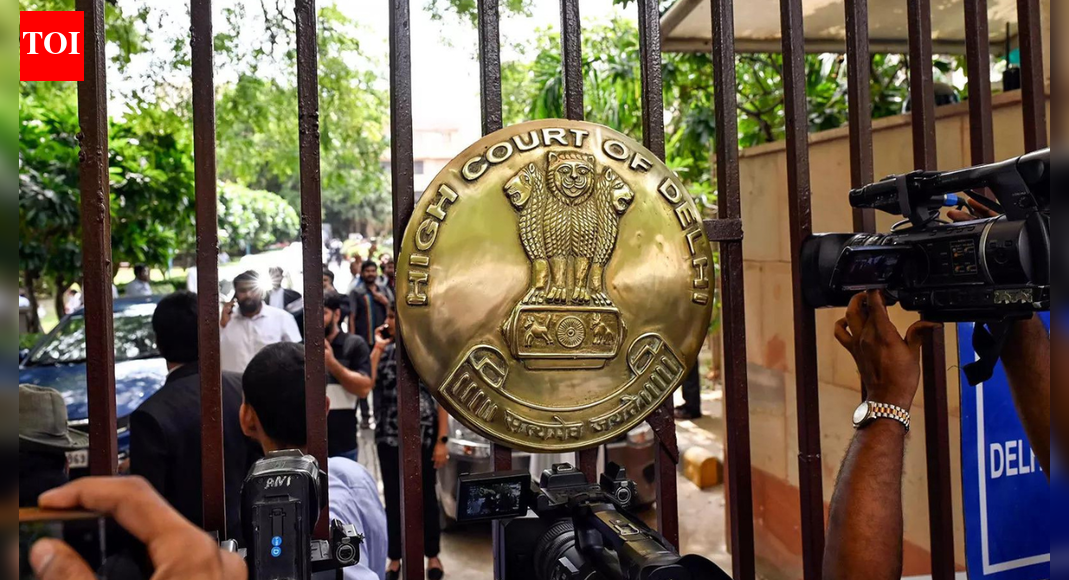
NEW DELHI: The Centre on Friday deferred lowering the GST on air purifiers, a day after the Delhi high court suggested a look into the matter while hearing a plea about the severe pollution plaguing the Capital.Appearing for the Centre, additional solicitor general N Venkatraman told a bench of justices Vikas Mahajan and Vinod Kumar that air purifiers cannot be treated as medical devices as per the decision of the health ministry.Additionally, the Centre told the court that the classification of goods and fixation of GST rates involve a detailed statutory process handled by the GST council, a constitutional body comprising the Centre and all states.Any change, it said, requires consultation, licensing and regulatory scrutiny, and cannot be fast-tracked through a writ petition.The Centre also warned that entertaining such pleas could open the floodgates for similar demands from multiple sectors.Venkataraman further said the issue had already been examined at the highest policy level, including by the finance minister, and that courts cannot direct the GST council to alter tax rates.The bench, however, flagged the public health impact of air pollution and questioned why air purifiers, which cost between ₹10,000 and ₹15,000, should not be made more affordable to the less privileged families.The bench observed that pollution affects everyone and noted that the issue has nationwide implications, even as it accepted the Centre’s request for time.The court deferred any interim relief in a public interest case seeking cheaper air purifiers amid Delhi’s severe pollution. This has given the government more time to file a detailed response.The petitioner, advocate Kapil Madan, argued that he was not asking for the removal of tax but for correct classification under existing GST rules. He claimed air purifiers were wrongly placed under a higher tax slab instead of being treated like medical devices, which attract lower GST.With no counter-affidavit on record, the court said it could not grant any interim relief at this stage. It directed the Union government to file a detailed response within 10 days and listed the matter for further hearing on January 9, after the court vacation.


Source link

Could global warming paradoxically freeze the planet: How tiny ocean organisms could flip Earth’s climate |


Could global warming paradoxically freeze the planet: How tiny ocean organisms could flip Earth’s climate

A world in warming, under most circumstances, tipping toward deep cooling does seem counterintuitive; yet, Earth’s geological record is replete with such episodes when rising greenhouse gases were followed by abrupt climatic reversals. Today, scientists increasingly look to the oceans for an explanation, where the quiet work of microscopic organisms regulates the exchange of carbon between the atmosphere, water, and rocks. Long timescales are involved, but their cumulative effects can be dramatic. How ancient climate shifts unfolded has become crucial to understanding future risk, as modern warming alters marine ecosystems that once helped nudge the planet into an ice age.

How ancient oceans pulled carbon from the air and cooled the planet

Over the years, evidence has sharpened for a dramatic climate transition during the Ordovician period through various synthesis works, like the review in the Annual Review of Earth and Planetary Sciences on the causes and consequences of Ordovician cooling. About 445 million yrs ago, Earth moved from a warm greenhouse state to widespread glaciation without any obvious decline in atmospheric carbon dioxide at the outset. Geological proxies suggest that enhanced carbon removal and not reduced volcanic emissions played a decisive role. This cooled concurrently with major changes in marine life, indicating a biological driver located within the ocean carbon cycle.The Ordovician seas were dominated by planktonic organisms that fixed carbon through photosynthesis. As these organisms proliferated, more organic carbon sank to the seafloor, reducing the amount returned to the atmosphere. As this biological pump developed, it essentially helped to energise chemical weathering on land by lowering atmospheric carbon dioxide, and more carbon was pulled down through the reactions of rocks. The result was a tightly coupled system where marine biology and geochemistry were interlaced in a feedback capable of reshaping global climate, a sobering example of how life itself can become a planetary force.

How microscopic marine organisms influence global temperatures

Phytoplankton, though perhaps invisible to the naked eye, represent one of the most vital elements in marine food chains and are considered capable of exerting strong controls over climate. While they are growing, these organisms absorb carbon dioxide from the atmosphere as they are a sink for it, which eventually gets stored in both ocean waters and sediments. If environmental conditions are right for big blooms, the efficiency of this transfer will be higher, thus the cooling effects will be stronger. During the Ordovician, evolutionary changes likely improved plankton productivity, enabling larger volumes of carbon to be locked away for long periods.Modern climate research shows that plankton respond sensitively to temperature, nutrient supply, and ocean circulation. Warming can initially stimulate growth in some regions, but sustained heat alters species composition and nutrient mixing. If future oceans experience changes in the same order of magnitude as in the geological past, the balance between the transport of carbon to depth and the transport to the atmosphere may become unpredictable. The Ordovician example suggests that biological responses do not always stabilise climate, and under specific thresholds, they may accelerate transitions toward cooler states.

When oceans changed composition and ice began to spread

The Ordovician cooling was not a story of carbon removal alone. Changes in ocean chemistry and the distribution of oxygen supplemented this path toward the climate outcome. Increased burial of organic carbon raised atmospheric oxygen levels, which in turn intensified wildfires on land and changed terrestrial vegetation. Such changes further amplified weathering rates and drew down additional carbon dioxide. Cascading effects linked marine productivity with atmospheric composition and surface processes, generating conditions favourable for the formation of ice sheets.The cooling oceans also changed the circulation patterns that led to the production of cold, dense waters at high latitudes. As the polar regions became colder, ice sheets expanded rapidly and reflected more of the sunlight back to space, thus global cooling was strengthened. This albedo feedback is what keeps the planet at a glacial state, at least until higher carbon dioxide levels can be returned by volcanic emissions and reduced weathering. The sequence underscores how tightly coupled Earth systems are, in which changes in ocean life can flow through to the atmosphere and cryosphere.

What ancient ice ages reveal about today’s warming oceans

Drawing lessons from the Ordovician does not mean that global warming today will soon pitch the planet into an ice age. Timescales are very different, and human-driven emissions are unfolding much faster than ancient biological feedbacks. Yet history does show that the Earth’s climate can respond nonlinearly when important thresholds are crossed. Small marine organisms, through the power of cumulative action, have in the past changed atmospheric chemistry enough to alter global conditions.Today’s oceans are undergoing rapid change, including warming, acidification, and deoxygenation-all drivers that impact plankton behaviour. If these changes alter the efficiency of the biological carbon pump, then long-term climate trajectories could shift in unexpected directions. The Ordovician record illustrates that gradual trends alone do not ensure climate stability and that the tiny forms of life can, when conditions are right, serve to help guide the planet toward radically different states.Also Read | A hidden Arctic world: Methane mounds and life found 3.6 km below the Greenland Sea


Source link