Breaking News
IND vs NZ: No Kane Williamson! New Zealand announce squads for ODIs and T20Is against India | Cricket News


IND vs NZ: No Kane Williamson! New Zealand announce squads for ODIs and T20Is against India
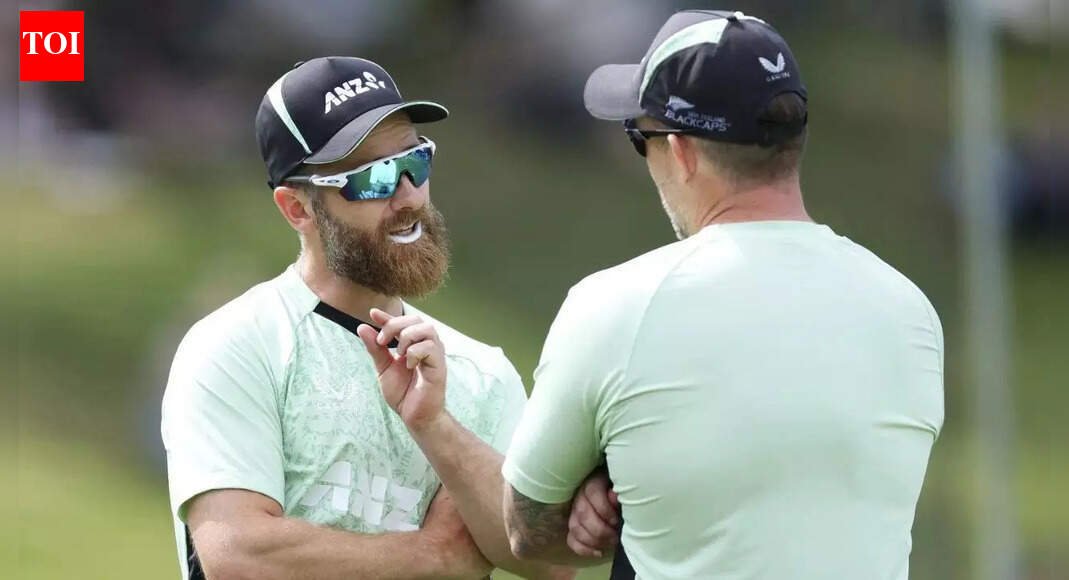
Kane Williamson (Photo by Hagen Hopkins/Getty Images)

NEW DELHI: New Zealand have announced their squads for the upcoming limited-overs tour of India as they keep a close eye on preparations for the ICC Men’s T20 World Cup 2026. The tour will feature three One-Day Internationals followed by a five-match T20I series, starting January 11.

T20 World Cup squad: Are India going Pakistan’s chaotic way?

With the World Cup set to be played in India and Sri Lanka from February 7, the selectors have used this tour as a key planning step.The five-match T20I series is seen as especially important for the Black Caps. Playing in Indian conditions will help players adjust to slower pitches and quality spin, something they do not face regularly at home. The team management believes this experience will be crucial ahead of the global event.Mitchell Santner will lead the T20I side as he continues his comeback from injury. For the ODI series, Michael Bracewell has been named captain.Several senior players have been recalled for the tour, while a few young faces have also been rewarded for strong recent performances. Jayden Lennox, Kristian Clarke, Bevon Jacobs and Tim Robinson have all been included after impressing in domestic and A-team cricket. Michael Rae, who recently made his Test debut against the West Indies, also finds a place in the squads.Kyle Jamieson returns in both ODI and T20I squads after recovering from injury. Mark Chapman and Matt Henry are also back in the T20I setup, strengthening the bowling and batting units.At the same time, some key players have been rested or ruled out to manage workloads. Kane Williamson, Rachin Ravindra, Jacob Duffy, Will O’Rourke and Blair Tickner will miss the tour due to injury concerns or workload management. New Zealand are balancing their schedule carefully as they also prepare for the World Test Championship cycle.NZ T20I Squad v India: Mitchell Santner (c), Michael Bracewell, Mark Chapman, Devon Conway, Jacob Duffy, Zak Foulkes, Matt Henry, Kyle Jamieson, Bevon Jacobs, Daryl Mitchell, James Neesham, Glenn Phillips, Rachin Ravindra, Tim Robinson, Ish SodhiNZ ODI Squad v India: Michael Bracewell (c), Adi Ashok, Kristian Clarke, Josh Clarkson, Devon Conway, Zak Foulkes, Mitch Hay, Kyle Jamieson, Nick Kelly, Jayden Lennox, Daryl Mitchell, Henry Nicholls, Glenn Phillips, Michael Rae, Will Young


Source link

IT reset: Indian tech stocks search for momentum after a long slowdown; AI shifts from pilots to payoffs


IT reset: Indian tech stocks search for momentum after a long slowdown; AI shifts from pilots to payoffs

After nearly four years of underperformance, India’s information technology stocks are entering 2026 with expectations shaped more by realism than hype, as investors assess whether artificial intelligence can finally revive growth after a prolonged slowdown.The Nifty IT index is trading close to a four-year low, a sharp reversal from the pandemic-era boom that once made software exporters market favourites, according to an ET report. In 2021, the index surged nearly 60% on the back of emergency digital spending, cloud migration and strong deal pipelines. That momentum faded quickly as global inflation, aggressive interest-rate hikes and recession fears forced clients to rein in discretionary technology budgets, pushing the index down more than 26% in 2022.Although IT stocks recovered in 2023 and 2024 with gains of about 24% and 22%, the rebound lacked conviction. Markets were grappling with macro uncertainty and the early, unclear impact of artificial intelligence. In 2025 so far, the index is down more than 10%, marking its second-worst annual performance of the past decade.For investors who entered the sector after the 2021 peak, returns have been disappointing. Even as defence, public sector banks and auto stocks climbed to new highs, IT names continued to lag, reflecting both cyclical pressures and deeper structural shifts.

Why demand stayed weak even as profits held up

On the cyclical side, demand from key markets has remained cautious. The US and Europe, which together generate the bulk of Indian IT revenues, have seen large enterprises delay major technology transformation programmes amid concerns over inflation, interest rates, geopolitics and trade policies. Discretionary spending — critical for large digital and modernisation deals — has stayed under pressure despite healthy corporate profits.Structural factors have added another layer of challenge. Years of automation, cloud migration and now AI adoption have sharply improved productivity at Indian IT firms. While this supports margins, it has also reduced the manpower required for similar workloads, limiting near-term revenue growth. Companies are doing more with fewer people — a positive for clients but a headwind for top-line expansion.As the sector looks ahead to 2026, the central question for investors is whether Indian IT can adapt to an AI-driven world and regain a sustainable growth trajectory. Most analysts believe it can, though not overnight.Sumit Pokharna of Kotak Securities argues that enterprise AI adoption will be a long journey. He expects it to unfold over seven to eight years, with humans and AI agents working together. Connecting AI systems to complex enterprise platforms, testing them across industries and ensuring reliability will require significant effort, he says — a process that plays to the strengths of Indian IT companies experienced in managing large, complex systems.Timing, however, has been a challenge. Indian IT firms were slower than global technology giants to position themselves as AI leaders. Early AI-driven efficiency gains created a deflationary effect, allowing work to be done faster and cheaper, which weighed on revenues when clients were already focused on cost cutting.

AI monetisation emerges, but patience still required

That dynamic is now beginning to shift. Across the sector, companies are increasing investments in AI tools, platforms and talent. AI is being deployed internally to lift productivity, embedded into service offerings and used to help clients move from pilot projects to full-scale deployments.Nomura notes that nearly all Indian IT services companies are stepping up AI investments, focusing on internal applications, client solutions and ecosystem partnerships. Clients are gradually moving beyond proof-of-concept projects to standalone AI implementations – a transition seen as critical for meaningful monetisation.Early signs of traction are emerging. Tata Consultancy Services has said it has already reached about Rs 12,500 crore in annualised AI-related revenue, calling AI a “civilizational change” for enterprises. The company is working with most of its top clients on AI projects, with deal activity rising quarter after quarter. Other large players are also reporting AI-led productivity gains and improved win rates in competitive bids.Even so, discretionary spending has yet to show a clear rebound. Kotak Securities points out that large transformation deals remain fiercely competitive, often involving global peers, which continues to pressure pricing.

2026 outlook

The outlook for 2026 appears more balanced than in recent years. In the most recent quarter, large-cap IT companies reported positive sequential constant-currency growth, surprising investors after several muted quarters. Growth ranged from about 0.3% at Wipro to 2.4% at LTIMindtree and HCL Tech.Order bookings have also been robust, with median year-on-year growth of around 26%, indicating that deal pipelines remain intact despite macro caution. Enterprise AI is increasingly moving from experimentation to monetisation. Infosys has reported productivity gains of 40–50% in select workflows through its services.AI platforms, while HCL Tech has said its advanced AI revenue has crossed $100 million, accounting for nearly 3% of its revenue base across 47 client accounts.Nomura forecasts revenue growth of about 4.5% for large IT firms in FY27, with mid-sized companies expected to grow faster. HSBC believes growth of 4–6% is achievable if global confidence improves and tariff-related uncertainties ease.Margins could also find some support. Productivity gains from AI, better utilisation and tight cost control are expected to offset wage hikes and investment spending. Nomura expects modest margin expansion in FY27, while HSBC highlights strong cash-flow generation as a key sector strength. Many IT companies generate free cash flow close to net profit, enabling steady dividend payouts of 3–4%, offering downside protection to investors.Geographically, the US remains the largest market, contributing more than half of industry revenues. Europe is gradually improving, while Japan is viewed as a long-term opportunity given its low outsourcing penetration. Analysts see deeper acceptance of Indian IT services in Japan as a potential growth driver over time.Most analysts stop short of predicting a sharp turnaround in 2026. Instead, there is growing consensus that the worst may be over. Double-digit growth like the pandemic years is unlikely to return, but stability and gradual improvement appear more realistic.Abhishek Jain of Arihant Capital Markets says the sector is adapting and innovating, with near-term expectations remaining neutral but prospects improving as AI-led deals from the US and Europe begin to flow through. Jefferies, however, remains underweight on the sector, citing weak headline growth and relatively high valuations even after the correction.



Source link

Idea of ‘Nation First’ requires honest understanding of our history: Nitin Gadkari | India News


Idea of 'Nation First' requires honest understanding of our history: Nitin Gadkari

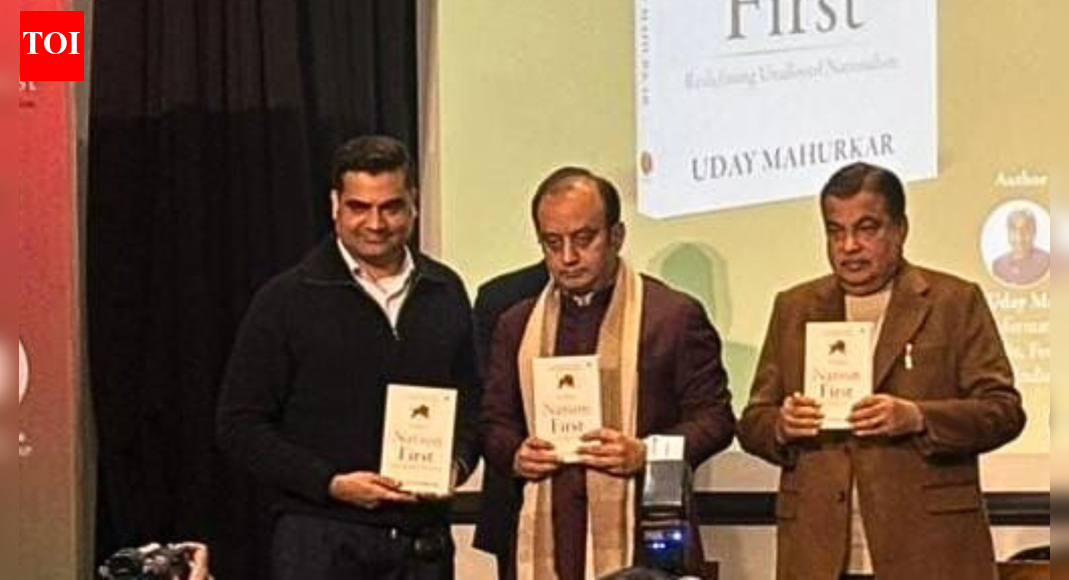
NEW DELHI: Union minister Nitin Gadkari on Tuesday said that the the idea of ‘Nation First’ goes beyond slogans and requires an honest understanding of our history, identification of systemic gaps, and building future capabilities.“Modernisation must be rooted in civilisational confidence, not blind imitation. My Idea of Nation First meaningfully enriches national discourse,” he said.The Union minister was speaking at the launch of the book ‘My Idea of Nation First: Redefining Unalloyed Nationalism’ in New Delhi.The event was also attended by BJP leader Sudhanshu Trivedi and retired lieutenant general VG Khandare.The author, Uday Mahurkar, said his book did not glorify or vilify personalities but evaluated ideas and decisions from the perspective of national interest.“A strong nation engages openly with its past. My Idea of Nation First offers an unalloyed definition of nationalism—rooted in truth, cultural continuity, and responsibility—helping readers understand India’s unity and civilisational strength beyond distortions,” he said.


Source link

Ulhasnagar Municipal Corporation takes action against sub standard road construction | Mumbai News


Ulhasnagar: The Ulhasnagar Municipal Corporation (UMC) has taken strong action against alleged substandard road construction after cracks were found on two key under-construction roads in the city. Acting on complaints and a joint inspection report, the UMC has instructed the Mumbai Metropolitan Region Development Authority (MMRDA) to get the damaged portions of the roads demolished and reconstructed at the contractor’s cost and also get filled some cracks.The affected roads include the stretch from Netaji Chowk to Kailash Colony and another from New English School to Lal Chakki. These roads are being developed at an estimated cost of Rs 52 crore and are considered important connectivity routes within Ulhasnagar. Cracks were reportedly noticed at multiple locations, raising serious concerns about the quality of construction.Following UMC’s directions, the MMRDA issued a notice to the contractor, Nikhil Construction Group Pvt Ltd, stating that a third-party quality inspection would be conducted through a reputed technical institute such as VJTI. The notice also clarified that all costs related to testing, reporting, and further investigation would be borne by the contractor. Until a satisfactory quality assessment report is submitted and all rectification works are completed, payments to the contractor have been withheld.The road construction work has been underway for over two years and has repeatedly drawn criticism for slow progress and poor workmanship. Social activists from the Ulhasnagar Citizens Forum had raised several complaints regarding the quality of the work, prompting the civic administration to intervene.Sources said that after receiving the complaints, UMC Commissioner Manisha Awhale directed a joint inspection of the project. The inspection team included officials from the public works department, representatives of the contractor, and other concerned agencies. During the inspection, cracks were found at several locations, including Netaji Chowk, Bhatiya Chowk, Kurla Camp Chowk, near Chhatrapati Shivaji Maharaj statue entrance, and Kailash Colony.Based on the findings, the UMC instructed that minor cracks be filled immediately, while severely damaged sections—where repairs were deemed ineffective—be demolished and reconstructed entirely. Acting on these recommendations, project management consultant Pentacle Consultants issued a formal directive to the contractor to comply with the instructions.Satyajit Burman, a social activist who highlighted the issue, told TOI, that the road contract was awarded in April 2023 with a completion timeline of 18 months. “Even after two-and-a-half years, the work is progressing at a very slow pace and the quality is unacceptable,” he said.Further action will depend on the outcome of the third-party quality inspection, officials said


Source link

Are chia seeds more effective for weight loss in water or in milk |


Are chia seeds more effective for weight loss in water or in milk

From a familiar presence in kitchens and gym bags to café menus, chia seeds have been widely promoted as an easy addition to support weight control. If you’re trying to make sense of this advice, you may have noticed conflicting suggestions about how they should be consumed. Some swear by soaking chia seeds in plain water; others like to stir them into milk for a thicker, more filling option. These choices aren’t just about taste or texture. The liquid used changes the way chia seeds release nutrients, how they are digested, and how they affect appetite and energy balance. Examining these differences closely might help you figure out how chia seeds can be your way, instead of making assumptions that one method will automatically give you more weight loss.

Why chia seeds behave differently in water and milk

From a functional point of view, chia seeds are highly adaptable; therefore, their application in water-based drinks and milk-based dishes. When soaked in water, they form a gel that is light and neutral in flavour, easily consumed on its own. In milk, whether dairy or plant-based, the same seeds become part of a more substantial preparation, almost like a pudding or a smoothie base. Scientific interest in these forms has focused on how soaking affects nutrient release and functionality. Research into water-soaked chia seeds published in Food Research International has demonstrated the effects of hydration on the release of lipids and polyunsaturated fatty acids such as omega-3 and omega-6, while a separate study on the protein of chia seeds published in Applied Food Research underlines how these seeds interact with protein-rich liquids such as milk. Considering this evidence altogether, there is an indication that both methods are valid but for different nutritional purposes and not necessarily competing against each other.

Water vs milk: How the nutrition profile of chia seeds shifts

The chia seeds vary in nutritional profile depending on the liquid used. In water, they add fibre, a bit of healthy fat, and some micronutrients while not contributing extra calories or protein, which keeps intake overall modest. In milk, it’s a different equation: Milk adds protein, calcium, and sometimes additional fat, moving the nutritional complete serving up a notch. When it comes to weight loss, protein is useful because it allows satiety and can preserve lean mass, but does raise total calorie intake. The difference isn’t in the chia seeds themselves; it’s just a question of whether one is seeking a low-energy additive or a full, added nutrient component in something.

How different liquids change the way chia seeds digest

Of course, chia seeds strongly act upon digestion due to their gel-forming fibre. This gel, when taken with water, remains fairly intact and slows down the movement of food through the digestive tract. This can prolong fullness and reduce the urge to snack soon after. Digestion becomes more complicated with milk-based preparations. Milk proteins and fats associated with the chia gel result in a more sluggish yet resource-intensive digestion process. This may suit people who require sustained energy over several hours, but it can be heavier for those with sensitive digestion or lower energy requirements.

Do chia seeds affect blood sugar differently in milk?

When it comes to weight loss, blood sugar control becomes one of the central themes. Water-soaked chia tends to have a neutral effect because there are no sugars present, and it dampens carbohydrate absorption from other foods eaten concurrently with chia. This may help establish stable energy levels. Milk adds natural sugars, and depending on the type, more or less fat. Even though protein and fat blunt rapid spikes in glucose, overall glycaemic response will depend on portion size and timing. For those people, preparations with milk help them avoid crashes of energy, while others prefer the minimal input of blood sugar by keeping things as simple as water.

Water or milk: Which fits weight loss better?

The other question is how each one fits into the daily energy balance when weight management is the desired goal. Water-based chia drinks have been used as an appetite aid and can provide some reduction in portion sizes at subsequent meals. Milk-based chia servings function more as small meals and may become a replacement for higher-calorie snacks. Neither approach alone is guaranteed to ensure weight loss. The effect depends on whether the preparation leads to a net reduction in calorie intake over time or simply adds another source of energy to the day.

Water or milk for chia seeds: A quick comparison

Aspect Chia seeds in water Chia seeds in milk
Calorie contribution Very low Moderate, depends on milk
Protein content Minimal Higher due to milk
Satiety effect Volume and fibre driven Fibre plus protein driven
Digestion speed Slower gastric emptying Slower but more complex digestion
Typical use Appetite control Meal or snack replacement
Texture and mouthfeel Light, gel-like, drinkable Thick, creamy, pudding-like

Practical ways to include chia seeds in your daily diet

Knowing the effective use of chia seeds involves preparation that matches your routine rather than a single rule. Both water and milk versions can be weight, friendly when used consciously and in the right amounts. In this case, if a better appetite is your main concern, soak chia seeds in water before meals. Use milk, based chia preparations when you are substituting a snack or light meal. Cut back on portion sizes to take into account the extra calories from milk. Depending on whether the question is more about digestion or just an energy need, one option may be better than the others for different times of the day.Also Read | Everyday foods that quietly harm your brain: Sausages, energy drinks, chewing gum and more


Source link

‘Nothing less than harassment’: Odisha school athletes made to sit near train toilets on way home; probe ordered | Bhubaneswar News


‘Nothing less than harassment’: Odisha school athletes made to sit near train toilets on way home; probe ordered

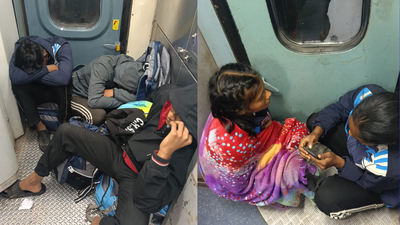
BHUBANESWAR: The school and mass education department on Monday ordered an inquiry into the incident where school students were made to sit near toilets in a train due to lack of confirmed tickets during their return journey to Odisha after participating in the 69th National School Games in Uttar Pradesh.The department sent 18 student athletes — 10 boys and 8 girls — from different schools of the state along with four teachers to Uttar Pradesh to take part in the National School Games, which took place from Dec 8 to 12. They travelled from Bhubaneswar to Ballia in Uttar Pradesh by train on Dec 5 and returned on Dec 14. However, the journey, they said, was nothing less than harassment as their train tickets were not confirmed by the department authorities.

Bhubaneswar Headlines Today — The Biggest Updates You Need to Know.

Parents of the students alleged that while on their way to Uttar Pradesh, only four tickets were confirmed, and they managed to reach by adjusting in some seats and sleeping on the floor in the general compartment. However, on their return journey, none of the tickets were confirmed. All the students and teachers had to sit near the toilets of the general compartment from Uttar Pradesh to Hinjili in Ganjam district. “At Hinjili, the TTE, who himself was a sportsperson, saw us sitting near the toilets and inquired about the tickets. He took sympathy at our condition and offered us seats in different compartments of the train till Bhubaneswar,” said a girl, requesting anonymity.Parents came down heavily on the department for letting the students travel without confirmed tickets. “If tickets of ministers and officials travelling in trains can be confirmed even a few hours before their travel, why could the same not be done for the children who were sent by the department itself? Even girls had to travel in harrowing conditions,” said a parent, Sanjeev Patnaik of Sambalpur.A higher official of the school and mass education department said it has sought a reply from the director of secondary education on the lapses in confirming train tickets for the students. Besides, the department will soon hold a meeting with the railway officials over providing confirmed tickets to students who travel to other places to participate in different competitions.


Source link

Liquidity push: RBI announces Rs 2 lakh crore bond buys and $10 billion swap; steps up support for banking system


Liquidity push: RBI announces Rs 2 lakh crore bond buys and $10 billion swap; steps up support for banking system

The Reserve Bank of India on Tuesday announced a fresh liquidity infusion, unveiling plans to purchase government securities worth Rs 2 lakh crore and conduct a $10 billion dollar-rupee swap auction to ease conditions in the banking system.The central bank said the open market operations (OMO) purchases and the USD/INR buy-sell swap auctions will be carried out between December 29, 2025 and January 22, 2026, as it seeks to ensure orderly liquidity amid evolving market conditions.“On a review of current liquidity and financial conditions, the Reserve Bank has decided to conduct OMO purchases and a USD/INR buy-sell swap to inject liquidity into the banking system,” the RBI said in a statement.

RBI Slashes Rates After Rupee Fall, Boosts Liquidity And Lifts India’s GDP Forecast To 7.3%

Under the plan, OMO purchase auctions of Government of India securities aggregating Rs 2,00,000 crore will be conducted in four tranches of Rs 50,000 crore each. These auctions are scheduled for December 29, 2025, January 5, January 12 and January 22, 2026.In addition, the RBI will hold a USD/INR buy-sell swap auction of $10 billion with a tenor of three years on January 13, 2026. The central bank clarified that the swap will be a simple buy-sell foreign exchange transaction, under which banks will sell US dollars to the RBI and simultaneously agree to buy back the same amount at the end of the swap period.The latest liquidity measures come days after the RBI conducted OMO purchases of Rs 1 lakh crore and a $5 billion dollar-rupee buy-sell swap auction for a three-year tenor.The central bank said it will continue to closely monitor liquidity and financial market conditions and take further steps as required to maintain orderly system liquidity.


Source link

IND-W vs SL-W [WATCH]: Vaishnavi Sharma removes Nilakshika Silva to bags her maiden international wicket during 2nd T20I


Vaishnavi Sharma finally had her moment to cherish on the international stage during the second T20I against Sri Lanka Women. The young Indian off-spinner broke through at a crucial phase, ending a long wait for her first wicket. It was a dismissal that carried both relief and redemption after earlier heartbreak during first game. Smiles all around as teammates rushed in to celebrate a milestone wicket.

IND-W vs SL-W, 2nd T20I: Maiden international wicket for Vaishnavi Sharma

The breakthrough came in the 17th over when Vaishnavi induced a false sweep from Nilakshika Silva, a dismissal that had been threatening to arrive much earlier. Bowling a length delivery drifting into leg stump, Vaishnavi tempted Nilakshika into playing the sweep, but the batter could only manage a top edge. Positioned perfectly at short fine leg, Shree Charani made no mistake this time, completing a straightforward catch to seal the moment.

The significance of the wicket went beyond the scorecard, especially after Charani had dropped a sitter in the same position in the previous game, denying Vaishnavi what should have been her maiden scalp. That missed chance lingered, but this time there was no escape. As the catch was taken, Vaishnavi’s face lit up instantly, followed by a warm hug from Sneh Rana, capturing the emotion of the occasion. Nilakshika departed for 2 off 3 balls, but the wicket symbolized persistence rewarded. Vaishnavi finished with figures 2/32, a modest spell statistically, yet a career-defining one emotionally. It was a reminder that for young bowlers, confidence often begins with that first breakthrough and Vaishnavi finally has hers.

Here’s the video: 

Also READ: IND-W vs SL-W, 2nd T20I: Here’s why Deepti Sharma is not playing today’s match

Shafali Verma’s power-packed fifty sets up India’s emphatic seven-wicket win over Sri Lanka

India delivered a commanding all-round performance to defeat Sri Lanka by seven wickets in the second T20I at Visakhapatnam, sealing the chase with a massive 49 balls to spare and moving 2–0 ahead in the five-match series. After opting to field, India’s bowlers set the tone early, reducing Sri Lanka to 2/1 inside the first over and never allowing them to recover fully.

Chamari Athapaththu and Harshitha Samarawickrama offered resistance with brisk knocks of 31 and 33 respectively, but regular wickets kept Sri Lanka in check. Rana was exceptional through the middle overs, conceding just 11 runs in four overs, while Shree Charani chipped in with two key wickets. Vaishnavi enjoyed a memorable outing, picking up her maiden international wicket and finishing with two scalps. Restrained bowling and sharp fielding ensured Sri Lanka limped to 128/9, a total well below par on a good batting surface.

In reply, India’s chase was headlined by a breathtaking assault from Shafali Verma, who dismantled the Sri Lankan attack with an unbeaten 69 off just 34 balls, striking at over 200. Even after Smriti Mandhana fell early, Shafali and Jemimah Rodrigues stitched together a rapid partnership that effectively ended the contest inside the powerplay. Jemimah’s 26 off 15 provided ideal support, while Harmanpreet Kaur ensured there were no late hiccups before she got departed. India raced to the target in just 11.5 overs, underlining their dominance in all departments and reinforcing their authority in the series with a ruthless, one-sided victory.

Also READ: IND-W vs SL-W: Smriti Mandhana breaks Suzie Bates’ record in T20Is

This article was first published at WomenCricket.com, a Cricket Times company.


Source link

Indian Railways strengthens AI-based system to protect wildlife on railway tracks | India News


Indian Railways strengthens AI-based system to protect wildlife on railway tracks

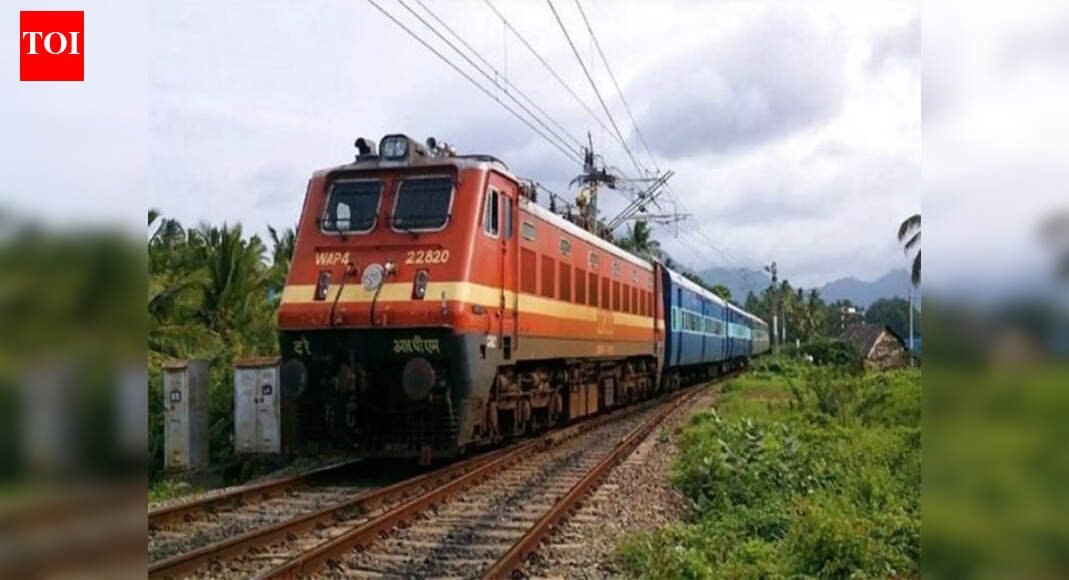
In a groundbreaking move, Indian Railways has rolled out an Artificial Intelligence (AI)-powered Intrusion Detection System (IDS) to safeguard wildlife, especially elephants, lions and tigers, on railway tracks. The cutting-edge technology uses Distributed Acoustic System (DAS) to detect animal presence, alerting loco pilots and control rooms 0.5 kms in advance – a potential lifesaver.The AI-enabled system generates real-time alerts for loco pilots, station masters, and control rooms, enabling swift preventive action. Initially implemented in 141 RKms on Northeast Frontier Railway, the system has been successfully functioning and based on its performance, further tenders have been awarded for 981 RKms for implementation across Indian Railways. With this, the total coverage will extend to 1,122 RKms.

Assam Tragedy: Rajdhani Express Hits Elephant Herd, Eight Killed, Engine And Coaches Derail

This initiative underscores Indian Railways’ commitment to wildlife protection and safe train operations. By harnessing AI and DAS, railways are taking proactive steps to prevent animal casualties, aligning with broader conservation goals.It also sets a new benchmark in balancing railway operations with wildlife conservation. With AI on the watch, elephants, lions and tigers get a safer passage.This comes after an unfortunate incident took place in the Jamunamukh – Kampur section under Lumding Division of N.F. railway on Saturday, in which the Train no. 20507 DN Sairang – New Delhi RajdhExpress dashed with elephants, resulting in derailment of the locomotive and five coaches of the train. Seven elephants have been reported dead with no casualties or injuries to any passengers.Promptly after receiving the information of the crash, Senior railway officers, including the General Manager of N.F. Railway and Divisional Railway Manager of Lumding and Accident Relief trains arrived at the site to carry out the restoration work.He further stated that the incident site is approximately 126 km from Guwahati and is not a designated elephant corridor, adding that the loco pilot, on observing the herd of elephants, applied emergency brakes. However, elephants dashed into the train.Meanwhile, Assam Chief Minister Himanta Biswa Sarma expressed deep sorrow and ordered a probe over the death of seven elephants–three adults and four calves–in a tragic train collision on Saturday. In a statement, the Chief Minister said, “We are deeply saddened by the death of seven elephants–three adults and four calves–in a tragic train collision earlier today. I have directed the Forest Department to conduct a detailed enquiry on this deeply disturbing accident and take steps to further secure our wildlife corridors, particularly during low visibility seasons.”Moreover, Rajya Sabha MP Sukhedu Sekhar Roy, in a letter to Railway Minister Ashwini Vaishnaw on Saturday, drew attention to this incident, noting that such incidents recur due to trains exceeding speed limits in designated elephant corridors.He described these deaths not as accidents but as the result of human negligence, pointing out that speeding trains have become a recurring threat to elephants and other wildlife.


Source link

Sena (UBT)-MNS alliance won’t impact BMC poll outcome; Mahayuti will win, says BJP | Mumbai News


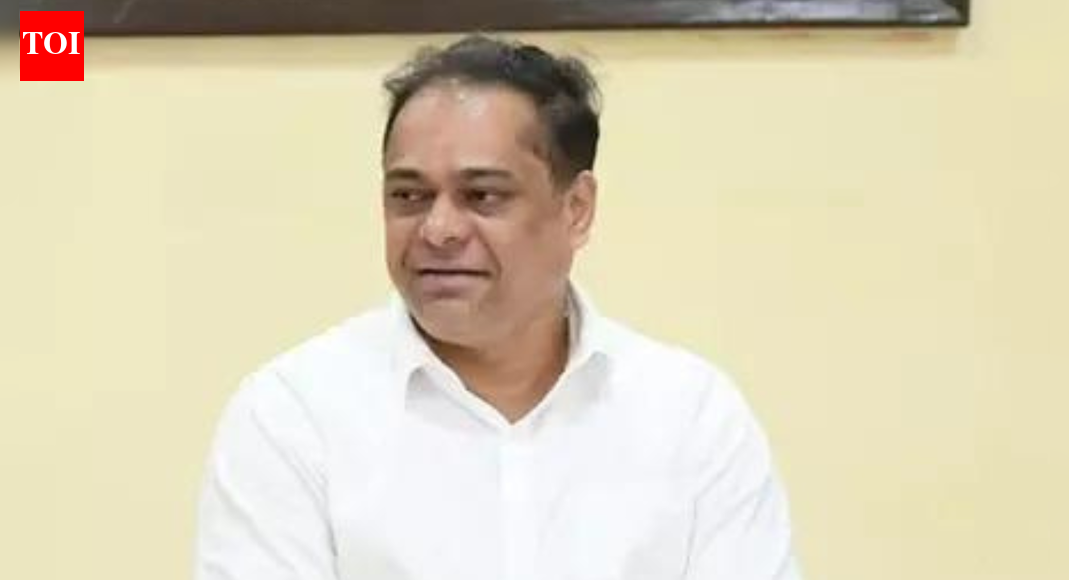
Mumbai BJP president Ameet Satam (File photo)

MUMBAI: The BJP on Tuesday downplayed the potential alliance between the Shiv Sena (UBT) and the Maharashtra Navnirman Sena (MNS) for the Mumbai civic elections, saying the tie-up will have no impact on the poll outcome.Mumbai BJP president Ameet Satam made the remarks after Shiv Sena (UBT) leader Sanjay Raut hinted that an alliance between the parties led by cousins Uddhav and Raj Thackeray would be announced on Wednesday.In a post on X, Raut shared a picture of Shiv Sena (UBT) chief Uddhav Thackeray and his cousin, MNS president Raj Thackeray, with the caption “tomorrow at 12 pm”.“There will be no impact on the outcome of the BMC elections, even if the Thackeray cousins come together and contest the polls,” Satam told a regional news channel.

After Harassment Charge, BJP Leader Nazia Elahi Khan Dares IndiGo To Blacklist Her

He claimed that the people of Mumbai have decided to vote in large numbers in favour of the BJP-led Mahayuti.“I believe Mumbaikars have made up their mind to support the BJP-led Mahayuti, and the mayor will be elected from our corporators only,” Satam added.The elections to the Brihanmumbai Municipal Corporation, Asia’s largest civic body, will take place on January 15, and the results will be declared the next day.Echoing Satam, his party colleague and state minister, Pankaj Bhoyar, said the Thackerays decided to set aside their personal differences after realising that they no longer enjoy public support.“There is no impact of their alliance on the Mahayuti’s prospects in the BMC polls,” he told reporters in Jalna.Bhoyar said the BJP-led Mahayuti will win the BMC polls on the back of extensive development work carried out by the state government.“Surveys and ground reports clearly indicate that people will once again support development-oriented governance,” he added.Queried on the alliance strategies for civic bodies, Bhoyar said the BJP would take decisions based on local circumstances and political conditions. PTI ND COR ARU NSK


Source link