Breaking News
England captain Ben Stokes opens up on another Ashes series defeat in Australia


England captain Ben Stokes has spoken candidly about the emotional toll of another Ashes setback in Australia, admitting that the team’s long-held ambition of winning the urn away from home has ended after the third Test in Adelaide. However, despite Australia’s commanding 3-0 lead, Stokes insists England will continue to fight hard in the final two matches of the series.

England captain reflects on pain of another Ashes defeat in Australia

Following Australia’s victory at the Adelaide Oval, which sealed Ashes retention with two Tests to spare, Stokes said the reality of defeat “hurts and sucks,” especially given the hopes England carried into the tour.

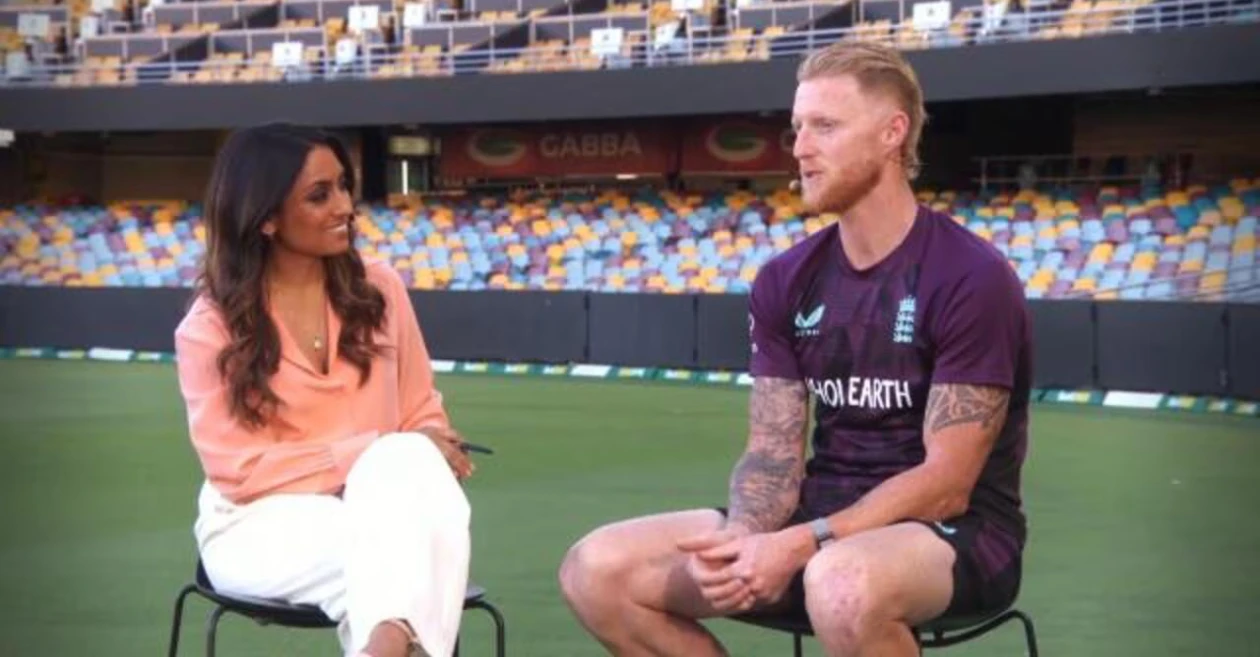
Speaking to Isa Guha after the loss, Stokes admitted England arrived in Australia with a clear objective – to become one of the few touring sides to conquer an Ashes series Down Under. That ambition, he acknowledged, has now slipped away.

“We came out here with a goal in mind,” Stokes said, adding that the dream of lifting the urn in Australia “is now over.” He described the dressing room atmosphere as “hurting and quite emotional,” reflecting the weight of another failed campaign on Australian soil.

Stokes was forthright in conceding that Australia have simply been better across the opening three Tests, executing their skills with greater consistency in all departments—batting, bowling and fielding.

Another grim milestone for England in Australia

The Adelaide defeat extended England’s winless streak in Australia to 18 Tests, dating back to their famous triumph in the 2010-11 Ashes series. Stokes admitted that statistic was difficult to digest, particularly given the manner of this year’s losses.

He noted that losing the series within just 11 days of cricket made the outcome even more painful, underlining how decisively Australia have seized control. According to the England skipper, his side repeatedly faltered at crucial moments, allowing pressure to overwhelm them while Australia remained ruthless.

Stokes revealed that he warned his team early in the series about the importance of handling pressure in Australia – a challenge England ultimately failed to meet.

Missed chances and pressure moments prove costly for England

Reflecting on the first three Tests, Stokes pointed to a pattern of England “folding” when the game was in the balance. Whether through batting collapses or missed opportunities with the ball, England were unable to sustain momentum, allowing Australia to capitalise decisively.

In contrast, Australia’s ability to strike at critical junctures proved the difference, turning competitive situations into match-defining passages.

Also READ: Fans go berserk as Australia retain the Ashes with a 3-0 lead at the Adelaide Oval

Stokes urges team to show resilience in final Tests

Despite the unassailable deficit, Stokes was adamant that England will not simply see out the series. He insisted the team would not “just fall over and let this series play out,” vowing that England would give “absolutely everything” in the remaining two Tests.

With memories of the 5-0 whitewash in past tours still fresh, Stokes stressed the importance of pride and resistance. He challenged his players to show “a bit of dog,” using the hurt of Adelaide as motivation to be tougher and more consistent.

As the 2025-26 Ashes series moves forward, England’s objective is no longer about reclaiming the urn but about restoring belief and competitiveness.

Also WATCH: Nathan Lyon’s deadly spin sends Harry Brook packing on Day 4 of Adelaide Test


Source link

Investor onboarding loses pace: Fresh equity registrations fall 11% in November; total base stands at 12.3 crore


Investor onboarding loses pace: Fresh equity registrations fall 11% in November; total base stands at 12.3 crore

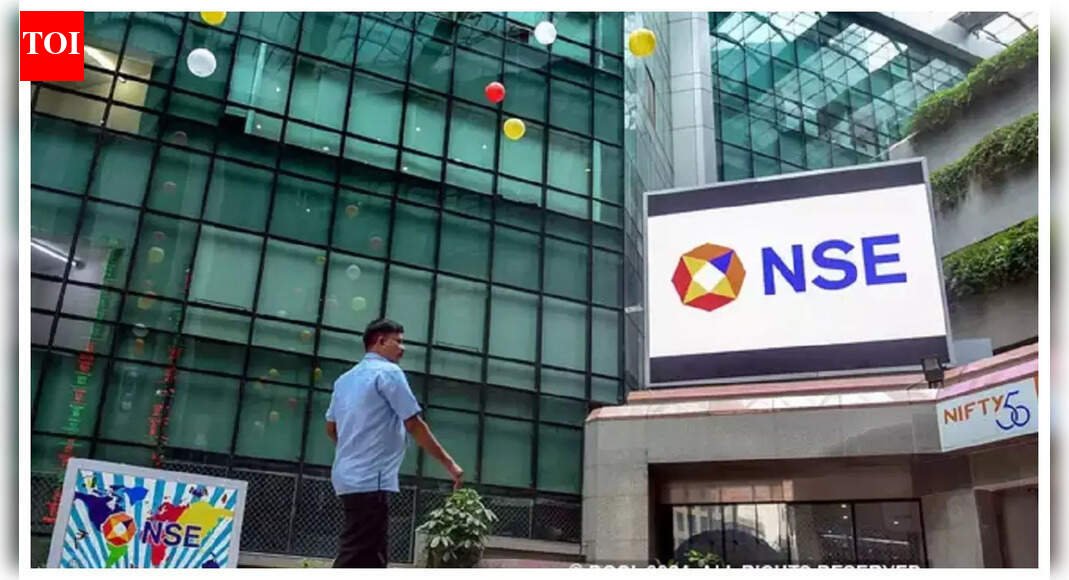
India’s equity markets saw investors joining at a slower pace in November, just 13.2 lakh investors were added during the month during the month. This was a 11.6% dip from October, as the growth was dragged down by uncertainty in global markets continued to temper risk appetite, data released by the National Stock Exchange (NSE) showed.With these additions, the total number of registered investors reached 12.3 crore by the end of November 2025. The slowdown came after two months of steady improvement in registrations, signalling a pause in the recent rebound. The NSE noted, “The pace of additions moderated during the month, declining 11.6 per cent MoM after two consecutive months of sequential increases.” The report pointed out that investor sign-ups have remained uneven throughout calendar year 2025. While short phases of stronger growth were seen between May and July and again in September and October, the broader trend has been one of moderation. Global headwinds and persistent volatility have weighed on confidence, making many potential entrants wary of entering equity markets. Data from the exchange also showed that the rapid expansion seen in the previous year has lost momentum. Last year in February, the investor base crossed 9 crore. By August 2024, the number moved to 10 crore and touched 11 crore in January 2025, with each milestone achieved within five to six months. On the other hand, the next crore took significantly longer, with nine months required to move from 11 crore to 12 crore. Between January and November 2025, the NSE added an average of 12.8 lakh investors every month, taking total additions during the period to 1.4 crore, drastically lower than the same period in 2024, when average monthly additions were 19.3 lakh, translating into 2.1 crore new investors.On the regional front, north India continued to dominate with an investor participation of 4.5 crore investors as of November 2025. West India stood at the second position with 3.6 crore investors. South India and east India ALSO recorded 2.6 crore and 1.5 crore investors, respectively. Year-on-year growth remained positive across most regions. All parts of the country reported growth of over 15% in November, except West India, where investor growth lagged at 11.6%. Overall, the NSE data indicated that although India’s equity investor base is still expanding, the rate of new investor additions has slowed during 2025 as global uncertainty continues to influence participation.


Source link

Access Denied


Access Denied

You don’t have permission to access “http://www.ndtv.com/india-news/indian-railways-fare-hike-train-ticket-cost-ac-class-fare-ordinary-class-fare-9859275” on this server.

Reference #18.adf856b8.1766308161.1690f06c

https://errors.edgesuite.net/18.adf856b8.1766308161.1690f06c


Source link

‘He respected the game’: R Ashwin explains how Ishan Kishan earned his T20 World Cup recall | Cricket News


'He respected the game': R Ashwin explains how Ishan Kishan earned his T20 World Cup recall

Ishan Kishan’s road back to India’s T20 World Cup squad has been long and uncomfortable. Pushed out of the national setup in 2023 and left on the sidelines for months, Kishan has now forced his way back into contention with performances that were impossible to overlook. His return has been powered by a dominant Syed Mushtaq Ali Trophy campaign. Leading Jharkhand, Kishan guided the side to its first-ever title in the tournament. He finished as the leading run-scorer with 517 runs from 10 matches at a strike rate of 197, underlining his impact with a match-winning 101 off 49 balls in the final against Haryana.

Ajit Agarkar and Suryakumar Yadav press conference: On dropping Shubman Gill and other tough calls

The numbers alone made a strong case, but the bigger story was the path Kishan chose. Speaking on his YouTube channel, Ravichandran Ashwin framed the comeback as something earned, not gifted. “Cricket has given Ishan Kishan a gift,” Ashwin said. “People on the outside can guess whether it was fair or unfair, but life comes back in a circle. The reason Ishan was not in the side and why he is in the team now is because of one thing: he gave cricket the respect it deserves.” Ashwin explained that Kishan never viewed domestic cricket as a step down, but as the only way back. “In first class, he even came to play the Buchi Babu Invitational,” Ashwin said. “A player like Ishan Kishan came to play the Buchi Babu tournament in Chennai for Jharkhand.” From there, Kishan stayed involved throughout Jharkhand’s Ranji Trophy preparations and delivered when opportunities came. “He was there for Jharkhand, he was number one in preparation, and in first-class cricket he scored runs,” Ashwin said. “In the Syed Mushtaq Ali Trophy, he led Jharkhand and performed. It is because of this.” Addressing the debate around Kishan’s removal from the team and contracts in 2023, Ashwin dismissed the idea that off-field factors played a role in his return. “It is not about Ishan Kishan the person,” Ashwin said. “It is about Ishan Kishan the cricketer who went through the yards of the game, respected the game, and hence succeeded.”


Source link

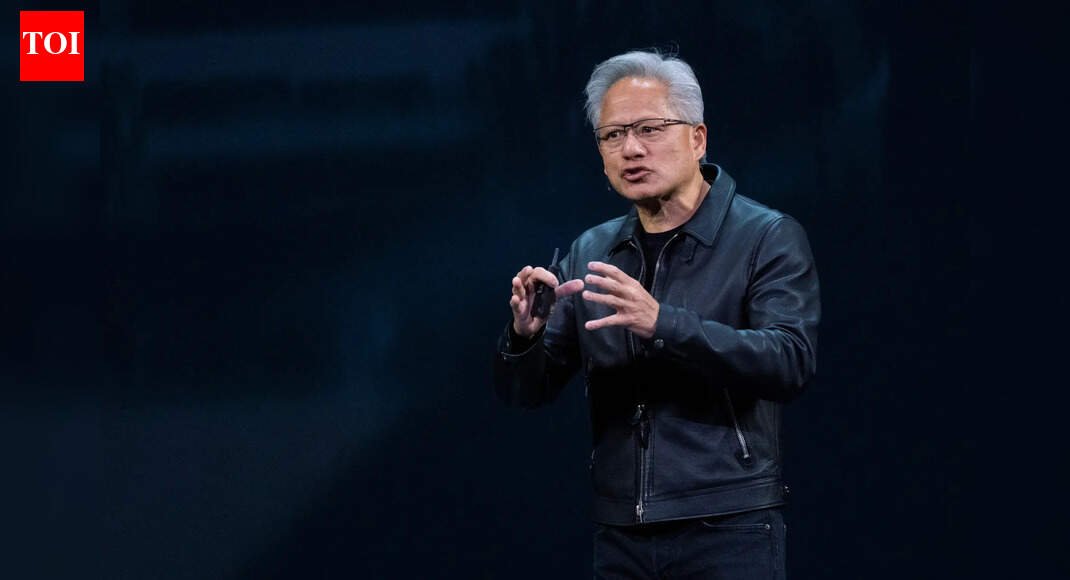
Nvidia CEO Jensen Huang on his ‘warning and clarification’ to Americans that China is winning the AI race: Let me simplify this …


Nvidia CEO Jensen Huang on his 'warning and clarification' to Americans that China is winning the AI race: Let me simplify this ...

Nvidia CEO Jensen Huang’s recent apparent comment that China is winning the AI race made headlines across America. It went so ‘wild’ that the Nvidia CEO had to issue a clarification. During a fireside chat at the Center for Strategic and International Studies this month, Huang directly spoke about his statement on Chinese AI dominance vs America’s. CSIS President John Hamre asked Huang what he termed “very provocative”: You said something recently that was quite provocative. You said that China was winning the AI race, the AI competition. I know that you’ve got a powerful competitor in Huawei, and Huawei has a lot of advantages you don’t have. Why don’t you describe this competition? Are we really losing?In his reply to Hamre, Huang said, “And it apparently caught a lot of attention. As you know with headlines, the disclaimer part, the foundation part was left out of the headline. But the way to think about that is that let me just handicap it right now. If you look at AI and go back to the first thing that we said, AI is a five layer cake. Let’s just always simplify it. It’s not quite this simplistic, but let’s simplify AI into a five layer cake. Energy, chips, infrastructure, models, and applications. And let’s handicap it from bottom to top. At the lowest level, China has twice the amount of energy we have as a nation.”

China dominance in Energy is one of the ‘deal breakers’

“Twice as much energy as we have as a nation. And our economy’s larger than theirs. Makes no sense to me. We also know that one of the most important initiatives, one of the most important policies of this administration. And there was the first thing that President Trump said to me when we met: “Listen, we need to reindustrialize America. We need to do onshore manufacturing again. We need to help America make things again.” It’s going to create jobs. That part of the economy has been offshore and completely gutted the United States. We need to bring that back and he needs my help to do so. And so, that entire sector of the economy is missing,” Nvidia CEO went on to add. Then Huang added the energy problem that America is facing, where China is miles ahead. While talking about the same Huang did give a compliment to President Trump, saying that he is trying his best to solve the problem. “And however, without energy, how do we build chip plants, computer system plants, and these AI data centers? We call them AI factories. We’re simultaneously building three different types of factories in the United States. Chip factories, super computer factories, and AI factories, they all require energy, every single one of them. And so on, the one hand, we want to reindustrialize the United States. How do you do that without energy? And so, the fact that we vilified energy for so long, President Trump sticking his neck out, and taking it on the chin, and helping the country realize that energy is necessary for our growth, is really one of the greatest things he’s done right off the bat,” Huang said.

America is generations ahead in Chips

He said that while America is 50% of China in energy, the country is generationals ahead in Chips. But at the same time warned that the country cannot afford to be complacent. As semiconductors is a manufacturing process and anybody who thinks China can’t manufacture is missing a big idea. “And so, now at the energy level, back to that stack, we’re 50% and they’re growing straight up. We’re kind of flat right now. And so, number one, energy. Number two, chips. We’re generations ahead. We are generations ahead on chips, and I think everybody recognizes that. Number three, infrastructure. If you want to build a data center here in the United States, from breaking ground to standing up an AI supercomputer is probably about three years. They can build a hospital on a weekend. That’s a real challenge. And so, at the infrastructure layer, their velocity of building things, because they are builders. Their velocity of building things is extraordinarily high. Now, really quickly on chips. We’re several generations ahead, but don’t be complacent. Remember, semiconductors are a manufacturing process. Anybody who thinks China can’t manufacture is missing a big idea,” Hunag said.


Source link

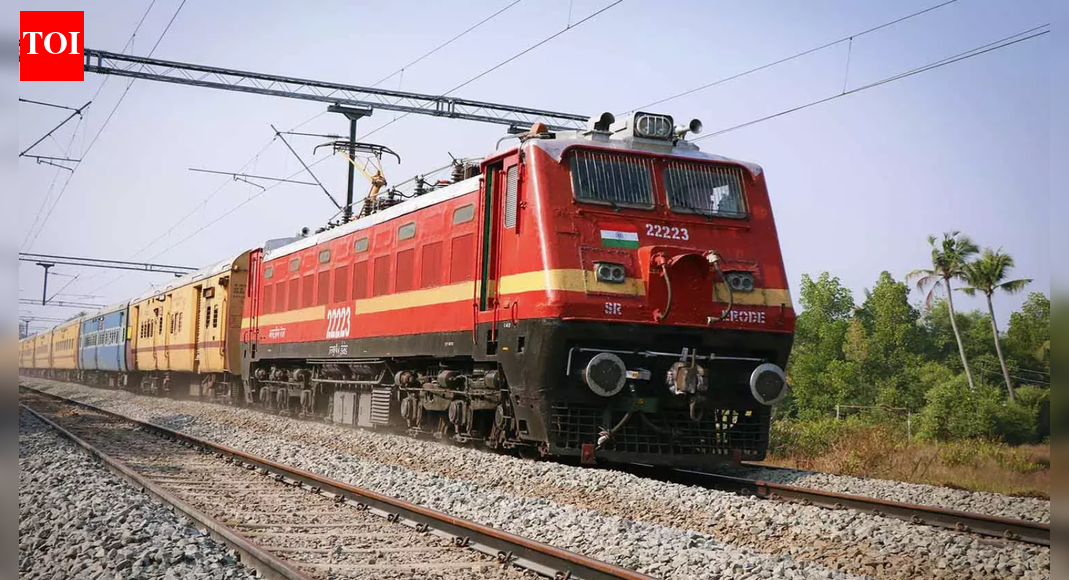
Train travel gets costlier: Indian Railways to earn Rs 600 crore — here is how much your ticket will cost now


Train travel gets costlier: Indian Railways to earn Rs 600 crore — here is how much your ticket will cost now

Indian Railways on Sunday announced a revised fare structure for passengers that will come into effect from December 26, as part of a fare rationalisation exercise to address rising operational and manpower costs.According to the Railways, the revised fare structure is expected to earn approximately Rs 600 crore in during the current year.Here’s the new price structure:

  • Passengers travelling up to 215 km in Ordinary Class will continue to pay the existing fares.
  • For longer distances, marginal revisions have been introduced. Ordinary Class passengers travelling beyond 215 km will see fares rise by 1 paise per kilometre.
  • Passengers travelling in non-AC coaches on Mail and Express services will pay 2 paise more per kilometre from December 26. This will translate into an additional Rs 10 for a 500 km journey.
  • Fares for AC class passengers on Mail and Express trains will also increase by 2 paise per kilometre from December 26.
  • Suburban and monthly season tickets will see no price increase.

Why the prices are hiked?

The decision follows a period of rapid expansion in the railways’ network and services over the past decade. With operations scaling up and a stronger focus on safety, manpower requirements have increased significantly. Manpower costs have risen to Rs 1,15,000 crore, while pension expenditure now stands at Rs 60,000 crore. Overall operational expenditure for 2024–25 has reached Rs 2,63,000 crore. To address these financial pressures, the Railways is relying on a combination of higher cargo loading and limited passenger fare rationalisation. Officials said these efforts have contributed to improved safety outcomes and better operational performance. India has now become the second-largest cargo-carrying railway system globally, reflecting the scale of its freight operations. The Railways also highlighted the successful mobilisation of more than 12,000 trains during the recent festival season as an indicator of enhanced efficiency.


Source link

UST–IIT Madras partnership aims to speed up healthcare startup growth | Mumbai News


MUMBAI: In a quiet but consequential move that reflects the growing convergence of deep technology, healthcare, and institutional capital, UST has signed a Memorandum of Understanding with the IIT Madras Incubation Cell to accelerate research-driven startups in healthcare and life sciences. The partnership brings together corporate scale and academic depth, signalling a more structured approach to nurturing India’s next wave of high-impact, science-led ventures.Anchored at Indian Institute of Technology Madras, IITMIC has emerged as one of the country’s most active deep-tech startup hubs. The MoU establishes a collaborative framework through which UST and IITMIC will jointly identify high-potential startups, support them with targeted mentorship and conditional funding, and help translate early-stage innovation into pilots, proof-of-concepts, and eventual market-ready solutions. The agreement is designed to be scalable yet flexible, allowing industry needs, research pathways, and startup maturity to align without bureaucratic friction.As a first step, the partners jointly rolled out Pitch to Win: Pharma 4.0, an innovation challenge conducted with Pfizer as Knowledge Partner and Amazon Web Services as Technology Partner. The response was telling: over ninety startup applications poured in from 32 cities across India, underscoring both the geographic spread and growing confidence of India’s healthcare and life sciences startup ecosystem.From this pool, ten finalists were shortlisted and underwent a month-long mentorship programme led by UST, before pitching to a distinguished jury at IITMIC in Chennai. The final outcomes reflected a blend of scientific ambition and commercial promise. Nucleo-Vir Therapeutics emerged as the winner, followed by ChemBioSens as first runner-up and LN Infosphere Tech Transformers as second runner-up. The three startups received cash awards of Rs. 1.25 lakh, Rs. 75,000 and Rs. 50,000 respectively. Beyond this, UST announced total conditional funding support of up to Rs. 45 lakh for the winners, along with go-to-market and strategic advisory support.For UST, the partnership is part of a broader rethinking of how enterprises engage with early-stage innovation. Manu Gopinath, President, UST, described the collaboration as more than a sponsorship exercise. “Our partnership with IIT Madras Incubation Cell is a strategic leap in how we harness deep tech innovation across industries. With IITMIC’s proven incubation ecosystem and access to cutting-edge research, we are not just backing startups; we are nurturing bold founders, accelerating research-driven ideas, and building a strong pipeline of solutions that can transform businesses, communities, and society at large. By combining IITMIC’s cross-domain innovation capabilities with UST’s global reach, industry partnerships, and mentorship, we are creating a scalable platform to bring impactful, next-generation technologies from the lab to the market,” he said.From the incubator’s perspective, the value lies in sustained industry engagement. Dr. Tamaswati Ghosh, Chief Executive Officer, IITMIC, noted, “This collaboration with UST reflects our shared vision to advance India’s deep-tech innovation landscape, particularly in healthcare and life sciences. Through initiatives like Pitch to Win: Pharma 4.0, we’re not only nurturing high-potential startups but also building bridges between academia, industry, and investors to scale impactful solutions that can improve lives globally.Taken together, the partnership points to a maturing innovation ecosystem—one where startups are no longer expected to navigate the long road from lab to market alone, but are supported by structured alliances that combine research credibility, corporate mentorship, and patient capital within India’s evolving Life Sciences 4.0 landscape.


Source link

Plaintiffs in the first lawsuit against the $100K entry-fee for H-1B workers approach court to seek urgent relief


A coalition of US healthcare providers, educational institutions and employers have moved to court seeking urgent relief from the Trump administration’s controversial $100,000 entry-fee for H-1B workers, which was announced on Sept 19, via a proclamation. They have sought an immediate block on its enforcement and nationwide protection for affected employers.In two new filings before the US District Court for the Northern District of California, the plaintiffs have sought a preliminary injunction to pause the fee while the case is heard, and certification of a nationwide class to ensure that any relief granted applies uniformly across the country. The filings argue that the six-figure entry-fee imposed through a presidential proclamation is unlawful, arbitrary and beyond the executive’s authority, and is already disrupting medical care, education and local economies.

Trump’s H-1B Visa Chaos: Jobs At Risk, Families Traumatised As Wait Pushed To Late 2026

The legal challenge follows an earlier lawsuit filed by these plaintiffs on Oct 3 (duly reported by TOI), which questioned the Trump administration’s decision to bypass Congress and impose an unprecedented and unauthorised cost on the H-1B visa programme.Soon after this coalition led by Global Nurse Force filed the lawsuit (it was the first to challenge the entry fee), the Trump administration issued a new guidance seemingly backtracking on one of the proclamations’ most extreme provisions. It now stated that the fee may not apply to certain individuals already in the US who are in the process of changing their immigration status. For instance, the fee would not apply in case of an F-1 student who has transitioned to an H-1B visa ‘while’ in the US. However, the coalition points out that the fee remains in effect in many circumstances, harming students, workers, and employers in America.The new court filings seek to immediately halt enforcement of the fee, which applies to employers hiring doctors, nurses, teachers, engineers, researchers and other highly skilled professionals, regardless of their size or public-service role.The plaintiffs are represented by several advocacy groups, including Democracy Forward and the South Asian American Justice Collaborative (SAAJCO); and IMMpact litigation (a joint venture of four law firms).Kalpana V. Peddibhotla, executive director, SAAJCO, said: “South Asians comprise the majority of H-1B workers and are deeply woven into the US economy. By seeking class certification and a preliminary injunction, we seek to halt the proclamation’s imposition of an unlawful $100,000 H-1B fee and this attack on immigrant workers who make a difference to our day to day lives.” “If upheld, the Proclamation would establish a dangerous precedent by permitting the Executive Branch to impose sweeping financial barriers on lawful immigration programs without congressional authorization,” she added. The challenge mounted by healthcare providers and educational institutions is not the only one confronting the Trump administration’s $100,000 H-1B fee. The US Chamber of Commerce has also filed a separate lawsuit, arguing that the entry fee is unlawful, economically damaging and undermines the statutory H-1B framework enacted by Congress. In a further escalation, a coalition of 20 US states has more recently moved the courts, contending that the proclamation unlawfully shifts immigration policy by executive fiat and harms state economies, public services and employers reliant on skilled foreign workers. Together, the cases signal widening institutional resistance to the fee and raise the prospect of a broader judicial reckoning over the administration’s authority to impose sweeping immigration costs without legislative approval.


Source link

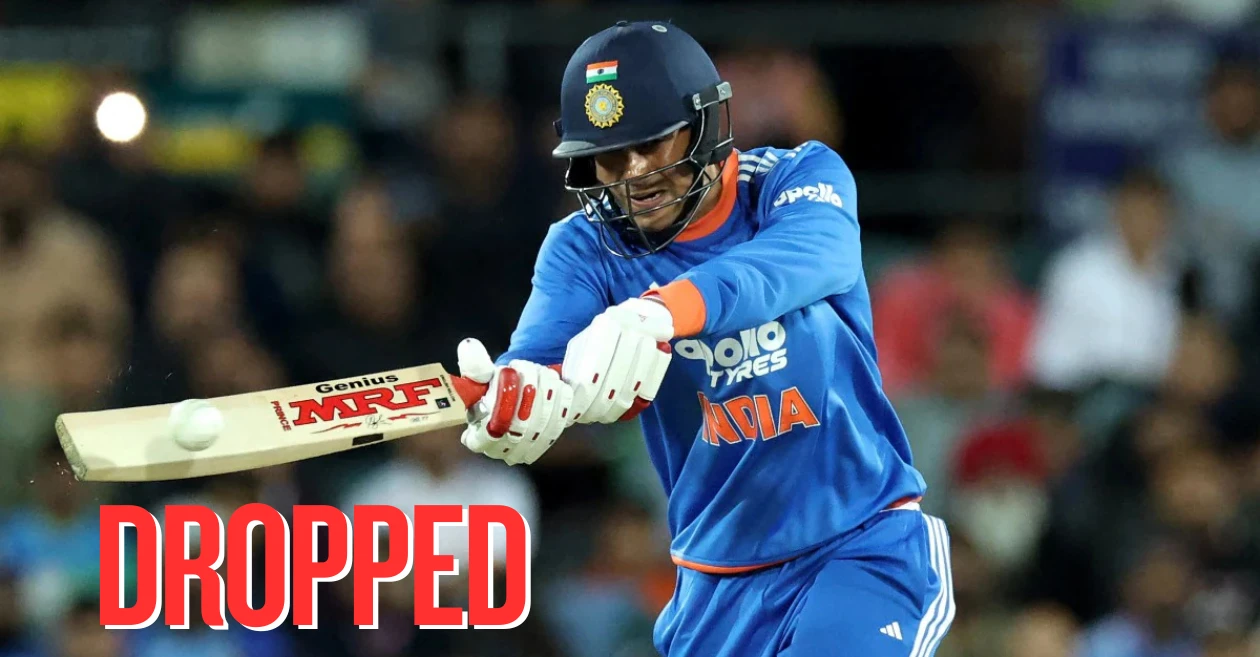
Key reasons why Shubman Gill was dropped from India’s T20 World Cup 2026 squad at the last moment


India’s selection panel has taken a bold, tactical call by leaving Shubman Gill out of the ICC Men’s T20 World Cup 2026 squad, prioritising explosive starts and late-innings flexibility over a traditional top-order anchor.

Why no Shubman Gill is India’s T20 World Cup squad?

According to officials, the decision was driven by form trends and the specific template the team wants to execute in World Cup conditions.

The selectors felt Gill’s recent T20I returns and limited impact in the powerplay did not align with the desired top-order balance. Instead, they preferred a structure built around two wicketkeeper-openers and an additional finisher – an approach aimed at maximising scoring in the first six overs while preserving depth for the death.

Current form and powerplay output prove costly for Gill

Gill’s omission follows a prolonged lean patch in T20Is. He has gone 18 innings without a half-century and has struggled to accelerate consistently during the powerplay – an area the selectors explicitly targeted for more aggression. The panel’s view was that World Cup matches demand immediate pressure at the top, and India wanted batters who can change gears from ball one.

Selection chair Ajit Agarkar acknowledged Gill’s current struggles, noting he was “short of runs at the moment.” Gill’s recent home series against South Africa yielded scores of 4, 0 and 28, and he then missed the final two T20Is due to a minor niggle – factors that weighed into the final call.

Two wicketkeeper-openers shape India’s top order

India’s decision to back Sanju Samson and Ishan Kishan as wicketkeeper-batters who can both open was pivotal. This pairing gives the side immediate attacking intent at the top while retaining flexibility across match-ups and conditions.

By locking in two keeper-openers, the selectors freed up a valuable slot elsewhere in the XI – one that could be used to bolster finishing power without sacrificing balance.

Also READ: 7 Indian players who featured in T20 World Cup 2024 but won’t play in 2026 edition

Extra finisher tips the scales

The restructured top order allowed India to accommodate Rinku Singh as a specialist finisher, a role the team considers essential in high-pressure World Cup chases. With Rinku in the mix, India can attack deeper into the innings while still fielding all-round options like Washington Sundar and Axar Patel.

Agarkar stressed the realities of squad selection: “Someone has to miss out when you pick 15,” adding that Gill was an “unfortunate” casualty of structure rather than a judgment on talent alone.

Tactical pivot backed by former players

The BCCI and ICC summaries frame Gill’s omission as a deliberate pivot toward power at the top and flexibility in the lower middle order. Former internationals have echoed that view. R Ashwin and Sanjay Manjrekar have both suggested that once Gill’s form dipped and minor injuries crept in, his exit from this specific World Cup squad became “inevitable” – a belated but necessary recalibration.

Also READ: Fans left shocked as BCCI drops Shubman Gill from India’s T20 World Cup 2026 squad


Source link

KDMC elections: Former MNS corporator Manda Patil switches sides, joins BJP | Thane News


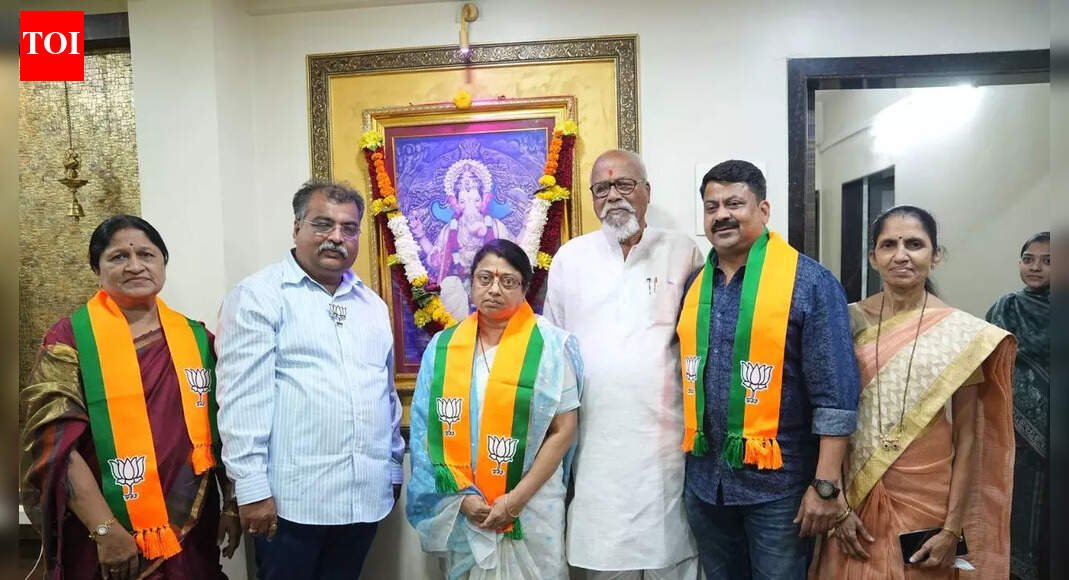
KALYAN: In a significant political development ahead of the Kalyan-Dombivli Municipal Corporation (KDMC) elections, the Maharashtra Navnirman Sena (MNS) has faced a major setback in Dombivli. Former MNS corporator Manda Patil officially resigned from the party and joined the Bharatiya Janata Party (BJP), marking a shift in the local political landscape. The induction ceremony took place in the presence of BJP State President Ravindra Chavan and senior leader and former minister Jagannath Patil.Manda Patil, who previously represented the Patharli area in Dombivli East, was a prominent face for the MNS in the region as she was also women wing’s city president. Her departure follows reports of growing internal friction within the party’s local unit, specifically regarding the recent appointment of new office-bearers. Patil had reportedly expressed her dissatisfaction with these organizational changes, leading her to resign from her post and primary membership just days before her formal induction into the BJP.This move is seen as a strategic win for the BJP as it looks to consolidate its power in the Kalyan-Dombivli belt. By bringing an experienced former corporator into its fold, the BJP aims to strengthen its grassroots connectivity in Dombivli East. Meanwhile, for Raj Thackeray’s MNS, this exit adds to a series of recent defections that have challenged the party’s stability in the region as it prepares for the upcoming civic polls.


Source link