Breaking News
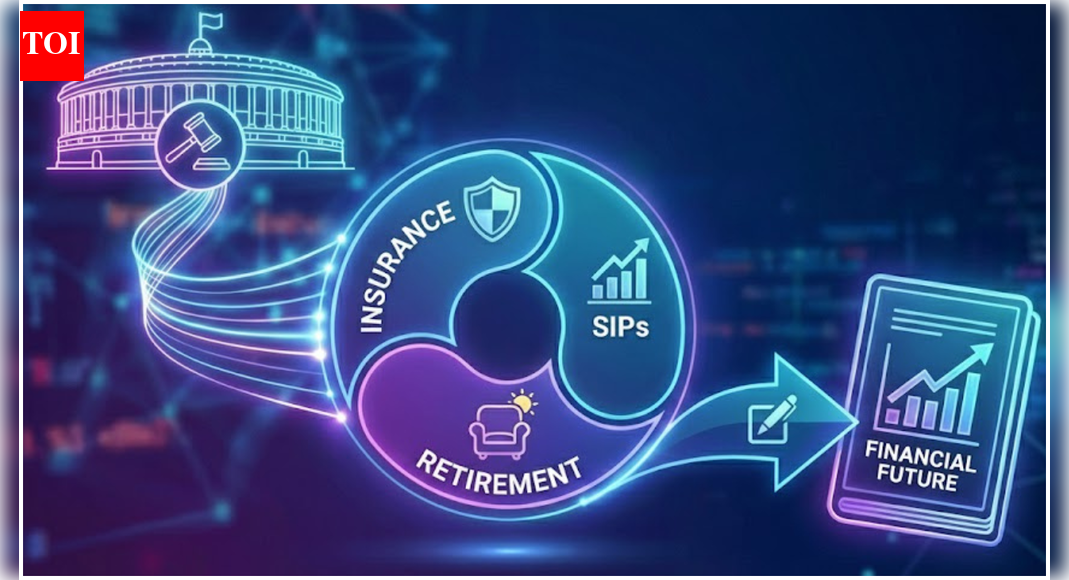
From insurance to SIPs to retirement: How Parliament’s Winter Session rewrote your financial future

From insurance to SIPs to retirement: How Parliament’s Winter Session rewrote your financial future

Driving the news

While the political headlines from the Winter Session focused on the usual parliamentary theatrics, Parliament quietly passed a legislative package that fundamentally alters the DNA of your personal finances.In a matter of days, the rules governing how you insure your life, save for retirement, and invest in the market were rewritten. The changes are technical but the impact is personal. By passing bills that allow up to 100% foreign ownership in insurance and pension firms, and by overhauling banking regulations, the government has effectively ended the era of “capital-starved” financial services. This isn’t just policy tweaking; it is a direct response to a harsh new global reality.With US President Donald Trump slapping 50% tariffs on Indian goods-threatening the country’s export engines-New Delhi has pivoted aggressively. The strategy is clear: if exports slow down, internal investment must speed up. The result for you? A flood of global competition that promises lower premiums, better pension products, and a banking sector flush with Japanese and Western capital.

Why it matters:

From allowing 100% foreign ownership in insurance and pension firms to cleaning up mutual fund fee structures, the reforms are sweeping – and they aim to funnel both domestic and global capital into India’s growth story.
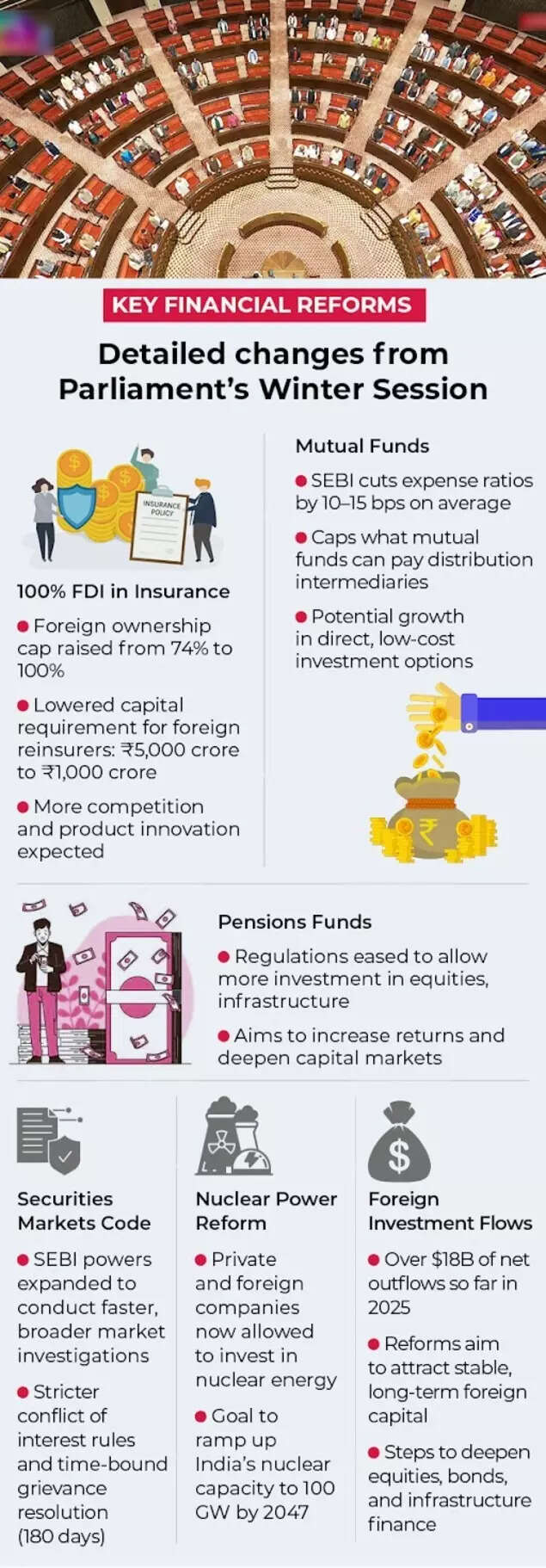
Detailed changes from Parliament's Winter Session

1. Insurance goes global – and your premiums may follow

Zoom in:The Sabka Bima Sabki Raksha Bill lifts the foreign direct investment (FDI) cap in insurance from 74% to 100%. This means global players can now fully own Indian insurers, bringing in capital, scale, and innovation without local JV constraints.What they’re saying:According to PRS Legislative Research, the bill also lowers entry thresholds for foreign reinsurers and expands IRDAI’s oversight on agents and commission disclosures – a signal that regulation will evolve with the market.Reuters notes that the move is meant to fix chronic under-penetration and low consumer confidence in insurance products.The big pictureThis change could usher in better service, more transparent pricing, and modern insurance products like behavior-based health plans. But medical inflation and claim volatility could temper expectations of cheaper premiums in the short term.Between the lines:This isn’t just about foreign companies. It’s about shifting Indian households from informal assets like gold and real estate toward formal, risk-managed financial products.

2. Your SIP just got a silent upgrade

Driving the news:While Parliament debated insurance and pensions, Sebi -the market regulator -quietly cut how much mutual funds can pay distributors and brokers.Why it matters:This could reduce investor costs by 10–15 basis points – seemingly small, but meaningful over long horizons due to compounding effects.
A Bloomberg article

Zoom in:A 0.15% drop in fees on a Rs 10 lakh investment compounding at 12% over 20 years could boost your final returns by Rs 2.5 lakh.What next:This structural change shifts incentives. Fund houses must now compete more on performance than payouts. Expect:

  • Rise in direct-to-consumer channels
  • More fee transparency
  • Less pressure to push high-commission, underperforming schemes

The bottom line:Sebi is betting on investor-first capitalism – and this tweak may quietly boost your long-term wealth more than flashy IPOs.

3. Pensions embrace the market – and volatility

The big picture:The PFRDA is giving pension funds more flexibility to invest in equities and diversified assets – signaling a shift away from the Provident Fund-style safety net to higher-risk, higher-return strategies.Why it matters:Pension assets are long-term and ideal for funding infrastructure, industrial growth, and decarbonization. Think highways, power plants, and ports – built using your retirement contributions.Zoom in:Foreign pension managers – now allowed 100% ownership – may bring modern portfolio theory to your nest egg, optimizing for long-term, inflation-adjusted returns.The trade-off:Expect higher short-term volatility in your pension balance – but potentially better long-term outcomes.What they’re saying:As one top regulator told Reuters, the move is about channeling household savings into productive use – not parked cash or gold.

4. Market regulation gets muscle with the Securities Markets Code

Catch up quick:The Securities Markets Code Bill, 2025 proposes new enforcement tools for SEBI, including market courts, expanded conflict-of-interest rules, and stricter timelines for dispute resolution.
Bloomberg on reforms

Why it matters:India’s retail investor base is booming. If markets are seen as unfair or slow to resolve fraud, investors retreat to safer (but less productive) assets like gold or real estate.Between the lines:This bill is about trust. It’s a bet that cleaner, faster enforcement will encourage deeper participation in financial markets.If it works:Households will feel safer parking wealth in markets – deepening capital pools and improving market efficiency over time.

5. Nuclear power enters the private era – and links back to your wallet

Driving the news:Parliament passed the SHANTI Bill, opening civil nuclear energy to private and foreign players for the first time.Zoom in:The government is targeting a 10x increase in nuclear power capacity – from 10 GW today to 100 GW by 2047.Why it matters:Power prices affect inflation, job creation, and industrial competitiveness. Nuclear energy is stable baseload power — essential for a fast-growing economy.The household angle:

  • Lower energy prices = lower inflation
  • More energy = more factories = more jobs
  • Capex in nuclear = investable bonds and infra projects for your pension/mutual fund

Between the lines:The bill also tweaks nuclear liability rules – shifting some risks away from operators and toward the state – a key move to attract global investment.

6. The macro play: Foreign capital in, market jitters out?

The context:This reform blitz follows US President Donald Trump’s 50% tariffs on Indian goods. With exports under pressure, India is doubling down on internal liberalization to attract foreign investment.Why it matters:From Japanese banks buying into Yes Bank to US firms eyeing mutual fund expansion, global players are already responding. But there’s turbulence:

  • So far, foreign investors have pulled $18 billion from Indian equities in 2025 (worst ever)
  • The rupee fell 5% this year, making it Asia’s worst-performing currency

What they’re saying:Barclays India CEO Pramod Kumar told Bloomberg: “The latest spate of reforms will help revive global investor sentiment amid tariff worries.”Grant Thornton Bharat’s Vivek Ramji Iyer summed it up: “Deregulation in action.”Between the lines:The tension between long-term reforms and short-term volatility will define market behavior in 2026. But the structural story is intact – and foreign capital is still betting on India.

What you’ll feel first – and what will take years

In the next 12–18 months:

  • Expect reshuffled insurance JVs and new products
  • Mutual fund fact sheets showing lower TERs
  • Rising pension plan choices with higher equity allocations

In the long term:

  • A rebalanced credit system where bonds, not just banks, fund infrastructure
  • Nuclear investments offering new financial instruments
  • Markets that feel safer and faster for retail investors

The bottom line: Parliament didn’t tweak your budget – it redirected your future

This wasn’t budget-session tinkering. It was a full-system reboot for your portfolio. If executed well:1. Insurance becomes cheaper and smarter2. Mutual funds offer higher net returns3. Pensions go from sleepy to strategic4. Markets gain muscle – and trust5. India gets global money to power domestic dreams

What’s next:

Watch for implementation. Fee drops, product launches, new FDI deals, and regulatory enforcement will determine whether the promise translates to better financial outcomes – or just more noise.
Source link

‘Modi govt is correcting Congress’s mistakes’: PM in Guwahati; hails development of Assam | India News


'Modi govt is correcting Congress's mistakes': PM in Guwahati; hails development of Assam

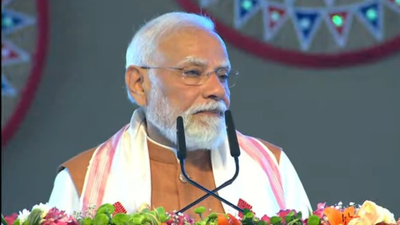
NEW DELHI: Prime Minister Narendra Modi on Saturday hit out at the previous Congress government in Assam and said that the “development of the state and the Northeast region was never in its priority list.”“Modi government is correcting Congress’s mistakes,” PM Modi said in Guwahati.“My attachment to the soil of Assam, the love and affection of the people here, and especially the love of the mothers and sisters of Assam and the Northeast, continuously inspire me, strengthening our resolve for the development of the Northeast. Today, a new chapter is being added to Assam’s development,” PM Modi said after inaugurating a new terminal of the Guwahati airport.“Development under BJP’s double-engine government flows unabated in Assam just as flow of mighty Brahmaputra river,” PM Modi said at Guwahati rally. He added, “the inauguration of the new terminal of Lokapriya Gopinath Bardoloi International Airport is the proof of our vow for the region’s development. I congratulate the whole nation for this new building. ”The PM termed the modern airport facility and connectivity infrastructure as the “gateways of new possibilities and opportunity.” He went on to say, “when people see that state of art highways and airports are being built in Assam they feel now Assam is getting justice.”He then slammed previous Congress governments saying, “ development of Assam and Northeastern region was never on the agenda list of their governments. People in the government used to say who goes to the region, what is the need for better infrastructure, modern railways, highways and airports.”“Because of this mentality Congress for decades ignored Assam and the North East. Modi is rectifying the mistakes made by Congress in the last six-seven decades one by one. I don’t care whether Congress people go to the North East or not, but as soon as I come here I feel I am among my people,” PM added.


Source link

Parliament Winter Session concludes: Inside the 19 days of turbulence — key bills passed, debates missed | India News


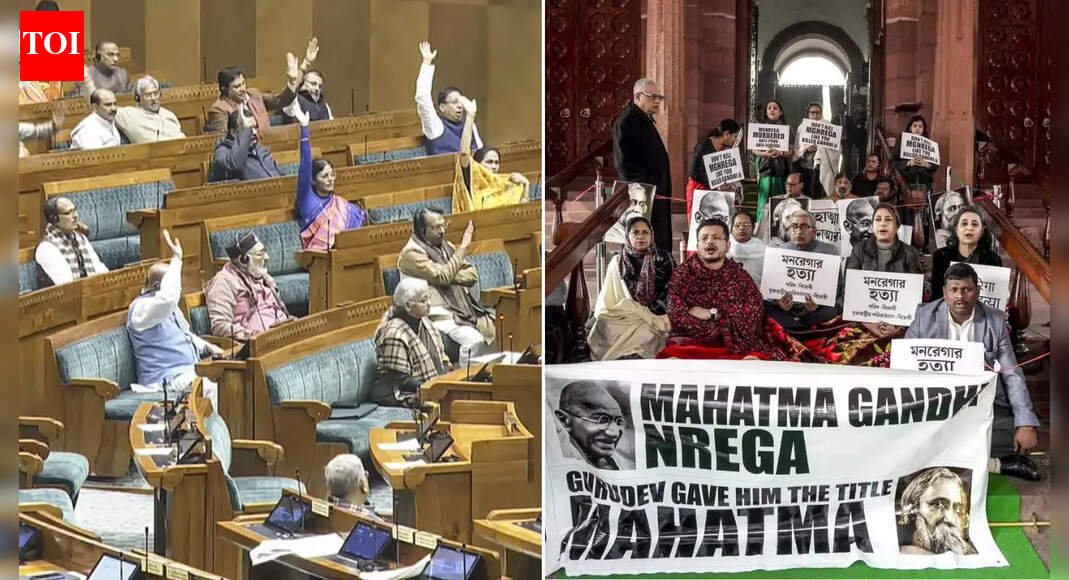
NEW DELHI: The Sixth Session of the Eighteenth Lok Sabha, which began on December 1, concluded on Friday, after 19 turbulent days marked by protests, repeated disruptions, sloganeering and sharp political confrontations between the government and the Opposition.While the Winter Session saw the passage of several significant legislations, it was also dominated by intense disagreements over issues such as the Special Intensive Revision (SIR) of electoral rolls, the replacement of MGNREGA, and the worsening air pollution crisis.

Winter Session Closes As Lok Sabha Skips Pollution Debate A Day After G RAM G Bill Sparks Chaos

The session ended with both Houses being adjourned sine die.Parliament discussed two major agenda items during the session: the 150th anniversary of the national song Vande Mataram and electoral reforms. However, a proposed discussion on the severe air pollution affecting large parts of north India, including Delhi, could not be taken up as the Lok Sabha was adjourned sine die before the issue was addressed.

What are the key bill introduced?

According to an official release, ten government Bills were introduced during the session, of which eight were passed. These included the Manipur Goods and Services Tax (Second Amendment) Bill, 2025; Central Excise (Amendment) Bill, 2025; Health Security se National Security Cess Bill, 2025; Appropriation (No. 4) Bill, 2025; Repealing and Amending Bill, 2025; Sabka Bima Sabki Raksha (Amendment of Insurance Laws) Bill, 2025; Sustainable Harnessing and Advancement of Nuclear Energy for Transforming India Bill, 2025; and the Viksit Bharat – Guarantee for Rozgar and Ajeevika Mission (Gramin) (VB-G RAM G) Bill, 2025.On December 8, Prime minister Narendra Modi initiated a discussion to mark 150 years of Vande Mataram. The House debated the subject for 11 hours and 32 minutes, with 65 members participating.During the 15 sittings of the Winter Session, the Lok Sabha functioned for a total of 92 hours and 25 minutes, achieving a productivity rate of 111 per cent, Speaker Om Birla said. The House admitted 300 starred questions, of which 72 were answered orally, and received 3,449 unstarred questions. A total of 408 matters were raised during Zero Hour, while 372 issues were taken up under Rule 377. On December 11 alone, 150 members raised issues during Zero Hour.Additionally, 35 statements were made under Direction 73A, and 38 statements were laid on the Table, including two under Rule 372 and one by the minister of Parliamentary Affairs. A total of 2,116 papers and 41 reports of Parliamentary Standing Committees were also presented during the session.

S. No. Title Ministry Introduced in LS/RS Passed in LS Passed in RS
1 The Securities Markets Code Bill, 2025 Finance 18/12/2025
2 The Sabka Bima Sabki Raksha (Amendment of Insurance Laws) Bill, 2025 Finance 16/12/2025 16/12/2025 17/12/2025
3 The Sustainable Harnessing and Advancement of Nuclear Energy for Transforming India Bill, 2025 Atomic Energy 15/12/2025 17/12/2025
4 The Appropriation (No. 4) Bill, 2025 Finance 15/12/2025 15/12/2025 16/12/2025
5 The Repealing and Amending Bill, 2025 Law and Justice 15/12/2025 16/12/2025 17/12/2025
6 The Viksit Bharat Shiksha Adhishthan Bill, 2025 Education 15/12/2025
7 The Manipur Goods and Services Tax (Second Amendment) Bill, 2025 Finance 01/12/2025 01/12/2025 02/12/2025
8 The Central Excise (Amendment) Bill, 2025 Finance 01/12/2025 03/12/2025 04/12/2025
9 The Health Security se National Security Cess Bill, 2025 Finance 01/12/2025 05/12/2025 08/12/2025

What are the key Bills passed?

1. Sabka Bima Sabki Raksha (Amendment of Insurance Laws) Bill, 2025: Parliament cleared the Sabka Bima Sabki Raksha Bill on December 17, a day after it was passed by the Lok Sabha. The Bill allows 100 per cent foreign direct investment (FDI) in the insurance sector, despite demands from several Opposition members in the Rajya Sabha that it be referred to a parliamentary committee for further scrutiny. Some members also objected to the Bill’s title, noting that it uses both English and Hindi.Moved by finance minister Nirmala Sitharaman, the Bill aims to transform India’s insurance sector, expand access to coverage and facilitate universal insurance protection by 2047. It introduces wide-ranging amendments to the Insurance Act, 1938, the LIC Act, 1956 and the IRDA Act, 1999. The legislation raises FDI in insurance from 74 per cent to 100 per cent, while mandating that at least one of the top executives — the chairman, managing director or chief executive officer — must be an Indian citizen.2. Sustainable Harnessing and Advancement of Nuclear Energy for Transforming India Bill (SHANTI), 2025: The Lok Sabha passed the SHANTI Bill on December 17 amid an Opposition walkout. Introduced by minister of state for the Department of Atomic Energy Jitendra Singh, the legislation marks a significant policy shift by allowing private sector participation in nuclear energy, a domain previously reserved for government enterprises.Singh said the Bill provides for ” a pragmatic civil liability regime for nuclear damage and to confer statutory status to Atomic Energy Regulatory Board.” The law aims to facilitate rapid growth in nuclear energy and its applications across sectors, in line with India’s target of achieving 100 GW of nuclear power capacity by 2047. It introduces updated safety protocols, a specialised nuclear tribunal for dispute resolution, and changes to the nuclear liability framework to reduce risks and encourage investment.3. Viksit Bharat Gram Rozgar aur Manav Garima (VB-G RAM G) Bill, 2025: The Lok Sabha passed the VB-G RAM G Bill on December 18 amid sustained Opposition protests and repeated disruptions. The legislation replaces the 20-year-old Mahatma Gandhi National Rural Employment Guarantee Act (MGNREGA) with a new statutory framework aligned with the Viksit Bharat 2047 vision. The Bill guarantees 125 days of wage employment per financial year to every rural household whose adult members volunteer to undertake unskilled manual work. 4. Appropriation (No. 4) Bill, 2025: The Appropriation (No. 4) Bill, 2025 was passed by the Lok Sabha on December 15 and by the Rajya Sabha on December 16. The legislation authorises the withdrawal and appropriation of additional funds from the Consolidated Fund of India for the financial year 2025–26.The Bill provides legal sanction for the government to spend an additional ₹1,32,268.85 crore beyond the amounts approved in the Union Budget for 2025–26.5. Repealing and Amending Bill, 2025: Parliament passed the Repealing and Amending Bill on December 16 in the Lok Sabha and December 17 in the Rajya Sabha. The Bill repeals 71 obsolete laws, including the Indian Tramways Act, 1886, the Levy Sugar Price Equalisation Fund Act, 1976, and the Bharat Petroleum Corporation Limited (Determination of Conditions of Service of Employees) Act, 1988.It also amends four existing laws. These include updates to the General Clauses Act, 1897 and the Code of Civil Procedure, 1908 to modernise terminology, amendments to the Indian Succession Act, 1925 to remove court validation requirements for wills in certain cases, and a correction of a drafting error in the Disaster Management Act, 2005.6. Manipur Goods and Services Tax (Second Amendment) Bill, 2025: Parliament passed the Manipur GST (Second Amendment) Bill, 2025 to replace the ordinance promulgated in October this year. The legislation amends the Manipur Goods and Services Tax Act, 2017 to implement decisions taken by the GST Council.It gives effect to the Council’s plan to rationalise GST rates by consolidating multiple slabs into two primary rates of 5 per cent and 18 per cent. The 56th GST Council had decided to merge the 5, 12, 18 and 28 per cent slabs into two slabs covering about 375 items.7. Central Excise (Amendment) Bill, 2025: The Central Excise (Amendment) Bill, 2025 was passed by Parliament on December 4. The Bill amends the Central Excise Act, 1944 to increase excise duties and cess on tobacco products, including cigarettes, cigars, hookah tobacco, chewing tobacco, zarda and scented tobacco.Moved by minister of state for finance Pankaj Chaudhary, the Bill aims ” to give the government the fiscal space to increase the rate of central excise duty on tobacco and tobacco products so as to protect tax incidence” after the GST compensation cess ends.8. Health Security se National Security Cess Bill, 2025: The Health Security se National Security Cess Bill, 2025 replaces the compensation cess on pan masala. The legislation states that the cess is intended “to augment the resources for meeting Security expenditure on national security and for public health, and levy a cess for the said purposes on the machines installed or other processes undertaken by which specified goods are manufactured or produced.”

What were the debates missed?

Air pollution debate left unresolved: A major flashpoint was the failure to hold a detailed debate on air pollution. Leader of opposition Rahul Gandhi had repeatedly sought a discussion, urging the government to present a clear plan to tackle the crisis.However, parliamentary affairs minister Kiren Rijiju on Friday, accused the opposition of “stalling” the debate. Rijiju said some MPs had shown ” unacceptable behaviour” during the discussion on the Viksit Bharat Guarantee for Rozgar and Ajeevika Mission (Gramin) Bill and had indicated they did not want a discussion on the health hazard posed by air pollution in the National Capital Region.Expressing regret over the missed debate, Rijiju said the government was fully prepared to discuss air pollution and that the concerned minister was ready after the issue was listed in the names of Priyanka Gandhi Vadra (Congress), Kanimozhi (DMK) and Bansuri Swaraj (BJP).VB-G RAM G Bill triggers protests: The passage of the Viksit Bharat Gram Rozgar aur Manav Garima (VB-G RAM G) Bill was marked by heavy Opposition protests. Several parties alleged a lack of consultation and insufficient debate before the Bill was passed, leading to repeated disruptions, walkouts and high political drama in the House.Electoral reforms debate loses focus: A potentially important discussion on electoral reforms also failed to achieve its intended purpose, as it quickly descended into political crossfire. The opposition had been demanding a debate on the Special Intensive Revision (SIR) of electoral rolls in 12 states and Union Territories. The government, however, made it clear that the functioning of the Election Commission could not be discussed in Parliament and instead agreed to a broader debate on electoral reforms. Electoral reforms were discussed on December 9 and 10 for nearly 13 hours, during which 63 members took part.

Government and opposition reactions

Addressing the customary post-session press conference, Rijiju described the Winter Session as “very productive”. He said, “2025 winter session is a very proactive session… The bills passed in this session will play a big role in improving the lives of crores of people and to make India a ‘Viksit’ nation… The 150th year of Vande Mataram discussion has taken place, very fruitful and important… By having extensive discussions on Vande Mataram, we have once again furthered the awakening of patriotism...”On electoral reforms, he said that those who had accused the Election Commission were “exposed” during the debate. “Many people raised questions about the election process, but after the debates on electoral reforms in both houses of Parliament, everything became clear. Those who levelled accusations against the Election Commission and the electoral system were also exposed…” he added.On the VB-G RAM G Bill, Rijiju said, “G Ram G bill is a very important bill, brought and passed to stop corruption, bring more transparency.”The Opposition strongly disagreed. Congress general secretary Jairam Ramesh called the session a “pollution session” and said, “I was shocked when the government gave a reply in Parliament yesterday, stating that there is no relation between pollution and lung problems.”“Rahul Gandhi demanded a discussion on air pollution. We wanted a debate on it in Lok Sabha and Rajya Sabha,” he said, underlining that the opposition was pushing for accountability. He rejected the government’s claim that Opposition protests blocked the debate, saying the Lok Sabha was adjourned indefinitely without taking up the issue.Trinamool Congress MPs staged an overnight dharna in the Parliament complex, accusing the government of bulldozing the VB-G RAM G Bill through without consultation. “We MPs of the Trinamool Congress have been sitting on a 12-hour dharna,” TMC leader Sagarika Ghose said, adding that the replacement of MGNREGA amounted to an attack on rural workers.As Parliament adjourned sine die, the Winter Session ended with sharp political divisions intact, a mix of legislative progress, charged debates, and unresolved concerns that are likely to resurface in the next session.


Source link

Fans left shocked as BCCI drops Shubman Gill from India’s T20 World Cup 2026 squad


In a stunning development that has sent shockwaves through Indian cricket fans BCCI announced the 15-member squad for the Men’s T20 World Cup 2026 along with the five-match T20I series against New Zealand creating massive buzz on social media. Suryakumar Yadav retains captaincy with Axar Patel elevated as vice-captain while former vice-captain Shubman Gill and Jitesh Sharma suffer shocking exclusions. The announcement came from Mumbai’s BCCI headquarters on December 20 2025 attended by secretary Devajit Saikia captain Suryakumar and chief selector Ajit Agarkar.​

India’s T20 World Cup 2026 squad composition and key inclusions

India‘s T20 World Cup 2026 squad blends explosive batting all-round depth and potent bowling, The batting lineup features power-hitters like Abhishek Sharma (recent aggressor) Suryakumar, Sanju Samson, Tilak Varma, Rinku Singh and recalled Ishan Kishan who returns after strong domestic showings. All-rounders Hardik Pandya (blitzed 63 off 25 in recent T20I) Axar, Shivam Dube and Washington Sundar provide balance. Bowling boasts pace spearhead Jasprit Bumrah alongside Arshdeep Singh, Harshit Rana plus spinners Varun Chakaravarthy and Kuldeep Yadav offering variety on expected spin-friendly pitches.​

This same squad prepares via New Zealand T20Is from January 21-31 2026 ahead of the World Cup starting February 7 where India defends their 2024 title won against South Africa. Three ODIs precede from January 11-18 with that squad pending.​

Shubman Gill’s exclusion sparks outrage among fans

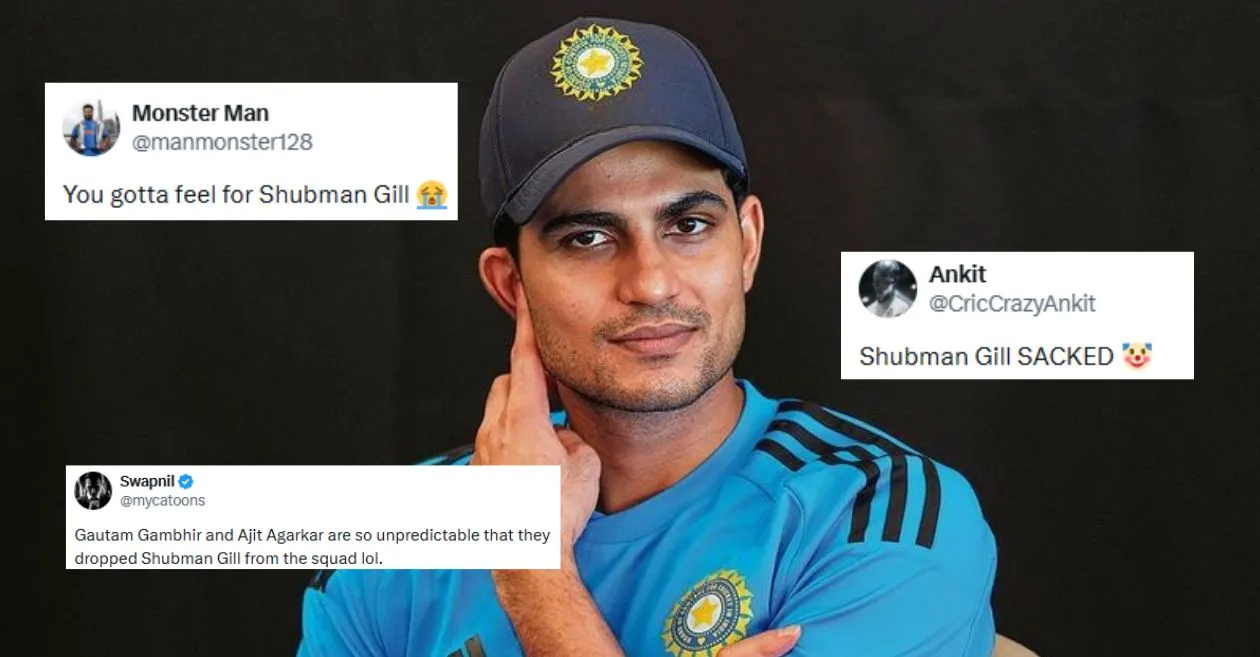
Gill’s omission despite prior vice-captaincy in South Africa T20Is has fans furious with #JusticeForGill trending nationwide. Chief selector Agarkar cited Gill’s underwhelming T20I form—291 runs in 15 innings at 24.25 average strike rate 137.26 no fifties—a foot injury sidelined him recently.​

Social media erupted as fans gave a mixed reaction on BCCI’s call. Jitesh also missed out as Kishan and Rinku prioritized for finishing prowess. Agarkar emphasized squad balance favouring current impact over potential. Gill’s IPL success contrasts T20I struggles prompting debates on his aggressive evolution needed for T20s.​

As India eye back-to-back titles under Suryakumar this bold call tests selection gambles but underscores ruthless T20 meritocracy. Fans await Gill’s response in IPL 2026.

Also READ: Shubman Gill dropped, Ishan Kishan & Rinku Singh return as India unveil squad for T20 World Cup 2026

Here’s how fans reacted:

Also READ: Fans go wild as Varun Chakaravarthy and Hardik Pandya help India demolishes South Africa in Ahmedabad T20I to clinch a 3-1 series win


Source link

Jharkhand horror: Drunk army jawan ‘rapes’ woman inside train | Ranchi News


Jharkhand horror: Drunk army jawan 'rapes' woman inside train

RANCHI: An Army jawan was arrested in Ranchi, Jharkhand, for allegedly raping a 22-year-old woman while on duty, officials said on Saturday.The incident occurred on Thursday around 5:30 pm at Tatisilwai Railway Station, where the woman was waiting to board a train to Ranchi. The 42-year-old jawan reportedly took her to an empty train coach and allegedly committed the assault, the official added.“The Army personnel was on duty guarding a defence logistics train. He was reportedly in an inebriated state when he committed the crime,” the Railway Protection Force (RPF) official said.The accused jawan, a resident of the Sarha police station area in Prayagraj district, Uttar Pradesh, was posted with the 42 Medium Regiment in Patiala, Punjab, officials said.After the woman’s cries for help, bystanders at the railway station raised an alarm, prompting Railway police to rush to the scene. The jawan attempted to flee but was apprehended, sustaining injuries in the process.An FIR has been registered based on the victim’s statement. On Friday, he was produced before a court, which sent him to judicial custody.(The victim’s identity has not been revealed to protect her privacy as per Supreme Court directives on cases related to sexual assault)(With agency inputs)


Source link

‘It’s not about form’: Suryakumar Yadav reveals real reason for Shubman Gill’s omission from T20 World Cup squad | Cricket News


'It's not about form': Suryakumar Yadav reveals real reason for Shubman Gill's omission from T20 World Cup squad
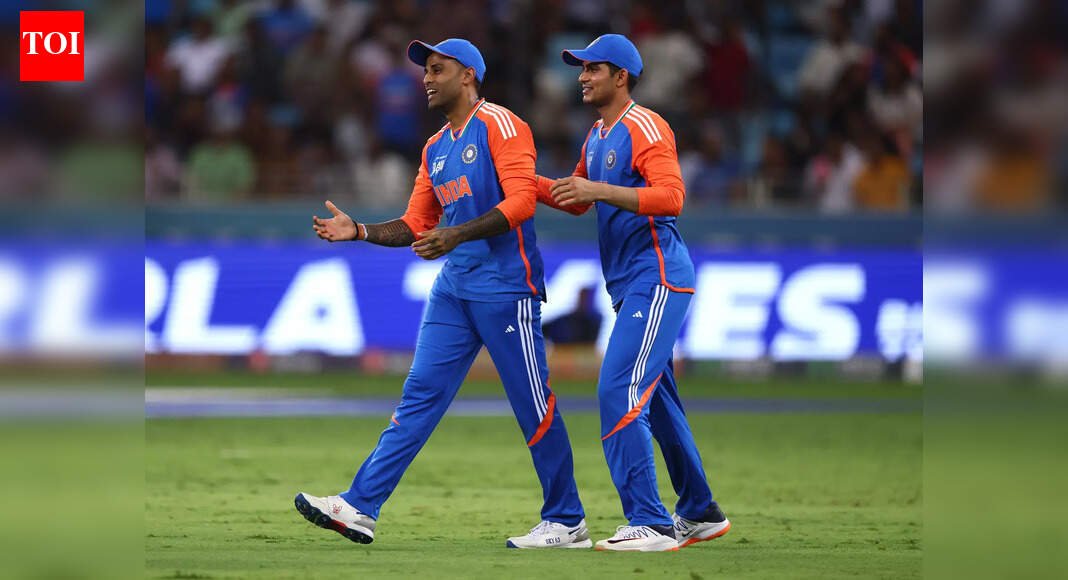
Suryakumar Yadav and Shubman Gill of India (Photo by Francois Nel/Getty Images)

India’s T20 World Cup squad announcement on Saturday sparked widespread debate, with the biggest talking point being the exclusion of Shubman Gill. While Gill currently captains India in both Tests and ODIs, he was surprisingly left out of the squad for cricket’s shortest format. Captain Suryakumar Yadav has now shed light on the reasoning behind the decision. “It’s not about form, it’s about combination. We wanted to have a keeper at the top. We know the quality that Gill brings,” Suryakumar explained. The decision, he added, was driven by team balance rather than a reflection on Gill’s abilities.

Curious case! Why Ajit Agarkar & Co. continue to ignore Ishan Kishan

Gill, 26, had missed the fifth T20I against South Africa due to a foot injury sustained before the fourth T20I, which was itself cancelled due to fog. Since his return to the T20 side during the Asia Cup, where he was also vice-captain, he has struggled to replicate his consistent Test form. In 15 T20 matches since his comeback, Gill scored 291 runs at an average of 24.25 and a strike rate of 137, without a single fifty and a highest score of 47. The reshuffle has also affected other batters. Sanju Samson, who had done well as an opener, including scoring three centuries, was moved down the order when Gill was drafted back and ultimately got dropped as well. In the last T20 against South Africa, Samson opened again and made a solid 37 off 22 balls, giving India a strong start. The team management now plans to revert to their original combination, with a wicketkeeper at the top. Consequently, Jitesh Sharma has been dropped, while Ishan Kishan has been drafted as the second keeper and reserve opener. Kishan comes off a brilliant domestic season in the Syed Mushtaq Ali Trophy, where he captained Jharkhand to their maiden title. He scored 517 runs in 10 matches at an average of 57.44 and a strike rate of 197, including two centuries and two fifties, with a hundred in the final against Haryana. Rinku Singh, part of the Asia Cup-winning squad, returns as the designated finisher in place of Jitesh. All-rounder Axar Patel has been named vice-captain, stepping into the leadership role alongside captain Suryakumar Yadav, who will lead India in both the T20 World Cup and the five-match T20I series against New Zealand starting January 21.India T20 World Cup squad: Suryakumar Yadav (capt), Axar Patel (vice-capt) Abhishek Sharma, Sanju Samson, Tilak Varma, Hardik Pandya, Shivam Dube, Rinku Singh, Jasprit Bumrah, Harshit Rana, Arshdeep Singh, Kuldeep Yadav, Varun Chakaravarthy, Washington Sundar, Ishan Kishan. India, the defending champions after a thrilling 2024 final victory over South Africa in Barbados, will open their T20 World Cup campaign against the USA on February 7 in Mumbai.


Source link

‘Attack on poor’: Sonia Gandhi slams PM Modi over VB-G RAM G Bill; criticises repealing of MGNREGA | India News


'Attack on poor': Sonia Gandhi slams PM Modi over VB-G RAM G Bill; criticises repealing of MGNREGA
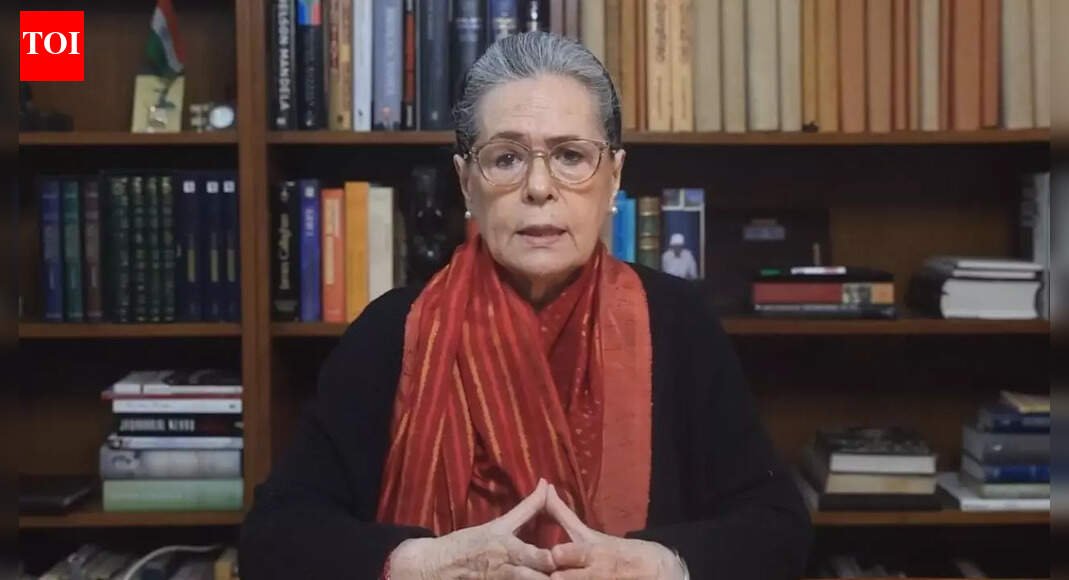
Congress leader Sonia Gandhi (Photo: Screengrab)

NEW DELHI: Congress Rajya Sabha member Sonia Gandhi, reacting to the VB-G RAM G Bill, criticised Prime Minister Narendra Modi, accusing the central government of attacking the interests of the poor by “running a bulldozer over MGNREGA“.Sonia Gandhi alleged that the Modi government, over the past 11 years, has “consistently tried to weaken MGNREGA by neglecting the interests of the rural unemployed, the poor and the marginalised, even though the scheme proved to be a lifeline for these sections during the Covid crisis”.

Midnight Drama Over VB-G RAM G Bill, Opposition Stage Overnight Protest, Sleep Outside Parliament

“While the Congress played a major role in bringing MGNREGA into existence and implementing it, the scheme was never about a political party. It was about national interest and public welfare. By weakening this law, the Modi government has attacked the interests of crores of farmers, workers and landless rural poor,” the former Congress chief claimed.The Rajya Sabha MP further said: “The Congress had a major contribution in bringing and implementing MGNREGA. It was a scheme connected to the interest of the country and the people. The Modi government has attacked the interests of the poor through this.”‘VB-G Ram G’ bill, which awaits the President’s nod, was passed amid fierce protest by the opposition, particularly the INDIA bloc during the Winter Session of the Parliament.On Thursday, rural development minister Shivraj Singh Chouhan, speaking in favour of the bill, claimed that the legislation improves substantially on MGNREGA, which was “riddled” by corruption and inefficiency.The opposition was demanding that the bill be sent to a parliamentary committee for scrutiny and assailed the government for removing Mahatma Gandhi‘s name from the rural employment guarantee scheme.As Chouhan began his reply after Congress MP KC Venugopal’s demand for sending Viksit Bharat-Guarantee for Rozgar and Ajeevika Mission-Gramin (VB-G RAM G) Bill to the committee went unheeded, opposition members trooped into the well, tore its copies and continued their protest till the House passed the bill.The government has repealed the two-decade-old Mahatma Gandhi National Rural Employment Guarantee Act (MGNREGA) with another legislation, titled the Viksit Bharat Guarantee for Rozgar and Ajeevika Mission (Gramin) (VB–G RAM G) Bill, 2025.The bill seeks to replace the MGNREGA with a revamped framework aimed at aligning rural employment and development with the national vision of Viksit Bharat 2047.What is VB–G RAM G?The Viksit Bharat Guarantee for Rozgar and Ajeevika Mission (Gramin) Act, 2025 represents a major overhaul of MNREGA. Under the proposed law, the government “establishes a modern statutory framework aligned with Viksit Bharat 2047, guaranteeing 125 days of wage employment per rural household whose adult members volunteer to do unskilled manual work,” as per a statement released.ALSO READ | MGNREGA to be replaced with VB–G Ram G: What it is and how it’s different — key FAQs answered


Source link

Global Group Proposes Nobel Peace Prize Nomination for PM Narendra Modi, Puts Spotlight on Consciousness-Based Governance | India News


A California-based nonprofit advocacy group, the Declaration of Consciousness Movement (DoCM) (signdc.org), has announced a proposal to nominate Prime Minister Narendra Modi for the 2026 Nobel Peace Prize, citing his leadership in diplomacy, climate action, digital inclusion and inclusive development. The announcement reflects a growing global discourse around what the organisation describes as “consciousness-based governance” — a framework that places ethical leadership, collective wellbeing and inner awareness at the centre of public policy and global cooperation.Members of the public who wish to express their support for the nomination of Honorable Prime Minister Narendra Modi for the 2026 Nobel Peace Prize are invited to visit https://signdc.org/ and add their voice to this global declaration.The DoCM principles consist of the following principles:

  1. Humanitarian Solidarity Across 150+ Countries
  2. Operation Sindoor & Peaceful Diplomacy
  3. Environmental Stewardship & Climate Leadership
  4. Economic Development & Poverty Alleviation
  5. Women’s Empowerment & Naari Shakthi
  6. Digital Public Infrastructure & Governance Transformation
  7. Cultural Diplomacy, Yoga & Soft Power
  8. Innovation & Entrepreneurship
  9. Democratic Mandate & People’s Trust

Together, these principles are the foundation and guiding seeds of wisdom upon which DoCM functions and moves towards conscious progress in unity.

Image

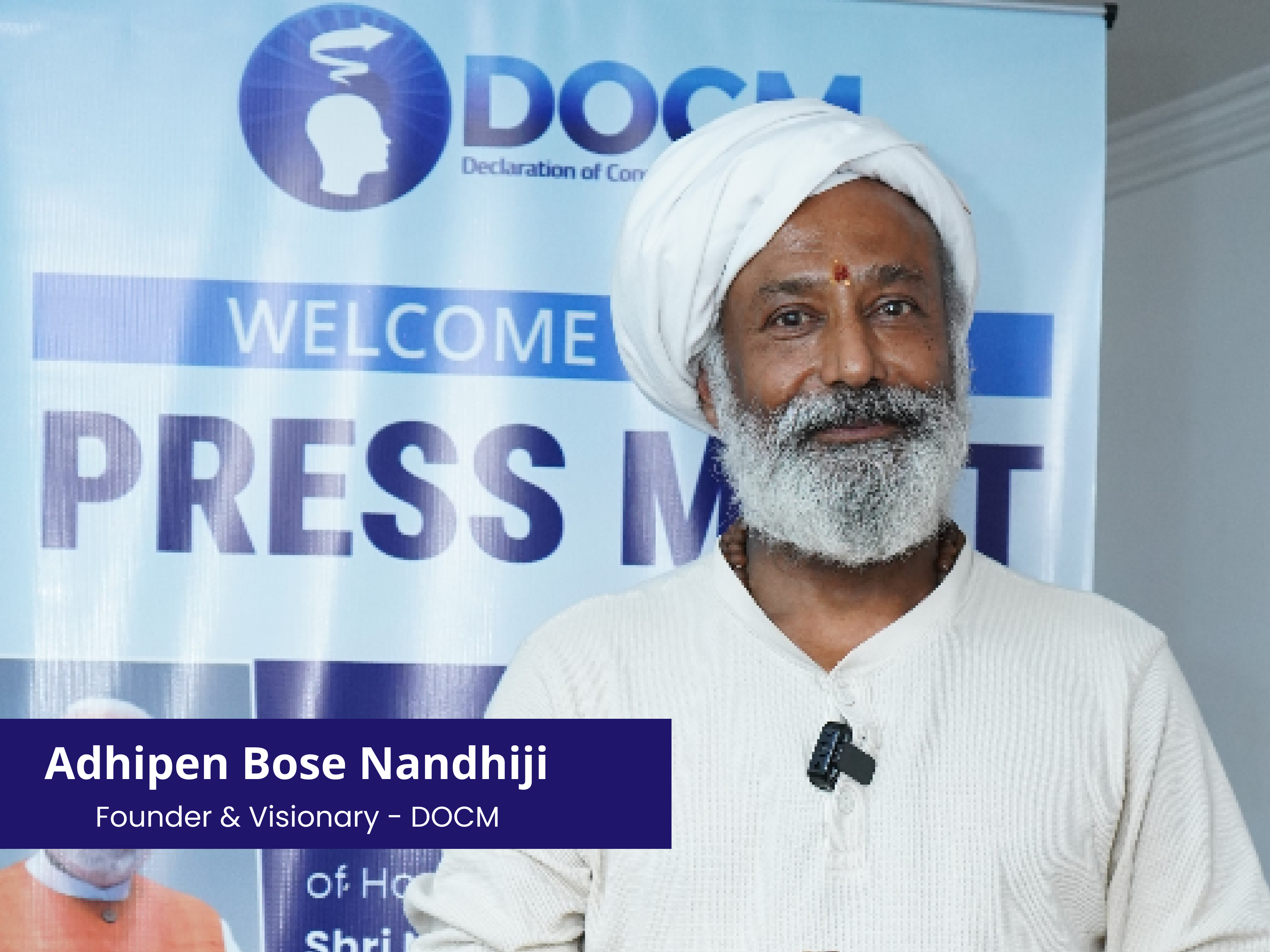
The proposal was unveiled at a press conference in Chennai, where DoCM leaders outlined their rationale for the nomination and their broader vision for peace-led global governance. While Nobel Peace Prize nominations are submitted confidentially by qualified individuals and institutions and are not publicly confirmed by the Norwegian Nobel Committee, DoCM said its proposal is intended to spark dialogue on alternative leadership models at a time of rising geopolitical tensions and social polarisation.DoCM was founded by Adhipen Bose Nandhiji, a proponent of values-based leadership and societal transformation. The organisation describes itself as a global nonprofit working across governance, education and civic life, blending traditional contemplative practices with contemporary behavioural and social research. According to DoCM, its work focuses on translating inner awareness and ethical intent into measurable social and institutional outcomes.

image

Explaining the basis for its proposal, the organisation said Prime Minister Modi’s leadership aligns with several principles it advocates, including peace-oriented diplomacy, environmental responsibility, digital empowerment and inclusive growth. DoCM argues that these elements reflect a governance style rooted in compassion, ethical action and collective upliftment — values it believes are increasingly essential in addressing global challenges such as climate change, inequality and conflict.A key element of DoCM’s initiative is its proposal for the establishment of a World Consciousness Day, envisioned as a global observance inspired by India’s philosophical and spiritual traditions. The organisation noted that the idea builds on existing international observances such as World Yoga Day, which has gained widespread global recognition, as well as the growing international awareness of Maha Shivratri. According to DoCM, such observances symbolise introspection, clarity and compassionate engagement, which it considers foundational to sustainable peace.Central to DoCM’s framework are nine guiding principles that it describes as the foundation of an ethical global society. These include nonviolence, equality, freedom, women’s rights, children’s rights, respect for elders, ethical and conscious institutions, environmental responsibility and unity beyond cultural or ideological divisions. The organisation says these principles are designed to transcend religious, political and national boundaries, offering a shared moral compass for societies navigating rapid technological and social change.To operationalise these ideals, DoCM works through four international programmes focused on peace dialogue and diplomacy, education and cultural transformation, consciousness research, and planetary awareness. The organisation has stated its intention to encourage national adoption of its Declaration in India, with the longer-term goal of seeking consideration of the framework as a resolution at the United Nations.

image

DoCM leaders emphasised that their proposal should be viewed within a broader context of evolving global leadership paradigms. In a world marked by climate uncertainty, social fragmentation and escalating geopolitical risks, the organisation argues that conventional approaches to governance may no longer be sufficient. Instead, it calls for leadership that integrates awareness, cooperation and ethical responsibility into decision-making processes at both national and international levels.While the Nobel Peace Prize process itself remains confidential and independent, the proposal has added to ongoing discussions about India’s growing role in shaping global narratives around peace, sustainability and inclusive development. For DoCM, the initiative represents not just a nomination, but an attempt to foreground consciousness-led governance as a viable framework for addressing the complex challenges of the 21st century. As the organisation’s guiding philosophy suggests, lasting peace, it argues, begins with an elevation of collective awareness.Learn More of the nine citations of Honorable Prime Minister Shri Narendra Modiji for the Nobel Peace Prize.https://signdc.org/Disclaimer: Content Produced by Declaration of Consciousness Movement


Source link

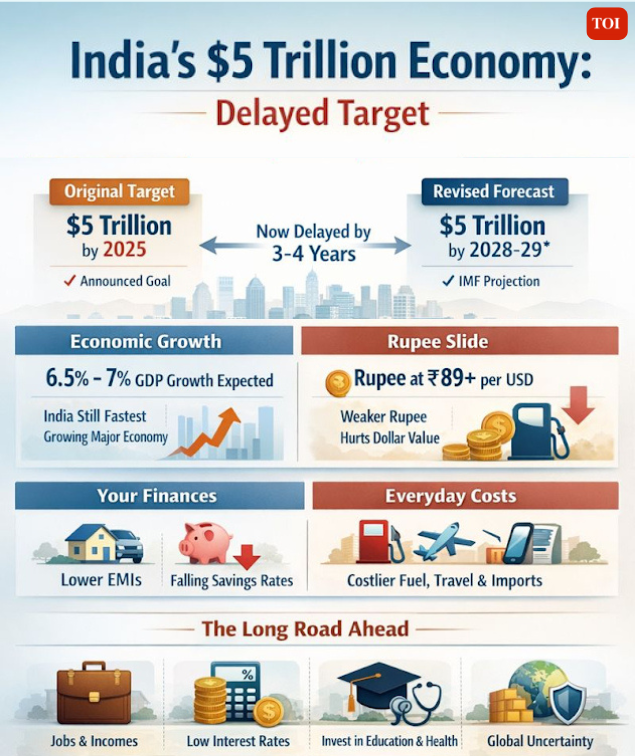
India’s delayed $5-trillion dream: What IMF’s new timeline means for your wallet


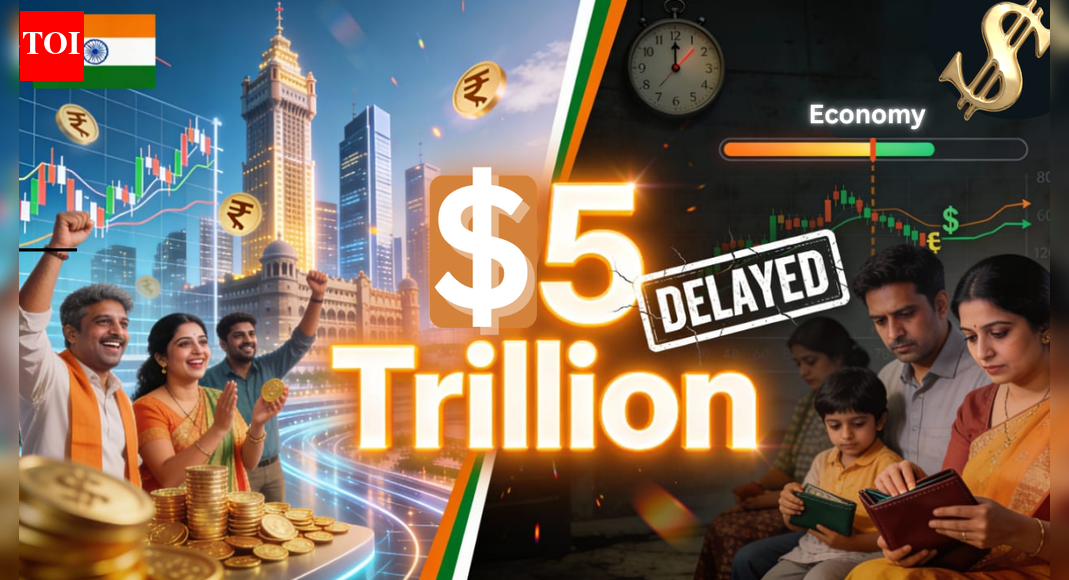
AI image (For representative purposes only)

When senior ministers began promising a $5-trillion Indian economy by 2024–25, it was sold as a near-term milestone that would change everyday life — more jobs, better infrastructure, bigger pay packets. In late 2022, home minister Amit Shah even declared that “India will become a 5 trillion dollar economy by 2025.”Three years on, the goalpost has quietly shifted.The IMF’s latest numbers now suggest India is likely to cross the $5-trillion mark only around 2028–29, not mid-decade. A widely cited analysis of the IMF’s October 2025 database, for instance, projects India’s nominal GDP at about $4.125 trillion in 2025-26 and roughly $4.96 trillion in 2027-28 — just shy of the magic figure, implying $5 trillion only in FY29.

India's $5 trillion economy

So the headline target is delayed by roughly three to four years. But what does that actually do to your money life — your salary hikes, EMIs, investments and the price of everyday goods?

The numbers behind the slippage

First, it’s worth stressing what hasn’t changed.The IMF still expects India to be the world’s fastest-growing major economy, with real GDP growth around 6.2–6.6% in 2025–26, even after modest downgrades. The RBI is even more upbeat, pegging FY26 growth at 7.3%, and projecting inflation at just 2% — well below its 4% target. The delay is less about growth collapsing, and more about how we count “$5 trillion”:

  • The target is in US dollars, so it depends heavily on the rupee–dollar exchange rate.
  • It uses nominal GDP, which includes inflation. If inflation is unusually low, nominal GDP (in rupees) grows more slowly than real GDP.
  • A weaker rupee and softer inflation together drag down dollar GDP, even if the real economy is chugging along.

In April 2025, the IMF’s World Economic Outlook projected India’s nominal GDP at around $4.19 trillion in 2025, enough to nudge past Japan and become the world’s fourth-largest economy. That sounds impressive — but it still leaves a gap of roughly $800 billion before the 5-trillion milestone.On top of that, the rupee has slid to record lows near Rs 91 to the dollar, and the IMF has just reclassified India’s exchange-rate regime as a “crawl-like arrangement,” noting that the currency has weakened about 4% this year with higher volatility. A cheaper rupee means that the same rupee GDP translates into fewer dollars, pushing the 5-trillion finish line further out.Put simply: the real economy is doing decently; the dollar math is not.

1. Jobs and salaries: Slower sprint, not a halt

For your paycheque, the good news is that a delay in the $5-trillion headline doesn’t automatically mean fewer jobs or pay cuts.

  • The IMF, RBI and private forecasters like Moody’s all see India growing around 6.5–7% in 2025, still the standout among large economies
  • Domestic demand and investment are holding up, helped by government capex and tax cuts on consumer goods.

In practice, that suggests:

  • White-collar sectors like IT, financial services and digital platforms may not see the manic hiring of the post-Covid boom, but they are unlikely to fall off a cliff either.
  • Manufacturing, construction, infrastructure and logistics, which benefit from public capex and PLI schemes, could keep adding jobs — though unevenly across states.
  • The real squeeze is in informal and low-skill urban work, where global trade headwinds and US tariffs are hurting export-linked sectors, limiting high-quality job creation.

So your salary hike may not suddenly vanish because we hit $5 trillion in 2029 instead of 2026-27. But the longer it takes to scale up the economy, the longer it takes for per-capita incomes to meaningfully rise. IMF-based estimates already show India’s per-capita income doubling from about $1,400 in 2013–14 to around $2,880 in 2025 — progress, but still far from upper-middle-income comfort.

2. EMIs, interest rates and your bank deposits

The delayed 5-trillion timeline is emerging just as India enters a low-inflation, low-rate phase.

  • CPI inflation has plunged to near-zero (about 0.25–0.3%) in October 2025, helped by a collapse in food prices and tax cuts on consumer goods.
  • The RBI had recently slashed the repo rate by a quarter basis point to 5.25%, taking the cumulative cut throughout the year to 1.25%.
  • With the US Federal Reserve cutting rates, there are expectations that the RBI may cut interest rates again in 2026.

For your wallet, that has a clear split:

  • Borrowers win: Home loan and car loan EMIs should ease compared to the tight-money phase after Covid. Even if the next cut is modest, borrowers rolling over floating-rate loans will see relief over the next year or two.
  • Savers lose: Bank FD rates and small-savings yields will trend lower. With inflation near 2–3%, your real return may still be positive, but the days of 7–8% risk-free rates might be behind us for now.

The twist: a weaker rupee and US tariffs put a ceiling on how far the RBI can cut. If the rupee slides too fast, imported inflation (especially fuel) can come back, forcing the central bank to pause.So don’t plan your finances around an endless rate-cut party. Think of this as a window to refinance expensive loans and rebalance your savings, not a permanent new normal.

3. Rupee at 91: Imported dreams get pricier

The rupee’s fall to around Rs 91 per dollar is not just a headline for traders; it shows up across middle-class budgets. Here’s where you’re likely to feel it most:

  • Fuel & transport: Petrol and diesel prices are influenced by global crude and the rupee. Even if global oil is soft, a weaker rupee limits how much pump prices can drop, keeping commuting and logistics costs elevated.
  • Imported gadgets: Smartphones, laptops, high-end TVs and gaming gear are heavily import-dependent. A sustained rupee slide makes each upgrade a little costlier, or shrinks discounts.
  • Foreign education and travel: Fees billed in dollars or euros, plus airfare and local costs, become sharply more expensive in rupees. Families planning overseas degrees will need bigger education-loan top-ups or deeper savings.
  • Online subscriptions: Many streaming, software and cloud services charge in foreign currency; expect a slow creep up in rupee prices.

There are winners too:

  • Exporters and IT services companies often benefit from a weaker rupee, since a large share of their revenue is in dollars.
  • Households receiving remittances from abroad get more rupees per dollar, cushioning domestic budgets.

From a 5-trillion-dollar perspective, though, a weaker rupee is precisely what delays the milestone, because every rupee of GDP converts into fewer dollars.

4. Taxes, welfare and public services

Another, less visible effect of delayed dollar GDP is on government finances.

  • With nominal GDP in dollar terms growing more slowly, India’s tax-to-GDP ratio and debt-to-GDP ratio look less flattering in international comparisons, even if real activity is firm.
  • The Centre has committed to a gradual fiscal consolidation path; IMF directors back this but say it should stay flexible given trade shocks and tariffs.

For citizens, that could mean:

  • Less room for big-bang new subsidies or freebies without offsetting spending cuts or new taxes.
  • Continued focus on capital expenditure (roads, railways, defence, digital infra) over blanket consumption stimulus.
  • Possible pressure to widen the tax base — better compliance on GST and income tax — rather than simply hiking rates.

The risk is that if growth disappoints or tariffs bite harder than expected, future governments may resort to “stealth” revenue raisers: higher sin taxes, user charges, or fewer exemptions. That’s where a slower march to $5 trillion can intersect harshly with everyday budgets.

5. Your investment plan in a “longer runway” economy

For investors, the IMF’s new timeline is less a reason to panic and more a cue to adjust expectations.None of this is personalised financial advice, but the broad message is clear: build plans around realistic 6–7% growth and a gently weakening rupee, not around political timelines for $5 trillion.

Beyond the headline: Real prosperity vs round numbers

Finally, the uncomfortable but important point: crossing $5 trillion changes very little overnight.Even today, at a little over $4 trillion in GDP and per-capita income of under $3,000, India hosts both a booming elite consumer class and millions still stuck in precarious informal work. Whether the macro number hits five twelve quarters earlier or later matters far less than:

  • how quickly good jobs are created,
  • how reliably inflation stays low and stable,
  • how efficiently the state delivers health, education and infrastructure, and
  • how well households are equipped to save and invest.

The IMF’s new timetable is a reality check: you can’t wish away exchange-rate arithmetic and global shocks with slogans. But it’s not a verdict of failure either. India is still on course to be the world’s third-largest economy within a decade; it will just get there via a slightly longer, more volatile road than originally advertised.For your wallet, that means this: plan for a marathon, not a sprint — steady income upskilling, disciplined saving, diversified investments, and realistic expectations. The $5-trillion headline will eventually come. Whether you personally feel prosperous when it does will depend far more on the financial choices you make in the years in between.


Source link

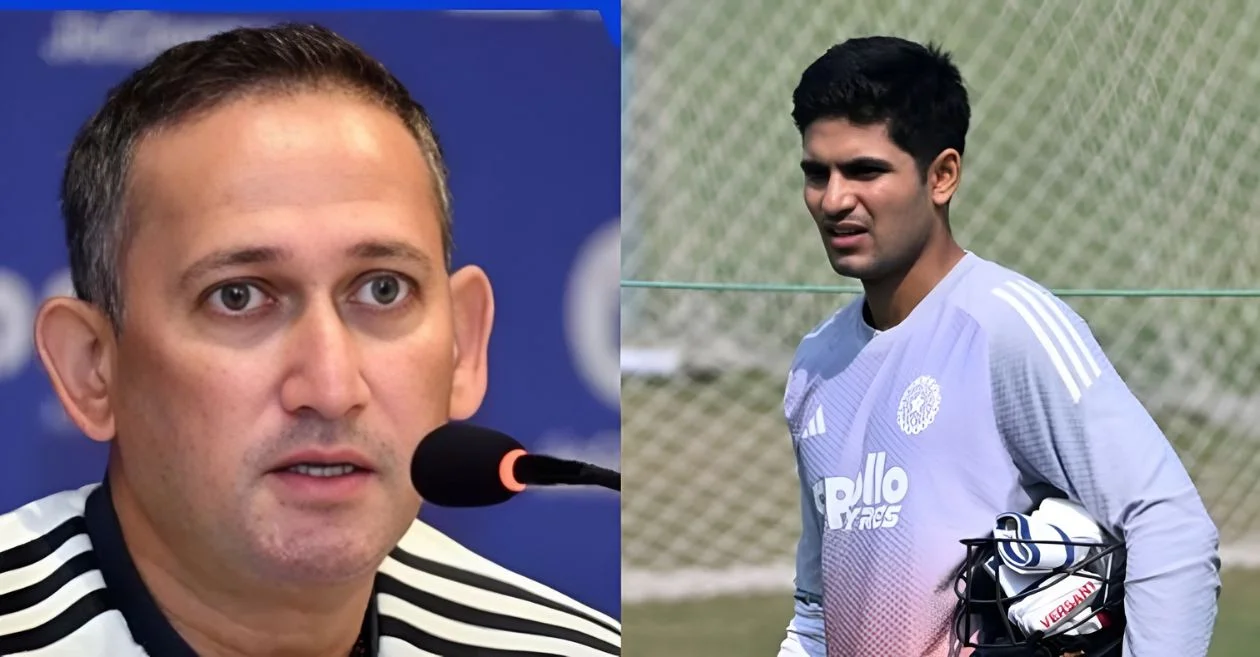
Why Shubman Gill was left out of India’s T20 World Cup 2026 squad? Ajit Agarkar explains


In a surprising turn of events, Shubman Gill was left out of India’s T20 World Cup 2026 squad, despite being a vice-captain earlier in the year. His exclusion comes as part of a strategic decision based on recent form, injury setbacks, and team combinations.

Ajit Agarkar explains the reasons behind Shubman Gill’s exclusion from India’s T20 World Cup squad

BCCI Chairman of Selectors, Ajit Agarkar, shared insights into the rationale behind the choice, shedding light on the factors influencing the selection.

“Obviously, Shubman was the vice-captain, and with him not in the team, we had to appoint someone else. Axar Patel had already stepped in as vice-captain when Shubman was unavailable, and we’ve decided to continue with that role,” Agarkar explained.

Despite being a key player in India’s setup, Gill’s struggles with form were the primary reason behind his exclusion. His recent scores 4, 0, and 28 in the South Africa series didn’t meet the team’s expectations. Gill, who had been recovering from a neck sprain, missed several matches and couldn’t regain his momentum in T20Is. “We know he is a quality player, but with his ongoing injury issues and the lack of substantial runs, it became difficult to select him,” Agarkar remarked. This series of challenges, coupled with inconsistent performances, led to his exclusion from the T20 World Cup squad.

The BCCI’s focus was not just on individual performances but also on crafting an ideal team combination. Agarkar further explained, “We were looking for certain combinations, and having two wicketkeepers at the top was one of the key strategies. Players like Rinku Singh were included to strengthen the middle order, offering more depth.” This strategic shift resulted in the decision to omit Gill despite his previous contributions to the team.

Also READ: Shubman Gill dropped, Ishan Kishan & Rinku Singh return as India unveil squad for T20 World Cup 2026

Suryakumar Yadav on role fixation and team management’s approach

India’s captain Suryakumar Yadav supported Agarkar’s stance, emphasizing the importance of role clarity. “We have fixed roles for players now, with Tilak Varma at number 3 and myself at number 4. The left-right combination is somewhat overrated,” Yadav said. The team’s emphasis is on stability, with players like Varma and Yadav securing key spots in the batting lineup.

Gill’s omission is not a reflection of his lack of ability but more about the balance of the squad. “Sometimes, the team management needs to make tough choices, and in this case, Shubman had to miss out. It’s not because he’s not a good player, but because of the combinations we want to play,” Agarkar explained. The inclusion of players like Rinku Singh, who add depth to the lower middle order, meant there was no space for Gill in the 15-player squad.

In line with the team management’s thinking, Agarkar further highlighted the need for balance in the squad. “When selecting a team, it’s not just about one or two players but how the team as a whole fits together. Having another keeper at the top provides us with options and flexibility elsewhere in the lineup,” Agarkar concluded. This strategic move was essential for India to play with a balanced combination, and unfortunately, it meant that Gill had to be left out.

Also READ: Top 5 fastest fifties for India in T20I cricket ft. Hardik Pandya – IND vs SA


Source link