Breaking News
‘First casualty of the fusion wars’: Killing of MIT’s top nuclear scientist Nuno Loureiro sparks online speculation | World News


The killing of Nuno Loureiro, a leading nuclear fusion scientist and director of MIT’s Plasma Science and Fusion Center, has shocked the global scientific community and fuelled a wave of online speculation about possible motives. Loureiro, 47, was shot and killed at his home in Brookline, Massachusetts, on December 15, 2025. Police have confirmed the death as a homicide and say the investigation remains ongoing, with no suspects or motive publicly identified. In the absence of official details, social media has rapidly filled the information vacuum with theories linking his death to the high-stakes global race for fusion energy.

Wave of online speculation after the scientist’s death

Soon after news of Loureiro’s death emerged, social media platforms were flooded with speculative and often contradictory claims attempting to explain the killing in the absence of official details. Some users framed him as the “first casualty of the fusion wars,” arguing that his work on nuclear fusion threatened entrenched energy industries, particularly fossil fuel companies, by accelerating the path toward a cleaner, long-term alternative. Others extended this narrative to include renewable energy sectors, claiming that large-scale fusion could eventually disrupt existing wind and solar investment models. A separate strain of speculation focused on geopolitics. These posts suggested that foreign governments competing in the global race for next-generation energy technologies, including nuclear fusion, may have viewed Loureiro’s research as strategically significant. In these narratives, fusion was portrayed not just as a scientific goal but as a future source of economic and geopolitical power. Some posts went further by alleging state-level interference or industrial espionage. Other viral posts asserted that Loureiro was close to a major scientific breakthrough that could have rapidly accelerated the commercial viability of fusion energy. Authorities have repeatedly stated that there is no evidence at this stage connecting Loureiro’s research, industry interests, or geopolitical competition to his killing. Law enforcement officials have not identified a motive, named suspects, or suggested that his professional work played any role in the homicide. As a result, all such theories remain unverified online speculation rather than conclusions supported by facts.

Why fusion research draws intense attention

Fusion energy is often portrayed as a future solution to climate change and global energy security, offering power without carbon emissions and minimal long-lived radioactive waste. While progress has been significant, experts stress that fusion remains a long-term scientific challenge involving international collaboration across universities, national laboratories and private companies. No single scientist or institution can determine the pace or outcome of fusion development.

Who was Nuno Loureiro

Loureiro was an internationally respected plasma physicist who spent more than a decade at MIT working on some of the most difficult problems in nuclear fusion. As director of the Plasma Science and Fusion Center, he led research into turbulence and magnetic reconnection in plasmas, key challenges for making fusion reactors stable and efficient. Colleagues widely regarded him as a rare combination of deep theoretical thinker and gifted teacher.

What police have said so far

Law enforcement officials have confirmed that Loureiro died from a gunshot wound and that the case is being investigated as a homicide. No arrests have been made, and police have not released details about potential suspects or motives. Investigators have urged caution as the inquiry continues and have warned against drawing conclusions without verified evidence.Beyond the speculation, Loureiro’s death is being mourned as a major loss to science and education. Students and colleagues remember him for his generosity, mentorship and ability to make complex physics accessible. For many young Portuguese scientists, he was a powerful role model who showed that it was possible to rise from familiar classrooms to the forefront of global research.




Source link

Top 5 highest opening partnerships for New Zealand in Tests ft. Devon Conway & Tom Latham


New Zealand‘s opening batters have scripted some monumental stands in Test cricket history, laying foundations for historic victories and drawn battles. The latest entry came on December 18, 2025, when Devon Conway and captain Tom Latham smashed a colossal 323-run partnership against West Indies at Mount Maunganui, propelling New Zealand to 334-1 on day one of the third Test. This effort not only ranks as the second-highest opening stand for the Black Caps but also underscores the modern duo’s dominance, eclipsing several iconic partnerships over 50 years old.​

Top 5 historic opening stands for New Zealand in Test

  1. Terry Jarvis & Glenn Turner – 387 runs vs West Indies, Georgetown, 1972

This remains the gold standard for New Zealand openers, forged during the fourth Test of their gruelling tour of the Caribbean at Bourda, Guyana. West Indies declared at 365/7 after batting first, but Jarvis (182 off 555 balls) and Turner (259 off 759 balls) batted nearly nine hours to surpass that total, erasing the deficit in a match that ended in a draw after just ten wickets fell across five days. The stand, New Zealand’s highest partnership overall at the time, showcased unflinching patience on a wearing pitch, with Turner continuing to 259 as Jarvis anchored solidly against a potent pace attack led by Andy Roberts.​

  1. Devon Conway & Tom Latham – 323 runs vs West Indies, Mount Maunganui, 2025
(Image source: X)

In a clinical display under Bay Oval’s sunny skies, Conway (178*) and Latham (137) dismantled West Indies’ bowless attack on the opening day of the third Test. Latham fell just before stumps to a rash shot, but the pair’s methodical accumulation—blending crisp drives and nurdles—exposed the visitors’ lack of penetration, marking only the eighth 300-plus stand for New Zealand in Tests. As captain, Latham’s composure complemented Conway’s fluency, signalling New Zealand’s intent to dominate the series and cementing their status as the premier opening pair of the modern era.​

Also READ: Fans go gaga as Devon Conway hammers a double century against West Indies on Day 2 of the 3rd Test

  1. Stewie Dempster & Jackie Mills – 276 runs vs England, Wellington, 1930

New Zealand’s second Test ever produced a landmark on a perfect Basin Reserve day, as Dempster (136) and Mills built the then-highest opening stand globally, third overall in Test history. Batting first after winning the toss, they redeemed Kiwi cricket’s reputation against a strong MCC side, with Dempster becoming the first New Zealander to score a Test century in the process. The partnership propelled New Zealand to 385 all out, though England responded stoutly; it stood as the home record for 89 years until recent assaults.​

  1. Tom Latham & Jeet Raval – 254 runs vs Bangladesh, Hamilton, 2019
Top 5 highest Kiwi Test PARTNERSHIP Jeet and Tom
(Image source: X)

During the first Test at Seddon Park, Latham and Jeet Raval ground Bangladesh into submission on a slow pitch, erasing their first-innings lead and pushing New Zealand to 333/2 before Raval departed at 254. Latham (his 264* later in the innings set a personal best) dominated lengths with pulls and drives, while Raval’s resilience—surviving 75 balls for his first runs—frustrated the spinners. This stand, New Zealand’s highest home opening partnership for decades, paved the way for a series-clinching win, highlighting Latham’s consistency as an opener.​​

  1. Mark Richardson & Lou Vincent – 231 runs vs India, Mohali, 2003
Top 5 partnership Kiwi vincent
(Image source: X)

On a flat Punjab Cricket Association Stadium deck, Richardson and Vincent blunted India’s spin-heavy attack in the second Test, punishing loose deliveries to surpass New Zealand’s previous record against India. Their gritty strokeplay amid turning conditions set a platform for Ross Taylor‘s later counterattack, though the match drew. Vincent’s aggression complemented Richardson’s dogged defense, proving Kiwi openers could thrive subcontinentally and holding as a benchmark until Latham-Raval’s exploits.​

These partnerships reflect New Zealand’s evolution from defensive survival to assertive dominance, with Conway-Latham’s fresh exploit breathing new life into the list. As Test cricket adapts to shorter formats’ pressures, such stands remain vital for setting up victories, especially with Black Caps chasing World Test Championship glory.

Also READ: Fans react as Devon Conway and Tom Latham’s triple-century opening stand for New Zealand dismantles West Indies bowling attack on Day 1 of Mount Maunganui Test


Source link

Man kills self in police booth over ‘unlit lamp’ | India News


Man kills self in police booth over 'unlit lamp'

MADURAI: A 40-year-old auto driver allegedly immolated himself inside a police booth in Madurai Thursday in protest over the Thiruparankundram Deepam row. Police said no one was in the booth when Poorna Chandran allegedly doused himself in diesel and set himself ablaze. Cops said Chandran had sent a WhatsApp voice note to his friends and relatives, stating that he took the step since the Karthigai Deepam was not lit at the ‘Deepathoon’. The note went viral on social media. On Thursday night, police had said they were yet to check its veracity.

‘Hindus Are Lathi-Charged’: Anurag Thakur Attacks Tamil Nadu Govt Over Karthigai Deepam Row

On Friday, over 30 Hindu Makkal Katchi members organised a sit-in protest at Govt Rajaji Hospital mortuary, refusing to accept Chandran’s body. It was taken for last rites only after his mother intervened.BJP Tamil Nadu president Nainar Nagenthran, accompanied by state president of Hindu Munnani, Kadeswara Subramaniam and other BJP members, met the family and handed over a cheque of Rs 10 lakh.The BJP chief asked state govt to provide compensation of Rs 1 crore to the family and a job to his wife. He added that all temples in the state must light a ‘moksha deepam’ to mark the death of Chandran. Former TN BJP president K Annamalai had posted about Chandran’s death on Thursday.


Source link

Gajar halwa and gajak on autopilot? It’s time to pause and put heart health back at the centre of winter eating, warns physician


Gajar halwa and gajak on autopilot? It’s time to pause and put heart health back at the centre of winter eating, warns physician

It’s finally that time of the year! Winters in North India come with a distinct mood altogether. The atmosphere is cold, the quilt is all the more cozy, and the food table transforms into a procession of all sorts of delicacies: gajar ka halwa, butter chicken, sizzling pakode, revdi, and gajak. The catch is that while the “pure joy of winters” may unfold with innocence in the mouth, it may become a reality show of sorts in the heart, especially when the mercury goes down, and the blood pressure starts rising naturally.Now, here are the four most loved winter delicacies of all time that are a treat for taste buds but bane for our hearts and arteries. Dr Manan Aggarwal, a respected doctor warns about the dangers of our favourite deserts and crispy delights.

Carrot Halwa: Healthy name, Heavy game

2

The story begins every time with, “its just carrot, it shouldn’t be tha complicated! because carrot is actually the sidekick. The main stars are actually full cream, khoya, ghee, and sugar that transform that innocent-looking dish into a calorie and fat bomb.In fact, since everyone is less active during the winter months and their blood is a bit thicker, this regular indulgence in something like this can cause sugar, triglycerides, and weight to shoot up. Because the heart has to work so much harder to maintain blood flow during a cold climate, this heart, already working overtime, shouldn’t receive a steel bowlful of this on a daily basis.

Butter chicken & rogan josh: Comfort for the tongue, pressure on the arteries

There’s something about a cold night, some hot naan, and an indulgent, creamy gravy that makes everybody feel like they are in heaven! But the same elements that make the gravy so indulgent are what make it so bad for our heart. This cream, this saturated fat, this butter, it all increases the bad cholesterol in the body, fueling the chunks that clog heart vessels that are already narrowed down due to the cold.This doesn’t translate to a life imprisonment diet of boiled food. This is a guideline on how to reserve the rich gravy dishes for the real indulgences and not for every second day. Smaller helpings, lower use of cream, emphasis on tandoori or BBQ meals, and a minimum of fifty percent alongside rotis and sabzi can sustain the taste buds as well as the heart.

Samosa, Kachori, and Pakode: The Crispy treat with a price tag

3

Every chai wala’s table in winter features one common guest – something fried. The initial bite of a hot samosa or pakoda during a foggy night can never be compared to anything else. However, the catch with these delights is that they are often fried with very hot oil, which makes them chock-full of unhealthy fats and oxidants. These unhealthy fats increase LDL levels, which increases inflammation, leading to increased coagulation levels, which can be very harmful as “winter itself” is pushing blood to become thicker and “stickier”.Nor will it be the same when, instead of platefuls of fried snacks for dinner, you get to enjoy them as weekend snacks. Roasted chanas, moderate peanuts, corn chaat, and air-fried snacks can be had on other days.

Revdi and gajak: Big on taste, bad for heart

4

Revdi and gajak are festive, nostalgic, and innocent because they are so small. “Bas do-chaar hi toh liye,” goes the typical remark. But the “two-four” bits are actually sesame or peanuts held together with sugar or jaggery, and lots of added fat too. This translates into a quick burst of calories and sugars with every mouthful. With minimal physical activity and increased sedentary time, such constant snacking silently contributes to increased weight, sugars, and triglycerides – all the wrong signals for the heart.The key is not to banish them, but to ritualize them: perhaps two little pieces after lunch on special days, and not a constant background snack throughout the evening. Keep them stored in a small dabba, and not in an open, overflowing thali that begs to be mindlessly grazed from.


Source link

HC seeks Customs reply on IndiGo duty refund plea


HC seeks Customs reply on IndiGo duty refund plea

NEW DELHI: Delhi HC on Friday sought a response from Customs department on a plea filed by InterGlobe Aviation, the operator of IndiGo airline, seeking a refund of over Rs 900 crore paid as Customs duty on aircraft engines and parts re-imported into India after overseas repairs, reports Abhinav Garg.A bench of Justices V Kameswar Rao and Vinod Kumar issued notice to deputy commissioner (refund) and directed the authorities to file their response within two weeks. The court listed the matter for hearing in April next year.

‘Worst Is Behind Us’: IndiGo CEO Says Airline Back on Track After Operational Crisis

InterGlobe contended that the levy of Customs duty on such re-imports was unconstitutional and amounted to a double levy on the same transaction.Opposing the petition, the counsel for Customs department submitted that it was premature, noting that the issue on which the present claim is based is pending before the Supreme Court.However, counsel for the airline argued that at the time of re-import of aircraft engines and parts after repairs, the company paid basic Customs duty without any dispute. The counsel contended that since the repairs constituted a service, the airline also paid GST on a reverse charge basis. Despite this, Customs authorities insisted on levying duty again by treating the same transaction as an import of goods, the counsel claimed.


Source link

For irregular admissions, SC fines 10 Rajasthan dental colleges Rs 10 crore each | India News


NEW DELHI: In a first of its kind order, Supreme Court has imposed a cost of Rs 10 crore each on 10 private dental colleges in Rajasthan for admitting students who did not secure threshold marks in NEET 2016-17, the basis for admission to all medical and dental courses across India.A bench of Justices J K Maheshwari and Vijay Bishnoi Thursday asked the colleges to deposit the cost with Rajasthan State Legal Services Authority and said it would be invested in fixed deposits and the interests would be utilised for maintenance, upgrade and improvement of ‘One Stop Centres’, Nari Niketans, old-age homes as well as childcare institutions established by Rajasthan govt.Accepting arguments of Rishabh Sancheti, who represented 59 students, and other advocates, SC invoked its exclusive powers under Article 142 of the Constitution to regularise the degrees of those who, though admitted illegally to the 2016-17 BDS courses, passed out and were awarded qualifications. The relief to the students, whose future was in suspense as their degrees were not regularised, came with a caveat. The bench directed them to file affidavits before Rajasthan HC offering pro bono services to the state govt as and when they are called upon to serve people during calamities, outbreak of diseases or other emergencies in the state.Writing the judgment, Justice Bishnoi said, “The colleges are directed to deposit a cost of Rs 10 crore each, and the state of Rajasthan is directed to deposit a sum of Rs 10 lakh with the Rajasthan State Legal Services Authority within a period of eight weeks.”The bench requested the Rajasthan HC Chief Justice to constitute a five-judge committee, including at least one woman judge, to ensure effective utilisation of the interest amount accruing from the fixed deposit of Rs 100 crore.Expressing strong displeasure over the way standards of medical education are being diluted as reflected in the case in hand, the bench said, “The colleges committed blatant illegality and wilful violation of the 2007 regulations while admitting students beyond the permitted relaxation of percentile, thus warranting strict punitive action.”“Further, the state of Rajasthan also acted without any authority of law while granting relaxations and failed to timely inform the colleges of the decisions of the central govt and the Dental Council of India,” it said.Given the lowering of minimum mark criteria for admission, several students were found to be still pursuing their BDS degree courses despite passage of nine years since admission. The bench said they would be discharged from the course as the 2007 regulation allowed a student a maximum of nine years to clear the five-year degree course.


Source link

Access Denied


Access Denied

You don’t have permission to access “http://www.ndtv.com/delhi-news/what-is-abadi-deh-delhi-plans-land-survey-to-settle-rural-property-disputes-9852016” on this server.

Reference #18.47fdd417.1766193410.2a653bc2

https://errors.edgesuite.net/18.47fdd417.1766193410.2a653bc2


Source link

Nagaland Cherry Blossom: This is not Japan but an Indian state which is attracting tourists for its beautiful cherry blossoms |


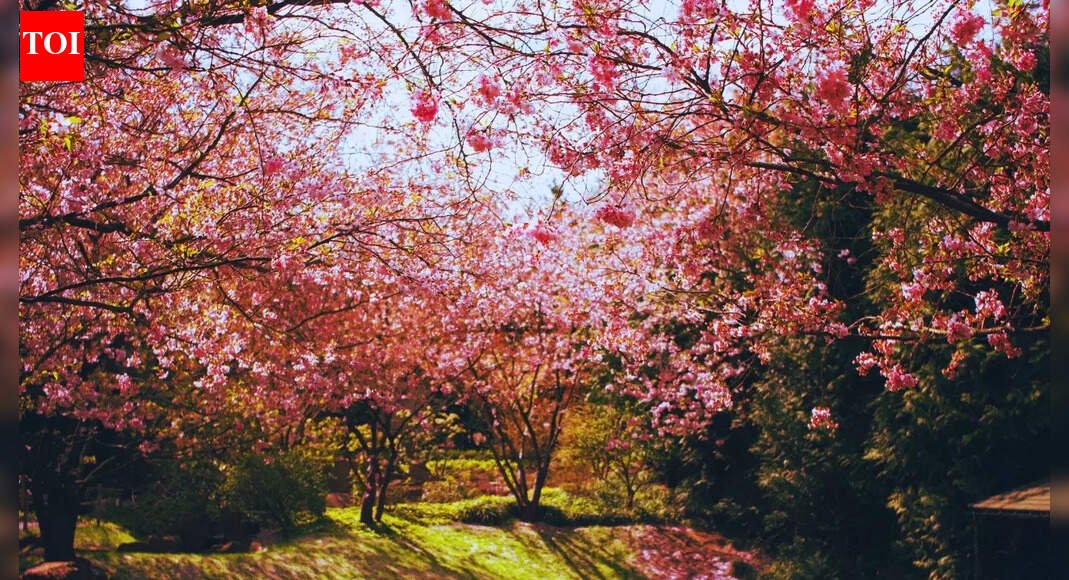
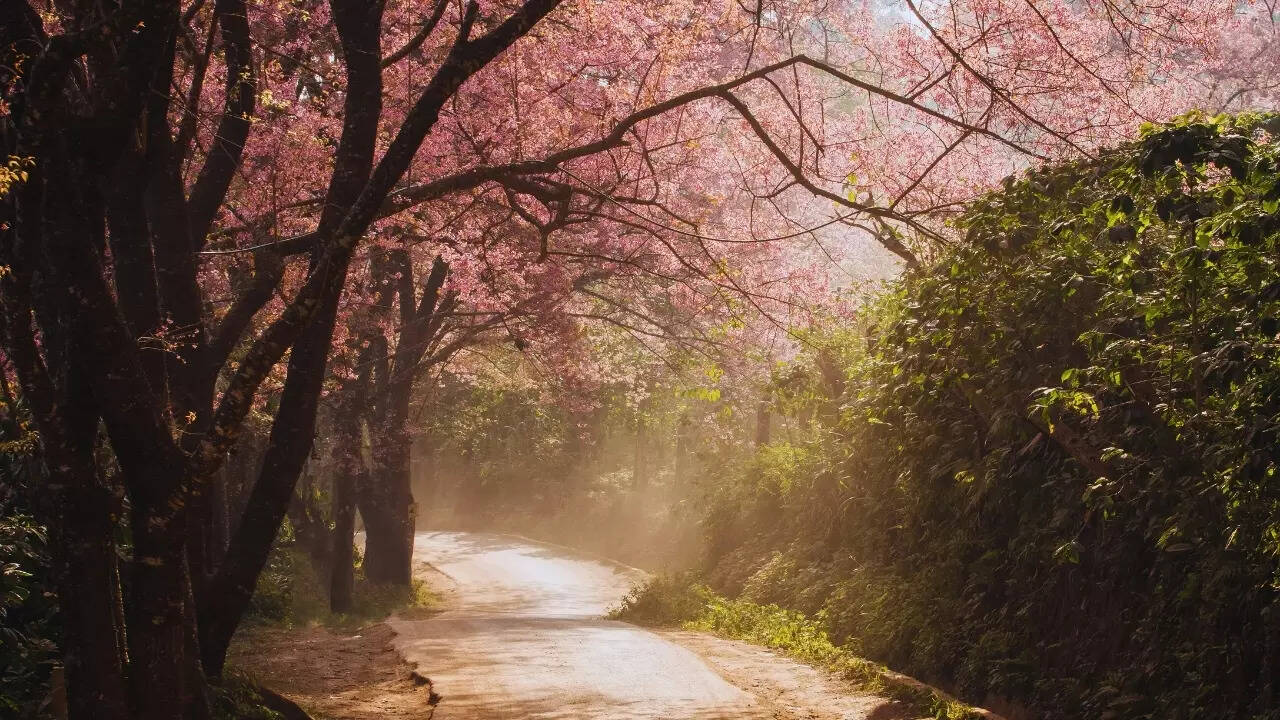
If you are someone who finds cherry blossoms fascinating, and have been planning to visit Japan, pause that Google search of yours, because we have great destinations (if not best) in India, and this is exactly what we are here for. Skip Japan’s sakura or the old tradition of Hanami, and straight to Nagaland (as soon as possible). Nagaland has steadily built a reputation as one of India’s foremost cherry blossom destinations. Unlike Japan, where cherry blossoms bloom in spring, Nagaland’s cherry trees flower during the winter months, usually between late October and early December. For a winter-loving traveller, this is perfect.The star of Nagaland’s cherry blossom story is Kohima, where streets, hill slopes, and forested patches are lined with wild Himalayan cherry trees. As the trees burst into bloom, entire neighbourhoods turn into pink and white wonderland. You look up, you will see a sea of pink, you look down, you will see petals carpeting roads and trails.

Beautiful church in Nagaland

Beautiful church in Nagaland

What makes Nagaland’s blossoms particularly special is their natural setting. Unlike curated urban parks, many of these cherry trees grow wild, blending seamlessly into the landscape. The result is a more organic and intimate experience, far removed from the crowds often associated with cherry blossom viewing in Japan. Tourists visiting Kohima for the annual Hornbill Festival must have witnessed this natural attraction.Those visiting Nagaland, explore scenic blossom-lined trails during the day. In Nagaland, especially in Kohima, cherry blossoms are not just a visual delight but part of a broader cultural experience rooted in local traditions and modern creativity.

Meghalaya’s emerging blossom trails

The country is starting to see Nagaland as an emerging cherry blossom destination, but long before that, Meghalaya made a place for itself in the cherry blossom scene. Whether you are approaching the state from Guwahati side or from Dima Hasao and Cachar side in Assam, throughout the way, you would see pretty cherry trees, in shades of light pink and white. But since the lifespan of these blossoms are quite short, visiting these states late in the season may result in zero blossoms, but a lot of green and young fruits.In season, in Meghalaya, the blossoms are more scattered, making them a great treat for observant travellers. Pink blooms appear along winding hill roads, forest edges, and village paths, often framed by rolling clouds and dense pine forests.Botanically, the cherry blossoms of Nagaland and Meghalaya are not the same species as Japan’s famous blooms. The Indian one is the Himalayan cherry. Even though they are different in species, they are as visually striking as the Japanese cherry. The visual impact is strikingly similar, with delicate petals and fleeting blooms. This similarity challenges the long-held notion that sakura is exclusive to Japan. In fact, India’s Northeast offers its own interpretation of the cherry blossom season, shaped by different climates, cultures, and landscapes.

Road lined with cherry blossoms

Road lined with cherry blossoms

Why India’s cherry blossoms deserve attention

One of the most compelling aspects of cherry blossom viewing in Nagaland and Meghalaya is accessibility. It’s true that some travellers are still hesitant to visit the northeast region primarily due to misconceptions. But what if we were to tell you that travelling to the northeast is more fun, educating, enriching and worth your time and money? Firstly, to witness cherry blossoms, you do not need a visa, unlike a visit to Japan. However, if you are not from Nagaland, you are required to have an Inner Line Permit. One pro-tip: If you are planning for Nagaland, any time of the year, do book your tickets well in advance. The air fares tend to be on the steeper side. Dimapur has an airport and is also one of the major railway stations in the northeast. The bus connectivity is also very good, especially from Shillong and Guwahati. Even though Nagaland is a well-known tourist destination, the state does not get overcrowded. Visitors get a chance to explore a culturally rich and ecologically diverse region within the country. For photographers, nature lovers, and slow travellers, the state is a gem of a destination.Travellers keep in mind, if you are planning a cherry blossom trip to the Northeast, the one thing you need to remember the most is the timing. And this is not just for the flight or train tickets. The cherry blossoms don’t bloom for long. This is not a months-long natural event. The cherry blossoms stay for around a couple of weeks. And since the blooming window is so short, it adds to the allure. Also keep in mind, the cherry blossoms aren’t everywhere. It’s not common to find them in Dimapur. But Kohima, now that’s a different case. Here, the blooms are at their finest, thus making Kohima and the neighbouring hilly areas, some of the best places to see the blooms.Travellers should approach the experience with flexibility, as the blossoms are short-lived and weather-dependent. Unlike structured blossom forecasts in Japan, the Northeast’s blooms are still largely guided by nature rather than schedules, adding an element of surprise to the journey.


Source link

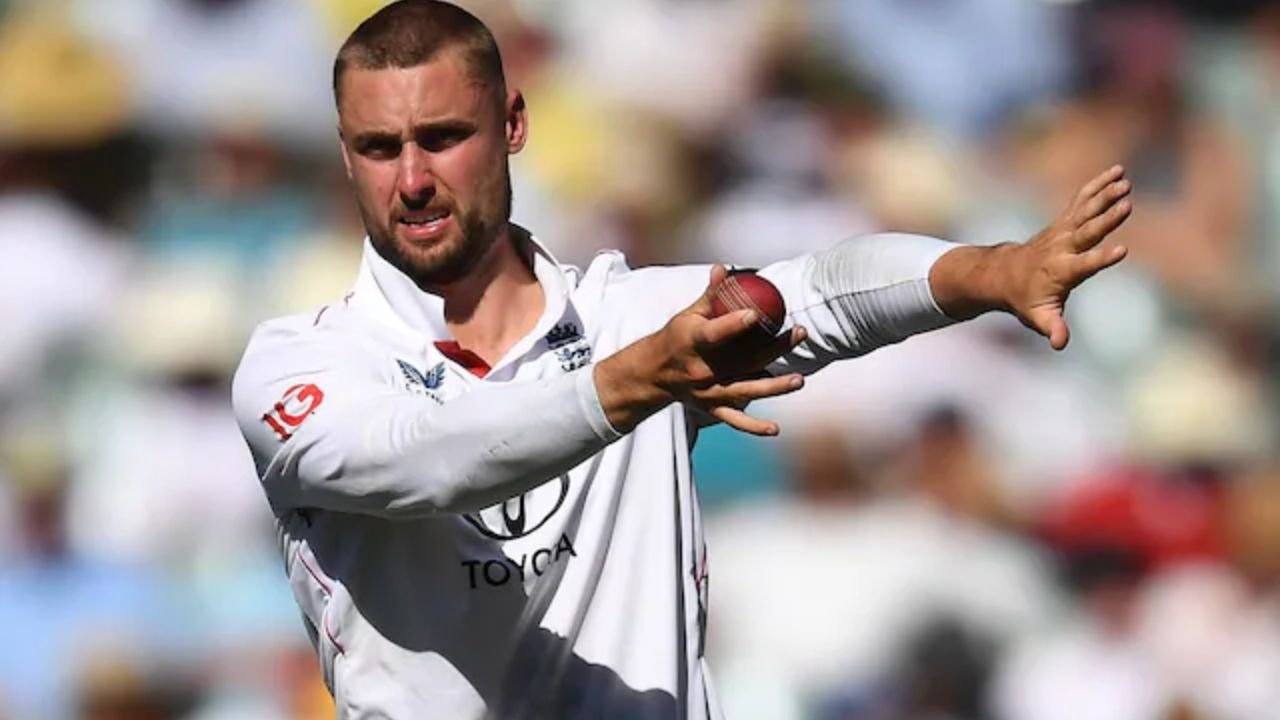
England coach shamelessly defends all-rounder after embarrassing show


England’s spin bowling coach Jeetan Patel defended all-rounder Will Jacks despite his poor bowling after Day 3 (Friday, December 19) of the third Test against Australia in Adelaide. Patel said Jacks did not bowl poorly in the match, adding that he was selected in the playing XI to strengthen England’s batting lineup.

Australia tightened their grip with a massive 356-run lead. The decision to back Jacks as the main spinner ahead of Shoaib Bashir drew criticism. Australia targeted Jacks aggressively, exposing his limitations. The right-arm off-spinner picked up one wicket for 107 runs off 14 overs in Australia’s second innings.

I Don’t Think Will Jacks Has Bowled Poorly – Jeetan Patel

Speaking after the third day’s play, Jeetan Patel said that Will Jacks’ bowling was not as bad as it appeared. He added that Australia played Jacks smartly by using their feet to put him under pressure. Patel also stated that Jacks was selected mainly for his batting skills.

Your daily dose of cricket!

next

I don’t think he has bowled poorly, if anything he’s been a touch short or a touch straight at times. His pace has been a little bit down compared to [Nathan] Lyon but I’m not comparing him to Lyon, I’m comparing him to Will Jacks,” Patel said.

“And look, they’ve played him very well. They’ve used the crease, they’ve got deep, they’ve run down at him, they’ve used the offside and the legside and they’ve looked to score to put him under pressure, and it’s probably what you would do against a spinner of Jacks’ nature where it’s not his frontline skill as such.”

“But we all know why he was picked, and that was because of the first two games where we felt like we did need that extra batting cover.”

Shoaib Bashir Is Our Number One Guy – Jeetan Patel

Jeetan Patel stated that Shoaib Bashir remains England’s first-choice spinner and the team has faith in his abilities. Patel added that the balance of using four fast bowlers with Will Jacks supporting them can work well in the right conditions. However, he admitted that it did not deliver the results.

“I still believe that Bash [Shoaib Bashir] is our number one guy, and I think he does a fantastic job for us, and he always has,” Patel continued.

“Because we do play that way, we look to pick the players that we think are going to fit the game the most, and with all four seamers firing and Jacksy backing them up, I think that works. I think it works very well, but it probably didn’t play out as well as we’d like it today.”

Will Jacks Endures Difficult Adelaide Test as Australia Take Firm Control

Will Jacks had a very tough Test in Adelaide. He became the first England player since 1981 to give away more than 100 runs in both innings of an Ashes Test. Australia attacked his bowling and scored freely.

In contrast, Australia spinner Nathan Lyon showed strong control. He took two wickets in England’s first innings while conceding 70 runs. His tight bowling helped captain Pat Cummins manage his fast bowlers better and keep pressure on England.

Australia then built a huge lead in the second innings. Travis Head scored an unbeaten 142, while Alex Carey added another knock with an unbeaten 52. At the end of day three, Australia were 271 for 4 with a lead of 356 runs.

Also read: Ben Stokes injured during 3rd Ashes Test, England hide issue but commentator exposes truth


Source link

Access Denied


Access Denied

You don’t have permission to access “http://www.ndtv.com/india-news/air-india-indigo-issue-travel-advisories-amid-fog-related-daisruptions-9851988” on this server.

Reference #18.acf856b8.1766192892.f83b45d

https://errors.edgesuite.net/18.acf856b8.1766192892.f83b45d


Source link