Breaking News
CAQM flags delays, enforcement gaps in waste management across NCR | India News

CAQM flags delays, enforcement gaps in waste management across NCR

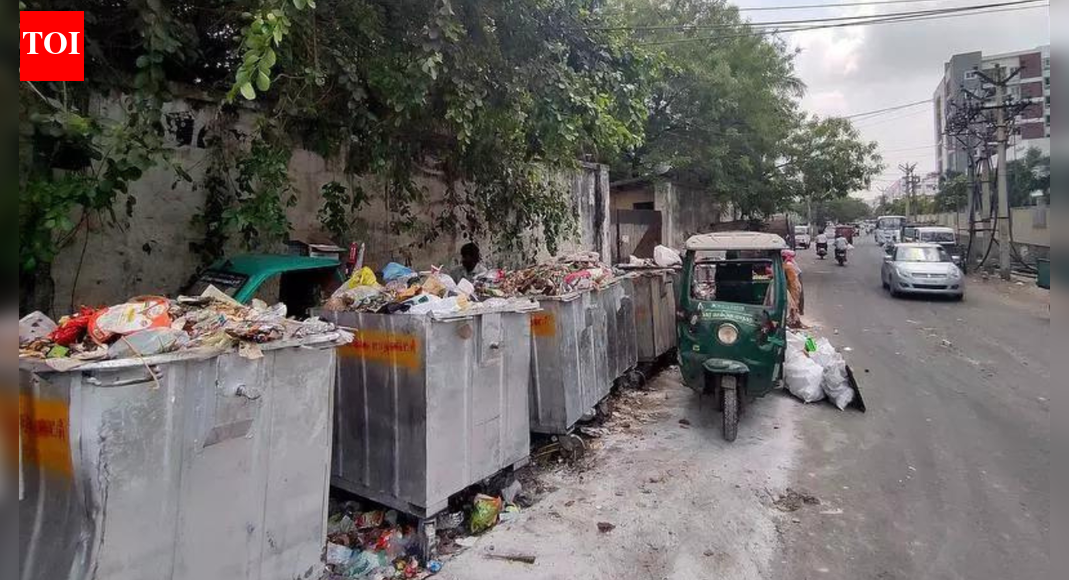
The Commission for Air Quality Management has directed civic bodies and state agencies across the National Capital Region to urgently strengthen municipal solid waste management, flagging persistent open burning of waste, delays in clearing legacy dumps and gaps in enforcement.The directions came after a detailed review of waste management systems in Delhi and NCR states, conducted through a series of meetings with state governments, municipal bodies and pollution control boards.The Commission for Air Quality Management (CAQM) said waste management remains a critical area requiring sustained attention because of its direct impact on air pollution.

‘Delhi NOT Most Polluted’: Doctor’s Shocking Reveal On Toxic Monster; And How To Fight Back

In Delhi, the CAQM noted continued incidents of open municipal solid waste and biomass burning despite the availability of infrastructure.It directed the Municipal Corporation of Delhi to complete remediation of 143.09 lakh metric tonnes of legacy waste by December 2027, at a processing rate of about 3.5 lakh metric tonnes per month, and to submit monthly progress reports.The commission also ordered immediate augmentation of waste-processing facilities without extending timelines and asked for stronger surveillance of garbage-vulnerable points, spill-free transportation of waste and intensified door-to-door segregation drives.Bulk waste generators in Delhi have been asked to ensure on-site wet waste processing within one month, while the rollout of the zero-waste colonies is to be accelerated.The Delhi Pollution Control Committee has been tasked with strict monitoring of waste-to-energy plants, fly ash disposal, verification of municipal data and monthly compliance reporting to the CAQM.In Haryana, the commission flagged significant delays in legacy waste remediation and processing infrastructure, particularly in Gurugram, Faridabad and Sonipat.Gurugram’s municipal corporation has been directed to complete tendering for the remediation of 14 lakh metric tonnes of legacy waste by January 20, 2026, and to start biomining by March 31, 2026.Faridabad has been asked to identify land for decentralised processing facilities within two months and make them operational by April 2026.In Uttar Pradesh’s NCR areas, the CAQM observed delays in legacy waste remediation, uneven segregation and coordination gaps.Authorities in Noida, Greater Noida and Ghaziabad have been told to complete remediation within committed timelines and not to seek further extensions for commissioning processing facilities.In Rajasthan’s NCR districts, including Bharatpur, Alwar and Bhiwadi, progress on waste remediation and segregation was found inadequate.Urban local bodies have been directed to complete remediation within timelines and strengthen segregation, surveillance and complaint redressal.The commission said it will closely monitor compliance, carry out follow-up reviews and take action wherever required.


Source link

India-Oman trade deal: What the CEPA changes for India’s Gulf strategy, GTRI explains


India-Oman trade deal: What the CEPA changes for India’s Gulf strategy, GTRI explains

The India–Oman Comprehensive Economic Partnership Agreement (CEPA) will add to India’s growing network of preferential trade arrangements in the Gulf, but its significance lies more in consolidating market access and investment presence than in sharply expanding trade volumes, Ajay Srivastava, founder of the Global Trade Research Initiative (GTRI) said.India and Oman signed the agreement on December 18, marking India’s sixth free trade pact in the past five years, following deals with Mauritius, the UAE, Australia, the EFTA bloc and the UK. The pact is expected to come into force in the coming months.

‘India-Oman FTA To Open Major Opportunities Across Key Sectors’: Commerce Minister Piyush Goyal

Under the CEPA, Oman has granted zero-duty access on about 98% of its tariff lines, covering nearly 99% of India’s exports by value. India’s exports to Oman were about $4.1 billion in FY25, led by refined petroleum products such as naphtha and petrol, along with machinery, metals, aircraft, rice and consumer goods.“While more than 80% of Indian goods already enter Oman at an average tariff of around 5%, duties on some items go up to 100%. Their removal improves competitiveness, but the scope for large trade expansion remains limited by Oman’s market size,” Srivastava said.India, in return, has offered tariff liberalisation on about 78% of its tariff lines, largely through tariff-rate quotas, to protect sensitive sectors. India’s imports from Oman stood at roughly $6.6 billion in FY25, dominated by crude oil, LNG and fertilisers, along with key chemical inputs.The agreement also includes commitments in services, with Oman opening sectors such as IT, professional services, education, healthcare and research. Provisions to ease temporary entry for Indian professionals and streamline pharmaceutical approvals could reduce regulatory costs for Indian firms operating in Oman, Srivastava noted.According to GTRI, the broader importance of the CEPA lies in India’s investment and strategic footprint in Oman. Indian companies have more than 6,000 joint ventures in the country, with cumulative investments exceeding $7.5 billion, largely in the Sohar and Salalah free zones.“The agreement is less a trade breakthrough and more a consolidation of India’s economic position in a critical Gulf corridor,” Srivastava said, adding that it supports India’s longer-term interests in energy security, logistics, services exports and regional connectivity.Given Oman’s location at the entrance to the Gulf and its role as a logistics and energy hub, the CEPA strengthens India’s engagement in the region even as trade volumes remain modest, he said.


Source link

President Donald Trump-owned Truth Social parent to merge with Google-backed fusion reactor company in $6 billion deal


President Donald Trump-owned Truth Social parent to merge with Google-backed fusion reactor company in $6 billion deal

The parent firm of US President Donald Trump’s social media platform Truth Social, Trump Media, a fusion energy firm called TAE, has merged, and the move has seen the share price of Trump Media jump by nearly 25% following the news, though it “slumped by about 70% in the past year.” The companies have agreed to an all-stock mergertactic that will see the “combined entity” develop “the world’s first utility-scale fusion power plant” beginning in 2026, and will give the “shareholders of both companies approximately 50% of the combined entity.”In a statement to news agency AFP on Monday, Trump Media CEO Devin Nunes described this move “a big step forward toward a revolutionary technology that will cement America’s global energy dominance for generations to come.” Nunes and CEO of TAE Michl Binderbauer will be “co-CEOs of the combined company” with Michael Schwab at its board helm and even including Donald Trump Jr.The deal is “expected to close by mid-2026,” though it still “requires shareholder and regulatory approval” before it can be finalised. When it is finalized, this new company will be able to pursue its aim of starting plant construction in 2026.

What is fusion power and why it can be important to meet AI energy demands

Fusion power plants would produce electricity using the same process that powers the Sun, an objective that researchers have pursued for years. However, no commercially viable facility has been built despite decades of development.This uncommon partnership emerges as the Trump administration promotes energy-intensive AI technology that will necessitate a substantial expansion of power generation capacity.AI data centres are putting growing pressure on US electrical grids, and the White House is advocating expedited approval of energy projects to meet demand.TAE Technologies, established in 1998, claims its fusion technology could provide abundant electricity to support AI infrastructure.The California-headquartered company has constructed five fusion reactors and has a workforce of more than 400 people, including 62 individuals with PhD degrees, according to a statement.The firm has managed to raise over $1.3 billion from investors such as Google, Chevron, and Goldman Sachs. It has also promised to provide a cash contribution of a maximum of $300 million to TAE. Trump Media has also launched various projects in the past few months, such as financial services based on cryptocurrency and online video streaming, though their revenue during the first half-year period of 2025 was merely $1.7 million.


Source link

Bengal BLO protests: Central forces to guard state poll body’s office; Union govt approves Election Commission proposal | India News


Bengal BLO protests: Central forces to guard state poll body's office; Union govt approves Election Commission proposal
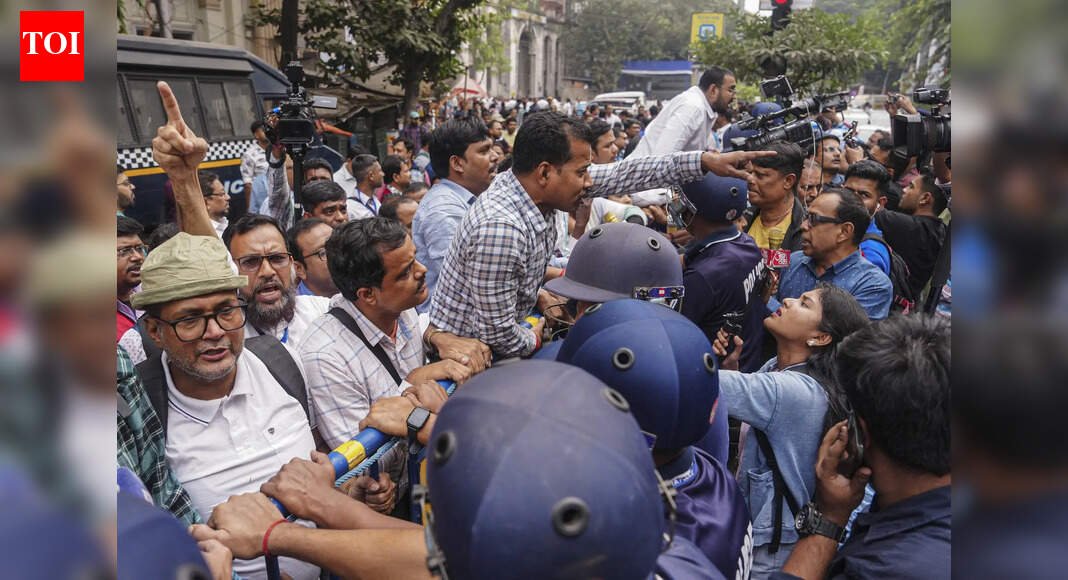
Kolkata: Booth Level Officers (BLOs) under the banner of ‘BLO Adhikar Raksha Committee’ stage a protest over alleged excessive workload during the ongoing Special Intensive Revision (SIR) of electoral rolls, outside Chief Electoral Officer’s (CEO) office, in Kolkata. (PTI Photo)

NEW DELHI: Central armed forces will be deployed at the office of the West Bengal chief electoral officer (CEO) in Kolkata and will assume responsibility for its security on Friday, an official said.Also Read: BLOs march to CEO office, protest ‘inhuman’ SIR stressThe Ministry of Home Affairs has approved the Election Commission’s (EC) proposal in this regard, the official added.“Central forces personnel will take charge of security on the second and third floors of the CEO’s office from Friday morning. They will also accompany officials of the CEO’s office when they travel outside the premises in government vehicles,” he told news agency PTI.

UP BLO Deaths Trigger Outrage As Families Blame Extreme SIR Stress While Officials Deny Any Pressure

The decision follows repeated protests by Booth Level Officers (BLOs) outside the CEO’s office during the ongoing Special Intensive Revision (SIR) of electoral rolls. Demonstrators have staged sit-ins, with this raising concerns over the security of the premises.Also Read: Bengal BLOs break barricades outside Kolkata CEO office as BJP delegation arrivesThe protests were triggered by the deaths of several BLOs during the roll “purification” exercise, with the families of the deceased and leaders of the ruling Trinamool Congress alleging that many of the fatalities were linked to work pressure arising from SIR duties.The West Bengal assembly elections will be held in April-May next year.EC issues show-cause notice to voterMeanwhile, the EC on Thursday issued a show-cause notice to a voter after the individual’s name was found to be registered in two assembly constituencies—Shyampukur in Kolkata Uttar and Ashoknagar in North 24 Parganas—during draft roll verification.At one location, the voter personally signed the enumeration form, while at the other, the form was signed by another person.An official explained that such duplication could be linked to a change of address, but the notice was issued to establish the facts. “The objective is to seek the voter’s explanation and also examine the role of the BLO and other concerned officials,” the official added.Also Read: TMC miffed after 58 lakh names removed; set to carry out door-to-door scrutinyAccording to another official, the move forms part of “increased scrutiny” of the ongoing SIR exercise, aimed at strengthening oversight and addressing any procedural or administrative lapses.


Source link

Rapid weight loss, advised more rest: Inside details of Yashasvi Jaiswal’s bout with acute gastroenteritis | Cricket News


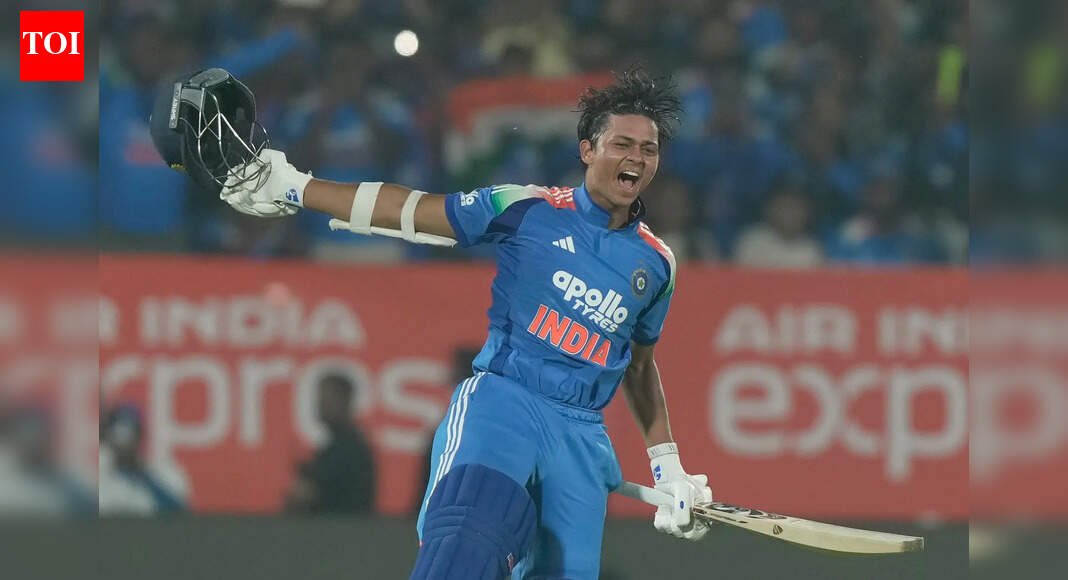
India’s Yashasvi Jaiswal celebrates his century during the third One Day International cricket match between India and South Africa in Visakhapatnam, India, Saturday, Dec. 6, 2025. (AP Photo/Mahesh Kumar A.)

NEW DELHI: India opener Yashasvi Jaiswal has lost weight rapidly in the last couple of days since he has been hospitalised after experiencing severe stomach cramps during Mumbai’s Syed Mushtaq Ali Trophy match against Rajasthan in Pune. What initially looked like a normal stomach bug turned out to be acute gastroenteritis following ultrasound and other necessary scans. He was administered IV medication and has been advised rest and a course of medicines.

Ryan ten Doeschate backs under-fire Suryakumar Yadav, Shubman Gill to regain form

Go Beyond The Boundary with our YouTube channel. SUBSCRIBE NOW!TimesofIndia.com understands that the southpaw has been released from then hospital and is back in Mumbai. Jaiswal has lost over two kgs and has been advised a complete rest for the next seven to 10 days. “It is food poisoning. He ate something in the Pune hotel, which has led to this. There was pain but condition is much better after timely medication. He has lost over 2 kgs already in the last two days and the doctors have asked him to rest at least for the next 7-10 days,” a source tracking developments tells TimesofIndia.com. With completely recovery likely to take at least a week, there is a possibility of the youngster missing the early rounds of the upcoming Vijay Hazare Trophy. Mumbai will start their campaign against Sikkim on December 24. Jaiswal was tipped to open with former India captain Rohit Sharma in the Vijay Hazare Trophy.

Poll

How serious do you think food poisoning is for athletes?

“It will be touch and go for the first few matches for him to turn up for the Vijay Hazare Trophy. There are ODIs vs New Zealand after that too and he is likely to be in the squad for that series,” the source added. It is also been understood that the BCCI‘s medical team is also keeping a tab because of the three-match ODI series against New Zealand to be played from January 11 next month.


Source link

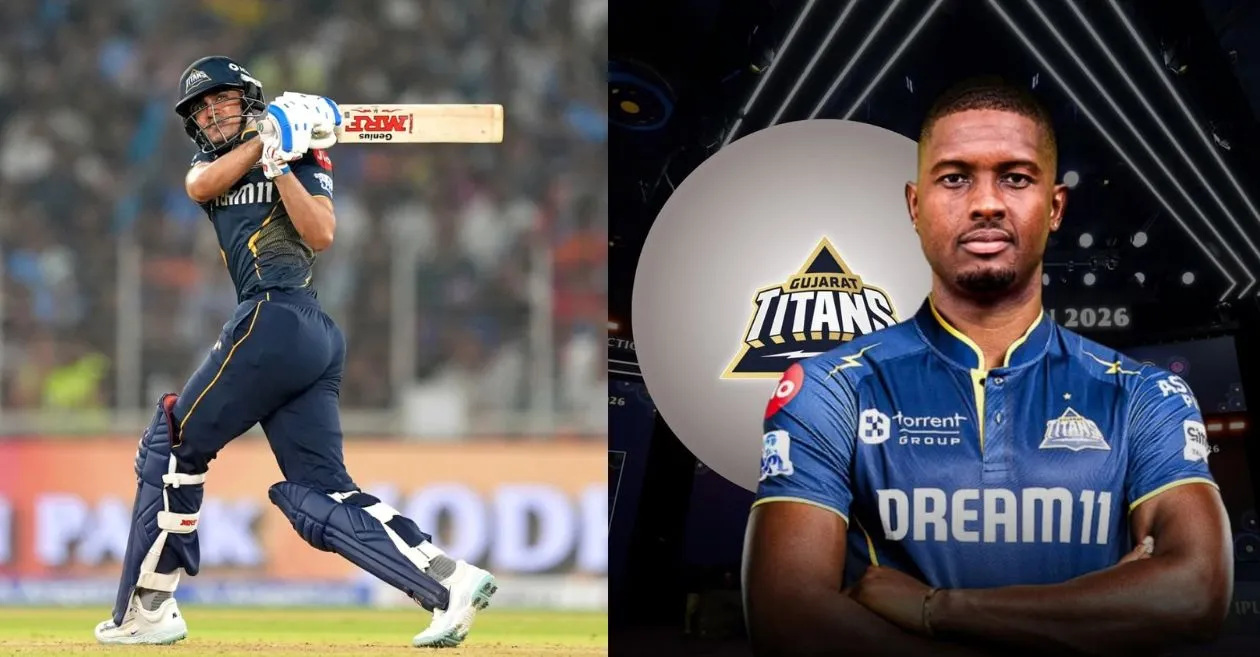
IPL 2026 Auction: Salary of Gujarat Titans (GT) players; check out how much Shubman Gill and Jason Holder earn


IPL 2026 auction concluded recently, with teams like Gujarat Titans (GT) making calculated moves to bolster their line-ups ahead of the upcoming season. GT entered with a substantial purse of ₹125 crore, spending ₹123.05 crore on a balanced 25-player squad featuring seven overseas talents. This mini-auction phase highlighted GT’s focus on retaining proven performers while targeting value buys to address depth issues from prior campaigns.​

Gujarat Titans’ intelligent core retentions

Gujarat Titans showcased auction savvy by prioritizing retentions of their high-impact core, ensuring leadership and firepower remained intact. Captain Shubman Gill headlines the retained Indian contingent at ₹16.50 crore, backed by Rashid Khan (₹18.00 crore), the Afghan spinner renowned for match-winning economy rates under pressure. Explosive opener Jos Buttler commands ₹15.75 crore, bringing white-ball mastery with over 4,000 IPL runs, while pace spearhead Mohammed Siraj (₹12.25 crore) and South African express Kagiso Rabada (₹10.75 crore) form a lethal bowling attack capable of dismantling top orders on any surface.​

Sai Sudharsan (₹8.50 crore) provides elegant top-order stability, complementing Gill’s aggression, as GT builds on their 2022 title-winning blueprint. All-rounders like Rahul Tewatia (₹4.00 crore) and M Shahrukh Khan (₹4.00 crore) add finishing prowess, with Washington Sundar (₹3.20 crore) offering spin-batting utility. Domestic uncapped gems such as Sai Kishore (₹2.00 crore), Gurnoor Brar (₹1.30 crore), and Manav Suthar (₹0.30 crore) were locked in for spin depth and future potential, reflecting GT’s youth-investment philosophy. Overseas retentions like Glenn Phillips (₹2.00 crore) and Tom Banton (base ₹2.00 crore, sold at same) enhance middle-order flexibility, allowing GT to navigate overseas slot constraints effectively.​

These retentions left GT with ₹12.90 crore for auction day, enabling targeted splurges without overextending. Releases of players like Gerald Coetzee and Mahipal Lomror freed slots for fresh blood, signalling a refined strategy post a middling previous season where middle-order fragility cost them playoffs. GT’s management, led by franchise owner CVC Capital, emphasized balance—prioritizing express pace, spin variety, and power-hitting—positioning them as dark horses for IPL 2026.​

Also READ: IPL 2026 Auction: Full list of unsold players along with their base price

Salaries of GT Players in IPL 2026

Auction highlights included West Indies all-rounder Jason Holder‘s blockbuster acquisition for ₹7.00 crore (from ₹2.00 crore base), injecting raw pace, lower-order muscle, and death-over nous to GT’s arsenal. Prasidh Krishna bolstered the seam unit at ₹9.50 crore, his towering bounce suiting bouncy pitches. Lower down, value picks shone: Ashok Sharma (₹0.90 crore from ₹0.30 lakh base), Luke Wood (₹0.75 crore), Jayant Yadav (₹0.75 crore), and Ishant Sharma (₹0.75 crore) provide experienced backups.

S.No. Player Sold Price (₹)
1 Rashid Khan 18 crores
2 Shubman Gill 16 crores 50 lakh
3 Jos Buttler 15 crores 75 lakh
4 Mohammed Siraj 12 crores 25 lakh
5 Kagiso Rabada 10 crores 75 lakh
6 Prasidh Krishna 9 crores 50 lakh
7 Sai Sudharsan 8 crores 50 lakh
8 Jason Holder 7 crores
9 M Shahrukh Khan 4 crores
10 Rahul Tewatia 4 crores
11 Washington Sundar 3 crores 20 lakh
12 Tom Banton 2 crores
13 Glenn Phillips 2 crores
14 Sai Kishore 2 crores
15 Gurnoor Brar 1 crore 30 lakh
16 Arshad Khan 1 crore 30 lakh
17 Ashok Sharma 90 lakh
18 Luke Wood 75 lakh
19 Jayant Yadav 75 lakh
20 Ishant Sharma 75 lakh
21 Kumar Kushagra 65 lakh
22 Nishant Sindhu 30 lakh
23 Manav Suthar 30 lakh
24 Anuj Rawat 30 lakh
25 Prithvi Raj 30 lakh

Also READ: IPL 2026 Auction: Complete list of sold players with their price


Source link

Access Denied


Access Denied

You don’t have permission to access “http://www.ndtv.com/india-news/lamborghini-urus-bmw-z4-among-4-luxury-cars-found-in-raid-on-up-youtuber-9841364” on this server.

Reference #18.f5493417.1766077175.58099e7

https://errors.edgesuite.net/18.f5493417.1766077175.58099e7


Source link

‘Pretty humbling’: Nathan Lyon reacts after surpassing Glenn McGrath in Tests | Cricket News


'Pretty humbling': Nathan Lyon reacts after surpassing Glenn McGrath in Tests
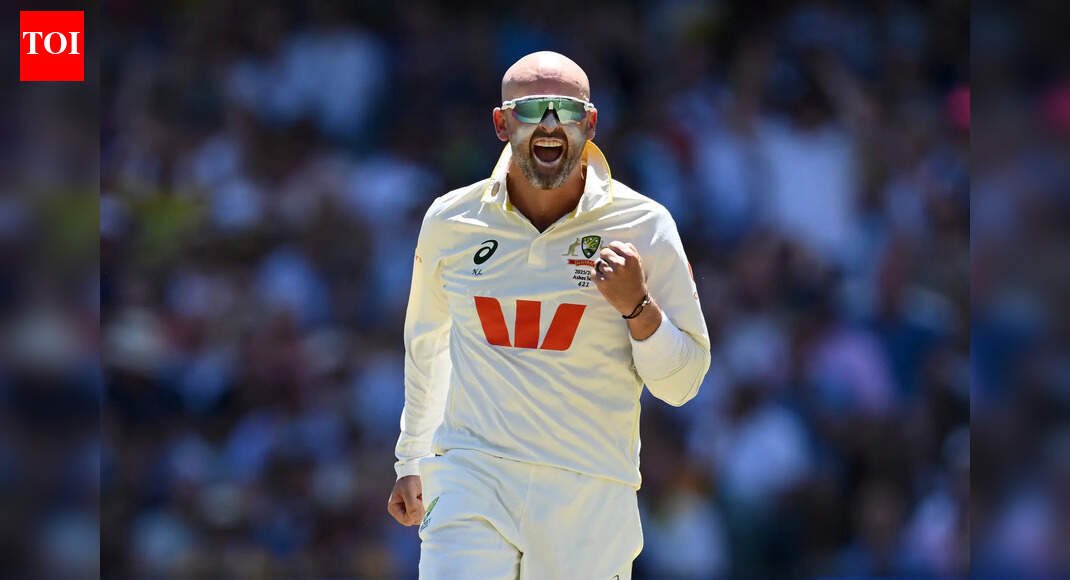
Nathan Lyon of Australia (Photo by Gareth Copley/Getty Images)

Australian off-spinner Nathan Lyon etched his name deeper into the record books on Day 2 of the third Ashes Test at the Adelaide Oval, overtaking Glenn McGrath to become Australia’s second-highest wicket-taker in Test cricket. The milestone came during England’s first innings when Lyon struck twice in the same over, first removing Ollie Pope for three and then dismissing Ben Duckett to move past McGrath’s long-standing mark.

Franchise boom vs Test cricket: Tom Moody’s honest take

Lyon now has 564 wickets from 141 Tests at an average of 30.09, with best figures of 8 for 50. His tally includes 26 four-wicket innings, 24 five-wicket hauls and five ten-wicket match hauls. McGrath finished his career with 562 wickets from 124 Tests at an average of 21.64. Shane Warne remains Australia’s leading Test wicket-taker with 708 scalps from 145 matches. The off-spinner also climbed to sixth place on the list of highest wicket-takers in international cricket. After the day’s play, Lyon spoke about the significance of the achievement and the emotions attached to it. “I grew up idolising Shane Warne and Glenn McGrath. These guys were my childhood heroes. To be able to go past or even equal Glenn is pretty humbling, to be honest. It’s something I’ll look back on at the end of my career, or even tonight, and sit back and try to have a moment because it’s extremely special for me,” Lyon said. He also highlighted the role of his teammates in reaching the landmark. “I wouldn’t have been able to do this without the guys at the other end and my teammates. It’s an extremely humbling and extremely proud moment for me as well,” Lyon added.


Source link

To curb expenses, asai Virar City Municipal Corporation plans 10% cut in contractual workforce | Mumbai News


Vasai: The Vasai Virar City Municipal Corporation (VVCMC) on Dec 15 issued a circular to all its departments seeking detailed information about contractual staff employed across the civic body. According to the circular, the VVCMC is planning to reduce its workforce by 10% as part of cost-cutting measures.While the circular does not specify the date of implementation, departments were instructed to submit the required data by Wednesday, Dec 17. The move is aimed at controlling administrative expenses incurred by the municipal corporation.In addition to collecting staff details, the performance of contractual employees will also be assessed before a final decision is taken. Department heads have been asked to include their feedback on the workforce as part of the report.Skilled, semi-skilled, engineers, firemen, clerical staff, drivers etc are the department which will see workforce cut. Sources in the vvcmc have confirmed that the decision on the 10% workforce cut would be taken after due process if followed which will take around a month, which also means that it will be only after the upcoming corporation elections are over.


Source link

Budget 2026 for the investor: Time to fix the flawed tax design on share buybacks


Budget 2026 for the investor: Time to fix the flawed tax design on share buybacks
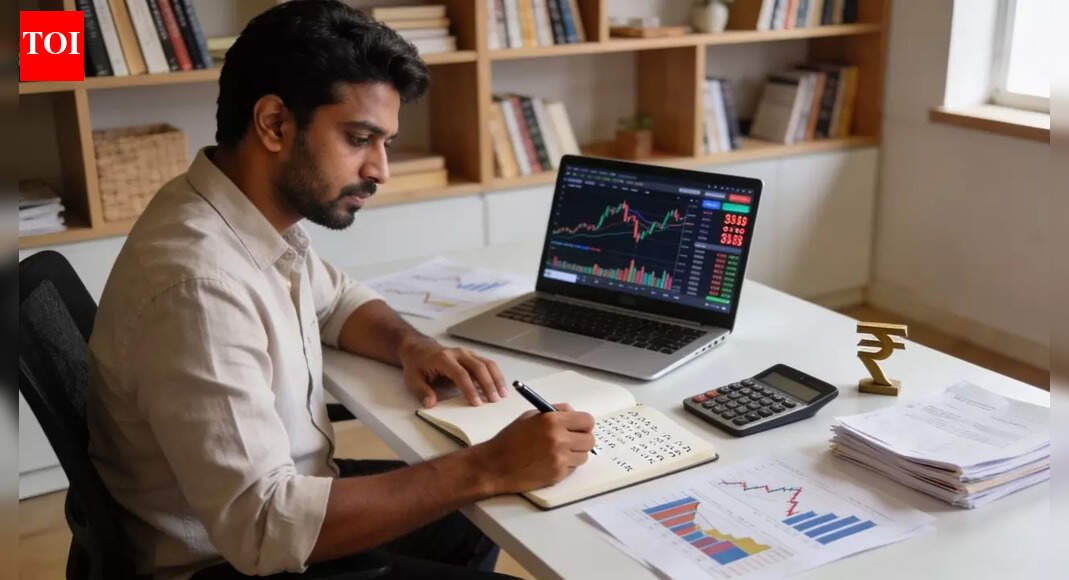
For high-income taxpayers, buyback proceeds may now be taxed at slab rates up to 35.88%, despite the fact that the shareholder is surrendering and extinguishing their rights in the shares. (AI image)

When the Finance Act, 2024 rewired the tax treatment of share buybacks, it upended a long-standing system that had—with all its imperfections—at least been predictable. Starting Oct 1, 2024, the burden of tax shifted decisively from the company to the shareholder.What appeared to be a simplification has instead triggered a chorus of concerns from tax experts, industry bodies, and investors—who warn that the new regime taxes notional income, creates economic distortions, and deviates from global best practice.In 2025, some listed companies did undertake the buyback route, notable being Infosys, Bajaj Consumer Care, Tracxn Technologies, SIS, Infobeans Technologies, Dhampur Sugar Mills.From Capital Gains to Dividend Tax: A Radical ShiftUnder the earlier system, listed companies undertaking buybacks paid buyback tax under section 115QA, while shareholders received proceeds tax-free.The 2024 amendment scrapped this and introduced a two-part mechanism for taxing shareholders:

  1. The entire buyback consideration is taxed as “deemed dividend” under section 2(22)(f).
  2. The original cost of the shares becomes a capital loss under section 46A. It is to be adjusted against other capital gains either in the same financial year or as set-off over the subsequent eight years,

For high-income taxpayers, buyback proceeds may now be taxed at slab rates up to 35.88%, despite the fact that the shareholder is surrendering and extinguishing their rights in the shares. That, experts argue, is the very definition of a capital transaction—not dividend income.The capital loss would be treated as long-term or short-term depending on the duration of holding of the shares before buy back. Listed shares that are held for more than a year (two years for unlisted shares) are treated as a long-term asset, with a tax rate of 12.5%. If in a subsequent sale in the open market of the remaining shares held by the investor or any other assets, the shareholder incurs a long-term capital gain, then the capital loss on buy-back can be set off. The impact is that the buy-back proceeds are at first taxed as dividend as per the slab rate (which for many investors will be higher than the long-term capital gains tax rate). Secondly, on sale of the assets, the loss (on buy-back) would be available for set off only against capital gains, which are taxable at a lower rate. Furthermore, if such loss has to be carried forward to future year/s, the return of income for the year of loss has to be filed on time; else, such loss is forfeited.Tax implications in the hands of a shareholder:

Particulars Computation
100 shares bought in 2020 Rs. 40 per share
Total cost of acquisition Rs. 4,000
Buy-back of 20 shares in 2024 Rs. 60/- per share
Income taxable as deemed dividend Rs. 1,200 (Rs. 60*20 shares)
Capital loss on such buyback Rs. 800 (Rs. 40*20 shares)
50 Shares sold in 2025 Rs. 3,500 (At Rs. 70 per share)
Capital Gains (Sale consideration Rs. 70 per share less cost price Rs. 40 per share) Rs. 1,500 (Rs. 3,500 – 2000)
Chargeable capital gain after set off Rs. 700 (Rs. 1500 – 800)

The Real-World Impact: A Tax Trap for InvestorsThe circularity becomes clearer when seen numerically. Under the new regime:

  • Buyback consideration → taxed as dividend
  • Cost of acquisition → treated as capital loss
  • Capital loss → usable only against current or future capital gains, often at much lower tax rates and subject to timely return filing

Which means taxpayers pay high tax today and receive relief only later—and only if they have gains to offset. Countries such as Australia and the UK tax buybacks as dividends only to the extent of the income component embedded in the buyback price.The Anomaly: Taxing Capital as IncomeA buyback is not always funded by accumulated profits. Companies may buy back shares using:

  • retained earnings,
  • share premium, or
  • proceeds from a fresh issue.

In the latter two cases, there is no distribution of profits at all. Yet, the entire payout is treated as dividend income in the shareholder’s hands. As Ravikant Kamath, partner at EY-India points out, this results in artificial taxation of a capital receipt.He illustrates: A loss-making company using its share premium to carry out a buyback at Rs. 20 each, against a face value of Rs. 100 each, it triggers dividend taxation—even where the shareholder suffers an economic loss.In the light of the upcoming Budget 2026, Ravikanth Kamath, recommends various alternative mechanisms that can be introduced for taxing buyback of shares.1. Restore capital gains treatment under section 46ATax should be levied only on the difference between buyback price and cost of acquisition, as originally designed since 1999. There are sufficient guardrails in both Companies Act and Income tax Act to prevent abuse of disguised dividends.2. Do not tax buybacks funded out of share premium or fresh issue proceedsThese are capital transactions, not profit distributions.3. For buybacks out of retained earnings, split taxation appropriately where only the amount representing accumulated profit is treated as dividend.

  • Amount representing accumulated profits →dividend
  • Amount representing capital returned → capital gains, not taxable as dividend.


Source link