Breaking News
Is the Viksit Bharat Shiksha Adhishthan Bill dissolving federalism in education?


Is the Viksit Bharat Shiksha Adhishthan Bill dissolving federalism in education?


Few pieces of legislation put forth brimming ambition on the table and evoke deep constitutional unease. Such is the Viksit Bharat Shiksha Adhishthan Bill, 2025. It has been introduced in the Lok Sabha amid vocal opposition resistance, the bill seeks nothing less than a full-scale demolition and reconstruction of India’s higher education regulatory architecture. By repealing the University Grants Commission Act, 1956, the All India Council for Technical Education Act, 1987, and the National Council for Teacher Education Act, 1993, the government is proposing a singular, centralised command structure in the name of efficiency, coherence, and reform.On paper, the bill aligns itself firmly with the National Education Policy (NEP), 2020, a document that promised transformation, autonomy, and innovation. In practice, however, the legislation raises a more uncomfortable question: Does this reform strengthen India’s higher education system, or does it hollow out the federal compact that underpins it?

The new architecture: One apex, three councils, absolute authority

At the heart of the bill lies the creation of an umbrella regulator, the Viksit Bharat Shiksha Adhishthan, tasked with providing direction for the “comprehensive and holistic growth” of higher education. Beneath it will operate three distinct bodies: A regulatory council, an accreditation council, and a standards council.The design appears streamlined, even elegant. Years of complaints about overlapping mandates, duplicative inspections, and bureaucratic gridlock have given policymakers a compelling case for simplification. The bill’s Statement of Objects and Reasons explicitly cites overregulation and duplication as systemic failures requiring urgent correction.Yet the devil, as always, is in the detail.

Appointments, accountability, and the concentration of power

Every significant authority under the proposed framework, the chairperson of the apex body, its 12 members, and the presidents and members of all three councils, will be appointed by the President of India, based on recommendations from Union government-led search-cum-selection committees.Formally, this adheres to the constitutional process. Substantively, it places the entire higher education regulatory ecosystem firmly within the Union government’s sphere of influence. There is no institutionalised role for state governments in appointments, despite education being a subject that has long occupied a delicate space between the Union and the states.This centralisation becomes starker under Clauses 45 and 47, which grant the Union government overriding policy authority. Any disagreement over whether a matter constitutes “policy” will be resolved unilaterally by the Centre, its decision final and binding. The government may also direct the bodies to perform “such other functions as it deems fit,” an open-ended clause that leaves little room for autonomous regulatory judgment.

The power to supersede: Regulation by remote control

Perhaps the most contentious provision is the Union government’s power to supersede the commission or councils. If the Centre forms the opinion that a body has defaulted in its functions or failed to comply with its directions, it may dissolve that body, force its members to vacate office, and assume full control until reconstitution.This is not merely administrative oversight, it is executive dominance. Regulatory independence, a cornerstone of credible academic governance, is rendered fragile when the regulator exists at the pleasure of the government it is meant to advise, audit, or occasionally resist.

Funding flows and fiscal dependence

Financial autonomy, too, appears limited. The proposed Viksit Bharat Shiksha Adhishthan Fund will be financed primarily through Union government grants, along with receipts and deposits from states or other authorities. While pooled funding can enhance coordination, it also deepens fiscal dependence on the Centre, further narrowing the operational space for dissent or decentralised decision-making.

Federalism at stake: A structural, not symbolic, concern

Opposition parties have framed their objections around two axes: Overcentralisation and federal erosion. These concerns are not rhetorical flourishes. Higher education institutions, particularly state universities, operate within diverse linguistic, social, and economic contexts. Regulatory uniformity imposed from New Delhi risks flattening this diversity in pursuit of a one-size-fits-all model.The criticism of the bill’s Hindi nomenclature may seem cosmetic to some, but it feeds into a broader anxiety: Whose vision of “Viksit Bharat” is being institutionalised, and at whose expense? In a federal polity, symbolism and structure often travel together.

‘Light but tight,’ or tight and heavy?

The government insists that the bill reflects the NEP’s promise of a “light but tight” regulatory framework, minimal interference combined with strict accountability. Yet the expansive discretionary powers vested in the Union government complicate this claim. Autonomy without institutional safeguards quickly becomes conditional autonomy, granted and withdrawn at the Centre’s discretion.Efficiency, undeniably, is a legitimate policy goal. India’s higher education system has long suffered from regulatory congestion. But efficiency achieved through excessive central control carries its own democratic cost.

Reform or rupture?

The decision to send the bill to a Joint Parliamentary Committee is both prudent and revealing. It acknowledges, implicitly, that the legislation’s implications extend beyond technical reform into constitutional terrain. The committee’s deliberations will determine whether this bill evolves into a balanced reform, or hardens into a blueprint for centralised command.The question, ultimately, is not whether India’s higher education system needs reform, it does. The real question is whether reform must come at the expense of federalism, pluralism, and institutional autonomy.If the Viksit Bharat Shiksha Adhishthan Bill redraws the lines of educational governance too sharply, it risks converting cooperative federalism into administrative compliance. And that would be a transformation far more consequential than any regulatory overhaul.



Source link

Height gap draws attention: 5’2 Meloni’s reaction greeting 6’8 Mozambique President goes viral – watch


Screengrab from viral video (Video credits/X@GiorgiaMeloni)

A brief moment from a diplomatic meeting in Rome has taken social media by storm after Italian Prime Minister Giorgia Meloni’s reaction to meeting Mozambique President Daniel Francisco Chapo was caught on camera.The video, dated December 11, shows Meloni greeting the towering Mozambican leader at Palazzo Chigi.As she looks up at the nearly 6’8” president, her visibly surprised expression quickly became the highlight of the clip. The two leaders then shook hands and posed for photographs, but not before the striking height difference stole the spotlight online.

India, Italy Launch Joint Initiative To Counter Terror Financing As PM Modi Meets Meloni

The moment sparked a flood of memes and humorous reactions, with several users noting the logistical challenge it posed for photographers. According to social media posts, some journalists were reportedly forced to squat, while others even lay flat on their stomachs to capture both leaders within the same frame.Social media users were quick to react. One wrote, “When Mozambican President Daniel Francisco Chapo met Italian Prime Minister Giorgia Meloni in Rome, journalists, especially photographers, struggled to frame their shots because of the significant height difference.”Another joked, “Haha! Meloni’s neck must be aching.” A third quipped, “At first I thought she was kneeling.”Beyond the viral moment, the meeting itself focused on substantive diplomatic issues. In a post on X, Meloni said she had received President Chapo to mark the 50th anniversary of Mozambique’s independence and the establishment of diplomatic relations between the two countries. She said the talks reaffirmed the importance of the bilateral partnership and the shared commitment to joint initiatives under Italy’s Mattei Plan.According to Meloni, discussions covered cooperation in key areas including access to energy, sustainable agriculture, vocational training, digitalisation and strengthening healthcare services. The two sides also agreed to work towards boosting trade ties, citing the complementary nature of their economies and the role of Italian energy major ENI in Mozambique’s liquefied natural gas sector.Agreements were also concluded to strengthen cooperation in judicial assistance, civil protection and digitalisation.


Source link

Access Denied


Access Denied

You don’t have permission to access “http://www.ndtv.com/world-news/australia-sydney-bondi-beach-shooting-donald-trump-slams-radical-islamic-terrorism-at-white-house-hanukkah-event-9829236” on this server.

Reference #18.77fdd417.1765941591.a099008

https://errors.edgesuite.net/18.77fdd417.1765941591.a099008


Source link

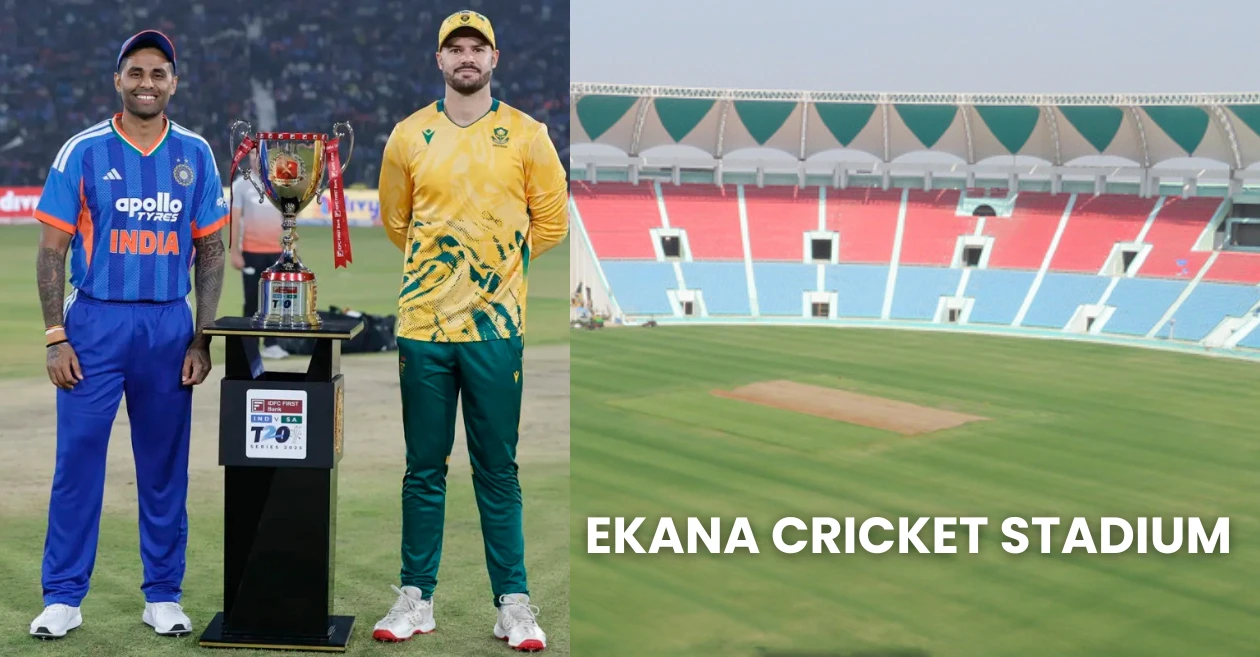
IND vs SA: Pitch Report for 4th T20I, Ekana Cricket Stadium Stats and Records


It’s crunch time in Lucknow! Team India walks into the Ekana Stadium with a 2-1 lead and a golden opportunity to wrap up the five-match T20I series right here, while South Africa have their backs against the wall – fighting to keep the contest alive for a final showdown.

India have all the momentum after that gritty win on a fast pitch in Dharamsala, and cricket enthusiasts know how tough they are to beat at home. South African batters have looked a bit shaky against India’s attack, and if they slip up again on Wednesday (December 17), the series is over. The big question is: Can they handle Arshdeep’s swing and Hardik’s all-round game?  With the Lucknow pitch likely to offer some grip, expect Varun Chakravarthy and Kuldeep Yadav to be the key weapons. If they can tie down Aiden Markram and Dewald Brevis, India will likely be lifting the trophy at Ekana.

Ekana Cricket Stadium Pitch Report

The fourth T20I between India and South Africa at the Ekana Cricket Stadium in Lucknow is expected to be contested on a typically slow, spin-assisting pitch where free-flowing stroke play is challenging and totals in the region of 170 are often match-winning.

The venue’s black-soil surface is known for its low bounce and sharp grip, creating a two-paced track that tests batters, particularly in the early stages. Players usually need time to settle before shifting gears, while bowlers who rely on variations – spinners and seamers using cutters and slower deliveries – are likely to be effective during the middle overs and in the closing stages.

Also READ: Fans react as India lights up Dharamsala with clinical win over South Africa in the third T20I

Ekana Cricket Stadium T20I Stats and Records

  • Total matches played: 9
  • Matches won batting first: 5
  • Matches won bowling first: 4
  • Average 1st innings score: 151
  • Average 2nd innings score: 126
  • Highest total recorded: 199/2 (20 Overs) by India vs Sri Lanka
  • Lowest total recorded: 99/8 (20 Overs) by New Zealand vs India
  • Highest score chased: 159/4 (20 Overs) by South Africa Women vs India Women
  • Lowest score defended: 156/8 (20 Overs) by Afghanistan vs West Indies

Also READ: Mahieka Sharma reacts with a touching story on social media as Hardik Pandya creates T20I history


Source link

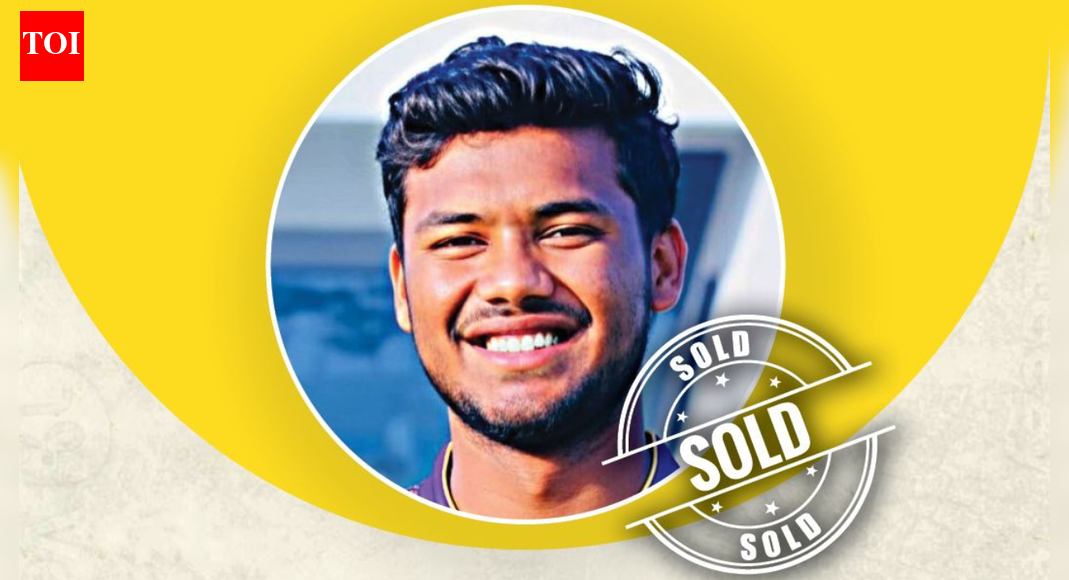
Who is Karthik Sharma? Young Rajasthan batter sold to CSK for a whopping Rs 14.20 crore | Cricket News


Who is Karthik Sharma? Young Rajasthan batter sold to CSK for a whopping Rs 14.20 crore

Chennai Super Kings turned heads at the IPL 2026 auction in Abu Dhabi by going big on youth, securing two of the most talked-about uncapped Indian talents in Karthik Sharma and Prashant Veer for Rs 14.20 crore each. The twin signings underlined CSK’s intent to invest in long-term potential while reshaping key areas of their squad. Karthik Sharma’s name generated immediate excitement when it came up. The 19-year-old wicketkeeper batter from Rajasthan has already earned a reputation as a fearless hitter with the ability to change games in a matter of overs. A clean striker and a natural lower-order finisher, Karthik thrives under pressure and backs his power game without hesitation.

KKR CEO Venky Mysore Explains Cameron Green Buy – ‘We were getting close to the limit’

In just 11 T20 innings, Karthik has scored 334 runs at an average of 30.36 and a strike rate of 162.92, including two half-centuries with a best score of 58. His recent knocks of 46 against Karnataka and 35 versus Tamil Nadu further highlighted his growing maturity. He played a key role in Rajasthan winning six of their seven group-stage matches in the Syed Mushtaq Ali Trophy 2025-26. His talent has also caught the attention of big names, with Ravichandran Ashwin and Kevin Pietersen publicly impressed by clips of his power hitting. At just 19, he is already managed by JSW, the group that represents Olympic champion Neeraj Chopra. Alongside Karthik, CSK also made a strong move by signing 20-year-old left-arm spin-bowling allrounder Prashant Veer for the same Rs 14.20 crore. Veer first came into the spotlight while representing Noida Super Kings in the UP T20 League and has since built a solid body of work in domestic cricket. His recent Syed Mushtaq Ali Trophy campaign saw him score 112 runs at a strike rate of 170 while picking up nine wickets at an economy of 6.76.


Source link

Bondi Beach shooting: Terror suspect Sajid Akram did not visit India even after father’s death, say cops | Hyderabad News


Bondi Beach shooting: Terror suspect Sajid Akram did not visit India even after father's death, say cops

HYDERABAD: Terror suspect Sajid Akram, the 50-year-old Indian-origin man shot dead by Australian police after Sunday’s deadly attack at Sydney’s Bondi Beach that left 15 people dead, had limited contact with his family in Hyderabad since moving to Australia in November 1998.According to cops, Sajid Akram did not attend his father’s funeral in Hyderabad in 2009. Telangana Police and intelligence agencies traced his roots to Al Hasnath Colony in Toli Chowki, where his father, a retired armed forces officer, and his elder brother, a doctor, live. “We are told Sajid visited India six times after migrating 27 years ago, mainly for property matters. Notably, he did not travel to India when his father passed away in 2009,” Telangana DGP Shivadhar Reddy said. The family told police they had no knowledge of when or how Sajid and his 24-year-old son Naveed, the second suspect, were allegedly radicalised.“Reports indicate that they were inspired by ISIS ideology. Factors leading to their radicalisation appear to have no connection with India,” Reddy said. He also confirmed that Sajid had no adverse record in India before emigrating. Sajid graduated in commerce from Hyderabad’s Anwar-Ul-Uloom College and later married Australian Venera Grosso, with whom he had a son and daughter. Sources said he had brought his wife to Hyderabad around 2001 to meet his parents and had a traditional nikah in the city. During later visits, he sold his share of ancestral property in Sha Ali Banda. Australian authorities suspect both father and son were radicalised in Sydney. Naveed attended Arabic and religious courses in Sydney between 2019 and 2022. Media reports say the pair travelled to the Philippines in November 2025, where they may have received military-style training, before returning to Sydney. Mal Lanyon, New South Wales police commissioner, said Naveed’s vehicle contained improvised explosives and two homemade ISIS flags. Meanwhile, three Indian students were among the 40 injured in the attack, two of whom remain hospitalised.


Source link

Delhi smog crisis continues: Air quality stays ‘very poor’ at 350; 11 city areas show ‘severe’ AQI | Delhi News


Delhi smog crisis continues: Air quality stays 'very poor' at 350; 11 city areas show 'severe' AQI

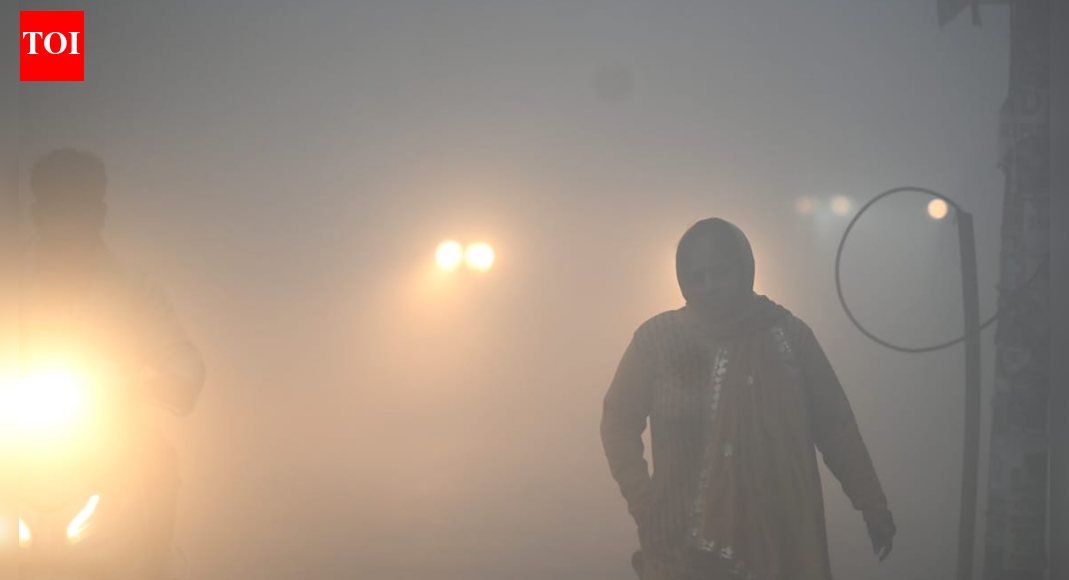
NEW DELHI: Dense smog continued to blanket the national capital on Wednesday, sharply reducing visibility and keeping air quality in the very poor to severe range, even as authorities stepped up curbs to rein in pollution. Delhi’s overall Air Quality Index (AQI) stood near 350, a marginal improvement from day earlier, but conditions remained hazardous. Data from the Central Pollution Control Board showed that 11 of the city’s 40 monitoring stations — including Jahangirpuri, Mundka and Wazirpur — recorded ‘severe’ AQI levels.

‘Delhi NOT Most Polluted’: Doctor’s Shocking Reveal On Toxic Monster; And How To Fight Back

The Delhi government announced that vehicles without a valid Pollution Under Control (PUC) certificate will not be allowed to purchase petrol or diesel in the city. It also said only BS-VI–compliant vehicles will be permitted to operate in Delhi, with older vehicles facing restrictions under the Graded Response Action Plan (GRAP). Fog disrupts flights, airlines issue advisories Poor air quality combined with dense fog continued to disrupt air traffic. IndiGo issued a late-night travel advisory, warning of reduced visibility and slower flight movements across parts of North and East India on Wednesday morning. “In the interest of safety, some flights may experience delays or adjustments,” the airline said, advising passengers to plan ahead, allow extra time to reach airports and check flight status before leaving home. IndiGo also cautioned that foggy conditions could slow road traffic, affecting access to airports. Earlier, Indira Gandhi International Airport issued a fog advisory, saying operations were steadily recovering but warning that disruptions could persist for certain arrivals and departures due to low visibility. Non-BS VI vehicle ban sparks commuter anxiety The Delhi government’s decision to bar non-BS VI vehicles from entering the city from Thursday has triggered concern across the NCR, where lakhs depend on daily cross-border travel. Official data indicates that over 2 lakh vehicles in Gurgaon, more than 4 lakh in Noida and around 5.5 lakh in Ghaziabad fall below BS-VI standards and could be affected. Traffic police teams have been deployed at Delhi-NCR borders, with violators facing fines and vehicle seizure. Residents described the move as abrupt and impractical, arguing that Delhi and its neighbouring cities function as a single economic unit. They warned the restrictions could disrupt daily work, strain public transport and add pressure on already crowded metro services. Officials defended the decision, saying it was necessary to tackle toxic air. “The restrictions are in line with GRAP norms. Our aim is to reduce emissions during severe pollution episodes,” an NCR transport official said. Slight relief, but pollution to persist Meteorological factors brought limited relief on Tuesday, with higher wind speeds helping disperse pollutants and push AQI down from the severe zone. The India Meteorological Department reported shallow fog across most parts of the city, though visibility remained poor in the early morning. Experts said stronger winds over the next few days could further improve air quality, but warned that AQI is likely to remain in the ‘very poor’ category till the end of the week, according to the Centre’s Air Quality Early Warning System. With fog, pollution and travel disruptions expected to continue, authorities have urged residents to limit outdoor activity, use public transport where possible, and stay alert to official advisories.


Source link

Top stocks to buy today: Stock recommendations for December 17, 2025 – check list


Top stocks to buy today: Stock recommendations for December 17, 2025 - check list
Top stocks to buy (AI image)

Stock market recommendations: According to Mehul Kothari, DVP – Technical Research, Anand Rathi Shares and Stock Brokers, the top stocks to buy today are CG Power, Marico, and Britannia:CG Power – Reversal from Trendline SupportBuy near: ₹670–₹660 | Stop Loss: ₹634 | Target: ₹730 | Time Frame: 30–60 DaysCG Power has shown signs of a potential trend reversal after a sharp correction. On 09-12-2025, the stock formed a bullish engulfing pattern supported by healthy above-average volumes, adding credibility to the move. Price is also holding near an important rising trendline support, strengthening the overall structure.Momentum indicators are improving, with the MACD histogram showing bullish divergence along with a bullish crossover between the MACD and signal line. This confluence suggests strengthening momentum and increases the probability of an upside move as long as ₹634 remains protected.Marico – Breakout Above Consolidation RangeBuy near: ₹740–₹730 | Stop Loss: ₹715 | Target: ₹775 | Time Frame: 30–60 DaysMarico has consistently taken support near the flat Ichimoku cloud over the last few sessions, indicating strong base formation. In the most recent session, the stock has decisively broken out above the consolidation range of the previous four days, signalling a potential continuation of the uptrend.Throughout the consolidation phase, RSI remained above the 50 mark, reflecting underlying strength and a positive momentum bias. As long as the stock holds above ₹730, the structure remains favourable for a move towards ₹775.Britannia – Trend Resumption After Strong BaseBuy near: ₹6050–₹6000 | Stop Loss: ₹5800 | Target: ₹6400 | Time Frame: 60–90 DaysBritannia has witnessed strong consolidation in the ₹5750–₹6000 zone, which coincides with the 20, 50 and 100 DEMA, indicating a well-defined support base. The stock has also broken above the Ichimoku cloud, suggesting a positive shift in trend.RSI has held above the 50 level during the consolidation phase, highlighting sustained bullish momentum. This confluence of technical signals points towards an improving price structure, making the ₹6050–₹6000 zone a favourable risk–reward area for positional longs.(Disclaimer: Recommendations and views on the stock market, other asset classes or personal finance management tips given by experts are their own. These opinions do not represent the views of The Times of India)


Source link

Who is Mustapha Kharbouch, a Brown University student at the center of intense social media speculation as manhunt for shooter continues?


Social media users Tuesday claimed that a Brown University student’s social media footprints were getting deleted as the manhunt for the shooter entered the fourth day, The law enforcement did not release the name of any suspect but social media users pointed out that the university removed the profile page of a student named Mustapha Kharbouch. The claim is not verified. Mustapha is believed to be a first-year student studying International & Public Affairs. “He is a third generation Palestinian refugee born and raised in Lebanon. Attaining a scholarship to attend UWC Maastricht, he had led and continued to help with community building initiatives and social change roles,” the allegedly deleted university profile said.

Trump Roasted Over ‘Lack Of Empathy’ After Insensitive Remark On Brown University Shooting

“Palestinian activist, Mustapha Kharbouch. Brown University has taken down information about their student from their websites. X has also removed his X account (FBI request?)” one wrote. “Why is Brown University now actively scrubbing all of their articles & links on their student assistant Mustapha Kharbouch???” another wrote.

Brown University shooting timeline

  • On December 13, a mass shooting took place inside a classroom at the Barus & Holley Engineering and Physics Building at Brown University in Providence, Rhode Island, during exam-period activities. Two students were killed and nine others were wounded. The shooting took place around 4 pm.
  • Trump announced the shooter was in custody but then corrected himself and said the manhunt was on.
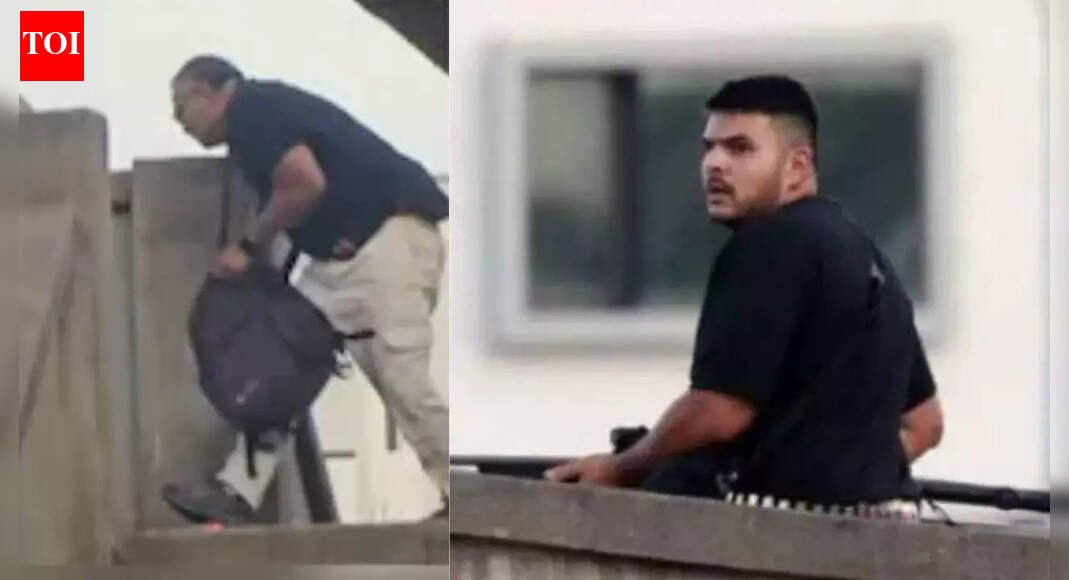
  • Surveillance footage of the shooter was released, showing him walking. His face could not be seen.
  • Early morning on December 14, a person of interest was detained from a hotel.
  • Late into the night, the officials announced that the person of interest would be released from custody. Investigators concluded there was no solid evidence linking him to the shooting. But his name was leaked.
  • On December 15, the manhunt was on with the release if a new footage but in this too, the shooter can’t be seen.
  • On December 16, FBI offered a reward up to $50,000 for information leading to the arrest of the man. The FBi said the man is ‘armed and dangerous’


Source link

IPL 2026 Auction: Fans erupt as CSK signs Prashant Veer and Kartik Sharma at record prices; making them joint most expensive uncapped players


The IPL 2026 mini-auction witnessed an unprecedented surge in the value of domestic Indian talent, culminating in a historic moment where two uncapped players were bought by the same franchise for the same record-breaking price.

Wicketkeeper-batter Kartik Sharma of Rajasthan became the second player in the auction to be purchased for a mammoth ₹14.20 crore by Chennai Super Kings (CSK), joining all-rounder Prashant Veer at the pinnacle of the uncapped player salary list. Starting from a base price of ₹30 lakh, the 19-year-old sparked a prolonged bidding war, primarily with Kolkata Knight Riders, before Sunrisers Hyderabad‘s late challenge was overcome by CSK, who showed a clear, aggressive strategy to build their Indian core.

Prashant Veer becomes most expensive uncapped IPL player

The bidding for Prashant was one of the most unexpected and explosive moments of the IPL 2026 auction, immediately grabbing attention as multiple teams recognized his potential. The fierce bidding started low, with Mumbai Indians (MI) and Lucknow Super Giants (LSG) initially raising the paddle.

However, the real fireworks began when CSK entered the race, closely followed by Rajasthan Royals (RR), pushing the bid past the ₹6 crore mark. The battle then became a high-octane war of attrition between CSK and Sunrisers Hyderabad (SRH). Both franchises were relentless, driving the price past the previous uncapped record of ₹10 crore (held by Avesh Khan in 2022) and into the territory of established international players.

CSK and SRH exchanged bids over 40 times, with the price increasing ₹20 lakh at a time. The bid crossed ₹10 crore, then ₹12 crore, and finally ₹14 crore. SRH made the penultimate bid of ₹14.00 crore, but CSK responded with the final, successful bid of ₹14.20 crore, making Prashant Veer the most expensive uncapped player ever sold in an IPL auction.

Also READ: IPL 2026 Auction: Fans go wild as Cameron Green becomes the most expensive overseas player in league’s history

Chennai Super Kings (CSK) buys potential successor to Ravindra Jadeja

Chennai’s aggressive pursuit of Prashant for ₹14.20 crore is a clear strategic move to fill the void created by the departure of veteran all-rounder Ravindra Jadeja in the previous retention window. Prashant Veer’s profile perfectly fits the “next Jadeja” template for the franchise: a left-handed bat who can stabilize the middle-to-lower order and a left-arm orthodox spinner capable of delivering crucial middle-overs breakthroughs at the spin-friendly Chepauk stadium. His recent domestic form, which catapulted him into the auction spotlight, justified CSK’s massive investment.

His key performances highlighted his high-impact potential:

  • Strikes at 167 in T20s, confirming his ability to provide explosive finishing power.
  • He scored 320 runs and took 8 wickets across 10  matches in the UPT20 League 2025, demonstrating his genuine all-round utility.
  • He offers flexibility through the middle overs, which is exactly what CSK requires to maintain momentum after the powerplay.

Here’s how fans reacted: 

The record-breaking battle for Kartik Sharma to become joint most expensive uncapped player

The bidding for the uncapped wicketkeeper-batter, Kartik , was one of the most extended and aggressive duels of the IPL 2026 auction, concluding with him being secured by the Chennai for a historic ₹14.20 crore, tying the record for the most expensive uncapped player ever. Starting from his modest base price of ₹30 lakh, the 19-year-old immediately attracted early interest from Lucknow Super Giants (LSG) and Kolkata Knight Riders (KKR). LSG eventually backed out at ₹2.60 crore, but KKR, who had already made record buys earlier in the auction—, hen went head-to-head with CSK.

This rivalry turned into a war of attrition, with both franchises relentlessly pushing the price up ₹20 lakh at a time. The bid quickly soared past the ₹5 crore mark and continued its upward trajectory, crossing the significant ₹10 crore threshold and then reaching ₹12.80 crore, with KKR still challenging CSK. In a late, decisive move, SRH entered the fray, showing their intent by driving the price to ₹14.00 crore. However, CSK were determined to land the high-impact WK-batter, placing the final, winning bid of ₹14.20 crore. This spectacular acquisition showcased CSK’s firm commitment to investing heavily in domestic talent, viewing Kartik Sharma as a vital, long-term asset to fortify their batting and wicketkeeping options.

The significance of the ₹14.20 crore bid for Kartik Sharma

The successful bid for Kartik at ₹14.20 crore cemented the Chennai Super Kings’ aggressive auction strategy focused on securing top-tier Indian talent for the future.

  • Joint Uncapped Record: By matching the price paid for Prashant Veer, Kartik Sharma became the joint most expensive uncapped player in IPL history, a massive endorsement of his raw talent and proven domestic T20 strike rate of 167.
  • Wicketkeeper-Batter Premium: His ability to keep wickets while providing explosive middle-order batting (evident from his 334 runs in 11 SMAT innings) made him a two-in-one package. This versatility is highly valued by IPL franchises looking to maximize their Indian slots.
  • CSK’s Future Core: The relentless bidding against KKR and SRH highlights that CSK viewed Kartik as a crucial part of their long-term plans, especially in the post-Dhoni era, where they require a reliable, high-impact domestic WK-Batter.

Here’s how fans reacted: 

Also READ: IPL 2026 Auction: Fans cheer as KKR’s late move bags Matheesha Pathirana after an intense bidding war between LSG and DC


Source link