Breaking News
Netflix to acquire Warner Bros: Why it is a BIG deal | Business


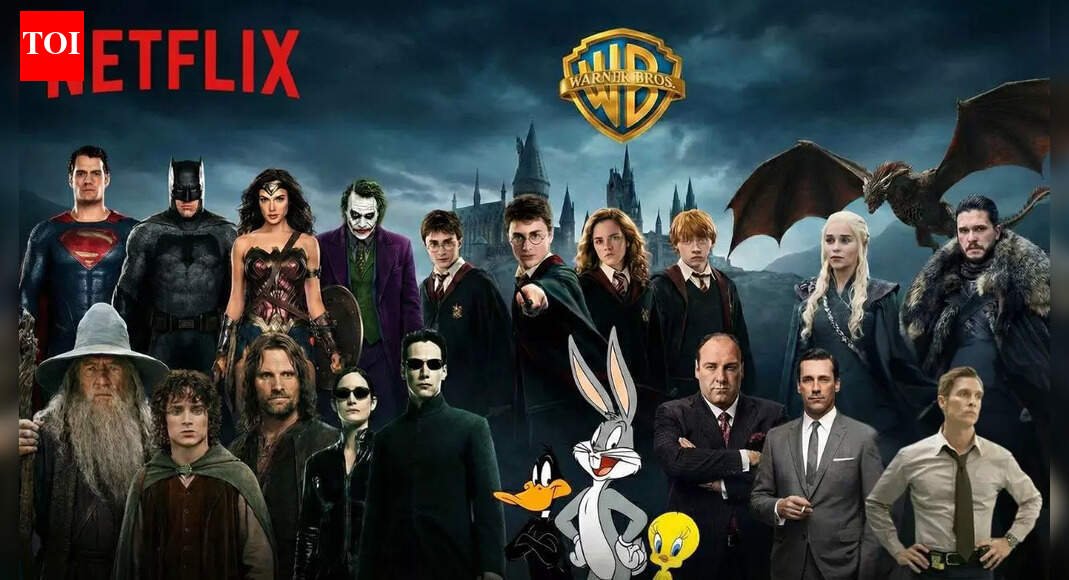
Netflix was born out of the resentments of the video cassette age. Anyone who lived through the 1990s remembers the ritual: rushing to the local rental store on a Friday evening, discovering the last VHS copy was already gone and then returning the tape late on Monday morning, only to be punished with a fee that cost more than the film. Netflix emerged as a small Californian rebellion against this experience. Instead of fluorescent aisles and impatient clerks, it offered DVDs in red envelopes mailed directly to your home. Instead of rewinding tapes, you simply logged into a website and waited for the postman to arrive. It was a simple idea designed for people who wanted to escape the tyranny of Blockbuster.Two and a half decades later, that humble mail-order start-up is preparing to buy the studio that helped build modern Hollywood itself. Netflix’s planned acquisition of Warner Bros – the century-old home of Casablanca, Harry Potter, DC superheroes, The Lord of the Rings (via New Line), HBO and control of classics like The Wizard of Oz – for an enterprise value of roughly 82.7 billion dollars marks a transformative moment in entertainment history. For the first time, a company that began its life shipping DVDs is about to take ownership of a film and television library that has shaped global culture for a hundred years.

Massive Netflix–Warner Bros Merger Triggers Industry Panic And Global Streaming Shake-Up

This is not just a corporate transaction. It is the moment streaming becomes the centre of the entertainment universe.

From red envelopes to a global entertainment engine

Netflix and Warner Bros logos

Netflix’s early success came from identifying a simple human truth: people hated late fees. The company replaced penalties with subscriptions and replaced return dates with unlimited rentals. But the real leap arrived in 2007, when Netflix began streaming films directly over the internet. At the time, internet video was grainy, unreliable and better suited for cat clips than cinema. Yet Netflix bet that broadband infrastructure would catch up.That bet proved correct. Streaming transformed Netflix from a quirky DVD service into the largest entertainment platform on the planet. The company expanded around the world, built an unmatched recommendation system and eventually began producing its own shows. House of Cards and Orange Is the New New Black showed that Netflix could make premium television. Stranger Things, Money Heist, Squid Game and Bridgerton made it a cultural force.Yet Netflix still faced one structural weakness. It had hits, but it did not have heritage. Unlike Disney or Warner Bros, it did not own a deep catalogue of films and shows that could be reimagined for generations, sold across formats or spun into franchises. Its library was powerful but relatively young. For a subscription business, long-lasting intellectual property becomes the anchor that holds audiences in place.

Warner Bros: the house that built Hollywood

Neo (The Matrix)

If Netflix represents the story of technological disruption, Warner Bros represents the foundation of Hollywood itself. Founded in 1923, the studio introduced sound to cinema with The Jazz Singer. It gave the world Casablanca, defined the golden age of musicals with titles it now controls such as The Wizard of Oz, shaped modern rebellion with Rebel Without a Cause, reinvented horror with The Exorcist and expanded the boundaries of action cinema with The Matrix. Its New Line division shepherded The Lord of the Rings trilogy to global acclaim.Its television arm is equally influential. HBO transformed scripted entertainment by proving that cinematic storytelling could thrive on the small screen. The Sopranos, The Wire, Game of Thrones and Succession reshaped what television could be. Meanwhile, Warner’s mainstream sitcoms – Friends, The Big Bang Theory, ER and dozens more – became the comfort food of global syndication.But Warner Bros also endured repeated mergers, debt burdens and strategic upheavals. As cable television declined, the economics that once funded HBO came under strain. HBO Max, though expanding into new regions and still growing, lagged Netflix in global scale. The company found itself navigating the impossible balance between legacy networks, theatrical releases and streaming ambitions.This is the legacy Netflix is buying. But Netflix’s expansion is not being greeted with universal enthusiasm. A group of prominent filmmakers has already sent an anonymous letter to members of the US Congress warning that the acquisition could “hold a noose around the theatrical marketplace,” arguing that a Netflix-controlled Warner Bros would have the power to shrink theatrical release windows and destabilise the ecosystem that sustains thousands of industry jobs. Their note, referenced in the Variety report, describes fears that Netflix’s dominance as both a buyer and distributor could give it unprecedented leverage over exhibition chains, post-theatrical licensing and the financial health of feature filmmaking itself. The appeal urges lawmakers to subject the deal to the highest level of antitrust scrutiny, framing the merger not merely as a business story but a cultural and institutional inflection point for Hollywood.

The deal in numbers – and why they matter

The financials make clear how monumental this transaction is. Netflix will acquire the Warner Bros studio, HBO, HBO Max and the entire film and television catalogue for an enterprise value of roughly 82.7 billion dollars and equity value of around 72 billion dollars. Shareholders will receive a mix of cash and Netflix stock valued at about 27.75 dollars per share. Netflix expects annual cost savings of two to three billion dollars by year three and forecasts that the deal will increase earnings per share by year two.Before the acquisition closes, Warner Bros Discovery will spin off its linear networks – CNN, Discovery, TLC and various factual and lifestyle channels – into a separate company. Netflix is purchasing the creative and streaming heart of the Warner empire, not the legacy cable infrastructure.This deal rivals Disney’s acquisition of 21st Century Fox in scale and easily surpasses most modern entertainment mergers. Yet the dynamic is entirely different: a digital-born platform is absorbing a traditional studio, not the other way around.

How this deal transforms Netflix

Stranger Things

Stranger Things recap/ Netflix

The acquisition solves three long-standing problems for Netflix in one move.The first is the library gap. By acquiring Warner’s vault, Netflix finally gains a catalogue with true generational weight. DC superheroes, Harry Potter, Game of Thrones, The Matrix, Looney Tunes, HBO’s golden-age dramas and thousands of films and TV episodes become permanent Netflix assets. These are not simply shows and movies; they are narrative worlds that can be extended, rebooted and monetised for decades.The second change is theatrical power. Warner Bros owns soundstages, production facilities and distribution relationships that span the globe. Netflix’s relationship with cinemas has always been experimental and occasionally uneasy. By inheriting Warner’s infrastructure and release commitments, Netflix gains the credibility and machinery of a long-standing theatrical studio. It no longer needs to choose between being a streaming platform or a film studio. It becomes both.The third transformation concerns control. Netflix no longer depends on external studios for high-value franchises. It controls windows, renewals, merchandising and long-term franchise strategy. It can blend its vast viewer data with Warner’s storytelling and production expertise to decide which universes to expand and how to release them.In effect, Netflix stops being primarily a distributor and becomes a full-spectrum entertainment conglomerate.

What the deal means for Disney

The Mandalorian

“The Mandalorian” is an exciting and breathtakingly beautiful journey for fans of the Star Wars universe. A lone Mandalorian bounty hunter is followed as he makes his way through the perilous outer reaches of the galaxy in this Disney+ series. “The Mandalorian” is a delightful addition to the Star Wars saga with its captivating characters, vintage Western vibes, and amazing special effects.

For years, Disney has been the only company with true franchise supremacy. Marvel, Star Wars, Pixar and Disney Animation feed into a global ecosystem of films, streaming, merchandise, parks and cruises. It has been the only studio able to dominate theatre schedules and streaming algorithms simultaneously.Netflix acquiring Warner Bros challenges that supremacy for the first time in a meaningful way. Disney and Netflix will now sit on comparable piles of narrative universes. Where Disney has Marvel, Netflix will have DC. Where Disney has Star Wars, Netflix will hold the worlds of Game of Thrones and Harry Potter. Where Disney has a robust theatrical pipeline, Netflix will now have one too.Disney remains a powerhouse, but it now competes with an entity that has both greater digital reach and an equally recognisable roster of franchises. Its task becomes maintaining cultural momentum in an environment where Netflix’s catalogue will suddenly look far deeper and far more emotionally familiar to audiences across the world.

What it means for Paramount, NBCUniversal and others

For smaller studios, the landscape becomes far more challenging. Paramount, which had aggressively pursued Warner as a way to bulk up, now finds itself exposed. Its franchises – Mission: Impossible, Top Gun, Star Trek, Nickelodeon – are valuable but not enough to compete with the consolidated libraries of Netflix–Warner or Disney. A merger or sale appears increasingly likely simply to remain viable.NBCUniversal’s Peacock also misses the chance to absorb HBO content. Sony, lacking a major streaming platform of its own, must choose whether to remain a licensing powerhouse or seek deeper alliances. In an environment dominated by scale, mid-sized players face enormous pressure either to specialise or to consolidate.From an analytical standpoint, the streaming landscape is now evolving into a three-pole system: Netflix–Warner, Disney and Amazon–MGM. Other services may continue to exist, but most will orbit these core ecosystems rather than challenge them directly.

The end of “streaming versus Hollywood”

For a decade, streaming was framed as the insurgent force attacking Hollywood’s old order. Netflix was the outsider; studios were the establishment. Cable bundles, release windows and theatrical exclusivity were the system Netflix sought to disrupt.This deal erases that divide completely. When the world’s largest streaming service acquires a studio that defined Hollywood’s golden age, the categories collapse. Streaming is no longer the challenger; streaming becomes the industry’s organising principle. Theatrical releases become one element of a multi-platform strategy anchored in global subscriptions and long-term intellectual property.Hollywood’s centre shifts from geography to architecture: whoever controls the universes – and the pipeline that delivers them – controls the culture.

Why this is a hinge moment for entertainment

Harry Potter

Image via Harry Potter

For audiences, the benefits will appear slowly but unmistakably. More iconic films and series will live under a single subscription. HBO’s prestige slate, Warner’s classics, DC’s superheroes, Harry Potter, Game of Thrones and Netflix originals will eventually coexist on one platform. Convenience will increase, even as questions about pricing and competition intensify.For creators, the merger brings both opportunity and uncertainty. Netflix–Warner will become the world’s most powerful buyer of scripted content, capable of financing ambitious projects at scale. Yet consolidation also means fewer independent bidders for talent and a need to reconcile HBO’s creator-driven culture with Netflix’s data-driven commissioning.And for Hollywood, this is a turning point. A company built to eliminate late fees will now own the archives that define a century of storytelling. Technological disruption has merged with cinematic legacy, and the result is an entertainment ecosystem unlike anything the industry has seen.Netflix was once the outsider. With this acquisition, it becomes the custodian of one of the most important film and television libraries ever assembled. The future of entertainment will no longer be determined by who makes the most compelling story, but by who controls the universes that audiences return to year after year.Netflix wanted to escape the tyranny of the video store. It now finds itself in charge of Hollywood’s memory – and its future.
Source link

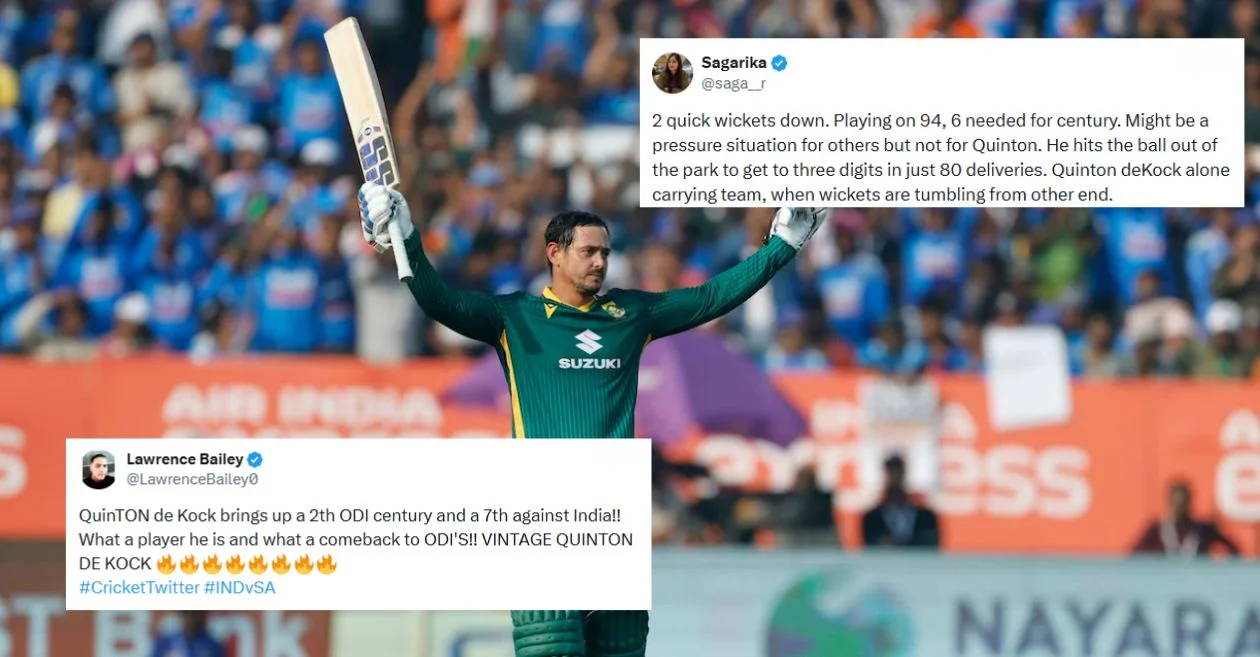
IND vs SA: Fans go berserk as Quinton de Kock equals Kumar Sangakkara’s record with his 23rd ODI century in Visakhapatnam


Quinton de Kock’s 23rd ODI century, an elegant 106 off 89 balls, has put him in the spotlight once again, leading South Africa’s charge in the 3rd and final ODI against India in Visakhapatnam. De Kock’s knock was the highlight of the day, coming at a critical time after early wickets fell. He formed two vital partnerships, one with captain Temba Bavuma (113 runs) and another with Matthew Breetzke (54 runs), before being dismissed shortly after reaching his hundred. His innings not only guided South Africa to a challenging total but also set several records, solidifying his place among the ODI greats.

Quinton de Kock surpasses milestones with this 23rd ODI century during Vizag game vs India

De Kock’s remarkable century took him to several new milestones in his career. With this knock, he surpassed 8,500 runs in List A cricket, having accumulated 8,503 runs in 202 matches at an average of over 44. This century also marked his 7th against India in ODIs, equaling Sanath Jayasuriya’s record for most centuries by any player against India in ODIs. He now has 1,191 runs against India at an average of 51.78. In addition, de Kock achieved 2,500 runs in away ODIs (home of opposition) with this innings.

His 23rd ODI century ties him with Sri Lanka’s Kumar Sangakkara for the most centuries by a designated wicketkeeper, a feat he shares with the legendary Lankan keeper. Moreover, de Kock continues to close in on 2,000 runs in Asia, a region where he has been particularly successful, with 1,981 runs to his name at an average of 53.80. His consistent performances have now placed him ahead of ODI legends like David Warner, Sourav Ganguly and Tillakaratne Dilshan, who have 22 tons each.

Here’s how fans reacted: 

Also WATCH: KL Rahul’s epic celebration after India ends toss jinx | IND vs SA, 3rd ODI

De Kock’s century lifts South Africa to comfortable place in final ODI against India

De Kock’s brilliant 106 off 89 balls powered South Africa to a competitive total of 244/7 in the third ODI against India in Visakhapatnam so far in 40 overs. After an early setback, losing Ryan Rickelton for a duck, de Kock anchored the innings with a solid partnership of 113 runs alongside Temba Bavuma. Despite losing Bavuma and other key wickets, de Kock kept the momentum going with a crucial 54-run stand with Matthew Breetzke. His century came from 80 balls, and though he was dismissed shortly after reaching the milestone by Prasidh Krishna, de Kock’s knock ensured South Africa had a fighting total. Kuldeep Yadav and Prasidh Krishna were the standout bowlers for India, picking up key wickets. South Africa will now look to their lower order to add some late runs and post a challenging total.

Also READ: IND vs SA, 3rd ODI: Here’s why Washington Sundar is not playing today’s match in Visakhapatnam


Source link

Hasina’s stay in India is her personal decision: Jaishankar | India News


Hasina’s stay in India is her personal decision: Jaishankar

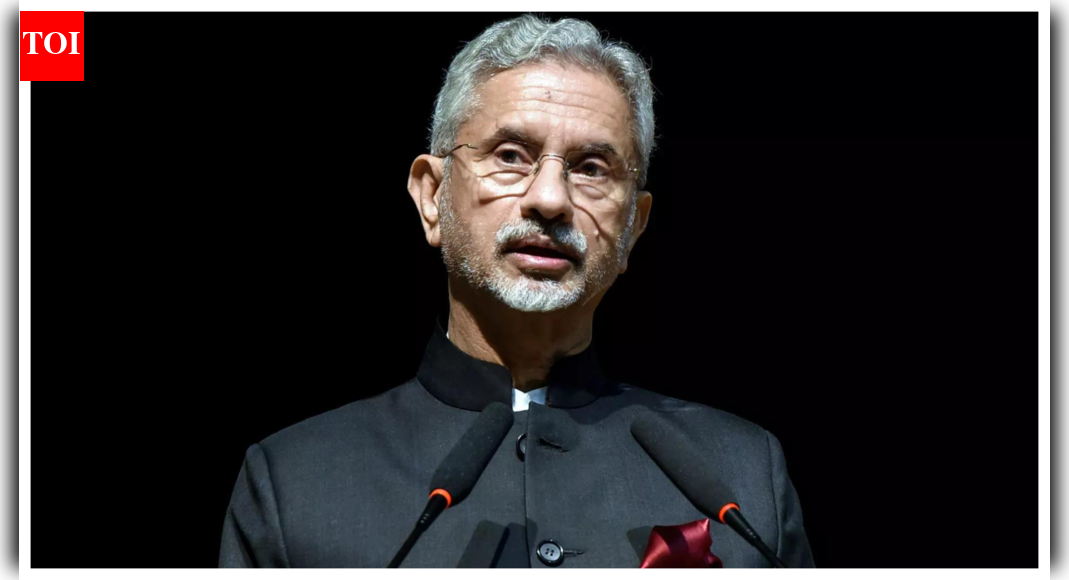
External affairs minister S Jaishankar

NEW DELHI: Amid calls by Bangladesh for ex-PM Sheikh Hasina’s extradition, external affairs minister S Jaishankar said Saturday her stay in India is her personal decision influenced by what transpired in the country last year.India has so far not acceded to Dhaka’s demand for the extradition of Hasina, who was sentenced to death last month for crimes against humanity.Asked if she could stay as long as she wanted, the minister said this was a different question. “She came here in a certain circumstance, and I think that circumstance clearly is a factor in what happens to her. But again, that is something in which she has to make up her mind,” he said. He also said India is a well-wisher of Bangladesh.

Hasina’s stay in India is her personal decision: Jaishankar

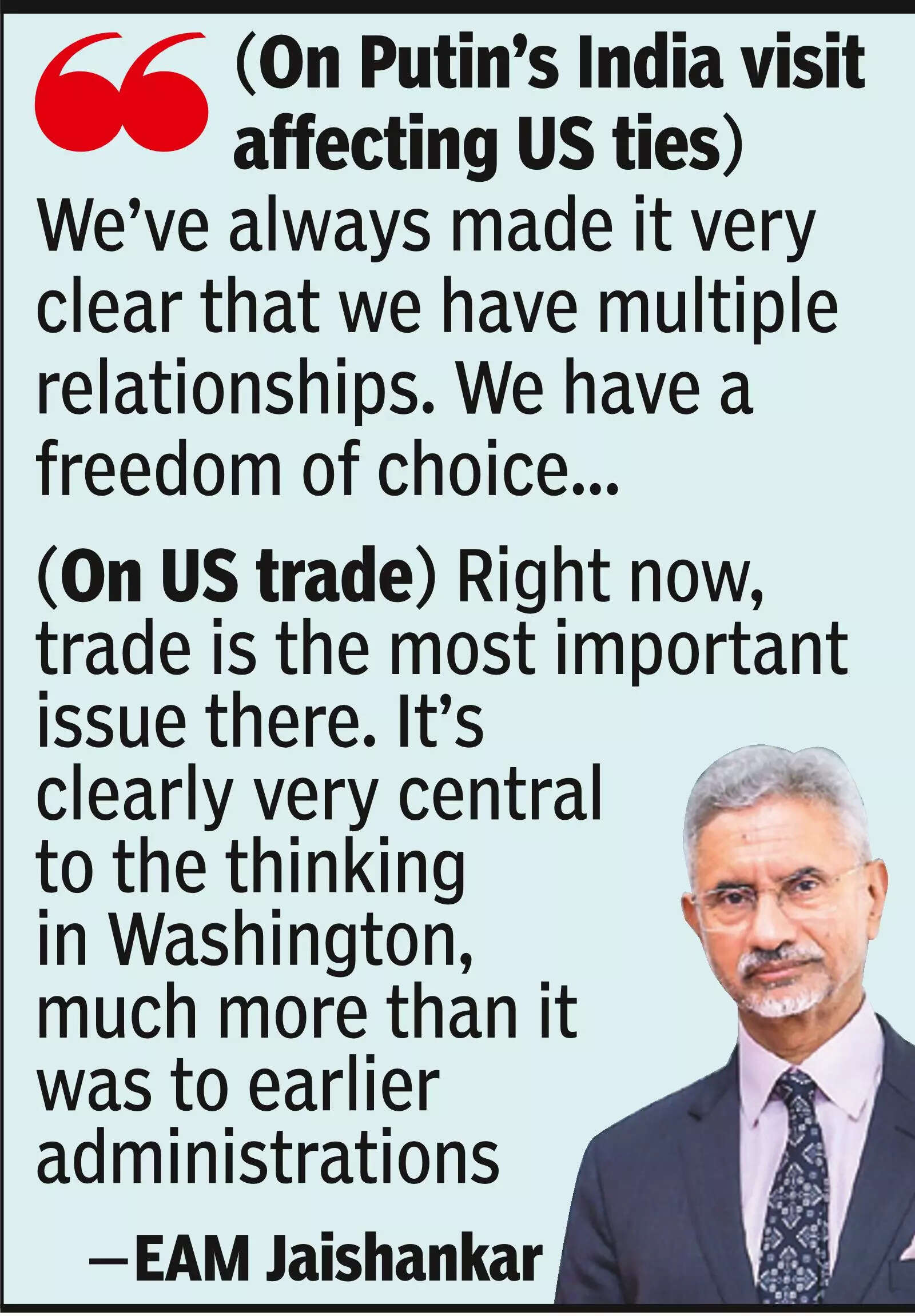
“As a democratic country… we would like to see the will of the people ascertained. I’m quite confident that whatever comes out… would have a balanced and mature view about the relationship and, hopefully things would improve,” he said at Hindustan Times Leadership Summit.On the visit by Russian President Vladimir Putin, he said the India-Russia partnership has been among the “steadiest big relationships” in the last 70-80 years.Unreasonable for nations to expect say in our foreign ties: EAMForeign minister Jaishankar disagreed that Putin’s visit could complicate India’s negotiations with the US on a bilateral trade agreement.“I think everybody knows that India has relations with all the major countries in the world,” Jaishankar said at the Hindustan Times Leadership Summit. “I think for any country to expect to have a veto or a say in how we develop our relations with others is not a reasonable proposition,” he said.Jaishankar was asked if Putin’s two-day visit to New Delhi that focused largely on significantly enhancing the economic dimension of India-Russia ties will have a bearing on the negotiations with the US for the proposed trade deal. “Because remember, the others can expect the same. I think we’ve always made it very clear that we have multiple relationships. We have a freedom of choice,” he said. “We talk about what is called strategic autonomy and that continues and I cannot imagine why anybody would have reason to expect the contrary,” he added.The minister acknowledged that the focus of the Trump administration has been on trade and noted that India’s approach in navigating it is totally driven by national interests. “I think clearly right now trade is the most important issue there. We have, it’s clearly very central to the thinking in Washington, much more than it was to earlier administrations, which is something which we have recognised and we are prepared to meet,” he said.“But we are prepared to meet it on reasonable terms. I mean, for those of you who think that diplomacy is about pleasing somebody else I’m sorry, that’s not my view of diplomacy. I mean, to me, it is about defending our national interests,” he said.The India-US relations are going through possibly the worst phase in the last two decades after Washington imposed a whopping 50% on Indian goods, including 25% levies for New Delhi’s procurement of Russian crude. The two sides are currently holding negotiations for the proposed a trade deal “We believe that there can be a landing point for our respective trade interests. Obviously, that is something which will be negotiated hard because it has an implication for livelihoods in this country,” he said.“At the end of the day, for us the interests of the workers and the farmers and the small business and the middle class matters. When we look at a trade agreement with a country like the US, you have to be extremely judicious about your position, about what you put on the table,” he said.On President Putin’s trip to India, Jaishankar said for a “big” and “rising” country like India, it is important to maintain good cooperation with as many important players as possible in the world in line with freedom of choice.


Source link

IND vs SA: Yashasvi Jaiswal becomes only 6th Indian to achieve this rare feat; joins Rohit Sharma, Virat Kohli in elite list | Cricket News


IND vs SA: Yashasvi Jaiswal becomes only 6th Indian to achieve this rare feat; joins Rohit Sharma, Virat Kohli in elite list
Yashasvi Jaiswal. (Photo/

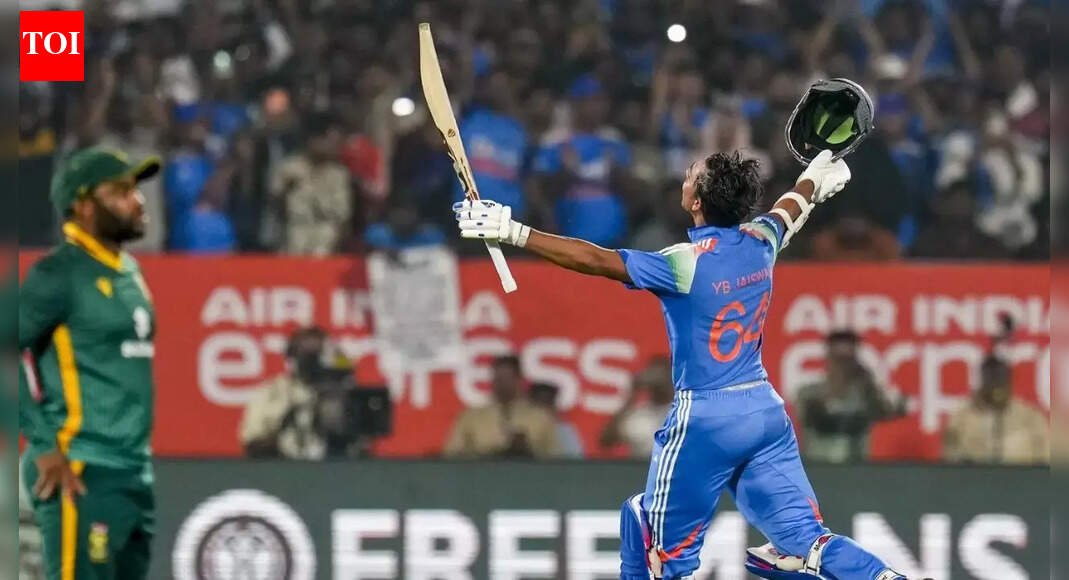
India defeated South Africa in the third ODI of the three-match series on Saturday to clinch the series 2-1, completing a strong finish to the contest.Chasing a target of 271, India overhauled the total with 10.1 overs and nine wickets to spare. Yashasvi Jaiswal scored an unbeaten 116 off 121 balls, striking 12 fours and two sixes. He shared a 155-run opening partnership with Rohit Sharma, who scored 75 off 73 balls with seven fours and three sixes, giving India a solid foundation.

‘Will get international matches back to Chinnaswamy’ | Venkatesh Prasad EXCLUSIVE

Virat Kohli played a quick, unbeaten innings of 65 off 45 balls, hitting six fours and three sixes to finish the chase and ensure India’s victory with more than 10 overs to spare.The match also marked a milestone for Jaiswal. His century was his maiden ODI hundred, and it made him only the sixth Indian batter to score hundreds in all three formats of men’s international cricket. The other players who have achieved this feat are Suresh Raina, Rohit Sharma, KL Rahul, Virat Kohli, and Shubman Gill.

India batters with 100s in all three formats

  • Suresh Raina
  • Rohit Sharma
  • KL Rahul
  • Virat Kohli
  • Shubman Gill
  • Yashasvi Jaiswal

India’s strong batting performance, led by Jaiswal, Rohit, and Kohli, ensured that the hosts not only chased down a tricky target but did so efficiently, leaving South Africa with little room to fight back in the final game of the series. Earlier, Kuldeep Yadav (4/41) and Prasidh Krishna (4/66) took eight wickets as India bowled out South Africa for 270, even as Quinton de Kock scored 106 in the third ODI.De Kock scored 106 off 89 balls with eight fours and six sixes. Captain Temba Bavuma made 48 from 67 balls with five fours. The other South African batters did not build on the start.Prasidh dismissed Matthew Breetzke (24) and Aiden Markram in the 29th over. Kuldeep took charge of the remaining wickets, removing the lower order.


Source link

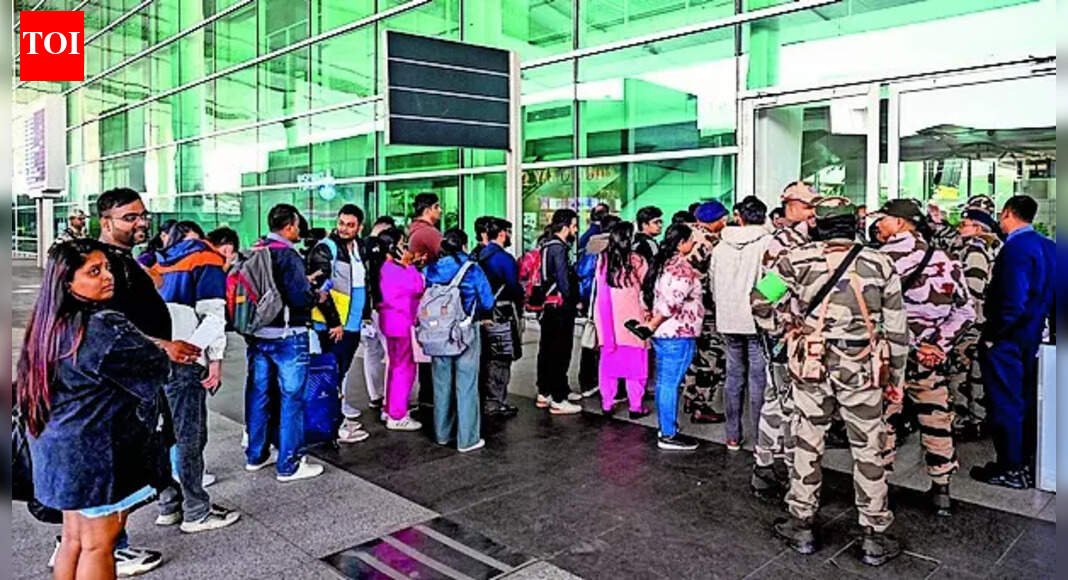
Govt caps flight fares, gives IndiGo 2 days to normalise | India News


Govt caps flight fares, gives IndiGo 2 days to normalise

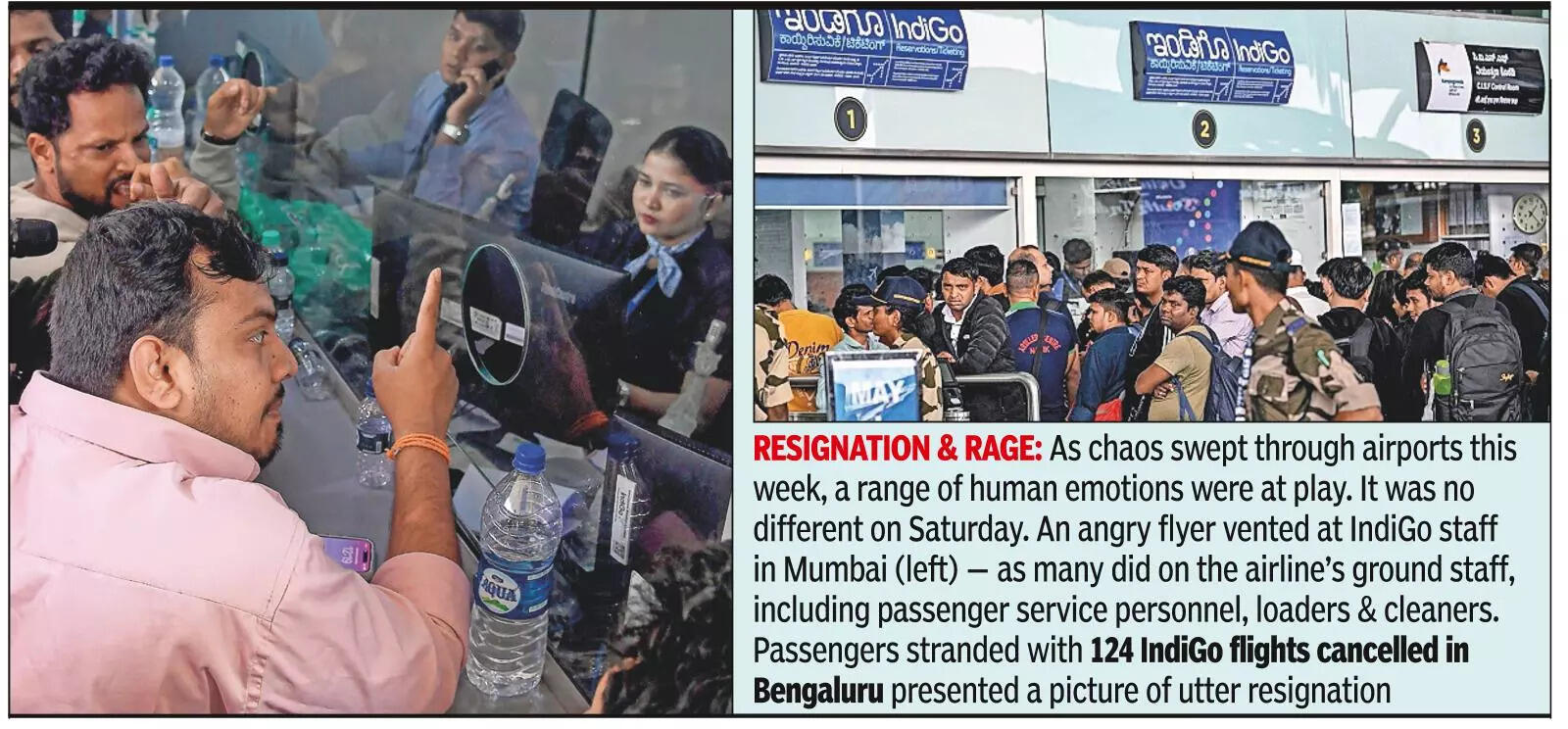
NEW DELHI: Govt on Saturday cracked the whip on IndiGo and other airlines charging exorbitant fares amid mass cancellations, capping domestic airfares at Rs 18,000 (UDF, passenger security fees and taxes extra). In a late evening meeting, civil aviation secretary Samir Kumar Sinha gave IndiGo two days — instead of the 21 sought by the airline — to fully restore operations.Sinha summoned the airline brass led by CEO Pieter Elbers to Rajiv Gandhi Bhawan after the ministry invoked the Bharatiya Vayuyan Adhiniyam, arming itself with powers instead of leaving it to aviation regulator DGCA. The carrier, controlling 60% of the domestic traffic, has been ordered to ensure refunds for cancelled tickets by 8pm on Dec 7, and return bags within two days. The airline has been barred from charging any rescheduling fee, which it was levying despite failing for over a month to adhere to new flying time norms for pilots and crew.

Centre caps flight fares, gives IndiGo 2 days to normalise ops

Unlike other airlines which were updating DGCA periodically about flight duty time limitations (FDTL), IndiGo not only failed to implement it but even refused to disclose details to the regulator. Officials pointed out that the airline did not update authorities and travellers adequately during the chaos caused by its failure to adhere to FTDL despite being given two years to accept the globally accepted protocol.IndiGo has been instructed to improve its communication: it will now submit a report every fortnight on implementation of its commitment to recruit enough pilots to ensure compliance with resting norms.Separately, officials indicated the probe into IndiGo’s operational collapse may be expedited to find out why such a massive failure took place, and based on that the airline may be penalised. The role of the management is under the scanner as well. The airfare caps stay till IndiGo operations stabilise.Cap on fares comes too late for lakhsFares for short flights covering a distance of up to 500km (like Delhi-Lucknow/Jaipur) have been capped at Rs 7,500; for 500-1,000km (Delhi-Udaipur, Hyderabad-Chennai) at Rs 12,000; 1,000-1,500km (Delhi-Mumbai) at Rs 15,000 and above 1,500km (Delhi-Chennai/Bengaluru/Hyderabad) at Rs 18,000. India had last imposed fare caps during Covid (May 2020 to Aug 2022).Aviation ministry said it has “taken a serious note of unusually high airfares being charged by certain airlines during the ongoing disruption” and “invoked its regulatory powers to ensure fair and reasonable fares across all affected routes” to “protect passengers from any form of opportunistic pricing.”IndiGo is expected to normalise operations by Dec 15 after govt kept certain provisions of the new FDTL norms related to its Airbus A320 fleet in abeyance till Feb 10, 2026.A reduction in flight cancellation may have begun on Saturday when that number dropped to about 700 — from over 1,000 a day earlier. “We are on our way to operate over 1,500 flights by end of day (Saturday). With regards to destinations, over 95% of network connectivity has already been re-established as we are able to operate to 135 out of the existing 138 destinations in operations. We are committed to build back the trust of our customers,” IndiGo said in a statement. IndiGo used to operate over 2,200 flights daily.The fare-capping development may have come way too late for lakhs of passengers who had IndiGo tickets for travel from earlier this week when the airline started cancelling hundreds of flights, till mid-Dec when IndiGo expects to normalise operations. These passengers had to cancel their IndiGo tickets and buy on other airlines like Air India, AI Express, Akasa and SpiceJet at sky-high fares — touching upto Rs 90,000 on certain routes.Geeta Srivastava (name changed on request), for instance, bought tickets for Delhi-Udaipur-Delhi for Rs 11,000. While she travelled Delhi-Udaipur (Dec 5) on some other airline, she was forced to cancel her IndiGo Udaipur-Delhi ticket of Sunday. “I bought Udaipur-Delhi ticket on another airline for Rs 24,000. Of what use is govt directive? Throughout this crisis, aviation ministry has been nothing but a mute spectator,” she fumed.Like Srivastava, lakhs of passengers have had to shell out many times the usual airfare to get to their destinations. The arithmetic is against passengers as IndiGo has almost 65% of the domestic market share. Before the IndiGo crisis, more than five lakh daily domestic flyers were travelling daily this season. Until IndiGo operations are back to normal, almost the vast majority of travellers are chasing seats on airlines that have the remaining 35%. With such a demand-supply mismatch, fares have zoomed.Aviation ministry said in a statement Saturday: “An official directive has been issued to all airlines mandating strict adherence to fare caps that have now been prescribed. These caps will remain in force until the situation fully stabilises. Any deviation from the prescribed norms will attract immediate corrective action in public interest.”


Source link

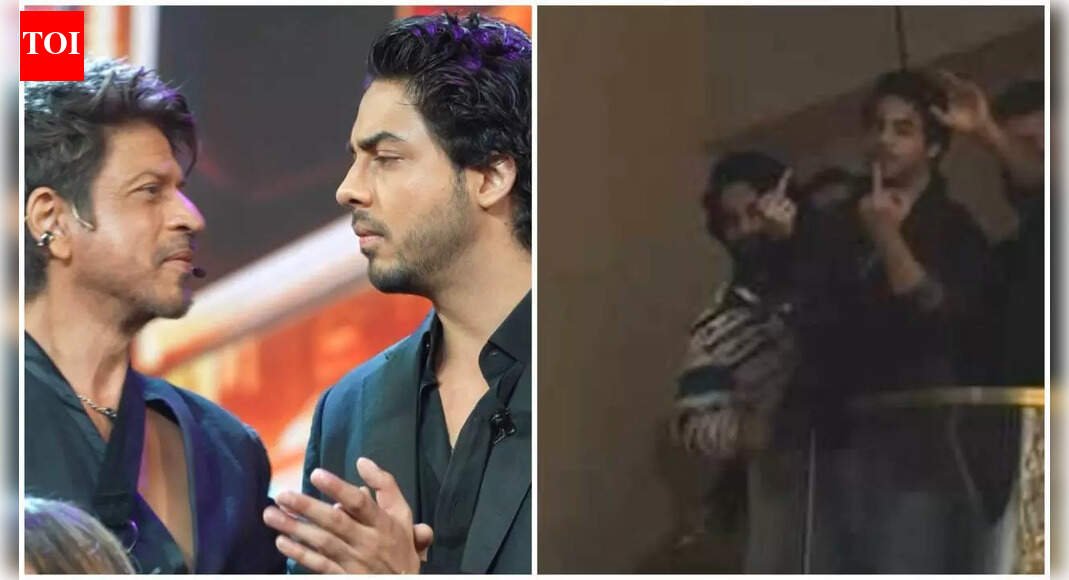
Complaint filed against Shah Rukh Khan’s son Aryan Khan for flashing middle finger at Bengaluru pub event; complainant alleges ‘insult to women’s modesty’ |


A complaint has been officially filed against Aryan Khan, the son of Bollywood superstar Shah Rukh Khan, following an incident on November 28 at a Bengaluru pub where he allegedly flashed the middle finger toward the crowd. Videos of the alleged action went viral, causing immediate online outrage and leading to legal action being taken against him.According to ANI, advocate Owaiz Hussain S, a resident of Sankey Road, submitted the complaint to the Director General of Police, the Bengaluru City Police Commissioner, the DCP (Central Division), the Inspector of Cubbon Park Police Station, and the Karnataka State Women’s Commission. He sought the registration of an FIR against Aryan Khan for making what he described as an obscene gesture in the presence of the public.

Complaint alleges insult to women’s modesty

In his complaint, Hussain stated that several women were present at the venue when Aryan Khan allegedly made the gesture, claiming that the act “insulted their modesty” and attracted relevant provisions of the Bharatiya Nyaya Sanhita (BNS). He further alleged that the gesture caused “public discomfort, embarrassment and emotional distress,” and said the incident reflected poorly on Bengaluru as a “safe and dignified public environment.”Hussain outlined three main accusations in his complaint:Intentionally making an obscene and humiliating gesture in the presence of womenObscene acts in public, alleging the gesture was likely to cause annoyance or distressConduct likely to cause public disorder or alarm, citing viral footage and ensuing outrageThe lawyer noted that the gesture occurred during an event under the jurisdiction of the Ashok Nagar police station.

Aryan Khan Lands In Controversy After Showing Middle Finger In Bengaluru Pub!

Police initiate suo motu enquiry

Deputy Commissioner of Police (Central Division) Hakay Akshay Machhindra confirmed that the police had already taken note of the incident. He said that based on social media posts, authorities had initiated a suo motu enquiry and collected CCTV footage from the pub premises for verification. The case is currently being investigated under Section 173 B of the Bharatiya Nyaya Sanhita. On the work front Aryan made his directorial debut with ‘Ba***ds of Bollywood’


Source link

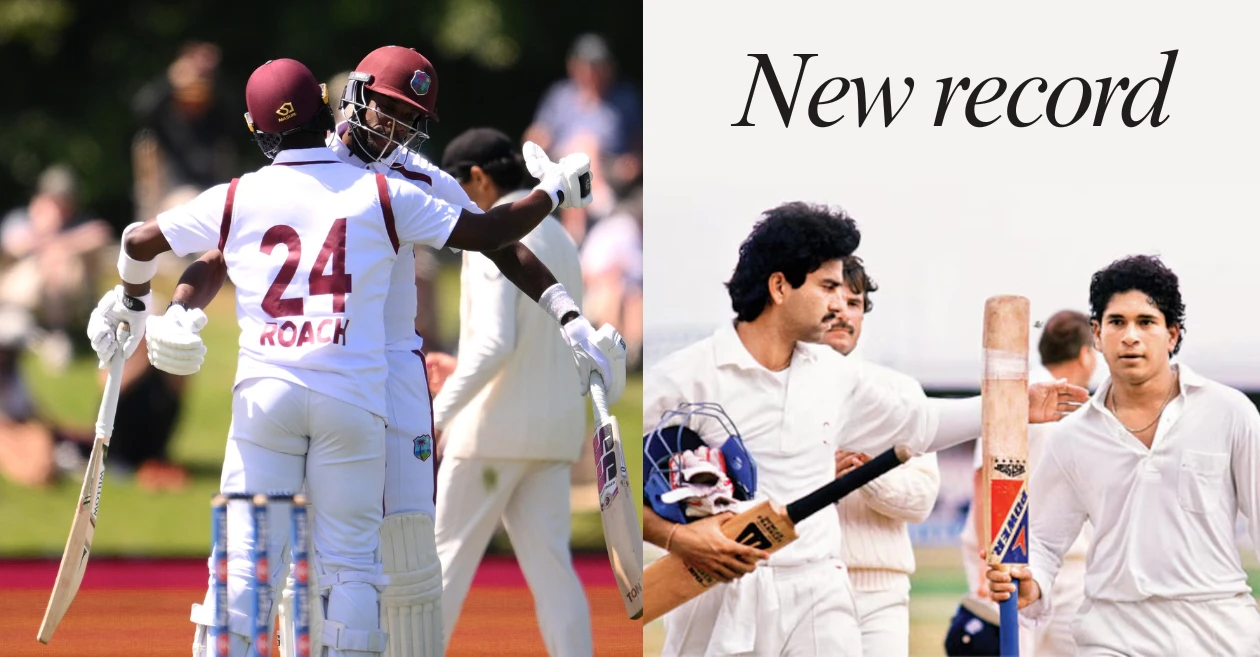
Highest partnership for 7th wicket in 4th innings of a Test match ft. Justin Greaves and Kemar Roach


Justin Greaves and Kemar Roach carved their names into Test cricket history after producing a record-breaking, unbeaten seventh-wicket stand to rescue West Indies in the first Test against New Zealand at Hagley Oval, Christchurch. The duo added 180 unbroken runs in the fourth innings – the highest seventh-wicket partnership ever recorded in a Test run chase – to deny the hosts victory in the opening match of the 2025-27 World Test Championship (WTC) cycle.

Chasing a monumental target of 531, West Indies were staring at defeat at 277/6 on the final day when Greaves and Roach joined forces. However, what followed was one of the greatest acts of defiance by a lower order in modern Test cricket.

Justin Greaves’ double ton and Kemar Roach’s career-best resistance rewrites records

Greaves produced a monumental innings under pressure, finishing on a marathon 202 not out off 388 balls, holding the innings together with remarkable composure and stamina. Roach, better known for his new-ball spells than his batting, played the innings of his life – a gritty 58 not out off 233 deliveries, the most balls ever faced by a No. 8 or lower in a fourth innings.

Together they consumed 409 balls, blunting a world-class New Zealand attack under fading light and rising tension in Christchurch.

Their unbeaten 180-run partnership surpassed the long-standing record of 160 set by Sachin Tendulkar and Manoj Prabhakar for India against Pakistan at Old Trafford in 1990 – previously the highest seventh-wicket stand in the last innings of a Test match.

While the overall Test seventh-wicket record still belongs to West Indies’ Denis Atkinson and Clairmonte Depeiaza (347 vs Australia, 1955), Greaves and Roach now hold the distinction of owning the premier stand in the uniquely challenging setting of a fourth-innings Test chase.

Also READ: Andre Russell reveals his toughest IPL opponent and the most challenging bowler he has faced

Top 7th-wicket stands in the fourth innings of Test matches

  • Justin Greaves & Roston Chase (West Indies) – 180* vs New Zealand, Christchurch, 2025
  • Sachin Tendulkar & Manoj Prabhakar (India) – 160 vs England, Manchester, 1990
  • Richie Benaud & Alan Davidson (Australia) – 134 vs West Indies, Brisbane, 1960
  • Ajit Agarkar & VVS Laxman (India) – 126 vs England, Lord’s, 2002
  • Asoka de Silva & Ravi Ratnayeke (Sri Lanka) – 124 vs Australia, Hobart, 1989
  • Jacob Oram & Daniel Vettori (New Zealand) – 124 vs Sri Lanka, Colombo (SSC), 2009
  • Dave Nourse & Gordon White (South Africa) – 121 vs England, Johannesburg, 190

Also READ: NZ vs WI – Fans go wild as Justin Greaves’ stunning double ton leads West Indies to historic draw in 1st Test against New Zealand


Source link

Maha vs Guj GI battle brews over king of fruits | Mumbai News


Mumbai: The world famous Alphonso mango, a rich agricultural legacy of Maharashtra, is mirrored by a similarly luscious fruit in neighbouring Gujarat. Now, a handful of farmers from Konkan are protesting against a move by Bharatiya Kisan Sangh (BKS) in Gujarat to acquire a GI (geographical indication) tag for the Valsad Alphonso.Alphonso mangoes have been cultivated across the western belt of Karnataka, Maharashtra and Gujarat for over a century. BKS, through its Valsad unit, had submitted an application for GI tag for ‘Valsad Hapus’ two years ago and the first hearing was held Oct 30 this year. It will take a few hearings before the tag is awarded. However, a Konkan growers’ association, led by Vivek Bhide, argues that the tag threatens the Konkan Alphonso, which is known worldwide for its creamy and non-fibrous texture. It claims no “fake Alphonso” should dilute its worth. Bhide did not respond to TOI’s requests for comment. But the BKS representative who filed the application told TOI, “Alphonso is a variety of mango that has been grown from Karnataka to Surat for nearly 150-200 years. Customers, even from Vashi APMC, who have eaten our Valsad mango, vouch for its delectable taste. We have merely sought a GI tag of ‘Valsad Hapus’ to increase our brand value. Ratnagiri and Devgad already have the tag. There is no rivalry. Moreover, Gujarat’s crop season starts after May 20 when Maharashtra’s ends. Maharashtra and Gujarat were a single state before 1960. We are brothers.” The timing of the issue—amid local body elections—made it ripe for state politicians to attempt to score a point. They complained that Gujarat was usurping yet another Maharashtrian asset. Congress accused the state govt of giving preference to Gujarat over Maharashtra under the direction of Union home minister Amit Shah. “Around 16 projects, which were supposed to be set up in Maharashtra providing employment opportunities to lakhs of locals, were diverted to Gujarat, including semiconductors. In the same way, now they want to give Alphonso to Gujarat,” said its spokesperson in a statement issued on behalf of state party chief Harshwardhan Sapkal. NCP (SP) leader Rohit Pawar said Konkan was synonymous with Alphonso. “Konkan Hapus has demand from all over the world, and farmers here have preserved Hapus with immense hard work,” he said on X. “The largest turnover in Konkan happens through Hapus, but since Gandhinagar and Navsari University applied in 2023 for GI under the name Valsad Hapus, now a crisis of indication looms over Konkan Hapus. Govt should protect the producers of Konkan, and leaders of Konkan in govt should raise this issue.Traders at Vashi APMC have mixed feelings. Akshay Shinde, a merchant, said, “A GI tag for Gujarat Alphonso is a threat to Konkan. In any case, there is the Shivneri Alphonso to contend with. Now, Gujarat will join the bandwagon.” Other traders termed the opposition “unjustified”, saying Valsad Alphonso differs in taste, colour, aroma, texture and pulp and is grown in different conditions. “Alphonso is grown along the Saurashtra-Konkan belt over a 700km range and each has different characteristics. There should not be any opposition,” said wholesaler Nitin More. A farmer from Chiplun, Sharad Surve, said every Alphonso crop has a different harvest season, preventing market clashes. “Valsad is not a new variety. Similarly, Shivneri with a long tradition is also seeking GI tag. If all get GI recognition, it will benefit farmers nationwide, as each Alphonso has a unique identity,” said Anil Meher, chairman of Krishi Vigyan Kendra of Narayangaon, managed under Indian Council of Agricultural Research. Farmers and traders acknowledge that the GI tag offers no real protection. “Even crates of Konkan Alphonso are ‘adulterated’ with cheap varieties in transit from farm to table. One dozen Konkan Alphonso sold in the market often contains four to five pieces of cheaper varieties, and buyers cannot tell the difference. Manufacturers of mango juice, jam, pulp and aamras brazenly use labels like Konkan Alphonso on their packages but use cheap varieties of the fruit,” said a trader.


Source link

Goa killed in Arpora nightclub fire; CM Sawant confirms tragedy | India News


23 killed in Goa's Arpora nightclub fire: CM Sawant confirms tragedy; vows strict action

NEW DELHI: At least 23 people died in a massive fire that engulfed a Birch By Romeo Lane club

Goa fire (2)

The Goa cafe that was engulfed in fire. (Photo: TOI)

Calling the fire incident “very disturbing”, BJP MLA Michael Lobo said: “We will need to conduct a safety audit of all other clubs in Goa, which is very important.” “I am disturbed because of the incident. There are 23 casualties, three women and 20 men. Some are tourists, while most are locals who were working in the restaurant’s basement. We will need to conduct a safety audit of all other clubs in Goa, which is very important,” Lobo said. He further added: “Tourists have always considered Goa a very safe destination, but the fire incident is very disturbing, and such incidents should not happen in the future. The safety of tourists and the workers in these establishments is extremely important. Most people died due to suffocation as they ran towards the basement”.


Source link

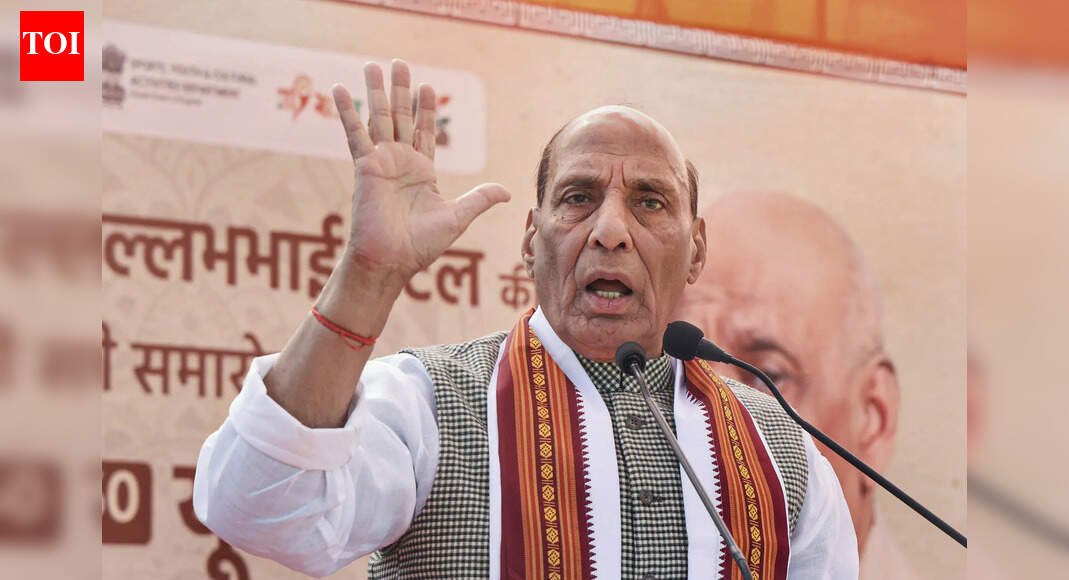
Congress cites Maniben’s diary, seeks apology from Rajnath | India News


Congress cites Maniben’s diary, seeks apology from Rajnath

Union minister for defence Rajnath Singh (PTI photo)

NEW DELHI: Sharing excerpts from a book containing Vallabhbhai Patel’s daught-er’s diaries, Congress Saturday accused defence minister Rajnath Singh of lying that Jawaharlal Nehru wanted to build the Babri mosque using public funds, and demanded that Singh apologise to the nation for spreading falsehoods about the country’s first PM.Two days after Singh’s remarks made headlines, Congress spokesman Jairam Ramesh said the minister is sp-reading falsehoods about Nehru to “improve his relationship” with PM Narendra Modi. Ramesh posted on X Maniben’s original diary entry in Gujarati on pages 212-213 in the book ‘Samarpit Padchhayo Sardarno’ by CA RS Patel ‘Aaresh’, that was published by the Sardar Patel Vallabhbhai Patel Memorial Society, 2025.“There is a huge differe-nce between what is contai-ned in the original diary entry and what Rajnath Singh and his fellow ‘distorians’ a-re propagating,” the spokesman said, adding, “The defe-nce minister must apologise for the falsehoods he is spre-ading, simply to improve his relationship with the PM.”A row broke out after Singh made the claim at a rally in Gujarat, with Congress calling his remarks a “lie” and “WhatsApp university story”. BJP had cited Maniben as the source of the claim.


Source link