Breaking News
IndiGo cancellations: How to track flight & refund status online; step-by-step guide


IndiGo cancellations: How to track flight & refund status online; step-by-step guide
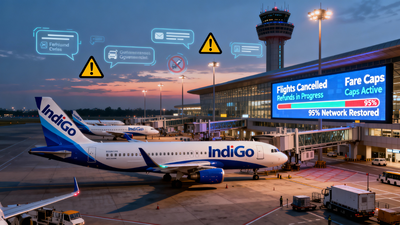
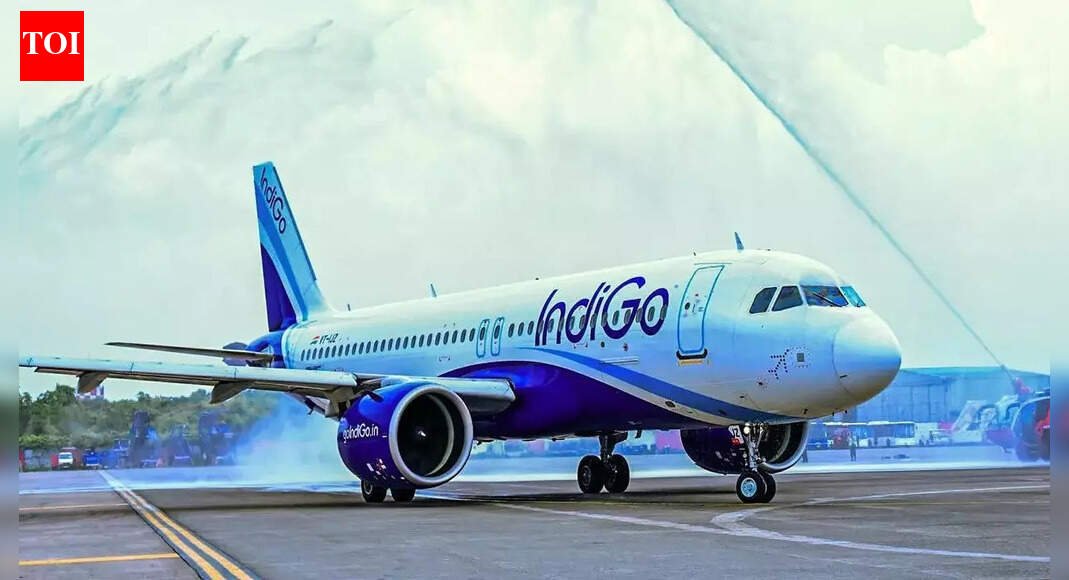
The airline recorded the largest number of flight cancellations by an Indian carrier in the nation’s aviation history. (ANI photo)

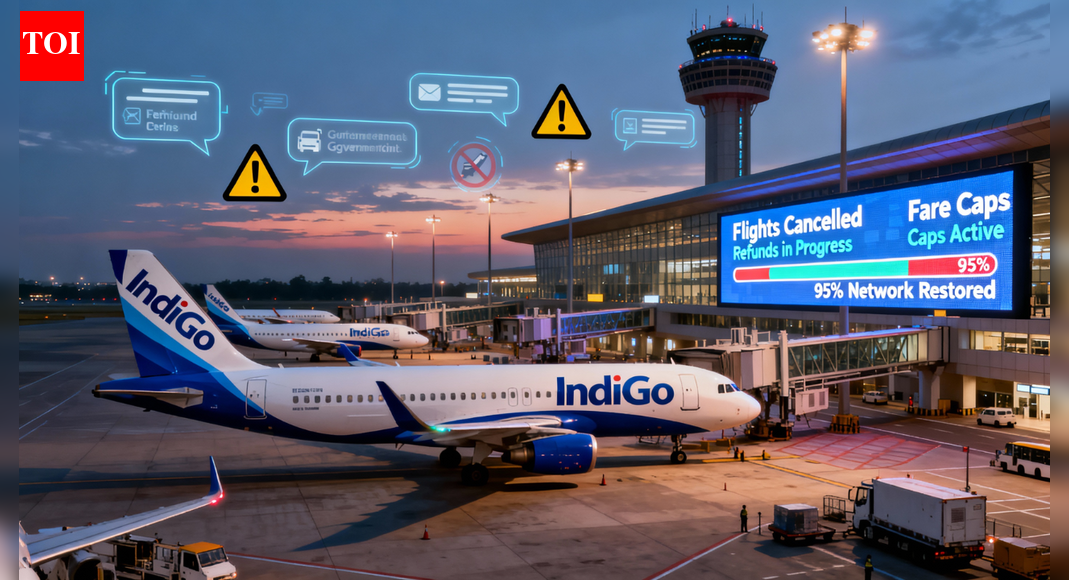
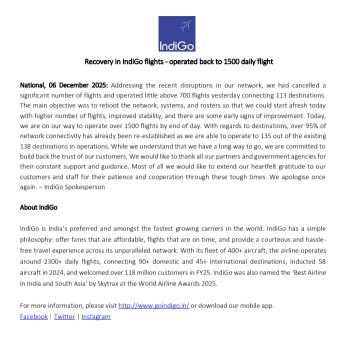
IndiGo flight cancellations latest news: IndiGo has said that it expects to operate more than 1500 flights by day’s end on Saturday, having restored over 95% of network connectivity by serving 135 out of 138 operational destinations. IndiGo typically operates 2300 flights daily. IndiGo has said that its personnel are working to normalise operations, minimise flight delays and assist passengers during this challenging period.IndiGo operated merely 700 flights on Friday, indicating 1,600 flight cancellations. IndiGo’s CEO Pieter Elbers acknowledged the extensive cancellations, confirming “over 1,000 flights” were cancelled on Friday.

Aviation Meltdown Escalates As IndiGo Cancels 400 Flights And Government Enforces Fare Controls

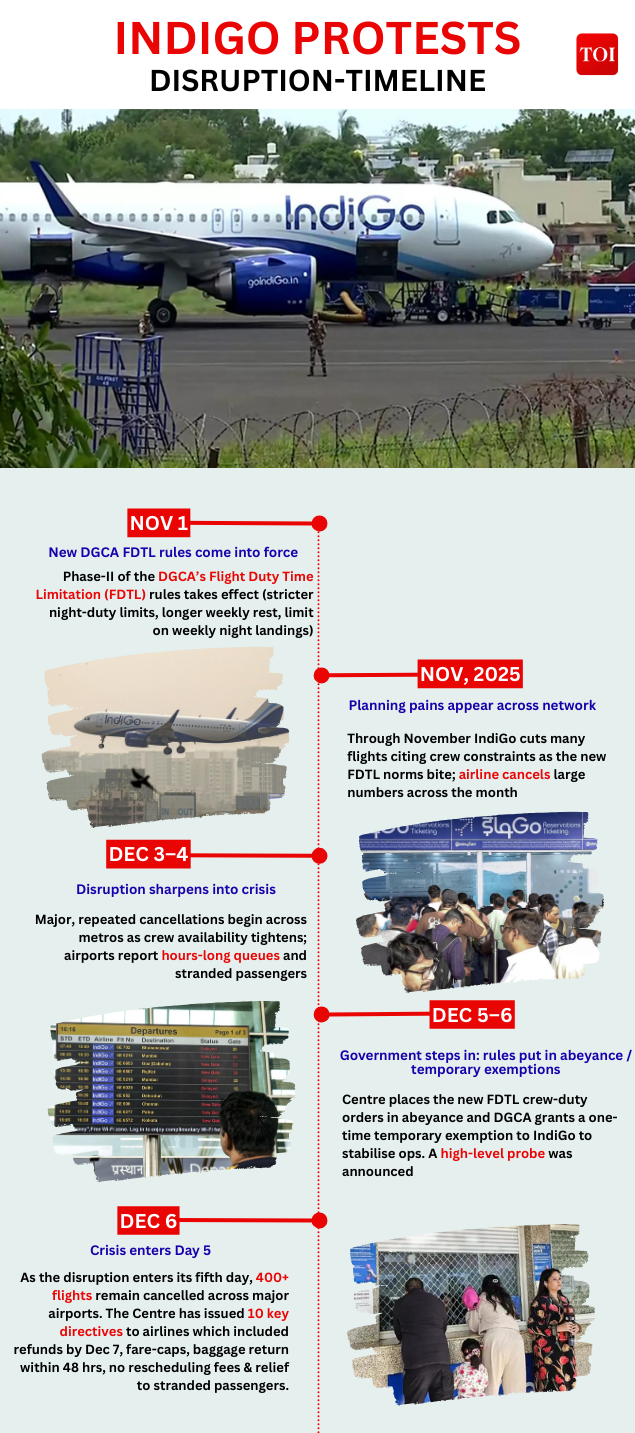
The airline recorded the largest number of flight cancellations by an Indian carrier in the nation’s aviation history. Additionally, IndiGo’s on-time-performance plummeted to 3.7 per cent on Friday due to operational disruptions caused by the implementation of new pilot duty and rest period regulations, according to the Civil Aviation Ministry website.Starting November 1, the second phase of these regulations redefined night hours from 12am-6am, altered from the previous 12am-5am, and reduced permitted night landings from six to two. These changes affect all domestic airlines in India.The Gurugram-based carrier IndiGo, partly owned by Rahul Bhatia, has obtained temporary relief from DGCA, allowing them to revert to the previous night duty definition of 12am to 5am and permitting pilots to perform six night landings.“Addressing the recent disruptions in our network, we had cancelled a significant number of flights and operated little above 700 flights yesterday connecting 113 destinations. The main objective was to reboot the network, systems, and rosters so that we could start afresh today with a higher number of flights, improved stability, and there are some early signs of improvement. While we understand that we have a long way to go, we are committed to build back the trust of our customers….We apologise once again,” the airline said in a statement today.

How To Track IndiGo Flight Status?

If you are planning to fly on an IndiGo flight over the next few days, it is important to check the flight status before heading to the airport. Here is a step-by-step guide to check IndiGo flight status:1. Go to goindigo.in/check-flight-status.html 2. Enter your PNR details and travel date, click on search flight to get the latest flight status

How To Track IndiGo Refund Status?

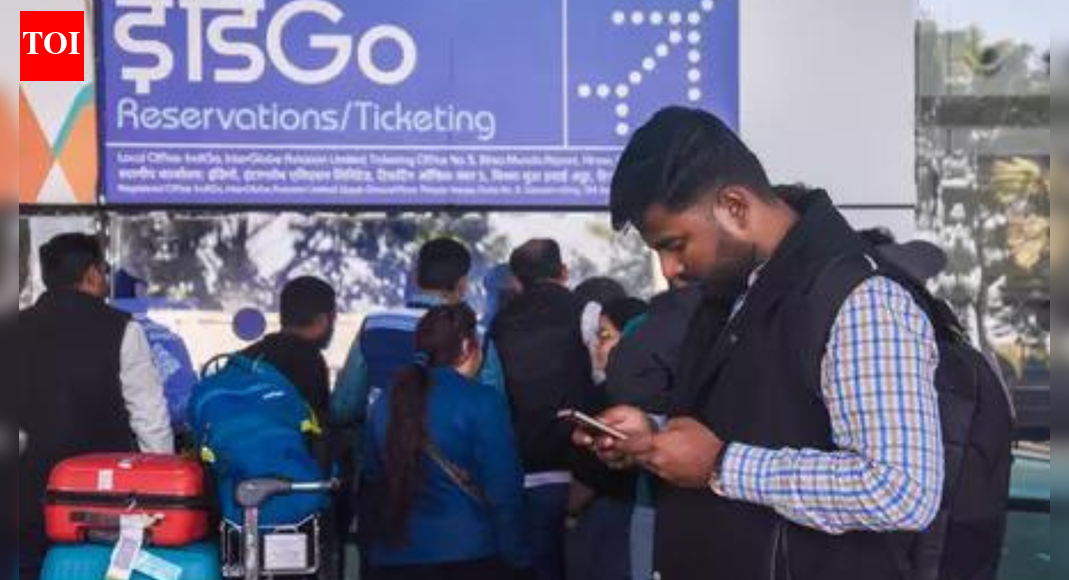
The airline issued a statement confirming that it is handling all passenger refund requests with urgency.Here is a step-by-step guide how you can track your refund status on the IndiGo website:1. Go to goindigo.in/refund.html2. Enter PNR details — enter your PNR / booking reference number and your Email ID or last name.3. Click to view the “Refund Summary.” This will show you the current status of your refund — whether it’s still processing, completed, etc.According to the civil aviation ministry’s directive, all refunds for cancelled or disrupted flights must be processed by 8 pm on Sunday. The ministry has said, “Airlines have also been instructed not to levy any rescheduling charges for passengers whose travel plans were affected by cancellations.”The ministry has directed IndiGo to establish dedicated units for passenger assistance and refund processing.The statement noted, “These cells have been tasked to proactively contact affected passengers and ensure that refunds and alternative travel arrangements are processed without the need for multiple follow-ups. The system of automatic refunds will remain active until operations stabilise completely.”Additionally, the ministry has mandated that the airline must locate and return any misplaced luggage resulting from flight cancellations or delays to passengers within 48 hours.

Airfares capped

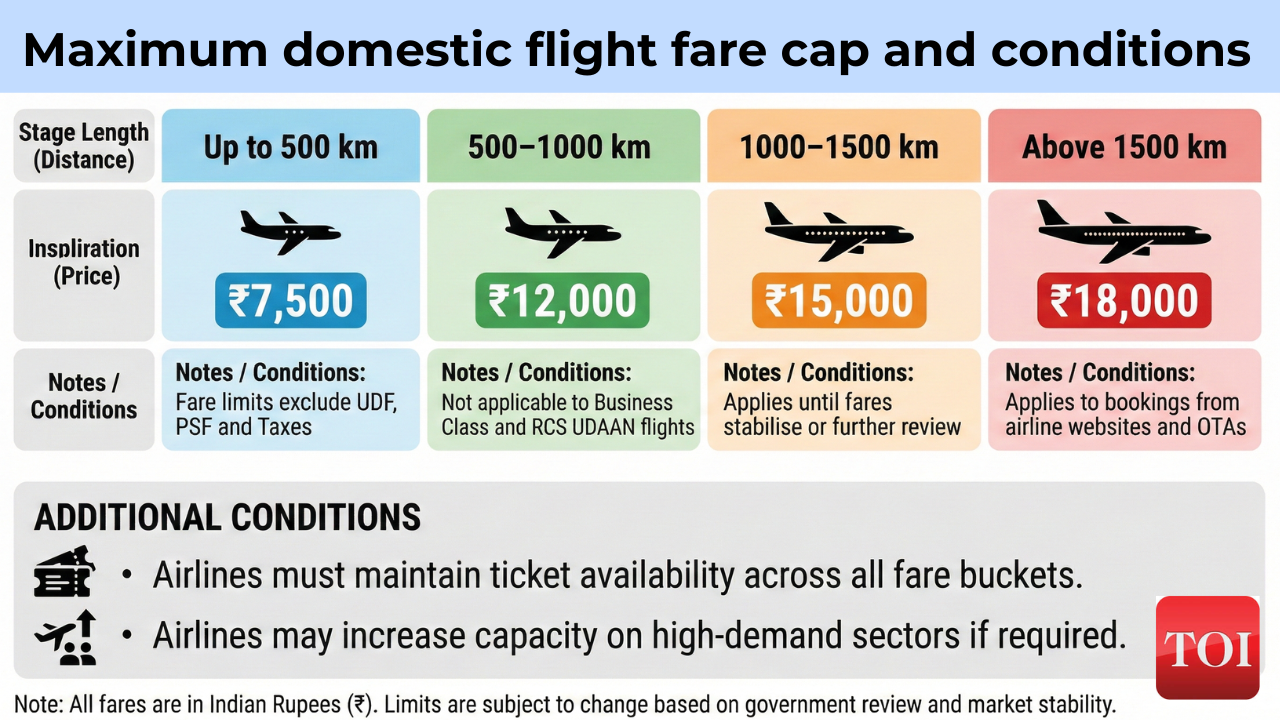
The aviation ministry has issued a two-page directive implementing fare restrictions due to capacity limitations and unjustified price increases across various routes. The civil aviation ministry’s order clarifies that business class and UDAN flights are exempt from these fare restrictions.The directive lacks specificity regarding the application of these limits to economy class tickets exclusively or their extension to premium economy seats as well.The prescribed fare structure sets maximum limits of Rs 7,500 for flights covering distances up to 500 kilometres, Rs 12,000 for 500-1,000 kilometres, Rs 15,000 for 1,000-1,500 kilometres, and Rs 18,000 for flights exceeding 1,500 kilometres.For illustration, on the Delhi-Mumbai route spanning over 1,300 kilometres, economy class fares cannot exceed Rs 18,000.The ministry’s statement indicates these restrictions will remain effective until conditions normalise.These caps exclude additional costs such as User Development Fee (UDF), Passenger Service Fee (PSF), and air ticket taxes.




Source link

Arsenal’s Premier League title charge suffers massive dent as Aston Villa end their 18-match unbeaten run | Football News


Arsenal's Premier League title charge suffers massive dent as Aston Villa end their 18-match unbeaten run
Aston Villa vs Arsenal (Photo by Alex Pantling/Getty Images)

Arsenal’s Premier League title hopes suffered a setback as Aston Villa secured a 2-1 victory with Emiliano Buendia’s stoppage-time winner on Saturday. The result reduced Villa’s gap to league leaders Arsenal to three points, while also providing Manchester City an opportunity to gain ground on Arsenal.In the final moments at Villa Park, Buendia found the back of the net in the fifth minute of added time, leaving Arsenal shell-shocked.“In the manner that happened at the end, obviously, (it is) really difficult to take,” Arteta told TNT Sports.Arsenal’s third consecutive away game without a win, following draws with Sunderland and Chelsea, has allowed rivals City and Villa to increase pressure at the top of the table.Villa moved to second place temporarily after winning nine of their last ten matches. This turnaround came after a challenging start under Unai Emery, where they failed to win their first five games.“At the minute we’re on a great run,” said Matty Cash, who scored Villa’s opener in the 36th. “We know it’s not even Christmas yet, so we have to keep being demanding, keep being consistent, and then we’ll see where it takes us.”Arsenal’s substitute Leandro Trossard equalized seven minutes into the second half.Buendia, who entered the game in the 87th minute, proved to be a game-changing substitution by scoring past Arsenal goalkeeper David Raya.“We fight until the last minute, the last second, it was a really incredible win,” he said.This marked only Arsenal’s second defeat of the season, their first since losing 1-0 to Liverpool in August.“We were 18 games unbeaten, and yet still the margin is so small,” Arteta said. “We have to focus on ourselves and set the standards that today, particularly, individually we didn’t raise that level. The effort was absolutely there and use that pain to go again.”


Source link

IndiGo fiasco: 87% flyers back class action under Consumer Protection Act, says survey


IndiGo fiasco: 87% flyers back class action under Consumer Protection Act, says survey

As many as 87% of IndiGo passengers surveyed want the airline’s service deficiencies to be examined under the Class Action provisions of the Consumer Protection Act (CP Act), 2019, following widespread flight cancellations and delays, according to a survey cited by PTI.The survey, conducted by LocalCircles, comes in the wake of IndiGo cancelling hundreds of flights over the last four days, leaving thousands of passengers stranded across airports and triggering sharp criticism over handling of refunds, compensation and customer support, PTI reported.

Aviation Meltdown Escalates As IndiGo Cancels 400 Flights And Government Enforces Fare Controls

The Class Action provision under the CP Act allows a group of consumers with a common grievance to collectively seek legal remedy against a company for issues such as deficiency of service, mismanagement or unfair practices.Beyond cancellations and delays, many passengers raised concerns over refund integrity, including deductions and delays, failed “zero-cancellation” or insurance assurances, itinerary changes without consent and the lack of adequate support or compensation when connections were missed, as per the survey findings.The survey posed the question: “Should the Central Consumer Protection Authority (CCPA) take up service deficiency of IndiGo under Class Action provision of the Consumer Protection Act 2019?” Out of 32,547 respondents, 87% said “yes, absolutely”, 3% said it was not required, while 10% gave no clear response, PTI said.“To sum up, 87% of airline passengers surveyed want CCPA to take up service deficiency of IndiGo under Class Action provision of the Consumer Protection Act 2019,” the statement said.LocalCircles also noted complaints from passengers who either accepted cancellations or cancelled bookings themselves, claiming that refunds credited were significantly lower than fares paid, despite assurances of “100% refunds”.The survey received responses from more than 30,000 consumers across 303 districts in India, the statement added.


Source link

Trump sanctions impact: India’s crude oil imports from Russia set to hit 4-year low; but how long will the drop last?


Trump sanctions impact: India’s crude oil imports from Russia set to hit 4-year low; but how long will the drop last?

Deliveries of Russian oil to India are projected to decrease to around 600,000 barrels per day next month. (AI image)

Donald Trump’s sanctions on Russian crude majors may have the effect of India’s oil imports from Russia dropping to a four year low in January 2026. The Trump administration has been piling pressure on India to stop procuring crude oil from India. Of the 50% tariffs that the US has imposed on India, 25% are for its crude oil imports from Russia which the Trump government claims indirectly helps fund the war against Ukraine.While the 50% tariffs don’t seem to have impacted India’s imports of Russian crude, the sanctions on Rosneft and Lukoil announced in October have forced Indian refiners to look for alternative sources, though the option to purchase non-sanctioned Russian oil remains open.

Russia Backs India’s Energy Needs As Putin Defies Trump And Promises Steady Fuel Supplies To Delhi

India’s Crude Oil Imports From Russia Set To Drop

While the crude oil imports are set to drop, the important question is – for how long will this be the case? According to a Bloomberg report Russia is cranking up its own charm offensive, and alternative channels of procurement may emerge.

India’s Russian Crude Imports Set To Fall In January

India’s Russian Crude Imports Set To Fall In January

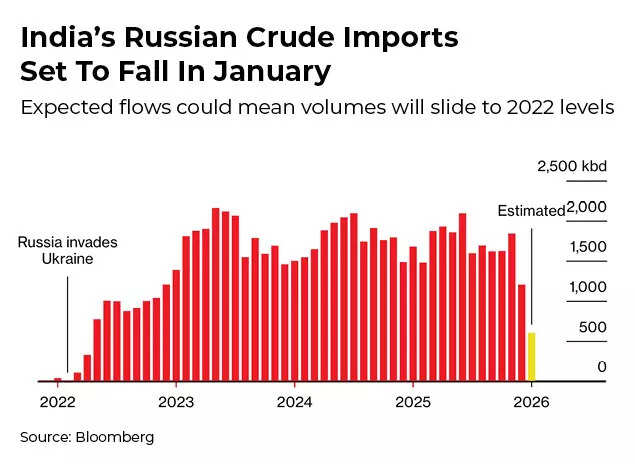
Deliveries of Russian oil to India are projected to decrease to around 600,000 barrels per day next month, individuals involved in the transactions told Bloomberg. They may reach the lowest point since early 2022, when the Russia-Ukraine war began. Nevertheless, these oil import projections still remain higher than pre-conflict levels.

What’s next? Will India completely stop Russian crude imports?

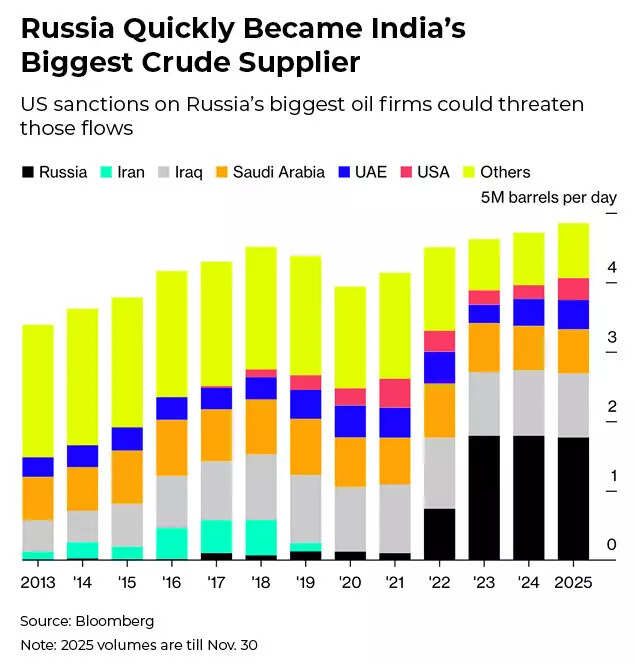
In the past, India has benefitted substantially from global restrictions on Russian crude sales, emerging as the main purchaser of Russian seaborne crude amidst price reductions due to sanctions. Indian imports peaked at approximately 2.1 million barrels daily in June, making up about 45% of total crude imports.Refiners and traders suggest volumes could go up as non-sanctioned suppliers enter the market and new trading intermediaries emerge. Additionally, Russian President Vladimir Putin visited Delhi this week to discuss trade relations, offering assurances of “uninterrupted shipments of fuel.”

Russia Quickly Became India’s Biggest Crude Supplier

Russia Quickly Became India’s Biggest Crude Supplier

India’s negotiations for a US trade agreement have progressed slowly, reducing the pressure to align with Washington’s positions, the Bloomberg report said. US President Donald Trump recently indicated a potential reduction in punitive tariffs on India.Elisabeth Braw, a senior fellow at the Atlantic Council, told Bloomberg whilst US sanctions create obstacles, they cannot completely halt the trade. She noted that purchasing decisions are based on product suitability and pricing, rather than ideological alignment with Russia, and hence would likely continue.Restrictions on India’s Russian oil imports have intensified since July, beginning with European Union sanctions on Nayara Energy Ltd., which has Rosneft backing. This marked the EU’s first such measure. The Trump administration subsequently shifted from its previous acceptance of purchases under a Group of Seven price cap, openly criticising the trade and implementing a 50% tariff to enhance its exports and apply pressure on Putin.The implementation of the levy and subsequent sanctions on Rosneft and Lukoil have not completely halted oil flows, despite significantly impacting trade. Concerns about potential future disruptions led to increased November imports of 1.8 million barrels daily, as transactions were expedited.Also Read | Message for Trump? Putin says Russia ready to continue ‘uninterrupted shipments of fuel’ to India; pitches reliable supply of oilAccording to Sumit Ritolia, lead analyst for refining and modeling at Kpler, December volumes are expected to range between 1 to 1.2 million barrels per day, reflecting the surge in bookings by refiners prior to the sanctions’ implementation.Although the government has not provided official directives regarding Russian crude, state refiners have adopted a cautious approach towards sanctions. Mangalore Refinery and Petrochemicals Ltd, and HPCL-Mittal Energy have stopped purchases entirely, whilst Indian Oil Corp and Bharat Petroleum Corp are accepting only restricted, non-sanctioned quantities, the report said.The extended timeline for Trump to finalise the agreement creates additional opportunities to evaluate the economic and political implications of reducing discounted oil purchases.“If the deal drags on, then more and more people will find ways or more pathways will be made to enable such non-sanctioned barrels to still be bought legitimately by the Indian purchasers,” said June Goh, senior oil market analyst at Sparta Commodities.Indian refiners have shifted to costlier Middle Eastern crude oil varieties to compensate for Russian supplies. They’ve increased their US oil purchases, whilst checking sources in Guyana and Brazil to offset the shortfall. The sudden change led to higher shipping costs and vessel scarcity. Meanwhile, Russia faces financial pressure, with their crude selling at merely $40-$45 per barrel after discounts, industry sources report.A decline is expected in January, raising concerns about whether China, the other significant purchaser, can absorb the excess supply. Future trends will be influenced by various factors, including Trump’s flexibility on tariffs, alongside the swift development of alternative arrangements as supply networks are restructured and price reductions become more substantial.Over the past few weeks, several new entities have emerged in port documentation as suppliers of Russian crude to Vadinar, including Eastimplex Stream FZE, Grewale Hub FZE and Tyndale Solutions FZE.“Indian refiners may also gradually find ways to shift towards non-sanctioned Russian entities, use of shadow carriers, adopt ship to ship transfers, etc in the future to balance geopolitical and economic considerations,” analyst Bineet Banka at Nomura wrote in a note this week.The final amount will depend significantly on Reliance Industries, which until recently stood as the main purchaser of Russian crude exports. Whilst the company has stopped Russian oil purchases for its export-oriented facility and pledged to adhere to applicable sanctions, its existing agreement with Rosneft could potentially contribute up to 350,000 barrels daily in January.As Sumit Ritolia points out, “While India’s oil imports from Russia are likely to decrease, the decline is most likely to be temporary, allowing the supply chain to reorganise itself. Unless more expansive secondary sanctions are introduced, India will continue to buy from a non-sanctioned supplier of Russian oil. The reasons are multiple: the geopolitical and economic dimensions are both essential. Political leaders will not want to be seen as bending down to US sanctions. At the same time, Russian barrels remain highly cost-competitive, and workarounds to maintain flows are likely to emerge. In particular, buyers may increasingly pivot to non-sanctioned Russian entities and opaque trading channels.”


Source link

Mumbai: Retired man duped of over 33 lakh in MBBS admission scam | Mumbai News


Mumbai: The MIDC police in Mumbai on Friday registered an FIR against two persons for allegedly duping retired L Pinto, 56, of Rs 33.53 lakh by promising MBBS admission for his daughter in a Chennai medical college in 2023. Police are yet to make an arrest.The case dated back to 2022, when Pinto, who lives in Andheri East, sought help after his 19-year-old daughter failed to secure an MBBS seat in Maharashtra in the NEET exam held in July 2022 owing to low marks. “Through a relative, he was introduced to the accused who claimed they could arrange her admission to a medical college in Chennai,” said the MIDC police.Pinto first spoke to one of the accused by telephone, who said that his business partner, a “Global Career Advisor”, could arrange the admission. “In the past, he secured several medical admissions,” the accused told Pinto.On September 19-2022, Pinto formally contacted the accused requesting admission for his daughter. “After verifying her educational documents, the accused informed him that the admission would cost Rs 30 lakh, along with service tax, hostel fees and processing charges, totalling Rs 33.53 lakhs,” said the police.As instructed, Pinto transferred the full amount online via RTGS from his Bank of India account to a Standard Bank account in another person’s name, whose details were provided by the accused.In the complaint, Pinto said: “On December 18, 2022, the accused called Pinto, his wife and their daughter to Madras Medical College. They waited for several hours before the accused arrived, entered the college building and returned after a few hours to inform them that a confirmation email would be sent in January 2023. Trusting him, the family returned to Mumbai.”Subsequently, the accused cited personal reasons for the delay and later claimed that admission would be confirmed in June 2023. However, nothing materialised and the accused switched off their phones and became untraceable.After repeated follow-ups yielded no satisfactory response, Pinto and his wife filed a complaint with the MIDC police.


Source link

Clean energy surge: India adds record 31.25 GW non-fossil capacity this year, says Pralhad Joshi


Clean energy surge: India adds record 31.25 GW non-fossil capacity this year, says Pralhad Joshi

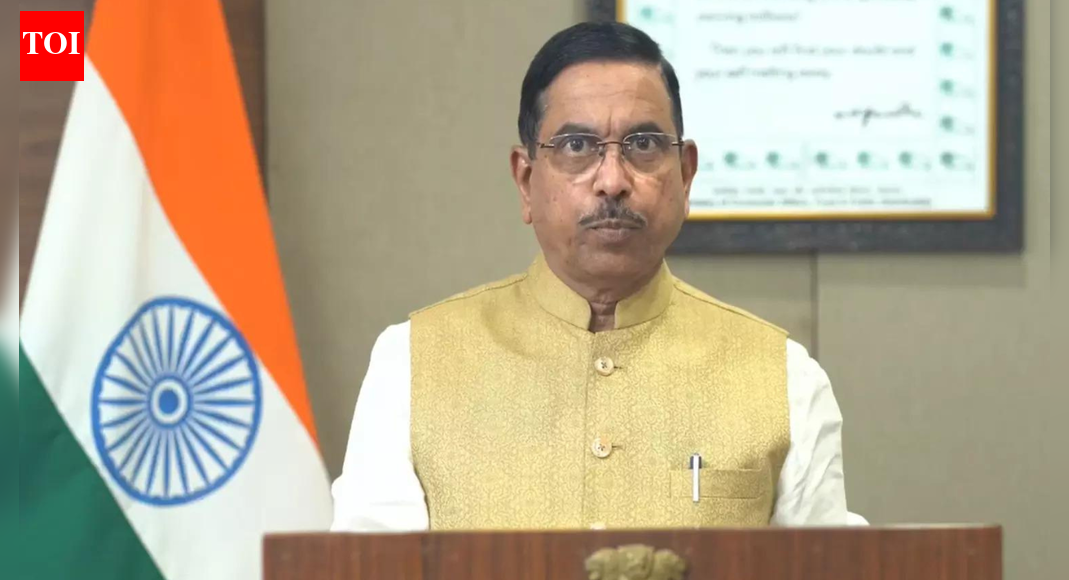
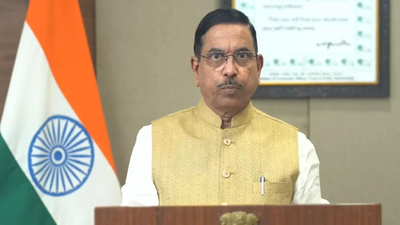
India has recorded its highest-ever annual addition of clean energy capacity, with 31.25 GW of non-fossil power added in the current financial year so far, Union minister for new and renewable energy Pralhad Joshi said on Friday, highlighting the country’s accelerating energy transition. Of the total addition, solar capacity alone accounted for 24.28 GW, underscoring the central role of solar power in India’s renewable push.Speaking at the Global Energy Leaders’ Summit 2025 in Puri, Odisha, Joshi said India has emerged as a key driver of the global surge in renewable energy, noting that while it took the world nearly 70 years to reach 1 terawatt (TW) of renewable capacity by 2022, the second TW was added in just two years, by 2024, ANI reported. He said India’s contribution has been significant, with the country adding 46 GW of solar capacity between 2022 and 2024 to become the world’s third-largest contributor to global solar installations. The minister’s remarks were reported by ANI.Joshi said India’s solar capacity has expanded from just 2.8 GW a decade ago to around 130 GW now, a growth of more than 4,500 per cent over the last 11 years. He noted that while India holds the world’s fifth-largest coal reserves and remains the second-largest coal consumer, it is increasingly balancing fossil fuels with renewable energy as the transition gathers pace, making clean energy strategically critical amid evolving global trade and industrial competitiveness pressures.Announcing new clean energy initiatives for Odisha, the minister said the Centre has approved a consumer-owned Utility-Led Aggregation (ULA) model under the PM Surya Ghar scheme to install 1.5 lakh rooftop solar systems of 1 kW each in the State. The programme is expected to benefit nearly 7–8 lakh people, particularly from economically weaker households. He added that Odisha already has over 3.1 GW of installed renewable capacity, with clean energy accounting for more than 34% of the State’s total installed power capacity.Under the PM Surya Ghar Yojana, around 1.6 lakh households in Odisha have applied for rooftop solar installations, with over 23,000 installations completed so far. More than 19,200 families have received subsidies exceeding Rs 147 crore directly into their bank accounts, Joshi said. He attributed India’s renewable energy expansion to an enabling ecosystem created through policy reforms, ease of doing business, investor confidence, demand-driven schemes and strong Centre–State cooperation, expressing confidence that Odisha would play a leading role in the next phase of green growth.


Source link

Rs 970 crore scam: How 400–500 investors across India and Dubai were duped; bizman Ravindra Nath Soni arrested | Kanpur News


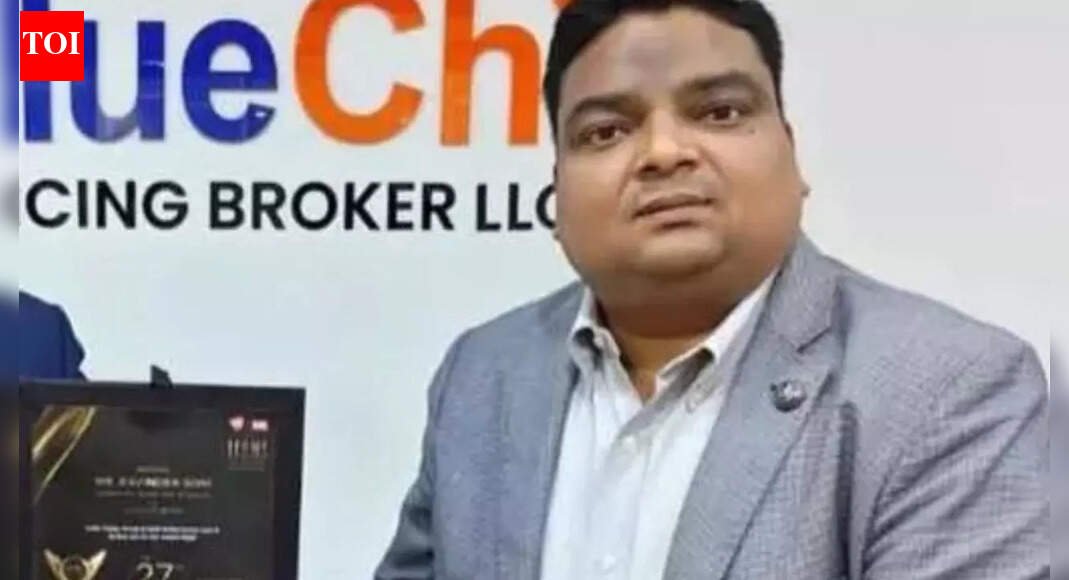
KANPUR: Kanpur police have arrested a Delhi-based businessman, Ravindra Nath Soni, for allegedly running a massive international investment scam that duped hundreds of Indians—both in India and in Dubai—of nearly Rs 970 crore. Investigators say the fraud spans multiple countries, involves cryptocurrency laundering, hawala routes, and may have national security implications. As on date, five FIRs have been registered against him, including one in Dubai, and one each in Aligarh, Kanpur Nagar, Delhi and Panipat.According to police, Soni, originally from Malviya Nagar in Delhi, shifted to Dubai several years ago and floated around 12 shell companies, including a flashy venture named ‘Blue Chip Trading’. Under the guise of high-end forex trading, he lured expatriate Indians with promises of immediate 30–40% returns.For the first few years, Soni allegedly paid returns regularly to build trust—classic Ponzi-model behaviour—before abruptly diverting funds into personal accounts, cryptocurrencies, and offshore channels.Rs 970 crore trail emerges Kanpur police commissioner Raghubir Lal said, “Our analysis of his bank accounts shows that he collected close to Rs 970 crore from at least 400–500 investors. Some amounts were partially repaid to maintain credibility, but large sums immediately disappeared into other accounts. A significant portion was converted into cryptocurrency, while a part was routed through hawala networks. This is a multilayered financial crime spread across jurisdictions. His victims are in UAE, Japanese nationals, Malaysians.”Sources said Soni even spent time in a Dubai jail over financial disputes, returning to India after 4–5 months.Soni’s downfall began earlier this year after a Kanpur man lodged a complaint in January accusing him of defaulting on a ₹42 lakh cheque. When police interrogated him after the arrest, a much wider web began to surface.“During sustained questioning, it became clear that this was not an isolated cheating case. Victims from Kerala, Dubai and other parts of the country have been contacting us. Two complainants alone claim they lost ₹4 crore each. His scheme targeted Indians working abroad, exploiting their trust and aspirations,” Lal said.He added that Soni was earlier arrested in Aligarh in 2019 in another fraud case.Given the use of cryptocurrency, foreign remittances, and suspected links with individuals in the US, Japan, and Dubai, the case is now attracting the attention of central agencies.“This is not a routine cybercrime. The money has moved across countries, into crypto wallets, and via hawala. At least 12 foreign-based associates have been identified so far. We are seriously examining the national security angle, because such large-scale anonymous fund movements can be misused. This appears to be a transnational crime with deep financial footprints,” the commissioner said.Soni has been sent to judicial custody while forensic accountants, cyber teams, and specialised investigators comb through bank records, passport entries, and digital transactions. Police expect the number of complainants to rise sharply in the coming days.


Source link

IND vs SA: Yashasvi Jaiswal celebrates maiden ODI ton in style; India thrash South Africa by 9 wickets to clinch series 2-1 | Cricket News


IND vs SA: Yashasvi Jaiswal celebrates maiden ODI ton in style; India thrash South Africa by 9 wickets to clinch series 2-1
India’s Yashasvi Jaiswal (AP Photo/Mahesh Kumar A.)

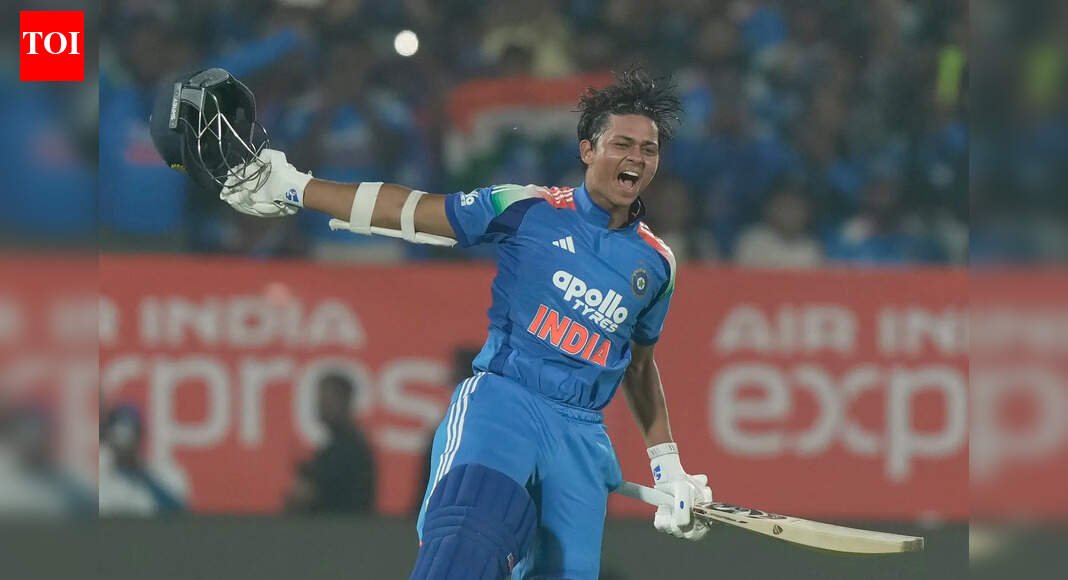
NEW DELHI: Yashasvi Jaiswal scored his first ODI century as India secured a 2-1 series victory with a dominant nine-wicket win against South Africa in Visakhapatnam on Saturday.India successfully chased the target of 271 runs, with Jaiswal remaining unbeaten at 116. He formed a crucial 155-run opening partnership with Rohit Sharma, who contributed 75 runs.

Fans travel thousands of kilometres to watch Virat Kohli, Rohit Sharma play

Jaiswal celebrated his century after facing 111 balls in what was only his fourth ODI appearance since his debut this year. The 23-year-old left-handed batsman has now achieved centuries across all three international formats.Rohit Sharma initially led the batting charge while Jaiswal took time to settle. During his innings, Rohit achieved a milestone of 20,000 international runs, joining the elite company of Sachin Tendulkar, Virat Kohli, and Rahul Dravid.Keshav Maharaj dismissed Rohit after his 73-ball innings, which included seven fours and three sixes. Jaiswal then accelerated his scoring rate after reaching his fifty.Virat Kohli remained unbeaten on 65 off 45 balls, hitting six fours and three sixes. He finished the series with an impressive 302 runs and scored the winning boundary.India’s bowling attack, led by Kuldeep Yadav and Prasidh Krishna with four wickets each, restricted South Africa to 270 runs in 47.5 overs.KL Rahul won India’s first ODI toss after 20 consecutive losses and chose to field first.Quinton de Kock‘s aggressive 106 off 89 balls, including eight fours and six sixes, helped South Africa reach a promising position at 168-2 before their batting collapsed.Krishna’s double strike removed Matthew Breetzke for 24 and Aiden Markram for one. He later dismissed de Kock shortly after the batsman’s century.Dewald Brevis and Marco Jansen attempted to stabilise the innings with a 35-run partnership. However, Kuldeep Yadav dismissed both batsmen in quick succession.Kuldeep finished with figures of 4-41, while Krishna’s crucial wickets helped bowl out South Africa, with Maharaj remaining not out on 20.This ODI series victory follows India’s 2-0 Test series win against South Africa. The team benefited from the presence of Kohli and Rohit, who now only participate in the 50-over format after retiring from T20Is and Tests.The teams will now compete in a five-match T20 series starting Tuesday in Cuttack.


Source link

IND vs SA [WATCH]: Virat Kohli shares light-hearted bromance moment with Kuldeep Yadav during Vizag ODI


India hosted South Africa in the decisive third ODI of the series at the ACA-VDCA Cricket Stadium in Visakhapatnam on Saturday, with the three-match contest locked at 1-1.

Captain KL Rahul finally broke India’s streak of 20 consecutive lost tosses in ODIs by winning the flip and opting to bowl first, factoring in anticipated dew during the chase. This strategic call set the stage for a disciplined Indian bowling effort that restricted South Africa to 270 all out in 47.5 overs, despite Quinton de Kock‘s aggressive seventh ODI century against India (106 off 89 balls, including 8 fours and 6 sixes).​

Virat Kohli-Kuldeep Yadav dance steals spotlight amid wicket fest in Visakhapatnam

Virat Kohli brought infectious joy to the field with a hilarious bromance moment alongside Kuldeep Yadav during South Africa’s innings collapse. In the 43rd over, Kuldeep claimed his third victim, Corbin Bosch, via a sharp return catch off a googly, derailing the Proteas’ late surge. Kohli rushed over, grabbed Kuldeep’s hands, and launched into playful couple-dance moves with a straight-faced swagger that cracked up the spinner and sent the crowd into frenzy.​

The clip exploded across social media platforms, captivating fans with Kohli’s rare lighthearted antics amid his vintage series form featuring back-to-back hundreds. This viral celebration underscored the team’s camaraderie as they shifted momentum decisively. Kuldeep’s wizardry peaked with match figures of 4/41 in 10 overs, including strikes to dismantle the lower order after Bosch’s dismissal.​

Here’s the video:

Also READ: IND vs SA, 3rd ODI: Here’s why Washington Sundar is not playing today’s match in Visakhapatnam

Indian bowlers orchestrate Proteas collapse to a below-par total

Prasidh Krishna sparked the turnaround with a devastating second spell, snaring 4/66 by dismantling South Africa’s middle order – trapping Matthew Breetzke lbw, inducing Aiden Markram‘s catch to Kohli at short cover, and castling de Kock with a full delivery. After de Kock and Temba Bavuma (48 off 67) built a 113-run stand to reach 168/2, India struck back ruthlessly, losing just three overs to claim three wickets and slump the visitors to 199/5.​

Kuldeep then mopped up, dismissing Dewald Brevis, Marco Jansen, and Bosch to cap South Africa’s innings well short of a competitive total on a batting-friendly Visakhapatnam track. Arshdeep Singh chipped in early by removing Ryan Rickelton, while Ravindra Jadeja snared Bavuma at point off Kohli’s safe hands. This collective effort, blending pace and spin, positioned India strongly for the 271 chase under lights.

Also READ: IND vs SA: Fans go berserk as Quinton de Kock equals Kumar Sangakkara’s record with his 23rd ODI century in Visakhapatnam


Source link

IndiGo turmoil escalates: Government caps fares, orders refunds, summons CEO – top points


IndiGo turmoil escalates: Government caps fares, orders refunds, summons CEO - top points
Representative image (AI-generated)

NEW DELHI: IndiGo’s nationwide operational crisis entered its fifth day on Satuday, with the airline cancelling over 800 flights, even as the government tightened oversight, imposed fare caps, ordered immediate refunds and warned of regulatory action for any non-compliance. While the disruptions continued to affect thousands of passengers across the country, the airline, in a statement, said that it had restored more than 95% of its network connectivity and was gradually stabilizing operations.Meanwhile, DGCA has issued a show-cause notice to IndiGo CEO Pieter Elbers over the mass flight disruptions that have stranded thousands of passengers since December 2.

Massive Outrage Over IndiGo Chaos, Over 600 Flights Cancelled In India’s Biggest Aviation Crisis

IndiGo says 95% connectivity restored

In its latest statement, IndiGo said it deliberately scaled down operations to reboot rosters and systems and was seeing early signs of recovery.“With regards to destinations, over 95% of network connectivity has already been re-established as we are able to operate to 135 out of the existing 138 destinations in operations,” an IndiGo spokesperson in a statement said.

.

.

In its statement, the airlines added that it expected to operate over 1,500 flights by the end of Sunday. The carrier said that the teams were focused on stabilizing schedules, reducing delays and supporting customers. It added that the refund issues were being handled on a priority basis. The airline thanked government agencies, airport partners, staff and customers for their support and patience and apologized again for the disruption.In another press statement, the airline said that it is working to bring its operations back on track across the network. It added that teams are focused on stabilising schedules, reducing delays and supporting passengers. The number of cancellations has dropped below 850 flights and is expected to decrease further in the coming days.

DGCA issues show-cause to IndiGo CEO over flight chaos

According to the show-cause notice issued, DGCA has sought a response within 24 hours, asking why enforcement action should not be taken against him for alleged operational lapses that led to widespread cancellations and delays. As per the notice, IndiGo’s disruptions were primarily caused by the airline’s failure to make “adequate arrangements” to handle revised roster rules under the new FDTL (flight duty time limitations) scheme. The regulator said this reflected “significant lapses in planning, oversight and resource management” and amounted to prima facie non-compliance with Aircraft Rules and Civil Aviation Requirements.

Fifth day of disruptions, cancellations continue

After cancelling over 1,000 flights on Friday, IndiGo grounded more than 800 flights on Saturday. The airline’s on-time performance at six major metro airports plunged to 3.7% on Friday, according to civil aviation ministry data, highlighting the scale of operational breakdown.IndiGo, which normally operates over 2,200 flights per day, was forced to sharply cut services as crew shortages and scheduling issues persisted under the new regulatory framework.

.

.

Government orders refunds, baggage return and passenger support

In response to mounting passenger distress, the civil aviation ministry directed IndiGo to complete all refunds for cancelled and disrupted flights by 8 pm on Sunday. Airlines were also instructed not to levy any rescheduling charges for passengers affected by cancellations or long delays.The ministry further ordered the airline to trace and deliver all baggage separated from travellers within the next 48 hours and to maintain constant communication with passengers on delivery timelines.IndiGo has also been directed to operate dedicated passenger support and refund facilitation cells to proactively reach out to impacted travellers. The ministry said the automatic refund system must remain active until operations fully stabilize.The government warned that regulatory action would be initiated for any violation of these directions. A 24×7 control room has also been activated to monitor the situation and coordinate rapid responses.

Fare caps imposed to curb surge pricing

To curb steep fare surges triggered by seat shortages, the government imposed temporary fare caps across all domestic routes:

  1. Routes up to 500 km: Rs 7,500
  2. 500–1,000 km: Rs 12,000
  3. 1,000–1,500 km: Rs 15,000
  4. Above 1,500 km: Rs 18,000
.

.

These caps exclude User Development Fee, Passenger Service Fee and applicable taxes and are not applicable to Business Class or UDAN flights.The ministry said the caps would remain in force until the situation stabilises and directed airlines to avoid any unusual upward fare revisions on affected routes. It also clarified that the caps would apply across all ticketing platforms, including airline websites and online travel agents.The intervention followed reports of extreme fare spikes, with fares for some routes shooting up to as high as Rs 90,000, triggering widespread outrage.

Indian Railways deploys special trains

In response to rising passenger demand following widespread flight cancellations, Indian Railways has begun operating special train services across multiple zones. A total of 89 special trains, covering over 100 trips, have been scheduled over the next three days to ensure smooth travel and maintain connectivity during the winter season

10 key directives issued by the Centre

The Central government ordered IndiGo to clear all pending passenger refunds without delay. The ministry of civil aviation said the intervention was essential to safeguard passengers grappling with uncertainty, soaring ticket prices and prolonged delays.

  1. The government directed that IndiGo must complete all pending passenger refunds for cancelled or disrupted flights by 8pm on Sunday, December 7.
  2. Airlines, including IndiGo, have also been instructed not to levy any rescheduling fees for passengers affected by cancellations or major delays.
  3. IndiGo must ensure that all baggage separated from passengers during cancellation or delays is traced and delivered to the passenger’s residential or chosen address within the next 48 hours. Airlines have been told to maintain clear communication with passengers regarding tracking and delivery timelines, and to provide compensation where required under existing passenger rights regulations. `
  4. To stop surge pricing during the nationwide crisis, the government has imposed fare caps across affected routes. These must be followed strictly.
  5. The airfare caps will remain in place until operations return to normal. Any violations will attract regulatory action.
  6. The DGCA’s Flight Duty Time Limitations (FDTL) norms have been placed in abeyance to help airlines deploy more cockpit crew without compromising safety.
  7. The ministry of civil aviation expects schedules to begin normalising within 24 hours and fully stabilising within the next three days.
  8. The ministry said that if a flight is cancelled, airlines must issue full refunds automatically, no passenger requests required. Airlines must offer hotel accommodation, refreshments and essential services for passengers stranded due to long delays.
  9. Special support, including lounge access, faster processing and dedicated help, must be provided to vulnerable travellers.
  10. To ensure real-time monitoring, the government has opened a 24×7 control room (011-24610843, 011-24693963, 096503-91859) to coordinate swift action.

Industry bodies welcome government action

Tourism and travel industry bodies backed the move. Indian Association of Tour Operators President Ravi Gosain said unpredictable fare spikes damage consumer confidence and disrupt tour planning. FAITH board member Anil Kalsi said the fare cap was essential to protect passenger rights and called for a permanent policy mechanism to prevent such shocks in the future.

FDTL norms at the root of the crisis

The current crisis was triggered by the implementation of the revised Flight Duty Time Limitation (FDTL) norms, which mandated longer weekly rest periods, extended night hours and fewer permitted night landings. These changes required airlines to deploy significantly more crew.IndiGo had opposed the norms when they were first notified in January 2024, arguing that airlines needed more time to build adequate crew strength. Other domestic carriers, including Air India, had also expressed initial reservations.To help restore services, the DGCA provided temporary relief to IndiGo by rolling back the night-duty definition to 12 am–5 am from 12 am–6 am and allowing pilots more night landings, among other relaxations. The move is intended to enable a faster deployment of cockpit crew and speed up recovery. The Airlines’ Pilots Association (ALPA) India, however, has strongly objected to what it called “selective and unsafe” relief, warning that any dilution of fatigue-mitigation standards could endanger safety and contravene court directions.


Source link