Breaking News
IND vs SA 2nd ODI: Rohit Sharma-Virat Kohli in focus as India brace for Proteas fightback in Raipur | Cricket News


IND vs SA 2nd ODI: Rohit Sharma-Virat Kohli in focus as India brace for Proteas fightback in Raipur
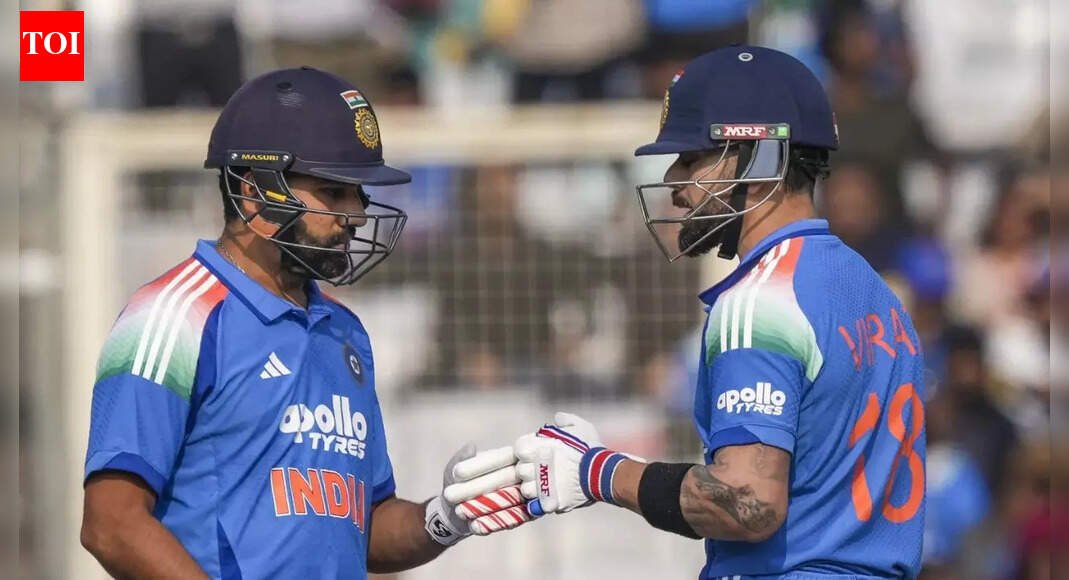
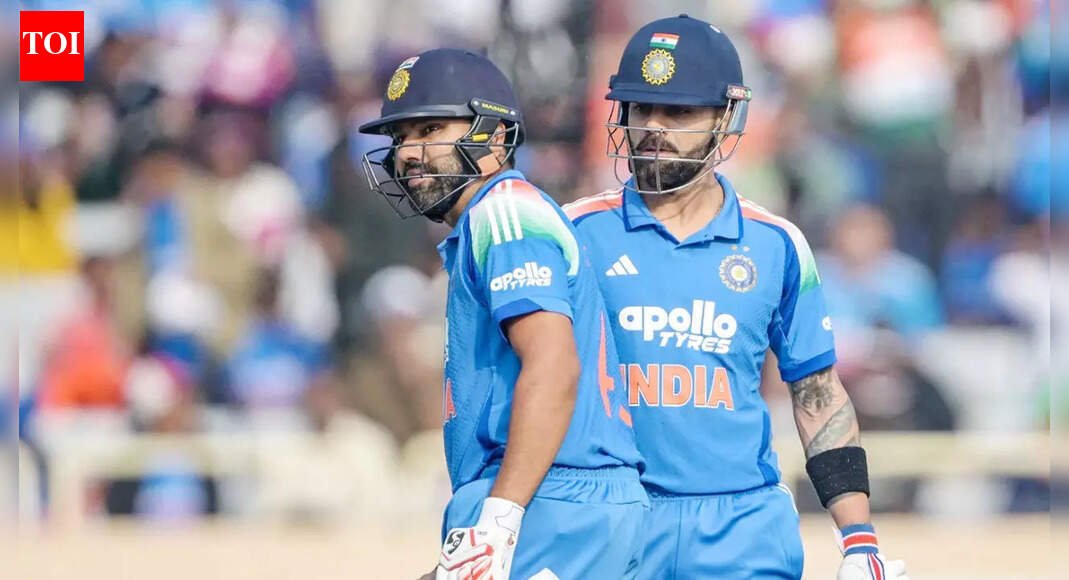
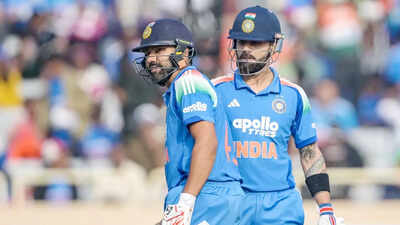
Rohit Sharma, left, and Virat Kohli greet each other between the wickets during the first ODI cricket match of a series between India and South Africa, at JSCA International Stadium Complex, in Ranchi, Jharkhand. (PTI Photo)

NEW DELHI: India heads into the second ODI against South Africa in Raipur on Wednesday with a mix of confidence and questions. Confidence, because Virat Kohli’s imperious 52nd ODI century and Rohit Sharma’s brisk 57 paved the way for a 17-run win in the series opener at Ranchi. Questions, because off the field, whispers about differences with head coach Gautam Gambhir have grown louder.Kohli and Rohit are not just playing to win games—they are also auditioning for the 2027 ODI World Cup, two years away in South Africa. Having set up two consecutive victories for India in last as many ODIs—including a nine-wicket hammering of Australia at Sydney in October—Kohli and Rohit have shown they will do everything possible to be on that flight to the World Cup in South Africa. Both chairman of selectors Ajit Agarkar and Gambhir have remained non-committal about their World Cup participation, which seems to be at the centre of simmering tensions.On the field, India’s combination still looks unsettled. Ruturaj Gaikwad, a consistent performer in List A cricket, was moved from opening to No. 4. He didn’t look completely comfortable, while stand-in captain KL Rahul held firm at No. 6. Washington Sundar, who has seen plenty of batting experiments, batted at No. 5 and fell during a slow phase for India. He bowled only three overs for 18 runs.Harshit Rana made his mark with two early wickets using the new ball but leaked runs in the latter stage. The ICC’s rule allowing only one ball to be continued from the 34th over adds another layer of challenge for bowlers. Kuldeep Yadav’s variations won India crucial wickets, ending with 4/68, making the difference in a match South Africa nearly stole.Speaking of South Africa, they showed resilience after being reduced to 11/3. Marco Jansen tore into the Indian attack for a 70 off 39 balls, while Matthew Breetzke scored 72 on his first ODI against India. Their tail, led by Corbin Bosch, made India sweat before eventually falling short.The Proteas were without regular skipper Temba Bavuma and Keshav Maharaj, rested after their historic Test series win. Their return is expected in Raipur.Raipur itself is not a well-trodden path for India. In the only ODI previously played here, India dismantled New Zealand for 108 in January 2023 and won by eight wickets. In the only T20I here, against Australia in December 2023, India posted 174/9 and won by 20 runs.


Source link

Does Harshit Rana get preferential treatment from Gautam Gambhir? Pacer breaks silence on claims | Cricket News


Does Harshit Rana get preferential treatment from Gautam Gambhir? Pacer breaks silence on claims
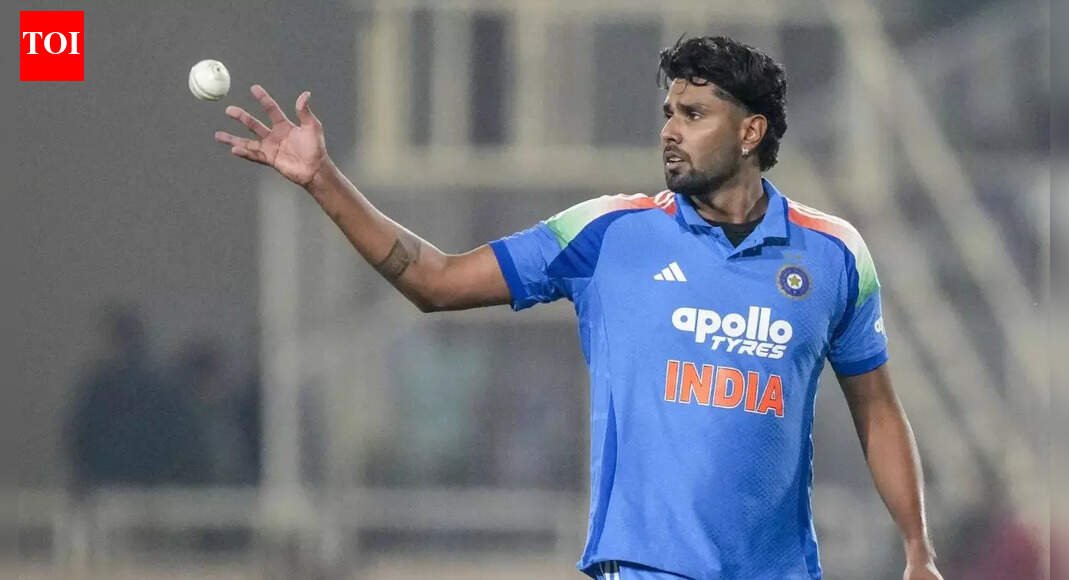
Harshit Rana during the first ODI cricket match of a series between India and South Africa, at JSCA International Stadium Complex, in Ranchi, Jharkhand. (PTI Photo)

NEW DELHI: Harshit Rana, who has entered the India setup across formats during Gautam Gambhir’s tenure as head coach, said he is not affected by claims that he is receiving preferential treatment. The fast bowler said he avoids outside conversations and focuses only on his work on the field, as India prepare for their next ODI in Raipur.Harshit Rana said he does not pay attention to claims that he is getting preference from India head coach Gautam Gambhir, adding that such talk affects performance and he prefers to stay focused on his cricket.

Harshit Rana press conference: On social media trolls, outside noise, Virat Kohli and Rohit Sharma

Rana, 23, has made his India debut in all formats during Gambhir’s stint, beginning with the Perth Test on last year’s Australia tour. His returns have been mixed so far, but Gambhir has continued to support him.“If I start listening to all these things, put them in my mind and take the field, I won’t be able to play cricket,” Rana said when asked about criticism, including from social media. “I try to avoid as much as possible. I just pay attention to what I have to do on the ground. I don’t care about what is happening outside or what someone is saying about me. I just focus on my hard work and what I am going to do on the ground,” he said ahead of India’s training session at the Shaheed Veer Narayan Singh Stadium in Raipur.Rana took 3/65 in the first ODI in Ranchi, taking two early wickets before slightly losing control later in South Africa’s chase.He said he is working with bowling coach Morne Morkel and Arshdeep Singh to improve his new-ball skills.“With the new ball I am practicing a lot with Morne (Morkel) and I keep talking to Arshdeep a lot. I feel that Arshdeep has a lot of experience and he keeps helping and guiding me during practice,” Rana said.On the one-ball rule after the 34th over, Rana said the team checks which of the two balls has aged more before choosing.“You know that bowlers do not get so much help in today’s cricket so this rule is very helpful for us and it is always on the mind to see which ball is getting older. And everyone is involved in choosing that ball,” he said.Rana also said the presence of senior players Virat Kohli and Rohit Sharma has supported his growth.“It’s a big deal for me and obviously, for the whole team because if such experienced players stay with you in the field and in the dressing room, then the environment of the team is very good.”


Source link

Shirt label helps GRP identify man run over by train, trace his family | Mumbai News


Thane: A label on the shirt of an 82-year-old man helped the Government Railway Police (GRP) trace his family within two hours of finding his body at a railway station in Maharashtra’s Thane district, an official said on Tuesday.The octogenarian was run over by a train, and his body was found on the tracks at Dombivili railway station on Monday, he said.The official said a case of accidental death was registered under the Bharatiya Nagarik Suraksha Sanhita (BNSS). The GRP, however, had no way of identifying the deceased, as there were no documents or belongings on his person.During the probe, the police team noticed a label on the victim’s shirt and traced it to a tailor. They sent him a photograph of the deceased on WhatsApp, and he identified the latter and provided the contact information about the family, he said.The deceased was identified as Shashikant Bhoir, and the GRP managed to trace his son and handed over the body to the family.


Source link

India-Russia ties: Moscow signals readiness to fix trade deficit; energy, defence and new payment architecture on agenda


India-Russia ties: Moscow signals readiness to fix trade deficit; energy, defence and new payment architecture on agenda

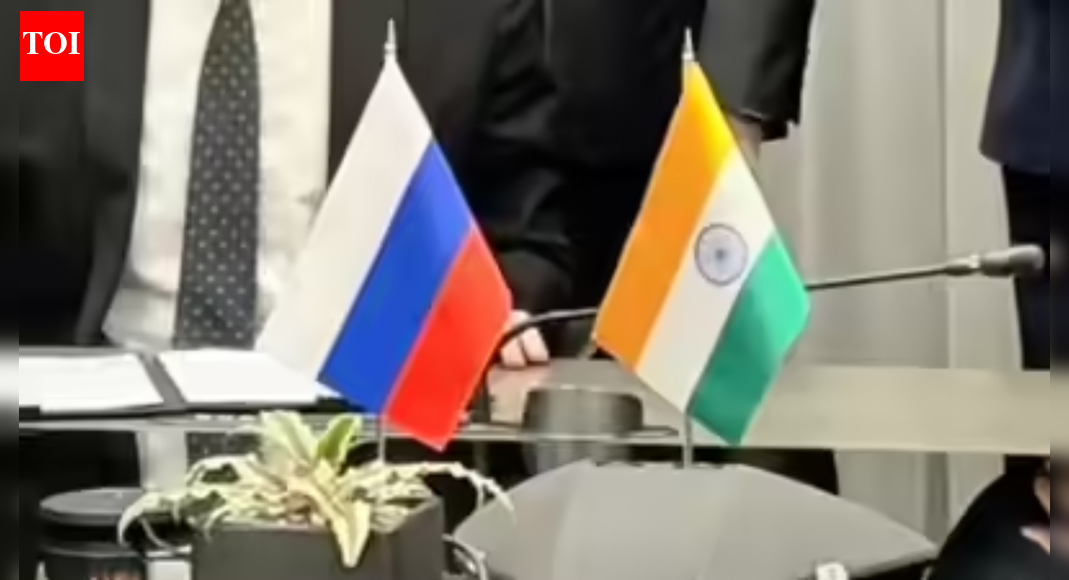
Russia on Tuesday said it is ready to address India’s concerns over the widening trade deficit and proposed building a framework to shield bilateral commerce from pressure by third countries. Kremlin spokesperson Dmitry Peskov, speaking ahead of President Vladimir Putin’s visit to New Delhi, said Moscow is also working to stabilise crude supplies after a brief dip linked to Western sanctions, according to PTI.Peskov told reporters during a video-streamed news conference that Friday’s summit between Putin and Prime Minister Narendra Modi will focus on strengthening trade, energy cooperation, small modular nuclear reactors and additional defence projects. Putin is scheduled to arrive on Thursday for the annual meeting.Russia signals efforts to ease trade deficitPeskov acknowledged India’s concern over the large trade gap and said Russia is keen to increase its imports from India. “There is a real imbalance in our trade. We know our Indian friends are concerned about that. We are jointly looking at the possibilities of increasing imports from India. We want to buy more from India,” he said.India’s purchases of Russian goods and services amount to around $ 65 billion, while Russia’s imports from India are around $ 5 billion.He also said Moscow is taking steps to ensure crude supplies remain stable despite the impact of Western restrictions. India’s purchase of Russian oil, he said, may dip only for a “very brief period.”Push for alternative payment systems and sanctions-proof tradePeskov urged the creation of an “architecture” to insulate India-Russia trade from geopolitical pressure. “We should create an architecture of our relationship that must be free of any influence coming from any third country,” he said. He stressed that bilateral trade must be protected from external pressure and that Russia rejects the use of the dollar-denominated global payment system as a “political tool.”He indicated that settlement through national currencies may feature in the Modi-Putin talks. “We understand the pressure on India,” he said, referring to the US.The visit comes at a tense moment in India-US ties, with Washington imposing a 50% tariff on Indian goods and an additional 25% levy linked to New Delhi’s procurement of Russian crude.Defence, nuclear cooperation and technology sharingPeskov highlighted joint production of the BrahMos missile system as a model for high-technology collaboration and said discussions may cover potential supplies of Su-57 fighter jets and additional S-400 air defence systems. He also said cooperation in small and medium nuclear reactors is expected to be part of the talks. Russia has experience producing these systems and is prepared to share the technology with India.On China, Peskov said Russia’s “limitless” partnership with Beijing does not diminish its willingness to deepen ties with India. “We are ready to go as far as India is ready,” he said, adding that Moscow respects India-China relations and hopes both sides resolve their issues to preserve global stability.Ukraine conflict, counter-terrorism and Afghanistan tiesPeskov welcomed recent US mediation efforts in the Ukraine conflict, calling them “very effective” and expressing hope for progress. He said the Russia-Ukraine war will be an important part of the Modi-Putin agenda. “Russia is open for peaceful negotiation; we have to reach our goals. We appreciate the position of India,” he said.He added that Russia is ready to work with India “to combat terrorism,” and said Moscow is strengthening its engagement with Afghanistan. “We’ll continue to develop our relationship with Afghanistan,” he noted.On overall ties, Peskov said Russia is proud to stand “shoulder-to-shoulder” with India during its period of historic growth.


Source link

Trump sanctions: India’s crude imports from Russia at 5-month high – can it continue?


Trump sanctions: India’s crude imports from Russia at 5-month high - can it continue?

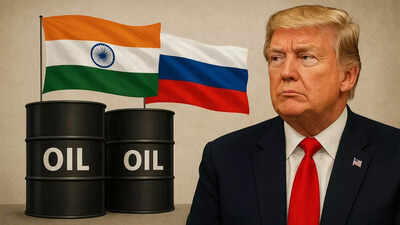
Russia has maintained its position as India’s primary supplier in November, providing over one-third of all crude oil imports. (AI image)

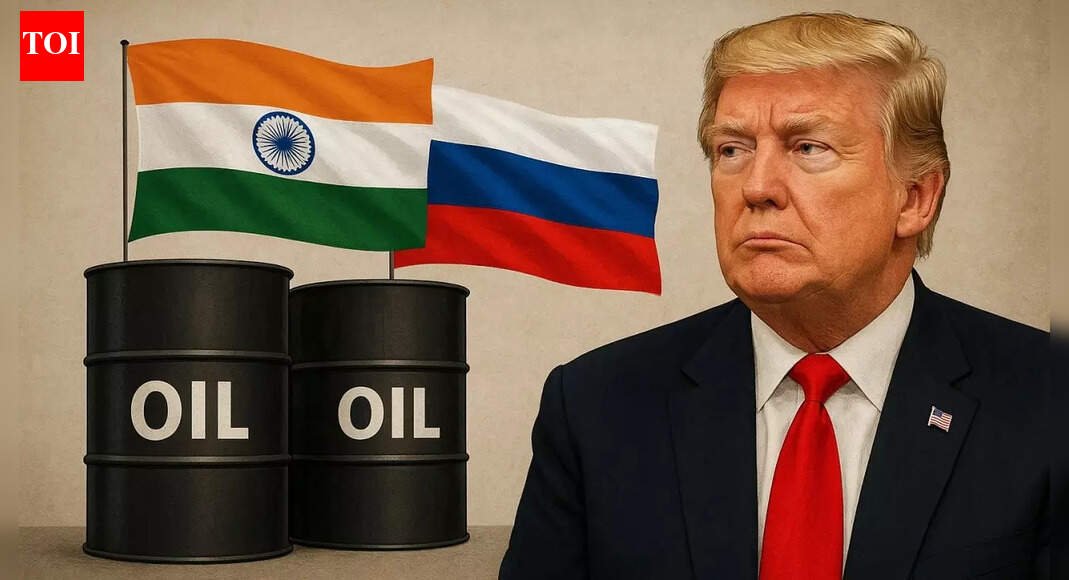
Donald Trump’s sanctions on Rosneft and Lukoil – two of Russia’s major crude firms – may result in India’s imports of oil from Moscow dropping – but will this shift be permanent? Analysts expect India to continue procuring Russian crude through non-sanctioned entities and even indirect and less transparent routes. In fact, Russian grade imports to India in November are set to reach a five-month peak, primarily due to increased purchases before the 21 November sanctions deadline. India’s crude oil imports from Russia have emerged as a major point of contention between New Delhi and Washington. The Trump administration’s 50% tariffs on India – one of the highest by the US – consist of 25% penal tariffs for India’s crude oil imports from Russia. The Trump government has accused India of indirectly funding Russia’s war against Ukraine through its crude oil trade.India has maintained its sovereignty in deciding its trade partners and procure energy through the economically advantageous channels. However, the Trump administration in October this year sanctioned two of the biggest Russian oil firms – major suppliers of crude to Indian refiners. For Trump, the sanctions may finally have the desired impact of Indian refiners reducing their crude oil purchases.How have the sanctions been playing out? Has India reduced its crude oil trade with Russia substantially? And what are India’s alternatives?

India-Russia crude oil trade: Important numbers

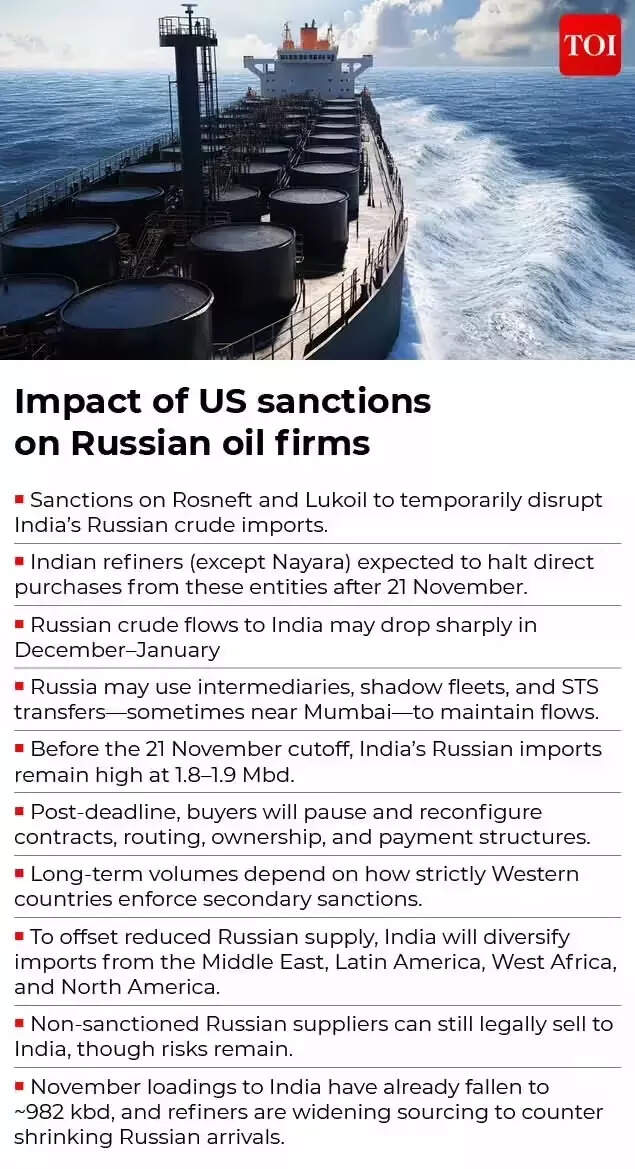
* India became the leading purchaser of Russian crude oil at discounted rates after Western nations boycotted Moscow in response to its invasion of Ukraine in February 2022. India, which traditionally sourced oil from Middle Eastern nations, substantially increased its Russian oil purchases as sanctions and diminished European demand made these barrels available at considerable discounts, raising Russia’s share from less than 1 per cent to approximately 40 per cent of total crude imports. *According to Kpler, a global real-time data and analytics provider, Russia has maintained its position as India’s primary supplier in November, providing over one-third of all crude oil imports.* This situation is likely to shift following the implementation of US sanctions on Rosneft, Lukoil and their majority-owned subsidiaries from November 21, effectively categorising crude associated with these companies as a “sanctioned molecule”.* These sanctions have prompted several companies, including Reliance Industries, Hindustan Petroleum Corporation Ltd (HPCL), HPCL-Mittal Energy Ltd and Mangalore Refinery and Petrochemicals Ltd to temporarily cease imports. Nayara Energy, supported by Rosneft, remains the sole exception, as it heavily relies on Russian crude after European Union sanctions effectively terminated supplies from other global sources. * Russian crude arrivals have maintained robust levels, with an average of approximately 1.8 mbpd, constituting over 35% of India’s total crude imports. Prior to November 21, import levels were higher at 1.9-2.0 mbpd as purchasers expedited shipments before the deadline, following which volumes have decreased. “It looks like refiners stocked up on crude ahead of the sanctions, planning to process it once the rules were in force,” says Sumit Ritolia, Lead Research Analyst, Refining and Modelling at Kpler.A notable decline in Russia’s exports to India has emerged since the OFAC sanctions announced on October 23, current shipping patterns and voyage data suggest. “We expect December arrivals to be in the range of 1.0 mbpd. This aligns with our earlier view that, in the short term, Russian flows could ease toward ~800 kbd before stabilising,” says Ritolia.Several factors contribute to November’s robust performance:* Expedited arrivals prior to 21 November deadline, with refiners enhancing scheduling efficiency and vessel turnaround times, especially for Rosneft- and Lukoil-associated shipments.* Strong domestic fuel requirements and intensive refinery operations during Q4, as Russian supplies remained the most cost-effective additional feedstock.* Enhanced performance at Nayara, operating predominantly on Russian grades, has been noticeable since September. Crude imports attained approximately 400 kbd through November, whilst refinery operations averaged 380-400 kbd in November, showing an increase of 20-25 kbd compared to October.

Will India stop buying Russian crude oil?

Refiners are implementing strategic adjustments for the intermediate future. These include engaging with non-sanctioned Russian entities, utilising less transparent trading channels, and increasing procurement from the Middle East, West Africa, and the Americas, says Kpler.“On the Russian side, the response has been highly adaptive, involving STS transfers near Mumbai, mid-voyage diversions, and more complex logistics to keep barrels moving and increase discounts. As long as broader secondary sanctions aren’t applied, India is likely to continue importing Russian crude—just through more indirect and less transparent routes,” says Ritolia.Concerning market sentiment, oil refiners point out that sanctions apply only to specific entities, not Russian oil in general. They maintain that purchases can proceed when dealing with compliant, non-sanctioned suppliers. The appealing price discounts continue to drive sustained demand.Kpler points out that the workaround is simple and already well-tested: continue buying Russian crude, but through intermediaries. If the barrels are supplied via third-party trading entities, entities that can credibly show they are not Rosneft/Lukoil, then refiners can keep accessing discounted supply while limiting the appearance of sanctionable contact, says Kpler. “This is a trend that has already started with new sellers emerging such as Tatneft, RusExport, MorExport or Alghaf Marine DMCC. However, November numbers may continue to adjust downward / upward as more destination-day and port-call data becomes available,” says Ritolia.
Impact of US sanctions

Impact of US sanctions

Importantly, Ritolia notes that while India’s oil imports from Russia are likely to decrease after sanctions, the decline is most likely to be temporary, allowing the supply chain to reorganise itself. “Unless more expansive secondary sanctions are introduced, India will continue to buy from a non-sanctioned supplier of Russian oil. The reasons are multiple: the geopolitical and economic dimensions are both essential. Political leaders will not want to be seen as bending down to US sanctions. At the same time, Russian barrels remain highly cost-competitive, and workarounds to maintain flows are likely to emerge. In particular, buyers may increasingly pivot to non-sanctioned Russian entities and opaque trading channels,” Sumit Ritolia says.

India’s procurement of US crude & other alternatives

India’s crude imports from the United States reached a peak of 568 kbd in October, the highest level since 2022, as per Kpler data. Although these imports decreased to approximately 450 kbd in November, they remained significantly above the year-to-date average of ~300 kbd. “These flows were almost certainly contracted before the recent US sanctions on Rosneft and Lukoil, given the 45–55-day voyage time, meaning the spike was not sanctions-driven but instead part of India’s ongoing effort to diversify its crude slate and strengthen energy security,” says Kpler.The primary drivers for this increase were economic factors, including a favourable arbitrage opportunity, an expanded Brent-WTI differential, and reduced Chinese demand, which made WTI Midland cost-effective on a delivered basis. However, the November decline indicates the limitations of this opportunity. Current export patterns suggest that December crude imports will likely decrease to 300-350 kbd, with subsequent levels expected to stabilise around ~300 kbd.The potential for substantial growth remains limited due to extended voyage times, increased freight costs, and WTI’s lighter, naphtha-rich composition.
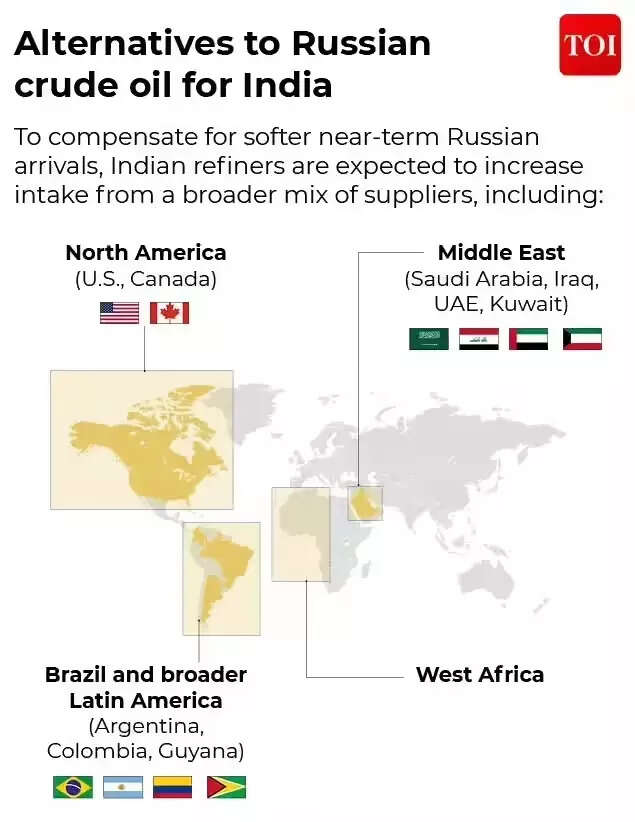
Alternatives to Russian crude

Alternatives to Russian crude

“Even so, the elevated US presence in India’s crude basket underscores the deepening strategic energy alignment between the two countries and supports India’s broader diversification strategy balancing security, economics, and geopolitics,” notes Kpler’s Ritolia.Indian refiners’ technical sophistication allows them to process various crude grades without operational challenges. The primary impact of reducing Russian volumes would be financial rather than technical. To address the temporary reduction in Russian oil supplies, Indian refineries are planning to expand their procurement from diverse sources including:

  • Middle East (Saudi Arabia, Iraq, UAE, Kuwait)
  • Brazil and broader Latin America (Argentina, Colombia, Guyana)
  • West Africa
  • North America (US, Canada)


Source link

Mumbai: BMC to begin concretisation works on 677 roads in Mumbai | Mumbai News


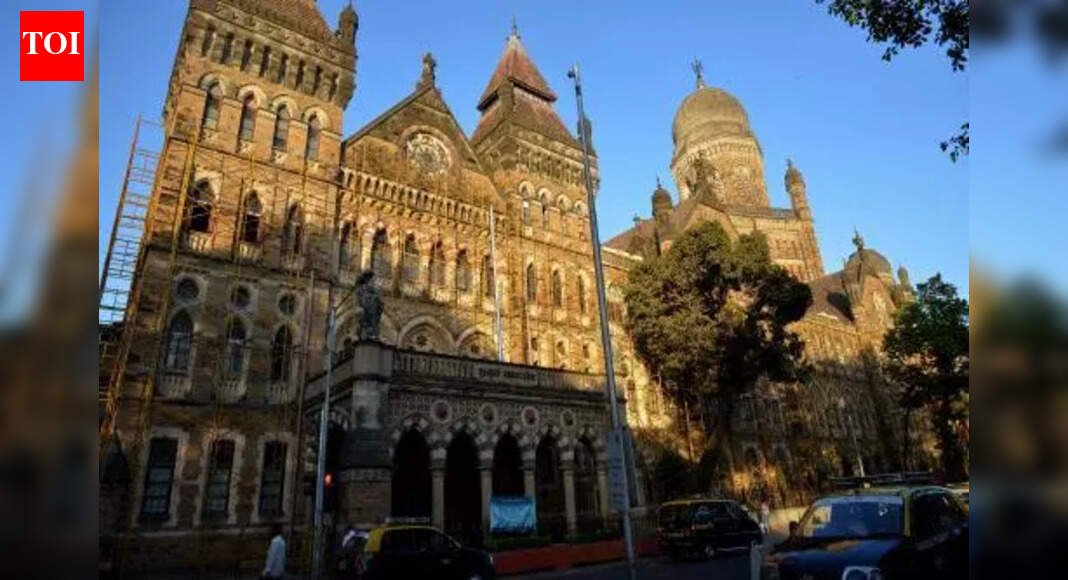
Mumbai: BMC has currently undertaken the concretisation works on 677 roads, measuring a total length of 308 km across Mumbai, according to data from the civic dashboard as of December 2.A total of 2,121 roads were taken up under the civic body’s mega concretisation project, of which works on 790 roads were completed, while 575 roads are partially completed. On 756 roads, work hasn’t yet begun.Officials have said that any new road works will be taken up for concretisation only once the ongoing stretch of roads is significantly completed.Additional Municipal Commissioner Abhijit Bangar, in charge of the BMC’s road department, said, “Concretisation works have been ongoing from October onwards across the city. Many of the roads which were partially completed have been taken up now and should be significantly finished by January, only after which any new roads shall be taken.”


Source link

‘Capable of giving a befitting reply’: Rajnath Singh says Operation Sindoor shows India won’t accept provocation; sets Rs 50,000-cr defense export goal | India News


‘Capable of giving a befitting reply’: Rajnath Singh says Operation Sindoor shows India won’t accept provocation; sets Rs 50,000-cr defense export goal
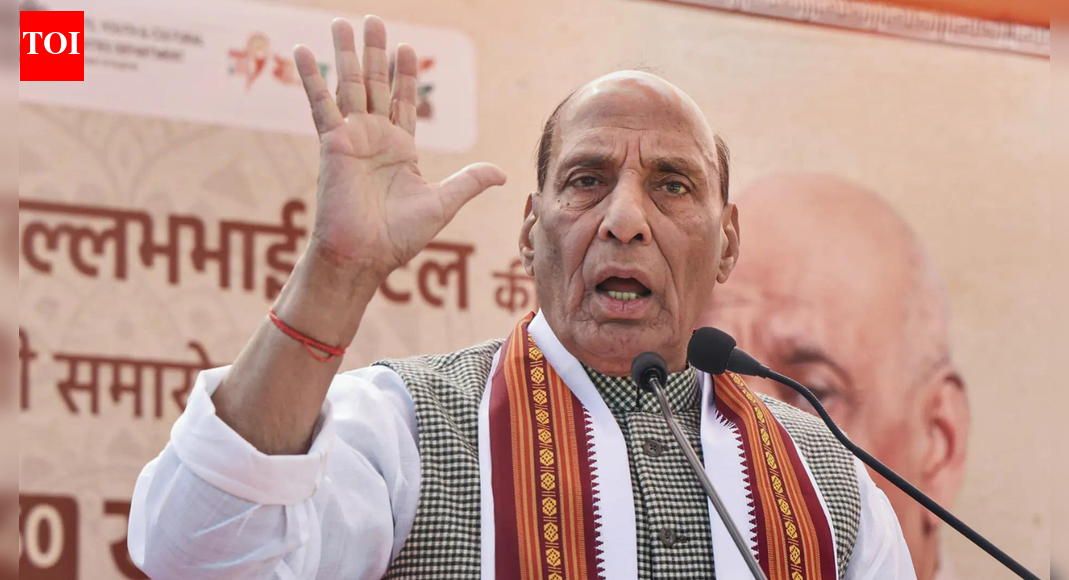
File photo: Defense minister Rajnath Singh (Picture credit: PTI)

NEW DELHI: Defense minister Rajnath Singh on Tuesday said Operation Sindoor had sent a clear signal that India responds firmly when pushed, drawing a parallel between the government’s action against terrorism and the decisive leadership of Sardar Vallabhbhai Patel. Speaking at the ‘Sardar Sabha’ in Vadodara’s Sadhli village during the Unity March organised to mark Patel’s 150th birth anniversary, he said the operation demonstrated India’s ability to act when peace efforts are ignored.

‘Stay Mentally Prepared’: Rajnath Singh’s Remark Fuels Talk Of Another Operation Sindoor

“India showed the world through Operation Sindoor that it is capable of giving a befitting reply to those who do not understand the language of peace and goodwill”, Singh said, as quoted by news agency PTI.Singh praised the armed forces for the success of the mission, stating that “the world is today acknowledging the bravery and capabilities of Indian soldiers.” He added that Patel too believed in dialogue but did not hesitate to take a hard line when required, recalling his role in Hyderabad’s merger. According to him, the present government had upheld the same value through Operation Sindoor, which is “being discussed not only on Indian soil but also in other countries around the world”.The minister targeted former Prime Minister Jawaharlal Nehru over the Babri Masjid issue, saying Nehru intended to construct it using public funds, a proposal prevented by Patel. Singh said Patel had also clarified that the restoration of the Somnath Temple was different because the Rs 30 lakh required had been contributed by ordinary citizens. “Similarly, the government didn’t give a single rupee to construct the Ram Temple in Ayodhya,” he said, calling it an example of “real secularism”.Singh said the Modi government had strengthened Patel’s vision of a united India, citing the removal of Article 370. He argued that if Patel’s approach had been followed during the accession of Kashmir, the issue would not have lingered for decades. He also criticised attempts by earlier governments to minimise Patel’s legacy, claiming that even memorial funds raised by people were redirected on Nehru’s instructions.He questioned why Patel was not given the Bharat Ratna at the time, noting that Prime Minister Narendra Modi later honoured him through the Statue of Unity.Emphasising national security and defense modernisation, Singh said Patel had long pushed for indigenous capability — an approach the current government is pursuing through Make in India. India aims to achieve defense production worth Rs 3 lakh crore and exports of Rs 50,000 crore by 2029, he said, highlighting that defense exports had risen nearly 34-fold in 11 years.He also spoke of the proposed Constitution (130th Amendment) Bill 2025, which seeks ethical conduct from those in high office, providing for automatic removal if a person arrested on serious charges does not secure bail within 30 days.Singh said Patel himself cared little for position, recalling that he stepped aside in 1946 on Mahatma Gandhi’s advice, allowing Nehru to become Congress president despite having majority backing.Senior leaders, including Punjab governor Gulab Chand Kataria and Uttarakhand chief minister Pushkar Singh Dhami, also attended the event.


Source link

Virat Kohli ignores Gautam Gambhir, Rohit Sharma stops for a quick chat ahead of 2nd ODI in Raipur | Cricket News


Virat Kohli ignores Gautam Gambhir, Rohit Sharma stops for a quick chat ahead of 2nd ODI in Raipur
Virat Kohli and Rohit Sharma (AFP Photo)

NEW DELHI: Virat Kohli and Rohit Sharma appeared unfazed by the growing chatter around their futures, focusing instead on a demanding net session under the floodlights ahead of India’s second ODI against South Africa on Wednesday.Go Beyond The Boundary with our YouTube channel. SUBSCRIBE NOW!Speculation has intensified over what lies ahead for the senior duo, especially with the road to the ICC ODI World Cup 2027 now part of the discussion.

Still have doubts? Virat Kohli blows World Cup trumpet with another masterclass

But fresh off back-to-back match-winning performances against Australia and South Africa, neither Kohli nor Rohit showed any signs of easing up during training on Tuesday.Kohli looked sharp and assertive, taking on throw-down experts Raghu (right-arm) and Nuwan Seneviratne (left-arm), who pushed the pace throughout the session. The battle was compelling to watch — Kohli found the middle of the bat repeatedly, though there were moments when Raghu’s extra pace beat him.Head coach Gautam Gambhir stood positioned between the two nets, observing the session closely. When Kohli wrapped up his batting, he rested both bats on his shoulders and walked past Gambhir without exchanging a word — a moment that would not go unnoticed considering the recent narrative surrounding Indian cricket.Rohit, who followed Kohli into the nets and then toward the dressing room shortly after, did pause briefly for a conversation with Gambhir before heading inside.While all eyes naturally gravitated toward the two senior players, training intensity remained high across the nets as India look to clinch the series after taking a 1-0 lead with Sunday’s win in Ranchi.With the match to be played on a black-soil surface at the Shaheed Veer Narayan Singh Stadium, the batting group trained with intent, showcasing aggression from the outset.Yashasvi Jaiswal sent multiple deliveries soaring over the leg side boundary, and even rolled his arm over to bowl to Rishabh Pant — the last batter to take his turn in the nets.


Source link

Does Samantha Ruth Prabhu’s husband Raj Nidimoru have a daughter with ex-wife Shhyamali? Here’s the TRUTH behind the VIRAL PIC |


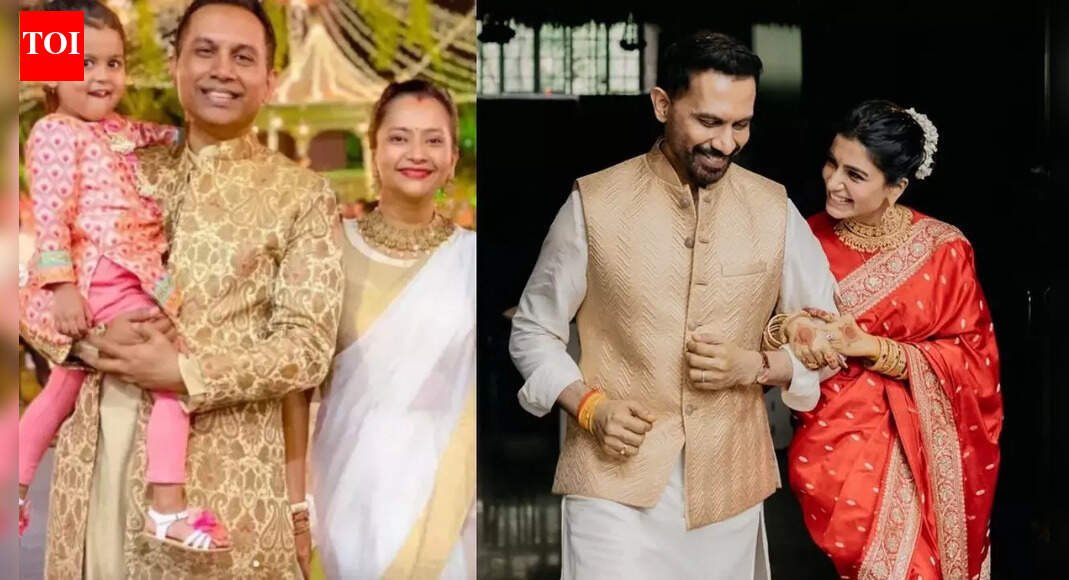
Samantha Ruth Prabhu tied the knot with ‘The Family Man’ director Raj Nidimoru of Raj and DK fame, on Monday, December 1 at Ling Bhairavi Temple inside the Isha Yoga Centre earlier today. . The actress announced her wedding with first pictures on social media which were nothing short of stunning. Samantha Ruth Prabhu was earlier married to actor Naga Chaitanya and they got divorced in 2021. Last year, Chaitanya got married to Sobhita Dhulipala on December 4. Now a year later, this December, Samantha has tied the knot again. She found love and the internet cannot stop showering love on her. Meanwhile, Raj was earlier married earlier to Shhyamali De. Just as Samantha and Raj announced their wedding, a picture of the director with ex-wife while holding a little girl has gone viral and some are saying that it’s Raj’s daughter with his ex-wife. However, here’s the truth. In May 2025, Pinkvilla had reported that Raj and Samantha have moved in together when rumours of them had surfaced online. Even then, Raj’s picture with this little girl had gone viral. The portal had quoted a source saying that time, “Samantha and Raj are considering moving in together and are scouting for properties. They have the intent to live together and are working in that direction. Raj got officially divorced to Shhyamali in 2022 and found love in Samantha after they collaborated for Citadel. Meanwhile, reports about Raj being spotted with his daughter are false. He doesn’t have a daughter, and the kid he was spotted with is his co-director Krishna Dk’s daughter.”

Samantha Ruth Prabhu, Raj Nidimoru To Get Married Today?

Raj and Shhyamali De had tied the knot in 2015 and they got divorced in 2022. Raj fell in love with Samatha during the shooting of ‘Citadel’. Reportedly, Samantha and Raj have an age-gap of eight years. Rumours of their relationship had surfaced in early 2024 and it was also reported that last year, Samantha visited Raj in the US to meet his family. Meanwhile, a day after Raj’s wedding with Samantha, Shhyamali has dropped a note about karmic connections. She wrote, “Through the bond of past debts (runānubandha), one becomes connected with pets, spouse, children, and home… When those karmic debts are exhausted, those relationships come to an end.”


Source link

IND vs SA, 2nd ODI: Raipur Pitch Report, SVNS International Cricket Stadium Stats and Records


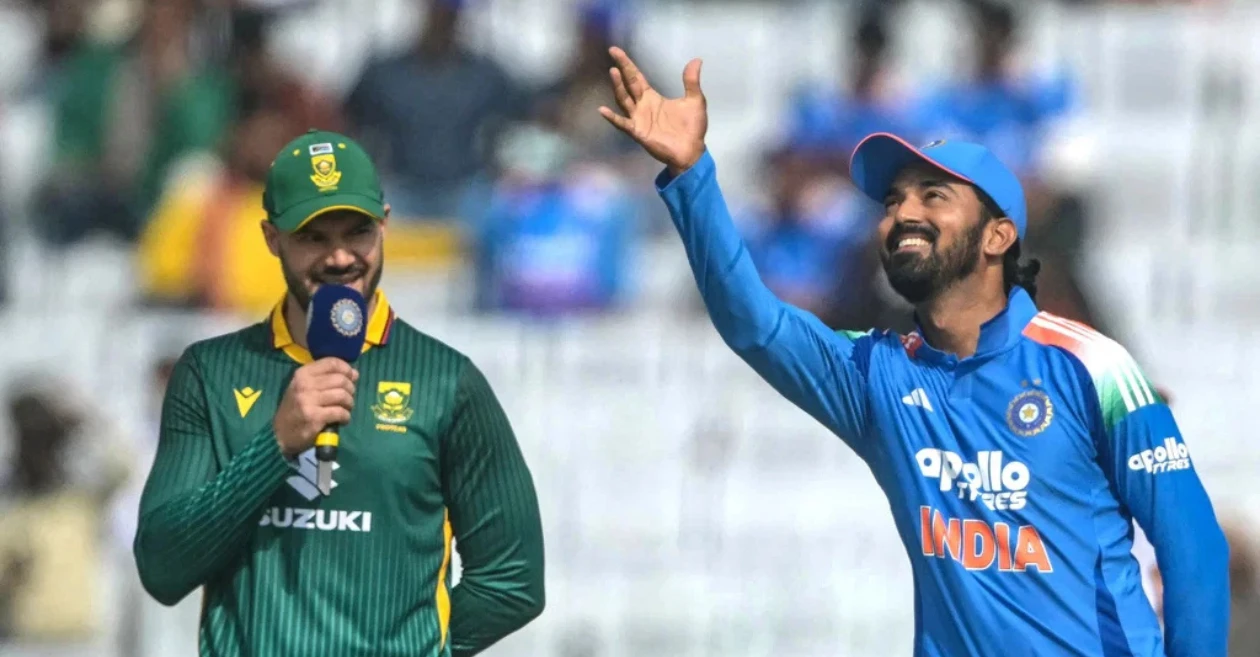
India and South Africa face off in the 2nd ODI on Wednesday (December 3), at the Shaheed Veer Narayan Singh International Cricket Stadium in Raipur, with the home team aiming to wrap up the series after their thrilling win in Ranchi.

KL Rahul’s side enters confident, boosted by Virat Kohli’s match-winning 135 and Rohit Sharma’s steady 57, which powered India to 349 in the opener.

With a balanced Raipur pitch expected to aid seam early and spin later, India will rely again on rising all-rounder Harshit Rana and wrist-spinner Kuldeep Yadav, whose breakthroughs at key moments helped seal the first match. Rahul’s adaptable No. 6 role continues to give India flexibility and depth.

Meanwhile, South Africa will look to respond strongly after falling just 17 runs short in Ranchi. Their bowlers, including Marco Jansen and Ottniel Baartman, must strike early to challenge India’s top order, while the middle order – anchored by Matthew Breetzke – will need greater stability during the chase.

Raipur Pitch Report

The surface at the Shaheed Veer Narayan Singh International Cricket Stadium in Raipur for the India vs South Africa 2nd ODI is expected to offer a balanced contest between bat and ball. The fresh grass and firmness early on should aid the seamers, providing swing and seam movement in the opening overs. As the match progresses, the pitch is likely to settle, making stroke-making easier and allowing batsmen to build substantial innings. Spinners could also find some purchase in the middle overs as the surface begins to show signs of wear.

Although the venue has hosted just one ODI game, scoring trends and wicket patterns from the previous match suggest that captain winning the toss may lean towards chasing.

Overall, a competitive encounter is anticipated, where disciplined bowling and well-timed aggressive batting will be crucial. Conditions should favour pace early before gradually easing for batting as the innings unfold.

Also READ: IND vs SA – Harsha Bhogle reveals what Virat Kohli said in their off-air chat before discussing his Test return

Shaheed Veer Narayan Singh International Cricket Stadium ODI Stats and Records

  • Total matches: 1
  • Matches won batting first: 0
  • Matches won bowling first: 1
  • Average 1st innings score: 108
  • Average 2nd innings score: 111
  • Highest total recorded: 111/2 (20.1 Overs) by India vs New Zealand
  • Lowest total recorded: 108/10 (34.3 Overs) by New Zealand vs India
  • Best bowling: 3/18 (Mohammed Shami)
  • Highest individual score: 51 (Rohit Sharma)

Also READ: “I’d be lying if…” – KL Rahul on India’s nervy win over South Africa in Ranchi ODI


Source link