Breaking News
First election since 2021 coup: Myanmar is voting after 5 years amid civil war — why stakes are high


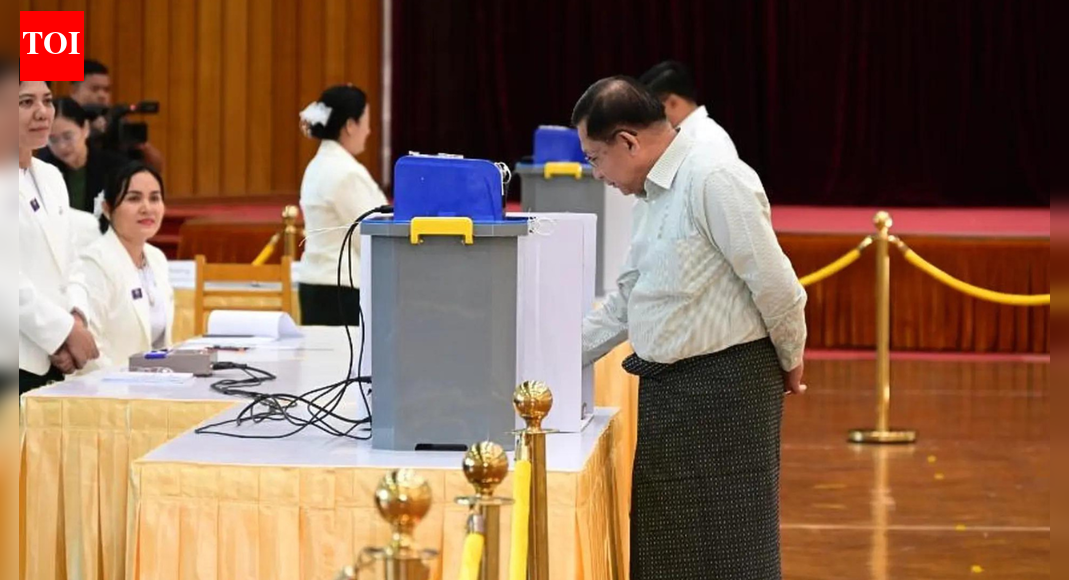
Myanmar has begun voting in its first general election since the military seized power in a coup in February 2021, an event the ruling junta presents as a return to democratic order after years of turmoil. Polling started on December 28 in the first of three phases and will run through January, even as a brutal civil war continues across large parts of the country.For the generals, the election is meant to signal stability and provide a pathway out of diplomatic isolation. For critics, including Western governments, the United Nations and rights groups, it is something else entirely: a tightly controlled exercise designed to entrench military power behind a civilian façade. With major parties banned, opposition leaders jailed, and millions unable to vote, the ballot has become one of the most contentious political moments in Myanmar’s modern history.

Myanmar Heads to Polls After Five Years as Rights Groups Slam Military-Run Process

A vote held amid war and fragmentation

The election is taking place nearly five years after the army, known as the Tatmadaw, overturned the landslide 2020 victory of Aung San Suu Kyi’s National League for Democracy (NLD), alleging fraud without credible evidence. The coup triggered mass protests, a violent military crackdown, and the emergence of armed resistance groups aligned with ethnic minority militias. The conflict has since displaced more than 3.6 million people and left over 11 million facing food insecurity, according to UN agencies.Against this backdrop, voting is being held only in areas under junta control. The military has acknowledged that elections cannot take place in at least 56 of Myanmar’s 330 townships, many of them in rebel-held regions. Even within townships that are voting, entire constituencies have been cancelled on security grounds, leaving nearly one in five seats in the lower house uncontested.The poll itself is staggered across three dates — 28 December, 11 January and 25 January — a structure critics say allows the authorities to adjust tactics as results come in.

Who is running — and who is missing

On paper, 57 political parties and more than 4,800 candidates are contesting the elections. In reality, the field is heavily skewed. Only six parties have been allowed to compete nationwide under tightened registration rules. The largest and most dominant is the military-backed Union Solidarity and Development Party (USDP), which is effectively running unchallenged in dozens of constituencies.The absence of Aung San Suu Kyi and her party looms over the process. The NLD, which won around 90 per cent of parliamentary seats in 2020, was dissolved after refusing to re-register under rules imposed by a junta-appointed election commission. Suu Kyi herself remains in military detention, serving a 27-year sentence on charges widely described by rights groups as politically motivated.According to the Asian Network for Free Elections (ANFREL), parties that collectively won more than 70 per cent of votes and 90 per cent of seats in the last election will not appear on the ballot this time. More than 22,000 political prisoners remain behind bars, further hollowing out any sense of political competition.

How the system favours the military

Even if the election were competitive, Myanmar’s political system is designed to preserve military dominance. Under the army-drafted 2008 constitution, 25 per cent of parliamentary seats are reserved for serving officers, giving the military an effective veto over constitutional change.Seats are allocated using a mix of first-past-the-post and proportional representation, a system election monitors say favours large, well-resourced parties like the USDP. New electronic voting machines, introduced for the first time, do not allow write-in candidates or spoiled ballots, limiting voter choice further.Once parliament is formed, the president is chosen indirectly. Lawmakers from the lower house, upper house and the military bloc each nominate a vice-president, with the full assembly then selecting the president from among the three. The structure all but guarantees that the armed forces will retain decisive influence regardless of the outcome.

Repression, restrictions and a climate of fear

The run-up to the vote has been marked by widespread repression. The Union Election Commission overseeing the polls is staffed by junta appointees, including its chairman Than Soe, who is under EU sanctions for undermining democracy. Independent election observation is minimal, with most Western governments refusing to send monitors.A new Election Protection Law has criminalised protest, criticism or alleged “disruption” of the poll, carrying penalties of up to ten years in prison, and in some cases the death penalty. More than 200 people have been charged under the law, including artists, filmmakers and social media users accused of opposing the elections. Even private online messages have been used as evidence.Social media platforms such as Facebook and Instagram have remained blocked since the coup, sharply curtailing political debate. Campaigning has been muted, with none of the mass rallies that once defined Myanmar’s elections.

Why the election still matters

Despite the restrictions, the election carries real consequences. For the junta, it is a bid to rebrand military rule as a quasi-civilian government and persuade regional neighbours to re-engage. China, Myanmar’s most powerful ally, has backed the vote, viewing it as a potential route to stability and protection for its strategic infrastructure projects. Russia and, more cautiously, India have also signalled acceptance.Western governments have taken a different view. The UK, the European Parliament and the UN have dismissed the poll as lacking legitimacy. UN human rights chief Volker Türk has warned that the elections are taking place in an environment of “violence and repression”, with no conditions for free expression or assembly.Inside Myanmar, reactions are mixed. Some voters, exhausted by years of war and economic collapse, see the election as offering at least the promise of order. Others reject it outright as a dangerous illusion. As one resistance fighter put it, holding elections now is like “injecting steroids into a patient” — easing pain briefly while worsening the disease.



Source link

Access Denied


Access Denied

You don’t have permission to access “http://www.ndtv.com/world-news/netanyahu-to-visit-us-today-as-trump-pushes-for-progress-on-gaza-plan-10054731” on this server.

Reference #18.2ef63717.1767012446.e680232

https://errors.edgesuite.net/18.2ef63717.1767012446.e680232


Source link

Nathan Ellis’ bowling brilliance and Matthew Wade’s late fireworks seal thrilling Hobart Hurricanes’ win over Melbourne Renegades in BBL|15


Hobart Hurricanes produced a composed all-round performance to defeat Melbourne Renegades by four wickets in Match 15 of the Big Bash League (BBL) 2025-26 at the Bellerive Oval. Chasing a competitive target of 163, the Hurricanes held their nerve in a fluctuating run chase, powered by a blistering cameo from Matthew Wade and crucial late contributions, to seal the contest with an over to spare.

Nathan Ellis leads Hobart Hurricanes’ bowling with decisive spell

After being sent in to bat, Melbourne Renegades got off to a brisk start courtesy of aggressive intent from Josh Brown and Tim Seifert. Brown’s 26 off 13 balls and Seifert’s equally quick 26 off 14 ensured early momentum during the powerplay. However, Hobart struck back consistently, preventing any major partnership from taking the game away.

Ollie Peake anchored the middle overs with a steady 29 off 22 balls, while Will Sutherland and Gurinder Sandhu added useful runs lower down the order. Despite these efforts, the Renegades struggled to fully capitalise at the death and finished on 162/9 from their 20 overs.

Nathan Ellis led the Hurricanes’ bowling attack with a decisive spell, picking up three wickets for 30 runs, while Rishad Hossain chipped in with two scalps. Chris Jordan and Riley Meredith provided pace and control, ensuring the Renegades never completely broke free.

Also READ: Haris Rauf’s bowling brilliance and Joe Clarke’s batting onslaught lead Melbourne Stars to a dominant win over Sydney Thunder in BBL|15

Hurricanes’ chase wobbles before Matthew Wade takes charge

In reply, Hobart Hurricanes experienced early jitters as Mitchell Owen and Ben McDermott departed cheaply. Tim Ward and Beau Webster steadied the innings with a sensible partnership, keeping the chase on track without taking undue risks.

The game turned decisively in Hobart’s favour when Wade walked in and shifted gears instantly. The experienced wicketkeeper-batter smashed 43 off just 20 balls, including four towering sixes, swinging momentum back to the Hurricanes at a crucial juncture. Wade’s fearless approach neutralised the threat posed by Adam Zampa, who otherwise impressed with figures of 3/25.

Rehan Ahmed then played a vital supporting role, striking a fluent 23 off 14 balls to ensure there were no late hiccups. Although a couple of wickets fell towards the end, Hobart crossed the line at 163/6 in 19 overs to complete a well-managed chase.

Also READ: Sam Harper’s explosive ton powers Melbourne Stars to a dominant win over Sydney Sixers in BBL|15


Source link

Vibes in Silicon Valley are bad, even venture capitalists are exhausted as …, warns CEO of $134 billion software company Databricks


Vibes in Silicon Valley are bad, even venture capitalists are exhausted as ..., warns CEO of $134 billion software company Databricks
Databricks CEO Ali Ghodsi warns of an AI bubble, highlighting companies with billions in valuation but no revenue. He criticizes circular financing deals inflating valuations and predicts worsening market conditions. Ghodsi remains optimistic about AI agents, noting their significant use in database creation on Databricks, but sees revenue potential in applications, not commoditized foundation models.

The CEO of $134 billion software analytics firm Databricks has issued a stark warning about the artificial intelligence industry, calling out companies valued at billions of dollars despite having zero revenue. Speaking at Fortune Brainstorm AI in San Francisco, Ali Ghodsi warned that “companies that are worth, you know, billions of dollars with zero revenue, that’s clearly a bubble, right, and it’s, like, insane.”Ghodsi, who holds a PhD in computer science, said the mood in Silicon Valley has soured significantly. He claimed that even venture capitalists funding the AI frenzy privately acknowledge the market’s unsustainable nature, with some telling him they should “just go on a break for, like, six months and come back and it’ll be, like, really financially good for me.”

Databricks CEO says circular financing deals inflate valuations artificially

The Databricks CEO criticized the circular financing arrangements, saying these types of deals are running afloat across the AI industry, where money flows between the same group of companies in complex loops. While Ghodsi didn’t name specific firms, OpenAI exemplifies this trend through its intricate web of deals worth over $1 trillion.OpenAI’s arrangements include receiving $13 billion from Microsoft before spending most of it back on Microsoft’s cloud computing services, securing $350 million in CoreWeave stock while committing $22 billion to the company for computing power, and signing a $300 billion deal with Oracle to build data centers that OpenAI will then pay roughly the same amount to use. Most recently, OpenAI obtained a 10% stake in AMD for chips and partnered with investment firm Thrive Holdings, whose parent company Thrive Capital is ironically one of OpenAI’s major investors.Rather than viewing the bubble as near its bursting point, Ghodsi predicts conditions will worsen before they improve. “I think like 12 months from now, it’ll be much, much, much worse,” he said, though he added that current market wobbles represent a healthy signal for CEOs to reassess their strategies.

Private company status are shielding companies from market volatility, argues Ghodsi

Ghodsi’s skepticism about the AI hype cycle explains Databricks’ reluctance to pursue an initial public offering despite “flirting” with the idea. He contrasted his company’s approach with competitors who rushed to go public during the 2021 boom, only to face severe corrections by 2022 that forced cost-cutting measures. Meanwhile, Databricks hired thousands of employees during that period.Despite his warnings, Ghodsi remained bullish on specific AI applications, particularly AI agents. The CEO tells that over 80% of databases launching on Databricks are now being created by AI agents rather than humans. Although, he argues the real revenue potential lies in the application layer where agents perform specific tasks, rather than in foundation models which he believes are becoming commoditized with low margins due to intense competition.


Source link

Don’t go to Harvard for STEM: Malcolm Gladwell’s warning explained


Don’t go to Harvard for STEM: Malcolm Gladwell’s warning explained
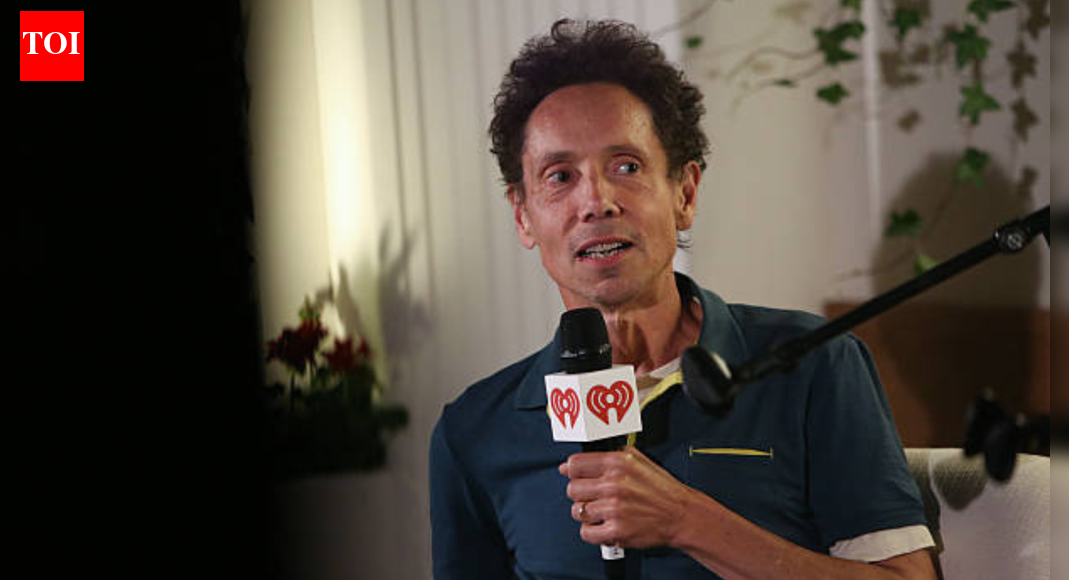
Malcolm Gladwell’s warning explained (Image credit: Getty)

For years, science students have been taught a simple equation: the harder the institute is to enter, the brighter the future that awaits outside. The assumption runs so deep that questioning it can feel almost heretical. But Malcolm Gladwell — a Canadian journalist, author, and public speaker — has never been particularly interested in reassuring ambition. He is more interested in examining what ambition does to people when it collides with reality.That is why his latest warning — blunt, uncomfortable, and aimed squarely at elite universities — has struck a nerve.“If you’re interested in succeeding in an educational institution, you never want to be in the bottom half of your class. It’s too hard,” Malcolm Gladwell told in a recent episode of the Hasan Minhaj Doesn’t Know podcast, according to a Fortune report. “So you should go to Harvard if you think you can be in the top quarter of your class at Harvard. That’s fine. But don’t go there if you’re going to be at the bottom of class. Doing STEM? You’re just gonna drop out,” he added.He also advised students to consider their second or third choice institutions instead. These, according to him, are places where young aspirants are more likely to perform at the top rather than struggle at the margins.What makes the remark sharper is that it is not new. Gladwell has been making the same case for years: STEM persistence is shaped as much by where you stand in the room as by how smart you are.“If you want to get a science and math degree, don’t go to Harvard,” Gladwell said in a Google Zeitgeist talk in 2019 also, Fortune reports. “Persistence in science and math is not simply a function of your cognitive ability,” . “It’s a function of your relative standing in your class. It’s a function of your class rank,” he added.It is a line that sounds provocative, almost reckless. But Gladwell is not attacking Harvard University. He is questioning something far more foundational: Whether prestige-heavy academic environments help most science students persist long enough to succeed.

Why Gladwell keeps sounding the same alarm: The ‘big fish, small pond’ problem

Malcolm Gladwell’s argument has always been about psychology, about what happens inside students long before grades translate into careers. When he warns science students against placing themselves at the bottom of elite classrooms, he is not making a comment on intelligence or effort. He is describing a behavioural pattern he believes quietly determines who persists and who gives up. In highly competitive academic environments, Gladwell suggests, students do not measure themselves against global standards or long-term potential. They measure themselves against the peers they see every day. And that comparison, repeated over semesters, begins to shape identity.His contention is straightforward: When capable students constantly experience themselves as “below average” within an elite cohort, the psychological cost becomes cumulative. Struggle starts to feel like inadequacy. Temporary difficulty begins to look like permanent unsuitability — especially in STEM, where early coursework is rigid and unforgiving.That idea was formally laid out earlier in his 2013 book, David and Goliath, drawing on what researchers call “relative deprivation” and the Big-Fish–Little-Pond Effect. Gladwell argued that people derive confidence, motivation, and persistence not from being objectively exceptional, but from feeling competent in their immediate environment. A student who is a big fish in a smaller or moderately competitive pond may develop stronger academic self-belief than an equally talented student who is a small fish in an elite one.Seen through this lens, Gladwell’s advice sounds less like provocation and more like consistency. The recent podcast comment, the 2019 talk and the 2013 book are variations of the same claim: Talent does not fail in isolation; it fails in contexts that quietly convince people they are failing. For science students, whose paths demand endurance more than early brilliance, the environment they choose can matter as much as the ability they bring with them.

‘Don’t go to Harvard’ can also be bad advice for some

Gladwell’s warning is useful — but only when read as a way to think, not as a rule to follow.For one, elite campuses can genuinely deliver. They offer deep research ecosystems, stronger lab access, higher funding density, and networks that can open doors early — sometimes before a student has even figured out what kind of scientist they want to become. And for some students, the intensity is not corrosive; it is catalytic. A high-achieving peer group can raise standards, sharpen discipline, and make excellence feel normal rather than exceptional.Then there is the age problem. The “top quarter” test sounds decisive, but at 17, it is often guesswork. Many students misjudge fit in both directions. Some arrive convinced they will dominate and discover, quickly, that everyone was a topper somewhere. Others arrive feeling underqualified and surprise themselves — not because they were secretly brilliant, but because they found the right supports, mentors, and rhythm.So the best way to interpret Gladwell is as a stress-test, not a prophecy:

  • If your plan depends on never being average, it is a fragile plan.
  • If your self-worth collapses after the first B-minus, STEM will start to feel personally humiliating.
  • And if you want a science career in 2026, you need an environment that still lets you keep building — skills, confidence, work habits — even when you are not the smartest person in the room.

Reading Gladwell right: A tricky act of balance for students

On paper, it can look like we are contradicting ourselves. We are saying elite universities can help, and also that they can harm. But that tension is the point. Gladwell is not offering a neat rule. He is pointing to a risk that is easy to ignore when we are dazzled by brand names.The context matters more now than it did even a few years ago. In 2025 and 2026, a STEM degree is no longer the finish line people imagine it to be. It is closer to an entry badge and what separates students is the proof they carry alongside it. The World Economic Forum’s Future of Jobs Report 2025 frames 2025–2030 as a churn cycle, where a large share of skills will change and adaptability becomes a workplace currency. The PwC 2025 Global AI Jobs Barometer adds a sharper twist: In AI-exposed roles, skills are changing faster, and employers are also easing away from degree requirements faster than before.So the modern science student is running two races at once. One is inside the classroom — grades, labs, curves, weed-out courses. The other is outside it — projects, internships, research exposure, tools, portfolio, AI fluency. The second race quietly depends on something we do not talk about enough: Mental bandwidth.This is where Gladwell’s warning begins to make sense without turning into dogma. If an elite environment consistently pushes a student into the bottom half, the danger is not only that they may switch out of STEM. It is that they may be too depleted to build the extra proof-of-work that today’s STEM hiring expects. In other words, the cost is not just academic. It is cumulative.But it is also true that elite campuses can deliver — sometimes spectacularly. The labs are deeper, the funding is denser, the networks travel farther. For many students, the peer environment is not crushing, rather, it is catalytic. They rise to the pace, and the pressure becomes productive.So the right way to read Gladwell is not as a ban on prestige. It is a question about fit and, more specifically, about pipelines. The real question for science students is no longer: Is this university famous? It is: Will I get early access to the kind of work that will make me employable?That usually means:

  • Research exposure, even if it starts small,
  • Lab access that is not reserved for a select few,
  • Faculty bandwidth and mentorship,
  • Internship pathways, and
  • A peer culture where struggle is treated as part of training, not as evidence you do not belong.

If prestige expands those opportunities, it can be worth it. If prestige shrinks a student’s confidence so early that they stop building, it can quietly backfire.In 2025–26, choosing a university is not merely choosing a pond. It is choosing a pipeline — one that lets a science student keep accumulating competence, visibility, and resilience, even on days when they are not the smartest person in the room.


Source link

Tripura student murder: Father of Anjel Chakma says Uttarakhand cops ‘refused to file FIR’ — watch video | India News


Tripura student murder: Father of Anjel Chakma says Uttarakhand cops 'refused to file FIR' — watch video

NEW DELHI: Father of Anjel Chakma, the Tripura student who died in a fatal racial attack in Dehradun, made serious allegations against the authorities saying that they refused to file an FIR after the assault dismissing it as “minor matter”.“They wanted to file an FIR, but they were refused, being told it was a minor matter… Only when we went there did they finally register the case,” Anjel’s father Tarun Prasad Chakma said.“Our children from the Northeast go to various places like Delhi, Mumbai, Bengaluru to work or study, they should not be treated so adversely. We are all Indians as well. I request the government to ensure equal treatment to all,” he added.Anjel was assaulted on December 9 in Dehradun’s Selaqui area while he was purchasing groceries with his younger brother.Tarun recalled meeting his children after the attack in the hospital. “I saw my child in a critical condition; his left arm and leg were paralysed because he had been stabbed twice in the back. Blood was gushing from his head,” he said.He said that the case was registered only when he reached Dehradun. “I went to the police to report the incident, and they reviewed the CCTV footage from the scene. It showed that three people on a motorcycle approached my younger son, spoke to him briefly, and then started making comments,” he said.According to a police complaint, Anjel and his brother Michael Chakma (21) were stopped by a group of six men who allegedly abused them with racial slurs, including “Chinki,” “Chinese,” and “Momo.”The case was registered on December 12, based on Michael Chakma’s complaint, under provisions of the Bharatiya Nyaya Sanhita relating to voluntarily causing hurt, the use of dangerous weapons, and criminal intimidation. On December 14, after doctors assessed the gravity of the injuries, police invoked additional charges of attempted murder and criminal conspiracy.Five of the six accused, including two juveniles, were arrested on December 14, while the prime accused, Yagya Awasthi, remains at large. Police said Awasthi is believed to have fled to Nepal. Officials said a police team has been dispatched to Nepal to track down the prime accused.


Source link

World champion at 7 in her first international event; ‘nervous’ while meeting PM Modi: How Pragnika Lakshmi became a chess prodigy | Chess News


World champion at 7 in her first international event; 'nervous' while meeting PM Modi: How Pragnika Lakshmi became a chess prodigy
Pragnika Vaka Lakshmi (Special arrangements)

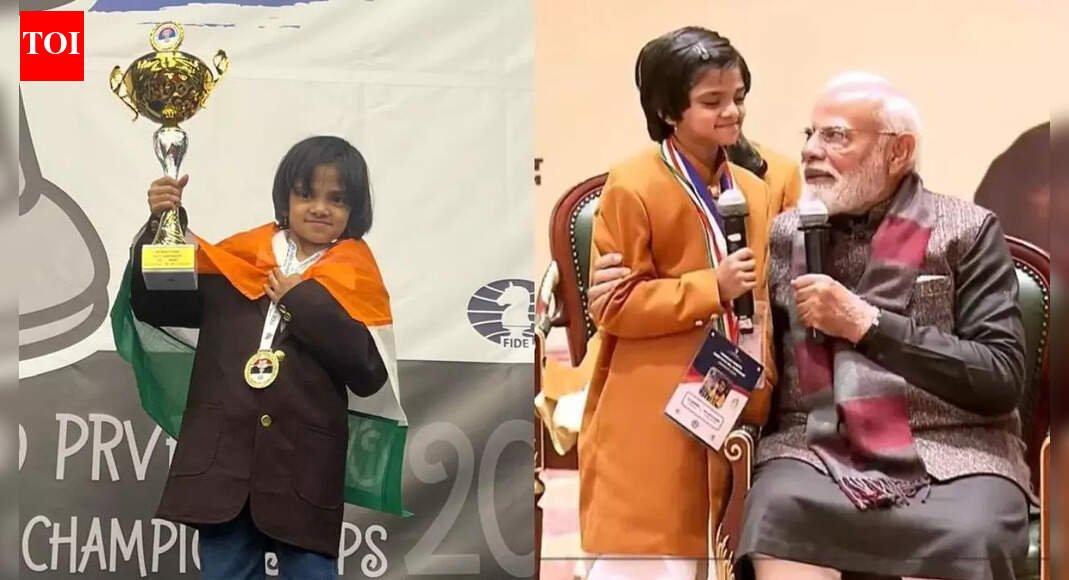
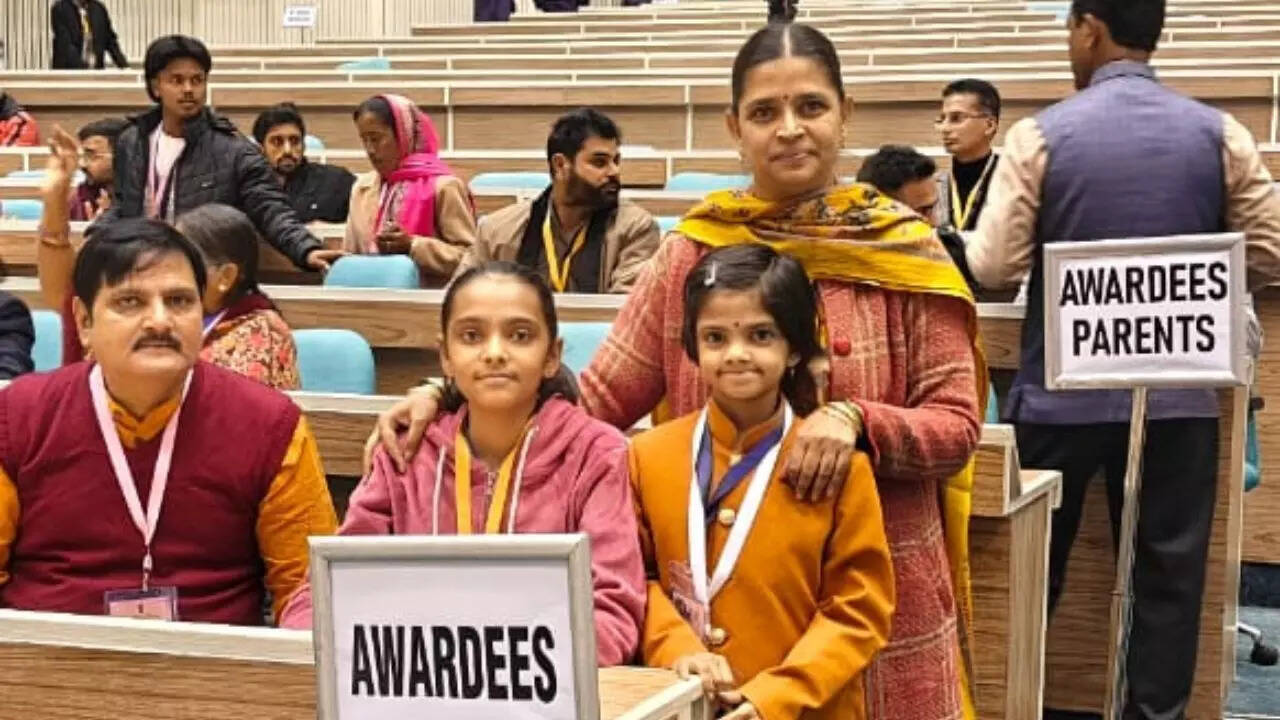
NEW DELHI: “Main World School Chess mein champion bani aur India k liye gold laayi (I became champion at the World School Chess and brought a gold medal for India),” seven-year-old Pragnika Vaka Lakshmi told Prime Minister Narendra Modi, her Telugu-accented Hindi filling the room with palpable innocence.“I want to become the best chess player when I grow up,” she added moments later when enquired about her future plans, making PM Modi smile as he interacted with the recipients of the Pradhan Mantri Rashtriya Bal Puraskar 2025 on Friday.

Levon Aronian opens up on Goa, FIDE World Cup 2025, Total Chess C’ship, and more | Exclusive

For Pragnika, who won the Under-7 Girls title at the FIDE World Schools Chess Championship 2025 in Serbia earlier this year, meeting the Prime Minister was something far from normal. But was the little one aware of the occasion?“She was a little bit nervous while interacting with Modi sir,” her mother Praveena told TimesofIndia.com from Guwahati, where the young prodigy is competing in the Under-9 National Chess Tournament. “She just knew that she was meeting the President and the Prime Minister. She doesn’t understand how big this achievement is for her or for us as a family.”

Pragnika Vaka Lakshmi receives Pradhan Mantri Rashtriya Bal Puraskar 2025 (Special arrangements)

Pragnika Vaka Lakshmi receives Pradhan Mantri Rashtriya Bal Puraskar 2025 (Special arrangements)

India is living through a golden chess era.From Olympiad golds, Gukesh becoming the youngest World Chess Champion, and Koneru Humpy winning the 2024 Women’s World Rapid title to Divya Deshmukh emerging as the youngest-ever Women’s World Cup champion, accolades have poured in, with Pragnika carving her name into the list.But winning a world championship in her very first international tournament? That wasn’t even on Pragnika’s bucket list.“We didn’t even think about winning,” Praveena admitted. “We just wanted to see how she would play internationally.”What followed was a nine-round tournament that changed the trajectory of a family.First movesPragnika’s chess journey began inside a home in Surat when parents were simply trying to keep two young daughters occupied.“Her elder sister Varenya started chess during COVID,” Praveena recalled. “We thought some indoor game should be there. She started online classes.”Varenya, now 11, showed promise and soon became a state-level player.

Pragnika Vaka Lakshmi with her family (Special arrangements)

Pragnika Vaka Lakshmi with her family (Special arrangements)

Pragnika started as a watchful observer of her sister’s play. “We were just observing whether she was interested,” Praveena added. “She would sit with her sister and watch.”Before chess entered their lives, both girls were competitive skaters. But time, safety concerns during the pandemic, and growing promise in chess slowly tilted the balance.“For skating, you have to go out,” Praveena explained. “That time was dangerous for kids. So we dropped skating and continued chess.”Formal chess classes for Pragnika under coach Vicky Chauhan began shortly after her fifth birthday. “Within three or four months, she became champion at the state level,” her mother revealed. “At that time, she was only six.”What stood out most to her mother was Pragnika’s temperament.“She is very courageous,” she added. “My elder daughter is sensitive. Pragnika is rough and tough. Nervousness is the main thing in chess. When you feel free, your mind works. My younger one is very daring.”ALSO READ: How a housewife’s trick to make dinner prepped a record-breaking 8-year-old in PunjabA day in the life of a seven-year-old world championDespite the titles, Pragnika’s daily routine remains grounded. “She goes to school daily,” Praveena said. “After coming home, she practices.”She trains three to four times a week, always offline.“For Pragnika, offline coaching is better,” her mother explained. “Online, the eye contact is missing. She takes 10 to 15 minutes to settle. But now she can play a full three-hour game.“When the coach is in front of her, he talks to her, jokes with her, plays with her. That comfort is important. Otherwise, children take advantage.”At school, chess has transformed her identity.“Her name comes in school magazines,” Praveena said. “They see her as a celebrity. That motivates her.”Andhra rootsOriginally from Andhra Pradesh, the family is settled in Gujarat. Praveena, an IT professional, recently returned to work from home after resigning to support her daughters.“My husband supports me fully,” she added. “That is the main thing.”Even amid the wave of success, she doesn’t shy away from admitting the sacrifices.“Chess is expensive,” Praveena added. “It is mostly travelling. One international tournament costs around Rs 4 lakh. With that money, we can play 10 tournaments in India.”Coaching costs present another major challenge.“If you want to train with a FIDE Master or International Master, it becomes very expensive; often over Rs 2,000 per hour,” her mother explained.To the family’s relief, though, Pragnika and her sister receive a Rs 30,000 to 35,000 scholarship each from the Sports Authority of Gujarat, which eases the burden slightly.

Pragnika Vaka Lakshmi with her sister (Special arrangements)

Pragnika Vaka Lakshmi with her sister (Special arrangements)

Their results speak volumes about their talent: between the two sisters, they’ve already won over 230 trophies.The future star?Despite the early success, the family is careful not to over-plan.“I don’t know about the future,” Praveena said candidly, adding “What we have got so far is extra.”They plan to observe Pragnika’s growth and interest over the next two years, possibly exploring Asian-level tournaments in 2026.“If she is interested, we will move forward,” Praveena explained. “If not, we won’t stop her from choosing something else.”For now, Pragnika is simply a seven-year-old who loves the game, who still gets nervous not when she is asked to face opponents over the board, but when meeting the Prime Minister, and who dreams in simple sentences and, of course, eats all her vegetables like a good girl, with ladyfinger being her favourite.


Source link

Stefon Diggs scans the stands searching for Cardi B after New England Patriots’ big 42-10 win over New York Jets | NFL News


Stefon Diggs scans the stands searching for Cardi B after New England Patriots’ big 42-10 win over New York Jets
(Image via X: Stefon Diggs and Cardi B

The New England Patriots had just crushed the New York Jets by an unbelievable score of 42-10! How does their star wide receiver celebrate? He runs to the NFL stands looking for his partner for life. “Where she at?” Stefon Diggs asked the person holding a smartphone with Cardi B on it. “She’s walking to the field,” the person replied. Diggs addressed Cardi on a video call, “Where you at?” The Grammy-winning rapper replied, “I’m coming down. Wait for me.” The standout wideout asked, “Y’all about to leave the game?” The person replied, “No! She went inside to get warm!” This “cuteness overloaded” gesture, full of love and innocence, received mixed reactions online, ranging from unwanted criticism to unfaltering warmth. Let’s check them out.

After reportedly spending Christmas away, Stefon Diggs couldn’t take his eyes off Cardi B even for a second after Patriots vs Jets game

The Patriots vs. Jets game on Sunday took place after Christmas. Diggs and Belcalis Marlenis Almánzar reportedly spent the holiday apart. The 32-year-old former Buffalo Bills star celebrated with his family in Maryland, while the “Bodak Yellow” singer celebrated with her kids, Kulture Kiari Cephus, Wave Set Cephus, Blossom Belles, and her newborn baby boy with NFL boyfriend Stefon Diggs, reportedly at her home in New York City. Since they were apart for the holiday, it was only natural to miss each other when they met again. Stefon had even expressed how much he missed the “Am I the Drama?” creator on Instagram: “Miss yaw!!! Don’t be squeezing him too tight you making him soft.” So, when New England triumphed over New York, Diggs rushed to the stands innocently looking for his girlfriend. He did not want to take his eyes off her.

All for the internet

This cute moment quickly became a cyberspace sensation, sparking reactions from around the globe. “She cheat on her man with you but think she won’t cheat on you?” one user speculated. A fan pointed out, “This is cute but we haven’t forgotten that you chose to spent Christmas with the other baby mama not her 😭😭.” Another wrote, “They did this for the internet 😂.” A third user commented, “All for the internet 🤦🏾‍♂️ yall really buying this fake pretend [—-] love fairytale😂😂 loved her so much he had 2 more kids behind her back.” A fourth user expressed, “He don’t love her he loves the attention he getting an so does she 🫩.” A user compared the 33-year-old American rapper with Kansas City Chiefs star tight end Travis Kelce’s beau Taylor Swift: “She’s so annoying but we’ll take her over Taylor Swift lmaoo.” Another added, “Cardi NFL > Taylor NFL.” A third fan wrote, “NFL about to lose Taylor Swift with Kelce’s retirement so they’re looking for a replacement.”

People wish they had Stefon Diggs-Cardi B kind of a relationship

A user said, “Love don’t cost a thing ❤️❤️❤️❤️❤️❤️❤️❤️.” Another added, “He loves her.” A third wrote, “I actually love this relationship.” A fourth fan found it cute, “Awwww yall was about leave me? 😭😭.” A fifth expressed, “Man walked off that field like he had somewhere way more important to be. Stefon didn’t even fake the celebration route.” One fan summed it up, “People wish they had this kinda relationship.”Also Read: Stefon Diggs reportedly posts his son’s photo on Instagram with special instructions for partner Cardi B


Source link

‘Log dar gaye hain yahan aane se’: Bareilly cafe owner says business hit after mob disrupts student’s birthday party in Bareilly | Bareilly News


'No one is coming to my cafe, people are afraid': Bareilly cafe owner says business hit after mob disrupts student’s birthday party

BAREILLY: Shailendra Gangwar, the owner of Bareilly Cafe in Uttar Pradesh, says his business has virtually come to a halt after a group of right-wing activists allegedly barged into a private birthday celebration at his establishment, assaulted guests and raised slogans accusing those present of “love jihad”.“Since that incident, I have had no business. People are afraid to come to my cafe,” Gangwar told TOI, adding that the disruption has left him facing financial losses and reputational damage.

‘Love Jihad Claim False’: UP Woman Speaks Out After Bajrang Dal Crashes Birthday

The incident took place on Saturday evening when a 20-year-old first-year nursing student was celebrating her birthday at the cafe with a small group of friends. According to police and victim accounts, around 25 men, including a self-proclaimed cow vigilante, entered the cafe without permission, objected to the presence of two Muslim students at the gathering and began attacking some of the male guests.Videos widely shared on social media show men assaulting those present inside the cafe, while slogans are heard in the background. One of the guests sustained fractures during the attack, the student said.“The allegations of ‘love jihad’ are completely baseless,” the nursing student, who is from neighbouring Budaun district and stays in a hostel in Bareilly, said. “They gate-crashed our private party and started beating my friends.”Initially, police fined the two Muslim students and a cafe staff member for alleged “breach of peace”, drawing criticism online. Following public outrage on social media, the police registered a case against those accused of carrying out the assault.Bareilly city superintendent of police Manush Pareek said officers had identified several individuals seen attacking people inside the cafe. An FIR has been registered under multiple sections of the Bharatiya Nyaya Sanhita, including house trespass, voluntarily causing hurt, criminal intimidation and rioting.


Source link

Industrial production at two-year high! IIP records 6.7% growth in November; fueled by mining, manufacturing sectors


Industrial production at two-year high! IIP records 6.7% growth in November; fueled by mining, manufacturing sectors

The country’s industrial output reached a two-year highk, growing by 6.7 per cent in November, according to the official Index of Industrial Production (IIP) data released Monday.This marks an improvement from the 5 per cent growth recorded in November last year, according to data released by the National Statistics Office (NSO). The surge was largely because of strong performances in mining and manufacturing sectors. “The growth is led by Manufacture of basic metals and fabricated metal products, pharmaceuticals and motor vehicles,” stated the ogvernment press release.The manufacturing sector led the growth surge, expanding by 8 per cent, up from 5.5 per cent in the same month last year. Mining also recorded huge gains, rising by 5.4 per cent compared to 1.9 per cent a year ago.However, not all sectors showed growth. The electricity sector faced challenges, with production dropping by 1.5 per cent, as compared to the 4.4 per cent growth seen in the same period last year.Looking at the broader picture, the NSO also revised October industrial production growth slightly upward to 0.5 per cent from the earlier estimate of 0.4 per cent. The current growth rate is still below the 11.9 per cent peak of November 2023.The overall industrial growth for April-November has slowed down. The growth rate stands at 3.3 per cent, slightly lower than the 4.1 per cent recorded in the same period last year.


Source link