Breaking News
Tesla’s former AI Director Andrej Karpathy sends ‘Open Letter’ to software engineers: I never felt this much behind as a programmer, profession is…


Tesla’s ex-AI chief, Andrej Karpathy, warns software engineers face a seismic shift as AI reshapes coding. He admits feeling behind, highlighting a new ‘programmable layer’ of AI tools. While some studies show mixed productivity gains, industry leaders like Google and Anthropic remain optimistic about AI’s role in development.

Andrej Karpathy, Tesla’s former AI director and OpenAI cofounder, has issued what amounts to an open letter to the entire software engineering profession, warning that developers face an unprecedented challenge as AI fundamentally reshapes how code gets written. In a post on X that has sparked widespread debate, Karpathy confessed: “I’ve never felt this much behind as a programmer. The profession is being dramatically refactored as the bits contributed by the programmer are increasingly sparse and between.”The candid admission from one of AI’s most influential figures highlights the seismic shift happening in software development. Karpathy, who led AI development at Tesla for five years and helped steer the company’s Autopilot effort, described feeling inadequate despite his expertise. “I have a sense that I could be 10X more powerful if I just properly string together what has become available over the last ~year and a failure to claim the boost feels decidedly like skill issue,” he wrote.His post outlines a new reality where programmers must master what he calls a “new programmable layer of abstraction” involving agents, subagents, prompts, contexts, memory modes, MCP protocols, and IDE integrations. The challenge, Karpathy explains, is building a mental model for “fundamentally stochastic, fallible, unintelligible and changing entities suddenly intermingled with what used to be good old fashioned engineering.

AI coding tools rewriting developer workflows, industry leaders say

The evolution Karpathy describes represents a dramatic departure from the “vibe coding” approach he famously coined in February 2025. Back then, he described casually asking AI to make changes while barely reading code diffs, accepting all suggestions, and working around bugs rather than fixing them properly. “It’s not too bad for throwaway weekend projects, but still quite amusing,” he wrote at the time.Now, even Karpathy acknowledges the limitations. When building his recent project Nanochat, he admitted it was “basically entirely hand-written” because AI agents “just didn’t work well enough at all and net unhelpful.” The admission underscores the gap between AI coding hype and reality, even as the technology rapidly improves.Boris Cherny, creator of Anthropic’s Claude Code, responded to Karpathy’s post by sharing his own revelation: “The last month was my first month as an engineer that I didn’t open an IDE at all. Opus 4.5 wrote around 200 PRs, every single line.” Cherny described how newer developers without “legacy memories” of older models often use AI more effectively than veterans, requiring “significant mental work to re-adjust to what the model can do every month or two.

Productivity gains remain uncertain as AI models improve

Despite the rapid advancement, research suggests AI coding tools don’t always boost productivity. A METR study from July found that AI assistants decreased experienced developers’ productivity by 19%, though participants expected a 20% boost. Management consultants Bain & Company reported that programming showed “unremarkable” savings despite being “one of the first areas to deploy generative AI.”Yet industry leaders remain optimistic. Google CEO Sundar Pichai said in November that vibe coding is making software development “so much more enjoyable” and “exciting again,” with AI now writing over 30% of new code at Google. Anthropic CEO Dario Amodei claimed in October that Claude was writing 90% of the company’s code.Karpathy concluded his post with an urgent call to action: “Clearly some powerful alien tool was handed around except it comes with no manual and everyone has to figure out how to hold it and operate it, while the resulting magnitude 9 earthquake is rocking the profession. Roll up your sleeves to not fall behind.”


Source link

Thailand–Cambodia clashes: Indian tourists scout safer New Year destinations; top picks


Thailand–Cambodia clashes: Indian tourists scout safer New Year destinations; top picks

Indians are making changes to their travel patterns for the New Year, travelling to destinations beyond Thailand and Cambodia to regions like Vietnam, Indonesia, Sri Lanka, Japan and parts of West Asia, travel industry executives said. The transition comes after the two south Asian nations have been at continued border violence. The clashes, which continued for nearly three weeks before a ceasefire came into effect from Saturday, reportedly left more than 100 people dead. The developments have dented demand for Thailand, a long-standing favourite for Indian festive travel, and Cambodia, which has increasingly featured as a cultural extension to Southeast Asian itineraries. According to Ravi Gosain, president of the Indian Association of Tour Operators, the impact on Thailand has been visible but contained. “For Thailand, enquiries have softened by around 10-20%, with fresh bookings down in the range of 8–15%,” he told ET. While some travellers have postponed or altered plans, outright cancellations have remained limited at 3–8%, as many opted to reroute trips within the country. Cambodia has faced a stronger reaction. Gosain said enquiries are down 20–35% year-on-year, with cancellations in the range of 8–18%. He added that Indian travellers began revisiting their travel plans within 48–72 hours of the clashes breaking out, followed by another round of adjustments closer to departure dates. Different traveller segments have responded differently to the situation. Families, first-time international travellers and high-spending leisure customers have been more cautious, Gosain said, while younger group travellers and honeymooners have shown greater flexibility. “Safety perception, visa ease, flight availability and overall value are the key decision drivers,” he said. Despite the softer demand, spending levels for Thailand during the year-end period remain unchanged, with mid-market travellers typically spending Rs 1.1–1.8 lakh per person and premium travellers spending between Rs 2.5 lakh and Rs 4 lakh, ET reported. Rajiv Mehra, general secretary of the Federation of Associations in Indian Tourism and Hospitality, said Thailand has lost some momentum. “The aggressive demand witnessed earlier is missing now—about 5-10% lower demand,” he said. Cambodia, too, has seen reduced traction, though Mehra described it as more of a spiritual destination than a leisure-oriented one. At the same time, he noted that Vietnam, Sri Lanka and Malaysia are attracting interest with competitive pricing. Travel companies say the situation has led more to recalibration than disruption. Jatinder Paul Singh, chief executive and co-founder of Viacation, said booking behaviour reflects caution rather than withdrawal. “Enquiries have remained largely steady, with some travellers taking extra time to decide,” he said, adding that cancellations have been limited, with most customers preferring date changes or alternate destinations. Rising airfares are also shaping travel choices. Hari Ganapathy, co-founder of Pickyourtrail, said airline capacity constraints have pushed flight costs higher, leading travellers to focus more on affordability. “Flights remain the most variable cost, while on-ground pricing has moved only 5–7%,” he said. This has resulted in higher demand for short-haul destinations offering visa-on-arrival and shorter travel times, such as Malaysia, Singapore and Sri Lanka. Ganapathy also pointed to longer-term changes in travel behaviour. Paid activities per itinerary have increased by nearly 30% over the past two years, with a further 13% rise this year. He said around 65–70% of itineraries now include at least one customised experience, indicating a shift away from nightlife-centric holidays towards more personalised travel. Booking data from EaseMyTrip highlights this transition. A company spokesperson told ET that Vietnam has emerged as a major beneficiary, with Indian traveller traffic estimated to rise by about 125% in 2025. Sri Lanka, meanwhile, has seen at least a fivefold increase compared with last winter. “The focus has shifted from promoting large-scale, nightlife-led New Year celebrations to curating experience-driven and restorative travel options that better align with evolving traveller preferences,” the spokesperson said. “To retain interest and drive conversions, travel companies are also curating end-to-end experiences, such as bundling stays with activities like culinary workshops, local village dinners, heritage walks, farm tours, and personalised wellness programmes. Within India, destinations such as Goa, Kerala and the Andaman Islands continue to draw festive-season demand, offering alternatives for travellers opting to stay closer to home amid changing overseas plans.


Source link

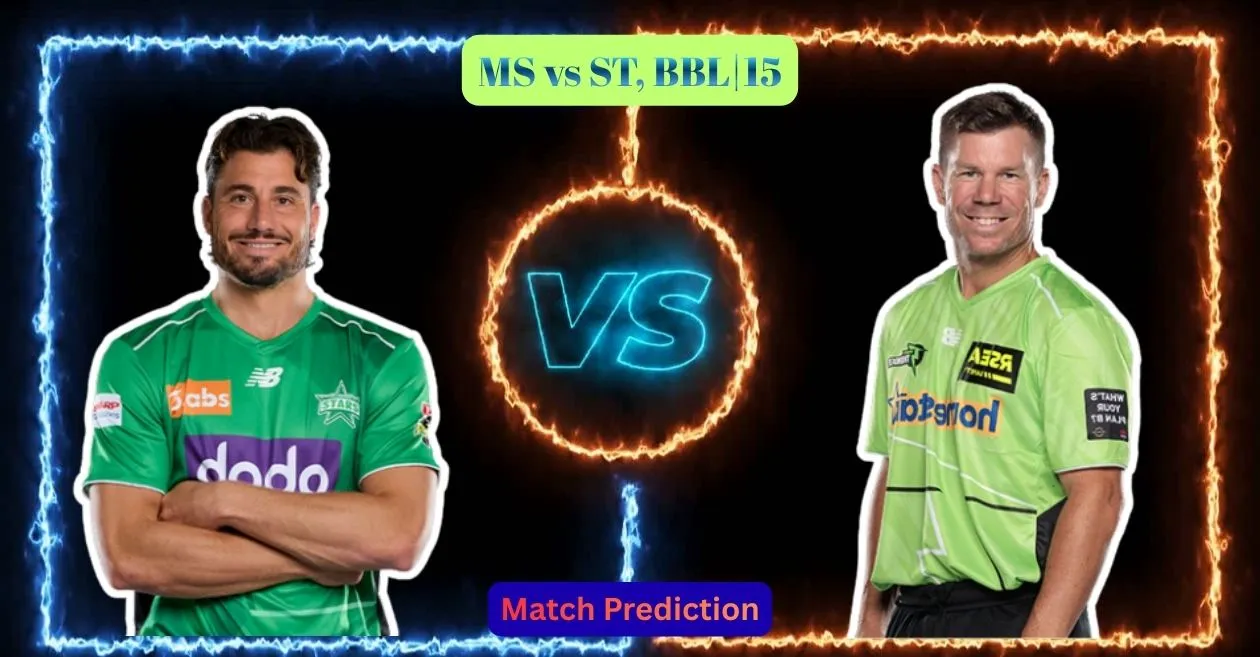
MS vs ST, BBL|15, Match Prediction: Who will win today’s game between Melbourne Stars and Sydney Thunder?


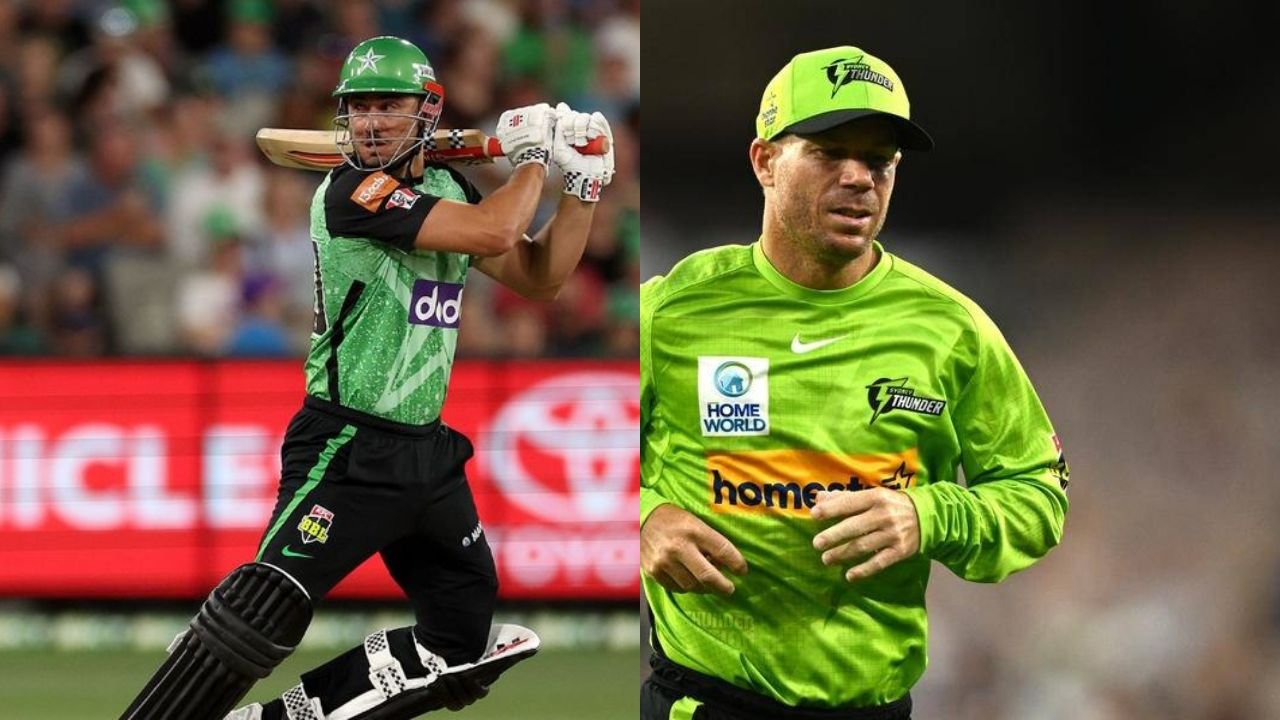
Melbourne Stars aim to extend their unbeaten run in the Big Bash League 2025-26 when they face Sydney Thunder in the 14th match at Manuka Oval, Canberra, on Sunday. Stars top the points table with three wins from three games and a strong net run rate of +1.383, while Thunder sit fifth with one win and two losses from three outings.

Melbourne Stars have won all three matches so far, including a recent six-wicket victory over Adelaide Strikers and a thumping win against Sydney Sixers, with Sam Harper scoring a century in the latter. Sydney Thunder struggled with batting in losses to Hobart Hurricanes and Brisbane Heat but showed promise from Shadab Khan and bowlers like Reece Topley and Nathan McAndrew.

MS vs ST, BBL|15: Match details

  • Date and Time: December 28 (Sunday); 1:45 pm IST / 8:15 am GMT / 7:15 pm Local
  • Venue: Manuka Oval, Canberra

MS vs ST, Head-to-Head Record in BBL

Matches played: 22 | Melbourne Stars won: 10 | Sydney Thunder won: 12 | No result/Tied: 0

Manuka Oval Pitch Report

Manuka Oval in Canberra delivers a batters-friendly surface with true bounce and good carry, ideal for strokeplay in Big Bash League encounters. The pitch typically supports high-scoring games, with first innings averages around 149 runs across 21 T20s, though it slows slightly under lights, aiding spinners in the latter stages. Chasing teams hold a slight edge (9 wins vs 9 batting first, with ties), making toss decisions pivotal – captains often opt to bat first. Expect quick outfield and short boundaries to favour aggressive batting, but pacers like Rauf and Topley can exploit early movement.

Squads:

Melbourne Stars: Thomas Fraser Rogers, Joe Clarke, Sam Harper (wk), Marcus Stoinis (c), Glenn Maxwell, Hilton Cartwright, Tom Curran, Liam Hatcher, Haris Rauf, Peter Siddle, Mitchell Swepson, Aryan Sharma, Jonathan Merlo, Campbell Kellaway

Sydney Thunder: Sam Konstas, Matthew Gilkes, David Warner (c), Cameron Bancroft, Sam Billings (wk), Shadab Khan, Daniel Sams, Chris Green, Nathan McAndrew, Tanveer Sangha, Reece Topley, Ryan Hadley, Blake Nikitaras, Aidan O Connor

Also READ: Sam Harper’s explosive ton powers Melbourne Stars to a dominant win over Sydney Sixers in BBL|15

MS vs ST, BBL|15: Today’s Match Prediction

Case 1:

  • Melbourne Stars wins the toss and bats first
  • Melbourne Stars’ powerplay score: 50-60
  • Melbourne Stars’ total score: 180-190

Case 2:

  • Sydney Thunder wins the toss and bats first
  • Sydney Thunder’s powerplay score: 40-50
  • Sydney Thunder’s total score: 160-170

Match result: Team batting first to win the contest.

Also WATCH: Tom Curran knocks over Jason Sangha’s stumps with an absolute ripper in BBL|15


Source link

Could a North Atlantic current really change Europe’s climate into an ice age |


Could a North Atlantic current really change Europe’s climate into an ice age

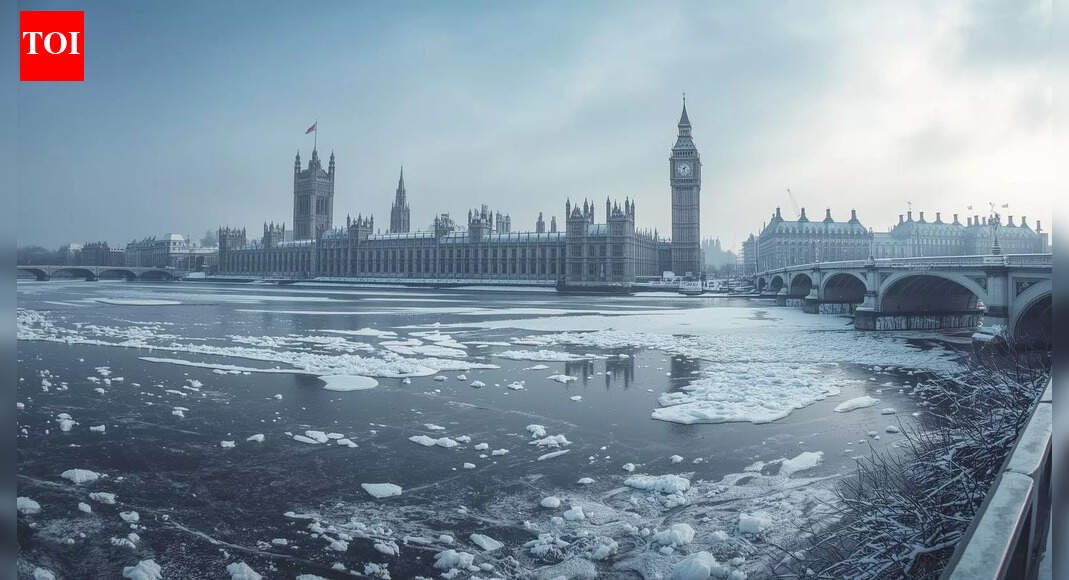
Something in the Atlantic is shifting, though it is not easy to see from the surface. There are no dramatic waves or sudden storms to mark it out. Instead, the change is slow and buried deep in the ocean, tracked quietly by scientists who watch how water moves rather than how it looks. Over time, those movements shape winters, coastlines, and the way entire regions feel from year to year. New research suggests one of these systems may be losing its balance. If that trend continues, Europe could face colder and less predictable conditions than it has known for generations. This is not a sudden disaster story. It is about gradual change, hidden signals, and a climate system that may be edging closer to a point where recovery becomes harder.

What is the North Atlantic Subpolar Gyre

The North Atlantic Subpolar Gyre is a large circular system of ocean currents that sits between Greenland, Iceland, and Canada. It plays a quiet role, pulling warmer water northwards and helping regulate temperatures across Europe and parts of North America.Without this steady movement, heat would stay closer to the equator. Northern regions would cool more sharply, especially during winter. Cities that now experience mild cold could begin to feel harsher seasonal extremes.Why scientists say the system is weakeningA study published in Science Advances points to a long term decline in the stability of the gyre. The research suggests this is not a short fluctuation but part of a deeper shift that has been unfolding for more than a century.The concern is not just slowing movement but loss of resilience. Once a system becomes unstable, it is more vulnerable to tipping into a different state.

How tiny shells revealed a big warning

The evidence did not come from satellites or modern instruments. Instead, scientists studied the shells of long lived marine molluscs buried beneath the seabed. Species like the ocean quahog grow slowly, forming annual layers that record chemical changes in the surrounding water.By analysing these layers, researchers reconstructed past ocean conditions going back hundreds of years. They identified two clear periods of instability. One occurred before the 1920s. The other began in the mid twentieth century and continues today.

Is this similar to the Little Ice Age

Europe has experienced major cooling before. During the early 1300s, average temperatures dropped slightly, yet the effects were severe. Rivers froze, harvests failed, and winters became longer and harsher.The current situation would not repeat that period exactly. The modern climate is warmer overall. Still, even small shifts in ocean circulation can amplify cold spells and disrupt rainfall patterns across large areas.

How this links to the larger AMOC system

Basically, the gyre is just a small part of a much larger process known as the Atlantic Meridional Overturning Circulation. Similar to a conveyor belt, the system carries warm water at the surface to the north and sends back cold water from the depths to the south.In fact, water that is melting the ice of Greenland is becoming new freshwater for the North Atlantic. This is changing the salt concentration of the ocean and making the surface water lighter, which disrupts the process of sinking that is what actually keeps the circulation going.

What could happen if the slowdown continues

If the circulation were weaker, winters in Europe would probably be colder, there would be stronger seasonal changes and the sea level would rise in some areas of the US coast. The weather might become more unpredictable; thus, farming, infrastructure, and water systems would be affected.A long term weakening of the circulation could have a significant impact on the climate in which people have been living even if the collapse did not occur completely.

Is there still time to avoid the worst outcomes

Researchers stress that the system has not fully tipped. But warning signs are accumulating. Reducing greenhouse gas emissions remains the most effective way to lower the risk of pushing the Atlantic into an irreversible state.The changes may be slow, but their consequences would not be subtle. Climate systems remember what happens to them. And once altered, they rarely return to what they were.


Source link

30–35 terrorists on radar: Army steps up counterterror ops in J&K; heightened vigilance amid ‘Chillai Kalan’ | India News


30–35 terrorists on radar: Army steps up counterterror ops in J&K; heightened vigilance amid 'Chillai Kalan'

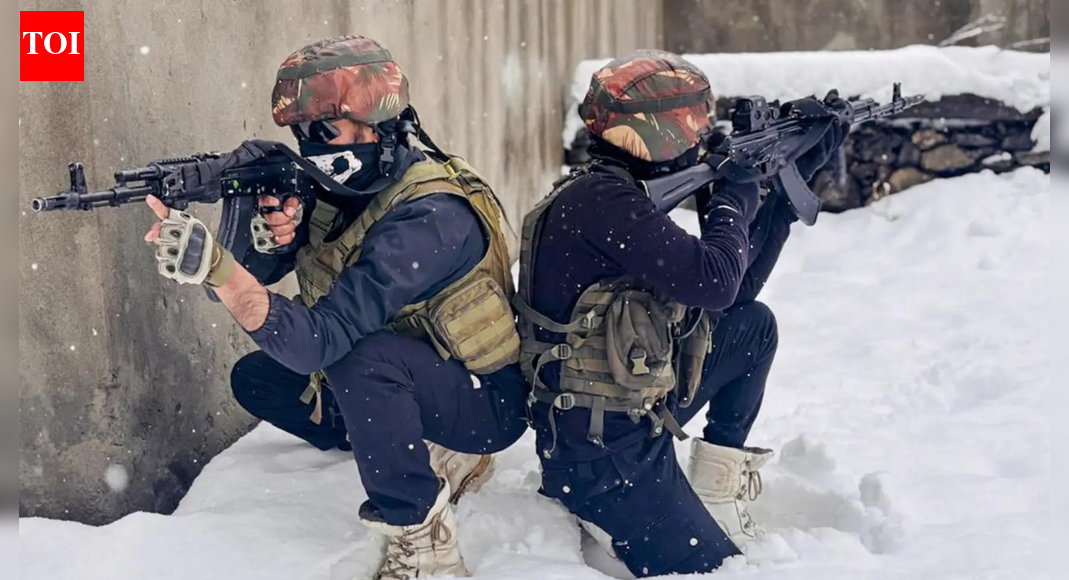
NEW DELHI: Amid the ongoing Chillai Kalan — the 40-day bone-chilling winter period — in Jammu and Kashmir, the Army has intensified its counter-terrorism operations across the Kishtwar and Doda districts.Army units have expanded their operational reach into higher and snowbound areas to pursue and neutralise Pakistani terrorists attempting to exploit the harsh season for concealment, news agency ANI reported, citing sources.

‘India Faces Two War Realities: Counter Terror Strikes And Long Conflicts’, Says CDS Anil Chauhan

According to sources, various intelligence agencies asses that there are approximately 30 to 35 Pakistani terrorists currently in the Jammu region. Inputs gathered over the past few months suggest that these groups, finding themselves cornered by successful counter-terror operations, have shifted deeper into higher and middle mountain reaches of the region — areas now devoid of habitation. These terrorists are believed to be seeking temporary winter hideouts to evade detection and avoid direct confrontation with security troops, they added.The sources said that the Army and security forces have adopted a proactive winter posture, establishing temporary bases and surveillance posts deep within snow-covered areas to maintain continuous pressure on potential terrorist hideouts.This year’s counter-terror strategy has been the integrated approach to operations. The Indian Army is leading a synchronised effort involving multiple security and law enforcement agencies, including the civil administration, the Jammu and Kashmir Police (JKP), the Central Reserve Police Force (CRPF), the Special Operations Group (SOG), Forest Guards, and Village Defence Guards (VDGs). This inter-agency cooperation ensures seamless intelligence sharing, resource optimisation, and sharper operational execution, sources said.ANI reported that intelligence from multiple agencies is carefully synthesised to draw precise situational pictures of terrorist movement and hideout patterns. Once intelligence is verified, coordinated joint operations are planned and launched, minimising overlaps and ensuring maximum impact with tactical precision. The synergy among ground units and intelligence frameworks has enhanced response time, enabling security forces to act the moment actionable information surfaces.According to the report, the terrorists, who are hiding in this region, are attempting to coerce or threaten local villagers for shelter and food supplies, though their support among locals and overground workers has sharply declined.Sources emphasised that this season’s winter operations are guided by a clear doctrinal approach: Surveillance to Swift Operations and then Back to Surveillance. The philosophy emphasises an unbroken cycle of monitoring, quick response, and sustained watchfulness, minimising the chances of terrorists regrouping. This methodical rhythm allows forces to keep pressure constant while conserving resources and adapting to environmental challenges, they added.This comes with the onset of Chillai Kalan, the harshest phase of Kashmir’s winter, spanning from December 21 to January 31. During this period, most activity in the mountains comes to a standstill.Meanwhile, the Indian Army has also deployed specially trained winter warfare sub-units across several key sectors. These troops, adept in high-altitude survival, snow navigation, avalanche response, and snow combat, have been instrumental in maintaining operational effectiveness during the winter surge.


Source link

When Indian football descended into chaos | Football News


When Indian football descended into chaos
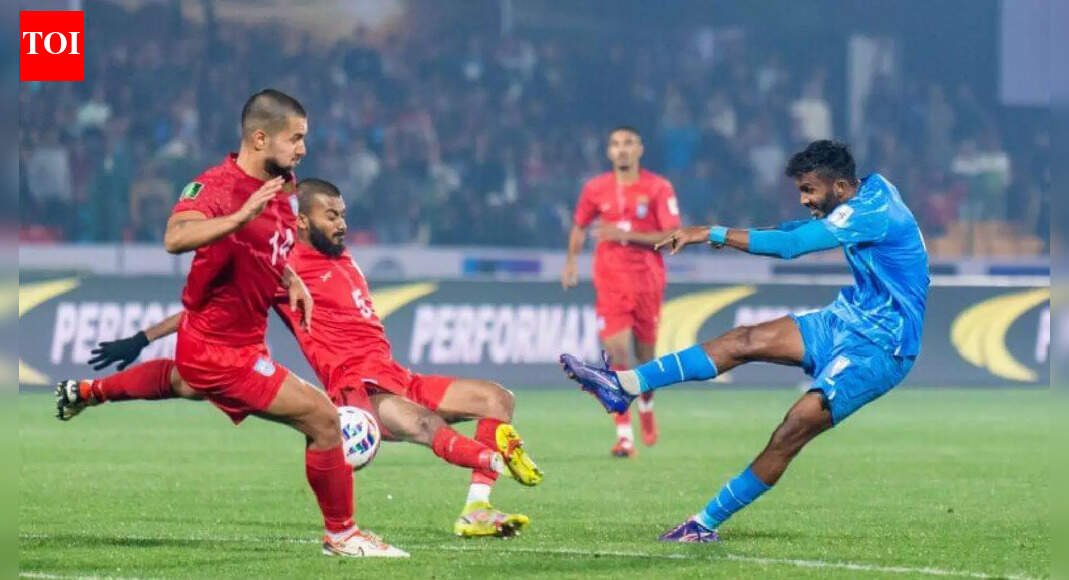
India vs. Bangladesh. (Image: Agencies)

This year, most scrambled to check the Google Maps to find Curacao when the smallest-ever nation, in terms of population and size, qualified for next year’s mammoth World Cup 2026. With 155,000 inhabitants, the Caribbean island was guided to the top tier by Dick Advocaat, the former Rangers and PSV boss who has also worked with eight national teams including his native Netherlands (1992-94). Sebastian Migne never set foot on Haiti, another Caribbean nation, because international flights do not land there. They played all their World Cup home qualifiers in Curacao, some 500 miles across the sea.

The Untold Football Journey of Ranjeet Bajaj That Will Ignite Your Inner Champion | MINERVA

These football stories are the brightest beacon of 2025. In contrast, the darkness around Indian football seems to have grown deeper, unfathomable, with no light at the end of the tunnel. Annus horribilis. The year gone by has seen All India Football Federation officials spend more time making rounds of the courts than the national team spent on the field. It might delight a research scholar to know that AIFF has presented itself to the Supreme Court 16 times and counting. The national team has played only 12 matches. None of it, though, will bring cheer to the fans. Never since Independence has Indian football slipped into such a deep abyss. For the first time since 1996, when the national league was begun by then-AIFF president Priya Ranjan Das Munshi, it has stalled. One can say with a heavy heart that the league is an orphan now. The sponsorship ran out. The new occupants of Football House, who took charge in 2022, were aware of the matter. But the negotiations just refused to yield any money, assurance, or hope. Since 2010, the AIFF received Rs 50 crore every year from Football Sports Development Limited (FSDL), a Reliance Industries subsidiary, as part of an agreement. The 15-year contract ran out on Dec 8. It was obvious to all, except those in Football House, that no one wants to waste money to keep Indian football – once called a sleeping giant by Sepp Blatter just over a decade and a half ago – alive and awake. Till reports last came in, the AIFF plans to start the elite league around Feb 7-8 after presenting a 20-year plan to the ISL clubs. In accordance with the constitution, the league will be owned and operated by the AIFF and will “implement the principles of promotion and relegation.” “I am convinced we can start the league and then work out a long-term solution,” said IFA secy Anirban Dutta, a member of the committee to resolve the ISL crisis. All year, the stakeholders went into hair-splitting debates and nuanced offerings but the outcome, sadly, has been zero. Even a few clubs had temporarily stopped paying salaries to the players. There has been a frustrating sense of ennui. Last heard, there was some warmth shown by the beleaguered clubs towards the AIFF’s proposals. The format for a truncated league is expected to be confirmed in the year’s final week. Add to it the dismal performance of the national team. Hours after India lost to Bangladesh in their last Asian Cup qualification engagement, Haiti’s ticket to the World Cup sent euphoric shock waves around the world. To watch India’s matches this year, under coaches Manolo Marquez and Khalid Jamil, was like visiting the dentist with a severe toothache. The Indian senior men’s team failed to qualify for the 2027 AFC Asian Cup, which means no competitive football until at least Nov 2027. That is nearly three years without meaningful matches. One wonders what will be Khalid Jamil’s work schedule now? One question keeps haunting, though. If Curacao are able to hire the services of a world-renowned coach like Advocaat, why could India, claimed to be the fourth-largest economy in the world, never reach beyond the Manolos and the Stimacs and the Koevermans? One can keep waiting for an answer but there will only be silence from the All India Football Federation. Following some creditable performances against Bahrain (2-0) and Brunei (6-0), U-23 coach Naushad Moosa got stuck in Doha. Not one to be easily perturbed, even by the sudden bombing of the Qatari capital, Moosa showered rousing praise on the boys. But his enthusiasm was laced with bleakness. “What’s next for the boys? They will go back to their clubs and warm the bench. They won’t be getting any minutes,” he had said in Sept. With the U-17s, Bibiano Fernandes also made headlines by helping the boys cross the Asian Cup qualification hurdles. Repeating himself, Moosa confirmed his apprehensions in Dec. “Nothing is happening. The players too are sadly cooling their heels.” And we couldn’t but recall the days not too long ago, when the AIFF had to put a cap of 45 matches on the national team players. One may point out that these are silver linings. If so, then why can’t Manolo or Jamil do without Sunil Chhetri, India’s weather-beaten warhorse who is past 40? The striker had to break his retirement vows and don the India shirt again, confirming that Indian football’s cupboard is starkly bare.The year 2025 will stay in memory as the lowest point in Indian football. PLUMBING THE DEPTHS LEAGUE UNCERTAINTY: It’s the end of December, half-time in most football seasons, a time when clubs redraw their strategies, depending on the progress they’ve made in the league. This year, nothing. Indian football has never seen anything like this. There’s no word on the top tier ISL or the I-League, because the AIFF has simply failed to find a commercial partner. Everything’s at a standstill: clubs have paused first team operations, players have stopped training and many foreigners plan to move elsewhere once the transfer window opens on Jan 1. One club has told players they will have to “forego salaries” for months and they’d be “happy to resume payments” only from the date of restart. CAMPS WITHOUT PLAYERS: National team camps often kicked off without half the players. Coach Khalid Jamil wanted more time with the boys, but clubs refused to release players outside the FIFA international windows. It was no different for U-23 assignments. The trust deficit between the two parties has grown so much that Mohun Bagan SG, who have the maximum players at national camps, even accused the federation of negligence over the handling of their captain Subhashish Bose. MONUMENTAL FAILURE: In the 15 months between May 2024 and August 2025, the national team had three coaches — Igor Stimac, Manolo Marquez, Khalid Jamil — none of whom could ensure that India makes it to the AFC Asian Cup, the country’s first failure since the tournament was expanded to accommodate 24 teams. In the final round of qualifiers, India were the highest-ranked side but finished at the bottom, unable to register a single win and in five matches, scoring just twice. The defeat to Bangladesh in Dhaka, the first in 22 years, rankled the most. THE BIG EXIT: The City Football Group’s exit from Mumbai City FC was probably the biggest reflection of the mess that is Indian football. CFG, the world’s leading private owner and operator of 13 clubs, including Manchester City, had joined hands with Mumbai City with much fanfare. Their decision to divest its shareholding in the club is a huge blow. The reason: “CFG made this decision following a comprehensive commercial review and in light of the ongoing uncertainty surrounding the future of the Indian Super League (ISL).BUT, A SILVER LINING: The women’s team provided joy in an otherwise grim state. The senior team defied the odds to defeat World Cuppers Thailand and qualify for the AFC Asian Cup. The U-17 and U-20 teams also left India with three continental competitions to play for in the opening months of 2026. At club level, East Bengal’s SAFF Club Championship triumph and a first group stage win in the AFC Women’s Champions League brought cheer.INDIA IN 2025UNDER MANOLO MARQUEZ

  • Mar 19: (Friendly, Shillong): India 3 Maldives 0 (Rahul Bheke, Liston Colaco, Sunil Chhetri)
  • Mar 25: (AFC Asian Cup Qualifier, Shillong): India 0 Bangladesh 0
  • June 4: (Friendly, Pathum Thani): Thailand 2 India 0
  • June 10: (AFC Asian Cup Q, Hong Kong): Hong Kong 1 India 0.

UNDER KHALID JAMIL

  • Aug 29: (CAFA Nations Cup, Hisor): India 2 Tajikistan 1. (Anwar Ali, Sandesh Jhingan)
  • Sept 1: (CAFA Nations Cup): Iran 3 India 0.
  • Sept 4: (CAFA Nations Cup): India 0 Afghanistan 0.
  • Sept 8: (CAFA Nations Cup): India 1 (3) Oman 1 (2) (Udanta Singh)

India won Bronze Medal at CAFA Nations Cup

  • Oct 9: (AFC Asian Cup Q, Singapore): Singapore 1 India 1 (Rahim Ali)
  • Oct 14: (AFC Asian Cup Q, Margao): India 1 Singapore 2 (Chhangte)
  • Nov 18: (AFC Asian Cup Q, Dhaka): Bangladesh 1 India 0

TOTAL MATCHES: 11India Won: 3India Lost: 5Drawn: 3Goals Scored: 8Goals Conceded: 12



Source link

Delhi air pollution: AQI hits 391, city back in ‘severe’ category; Mumbai’s Bandra records ‘moderate’ 123 | Delhi News


Delhi air pollution: AQI hits 391, city back in ‘severe’ category; Mumbai’s Bandra records 'moderate' 123

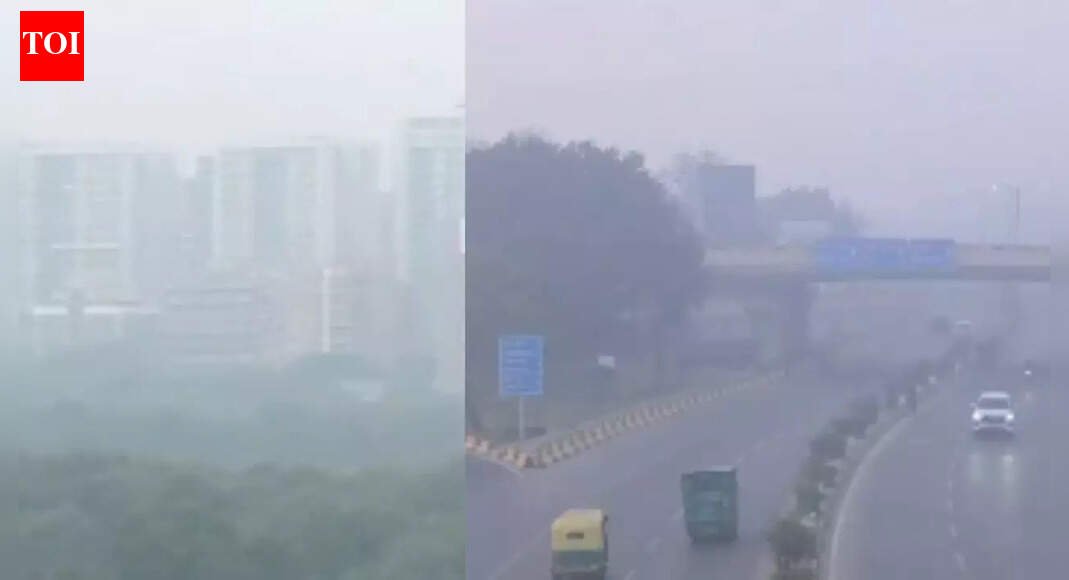
NEW DELHI: Delhi continued to struggle with toxic air on Sunday, with several areas recording ‘very poor’ and ‘severe’ air quality levels, as a dense layer of smog blanketed the city.The overall Air Quality Index (AQI) in Delhi on Sunday reached 391, entering the ‘severe’ category, with some regions exceeding 400, according to the Central Pollution Control Board (CPCB).Morning visuals from Akshardham Temple showed the iconic structure fading into a thick, dense layer of smog that drastically reduced visibility. The AQI (Air Quality Index) in the area stood at 445, placing it in the ‘severe’ category, according to the Central Pollution Control Board (CPCB). Around AIIMS, the AQI was measured at 340, categorised as ‘very poor’. Meanwhile, visuals from the ITO area showed the city shrouded in a thick blanket of smog, with hazy conditions reducing visibility. The AQI there had crossed 400, also falling under the ‘severe’ category.Meanwhile, in Mumbai, a light layer of fog enveloped the Bandra Kurla Complex, where the AQI was measured at 123, classified as ‘moderate’.Authorities have invoked Stage III measures under the Graded Response Action Plan (GRAP), which include restrictions on construction and industrial activities. The ‘No PUC, No Fuel’ rule is being enforced to curb emissions. Officials attributed the worsening conditions to a combination of cold weather, calm winds, and dense fog that trap pollutants close to the ground. Experts warn that the cycle of poor air quality is expected to continue under current weather patterns. The Commission for Air Quality Management has advised vulnerable groups, including children, the elderly, and people with respiratory issues, to limit prolonged outdoor exposure and wear masks.


Source link

‘People will die…’: Elon Musk slams Zohran Mamdani’s appointment of first openly gay FDNY commissioner | World News


Elon Musk has criticised New York City mayor-elect Zohran Mamdani over his decision to appoint Lillian Bonsignore as commissioner of the Fire Department of New York, warning that the choice could have serious consequences for public safety.Reacting to a news clip announcing the appointment, Musk wrote on social media, “People will die because of this. Proven experience matters when lives are at stake.” The clip highlighted that Bonsignore will become the FDNY’s first openly gay commissioner, a milestone that Mamdani has framed as part of his broader leadership vision.

Mamdani Distances Himself As NYC Official Quits In Disgrace Over ‘Indefensible’ Anti-Jew Posts

Musk’s criticism focused on the fact that Bonsignore, despite decades of service within the department, has never worked as a firefighter. His comments quickly spread online, intensifying debate over whether top leadership of the FDNY should come from a firefighting background or whether broader emergency management experience is sufficient.Bonsignore is a 31-year veteran of the FDNY who began their career as an emergency medical technician in 1991 and later rose through the ranks to become chief of the department’s emergency medical services. They oversaw EMS operations during the COVID-19 pandemic and retired in 2022. FDNY data shows that EMS units now respond to more than 70 per cent of the department’s emergency calls, a statistic supporters cite as evidence of their extensive operational and administrative experience.Mamdani has described the appointment as historic, noting both the symbolic and practical significance of elevating a long-serving EMS leader to the commissioner role. Supporters argue that the position is primarily managerial, with responsibility for strategy, budgets and coordination across the department, while frontline firefighting decisions are handled by senior uniformed officers with specialised expertise.Critics maintain that leading one of the world’s largest fire departments requires direct firefighting experience, particularly during major fires, large-scale disasters and complex rescue operations. Musk’s remarks have amplified those concerns and pushed the appointment into a wider national discussion about leadership standards, public safety and how political priorities shape senior emergency service roles in New York City.


Source link

MLS vs SYT Weather Report, Pitch Report Of Canberra- BBL 2025-26, Match 14


Melbourne Stars will go head-to-head against the Sydney Thunder in the fourteenth match of the Big Bash League. In this article, we determine the MLS vs SYT Weather Report and Pitch Report of Manuka Oval for the fourteenth game of the tournament.

MLS vs SYT Weather Report, Pitch Report Of Canberra- BBL 2025-26, Match 14:

MLS vs SYT Weather Report of Canberra:

There is no chance of rain during the MLS vs SYT game in Canberra. The maximum temperature is predicted to be 26°C, while the minimum temperature would be 8°C.

MLS vs SYT Pitch Report of Manuka Oval:

The pitch for the upcoming game between Melbourne Stars and Sydney Thunder, scheduled to be played at the Manuka Oval in Canberra, is expected to be a good one for a game of T20 cricket.

Your daily dose of cricket!

next

Meaning that it should have something in it for both batters and bowlers, which makes for an even contest between bat and ball, which isn’t the case too often in this format.

The batters will enjoy batting on the wicket after they negotiate the initial help for the bowlers that will be present when the ball is new, as it might swing a bit, posing a good challenge for them, especially in the powerplay.

As far as the bowlers are concerned, they will have to pick wickets early in the innings, as failing to do so may result in the batters dictating terms once they get set.

The pacers can use the assistance available in the wickets with the hard new ball by getting it to swing and pitching it fuller to induce an edge from the batter to get him out caught in the slips or by the keeper.

As far as the spinners are concerned they will be entrusted to control the flow of runs in the middle overs, but for that to happen, they will also rely on the fast bowlers to provide at least a couple of breakthroughs before they come to bowl.

The pacemen will also be banked upon to restrict the batters from freeing their arms at the backend of the innings.

If we talk about what an ideal decision for the team that wins the toss in the upcoming game should it should be to bowl first, as it has been the way to go in T20 cricket in the last few years.

A score of 180-190 is what the team that bats first in the MLS vs SYT game should look to post on the board and bank on their bowlers to pick early wickets for them in order to stay ahead in the contest.

Conclusion

Melbourne Stars would hope to keep up the good work that the team has done in the ongoing edition of the Big Bash League by registering another win in the tournament against the Sydney Thunder, having been unbeaten so far.

Sydney Thunder, on the other hand, would also aim to earn back-to-back wins having got the better of Brisbane Heat in their last match.


Source link

Chilean firms partner to form giant company to exploit lithium


Chilean firms partner to form giant company to exploit lithium

Chile’s state-owned Codelco, the world’s leading copper producer, and private miner SQM, which features Chinese capital, announced Saturday the creation of a giant company to exploit lithium, a lightweight metal used in batteries for electric vehicles.The South American country is the world’s second-largest producer of lithium, a key component of EVs and other clean technologies, and has about 40 percent of the world’s lithium reserves.The partnership between the firms will allow them to jointly ramp up the exploitation of lithium in the Atacama salt flat region of northern Chile. The public-private partnership will be called Nova Andino Litio SpA, said Codelco, which described the deal as “one of the most significant in the history of Chilean business.”The Chinese firm Tianqi holds a 22 percent stake in SQM.The new company “will carry out lithium exploration, extraction, production, and commercialization activities in the Atacama salt flat until 2060,” Codelco said in a statement. Chilean regulators authorized the alliance earlier in December.The agreement was approved by more than 20 national and international regulatory bodies, including in China, Brazil, Saudi Arabia, and the European Union. Chile was the last of the countries to clear the deal. Last month, China gave the green light to the planned partnership between Codelco and SQM.The partnership aims to restore Chile’s leadership in lithium production, a title it lost to Australia nearly a decade ago. The new company aims to increase production by about 300,000 tons per year in the Atacama salt flat. In 2022, Chile produced 243,100 tons of the so-called white gold. “This joint venture makes it possible to plan the development of the Atacama salt flat,” and for the benefit of global markets, said Ricardo Ramos, CEO of SQM, one of the world’s leading lithium producers. The partnership is part of the National Lithium Strategy announced by the leftist government of Gabriel Boric in 2023, aimed at reclaiming Chile’s global leadership in lithium production.According to Codelco, with this agreement the Chilean state will receive around 70 percent of the operating margin generated by the new production between 2025 and 2030, and starting in 2031, 85 percent of that margin. Lithium accounted for three percent of Chile’s exports in 2024.


Source link