Breaking News
He has a 3-year-old daughter: Indian-origin IT worker who sexually assaulted 17 women in Melbourne saved from deportation


An Indian-origin man who sexually assaulted 17 women at a Melbourne nightclub in 2023 has now been saved from deportation as a tribunal ruled that deporting him would not be fair for his three-year-old daughter. The man, however, is prohibited from meeting his daughter as he pleaded guilty to the sexual assault; he also lost his IT job. But he was not jailed and now he works as a driver in Australia and won’t be deported. The Noticer reported that 35-year-old David Arokiaraj Maria Anthony Rayan got his visa canceled in September in the fallout of the sexual allegation charges but he appealed against the ruling and now he gets to stay in Australia. The decision, shocking for the Australian community, was taken at the Administrative Review Tribunal. Rayan was not even jailed for his 2023 offence, even after he pleaded guilty to 17 counts of sexual assault and one count of attempted sexual assault after targeting 18 women at the nightclub in Prahran on September 23, October 14 and October 21 — all in 2023. County Court Judge Peter Rozen had at that time determined Rayan to be of low risk and that his assaults were ‘out of character’.Initially, Rayan denied the charges and said he might have accidentally touched the women but CCTV footage revealed that he targeted women who were with other men. Rayan’s attorney said his client was “craving social interaction” after his marriage broke down. But after he pleaded guilty, he was given a two-year community corrections orderThe tribunal said Rayan’s three-year-old daughter will suffer if her father is sent back to India — though there is an intervention order in place preventing Rayan from seeing the child. To keep the offender in Australia, the tribunal also said that his mental health would be impacted if he were deported, though a psychological report confirmed that Rayan did not suffer from any mental illness.


Source link

Battle for BMC: Amid narrow roads & bustling markets, old ward struggles to preserve heritage | Mumbai News


C Ward is home to some of Mumbai’s most vibrant commercial areas, bustling with shoppers in markets like Zhaveri Bazaar, Chira Bazaar, Bhuleshwar, Null Bazaar and Swadeshi Market. Its eastern border, Abdul Rehman Street, remains a historic and commercial hub. But the ward’s alleys and roads are now overwhelmed, with residents complaining of crowds, hawkers and traffic choking entry and exit points.Juzer Badani, who runs a glass shop in the area, says, “It’s impossible for an ambulance or fire engine to enter in an emergency because of extreme footfall, illegal hawkers and vehicular traffic. Recently, a huge tragedy was averted when a fire broke out late at night, when few people were around.” Abdul Rehman Street was once wide enough to accommodate an eight-horse carriage of early trading baron Jamshedji Jeejhbhoy, as per local lore.The ward made political history in the 2017 municipal polls when corporator seat 220 ended in a tie even after three recounts. The winner was declared by a draw of lots. BJP’s Atul Shah defeated Shiv Sena’s Surendra Bagalkar when a five-year-old girl, granddaughter of a municipal watchman, picked Shah’s name. This year, however, Shah cannot contest from the ward as it has been reserved for a woman candidate. The party may field him in neighbouring Ward 217 in Khetwadi, which was part of his past MLA constituency.From Bhuleshwar’s ornate facades to Abdul Rehman Street’s crowded lanes, the ward’s past is visible in every corner. Yet its markets, redevelopment plans and growing population are reshaping the ward faster than its aging buildings can bear. Marine Drive, synonymous with Mumbai, is another part of the ward where change has sparked discontent among long-time residents. Shalilesh Bajaj, a stockbroker, notes that while the Coastal Road has eased commuting, its exit onto the main road often causes gridlocks. Meanwhile, the Marathi-dominated chawls of Girgaon and the small houses of Bhuleshwar are giving way to skyscrapers. Narrow roads, inadequate toilets and poor footpaths have created crowding and discomfort. Bajaj adds, “There are very few public toilets, and the ones that exist are in terrible condition.”Politically, the ward leans BJP. The party won all three corporation seats in the last civic elections, and Rahul Narwekar, current Speaker of the assembly, won the Colaba seat, which includes parts of the ward, by nearly 50,000 votes. Shiv Sena UBT and Congress also hold influence, with MP Arvind Sawant representing southern Mumbai and Congress MLA Amin Patel covering Mumbaidevi.Patel, who has represented the area for over 20 years, says the floating population has increased, while many long-time residents have left, converting homes into shops. “This has decreased the voting population but worsened traffic. Parking plazas must be expedited. The BMC hawker policy is long delayed; we need a sustainable solution for those who rely on small loans but face eviction,” he says. Patel envisions cluster redevelopment to widen roads and improve amenities for shopkeepers and shoppers.Atul Shah, chairman of the Imitation Jewellery Dealers and Manufacturing Association, emphasizes that Mumbai’s largest imitation jewellery market, spread across Bhoiwada, Bhuleshwar and Gulalwadi with 2,200 shops, must modernize. “Young people don’t want to enter the business due to narrow roads, poor sanitation and old buildings. Only full-scale redevelopment can provide the infrastructure needed. But it will take 6-8 years, and even with consent from 98 of 273 buildings, the process faces delays,” he says. Crime also worries traders, as pickpockets and thieves routinely target customers. “The police try, but they’re understaffed, and nothing improves,” Shah says.


Source link

Strong fundamentals, big-ticket investments to propel India’s FDI in 2026


Strong fundamentals, big-ticket investments to propel India's FDI in 2026

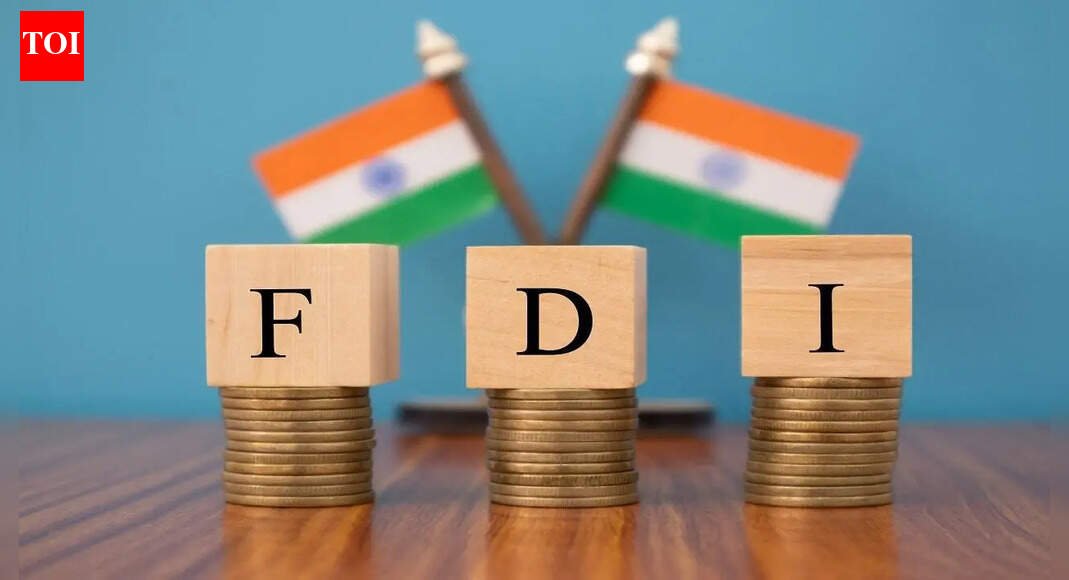
FDI inflows into India are expected to register robust growth in 2026, supported by strong macroeconomic fundamentals, big-ticket investment announcements, sustained efforts to improve the ease of doing business, and a new generation of investment-linked trade pacts.To ensure that India remains an attractive and investor-friendly destination, the government reviews the FDI (Foreign Direct Investment) policy on an ongoing basis and makes changes from time to time after holding extensive consultations with stakeholders.The Department for Promotion of Industry and Internal Trade (DPIIT) has this year held a series of meetings with stakeholders on ways to promote FDI. In November, Commerce and Industry Minister Piyush Goyal also held consultations on ways to attract greater investments by making processes faster, smoother, and more efficient.Investor-friendly policies and regulatory practices, strong return on investments, a talented workforce, easing compliance burdens, decriminalising minor industry-related offences, and streamlined approvals are key measures that are keeping foreign investors focused on India despite global challenges.In 2024-25, total foreign direct investments (FDI) have crossed USD 80.5 billion amid global uncertainties. Gross overseas investments during January-October 2025 have crossed USD 60 billion.DPIIT Secretary Amardeep Singh Bhatia said India has attracted remarkable investments in the last eleven years due to a series of measures taken by the government.“It has touched an all-time high of USD 80.62 billion in 2024-25. We are hopeful that this year (2026), FDI may cross the last year’s data of USD 80.62 billion,” he told PTI.India is also banking on its free trade agreement with the four-nation European Free Trade Association (EFTA), under which the bloc has committed to invest USD 100 billion in foreign direct investment into the country over 15 years.The pact came into force on October 1, 2025, and on the very day of its implementation, Swiss healthcare major Roche Pharma announced a commitment to invest 1.5 billion Swiss francs (about Rs 17,000 crore) in India over the next five years.This will be pure FDI and not foreign institutional or portfolio investments by sovereign wealth funds of the EFTA nations – Switzerland, Norway, Iceland, and Liechtenstein.A similar commitment of USD 20 billion has been made by New Zealand under its trade pact with India, which is slated to be implemented in 2026.Certain reports have also projected a positive outlook for foreign direct investment into India.According to UNCTAD’s World Investment Report 2025, global FDI flows fell by 11 per cent in 2024 to USD 1.5 trillion. However, this figure conceals wide differences in performance across economies.Developed countries experienced a 22 per cent contraction, while flows to developing economies were stable. In Asia, particularly, east and southeast Asia, as well as India, investors maintained strong project activity, the report has said.Some of the major global firms have announced big-ticket investments this year.Microsoft CEO Satya Nadella has announced an investment of USD 17.5 billion by 2030 to help build infrastructure and sovereign capabilities for the country’s AI-first future.Amazon plans to invest USD 35 billion in India over the next five years to expand its businesses from quick commerce to cloud computing and artificial intelligence. Google will invest USD 15 billion over the next five years to set up an AI hub in India.iPhone maker Apple is expanding its presence in India, and South Korean electronics major Samsung is also expanding its manufacturing portfolio in the country.Arcelormittal Nippon Steel India is aiming to increase the colour-coated steel capacity to 10 lakh tonnes per year by 2026 from the present 7 lakh tonnes.As per the National Statistical Office (NSO), the Indian economy grew 8.2 per cent in the second quarter of 2025-26. The government, on its part, has come out with the second edition of the Jan Viswas bill to promote ease of doing business by decriminalising minor industry-related offences.Experts, too, have stated that India’s strong economic fundamentals and resilience, along with a sustained reform push, will be a big reason for a revival of FDI in 2026.“As India diversifies its economic relationships amid geopolitical uncertainties and moves up the value chain in manufacturing and services, these developments are expected to channel greater long-term FDI into services, software and electronics,” Rumki Majumdar, Economist, Deloitte India, said.Rudra Kumar Pandey, Partner, Shardul Amarchand Mangaldas & Co, said FDI from the Gulf Cooperation Council (GCC) countries has emerged as a strategic and increasingly durable pillar of India’s foreign investment landscape.“Technology-led services are expected to remain the primary magnet for foreign capital, with increasing emphasis on artificial intelligence, data analytics, cloud infrastructure, and Global Capability Centres focused on AI deployment and applied research,” he added.The top investors in India include Mauritius and Singapore (together accounting for about 49 per cent), followed by the US (10 per cent), the Netherlands (7.2 per cent), Japan (6 per cent) and the UK (5 per cent).The key sectors which attracted the maximum FDI in India include the services segment, computer software and hardware, telecommunications, trading, construction development, automobile, chemicals and pharmaceuticals.FDI is allowed through the automatic route in most of the sectors, while in areas such as telecom, media, pharmaceuticals and insurance, the government approval is required for foreign investors.At present, FDI is prohibited in certain sectors. They are lottery, gambling and betting, chit funds, nidhi company, real estate business, and manufacturing of cigars, cheroots, cigarillos and cigarettes using tobacco.FDI is important as India would require huge investments in the coming years for its infrastructure sector to boost growth. Healthy foreign inflows also help in maintaining the balance of payments and the value of the rupee.

Source link

Records and stats: Least balls faced by Australia across both innings in Tests since 1900


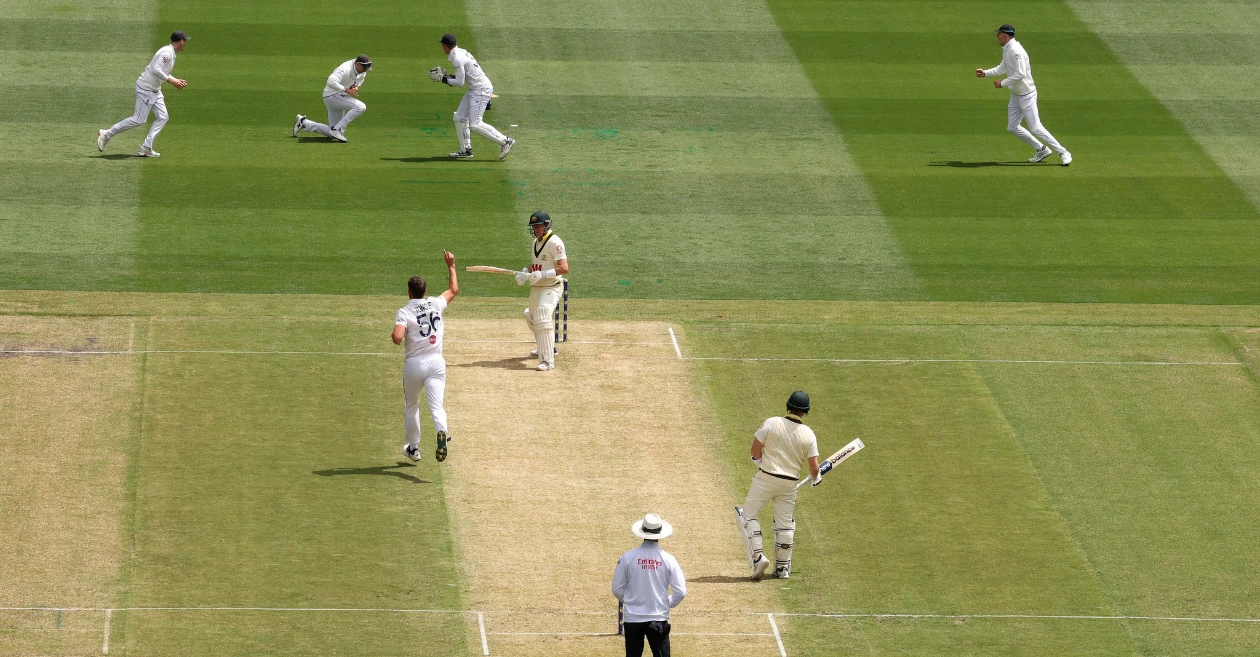
The Boxing Day Test at the Melbourne Cricket Stadium (MCG) has turned into a statistical embarrassment for Australia, with the hosts registering one of their worst collective batting performances in more than a century of Test cricket. On a pitch that proved brutally difficult for batting, Australia managed scores of just 152 and 132 against England, producing their third-lowest match aggregate since 2000.

Across the two innings, Australia batted for just 79.5 overs, the fewest they have faced in a Test match since 1928 and the third-lowest in terms of balls faced since 1900. The numbers underline how thoroughly the surface exposed batting frailties in a match that will be remembered for all the wrong reasons from an Australian perspective.

Australia face just 479 balls against England in Boxing Day Test

Australia were dismissed having faced only 479 deliveries across both innings, a remarkable statistic given the venue and occasion. The hosts batted for 45.2 overs in the first innings and 34.3 overs in the second, offering little resistance as wickets fell in clusters.

Notably, the only time Australia have faced fewer balls in a Test match at the MCG came all the way back in 1904, also against England. That historic collapse saw Australia survive just 360 balls, and now – 121 years later – history has repeated itself at the same ground.

While Australia’s batting struggles will draw scrutiny, the pitch itself has become a major talking point. From early movement to unpredictable bounce, the surface offered minimal respite for batters, turning the contest into a survival test rather than a conventional Boxing Day spectacle.

The inability of Australia’s line-up to adapt, however, amplified the damage. Against a disciplined bowling attack, mistakes were ruthlessly punished, leaving the hosts unable to build partnerships or settle at the crease.

The last time Australia faced fewer deliveries in a Test match came in 1928 at The Gabba, when they lasted just 457 balls across two innings. That collapse has long stood as a benchmark of batting failure, but the 2025 Boxing Day Test now sits alarmingly close in the record books.

The figures place the MCG match among Australia’s worst since the early 20th century, a sobering comparison for a team accustomed to dominance at home.

Also READ: Australian Cricket Awards 2026 – Will the event be scrapped? Here’s everything we know

Least balls faced by Australia in a Test match since 1900

  • 360 balls vs England, Melbourne Cricket Stadium, 1904
  • 457 balls vs England, The Gabba, 1928
  • 464 balls vs England, The Oval, 1912
  • 479 balls vs England, Melbourne Cricket Stadium, 2025
  • 499 balls vs West Indies, Queen’s Park Oval, 1995

The recurrence of England in four of the five entries further adds to the historical sting for Australian fans.

Also READ: Scott Boland reveals the toughest batter he has bowled to and favourite Test wicket


Source link

‘Scolded over AI use during exam’: Class 10 student dies by suicide in Greater Noida West; father accuses school of abetment | Noida News


'Scolded over AI use during exam': Class 10 student dies by suicide in Greater Noida West; father accuses school of abetment

NOIDA: A class 10 student died by suicide on Dec 23, allegedly hours after she was pulled up by her teachers at a private Greater Noida West school for using AI on her mobile phone to write her pre-Board exam papers. The girl’s father submitted a police complaint Thursday seeking an FIR against the school, accusing them of abetment to suicide. Hauled up for using AI during exam, girl dies by suicide, father accuses school of abetment While police are examining allegations before registering an FIR, the principal told TOI that the student, though reprimanded, was not harassed and told that cheating in the board exam could earn her a five-year suspension from writing the test. According to the minor’s father, the 16-year-old allegedly jumped from her eight-floor flat early on Dec 23. He alleged that his daughter was deeply distressed after she was scolded and humiliated by teachers for bringing her phone to the exam hall on Dec 22. In his complaint, the father said he has three daughters, all of whom study at the same school. He alleged that his eldest daughter had “unknowingly” carried her mobile phone to school on the day of the exam. She was caught by the invigilator, who reprimanded her and informed her class teacher. The student was then taken to the principal. The principal called the girl’s parents to the school, and her father arrived shortly afterwards. He alleged that even in his presence, the teachers and principal continued to scold and insult the student aggressively. He also claimed that he was called “careless” by the teachers. The father claimed his daughter was shaken by the incident and that the harsh words used by her teachers had a severe psychological impact. He named the child’s class teacher, Poonam Dubey, another teacher, Taapas, and the school management in his complaint, accusing them of pushing his daughter towards taking an extreme step. He has urged police to register a case under BNS Section 108 (abetment of suicide), and other relevant provisions. He claimed the incident had left his other two daughters traumatised and fearful of returning to the school. The school has strongly denied the allegations. The principal told TOI over the phone that the student was not harassed and that the school followed standard protocol prescribed by the Central Board of Secondary Education. “The girl was found with a mobile phone during the pre-board examinations. When the invigilator checked the device, it appeared that she had been using AI to get answers. The phone was confiscated, and she was brought to the examination head, who then brought her to me,” the principal said. She said she had informed the student that using such methods during the CBSE board examinations could lead to a ban of up to five years from appearing in the exams. “That is the rule, and the child was only told about the consequences,” she said. According to the principal, the student’s parents were informed immediately and reached the school within 10 to 15 minutes, as they lived nearby. She said the interaction took place at the reception area and was brief.


Source link

‘That Indian side wasn’t great’: Alastair Cook’s brutal take on England’s 2-2 series draw | Cricket News


'That Indian side wasn't great': Alastair Cook's brutal take on England's 2-2 series draw
The five-match series against India earlier this year ended in a 2-2 draw, marking Shubman Gill’s first assignment as Test captain. (Getty Images)

NEW DELHI: Batting legend Alastair Cook said England’s 2-2 home Test series draw against Shubman Gill-led India came against “not a great Indian side”, raising concerns over the team’s preparation for the Ashes, in which they are currently trailing 0-3.Go Beyond The Boundary with our YouTube channel. SUBSCRIBE NOW!The five-match series against India earlier this year ended level, marking Gill’s first assignment as Test captain. The young batter enjoyed a prolific campaign, scoring 754 runs with four centuries.

Gautam Gambhir’s year as India coach ends like it started – on a chaotic note

Cook, however, felt England’s recent performances had papered over deeper issues, giving a false sense of progress.“They started off with a bang, Key, McCullum and Stokes. I think McCullum won his first eight out of 10 games or something the first year. Since then it’s gone downhill,” Cook said on the opening day of the ongoing Boxing Day Test at the Melbourne Cricket Ground.“This year I think their percentage of win is like just above 30 percent so it’s a bit of a downward trend.“…I like Rob Key, I like McCullum, I like how they think but I do think they’ve, this last little bit, they have taken our eye off the ball for the bigger series.”Referring to the India series, Cook added, “… they were talking about India, they lost, they drew India and India just got thumped by South Africa. So that Indian side wasn’t a great Indian side either.“So actually it’s a reality, it’s just hit this England Test team and now they’re going to decide how they want to play with what players afterwards.”England have suffered defeats in the first three Tests of the Ashes against Australia, losing by eight wickets in Perth and Brisbane and by 82 runs in Adelaide.


Source link

‘Issues with Ram’s name’: Anurag Thakur takes jibe at opposition over VB-GRAM-G row; predicts Congress’ ‘century of defeats’ | India News


'Issues with Ram's name': Anurag Thakur takes jibe at opposition over VB-GRAM-G row; predicts Congress' 'century of defeats'

NEW DELHI: BJP MP Anurag Thakur on Friday criticised the Congress for opposing the Viksit Bharat Guarantee for Rozgaar and Ajeevika Mission (Gramin) Bill, 2025 (VB-G RAM-G), alleging that the party’s objection stemmed from discomfort with the word “Ram” in the legislation’s name.Speaking to reporters, Thakur took a swipe at the Rahul Gandhi-led Congress, describing it as an electorally weakened party and predicting further setbacks.“…The Congress party under the leadership of Rahul Gandhi will soon score a century of defeats in 2026,” he said.Responding to the opposition’s criticism over the removal of Mahatma Gandhi’s name from the revamped rural employment law, Thakur questioned Congress’s record on naming employment schemes.“…In 1989, it was named ‘Jawahar Rozgar Yojana’, in 1999 it was named ‘Jawahar Gram Samridhi Yojana’, and in 2001 it was named ‘Sampoorna Grameen Rozgar Yojana’, and then again in 2004, under the UPA government, the scheme was named ‘NREGA’, and finally in 2009, it was named ‘MGNREGA’. I ask the Congress, did they only remember Mahatma Gandhi in 2009?…” Thakur said.He further accused the Congress of politicising Mahatma Gandhi’s legacy, claiming that Gandhi had himself asked for the dissolution of the Congress after Independence.Highlighting provisions of the new law, Thakur said the VB-G RAM-G offers enhanced benefits compared to MGNREGA, including an increase in guaranteed employment days and higher funding.“The poor and needy people in the country will now get the opportunity to work for 125 days instead of 100 days. The daily wages will be increased in this bill. Congress’s budget for MGNREGA was Rs 30,000 crore, which the Modi government has increased to Rs 1 lakh 11 thousand crore annually. To prevent fraudulent activities, as observed in the Congress reign, geotagging and bank account creation have been done…” he added.The Hamirpur MP also accused the Congress of opposing references to Lord Ram, citing its criticism of the Ram Mandir, Ram Setu and related controversies, and said Sanatan Dharma was deeply rooted across the country.“Congress only has issues with the name of Ram. The opposition only wants to insult devotees of Ram. They open fired on Ram bhakts, opposed Ram temple, to date haven’t visited Ram temple, opposed Ram Setu. Even when the Ram temple events were underway, TN CM closed the doors of state temples and the devotees had to go to courts. Right now DMK-Congress government in TN even after the Madurai court judgement has gone against the order and has escalated Deepam row. Can Congress stay alive in India by abusing Sanatan, Congress is mistaken, Mughal came and went, Brits came and went back, Sanatan has stayed and will always stay,”Earlier in the day, Thakur attended the Harballah Sangeet Sammelan in Jalandhar, where he spoke about the importance of preserving India’s musical traditions.The VB-G RAM-G Bill was passed by Parliament on December 18 and received the President’s assent on December 21. The law guarantees 125 days of wage employment per rural household, up from the existing 100 days, for adult members willing to undertake unskilled manual work.Under Section 22, the Centre and states will share funding in a 60:40 ratio, while North-Eastern states, Himalayan states and Union Territories including Uttarakhand, Himachal Pradesh and Jammu and Kashmir will follow a 90:10 pattern. Section 6 allows states to notify up to 60 days in a financial year during peak agricultural seasons.

Lok Sabha Passes Viksit Bharat G Ram G Bill Amid Protests, Opposition Tears Copies Over Gandhi Name


Source link

Kuwait announces January 1 as public holiday for New Year 2026 | World News


Kuwait announces January 1 as public holiday for New Year 2026
Kuwait announces January 1 as a public holiday, giving government employees a three-day New Year weekend/Representative Image

Kuwait’s Civil Service Commission has announced January 1, 2026, as a public holiday, giving government employees a three-day New Year weekend through Saturday, January 3. Official work will resume on Sunday, January 4, allowing residents and officials to welcome 2026 with a short but refreshing break while essential services continue to operate.The Civil Service Commission clarified that while most ministries, government agencies, public bodies, and institutions will close for the holiday, entities with special operational requirements can determine their own schedules through the relevant authorities. This ensures that critical services remain functional and public needs are met without interruption.In a statement posted on its X account, the CSC noted that institutions with continuous operational demands may adjust their holidays according to public interest considerations. Residents can expect a temporary pause in standard government services during the holiday period, while key services continue under proper supervision.This arrangement allows government employees and residents to enjoy the New Year celebrations while maintaining essential public functions, providing a smooth start to 2026.


Source link

Mumbai: IndiGo issues travel advisory after baggage belt glitch; fog disrupts bengaluru flights | Mumbai News


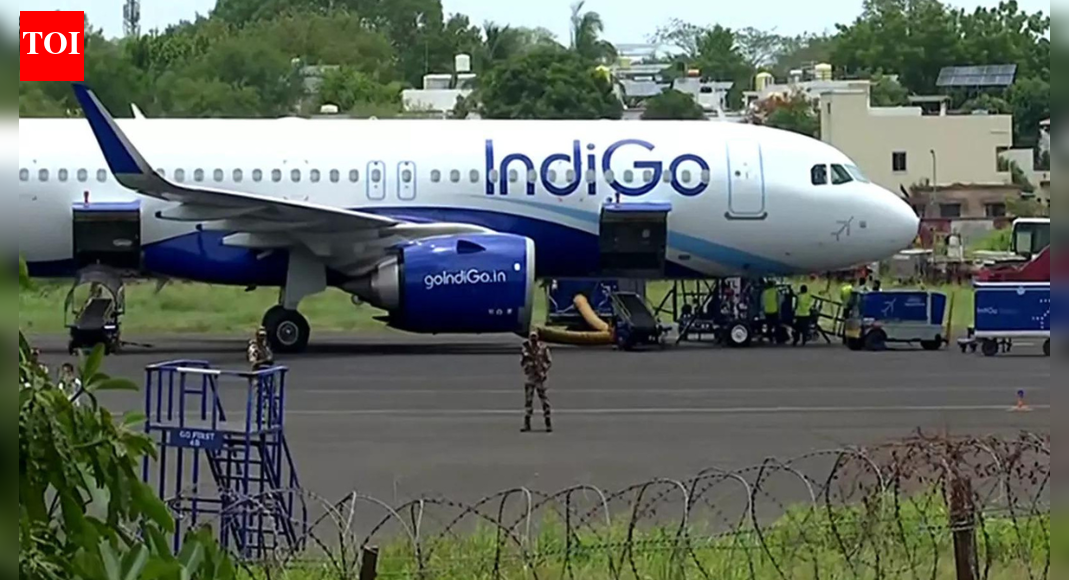
MUMBAI: IndiGo issued a travel advisory on Saturday after a temporary malfunction in the baggage belt system at Mumbai’s Terminal 2, cautioning passengers about possible delays at check-in counters and during baggage collection. The airline said its ground teams are working closely with airport authorities to fix the issue at the earliest and reduce inconvenience to travellers, according to news agency ANI. In a post on X, IndiGo apologised for the disruption and assured passengers of on-ground assistance. “We sincerely regret the inconvenience this may cause and understand how it can impact your plans. Our teams are on-site, working swiftly with airport partners to expedite the resolution and support customers throughout the process,” the airline said, thanking passengers for their patience. This comes days after IndiGo issued another advisory warning of flight disruptions due to dense fog and low visibility conditions over Bengaluru. The airline said weather-related factors had affected flight schedules and that it was closely monitoring the situation to ensure safe operations. “Low visibility and fog over #Bangalore has impacted flight schedules. We’re keeping a close watch on the weather and doing our best to get you where you need to be, safely and smoothly,” the advisory stated. Passengers were advised to regularly check their flight status through official IndiGo channels, with the airline assuring full support at airports. Earlier this week, IndiGo had said its operations remain stable ahead of the busy holiday season, with the airline carrying more than one million passengers every three days. In a statement, IndiGo said it has been operating between 2,100 and 2,200 flights daily across its network of 138 destinations, while maintaining its on-time performance standards. Looking ahead, the airline also announced plans to induct India’s first Airbus A321XLR aircraft, which is expected to strengthen its medium- and long-haul operations. According to IndiGo, the aircraft will be deployed on international routes, including direct services from Delhi and Mumbai to Athens, scheduled to begin on January 23, 2026.


Source link

Biometric entry-exit at US border: New rule for non-US citizens, Green Card holders comes into effect today


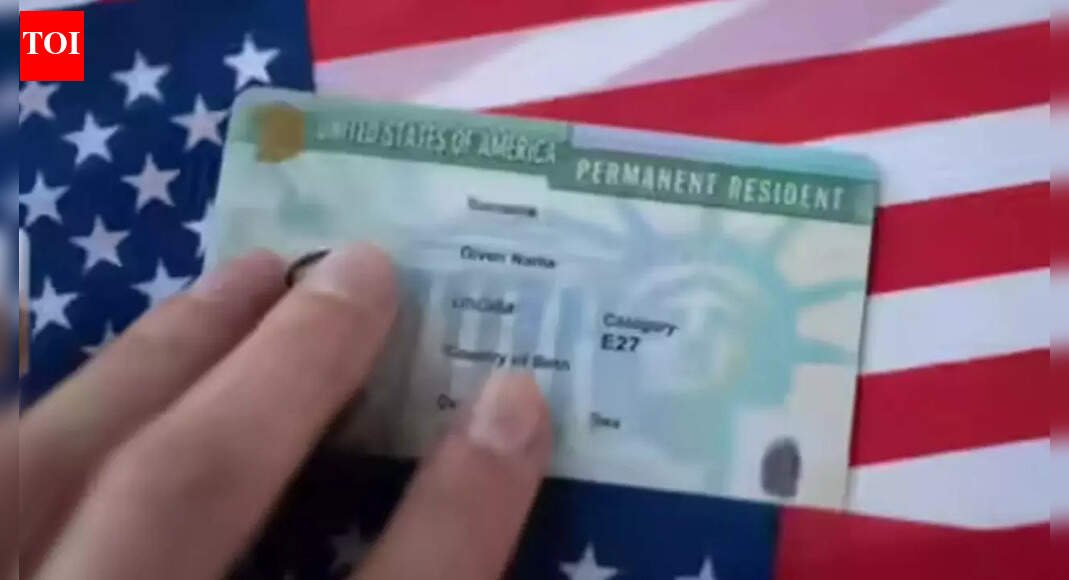
From December 26, mandatory biometric checking of all non-US citizens, including Green Card holders, at border points comes into effect. This means their photographs would be taken by US Customs and Border Protection officials at every entry and exit point across airports, land crossings and seaports. This new rule is applicable to all non-US citizens entering or exiting the country. Children below 14 years and adults over 79 years are also included. This is not entirely new. Biometric collection at exit for the US was limited to pilot programs at select ports. Now this is mandatory.

How Trump’s Gold Card Is Different From Green Card Explained; Masterstroke Amid Immigration Fight?

The CBP may also decide to collect fingerprints and iris scans and match them against existing travel documents as part of the Traveler Verification Service.

Will diplomats too have to give their biometrics?

The CBP confirmed that the diplomats are not exempt from the program. They will also have to give their biometrics. Previous regulations allowed diplomats to bypass certain biometric collections; however, the new mandate explicitly removes this exemption, requiring them to provide biometrics upon both entry and exit.

Will Canadians have to submit their biometrics?

Yes, Canadians too are not exempt from the new rule. The new rules are applicable to all non-US travellers even those who are traveling on private aircraft or crossing the border on foot.The rule applies to almost all non-U.S. citizens, including Green Card holders who are the lawful permanent residents and Canadian visitors who were previously exempt from certain requirements.

Are US citizens exempt from the new rule?

Yes, the biometric collection is not meant for US citizens but the CBP said that US citizens, if they want, can voluntarily participate in the facial biometrics process at entry and exit. U.S. citizens who prefer to opt out of the facial biometrics process may simply notify a CBP officer or airline representative and undergo manual inspection of their passport, as required for international travel. CBP said it discards US citizens’ photos within 12 hours of the identity verification process and enrolls noncitizens in the DHS Biometric Identity Management System, which retains the photos for up to 75 years.


Source link