Breaking News
Ashes 2025-26: Joe Root and Harry Brook steady England on rain-hit Day 1 of Sydney Test


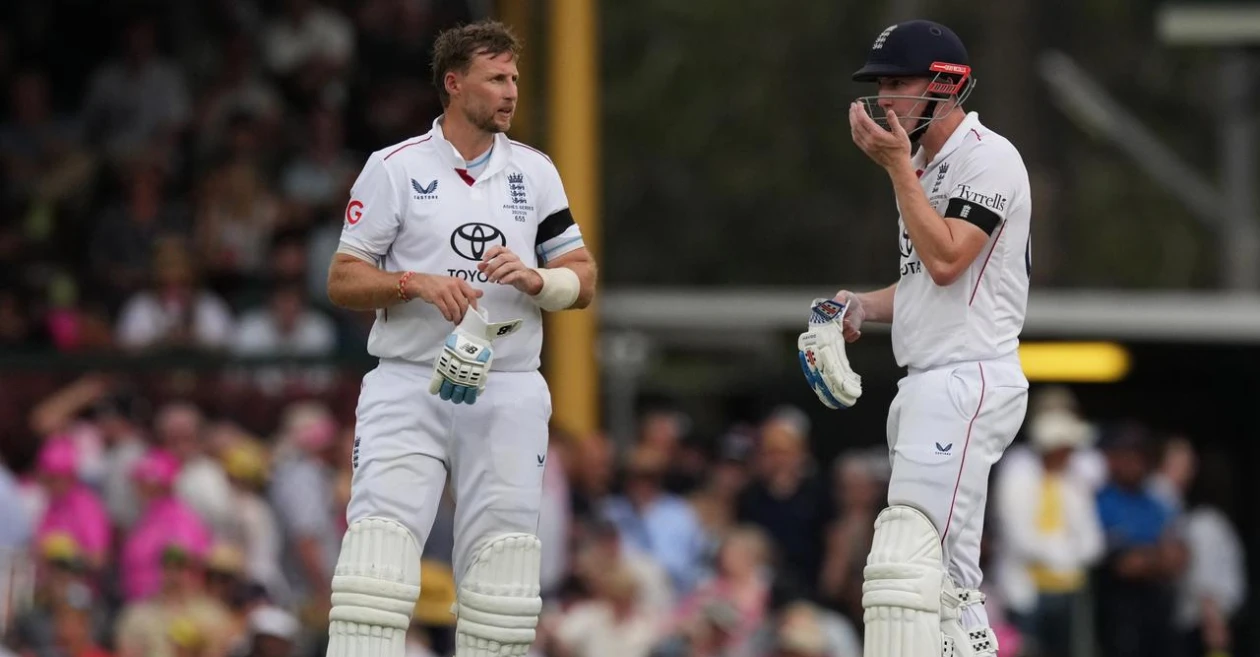
England found stability through Joe Root and Harry Brook after a shaky start on a weather-disrupted opening day of the fifth Ashes Test at the Sydney Cricket Ground (SCG). The pair combined for an unbroken 154-run stand for the fourth wicket, guiding England to 211 for 3 before bad light and rain forced an early close on Day 1.

Persistent showers and fading visibility restricted play to just 45 overs, with the entire evening session washed out. Yet, England will take confidence from the composure shown by Root and Brook after the visitors slumped to 57 for 3 on a challenging surface.

England’s top order stumbles after winning the toss

Winning the toss under heavy cloud cover, England opted to bat first, hoping to put scoreboard pressure on Australia. However, the decision initially backfired as the top order struggled against disciplined seam bowling.

Opener Ben Duckett showed brief intent with a fluent 27 before falling to Mitchell Starc, edging behind while attempting to counterattack. Zak Crawley followed soon after, dismissed lbw for 16 to Michael Neser via an umpire’s call decision that narrowly went Australia’s way.

England’s early wobble deepened when debutant Jacob Bethell managed just 10 before being trapped by Scott Boland. At 57 for 3, England were in danger of wasting a crucial opportunity to finish the series on a positive note.

Joe Root and Harry Brook rebuild England’s innings

From that precarious position, Root and Brook took charge with a measured yet assured approach. The duo added 57 runs before lunch, steering England to 114 for 3 at the interval and blunting Australia’s early momentum.

Root, batting with trademark patience, reached stumps unbeaten on 72 from 103 balls, anchoring the innings with sound judgment outside off stump. Brook complemented him perfectly, scoring an enterprising 78 not out off 92 deliveries, mixing caution with well-timed aggression.

In the afternoon session, the pair added a further 97 runs, gradually shifting the balance back in England’s favour. Their partnership stood out for its calmness under pressure, particularly as the pitch continued to offer seam movement.

Australia deploy rare all-pace attack at SCG

Australia adopted a striking tactical approach, fielding an all-pace attack without a specialist spinner – something not seen at the SCG for nearly 140 years. Starc, Neser, Boland and Cameron Green shared the workload on a surface that rewarded consistent lines under overcast skies.

Starc finished with figures of 1 for 53, while Neser and Boland claimed one wicket each. Green leaked runs and failed to pick up a wicket, conceding 57 runs in just 8 overs.

Also WATCH: Australia and England players unite to give Guard of Honour to Bondi terror attack victims at SCG

Rain and bad light bring early end to Day 1 at SCG

Play was halted shortly after tea as worsening light made conditions unsafe, with rain soon following to confirm an early end to proceedings. Only 45 overs were possible, leaving England at 211 for 3 and firmly back in the contest.

The interruption will frustrate Australia, who may have hoped for late breakthroughs, while England will be pleased to return on Day 2 with a settled platform and two set batters at the crease.

Trailing the series 3-1 after a dramatic two-day victory at Melbourne, England entered the Sydney Test aiming to end the Ashes on a winning note.

Also READ: Who is Usman Khawaja’s wife Rachel McLellan? Here’s why she is trending now


Source link

Vijay Hazare Trophy: Food poisoning sidelines Shubman Gill; Punjab win vs Sikkim | Cricket News


Vijay Hazare Trophy: Food poisoning sidelines Shubman Gill; Punjab win vs Sikkim

JAIPUR: Shubman Gill’s much-anticipated return to domestic cricket was delayed on Saturday (Jan 3) after the India Test and ODI captain missed Punjab’s Vijay Hazare Trophy Elite Group C match against Sikkim due to food poisoning. Punjab coach Sandeep Sharma said Gill reached Jaipur on Friday and was keen to play, but fell unwell late at night and was advised rest.“Shubman reached Jaipur on Friday and was looking forward to the game, but late in the night he wasn’t feeling well so he was advised to take rest,” Sharma said. “He’ll be available for the next match against Goa on Tuesday (Jan 6).”

India ODI squad review | Iyer returns, Pant gets the nod, Shami misses out again

Gill’s absence didn’t hurt Punjab, who thrashed Sikkim by 10 wickets at the Jaipuria Vidyalaya Ground. After choosing to field, Punjab bundled Sikkim out for 75 in 22.2 overs, with Arshdeep Singh leading the attack with 5/34 in his 10 overs.Punjab chased down the target in just 6.2 overs, finishing on 81 without loss. Prabhsimran Singh smashed 53 not out off 26 balls, while Harnoor Singh remained unbeaten on 22 off 13 deliveries.The win was Punjab’s fourth in five matches and took them to 16 points, placing them on top of the Group C table (tied on points with Mumbai).


Source link

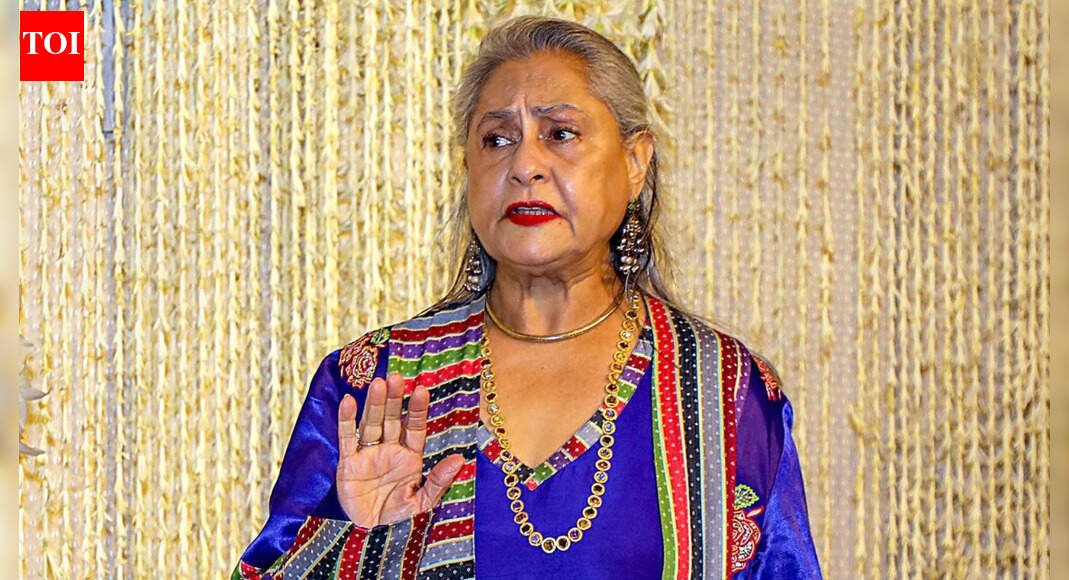
Paparazzo reacts to Jaya Bachchan’s ‘gande-pants’ remarks, ‘We were hurt… even her own family invites us’ | Hindi Movie News


Veteran actress Jaya Bachchan has often found herself at odds with the paparazzi, with several of her sharp exchanges going viral over the years. While her behaviour was earlier brushed aside due to her stature, her recent remarks—where she commented on photographers’ clothing and compared them to mice—have triggered strong backlash. Now, celebrity photographer Varinder Chawla has openly criticised her comments, calling them disrespectful and hurtful, while also pointing out what he sees as a contradiction within her own family’s media engagement.

‘All of us were hurt by her remarks’

Reacting to Jaya Bachchan’s statements, Varinder Chawla told Siddharth Kannan that the remarks deeply affected the paparazzi community. “We personally felt very bad about her remarks against my employees. All of us were hurt. There are multiple ways to express your views, but this was not the way to do it,” he said.

Jaya Bachchan’s Remarks Turns Paparazzi Furious, Calls For Boycott Emerge!

Varinder highlighted how several well-known celebrities have drawn boundaries with the media respectfully, without public humiliation. “Alia Bhatt and Ranbir Kapoor, Ranveer Singh and Deepika Padukone, Anushka Sharma and Virat Kohli — all of them invited the paparazzi for tea and politely requested us not to click their children. Till date, we have respected that request and never photographed their kids,” he said.

‘Not once have our boys misbehaved with her’

Speaking about internal discussions within the paparazzi community, Varinder revealed that many photographers considered stepping back from covering Jaya Bachchan altogether. “Many photographers discussed that if Jaya ji doesn’t want us to click her, then perhaps we should stop doing so altogether. Not as a boycott, but simply by telling her politely that we won’t click her anymore,” he said.Defending his team, he added, “Not once have our boys misbehaved with her. They always address her respectfully as ‘Jaya ji’. God knows why she appears so frustrated all the time, but this has been her nature for years.”

‘She could have handled it like Kareena did’

Varinder stressed that the situation could have been handled far more sensitively. “When people went crazy clicking Taimur, Kareena Kapoor later requested us to stop citing security concerns, and we immediately obliged. Jaya ji could have taken a similar approach,” he said.He added, “If she had issues with the language or attire of the photographers, she could have conveyed it respectfully and we would have listened.”

‘If you don’t want to be clicked, enter from the back’

Pointing out practical alternatives available to celebrities, Varinder said, “Every event has two entries — the red carpet and the back entry. If you don’t want to be clicked, quietly enter from the back. Your PR team and event organisers can easily guide you.”Questioning the logic behind her public confrontations, he added, “But if you deliberately walk the red carpet and then create a scene, it doesn’t make sense.”

‘Commenting on someone’s clothes without knowing their background is unfair’

Varinder emphasised that Jaya Bachchan’s remarks had wider implications beyond just photographers. “Many of my employees come from financially modest backgrounds. They earn very little, and from that, they manage travel, household expenses, and everything else,” he said.Adding further context, he noted, “If they were highly educated or financially privileged, they wouldn’t be working here. Commenting on someone’s clothes without knowing their background is unfair.”He went on to say, “Jaya ji must have several staff members at home who wear uniforms. But behind the scenes, who knows their financial situation or personal struggles? Her comments don’t just affect photographers but everyone working in the industry, including spot boys. It reflects how she views the common man.”

‘Even her own family invites the media’

Responding to Jaya Bachchan’s remark—‘If you have to invite paparazzi to click your pictures, then what kind of celebrity are you?’—Varinder countered, “Even in her own family, whether it’s Abhishek Bachchan or Aishwarya Rai, we are invited to cover their promotional events when their films release.”He clarified how the system works, adding, “No major star personally calls us to click pictures. We are invited by PR teams and organisers, regardless of how big or established the celebrity is.”

What Jaya Bachchan had said earlier

Earlier, while speaking to Barkha Dutt on Mojo Story, Jaya Bachchan drew a clear line between journalists and paparazzi. “My relationship with the media is fantastic. I am a product of the media. My father was a journalist, and I have immense respect for them. But my relationship with paparazzi is zero,” she said.She further added, “Who are these people? Are they trained to represent the people of this country?”Explaining her objection, she said, “Yeh jo bahar gande, tight pant pehnke, haath mein mobile leke ghoomte hain, they think that just because they have a mobile phone, they can take your picture and say whatever they want.” She concluded by questioning their credibility, “The kind of comments they pass — kahan se aate hain, kis tarah ka education hai, kya background hai? And these people will represent us? Just because they can upload content on YouTube or social media platforms?”


Source link

D-Mart’s December quarter revenue rises 13% to Rs 17,612 crore


D-Mart's December quarter revenue rises 13% to Rs 17,612 crore

Avenue Supermarts Ltd, which owns and operates retail chain D-Mart, has reported a 13.15 per cent rise in its standalone revenue from operations to Rs 17,612.62 crore for the third quarter ended December 31, 2025.The company had registered Rs 15,565.23 crore revenue from operations a year ago, Avenue Supermarts informed BSE in a regulatory filing on Friday.“Standalone Revenue from operations for the quarter ended (QE) December 31, 2025, stood at Rs 17,612.62 crores,” said the filing on company update at the end of the quarter.The total number of stores of the Damani-family promoted retail chain stood at 442 as of December 31, 2025. This also includes its Sanpada in Navi Mumbai, Maharashtra, which is currently closed for customers due to reconstruction.On a quarter-on-quarter basis, D-Mart’s revenue rose 8.6 per cent. It was Rs 16,218.79 in the September quarter (Q2 FY26).“Standalone Revenue from operations for QE December 31, 2025…is subject to limited review by the statutory auditors of the company,” it said.The board of the company is scheduled on January 10, 2026, to consider and approve the unaudited standalone and consolidated financial results for the quarter and nine months ended December 31, 2025 Promoted by Radhakishan Damani and his family, DMart retails basic home and personal products across markets, including Maharashtra, Gujarat, Andhra Pradesh, Madhya Pradesh, Karnataka, Telangana, Chhattisgarh, NCR, Tamil Nadu, Punjab and Rajasthan.


Source link

A pivotal year beyond Earth: Scientific missions set to redefine space exploration in 2026 | India News


A pivotal year beyond Earth: Scientific missions set to redefine space exploration in 2026

One may easily regard oneself as no more than a speck compared to the universe. Thirteen and eight-tenths billion years after the Big Bang, the universe has expanded to such an extent that light, moving at its absolute speed, requires billions of years to traverse it. There are hundreds of billions of galaxies that shine in our telescopes, and they are all full of stars, planets, and uncountable potentialities. Interestingly, this vastness will no longer find itself being viewed from afar and through imagination. The year 2026 holds great promise for humanity, which will be on the cusp of this great transitional year.The driving force behind this juncture in space exploration is a call to explore and observe space in a way that revisits the best traditions of the 20th century and presses forward into the future.

Image: NASA

Image: NASA

India is pushing on many frontiers all at once. The Gaganyaan program is getting ready for its first test mission of astronauts into low Earth orbit, joining an elite club of countries that can undertake independent human spaceflight. Meanwhile, India’s Samudrayaan mission brings into relief a more holistic approach to exploration-that which reaches not only upwards into space but deep inside the Earth’s oceans.NASA’s Artemis II mission will make history early to mid-2026 as the first time humans will have traveled to the Moon since the Apollo era. Meant to be a 10-day journey, four astronauts will cruise around the Moon and back, testing life-support systems, navigation, and hardware that will be critical for future lunar landings. Artemis II won’t touch down on the Moon’s surface, but the symbolic weight of it is immense: it means humanity goes back to deep space with the dream of staying longer and going farther.Other countries are embarking on equally ambitious missions. China’s mission, Chang’e-7, which is set to launch in August, has set its sights on the mysterious south pole of the Moon, which has a cratered surface and permanent shadows where water ice is believed to be frozen. The ambitious mission to the lunar south pole will consist of an orbiter, a soft-lander, a rover, and a mini-prober. The mission answers one of the most vital questions related to lunar missions.However, after the Moon, focus is shifting towards Mars, with all the secrets it holds. The Martian Moons eXploration (MMX) mission by Japan aims to travel to Phobos, which is one of the irregular moons of Mars that is quite small. The aim of the mission is to retrieve samples from Phobos and bring them back to Earth. If accomplished, it will be the first successful sample return from a Martian moon, which will unlock answers regarding the history of the Red Planet.
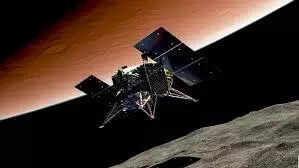
Image: NASA

Image: NASA

To the many missions underway are being joined by powerful new telescopic visions of our universe. The PLATO space telescope, being planned by the European Space Agency for the end of 2026, will hunt for Earth-like planets and will concentrate on planets that could potentially support life on their surfaces. The Xuntian space telescope, being planned for orbit around the Tiangong space station, will survey the universe in broad fields of interest such as galaxies and dark matter.Closer home, the solar observatory Aditya-1 L1, launched by India, is expected to offer a unique perspective on the sun, especially when it is at its peak, thereby assisting scientists in gaining a holistic understanding of the solar storm, which may impact life on Earth.Collectively, these missions make the year 2026 far more than a crowded space calendar. It represents a point in time where humanity is reaching out to the stars, back to our own star, and forward to a place in time where exploration, whether it be space or the ocean, is integral in understanding our place within this huge universe we call home.

G1 Mission: India’s acid test for human spaceflight

With the G1 mission, an uncrewed orbital test under the Gaganyaan programme tentatively scheduled for March 2026, India is hoping to take a serious leap forward in human spaceflight. As a full dress rehearsal for crewed missions, G1 will be used to determine whether the systems of India’s spacecraft can safely support astronauts in orbit and bring them back to Earth.This mission is scheduled to be launched aboard ISRO’s human-rated LVM3 rocket, carrying a humanoid robot called Vyommitra. This is intended to simulate astronaut responses and monitor crew-centric systems. Operating on a Low Earth Orbit of around 300-400 kilometres, the spacecraft will put critical technologies through real-flight conditions, including life support functions, communication links, and onboard safety systems.
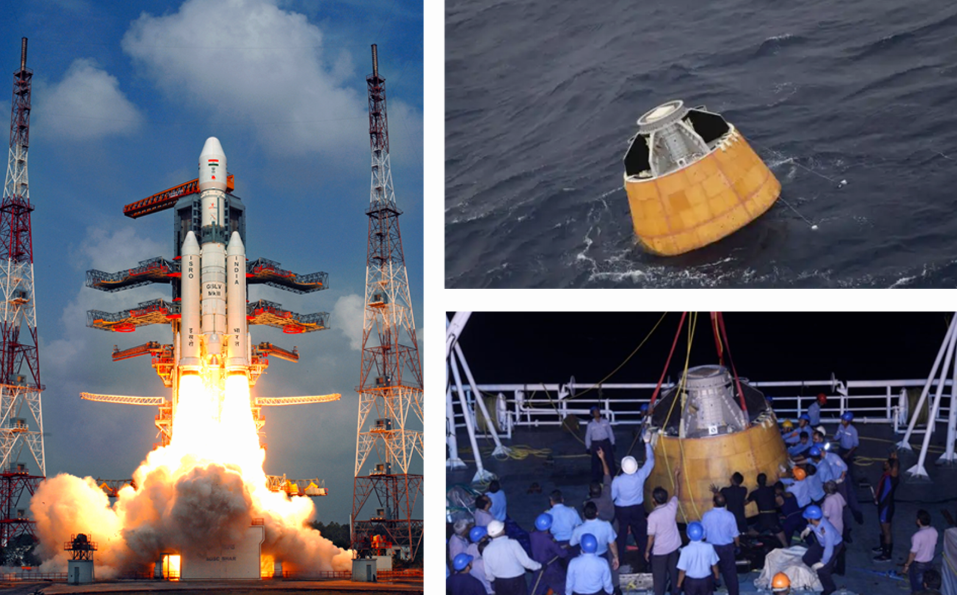
Image: ISRO

Image: ISRO

One of the areas of emphasis of the new spacecraft will be the return to Earth’s atmosphere and the recovery phase, which includes surviving high temperatures in the atmosphere, parachute deployment, and landing in the ocean on schedule. This is one of the most challenging and high-risk areas of human space travel.If successful, the G1 mission would put India on the brink of its maiden manned spaceflight and put the country in a select league of nations with the ability to send humans on their own space vehicles. Notably, the maiden human spaceflight by India represents a crucial point in the country’s space program.

Artemis II: Humanity’s first crewed return to deep space in half a century

NASA’s Artemis project, originally announced as far back as 2017, with the goal of landing men on the lunar surface and ultimately establishing a presence there, has at last reached a crucial moment in its development: its maiden human mission. Scheduled now as potentially happening as early as February, Artemis II cements mankind’s long-overdue presence in deep space.When Artemis II blasted off, it marked the first time that astronauts would journey outside the Low Earth Orbit since Apollo 17 in 1972. More than five decades have passed since humans flew beyond their territorial zone, visiting space via space shuttles and the International Space Station. However, Artemis II marked a turning point as it headed towards the Moon again.
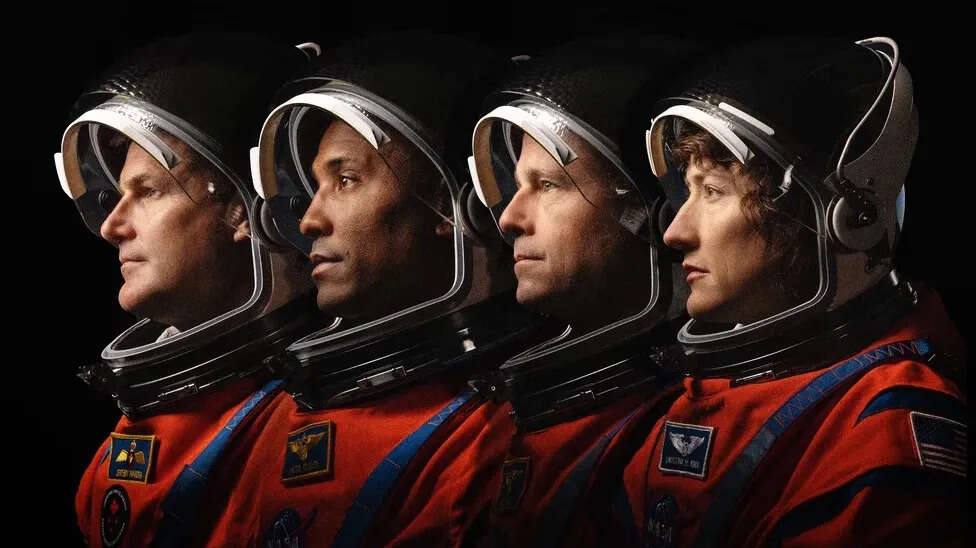
Image: NASA

Image: NASA

Four astronauts will also make the journey as part of the mission, consisting of NASA’s Reid Wiseman, Victor Glover, and Christina Koch, as well as the Canadian Space Agency’s Jeremy Hansen. Together, they will undertake a journey around the Moon, taking a path that is inspired by the adventurous spirit of the historic Apollos, yet also driven by the challenges of the current age. Though they will not go to the surface, the path they are taking is a crucial one for those who will follow.However, returning to deep space after a longer period comes with a lot of challenges. Although NASA has relied on what was learned during the Apollo missions, Artemis is not a repeat program. The objectives are bigger, and the technology is more complex. The Artemis II is not a repeat program but rather a systems-scale test. The mission aims to prove the capability to transport humans far away from Earth.Orion’s orbital profile plays a crucial part in this mission. Instead of flying an orbital profile like the Apollo missions, which took it into a small orbit around the Moon, the Orion spacecraft for Artemis II has a long-sweeping orbit around the Moon. This type of “free return” orbital profile has been designed in such a way that it helps the spacecraft fall back into the orbit of the Earth even in the case of a significant propulsion system failure.When slingshotting back towards the Earth, the crew of the Orion spacecraft will have a historic opportunity to view the Earth’s closest neighbour. This is an opportunity most people have not had. More importantly, the Artemis II mission is not meant to plant a flag or leave a physical mark but pave the way for a mission to not only visit the moon but stay there. Artemis II is not about leaving footprints on the moon, but it’s about preparing for the next step.

Chang’e-7: China targets the water-rich south pole of the moon

The Chang’e-7, finally approved in September of last year, denotes the latest chapter in a continually expanding lunar program, as the Chinese are scheduled to send an orbiting and landing expedition in 2026. The Chang’e-7, based on an extensive series of advances spanning a dozen years, is not a standalone mission but rather an intricate, multi-element expedition specifically focused on the scientifically most fascinating region of the Moon, namely the lunar south pole.
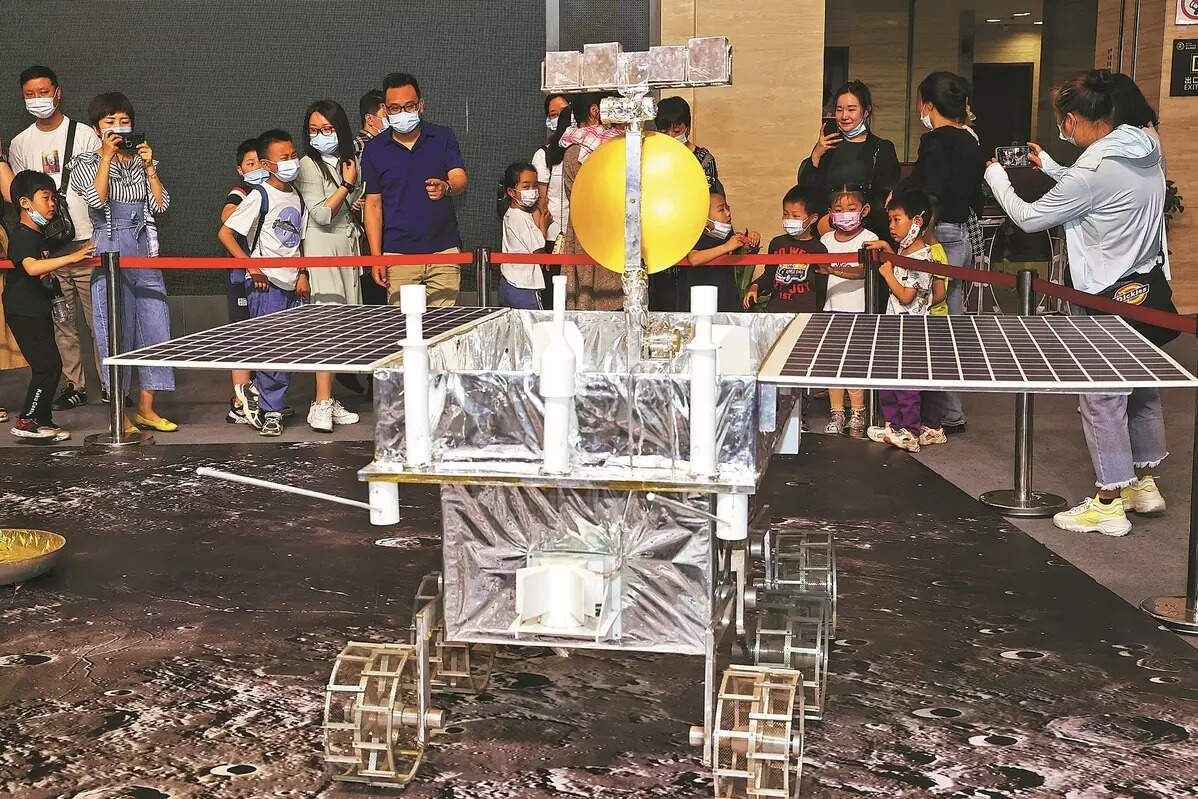
Image: CNSA

Image: CNSA

Weighing around 8,200 kilograms, this spacecraft symbolises the growing maturity of China’s Chang’e series. While previous missions like Chang’e-3 and Chang’e-4 concentrated on precise landings and lunar surface exploration, other missions like Chang’e-5 and Chang’e-6 were equipped with orbiters and ascent vehicles to facilitate return missions from lunar surface samples. For Chang’e-7, it has been decided that the lunar ascending and return to Earth spacecraft would not be included, and this reduction has been utilised to enhance lunar surface exploration.The launch is expected to take place with a Long March-5 heavy-lift rocket, with the spacecraft named Chang’e-7, from Launch Complex 101 at Wenchang Space Launch Site, located on Hainan Island. Currently, the target launch window, as indicated by officials, is August 2026, although this is to be confirmed by readiness in several areas of the launch.

Aditya-L1 and the Sun’s most violent phase

For India’s first space-based solar observatory, Aditya-L1, 2026 promises to be a remarkable year. Although the mission was placed into its operational orbit earlier, it is only now approaching the phase scientists have been waiting for most keenly: observing the Sun at the peak of its activity cycle. This period, known as the “solar maximum”, offers a rare and powerful window into the most violent processes unfolding on our nearest star.The solar maximum occurs roughly every 11 years, when the Sun’s magnetic field undergoes a dramatic reversal—its north and south magnetic poles effectively swap places. During this phase, the Sun shifts from a relatively calm state to one marked by turbulence and instability. Sunspots multiply, solar flares intensify, and the frequency of coronal mass ejections (CMEs) rises sharply. These vast eruptions, which hurl enormous bubbles of superheated plasma from the Sun’s outer atmosphere or corona, can appear like colossal fireballs racing through space.
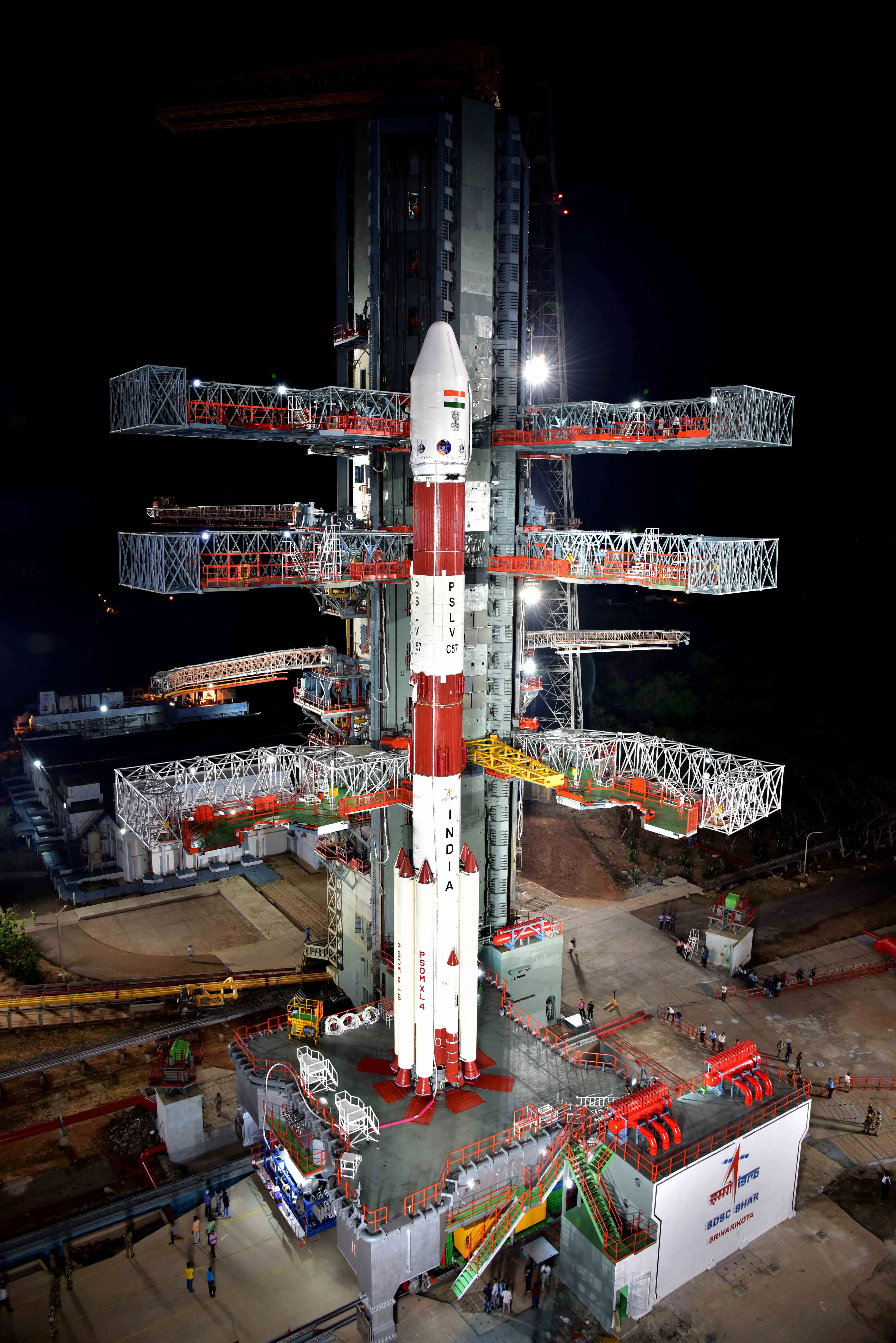
Image: ISRO

Image: ISRO

Understanding CMEs lies at the heart of Aditya-L1’s scientific mission. While CMEs rarely pose a direct threat to human life, their interaction with Earth’s magnetic field can trigger geomagnetic storms that disrupt satellite operations, navigation systems, radio communications, and power grids.The stakes are growing as Earth’s near-space environment becomes increasingly crowded. Nearly 11,000 satellites currently operate in orbit, including more than 130 from India. Disturbances caused by intense solar activity can alter satellite trajectories, degrade electronics, and increase atmospheric drag, shortening mission lifetimes. Reliable data on solar eruptions is therefore not just a scientific pursuit but a practical necessity.What sets Aditya-L1 apart is its unique ability to study solar eruptions in visible light. Its coronagraph can directly observe CMEs close to the Sun and measure their temperature and thermal energy, key indicators of how powerful an eruption might be if it were to travel toward Earth. These observations can help scientists assess the potential impact of solar storms with greater accuracy than before.As the Sun enters its most active phase, Aditya-L1 is poised to deliver insights that could reshape our understanding of solar behaviour while strengthening space weather forecasting. In doing so, the mission places India at the forefront of a field that is becoming ever more critical in an increasingly space-dependent world.

PLATO: Europe’s new eye in search for other Earths

Scheduled to begin operations in late 2026, the European Space Agency’s PLATO mission aims to revolutionise the search for Earth-like planets beyond the solar system. Using an arrangement of 26 cameras, PLATO will monitor around 200,000 stars in the Milky Way, focusing on Sun-like stars that may host rocky planets with conditions suitable for life.The mission will rely on the transit method, detecting tiny dips in starlight as planets pass in front of their host stars. Its overlapping fields of view will allow for long, precise observations, helping scientists identify and characterise extrasolar planets while also studying properties such as age and structure.
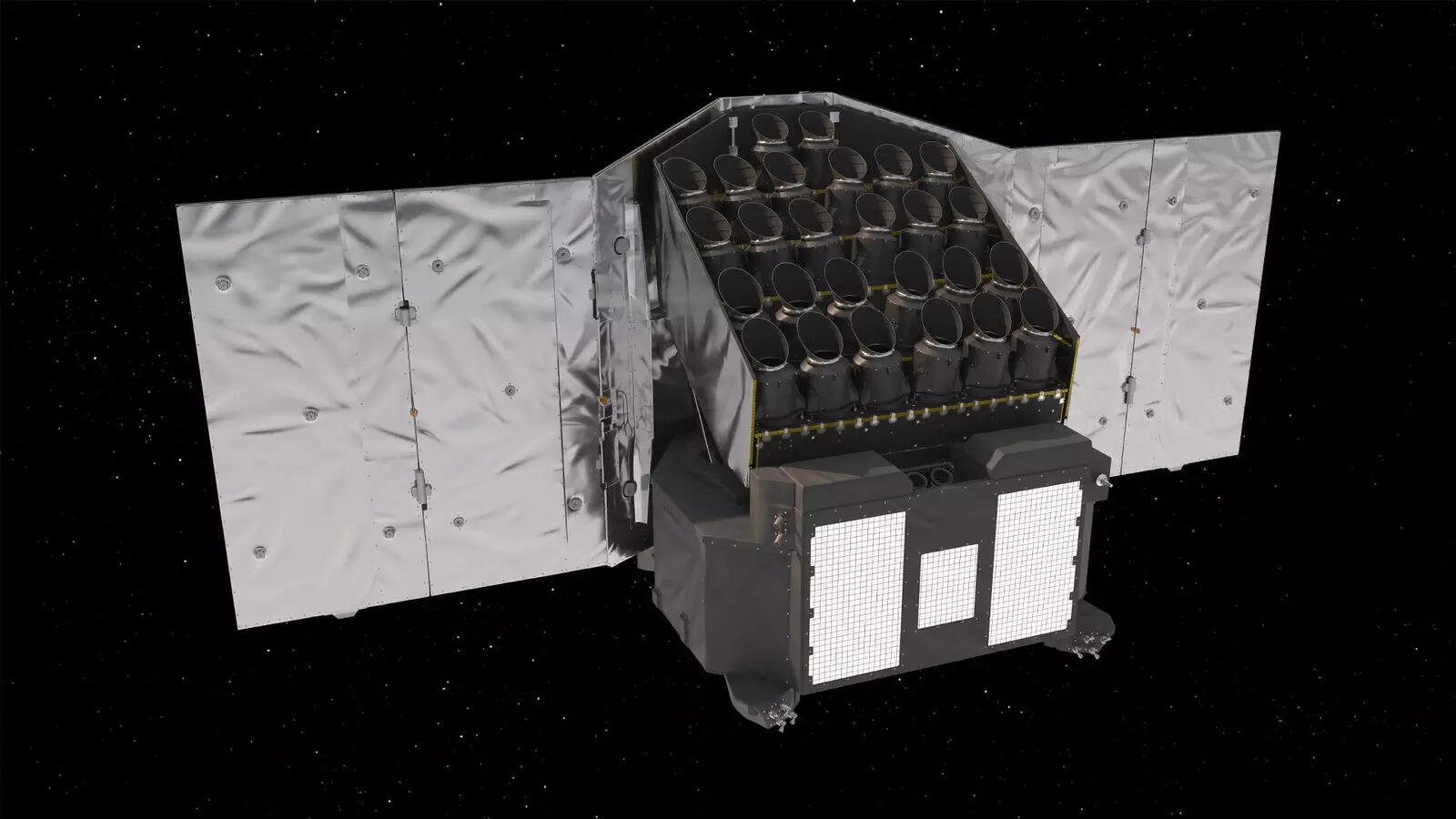
Image: ESA

Image: ESA

PLATO will be the first scientific mission launched aboard Europe’s new Ariane 6 heavy-lift rocket from Kourou. After launch, it will be sent to the Sun–Earth Lagrange point 2, about 1.5 million kilometres from Earth, the same stable region used by the James Webb Space Telescope. Led by Germany’s DLR, the mission is expected to mark a major step forward in Europe’s quest to find worlds beyond our own.


Source link

Warren Buffet’s Berkshire Hathaway on why Google is the only tech investment they regret not making: We are ashamed that we…


Warren Buffet's Berkshire Hathaway on why Google is the only tech investment they regret not making: We are ashamed that we...
Warren Buffett and the late Charlie Munger finally ended their decades-long regret by acquiring a $4.3 billion stake in Alphabet, Google’s parent company, in Q3 2025. This move, driven by firsthand experience of Google’s advertising prowess through GEICO, signals Berkshire Hathaway’s growing confidence in Alphabet’s AI ambitions and its core search business.

Warren Buffett and the late Charlie Munger have long called missing Google‘s 2004 IPO one of their biggest investing mistakes—a regret they finally addressed in Q3 2025 by purchasing a $4.3 billion stake in Alphabet, Berkshire Hathaway’s first-ever position in the tech giant.In a 2017 shareholders meeting clip that resurfaced recently, Munger bluntly admitted: “We screwed up.” Buffett explained they had direct evidence of Google’s potential through GEICO, Berkshire’s insurance subsidiary, where $10-per-click ads with “marginal cost of exactly zero” delivered massive returns. “We could see in our own operations how well that Google advertising was working. And we just sat there sucking our thumbs,” Munger said, calling it shameful and suggesting their massive Apple investment was “atonement.

Berkshire finally makes its move on Alphabet after two decades

That regret persisted until Q3 2025, when Berkshire disclosed purchasing approximately 17.8 million Alphabet shares—mostly Class A voting stock—worth $4.3 billion as of September 30. The position made Alphabet Berkshire’s 10th-largest holding, representing 1.6% of its $267 billion equity portfolio and roughly 0.3% ownership in Google’s parent company.The November 2025 disclosure came as Buffett trimmed his top holding Apple by 15% to $61 billion and continued reducing Bank of America. To the analysts, Berkshire’s move on Alphabet was both a way to quiet a long-standing regret and a bet on Alphabet’s AI ambitions via the Gemini models, not to mention the profitable growth of Google Cloud and the strength of its dominant search advertising-the same zero-marginal-cost business model that GEICO has firsthand experienced.

Google stock rallies as Buffett bet validates AI growth story

Alphabet shares gained about 6% to new highs after the disclosure and the stock gained almost 70% through 2025, boosting Berkshire’s stake to around $5.7 billion by year’s end. The move marked a quiet tilt toward technology exposure as Buffett prepared to relinquish the CEO role to Greg Abel in 2026.Berkshire’s Q4 2025 filing, due mid-February 2026, will reveal whether the Oracle of Omaha added to his long-delayed Google position before handing over the reins.


Source link

Ashes 2025-26 [WATCH]: Australia and England players unite to give Guard of Honour to Bondi terror attack victims at SCG


The iconic Sydney Cricket Ground witnessed scenes far removed from sporting rivalry on Day 1 of the final Ashes Test, as cricket paused to honour the victims and heroes of the December 14 Bondi terror attack. Before a single ball was bowled, nearly 40,000 fans, elite athletes, emergency responders, and survivors stood together in a deeply moving ceremony that turned the historic venue into a place of collective remembrance and unity. What unfolded was a powerful reminder that sport, at its best, can reflect the strength, empathy, and resilience of a nation in mourning.

A guard of honour for everyday heroes

In a moment that drew prolonged applause and tears from the stands, the Australian and England teams joined forces to form a guard of honour at the centre of the ground. Walking through the line were survivors and civilians whose bravery during the attack captured the hearts of the country.

The loudest ovation was reserved for Ahmed Al Ahmed, the Syrian-born father of two who played a crucial role in disarming one of the attackers. With his arm still in a sling, Al Ahmed stepped onto the field with his hand over his heart, visibly overwhelmed by the standing ovation.

Alongside him was 14-year-old Chaya Dadon, who arrived on crutches after being shot in the leg while shielding younger children from gunfire. Her courage has since made her a symbol of hope and selflessness across Australia.

As the stadium fell into silence, the SCG’s giant screens displayed the names and faces of the 15 innocent victims who lost their lives in the tragedy, under the message ‘Forever in our hearts.’ Among those remembered were community leader Edith Brutman, Rabbis Eli Schlanger and Yaakov Levitan who were central to the Hanukkah celebrations, and Boris and Sofia, the couple who reportedly died together after Boris attempted to stop an attacker.

Here’s the video:

Also READ: Ashes 2025-26: Steve Smith opens up on retirement talks ahead of SCG Test

Saluting the frontline responders

The ceremony also paid tribute to the paramedics, doctors from St Vincent’s Hospital and Royal Prince Alfred Hospital, and NSW Police officers who rushed toward danger on that tragic evening. One of the most poignant moments came when retiring Australian opener Usman Khawaja stepped forward to embrace Al Ahmed, a gesture that transcended national colours and competition.

Notably, for the first time at the SCG, specialist police officers carrying long-arm rifles were visible around the venue. NSW Police Commissioner Mal Lanyon stressed the measures were precautionary and aimed at reassurance, helping fans feel safe as they returned to public spaces.

Rain halts play after England steady the innings

On the field, the final Ashes Test finally got underway after the emotional pre-match tribute. England won the toss and elected to bat on Day 1 at the SCG. At Tea, England were well placed at 211/3 in their first innings, with Joe Root unbeaten on 72 and Harry Brook not out on 78 after a composed and authoritative partnership. However, play was delayed soon after the interval due to rain, bringing an early pause to proceedings on an already unforgettable day in Sydney.

Also READ: AUS vs ENG, Ashes 2025-26: Sydney Weather Forecast for the 5th Test


Source link

Buddha’s Piprahwa relics, back in India after 127 yrs, to go on display | India News


Buddha’s Piprahwa relics, back in India after 127 yrs, to go on display

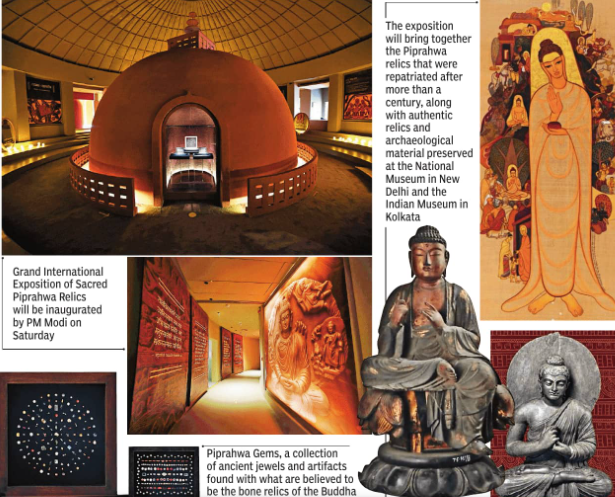
NEW DELHI: India will showcase its soft power to the world on Saturday through what is being cited as a first of its kind landmark exposition of Buddha’s Piprahwa relics, reliquaries and gem relics, recently repatriated to India.Set to be inaugurated by Prime Minister Narendra Modi at the iconic Rai Pithora Cultural Complex in Delhi, the repatriated Piprahwa gem relics constitute the most extensive assemblage of authenticated relics attributed to the Buddha thus far documented. The exhibtion featuring over 80 objects spanning the 6th century BCE to the present, includes sculptures, manuscripts, thangkas, and ritual objects.

‘Slavery Destroys Heritage’: PM Modi’s Big Message After Unveiling Sacred Buddha Piprahwa Relics

Titled ‘Light and the Lotus: Relics of the Awakened One’, the display marks the “reunification of the Piprahwa gem relics of Lord Buddha, repatriated after 127 years, with relics, gem relics, and reliquaries from 1898 and then 1971-1975 excavations at the Piprahwa site,” the govt said in a statement. It highlighted that the exhibit “commemorates the ministry of culture’s successful repatriation of the relics in July 2025, achieved through a public-private partnership, halting an auction at Sotheby’s Hong Kong.

Screenshot 2026-01-04 115430

.

PM Modi said in his post that the inauguration of the “grand international exposition” will mark a very special day for those passionate about history, culture and the ideals of Bhagwan Buddha.”“For the first time since the 1898 excavation, the exposition brings together relics from the 1898 Kapilavastu excavation, treasures from the 1972 excavation, reliquaries and jewelled treasures from the Indian Museum, Kolkata, recently repatriated relics from the Peppé family collection and monolithic stone coffer within which the gem relics and reliquaries were originally found,” the minisry said.At the picturesque Rai Pithora Cultural Complex guests will get to enter through a gateway inspired by the earliest southern torana of Sanchi, celebrated for its Ashokan four-lion capital and intricately carved panels portraying scenes from Buddha’s life in aniconic forms.At the heart of the exhibition, a stupa model features three niches displaying key findings from the Piprahwa excavation: the first displays sacred bone fragments from the National Museum, Delhi, alongside gem relics, an inscribed steatite casket, and a crystal casket with a fish handle from the Indian Museum, Kolkata.The sacred Buddha relics were discovered in 1898 by William Claxton Peppé at the ancient stupa of Kapilavastu. Following their discovery, portions were distributed globally, with one part gifted to the King of Siam, another taken to England, and a third preserved at the Indian Museum, Kolkata.


Source link

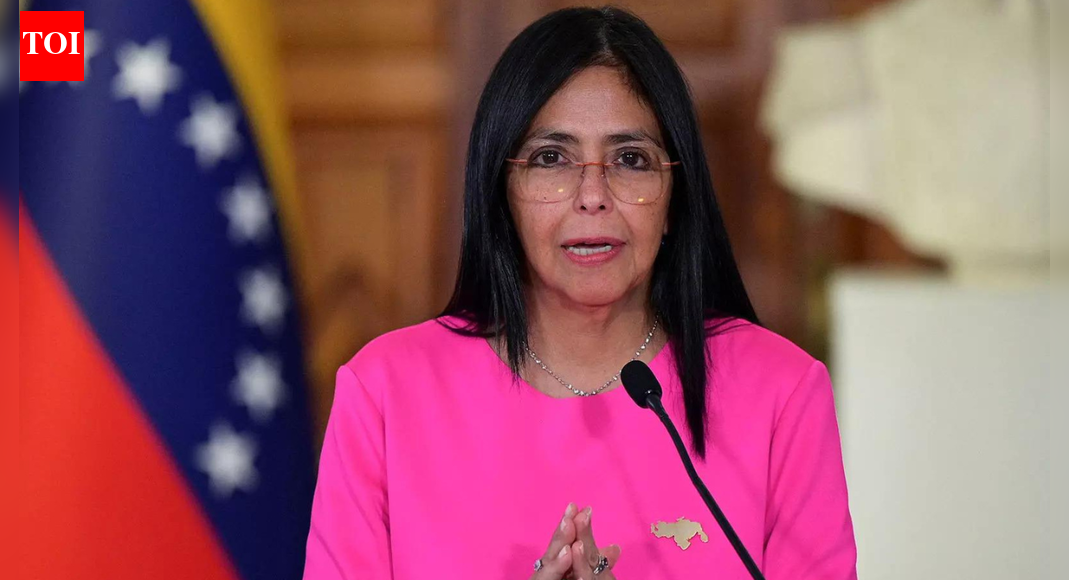
Who is Delcy Rodriguez? Venezuelan leader named interim president; takes charge after Nicolas Maduro’s capture


Who is Delcy Rodriguez? Venezuelan leader named interim president; takes charge after Nicolas Maduro’s capture

Venezuela’s entered a new and uncertain phase on Saturday after President Nicolas Maduro was captured during a US military operation. With no immediate political transition announced, the country’s Supreme Court stepped in, ordering Vice President Delcy Rodriguez to assume the role of interim president, in line with constitutional provisions dealing with a president’s absence.Rodriguez took charge hours after Maduro and his wife, Cilia Flores, were detained. She chaired a meeting of the National Defence Council the same day, appearing alongside senior ministers and military officials. In the meeting, she demanded the immediate release of Maduro and Flores and strongly condemned the US operation. In a televised address, Rodriguez said the early-morning strike violated international law and Venezuela’s sovereignty. She alsocalled on Venezuelans to remain united and urged governments across Latin America to reject what she described as the use of force against a sovereign nation.Rodriguez also insisted that Maduro remains Venezuela’s legitimate president, despite his capture. “There is only one president in this country, and his name is Nicolas Maduro,” she said during the council meeting broadcast on state television.Trump told reporters following Mudaro’s capture that Rodriguez was willing to cooperate with Washington. He said she had spoken at length with Rubio and had shown readiness to do “whatever” the US needed.“I think she was quite gracious,” Trump added. “We can’t take a chance that somebody else takes over Venezuela that doesn’t have the good of the Venezuelan people in mind.”Who is Delcy Rodriguez

  • Delcy Rodriguez is Venezuela’s executive vice president and was directed by the Supreme Court to serve as interim president after Nicolas Maduro was captured during the US military operation.
  • She is a trained lawyer from Caracas and studied law at the Central University of Venezuela.
  • Rodriguez has been a senior figure in the chavismo political movement for more than two decades and is regarded as one of Maduro’s closest and most trusted political allies.
  • She has held several powerful roles in government, including serving as Venezuela’s foreign minister.
  • Before assuming the interim role, she was also in charge of key economic portfolios, overseeing finance and the country’s oil sector.
  • She is the sister of Jorge Rodriguez, the president of Venezuela’s National Assembly, and together they have been central figures in the government since the era of former president Hugo Chavez.


Source link

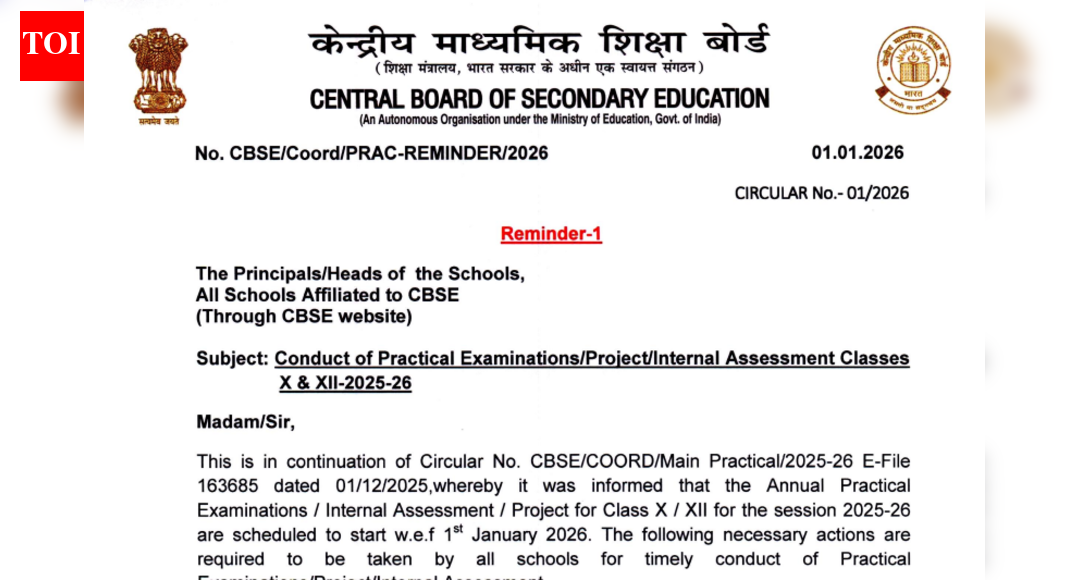
CBSE Class 10, 12 Practical exams 2026: Board issues strict guidelines; check official notice here


CBSE Class 10, 12 Practical exams 2026: Board issues strict guidelines; check official notice here

The Central Board of Secondary Education (CBSE) has issued a detailed notice outlining strict instructions for the conduct of Practical Examinations/ projects/ internal assessments for Classes 10 and 12 for the 2025-26 academic session.The notice applies to all CBSE-affiliated schools and is a continuation of the Board’s earlier circular on practical examinations. As per the notice, practical exams will begin from January 1 and end on January 14, 2026.

What schools must ensure before practical exams

CBSE has directed schools to make all arrangements well in advance to avoid last-minute issues. Schools must ensure that:

  • A sufficient number of practical answer books are available before the scheduled exam date
  • Any issue related to materials must be immediately reported to the concerned Regional Office
  • Parents and students are informed clearly about the practical exam schedule and CBSE instructions

Infrastructure, labs and examiners

Schools are required to ensure that:

  • Laboratories are properly equipped with necessary infrastructure, equipment and materials
  • Facilities are adequate for students to perform experiments comfortably
  • External Examiners appointed by CBSE are contacted well in advance for smooth conduct of exams

Note: CBSE has clearly stated that only Board-appointed external examiners are allowed. Any practical exam conducted using an unauthorised examiner will be treated as null and void.

Special arrangements for Children with special needs

The Board has instructed schools to make suitable arrangements for Children With Special Needs (CWSN) so that they can participate in practical examinations, projects and internal assessments comfortably.

Attendance, marks and daily uploading

According to the notice:

  • Students will appear for practical exams as per the school’s schedule
  • Marks must be uploaded on the same day the assessment is conducted
  • Marks uploaded once cannot be changed later

CBSE has warned schools to be extremely careful while uploading marks. If marks are incorrectly uploaded, the result may not be rectified later.

Strict rules on marks awarding

The Board has laid down clear rules regarding evaluation:

  • Marks must be awarded strictly as per CBSE marking scheme
  • Marks awarded must be based solely on student performance
  • The Principal and Examiners must ensure that maximum marks are not awarded casually

Practical answer books for the 2026 examination will include an undertaking stating that the maximum marks awarded have been checked and given after following all instructions.

No exemptions for sports participation

CBSE has clarified that students participating in sports at national or international level will not be exempted from appearing in practical, project or internal assessments. No separate practical exams will be conducted for them.

Practical exam window and monitoring

The Board has fixed the practical examination window from January 1 to February 14, 2026.

  • Schools must update Vice Principals or Coordinators regularly on exam status
  • Any clarification required must be taken from the concerned Regional Office

Revised remuneration for examiners

CBSE has also announced that it has enhanced remuneration rates for functionaries involved in practical examinations, effective from the 2025-26 session. The revised rates are provided in the official appendix of the circular.

Final reminder from CBSE

CBSE has cautioned that if schools fail to follow Board directions, it reserves the right to cancel practical examinations conducted at the school.The Board has urged schools to maintain academic integrity and ensure a fair, smooth and transparent practical examination process for all students.Schools and students are advised to read the complete notice here to avoid any issues during the practical examination process.


Source link