Breaking News
Khawaja Asif says Pakistan may not need IMF loans soon — what’s behind the claim

Khawaja Asif says Pakistan may not need IMF loans soon — what's behind the claim
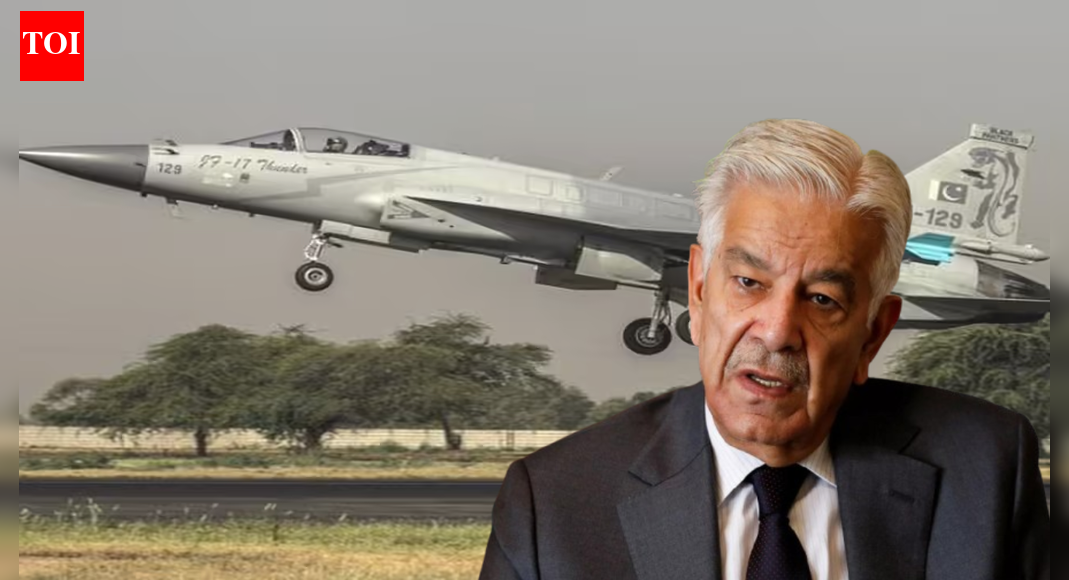
Pakistan defence minister Khawaja Asif

Pakistan on Tuesday expressed confidence that it may no longer need financial assistance from the International Monetary Fund within six months, with Pakistan defence minister Khawaja Asif claiming the country had seen a surge in aircraft orders following a four-day military standoff with India in May, Geo TV reported.Speaking on a Geo News programme, Asif made a fanciful claim while arguing that the May 2025 India-Pakistan conflict showcased Pakistan’s “resolve and military effectiveness” to the world.Military tensions escalated in May 2025 after Pakistan-sponsored terrorists carried out a terror attack in Pahalgam, killing 26 civilians in April. India responded with a strong military operation, launching Operation Sindoor, under which it targeted and destroyed multiple terror camps and Pakistani military facilities.However, Khawaja Asif, appearing disconnected from the ground reality, made such statements after a Bangladeshi defence delegation met Pakistan’s air chief to discuss a potential sale of the JF-17 Thunder, the multi-role fighter aircraft jointly developed by China and Pakistan. There are also reports of talks between Pakistan and Saudi Arabia to convert about $2 billion in Saudi loans into a JF-17 fighter jet deal, according to two Pakistani sources cited by Reuters.According to Arab News, several countries have since stepped up defence engagement with Pakistan.“Right now, the number of orders we are receiving after reaching this point is significant because our aircraft have been tested,” defence minister Asif told Pakistan’s Geo News channel.“We are receiving these orders, and it is possible that after six months we may not even need the IMF,” he said.Pakistan markets the Chinese co-developed JF-17 as a lower-cost multi-role fighter and has positioned itself as a supplier offering aircraft, training and maintenance outside Western supply chains.“I am saying this with full confidence,” Asif said. “If all these orders materialise over the next six months, we will not need the IMF.”

Pakistan’s repeated reliance on IMF

Pakistan has repeatedly turned to the International Monetary Fund over the years, for financial support to stabilise its fragile economy, with such assistance tied to strict conditions including fiscal reforms, subsidy cuts and revenue-enhancing measures.In September 2024, the IMF approved a $7 billion bailout for Pakistan under its Extended Fund Facility (EFF), followed by a separate $1.4 billion loan under its climate resilience fund in May 2025, aimed at bolstering the country’s economic stability and climate resilience.

Bangladesh shows interest in Pak’s JF-17

Demonstrating Dhaka’s efforts to move closer to Islamabad, Bangladesh has expressed “potential interest” in acquiring the JF-17 Thunder fighter aircraft from Pakistan, along with plans to resume direct flights between the two countries from January 29 after a gap of more than a decade.The JF-17, jointly developed by China and Pakistan, was deployed by Pakistan against India during the May 7–10 hostilities. In November last year, Indian Air Force chief Air chief Marshal A P Singh said the aircraft was among at least five high-tech Pakistani fighters shot down during Operation Sindoor.This latest development and closeness between Pakistan and Bangladesh comes under the pretext of Dhaka’s straining relations with India.

Pak seeks JF-17 deal with Saudi Arabia

Pakistan and Saudi Arabia are also in talks to convert around $2 billion in Saudi loans into a JF-17 fighter jet deal, as two Pakistani sources told Reuters, in a move that would deepen military cooperation between two Islamic nations. Pakistan and Saudi signed a mutual defence pact last year.The discussions highlight efforts by the long-time allies to operationalise defence cooperation at a time when Pakistan is under acute financial strain and Saudi Arabia is recalibrating its security partnerships amid uncertainty over US commitments in the Middle East.


Source link

WTC standings shake up after Ashes: Australia tighten grip at top, England slip as India stay in contention | Cricket News


WTC standings shake up after Ashes: Australia tighten grip at top, England slip as India stay in contention
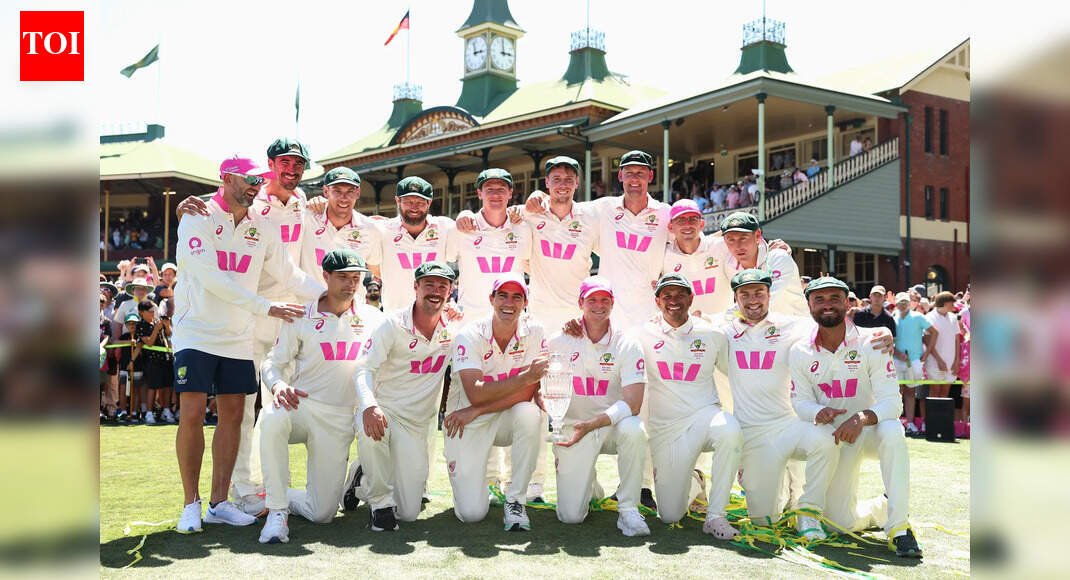
Australian players celebrate with the Ashes Waterford Crystal trophy after winning the Ashes series 4-1. (Getty Images)

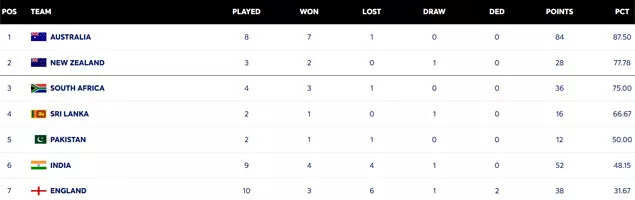
NEW DELHI: Australia’s emphatic 4–1 Ashes series victory over England has had a significant impact on the ICC World Test Championship (WTC) 2025–27 standings, with the former champions extending their lead at the top while England’s campaign continues to unravel and India’s position gains added context.Go Beyond The Boundary with our YouTube channel. SUBSCRIBE NOW!Following their five-wicket win in the fifth and final Test at the Sydney Cricket Ground on Thursday, Australia surged further ahead with a points percentage (PCT) of 87.50, up from 85.71. The result marked their seventh win of the current WTC cycle, with their only blemish coming in the Boxing Day Test, where England stunned them in a two-day finish.

Usman Khawaja’s retirement speech: ‘I want the journey for the next Usman Khawaja to be easier’

Chasing a modest 160 on the final day, Australia were briefly tested as England triggered a collapse, but Cameron Green (22), along with wicketkeeper Alex Carey (16), calmly guided the hosts home after lunch. The win not only sealed the series but also sent retiring opener Usman Khawaja out on a high in his final Test appearance.England’s defeat further dented their WTC hopes. Ben Stokes’ side slumped to their sixth loss in 10 matches, dragging their PCT down to 31.66. They remain seventh on the table, marginally ahead of Bangladesh and the West Indies, but crucially just below India.For India, the updated standings offer cautious encouragement. Shubman Gill’s side sit sixth with a PCT of 48.15, keeping them within striking distance of the top four as the cycle progresses. With several key home and away series still to come, England’s slide opens up space for India to climb if they can string together consistent results.Behind Australia, inaugural champions New Zealand occupy second place with a PCT of 77.78, followed by South Africa (75.00) and Sri Lanka (66.67), making the race for the WTC final spots increasingly competitive.Latest WTC Points Table:

WTC Standings


Source link

Budget 2026: From savers to investors – Unlocking India’s physical wealth through budget reforms


Budget 2026: From savers to investors - Unlocking India’s physical wealth through budget reforms
Every festive season, India’s cultural affinity for gold expresses itself in strong demand. (AI image)

By Navneet MunotIndia is a country of enormous diversity, with languages, customs and beliefs varying widely across regions. Yet one financial habit cuts across income levels and geography. Most households have grown up buying physical gold or silver every year on Akshaya Tritiya, Dhanteras or on other auspicious days. This was not driven by price charts or return calculations but because Gold was trusted as a store of value that could be passed down across generations. For many families, Land served a similar purpose as a tangible, secure asset. In the absence of a wide range of formal investment avenues, this instinct served Indian households well and helped India build a reputation as a ‘Nation of Savers’. The downside however was that a large share of this wealth remained idle. That is now beginning to change owing to sustained efforts of policymakers and industry to build confidence in India’s capital markets. As of FY25, Indian households had ~7% of their total assets in Equities vs only ~3% in FY15. Since January 2021, Domestic Institutional Investors (DIIs) have infused over $250 billion into equity markets, providing stability even as Foreign Portfolio Investors (FPIs) pulled out approximately ~$20 billion during the same period. Retail participation through mutual fund SIPs has been critical, with monthly SIPs rising to ~Rs 29k Cr in November 2025 from ~Rs 8k Cr in November 2019. Even so, financialization of savings has barely begun, with households still holding approx. two third of wealth in physical assets.A section 54F style Income Tax provision for physical asset monetisationToday, with numerous avenues available to invest savings more productively and with the economy in need of enormous financial capital to meet its growth objectives, the next phase of reforms must focus on monetising these assets in a productive way. The Union Budget could consider introducing a new provision in the Income Tax Act, modelled on Section 54F. If introduced, it should provide an exemption from long-term capital gains tax when proceeds from the sale of physical gold, silver or Land are reinvested into Equity Linked Savings Schemes (ELSS), with a lock-in of 5 years. Section 54F currently allows tax-free reinvestment of gains from any asset into a residential house. Extending a similar principle to financial assets would encourage households to rebalance a part of their portfolios in a tax-efficient manner.Why this reform matters now?Indian households are among the largest holders of precious metals in the world, with an estimated holding of ~25,000 tonnes of gold accumulated over generations. The recent surge in gold and silver prices has significantly increased the financial worth of families across India. At the same time, for a large number of households, this wealth remains largely notional.Secondly, most working Indians remain outside formal pension systems, even as life expectancy rises and healthcare costs increase. As ELSS’ provide transparency, professional management and potential inflation-beating returns in the long term, this reform could go a long-way in creating a credible retirement security. Far-reaching impact across economyFor households, the benefits could be tangible if the reform is introduced. Families that have seen the value of inherited gold or under-utilised land rise over time could monetise a portion and reinvest it into ELSS without immediate taxation. Over 10–20 years, such investments can materially strengthen retirement security or fund other financial goals. For the financial system, even a modest shift of household portfolios from physical to financial assets could translate into substantial, stable inflows. The 5-year lock-in would create a pool of patient domestic capital. Such flows help deepen market liquidity and crucially, cushion the market and the economy during bouts of FPI selling. A stronger domestic investor base is the best insurance against external volatility.From the Government’s perspective, the revenue risks appear limited. Many of these Gold and Land holdings are not being sold today and are being passed on through generations. When these get monetised, the Government can generate revenues from securities transaction tax, Stamp duty and GST on transactions/associated services that would not have occurred otherwise. Without requiring budgetary allocation, it uses the tax benefit to gently change behaviour, encouraging savers to become long-term investors. This should also aid Government’s efforts for formalisation of the economy. Every festive season, India’s cultural affinity for gold expresses itself in strong demand. This festive season, robust festival-driven purchases contributed to higher gold imports ($9.6Bn in Oct’25, $14.7Bn in Nov’25 vs Average of $3.3Bn for other months of CY25) adding to the current account deficit at a time when trade landscape is challenging. At the macro level, recycling household gold can gradually reduce dependence on incremental imports and ease current account pressure. More importantly, it would free up much needed financial capital needed to finance India’s growth ambitions. A Budget reform that could signal a maturing economyUnion Budgets are often considered a statement of Government’s intent. A section 54F-style exemption for reinvestment of proceeds from physical assets into financial products like MFs would signal confidence in India’s capital markets to the rest of the world. With emphasis on investor protection and investor education, such a measure can advance financial inclusion, macroeconomic resilience and the realisation of Viksit Bharat in the decade ahead. (Navneet Munot is MD & CEO of HDFC Asset Management Company)


Source link

Microsoft responds to 20,000 layoffs report, Chief Communications Officer Frank Shaw calls it “100 percent…


Microsoft responds to 20,000 layoffs report, Chief Communications Officer Frank Shaw calls it "100 percent…
Microsoft has vehemently denied widespread layoff rumors, with a top executive calling reports of up to 22,000 job cuts “completely false.” Speculation, fueled by past workforce reductions and a significant AI investment, suggested cuts across Azure, Xbox, and sales. However, the company insists these claims are entirely fabricated, aiming to quell anxieties about its future workforce.

Microsoft has aggressively pushed back against reports claiming the company plans to slash up to 22,000 jobs this month, with chief communications officer Frank Shaw directly calling the speculation completely false. The rumors started when investment site TipRanks reported Microsoft was preparing for widespread January layoffs affecting Azure Cloud, Xbox, and global sales teams—potentially cutting anywhere from 11,000 to 22,000 positions. As the claims spread across social media, Shaw stepped in with a definitive response: “100 percent made up / speculative / wrong,” on X.Windows Central had earlier indicated the reports were “false on the Xbox side at least,” before Shaw’s broader dismissal of the entire story.When met with skepticism in replies, he maintained his stance, telling one commenter he “eagerly awaits” the news he insists doesn’t exist.

Microsoft CEO ‘Thrilled’ About India’s Growing Data Centre Capacity, Details Meet With PM Modi

Microsoft’s recent history with job cuts fuels speculation

The cynicism isn’t baseless. Microsoft has executed several brutal rounds of job cuts over the past year and a half, eliminating more than 15,000 positions throughout 2025. The most recent wave came last July when roughly 9,000 employees were let go, accompanied by studio closures and canceled game projects. Xbox chief Phil Spencer defended those decisions as essential for the company’s future, citing the need for greater operational efficiency.Microsoft’s $80 billion commitment to AI infrastructure—triple the previous year’s investment—has created widespread anxiety about where the money’s coming from. CEO Satya Nadella has openly called the company’s size a “massive disadvantage,” while setting what many consider unrealistic profit margins for Xbox. These factors have created a climate where layoff speculation finds fertile ground.

Why January became the focus of layoff rumors

Anonymous posts on the professional network Blind claimed middle management and legacy teams would be let go, while AI researchers would stay protected. The chatter drew additional attention from Microsoft’s history of January workforce changes, but Shaw’s strong denial suggests 2026 won’t mirror that pattern—at least not on the rumored scale. Windows Central sources had already noted rumors of early-2026 layoffs circulating internally before this latest speculation, making Shaw’s clear statement all the more meaningful for anxious employees.


Source link

NRAI suspends national coach Ankush Bhardwaj after minor accuses him of sexual harassment | Gurgaon News


NRAI suspends national coach Ankush Bhardwaj after minor accuses him of sexual harassment

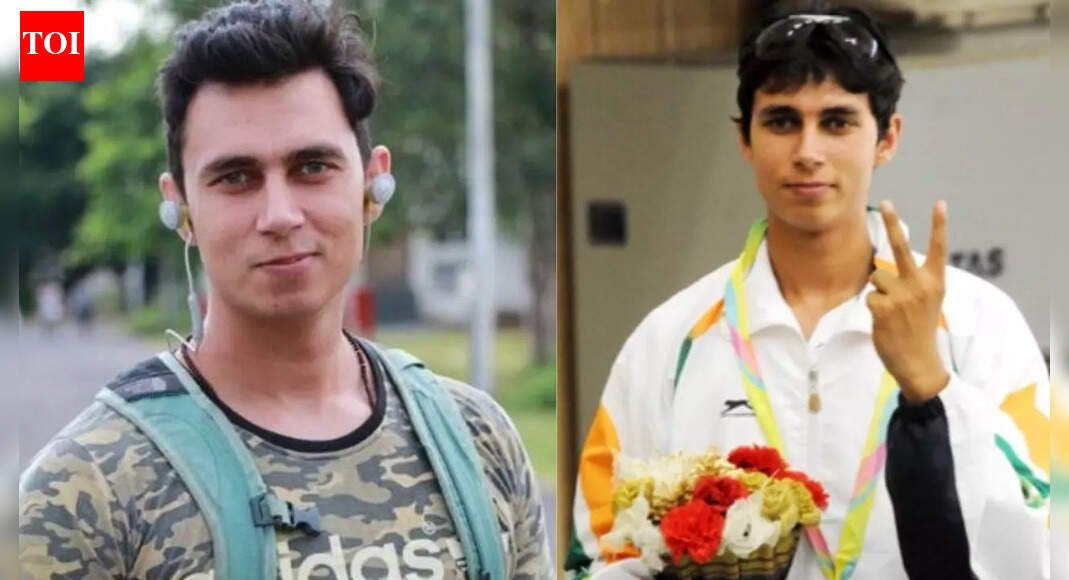
NEW DELHI: Ankush Bhardwaj, a member of India’s shooting coaching staff, has been accused of sexual harassment by a minor shooter, prompting the National Rifle Association of India (NRAI) to suspend him, news agency PTI reported. The NRAI confirmed that an FIR has been filed against Bhardwaj in Faridabad. “NRAI has suspended him and we will issue a show-cause notice,” NRAI secretary Rajiv Bhatia told PTI. “He has been suspended on moral grounds. Now, he has to prove himself innocent. Till the inquiry is not completed, he will not be associated with any coaching activity,” he added. Bhatia said Bhardwaj had been recommended by the NRAI for a place in the 37-strong coaching team after the Paris Olympics in 2024. “It was on the recommendation of the NRAI that he was appointed by SAI as one of the coaches. It is a case of sexual harassment which happened in Surajkund,” said Bhatia. The secretary did not specify when the incident took place. However, according to the FIR filed by the victim, she was targeted last month after a training session at the Karni Singh Range. The girl, who has been training with Bhardwaj since August last year, stated that she was left traumatised by the incident and spoke up in front of her mother on January 1 after being persistently probed. Bhardwaj, a former pistol shooter, had previously served a doping ban in 2010 for the use of a beta-blocker during his competitive days.


Source link

500% tariffs ahead for India & China? Trump clears Russia sanctions bill; what it means


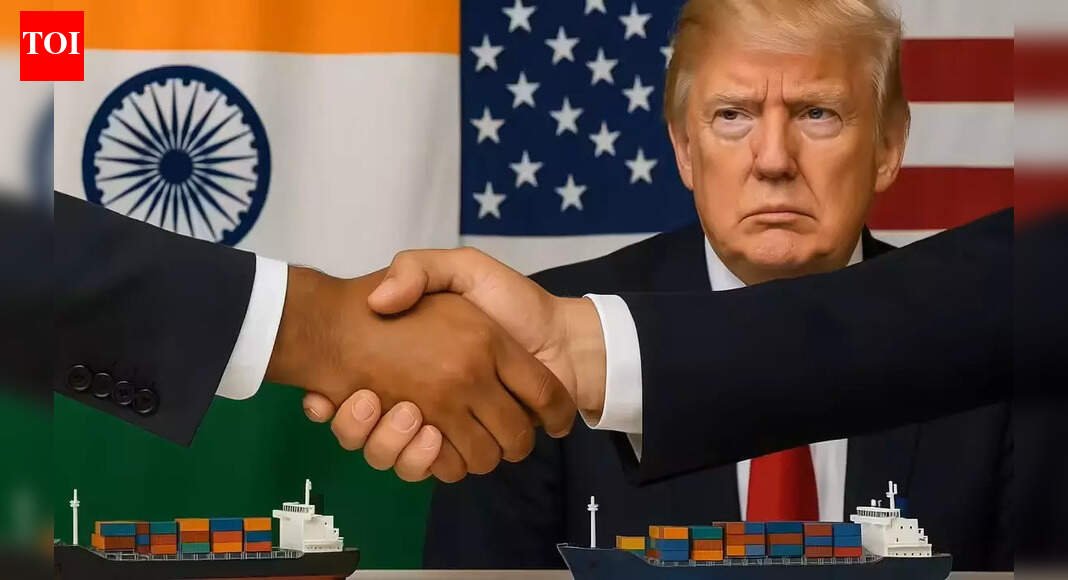
US President Donald Trump has approved a new bill that allows massive duties on countries that import Russian petroleum products. The bill, ‘Sanctioning Russia Act of 2025’ threatens at least 500% tariffs on countries that “knowingly engage in the exchange.” US senator Lindsey Graham said that the bill, which is now headed for bipartisan approval aims to punish nations “who buy cheap Russian oil,” a move that could directly impact India’s energy imports and further strain its trade ties with Washington. The proposed legislation sets out sweeping punitive measures that would be triggered if the US President finds that Russian government or a person acting at Russia’s direction refuses to negotiate a peace agreement with Ukraine. The measures will also be revoked in case a negotiated peace agreement is violated, another invasion of Ukraine or involved with overthrowing is initiated, dismantling, or seeking to subvert the Ukrainian government.

Donald Trump Says PM Modi ‘Not Happy With Me’ Over Higher Russian Oil Tariffs

The bill states that Trump “must increase the rate of duty on all goods and services imported into the United States from countries that knowingly engage in the exchange of Russian-origin uranium and petroleum products to at least 500% relative to the value of such goods and services.”Also read: Donald Trump claims PM Modi ‘not that happy’ with steep tariffs, flags delays in Apache helicopter delivery In his post on X, Graham said, “After a very productive meeting today with President Trump on a variety of issues, he greenlit the bipartisan Russia sanctions bill that I have been working on for months with Senator Blumenthal and many others.” Explaining the crucial timing of the bill, the executive further added, “Ukraine is making concessions for peace and Putin is all talk, continuing to kill the innocent.”“This bill will allow President Trump to punish those countries who buy cheap Russian oil fueling Putin’s war machine. This bill would give President Trump tremendous leverage against countries like China, India and Brazil to incentivize them to stop buying the cheap Russian oil that provides the financing for Putin’s bloodbath against Ukraine.” Earlier this week, Graham said that India was urging Washington to roll back steep tariffs imposed in August 2025, over the same issue. Graham claimed that India’s ambassador to the US, Vinay Mohan Kwatra, met him last month to highlight New Delhi’s reduced purchases of Russian oil and to seek relief from the additional 25% duties. Speaking to reporters aboard Air Force One alongside Trump, the senator said, “I was at the Indian Ambassador’s house a month ago, and all he wanted to talk about was how India is buying less Russian oil. And he asked me to tell the President to relieve the 25% tariff.” The tariffs were imposed in August, with the US arguing that India’s energy trade with Russia was indirectly supporting Moscow’s war effort in Ukraine. With the extra levy, total duties on certain Indian goods rose to 50%. Trump has openly acknowledged that the tariffs have strained ties with Prime Minister Narendra Modi. Addressing the House GOP Member Retreat, he said PM Modi was unhappy with the trade measures but pointed to a reduction in oil imports from Russia. “He’s not that happy with me because, you know, they’re paying a lot of tariffs now because they’re not doing the oil, but they are — they’ve now reduced it very substantially, as you know, from Russia,” Trump said.Also read: US says India sought relief from 25% duties, claims New Delhi ‘buying less Russian oil’ The US President has repeatedly warned India that tariffs could be increased further if it does not “help on the Russian oil issue,” directly linking trade pressure to the Russia–Ukraine conflict. He has argued that India’s purchases of discounted Russian crude fuel Moscow’s war machine in Ukraine. India, however, has maintained a firm stance, rejecting Trump’s earlier claim that PM Modi had assured him New Delhi would stop buying Russian oil, clarifying that no such conversation took place. As Washington moves closer to advancing the sanctions bill, the proposed legislation could raise fresh uncertainty for India.At the same time, Trump has positioned himself as a potential broker in the Russia–Ukraine war, holding talks with both Russian President Vladimir Putin and Ukrainian President Volodymyr Zelenskyy, though without any concrete breakthrough so far.


Source link

Shadab Khan’s all-round show powers Pakistan to a dominant win over Sri Lanka in 1st T20I


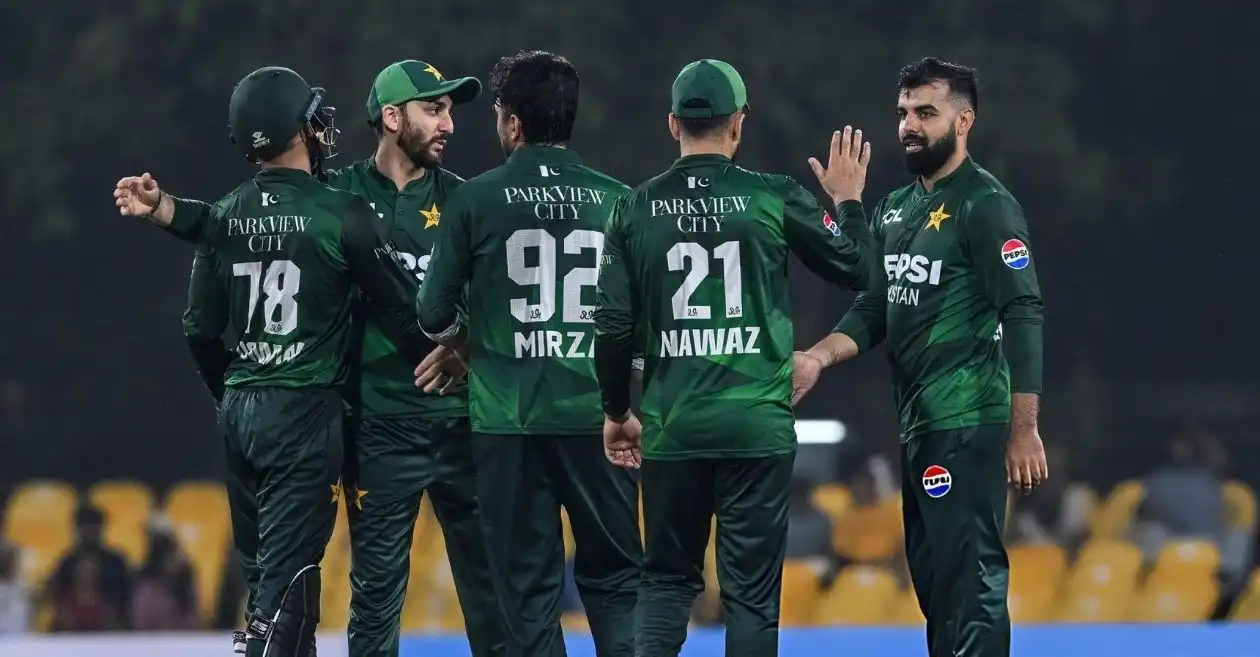
Pakistan kicked off their T20 World Cup preparations in style, cruising to a comfortable six-wicket victory over Sri Lanka in the first T20I at the Rangiri Dambulla International Stadium on Wednesday.

Electing to bowl first under cloudy skies, the visitors produced a disciplined bowling effort to bundle the hosts out for a modest 128. In response, a blistering half-century from Sahibzada Farhan ensured Pakistan chased down the target with 20 balls to spare, taking a 1-0 lead in the three-match series.

Shadab Khan, Abrar Ahmed sizzle with bowling brilliance

The Sri Lankan innings never truly gathered momentum after being asked to bat. Pakistan’s new-ball pair of Salman Mirza and Mohammad Wasim Jr. struck early blows, removing openers Kamil Mishara and Pathum Nissanka inside the powerplay to leave the hosts reeling at 16/2.

While Janith Liyanage offered some resistance with a fighting 40 off 31 balls, he lacked support from the other end. The middle order crumbled against the spin variations of Abrar Ahmed (3/25) and the returning Shadab Khan (2/25). A late-order collapse saw Sri Lanka lose their last five wickets for just 22 runs, eventually being bowled out for 128 in 19.2 overs.

Also READ: No Mohammad Rizwan as Pakistan unveils provisional squad for the T20 World Cup 2026

Sahibzada Farhan blazes away in chase

The match marked a successful return for all-rounder Shadab, who was named Player of the Match. Playing his first international game since his shoulder surgery, Shadab looked sharp with the ball, picking up crucial wickets in the middle overs. He later contributed a calm unbeaten 18 to guide the team home, proving his fitness and form ahead of the marquee tournament next month.

Defending a small total, Sri Lanka needed early wickets, but Pakistan’s openers had other ideas. Farhan launched a counter-attack, smashing a fluent 51 off just 36 deliveries (4 fours, 2 sixes). His aggressive intent in the powerplay effectively killed the contest early, despite Maheesh Theekshana (1/31) and Wanindu Hasaranga (1/17) picking up consolation wickets.

Although Pakistan lost a few quick wickets in the middle, the required run rate was never an issue. Shadab and Usman Khan (7*) finished the job clinically in the 17th over.

Also READ: Sri Lanka vs Pakistan 2025, T20I Series: Schedule, Squads, Broadcast and Live Streaming details


Source link

‘Could not shake our eternal faith’: PM Modi recalls Somnath temple attack; shares throwback pictures | India News


‘Could not shake our eternal faith’: PM Modi recalls Somnath temple attack; shares throwback pictures

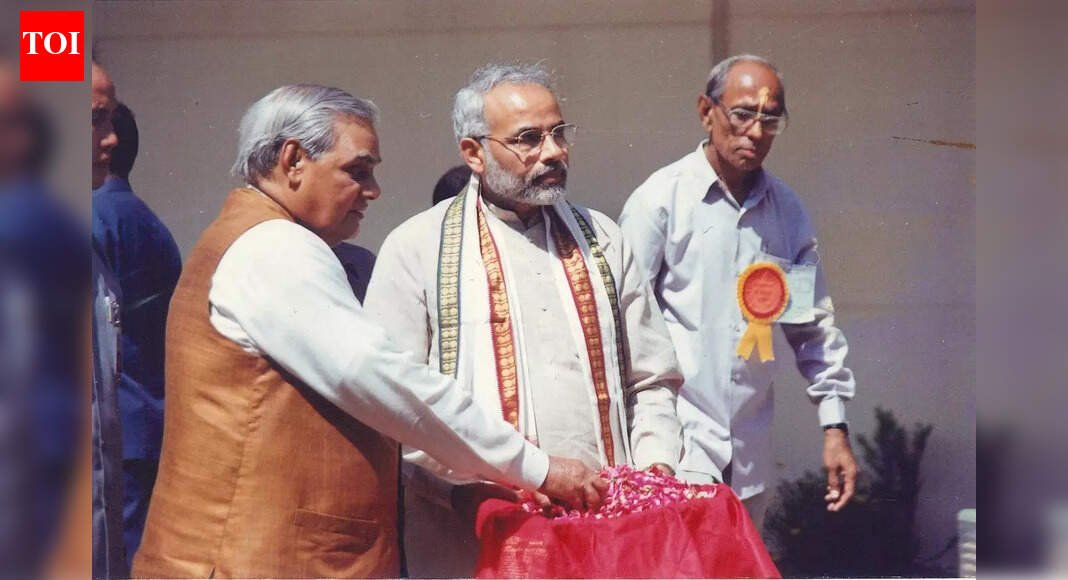
NEW DELHI: Prime Minister Narendra Modi on Thursday kicked off the Somnath Swabhiman Parv, sharing pictures from his visit to the Somnath temple in 2001 and describing the year-long celebrations as a tribute to country’s civilisational resilience.In a post on X, the Prime Minister said the Somnath Swabhiman Parv is about remembering “the countless children of Bharat Mata, who never compromised with their principles and ethos,” even in the most challenging times.“Jai Somnath! Somnath Swabhiman Parv begins today. A thousand years ago, in January 1026, Somnath faced its first-ever attack. The attack of 1026 and the subsequent attacks couldn’t diminish the eternal faith of millions, nor break the civilisational spirit that rebuilt Somnath time and again,” PM Modi wrote.He added, “#SomnathSwabhimanParv is about remembering the countless children of Bharat Mata, who never compromised with their principles and ethos. However daunting the times were, their resolve remained unshaken and their commitment to our ethos unwavering.”The Prime Minister also shared glimpses from a programme held at Somnath on October 31, 2001, when the 50th anniversary of the inauguration of the Somnath temple was commemorated.“I am also sharing with you some glimpses of a program organized in Somnath on October 31, 2001. That was the year when we celebrated the 50th anniversary of the inauguration of the Somnath Temple, which was reconstructed in 1951. In 1951, that historic ceremony was held in the presence of the then President Dr. Rajendra Prasad Ji. The efforts of great personalities including Sardar Patel and KM Munshi Ji in the reconstruction of the Somnath Temple were extremely commendable,” he said.PM Modi noted that the 2001 programme was attended by several senior leaders, including then Prime Minister Atal Bihari Vajpayee and then Home Minister L. K. Advani.“In this program of the year 2001, the then Prime Minister Atal Ji and Home Minister Advani Ji and many dignitaries had participated. In the year 2026, we are also commemorating the 75th anniversary of the grand ceremony that took place in 1951!,” he added.The Somnath temple at Veraval in Gujarat was reconstructed in 1951, with the inauguration ceremony held in the presence of then President Rajendra Prasad, following efforts led by leaders such as Sardar Vallabhbhai Patel and K. M. Munshi.PM Modi is scheduled to visit the Somnath Temple on January 11 to take part in the Somnath Swabhiman Parv celebrations.The Somnath Swabhiman Parv will be observed from January 8 to January 11, during which a series of programmes highlighting India’s spiritual heritage, cultural pride and social values will be organised.


Source link

Who was Agnivesh Agarwal? Anil Agarwal’s son & Vedanta Group director passes away at 49; PM Modi offers condolences


Who was Agnivesh Agarwal? Anil Agarwal’s son & Vedanta Group director passes away at 49; PM Modi offers condolences

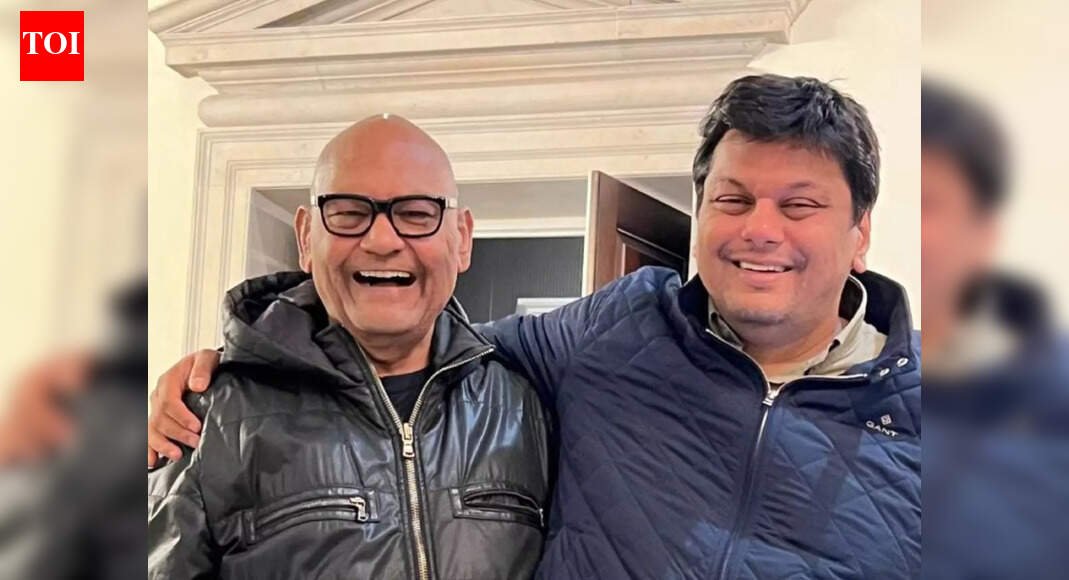
PM Narendra Modi, on Thursday, extended his condolences over the passing of Agnivesh Agarwal, the 49-year-old Vedanta Group director. Taking to X, PM Modi wrote, “The untimely passing of Shri Agnivesh Agarwal is deeply shocking and saddening. The depth of your grief is evident in this touching tribute. Praying that you and your family find continued strength and courage. Om Shanti. Agnivesh Agarwal, son of metals tycoon Anil Agarwal, passed away on Wednesday after suffering a cardiac arrest following a skiing accident in the United States. He had been receiving treatment at Mount Sinai Hospital in New York and was reported to be recovering before his sudden demise. Confirming the death, Anil Agarwal shared an emotional post on X, stating that his son had been “recovering well” before tragedy struck. “A sudden cardiac arrest snatched our son away from us,” he said, recalling Agnivesh’s life and journey.

Who was Agnivesh Agarwal?

Agnivesh was the son of metals and mining magnate Anil Agarwal, who grew Vedanta Resources from a small scrap metal business into a London-headquartered global conglomerate. Agnivesh served as the chairman of Talwandi Sabo Power (TSPL), a Vedanta subsidiary that runs a thermal power plant in Punjab. He was born in Patna on June 3, 1976. Agnivesh studied at Mayo College in Ajmer and went on to establish Fujairah Gold, a metals refinery in the UAE. He also held the position of chairman at Hindustan Zinc, acquired by Vedanta from the government in 2002, from November 2005 to February 2019, before taking charge of TSPL in May 2019. Remembering his son, Anil Agarwal said, “Agnivesh was many things – a sportsman, a musician, a leader. He studied at Mayo College, Ajmer, went on to set up one of the finest companies Fujeirah Gold, became Chairman of Hindustan Zinc, and earned the respect of colleagues and friends alike. Yet, beyond all titles and achievements, he remained simple, warm, and deeply human.”Anil Agarwal further addded that Agnivesh strongly believed in building a self-reliant India. He would often tell him, “Papa, we lack nothing as a nation. Why should we ever be behind?” They shared a vision to ensure that no child goes hungry, every child has access to education, every woman can stand on her own feet, and every young Indian has meaningful work. Anil had also promised Agnivesh that more than 75% of what they earn would be given back to society.


Source link

Big blow for India: Tilak Varma undergoes surgery, ruled out of New Zealand T20Is; T20 World Cup in doubt | Cricket News


Big blow for India: Tilak Varma undergoes surgery, ruled out of New Zealand T20Is; T20 World Cup in doubt

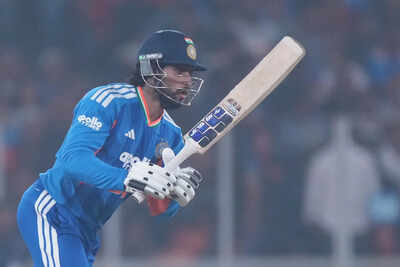
MUMBAI: In a major blow to India with less than a month to go for the 2026 T20 World Cup, T20 Asia Cup final hero and middle-order batter Tilak Varma has sustained an abdominal injury, which could sideline him for three to four weeks. Tilak is set to feature in the T20I series against New Zealand, and is in danger of missing the mega event next month too.Go Beyond The Boundary with our YouTube channel. SUBSCRIBE NOW!The 23-year-old left-hander was in Rajkot representing Hyderabad in the Vijay Hazare Trophy when he experienced acute testicular pain on Wednesday.

India vs New Zealand ODIs preview: Captain Shubman Gill, vice-captain Shreyas Iyer in focus

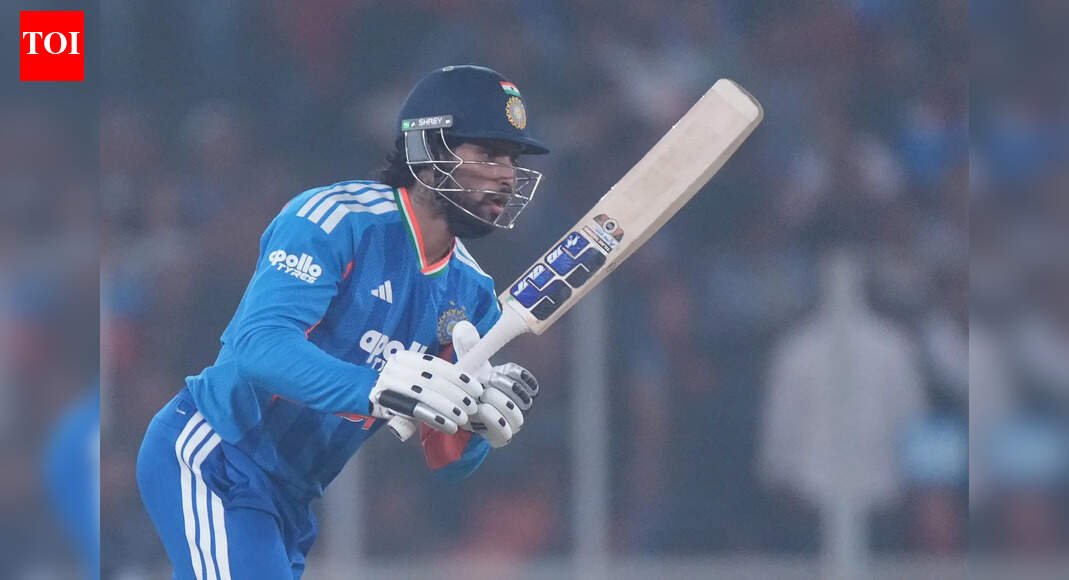
“He was immediately rushed to the Gokul Hospital, where scans diagnosed him with testicular torsion, and doctors advised immediate surgery. Tilak subsequently underwent successful surgery yesterday and is now doing well. He will be out of the hospital today,” Saurashtra Cricket Association president Jaydev Shah, who has been following up on Tilak’s treatment, told TOI on Thursday.Even though India would look to draft a replacement for the series that kicks off on January 21 in Nagpur. Tilak’s injury could open the doors of a T20 comeback for India’s ODI vice-captain Shreyas Iyer. However, it is unlikely that Shubman Gill, India’s Test and ODI captain, would be considered.The southpaw has been a key batter of the T20I setup over the past one year. He played a pivotal role in India’s Asia Cup 2025 triumph, with a match-winning 69* (53) in the final against Pakistan.


Source link