Breaking News
Ireland announces 15-member squad for T20 World Cup 2026; Paul Stirling to lead


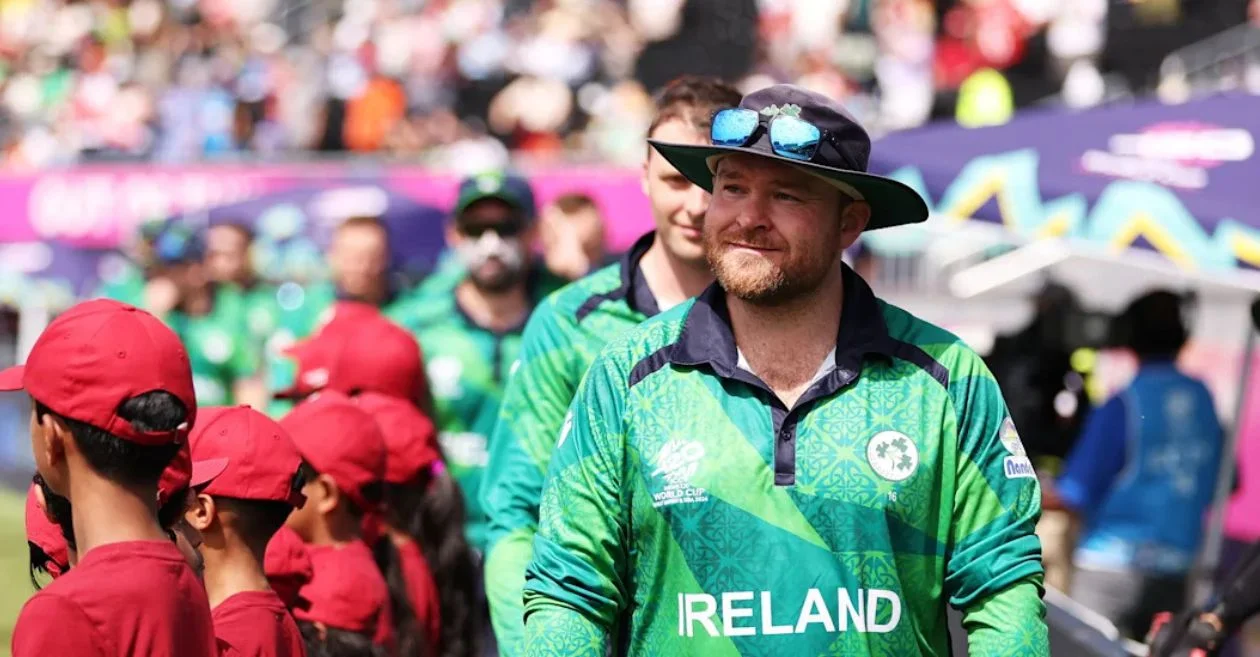
On January 9, 2026, Cricket Ireland officially announced their 15-member squad for the upcoming ICC Men’s T20 World Cup 2026, which will be co-hosted by India and Sri Lanka starting February 7. Veteran opener Paul Stirling has been retained as captain to lead the ‘Men in Green’ in their ninth appearance at the marquee event, with wicketkeeper-batter Lorcan Tucker named as his deputy.

The selection shows a clear commitment to stability, as 12 of the 15 players from the 2024 campaign have kept their places. National Selector Andrew White expressed strong optimism, stating that the team has been waiting to rectify their 2024 performance and will enter a highly competitive Group B, which includes hosts Sri Lanka and powerhouse Australia, with ‘no fear.’

Experience meets youth: The fresh faces in Ireland’s 15-man squad

While the core of the team remains settled, the 2026 squad features three exciting new additions who have earned their maiden World Cup call-ups through consistent domestic form. Tim Tector, the 22-year-old brother of star batter Harry Tector, joins the ranks as a versatile top-order option and off-spinner. He is joined by 23-year-olds Ben Calitz, a left-handed middle-order specialist, and Matthew Humphreys, a crafty left-arm spinner.

Selector Andrew White noted that these players ‘add a further dynamic nature to the playing group’ as the team looks to balance veteran savvy with youthful energy. Notably, a fit-again Ross Adair returns to the squad after recovering from a knee injury, though there was no place for former captain Andrew Balbirnie in the final list.

Also READ: ‘Three stooges’: Geoffrey Boycott identifies the key figures behind England’s disastrous 4-1 Ashes defeat

Group B roadmap: Ireland’s high-stakes schedule in Sri Lanka

Ireland have been placed in Group B, arguably one of the most challenging pools of the tournament, alongside Australia, Sri Lanka, Oman and Zimbabwe. All of Ireland’s group-stage matches will take place in Sri Lanka, beginning with a high-voltage opener against the hosts on February 8 in Colombo.

Following the opener, the Irish will face a formidable Australian side on February 11, followed by crucial encounters against Oman and Zimbabwe that will likely determine their Super 8 fate. To prepare for the subcontinental conditions, the squad is scheduled to travel to Dubai on January 15 for a series of warm-up T20Is against Italy and the UAE, ensuring they are ‘match-ready’ for the unique spin-friendly tracks of the Premadasa and Kandy stadiums.

Ireland full 15-member squad for T20 World Cup 2026

Player Role
Paul Stirling (c) Opening Batter
Lorcan Tucker (vc) Wicketkeeper-Batter
Mark Adair Bowler / All-rounder
Ross Adair Batter
Ben Calitz Batter
Curtis Campher All-rounder
Gareth Delany All-rounder
George Dockrell All-rounder
Matthew Humphreys Bowler (Left-arm spin)
Josh Little Bowler (Left-arm fast)
Barry McCarthy Bowler
Harry Tector Batter
Tim Tector Batter / All-rounder
Ben White Bowler (Leg-spin)
Craig Young Bowler

Also READ: Adult film star Kendra Lust shares photo with Virat Kohli; fans react to the viral buzz


Source link

Maharashtra road safety push: Data-led interventions aim to reduce highway and district fatalities | Mumbai News


MUMBAI: January is being observed as National Road Safety Month, but the urgency behind this year’s theme — ‘Zero-Fatality Month’ — is less commemorative and more corrective. With over 1.7 lakh people dying on Indian roads every year, the equivalent of more than 450 deaths a day, road crashes have quietly become one of the country’s most persistent and under-acknowledged public health emergencies.In response, the Maharashtra government, acting on a directive from the Ministry of Road Transport and Highways (MoRTH), has enlisted the technical support of SaveLIFE Foundation (SLF) to help implement scientific, measurable road safety interventions across the state. The focus is on moving beyond awareness campaigns towards institutionalised change — embedded in road design, enforcement systems, trauma care and local governance.At the heart of this effort is SLF’s Zero-Fatality model, which is already being implemented across 100 national highway stretches through the Zero Fatality Corridor (ZFC) programme and across 100 districts under the Zero Fatality District (ZFD) programme. On several of these high-risk stretches, fatalities have fallen by 30 to 60 percent, according to SLF, through a combination of data-driven diagnostics and on-ground interventions.As part of the ‘Zero-Fatality Month’ framework, SLF has proposed a structured, week-wise, district-led action plan focused on measurable outcomes rather than symbolic compliance. The first step requires districts to use crash data to identify their three most dangerous corridors and ten highest-fatality locations, along with analysing patterns related to time of day, type of crash, and vulnerable road users.Once risks are mapped, districts are expected to deploy interventions across four pillars. Engineering measures include speed calming, better signage and road markings, improved lighting, pedestrian infrastructure and safer junction design. Enforcement focuses on zero tolerance for speeding, drunk driving, wrong-side driving and non-use of helmets and seatbelts. Emergency response includes positioning ambulances closer to crash hotspots and strengthening trauma care preparedness. The fourth pillar involves community engagement, particularly targeted awareness for high-risk groups.Progress is tracked through weekly monitoring and standardised reporting by district task forces, followed by mid-month state-level reviews to enable rapid correction and scaling.“India’s road crash crisis is not unsolvable. With stronger systems and coordinated action, many road crash fatalities can be prevented. Losing over 450 lives every day on our roads is the equivalent of a major air crash unfolding daily, yet it rarely triggers the urgency it deserves. What our work across highways and districts has consistently shown is that when science-backed road design, strict enforcement, robust trauma care, and district-level accountability come together, fatalities fall—often by 30 to 60 percent. As such, this National Road Safety Month, we must move beyond intent and awareness to measurable action on the ground. Zero fatalities is not an aspiration; it is an achievable outcome when governance owns road safety as a public health priority. We are delighted to be supporting MoRTH and the administrations of various states and union territories for this initiative,” said Mr. Piyush Tewari, Founder-CEO, SaveLIFE Foundation.A distinguishing feature of SLF’s approach is its emphasis on local adaptation rather than one-size-fits-all replication. Its six-step model — partnerships, data analytics, on-site audits, tailored interventions, impact measurement and replication — is designed to embed safety practices into local governance rather than operate as an external programme.Several states, including Maharashtra, have already begun mobilising transport, police, health, education, and urban and rural local bodies to operationalise MoRTH’s directive. The shift underway is not simply about safer roads, but about redefining road safety as a core function of public administration — one where success is measured not by campaigns launched, but by lives saved. If Zero-Fatality Month succeeds, it will not be because people were reminded to be careful, but because systems were redesigned to be safer.


Source link

Access Denied


Access Denied

You don’t have permission to access “http://www.ndtv.com/world-news/us-hikes-h-1b-visa-premium-processing-fee-from-march-check-new-rates-10589283” on this server.

Reference #18.2ef63717.1768027934.1be74428

https://errors.edgesuite.net/18.2ef63717.1768027934.1be74428


Source link

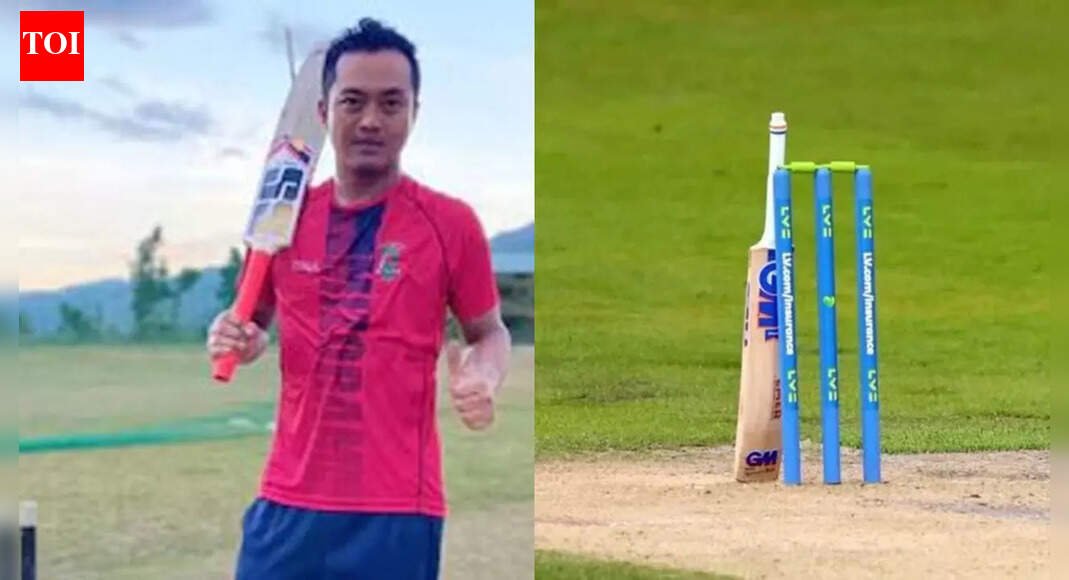
‘Big loss’: Former Ranji Trophy player collapses, dies during cricket match; BCCI mourns | Cricket News


'Big loss': Former Ranji Trophy player collapses, dies during cricket match; BCCI mourns
Khawlhring Lalremruata (Image credit: X)

Former Mizoram Ranji Trophy cricketer K. Lalremruata passed away on Thursday, hours after collapsing during a local cricket match, officials confirmed. He was 38.A resident of Maubawk near Aizawl, Lalremruata was playing for Venghnuai Raiders Cricket Club (VRCC) in the second division screening tournament of the Khaled Memorial at the Suaka cricket ground near the Sairang railway station when the tragic incident occurred. According to the Cricket Association of Mizoram (CAM), Lalremruata suffered a stroke while the match was in progress and later succumbed despite being rushed for medical treatment.

Jay Shah’s 2036 Olympic blueprint for India: ‘8 Medals won’t cut it’

The incident took place during a Khaled Memorial 2nd Division Screening Tournament match between Venghnuai Raiders CC and Chawnpui ILMOV CC. Lalremruata, who was representing VRCC, suddenly collapsed on the field while play was underway. He was immediately attended to and taken for medical care, but doctors were unable to save him.In a statement, the CAM confirmed the cause of death and expressed deep condolences to the bereaved family, calling it a significant loss for cricket in the state. “Our thoughts and prayers are with his family; may God comfort them as they navigate this great loss,” the CAM said.Lalremruata represented Mizoram twice in the Ranji Trophy and seven times in the Syed Mushtaq Ali Trophy. A wicketkeeper by role, he made his First-Class debut against Meghalaya in 2018 and played his last competitive match in 2022 against Nagaland. Beyond the domestic circuit, he was also a familiar figure in Mizoram’s local cricket scene, having played for several clubs and served on the Senior Tournament Committee, contributing to the game’s development at the grassroots level.The Board of Control for Cricket in India (BCCI) also condoled his passing. “Deeply saddened by the passing of Mizoram cricketer K Lalremruata. He proudly represented Mizoram in the Ranji Trophy and Syed Mushtaq Ali Trophy. The BCCI extends heartfelt condolences, thoughts and prayers to his family, friends and the Mizoram cricket community,” BCCI Domestic posted on X.Mizoram’s Sports and Youth Services Minister Lalnghinglova Hmar mourned Lalremruata’s death, while the impact of the tragedy extended beyond the state. Following the incident, Assam Cricket cancelled all matches scheduled for Thursday, including games in the 2nd Division Screening Tournament at SCG, Sihhmui, the 3rd Division Screening Tournament semi-finals at Lawipu Playground, and the Samagra Inter-School Cricket Tournament for boys and girls at venues in Mualpui. Revised schedules will be announced later.


Source link

Worried your child constantly asks for coke? Shalini Passi shares a clever parenting hack |


Worried your child constantly asks for coke? Shalini Passi shares a clever parenting hack
Shalini Passi (File photo)

Kids and Coke, it’s a love story many parents know all too well. The fizz, the sweetness, that bubbly “pop” when you open a can, it’s hard for little ones to resist.Colorful branding, fun bottles, and ads everywhere, and suddenly Coke becomes more than a drink; it’s a tiny daily treat they crave.The problem is, what seems harmless can actually be pretty rough on growing bodies. What makes coke bad for kids? Coke is loaded with sugar and this can lead to weight gain, energy spikes followed by crashes, and even early signs of insulin resistance. Then it can make kids jittery, affect their sleep, or give them a racing heart.And let’s not forget the acid in the soda, which can slowly damage teeth, leading to cavities before you even realize it.

How to make sure your kid is having a heart-healthy meal

Despite all this, kids love it because it’s sweet, fizzy, and feels special, a “grown-up” treat they get to enjoy.But Indian TV personality Shalini Passi had a hilariously clever trick up her sleeve that might just make parents everywhere smile (and maybe try it themselves).Shalini, who shot to fame on Netflix’s Fabulous Lives vs Bollywood Wives, recently opened up about how she handled her son’s early love for carbonated drinks, especially Coke. Instead of outright banning it (which usually makes kids want it even more), she pulled off a playful trick.According to Shalini, when her son was little, she would mix water into the Coke before giving it to him. The little guy thought he was drinking real Coke, but the taste was so off that he eventually decided he didn’t like it. The result? He steered clear of sugary soda at home simply because he believed “the Coke in our house tastes bad.” The funniest part came later when he grew up a bit and visited a party where regular Coke was served. After his first sip, he went straight to his mom and exclaimed how amazing it tasted compared to “the bad Coke at home.” It was only then that he realised something was up, although Shalini, cheeky as ever, didn’t exactly spill the beans.Sugary drinks like Coke are best kept to a minimum. They’re loaded with sugar and offer little nutritional benefit.Regular consumption has been linked to tooth decay, unhealthy weight gain, and other issues that parents definitely don’t want for their kids. But the tricky part is how to discourage those habits without turning every mealtime into a power struggle. Shalini’s approach, sly, playful, and harmless, just might be one way to do it.


Source link

India’s job seekers are active, anxious and unsure how to stand out in an AI-shaped market | Mumbai News


MUMBAI: At a moment when artificial intelligence is reshaping how work is done and how people are hired, a striking contradiction is emerging in India’s job market: professionals are more active than ever in looking for work, yet more uncertain than ever about how to succeed.New research from LinkedIn shows that 84% of professionals in India feel unprepared to find a new job in 2026, even as 72% say they are actively seeking one. The anxiety is not driven by a lack of ambition, but by the feeling of navigating an opaque and fast-changing hiring landscape — one increasingly shaped by algorithms, automation and shifting skill demands.While 87% of professionals say they are comfortable using AI at work, many feel unsure about how it is being used in recruitment. Seventy-seven percent say there are too many stages in the hiring process, and 66% find it increasingly impersonal. With recruiter response times slowing and feedback often absent, nearly half of job seekers say they simply do not know how to make their application stand out.Competition is a major part of the story. LinkedIn data shows that applicants per open role in India have more than doubled since early 2022. As a result, 76% of job seekers say finding a new role has become tougher over the last year. Recruiters, too, are under strain: nearly 74% say it has become harder to find qualified talent, suggesting a widening gap between what companies need and what candidates believe they offer.That mismatch is pushing people to rethink their career trajectories. Around a third of Gen X job seekers are considering new functions or roles, while a similar proportion of Gen Z is looking beyond their current industry. At the same time, LinkedIn data shows “founder” emerging as a rapidly growing identity, reflecting a parallel shift towards entrepreneurship as an alternative to traditional employment.Yet if AI is part of what is unsettling the job market, it is also becoming a tool for navigating it. Ninety-four percent of Indian job seekers say they plan to use AI in their job search, and 66% say it boosts their interview confidence. AI, in this sense, is evolving from a productivity tool into a psychological one — helping people regain a sense of control in an uncertain process.“AI is now a foundational part of how careers are built and how talent is evaluated across India’s job market. What professionals need most is a clear understanding of how their skills translate into opportunity and how hiring decisions are actually made. When used with purpose, AI tools can bridge that gap by helping people identify the roles they’re right for, prepare with intent, and focus their learning where it matters most. That’s where LinkedIn helps job seekers and hirers meet the moment,” said Nirajita Banerjee, LinkedIn Career Expert and Senior Managing Editor, LinkedIn India News.LinkedIn’s “Jobs on the Rise” list offers one such lens into where demand is moving. Prompt Engineer now tops the list, followed by AI Engineer and Software Engineer, reflecting sustained appetite for AI and digital skills. But the rankings also reveal growth across sales, brand strategy, cybersecurity and advisory roles — alongside less obvious areas such as veterinary services, solar consulting and behavioural therapy.To support job seekers, LinkedIn is rolling out AI-powered job search globally, allowing members to search in natural language and discover roles they may not have considered. Job match tools further help candidates understand where they are most likely to fit, shifting the emphasis from volume of applications to relevance.What emerges from the data is not just a picture of a competitive market, but of a transitional one — where the rules are being rewritten faster than most people can learn them. The unease professionals feel is not simply about jobs disappearing, but about not knowing how to be visible, legible and valued in a system increasingly mediated by machines. In that sense, the real skill deficit of 2026 may not be technical alone, but interpretive: learning how to read the new signals of work, and how to respond to them with clarity and confidence.


Source link

How female-led films like ‘Lokah’, ‘Mahanati’ and ‘The Girlfriend’ in South Indian cinema have broken the glass ceiling in recent years |


South Indian cinema is witnessing a powerful shift, moving beyond male-dominated narratives to celebrate female protagonists. Films like ‘Rudhramadevi’, ‘Mahanati’, and the record-breaking ‘Lokah: Chapter 1- Chandra’ showcase women as heroes and architects of their own destinies. This evolution highlights diverse storytelling and the commercial viability of women-led projects, reflecting broader cultural changes.

For decades, South Indian cinema spanning Telugu, Tamil, Malayalam, and Kannada language film industries has been anchored in male-centric narratives. The cultural expectation was clear: mass entertainers typically revolved around heroes, larger-than-life action sequences, melodrama, and the box office pull of male stars. Women, while often integral, existed most frequently in ornamental, romantic, or supporting roles. That is changing and in 2025, it has changed strikingly. A quiet revolution is underway, one that reimagines screen narratives, recalibrates audience expectations, and elevates female protagonists from accessories to architects of their own stories.From peripheral to central: A shifting narrative landscapeThe transformation has not happened overnight. It was built on milestones films that insisted on centralising women’s interior worlds, ambitions, fears, strengths, and contradictions. These films didn’t just feature women; they were led by them.

From Kirik Party to Pushpa & Animal, Rashmika Marks 9 Years With Heartfelt Note

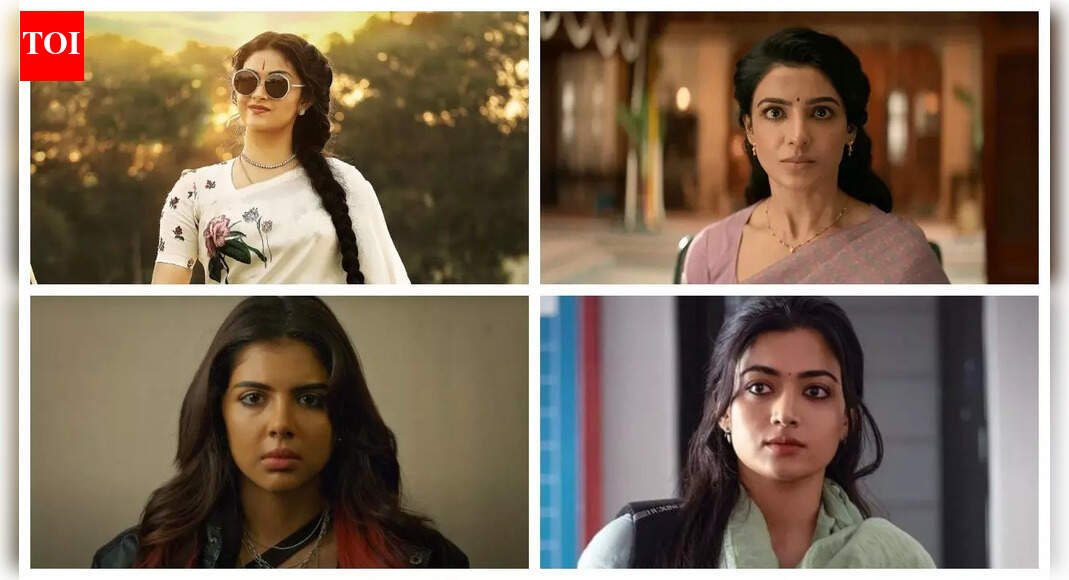
One of the earliest notable examples in recent memory is ‘Rudhramadevi’ (2015), starring Anushka Shetty, it was based on the life of Rudhramadevi – one of the most prominent rulers of Kakatiya dynasty in the Deccan and of the few ruling queens in Indian history. In an industry often reluctant to make women-led action films, this period biopic stood for telling a story of a powerful woman ruler. Before this one, Shetty had also done ‘Arundhati’, a horror-fantasy which she led from the front. Biopics and emotional authenticity: ‘Mahanati’ and beyondIn 2018, ‘Mahanati’, the biographical drama of legendary South Indian actress Savitri, brought a new texture to female storytelling. With Keerthy Suresh’s luminous performance as the titular icon, ‘Mahanati’ showcased how women’s stories, rooted in the emotional and cultural texture of cinema history itself, could be both critically acclaimed and commercially viable. It went on to be the highest grossing female led film from South India till Kalyani Priyadarshan’s ‘Lokah: Chapter 1- Chandra’ released this year. Also in the same year released Bhaagamathie once again led by Anushka Shetty- the film blended horror and thriller with a potent female lead who refuses to be reduced to fear alone. Its success further cemented the notion that women could command audiences in high-concept genre films.But it was in 2025 that South Indian cinema truly felt the shift in female-driven storytelling in a big way. ‘Lokah Chapter 1: Chandra’ headlined by Kalyani Priyadarshan- a Malayalam superhero film centred on a mysterious woman summoned to fight corruption and injustice did something few would have predicted a year earlier: it became the highest-grossing female-led film in South Indian history and 2nd highest female led film of Indian Cinema.. Not only did it break the ₹100 crore mark in the country , it also went on to become the highest grossing Malayalam film of all time. The film also demonstrated that female superheroes could attract mass audiences without falling back on male co-stars to sell tickets. ‘Lokah’ is one of the examples on how a perfect production planning can help in improving a movie’s quality.It wasn’t just box office numbers that made Lokah significant, it was the confidence with which the story granted agency to its female central figure, positioning her not as a companion or quest object but as the epicentre of her own mythology.Adding to the mix was Rahul Ravindran helmed and Rashmika Mandanna starrer ‘The Girlfriend’ which examined toxic relationships through a brave and unflinching lens.

Social realism & Female interior worlds

Parallel to blockbuster superhero narratives, another important wave has been female-led social realism. The Malayalam sensation ‘The Great Indian Kitchen’ (2021) saw the release of its Hindi remake with Sanya Malhotra. It went on to become one of the most viewed films of Zee5 for the year. These films don’t rely on spectacle. Instead, their power comes from emotional accuracy and the quiet brutality of domestic expectations. The year also saw Anupama Parmeswaran step up the heat with hard hitting stories surrounding women and their place in society. Her first film ‘Parada’ told story of a village bound by the belief that women must remain veiled to ward off a curse and other film ‘JSK: Janaki V vs State of Kerala’ told the story of a rape victim. The film exposed the deep moral and ethical dilemmas of the Indian judicial system. The year also saw the release of Anushka Shetty’s ‘Ghaati’, the film told the story of a woman seeking revenge and striving to lift her community out of an endless exploitation. 2026 has also begun with a bang for women led films and this time it is newly married Samantha Ruth Prabhu with her film ‘Maa Inti Bangaaram’. The film is co-written and created by her husband Raj Nidimoru. Talking about Samantha said, “Maa Inti Bangaaram tells the story of a woman whose strength comes as much from her vulnerability as from her courage. Playing this character and nurturing this film as a producer has been an incredibly fulfilling journey for me. The world of this film is rooted and emotional with a narrative style dedicated to being family first and slice of life whilst maintaining its quirky, edgy energy. I’m truly excited for audiences to experience this story and connect with its spirit when it reaches them.”It isn’t like all the female led films released this year or in the past have worked at the box office -some connected and some didn’t. And this is the case also with the male led films. This surge in female-led films isn’t simply about representation. It’s about diversification of narrative forms, deeper engagement with varied audience experiences, and importantly commercial recognition that stories centred on women can sell tickets, ignite conversations, and win awards. The shift also reflects broader cultural currents that women on screen are no longer just the love interest, the caretaker, the victim, or the ornament, they are heroes, architects of their fates, flawed and powerful on their own terms.Some may celebrate these films as the moment the glass ceiling shattered; in reality, this is only the opening act of a far longer story


Source link

‘Parasakthi’: Sivakarthikeyan BREAKS silence on censor struggle; advises filmmakers to send films early for censor | Tamil Movie News


'Parasakthi': Sivakarthikeyan BREAKS silence on censor struggle; advises filmmakers to send films early for censor
Sivakarthikeyan has broken his silence on the censor struggles faced by his film ‘Parasakthi’, advising filmmakers to submit their movies for certification at least two months in advance. Despite 25 cuts, the actor believes the film’s core emotion and message about language and identity remain intact, aiming to resonate with audiences.

‘Jana Nayagan,’ helmed by H. Vinoth and starring Vijay, and ‘Parasakthi,’ directed by Sudha Kongara and featuring Sivakarthikeyan, have run into trouble with the censors at the same time and are creating ripples in the entertainment world.

Sivakarthikeyan speaks out on unexpected censor cuts

Amid this situation, Sivakarthikeyan’s comments on the censor issues surrounding both films have drawn significant attention. Stating at the promotions of ‘Parasakthi’ promotions, he could not comment on ‘Jana Nayagan’ as the matter is sub judice, the actor opened up about the experience of taking ‘Parasakthi’ to the censor board. He disclosed how there were cuts in the film at places where he least expected them, adding that one cannot predict how the censoring would proceed. “It all depends on individual views of the jury who are going to watch the film,” he said. In order to prevent such hassle at the last minute, he emphasized the need for films to be submitted for certification at least two months in advance, which has to be regularly practiced by producers and film crews.

‘Parasakthi’ faces heightened scrutiny

Directed by Sudha Kongara, ‘Parasakthi’ is set in the backdrop of anti-Hindi imposition riots in the ’60s in Tamil Nadu. Featuring actors Sivakarthikeyan, Ravi Mohan, Atharvaa, and Sreeleela, ‘Parasakthi’ had already created a sensation with its trailer that alluded to the prevailing dialogues around language discrimination. The dialogues had created a huge stir on social media and finally, when the film released, it was worth the wait. Owing to the subject of the film, it must have been surrounded by strict certification hurdles leading to deferments and tom-boying its release in the international circuit.

Film’s core emotion remains intact

‘Parasakthi’ has a U/A 16+ certification with 25 cuts forwarded by the censor board. Responding to these cuts, Sivakarthikeyan said, “We have ensured that the cuts do not affect the plot. The core emotion of this film exists within everyone. When it comes to language and identity, I don’t need to overstate it through dialogues. And if that emotion is conveyed to the audience, it’s a success,” he said. He further expressed, ‘Parasakthi’ is a student protest film that is not supporting any specific student groups or political parties.” Although the censor board has made numerous cuts, the team believes that the film will resonate with the audience.


Source link

US 500% tariff threat: Garment exporters will ‘have to take risk’; traders brace for next shock


US 500% tariff threat: Garment exporters will ‘have to take risk’; traders brace for next shock

As Indian garment makers switch on machines for the next US fall-winter cycle, the industry is bracing for another potential shock, with the threat of a 500% tariff clouding export prospects and factory utilisation.Exporters say buyer sentiment has shifted sharply in recent weeks. “Buyers who were earlier considering shifting some orders to India no longer want to come. They have started writing to us, asking what happens if this 500% tariff is imposed, who will take the guarantee,” Vijay Agarwal, chairman of the Cotton Textiles Export Promotion Council told ET. The concerns are enteering the spotlight even before the industry has recovered from the 50% tariffs imposed by the US last August.

Trump Clears Russia Sanctions Bill, 500% Tariff Threat Looms As India Reworks Oil Import Strategy

Those duties pushed exporters into survival mode, marked by heavy discounting, diversion of unused capacity to domestic brands and the rerouting of overseas orders through neighbouring countries. The uncertainty deepened on Wednesday after US senator Lindsey Graham said President Donald Trump had cleared a Bill proposing 500% tariffs on countries that continue trading with Russia.The US remains India’s largest market for apparel and textiles, accounting for 28–30% of exports. In 2024-25, India shipped apparel and textiles worth $37 billion. Since the introduction of the 50% tariffs, the sector has struggled to stabilise. Figures from the Confederation of Indian Textile Industry show that between April and November 2025, apparel exports inched up by just 2.28%, while textile exports fell 2.27%.Despite the risks, manufacturers say halting production is not an option. “The situation remains highly uncertain as far as US tariffs are concerned. But we still have to manufacture the goods. We will have to take the risk,” Agarwal said.Some companies have already absorbed losses to keep export lines running. “We offered deep discounts to keep exports going, hoping the issue would be resolved soon,” said Rajat Jaipuria, managing director of Kolkata-based Rajalaxmi Cotton Mills, which employs around 8,000 workers. The firm has now moved ahead with fall season production, but Jaipuria warned of severe fallout if the proposed duties are enforced. “We have now started production for fall season orders. However, a 500% tariff would effectively amount to an embargo,” he said. “We are unsure how factories can continue operating if exports to the US stop.”For the upcoming season, US buyers have already begun scouting alternatives beyond India. Executives say stress signals are emerging in Tiruppur, the hub that contributes nearly 90% of India’s knitwear exports — underscoring the strain building across the supply chain.


Source link

Adult film star Kendra Lust shares photo with Virat Kohli; fans react to the viral buzz


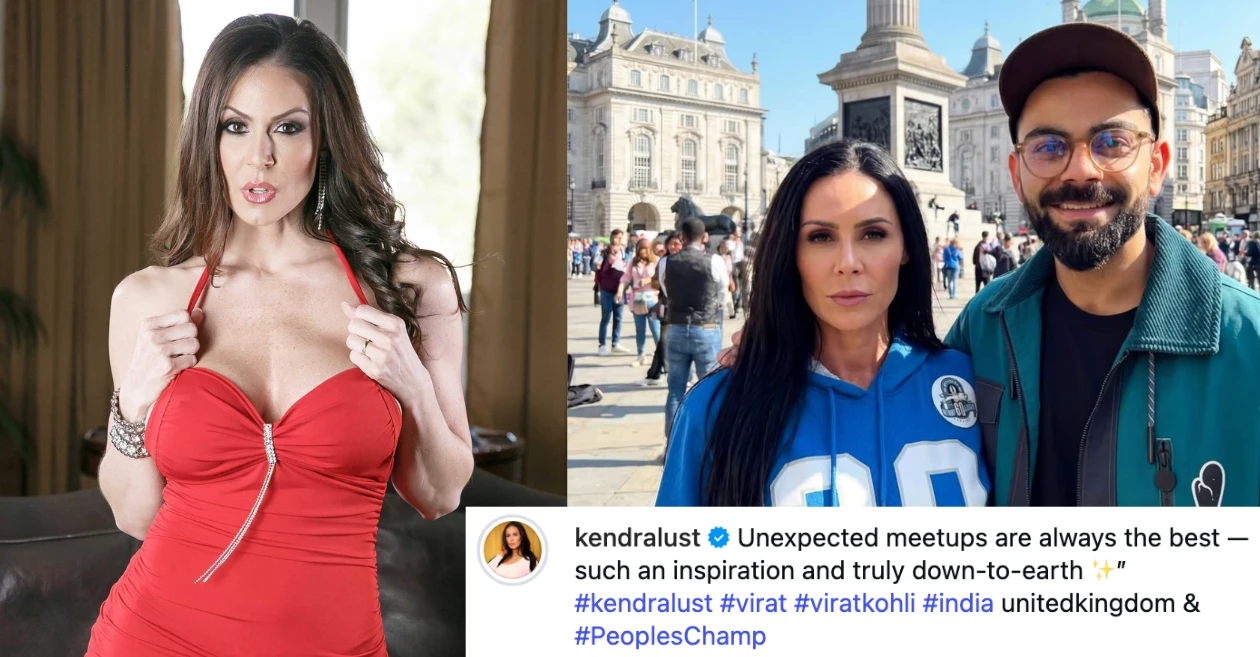
A viral Instagram post by adult film star Kendra Lust featuring Indian cricket icon Virat Kohli set social media abuzz this week, sparking shock, humour, and intense debate among fans before an unexpected twist revealed the truth. The image, shared on Thursday, showed the two appearing together in what seemed like a candid moment, instantly grabbing attention across platforms.

Kendra Lust’s Instagram post praising Virat Kohli hits the internet

In the post, Lust praised Kohli’s personality, calling him “an inspiration and truly down-to-earth,” and added hashtags linking India and the United Kingdom along with “People’s Champ.” The warm caption, combined with the seemingly casual photograph, led many users to assume the meeting was real. Within hours, the post amassed more than 350,000 likes and thousands of comments, propelling it into Instagram’s viral orbit.

When Kendra Lust met Virat Kohli (PC: Instagram)

Fans unfamiliar with Lust’s online humour took the image at face value, while others immediately began questioning the authenticity of the photograph. The buzz intensified because Kohli is known for maintaining a relatively private personal life despite his global fame.

Fans react to Lust and Kohli’s meeting with shock, memes and skepticism

The reactions in the comments section reflected a mix of disbelief and comedy. Some fans joked about Kohli’s marriage to Bollywood actress Anushka Sharma, with remarks like “Anushka Bhabi ka kya hoga?” Others flooded the post with memes and sarcastic takes like “Ek Taraf Hai Gharwali Ek Taraf Baharwali”, while a more skeptical group asked for proof of when and where the meeting supposedly took place.

As screenshots of the post spread to X (formerly Twitter), Reddit and Facebook, debates erupted over whether the image was digitally altered. The confusion itself became part of the viral appeal, with users sharing the photo simply to join the trending conversation.

Twist behind the viral photo

The speculation ended when it became clear that the viral image was completely AI-generated. Lust has a history of sharing humorous, fabricated images with famous personalities, using artificial intelligence as a creative tool. In the past, she has posted similar faux meetups with Bollywood megastars Shah Rukh Khan and Salman Khan, often leaving followers amused once the truth emerges.

The Kohli post followed the same pattern, playing on the realism of modern AI imagery and the internet’s tendency to react before verifying facts.

Also READ: Virat Kohli to team up with Mr Beast? The American YouTuber with 458 million subscribers makes a public request in a viral video

Kohli busy preparing for New Zealand ODIs

Adding to the improbability of the meetup, Kohli has been in India focusing on cricket commitments. The former India captain has been representing Delhi in the Vijay Hazare Trophy and is preparing for the upcoming India-New Zealand ODI series, scheduled to begin on January 11. There has been no official travel or public appearance linking him to the United Kingdom during this period.

Also READ: Brother Vikas hits back at Virat Kohli’s critics ahead of IND vs NZ ODI series


Source link