Breaking News
‘Basic services inadequate’, Kalina aspirants draw on local credibility | Mumbai News


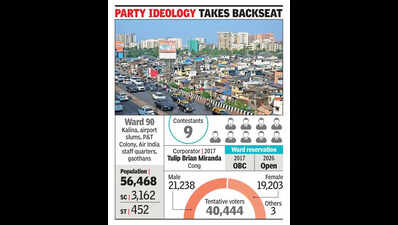
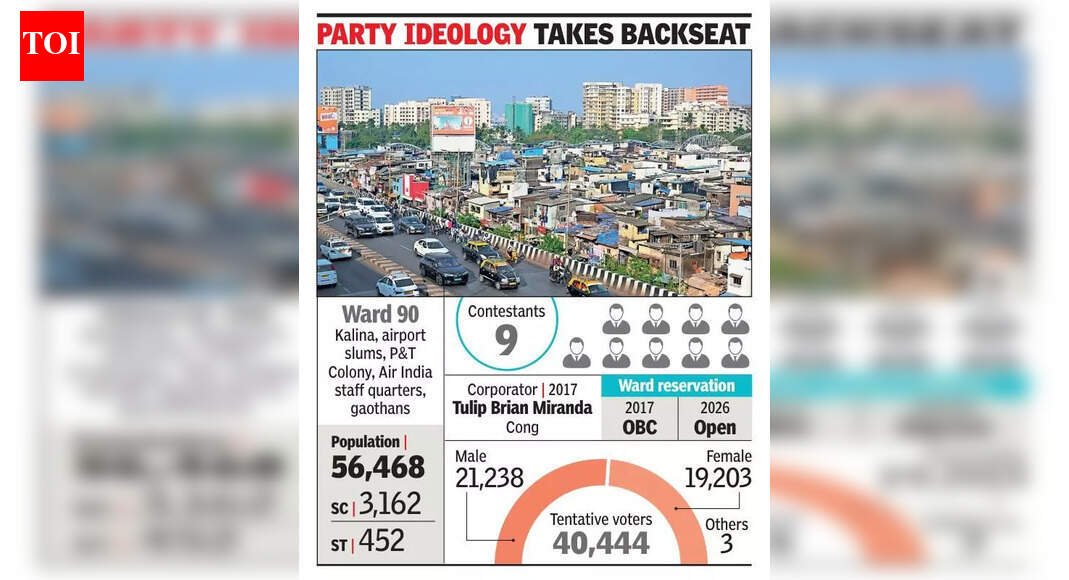
Mumbai: Kalina’s ward 90 has probably the most diverse voter profile, with centuries-old gaothans, airport slum pockets that form the largest voter bloc, staff quarters, including four Air India colonies, and residential societies. With nine candidates in the fray and over 40,000 voters spread across socially and religiously diverse neighbourhoods, the contest is expected to be multi-cornered, driven less by party ideology and more by local credibility and responses to everyday civic problems.Congress candidate Tulip Miranda, who was elected corporator in 2017, said, “Contaminated water in slum pockets like Shastri Nagar remains the biggest concern in the ward.” Her husband, Brian Miranda highlighted the growing problem of illegal hawking and parking. “Many autorickshaw and taxi drivers staying in these pockets are parking their vehicles haphazardly,” he said. Independent candidate George Abraham, whose symbol is the autorickshaw, is campaigning on his long association with Kalina and prior civic experience. Born and raised in the area, he has contested three BMC elections from here and won each time. He recalled a seven-day hunger strike in the 1990s to secure power supply for slum residents. He said the most urgent current issue is eviction threats faced by residents near the airport. “This is despite them being here prior to 2000 and are, therefore, protected under the SRA scheme,” he said, adding that water contamination and supply woes, damaged toilets and drains, too, need to be addressed. Alleging corruption, BJP nominee Jyoti Upadhyay attacked Congress’s record. She said residents still face basic civic problems despite repeated assurances. She said BJP would prioritise safe, reliable drinking water and work to make Kalina drug-free, citing drug addiction among youngsters as a major local issue. Shiv Sena (UBT) candidate Masood Ansari, a former Congress corporator from a neighbouring ward (2007-12), said familiarity with local issues matters more than past ward boundaries. He pointed to bad roads, low water pressure, contaminated water and sewage problems in Shastri Nagar and other slum pockets. Poll debutant Suresh Acharya from Aam Aadmi Party listed water, drainage and public toilets as top concerns. He criticised 15 years of Congress governance, citing Shastri Nagar toilets, where women have only a curtain, and said his focus is dignity and basic services. He also flagged erratic water supply in Kalina village and gaothans, where senior citizens wake up at 3am to fill water, and said there is no mohalla clinic in Kalina. Samajwadi Party candidate Sana Qureshi, who runs a private primary school, said Shastri Nagar, Chunabhatti and Indira Nagar face persistent problems such as poor water supply and dilapidated public toilets. She said her campaign prioritises basic amenities and expanding education and skill development opportunities for girls.


Source link

‘If Mustafizur Rahman is in team’: Bangladesh claims ICC flagged security risks in India; global body calls it ‘a complete lie’ | Cricket News


'If Mustafizur Rahman is in team': Bangladesh claims ICC flagged security risks in India; global body calls it 'a complete lie'
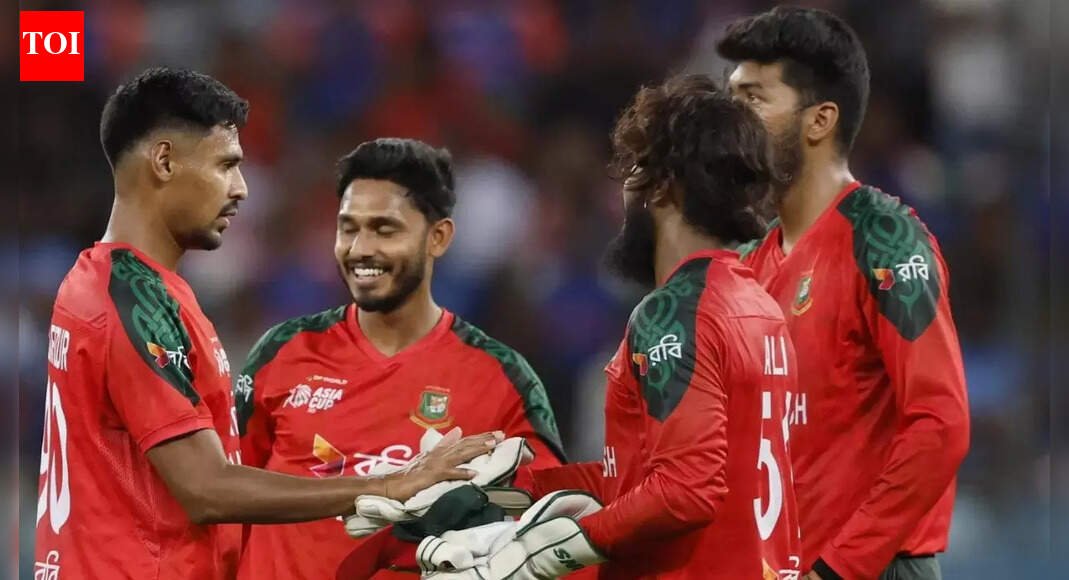
Bangladesh’s Mustafizur Rahman and teammates celebrate the wicket of India’s captain Surya Kumar Yadav during the Super Four match of the Asia Cup 2025 between India and Bangladesh at the Dubai International Stadium, Dubai, UAE. (PTI Photo)

Bangladesh sports advisor Asif Nazrul on Monday claimed that the International Cricket Council (ICC) has acknowledged Bangladesh’s security concerns about travelling to India for the T20 World Cup. Bangladesh have expressed reservations about touring India for the T20 World Cup, which is scheduled to begin on February 7. The team has requested that its matches be moved to co-host Sri Lanka, citing security concerns. This came after Bangladesh pacer Mustafizur Rahman was released by IPL franchise Kolkata Knight Riders (KKR) following instructions from the BCCI, which cited unspecified “developments” for the decision.

Bangladesh seek T20 WC match shift from India after Mustafizur Rahman’s IPL exit

“I need to inform you that the security team of the ICC and those in charge of security have sent a letter (to BCB). In that letter, it has been said that three things will increase the security threat to the Bangladesh team,” Nazrul said at a press conference in Dhaka, as quoted by local newspaper Daily Star.“One is if Mustafizur (Rahman) is included in the Bangladesh team. Two, if the supporters of the Bangladesh team walk around wearing the national jersey of Bangladesh. And the third is that the security threat of the Bangladesh team will increase as the (Bangladesh) elections approach,” he added.

What ICC said

The ICC, while confirming that it has been in touch with the Bangladesh Cricket Board, denied Nazrul’s claim that it accepted Bangladesh’s concerns in the manner described.Also read: Bangladesh’s T20 World Cup matches to remain in India“There has been an internal communication from ICC to BCB with regards to security in India. But what Asif Nazrul said is a complete lie. ICC’s communication never mentions that Mustafizur’s selection will be an issue. It’s complete falsehood…There is no such advisory in formal communication,” an ICC source was quoted as saying by news agency PTI.The T20 World Cup is scheduled to be held from February 7 to March 8 across venues in India and Sri Lanka.The BCB’s concerns followed Mustafizur’s release from the Kolkata Knight Riders (KKR) squad amid reports of attacks on Hindus in Bangladesh.As per the current schedule, Bangladesh are set to play their first three group matches in Kolkata, followed by their final group game in Mumbai.After Mustafizur was released by KKR, the Bangladesh government also banned the broadcast of the Indian Premier League in the country.


Source link

Budget 2026: Textile industry body seeks permanent removal of cotton import duty; flags cost pressure, export risks


Budget 2026: Textile industry body seeks permanent removal of cotton import duty; flags cost pressure, export risks

The Confederation of Indian Textile Industry (CITI) has urged the government to permanently remove the 11 per cent import duty on cotton in the Union Budget 2026, warning that the levy is aggravating cost pressures and hurting the global competitiveness of domestic textile and apparel manufacturers, PTI reported.A CITI delegation met Union Agriculture Minister Shivraj Singh Chouhan last week, seeking his intervention for the permanent removal of the import duty on cotton of all varieties, the industry body said on Monday.India’s textile industry — the country’s second-largest employment generator — depends on stable access to high-quality cotton. Against a persistent demand–supply gap, the government had extended the import duty exemption on cotton until December 31, 2025, a move that was welcomed by textile associations.However, with no further notification issued, the 11 per cent duty was reinstated from January 1, 2026. CITI said the move would adversely impact the competitiveness of India’s textile and apparel sector.The minister assured the delegation that the concerns raised would be carefully examined during the review process, CITI said.The industry body also flagged a steady decline in domestic cotton production, which it said is projected to fall to its lowest level in nearly two decades this year, intensifying concerns over supply shortages.CITI argued that reimposing the import duty would further aggravate cost pressures for manufacturers. It pointed out that over the past decade, India’s average cotton imports stood at around 20 lakh bales, accounting for about 6.8 per cent of average domestic production.Imports, the industry body said, are largely quality- and specification-driven, catering to specialised requirements and back-to-back export orders, and do not displace domestic cotton.CITI also highlighted that competing textile-exporting countries such as Bangladesh and Vietnam allow duty-free cotton imports, giving them a structural cost advantage in global markets.The demand comes at a time when the textile and apparel sector — one of India’s largest sources of employment and livelihoods — is facing fresh headwinds from a 50 per cent US tariff effective August 27, 2025. Cotton-based products dominate India’s textile exports.The US is India’s single-largest textile and apparel export destination, accounting for nearly 28 per cent of total export revenues. Exports to the US were valued at close to $11 billion in FY2024-25, according to industry data.


Source link

Supreme Court extends Jan 31 deadline by two weeks for completion of Maharashtra local body polls | Mumbai News


New Delhi: The Supreme Court on Monday extended the timeline for completing the poll process for local body elections in Maharashtra by two weeks.A bench of Chief Justice Surya Kant and Justice Joyamalya Bagchi extended the deadline after the State Election Commission (SEC), represented by senior advocate Balbir Singh, submitted that it has filed an interlocutory application seeking an extension of time by 10 days from Jan 31.

Mumbai Headlines Today — The Biggest Updates You Need to Know.

Singh said the court had earlier fixed the Jan 31 deadline, but around 10 more days are needed as elections are to be held for some zila parishads and panchayats.The bench extended the time by two weeks for completing the electoral process of the local body polls, after directing the registry to number the application of the SEC.Hearing another plea alleging that the quota limit in the Maharashtra local body polls has crossed the 50% mark, the court said it has already clarified that the election will be held but it will be subject to the outcome of the petitions.“If 50% of lakshman rekha has been crossed, like in this case where it is 52%, then the election will be held but it will be subject to the outcome of these petitions,” the bench told senior advocate V Giri.It refused to entertain any fresh intervention application in the matter, saying those are only intended at delaying the election process and that all such petitions will be listed after the local body polls.The top court pulled up the Maharashtra SEC on Sept 16 last year for the non-compliance of its order. It had directed earlier that the local body polls in the state, stalled since 2022, to be completed by Jan 31, 2026, without further extension.The bench was irked over the SEC’s failure to comply with its order, mandating a timely conclusion of the local body polls.“Elections of all local bodies, including zila parishads, panchayat samitis and all municipalities, shall be conducted by January 31, 2026. No further extension shall be granted to the state and the State Election Commission. In case any other logistic assistance required, application can be filed promptly before October 31, 2025. No prayer will be entertained thereafter,” the court had said.It had passed the order on a batch of petitions concerning the long-pending civic body elections in Maharashtra.In May last year, the court issued an interim order directing the conclusion of the polls within four months, that is, by Sept 2025.Opposing the extension, the petitioners had argued that the SEC had failed to notify the elections within the stipulated two weeks and was redoing the entire process, citing excuses ranging from festivals to staff shortages.In its order, the bench had recorded that the polls were stalled since 2022, primarily due to disputes over the Other Backward Classes (OBC) reservation in local bodies.


Source link

Education must be free from political considerations, says Delhi Minister Sood | India News


Education must be free from political considerations, says Delhi Minister Sood

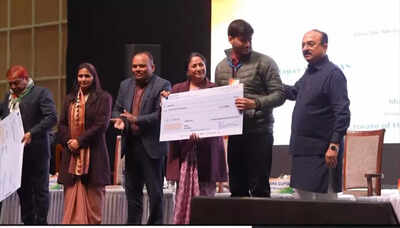
NEW DELHI: Governance in the education sector must move beyond political interests to focus strictly on policy-driven structural reforms, Delhi Minister Ashish Sood said on Monday. He emphasised that the Delhi government is prioritising the long-term health of the academic system over short-term considerations. Speaking at a scholarship distribution ceremony for state university students at Thyagaraj Stadium, Sood said the Delhi Higher and Technical Education Support Scheme reflected the government’s resolve to support students from marginalised backgrounds. He noted that financial constraints must not become a barrier to higher education. The Delhi education minister said the guiding principle of the government under Chief Minister Rekha Gupta, in line with Prime Minister Narendra Modi’s vision, is ‘Antyodaya’, which focuses on extending the benefits of governance to the person at the last mile. He said welfare schemes should be seen as the constitutional responsibility of the state aimed at empowerment and accountability, rather than as charity. Sood said previous education policies in the city prioritised publicity over outcomes, resulting in high dropout rates and resource shortages in higher education institutions. He said the current government is focused on addressing structural issues rather than concealing them. Referring infrastructure, the minister said work on the Narela Education City has gained momentum. The budget for the project has been increased from Rs 500 crore to Rs 1,300 crore. Spread over 160 acres, the proposed education hub will include shared university campuses, auditoriums, libraries, digital facilities and ICT laboratories, he said. Earlier in the day, Sood attended the National School Band Competition (North Zone) at Chhatrasal Stadium, organised by the Directorate of Education on the occasion of National Youth Day. Recalling the teachings of Swami Vivekananda, the minister said youth power is central to nation-building. He said participation in such competitions plays an important role in shaping discipline, teamwork and collective responsibility. Sood said band performances symbolise coordination and unity, as even a minor lapse by one member can affect the entire group. He added that such training instils life-long values of focus, self-control and cooperation.


Source link

Vande Bharat sleeper fares out! Indian Railways to launch new train on Howrah-Guwahati route; check ticket price & top features


Vande Bharat sleeper fares out! Indian Railways to launch new train on Howrah-Guwahati route; check ticket price & top features

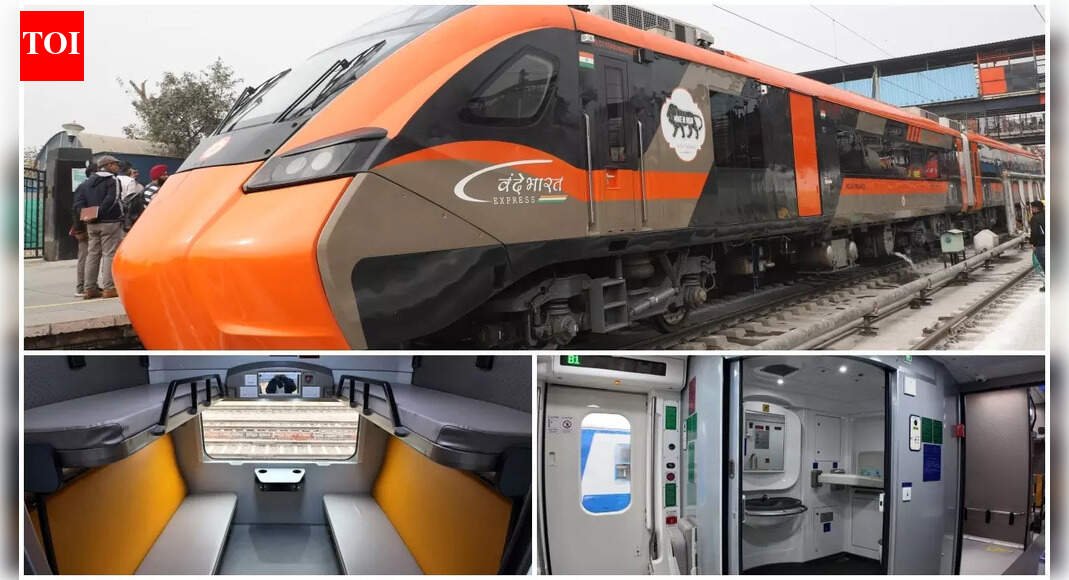
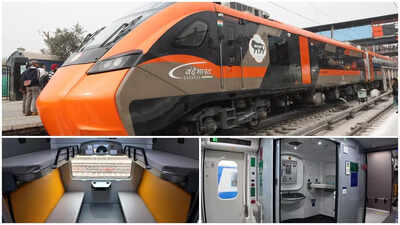
Vande Bharat sleeper launch soon! Indian Railways is all set to launch its first Vande Bharat sleeper this week, with PM Narendra Modi expected to flag off the new train on January 117 between Howrah and Kamakhya (Guwahati). Ahead of the launch, Indian Railways has announced the fare structure and ticket prices for the Vande Bharat sleeper train.Built specifically for overnight travel and long-distance routes, the Vande Bharat sleeper is a fully air-conditioned trainset developed in-house by Indian Railways. These trains are intended for routes spanning roughly 1,200 to 1,500 kilometres, catering to passengers travelling across states during night hours.

India Reveals First Vande Bharat Sleeper Offering Faster Overnight Travel On Kolkata-Guwahati Line

Vande Bharat Sleeper Train Fare & Ticket Prices

  • Vande Bharat sleeper will have 11 AC-3 tier coaches, 4 AC-2 tier coaches and one AC First coach. The train can accommodate a total of 823 passengers. The first Vande Bharat Sleeper Express will operate between Howrah and Kamakhya (Guwahati), covering a distance of 958 kilometres.
  • The fare from Howrah to Guwahati for the AC-3 tier train ticket will be Rs 2,299/- plus 5% GST.
  • The fare from Howrah to New Jalpaiguri will be Rs 1,334/-, while travel from Howrah to Malda Town will cost Rs 960/- for AC-3 tier.
  • The fare from Howrah to Guwahati for the AC-2 tier train ticket will be Rs 2,970/- plus 5% GST. For Howrah to New Jalpaiguri, the fare is set at Rs 1,724/-, and for Howrah to Malda Town, Rs 1,240/-.
  • The fare from Howrah to Guwahati for the First AC (1AC) train ticket will be Rs 3,640/- plus 5% GST. The fare from Howrah to New Jalpaiguri will be Rs 2,113/-, while from Howrah to Malda Town it will be Rs 1,520/-.
  • Between Kamakhya and Malda Town, the fare has been fixed at Rs 1,522 for AC-3 tier, Rs 1,965 for AC-2, and Rs 2,409 for 1AC. For travel between Kamakhya and New Jalpaiguri, the AC-3 fare will be Rs 962, AC-2 will cost Rs 1,243, and 1AC will be priced at Rs 1,524.

For the Vande Bharat Sleeper service, Indian Railways has set a minimum chargeable distance of 400 km for fare calculation.

Vande Bharat Sleeper: Top Features

During test runs on the Kota–Nagda section, the Vande Bharat sleeper achieved its designed top speed of 180 kmph. One of the highlights of the trial was a stability demonstration in which glasses filled with water remained steady without spilling, even at speeds exceeding 180 kmph. Although the train is designed for semi-high-speed operations of up to 160 kmph in regular service, trials have been conducted at 180 kmph. Actual operating speeds will depend on the condition and capability of tracks on different sections of the network.The sleeper version is designed as the long-haul, overnight counterpart to the Vande Bharat chair car services currently operating across India.Drawing inspiration from European rail design, the sleeper coaches feature cushioned berths for improved comfort and redesigned access to upper berths for easier movement. Passenger amenities include soft night lighting, integrated audio-visual passenger information systems, CCTV surveillance and modular pantry units.The trains will be equipped with aircraft-style bio-vacuum toilets, including facilities for persons with disabilities, baby care areas and shower units with hot water in the first-class coach. Safety systems include the indigenous KAVACH anti-collision technology, while regenerative braking will be used to enhance energy efficiency, similar to existing Vande Bharat chair car trains.Additional features include sealed gangways and automatic inter-coach doors to maintain air quality and cabin temperature, along with personal reading lights, charging points, foldable snack tables and interiors finished with GFRP panels. Train doors will open automatically at designated stations. A centralised coach monitoring system and emergency communication facilities will allow passengers to directly contact the locomotive pilot when necessary.


Source link

Distribution of cash alleged in Koparkhairane | Mumbai News


Navi Mumbai: MNS Navi Mumbai city president Gajanan Kale summoned a press conference in Turbhe on Monday where he alleged that a worker of Shiv Sena was distributing money to woo voters during the NMMC general election in Koparkhairane ward panel number 11A. Kale even displayed a video clip of a Sena activist being cornered by a group of rival political workers alleging that he was distributing money. However, in the video clip, the Sena activist is claiming that he was carrying his personal cash and objected to the demand by the rival political workers demand of handing over the cash.

Mumbai Headlines Today — The Biggest Updates You Need to Know.

The video clip shows the husbands of BJP candidates manhandling the Sena activist by alleging that he was distributing money to woo voters. They have been identified as Kishore Patil, husband of Sena candidate Meenakshi Patil contesting from Panel ward number 11A and Sandeep Mhatre, husband of candidate Sangita Mhatre contesting for Panel ward number 11BAtul Kulkarni, Belapur assembly chief of Shiv Sena (UBT) said, “The video clip showed by our alliance MNS at the press conference was probably 2-3 days old. It is learnt that the Shiv Sena (Eknath Shinde) faction activist was caught by BJP workers, who should lodge a police complaint.”Umesh Gavali, senior inspector of Koparkhairane, said, “The incident took place on Jan 9 in the evening. Regarding cash distribution to voters during model code of conduct, the complaint needs to be lodged with the concerned returning officer, who in turn should lodge a police complaint. However, we have not received any police complaint.”


Source link

Mobile allowed if kept switched off in Mumbai civic body election | Mumbai News


Mumbai: Municipal commissioner Bhushan Gagrani, who is also the district election officer for the municipal polls, has said that mobile phones have not been banned from polling stations but these should be kept switched off. “We discourage the public from taking their mobile phones to the polling booths, but then, in case they are carrying the same, it should remain switched off at all times.Gagrani also appealed to all Mumbaikars to come out and cast their vote on Jan 15.


Source link

Is arranged marriage a scam? X explodes as Indians clash over love, caste and control


Arranged Marriage vs Modern India: Why This X Debate Has Everyone Fighting

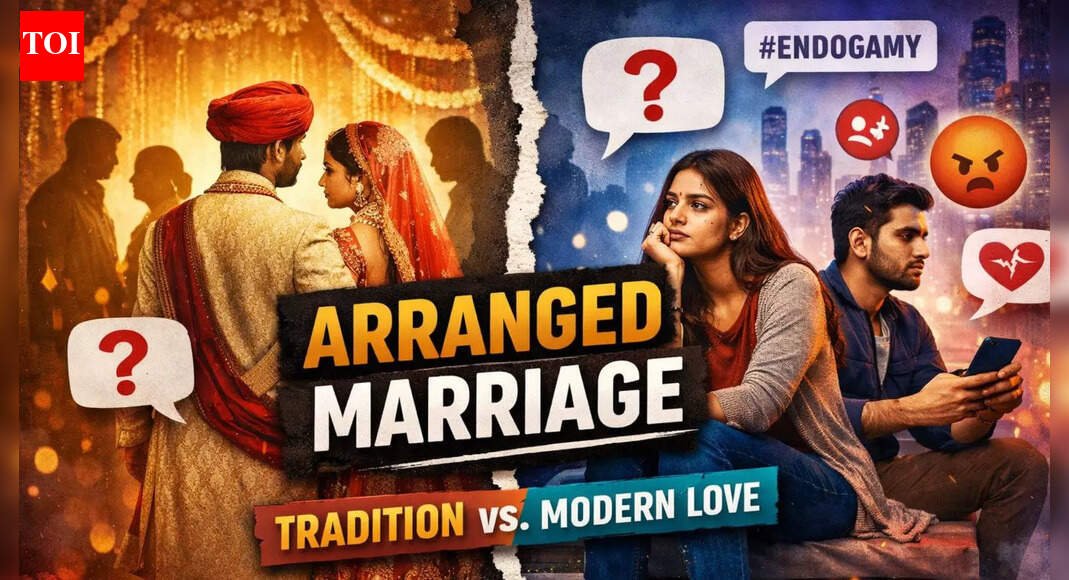
If you are active on X (formerly Twitter), you would not have failed to escape the renewed online debate over Indian arranged marriages that has taken the social media platform by a storm. The critics and defenders have recently been clashing over whether the tradition of arrange marriage still serves modern India or holds it back. The discussion, fuelled by viral posts on X, reflects deeper anxieties around gender roles, changing social norms and the future of relationships in a rapidly urbanising society.

An old institution, a new online storm

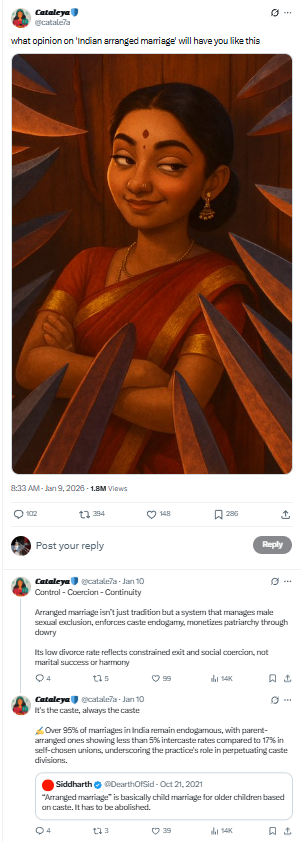
Arranged marriages, long considered a cultural cornerstone in India, are once again under intense scrutiny. While the system has evolved over decades, critics argue that its core dynamics remain outdated, especially in an era where dating apps, global exposure and financial independence are reshaping expectations around love and partnership.The debate was sparked by a viral tweet on X by a netizen named Cataleya, who retweeted Indian actor Siddharth Suryanarayan’s October 2021 post where he wrote, ““Arranged marriage” is basically child marriage for older children based on caste. It has to be abolished (sic).” Cataleya reposted Siddharth’s tweet and wrote, “It’s the caste, always the caste ✍️Over 95% of marriages in India remain endogamous, with parent-arranged ones showing less than 5% intercaste rates compared to 17% in self-chosen unions, underscoring the practice’s role in perpetuating caste divisions (sic).”She added, “Control – Coercion – Continuity Arranged marriage isn’t just tradition but a system that manages male sexual exclusion, enforces caste endogamy, monetizes patriarchy through dowry Its low divorce rate reflects constrained exit and social coercion, not marital success or harmony (sic).”

​The tweet on X that triggered the marriage debate in India

The tweet on X that triggered the marriage debate in India

Its sharp, provocative tone struck a nerve, quickly drawing thousands of reactions and quote posts and setting off a wider conversation about whether arranged marriages still represent stability plus shared values or quietly perpetuate imbalance and lowered expectations in modern India.

Why critics say arranged marriages still favour men

Critics argue that arranged marriages often function as a refuge or a safety net or a convenient cover for socially awkward men or those seeking to conceal issues such as undisclosed health problems, lack of compatibility or limited emotional intelligence/motional immaturity. According to this view, family-led matchmaking can sometimes prioritise stability and social optics over compatibility, agency and transparency, particularly for women.They argue that women, especially in traditional setups, are pressured to compromise far more than men, reinforcing unequal power dynamics within marriage. Many voices also link the system to entrenched gender roles, where expectations around obedience, hypergamy and domestic labour continue to shape marital dynamics.Supporters of arranged marriages frequently point to statistics showing lower divorce rates, often cited at around 1–2%, compared to 20–30% in love marriages. Defenders argue that family vetting, shared cultural values and long-term commitment help marriages endure. Critics counter that low divorce rates may reflect social stigma, financial dependence and lack of exit options rather than genuine marital happiness.

Urban India moves toward ‘hybrid’ marriages

In metropolitan and upper middle-class circles, many note that arranged marriages in their traditional form are fading. Instead, hybrid models are gaining ground, where individuals date independently but eventually seek parental approval before marriage. This blending of choice and tradition reflects how younger Indians are negotiating autonomy without fully rejecting family involvement.Much of the debate centres on gender expectations. Online conversations frequently reference hypergamy, emotional labour and societal pressure on women to “adjust,” while men are often judged on income and status. These tensions highlight unresolved questions about equality, agency and fairness within both arranged and love-based systems.Proponents of arranged marriages argue that family involvement filters out incompatibility early and offers emotional and financial support. Critics argue that dating allows individuals to assess emotional compatibility, values and communication skills, which are qualities that they say are often overlooked in biodata-driven matches.

What Gen Z really wants from marriage

Gen Z voices online suggest less loyalty to rigid categories. Many express a desire for companionship, emotional safety and mutual respect over labels like “arranged” or “love.” For them, the priority is consent, choice and compatibility, regardless of how the introduction happens.The viral debate reveals that the real divide may not be between arranged and love marriages but between rigid systems and flexible ones. As India modernises, marriage itself is being renegotiated and shaped by economic realities, digital culture and evolving ideas of partnership.The intensity of the discussion shows that marriage remains deeply personal yet highly political in India. As norms shift and generational values collide, arranged marriages continue to function as a mirror reflecting broader societal change and that is why the debate keeps resurfacing, louder each time.


Source link

WATCH: CSK fever hits IND vs NZ 1st ODI as Devon Conway responds to chants at BCA Stadium


Vadodra witnessed a unique blend of international rivalry and franchise loyalty as the first ODI between India and New Zealand unfolded at the Baroda Cricket Association (BCA) Stadium in Kotambi, on January 11, 2026. While the contest was a high-stakes series opener, a heart-warming moment involving Kiwi opener Devon Conway stole the spotlight, proving that some bonds transcend national boundaries.

Devon Conway reacts to thunderous ‘CSK, CSK’ chants at BCA Stadium

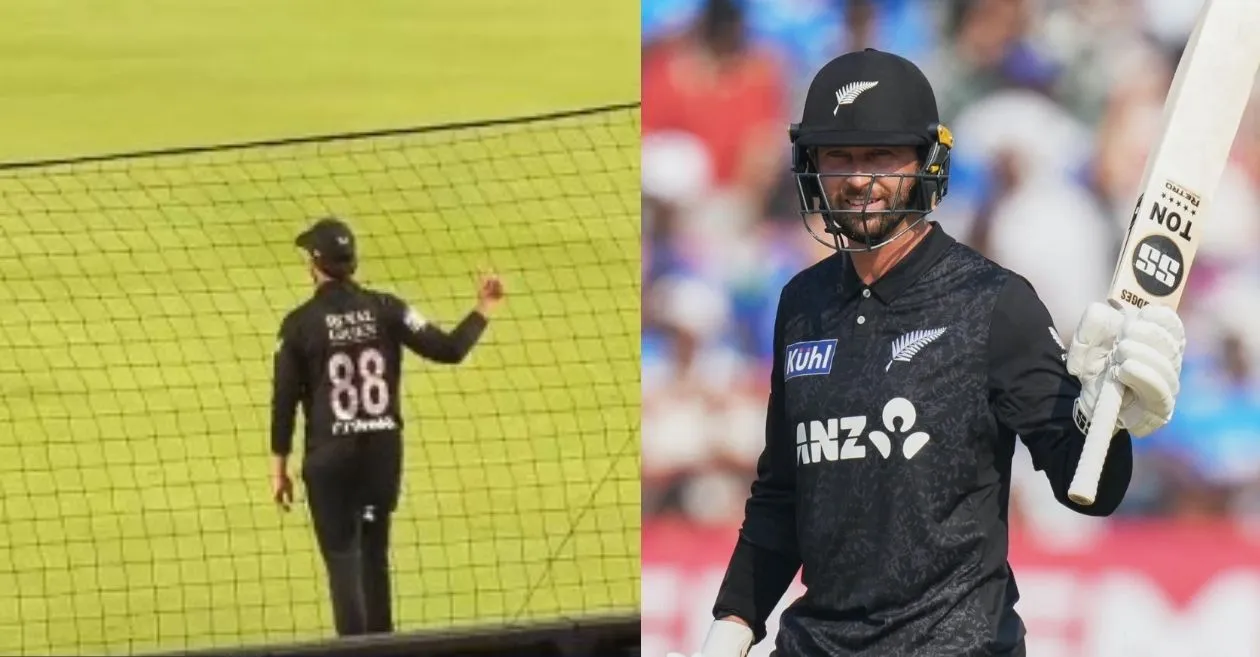
The atmosphere at the BCA Stadium reached a fever pitch during the first innings, but it wasn’t just for the home team. As Conway took his position near the boundary ropes, the Vadodara crowd erupted with deafening chants of CSK, CSK!” The New Zealand veteran, who was a cornerstone of the Chennai Super Kings from 2022 to 2025, paused for a moment to acknowledge the affection. Despite being released ahead of the 2026 IPL mega auction and recently going unsold in the initial rounds, Conway’s legacy with the Yellow Army clearly remains intact.

Conway responded to the passionate fans with a warm thumbs-up, a gesture that quickly went viral across social media. During his tenure with CSK, Conway was more than just an overseas player; he was a big-match performer, most notably winning the Player of the Match award in the 2023 IPL Final. His IPL statistics, 1,080 runs in 29 matches at an average of 43.20 explain why Indian fans still view him through the lens of Chennai’s golden era. On the field, Conway showed no signs of distraction, anchoring the Kiwi innings with a solid 56 off 67 balls before eventually being cleaned up by a sharp delivery from Harshit Rana.

Here’s the video:

Also READ: IND vs NZ: Virat Kohli reveals where does he keeps his Player of the Match awards

India overcomes late drama to secure a thrilling win against New Zealand in the opener

On the scoreboard, the match lived up to the hype of a 300-plus thriller. New Zealand posted a competitive 300/8, thanks to a formidable 117-run opening stand between Conway and Henry Nicholls (62), followed by a late-inning assault from Daryl Mitchell (84). India’s chase, however, was a masterclass in calculated aggression, spearheaded once again by the legendary Virat Kohli.

Kohli, who reached the milestone of 28,000 international runs during this knock, looked set for his 51st ODI century before falling for a majestic 93 off 91 balls. Alongside captain Shubman Gill (56) and Shreyas Iyer (49), Kohli put India in a position of absolute dominance at 234/2. However, the game took a dramatic turn when Kyle Jamieson (4/41) triggered a middle-order collapse, leaving India reeling and the Vadodara crowd in stunned silence.

The tension was finally defused by the calm presence of KL Rahul, who remained unbeaten on 29. Rahul’s composure under pressure, supported by a spirited cameo from Harshit Rana (29 off 23), ensured India crossed the line with four wickets in hand and six balls to spare. With this victory, India takes a 1-0 lead in the three-match series, heading to Rajkot with momentum and a reminder of the deep-seated IPL connections that continue to define modern cricket.

Also READ: Top 3 players with most Player of the Match awards in ODIs ft. Virat Kohli


Source link