Breaking News
‘Mumbai is not Maharashtra alone’: Ex-TN BJP chief Annamalai defends ‘international city’ remark after Sena (UBT), MNS outrage | Mumbai News


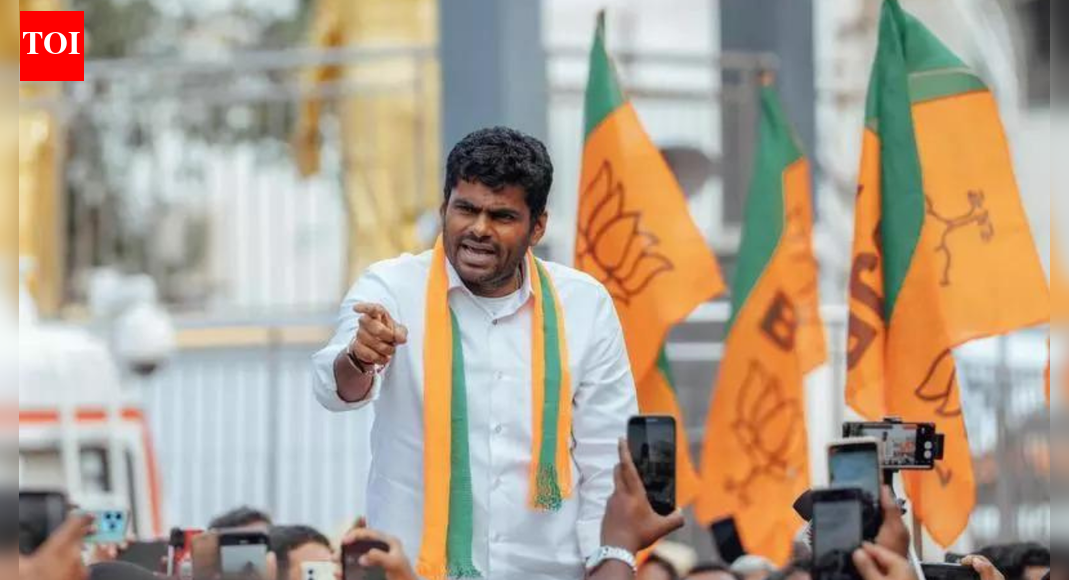
CHENNAI/MUMBAI: A day after Sena (UBT) and MNS slammed him for saying Mumbai is not a Maharashtrian city but an international one, former Tamil Nadu BJP chief K Annamalai dug in his heels on Monday, asserting that the city doesn’t belong to Maharashtra alone. “Some said they will cut my legs if I visit Mumbai. I will come to Mumbai. Try cutting my legs,” he said, adding his remark was misrepresented. “If I say Mumbai is a world-class city, does that mean Maharashtrians didn’t build it?” He said Mumbai’s growth was intrinsically linked to the contributions of Marathis.BJP’s MLA from Sion-Koliwada, R Tamil Selvan, said the remark was misconstrued for political gains.

Mumbai Headlines Today — The Biggest Updates You Need to Know.

While Sena (UBT) had sought Annamalai’s arrest, MNS chief Raj Thackeray had mocked him and questioned his right to speak about Mumbai.


Source link

‘Fed’ up Trump launches probe into central bank chief


'Fed' up Trump launches probe into central bank chief

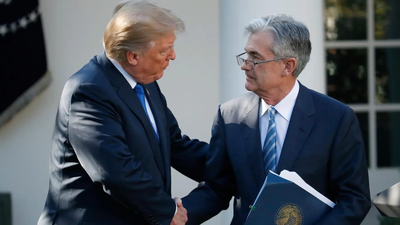
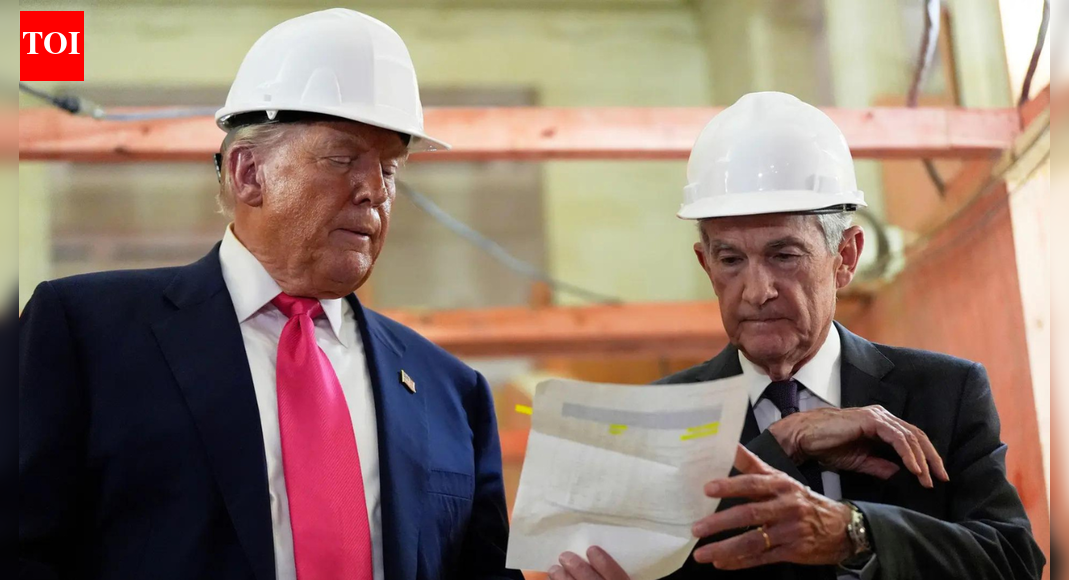
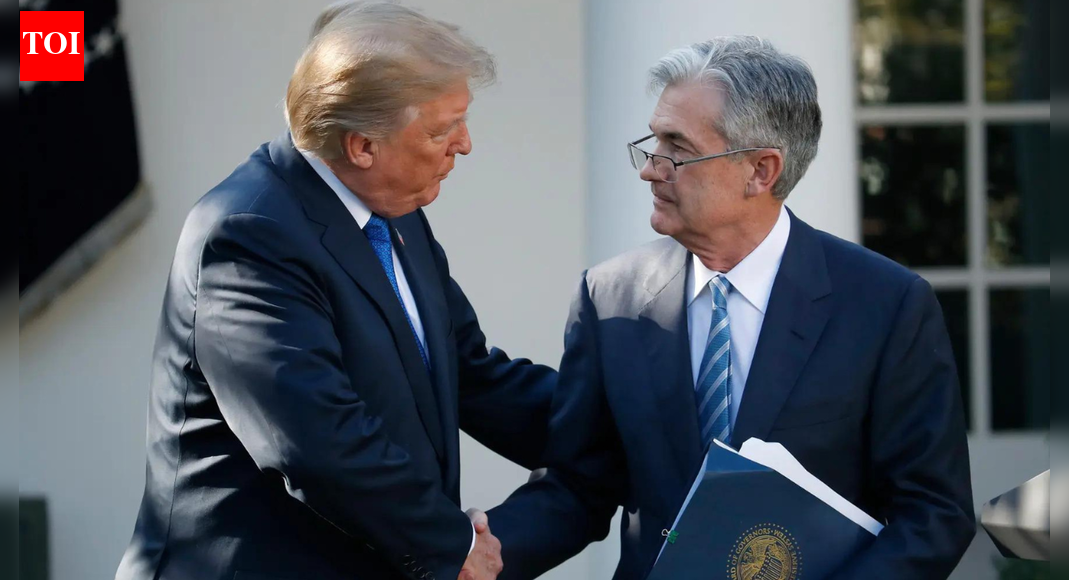
The TOI correspondent from Washington: US President Donald Trump is on the warpath against Venezuela, Cuba, Iran, Greenland — and the Federal Reserve. In a move that has rattled financial markets and political circles alike, the Trump administration’s Justice Department has launched a criminal investigation into Federal Reserve Chair Jerome Powell, marking an unprecedented clash between the executive branch and the nation’s central bank. The probe, confirmed late Sunday by Powell himself, centers on statements he made during June testimony before the Senate Banking Committee about cost overruns on a long-running renovation of the Federal Reserve’s headquarters in Washington, DC, which Trump has characterized as a scandal. This development comes as the President has repeatedly expressed frustration with the Fed’s reluctance to slash interest rates, a policy he claims is stifling economic growth.

Trump Ignites WW3 Over Greenland? Denmark PM Warns Of ‘Decisive Moment’ As NATO ‘Readies’ Troops

The investigation, which Powell says began with grand jury subpoenas served to the Federal Reserve, threatens the chair with potential criminal charges—a move he described in a video message as “unprecedented” and a threat to the independence of the Federal Reserve. He insisted that the subpoenas are being used as a tool of political pressure, not because there is credible evidence of wrongdoing. The controversy has its roots in a multi-year project to renovate the nearly 90-year-old Marriner S. Eccles Building and adjacent offices, a project first approved by the Fed’s board in 2017. Originally projected to cost about $1.9 billion, the current estimate stands near $2.5 billion, reflecting inflation, supply chain disruptions, asbestos abatement, and unforeseen construction challenges.Trump, who appointed Powell in 2018 and whose second term began in January 2025, has repeatedly assailed the Fed for its refusal to cut interest rates as aggressively as he desires. Lower interest rates are widely popular with investors and borrowers because they reduce borrowing costs and can stimulate economic growth—a key element of Trump’s economic strategy. But the Fed, tasked with controlling inflation and maintaining long-term economic stability, has kept rates at levels it deems appropriate given lingering inflationary pressures.Trump’s criticism of Powell intensified over the renovation costs after he took office last January. He has publicly derided the project as excessive and has even joked about firing Powell over it—though legally, the Fed Chair can only be removed “for cause,” and not at the president’s whim. Powell, in turn, has corrected the president’s public statements about the project’s costs, noting that Trump has, on occasion, overstated figures or conflated unrelated expenditures. Trump himself is splurging up to $ 400 million – from an initial estimate of $ 200 million – on a new ballroom attached to the White House, which critics say is over-the-top. The criminal inquiry was reportedly authorized last November by US. Attorney Jeanine Pirro, Trump’s appointee in the District of Columbia, and involves a review of Powell’s public testimony and internal spending records. Officials familiar with the matter say prosecutors have contacted Fed staff seeking documents related to the renovation.The legal escalation has galvanized lawmakers across party lines, including some from the GOP. Republican Senator Thom Tillis, a member of the Senate Banking Committee, vowed to block all Fed nominations—including Powell’s potential successor, possibly Trump surrogate Kevin Hassett—until the investigation concludes, warning that the move undermines both Fed and Justice Department independence. Some Democratic lawmakers and economists have drawn parallels to historical assaults on central bank autonomy, cautioning that politicizing the Fed could erode market confidence and destabilize the broader financial system.Markets reacted swiftly. US. stocks fell sharply, with the S&P 500 sliding more than 1 percent on Monday before recovering, as investors grappled with the uncertainty. The US dollar weakened, and gold prices surged to record highs above $4,600 an ounce, a traditional safe haven during times of institutional stress. Analysts warn that any perceived encroachment on the Fed’s independence could inject long-term volatility into stocks, bonds, and currencies.Supporters of the investigation, particularly among segments of Trump’s political base, argue that Powell should be held accountable if he indeed misled Congress or mismanaged federal resources. Conservative commentators have characterized the central bank as an unaccountable “fourth branch” of government, and some have cheered Trump’s willingness to challenge it.But critics—ranging from mainstream economists to former Treasury officials—say the probe risks undermining the very foundation of US monetary policy. The Federal Reserve’s independence, established by law and respected by both Democratic and Republican administrations for decades, is widely credited with enabling policy decisions insulated from short-term political pressures. Eroding that independence could complicate efforts to tame inflation or respond to future recessions, with repercussions across the globe. Powell, whose term as Fed Chair is set to expire in May 2026, has vowed not to resign and to continue fulfilling the Fed’s dual mandate: price stability and maximum employment. “Public service sometimes requires standing firm in the face of threats,” he said, defiantly pushing back against Trump. As Washington wrestles with this extraordinary confrontation between the executive branch and a cornerstone of the economic establishment, investors and policymakers alike are watching closely. What began as a dispute over interest rates and construction costs has ballooned into a national debate over institutional independence, democratic norms, and the future of US. economic governance.


Source link

Budget 2026: Need for an overhaul of the TDS framework


Budget 2026: Need for an overhaul of the TDS framework
The requirement to issue TDS and TCS certificates is increasingly seen as redundant. (AI image)

India’s tax deduction at source (TDS) framework, originally designed as a mechanism to ensure steady revenue inflows and improve tax compliance, has over the years become a source of complexity, cash-flow stress and litigation for businesses. With the scope of TDS expanding almost every year, tax experts argue that the time is ripe for a comprehensive rationalization of withholding tax provisions.At present, the withholding tax system is marked by a multiplicity of rates and thresholds. TDS and TCS rates range from as low as 0.1 per cent to as high as 30 per cent, depending on the nature of the transaction. This fragmented structure increases the risk of compliance errors, often leading to disputes, interest and penalties.“The current withholding tax framework involves multiple TDS and TCS rates, which creates significant complexity and an increased risk of compliance errors. Excessive withholding also results in liquidity constraints for taxpayers and additional administrative effort to seek refunds,” said Rohinton Sidhwa and Amit Bablani, partners at Deloitte India, in their pre-budget booklet. Data released by the Central Board of Direct Taxes (CBDT) underlines the scale of the problem. Income-tax refunds have risen sharply from Rs. 1.92 lakh crore in FY21 to Rs. 4.76 lakh crore in FY25. A substantial portion of these refunds is attributed to excess TDS and TCS, resulting in blocked working capital for businesses and higher interest outgo for the government.The Finance Act, 2024 took some steps towards simplification by reducing several 5 per cent TDS rates to 2 per cent and aligning the TDS rate to 0.1% on e-commerce transactions with that on purchase and sale of goods. However, tax professionals point out that the underlying structure remains cumbersome with lack of uniformity.One key reform proposal is to leverage the nationwide GST framework to reduce duplication. Since GST already provides a robust, invoice-level reporting mechanism, experts suggest that TDS and TCS should be eliminated for transactions where GST is applicable.Deloitte India recommends:Using GST to reduce TDS/TCS compliance: With the implementation of a Pan-India GST framework, a unified tax reporting system already exists. This can be effectively used to reduce TDS/TCS compliance. It is recommended that TDS/TCS be eliminated on all transactions where GST is applicable (per the invoice). The Income-tax Department can obtain information and track these transactions as needed by mandating an appropriate information return from suppliers. Suppliers are already filing such returns (GST returns), so there will not be any additional compliance.Simplified categorization of withholding tax provisions: Withholding tax provisions should be consolidated into three broad categories, as follows:

  • For transactions involving the purchase of tangible/material goods and for transactions undertaken through an electronic medium/platform (if not subject to GST), a withholding tax rate of 0.1 percent can be prescribed without any threshold limit.
  • For transactions involving the supply of any type of services (if not subject to GST), a withholding tax rate of 2 percent can be prescribed without any threshold limit.
  • For residuary transactions, such as withholding tax on interest and dividends (if not subject to GST), a withholding tax rate of 10 percent can be prescribed.

Experts also flag the need to ease procedural burdens. The requirement to issue TDS and TCS certificates, for instance, is increasingly seen as redundant in an era where tax credits are reflected electronically through Form 26AS and AIS. Removing this obligation could significantly reduce compliance costs, especially for small and mid-sized businesses.Perhaps most contentious is the continued use of stringent prosecution provisions (Three months up to seven years) for delays in depositing TDS and TCS, even where taxes have been paid voluntarily along with interest. While the law provides for relief in cases of reasonable cause, industry feedback suggests that prosecution is often initiated mechanically, causing undue hardship.As India’s tax administration becomes increasingly data-driven, experts argue that the emphasis should shift from excessive withholding and penal action to trust-based compliance. A simpler, more predictable TDS regime could ease cash-flow pressures, reduce litigation and ultimately make tax compliance less adversarial—benefiting both taxpayers and the exchequer.


Source link

Women’s Premier League games to be held behind closed doors in Mumbai | Mumbai News


MUMBAI: The Board of Control for Cricket in India (BCCI) is likely to conduct two Women’s Premier League (WPL) fixtures this week, including one involving Mumbai Indians, behind closed doors at the DY Patil Stadium due to a clash with the municipal corporation elections in Navi Mumbai on Jan 15.Police have informed the Board that it won’t be able to provide adequate security for the WPL fixtures. The two games in question are the Delhi Capitals vs UP Warriorz (UPW) on Jan 14, and the Mumbai Indians (MI) vs UPW the next day.

Mumbai Headlines Today — The Biggest Updates You Need to Know.

“The BMC election is on Jan 15, so we are thinking whether we would be able to have crowds in the stands or not,” BCCI secretary Devajit Saikia told TOI on Monday. “Maybe on Jan 14 & 15, the day before the election and the election day itself, we may have crowd restrictions in place, and then we will go ahead with crowds for the Jan 16th fixture. The final call is yet to be taken,” he said, adding, “that the WPL matches (on 14 & 15th) will go ahead.” — Gaurav Gupta


Source link

Netflix deal: Paramount Skydance sues Warner Bros Discovery; seeks disclosure on $82.7 billion deal


Netflix deal: Paramount Skydance sues Warner Bros Discovery; seeks disclosure on $82.7 billion deal

Paramount Skydance on Monday sued Warner Bros Discovery seeking greater disclosure on its proposed $82.7 billion deal with Netflix, escalating a high-stakes battle for control of one of Hollywood’s most storied media groups.The David Ellison-led company also said it plans to nominate directors to the Warner Bros Discovery board and prepare a proxy contest, marking one of its most aggressive moves yet to persuade shareholders that its hostile $30-per-share all-cash bid is superior to Netflix’s $27.75-per-share cash-and-stock offer.

Donald Trump Attacks $72B Netflix–WBD Deal, Demands CNN Be ‘Sold Or Included’ In Mega Merger

In a letter to shareholders, Paramount said it would also propose an amendment to Warner Bros Discovery’s bylaws requiring shareholder approval for any separation of the company’s cable television business, a central component of the Netflix transaction.The lawsuit, filed in Delaware Chancery Court, seeks to compel Warner Bros Discovery to disclose how it valued the Netflix deal, the planned spin-off of its Global Networks assets and any associated debt transfers. Paramount said shareholders cannot make an informed decision without those details.“WBD has provided increasingly novel reasons for avoiding a transaction with Paramount, but what it has never said, because it cannot, is that the Netflix transaction is financially superior to our actual offer,” Paramount wrote in a letter to Warner Bros Discovery shareholders.“Unless the WBD board of directors decides to exercise its right to engage with us under the Netflix merger agreement, this will likely come down to your vote at a shareholder meeting,” it added.Paramount said last week that the proposed cable spin-off was virtually worthless and reiterated its amended $108.4 billion offer after another rejection by the Warner Bros Discovery board. The revised proposal includes $40 billion in equity personally guaranteed by Oracle co-founder Larry Ellison, the father of Paramount chief executive David Ellison, and $54 billion in debt.In a separate press release, Paramount said Warner Bros Discovery’s refusal to engage left shareholders as the ultimate decision-makers. “Over the last few days, following the decision by Warner Bros. Discovery (‘WBD’) not to engage with Paramount on our $30 per share cash offer to acquire all of WBD… we keep getting the same question: what happens next?” the company said.It added that it would nominate a slate of directors at Warner Bros Discovery’s 2026 annual meeting and, if necessary, seek votes against approval of the Netflix transaction.“Paramount will propose an amendment to WBD’s bylaws to require WBD shareholder approval for any separation of Global Networks… to ensure that you get the final decision on which offer is better for you,” the release said.Paramount argues that its all-cash bid offers greater certainty and fewer regulatory hurdles than the Netflix deal, which involves a combination of cash, Netflix shares and a planned spin-off of cable assets. It has also pointed to the weak performance of Versant, Comcast’s cable spin-off, as evidence that such transactions destroy shareholder value.Shares of Warner Bros Discovery were down 1.5 percent in early trading, while Netflix rose 0.8 percent and Paramount gained 0.3 percent. Netflix and Warner Bros Discovery did not immediately respond to requests for comment.Warner Bros Discovery, which owns HBO, CNN and Warner Bros Studios, is prized for its film and television assets and extensive content library, including the Harry Potter and DC Comics franchises. The takeover fight underscores the intensifying rivalry between legacy media companies seeking scale and streaming giants pursuing consolidation.Paramount’s tender offer is set to expire on January 21, though the company has the option to extend it.


Source link

Nutritionist gives Samantha Ruth Prabhu THESE 3 tips to improve brain fog symptoms during perimenopause |


Actor Samantha Ruth Prabhu has always been vocal about health and wellness. In a recent conversation with Dubai-based nutritionist Rashi Chowdhary, she discussed perimenopause. In the video, shared on Samantha’s YouTube channel, the discussion focused on symptoms women struggle with during the transitional phase that leads up to menopause. The conversation also focused on one very common issue, brain fog. During the chat, Samantha asked the nutritionist Rashi Chowdhary about how to deal with brain fog. The nutritionist broke down why this happens and what can be done to tackle it.

Samantha Ruth Prabhu Jokes She Is Raj Nidimoru’s ‘Problem Now’!

What is brain fog, and why does it happen?

Brain fog is not a medical condition. It is a term used to describe feeling mentally slow, forgetful, unfocused, or confused. Many women experience it during perimenopause due to hormonal and metabolic changes.Rashi Chowdhary explained the science in simple terms. She said hormones play a big role. “Our brain has estrogen receptors. These estrogen receptors pick up glucose and fire it up into ATP. That is how memory builds,” she explained.During perimenopause, estrogen levels start dipping. Because of this, these receptors do not work as fast, which can slow down thinking and memory.“Because we have insulin resistance, our blood glucose keeps fluctuating. Suddenly, the brain does not have a steady supply of glucose,” the nutritionist explained. This uneven fuel supply makes thinking feel sluggish, and that is what leads to brain fog.

How to deal with brain fog?

After Rashi Chowdhary explained the science behind brain fog, Samantha asked her how to tackle this problem and make cognitive function “A++”. Rashi Chowdhary shared 3 practical habits that can help.

Start the day with healthy fats

She advised starting the day with healthy fats instead of sugar. The expert suggested taking one teaspoon of ghee, butter, or coconut oil with fresh turmeric root (not powder) with black pepper. She further explained, “These work as nootropics and support brain health.”

Add lion’s mane mushroom

The nutritionist recommends half a teaspoon of powdered lion’s mane mushroom. She suggests adding it to coffee, licorice tea, or any morning drink. She also shared that lion’s mane mushroom has helped her cognitive health.

Take supplements smartly

The actor and the nutritionist also talked about creatine monohydrate and CoQ10. Rashi Chowdhary explained that creatine also acts as a nootropic and supports brain energy.


Source link

Wasim Akram predicts the semifinalists of T20 World Cup 2026


Legendary former Pakistan fast bowler Wasim Akram has shared his early predictions for the ICC Men’s T20 World Cup 2026, naming four teams he believes have the strongest chance of making it to the semifinals. Akram’s picks have sparked discussion among fans and experts alike, especially due to the absence of traditionally strong sides such as England and Pakistan from his list.

Wasim Akram names top-4 teams for T20 World Cup 2026

India tipped to thrive in home conditions

As per NDTV, Akram feels that India will be among the frontrunners, largely because of the advantage of familiar conditions. The 2026 T20 World Cup will be jointly hosted by India and Sri Lanka, giving Indian players a clear understanding of pitches, weather, and playing patterns. According to Akram, India’s biggest strengths lie in their deep batting lineup and versatile spin attack, both of which are crucial in subcontinental conditions. He believes that if India manage their workload well and field a settled XI, they could dominate the tournament from the early stages.

Australia’s big-match temperament stands out

When discussing Australia, Akram highlighted their remarkable consistency in ICC tournaments. Australia’s history of delivering under pressure makes them a dangerous opponent in knockout competitions. Akram pointed out that Australian players are mentally strong, tactically disciplined, and rarely overwhelmed by high-stakes scenarios. This calm approach, combined with their power-packed batting and aggressive fast bowling options, makes them a near-automatic contender for the semifinals in his view.

Also READ: Rohit Sharma predicts the finalist of T20 World Cup 2026

South Africa’s balanced unit earns Akram’s trust

Akram also backed South Africa, noting their steady rise in white-ball cricket over the past few years. He praised their balanced squad, which blends experienced campaigners with exciting young talent. In particular, Akram believes South Africa’s pace attack could be a major weapon, capable of unsettling even the strongest batting lineups on any surface. If they maintain consistency and handle crunch moments better, he feels South Africa have a genuine chance to go deep into the tournament.

New Zealand labelled the silent performers

Completing Akram’s list are New Zealand, whom he described as ‘silent performers.’ Despite often flying under the radar, New Zealand have built a reputation for punching above their weight in global events. Akram admired their clarity in roles, sharp fielding, and ability to adapt quickly to different conditions. He believes these qualities make New Zealand a serious semifinal contender, even if they do not always attract the spotlight.

Group spotlight of Akram’s picks

Notably, India headlines Group A, where they are set to face arch-rivals Pakistan alongside the USA, Netherlands, and Namibia. Australia have been placed in Group B, competing against co-hosts Sri Lanka as well as Ireland, Zimbabwe, and Oman. Meanwhile, South Africa and New Zealand have both been drawn into Group D, setting up a high-profile clash between them, with Afghanistan, the UAE, and Canada rounding out their pool.

Also READ: Jacques Kallis explains why South Africa have a real shot at winning T20 World Cup 2026

Source link

Trump’s new attack on US Federal Reserve revives ‘Sell America’ trade – why stock market strategists are worried about deeper selloff


Trump’s new attack on US Federal Reserve revives ‘Sell America’ trade - why stock market strategists are worried about deeper selloff
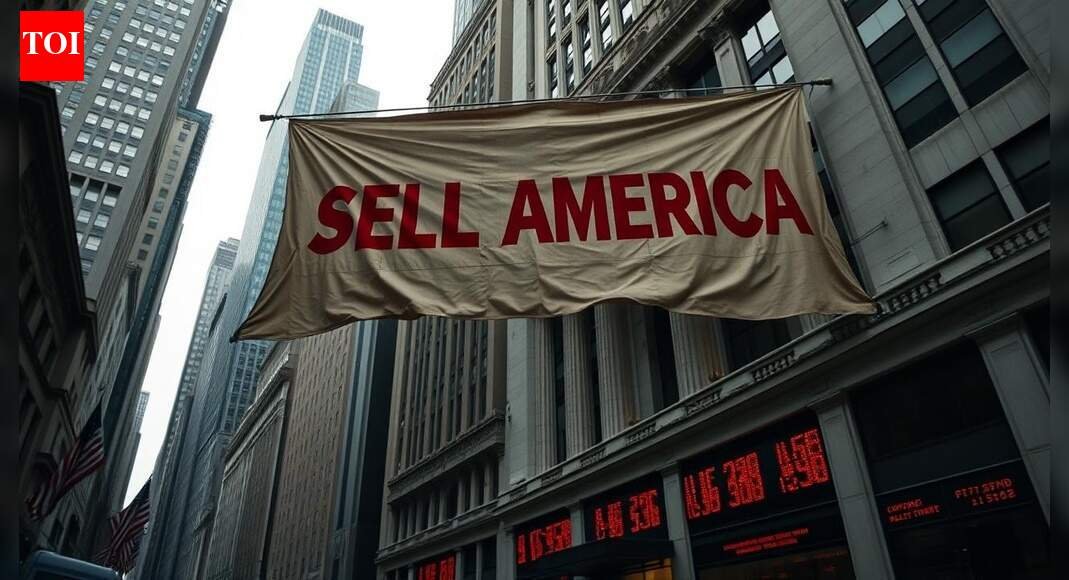
Pressure linked to the ‘Sell America’ narrative is unlikely to fade. (AI image)

US President Donald Trump’s fresh attack on the Federal Reserve seems to have revived the ‘Sell America’ sentiment in the stock market and strategists and market experts are warning that the selloff may deepen over time if the tiff between the government and the central bank snowballs.Market sentiment turned cautious on Monday as a growing ‘Sell America’ narrative gained traction following intensified criticism of the Federal Reserve by the Trump administration, reviving worries about the central bank’s independence in determining interest rates.

Trump Tells Putin ‘US Is Open For Business’ After Forces Seize 5th Oil Tanker Near Venezuela | Watch

The dollar, Treasury bonds and US equity futures all edged lower. Although the moves were modest, the renewed focus on the Fed’s autonomy and its broader implications for financial markets unsettled investors.

Trump vs Powell: What’s the fuss about?

US Fed Chair Jerome Powell said on Sunday evening that the central bank had received grand jury subpoenas from the Justice Department linked to his testimony before Congress regarding renovation work at the Fed’s headquarters. The episode marks another flashpoint in a series of confrontations that have included attempts to remove Governor Lisa Cook and repeated demands for sharp interest rate cuts.Trump has repeatedly urged the Federal Reserve to reduce interest rates more aggressively to stimulate growth and lower government borrowing costs. In contrast, Fed policymakers have remained cautious, citing inflation risks. Paul Volcker, appointed Fed chair in 1979, is widely credited with taking tough measures to rein in inflation, a problem many believe had been allowed to worsen after the central bank yielded to pressure from then President Richard Nixon.Speaking to NBC News on Sunday, Trump said he was unaware of any Justice Department investigation involving the Federal Reserve.Hebe Chen, senior market analyst at Vantage Global Prime Pty., said the investigation involving Powell currently appears to be “more smoke than fire,” though she cautioned that its durability remains uncertain. “The longer-term and more deeply embedded consequences could be far more significant,” she added.

Why are markets wary?

At the heart of investor unease is the extent to which the US president can, or should, exert influence over monetary policy, an area that has largely remained shielded from political intervention for decades. This has revived questions over whether global investors should scale back exposure to US assets and the dollar, echoing concerns that swept markets last April after President Donald Trump announced blanket tariffs.“Any development that raises questions about the Fed’s independence adds uncertainty around US monetary policy,” said Gary Tan, portfolio manager at Allspring Global Investments, which manages more than $600 billion in assets according to a Bloomberg report. “This is likely to reinforce existing trends of diversification away from the dollar and increase interest in traditional hedges such as gold.”According to Bloomberg, Ian Lyngen, head of US rates strategy at BMO Capital Markets wrote in a note: To characterize the events as putting the Fed independence discussion into uncharted waters would be an understatement. We remain skewed toward higher yields in the near-term.Market strategists cautioned that the recent decline could intensify if political and policy frictions worsen. JPMorgan Asset Management highlighted the possibility of a sharper steepening in the US Treasury yield curve, where longer-dated yields rise faster than short-term rates, driven by expectations of deeper interest-rate cuts. Lombard Odier warned that both the dollar and Treasuries could face sustained pressure, while Invesco Asset Management noted that assets outside the US, including European and Asian equities, appear relatively more attractive.“This is a bad time to be worrying about Fed independence for the market,” said Bhanu Baweja, chief strategist at UBS Investment Bank, who added that US inflation is expected to pick up in the months ahead. “The one common theme for this year seems to be not just a weaker dollar, but equity volume going higher,” he was quoted as saying by Bloomberg.The latest developments risk reviving the “Sell America” theme, according to Gerald Gan, chief investment officer at Singapore-based Reed Capital Partners. He said the situation reflects an administration intent on rebuilding public support ahead of the midterm elections, even if that comes at the cost of weakening institutional credibility.US financial assets have faced similar pressure before. Last year, markets were jolted after President Donald Trump unexpectedly unveiled sweeping global tariffs, triggering sharp volatility. The subpoena involving the Federal Reserve adds to concerns that US assets are losing appeal, said David Chao, global market strategist at Invesco Asset Management, which manages over $2 trillion. He argued that the US is not only retreating behind what he described as “Fortress America” policies, but is also adopting a more aggressive stance that unsettles investors.Others urged restraint, noting that the dollar’s entrenched status as the world’s primary reserve currency, the depth and liquidity of the Treasury market, and the artificial intelligence-driven momentum in equities could limit the downside and even create buying opportunities. “Independence is always a concern, but we will monitor developments and respond once the economic implications become clearer,” said Marvin Loh, senior macro strategist at State Street in Boston.Even so, pressure linked to the ‘Sell America’ narrative is unlikely to fade.


Source link

Simple trick to dry shoes faster in winters: Shoes won’t stay wet for long |


Simple trick to dry shoes faster in winters: Shoes won’t stay wet for long

Winter makes small chores feel heavier than they should. Washing shoes is one of them. You clean them, set them aside, and then wait. A day passes. Sometimes two. They still feel cold and damp to the touch. The smell creeps in before they are properly dry. It is not dramatic, just irritating. Many people deal with this every winter without thinking much about it until the problem repeats. Damp shoes lose shape. Glue weakens. Fabric holds moisture longer than expected. This piece looks at a few simple ways people quietly deal with the issue. Nothing technical. Just small habits, borrowed tricks, and ordinary materials that help shoes dry faster in cold weather, without rushing them or causing damage.

How to dry shoes faster in winters without damaging them

Cold air holds less moisture, but it also slows evaporation. Add low sunlight and poor airflow, and wet shoes simply sit there. Thick soles and padded uppers trap water inside. Sports shoes and canvas pairs are the worst offenders. Leather behaves differently but still suffers if left damp for too long. The problem is not the water alone, but where it stays.Before thinking about heat or tricks, remove excess water. Many people skip this. Press the shoes gently with your hands to release trapped water. Do not twist them. That bends the structure and weakens stitching. Take out the insoles straight away. Insoles dry slower than the shoe itself and keep moisture locked inside if left in place.

Paper helps shoes dry faster

Newspaper works quietly well. Stuff dry newspaper or thick tissue inside the shoes, filling the toe and sides. Paper absorbs moisture from the inside, which is where drying usually stalls. If the shoes are very wet, replace the paper after a few hours. This method suits trainers and canvas shoes especially. It also helps shoes keep their shape while drying.

Keep in a warm, airy space (avoid keeping in front of a heater)

Avoid direct heat. Placing shoes next to a heater or blower seems tempting but often causes damage. Glue softens. Soles loosen. Fabric stiffens. A better option is a warm, airy space. Near a window. Under a ceiling fan. In a room with steady air movement. At night, leaving shoes out in an open room works better than locking them in a corner.

Hairdryer safe for drying shoes

Use carefully; keep the dryer on medium heat. Hold it at a distance. Move the airflow around rather than focusing on one spot. This helps remove surface moisture without stressing the material. It is useful when shoes are needed soon but should not replace slow drying entirely.

Use salt or silica gel

They do. Salt absorbs moisture naturally. Fill a cloth pouch with salt and place it inside the shoe. Leave it for several hours. Silica gel packets, often found in new shoes or bags, work in the same way. Both also help reduce odour. This is a slow, quiet method, suited to overnight drying.

How can you prevent bad smells in shoes while drying

Airflow matters more than fragrance. Dry shoes properly before storing them. Always dry insoles separately. Avoid closed cupboards until shoes are fully dry. Moisture causes odour, not dirt alone. A dry shoe rarely smells.Drying shoes in winter is less about speed and more about patience, with a few smart choices along the way. Small steps add up. The shoes last longer. They feel better to wear. And the wait becomes shorter, almost unnoticed.


Source link

Fed showdown: Donald Trump’s legal move against Jerome Powell sharpens rate-cut battle; raises questions over central bank independence


Fed showdown: Donald Trump’s legal move against Jerome Powell sharpens rate-cut battle; raises questions over central bank independence

The US Justice Department’s threat to criminally indict Federal Reserve Chair Jerome Powell has triggered a fresh confrontation between the White House and the central bank, intensifying concerns over the Fed’s independence and the direction of US monetary policy.The subpoenas, served on Friday, relate to Powell’s June testimony on the $2.5 billion renovation of Federal Reserve buildings, including its Washington headquarters, AP reported. Powell has said the legal action is a pretext aimed at forcing the Fed to comply with President Donald Trump’s demand for sharp interest rate cuts.“I have carried out my duties without political fear or favor, focused solely on our mandate of price stability and maximum employment,” Powell said in a video statement on Sunday night. “Public service sometimes requires standing firm in the face of threats.”Markets reacted negatively on Monday, with US stocks falling after Powell disclosed the subpoenas.

Why Trump is pressuring the Fed

Trump has repeatedly criticised Powell over the past year for resisting aggressive rate cuts, arguing that inflation is no longer a threat and that lower rates are needed to support growth. Powell, however, has maintained that inflation remains elevated, partly due to the impact of Trump-era tariffs, and has favoured a cautious policy approach.The conflict reflects a deeper dispute over how much influence the White House should have over monetary policy. Powell’s current term as Fed chair ends in May, but he could remain on the Fed’s board until January 2028, a move that would prevent Trump from immediately filling another vacancy.Asked whether Powell planned to stay on as a Fed governor, Kevin Hassett, director of the White House National Economic Council and a potential candidate to succeed Powell, said he was unaware of Powell’s intentions.“I’ve not talked to Jay about that,” Hassett said.Trump had earlier signalled his intent to escalate the confrontation, telling reporters in late December that his administration would “probably” sue Powell over the renovation costs.“He’s just a very incompetent man,” Trump said. “But we’re going to probably bring a lawsuit against him.”

Economists warn of risks to Fed independence

The legal action has drawn sharp criticism from economists and former policymakers, including several who previously led the Federal Reserve.A bipartisan group of former Fed chairs and top economists said on Monday that the White House’s actions amounted to “an unprecedented attempt to use prosecutorial attacks to undermine” the central bank’s independence.“This is how monetary policy is made in emerging markets with weak institutions, with highly negative consequences for inflation and the functioning of their economies more broadly,” the statement said. “It has no place in the United States whose greatest strength is the rule of law, which is at the foundation of our economic success.”The statement was signed by former Fed chairs Ben Bernanke, Janet Yellen and Alan Greenspan, along with former Treasury secretaries Henry Paulson and Robert Rubin.Republican Senator Kevin Cramer of North Dakota, a frequent Powell critic, also expressed discomfort with the criminal probe.He said he does not believe Powell is “a criminal” and added that he hopes “this criminal investigation can be put to rest quickly,” according to CNBC.Powell, who has largely avoided public confrontation since Trump began attacking him last year, said the subpoenas were intended to undermine the Fed’s ability to set policy independently and described them as a “pretext” to force interest rate cuts.The episode marks one of the most direct challenges to the Federal Reserve’s autonomy in modern US history, with implications for markets, borrowing costs and the broader economy, according to analysts.


Source link