Breaking News
Gold price today: How much 22K, 24K gold cost in Delhi, Mumbai & other cities – Check rates


Gold price today: How much 22K, 24K gold cost in Delhi, Mumbai & other cities – Check rates

Gold prices edged lower in the domestic market on Friday, with profit-taking setting in after bullion retreated from record levels in overseas trade amid a firmer US dollar. On the Multi Commodity Exchange (MCX), gold futures for the February contract fell Rs 520, or 0.36 per cent, to Rs 1,42,601 per 10 grams, with volumes of 14,194 lots.In the international markets, bullion prices corrected during Asian trading hours. On the Comex, silver futures for the March contract declined $1.93, or 2.10 per cent, to $90.41 per ounce, after having touched a record high of $93.56 per ounce on Wednesday.Gold futures for February delivery also dropped $21.9, or 0.47 per cent, to $4,601.8 per ounce. The yellow metal had hit an all-time high of $4,650.50 per ounce on January 14.Here is how much gold costs in major Indian cities today:

Gold price in Delhi today

The price of 22K gold in Delhi is Rs 13,160 per gram, up Rs 20, while 24K gold is priced at Rs 14,355 per gram, higher by Rs 22.

Gold price in Ahmedabad today

In Ahmedabad, 22K gold costs Rs 13,150 per gram, up Rs 20, while 24K gold is priced at Rs 14,345 per gram, higher by Rs 22.

Gold price in Kolkata today

Kolkata markets price 22K gold at Rs 13,145 per gram, up Rs 20, while 24K gold stands at Rs 14,340 per gram, higher by Rs 22.

Gold price in Mumbai today

Mumbai sees 22K gold priced at Rs 13,145 per gram, up Rs 20, while 24K gold costs Rs 14,340 per gram, higher by Rs 22.

Gold price in Hyderabad today

Hyderabad markets see 22K gold at Rs 13,145 per gram, up Rs 20, while 24K gold is priced at Rs 14,340 per gram, higher by Rs 22.

Gold price in Bangalore today

In Bangalore, 22K gold is priced at Rs 13,145 per gram, up Rs 20, while 24K gold costs Rs 14,340 per gram, higher by Rs 22.

Gold price in Patna today

In Patna, 22K gold costs Rs 13,150 per gram, up Rs 20, while 24K gold is priced at Rs 14,345 per gram, higher by Rs 22.

Gold price in Indore today

Indore markets price 22K gold at Rs 13,150 per gram, up Rs 20, while 24K gold stands at Rs 14,345 per gram, higher by Rs 22.

Gold price in Chennai today

In Chennai, 22K gold is priced at Rs 13,230 per gram, down Rs 60, while 24K gold costs Rs 14,433 per gram, lower by Rs 65.

Gold price in Lucknow today

Lucknow sees 22K gold priced at Rs 13,160 per gram, up Rs 20, while 24K gold is priced at Rs 14,355 per gram, higher by Rs 22.


Source link

Fundamental shift from savers to investors: What Indian households are doing with their money?


Fundamental shift from savers to investors: What Indian households are doing with their money?

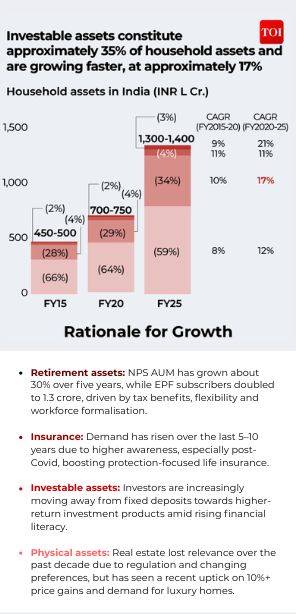
For years, Indian families have saved in gold, stored cash, and put money in tangible assets to safeguard their future. But now, there’s a noticeable shift is visible as more Indian households are moving away from old saving ways and putting their money to work through investments.India’s total household wealth, by the end of FY25, stood at Rs 1,300-1,400 lakh crore. Of this, investable financial assets stand at almost 35% of the total, growing at nearly 17% over the past five years, according to a recent Bain–Groww report, titled How India Invests.

Data credit: Bains & Groww report

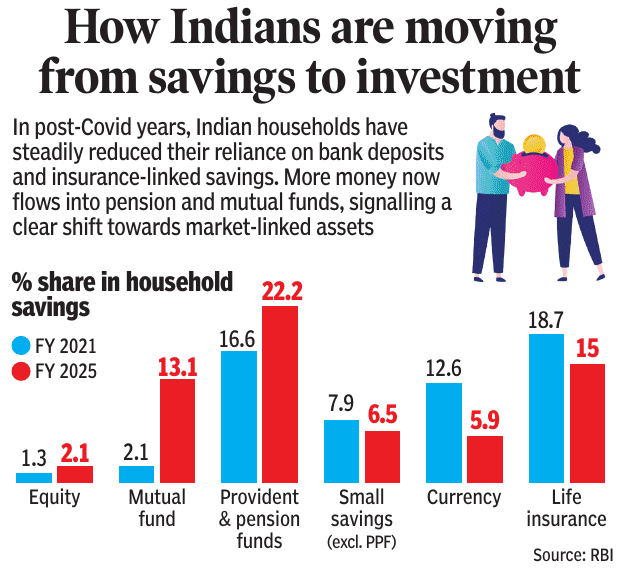
Household wealth has gone through a shift since the Covid era. Indians have moved from traditional fixed deposits toward market-linked instruments like mutual funds, pension funds and listed equities, which are growing at a fast rate, far outpacing deposits growth.Over the last five years, individual investor base in the country has expanded sharply, going from around 3 crore investors in 2019 to over 12 crore by 2025, according to the Market Pulse December 2025 report by the National Stock Exchange of India (NSE), India. In 2025 alone, households invested a whopping Rs 4.5 lakh crore into equity markets, both directly and indirectly through mutual funds. This, pushed the overall household investment in equities since 2020 to around Rs 17 lakh crore. In FY25, mutual fund assets under management (AUM) held by individuals reached Rs 41 lakh crore, driven by double participation by households, going from 5–6% to 10–11%, and increasing popularity of systematic investment plans (SIPs).According to RBI data, equity formed 1.3% of household savings in FY2021, but its share increased to 2.1% by FY2025. Similarly, mutual funds recorded a significant jump over the same period, with their share rising sharply from 2.1% to 13.1%. Contributions to provident and pension funds also grew, increasing from 16.6% in FY2021 to 22.2% in FY2025.In contrast, traditional savings instruments saw a decline. Small savings, excluding PPF, fell from 7.9% to 6.5%, while the share of currency in household savings dropped steeply from 12.6% to 5.9%. Life insurance also witnessed a reduction, with its share slipping from 18.7% in FY2021 to 15% in FY2025.Gradually, households reduced their dependence on bank deposits and insurance-based savings. Instead, investments in pension schemes and mutual funds have gathered pace, pointing to a broader shift towards market-linked financial products.

Savers to investment

Mutual funds, stocks, SIPs: Who is choosing what?

Salaried households show a clear preference for mutual funds, particularly through SIPs, reflecting a tilt toward disciplined, professionally managed investing aligned with long-term financial goals, according to the Bain report. In contrast, business owners display a stronger inclination toward direct equity investments, marked by higher trading frequency and a greater appetite for risk. Within mutual funds, SIPs remain the dominant entry route, while lump-sum investments are steadily gaining traction as investors mature, build market confidence, and increase their risk tolerance.

Interest in investing spiked after Covid?

Covid didn’t just change daily life, it changed how Indians invest. Retail participation in the stock market rose sharply after the pandemic, driven by a mix of high liquidity, lower household spending during lockdowns and the flexibility of work-from-home, Rohit Shah, Certified Financial Planner and founder of Getting You Rich told TOI. Shweta Rajani, head of mutual funds at Anand Rathi Wealth Limited, pointed out that mutual funds made up only 4–5% of household financial assets between FY15 and FY20, but this share nearly doubled from around 5% in FY20 to close to 10% by FY25. At the same time, direct equity investments also grew sharply, rising from about 4% of household assets in FY20 to around 9% by FY25. “Together, these shifts indicate a clear move away from traditional savings instruments towards market-linked investments, indicating investors are comfortable with equity as an asset,” the expert added.Meanwhile, Nirav Karkera, head of research at Fisdom believes that Covid acted more as an accelerator than a starting point as the shift had already begun after demonetisation. The switch made Indians comfortable with digital payments and later with digital investing. By the time the pandemic arrived, systems such as Aadhaar-based KYC, easy online transactions and awareness campaigns like Mutual Fund Sahi Hai had removed most barriers. “When the pandemic hit, investors suddenly had the time and urgency to reflect on their personal finances. More importantly, the infrastructure to execute decisions with almost zero friction already existed. Willingness, ability and accessibility came together and translated into action. The sharp and mostly linear market recovery that followed further strengthened confidence, pulled in fence-sitters and accelerated the broader financialisation of household assets that was underway,” Nirav added.

Change in India’s risk appetite

India’s shift from saving to investing is being driven less by thrill-seeking and more by necessity, experts said. Traditional savings instruments are increasingly failing to protect wealth, as post-tax returns often fall below inflation, steadily eroding purchasing power. “What looks like rising risk appetite is partly a change in the understanding of risk itself,” said Karkera, adding that investors now see the risk of staying idle and falling behind as greater than the risk of market volatility. This shift has been reinforced by deeper financial awareness, easier access to investing through fintech platforms, and stronger regulation, said Rajani. The expert further noted that SIPs, simplified KYC and digital onboarding have lowered entry barriers, while a generational change is reshaping attitudes, older investors prioritised capital preservation, but younger earners, facing higher inflation and lower real interest rates, are more focused on long-term wealth creation using growth assets. However Shah cautioned that rising participation does not always mean better risk management. “Four structural factors drive this shift: financial literacy campaigns, fintech accessibility reducing entry barriers, higher equity allocations in mutual fund inflows, and rising per capita incomes. Yet risk appetite may be overstated. Data on retail trading patterns shows concentration in speculative segments, suggesting investors confuse market participation with risk management. Many haven’t weathered a bear market, leading to underestimation of downside volatility,” Shah told TOI.

Here’s what is driving the investors:

A combination of demographic change, regulatory support, digital access and strong market returns has accelerated India’s move from traditional savings to investing.

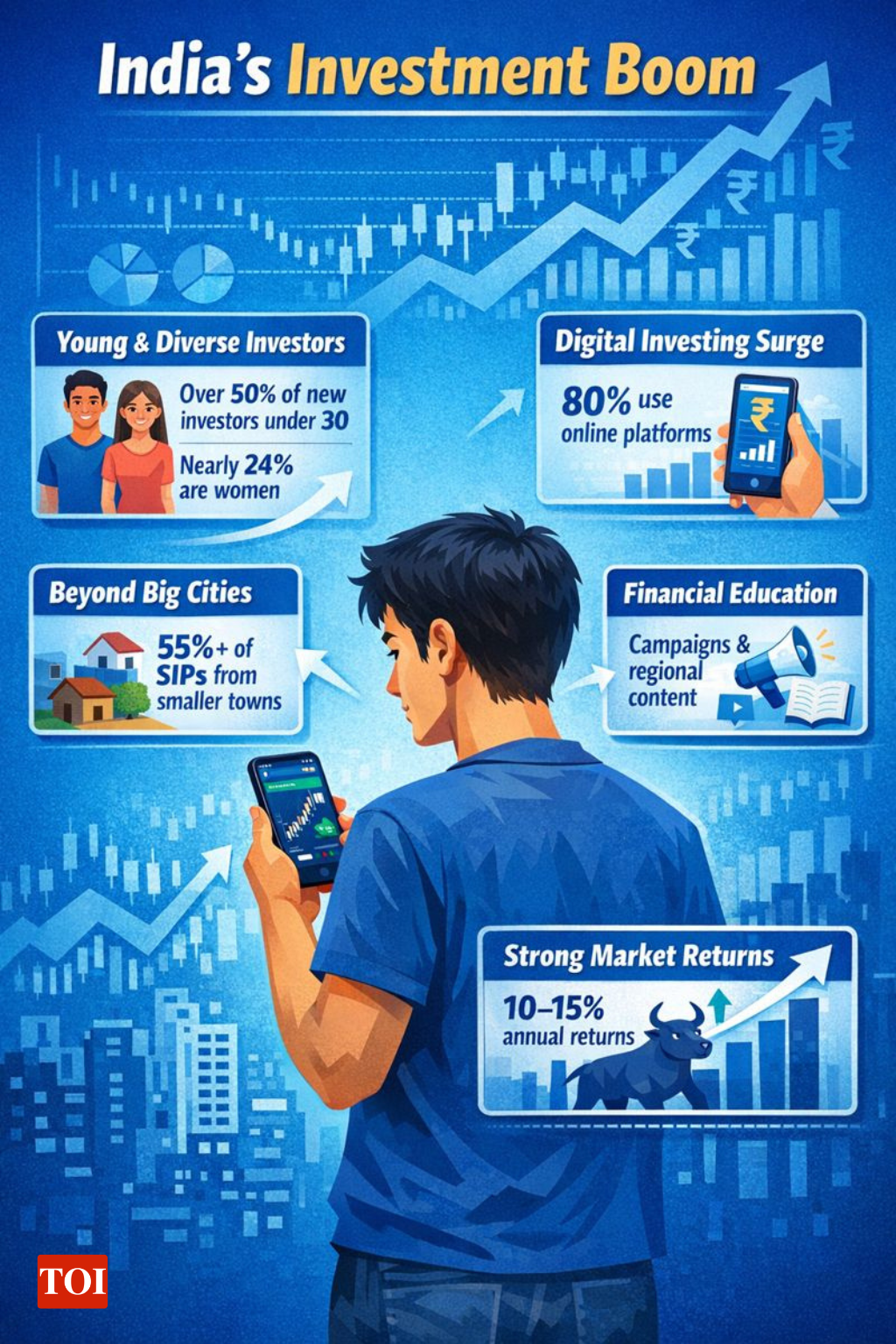
India's investment boom

Demographic changesYounger investors are driving India’s shift from traditional savings to investing, with NSE data showing that more than half newly registered investors are below 30. At the same time, women are steadily increasing their presence in financial markets. As of November 2025, women account for nearly a quarter of India’s investor base, with their share in the NSE’s individual investor pool remaining stable at almost 24%.Digital transformationDigital platforms have emerged as the main entry point for retail investors in the country, with almost 80% of direct equity investors and around 35% of mutual fund investors investing through digital channels. According to the Bain report, driven by app-based onboarding, paperless KYC and fintech-led distribution, platforms such as Groww, Zerodha and Upstox have simplified investing, brought in millions of first-time investors, and together account for almost 80% of India’s retail equity investor base.Going beyond metro citiesInvestment activity is increasingly coming from smaller cities. Around 55–60% of new SIP registrations now originate from B30 cities, highlighting the growing role of Tier-2 and Tier-3 regions in driving mutual fund growth.Rising financial literacy and awarenessThe spread of regional and digital financial content across YouTube, Instagram and fintech platforms has made investing concepts more accessible. Regulatory awareness campaigns by AMFI — including “Mutual Funds Sahi Hai” and “Bharat Nivesh Yatra” — have further boosted investor education.Market performance reinforcing trustSustained returns have strengthened long-term investor confidence. The Nifty 50 and Sensex delivered 10–15% returns over the last decade, while equity-oriented mutual funds have significantly outperformed traditional fixed deposits over the past five years.

Women and GenZ hit investment markets

GenZYounger investors are emerging as key drivers of the shift from traditional savings to investment. Data from the NSE shows that more than half, almost 56%, of newly registered investors are below 30. Mutual fund trends also reflected this shift, with 55% of investors under 40 and the 20–30 age group emerging as the fastest-growing segment in the top 100 cities.Comparing the contribution of GenZ and millennials, Rohit Shah said that according to the data, both cohorts contribute meaningfully, but with distinct patterns.“GenZ dominates app-based trading volumes due to digital nativity and lower capital requirements. Millennials drive mutual fund and long-term investments through larger disposable incomes and established goals.” He further added, after the market expansion happening after the pandemic, benefited both simultaneously, “making it difficult to isolate one generation as the primary driver. The real story lies in democratization across age groups, not generational dominance.The equity shift is broad-based across age groups according to AMFI’s age-wise distribution of individual investor AUM. Gen Z investors (under 25 years) have allocated nearly 65% of their assets to equity, Rajani told TOI. Millennials (25–44 years), meanwhile, “show the highest equity allocation at approximately 75.5%, and importantly, even investors above 58 years of age maintain a meaningful equity allocation of around 54%”Nirav Karkera, head of research at Fisdom, highlighted a different approach, saying that while millennials currently lead the equity surge, the baton is likely to pass to Gen Z in the coming years. “Gen Z is still in the early stage of their earning life, where consumption tends to dominate. At the same time, they are arguably the most financially aware generation we have seen. They understand the language of money much earlier than millennials did at their age. Once their incomes rise and they have surplus capital, they are likely to play an even bigger role than millennials in shaping investment patterns. For now, millennials are doing the heavy lifting, but the baton looks set to pass smoothly to Gen Z.”WomenAs of November 2025, women account for nearly a quarter of India’s investor base, highlighting their growing presence in financial markets. Data from NSE shows that over the corresponding period, women’s share in the individual investor base has remained stable at 24.7% over the corresponding period. Among the top five states by registered investors, Maharashtra leads with women comprising 28.8% of its investor pool, up from 25.6% in FY23, followed closely by Gujarat at 28.1% (26.6% in FY23). In contrast, Uttar Pradesh, despite being the second-largest state by investor count, continues to lag, with women forming 18.9% of investors, though this marks an improvement from 16.9% in FY23.Encouragingly, nearly 53% of Indian states now report female investor participation above the national average, compared to 44% in FY23. Smaller regions are emerging as frontrunners in gender inclusion, with Goa (33.1%), Mizoram (32.4%), Chandigarh (32.2%), Sikkim (31.1%) and Delhi (30.9%) leading the way – reflecting rising financial awareness, greater workforce participation, and improved access to investment avenues among women. Mutual funds also saw rising participation from women, particularly in B30 cities, where the share of women investors climbed from 20% to 25% over the past five years. In the top 30 cities, women now make up nearly 35% of mutual fund investors as of FY25, accompanied by a sharper rise in average MF folio sizes between FY19 and FY24.

Short-term or long-term: Where are Indians putting their money?

Indian investors are participating across both short-term trading and long-term wealth building, but experts say the balance is slowly tilting toward the latter. In the immediate post-Covid phase, many first-time investors entered markets with speculative intent. However, that period helped break psychological barriers. “Once investors experienced volatility firsthand rather than hearing about it abstractly, they started building familiarity, confidence and a basic understanding of market behaviour,” said Karkera, adding that the early rush acted as a gateway to more mature participation.Rajani told TOI that the trend is driven by long term objectives rather than short term. The expert pointed to AMFI’s SIP holding-period analysis, which shows that the share of SIP assets held for over five years has jumped from 11% to 29% in the past five years, while investments held for less than a year have fallen sharply from 41% to 23%.Meanwhile Shah said that even though “retail trading volumes have grown exponentially—NSE data shows consistent month-on-month increases in F&O participation. Simultaneously, mutual fund SIP adoption remains strong, but it’s overshadowed by trading activity. With fixed deposit yields compressed by falling interest rates, investors are chasing equity returns without corresponding time horizons. The evidence suggests a bifurcation: disciplined SIP investors versus growing trading populations driven by short-term performance metrics.

Are there any risks for the investment express?

Shah warned that many new investors entered the market during a long bull run, and historically, market corrections of 30–50% happen every 7–10 years. Therefore, a prolonged downturn could lead to panic selling, especially among first-time investors with little experience of market volatility. Meanwhile, in the short term, market ups and downs may push some investors to move money into safer options like debt funds. Investors also tend to chase assets that have done well recently, such as gold and silver. However, Rajani pointed out that these shifts are temporary and not a fundamental change. “Over the long term, the broader trend toward equity investing is expected to continue as investors looking for inflation-beating returns to meet long-term financial goals.Karkera also highlighted that even though risks remain, they are manageable. He noted that lower equity returns or bouts of market volatility could cause short-term, speculative investors to step back, and better performance in fixed-income or real assets may temporarily pull some money away from equities. However, the larger shift is firmly in place thanks to improved investor awareness, growing digital access. “Growth may pause or plateau intermittently, but the long-term trajectory of retail participation still feels upward.”

Still room to grow

Despite the rapid shift, India continues to lag developed markets. Mutual funds and equities account for just 15–20% of household investable assets, compared with 50–60% in countries like the US and Canada, highlighting significant headroom for future growth.As the Bain report notes: Over the next decade, mutual fund AUM is projected to cross Rs 300 lakh crore, while direct equity holdings could approach Rs 250 lakh crore, supported by deeper penetration in tier-2 and tier-3 cities, regulatory reforms and investor education initiatives.




Source link

Nanded election result 2026 live: BJP wins 40 seats, leads in five; counting underway for 81-member civic body | India News


Nanded election result 2026 live: BJP wins 40 seats, leads in five; counting underway for 81-member civic body

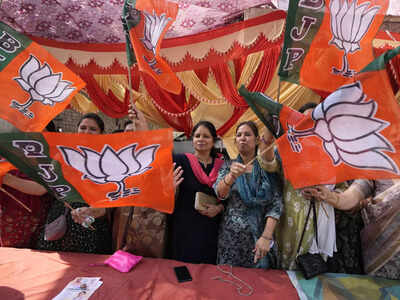
The ruling Mahayuti is set to secure the mayor’s post in the 81-member Nanded Waghala Municipal Corporation, where vote counting has been underway since 10 am on Friday.The BJP has won 40 civic wards and is leading in five more, while its ally, the Eknath Shinde-led Shiv Sena, has secured one seat and is ahead in six others.

BMC Polls 2026: Inside Mumbai’s Civic Giant Whose Budget Is Bigger Than Many Indian States

Ajit Pawar’s Nationalist Congress Party has won seven seats, while the Congress and its allies have secured six wards and are leading in four others. Four candidates of the Asaduddin Owaisi-led AIMIM have also emerged victorious.Polling for the Nanded Waghala Municipal Corporation, along with elections to 28 other civic bodies across Maharashtra, was held on Thursday.The BJP is also poised to secure the mayor’s post in Mumbai’s Brihanmumbai Municipal Corporation (BMC), where, along with the Shiv Sena, it is on track to record its highest-ever tally. For 27 years, the BMC was controlled by the undivided Shiv Sena, until the party split in 2022 into factions led by Eknath Shinde and former Maharashtra chief minister Uddhav Thackeray, whose father, Bal Thackeray, founded the party in 1966.The BMC is the richest municipal corporation in India and among the wealthiest in Asia, with an annual budget of Rs 74,400 crore for 2026–27.


Source link

Bill Gates starts working on his plan to shut down what is one of the world’s most-influential foundations; sets layoff target and …


Bill Gates has started putting in place the first major steps toward closing the Bill & Melinda Gates Foundation, one of the world’s most-influential philanthropic organisations. The foundation recently announced that it will spend a record $9 billion in 2026, its highest annual budget so far, while also preparing to cut up to 500 staff positions over the next five years. According to a Fortune report, these moves follow Gates’ decision last year to formally wind down the foundation by 2045, after spending roughly $200 billion over two decades.The latest plan marks a significant shift for the foundation at a time when many of its long-term focus areas — including global health, poverty, and US education — are under pressure due to cuts in international aid. Gates Foundation was established in 2000 as a nonprofit fighting poverty, disease, and inequity around the world. Bill Gates and his former -wife are among the top donators to the foundation. Together, they contributed $60.2 billion to the endowment through 2024. Warren Buffett, who is a former trustee and a clsowe friend of Gates donated $43.3 billion from 2006 to 2024.

Gates Foundation to cut up to 500 jobs by 2030

The foundation’s board has approved a cap on operating costs, limiting them to $1.25 billion a year, or about 14% of its budget. To meet that limit, the organisation will reduce its workforce from the current 2,375 roles, including by leaving some positions unfilled.Foundation CEO Mark Suzman said the reductions will be gradual:“We will do this thoughtfully, carefully, and systematically … We’ll be recalibrating it every year. That 500-person target is a maximum target. I very much hope that we won’t have to do it as large as that number.”Suzman said operating costs were projected to reach 18% by 2030 if no action was taken.

Record spending planned as global health indicators worsen

The $9 billion budget for 2026 includes increases for programmes focused on women’s health, vaccines, polio, AI tools, and education. Gates recently wrote that global health indicators slipped last year, noting that child deaths increased for the first time in two decades.“The next five years will be difficult as we try to get back on track and work to scale up new lifesaving tools,” Gates wrote. Still, he said he remains optimistic about long-term progress.The foundation plans to accelerate spending in three key areas:• maternal and child health• infectious disease prevention• poverty reduction

Bill Gates No Longer among Top 10 Billionaires: The Real Reason

Notably, Bill Gates has repeatedly warned about risks from artificial intelligence (AI) but is also investing in its development. The foundation joined a coalition pledging $1 billion toward AI tools for public-sector workers in the U.S.AI remains one of the programmes that will continue to grow, Suzman confirmed.The foundation is also expanding operations in Africa and India, creating a new division focused on the two regions. Work on HIV and tuberculosis will increasingly shift from Seattle to Africa.Despite its planned closure, Suzman said the foundation still has two decades to operate and aims to make its most significant impact during that time.“We are moving into what I believe is going to be the most impactful period of the Gates Foundation,” he said.


Source link

WATCH: Moises Henriques plucks a blinder to remove Matthew Gilkes in BBL|15


Sydney Cricket Ground (SCG) turned into a theater of brilliance on January 16, 2026, as the 37th match of BBL 15 brought the city to a standstill. In a high-stakes Sydney Derby, the Sydney Sixers invited the Sydney Thunder to bat first in a clash brimming with narrative weight—the return of Mitchell Starc to the Big Bash after an eleven-year hiatus and David Warner’s relentless pursuit of the Golden Bat. While the contest was billed as a battle of heavyweights, it was a moment of sheer acrobatic genius from Sixers captain Moises Henriques that stole the early headlines.

Moises Henriques pulls off a sensational catch to dismiss Matthew Gilkes

The breakthrough came in the 6th over, just as the Thunder were beginning to look dangerous. Mitchell Starc, steaming in for his second over, delivered a wobble-seam ball on a nagging fourth-stump line. Matthew Gilkes, looking to exploit the final over of the Powerplay, attempted to loft the ball inside-out over the off-side.

Gilkes didn’t quite get the middle of the bat, slicing the delivery toward wide mid-off. It looked destined to fall in the gap, but Henriques had other plans. Tracking the ball with predatory focus, Henriques launched into a full-length horizontal dive to his right. He plucked the ball inches from the turf, maintaining his grip even as he slammed into the SCG turf. The dismissal (12 off 12 balls) gave Starc his first BBL wicket in over a decade and sent the magenta faithful into a frenzy. It was a blinder in every sense of the word, proving that at 38, the Sixers’ skipper still possesses the reflexes of a teenager.

Here’s the video:

Also READ: Fans erupt as Finn Allen lights up Docklands Stadium with sizzling century in BBL|15

Sydney Thunder aim for formidable total despite top-order stutter in BBL|15 game

Despite losing Gilkes to that sensational catch, the Sydney Thunder showed no signs of slowing down their aggressive intent. Led by a vintage David Warner, the men in lime green reached 83/2 at the 10-over drinks break, looking well-positioned to launch in the back half of the innings.

The match flow favored the Thunder early on, with the opening pair putting on a rapid 50-run stand in just 25 balls. Warner was the primary aggressor, smashing a breathtaking half-century off only 25 deliveries, including eight boundaries and a towering six. His dominance ensured the Thunder capitalized on the Powerplay, racing to 49/0 in the first four overs.

While Jack Edwards managed to remove the young Sam Konstas (6 off 11) shortly before the break, the presence of Sam Billings alongside the settled Warner suggests the Thunder are eyeing a target north of 170. With Starc returning figures of 1/27 and Sean Abbott keeping it tight, the Sixers will need more Henriques-esque brilliance in the field to restrict their crosstown rivals on this flat SCG deck.

Also READ: Finn Allen’s blazing century powers Perth Scorchers to commanding win over Melbourne Renegades in BBL|15


Source link

Latur election result 2026 live: Congress leading in 30 Wards, BJP in 17 Wards till 3 pm | Mumbai News


Latur election result: Counting of votes for the Latur Municipal Corporation (LMC) elections is underway on January 16, a day after polling was held on January 15. As of 3 pm, the Congress was leading in 30 wards, while the BJP was ahead in 17 wards, according to early trends.A total of 3,82,940 voters were eligible to cast their ballots in the election, which covers 18 wards across the city. Voters are electing 18 ward members to the municipal corporation.

Erasable Ink Controversy In BMC Elections, SEC Steps In And Orders Probe

The LMC election results are being keenly watched amid ongoing civic polls across Maharashtra, where the ruling BJP-led Mahayuti alliance has shown strong performance in earlier phases of municipal elections.

What happened in the last LMC election

In the 2017 Latur Municipal Corporation elections, a total of 70 seats were contested. The Bharatiya Janata Party (BJP) emerged as the single-largest party, winning 36 seats, while the Indian National Congress (INC) secured 33 seats. The Nationalist Congress Party (NCP) managed to win one seat.The results reflected a closely fought contest between the BJP and the Congress in the civic body.

Broader Maharashtra civic poll trend

In the ongoing Maharashtra municipal elections, the BJP has underlined its dominance by emerging as the single-largest party in 129 of the 288 local bodies that went to polls in the first two phases. The ruling Mahayuti alliance crossed the 200 mark, with the Shiv Sena winning 51 local bodies and the NCP securing 33.In contrast, the Opposition Maha Vikas Aghadi (MVA) struggled to keep pace. The Congress won 35 local bodies, while Shiv Sena (UBT) and NCP (Sharadchandra Pawar) finished with eight each.

Latur Municipal Corporation mayors in recent years

The leadership of the LMC has changed hands multiple times over the past decade:

  • Prof Smita Khanapure (Congress): 2012 to 2014
  • Akhtar Sheikh (Congress): 2014 to 2016
  • Deepak Sul (Congress): May 13, 2016 to May 21, 2017
  • Suresh Pawar (BJP): May 21, 2017 to November 21, 2019
  • Vikrant Gojamgunde (Congress): November 22, 2019 to May 21, 2022


Source link

Ulhasnagar election result 2026: Shinde-led Shiv Sena leads in 19 seats, BJP ahead in 17 | Thane News


The Bharatiya Janata Party (BJP) is leading in 17 of the 78 seats in the Ulhasnagar Municipal Corporation (UMC), while the Eknath Shinde-led Shiv Sena is ahead in 19 seats. The Raj Thackeray-led Maharashtra Navnirman Sena (MNS) is leading in one seat.Ulhasnagar, Maharashtra’s only Assembly constituency with a majority Sindhi population, witnessed a complex and closely fought political contest. The election turned into a direct battle as parties adopted different alliance strategies across the city.

Erasable Ink Controversy In BMC Elections, SEC Steps In And Orders Probe

The Eknath Shinde-led Shiv Sena contested the elections in alliance with local leader Omi Kalani, the TOK group and the Sai Party. Congress, Uddhav Thackeray’s Shiv Sena faction and the MNS formed a separate alliance. The BJP chose to contest the Ulhasnagar Municipal Corporation elections independently, fielding candidates in all 78 seats without any alliance.The contest became particularly intense as TOK candidates contested on the Shiv Sena symbol, resulting in a direct fight between BJP and Shiv Sena-backed candidates in all wards.Some of the most closely watched seats saw four heavyweight former BJP corporators switching sides just a month before the elections. These leaders, who had won between two and five terms earlier, quit the BJP and joined Team Omi Kalani. They are contesting on the Shiv Sena symbol under Team Omi Kalani’s quota.The BJP responded by fielding fresh candidates against these experienced leaders, turning these wards into high-stakes contests. The veteran corporators sought votes based on their past work and achievements, while BJP candidates described these wards as party strongholds and accused the defectors of failing to deliver development despite holding key positions earlier.The Ulhasnagar Municipal Corporation is responsible for managing the city’s infrastructure and urban planning. The elections were held on January 15, 2026, and the results are being declared on January 16, 2026. A total of 5,06,098 voters participated in the election to choose corporators across 20 wards of the city.In the previous UMC elections held in 2017, the BJP emerged as the single largest party with 32 seats, followed by Shiv Sena with 25 seats. The Secular Alliance of India won 11 seats, the Nationalist Congress Party secured four seats, while smaller parties and independents shared the remaining seats.Ulhasnagar has seen mayors from different political backgrounds over the years. Ganesh Chaudhary served as mayor in 1996, while Jyoti Kalani, a prominent local leader, held the post during the 1990s. Shiv Sena’s Apeksha Patil became mayor in 2014, followed by Leelabai Ashan in 2019. The civic body is currently under administrative rule.The Ulhasnagar election is part of the larger civic polls held after a long gap across Maharashtra, as the terms of most municipal corporations had ended between 2020 and 2023. Elections were conducted for 29 municipal corporations across the state, including nine in the Mumbai Metropolitan Region.


Source link

Indelible ink row: Rahul Gandhi accuses EC of ‘gaslighting’ voters – What does it mean? | India News


Indelible ink row: Rahul Gandhi accuses EC of ‘gaslighting’ voters - What does it mean?

Congress leader Rahul Gandhi on Friday weighed in on the controversy surrounding the alleged fading of indelible ink used during Maharashtra’s civic body elections, using a Gen Z term to accuse the Election Commission of undermining public trust.Amid mounting complaints from voters and opposition parties that the ink applied to mark fingers during Thursday’s polls was fading unusually fast, Rahul described the situation as “gaslighting” by the Election Commission and termed “vote chori” an anti-national act.Sharing a media report on X that said “opposition, voters cry foul over fading ink markers”, Gandhi wrote, “Election commission gaslighting citizens is how trust has collapsed in our democracy. Vote Chori is an anti-national act.”The controversy erupted after multiple videos surfaced on social media showing voters claiming that the ink marks on their fingers had faded within hours of voting, raising concerns about the integrity of the electoral process and the possibility of repeat voting.

What is gaslighting?

Rahul’s use of the term ‘gaslighting’ — commonly associated with Gen Z and millennial discourse — drew attention online.‘Gaslighting’ refers to a form of manipulation where people are led to doubt their own memory, perception or understanding of reality. It often involves repeatedly denying clear facts, twisting information, or blaming others’ reactions, eventually causing them to question their own judgment.Victims are gradually led to question their actions, memories, understanding and even their sanity. It typically occurs in situations where there is a power imbalance between the individuals involved. Gaslighting often begins with small, seemingly harmless lies but can escalate over time, with the manipulator convincing the victim that they remember events incorrectly, lack sound judgment, or cannot be trusted to assess situations accurately.Examples:By invoking the term, Rahul appeared to suggest that voters’ concerns were being dismissed or minimised despite visible evidence, further eroding confidence in democratic institutions.The Election Commission has maintained that it will take corrective steps based on the probe’s findings, even as the opposition continues to press for accountability over the ink controversy.


Source link

ICC corrects Virat Kohli ranking error after fan backlash as India great jumps to third on all-time list | Cricket News


ICC corrects Virat Kohli ranking error after fan backlash as India great jumps to third on all-time list

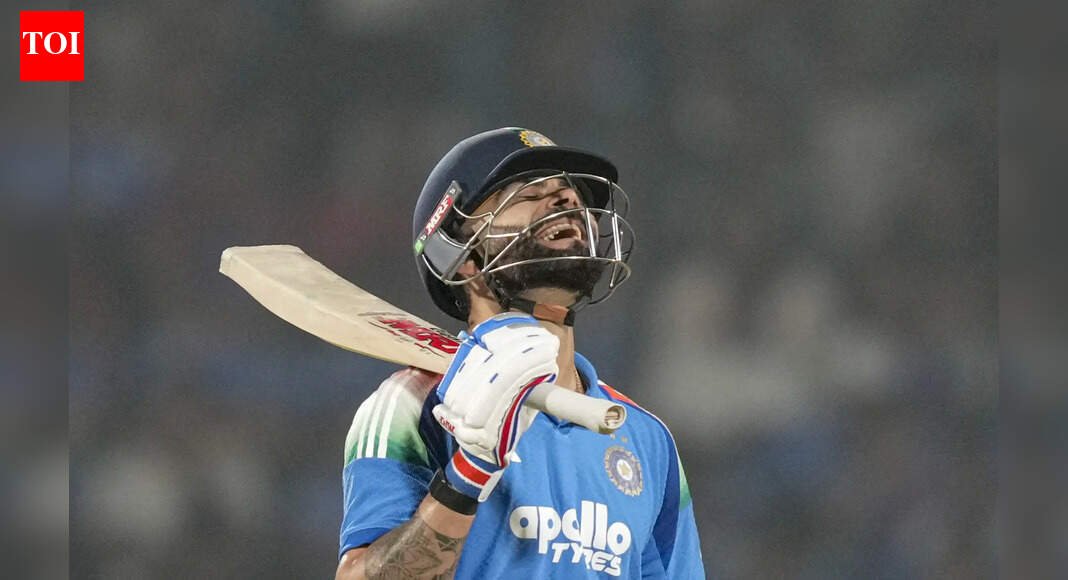
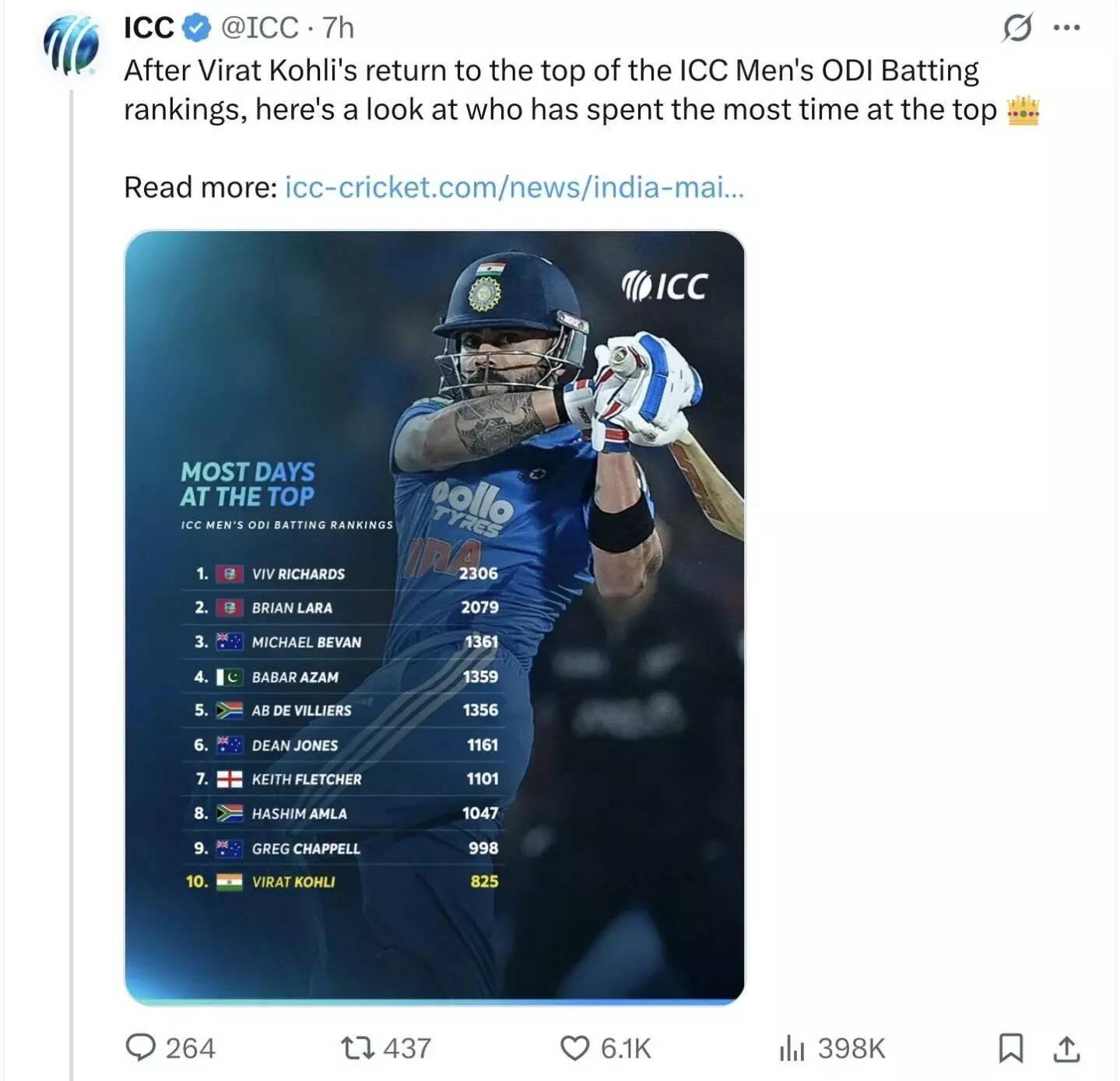
NEW DELHI: Virat Kohli’s return to the summit of the ICC ODI batting rankings sparked celebration among Indian fans, but it was an accompanying social media graphic from the world body that unexpectedly triggered a backlash and forced a swift correction. The International Cricket Council (ICC) has since rectified an error related to the number of days Kohli has spent as the No. 1-ranked ODI batter, a move that dramatically altered his position on the all-time list.Go Beyond The Boundary with our YouTube channel. SUBSCRIBE NOW!Kohli recently reclaimed the No. 1 spot in the ICC Men’s ODI Rankings for the first time in nearly five years, following his match-winning 93 off 91 balls in India’s four-wicket win over New Zealand in the opening ODI at Vadodara. It marked his return to the top of the rankings for the first time since July 2021 and capped a remarkable run of form for the 37-year-old.

Allan Donald on Virat Kohli’s legacy: Can he reach 100 centuries?

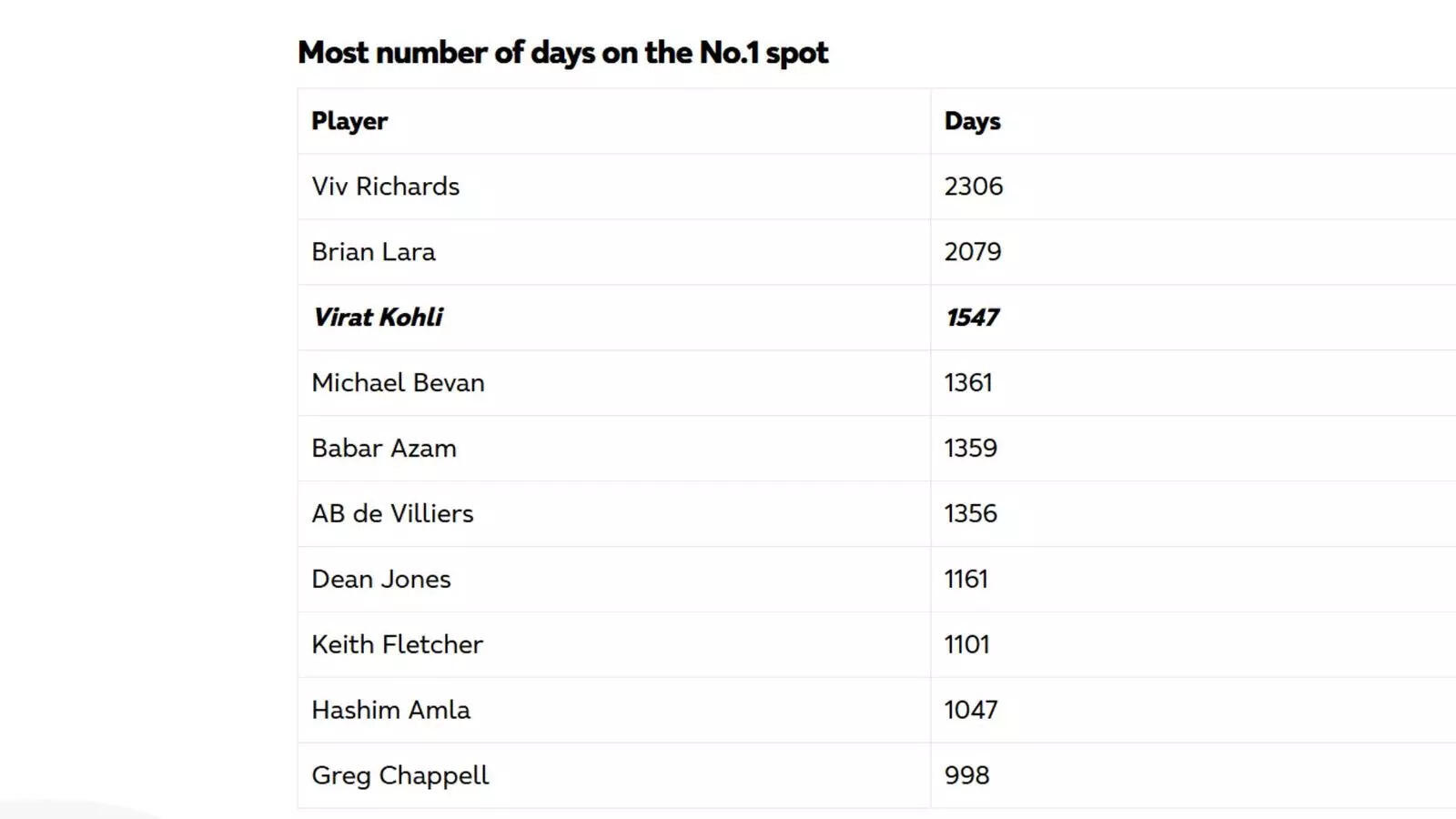
However, soon after announcing Kohli’s rise, the ICC posted a graphic stating that the former India captain had spent just 825 days as the No. 1 ODI batter across his career. The figure placed him as low as 10th on the list of players with the most days at the top, a claim that immediately raised eyebrows among fans and statisticians alike.Several users on social media pointed out that ICC’s own historical records showed Kohli had spent far longer at the summit. Archived ICC data consistently listed Kohli’s tally at 1,547 days. As criticism mounted, the ICC quietly deleted the original post and issued an updated release, acknowledging the correct figure.

ICC's deleted post

With the correction, Kohli surged from 10th to third on the all-time list of most days spent as the No. 1 ODI batter. Only West Indies legends Sir Vivian Richards (2,306 days) and Brian Lara (2,079 days) now sit ahead of him. Kohli also stands as the Indian with the most days at the top of the ODI rankings.In its revised statement, the ICC confirmed: “As of today, he has been top for a total of 1,547 days – third most by any player, and the most by any Indian.” The body also noted that this is Kohli’s 11th different spell at No. 1, having first reached the summit in October 2013.

Corrected: Most number of days as No.1 batter

Kohli’s ranking resurgence has been underpinned by exceptional consistency. He has scored five 50-plus knocks in his last six international matches, including two centuries. His purple patch stretches back to the ODI series in Australia and includes scores of 74, 135, 102, 65 and 93. He also struck hundreds against South Africa in December and in India’s Vijay Hazare Trophy.


Source link

Ranchi ED office raid: Jharkhand HC flags police action as ‘pre-planned’; orders additional security deployment | India News


Ranchi ED office raid: Jharkhand HC flags police action as ‘pre-planned’; orders additional security deployment

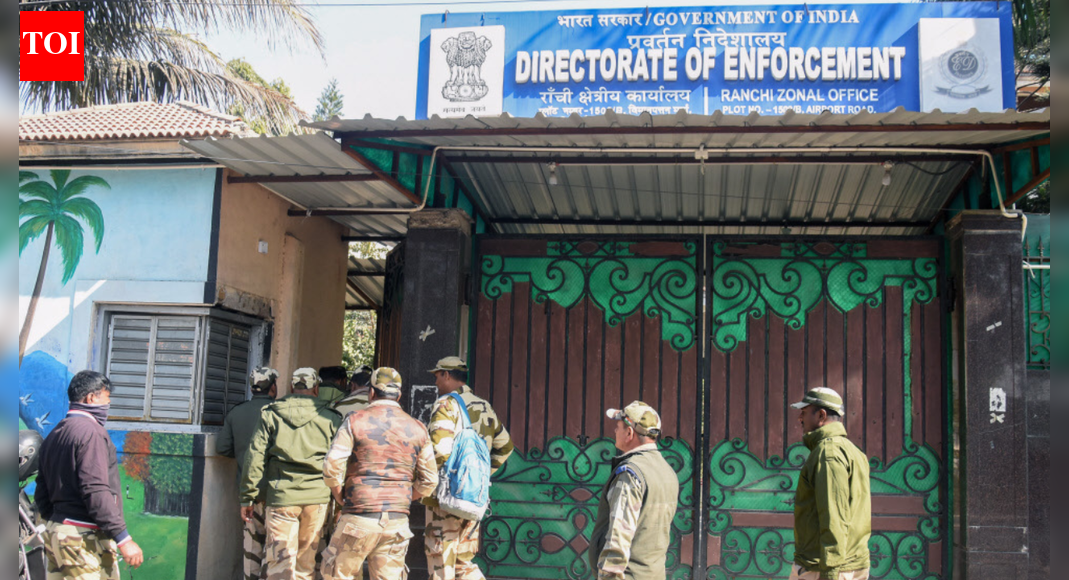
NEW DELHI: Jharkhand high court on Friday stayed the police investigation against ED officers on the basis of an FIR registered in the Airport police station by a former Jharkhand government employee, Santosh Kumar.While hearing a writ petition filed by the ED, the court observed that the recent police raid on the agency’s Ranchi office prima facie appeared “pre-planned.”

I-PAC Raid Row: SC Halts WB Police FIRs against ED, Seeks Mamata’s Reply

Justice Sanjay Kumar Dwide, while hearing a writ petition filed by the ED, directed the central agency to make the Union home secretary a party in the case.The court ordered the Union home secretary to depute CRPF/BSF or any other paramilitary force to provide security to the ED office and its officers.Justice Sanjay Kumar Dwide directed the ED to implead the Union home secretary as a party to the case and ordered that central armed police forces, including the CRPF or BSF, be deployed to provide security to the ED office and its officers.The court also instructed Ranchi Senior Superintendent of Police (SSP) Rakesh Ranjan to ensure adequate security at the ED premises, warning that any lapse in security would make the SSP personally accountable.The Enforcement Directorate had approached the high court on Thursday seeking a CBI probe into the state police raid, alleging direct interference in the functioning of the central agency.During the hearing, counsel for the ED informed the court that the agency was probing Santosh Kumar in connection with an alleged Rs 23-crore scam, and argued that the police action disrupted an ongoing investigation.


Source link