Breaking News
America’s tariff headache: Trump’s levies hit jobs harder than prices — here’s why


America’s tariff headache: Trump’s levies hit jobs harder than prices — here’s why

A year after US President Donald Trump introduced a fresh round of tariffs, the economic fallout has proven uneven, with employment taking a clearer hit than prices. At the time, economists warned that the measures would drive up inflation and push unemployment higher. Data from 2025 suggests those concerns were only partly true. While the cost of some imported goods, including beef, coffee and tomatoes, rose sharply, overall price increases remained broadly steady. The labour market, however, weakened noticeably, CNN reported. Average monthly job growth in 2025 was the lowest seen in decades outside recessionary periods. The December jobs report, released on Friday, showed the unemployment rate rising by 0.4 percentage points over the year to 4.4%. Hiring had already begun to slow before 2025, but Trump’s wide-ranging tariffs, and the repeated changes to them, added to the pressure. Faced with uncertainty over future trade policy, many companies froze recruitment plans, while some moved to reduce their workforce. “There’s no compelling reason to be out there hiring en masse,” said University of Central Florida economist Sean Snaith. “That is a rational response when you’re dealing with this kind of uncertainty.” Tariffs have also reshaped business decisions around investment and profitability. “Companies are seeing higher prices, depressing profitability; and in terms of new investment, they’re hesitant because tariffs make a lot of investments that have been profitable unprofitable,” Dean Baker, senior economist at the Center for Economic and Policy Research told CNN. Demand has softened as well, with customers delaying purchases amid shifting tariff levels. The Federal Reserve Bank of Richmond noted in its latest Beige Book that several manufacturing contacts “said that their customers reduced new orders due to uncertainty about tariffs.” Confusion has not been limited to consumers. Trump’s unpredictable trade moves have left many firms unsure how to respond. So far, many have chosen to absorb higher tariff costs rather than pass them on, helping to prevent a broader rise in inflation, CNN reported. That balance could shift depending on the outcome of a major Supreme Court case that may overturn Trump’s most significant tariffs. If the levies are struck down, companies could be entitled to substantial refunds for duties already paid, though resolving such claims could take considerable time.


Source link

Baby Ariha case: PM Modi raises issue with Germany’s Merz; who is the child | India News


Baby Ariha case: PM Modi raises issue with Germany's Merz; who is the child

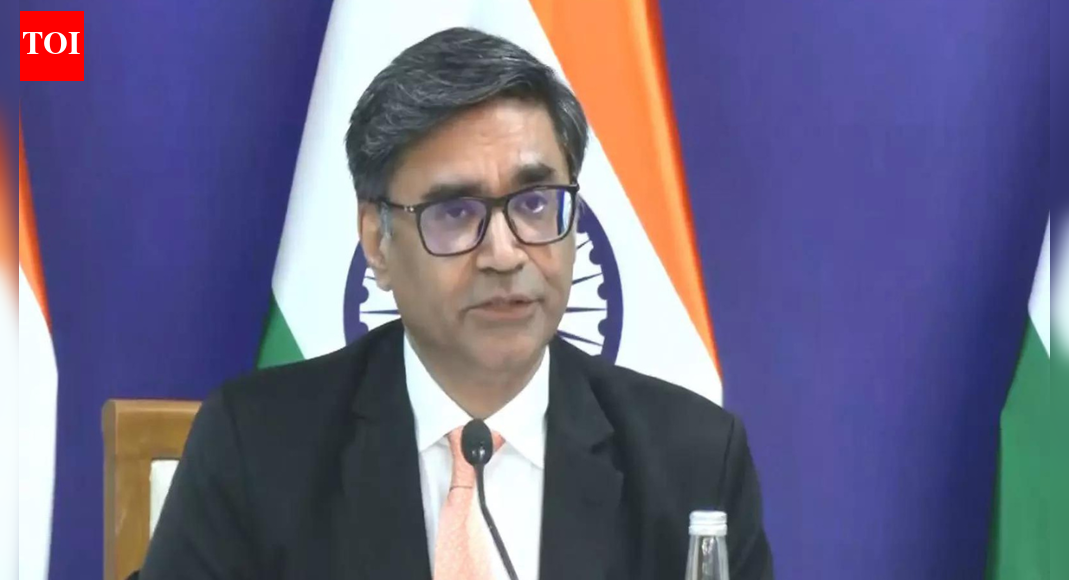
NEW DELHI: Foreign secretary Vikram Misri said on Monday that India has stepped up its engagement at the “highlest level” with German authorities over the case of Ariha Shah, an Indian child who has remained in foster care in Germany for over 40 months. The government is stressing that the matter should be addressed through a humanitarian lens. Addressing a media briefing, Misri said New Delhi has been in continuous discussions with German authorities in both India and Germany. “We have been in discussions with the German government, all the German authorities, their embassy here in Delhi, and the German government in Berlin, and all the agencies involved, for quite some time,” he said, reported ANI.While acknowledging that the issue had earlier been treated as a legal matter, Misri said India believes it must now be approached keeping humanitarian concerns at the centre. “This case was, at one point, a legal matter, but we believe that ultimately, it should be approached keeping in mind the humanitarian issues involved,” he said. Foreign secretary also pointed towards the government’s awareness of the family’s situation, adding, “We understand the family’s distress and difficulties. We are fully aware of the situation, and we are trying our best to help them in every way possible.”He also went on to say efforts are underway to ensure that Ariha remains connected to Indian cultural and social surroundings while in Germany. “We are also trying to ensure that Baby Ariha is raised as much as possible in an Indian environment, whether it’s interacting with Indian people or participating in Indian festivals being celebrated in Germany,” Misri said. He added that steps were being explored to help the child learn the language, saying, “We would like to make arrangements for him to participate and learn Hindi.”The foreign secretary said the issue has been raised at the highest political level. “Prime Minister Modi also mentioned this to the Chancellor, so we will continue to follow up with the German government on this issue, and we will stay with the family at every step,” he said.Misri’s remarks came as Ariha Shah’s family renewed its appeal to both governments, calling for dialogue to “preserve the rights of the young girl” and stating that all allegations against the parents had been cleared by German authorities.Ariha was placed in German foster care in September 2021, when she was seven months old, following an incident in which her grandmother accidentally injured her. She has remained under foster care since then.On Saturday, the Save Ariha Team expressed concern over the continued separation of the child from her family, urging the Indian government to intervene diplomatically for her repatriation ahead of German Chancellor Friedrich Merz’s visit to India. In a press release, the group said Ariha remains under the custody of German child services (Jugendamt) despite police cases against her parents being closed in February 2022, and that she has been moved across five foster homes. Earlier the ministry of external affairs had said there has been progress in the matter and that steps are being taken to ensure Ariha’s upbringing in a culturally conducive environment. MEA spokesperson Randeep Jaiswal said the issue was raised during the German foreign minister’s recent visit to India. Chancellor Merz is on a two-day official visit to India from January 12 to 13, coinciding with the 75th anniversary of India-Germany diplomatic ties and 25 years of their strategic partnership.


Source link

‘Head exploding from inside, vomiting blood’: Witness claims US deployed ‘sonic weapon’ against Venezuelan soldiers


Venezuelan soldiers were left bleeding from the nose, vomiting blood and unable to stand after the US allegedly deployed a powerful and unknown weapon during a military raid to capture President Nicolás Maduro earlier this month, according to an eyewitness account shared by the White House press secretary.The account posted on X and described how the operation was carried out by a small unit of American soldiers who reportedly overwhelmed hundreds of Venezuelan security forces using technology unlike anything seen before. White House has not confirmed the claims, but the details have raised speculations over whether a sonic weapon was used in combat.

‘LEAVE IMMEDIATELY!’: Trump Orders Americans Out Of Venezuela As Maduro Loyalists Launch Manhunt

In an interview cited by the New York Post, a Venezuelan guard said the attack began without warning. “We were on guard, but suddenly all our radar systems shut down without any explanation,” he said. Soon after, dozens of drones and a small number of helicopters appeared.Moments later, around 20 US troops were deployed. Despite being vastly outnumbered, he claimed the American forces rapidly took control of the area. “They were technologically very advanced,” he said. “They didn’t look like anything we’ve fought against before.”According to the guard, the encounter barely resembled a conventional firefight. “We were hundreds, but we had no chance,” he said.The guard added: “They were shooting with such precision and speed; it felt like each soldier was firing 300 rounds per minute.”The most disturbing moment came when US forces unleashed an unfamiliar weapon. “At one point, they launched something; I don’t know how to describe it,” he said. The guard then claimed: “It was like a very intense sound wave. Suddenly I felt like my head was exploding from the inside.”The effects were immediate. “We all started bleeding from the nose, some were vomiting blood. We fell to the ground, unable to move. We couldn’t even stand up after that sonic weapon — or whatever it was,” he said. Press secretary Karoline Leavitt also shared the viral post. Her caption read, “Stop what you are doing and read this…”Venezuela’s interior ministry has said around 100 security personnel were killed in the raid. But it is still not clear if any deaths were linked to the alleged mystery weapon.A former US intelligence source told the Post that the American military has possessed directed energy weapons for years. These systems use focused energy, such as microwaves or lasers, to disable targets. The source said such weapons could cause symptoms including bleeding, pain and loss of motor function.The guard said the raid had sent a clear message across the region. “I’m sending a warning to anyone who thinks they can fight the United States,” he said.He added: “They have no idea what they’re capable of.”He added that the incident had already sent shockwaves across Latin America, particularly after Trump recently warned that Mexico was now “on the list”.


Source link

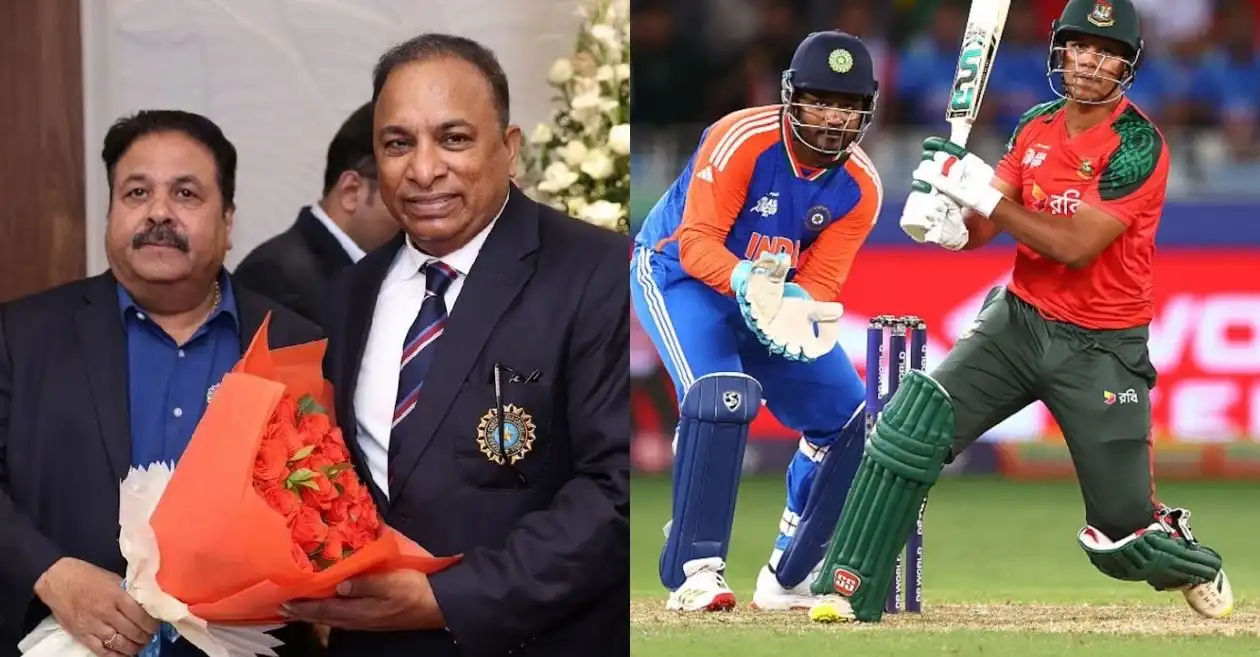
BCCI reacts amid reports of ICC exploring two venues for Bangladesh matches at T20 World Cup 2026


The Board of Control for Cricket in India (BCCI) has responded to growing speculation around a possible change in venues for Bangladesh’s matches at the ICC Men’s T20 World Cup 2026. The reaction comes amid reports suggesting that the ICC is evaluating two alternative Indian venues for Bangladesh’s fixtures following concerns raised by the Bangladesh Cricket Board (BCB).

Reports hint at two alternative Indian venues

On Monday, several reports claimed that the ICC is exploring alternative venues within India rather than relocating Bangladesh’s matches to Sri Lanka. Chennai and Thiruvananthapuram were named as potential options, possibly replacing Kolkata and Mumbai, which are currently slated to host Bangladesh’s group-stage games.

BCCI reacts to reports of ICC’s ‘2 venues’ solution

BCCI secretary Devajit Saikia stated that the Indian board remains in the dark over any proposed changes and stressed that the matter does not fall under BCCI’s authority at this stage. According to Saikia, the ICC alone is empowered to take decisions on venues for global tournaments, and the host board can act only after receiving official instructions.

He made it clear that the BCCI is proceeding strictly as per the existing tournament schedule and has not been informed about Bangladesh’s matches being moved from their designated venues. Any reports suggesting otherwise, Saikia noted, are speculative until confirmed by the ICC.

“The BCCI has not received any communication regarding the matter of shifting Bangladesh matches to Chennai or anywhere else, and it is beyond our control. It is a matter of communication between the BCB and the ICC, as the ICC is the governing body. If the ICC conveys any decision to us regarding a change of venue, the BCCI, as the host, will take the necessary steps. At present, we are not privy to any such information,” Saikia told IANS.

Also READ: Bangladesh name squad for T20 World Cup 2026; no place for Jaker Ali

Bangladesh’s security concerns and ICC response

The issue surfaced after the BCB reportedly wrote to the ICC, requesting that Bangladesh’s group-stage matches be shifted out of India due to security concerns arising from diplomatic tensions in the region. Sri Lanka was cited as Bangladesh’s preferred alternative venue. In its correspondence, the BCB indicated that it had received an acknowledgment from the ICC, with assurances that the matter would be reviewed. However, no final decision has been communicated publicly by the ICC, leaving room for speculation over possible adjustments.

Also READ: T20 World Cup 2026: Bangladesh write to ICC over security concerns in India


Source link

Will NDA’s house of cards hold in Tamil Nadu? Balancing between ‘koottani’ and ‘kattuppadu’ | India News


Will NDA’s house of cards hold in Tamil Nadu? Balancing between 'koottani' and 'kattuppadu'
Will NDA’s house of cards hold in Tamil Nadu?

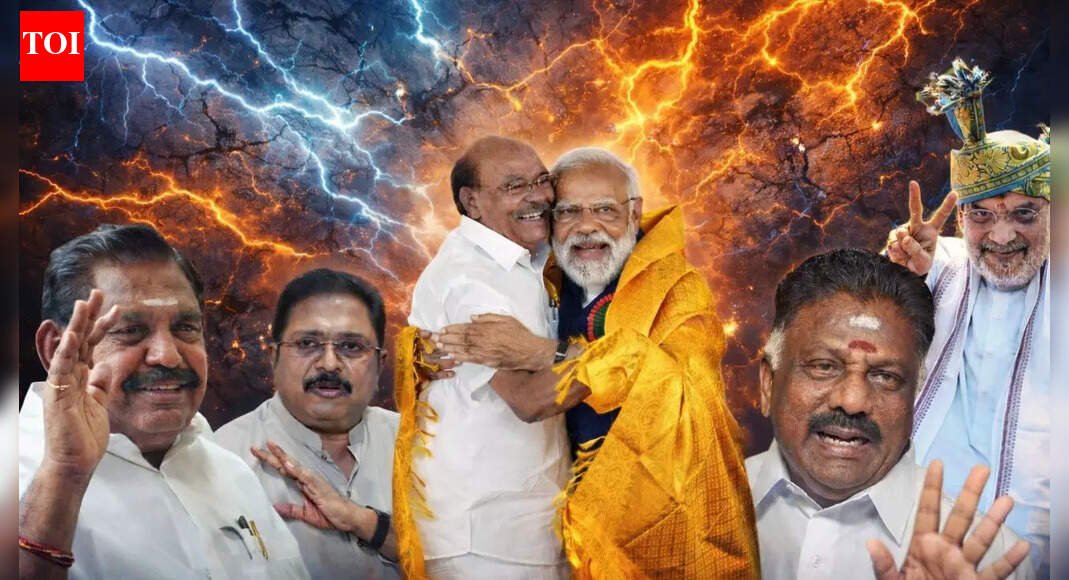
Late-night meetings in Delhi rarely make for calm politics, and the one that unfolded late evening last week between Union home minister Amit Shah and AIADMK general secretary Edappadi K Palaniswami, or EPS, was no exception. In optics, it was another routine round of koottani (alliance) discussions ahead of the 2026 Tamil Nadu Assembly elections. In substance, it revealed how the push for kattuppadu (control) was unsettling the alliance, exposing the deepest fault lines yet in the National Democratic Alliance’s (NDA) attempt to present a credible, unified challenge to the ruling Dravida Munnetra Kazhagam (DMK) government led by chief minister MK Stalin.At the heart of the tension lies a demand that goes beyond the usual arithmetic of seat-sharing. The BJP reportedly wants a formal power-sharing assurance from the AIADMK, including at least three cabinet berths if an AIADMK-led NDA were to form the next government.

Shah.

Union home minister and BJP leader Amit Shah with AIADMK general secretary Edappadi K Palaniswami during a press conference, in Chennai. AIADMK and BJP announced alliance for Tamil Nadu’s 2026 polls. (PTI photo)

For Tamil Nadu’s political culture, shaped by decades of Dravidian assertion and a strong emphasis on regional autonomy, such an explicit pre-election claim has few precedents. The reaction within the AIADMK has been wary, if not outright resistant, as the BJP’s clout in the South remains lean.The pre-poll power-sharing deal, however, is only one strand in a much larger and more byzantine political development. With just months to go before the 2026 polls, Tamil Nadu’s political field is unusually crowded and unsettled. The NDA is trying to stitch together a fragmented anti-DMK vote; the DMK is defending its record amid murmurs of alliance unease with the Congress, while actor-turned-politician Vijay has injected a new variable through his fledgling but closely watched Tamilaga Vettri Kazhagam (TVK). The result is a state on the cusp of a multi-cornered contest, where perception may matter as much as numbers.The BJP’s calculusFor the BJP, Tamil Nadu remains the most challenging large state on the electoral map. Despite steady organisational work over the past decade and a growing vote share, the party has not yet translated presence into power. Its alliance with the AIADMK has therefore always been more than tactical and is seen in Delhi as the primary vehicle for relevance in the southern state. However, the current BJP strategy, curated mainly by Amit Shah, reflects this urgency.

Amit Shah in Tamil Nadu.

Union Home Minister Amit Shah waves to the gathering during the Namma Ooru Modi Pongal festival, in Tiruchirappalli on January 5. (ANI photo)

BJP has consistently maintained that merely contesting a limited number of seats as a junior partner no longer serves the long-term interests of the party. The proposal that the BJP and its own allies together contest around 56 of the state’s 234 assembly seats is part of this thinking.More striking, however, is the reported insistence on cabinet representation, a move intended to signal to cadres and voters alike that the BJP is not just supporting an AIADMK government but would be a stakeholder in governance.

__EDS, YEARENDERS 2024_ News and Newsmakers__ Tiruppur_ Prime Minister Narendra ....

Prime Minister Narendra Modi with former Tamil Nadu BJP president K Annamalai and L Murugan during a roadshow at a public meeting for the culmination of the BJP’s ‘En Mann Ek Makkal’ padyatra, near Palladam in Tirupur in 2024. (PTI)

This push has coincided with a renewed effort by Shah and the central leadership to rebuild a broader NDA in the state. Former allies and breakaway factions are being courted again, including leaders who left the alliance last year. The BJP believes that consolidating these forces is essential to prevent vote-splitting that could once again hand the DMK an advantage.Yet, this centralised approach has also revived old anxieties. In Tamil Nadu, where electoral narratives are often framed around resistance to “Delhi control”, any perception that the BJP is dictating terms risks becoming a political liability rather than an asset for the AIADMK.Alliance arithmetic vs identity politicsFor the AIADMK, the alliance question is as much about survival as it is about strategy. Since the death of J Jayalalithaa, or Amma as she was popularly known, the party has struggled to regain the dominance it once enjoyed. In the 2016 elections, the AIADMK under Jayalalithaa had emerged victorious with 136 seats.The AIADMK-led alliance, in the 2021 state polls, which were fought in the absence of Amma, won 75 seats, of which the AIADMK itself secured 66, while the DMK-led front swept to power with 159 seats. The verdict underlined both the AIADMK’s residual strength and the scale of the challenge ahead.

481003.

An All India Anna Dravida Munnetra Kazhagam (AIADMK) party cadre greets himself at the feet of his party supremo Jayalalithaa Jayaram after party’s victory in the assembly polls, at her residence in Chennai on May 19, 2016. This is the first time since 1987 that an incumbent government has been re-elected in Tamil Nadu after the enormous success of AIADMK founder, MG Ramachandran. (Photo: Times Content)

After the 2021 assembly defeat, EPS moved decisively to consolidate control over the AIADMK, marginalising rivals and asserting himself as the party’s sole authority. This process effectively pushed out O Panneerselvam (OPS), once a key face of the party and a former chief minister. The EPS–OPS split was not just a leadership clash but a symptom of the AIADMK’s post-Jayalalithaa identity crisis.Palaniswami argued that a single centre of authority was essential for electoral recovery, while Panneerselvam continued to claim legitimacy through loyalty to Jayalalithaa’s legacy and sympathy among sections of the cadre. EPS emerged stronger within the party, but the split narrowed the AIADMK’s social and political reach at a time when it could least afford division.EPS vs OPS dilemma for BJPFor the BJP, this internal fracture has been an enduring source of discomfort. The party has viewed Panneerselvam as more approachable and politically expendable, someone who could be accommodated without threatening the alliance’s structure. Palaniswami, by contrast, has been guarded and transactional, keen to keep both the BJP and expelled leaders at arm’s length to protect his authority and the party’s regional identity. This has left the BJP caught between competing compulsions: it cannot ignore EPS without risking the alliance, but it also hesitates to shut the door on OPS, whose limited yet specific influence could matter in a tight contest. The result has been an uneasy balancing act, one that reflects the BJP’s broader struggle to manage Tamil Nadu politics without appearing overbearing.

அதிமுக பொதுக்குழு.

The EPS–OPS split was not just a leadership clash but a symptom of the AIADMK’s post-Jayalalithaa identity crisis.

Against this backdrop, Palaniswami’s reluctance to commit publicly to power-sharing with the BJP is rooted in political instinct. The AIADMK is also cautious about re-inducting expelled leaders and rival factions like the Amma Makkal Munnetra Kazhagam (AMMK). The AMMK did not win seats but polled enough votes in several regions to dent the AIADMK’s prospects, particularly in the southern and delta districts. This residual vote base, drawn mainly from sections of the Thevar community and AIADMK loyalists disillusioned with the current leadership, makes the AMMK less a kingmaker and more a potential spoiler. For the BJP, bringing Dhinakaran back into the NDA is about preventing further fragmentation of the anti-DMK vote rather than expecting direct seat gains.While the BJP sees figures like O Panneerselvam and TTV Dhinakaran’s AMMK as assets who can consolidate specific caste and regional vote banks, Palaniswami views their return as a threat to internal cohesion and his own authority.

ops with ttv.

TTV Dhinakaran and O Panneerselvam are linked by political compulsion rather than conviction, brought together mainly by their shared opposition to EPS.

PMK a boon or bane?The re-entry of the Pattali Makkal Katchi (PMK) into the NDA has given the alliance a symbolic boost, but not without complications. Anbumani Ramadoss’s decision to align with the AIADMK-BJP front was meant to strengthen the NDA’s presence in northern Tamil Nadu, where the PMK traditionally draws support from the Vanniyar community. Though this adds social breadth to the coalition at a time when consolidation is critical, the PMK is far from united.

Salem_ Prime Minister Narendra Modi with Pattali Makkal Katchi (PMK) founder S. ....

Prime Minister Narendra Modi with Pattali Makkal Katchi (PMK) founder S. Ramadoss during a public meeting ahead of Lok Sabha elections, in Salem, Tamil Nadu. (PTI photo from 2024)

The sharp and public rift between Anbumani and his father, party founder S Ramadoss, has fractured the cadre and weakened the party’s ability to transfer votes as a bloc. Rival claims over leadership and legitimacy have created confusion at the grassroots, blunting what was once the PMK’s core electoral strength.For the NDA, the PMK’s return improves optics but not certainty. Without internal cohesion, the party risks becoming an unreliable ally rather than a decisive force against the DMK in 2026.DMK’s quest to quell anti-incumbencyFor the DMK, the turbulence within the NDA offers both opportunity and warning. The party’s sweeping victory in 2021, when it returned to power after a decade in opposition, was built on a broad coalition that included the Congress and several regional players.

New Delhi, May 24 (ANI)_ Prime Minister Narendra Modi with Tamil Nadu Chief Mini....

Prime Minister Narendra Modi with Tamil Nadu CM MK Stalin during the 10th NITI Aayog Governing Council Meeting on ‘Viksit Rajya for Viksit Bharat@2047’, at Bharat Mandapam in New Delhi in 2025. (ANI Photo)

Since then, the government has focused on welfare schemes, social justice narratives, Tamil identity and language. However, incumbency carries its own risks. There are murmurs of unease within the DMK-led alliance, particularly the Congress seeking greater seat shares or a more visible role post the 2024 Lok Sabha elections.While these strains are far from a rupture, they are being closely watched by rivals eager to exploit any cracks. The DMK leadership, which is slowly transitioning from MK Stalin to Udhayanidhi Stalin, is also conscious that a fragmented opposition could paradoxically complicate its task.

Chennai, Nov 27 (ANI)_ Tamil Nadu Chief Minister MK Stalin kisses his son, Tamil....

Tamil Nadu chief minister MK Stalin kisses his son, Tamil Nadu deputy chief minister Udhayanidhi Stalin on his birthday, in Chennai.

A three- or four-cornered contest may lower the winning threshold in individual constituencies, but it also introduces unpredictability. The party’s messaging has therefore doubled down on stability, contrasting its governance record with what it portrays as an unstable and opportunistic opposition camp.The Vijay factor: A promise or perception?Perhaps the most intriguing element in the current churn is the emergence of Vijay as a political actor. His TVK has yet to contest a major election, but its entry has already altered calculations across the spectrum.Vijay’s appeal cuts across age groups, with particular resonance among younger voters and sections disillusioned with established parties.

Kanchipuram_ Tamilaga Vettri Kazhagam (TVK) chief and actor Vijay waves as he me....

Tamilaga Vettri Kazhagam (TVK) chief and actor Vijay waves as he meets with villagers of Ekanapuram who have been opposing the proposal to establish a greenfield airport at Parandur, in Kanchipuram district. (PTI)

His carefully calibrated stance, critical of both the BJP and the DMK, positions the TVK as an alternative rather than an adjunct. This has attracted exploratory overtures from leaders sidelined within traditional formations, adding to the sense of flux.At the same time, the TVK’s strengths remain largely potential rather than proven. Organisational depth, booth-level machinery, and the ability to translate popular enthusiasm into votes are tests that only an election can provide. For now, Vijay’s presence serves as a wildcard, expectedly capable of influencing outcomes even if it falls short of forming a government.Between the numbersTamil Nadu’s recent electoral history offers important context. In 2016, the AIADMK won 136 seats with around 41 per cent of the vote, while the DMK secured 98 seats with just under 40 per cent. The narrow margin reflected how small shifts in alliances and turnout can have outsized effects.Five years later, in 2021, the pendulum swung decisively. The DMK-led alliance polled close to 46 per cent and won 159 seats, while the AIADMK alliance’s vote share dipped to around 39 per cent, translating into 75 seats. The BJP, contesting as an ally, won four seats and improved its vote share, but remained dependent on the larger Dravidian partner. These figures highlight two enduring truths. First, alliances matter enormously in Tamil Nadu’s first-past-the-post system. Second, no single party, outside of peak DMK or AIADMK waves, can easily dominate without a broad coalition.The evolving battleAs the state heads towards the 2026 elections, the political picture remains fluid. The BJP is betting that a reconstituted NDA, bolstered by returning allies and clearer power-sharing signals, can present itself as a viable alternative. The AIADMK is trying to balance that partnership with its need to project independence and reassure its core electorate. The DMK is defending its turf while watching for signs of opposition consolidation. And Vijay’s TVK is carving out space in a crowded field, its final impact yet to be measured.What is clear is that Tamil Nadu’s politics is entering a phase where old certainties no longer apply automatically. The familiar binary of DMK versus AIADMK is giving way to a more layered contest, shaped by national ambitions, regional identities, and the aspirations of a new generation of voters.Whether the NDA’s current troubles are a prelude to a stronger, more coherent front, or a symptom of deeper contradictions, will become evident only as alliances crystallise and campaigns take shape. For now, the state watches as negotiations continue behind closed doors, aware that in Tamil Nadu, the path to power is rarely straightforward and often decided as much by perception as by pact.



Source link

‘Not found suitable’: Parl panel slams cases of experienced SC/ST teachers turned down for university full-time positions | India News


'Not found suitable': Parl panel slams cases of experienced SC/ST teachers turned down for university full-time positions

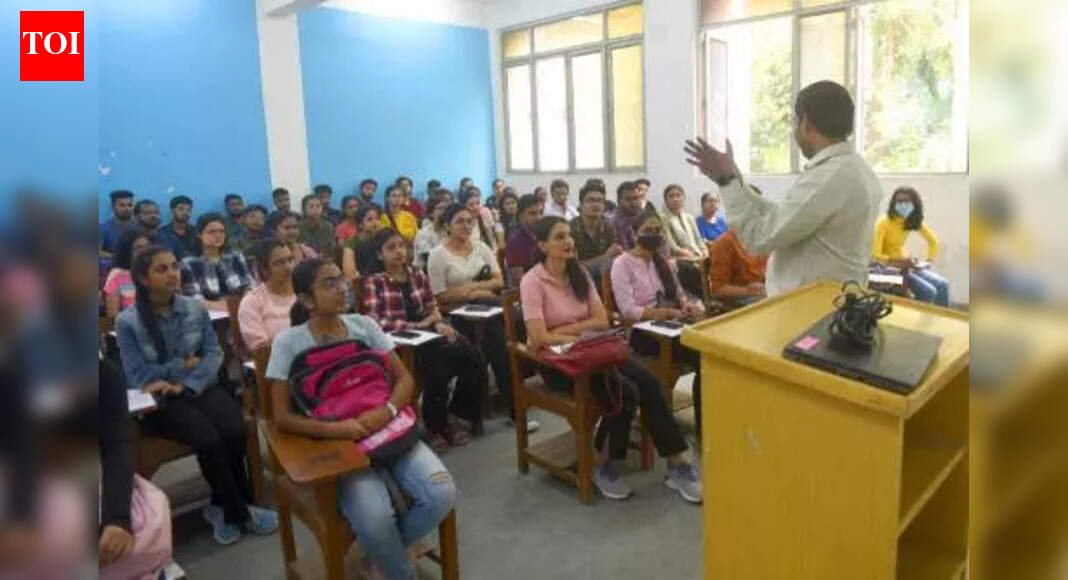
NEW DELHI: The scourge of “not found suitable” continues. And it’s not limited to appointments of fresh SC/ST candidates.A key parliamentary committee has found that even university teachers from marginalised communities employed for years are being rejected for full-time positions by being called “not found suitable”, again deprecating the practice of using the “NFS” tag to turn down the SC/ST aspirants.The parliamentary committee on welfare of SCs/STs has found “NFS” as a persistent discriminatory practice against dalit and tribal faculty aspirants for the second consecutive report.In the latest report while scrutinising Allahabad University, the panel has gone a step further by making the startling revelation that “NFS” is also being used against experienced teachers. “In certain cases, the committee are given to understand that some of the Assistant Professor belonging to SC/ST who worked for a number of years on ad-hoc basis were not selected at the time of filling of regular vacancies by stating a cliché reply that they are not suitable, and unfit for induction,” the panel, headed by BJP MP Faggan Singh Kulaste, has noted.As a result, the panel has recommended that all vacant reserved faculty positions should be filled in three months. While the direction is in the context of AU, it seems valid for all central universities. Kulaste told TOI, “The ministry of education has assured us that NFS has been removed as a reason for faculty recruitments.”The issue has been part of political discourse in recent months, with Congress leader Rahul Gandhi speaking about it on many occasions and the UGC forming a committee to examine the issue. TOI had reported that the UGC committee is likely to recommend that all “NFS” cases should be reasoned by the universities so that the top commission can suggest correctives.The parliamentary committee has further said that after filling all the existing vacant positions, “no faculty seat of the SC/ST community should remain vacant for more than six months under any circumstance.”The committee observed that inspite of proper eligibility and competence, fully experienced SCs/STs aspirants are rarely inducted as faculty members even at the initial stage. In AU, the panel found that 14 SC/ST candidates were declared as NFS during the last three years.It said NFS is “not a correct picture of the assessment of the SC/ST candidates who are equally bright and deserving,” and it is also used because of the “wrong assessment attitude” of the selection committee. It has urged the university higher-ups to be more positive towards talented and qualified SC/ST candidates.


Source link

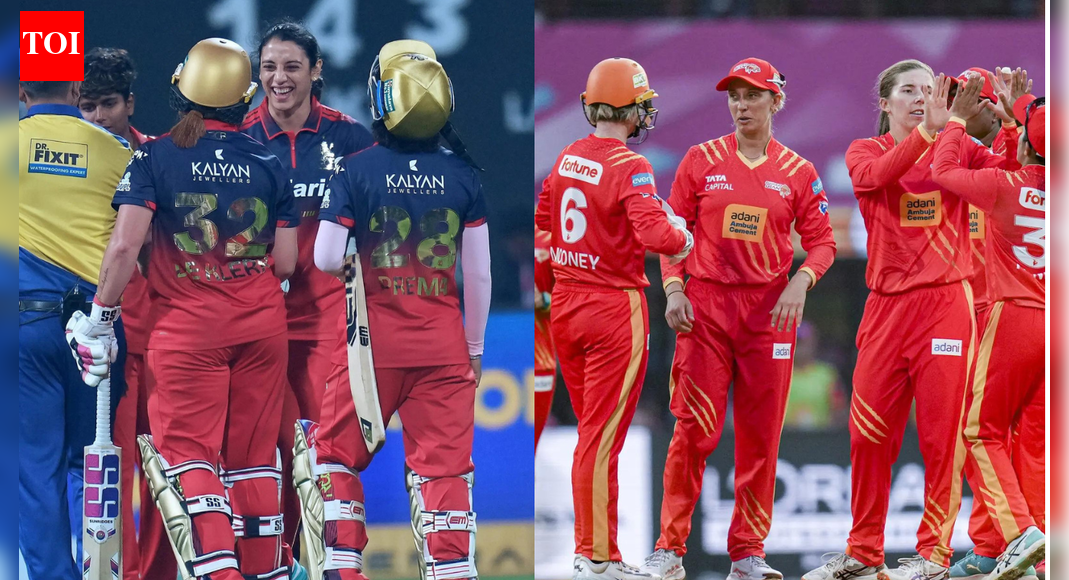
RCB W vs UPW W Live Score, WPL 2026: Smriti Mandhana’s RCB hunt back-to-back wins against Meg Lanning’s UP Warriorz


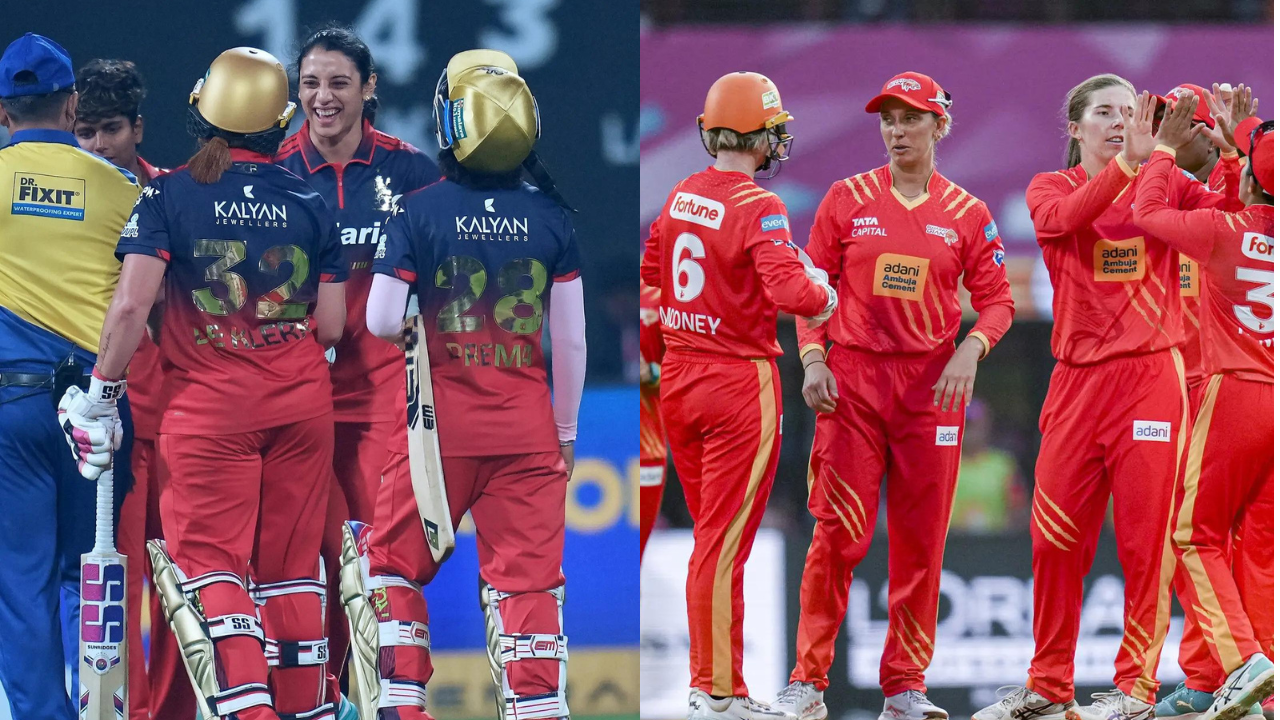
RCB W vs UPW W Live Score, WPL 2026: Royal Challengers Bengaluru will aim to carry forward the momentum from a spectacular opening-night win when they take on UP Warriorz on Monday at the DY Patil Stadium, Navi Mumbai. RCB’s last-ball victory over defending champions Mumbai Indians showcased Nadine de Klerk’s finishing brilliance, particularly her explosive 6,4,6,4 sequence to chase 18 runs off four deliveries.

While the win highlighted RCB’s resilience, the absence of Ellyse Perry and a delayed comeback from Pooja Vastrakar exposed vulnerabilities in their batting line-up. The fresh opening pairing of Grace Harris and Smriti Mandhana provided early stability, but the middle order came under pressure, underscoring the need for reinforcement in the batting department.

UP Warriorz, on the other hand, will be chasing their first points after a narrow 10-run defeat to Gujarat Giants. The Warriors displayed fighting spirit while chasing a tournament-record 208, largely due to an explosive 78 from Phoebe Litchfield. However, their bowling attack, aside from Sophie Ecclestone’s tidy 2/32, struggled to contain the opposition, conceding over nine runs per over on average.

Both teams enter the match evenly matched, with a 3-3 head-to-head record, and conditions at DY Patil Stadium are expected to favour a high-scoring encounter. RCB may tweak their line-up to strengthen their batting, while UP Warriorz are likely to retain the XI that performed admirably despite their last loss.

Fans can expect a fast-paced, thrilling contest as both sides seek early momentum in the WPL. The battle between RCB’s finishing prowess, led by de Klerk, and UP Warriorz’s explosive batting, spearheaded by Litchfield, could prove decisive in this crucial encounter. With high stakes and an evenly poised rivalry, Monday’s game promises excitement, drama, and plenty of fireworks.

Squads:
UP Warriorz Women Squad: Kiran Navgire, Meg Lanning(c), Phoebe Litchfield, Harleen Deol, Deepti Sharma, Shweta Sehrawat(w), Deandra Dottin, Sophie Ecclestone, Asha Sobhana, Shikha Pandey, Kranti Gaud, Chloe Tryon, Charli Knott, Gongadi Trisha, Shipra Giri, Suman Meena, Simran Shaikh, Pratika Rawal

Royal Challengers Bengaluru Women Squad: Grace Harris, Smriti Mandhana(c), Dayalan Hemalatha, Richa Ghosh(w), Radha Yadav, Nadine de Klerk, Arundhati Reddy, Shreyanka Patil, Prema Rawat, Linsey Smith, Lauren Bell, Pooja Vastrakar, Georgia Voll, Kumar Prathyoosha, Sayali Satghare, Gautami Naik


Source link

Maduro Extraction: How Marco Rubio’s childhood shaped Donald Trump’s Venezuela policy | World News


Maduro Extraction: How Marco Rubio's childhood shaped Donald Trump's Venezuela policy
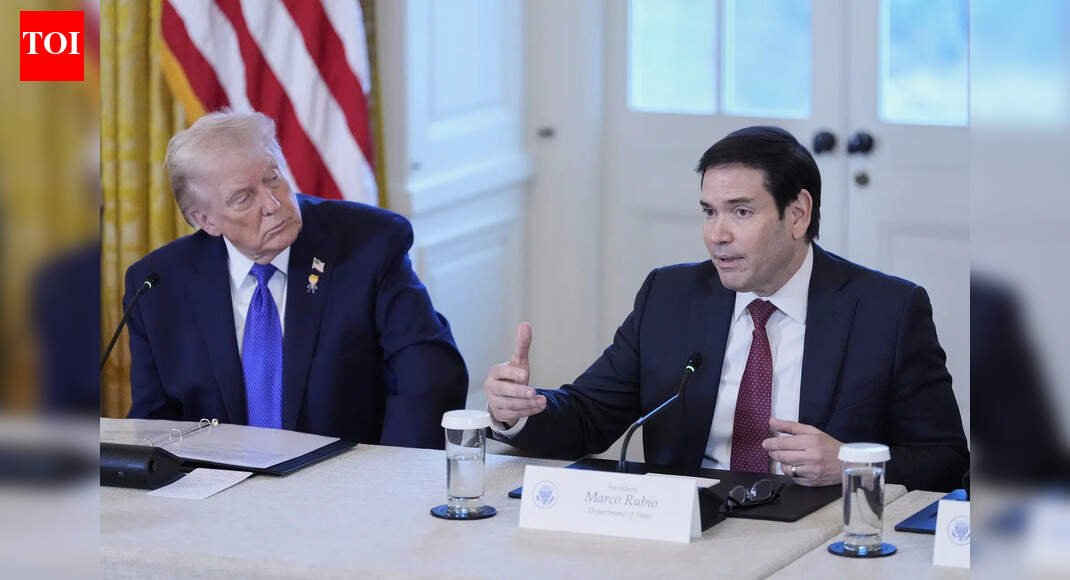
President Donald Trump listens to Sec. of State Marco Rubio speak during a meeting with oil executives in the East Room of the White House, Friday, Jan. 9, 2026, in Washington. (AP Photo/Alex Brandon)

When US forces moved in on Nicolás Maduro in January 2026, it looked like a dramatic end to a long-running crisis. Venezuela’s strongman was gone, his regime hollowed out, and Donald Trump had his biggest foreign policy victory since returning to the White House. But the real story did not begin in Caracas. It began decades earlier, in South Florida, among a community that never stopped believing history owed it a reckoning. To understand why Venezuela became the target of a full-blown American extraction operation, you have to understand Cuba. And to understand why Cuba still looms so large in US strategy, you have to understand Marco Rubio.

The exile lens

Cuban exile politics in Florida is not simply about one country. It is about a revolution that never ended. Families who fled Fidel Castro’s takeover carried with them a sense of unfinished business. In Miami, the fall of Havana remained a living, emotional project.That mindset shaped an entire political culture. Anti-communism was not a policy preference. It was a moral identity. Every Latin American leftist government was read through the same story: this is how it starts, this is how it ends.Marco Rubio grew up inside that world. His political formation was not shaped by textbooks or diplomatic theory but by stories of a lost homeland, a stolen future and a US that, in exile memory, had failed to finish the job in 1961. Cuba was not history. It was a wound.That wound shaped his worldview.

When Venezuela stopped being Venezuela

The rise and fall of Venezuela's Nicolás Maduro in photos

FILE – Venezuela’s President Hugo Chavez, left, talks to then Foreign Minister Nicolas Maduro in Montevideo, Uruguay, Dec. 18, 2007. (AP Photo/Matilde Campodonico, File)

When Hugo Chávez came to power in 1998, Cuban exiles saw something they recognised immediately. A populist leader rewriting institutions. A political movement built around class struggle. A rapid alignment with Havana.The details were different, but the pattern was familiar.As Venezuela slid into authoritarianism and economic collapse under Chávez and later Maduro, millions fled. Hundreds of thousands ended up in Florida, folding their own trauma into Miami’s existing exile culture. The Cuban and Venezuelan stories fused into one.To that community, Venezuela was not a separate tragedy. It was Cuba replayed on the mainland.Rubio absorbed this shift as he rose through Florida politics and into the US Senate. Over time, Venezuela became central to his political identity. Maduro was not just another dictator. He was a strategic extension of Havana.That framing turned Venezuela into something larger than itself. It became a front in a long-running ideological war.

From sanctions to strategy

During Trump’s first term, Rubio pushed relentlessly for a hard line against Maduro. Sanctions were tightened. Opposition figures were elevated. But the regime held. The international effort to remove Maduro stalled. What changed in Trump’s second term was not Rubio’s objective. It was his argument.The language of democracy and human rights no longer carried weight in Trump’s White House. So Rubio reframed Venezuela as a security threat. Drug trafficking. Russian influence. Chinese penetration. Criminal networks. The message was simple: this was not about nation-building. This was about protecting US power in its own hemisphere.That logic resonated. Maduro’s removal in 2026 was the result of that shift. It was not presented as a democratic rescue mission. It was presented as a strategic extraction.

The Cuba shadow

In Havana, the message was immediately understood.Venezuela had long been Cuba’s economic lifeline, especially through subsidised oil and security cooperation. Maduro’s fall was not just a blow to Caracas. It was a warning shot at Havana.Trump made the threat explicit, telling Cuba to make a deal or face consequences. Rubio did not need to say much at all. His entire political life had been aimed at that moment.For Cuban exiles, Venezuela’s collapse revived an old belief: if Caracas can fall, Havana must be next.

Policy or personal history

Supporters argue that Rubio’s hard line finally brought clarity to a region that had been left to rot under authoritarian rule. They say Venezuela was not a victim of US ambition but of its own corruption and mismanagement, and that decisive action was long overdue. Critics see something else: a foreign policy shaped less by cold strategy than by inherited memory. In their view, Rubio’s exile lens turns complex societies into symbols, and living nations into stand-ins for a trauma that began in 1959. What is undeniable is that Trump’s Venezuela policy is not just about oil, migration or geopolitics. It is also about history, identity and a political culture forged in loss.Maduro was not removed simply because Venezuela failed. He was removed because, in Marco Rubio’s worldview, Venezuela had become Cuba. And for half a century, that has been the one story he has never stopped trying to finish.


Source link

HCLTech Q3 results: Net profit falls 11.2% to Rs 4,076 crore; revenue rises 13.3%


HCLTech Q3 results: Net profit falls 11.2% to Rs 4,076 crore; revenue rises 13.3%

IT services firm HCLTech on Monday reported an 11.2% year-on-year decline in consolidated net profit to Rs 4,076 crore for the October–December quarter of FY26, compared with Rs 4,591 crore in the year-ago period.The Noida-headquartered company, however, posted strong top-line growth, with revenue from operations rising 13.3% to Rs 33,872 crore in the third quarter, up from Rs 29,890 crore in Q3 FY25, PTI reported.On a quarter-on-quarter basis, HCLTech said its profit slipped 3.7%, while revenue increased 6% compared with the previous quarter (Q2 FY26).Commenting on the performance, HCLTech Chief Executive Officer and Managing Director C Vijayakumar said the company crossed a key revenue milestone during the quarter.“The strong revenue momentum in the quarter has enabled us to cross USD 15 billion in annualised revenues. Our new bookings were exceptionally high at USD 3 billion. HCL Software revenue grew sharply by 28.1% QoQ and 3.1% YoY in constant currency, driven by seasonality and the data intelligence portfolio. We are well-positioned to address evolving AI demand of our clients across industries and service lines,” Vijayakumar said.HCLTech also said it added 2,852 freshers during the quarter, taking its total employee strength to 226,379 at the end of Q3 FY26.Shares of HCLTech ended 0.35% higher at Rs 1,668.10 apiece on the BSE on Monday. The company announced its financial results after market hours.


Source link

‘Obey or else go back’: Woman alleges harassment, abuse for Rs 50 lakh dowry in Ahmedabad; husband wanted to marry first love | Ahmedabad News


AHMEDABAD: A 28-year-old woman from Maharashtra filed a complaint alleging sustained harassment and violence by her husband and in-laws over an alleged dowry demand of Rs 50 lakh. She said she was threatened with “dire consequences” if she did not bring the money from her parents.According to the complaint registered with the Vejalpur police on Friday, she got married in Feb 2025 and moved to her matrimonial home in Ahmedabad, bringing gifts from her parents and relatives.

Ahmedabad Headlines Today — Key Stories You Shouldn’t Miss.

Within days, her mother-in-law began taunting her and accusing her parents of not teaching her anything. The complaint says she frequently picked fights with her over household work and used abusive language. She claimed her husband sided with his mother and asked her to simply obey or else go back to her parents. After the couple began living separately in Ahmedabad, the abuse escalated. “He told me that he married me to protect his parents’ honour in the community. He said he wanted to marry his first love but was stuck with me,” the complaint states. He further asked her to bring Rs 50 lakh from her parents since he needed it for his construction business. She also alleged frequent physical assaults. Her complaint states her in-laws supported the demand for dowry and threatened to throw her off a balcony. She alleged that in July 2025, she was forced out of the house in the clothes she had on and asked to come back only with Rs 50 lakh or face dire consequences. She said she later lived with her relatives in Pune, and that a prior application was filed with a police station on Nov 25, 2025. Finally, on Friday, she filed the complaint.


Source link