Breaking News
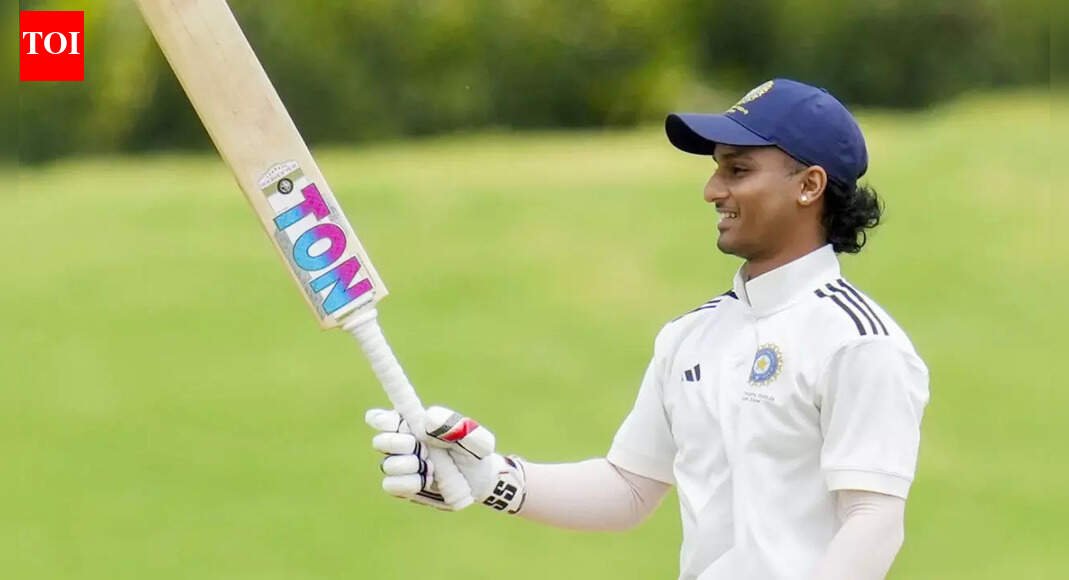
’40 balls daily daalne hain, batting ke baad’: The grind behind Ayush Badoni’s maiden India call-up | EXCLUSIVE | Cricket News


'40 balls daily daalne hain, batting ke baad': The grind behind Ayush Badoni's maiden India call-up | EXCLUSIVE

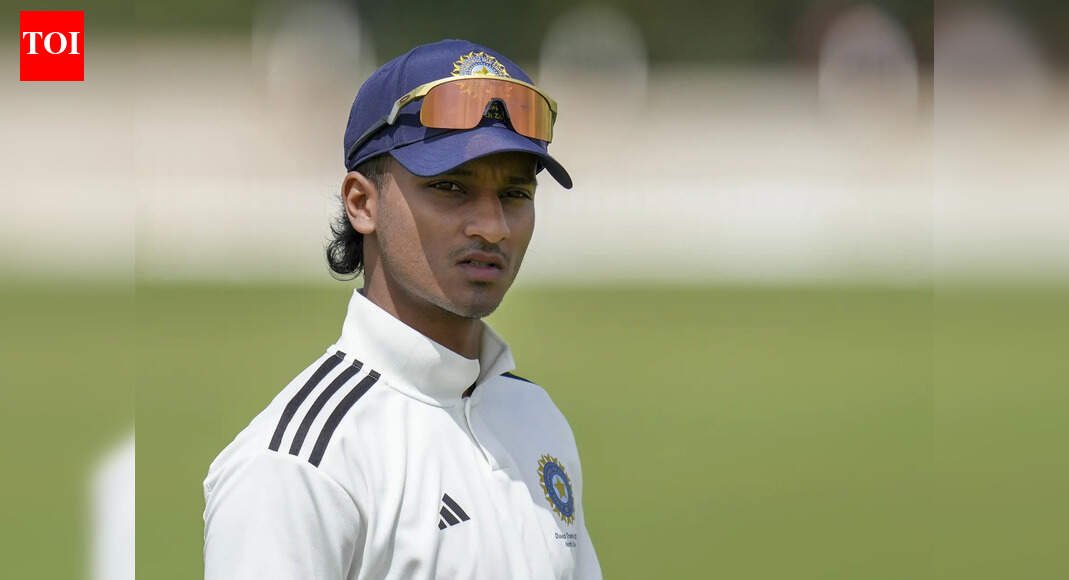
NEW DELHI: Ayush Badoni had just wrapped up his practice session on Monday and was heading back to the hotel when a message popped up on his phone. It was the moment he had been waiting for — his maiden India call-up. Keeping his composure, Badoni first showed the message to his Delhi coach and former India cricketer Sarandeep Singh before embracing him in an emotional hug.Badoni was named as a replacement for Washington Sundar in India’s squad for the remaining two ODIs against New Zealand after the all-rounder was ruled out with a rib injury. Washington sustained the injury during the series opener in Vadodara on Sunday.

Why India need leader Shreyas Iyer for 2027 World Cup | Greenstone Lobo prediction

“He was really happy, and I was very happy for him. He truly deserved it. He has worked extremely hard. Most people know him as a batter who can clear the ropes, hit boundaries at will and play long innings. Ask anyone and he’ll be tagged as a proper batter. But he is also an excellent off-spinner, and he has evolved into one purely through hard work,” Sarandeep told TimesofIndia.com in an exclusive interview.“I told him last year that while he is a very good batter, he must bowl at least seven overs after every batting session before going home. He accepted that challenge without any hesitation. Even after long batting sessions, he would pick up the ball and bowl seven overs, sometimes even more. He has put in a lot of work on his off-spin,” the Delhi head coach added.Badoni, who has an impressive first-class batting average of 57.96, averages 36.47 from 27 matches in List A format.Badoni has also shown leadership qualities, having captained Delhi in the past and serving as Rishabh Pant’s deputy during the team’s latest Vijay Hazare Trophy campaign.“I told him that if he wants to become a good all-rounder, focusing on his spin bowling will make a strong case for him as someone who can fit into the Indian team. His off-spin is really good now. It turns sharply, and he has added a couple of variations to his bowling. He bowls the carrom ball and the arm ball as well. He is a very smart cricketer,” Sarandeep said.“He has also been fortunate to share the dressing room with Virat Kohli in the Ranji Trophy and Vijay Hazare Trophy. He, Priyansh Arya and several other young cricketers have learned a lot from a legend like him. That phase played a big role in helping Ayush improve his game,” he added.India’s updated squad for 2nd and 3rd ODIs:Shubman Gill (C), Rohit Sharma, Virat Kohli, KL Rahul (WK), Shreyas Iyer (VC), Ravindra Jadeja, Mohd Siraj, Harshit Rana, Prasidh Krishna, Kuldeep Yadav, Nitish Kumar Reddy, Arshdeep Singh, Yashasvi Jaiswal, Dhruv Jurel (WK), Ayush Badoni

WHO IS AYUSH BADONI?

Born in 1999 in Delhi, 26-year-old Ayush Badoni has been a consistent performer for the Delhi team. He was picked in the IPL 2022 mega auction by Lucknow Super Giants for a base price of Rs 20 lakh. Under the mentorship of Gautam Gambhir, Badoni elevated his game, with Gambhir even sending him to bat at No. 6 in the batting order.Following his impressive performances for LSG, the franchise retained him for Rs 4 crore ahead of the IPL 2025 mega auction. Since then, Badoni has remained a key part of the Lucknow Super Giants squad.Overall, he has played 56 IPL matches so far, scoring 963 runs at a strike rate of 138.56. He has also contributed with the ball, taking four wickets.Apart from IPL, Badoni has made significant contributions in the Delhi Premier League (DPL), where he captained South Delhi Superstarz and showcased his all-round abilities.AYUSH BADONI – CAREER STATSBatting and fielding:

Format Matches Runs HS Ave SR 100s 50s Ct St
FC 21 1681 205* 57.96 82.88 4 7 9 0
List A 27 693 100 36.47 93.27 1 5 14 0
T20s 96 1788 80* 29.80 137.96 0 10 36 0

Bowling:

Format Mat Balls Runs Wkts BBI BBM Ave Econ 4w 5w
FC 21 946 517 22 6/73 6/73 23.50 3.27 2 1
List A 27 707 535 18 3/29 3/29 29.72 4.54 0 0
T20s 96 306 440 17 4/12 4/12 25.88 8.62 1 0


Source link

Gold price today: How much 22K, 24K gold cost in Delhi, Hyderabad & other cities – Check rates


Gold price today: How much 22K, 24K gold cost in Delhi, Hyderabad & other cities - Check rates

Gold futures rallied sharply on Monday, touching fresh record highs in domestic and international markets as investors flocked to safe-haven assets amid rising geopolitical tensions and renewed focus on developments around the US Federal Reserve.On the Multi Commodity Exchange (MCX), gold futures for February delivery jumped by Rs 2,431, or 1.8%, to hit a record high of Rs 1,41,250 per 10 grams. The yellow metal has gained Rs 3,058, or 2.25%, over the past week, reflecting sustained buying interest.In overseas markets, Comex gold for February delivery climbed $111.8, or 2.5%, to hit a fresh peak of $4,612.7 per ounce, while silver for March delivery rose $4.56, or 5.8%, to touch a historic high of $83.90 per ounce.Here is how much gold costs in your city today:

Gold price in Delhi today

In Delhi, 22K gold was quoted at Rs 13,045 per gram, higher by Rs 155, while 24K gold stood at Rs 14,230 per gram, up Rs 169.

Gold price in Ahmedabad today

In Ahmedabad, 22K gold was priced at Rs 13,035 per gram after a Rs 155 rise, while 24K gold came in at Rs 14,220 per gram, higher by Rs 169.

Gold price in Chennai today

Chennai saw higher rates, with 22K gold at Rs 13,120 per gram, up Rs 220, while 24K gold was quoted at Rs 14,313 per gram, higher by Rs 348.

Gold price in Mumbai today

In Mumbai, 22K gold was listed at Rs 13,030 per gram, higher by Rs 155, while 24K gold was priced at Rs 14,215 per gram, up Rs 169.

Gold price in Hyderabad today

Hyderabad reported 22K gold at Rs 13,030 per gram after a Rs 155 increase, while 24K gold stood at Rs 14,215 per gram, higher by Rs 169.

Gold price in Bhubaneswar today

In Bhubaneswar, 22K gold was quoted at Rs 13,030 per gram, up Rs 155, while 24K gold was priced at Rs 14,215 per gram, higher by Rs 169.

Gold price in Kolkata today

Kolkata markets showed 22K gold at Rs 13,030 per gram, higher by Rs 155, while 24K gold was quoted at Rs 14,215 per gram, up Rs 169.

Gold price in Lucknow today

In Lucknow, 22K gold stood at Rs 13,045 per gram after rising Rs 155, while 24K gold was priced at Rs 14,230 per gram, higher by Rs 169.

Gold price in Jaipur today

In Jaipur, 22K gold was quoted at Rs 13,045 per gram, higher by Rs 155, while 24K gold stood at Rs 14,230 per gram, up Rs 169.

Gold price in Bangalore today

In Bangalore, 22K gold was listed at Rs 13,030 per gram, up Rs 155, while 24K gold was priced at Rs 14,215 per gram, higher by Rs 169.

Gold price in Patna today

In Patna, 22K gold was quoted at Rs 13,035 per gram, higher by Rs 155, while 24K gold stood at Rs 14,220 per gram, up Rs 169.


Source link

Iran protest: At least 500 dead in crackdown; Tehran warns US, Israel of consequences


Iran’s crackdown on nationwide protests has reportedly killed over 538, with thousands detained amid an internet blackout. Tehran has warned the US and Israel of “legitimate targets” if force is used to protect demonstrators. Protests persist despite heavy security, fueled by economic collapse and calls challenging the theocratic system.

A crackdown on nationwide protests in Iran has killed at least 538 people, with fears that the actual death toll could be far higher, activists said on Sunday, as Tehran warned that the US military and Israel would be “legitimate targets” if Washington uses force to protect demonstrators.More than 10,600 people have been detained over the past two weeks, according to the US-based Human Rights Activists News Agency, which relies on activists inside Iran to crosscheck information and has provided accurate figures in previous rounds of unrest.

Iran President Blasts ‘RIOTERS’; Blames Israel & U.S. For Unrest | ‘Imported Violence’

Iranian authorities have not released any official nationwide casualty figures. The Associated Press said it was unable to independently verify the toll due to an ongoing internet blackout and restrictions on international phone calls.

Internet blackout and fears of escalation

With internet services shut down and phone lines cut, assessing the scale of protests from outside Iran has become increasingly difficult. Rights groups and observers fear the information blackout is emboldening hard-liners within Iran’s security apparatus to intensify the crackdown.Despite restrictions, protesters again flooded the streets in Tehran and Iran’s second-largest city on Sunday, according to activists and online footage.US President Donald Trump voiced support for the demonstrators, writing on social media that “Iran is looking at FREEDOM, perhaps like never before. The USA stands ready to help!!!”Two people familiar with internal White House discussions said Trump and his national security team have been weighing a range of responses against Iran, including cyberattacks and direct strikes by either the US or Israel. The White House has not indicated that any decisions have been taken.

Parliament issues stark warning

Iran’s warning to the US and Israel came during a parliamentary speech by hard-line speaker Mohammad Baagher Qalibaf.“In the event of an attack on Iran, both the occupied territory and all American military centers, bases and ships in the region will be our legitimate targets,” Qalibaf said. “We do not consider ourselves limited to reacting after the action and will act based on any objective signs of a threat.”Lawmakers rushed the dais following the speech, chanting: “Death to America!”It remains unclear how seriously Iran is considering military action, particularly after its air defenses were badly damaged during the 12-day war with Israel in June. Any decision to go to war would rest with Supreme Leader Ayatollah Ali Khamenei, who is 86.

Death toll in crackdown on protests in Iran spikes to at least 538, activists say

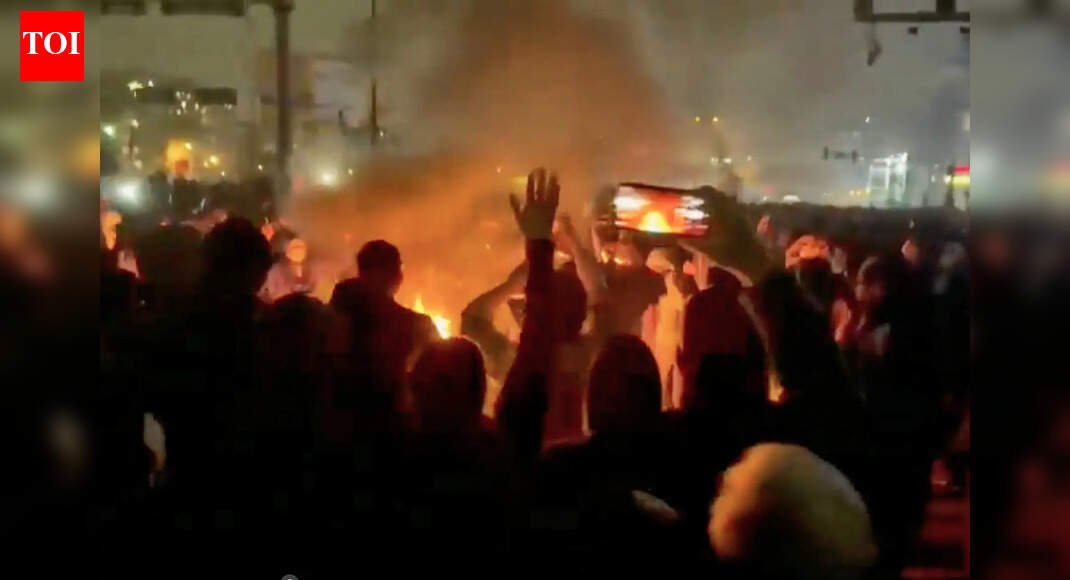
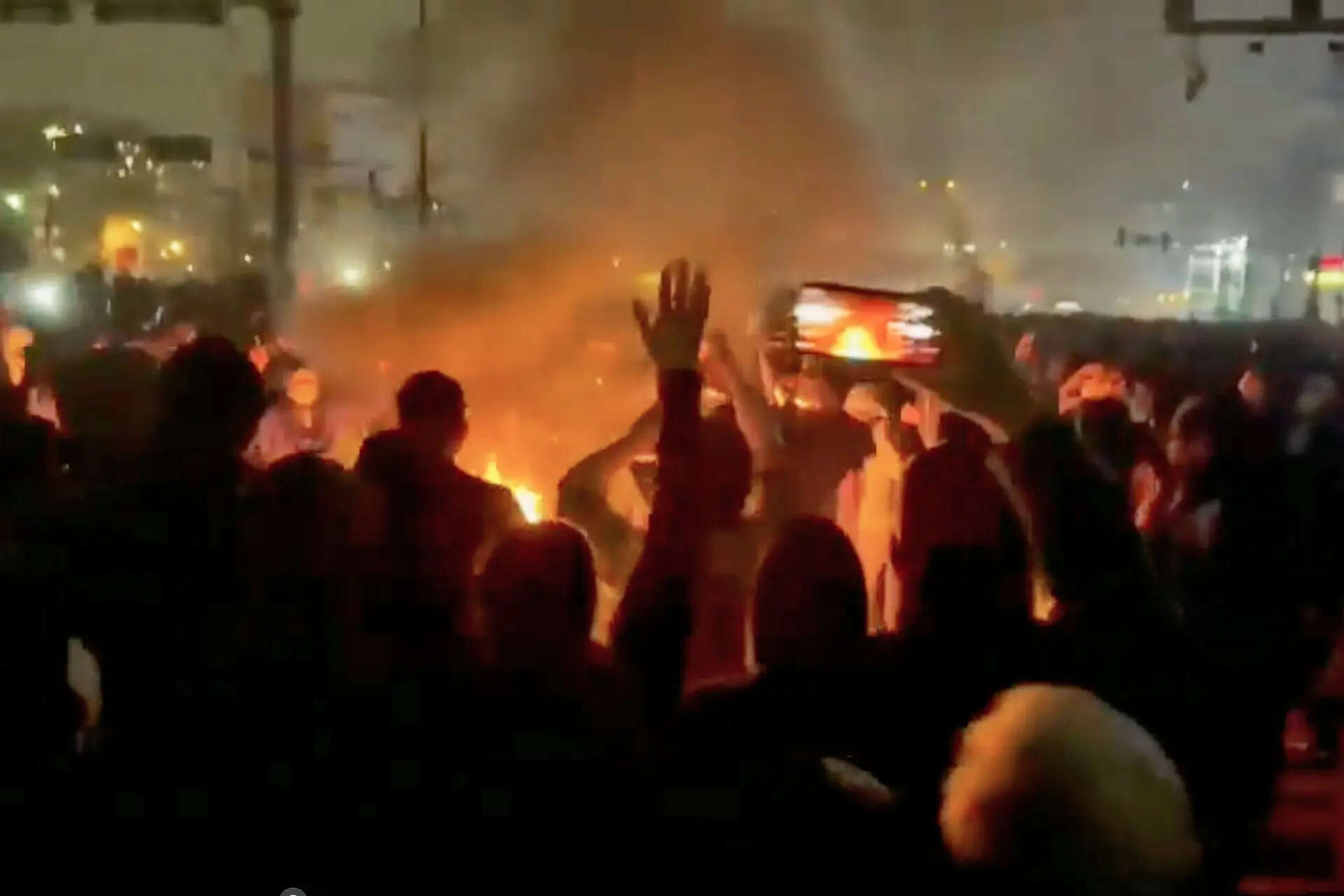
In this frame grab from footage circulating on social media shows protesters dancing and cheering around a bonfire as they take to the streets despite an intensifying crackdown as the Islamic Republic remains cut off from the rest of the world, in Tehran, Iran, Friday, Jan. 9, 2026.(UGC via AP)

The US military said it is “postured with forces that span the full range of combat capability to defend our forces, our partners and allies and US interests” in the Middle East. Iran previously targeted US forces at Al Udeid Air Base in Qatar, while the US Navy’s Fifth Fleet is based in Bahrain.Israel said it was “watching closely” the situation, according to an Israeli official speaking on condition of anonymity. Israeli Prime Minister Benjamin Netanyahu also discussed Iran with US Secretary of State Marco Rubio.“The people of Israel, the entire world, are in awe of the tremendous heroism of the citizens of Iran,” Netanyahu said.At the Vatican, Pope Leo XIV referred to Iran as a place “where ongoing tensions continue to claim many lives.”“I hope and pray that dialogue and peace may be patiently nurtured in pursuit of the common good of the whole of society,” he said.

Protests across major cities

Videos circulating online, some believed to have been transmitted via Starlink satellite systems, appeared to show demonstrators gathering in northern Tehran’s Punak neighbourhood. Protesters waved lit mobile phones, banged metal objects and set off fireworks, while security forces blocked streets.“The pattern of protests in the capital has largely taken the form of scattered, short-lived, and fluid gatherings, an approach shaped in response to the heavy presence of security forces and increased field pressure,” the Human Rights Activists News Agency said. “Reports were received of surveillance drones flying overhead and movements by security forces around protest locations, indicating ongoing monitoring and security control.In Mashhad, footage showed protesters confronting security forces, while demonstrations were also reported in Kerman.Iranian state television sought to counter protest narratives by airing footage of calm streets in several cities, though Tehran and Mashhad were not included.

Government rhetoric hardens

Senior officials continued to use strong language against protesters. Ali Larijani, a top security official, accused some demonstrators of “killing people or burning some people, which is very similar to what ISIS does.”State TV aired funerals of slain security force members and reported additional deaths, including six security personnel in Kermanshah, 13 people in Fars province and seven security forces in North Khorasan. Footage also showed a pickup truck carrying bodies in body bags and scenes inside a morgue.President Masoud Pezeshkian, a reformist who initially sought to calm tensions, also adopted a firmer tone in an interview broadcast Sunday.“People have concerns, we should sit with them and if it is our duty, we should resolve their concerns,” Pezeshkian said. “But the higher duty is not to allow a group of rioters to come and destroy the entire society.”

Unrest rooted in economic collapse

The protests began on December 28 following the collapse of Iran’s currency, with the rial trading at over 1.4 million to the US dollar amid sanctions linked in part to Iran’s nuclear programme. What started as demonstrations over the cost of living has since evolved into direct calls challenging Iran’s theocratic system.Exiled crown prince Reza Pahlavi has urged demonstrators to continue taking to the streets, though it remains unclear whether chants praising the former monarchy reflect support for him or broader frustration with the post-1979 political order.


Source link

Donald Trump on Internet Blackout in Iran: I am talking to Elon Musk about giving Iranians …


Donald Trump on Internet Blackout in Iran:  I am talking to Elon Musk about giving Iranians ...

US President Donald Trump has said that he will talk to Elon Musk to restore internet services amid digital blackout in Iran. When asked by a reporter if he plans to use Starlink to help people in the country, Trump replied: “We may speak to Elon (Musk) because he’s very good at that kind of thing”, adding “he’s got a very good company (SpaceX)”. He further added that “I’m going to call him as soon as I’m finished with you”. For those unaware, Iran is reeling under a digital blackout since Thursday last week, i.e. January 8, 2026. According to reports, international calls to the country are blocked and domestic mobile phones have no service.Not a firstNotably, this is not the first time when Iran has been hit by an internet blackout. The country faced a blackout in 2019. But the level of shutdown this year is unprecedented and in some ways far harsher than that in 2019. “There is no reception on the phones. There is no antenna. It’s like you are living in the middle of nowhere, with no BTS towers,” Amir Rashidi, an Iranian digital rights expert told The Guardian.Even, Starlink satellite system that served as a lifeline for Iranians during the 2022 protests over the death of 22-year-old Mahsa Amini in police custody, was being jammed, Rashidi told the publication.What is more striking about the current internet black out in Iran is that Iran’s supreme leader, Ayatollah Ali Khamenei continued to post on X as Iranians across the country were suddenly cut off from the internet. Rashidi added: “There are things that are important for the government to do. If they want to put out their propaganda they need to have access to Telegram, they need to have access to Twitter, they need to access Instagram.”Why internet blackout in IranAccording to a Reuters report, Iran’s current protests began on December 28 last year in response to soaring prices. Hundreds of people have been killed since then, the report says. US-based organization HRANA stated that it has verified the deaths of 490 protesters and 48 security personnel, with more than 10,600 people arrested in two weeks of unrest.


Source link

IND vs NZ: Virat Kohli’s brother Vikas hits back at Sanjay Manjrekar over easier format comment after 1st ODI


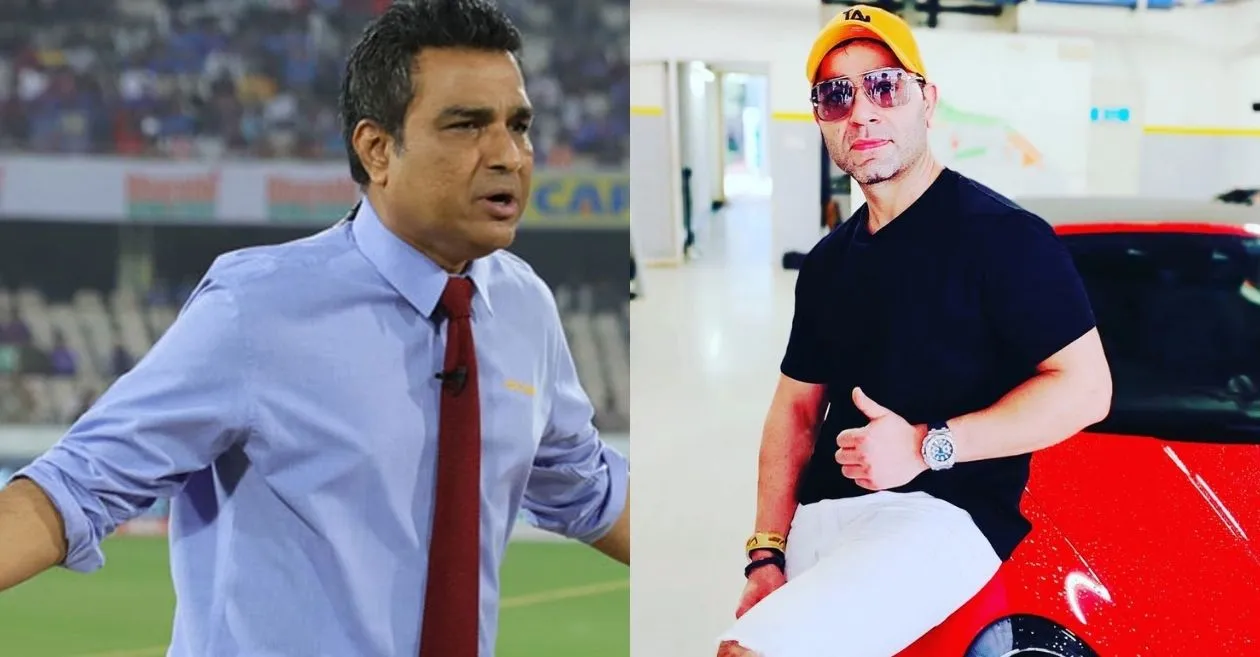
The cricketing world is no stranger to the vocal opinions of former Indian batter turned commentator, Sanjay Manjrekar. However, the latest chapter in his long-standing history of critiquing Virat Kohli has hit a personal nerve. Following the opening match of the India vs New Zealand ODI series in January 2026, a social media storm erupted—not just because of the action on the field, but due to a sharp rebuttal from Virat’s brother, Vikas Kohli.

The tension stems from Manjrekar’s recent comments questioning Virat’s decision to retire from Test cricket in 2025 while continuing to play the 50-over format. Manjrekar went as far as labeling ODIs the easiest format for top-order batters, suggesting that Kohli walked away from the challenges of the red-ball game rather than fixing his technical flaws.

Vikas, who has often acted as a shield for his brother against online vitriol, didn’t hold back this time. Taking to social media shortly after the 1st ODI in Vadodara, Vikas shared a cryptic yet pointed message to Manjrekar’s critique.

Such an easy format isn’t it… someone gave his gyaan few days back… easier said than done,” Vikas wrote on social media. In a separate post that went viral few days earlier, he added, “Seems like logon ki daal roti nahi chalti bina Virat Kohli ka naam liye hue” (It seems like people can’t earn their bread and butter without mentioning Virat Kohli).

While Vikas refrained from naming Manjrekar directly, the timing was unmistakable. Manjrekar had recently doubled down on his stance, arguing that top-order batters in ODIs face no slips or gully and essentially queue up to bat in the top three because of how easy it is to score. Vikas’ retort served as a reminder that performing under the weight of a billion expectations is never easy, regardless of the format.

Also READ: Top 3 players with most Player of the Match awards in ODIs ft. Virat Kohli

Virat Kohli’s masterclass run in ODIs silences critics

While the war of words intensified off the field, Virat responded in the way he knows best—by dominating the 22 yards. In the first ODI against New Zealand, Kohli played a masterful knock of 93 off 91 balls, anchoring a tense 301-run chase. Though he narrowly missed out on his 85th international century, his performance was a tactical clinic in middle-overs accumulation and strike rotation.

This innings wasn’t an isolated event but a continuation of a massive purple patch for the veteran. Kohli entered the New Zealand series on the back of a stellar domestic run in the Vijay Hazare Trophy and a dominant showing against South Africa. During his 93-run stay at the crease in Vadodara, Virat achieved two monumental milestones:

  • 28,000 international runs: He became the fastest player to reach this landmark, surpassing Sachin Tendulkar by 20 innings.
  • Historical climb: He moved past Kumar Sangakkara to become the second-highest run-scorer in the history of international cricket, now trailing only Tendulkar.

Far from finding the format easy, Kohli’s recent form suggests a player who has evolved his game to maintain a strike rate above 100 while remaining the team’s most reliable anchor. As the series moves forward, the King seems intent on proving that while commentators may talk, class is permanent.

Also READ: Fans go berserk as Virat Kohli and Harshit Rana power India to thrilling ODI win over New Zealand in Vadodara


Source link

‘Forcing voters to re-establish identity’: Mamata Banerjee writes again to CEC; flags SIR flaws, AI errors | India News


‘Forcing voters to re-establish identity’: Mamata Banerjee writes again to CEC; flags SIR flaws, AI errors

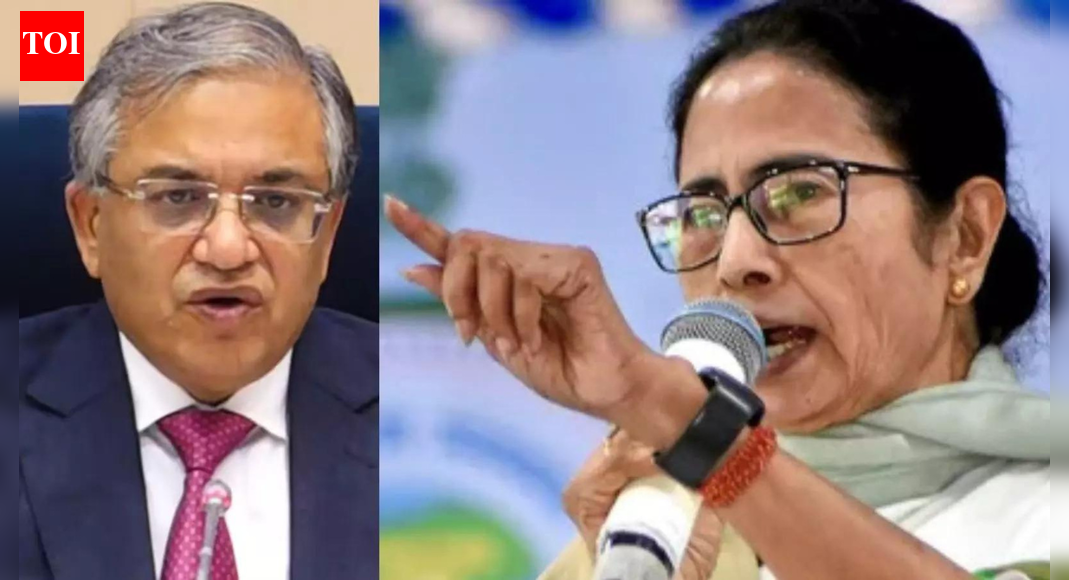
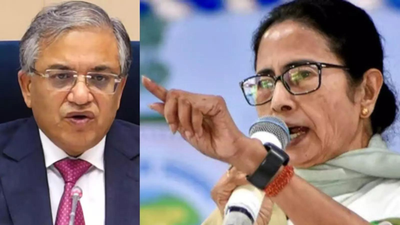
NEW DELHI: West Bengal chief minister Mamata Banerjee on Monday wrote a fresh letter to chief election commissioner Gyanesh Kumar, accusing the Election Commission of ignoring two decades of statutory electoral corrections and forcing voters to re-establish their identity during the ongoing Special Intensive Revision of electoral rolls.In the letter, Banerjee alleged that the EC was disregarding corrections made over the last 20 years and compelling electors to resubmit documents, causing widespread hardship. She also flagged serious procedural lapses, including the failure to issue proper acknowledgements for documents submitted during the SIR exercise.

Mamata Banerjee Hits Streets, Leads Kolkata Rally Against ED Raids

The chief minister claimed the revision process was fundamentally flawed and said errors had occurred during the digitisation of the 2002 voters’ list using artificial intelligence, which she said had resulted in distress and exclusion of genuine voters.This marks Banerjee’s latest escalation against the EC over the SIR exercise, which has been underway in West Bengal for more than two months.Two days earlier, the chief minister had made explosive allegations, claiming the revision drive had already resulted in 77 deaths. In her earlier letter to the CEC, she wrote, “It is shocking that an exercise which should have been constructive and productive has already seen 77 deaths with 4 attempts to suicide and 17 persons falling sick and necessitating hospitalisation.”Banerjee had accused the Election Commission of conducting the process without adequate planning, leading to fear, intimidation and excessive workload on field staff. “This is attributed to fear, intimidation and disproportionate workload due to unplanned exercise undertaken by ECI,” she wrote.She also alleged that ordinary citizens were being harassed due to an over-reliance on technical data without human judgment. “I am deeply shocked and disturbed by the manner in which the Election Commission of India (ECI) appears to be relentlessly harassing ordinary citizens during the ongoing Special Intensive Revision (SIR),” Banerjee said in the letter.Raising concerns over the absence of human intervention, she added, “The hearing process has become largely mechanical, driven purely by technical data and is completely devoid of the application of mind, sensitivity and human touch that are indispensable for an exercise of this nature one that directly forms the bedrock of our democracy and constitutional framework.”The chief minister also alleged a lack of social sensitivity, particularly towards women voters. “Women electors who have shifted to their matrimonial homes and changed their surnames after marriage are being questioned and summoned for hearings to prove their identity. This not only reflects a complete lack of social sensitivity but also constitutes a grave insult to women and genuine voters. Is this how a constitutional authority treats half of the electorate?” she wrote.Banerjee further said it was a “profound shame” that prominent personalities such as Amartya Sen, Joy Goswami and Mohammed Shami were allegedly asked to establish their credentials.Her earlier letter ended with a handwritten postscript stating, “Though I know you won’t reply or clarify. But it was my duty to inform you the details.”On Monday, Banerjee reiterated that she would move the Supreme Court over what she described as the “inhumane treatment” of citizens during the SIR exercise. The revision drive has triggered confusion among voters and extreme stress among field staff, with several Booth Level Officers reportedly dying due to health complications or suicide linked to increased workload.


Source link

the great Congress exodus: How India’s oldest party became biggest source of defections | Mumbai News


The Congress party is experiencing a steady erosion of internal authority, leading to a continuous exodus of legislators across all levels

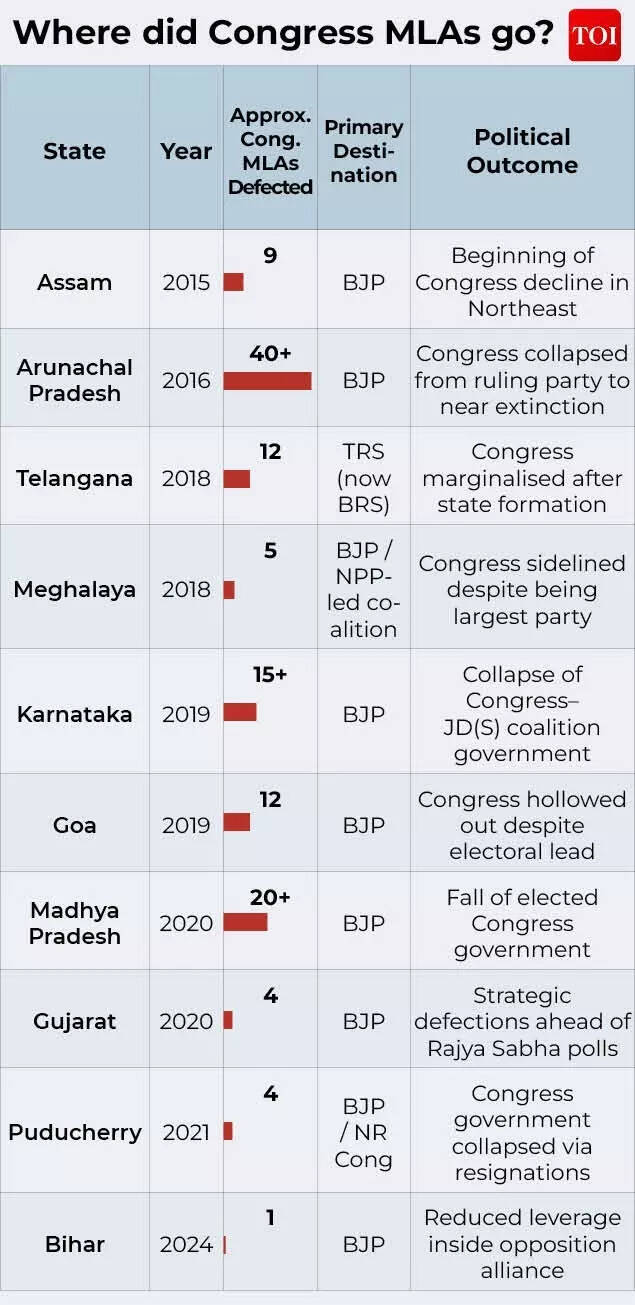
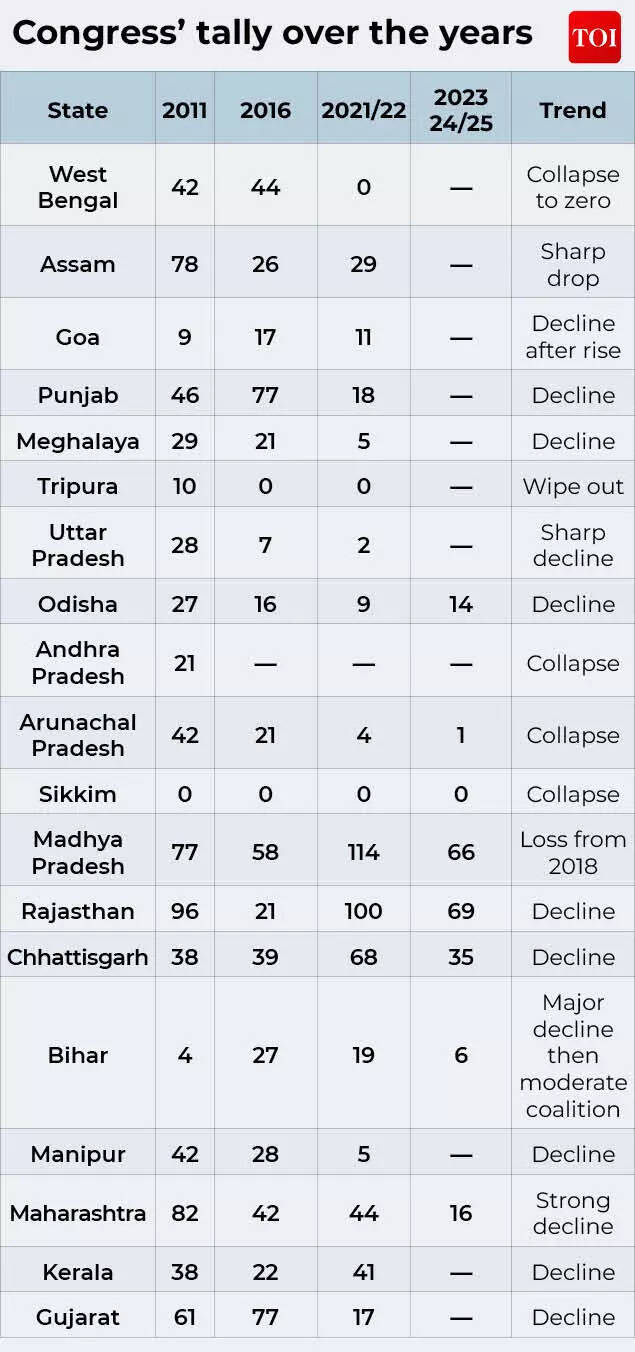
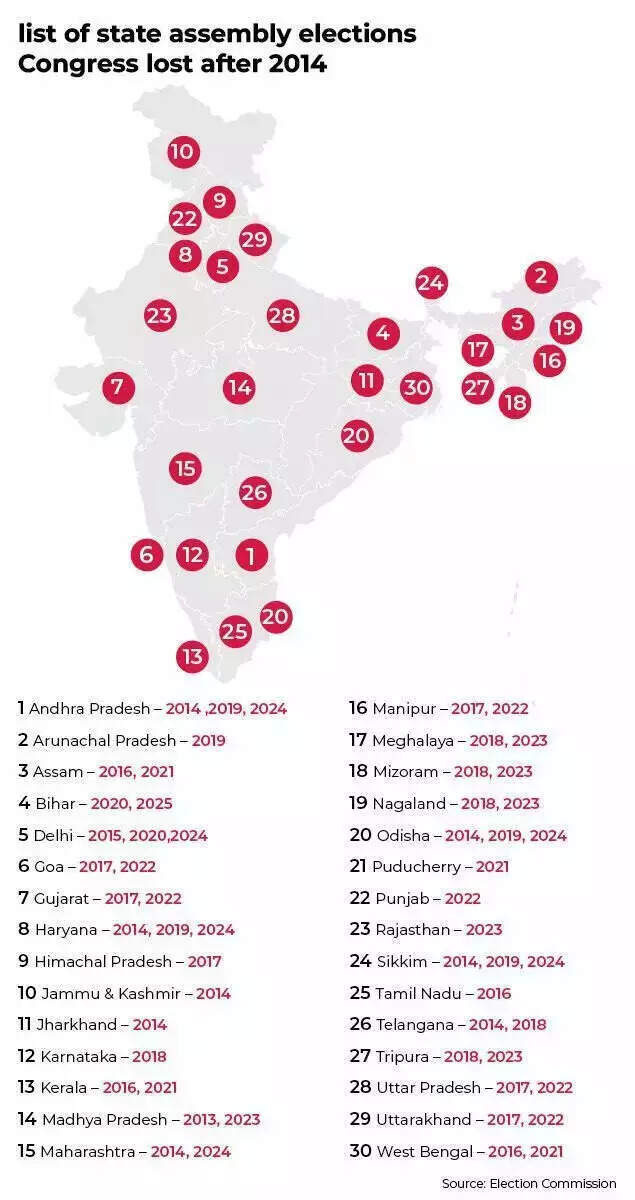
When twelve Congress councillors in Maharashtra’s Ambernath were suspended for “anti-party activities” and they walked straight into BJP fold within a day, the episode felt shocking only on the surface. In reality, it was merely the latest chapter in a long, evolving story of Indian politics—one where party loyalty has steadily given way to political survival, and where elections increasingly decide who enters the arena, not necessarily who governs.The numbers tell a blunt story. Between 1999 and 2009, Congress won between 114 and 206 Lok Sabha seats, peaking in 2009 with a strong mandate. In 2014, its tally collapsed to 44 seats, recovering marginally to 52 in 2019 and about 99 in 2024. Electoral decline alone does not explain the present crisis. What distinguishes this phase is the steady erosion of the party’s internal authority, producing a conveyor belt of exits cutting across regions, castes, generations, and ideological leanings.The phenomenon cuts across levels of governance: local bodies, state assemblies, Parliament. It spans ideologies, caste groups, generations, and regions.Mapping the exodus: When and where Congress lost its leadersPlacing defections on a timeline makes clear that this is not a sudden collapse but a decade-long, state-by-state unravelling. The exits accelerate after 2014, peak between 2017 and 2021, and continue in smaller but steady waves thereafter, often coinciding with leadership disputes, alliance breakdowns, or changes in government at the Centre.

-

Seen together, these timelines show how defections often follow a familiar rhythm: electoral setback, leadership dispute, prolonged indecision by the high command, and finally, coordinated exits. In several cases, these exits did not merely weaken the Congress but altered governments without voters being consulted again, underscoring how power has increasingly migrated away from the ballot box.Ambernath: A small town, a big signalOn paper, Ambernath is just another municipal council in Maharasthra. In practice, it became a live demonstration of how numbers trump ideology.The election produced a fractured mandate. The Shinde-led Shiv Sena emerged as the single largest party but fell short of a majority. The BJP, Congress, and NCP—otherwise rivals—came together post-poll to form a bloc, the Ambernath Vikas Aghadi, not out of shared values but shared arithmetic. The sole aim was to keep Shiv Sena out of decision-making.This uneasy arrangement exposed contradictions within all parties involved. For the Congress, aligning with the BJP at the local level clashed with its national narrative. For the BJP, partnering with Congress councillors while attacking the party elsewhere created ideological discomfort.The Congress leadership chose discipline over pragmatism and suspended its 12 councillors. But suspension today is often not a deterrent—it is a signal. Within hours, the councillors crossed over to the BJP, turning punishment into opportunity.What followed—BJP minister Ashish Shelar publicly questioning the induction, NCP councillors switching sides again, and Shiv Sena regaining leverage—showed how fluid power has become, even within a matter of days.From exception to systemThere was a time when defections were treated as political scandals. Today, they are procedural events.Across India, resignations and party switches no longer happen quietly or individually. They occur in batches, at strategic moments, and with clear political outcomes in mind. What was once dismissively described as “Aaya Ram, Gaya Ram” politics has evolved into organised, legally informed, number-driven realignment.But this did not happen overnight.The great exodus: When defection became routineDefections are not new to Indian politics. What is new is their scale, their predictability, and their directional bias. Over the past decade, the Indian National Congress has increasingly come to resemble a feeder organisation in India’s political ecosystem, steadily supplying leaders, legislators, and organisational capital to rival parties.From municipal councillors to chief ministers, exits from the Congress have become so frequent that they no longer trigger moral outrage. Instead, they prompt a more unsettling question: is the party witnessing episodic rebellion, or is it undergoing a deeper organisational unravelling?What distinguishes the Congress’s current phase is the erosion of internal authority, which has transformed individual ambition into collective exit strategies. The numbers behind declineA look at the Congress’s parliamentary trajectory offers crucial context. Between 1999 and 2009, the party remained a central pillar of national politics, winning between 114 and 206 Lok Sabha seats and forming governments twice. The collapse in 2014, when its tally fell to 44, marked not just an electoral defeat but a psychological rupture. Marginal recoveries in 2019 and 2024 did little to reverse the perception of decline, particularly as state-level losses and defections continued unabated.While the Congress has managed periodic parliamentary rebounds, its organisational depth in states has thinned dramatically, making it vulnerable to post-election destabilisation.

-

What data shows: ADR maps direction of defectionsIn an analysis of elections held between 2014 and 2021, Association for Democratic Reforms (ADR) found that the Bharatiya Janata Party emerged as the biggest beneficiary of defections, while the Congress suffered the maximum losses, bleeding candidates and legislators across states and election cycles. ADR examined the self-sworn affidavits of 1,133 candidates and 500 MPs and MLAs who switched parties and re-contested elections during this period, including by-elections. The findings were stark. As many as 222 Congress candidates—the highest among all parties—left the party to join other formations before contesting elections. By comparison, 153 candidates exited the BSP during the same period. At the legislative level, the picture was even more damaging for the Congress. Nearly 35% of all MPs and MLAs who switched parties—177 out of 500—were from the Congress, while only 7% defected from the BJP. On the receiving end, the BJP absorbed 173 MPs and MLAs, or 35% of all defectors, cementing its position as the principal magnet for political migration. Overall, 22% of all re-contesting defectors joined the BJP, far ahead of the Congress and other parties. ADR’s analysis underscores that what is often portrayed as isolated rebellion is, in fact, a sustained structural pattern. The organisation noted that the persistence of defections reflects deeper pathologies in Indian politics, including the absence of value-based politics, the nexus between money and muscle power, and weak internal regulation of political parties. From “Aaya Ram, Gaya Ram” to engineered migrationIndia’s political history has long been marked by dramatic defections, famously coined “Aaya Ram, Gaya Ram” in the late 1960s, after a Haryana legislator switched parties three times in a single day. Such episodes highlighted the fragility of coalition politics and the ease with which personal ambition could override party loyalty. In response, the Anti-Defection Law was enacted in 1985 to curb opportunistic switching. It penalised individual legislators who defected after being elected, with disqualification from their seat serving as a deterrent. For a time, the law worked: governments completed their terms, and reckless, impulsive defections slowed. But politics adapted. As legislators and parties became more strategic, defections evolved into coordinated, legally compliant maneuvers. By resigning in groups or exploiting procedural loopholes, politicians could now shift allegiances without violating the letter of the law. What began as isolated acts of opportunism turned into a structured, numbers-driven process—one where legal safeguards prevented punishment but could not restore party cohesion or curb the erosion of organisational authority.As Indian politics professionalised and power centralised, defections did not disappear—they evolved. Resignations replaced rebellion. Legal loopholes replaced political shame. What emerged was a model of post-election government construction where numbers mattered more than mandates.The leadership disconnect In recent months, the Congress’s internal churn has burst into public view through letters and open dissent. Former Odisha MLA Mohammed Moquim’s letter to Sonia Gandhi, calling for “open-heart surgery” within the party, crystallised a sentiment long whispered within party ranks. Citing repeated electoral defeats in Odisha, Moquim flagged a growing disconnect between the leadership and grassroots workers and questioned whether the party’s leadership could still resonate with younger voters.His complaint that he had not been granted an audience with Rahul Gandhi for nearly three years struck a deeper chord.

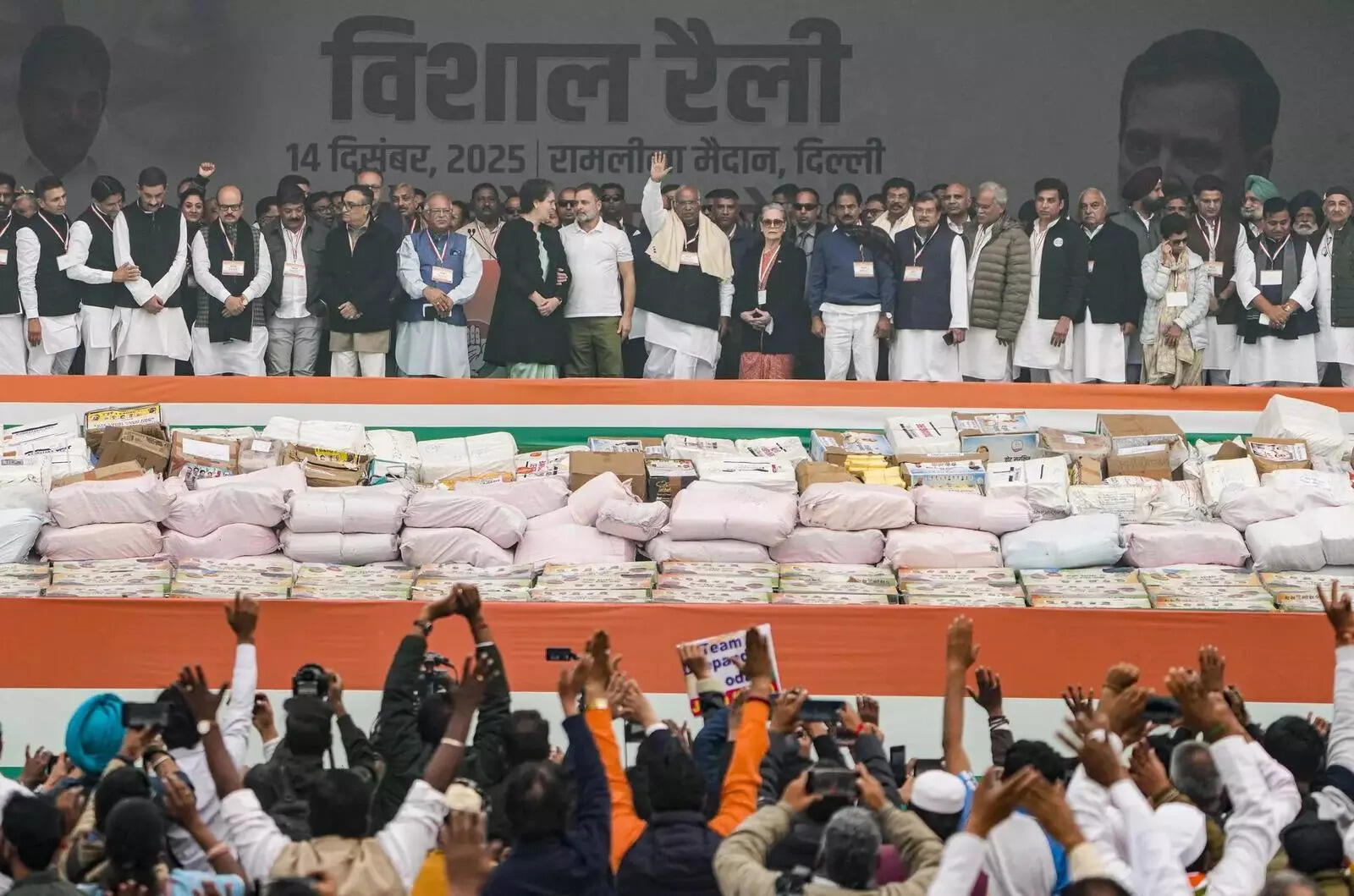
Congress rally in Delhi against vote theft

He described the issue not as personal grievance but as an emotional rupture felt by workers who believe their voices no longer travel upward. Similar concerns surfaced during the Bihar assembly elections, where seat distribution talks exposed the distance between the central leadership and state units, triggering protests by denied ticket aspirants and demands for leadership changes.These episodes point to a structural problem: grievances accumulate slowly within the organisation, while decisions descend abruptly, often without consultation or explanation.From a party of plenty to party of precarityThe Congress’s present predicament stands in stark contrast to its early history. Founded in 1885, it was once defined by abundance—of leaders, of ideological currents, of organisational depth. During the freedom struggle and the early decades after Independence, the party functioned as a broad national canopy under which internal disagreements were absorbed rather than fatal.That breadth became harder to manage as politics decentralised and competition intensified. By the time the Congress approached the 2014 Lok Sabha elections, it was burdened by anti-incumbency, corruption allegations, and leadership fatigue.

-.

The emergence of Narendra Modi and the BJP’s organisational consolidation delivered a blow from which the party has struggled to recover. Since then, the Congress has faced recurring infighting, disillusioned workers, and senior leaders exiting after flagging unresolved concerns.Leaders such as Sanjay Nirupam, expelled from the party, have alleged that competing lobbies operate around senior figures, creating paralysis rather than clarity.Prolonged leadership tussles in Karnataka, Rajasthan, and Madhya Pradesh illustrate this hesitation to act decisively, often at significant electoral cost. In Rajasthan, the decision to back Ashok Gehlot over Sachin Pilot resolved neither factional rivalry nor voter disillusionment, culminating in defeat. Similar patterns have played out elsewhere, reinforcing perceptions of drift.Rahul Gandhi’s role has also been scrutinised. Despite high-profile campaigns and yatras, his interventions have not consistently translated into electoral success.

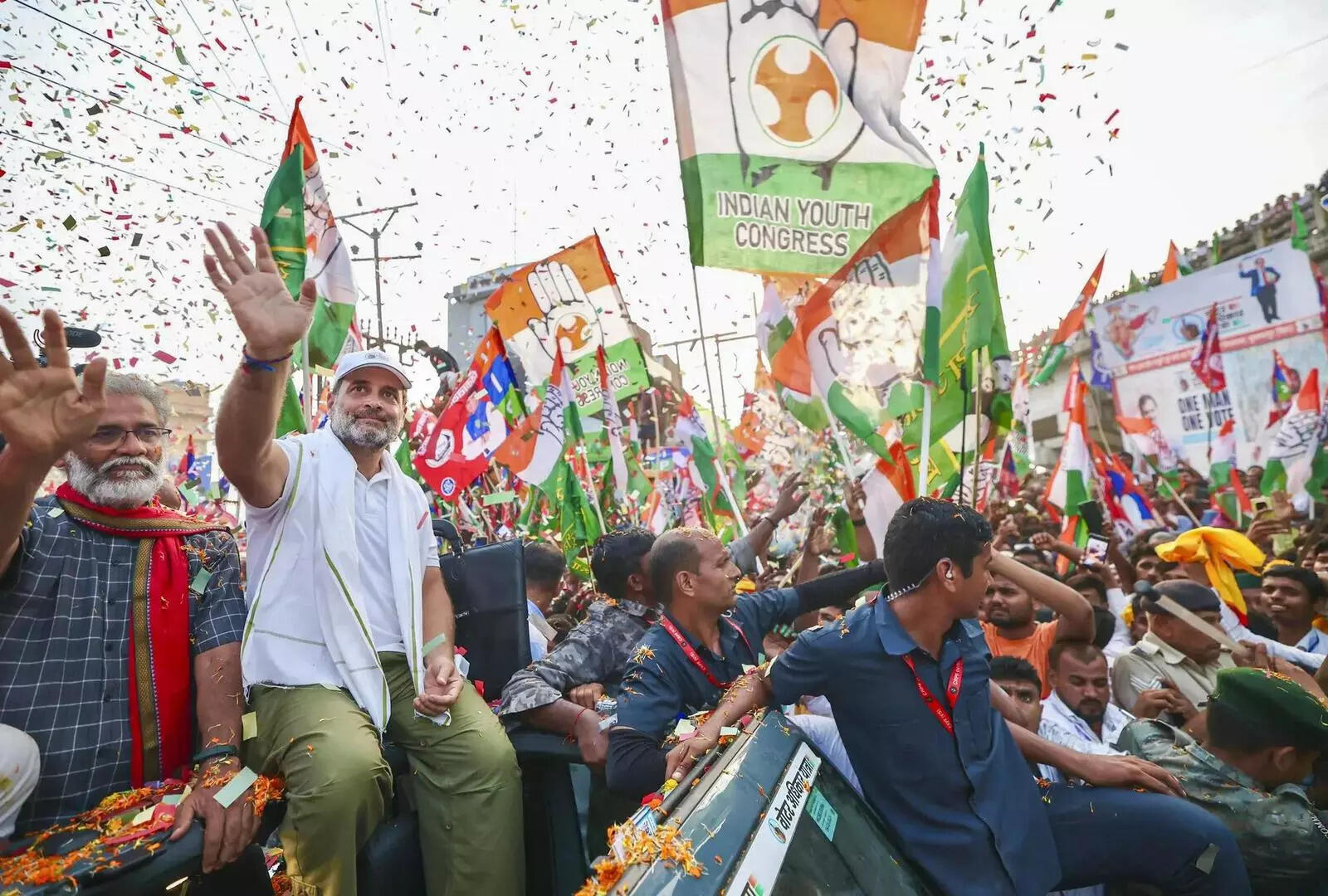
Voter Adhikar Yatra in Bihar.

Electoral slide and alliance fatigueSince 2014, the Congress has lost more elections than it has won. Even when it shows signs of revival in parliamentary contests, the momentum often dissipates at the state level. Maharashtra reduced it to the margins. Bihar halved its strength. Haryana dashed hopes of converting parliamentary gains into assembly success. Delhi continues to remain out of reach. The few regions where the party has performed relatively better—such as Jammu and Kashmir, Jharkhand and Himachal Pradesh—are those where it contested as a junior partner. Yet alliances bring their own complications. Many regional parties aligned with the Congress were born out of splits from it or emerged in opposition to it, making coordination fraught. Tensions with the National Conference in Jammu and Kashmir and the turbulent relationship with the Aam Aadmi Party within the INDIA bloc have repeatedly surfaced in public, confusing cadres and weakening ground-level coherence.Defection as democratic stress testThe consequences of this churn extend beyond party fortunes. Municipal councils and state assemblies are not merely arenas of power; they are training grounds for democratic leadership. When defections become normalised at these levels, transactional politics becomes foundational rather than exceptional.For voters, the implications are corrosive. Governments change without elections. Mandates appear provisional. Over time, this breeds cynicism not just towards parties but towards representation itself. Democracy survives procedurally, but legitimacy erodes substantively.In politics, the question is no longer why leaders leave the Congress. It is who, and what, is left to hold it together. The Anti-Defection Law, intended to stabilise governance, has become a legal framework within which these exits are now engineered—highlighting that procedural rules cannot replace organisational strength or political cohesion.



Source link

Access Denied


Access Denied

You don’t have permission to access “http://www.ndtv.com/india-news/pm-narendra-modis-car-diplomacy-continues-with-german-chancellor-friedrich-merz-visit-vladimir-putin-keir-starmer-car-diplomacy-10724815” on this server.

Reference #18.2ef63717.1768216423.1e8bc6c9

https://errors.edgesuite.net/18.2ef63717.1768216423.1e8bc6c9


Source link

‘Have to maintain decorum’: Om Birla slams Kirti Azad for vaping inside Parliament; adds action soon | India News


'Have to maintain decorum': Om Birla slams Kirti Azad for vaping inside Parliament; adds action soon

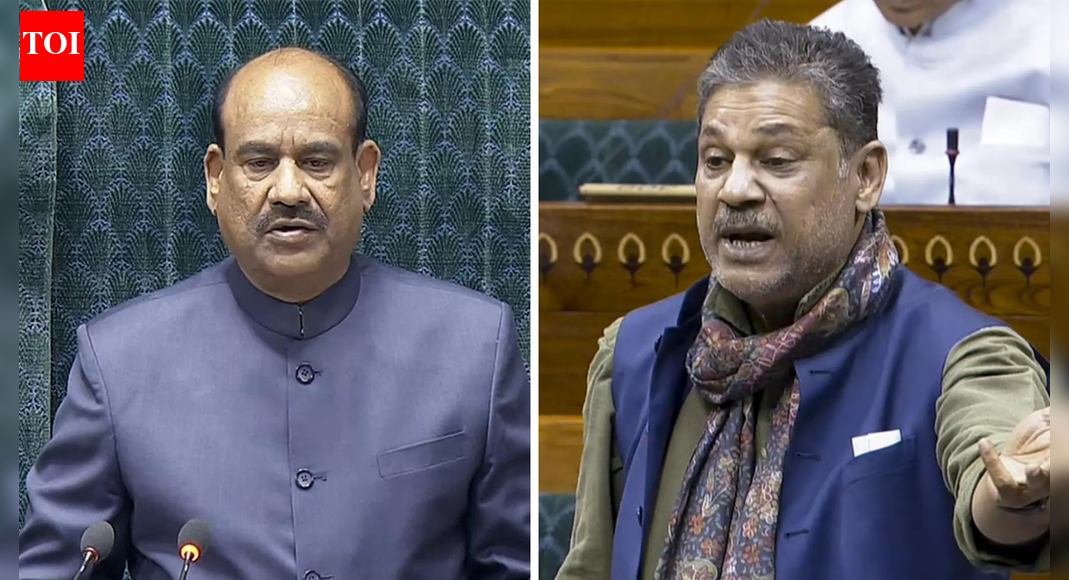
NEW DELHI: Lok Sabha Speaker Om Birla on Monday said that disciplinary actions will be taken against TMC MP Kirti Azad fore allegedly smoking an E-cigarette inside the Parliament.Birla urged the parliamentarians to maintain decorum inside the House and it will not be possible for any one to spoil the dignity of the Parliament.“The process of investigation is in the direction of being completed. As soon as the investigation process is completed, the action plan will be made and will go to the committee, and the process will be completed. It will not be possible for anyone to spoil the dignity of the House,” Birla said.“It is a responsibility. You will have to maintain decorum inside the House and the one who does not maintain decorum will be punished under the rules and procedures of the Parliament. Action will be taken. Action will be taken as per the rules,” he added.During the winter session of the Parliament, Bharatiya Janata Party MP Anurag Thakur filed a complaint against Kirti Azad, claiming that he was vaping in the Lower House during the ongoing session.In the letter, Thakur stated, “A Member of Parliament belonging to the All India Trinamool Congress was seen openly using an electronic cigarette while seated in the House during the sittings.” He added that the act was “clearly visible” to several members present in the House.Thakur termed the alleged act a serious violation of parliamentary conduct, calling it a grave breach of rules and statutory provisions. He also noted that he had brought the issue to the Chair’s attention during the session.In his complaint, the BJP MP also reminded the Speaker that the manufacture, production, import, export, transport, sale, including online sale, distribution, storage and advertisement of electronic cigarettes are completely prohibited across the country under the Prohibition of Electronic Cigarettes (Production, Manufacture, Import, Export, Transport, Sale, Distribution, Storage and Advertisement) Act, 2019.BJP leader Amit Malviya also shared a 35-second video that according to him, showed Trinamool MP Kirti Azad vaping in the House. The video showed Azad sitting inside the Lok Sabha and purportedly making smoking gesture. Azad was seen bringing his cupped right hand towards his mouth and holding it for five seconds.


Source link

IND vs NZ: Ayush Badoni earns maiden ODI call-up as Washington Sundar ruled out of series | Cricket News


IND vs NZ: Ayush Badoni earns maiden ODI call-up as Washington Sundar ruled out of series

NEW DELHI: India’s preparations for the remainder of the ODI series against New Zealand have been disrupted by another injury setback, with Washington Sundar ruled out and young batter Ayush Badoni earning his maiden call-up to the national side.Go Beyond The Boundary with our YouTube channel. SUBSCRIBE NOW!The Board of Control for Cricket in India (BCCI) confirmed on Monday that Sundar sustained an injury during the first ODI at the BCA Stadium in Kotambi, Vadodara. The bowling all-rounder complained of acute discomfort in his left lower rib area while bowling and was forced to leave the field midway through New Zealand’s innings. Although he later returned to bat at No. 8, scoring seven runs in India’s four-wicket win, further assessment has sidelined him for the rest of the series.

Harshit Rana press conference: ‘Team wants to groom me as an all-rounder’

In a media advisory, the BCCI stated that Sundar will undergo additional scans, following which the medical team will seek expert opinion. “Washington Sundar has been ruled out of the remaining two matches of the ODI series,” the statement read.India captain Shubman Gill had earlier hinted at the severity of the issue, revealing after the match that Sundar was dealing with a side strain and would be sent for scans. The 26-year-old had bowled just five overs in the opener, conceding 25 runs without taking a wicket.Sundar’s absence has opened the door for Ayush Badoni, who has been named as his replacement by the selection committee. The right-hand batter, who also bowls right-arm off-spin, will join the squad in Rajkot ahead of the second ODI. Badoni’s inclusion marks a significant milestone in his career, rewarding his consistent performances on the domestic circuit.Sundar’s injury compounds India’s concerns, coming on the heels of Rishabh Pant being ruled out of the series with a side strain sustained during training. Pant was replaced by Dhruv Jurel in the playing XI for the first ODI.

India’s updated squad for 2nd and 3rd ODIs

  • Shubman Gill (C), Rohit Sharma, Virat Kohli, KL Rahul (WK), Shreyas Iyer (VC), Ravindra Jadeja, Mohd Siraj, Harshit Rana, Prasidh Krishna, Kuldeep Yadav, Nitish Kumar Reddy, Arshdeep Singh, Yashasvi Jaiswal, Dhruv Jurel (WK), Ayush Badoni


Source link