Breaking News
‘Will Trump kidnap our PM?’ Prithviraj Chavan’s bizarre remark amid Venezuela crisis; BJP terms it ‘new low’ for Congress | India News


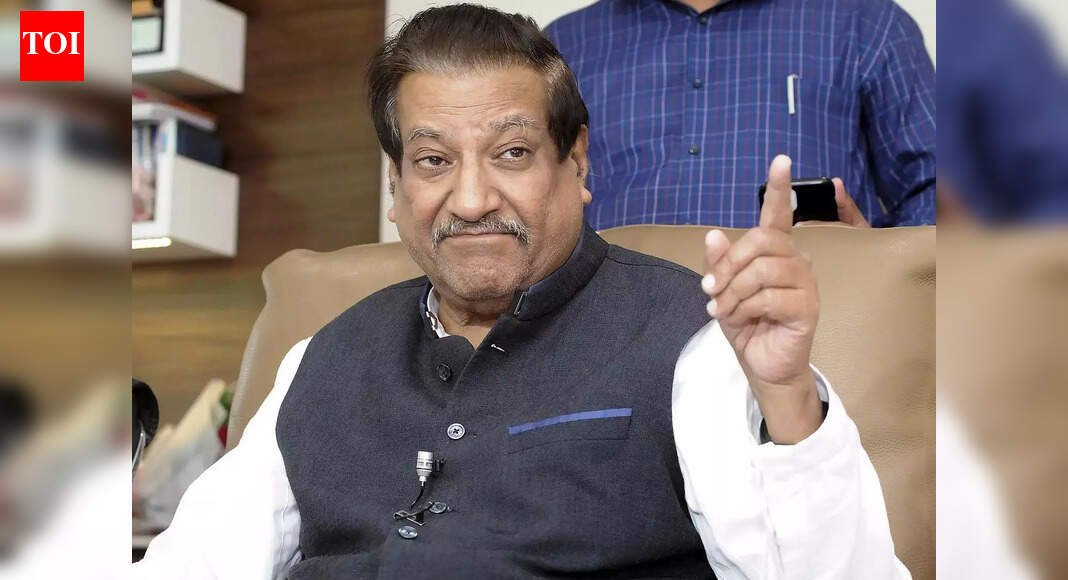
Prithviraj Chavan (File photo)

NEW DELHI: Linking the mounting trade tensions between India and United States with the capture of Venezuelan president Nicolas Maduro in the CIA-led operation, Maharashtra’s former chief minister Prithviraj Chavan on Tuesday asked: “Will Trump kidnap our Prime Minister?”Chavan said the central government has been making an effort to diversify the supply source to give a cushion to the exporters hit by the US President Donald Trump’s 50 percent tariff on India.

Donald Trump, Venezuela And India: Prithviraj Chavan’s Remark On PM Modi Kidnapping Sparks Row

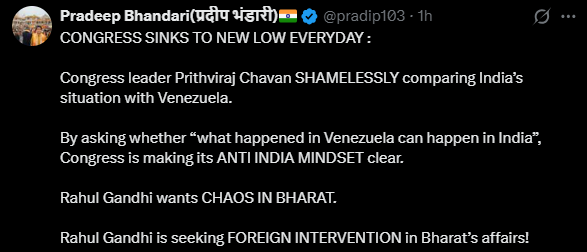
“With a 50 percent tariff, trade is simply not possible. In effect, this amounts to blocking India–US trade, especially exports from India to the United States. Since a direct ban cannot be imposed, tariffs have been used as a tool to stop trade. India will have to bear this,” Chavan said in an interview to news agency IANS.Also read: Chavan slams Centre for not taking stance on Venezuela; claims govt ‘scared of Americans’ He further said: “The profits that our people earlier earned from exports to the US will no longer be available. We will have to look for alternative markets, and efforts in that direction are already under way”.“The question then is: What next? Will something like what happened in Venezuela happen in India? Will Mr. Trump kidnap our Prime Minister?” Chavan asked.Criticising Chavan over his remark, BJP’s national spokesperson Pradeep Bhandari said: Congress sinks to a new low every day. Congress leader Prithviraj Chavan shamelessly comparing India’s situation with Venezuela. By asking whether “what happened in Venezuela can happen in India”, Congress is making its anti-India mindset clear. Rahul Gandhi wants chaos in Bharat. Rahul Gandhi is seeking foreign intervention in Bharat’s affairs!”

Screenshot 2026-01-06 171657

BJP’s reaction to Chavan’s remark

Earlier in the day, Chavan criticised the government for not taking a stand after the US captured Venezuelan President Nicolas Maduro, saying such an incident could also happen to India.“Whatever has happened in Venezuela is against the UN Charter. An elected president has been kidnapped. It’s a very grave concern that it could happen to any other country tomorrow. Tomorrow it can happen to India,” Chavan said.Also read: MEA issues advisory for Indians in Venezuela; urges to avoid non-essential travel“India has not spoken as usual, not taken a stand on the Venezuela matter. Russia and China have taken a stand and criticised what America has done. The same thing happened in the Ukraine war. We did not take any side. We did not take a stand on the Israel-Hamas matter, and now here we are, so scared of Americans that we are not even trying to criticise what has happened,” he added.However, the ministry of external affairs on Sunday reiterated India’s support for the safety and well-being of people in Venezuela as the situation in the country remains tense after the US strikes.“Recent developments in Venezuela are a matter of deep concern. We are closely monitoring the evolving situation,” the MEA said in a statement.Also read: MEA reacts to US strikes on Venezuela; urges restraint, calls for dialogueTrump on Monday issued a fresh tariff warning to India, saying Washington could raise duties on New Delhi if it does not “help on Russian oil issue,” directly linking the threat to the ongoing Russia–Ukraine war.“We could raise tariffs on India if they don’t have help on Russian oil issue,” said US President Trump, quoted by Reuters.US President Donald Trump added, “They wanted to make me happy, basically… PM Modi’s a very good man. He’s a good guy. He knew I was not happy. It was important to make me happy. They do trade, and we can raise tariffs on them very quickly…”Trump was referring to India’s continued oil trade with Russia, a point his administration has repeatedly opposed, and which he had cited as the basis for doubling tariffs on India to 50% in August 2025.India is already facing the 50% tariff imposed by Trump, who has been sharply critical of New Delhi’s ties with Moscow and has alleged India of strengthening Russia in the Ukraine war by purchasing Russian crude.


Source link

Aldrich Ames: How an alcoholic became Soviet Union’s biggest asset inside the CIA | World News


Aldrich Ames: How an alcoholic became Soviet Union's biggest asset inside the CIA
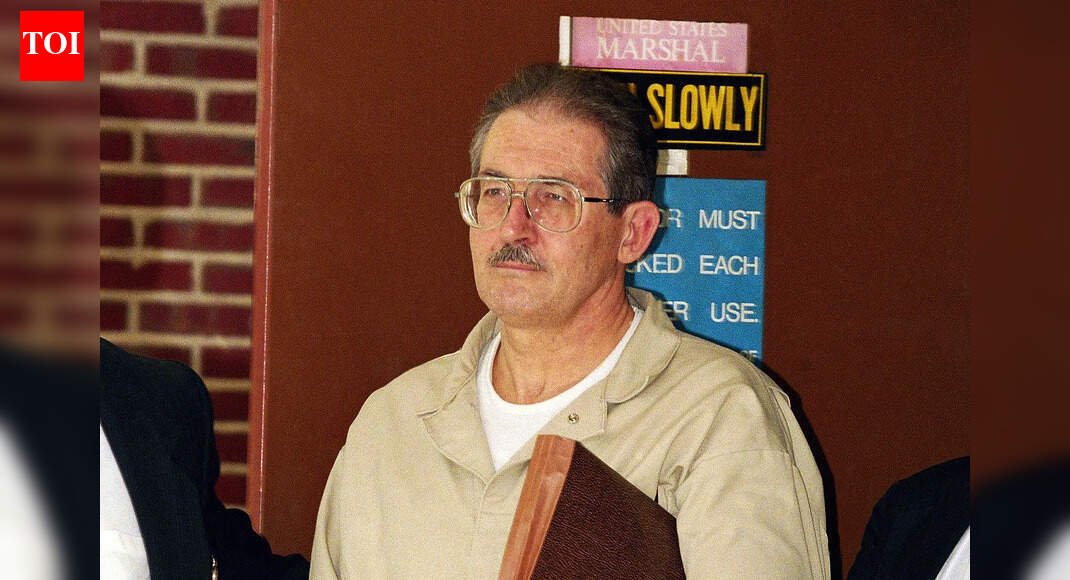
FILE – Former CIA agent Aldrich Ames leaves federal court after pleading guilty to espionage and tax evasion conspiracy charges April 28, 1994, in Alexandria, Va. (AP Photo/Wilfredo Lee, File)

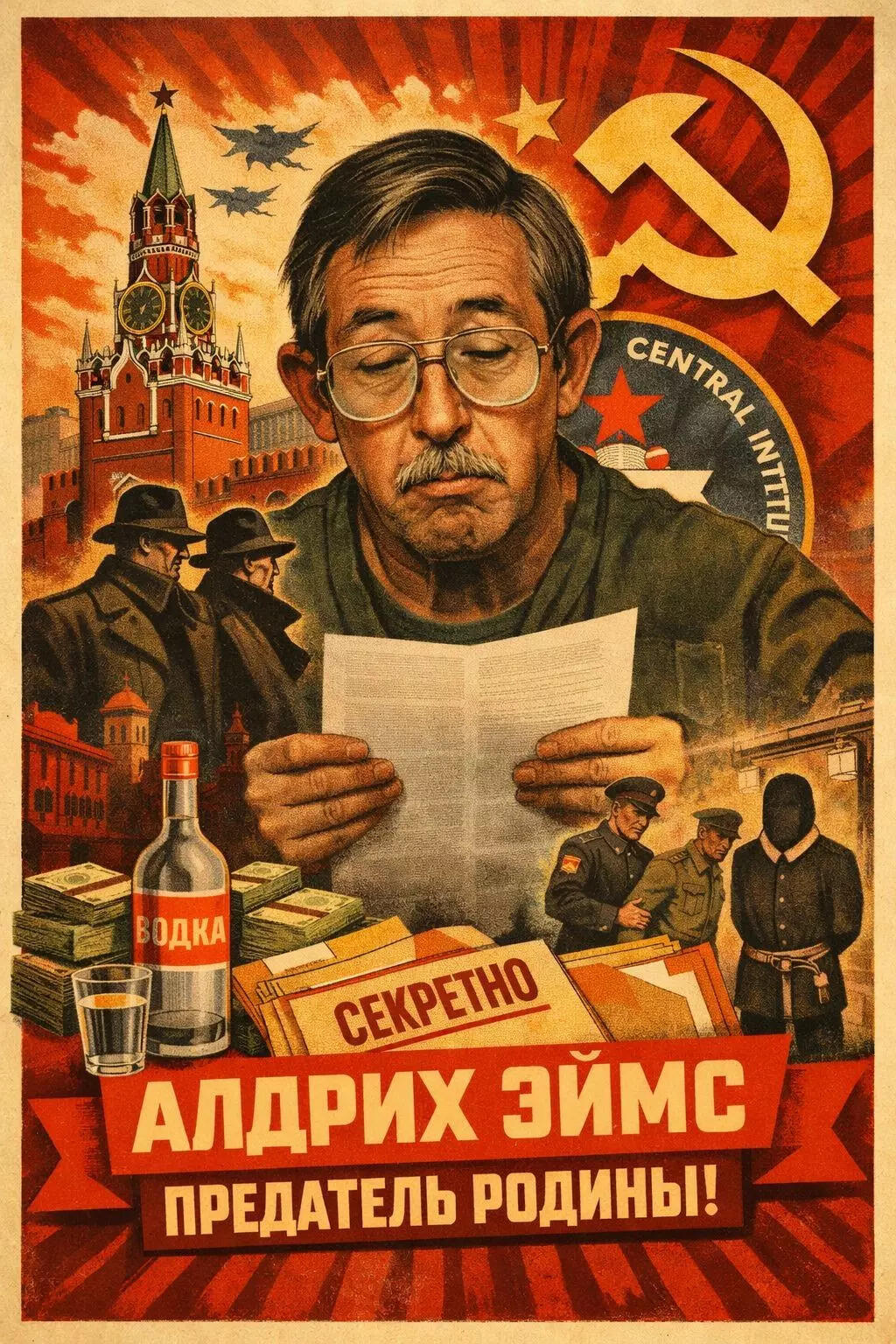
When Aldrich Ames finally left for the Elysian Fields, none of America’s major newspapers felt compelled to soften the landing. The New York Times called him what he was: “Aldrich Ames, C.I.A. Turncoat Who Helped the Soviets, Dies at 84.” The Washington Post went further: “the most damaging CIA traitor in agency history.” It was unduly harsh from a paper that once labelled ISIS chief Abu-Bakr Al-Baghddadi an austere scholar. That’s how deeply ingrained hate for Aldrich Ames is in the American psyche, the man who turned out to be a Russia’s most coveted asset during the Cold War. That unanimity tells you something important. Aldrich Ames is not remembered because he was fascinating. He is remembered because he was devastatingly ordinary.

The Alcoholic Traitor

To understand Aldrich Ames, one must first strip away the mythology that usually attaches itself to traitors. He was not glamorous, not especially clever, not driven by grand visions of history. He was, above all else, familiar. A second-generation CIA man who grew up inside the culture of secrecy, hierarchy, and quiet entitlement that defined Cold War intelligence work.His father had served in the agency and struggled with alcoholism, a detail often noted but rarely dwelt upon, even though it would quietly echo through the son’s life. Ames absorbed espionage not as a calling but as an atmosphere, something ambient and unquestioned. By the time he formally joined the CIA, intelligence work already felt less like a mission and more like an inheritance.

Putin To Invade NATO? Kremlin Fires Back At Germany’s ‘RESTORE USSR’ Warning | ‘COMPLETE STUPIDITY’

What distinguished Ames early on was not promise but tolerance. He was repeatedly flagged as a mediocre field officer, better suited to desk work than clandestine operations. He drank heavily, performed unevenly, and carried himself with a resentful sense that the agency owed him more than it was willing to give. None of this stopped his rise. If anything, it made it easier. The CIA, confident in its own vetting and bound by institutional inertia, mistook longevity for reliability and familiarity for trust.By the early 1980s, Ames had reached a position of extraordinary sensitivity: counter-intelligence chief for the Soviet division. It was a role that granted him access to the deepest secrets of American espionage, including the identities of Soviet officials who had secretly chosen to work for the West. This was not the result of brilliance or strategic insight. It was the product of a system that promoted its own until there was no reason left not to.

The Non-Believer

Aldrich Ames

Ames did not defect in a moment of ideological awakening. He unravelled. By the mid-1980s, his alcoholism had deepened into routine dependence. Vodka was not an indulgence but a stabiliser, a way of managing a professional life he felt increasingly unfulfilled by and a personal life that was collapsing under the weight of debt, divorce, and resentment. Money problems mounted. So did bitterness toward an agency he believed underpaid and underappreciated him. In 1985, with startling simplicity, he walked into the Soviet Embassy in Washington and offered himself. There was no gradual courtship, no coded overture. He handed over names, identified himself, and asked to be paid. The brazenness of the act was matched only by the speed with which it escalated.What followed was not a calculated long-term strategy but a panic-driven collapse of restraint. Ames feared exposure, particularly from the very Soviet assets he was responsible for protecting. His solution was annihilation. He betrayed them all, delivering to Moscow a comprehensive map of Western intelligence inside the Soviet system.Alcohol played a critical role here, not as an excuse but as an enabler. It dulled caution, eroded empathy, and encouraged the kind of compartmentalisation that allowed Ames to treat betrayal as a logistical problem rather than a moral one. He did not frame his actions as treason so much as transaction. Secrets became currency. Loyalty became irrelevant.The KGB understood what it had acquired. Ames was not a source of insight so much as volume, a bureaucratic funnel through which decades of American intelligence flowed directly into Soviet hands. For that, he was paid handsomely. Millions of dollars arrived, and with them came the lifestyle that Ames believed validated his choices.

The Damage

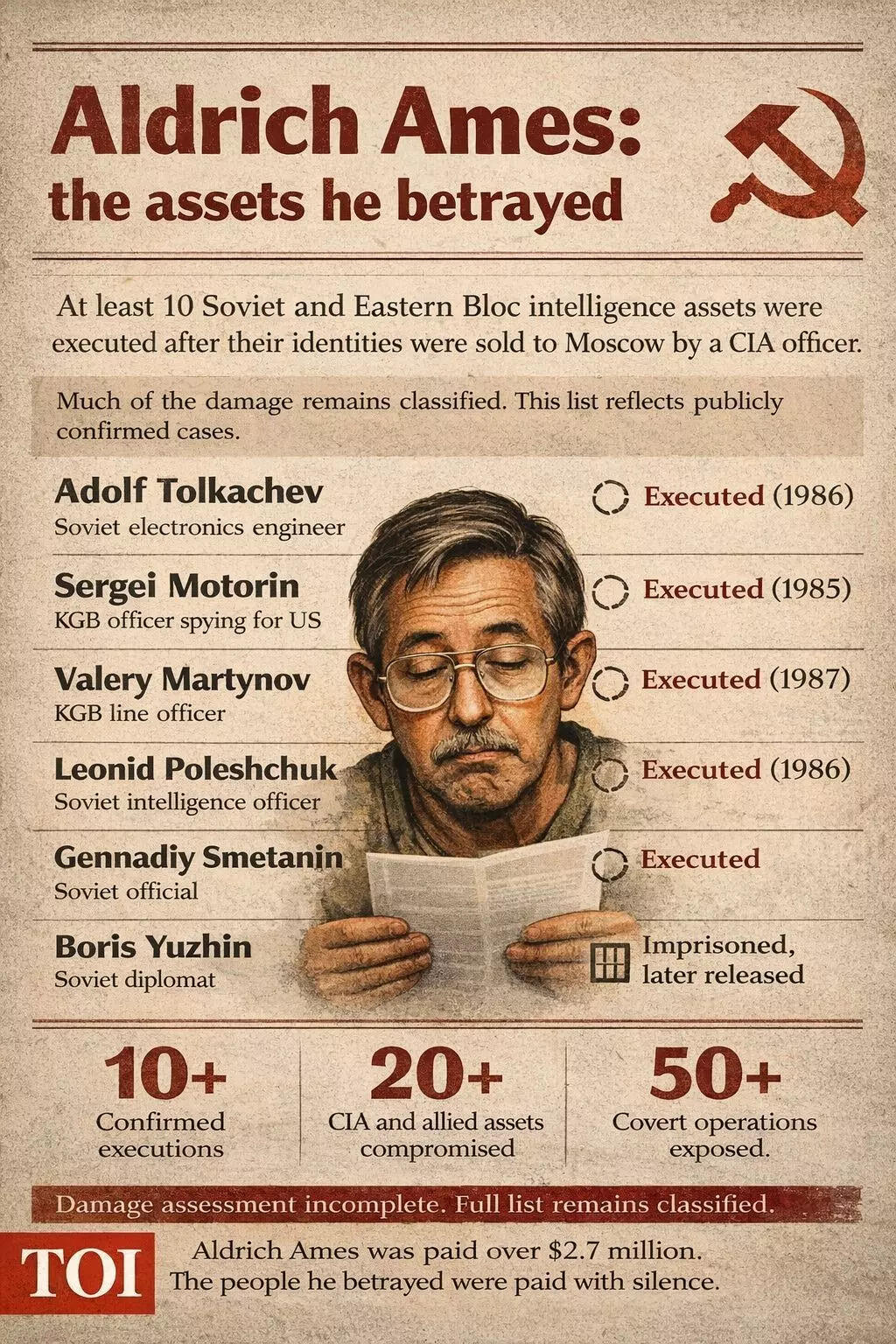
Aldrich Ames: The assets he betrayed

The damage was immediate and catastrophic. As Ames’s disclosures reached Moscow, Soviet counter-intelligence moved swiftly. Western agents began disappearing. Some were arrested, others interrogated, and at least ten were executed. Networks that had taken decades to build collapsed almost overnight. The CIA lost its most valuable human intelligence channels at a moment when understanding the Soviet system was more important than ever.Beyond the human cost, which remains the most damning aspect of the case, Ames inflicted long-term strategic damage. The CIA’s picture of Soviet capabilities and intentions became distorted, increasingly reliant on technical intelligence and disinformation fed back through compromised channels. Policy debates at the highest levels of the US government were shaped by intelligence that was no longer trustworthy.Ames, confronted with the consequences, remained disturbingly detached. He insisted that espionage itself was overrated, that spy networks were theatrical exaggerations rather than essential instruments of statecraft. It was a view that conveniently absolved him of responsibility for the deaths that followed his actions. If the game was meaningless, then the pieces were expendable.This moral emptiness is what distinguishes Ames from ideological traitors of earlier eras. The Cambridge Five believed they were serving history. Ames believed nothing of the sort. His betrayal was not animated by conviction but by contempt, a corrosive belief that the system itself did not deserve loyalty.

Banality of Evil

What makes the Ames case especially damning is not how clever he was, but how long it took to notice what was obvious.By the late 1980s, his lifestyle had become impossible to ignore. He purchased a house in cash, drove a Jaguar, wore tailored suits, and paid for cosmetic dental work, all on a salary that could not plausibly support such spending. Colleagues noticed. Reports were filed. Investigations were opened and then allowed to stall.The CIA’s internal security apparatus moved with lethargy, hamstrung by understaffing, bureaucratic caution, and a culture that resisted the idea that one of its own could be responsible for such damage. At one point, the investigation was effectively paused when the sole officer assigned to it went off for training.It was only when the FBI took over that the pieces fell into place. Surveillance confirmed unexplained meetings and suspicious behaviour. Financial records told a story the agency had long refused to confront. In February 1994, Ames was arrested outside his home, ending nearly a decade of uninterrupted betrayal.When confronted, he pleaded guilty and accepted a life sentence. Even then, he downplayed the impact of his actions, insisting that the intelligence world exaggerated its own importance. It was a final act of deflection, consistent with a man who had spent years convincing himself that nothing truly mattered beyond his own survival.


Source link

Fans erupt as Vaibhav Suryavanshi blasts scintillating century against South Africa U-19 in third Youth ODI


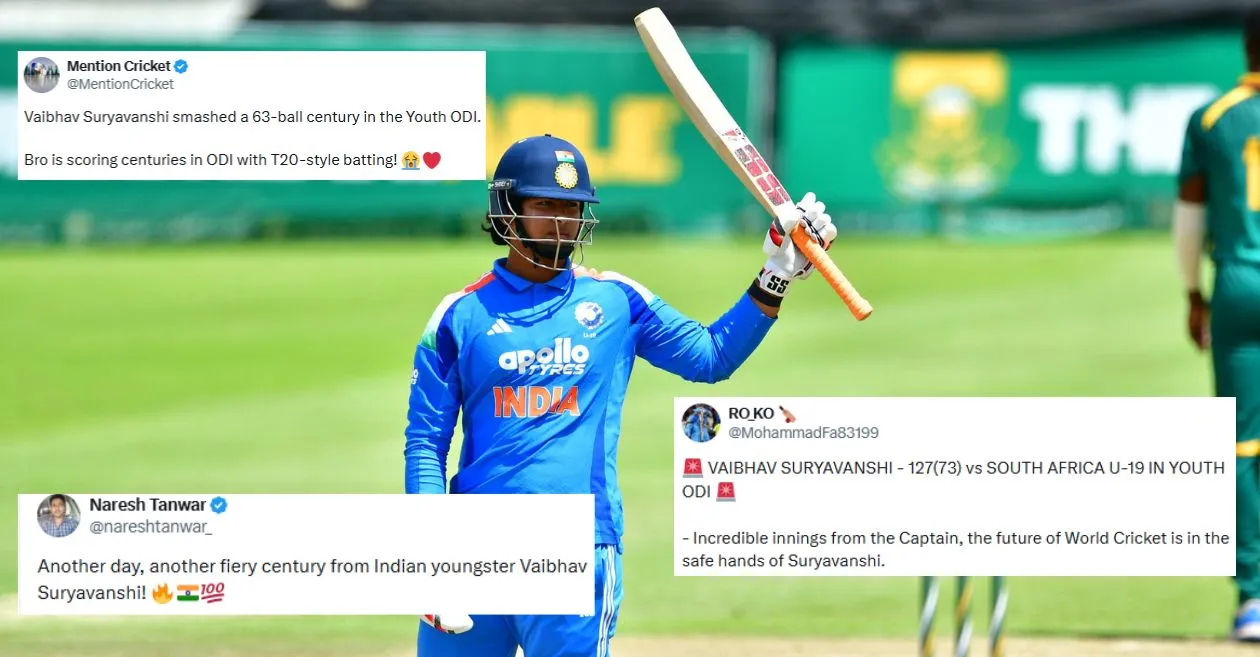
India Under-19s faced South Africa U-19s in the decisive third Youth ODI at Willowmoore Park, Benoni, on January 7, 2026, during their tour of South Africa 2025-26. South Africa U-19 captain won the toss and elected to field first, setting the stage for an explosive batting display from the young Indian colts. With the series already in India‘s pocket at 2-0 following rain-affected triumphs, all eyes turned to skipper Vaibhav Suryavanshi to cap the tour in style.​

Vaibhav Suryavanshi lights up 3rd Youth ODI with blazing century

Suryavanshi, the 14-year-old prodigy and India U-19 captain, unleashed havoc from the outset, smashing a breathtaking 127 off just 74 balls, adorned with 9 fours and 10 towering sixes at a staggering strike rate of 171.62. Opening alongside Aaron George, he forged a record-shattering 227-run stand for the first wicket in 25.4 overs, laying the foundation for India’s formidable total. Suryavanshi fell to Ntando Soni, caught by Adnaan Lagadien, but not before propelling India to a dominant position, his aggressive strokeplay—particularly against pacers like JJ Basson and Jason Rowles—leaving the hosts shell-shocked. Fans exploded in celebration online, hailing the Bihar batter’s maturity beyond his years, especially after his prior series exploits including a 68 off 24 in the second ODI.​

Also READ: Vaibhav Suryavanshi to lead India U19 in South Africa tour, Ayush Mhatre named captain for U19 World Cup 2026

Here’s how fans reacted:

India U-19 to put a massive score against South Africa U-19 in the ongoing Youth ODI

India U-19s racked up a commanding 306/4 in 40 overs at a blistering run rate of 7.65, thanks to George’s elegant 118 off 106 (16 fours) before his dismissal by Jason Rowles, and solid contributions from Vedant Trivedi (34 off 42) and keeper Abhigyan Kundu (15 not out).

The innings flowed seamlessly after the mammoth opening partnership, George perished at 279 in 34.5 overs, followed by Trivedi at 294 (38.2 ov) and a brief hiccup with Harvansh Pangalia‘s run-out at 298 (39.2 ov), but RS Ambrish (2 not out) steadied the ship amid the last 5 overs yielding 30 runs for 2 wickets. South Africa’s bowlers toiled without much success Basson leaked 54 in 5 overs, while Daniel Bosman was the most economical at 5.00—highlighting India’s batting depth ahead of the ICC U-19 World Cup. This performance cements Suryavanshi’s reputation as a generational talent, blending fearless power-hitting with tactical acumen.

Also READ: England announces squad for U19 World Cup 2026, Thomas Rew to lead


Source link

‘Why don’t you look at your own region?’: Jaishankar slams West’s ‘free advice’ on Op Sindoor; what he said | India News


'Why don't you look at your own region?': Jaishankar slams West's 'free advice' on Op Sindoor; what he said

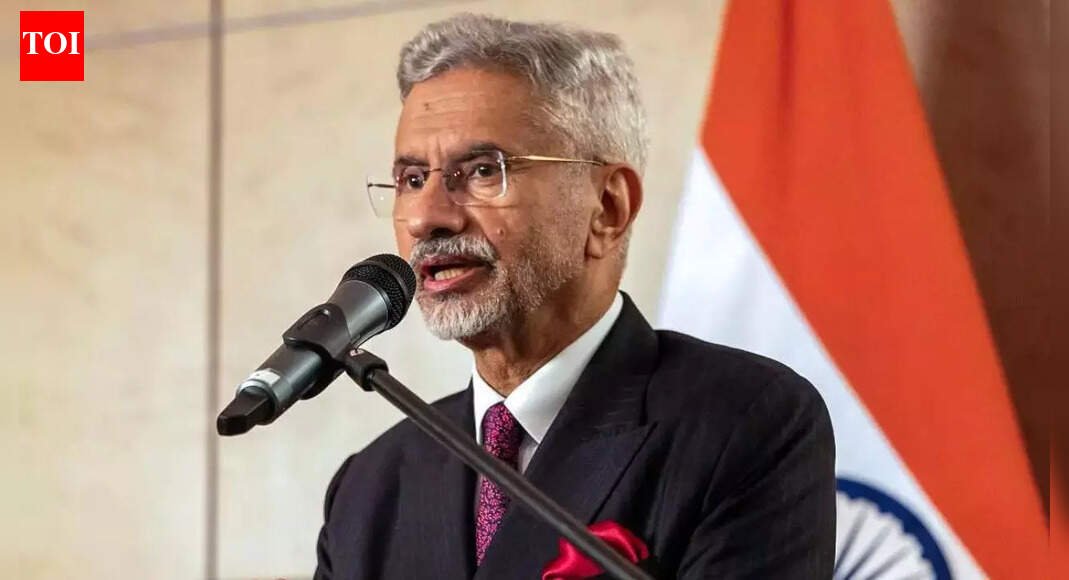
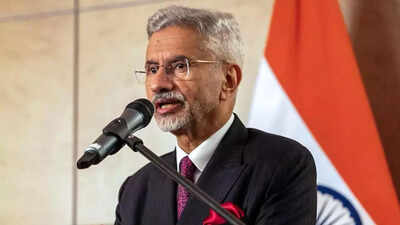
NEW DELHI: External affairs minister S Jaishankar on Wednesday took a dig at the western hypocrisy during India’s military response under Operation Sindoor, declaring India does not need the West’s free advice. “Why don’t you look at your own region for levels of violence?” he remarked.Speaking to members of the Indian community in Luxembourg, Jaishankar recalled that several nations offered unsolicited advice to the country during Operation Sindoor, India’s military response launched in May 2025 after the Pahalgam terror attack that killed 26 civilians.“Sometimes you hear people say, like it happened during Operation Sindoor. Now if you ask them, say, “oh really you’re worried, why don’t you look at your own region? And ask yourself, what are the levels of violence there.”“How much risks have been taken, how much worry the rest of us have about what you are doing. But that’s the nature of the world. People, what they say is not what they do,” he added.Jaishankar further underlined that India will engage differently with different actors. “So those who are willing to work with us and be helpful, positive, we have to deal with them in that way,” he said, adding “those who do the kind of things which Pakistan does, we have to deal with it in a different way.”Jaishankar also took a jibe on how the western countries often advise others on handling their internal or regional conflicts, suggesting such commentary is frequently detached from ground realities and offered without much thought.“Now, to what extent do the developments in the rest of the world affect it? It’s hard to say. People sitting far away will say things, sometimes with application of mind, sometimes not, sometimes with self-interest, sometimes carelessly. That will happen.”“I can tell you, whatever you might say, in this day and age, countries are more, I don’t want to say they become more selfish, but they will do things only if it is of direct benefit to them. They’ll offer you free advice. If something happens, say, no, please don’t do that. It worries us if there is tension,” he added.US President Donald Trump had repeatedly claimed that Washington mediated the May 2025 India-Pakistan ceasefire, an assertion India has rejected. New Delhi has maintained that the military pause followed a request from Pakistan’s Director General of Military Operations to his Indian counterpart, not third-party intervention.Further on the Venezuela crisis, Jaishankar said India’s primary concern is the safety of the people following US military operations there.“We are concerned about the developments, but we would really urge all the parties involved to now sit down and come to a position which is in the interest of the well-being and safety of the people of Venezuela, because at the end of the day, that is our concern,” Jaishankar said.“We would want Venezuela as a country with whom, over many, many years, we’ve had very good relations. So we would like the people to come out well, whatever the direction of events,” he added.His remarks came after Venezuelan President Nicolás Maduro and his wife, Cilia Flores, were captured in Caracas and flown out of the country during a joint operation involving intelligence agencies and US law enforcement.


Source link

MF outreach push: Sebi extends deadline for distributor incentives; rollout now from March 1


MF outreach push: Sebi extends deadline for distributor incentives; rollout now from March 1

Markets regulator Sebi has extended the timeline for implementing an additional incentive structure for mutual fund distributors to March 1, allowing more time for asset management companies to put systems in place, according to a circular issued on Wednesday.The revised framework, aimed at encouraging onboarding of new individual investors from B-30 cities and new women investors across all cities, was earlier scheduled to come into effect from February 1, 2026. B-30 cities refer to locations beyond the top 30 cities under the mutual fund industry’s classification, PTI reported.Sebi said the decision to defer implementation followed feedback from the industry, which flagged operational challenges in ensuring a smooth rollout of the new incentive mechanism.Under the revised framework, distributors will be eligible for an additional commission of 1 per cent on the first lump-sum investment or the first-year systematic investment plan (SIP) amount, capped at Rs 2,000, provided the investor remains invested for at least one year. This incentive will be paid over and above existing trail commissions and will be funded from the 2 basis points already earmarked by AMCs for investor education.However, the regulator has specified that no dual incentives will be allowed for the same woman investor from B-30 cities. The additional commission will also not apply to exchange-traded funds (ETFs), certain fund-of-funds schemes, and very short-duration products such as overnight, liquid, ultra-short and low-duration funds.“The mutual fund distributors shall be eligible for additional commission (for bringing) — new individual investors (new PAN) from B-30 cities, at the mutual fund industry level; and new women individual investors (new PAN) from both top 30 and B-30 cities,” Sebi said.Earlier, Sebi had put in place a framework to incentivise distributors for mobilising investments from beyond the top 30 cities. However, citing concerns over possible misuse and based on industry feedback, the regulator decided to revise the incentive structure to better align it with the objective of expanding the investor base while ensuring safeguards.


Source link

‘Will not play matches in India, but ready to …’: BCB director warns ICC after Mustafizur Rahman controversy | Cricket News


'Will not play matches in India, but ready to ...': BCB director warns ICC after Mustafizur Rahman controversy
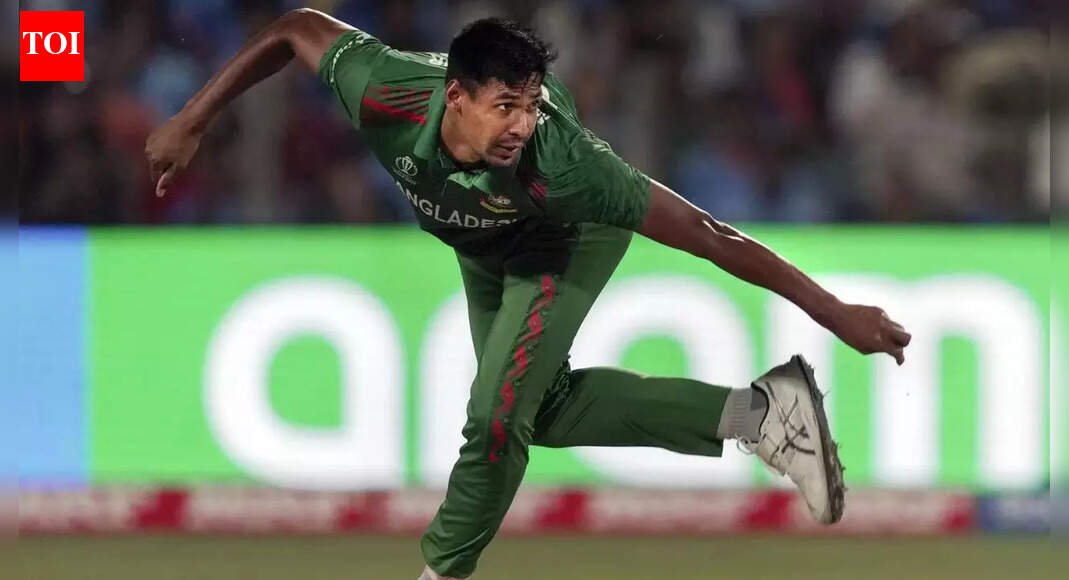
Mustafizur Rahman (PTI Photo)

NEW DELHI: The Bangladesh Cricket Board (BCB) has sent a strong message to the ICC following the Mustafizur Rahman controversy. BCB director Asif Akbar has made it clear that Bangladesh will not play matches in India unless their concerns are addressed. Speaking to the media, Akbar said the board has no flexibility left on this issue. The decision comes after Mustafizur Rahman was removed from the IPL on instructions from the BCCI.

Bangladesh seek T20 WC match shift from India after Mustafizur Rahman’s IPL exit

“We have already made our position clear. We have no second option. After the Mustafizur incident, we are concerned about the safety of our cricketers. Taking everything into consideration, we have decided not to play matches on Indian soil. We are ready to play in Sri Lanka,” Asif said.He also confirmed that the ICC has been officially informed about Bangladesh’s stand, adding, “The ICC has been informed of our concerns and our position. After hearing their response, we will decide our next steps.”Tensions between India and Bangladesh have increased since Mustafizur’s IPL exit. In response, the BCB submitted a written request to the ICC, asking for Bangladesh’s four T20 World Cup matches to be shifted from India to co-host Sri Lanka.On Wednesday, the BCB released a statement saying that the ICC has responded positively to their concerns. According to the board, the ICC has shown interest in working together to ensure Bangladesh’s participation in the tournament.“The Bangladesh Cricket Board has received response from the ICC regarding the Board’s expressed concerns over the safety and security of the Bangladesh National Cricket Team in India for the ICC T20 World Cup, including the request for relocation of the team’s matches,” the BCB said.The statement added: “In its communication, the ICC has reiterated its commitment to ensuring the full and uninterrupted participation of the Bangladesh team in the tournament.”The BCB also shared that the ICC is open to listening to their inputs.“The ICC has conveyed its willingness to work closely with the BCB to address the concerns raised and has assured that the Board’s inputs will be welcomed and duly considered as part of the detailed security planning for the event,” it added.The T20 World Cup is set to begin on February 7. Bangladesh are scheduled to play four matches in Kolkata and Mumbai, but their participation in India now remains uncertain.


Source link

Jammu and Kashmir: Encounter breaks out between security forces and terrorists in Kathua; operation under way | India News


Jammu and Kashmir: Encounter breaks out between security forces and terrorists in Kathua; operation under way

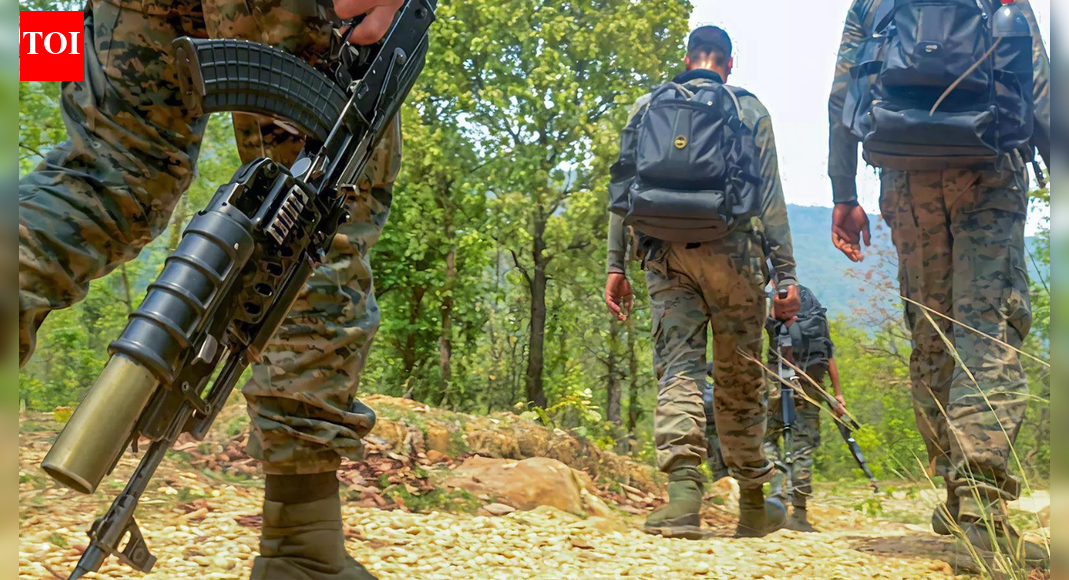
NEW DELHI: An encounter broke out between the security forces and terrorists in Kathua, IGP Jammu informed on Wednesday.“SOG Kathua has engaged terrorists in the forest of Kamadh Nullah, Kathua,” he said in a post on X.A terrorist was spotted by local residents around 4 pm at Kamad Nallah in the jurisdiction of the Billawar police station, PTI reported citing sources. The sources said the individual could be the same terrorist who was seen earlier in the morning in the Dhannu Parole area.The encounter began in the evening in Kahog village of Billawar after security forces launched a search operation based on intelligence inputs indicating the presence of two to three terrorists, PTI reported citing officials. They said additional forces have been deployed to the village to track down and eliminate the terrorists


Source link

ICC forces Bangladesh to play all T20 World Cup matches in India? BCB President breaks silence | Cricket News


ICC forces Bangladesh to play all T20 World Cup matches in India? BCB President breaks silence
Mustafizur Rahman and T20 World Cup trophy (PTI Photo)

NEW DELHI: Bangladesh Cricket Board (BCB) president Aminul Islam Bulbul has strongly denied reports claiming that the ICC has forced Bangladesh to play all their T20 World Cup matches in India. He called such reports false and said the board is standing firm on its concerns about player and staff safety.Bulbul spoke to the media on Wednesday after meeting Sports Advisor Asif Nazrul along with other BCB directors. He made it clear that the board’s main concern is security while travelling to India for the ICC T20 World Cup.

Bangladesh seek T20 WC match shift from India after Mustafizur Rahman’s IPL exit

“We first wrote to the ICC regarding the importance of security and safety. While our scope is limited to looking after the players, there is a large population beyond them, including journalists, sponsors, and cricket lovers,” Bulbul said.He explained that any overseas tour needs government approval, which is why the BCB has asked for guidance from the authorities.“Since a government order is required for any overseas trip, we are seeking the government’s guidance. If safety and security do not improve, we will continue to fight for our rights regarding this World Cup.“This is a valid concern; we have played many World Cups before but never raised such issues until now,” he added.Bulbul also addressed media reports suggesting that the ICC told Bangladesh they must play in India or lose points. He dismissed those claims and said they are misleading.“There is propaganda claiming the ICC informed us that playing in Sri Lanka is impossible, which is false news. We have been in communication with the ICC, and they have asked us to specify our issues. We are currently documenting those issues for them,” he said.When asked about possible consequences if Bangladesh refuses to travel to India, Bulbul pointed to past examples involving other teams.“The BCB has certainly considered that. When the Champions Trophy was held [last year], India did not travel to Pakistan, and similarly, Pakistan did not go to India for the last few World Cups. Therefore, we hope for a proper resolution. If we have to compromise on the World Cup due to security issues in India, we will remain firm on our stance,” he said.Meanwhile, the BCB confirmed on Wednesday that the ICC has responded to their concerns and is open to discussions. The board said the ICC wants to work closely with them to ensure Bangladesh’s full participation. “The Bangladesh Cricket Board has received response from the ICC regarding the Board’s expressed concerns over the safety and security of the Bangladesh National Cricket Team in India for the ICC T20 World Cup, including the request for relocation of the team’s matches,” the BCB said.“In its communication, the ICC has reiterated its commitment to ensuring the full and uninterrupted participation of the Bangladesh team in the tournament.“The ICC has conveyed its willingness to work closely with the BCB to address the concerns raised and has assured that the Board’s inputs will be welcomed and duly considered as part of the detailed security planning for the event,” it added.


Source link

Hyderabad Techie Nikitha Godishala’s Murder in US: Family Alleges Ex-Housemate Arjun Sharma Killed Her Over Loan | Hyderabad News


HYDERABAD: A 27-year-old Hyderabad woman, Nikitha Godishala, working in Columbia in the US state of Maryland, was allegedly killed by a former housemate over a money dispute, after she was found murdered inside his apartment, with the suspect having fled to India. Howard County police said the accused, Arjun Sharma (26), is wanted on first- and second-degree murder charges. Nikitha’s body was found on January 3 at an apartment on the 10100 block of Twin Rivers Road in Columbia during a search of Sharma’s residence, a day after he reported her missing. According to her cousin Saraswati, Nikitha, who lived in nearby Ellicott City, had gone to Sharma’s apartment on December 31 to recover money he had borrowed from her. She had earlier transferred $4,500 to him, of which only $3,500 was returned.

Hyderabad Techie Murdered In US: Father Denies Love Angle, Seeks Justice Across Borders

When Sharma later sought another $1,000, Nikitha refused and demanded the balance from the earlier loan. He allegedly assured her of repayment and asked her to visit him, where she was murdered. Police confirmed on January 4 that Nikitha sustained stab wounds. Speaking to the media in Secunderabad, her father, Anand Godishala, rejected reports describing Sharma as her ex-boyfriend. “He was not her ex. He was one of the four housemates in the flat where she stayed earlier and later moved out. She lent him money, and when she asked for it back, he called her to his apartment and committed the crime,” he said. The Indian Embassy in the US said it is in touch with the family and is providing consular assistance while coordinating with local authorities. Nikitha completed her master’s in health information technology from the University of Maryland, Baltimore County, in 2022–23 and had been working as a data and strategy analyst with Vheda Health since February 2025. Before moving to the US, she worked as a clinical data analyst at a corporate hospital in Hyderabad. In December 2025, Nikitha shared her professional achievements and future aspirations on LinkedIn, writing about receiving an All-In Award at her workplace and her plans to step into 2026 “with momentum”. After her disappearance, members of the Indian community in the US launched an online search campaign, urging residents in and around Columbia to share any information with the Howard County police. The murder has sent shockwaves through Hyderabad and the Indian community in Maryland, with authorities intensifying efforts to trace the suspect.


Source link

From Winter to Budget Session: What Parliament carries into 2026 | India News


From Winter to Budget Session: What Parliament carries into 2026

As the dust settles on 2025, Parliament carries forward unfinished business, unresolved disputes,t and reforms still searching for their final shape.The Winter Session restructured key pillars of governance, but several high-stakes bills were deferred, diluted or sent for further scrutiny.The Budget Session of 2026 is expected to move beyond diagnosing problems to implementing solutions — laying out the governing blueprint for the government’s vision of “Viksit Bharat”.With a focus on higher education reforms, electoral synchronisation, capital market restructuring and insolvency resolution, the Budget Session of 2026 sets the stage for high-stakes legislative action.

What carries forward into 2026

While the government pushed through several landmark reforms during the Winter Session, many bills were formally introduced but ran into procedural hurdles.Several were referred to Joint Parliamentary Committees or held back for further refinement, effectively shifting the legislative battleground to the Budget Session of 2026.

Securities Markets Code Bill, 2025

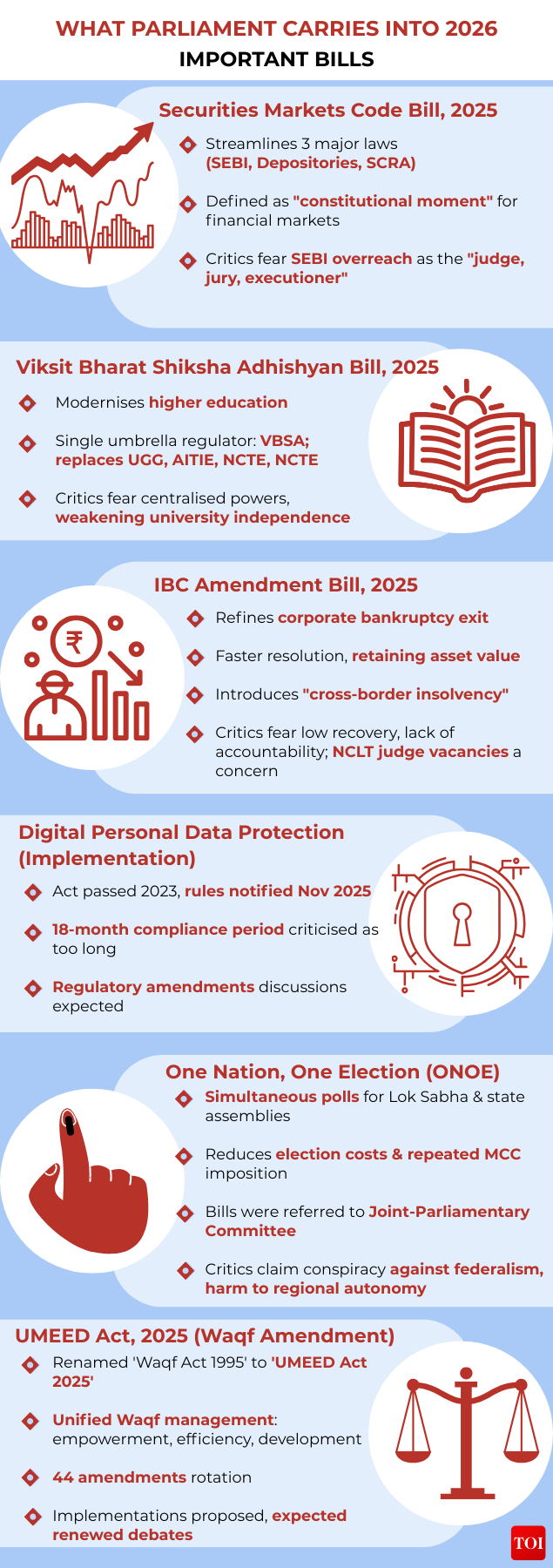
Hailed by the government as a “constitutional moment” for India’s financial markets, the bill seeks to streamline three major laws governing investors and market regulation.For over three decades, investors and companies have navigated three separate laws — the SEBI Act (1992), the Depositories Act (1996) and the Securities Contracts (Regulation) Act (1956).Given its scale and potential impact on trillions of rupees in market wealth, the bill was referred to the Standing Committee on Finance in late 2025 for detailed scrutiny, before it returns to Parliament in 2026.Critics argue that merging these laws risks turning SEBI into “judge, jury and executioner”, with sweeping enforcement powers.The government, however, has argued that unified regulation is essential to reduce overlap, regulatory arbitrage and compliance confusion in a rapidly expanding market.

Insolvency and Bankruptcy Code (IBC) Amendment Bill, 2025

The bill seeks to fine-tune India’s corporate bankruptcy exit framework.The bill aims to make the resolution faster so that companies do not lose the value of their assets during long legal proceedings. It also introduces a “Cross-Border Insolvency” framework to help banks recover money from defaulting companies that have hidden or kept assets in foreign countries.Critics argue that banks take big losses in recovering a very small percentage of the original loans, and that the bill does not hold the big promoters accountable enough.They also highlight the pending judicial cases in the National Company Law Tribunal (NCLT) due to vacant judges’ seats for the proceedings.Opposition has also flagged delays caused by vacancies in the National Company Law Tribunal, arguing that legislative fixes alone cannot address systemic capacity gaps.

One Nation, One Election (ONOE)

The One Nation One Election (ONOE) reform proposes to hold simultaneous elections for the Lok Sabha and State Legislative Assemblies, consolidating the voting process to occur at the same time instead of staggered intervals.The government initiated this plan in late 2024 with the introduction of the Constitution 129th Amendment Bill. While the bill gained majority votes in the Lok Sabha, it was not passed. This is because amending the Constitution requires a special majority where at least two-third of the members present in the House must vote in favour of the bill.The Lok Sabha approved a motion to refer both the two bills that shall pave the way for “one nation one election” to a 39-member Joint Parliamentary Committee. This committee has been granted an extension to submit its report until the first day of the last week of the Budget Session 2026.The primary objective of the bill is to conduct simultaneous elections—initially for the Lok Sabha and State Assemblies, and later potentially for local bodies—to reduce election expenses and prevent the repeated imposition of the Model Code of Conduct.The opposition rejected the bill as a “heinous conspiracy” against federalism, arguing it assaults the Constitution’s basic structure and undermines regional autonomy.

2026 PARLIAMENT EXPECTATIONS

Viksit Bharat Shiksha Adhishthan Bill, 2025

The bill is the main part of the government’s plan to modernise higher education by bringing several regulators under one system.It was introduced in the Lok Sabha on December 15, 2025, and was later sent to a Joint Parliamentary Committee, the report of which is expected to be presented by the last day of the first part of the Budget Session 2026.The bill proposes setting up the Viksit Bharat Shiksha Adhishthan, or VBSA, as a single umbrella regulator, meaning one main authority that will replace UGC, AICTE, and NCTE. The government has described this system as one with fewer controls but strict enforcement, in line with the National Education Policy 2020.The opposition, however, argued that it gives too much power to the Union government and could weaken the independence of universities, especially because the power to give financial grants will shift from the regulators to the ministry.

Digital Personal Data Protection (Implementation)

Although the Digital Personal Data Protection Act was passed in 2023, it came into effect only in late 2025, when the government notified the detailed rules needed to put it into practice.The rules were officially notified on November 14, 2025, after wide public consultation.

Cybercrime Trail in India

With implementation now underway, parliamentary oversight is expected on regulatory amendments, institutional capacity and funding for the Data Protection Board.Also, while the law itself was already in force, civil society groups and opposition voices focused their criticism on the rules, especially the 18-month compliance period, which they felt was too long and delayed real protection.

UMEED Act, 2025 – Waqf (Amendment) Act

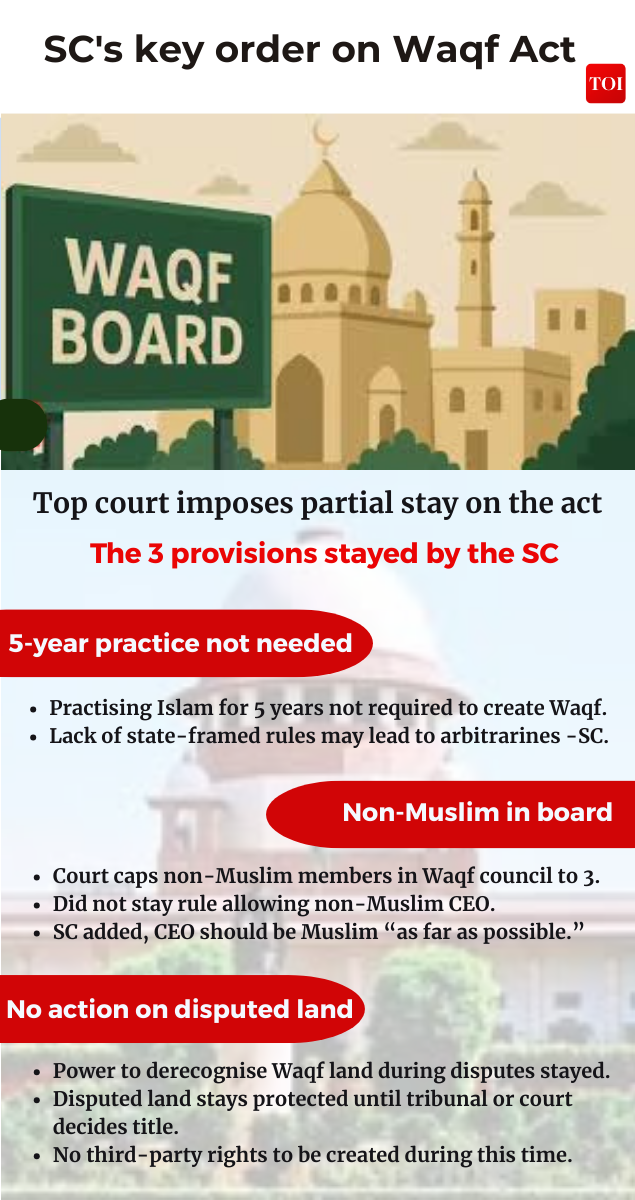
One of the most socially and politically sensitive legislations in recent sessions, the bill was first introduced in August 2024 and was swiftly referred to a Joint Parliamentary Committee following widespread protests.The committee, chaired by Jagdambika Pal, submitted its final report in late January 2025 after several contentious meetings. The report recommended mandatory registration of all Waqf properties on a centralised online portal and proposed 44 amendments to the original Waqf Act of 1995.

SC on Waqf

The legislation introduces multiple legal changes, including renaming the Waqf Act as the UMEED Act — the Unified Waqf Management, Empowerment, Efficiency and Development Act, 2025.While the bill is not formally listed on the agenda for the Budget Session of 2026, its implementation, set to begin this year, is expected to trigger renewed uproar.At its core, the legislation seeks to overhaul the governance and management of Waqf properties across the country.

Bills that passed: A session of disruption and overhaul

If Parliament were a 75-year-old house, the 2025 session resembled a noisy renovation. The government did not limit itself to cosmetic changes: labour laws were reworked, nuclear policy rewired, welfare delivery redesigned and decades-old statutes discarded. The result was a modernised legal framework — albeit amid sustained protest.With debates over worker rights, accountability and foreign participation dominating proceedings, the session concluded with several laws passed, but left many political and social questions unresolved as Parliament heads into 2026.

VB–G RAM G Bill, 2025: Welfare reset

Replacing MGNREGA, the VB–G RAM G Bill — Viksit Bharat–Guarantee for Rozgar and Ajeevika Mission (Gramin) — was tabled on December 15, 2025, and passed three days later through a voice vote amid opposition demands for a recorded division.

VBGRAMG

The law increases guaranteed workdays from 100 to 125 annually but introduces fixed, state-wise allocations, replacing MGNREGA’s demand-driven funding model. Critics argue this risks weakening the programme’s role as a distress buffer.The removal of Mahatma Gandhi’s name became a major flashpoint, alongside concerns over the use of AI and biometric attendance systems that could exclude workers in low-connectivity areas.

SHANTI Bill, 2025

Passed by voice vote in both Houses, the SHANTI Bill replaces the Atomic Energy Act (1962) and the Civil Liability for Nuclear Damage Act (2010), allowing private and foreign participation in nuclear power generation.The law grants statutory status to the Atomic Energy Regulatory Board and clears the path for small modular reactors. Opposition parties staged a walkout, objecting to diluted supplier liability provisions and warning that public risk would shift to the state in the event of an accident.

Sabka Bima Sabki Raksha Bill

Passed on December 16, 2025, the bill raises FDI limits in insurance from 74% to 100%, aiming to achieve universal insurance coverage by 2047.While the government argues this will deepen penetration and reduce costs, critics warn of foreign dominance, reduced focus on rural markets and potential pressure on domestic players like LIC.

Health & National Security Cess Bill

Unanimously passed, the bill introduces a capacity-based cess on pan masala manufacturing machinery to fund public health and national security needs.By taxing production capacity rather than declared sales, the law aims to curb under-reporting. Manufacturers, however, argue the model is inflexible, especially during machinery downtime, while opposition parties flagged concerns over Centre–state fiscal balance.

Repealing and Amending Bill, 2025

Marketed as a clean-up exercise, the bill repeals 71 obsolete laws, some dating back to the 19th century, including the Indian Tramways Act (1886).While the government said this would simplify compliance, the opposition criticised the bulk repeal approach, arguing that several laws enacted as recently as the last decade were removed without adequate scrutiny.

Labour Codes

Though passed earlier, the four labour codes entered operational phase in November 2025, consolidating 29 laws into four frameworks covering wages, social security, industrial relations and workplace safety.The new 50% basic wage rule strengthens retirement benefits but reduces immediate take-home pay. Trade unions argue the codes tilt the balance in favour of employers, while the government maintains they modernise labour regulation for a changing economy.

Spoken but not concluded

Several issues dominated debate without resolution.

Electoral roll revision (SIR)

The opposition accused the Special Intensive Revision exercise in nine states and three UTs of selectively deleting voters. A 10-hour debate ended in deadlock, with no changes to election procedures.

Manipur crisis

Despite repeated demands, Parliament saw no dedicated discussion on Manipur, where President’s Rule remains in place. Political blame-trading replaced consensus on a peace roadmap.

Air pollution

Acknowledged as a national health emergency, air quality was debated but left without legislative follow-through or a national clean air framework.As Parliament heads into the Budget Session of 2026, the legislative record of the past year offers both momentum and caution. Several reforms have been passed, others deferred, and many now enter the more difficult phase of implementation. Whether the coming session delivers clarity, consensus and course correction — or repeats the disruptions of 2025 — remains to be seen.

Source link