Breaking News
Delhi demolition drive: Samajwadi Party MP Mohibbullah Nadvi present at site; 5 arrested | Delhi News

[ad_1]

Delhi demolition drive: Samajwadi Party MP Mohibbullah Nadvi present at site; 5 arrested
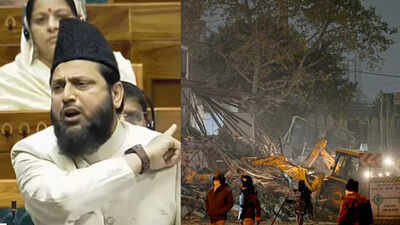
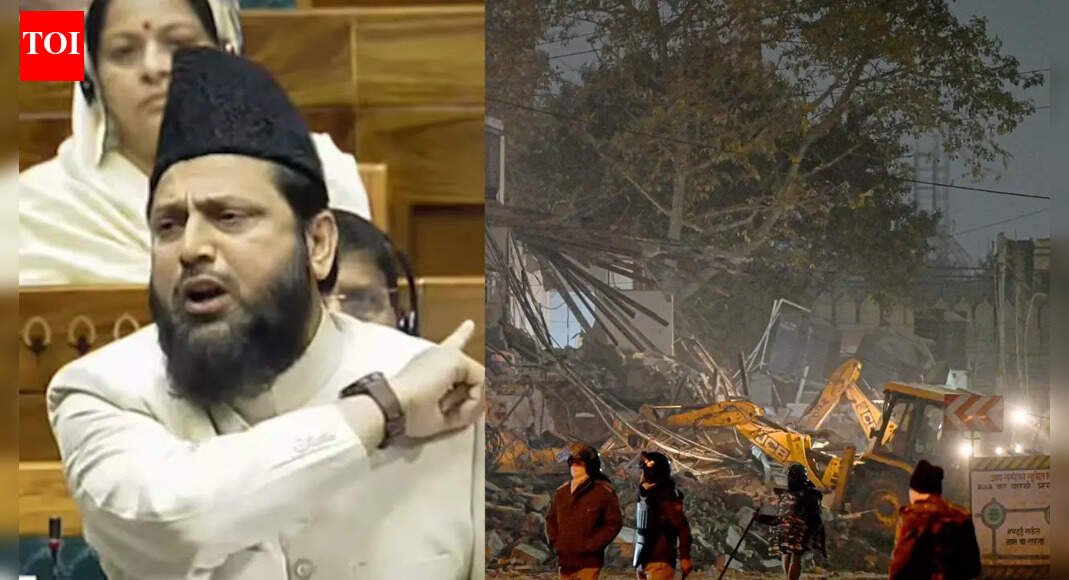
Sources said Samajwadi Party MP Mohibbullah Nadvi was present in the area when the incident occurred.

NEW DELHI: Delhi police have arrested five people in connection with a stone-pelting incident that broke out near the Faiz-e-Elahi Masjid in the Turkman Gate area of the capital, where a demolition drive was carried out by the Municipal Corporation of Delhi (MCD) on Wednesday. Sources said that Samajwadi Party MP Mohibbullah Nadvi was present in the area when the incident occurred. The violence erupted while the MCD was conducting a court-mandated demolition on land adjoining the mosque and a nearby graveyard. At least five police personnel were injured after some people allegedly pelted stones and glass bottles at the force. An FIR has been registered in the matter, and five people have been detained for questioning, police said. Delhi home minister Ashish Sood described the stone pelting as “unfortunate” and warned that violence would not be tolerated.

-

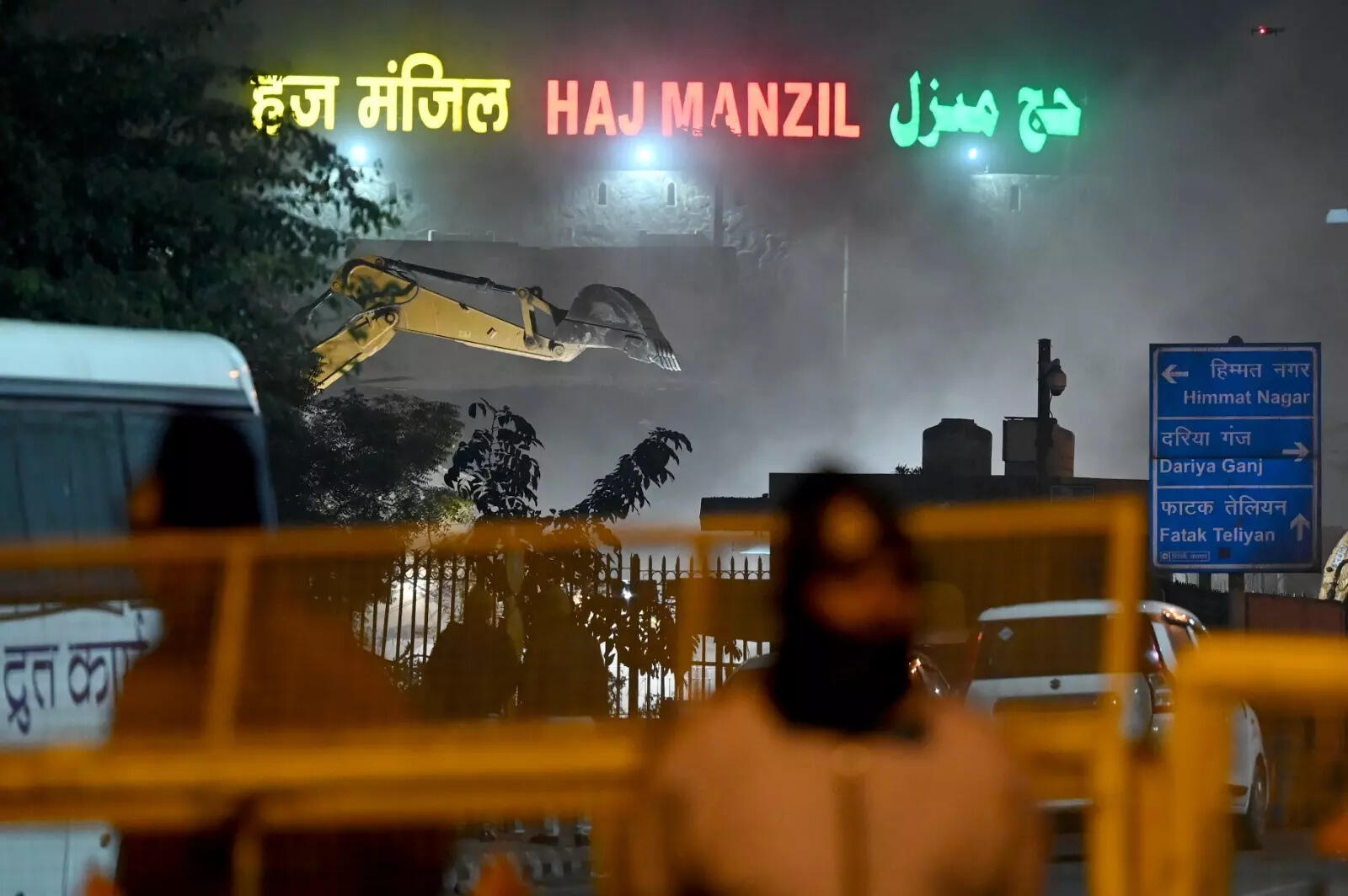
Demolition drive at Faiz-e-Ilahi Mosque near Turkman Gate in Delhi on Wednesday. (Image Credit: Tarun Rawat)

He said some commercial establishments had illegally come up around the mosque and action was being taken in compliance with court directions. “Obstructing or disrupting work being carried out within the framework of law is completely unacceptable,” Sood said. He added that certain “criminal and mischievous elements” resorted to demonstrations and violence, which could not be tolerated, and said individuals involved in the incident had been identified and legal action was being taken against them. So far, five people have been caught in the case, he said. “I want to clearly state that Faiz-e-Elahi mosque is completely safe. The action is limited only to those illegal commercial establishments that fall within the scope of the court’s orders. There is no arbitrariness or mala fide intent on the part of the government in this matter,” Sood stated. The minister also appealed to people not to fall prey to provocation, warning that strict action would be taken against anyone who took the law into their own hands. He urged the public to cooperate with the administration in identifying anti-social elements and maintaining communal harmony. MCD deputy commissioner Vivek Kumar said no damage had been caused to the mosque during the drive. He said the demolition was carried out in compliance with a high court order and that around 36,000 square feet of encroached area was cleared. The cleared area included a diagnostic centre, a marriage hall and two two-storey boundary walls. The demolition continued through the night, he added. Kumar said debris sufficient to fill around 200 to 250 vehicles was still lying at the site and would be removed as part of the ongoing clean-up operation.The operationThe operation began soon after midnight, with about 17 bulldozers, excavators and other heavy machinery deployed at the site. Authorities said the action was meticulously planned, with the area divided into several zones under the supervision of senior officials. Rapid Action Force personnel were positioned at strategic locations, while additional police units were deployed to maintain law and order. Traffic advisories were issued in advance, alerting commuters to possible congestion around Ramlila Maidan and nearby roads. Traffic diversions were also put in place to ensure smooth vehicular movement. Delhi Police said the situation in the Turkman Gate area was under control and reiterated that court orders were being implemented in a professional and sensitive manner, while ensuring the safety of both residents and personnel.(With inputs from agencies)

[ad_2]

Source link

India leads silver imports in 2025, China in processing: Why securing supply is as important as energy security – GTRI explains

[ad_1]

India leads silver imports in 2025, China in processing: Why securing supply is as important as energy security - GTRI explains

Silver imports surged sharply in 2025, pointing to its growing strategic importance, amid rising industrial demand, supply constraints and geopolitical tensions, according to a report by Global Trade Research Initiative (GTRI).India was the world’s largest importer of refined silver. It is estimated to have imported silver worth $9.2 billion last year, a 44 per cent increase from the previous year, despite a steep rise in prices. Silver prices in India nearly tripled in rupee terms over the past year, climbing from around Rs 80,000–85,000 per kg in early 2025 to above Rs 2.43 lakh per kg by January 2026.The reported stated that silver’s rally has been driven not only by safe-haven buying amid geopolitical uncertainty, including recent developments in Venezuela, but also by a structural shift in global demand. More than half of global silver consumption is now industrial, with high demand in electronics, solar power, electric vehicles, defence equipment and medical technologies. Solar power alone accounts for about 15 per cent of global silver demand.Global trade in refined silver has expanded nearly eight-fold since 2000, reflecting the metal’s transformation from a traditional precious commodity into a critical industrial input. However, supply has failed to keep pace. Persistent annual supply deficits of 200–250 million ounces, combined with largely flat mine output, have tightened global markets.The report also mentioned China’s dominant role in silver processing. While China is the world’s largest processor of silver ores and concentrates, India remains primarily a consumer, importing more than one-fifth of global refined silver trade in 2024. GTRI revealed that India imported about $6.4 billion worth of refined silver that year, while exporting less than $500 million of silver products, pointing to heavy import dependence.Concerns over supply have intensified following China’s move to introduce a licence-based silver export curbs, effective January 1. The new system requires government approval for each export shipment, adding uncertainty to global supply chains.GTRI argued that India must rethink its approach to silver, treating it as a strategic industrial and energy-transition metal rather than merely a precious commodity. “India should recognise silver as a critical industrial and energy-transition metal, not merely a precious commodity, and integrate it into its minerals and clean-energy strategy,” said GTRI founder Ajay Srivastava.“This requires securing long-term supply through overseas mining partnerships and encouraging domestic refining and recycling capacity to reduce dependence on imported finished silver, and diversifying import sources beyond a few trading hubs. In a fragmenting global order, securing silver is becoming as important as securing energy. India’s policy framework must reflect that shift,” he added.The GTRI report also flagged inconsistencies in global trade data. In 2024, reported global imports of silver ores and concentrates exceeded exports by about $3.6 billion, suggesting under-reported or opaque trade flows, particularly involving a small group of supplier countries.

[ad_2]

Source link

Bangladesh rejects ultimatum claims: BCB says ICC assures team’s T20 World Cup participation | Cricket News

[ad_1]

Bangladesh rejects ultimatum claims: BCB says ICC assures team's T20 World Cup participation
BCB issued a statement on ICC communication regarding T20 World Cup

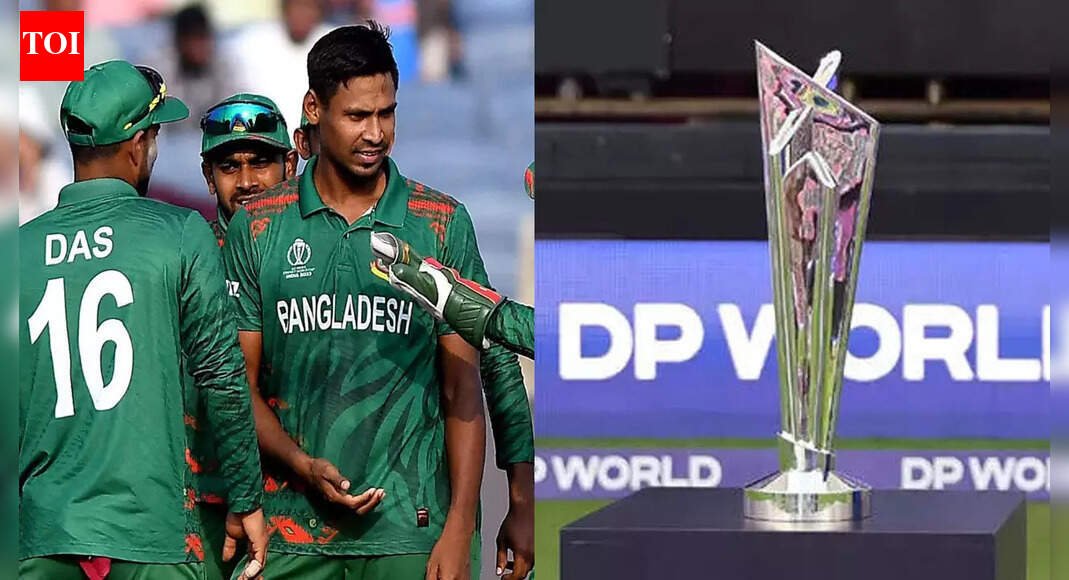
NEW DELHI: The Bangladesh Cricket Board (BCB) on Tuesday said it has received a formal response from the International Cricket Council (ICC) regarding its concerns over the safety and security of the Bangladesh national team in India during the ICC Men’s T20 World Cup 2026, stressing that no ultimatum has been issued by the world body.Go Beyond The Boundary with our YouTube channel. SUBSCRIBE NOW!In a detailed statement issued after its communication with the ICC, the BCB said the global governing body has reiterated its commitment to ensuring the “full and uninterrupted participation” of Bangladesh in the tournament. The ICC, the board added, has expressed its willingness to work closely with the BCB to address the concerns raised and assured that Bangladesh’s inputs would be “welcomed and duly considered” as part of the tournament’s security planning.

Bangladesh seek T20 WC match shift from India after Mustafizur Rahman’s IPL exit

“The Bangladesh Cricket Board remains firmly committed to placing the highest priority on the safety, security and well-being of the Bangladesh National Cricket Team,” the statement read, while underlining that reports suggesting the BCB had been issued an ultimatum by the ICC were “completely false, unfounded and do not reflect the nature or content of the communication received”.The statement comes in the backdrop of an online meeting between ICC and BCB officials on Tuesday, during which the ICC is understood to have said it had received no actionable or credible security inputs warranting a relocation of Bangladesh’s matches from India. According to reports, the ICC sees no basis, at present, to revise the tournament’s venues.The BCB had written to the ICC following an emergency meeting on January 4, seeking relocation of its matches to safeguard players and officials. Bangladesh are scheduled to play Group C matches against West Indies, Italy and England in Kolkata on February 7, 9 and 14 respectively, before facing Nepal in Mumbai on February 17.

Poll

Should Bangladesh consider relocating its matches for team safety?

Conflicting media reports emerged after the ICC-BCB interaction, with some claiming Bangladesh were told to travel to India or risk forfeiting points. The BCB has categorically denied this, and no official statement has been issued by either the ICC or the BCCI on the meeting’s outcome.The issue was triggered by the BCCI’s directive to Kolkata Knight Riders to release Bangladesh pacer Mustafizur Rahman from the IPL, despite him being bought for INR 9.2 crore at the auction. In response, the BCB banned IPL broadcasts in Bangladesh, while Mustafizur has since signed up for the Pakistan Super League.

Full BCB Statement on ICC Communication Regarding T20 World Cup 2026

“The Bangladesh Cricket Board (BCB) has received response from the International Cricket Council (ICC) regarding the Board’s expressed concerns over the safety and security of the Bangladesh National Cricket Team in India for the ICC Men’s T20 World Cup 2026, including the request for relocation of the team’s matches.In its communication, the ICC has reiterated its commitment to ensuring the full and uninterrupted participation of the Bangladesh team in the tournament. The ICC has conveyed its willingness to work closely with the BCB to address the concerns raised and has assured that the Board’s inputs will be welcomed and duly considered as part of the detailed security planning for the event.The BCB has also taken note of certain reports published in a section of the media suggesting that the Board has been issued an ultimatum in this regard. The BCB categorically states that such claims are completely false, unfounded and do not reflect the nature or content of the communication received from the ICC.The Board will continue constructive engagement with the ICC and relevant event authorities in a cooperative and professional manner to arrive at an affable and practical solution that ensures the smooth and successful participation of the team in the ICC Men’s T20 World Cup 2026.The Bangladesh Cricket Board remains firmly committed to placing the highest priority on the safety, security and well-being of the Bangladesh National Cricket Team.”

[ad_2]

Source link

Access Denied

[ad_1]


Access Denied

You don’t have permission to access “http://www.ndtv.com/world-news/donald-i-beg-you-trump-mocks-frenchs-emmanuel-macron-over-tariffs-10453784” on this server.

Reference #18.2df63717.1767771733.1eb47448

https://errors.edgesuite.net/18.2df63717.1767771733.1eb47448

[ad_2]

Source link

Google cofounder Larry Page leaves California, the state that has been his home for years, with family: Here’s what filing reveals

[ad_1]

Google cofounder Larry Page leaves California, the state that has been his home for years, with family: Here's what filing reveals
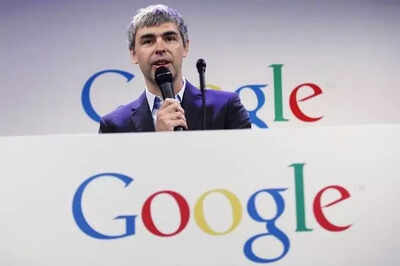
Google cofounder Larry Page has shifted key business entities, including his family office, out of California to Delaware, Nevada, and Florida. This move precedes a potential state wealth tax, which could cost him billions. Other tech titans are also exploring exits, citing tax and privacy advantages offered by states like Delaware.

Google cofounder Larry Page has severed his business connections with California, ending a decades-long relationship with the state that helped birth his tech empire. The billionaire moved several key business entities out of California by late December 2025, according to filings reviewed by Business Insider, beating a critical year-end deadline tied to the state’s proposed wealth tax.Page converted his family office, Koop, from California to Delaware incorporation in late December, Business Insider reported. Several other entities followed suit, including Flu Lab LLC—which funds his influenza research—and One Aero, his flying car venture. Both now list principal addresses outside California, in Nevada and Florida respectively. A source close to Page confirmed to Business Insider that the Google cofounder had already left the state, though whether the move is permanent remains unclear.

California’s billionaire tax sparks tech exodus

The mass restructuring comes as California debates a controversial ballot measure that would impose a one-time 5% tax on residents worth over $1 billion. If voters approve the measure in November 2026, it would apply retroactively to anyone living in California as of January 1, 2026. For Page—currently ranked the second-richest person globally by Bloomberg’s Billionaires Index—that could mean a tax bill exceeding $12 billion.The New York Times reported in December that Page told associates he was considering relocating to Florida specifically because of this proposal. He’s not alone in his concerns. Fellow tech billionaire Peter Thiel has opened a Miami office for his investment firm, Thiel Capital, while venture capitalist David Sacks launched operations in Austin, Texas.The proposed tax, backed by healthcare union SEIU-United Healthcare Workers West, aims to raise $100 billion over five years from California’s approximately 200 billionaires. Supporters argue the revenue would offset anticipated federal budget cuts to healthcare, education, and food assistance programs.

Privacy and business advantages drive Delaware shift

Beyond tax concerns, Delaware offers significant advantages for wealthy individuals seeking privacy. The state doesn’t require LLCs to disclose directors’ names and addresses when incorporating, providing an extra layer of anonymity—something particularly valued by Page, whose family office operates under exceptional secrecy managed by CEO Wayne Osborne.Page also converted LLCs previously used to purchase islands in Puerto Rico, the Virgin Islands, and Fiji from California to Delaware. Even his wife Lucinda Southworth’s marine conservation charity, Oceankind, made the switch in December.California Governor Gavin Newsom has opposed the wealth tax proposal, warning it would trigger an exodus of the state’s wealthiest residents. The ballot measure still needs 870,000 signatures to qualify for November’s vote. However, billionaires aren’t waiting to see if it passes—they’re protecting their assets now and potentially bidding Silicon Valley goodbye.

[ad_2]

Source link

‘Harboured greatest hatred’: BJP slams Nehru over Somnath temple reconstruction; cites purported letters | India News

[ad_1]

'Harboured greatest hatred': BJP slams Nehru over Somnath temple reconstruction; cites purported letters

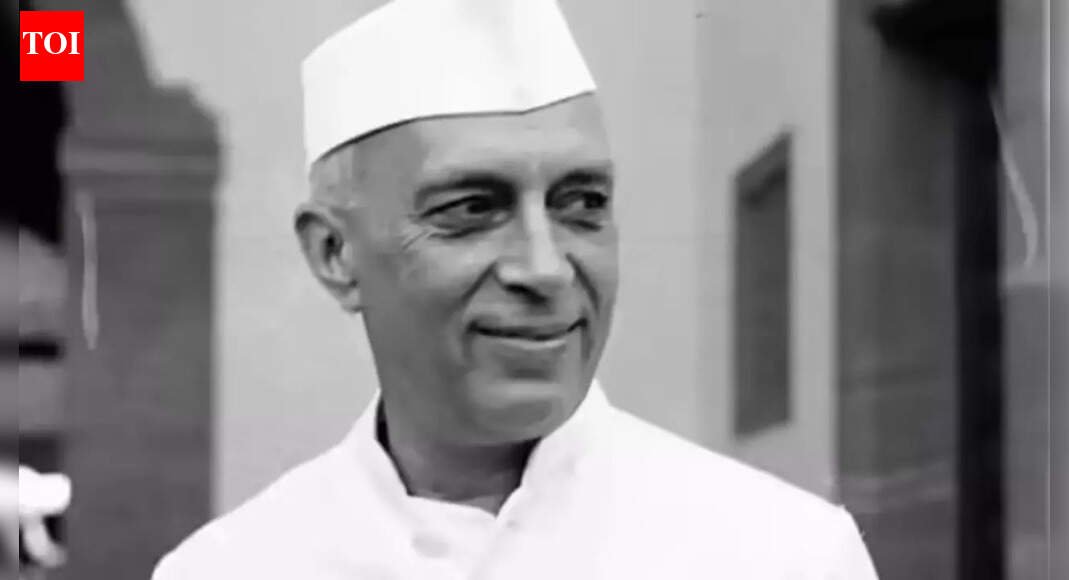
NEW DELHI: Bharatiya Janata Party on Wednesday launched a scathing attack on former Prime Minister Jawaharlal Nehru over the construction of Somnath temple and accused him of “the greatest hatred towards Lord Somnath.” In a series of social media post on X, BJP MP Sudhanshu Trivedi cited numerous letters written by Nehru, claiming that Nehru did not want the Somnath Temple to be restored.“In the past, Somnath was looted by Mahmud of Ghazni and Alauddin Khilji, but in independent India, Pandit Nehru harboured the greatest hatred towards Lord Somnath,” Trivedi said.Trivedi said that Nehru reassured Pakistan’s Prime Minister by dismissing the Somnath narrative, portraying this as a form of external appeasement that prioritised India’s international image over its civilisational and religious symbolism.“The most striking example of this is that on 21 April 1951, Pandit Nehru wrote a letter to Pakistan’s Prime Minister Liaquat Ali Khan, addressing him as “Dear Nawabzada”, in which he described the story of Somnath’s doors as “completely false”. In a way, Pandit Nehru surrendered to Liaquat Ali Khan by writing that nothing like the construction of the Somnath Temple was happening,” Trivedi said.“What, after all, was Pandit Nehru so afraid of in Liaquat Ali Khan that he was writing to him about the Somnath Temple? Instead of confronting Pakistan’s propaganda or defending India’s civilisational memory, Pandit Nehru chose to belittle Hindu historical symbols to please Pakistan and prioritised external appeasement over internal self-confidence,” he added.Trivedi also cited multiple letters in which Nehru played down the temple’s restoration and discouraged participation by the President and other leaders. He added that Nehru also sought to limit the media coverage over the issue and instructed embassies not to assist the Somnath Trust, including requests for water from rivers for the consecration ceremony.“Everyone knows that Pandit Nehru not only wrote letters to cabinet ministers but also to President Dr Rajendra Prasad and Vice President Dr Sarvepalli Radhakrishnan, raising questions about the need for the reconstruction of the Somnath Temple and advising them against attending the inauguration ceremony,” Trivedi said.“But it’s also true that Pandit Nehru wrote to all the Chief Ministers of India—not once, but twice—complaining about the construction of the Somnath Temple and stating that it has damaged India’s image abroad. Not only that, Pandit Nehru wrote to India’s Minister of Information and Broadcasting, RR Diwakar, asking him to reduce coverage of the consecration ceremony of the Somnath Temple, describing the ceremony as ostentatious and even going so far as to say that it was harming India’s image in the world. He also wrote that he was not pleased about the President attending the ceremony,” he added.This comes amidst PM Modi’s scheduled visit to Somnath temple on January 11 to take part in Somnath Swabhiman Parv celebations.The Somnath Swabhiman Parv will be observed from January 8 to January 11, during which a range of programmes highlighting India’s spiritual heritage, cultural pride and social values will be held.

[ad_2]

Source link

The Mutual Fund Advisor: FD vs Mutual Funds – you are asking the wrong question!

[ad_1]

The Mutual Fund Advisor: FD vs Mutual Funds - you are asking the wrong question!
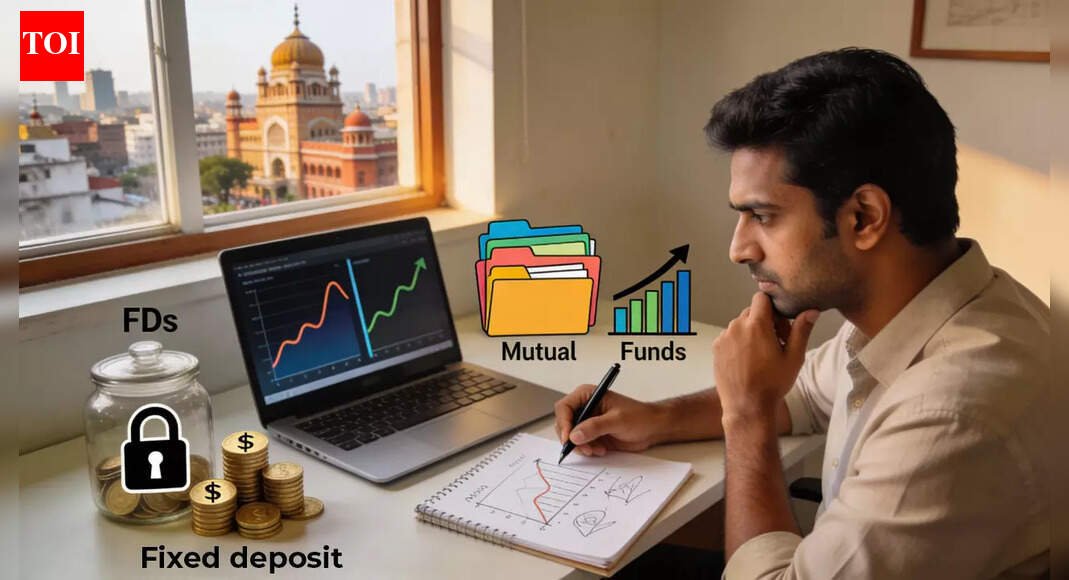
An FD gives you a fixed interest rate, a promise from the bank that you’ll get your money plus that interest back at maturity. (AI image)

Over the long run, mutual funds usually outpace FDs—but only if you use each for the right goal, time frame and temperament.You talk about mutual funds and there’s always someone who will raise their hand and ask, “Simple batao – FD better hai ya mutual fund?” What they want is a one-word verdict: “Mutual funds!”, with guaranteed double-digit returns. Real life is less dramatic. FDs and mutual funds are not enemies. They’re tools. One is a screwdriver, the other is a power drill. If you don’t tell me what you’re trying to build, “Which is better?” is the wrong question.FD comfortAn FD gives you a fixed interest rate, a promise from the bank that you’ll get your money plus that interest back at maturity, and the comforting feeling that your money is “growing nicely”. The problem is that this comfort is partly an illusion. The FD rate—say 7 per cent—looks neat on paper, but three things quietly chew it up: tax, inflation and time.Tax hits first. FD interest is taxed at your full slab. If you’re in a high tax bracket, that attractive 7 per cent may become more like 4.9 per cent after tax. Then comes inflation. If your cost of living is rising at roughly the same rate as your post-tax FD return, you’re not growing; you’re running to stay in the same place. Over 10–15 years, even a small gap between inflation and your FD return turns into a big shortfall.Put ₹10 lakh in an FD at 7 per cent for 10 years. Before tax, it becomes about ₹19.7 lakh. After tax, depending on your slab, it may be closer to ₹16 lakh in your hands. Now think what that amount will actually buy you 10 years later.I’m not saying FDs are bad. They’re excellent for short-term money and essential when capital safety is non-negotiable. But as an engine for long-distance wealth creation, they are underpowered.Equity engineWhen I compare FDs and mutual funds, I mainly mean equity mutual funds, because comparing FDs with pure debt funds is just a debate between two slow scooters. An equity mutual fund gives you ownership in a large basket of companies. There is no guaranteed return in any specific year, but over longer periods, a well-chosen equity fund has a high probability of outperforming an FD.Year to year, it can look ugly. A fund can be up 25 per cent one year and down 15 per cent the next. Stretch your view to 10–15 years, and the jagged line of an equity fund has historically sloped much steeper than the flat-ish FD line.Put the same Rs 10 lakh as a lump sum into a decent diversified equity fund. Over 10 years, using an illustrative 12 per cent average return, it could reasonably grow to around Rs 31 lakh. The gap between this and the FD outcome is what “mutual funds usually beat FDs in the long term” actually means.Two things drive this: first, compounding at a higher average rate—an extra 3–4 percentage points a year makes a huge difference over 15–20 years. Second, tax efficiency—mutual fund gains are taxed differently from FD interest, especially over the long term, and goal-based withdrawals can keep the tax bite modest.At Value Research Fund Advisor (VRFA), when we build goal based plans with mutual funds, asset allocation becomes the key. Think of it as choosing where your money sits on the comfort to growth spectrum. The same goal can look very different depending on whether the money is entirely in debt mutual funds, entirely in equity funds, or in a sensible mix of the two. The long term difference, even with reasonable assumptions, is often large enough to change how people think about “risk”.Discomfort premiumIf equity funds are so powerful, why doesn’t everyone dump FDs and rush into them? Because mutual funds come with discomfort, and humans hate discomfort. With FDs, your balance only goes up—slowly, but up. With equity funds, it goes up, down, sideways and then suddenly up again. The price of a higher long-term return is short-term volatility.Over one to three years, a good equity fund can easily underperform FDs. You may see a 10–30 per cent fall on paper during a bad phase. If your goal is very near—next year’s school fees, a home down payment in two years—you don’t have the time to wait for a recovery. For such goals, the FD “wins” not on return, but on suitability.That’s why, inside VRFA, we never chant “equity mutual funds are always better than FDs or similar options”. For each goal, we ask: how far away is it, can this money afford to bounce around in value, and what is your genuine risk tolerance? Only then do we decide the asset allocation between equity & debt funds. The aim is not to eliminate safety. It is to put safety in the right place, and not expect it to do the job of long term wealth creation.Real returnsMost comparisons stop at something like “FD returns 7 per cent, equity fund returns 12 per cent”. That’s half the story. You really need to think in three layers. First is the nominal return—the number on the brochure. Second is the post-tax return—what’s left after the government takes its share. Third is the real return—what remains after both tax and inflation. That third number decides whether you can truly afford your future.For instance, suppose inflation over the next 10 years averages 6 per cent. Your FD, after tax, effectively earns about 4.9 per cent. Your real return is roughly minus 1 per cent. A well-chosen equity fund that averages 12 per cent over the same period, even after tax, may give you a real return of about 5 per cent. Over time, that difference is the gap between “I’ll be okay” and “I wish I’d done this differently”.At VRFA, we build the portfolio with inflation in mind. Some part of the money has to beat it, or the goal keeps moving away. That is why equity funds are in the mix, if your risk appetite supports it. The question is not “How much will this grow?” It is “Will this be enough when the time comes?” On that test, playing it safe all the way usually does not work for long term goals.Right mixSo, do mutual funds really beat FDs over the long term? If you use equity funds mainly for long-term goals of 10 years or more, combine them with the right amount of debt for stability, and behave sensibly during bad years, then yes—historically they have outpaced FDs by a wide margin more often than not.But if you treat mutual funds as a two-year “FD upgrade”, jump in and out based on market noise, or use 100 per cent equity for a two-year goal, then no, they probably won’t beat an FD for you, and the funds will be blamed for behaviour that wasn’t their fault.Inside VRFA, we don’t aim to create heroic all-equity plans for everyone and say, “Dekho, kitna high return ban sakta hai.” We build portfolios where lower volatility debt funds handle short-term or non-negotiable money, while equity and hybrid mutual funds work together for medium- and long-term goals. In the end, the right question isn’t “Are mutual funds better than FDs?” It is: for this goal, at this time, with my temperament, what mix of safety and growth options gives me the best chance of success? Once you start asking that, the answer stops being a slogan and starts becoming a proper plan.(Sneha Suri is Lead Fund Analyst – Value Research’s Fund Advisor) (Disclaimer: Recommendations and views on the stock market, other asset classes or personal finance management tips given by experts are their own. These opinions do not represent the views of The Times of India)
[ad_2]

Source link

No security red flag, no venue shift: ICC rejects Bangladesh’s T20 World Cup request | Cricket News

[ad_1]

No security red flag, no venue shift: ICC rejects Bangladesh's T20 World Cup request
Bangladesh are scheduled to play three matches in Kolkata and one in Mumbai.

NEW DELHI: The International Cricket Council (ICC) has found no actionable security inputs to support Bangladesh’s concerns over player safety in India and has, for now, rejected the Bangladesh Cricket Board’s (BCB) request to relocate its matches from the upcoming ICC Men’s T20 World Cup 2026.Go Beyond The Boundary with our YouTube channel. SUBSCRIBE NOW!According to a Cricbuzz report, the issue was discussed during an online meeting between ICC officials and BCB representatives on Tuesday (January 6). During the call, the ICC informed the BCB that it has no assessment indicating any specific or credible threat to the Bangladesh team while playing in India. As a result, the global body sees no basis to alter the tournament schedule or venues at this stage.

Bangladesh seek T20 WC match shift from India after Mustafizur Rahman’s IPL exit

The meeting followed an emergency BCB gathering on January 4, after which the board formally wrote to the ICC asking that Bangladesh’s matches be moved outside India to “safeguard the safety and well-being of Bangladeshi players, team officials, Board members and other stakeholders.” However, the ICC’s position does not currently align with that request. While no final written decision was issued on Tuesday, sources indicate there are no immediate signs of the ICC revising its stance. A formal response is expected by January 10.Bangladesh are scheduled to play three Group C matches in Kolkata — against West Indies on February 7, Italy on February 9 and England on February 14 — before facing Nepal in Mumbai on February 17.

Poll

Do you agree with the ICC’s decision to not relocate Bangladesh’s matches due to player safety concerns?

Conflicting accounts have emerged regarding the tone of the ICC’s communication. ESPNcricinfo reported that the ICC told the BCB it was rejecting the relocation request and that Bangladesh would need to travel to India to play the tournament or risk forfeiting points. The BCB, however, has denied receiving any such ultimatum. Neither the ICC nor the BCCI has issued an official statement on the outcome of the call.The development comes less than a month before the 20-team tournament begins on February 7 across India and Sri Lanka, with the final scheduled for March 8.The BCB’s letter to the ICC was triggered by the BCCI’s directive to Kolkata Knight Riders to release Bangladesh fast bowler Mustafizur Rahman, who had been bought at the IPL auction for INR 9.2 crore. The decision was confirmed publicly by BCCI secretary Devajit Saikia, though no official reason was provided. It is understood that the IPL Governing Council did not meet on the issue, raising questions over the decision-making process.In response, the BCB banned the broadcast of the IPL in Bangladesh. Meanwhile, Mustafizur is set to feature in the Pakistan Super League, a move confirmed by the Pakistan Cricket Board, adding another layer to an increasingly tense standoff — even as the ICC maintains that, on security grounds, it is status quo for Bangladesh at the World Cup.

[ad_2]

Source link

Mumbai: Cop-couple’s son skates his way to national glory | Mumbai News

[ad_1]

Mumbai: Cop-couple’s son skates his way to national glory

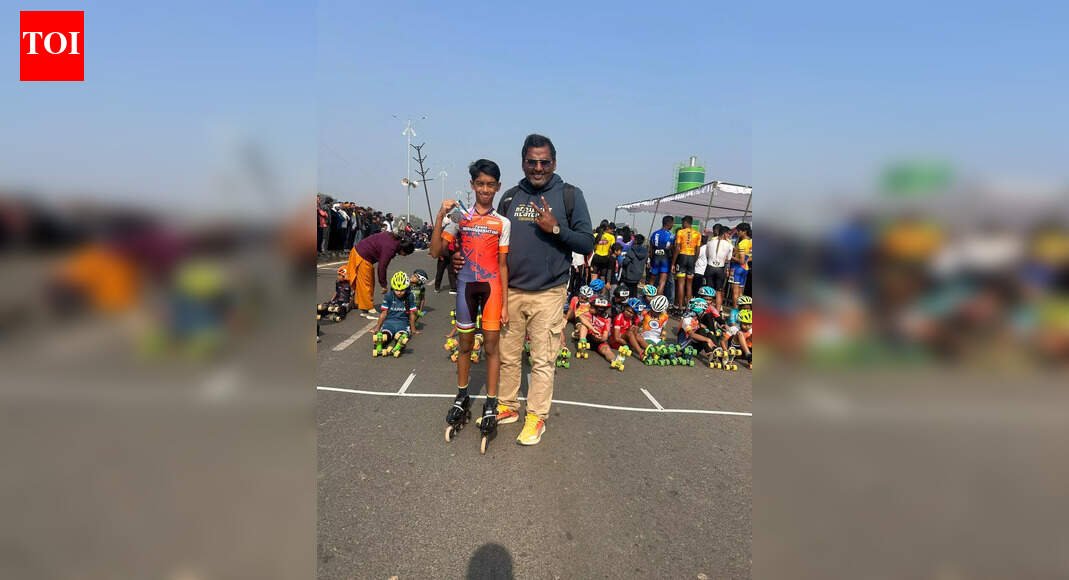
MUMBAI: In a feat that has brought pride to the Brihanmumbai Police force, the 10-year-old son of two serving police personnel has clinched a gold and a bronze medal at the 69th School Games Federation of India (SGFI) National Skating Championship. Om Sainath Shinde won the medals in the under-11 category at the national tournament held recently at ITM Global School, Gwalior, Madhya Pradesh. The championship featured top young skaters from across the country and followed a rigorous, multi-tier selection process. Only the top three skaters from each state qualified for the national meet after successive rounds of selection at the district level, where three skaters were chosen from each district, followed by further shortlisting at the zonal level within cities. The competition proved particularly demanding for the Mumbai-based skater. While accustomed to the city’s humid climate, Om competed in temperatures ranging between 8°C and 10°C in Gwalior. Despite the cold conditions, he maintained technical control and consistency to secure podium finishes. Om’s mother, Bhagyeshri Sainath Shinde, said her son follows a demanding daily routine. “His skating practice starts at 3.30 am. He returns by 6 am, and then attends regular school from 8 am to 3 pm. Even after that, he goes for swimming or other physical training,” she said. Both parents serve with the Brihanmumbai Police and work in shifts—Bhagyeshri on day duty and Om’s father, Sainath Kashinath Shinde, on night duty. She said managing her son’s schedule has been challenging, particularly with additional responsibilities linked to ongoing municipal election duties. “It is difficult to keep up, but we find time to support him,” she said. Bhagyeshri credited her son’s focus and the guidance of his coach, Raj Singh, for his success at the national level. “He is determined to win an Olympic medal for India, and this victory has made him even more focused,” she added.

[ad_2]

Source link

‘Those who promised to make panels 1 to 12 BJP-free are now struggling to save their own seat’, says BJP neta Pradeep Ramchandani | Thane News

[ad_1]

'Those who promised to make panels 1 to 12 BJP-free are now struggling to save their own seat', says BJP neta Pradeep Ramchandani

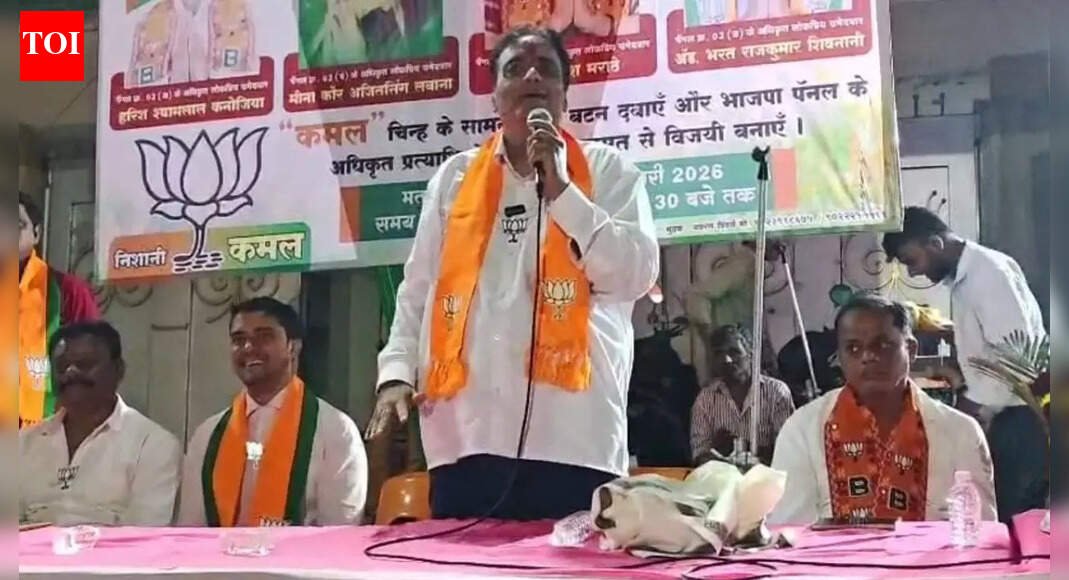
ULHASNAGAR: Amid the ongoing campaign for the Ulhasnagar Municipal Corporation elections, senior BJP leader Pradeep Ramchandani launched a scathing attack on former five-time corporator Jamnu Puraswani during an election rally. Puraswani, who recently quit the BJP, is now contesting the election on the Shiv Sena symbol from Team Omie Kalani (TOK) party.Addressing the gathering, Ramchandani recalled that after leaving the BJP, Jamnu Puraswani had claimed he would make Panels 1 to 12 “BJP-free” in the city. However, Ramchandani said the ground reality has changed completely. According to him, Puraswani is now struggling hard just to save his own seat from Panel No. 2, from where he is contesting, and is visibly under pressure. He asserted that the public mood in this panel is clearly in favour of the BJP and that the blessings of the voters are firmly with the party.

BMC Becomes Mega Battleground As Thackerays Reunite And Alliances Shift Ahead Of Civic Wars 2026

Taking his criticism further, Ramchandani, who is also election -in-charge of party for Ulhasnagar Municipal Corporation said that although Jamnu Puraswani is contesting on the Shiv Sena ticket, Shiv Sena is only a small alliance partner with the BJP. Using a strong administrative analogy, he remarked that when Puraswani was in the BJP, he was like a “Collector,” but after leaving the party, he has been reduced to a “Tehsildar.He questioned why voters would choose a Tehsildar when they have the option to elect a Collector for their ward, adding that even a Tehsildar ultimately has to approach the Collector to get work done.The political battle has become more intense in Panel No. 3, which was once considered a stronghold of the BJP. Puraswani has been elected five times as a corporator from this panel on the BJP ticket. However, about a month ago, he quit the BJP along with four other BJP corporators and joined TOK, a local political outfit that has an alliance with Shiv Sena at the city level.Since the BJP and Shiv Sena are contesting the Ulhasnagar elections separately, Puraswani is now in the fray from this panel on the Shiv Sena symbol along with three other candidates. On the other hand, the BJP has fielded Meena Labana, Advocate Bharat Shivnani, Sandhya Marathe and Harish Kanojia from the same panel, setting the stage for a high-voltage contest.

[ad_2]

Source link