Breaking News
Hindu widow raped, tortured in Bangladesh: Accused tie her to tree, cut hair; 2 held


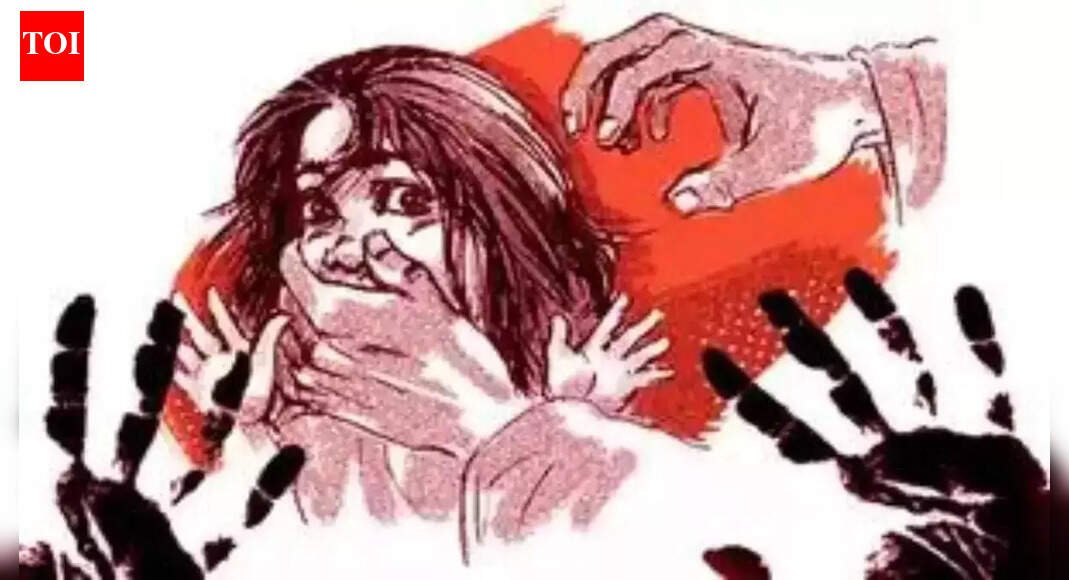
A Hindu widow in Bangladesh was tortured, raped and tied to a tree before her hair was cut by two local men, one of which had “an evil eye on the woman and made repeated indecent advances,” according to local outlet Bangladesh Partidin.In the tragic incident, which happened in Jhenaidah district on Saturday night, the 40-year-old woman was reportedly subjected to brutal torture by men who had followed her for the past two and a half years.

Another Hindu Targeted In Bangladesh, Wife Alleges Trader Hacked And Burned Alive On Road Home

According to the complaint and the victim’s statement, around two-and-a-half years ago, the Hindu widow woman had purchased a two-storey house and 300 decimals of land for 20 lakh taka from Shahin and his brother, residents of Nandipara under the Kaliganj municipal area. After the purchase, Shahin allegedly began casting an evil eye on the woman and made repeated indecent advances. When she rejected him, he continued “to harass her in various ways”.The woman, after suffering the torture, lost consciousness. Later, the local residents rescued her in an injured condition and admitted her to Jhenaidah Sadar Hospital. Dr Mohammad Mustafizur Rahman, superintendent at Jhenaidah General Hospital, said the woman initially did not disclose the crime. “Later, through medical examination, we came to know that she had been subjected to torture,” he told the local news outlet.Jhenaidah additional superintendent of police Bilal Hossain said, “We have called the victim to the police station and registered her complaint. After completing the investigation, the police will take strict legal action against those responsible.”The two local men have been arrested in Kaliganj after the survivor subsequently lodged a complaint against Shahin and his accomplice at the Kaliganj police station.


Source link

Jonny Bairstow opines on England’s chances at T20 World Cup 2026


Experienced wicketkeeper-batter Jonny Bairstow has expressed his take about England’s prospects at the upcoming ICC Men’s T20 World Cup 2026, scheduled to be co-hosted by India and Sri Lanka. With the tournament fast approaching, Bairstow believes England’s depth of experience and growing familiarity with subcontinent conditions will play a decisive role in shaping their campaign.

Balanced and bold provisional squad for England

England recently unveiled their provisional 15-member squad for the marquee event, drawing attention for a mix of seasoned campaigners and bold selections. One of the most talked-about inclusions has been fast bowler Josh Tongue, who is yet to make his limited-overs debut for England. The selection underlines England’s willingness to back potential and raw skill alongside proven performers.

The leadership mantle has been handed to Harry Brook, marking a new chapter in England’s white-ball journey. The squad also boasts experienced names such as Jos Buttler, Adil Rashid, and Jofra Archer, ensuring a strong core of players who have performed on the biggest stages.

Jonny Bairstow opens up on England’s chances at the T20 World Cup 2026

Currently featuring for Sunrisers Eastern Cape in the SA20 League, Bairstow was asked about England’s chances in Asian conditions, traditionally considered challenging for visiting teams. The veteran batter stressed that the current England setup is far better prepared than in the past, thanks to frequent tours and franchise cricket exposure in the region.

According to Bairstow, several England players have spent considerable time playing in India and Sri Lanka, allowing them to understand pitches, climate, and tactical nuances. This accumulated experience, he feels, will help England adapt quickly once the tournament begins.

Bairstow placed particular emphasis on Buttler’s success in the Indian Premier League (IPL), describing it as a valuable knowledge base for the squad. Buttler’s understanding of Indian conditions, bowlers, and match situations is expected to benefit younger or less experienced players in the group.

Also READ: England unveils provisional squad for T20 World Cup 2026, no place for Jamie Smith

Bairstow noted that such shared insights can bridge gaps for those who have not played extensively in the subcontinent, creating a more unified and confident unit ahead of the global event.

“Look, they’ve got a lot of experience, haven’t they? People have been playing over there, such as Jos Buttler, who is doing exceptionally well in the Indian Premier League. So, he’ll be passing on knowledge to guys who haven’t got quite as much. And we’ll wait and see,” Bairstow told reporters.

Preparations begin with Sri Lanka tour

England’s road to the T20 World Cup will begin with a tour of Sri Lanka, where they are scheduled to play three ODIs followed by three T20Is starting January 22. The series is expected to serve as an important preparatory phase, offering players valuable match practice in similar conditions to those they will encounter during the World Cup. England will open their T20 World Cup 2026 campaign against Nepal on February 8.

Also READ: No Mohammad Rizwan as Pakistan unveils provisional squad for the T20 World Cup 2026


Source link

‘Can’t be labs of hate’: JNU vows strict action over anti-PM slogans; FIR filed against students | India News


'Can't be labs of hate': JNU vows strict action over anti-PM slogans; FIR filed against students

NEW DELHI: Jawaharlal Nehru University (JNU) on Tuesday warned strict action against students who raised slogans against Prime Minister Narendra Modi and Union home minister Amit Shah during a campus protest, stating that the university “can’t be laboratory of hate.”Sharing a post on X, the university said, “An FIR has already been lodged in connection with the incident. The administration has vowed the strictest action against students found raising objectionable slogans against the Prime Minister and the Union home minister.”The university underlined that while freedom of speech and expression is a fundamental right, “universities are centres for innovation and new ideas, and they cannot be permitted to be converted into laboratories of hate.”It added that any form of violence, unlawful conduct or “anti-national activity will not be tolerated under any circumstances.”The statement came after an incident on Monday night when a group of students raised slogans against PM Modi and Shah during a protest held outside Sabarmati Hostel on the JNU campus. A purported video of the protest which circulated online shows slogans being raised against the two leaders.The protest began hours after the Supreme Court declined to grant bail to former JNU students Umar Khalid and Sharjeel Imam in the 2020 Delhi riots conspiracy case.It was organised by the Jawaharlal Nehru University Students’ Union (JNUSU) to mark the sixth anniversary of the January 5, 2020 campus violence and to oppose the top court’s decision. Warning of strict consequences, the university said, “Students involved in this incident will also face disciplinary measures including immediate suspension, expulsion and permanent debarment from the University.”


Source link

Peta India urges SC to reconsider caging of stray dogs and adopt scientific population management roadmaps | Mumbai News


Mumbai: People for the Ethical Treatment of Animals India (PETA India) has filed an application before the Supreme Court in the petition related to the stray dogs issue, urging the court to reconsider its order for the jailing of dogs from various areas and the rounding up of cows in “an out-of-sight-out-of-mind approach”; and instead issue directions for the humane, lawful, and scientifically grounded management of community animals in accordance with roadmaps submitted by PETA India.In its application, the NGO cautioned the apex court against the warehousing of dogs for life in cramped and underfunded facilities, warning that such measures are not only cruel and unscientific but also unworkable at scale, a major public health risk, and would divert public resources away from real solutions, including the implementation of the Animal Birth Control (ABC) Rules 2023, and ultimately worsen human–animal conflict. PETA India also urged the Court to stay the implementation of the Animal Welfare Board of India’s SOP, which recommends large-scale shelters that allot a mere 20 square feet per dog—roughly the size of a traditional funeral pyre.Among other recommendations, PETA India urged the Supreme Court to reaffirm and strengthen the implementation of the ABC Rules, 2023, rather than focus on punitive, knee-jerk displacement measures that repeatedly failed wherever they were attempted. It submitted for the court’s consideration 2 comprehensive, expert-driven roadmaps, which were also sent to the Prime Minister, states and union territories, and the Animal Welfare Board of India.Grounded in the principles of Ahimsa and Vasudhaiva Kutumbakam, these roadmaps provide preventive, evidence-based, and legally sound solutions that address root causes, including illegal pet shops and breeders and the abandonment of dogs by impulse-buyers, as well as the abandonment of male calves and cows when their milk production wanes by the dairy sector.For community dogs: time-bound, area-wide implementation of the ABC Rules, 2023; expansion via smaller-scale sterilisation and rabies-vaccination capacity; closure of illegal breeders and pet shops; prohibition of foreign dog breeds bred for use in illegal dogfights; protection of community feeders; and strong govt incentives for adoption.“The lifelong incarceration of dogs in spaces the size of a funeral pyre—and the relocation of stray cattle into already overcrowded and underfunded gaushalas—is not population management; it is cruelty dressed up as policy,” said Shaurya Agrawal, Policy Associate, PETA India. “India already has lawful, science-based frameworks to address stray dog and cow populations that need to be implemented in a time-bound manner,” he added.PETA India emphasised before the court that confining countless dogs and an ever-growing number of stray cattle is neither feasible nor humane. With an estimated 62 million free-roaming dogs and 5 million stray cattle (and counting due to dairy industry abandonment) in India, there is no infrastructure, funding, or administrative capacity to confine even a fraction of the population without triggering enormous suffering and mass disease outbreaks.Through its application, PETA India urged the Supreme Court to ensure that any directions issued in the matter uphold constitutional values, existing animal-protection laws, and India’s long-standing commitment to compassionate coexistence.


Source link

Punjab AAP accuses Himachal govt of imposing Rs 500 crore ‘illegal financial burden’ on Beas Board | India News


Punjab AAP accuses Himachal govt of imposing Rs 500 crore 'illegal financial burden' on Beas Board
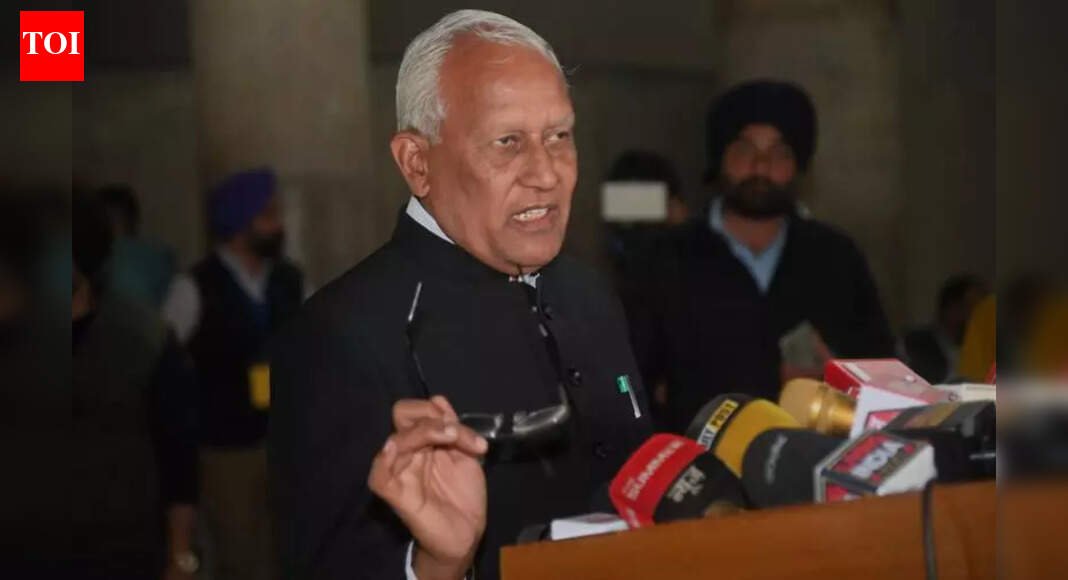
Punjab minister Barinder Kumar Goyal (File photo)

Punjab minister and senior AAP leader Barinder Kumar Goyal on Tuesday criticised the Congress government in Himachal Pradesh for allegedly imposing an “illegal” financial burden of Rs 500 crore on the Bhakra Beas Management Board.Addressing a press conference here, Goyal, who holds the water resources portfolio, also said the proposed “new cess” is against the federal principles and has no legal basis.The move, which will directly harm Punjab’s interests, amounts to a conspiracy against the state, he claimed.The minister said earlier also the Himachal Pradesh government tried to impose a water cess, which was withdrawn after it was challenged for being illegal.“After the previous attempt failed, the Congress government has come up with another arbitrary levy without explaining under which law it has been imposed,” he said.Goyal also claimed that there is no clarity as to how the value of Bhakra Beas Management Board (BBMB) land, its machinery and infrastructure were assessed.He alleged that the Himachal Pradesh Chief Minister (Sukhwinder Singh Sukhu) earlier spoke of imposing a 4 per cent tax, which was later reduced to 2 per cent, before finally declaring Rs 500 crore as the state’s share.Terming the decision unconstitutional, Goyal said Punjab has a major stake in the BBMB and the levy would adversely affect the state.The Punjab government had written to the BBMB, calling the levy illegal and unacceptable, he said.“We will fight this issue before the BBMB, in courts and at every appropriate forum,” Goyal said.The minister also accused the Congress of historically harming Punjab’s interests, particularly on issues of water.He criticised the Punjab Congress leaders for remaining silent on the issue, alleging that they are not standing up for the state.The AAP government, under Chief Minister Bhagwant Mann, will not allow any injustice or financial exploitation of Punjab, and will strongly oppose any illegal cess. PTI


Source link

India initiates anti-dumping probe into imports of nylon chips from China, Russia


India initiates anti-dumping probe into imports of nylon chips from China, Russia

NEW DELHI: The commerce ministry’s arm, DGTR, has initiated an anti-dumping probe into imports of nylon chips and granules — used in the textiles industry, from China and Russia, following a complaint by a domestic manufacturer. The applicant has alleged that the dumping of Nylon 6 Chips and Granules with relative viscosity (RV) below 3 is impacting the domestic industry. The applicant, Gujarat Polyfilms, has requested the imposition of anti-dumping duties on imports from China and Russia, the Directorate General of Trade Remedies (DGTR) said in a notification. It said that the directorate has prima facie found sufficient evidence of dumping from these countries. “The authority, hereby, initiates an anti-dumping investigation,” it said. If it is established that the dumping has caused material injury to the domestic player, the DGTR would recommend imposing a levy on imports. The finance ministry takes the final decision to impose duties. Countries conduct anti-dumping probes to determine whether a surge in cheap imports has harmed domestic industries. As a countermeasure, they impose these duties under the multilateral regime of the Geneva-based World Trade Organisation (WTO). The duty is aimed at ensuring fair trading practices and creating a level playing field for domestic producers vis-a-vis foreign producers and exporters. India, China and Russia are members of the WTO. India has already imposed anti-dumping duties on several products to tackle cheap imports from various countries, including China.


Source link

‘BJP running away from issue of pollution’: AAP stages protest in Delhi assembly over rising AQI | India News


'BJP running away from issue of pollution': AAP stages protest in Delhi assembly over rising AQI
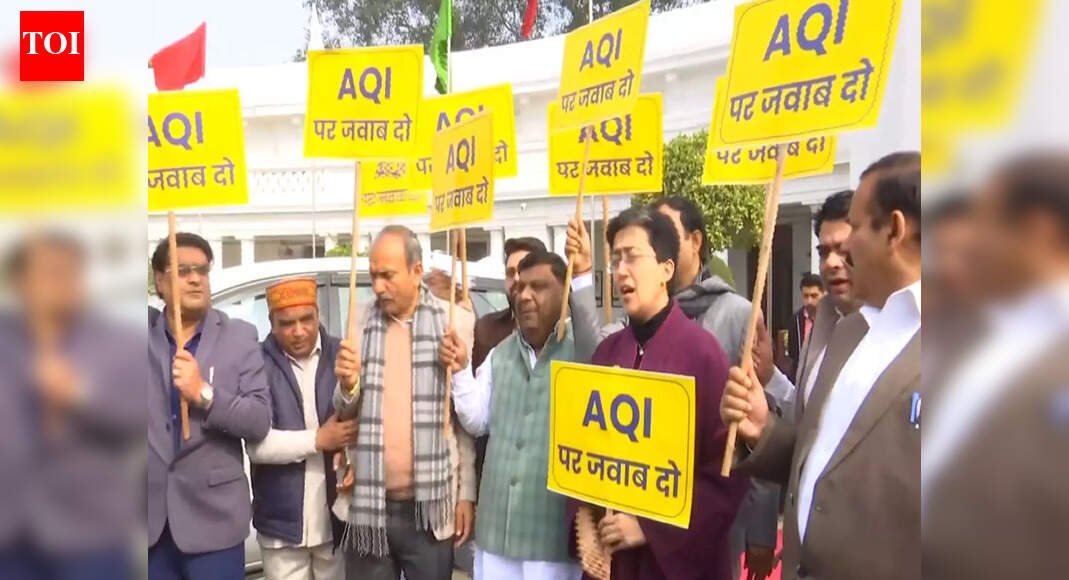
AAP leaders protest in Delhi assembly

The Aam Aadmi Party (AAP) staged a protest at the Delhi assembly premises on Tuesday, highlighting the rising air pollution and deteriorating AQI levels in the national capital. Leader of the Opposition in the Delhi assembly and AAP leader Atishi alleged that the BJP is “running away” from addressing the critical issue of pollution, accusing the ruling party of avoiding accountability and refusing to engage in meaningful discussions on the matter.

Delhi’s Air Pollution Gets Attention, But Most Indian Cities Are As Bad Or Worse | I Witness

Speaking to reporters, Atishi drew attention to the severe public health impact of Delhi’s worsening air quality. She said young children are now “forced to take steroid inhalers,” major hospitals like AIIMS are filled with patients struggling to breathe, and senior citizens are facing life-threatening consequences due to pollution.She said, “The BJP-led Delhi government is running away from the issue of pollution. Pollution is the biggest problem in Delhi today. Young children can breathe only through steroid inhalers. Senior citizens are dying. The beds of AIIMS and every other big hospital in the city are filled with people who are not able to breathe. When AAP demands a discussion on pollution, the BJP offers excuses to avoid it. For the first time in history, in the assembly, the ruling party is protesting the opposition. The ruling party left the assembly as a sign of protest. Why is this drama happening?… The BJP wants to avoid discussing pollution because they have no answers.”Atishi further accused the Delhi government of “theatrics”, claiming that AQI data is being manipulated through water sprays and that the situation demands immediate legislative attention. “The whole country knows how the AQI monitors are being manipulated. Water is being sprayed to manipulate the readings. People are dying due to the pollution. We demand that this theatrics be stopped and a discussion on the issue of pollution be held immediately…,” she added.AAP MLAs had also staged a protest inside the Delhi Assembly on Monday, pressing for urgent policy measures and accountability on the capital’s air quality. Party leaders demanded stricter action to curb pollution, including controlling emissions from vehicles, industrial discharges, and stubble burning in neighbouring states.Meanwhile, several Indian cities, including Delhi, Mumbai and Guwahati, woke up to a layer of fog on Monday morning. Air quality varied from ‘poor’ to very poor’ category across several parts of the national capital, while several flights were delayed at the IGI Airport.According to the Central Pollution Control Board (CPCB), Delhi recorded AQI at 260 in the ‘Poor’ category by 8 am on Monday.Visuals from Akshardham showed the Air Quality Index (AQI) at 294, falling in the ‘poor’ category, according to the Central Pollution Control Board (CPCM). At ITO, the AQI was recorded at 256, categorised as ‘poor’, while Anand Vohar reported a sharper decline of 320, placing the area in the ‘very poor’ bracket.Chandni Chowk remained among the worst-affected areas, recording an AQI of 337, classified as ‘very poor’. Reduced visibility due to fog and smog disrupted flight operations at Delhi’s Indira Gandhi International Airport, with several flights delayed in the early hours.Notably, in Delhi, the Sub-Committee on the Graded Response Action Plan (GRAP) under the Commission for Air Quality Management (CAQM) in the NCR and adjoining areas lifted Stage-III restrictions on Friday evening, citing significant air quality improvement due to favourable meteorological conditions. (ANI)


Source link

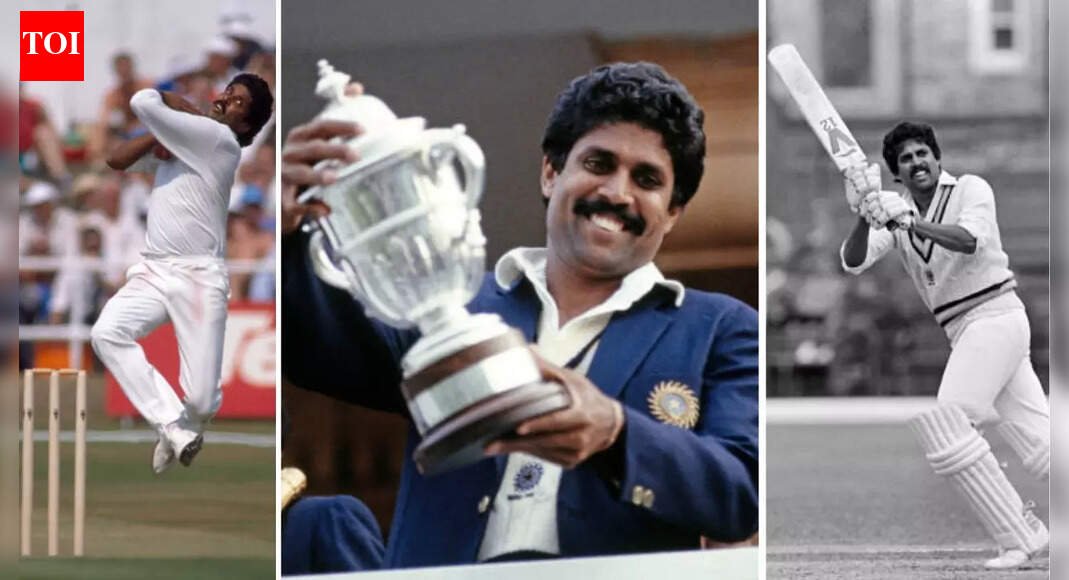
Runs, wickets, and World Cup: Kapil Dev turns 67 – the all-rounder Indian cricket never replaced | Cricket News


Runs, wickets, and World Cup: Kapil Dev turns 67 - the all-rounder Indian cricket never replaced
Kapil Dev. (Photo/Getty Images)

January 6 holds a distinct place in cricket’s calendar. It was on this day that Steve Waugh played his final Test, at his home ground, the Sydney Cricket Ground. It was also the day when three Australian greats — Greg Chappell, Dennis Lillee and Rod Marsh — played their last Test in 1984, bowing out together at the end of the Sydney Test against Pakistan.From an Indian cricket perspective, however, January 6 carries a different weight. It was on this day in 1959 that Kapil Dev was born. More than six decades on, it remains difficult to argue against the idea that Indian cricket’s most complete cricketer arrived that day.On Kapil Dev’s birthday, it is hard not to recall a tweet posted by cricket writer Abhishek Mukherjee in 2020. It was not written in praise-heavy prose or sweeping claims. Instead, it listed what Indian cricket’s greats had achieved — and what each of them had not. World Cups, series wins, hat-tricks, five-wicket hauls, centuries in specific countries, records with bat or ball — every name, every achievement, had a missing piece. Until Kapil Dev. Mukherjee ended his list with a simple conclusion: only one Indian had done all of it. And more.Kapil Dev’s numbers still stand apart in Indian cricket. He remains the only player to score 4,000 runs and take 400 wickets in Test cricket. He finished his Test career with over 5,000 runs, including eight centuries, and 434 wickets — a world record at the time, achieved by overtaking Richard Hadlee. His career stretched across 131 Tests, a mark of durability in an era when fast bowlers rarely lasted that long. If not for being dropped for one Test against England in 1984-85 as a disciplinary measure, his career would have read 132 consecutive Tests.Kapil was not the fastest, nor did he possess the most unplayable delivery among his contemporaries. Playing at the same time as Imran Khan, Ian Botham and Hadlee, comparisons were inevitable. His strike rate — fewer than four wickets per Test — did not scream dominance. What did stand out was accuracy, stamina and movement, particularly his ability to swing the ball away from right-handers. He bowled long spells, returned for more, and did so across conditions without complaint.With the bat, Kapil was uncomplicated and direct. He did not wait for permission to attack. His Test record includes innings that continue to define moments in Indian cricket history. The 129 at Port Elizabeth against South Africa came when the rest of the Indian team managed only 86 runs combined. Against Pakistan in Madras in 1980, he struck a brisk 84 and took 11 wickets to seal the series. During the 1981-82 series against England, Kapil amassed 318 runs and claimed 22 wickets against an attack and batting line-up that included Botham, Graham Gooch, David Gower, Mike Gatting and Bob Willis.In Australia in 1991-92, well into his career, Kapil still took 25 wickets across the series. Against England, he averaged over 40 with the bat. Against Australia, he averaged 25 with the ball. These are not isolated spikes but sustained contributions across opponents and continents.Then there was the Lord’s Test of 1990. Facing England’s off-spinner Eddie Hemmings, Kapil struck four sixes in four balls when India needed 23 runs to avoid the follow-on. It made him the first player in Test cricket to hit four consecutive sixes in an over, a feat only three players have managed till date.In one-day internationals, Kapil again sits alone in Indian cricket history. He remains the only Indian with more than 2,500 runs and 250 wickets in the format, finishing with 3,783 runs and 253 wickets. These numbers came while he also captained India to its first World Cup title.The 1983 World Cup remains central to Kapil Dev’s legacy. India entered the tournament with little expectation, having won only one match — against East Africa — in the previous two editions. They had even lost to Sri Lanka, then not a Test-playing nation. Kapil, 24 at the time, had been made captain only four months earlier, after India lost a Test series to Pakistan and Sunil Gavaskar was removed.Questions surrounded Kapil’s leadership and temperament. It was his bat that first answered them. Against Zimbabwe at Tunbridge Wells, with India reduced to 9 for 4 and then 17 for 5, Kapil produced an unbeaten 175. It came on a pitch offering assistance to bowlers and against a team making its World Cup debut, but the context did not dilute the impact. His 175 came off 138 balls. He reached his hundred only in the 49th over, before scoring 75 runs in the next 11 overs. India recovered, won the match, and stayed alive in the tournament.That innings is now spoken of as a turning point. Not because it was against the strongest opposition, but because it held India together when collapse looked certain.Kapil Dev’s career does not rest on a single trophy or a single innings. It rests on accumulation — of runs, wickets, matches, moments and responsibilities. He captained India to a World Cup, held the world record for Test wickets, and remains unmatched in Indian cricket for all-round output across formats.On January 6, Indian cricket does not just mark a birthday. It marks the arrival of a player whose career still resists neat comparison and whose replacement in Indian cricket still has not been found.


Source link

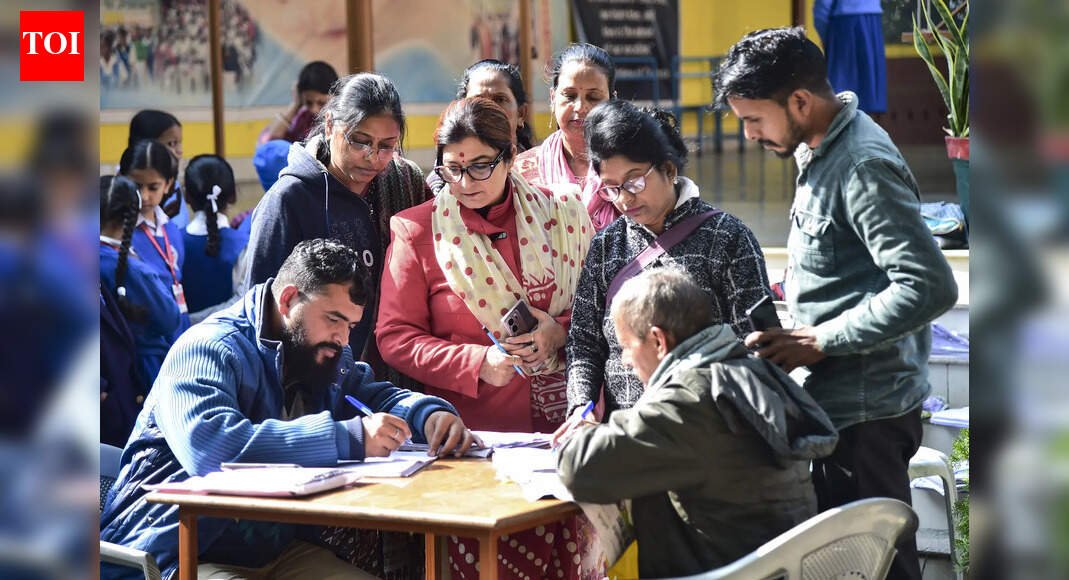
SIR row: EC tells SC it has power to undertake electoral roll revision; addresses NRC concerns | India News


SIR row: EC tells SC it has power to undertake electoral roll revision; addresses NRC concerns

NEW DELHI: The Election Commission on Tuesday told the Supreme Court that it has both the power and constitutional competence to carry out a Special Intensive Revision (SIR) of electoral rolls, arguing that it is duty-bound to ensure that no foreigners are included in voter lists.The submissions were made by senior advocate Rakesh Dwivedi, appearing for the EC, before a bench headed by Chief Justice of India (CJI) Surya Kant and Justice Joymalya Bagchi.Also read: 2.89 cr voters removed from draft electoral roll in UP; 46.23 lakh declared dead after SIRThe bench resumed final hearings in a batch of petitions challenging the EC’s decision to undertake the SIR exercise in several states, including Bihar. The petitions raise constitutional questions on the scope of the poll panel’s powers, citizenship, and the right to vote.Dwivedi argued that the Constitution makes citizenship a foundational requirement for holding public office. Citing provisions such as Article 124(3), which governs the appointment of Supreme Court and high court judges, he said all key constitutional functionaries across the three organs of the State must be Indian citizens.He added that citizenship is also a prerequisite for holding offices such as president, vice president and prime minister.Also read: 4 brothers, 3 of them state & defence docs, get SIR call“All vital appointments … no appointments can be made unless the person is a citizen, so our Constitution is citizen-centric predominantly,” Dwivedi said, according to news agency PTI.Referring to the constitutional scheme, he said, “The (constitutional) article, when it says citizens, that is something which has to be inquired by the competent authority. What should be the nature, summary etc., that is a different question…. There is a constitutional duty to ensure that on the electoral roll, there should not be any foreigners.”Dwivedi told the court that the Election Commission cannot be expected to respond to political rhetoric.“I am not commenting on the political parties, as the Election Commission, our duty is that no foreigner should be there…. It is to be seen that the power is there and the competence is there,” he said.Resuming his arguments, Dwivedi framed what he described as the central constitutional issue: whether Article 324, which grants the EC powers of superintendence, direction and control over elections, is completely displaced by statutory provisions or whether its application must be examined on a case-by-case basis.He submitted that Articles 324, 325 and 326 of the Constitution, read together with Section 16 of the Representation of the People Act, do not bar the EC from exercising its authority in revising electoral rolls.“The field is not totally foreclosed,” he said, asserting that the Commission retains constitutional competence to ensure the purity of voter lists.Also read: ‘EC using BJP-developed app for SIR’: Mamata levels fresh charge; calls exercise ‘illegal’Tracing the evolution of voting rights, Dwivedi took the bench through colonial-era electoral practices, beginning with the introduction of separate communal electorates in 1909 and the limited franchise under the Government of India Acts, when only about 15 per cent of the population had voting rights. He argued that the expansion of the franchise was a central goal of India’s freedom struggle.“Not only Article 326, but the entire Constitution, when it speaks of a democratic republic, reflects an intention to create a citizen-centric polity,” he said.Addressing concerns that the SIR exercise could resemble a parallel citizenship determination similar to the National Register of Citizens (NRC), Dwivedi stressed that the two serve fundamentally different purposes.“The NRC includes all persons, whereas the electoral roll includes only citizens above the age of 18,” he said, adding that persons of unsound mind or otherwise disqualified are also excluded from voter lists.“On the face of it, the electoral roll is not like the NRC,” he said, reiterating that Article 326 permits only citizens to vote and that citizenship must be determined by a competent authority.Even if “10 or thousands” of foreigners are found on the electoral rolls, they must be removed, Dwivedi said, clarifying that the EC is not making political judgments but fulfilling its constitutional obligation.The senior advocate is scheduled to resume his arguments on Thursday, January 8.Earlier, the bench had questioned whether the EC is barred from conducting inquiries in cases of doubtful citizenship and whether such an inquisitorial process falls outside its constitutional mandate.


Source link

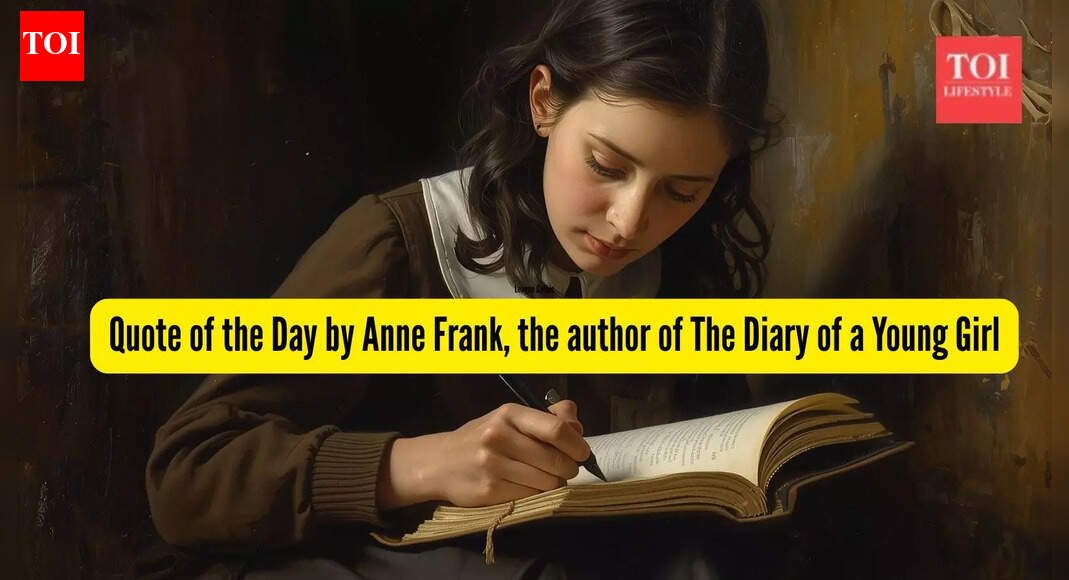
Quote of the Day by Anne Frank’s A Diary of a Young Girl: “Everyone has inside of him a piece of good news. The good news is that you don’t know…..


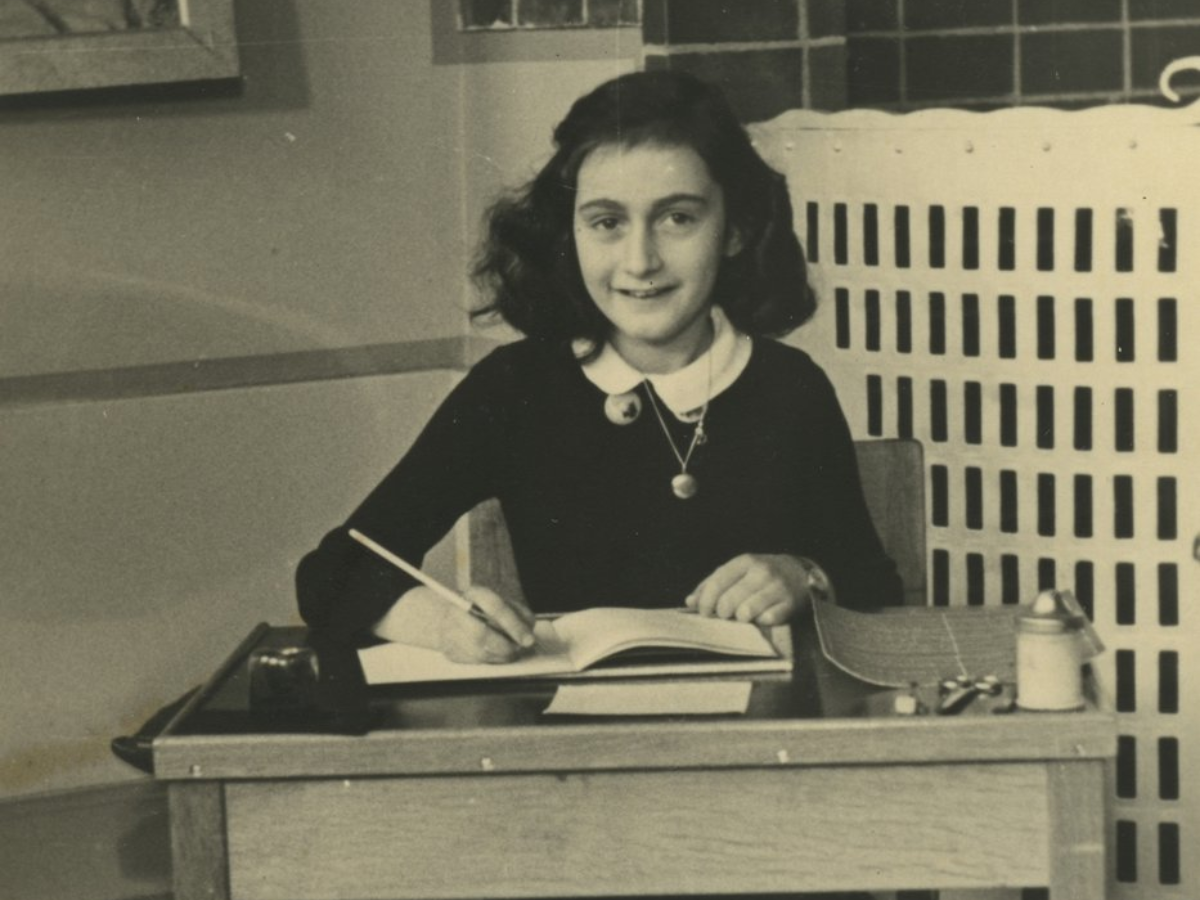
One book which is recommended to almost every child globally is The Diary of a Young Girl by Anne Frank. A slim book, one can read it in a day and get deep insights about the life and times of a girl who lived in the most difficult times. Anne Frank’s diary, published as The Diary of a Young Girl, is one of the most widely read books in the world because it turns the vast horror of the Holocaust into the intimate, honest voice of a single teenager. Her reflections on fear, hope, love, and human nature feel startlingly contemporary, which is why her words still read like wisdom for readers today. Anne Frank was a Jewish girl born in 1929 who went into hiding with her family in Amsterdam in 1942 to escape Nazi persecution. For a little over two years, she lived in a secret annex, chronicling her daily life, fears, quarrels, crushes, and hopes in the diary she received on her thirteenth birthday.Anne had a name for her diary. She called it “Kitty” and treated it like a friend. She confided thoughts that she did not share with anyone else. This intimacy gives her writings a directness and vulnerability that make readers feel as though they are listening to a living voice, not reading a document from the past. How did her book become famous?After the annex was raided in 1944, Anne died in the Bergen-Belsen concentration camp, and her father, Otto Frank, was the only immediate family member to survive. Miep Gies, one of the helpers, had saved Anne’s notebooks and loose pages and later gave them to Otto, who edited and arranged for the diary’s first publication in Dutch in 1947. The diary gradually gained international recognition as it was translated into many languages and adapted for stage and screen, which dramatically expanded its reach. These adaptations helped transform a private diary into a global text, making Anne Frank an international symbol of Holocaust victimhood and moral courage.

Quote of the Day by Anne Frank

Quote of the Day by Anne Frank

Why a young girl’s diary mattered so muchAnne’s diary is not a distant historical treatise but a first‑person account by someone “ordinary” who lived through extraordinary terror, which makes the Holocaust emotionally tangible. She writes about cramped living, constant fear of discovery, and the daily tensions of eight people sharing a small secret space, turning abstract history into lived experience. At the same time, it is a coming‑of‑age story: she wrestles with identity, body changes, conflict with her mother, friendship, budding love, and dreams of becoming a writer. This blend of historical witness and adolescent self-discovery allows readers—especially young ones—to see themselves in her, which is one reason the book is often assigned in schools around the world. A lot of wisdom for todayAnne’s thoughts seem modern because she always looks for the good in people, even when they are being mean. Her diary talks about things that are still important today, like racism and discrimination, how freedom can be taken away, the stress of family life, and how hope can stay strong even when things are hard. She also shows how writing can be a way to fight back and make yourself-she changed parts of her diary on purpose in 1944 after hearing a radio call to keep wartime records, hoping to publish a book after the war. She wrote elsewhere that she wanted “to go on living even after my death.” This wish has come true for her through the millions of readers who see her moral clarity and emotional honesty.One of her deepest quotes is, “Everyone has inside of him a piece of good news. The good news is that you don’t know how great you can be! How much you can love! What you can accomplish! And what your potential is!Coming from a 14-year old, confined to a room with no friends, with an impending sense of fear for life seems unimaginable. Anne lived in the worst of times, but she managed to have that flicker of hope in her heart. Despite all that was going on around her, she was able to keep her mind positively inclined towards the perception of reality. She says that every individual has something inside him that can be a trigger to success. It is like a hidden potential that many of us are not aware of. It is in the form of a ‘good news’, a hope, a positivity, a potential buried deep inside, which can become the seed for success anytime. Those who feel they are incapable of loving have that love deep buried inside, and it is just that they are not consciously aware of it. One can accomplish anything-even if one is not designed for it-if one believes in it.Anne Frank’s diary is a must-read for everyone. The book is a great inspiration that is full of nuggets of wisdom. Children in particular should be asked to read this book, as it is very inspiring and is a wonderful encouragement for young minds that are being shaped.


Source link