Breaking News
WATCH: Vaibhav Suryavanshi plucks a stunning catch during IND vs BAN clash at U19 World Cup 2026


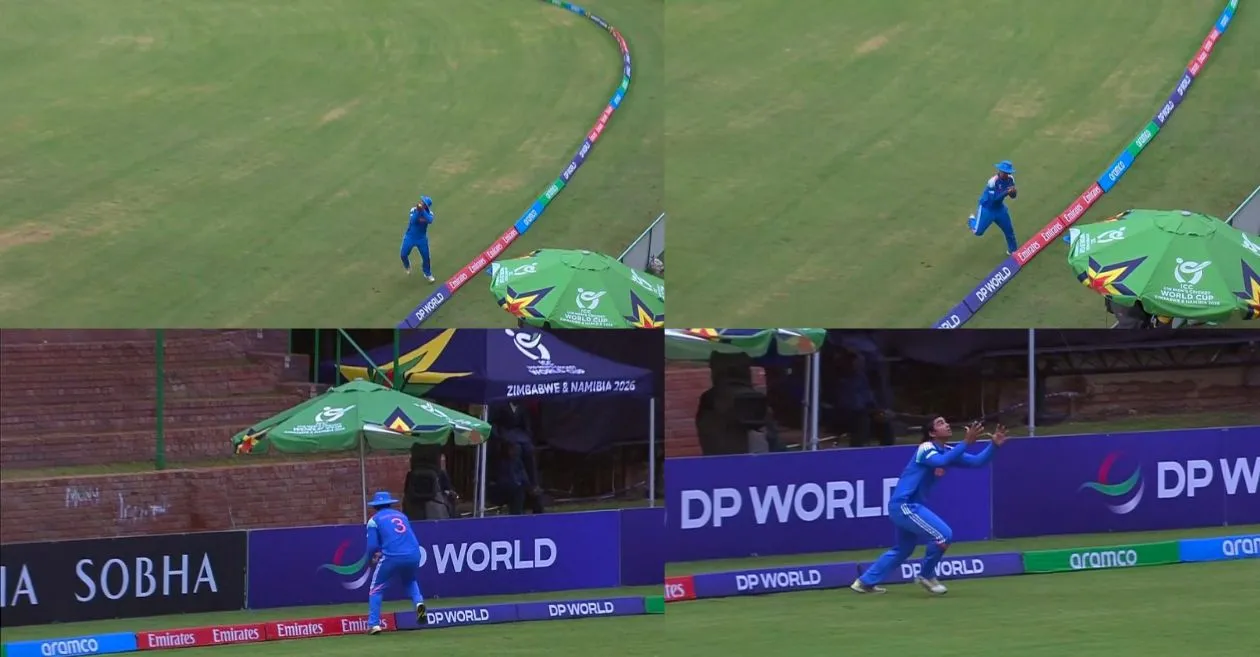
ICC Men’s Under-19 World Cup has always been a stage where future stars announce their arrival, and the Group B clash between India Under-19 and Bangladesh Under-19 at Bulawayo on January 17, 2026, was no exception. In a high-stakes encounter defined by rain interruptions and shifting momentum, it was a moment of pure athletic brilliance from 14-year-old Vaibhav Suryavanshi that stole the headlines and effectively broke the back of the Bangladeshi chase.

India, having posted a competitive total, found themselves under pressure as Bangladesh neared a revised DLS target. However, the game pivoted in the 26th over when Suryavanshi pulled off a boundary-rope miracle that left spectators and commentators in awe.

Vaibhav Suryavanshi’s sensational grab shifts momentum in India’s favour

The defining moment of the match arrived at the 25.2 over mark. Bangladesh was fighting to keep the required rate within reach when Samiun Basir lofted a delivery from Vihaan Malhotra toward the long-off boundary. The ball appeared destined to clear the ropes or at least result in a boundary.

Enter Suryavanshi. The youngster, positioned perfectly, sprinted toward the edge of the field, leaping to pluck the ball out of the air. Realizing his momentum was carrying him over the boundary cushions, Suryavanshi displayed veteran-like composure. He popped the ball upward, stepped out of bounds, regained his balance, and hopped back into the field of play to complete the catch cleanly.

The third umpire’s review confirmed that his feet were airborne while touching the ball outside the rope and firmly planted inside when the final catch was made. At just 14 years of age, Suryavanshi’s spatial awareness and calmness under pressure were described by experts as incredible, effectively ending Basir’s stay and leaving Bangladesh reeling at 129/6.

Here’s the video:

Also READ: Vaibhav Suryavanshi creates history at U19 World Cup 2026, surpasses Babar Azam and Virat Kohli

India clinches DLS thriller as Vihaan Malhotra shines against Bangladesh in U19 World Cup

The match was a rollercoaster of momentum, heavily impacted by the weather in Bulawayo. Batting first, India posted 238 all out in 48.4 overs. The innings was anchored by Abhigyan Kundu, who played a patient and vital knock of 80 off 112 balls. He found support in the explosive Suryavanshi, who earlier in the day showcased his batting prowess with a rapid 72 off 67 balls, including 11 boundaries and a six. Bangladesh’s Al Fahad was the pick of the bowlers, dismantling the tail to finish with figures of 5/38. Rain interruptions forced the officials to recalibrate the target multiple times. Ultimately, Bangladesh was set a revised DLS target of 165 runs from 29 overs.

The chase began steadily, with Azizul Hakim scoring a gritty 51. However, the introduction of Malhotra changed the complexion of the game. Malhotra was relentless, finishing with extraordinary figures of 4/14 in 4 overs. Following Suryavanshi’s spectacular catch to dismiss Basir, the Bangladesh lower order collapsed under the mounting run rate and Malhotra’s precision. Bangladesh was eventually bundled out for 146 in 28.3 overs, handing India an 18-run victory (DLS method). Malhotra was deservedly named Player of the Match for his four-wicket haul and two crucial catches, but the image of Suryavanshi’s boundary-line heroics will remain the lasting memory of this Group B showdown.

Also WATCH: Ahmed Hussain pulls off a screamer to dismiss Thomas Rew in U19 World Cup 2026



Source link

Access Denied


Access Denied

You don’t have permission to access “http://www.ndtv.com/world-news/trump-invites-india-to-be-part-of-gazas-board-of-peace-say-sources-10775405” on this server.

Reference #18.4cfdd417.1768752387.22ae63fc

https://errors.edgesuite.net/18.4cfdd417.1768752387.22ae63fc


Source link

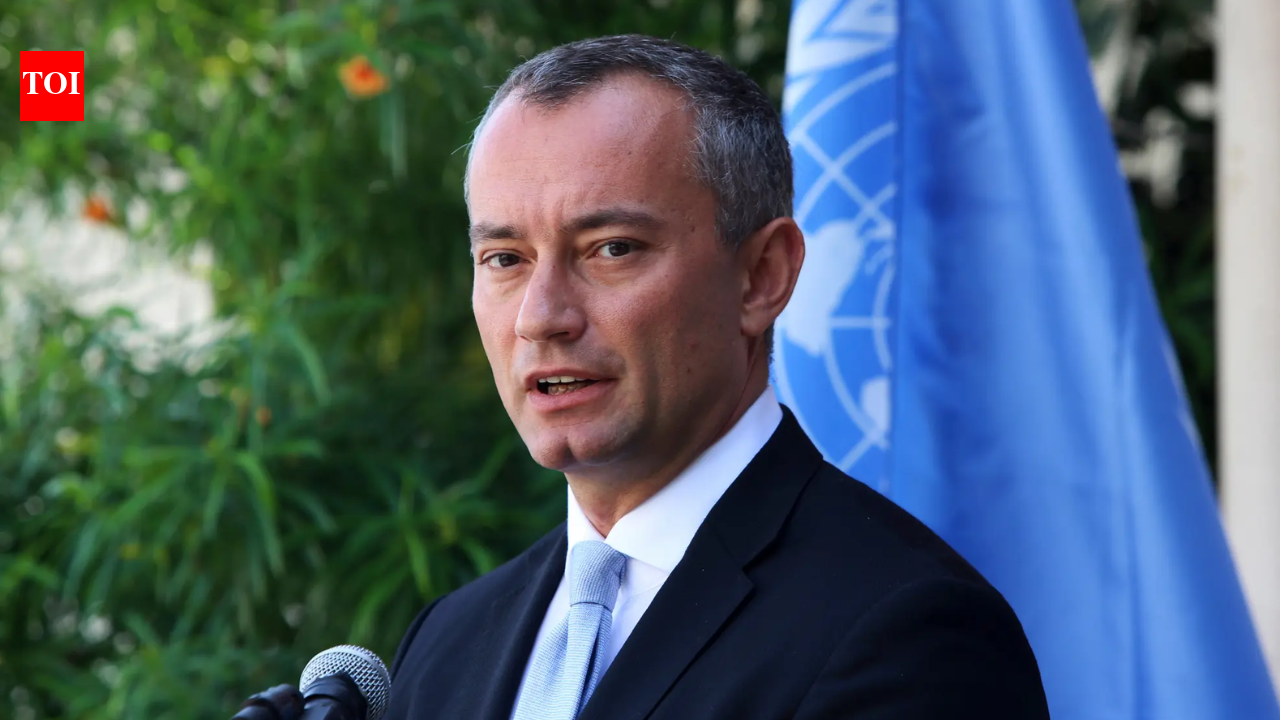
Bridge between US, Israel, and Gaza: Who is Nickolay Mladenov, tasked with turning a fragile ceasefire into lasting peace


Bridge between US, Israel, and Gaza: Who is Nickolay Mladenov, tasked with turning a fragile ceasefire into lasting peace
High Representative for Gaza Nickolay Mladenov (AP)

“As we step into 2026, here’s hoping it becomes a year where common sense prevails, where rules are respected, facts carry more weight than slogans, and strength is measured not by reckless escalation, but by thoughtful restraint and wise choices.Nickolay Mladenov posted those words on X at the start of the year. Days later, he was named High Representative for Gaza, stepping into a role that places him at the center of one of the world’s most fragile and contested conflicts.Years earlier, when Rumiana Bachvarova had just begun her posting as Bulgaria’s ambassador to Israel, she paid a visit to her compatriot in Jerusalem. Mladenov took her to the Mount of Olives, overlooking the Old City.“This small place is the cornerstone of all the conflicts here,” he told her. “But see how beautiful it is.”At the time, Mladenov was several years into his role as the United Nations Special Coordinator for the Middle East Peace Process, a position long viewed as symbolic and largely ineffective.Now 53, Mladenov faces perhaps his most difficult assignment. As High Representative for Gaza, he will serve as the main link between US President Donald Trump’s “Board of Peace” and a technocratic committee of Palestinian officials meant to govern the devastated enclave.His task is to turn a US-brokered, 20-point ceasefire plan—still lacking crucial details—into a functioning framework that can rebuild Gaza, disarm Hamas, and govern a population of about two million people.For it to work, it must be acceptable to Israel, the Palestinians, and the United States.Alongside Mladenov on the Board of Peace are major figures, including US Secretary of State Marco Rubio, Special Envoy Steve Witkoff, Jared Kushner, and former UK Prime Minister Tony Blair. While they do not share his direct responsibility toward the technocratic committee, they shape the political environment in which the plan must operate.With little publicity, Mladenov has already met Israeli Prime Minister Benjamin Netanyahu and senior Palestinian officials as he prepares to take up his new role.Mladenov has declined to comment publicly on his appointment. When Witkoff announced the launch of the second phase of the ceasefire, Mladenov reposted the message without adding his own words.For a diplomat known for working quietly behind the scenes, the silence is familiar. Whether that approach can now help turn a fragile ceasefire into lasting peace for Gaza remains the central question.

Turning a marginal job into a working one

Before Mladenov’s tenure, UN envoys had focused on issuing statements—condemning Israeli settlement expansion in the occupied West Bank and repeating support for a two-state solution. Their influence was limited, their warnings largely ignored.Mladenov arrived in Jerusalem in 2015 with a different approach. In an interview with the New York Times as he was leaving the role in late 2020, he said he was initially struck by how irrelevant the position seemed. Instead of relying on public statements, he focused on building trust.He shuttled between Israeli officials, the Palestinian Authority in the West Bank, and Hamas leaders in Gaza, while also delivering his mandated monthly briefings to the UN Security Council in New York.Mladenov rarely made headlines, but behind the scenes he was deeply involved. Alongside Egypt, he played a role in bringing repeated escalations between Israel and Hamas to quick conclusions, helping prevent wider wars.Not everyone approved of his choices. Some diplomats in Jerusalem believed he paid too little attention to the Palestinian Authority, the body created in the 1990s as part of peace efforts and which still governs parts of the West Bank.

A divided Palestinian landscape

A sympathetic reading of Mladenov’s strategy suggests he focused on the most influential actors under his mandate. But it also suited Israeli prime minister Benjamin Netanyahu to have the most senior UN official in the region engage with Hamas while the Palestinian leadership remained divided.That division weakened the Palestinian cause internationally. Although Israel’s tacit approach toward Hamas collapsed after the October 7, 2023 attacks, concerns persist in Ramallah that new governance structures for Gaza could again sideline the Palestinian Authority by creating rival centers of power.Mladenov’s background helps explain why he was chosen for this moment. The Bulgarian politician became his country’s defense minister at just 37, then served as foreign minister for three years. Earlier, he was a member of the European Parliament and later the UN’s Special Representative for Iraq.Those roles built his reputation as a diplomat comfortable operating in fractured political environments.


Source link

Bengal polls: Abhishek Banerjee targets Modi; accuses PM of blocking state’s funds | India News


Bengal polls: Abhishek Banerjee targets Modi; accuses PM of blocking state's funds
Nadia: TMC National General Secretary Abhishek Banerjee during a road show ahead of the West Bengal assembly elections, in Nadia district, West Bengal. (PTI Photo)

NEW DELHI: Trinamool Congress (TMC) national general secretary Abhishek Banerjee on Sunday accused Prime Minister Narendra Modi of blocking central funds meant for West Bengal. His remarks came on a day when the prime minister addressed a rally in the poll-bound state, urging voters to end the TMC’s 15-year “maha jungle-raj.Also Read | ‘Bengal ready to topple TMC’s maha-jungleraj’: PM Modi rips into Mamata govt at Singur rally“You blocked funds meant for the people of Bengal and harassed them. You inflicted miseries on the people of Bengal over the last five years, and so your party will be reduced to below 50 seats in the assembly polls,” Banerjee said while addressing a rally in West Bengal’s Nadia district.His aunt, West Bengal chief minister Mamata Banerjee—who also heads the TMC—has repeatedly accused the BJP-led Union government of withholding central funds for the state and has made the issue a key poll plank.The Diamond Harbour MP further asserted that the fall of the BJP-led government at the Centre would begin in West Bengal.“In the coming days, the people of Bengal will throw you out of power in Delhi after electing the TMC for the fourth time. ‘Poriborton habe’ (there will be change at the Centre),” he remarked.On the recent Enforcement Directorate raids at the Kolkata office of I-PAC—a leading political consultancy that has been working with the TMC since 2021—Banerjee accused the Centre of “misusing” central agencies against opposition-run states.“They tried to steal our data before the elections, but we have people’s support. They (the BJP) have everything—from the ED and CBI to a section of the media. They put central agencies behind me before the 2021 elections but failed. Now they are resorting to falsehood,” he stated.Referring to the ongoing revision of electoral rolls, Banerjee claimed that despite allegations of large numbers of illegal immigrants, the exercise had identified 54 lakh “unmapped voters” in the state.“Now, unhappy with the findings, they are planning to delete over one crore names from the electoral rolls. We will not allow this to happen,” he alleged.Buoyed by its success in the recent assembly elections in neighbouring Bihar, the BJP is eyeing its first stint in power in West Bengal, where the TMC, under Mamata Banerjee, has been in office since 2011.


Source link

Access Denied


Access Denied

You don’t have permission to access “http://www.ndtv.com/india-news/banegaswasthindia-live-from-davos-dettol-hygiene-loyalty-card-makes-global-debut-at-wef-2026-10774762” on this server.

Reference #18.2ef63717.1768744461.3c2318a

https://errors.edgesuite.net/18.2ef63717.1768744461.3c2318a


Source link

Budget 2026: MAIT seeks customs duty cuts on key electronic components; push to boost domestic manufacturing


Budget 2026: MAIT seeks customs duty cuts on key electronic components; push to boost domestic manufacturing

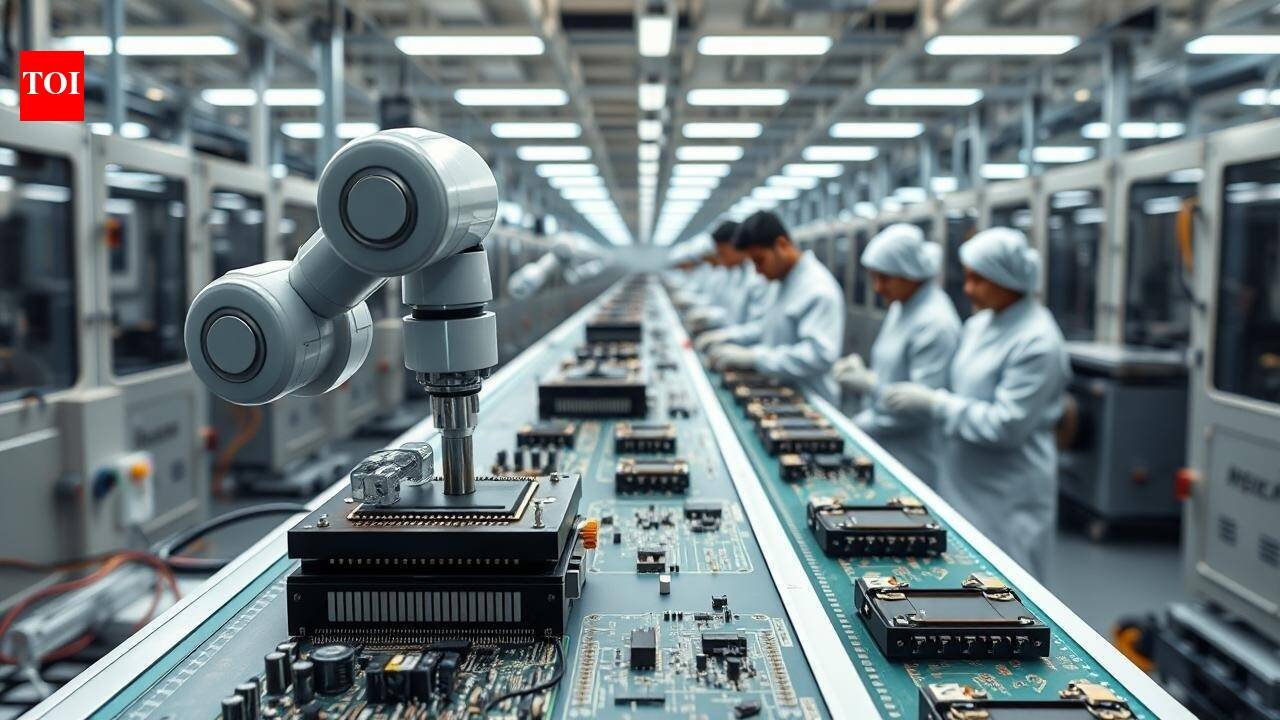
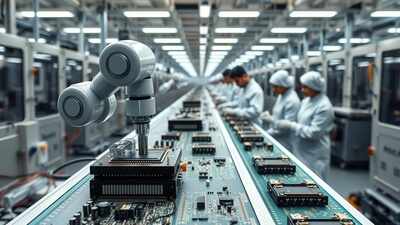
The IT industry body MAIT has urged the government to reduce basic customs duty on key electronic components and enhance tax incentives in the upcoming Union Budget to strengthen domestic manufacturing and improve global competitiveness.In its pre-Budget recommendations submitted to the finance and IT ministries, the Manufacturers’ Association for Information Technology (MAIT) proposed cutting basic customs duty on critical sub-assemblies such as camera modules, display assemblies and connectors from 10 per cent to 5 per cent to lower input costs and enhance competitiveness.Highlighting global uncertainties, MAIT said the Budget assumes “a role of paramount strategic importance” amid geopolitical tensions, supply chain disruptions and growing trade and tariff uncertainties. “Disruptions in global supply chains, geopolitical tensions, and the weaponisation of trade policies have highlighted the vulnerabilities inherent in over-reliance on imports,” the industry body said.Push for manufacturing, jobs and exportsMAIT called for strategic interventions in ICT adoption, AI integration, improved market access and enhanced credit guarantee coverage for micro and small enterprises, startups and export-focused MSMEs. To bolster domestic manufacturing, it stressed the need to rationalise import duties on components not currently made in India, as per news agency PTI.The association also recommended continued incentives for domestic mobile manufacturing, noting that the production-linked incentive (PLI) scheme for mobiles is set to end on March 31, 2026. India has emerged as a leader in mobile manufacturing and needs to build on the capacity created for both domestic use and exports, it said.Further, MAIT sought zero duty on parts and inputs for inductor coils, a cut in import tariffs on audio components from 15 per cent to 10 per cent, and an extension of the “import of goods for repair and return” period from seven years to 20 years to align with global practices.On direct taxes, MAIT proposed increasing the lower salary cap for deductions under Section 80JJAA from Rs 25,000 to Rs 50,000 to account for wage inflation and promote formal job creation.


Source link

‘Terrible comments’: Veteran domestic cricketer lambasts India coach | Cricket News


'Terrible comments': Veteran domestic cricketer lambasts India coach

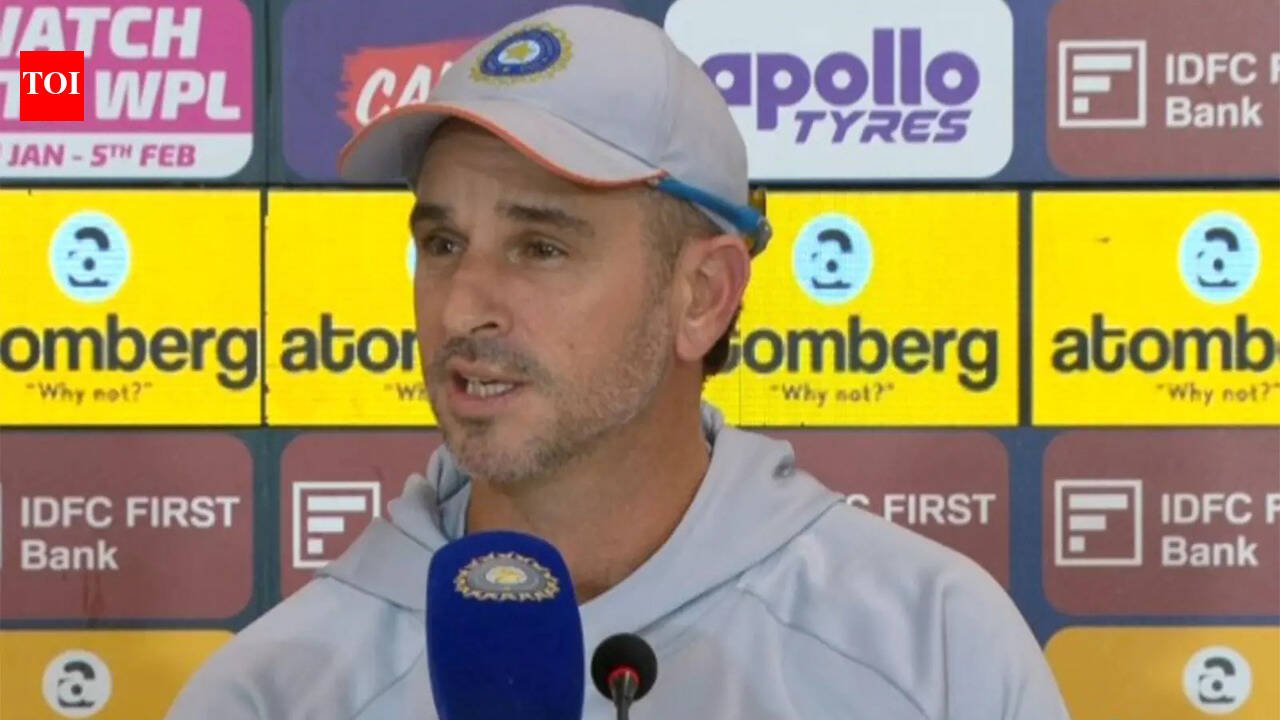
Former Indian domestic cricketer Priyank Panchal came out strongly against assistant coach Ryan ten Doeschate, calling out his comments on Rohit Sharma and Nitish Kumar Reddy and questioning whether foreign coaches truly understand how to handle relationships within Indian cricket. After the defeat to New Zealand, Ten Doeschate spoke about Rohit’s form, pointing out that the India captain “had not been as fluent as he has been” on what he described as a tough wicket. The comment came despite Rohit scoring 26 and 24 in the two ODIs so far, following a Vijay Hazare Trophy outing for Mumbai in December where the returns were 155* and 0.

The making of Cooper Connolly: Australia’s 22-year-old star

The assistant coach also took aim at Nitish Kumar Reddy, who had scored 20 runs and bowled two overs for 13 in the Rajkot game. The assessment was blunt. Nitish, according to Ten Doeschate, gets opportunities but “often ended up not doing a heck of a lot”. Those words triggered backlash online, with fans calling the remarks disrespectful towards Rohit, a senior figure who had already piled up five fifty-plus scores between the Australia tour in October-November and the Vijay Hazare Trophy, including two centuries. There was similar anger over the criticism of Nitish, a 22-year-old still finding his feet at international level, having played only three ODIs at the time, scoring 47 runs across three innings and going wicketless.

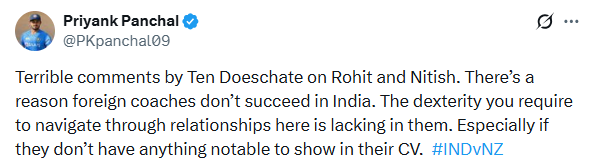
Priyank Panchal post

Priyank Panchal post

Panchal did not hold back. Taking to X, he wrote: “Terrible comments by Ten Doeschate on Rohit and Nitish. There’s a reason foreign coaches don’t succeed in India. The dexterity you require to navigate through relationships here is lacking in them. Especially if they do not have anything notable to show in their CV. #INDvNZ.” The message struck a chord because it went beyond one post-match comment. It tapped into a familiar debate about communication, cultural understanding, and how criticism is delivered within the Indian dressing room. For Panchal, the issue was not analysis alone, but tone, timing and respect. And once those lines are crossed, the fallout is never limited to just one press interaction.


Source link

Denmark is turning its streetlights red, and the reason will surprise you | World News


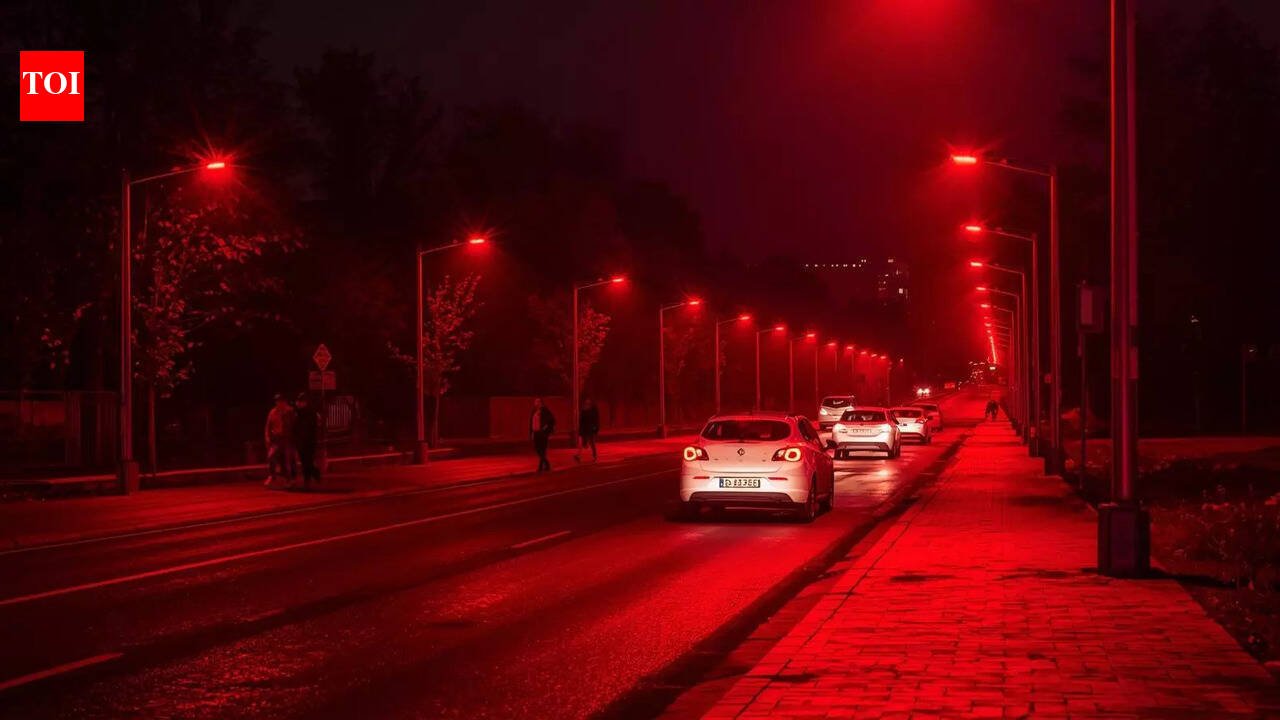
Denmark is testing a different kind of streetlight, one that changes colour rather than brightness. In a suburb near Copenhagen, familiar white lamps are being replaced with red lighting along selected roads. The shift is small in scale but deliberate in intent. Officials say it is designed to reduce harm to wildlife while keeping streets usable for people. Urban lighting has long focused on visibility and safety, often with little thought for ecological effects. This project reflects a slower reassessment of that approach. It draws on research, local conditions, and wider sustainability goals. While limited to one area for now, the experiment has attracted attention beyond Denmark, as cities elsewhere face similar questions about how to light streets without overwhelming the environments around them.

Denmark is testing red streetlights for the bats living in that area

The project is taking place in Gladsaxe, on the outskirts of Copenhagen. Red-toned lighting is replacing standard streetlights along parts of Frederiksborgvej near Skovbrynet. According to the press release from the Gladsaxe municipality, the area is known to host a local bat colony. Rather than turning lights off entirely, the municipality chose a colour that alters how light interacts with wildlife. The change is visible only at night and only along specific stretches of road.

Bats influenced the lighting decision

Bats played a key role in the preparation. Artificial lighting has been shown to interfere with bats’ ability to travel, feed, and navigate. Short-wavelength light, like that of blue, green, or white, usually has the biggest effect. Red light, which has longer wavelengths, may have less of an impact on bat behaviour, according to research from the Netherlands. Additionally, it is thought to be more appropriate for bats to hunt insects. Because to safety concerns, local officials stated that completely turning off the lights was not an option. The least disruptive option was red light.

Traffic safety remains part of the design

While parts of the road now use red lighting, safety for drivers and cyclists remains a priority. At junctions and crossing points, warm white lights are still used. These are mounted on higher masts to improve visibility where it is most needed. The lighting design varies along the route, adjusting to how people and animals use different sections of the road. The aim is to avoid a one size fits all approach.

Engineers balanced ecology and access

Road engineer Jonas Jørgensen from Gladsaxe Municipality said the goal was to limit disturbance without reducing accessibility. He noted that complete darkness would be ideal for bats but not realistic for a public road. The solution, he said, reflects a balance between environmental care and everyday use. The project required careful planning rather than a simple switch.

Designers saw the project as a test case

The lighting system was developed with professional lighting designers. They describe the project as an opportunity to challenge long-held assumptions about urban lighting. Philip Jelvard from Light Bureau said there would be an adjustment period for both people and bats. He added that the red light also carries symbolic weight, signalling that the area is environmentally sensitive.

Sustainability goals shape local policy

Gladsaxe was Denmark’s first municipality to formally align its strategy with the United Nations Sustainable Development Goals. Biodiversity protection is part of that framework. Mayor Trine Graese said the project shows how infrastructure can support both human needs and animal welfare. She described it as a practical example rather than a statement gesture.

A small change with wider interest

For now, the red streetlights remain limited to a specific route. There are no immediate plans to expand them across the city. Still, urban planners elsewhere are watching. As cities rethink energy use, biodiversity loss, and night time design, Gladsaxe offers a quiet example. It does not promise a solution for every street. It simply tests whether light can be used with more restraint, and whether cities can learn to notice what has long been lit over.


Source link

Market recap: Mcap of 3 of top-10 most valued firms jumps by Rs 75,855 cr; SBI, Infosys biggest winners


Market recap: Mcap of 3 of top-10 most valued firms jumps by Rs 75,855 cr; SBI, Infosys biggest winners

The combined market capitalisation of three of India’s ten most valuable listed companies rose by Rs 75,855.43 crore in the holiday-shortened week, with State Bank of India (SBI) and Infosys leading the gains, even as the broader equity market remained largely flat.During the week, the benchmark indices showed limited movement. The BSE Sensex slipped marginally by 5.89 points, while the NSE Nifty edged up by 11.05 points, reflecting a sluggish overall trend in equities.According to news agency PTI, SBI, Infosys and ICICI Bank were the only gainers among the top ten firms by market value. In contrast, seven heavyweights: Reliance Industries, HDFC Bank, Tata Consultancy Services (TCS), Bharti Airtel, Bajaj Finance, Hindustan Unilever and Larsen & Toubro, together saw their valuations fall by Rs 75,549.89 crore. The erosion in these seven stocks was still lower than the total value added by the three gainers.SBI emerged as the biggest winner during the week. Its market valuation jumped by Rs 39,045.51 crore to Rs 9,62,107.27 crore. Infosys followed closely, with its market capitalisation rising by Rs 31,014.59 crore to Rs 7,01,889.59 crore. ICICI Bank also added Rs 5,795.33 crore, taking its valuation to Rs 10,09,470.28 crore, PTI reported.On the losing side, Reliance Industries saw the sharpest decline. Its market capitalisation dropped by Rs 23,952.48 crore to Rs 19,72,493.21 crore. Larsen & Toubro’s valuation fell by Rs 23,501.80 crore to Rs 5,30,410.23 crore, while HDFC Bank lost Rs 11,615.35 crore, taking its market value down to Rs 14,32,534.91 crore.Bharti Airtel’s valuation declined by Rs 6,443.38 crore to Rs 11,49,544.43 crore. Bajaj Finance shed Rs 6,253.59 crore to stand at Rs 5,91,447.16 crore, and Hindustan Unilever’s market capitalisation slipped by Rs 3,312.93 crore to Rs 5,54,421.30 crore. TCS saw a relatively modest fall of Rs 470.36 crore, with its valuation at Rs 11,60,212.12 crore, as per PTI.Market sentiment towards IT stocks received support during the week after Infosys raised its revenue growth guidance for FY26, a move that helped lift its share price and market value. This came at a time when investors remained cautious otherwise, with limited trading activity due to a market holiday.Despite the weekly fluctuations, Reliance Industries remained India’s most valued listed company.It was followed by HDFC Bank, TCS, Bharti Airtel, ICICI Bank, SBI, Infosys, Bajaj Finance, Hindustan Unilever and Larsen & Toubro, maintaining the existing pecking order among the country’s corporate heavyweights.


Source link

IND vs NZ [WATCH]: Arshdeep Singh sends Henry Nicholls packing with a peach in 3rd ODI


The Holkar Cricket Stadium in Indore is renowned for being a batter’s paradise, but on January 18, 2026, the narrative shifted toward the moving ball. In the series finale between India and New Zealand, the Men in Blue, led by Shubman Gill, opted to field first—a decision that paid immediate dividends. As the sun began to set over Indore, India’s left-arm sensation Arshdeep Singh produced a moment of pure fast-bowling artistry that set the tone for a high-intensity powerplay.

Arshdeep Singh castles Henry Nicholls in 3rd ODI

The highlights reel for this 3rd ODI will undoubtedly be headlined by the fourth delivery of the opening over. Arshdeep, steaming in with a brand-new white ball, looked lethal from his very first stride. After probing the channel for the first three balls, Arshdeep produced an absolute peach to dismiss the experienced Henry Nicholls for a golden duck.

Operating from closer to the off-stump, Arshdeep created a subtle angle that shaped the ball away just enough to sow seeds of doubt. Nicholls, caught in a classic case of indecision, attempted to withdraw his bat at the last possible microsecond. However, the late movement was too sharp; the ball kissed the inside edge and crashed violently into the leg stump. It was a nonchalant yet clinical dismissal that left Nicholls throwing his head back in frustration as he trudged back to the pavilion without scoring. The sight of the leg stump knocked back provided India with the perfect start, reducing the visitors to 5/1 within the first four balls of the match.

Here’s the video:

Also READ: IND vs NZ: Here’s why Prasidh Krishna is not playing today’s game in Indore

India’s powerplay dominance puts New Zealand under the pump at Indore

The early strike by Arshdeep was just the beginning of a relentless opening burst by the Indian seamers. Following the departure of Nicholls, the pressure mounted on the Black Caps. Just seven balls later, Harshit Rana doubled the delight for the Indore crowd. The young pacer extracted extra bounce to remove the dangerous Devon Conway, who was caught by Rohit Sharma for 5. Within 1.1 overs, New Zealand found themselves reeling at 5/2, staring down the barrel of a potential collapse.

Despite the early carnage, New Zealand attempted to reconstruct their innings through Will Young and Daryl Mitchell. By the end of the mandatory 10-over powerplay, the visitors managed to reach 47/2, scoring at a run rate of 4.70.

While Young showed flashes of aggression with four boundaries to reach 24* off 32 balls, the discipline shown by India’s trio was exceptional. Mohammed Siraj, though wicketless in his initial spell, kept things incredibly tight with an economy of 3.00, ensuring no easy release of pressure. The strategy was clear: utilize the early moisture and swing to keep the Kiwi middle order quiet. With the likes of Glenn Phillips and Michael Bracewell waiting in the wings, India’s ability to maintain this squeeze will be the deciding factor in this series-concluding encounter.

Also READ: ‘If it was Virat Kohli, Steve Smith ka baap bhi single leta’: Ex-Pakistan cricketer on Babar Azam’s BBL controversy


Source link