Breaking News
T20 World Cup dream over for Sanju Samson? Suryakumar Yadav confirms ‘definitely Ishan Kishan’ to open | Cricket News


T20 World Cup dream over for Sanju Samson? Suryakumar Yadav confirms 'definitely Ishan Kishan' to open
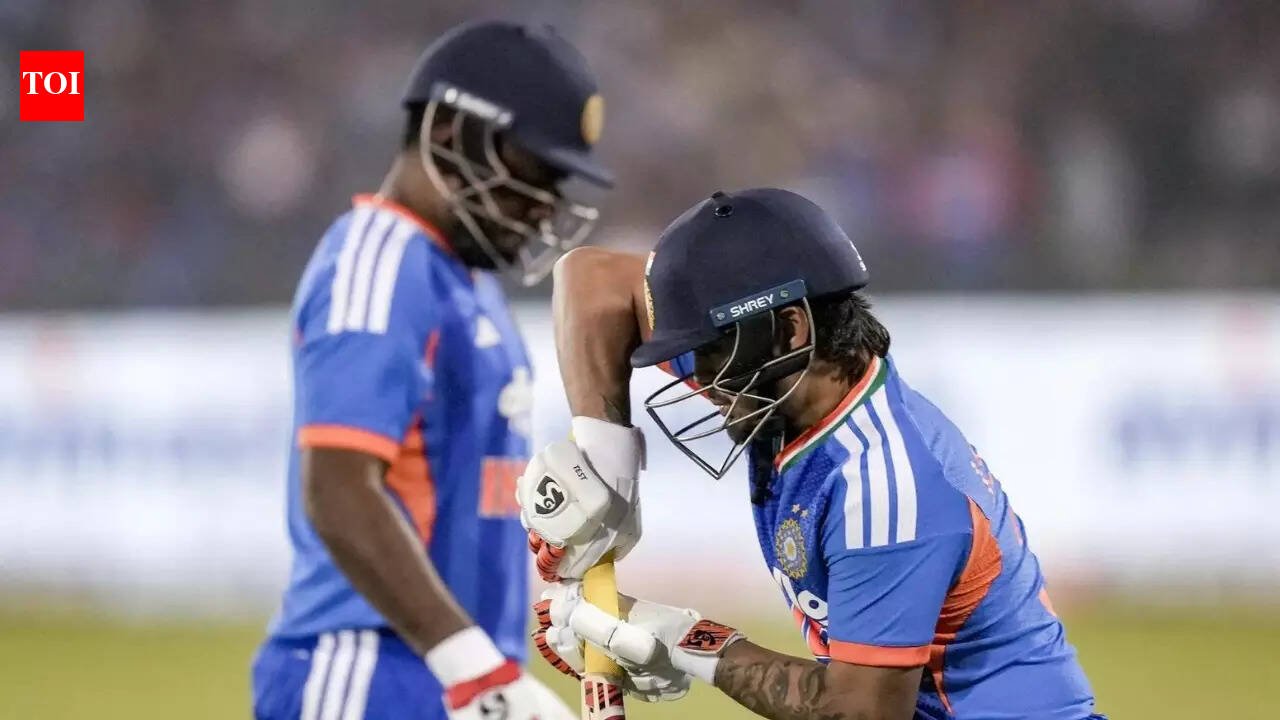
Ishan Kishan, right, arrives to bat as Sanju Samson walks off the field after his dismissal during the second T20I cricket match between India and New Zealand, in Raipur, Chhattisgarh. (PTI Photo)

India got the new T20 opening pair on Wednesday as Ishan Kishan and Abhishek Sharma walked out to open the innings as Men-in-Blue played South Africa in their only warm-up match ahead of the T20 World Cup 2026 at the Dr DY Patil Stadium in Navi Mumbai. India won the toss, and captain Suryakumar Yadav chose to bat first.At the toss, Suryakumar confirmed a change at the top of the batting order, indicating a possible setback for Sanju Samson’s World Cup plans. The Indian captain said that Ishan Kishan will open the innings alongside Abhishek Sharma, pushing Samson out of the opening role.

Sanju Samson or Ishan Kishan? | Greenstone Lobo predicts the ideal player for T20 World Cup

“We are going to bat first. It is something we have been doing well. There might be some dew later in the evening, we want to test our bowlers in challenging conditions and defend the total, whatever we get,” Suryakumar said at the toss.Follow live updatesWhen asked about the opening combination and handling pressure at home, the India captain made the team’s plan clear. “Definitely Ishan and Abhishek. [On dealing with pressure and expectations] See, I think when you are playing in India in front of your home ground, there are expectations. But at the same time so many people in the stadium cheering you on, I think it gives you an extra advantage,” he added.Sanju Samson’s position has been under scrutiny for several months. Before the Asia Cup 2025, Samson and Abhishek Sharma opened the innings and delivered steady returns. However, the team management later brought Shubman Gill into the side, which pushed Samson into the middle order. That change affected Samson’s output, and calls grew to restore him as an opener.Gill’s lack of runs and slow scoring rate led the selectors to bring back Ishan Kishan after his strong Syed Mushtaq Ali Trophy season. Samson then got another chance at the top but managed only 49 runs in five innings against New Zealand. During the same series, Kishan batted at No.3 and scored his maiden T20I century.With Tilak Varma returning to the squad, the management has now decided to move Kishan to the opening slot. That shift has left no clear place for Samson in the playing XI. The team’s thinking was hinted at earlier as well, when Kishan was asked to keep wickets in the fifth T20I.The warm-up match decision has raised questions about whether Samson’s chances of making the T20 World Cup XI are slipping, with the captain’s “definitely Ishan” comment underlining the current pecking order at the top.


Source link

India-US trade deal decoded: What does it mean for economy, markets & Russian oil imports? Explained in 10 charts


India-US trade deal decoded: What does it mean for economy, markets & Russian oil imports? Explained in 10 charts
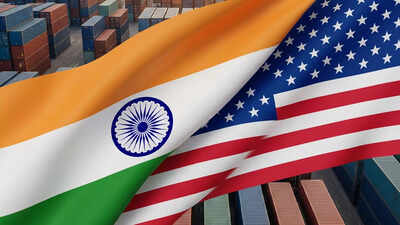
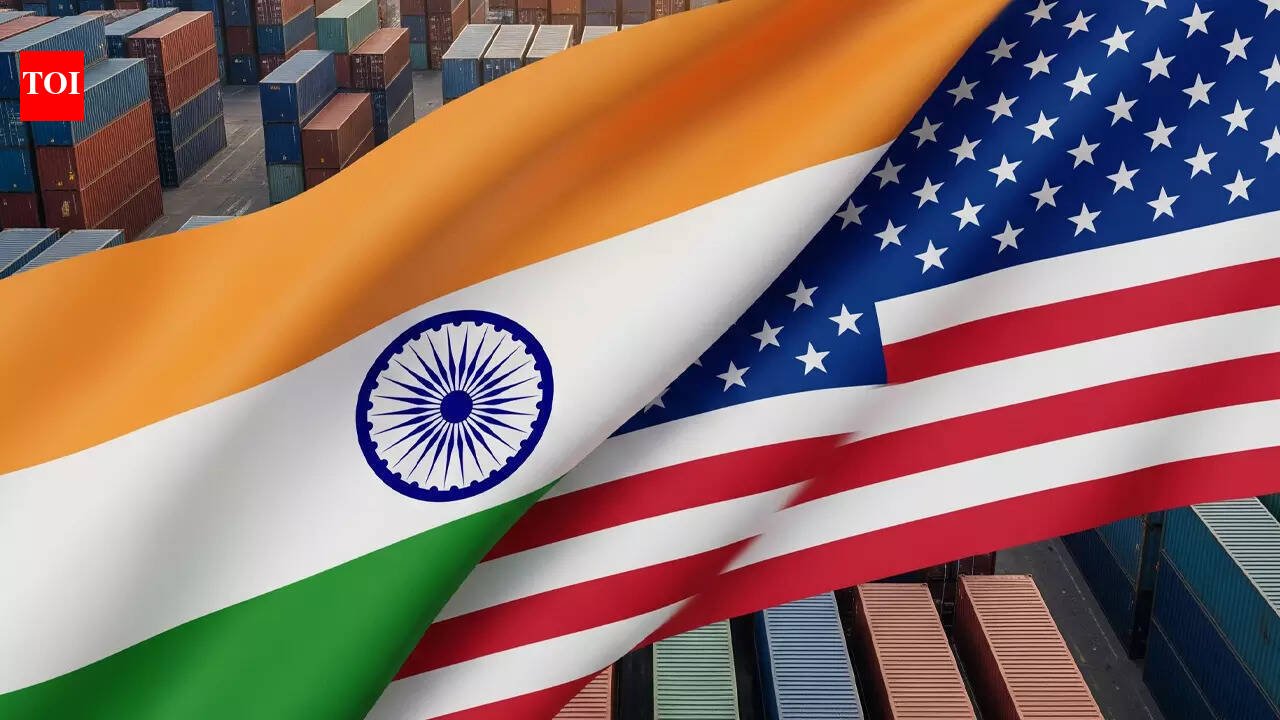
India-US trade deal (AI image)

Has India managed to secure the ‘father of all deals’ with the US? American President Donald Trump and Prime Minister Narendra Modi took everyone by surprise this week when they announced that the tariff rate on Indian goods to the US will be reduced to 18%. While a trade deal remains to be signed, and final nuances are being worked out, the stalemate in ties has finally ended, paving the way for two big world economies to resume normalcy in trade ties.The US is India’s single largest trading partner, and the 50% tariffs imposed by the Trump administration had hit exporters. With an 18% tariff rate, India’s exports are back to being competitive. Trump’s Truth Social Post spoke of several aspects to the deal including what he claimed was commitment to stopping Russian crude and also buying $500 billion worth of American goods.

“India Will Buy Oil From US…” White House After Trade Deal

Even as details of trade deal emerge, we explain the importance of the agreement for India in top 10 charts: Take a look:

Comparative advantage for India

With an 18% tariff, India has managed to secure a deal which places its duty rate lower than its neighbouring countries and competitors. Some of the main countries which compete with India’s labour-intensive sectors in the global markets are: Vietnam (20%), Malaysia (19%, Bangladesh (20%), Cambodia and Thailand (19%), China (34%). India has also got a lower rate than Pakistan which gets tariffed at 19%.
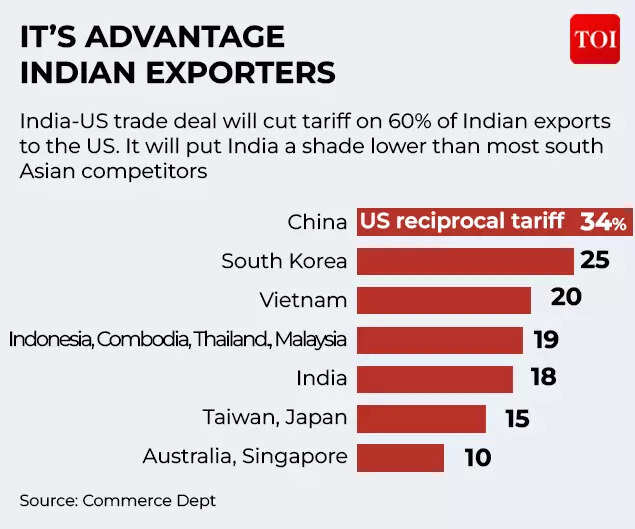
It's Advantage Indian exporters

It’s Advantage Indian exporters

Commerce minister Piyush Goyal has also stressed on this point, saying that India got a ‘very good’ deal with the US, better than the competitors.Agneshwar Sen, Trade Policy leader, EY India says that the biggest takeaway is that India has shifted from being a passive tariff-hit exporter to a partner with a negotiated stake in the US market.“For India, the deal matters less for the headline concessions and more for what it signals. Since the new tariff rates will come into effect immediately, to start with it will arrest the export erosion we have been facing. India was steadily losing competitiveness in the US because the high tariffs were wiping out marginal advantages of quality and dependability. The deal will effectively cap further damage and restore predictability, allowing exporters to price, plan and retain market share rather than bleed slowly,” he tells TOI.“It will reinforce India’s credibility as a supply-chain alternative. The deal positions India as a reliable, lower-risk sourcing partner at a time when US buyers are seeking to de-risk from China,” Sen explains.
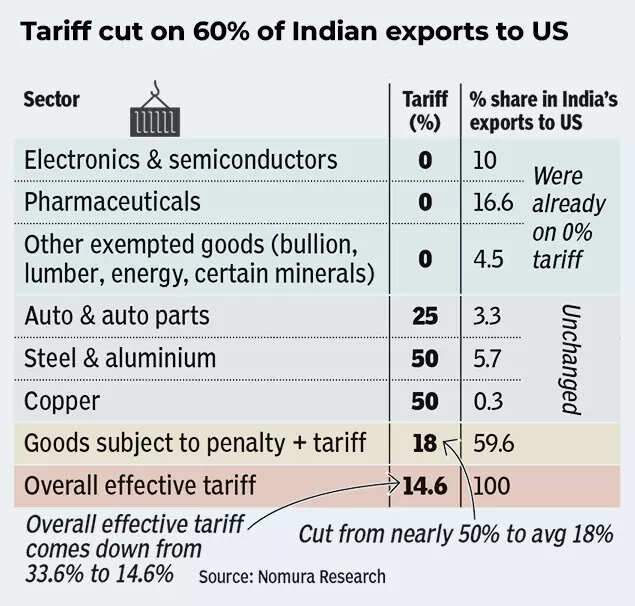
Tariff cut on 60% of Indian exports to US

Tariff cut on 60% of Indian exports to US

“Finally, it will nudge Indian exporters to move up the value chain. Tariff relief will push Indian firms toward scale, compliance and higher value manufacturing, rather than operate on pure price arbitrage. The bottom line is that the deal doesn’t just recover lost exports – it reanchors India in the US market – and on a more durable, strategic basis, which is far more valuable over the medium term,” Sen adds.Gulzar Didwania, Partner, Deloitte India also highlights the important point that India has secured a level playing field in terms of tariff treatment vis-à-vis key competing economies in South Asia such as Vietnam, Bangladesh and Sri Lanka.“Unlike earlier situations where some countries enjoyed distinctly preferential access, India is now broadly aligned within the same tariff bracket, reducing relative disadvantages for Indian exporters,” he tells TOI.

Will India stop buying Russian oil?

As part of the newly announced trade deal, US President Donald Trump claimed that India would stop buying Russian oil. “We spoke about many things, including Trade, and ending the War with Russia and Ukraine. He agreed to stop buying Russian Oil, and to buy much more from the United States and, potentially, Venezuela,” Trump posted on Truth Social. Meanwhile, Russia has maintained that it received no official communication from India on the matter. Kremlin spokesman Dmitry Peskov said, “so far, we haven’t heard any statements from New Delhi on this matter.”According to officials, imports from Russia have already been declining since November after the US imposed sanctions on major exporters Rosneft and Lukoil.Data from Kpler show Russia’s share of India’s crude imports fell to 33.7% between April and November 2025, from 37.9% in the same period last year. Over the same time, US share rose to 8.1 per cent from 4.6%. In absolute terms, Russian crude imports dropped from about 1.8 million barrels per day in November to 1.2 million in December and 1.16 million in January 2026.
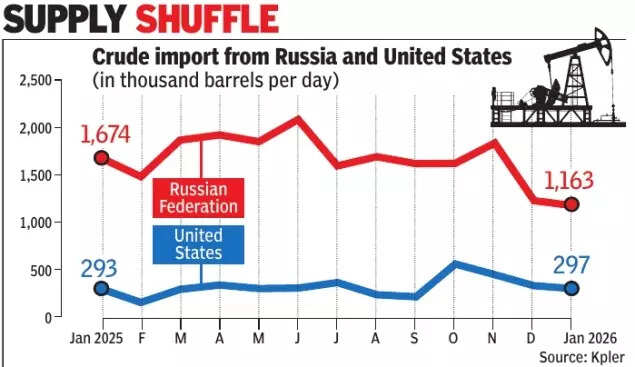
Supply shuffle of oil

Supply shuffle of oil

Despite this trend, analysts say the trade deal is unlikely to result in an immediate or sharp fall in Russian supplies. “The deal is unlikely to result in a near-term reduction in India’s Russian crude imports. Russian volumes remain largely locked in for the next 8-10 weeks and continue to be economically critical for India’s complex refining system, supported by deep discounts on Urals relative to ICE Brent,” said Sumit Ritolia, lead research analyst at Kpler.According to experts Russian imports will remain broadly stable through the first half of 2026–27, with any further moderation likely to be balanced by higher inflows from West Asia. A recent SBI Research report suggests that India could potentially save almost $3 billion in its crude imports bill annually, by redirecting part of its Russian oil purchases to Venezuela.The report said replacing some Russian crude with Venezuelan heavy crude could deliver meaningful savings for India, even after accounting for higher freight, logistics and related costs. It noted that Venezuelan crude would need to be priced at a discount of about $10–12 per barrel to make the switch commercially workable for Indian importers.SBI said, “India’s fuel import bill could even decline by $3bn in the event of shifting to Venezuela… discount of $10–12 could make the choice agnostic.”According to Oil Price data cited in the report, Venezuelan heavy crude is currently trading at around $51 per barrel. The study further added that the actual benefit would depend on several factors, including the size of the discount compared with Brent crude, longer shipping routes, and additional time and insurance costs associated with sourcing oil from Venezuela.

How does a trade deal with the US benefit India?

The India–US trade deal cuts tariffs on almost 60% of Indian exports to the US, lowering reciprocal duties to 18% from 50%. The agreement is expected to deliver a clear boost for exporters while also supporting GDP growth and investor sentiment.Sectors ranging from garments, leather, footwear, carpets, shrimps and gems and jewellery are set to benefit, as Indian products will become more competitive in the US market. For garments, the 18% levy is marginally lower than the 20% faced by Bangladesh and Sri Lanka. Meanwhile, the jewellery and gems sector is also waiting for the deal’s fine print.With tariffs now rolled back, uncertainty has also eased sharply. “We estimate an incremental boost of around 0.2 percentage point of GDP (annualised), if the new lower tariffs are enforced,” Goldman Sachs said, adding that the estimate is based on India’s goods exports exposure of roughly 4% of GDP to US final demand and a goods export demand elasticity of about 0.7.
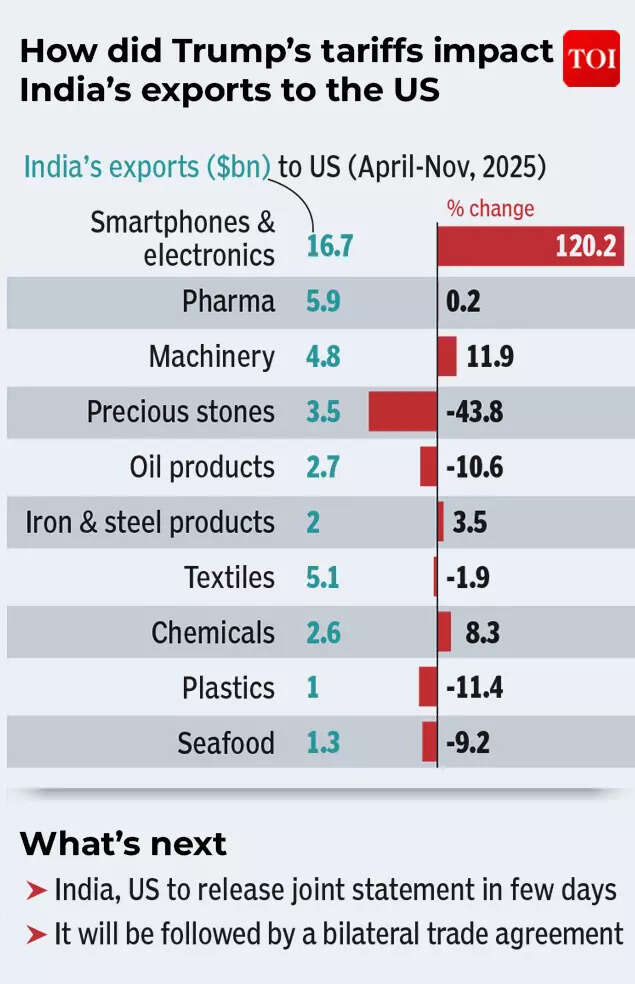
How did Trump's tariffs impact India's exports to the US?

How did Trump’s tariffs impact India’s exports to the US?

Earlier estimates had suggested a GDP impact in the 30–50 basis points range. Barclays said, “Statistically speaking, we estimate lower tariffs will add 30 basis points to headline GDP growth (essentially reversing the threat posed by 50% tariffs until now).”Latest projections show the economy growing 7.4% in the current fiscal year ending March, with growth for FY27 seen in the 6.8%–7.2% range. Moody’s Ratings said the reduction in US tariffs on most Indian goods would reinvigorate exports to the US, India’s largest goods export market, accounting for about 21% of total goods exports in the first eleven months of 2025.Arvind Shrivastava, secretary, department of revenue, said that the deal would deepen trade ties and create new opportunities for labour-intensive and manufacturing sectors, while also giving a push to collaboration in high and advanced technology areas. M. Nagaraju, secretary, department of financial services, said that the rollback to 18% lifted the “dark clouds of uncertainty” and would help exporters.
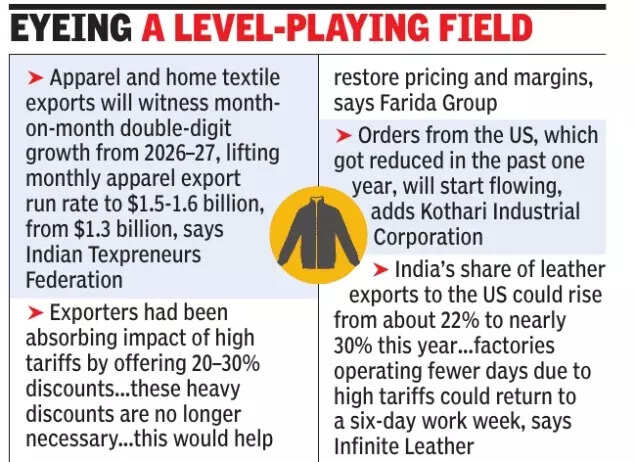
Eyeing a level playing field

Eyeing a level playing field

For exporters, especially smaller firms that had slowed or halted shipments, the timing is critical. With summer consignments already dispatched and fears looming over the next season, the tariff cut has restored competitiveness and eased pressure after months of discount-led survival.

Stock markets and rupee cheer

The Indian stock market and rupee which have been hit badly by the persistent outflow of foreign investors’ money have taken a breather – both rallying strongly after the trade deal announcement. The surge in Sensex left Indian investors richer by a massive Rs 12 lakh crore on Tuesday! In fact, it was the fifth biggest single-day gain in history. The market had been languishing, with some spurts of rallies and some downturns in the last few months, waiting for the conclusion of the trade deal which lifted clouds of uncertainty.
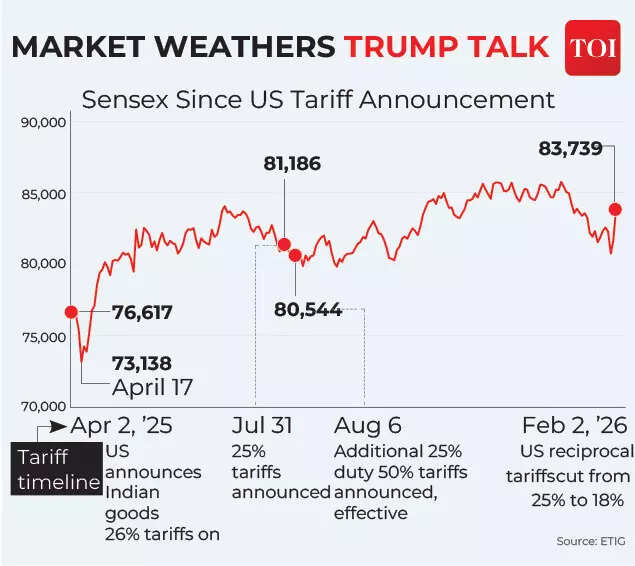
Market weathers Trump talk

Market weathers Trump talk

Market experts expect the rally to continue as more details of the trade deal emerge in the coming days.“With this deal announcement, we believe that the market will now begin to accord correct weightage to the improving trajectory of corporate earnings growth, which has shown successive improvement over the quarters with an improving earnings revision trend,” Motilal Oswal Financial Services said in a report.
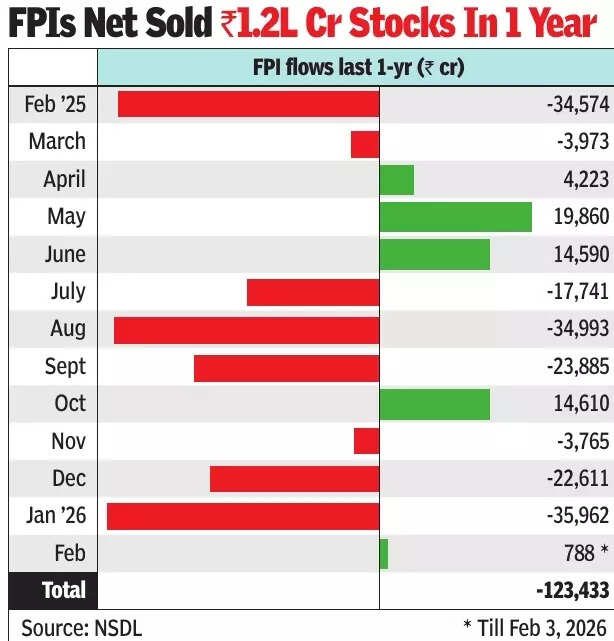
FPIs net sold Rs 1.2 lakh crore stocks in 1 year

FPIs net sold Rs 1.2 lakh crore stocks in 1 year

“This is a high-impact development and will have a multi-layered positive effect on the Indian economy, prevailing market sentiments, and sectors exporting to the US, which will benefit from better competitiveness,” it said.Tuesday’s rally was proof that the announcement has been met with cheer from foreign institutional investors as they led the rally, with their net inflow in stocks at Rs 5,236 crore.
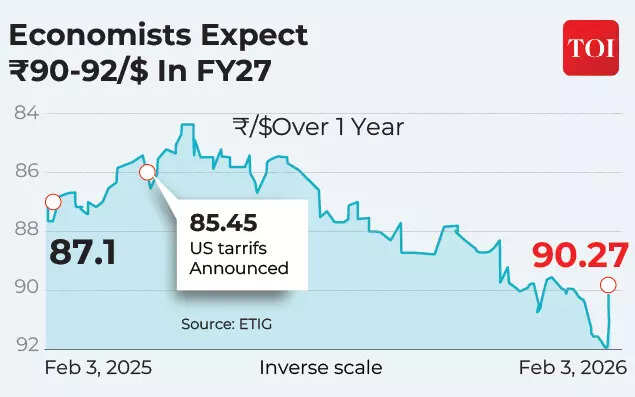
Rupee outlook

Rupee outlook

The Indian rupee, the worst performing Asian currency last year, appreciated 124 paise to 90.27 against the dollar. It logged its strongest single-day gain in seven years and the best since late 2018.

What happens to agriculture, dairy sectors?

Trump’s announcement that India has agreed to “BUY AMERICAN” at a higher level than before triggered concerns, particularly over agriculture. Since trade negotiations began, India has drawn a firm line on protecting its dairy and farm sectors.Piyush Goyal has clarified that the priorities still have not shifted and the dairy and agriculture sectors are still protected. Speaking in Lok Sabha, the minister said, “during negotiations, the Indian side successfully ensured the protection of its sensitive sectors, particularly agriculture and dairy,” he said, noting that the US too had areas it considered sensitive.On the US side, trade representative Jamieson Greer also confirmed that though India agreed to cut tariffs on industrial goods to zero from 13.5%, the agriculture segment is still safeguarded.Agriculture has long been the biggest flashpoint in India-US trade talks, with Washington pressing for greater access to India’s dairy and agricultural markets. US commerce secretary Howard Lutnick had even accused India of shutting out American farmers, questioning why it would not import “even a bushel” of US corn.The decision to safeguard the sector is not solely commercial, rather it is non-negotiable. The agriculture and dairy sector sits at the heart of rural life and food security. Farming and allied activities, including animal husbandry, support the livelihoods of over 700 million people.India is largely self-sufficient in food production, while countries such as the US, Australia and the European Union treat agriculture as a major export business. Opening Indian markets to heavily subsidised farm products from these regions could flood the country with cheap imports, sharply undercutting farmer incomes.India already maintains agricultural tariffs ranging from zero to 150%. The US also follows a similar approach, imposing steep duties on select products such as tobacco, which attracts tariffs of up to 350%.

What led to the sudden trade deal?

The ‘mother of all trade deals’ – the recently concluded India-EU Free Trade Agreement – may have been what finally spurred the Trump administration into action. According to a News Week analysis, it led the US government to blink.While discussions for a trade deal with the European Union had been ongoing, this time, “the trade agreement with the EU appears to have provided a strong goad for the US to wrap up the long-lingering negotiations with India,” says a TOI report.
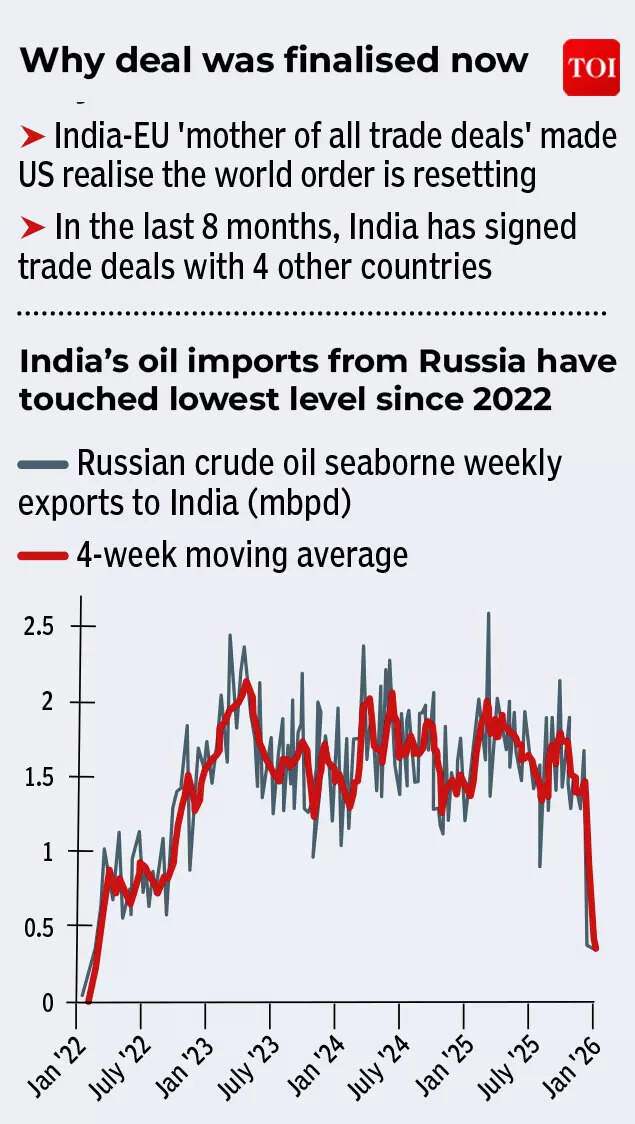
Why deal was finalised now

Why deal was finalised now

Talks between India and the US for a trade deal had continued, despite the 50% tariffs imposed by the latter. While Trump and PM Modi continued to talk, Commerce Minister Piyush Goyal and External Affairs Minister S Jaishankar also engaged in talks with their respective counterparts. The arrival of the new US Ambassador to India Sergio Gor also seems to have worked to help push for the trade deal.Now, the wait for the fine printWhile experts and analysts have welcomed the news as a positive for the Indian economy, they also caution that details of the deal need to emerge for a better understanding of what it holds for each sector and the economy as a whole.
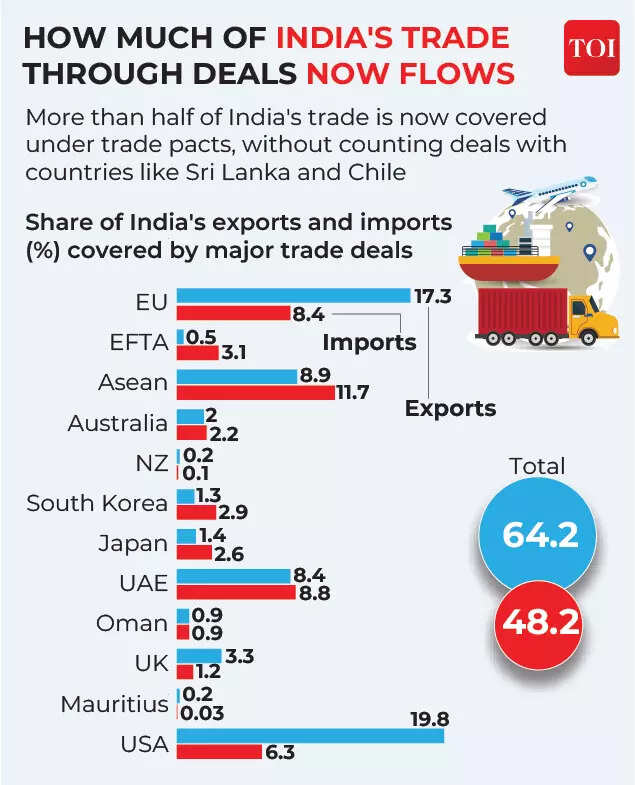
India's trade through deals

India’s trade through deals

Piyush Goyal has said that a joint statement by the countries will be issued soon.“Experience suggests caution. The US–Korea FTA showed how initial optimism can be diluted by ‘later’ safeguards and reinterpretations while recent tariff threats linked to Greenland-related geopolitical tensions underscore how strategic considerations can quickly reshape trade outcomes,” says JM Financial in a report.

Source link

No PM Modi speech in Lok Sabha: What happened in a minute that led to adjournment | India News


No PM Modi speech in Lok Sabha: What happened in a minute that led to adjournment

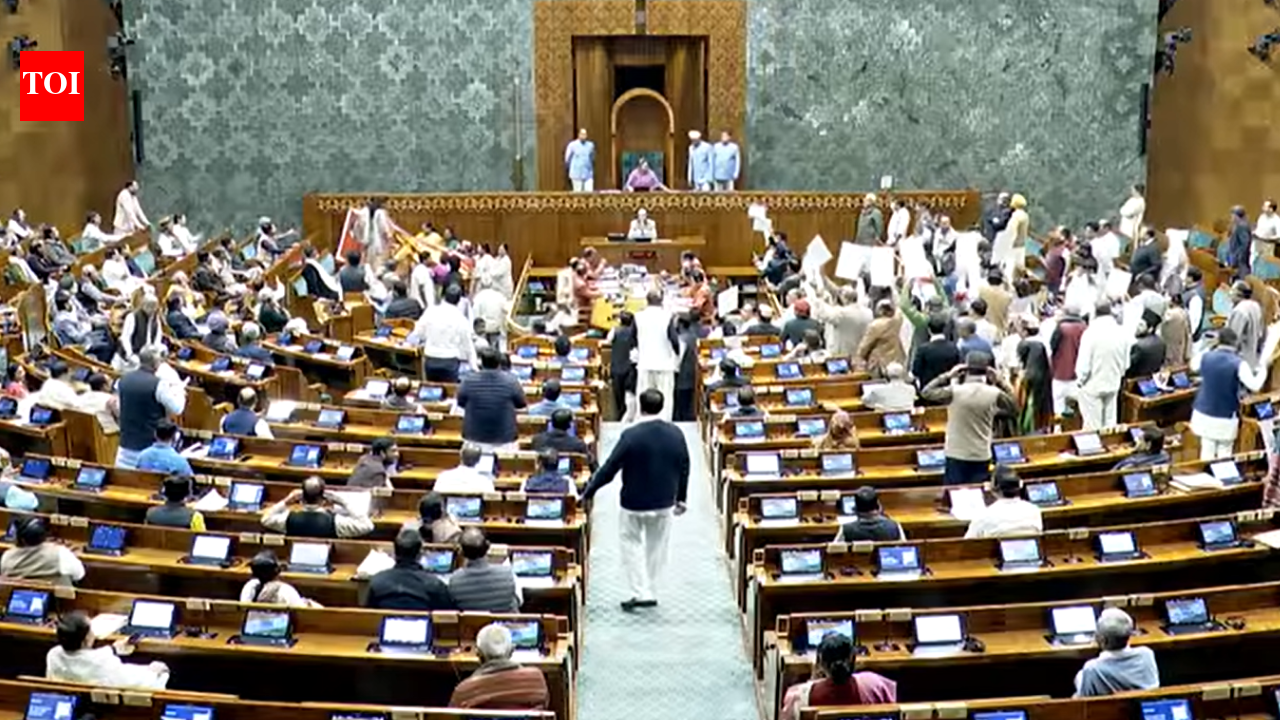
NEW DELHI: Proceedings in Lok Sabha were adjourned for the day seconds after it assembled for Prime Minister Narendra Modi’s reply to the debate on Motion of Thanks on the President’s Address.The House went into chaos as soon as the proceedings began at 5pm. Congress MPs entered the well and aisles and raised slogans over the suspension of eight MPs during the ongoing Budget Session.

‘PM Modi Under Pressure From Trump’: Rahul Gandhi Claims As Trade Deal Debate Paralyses Lok Sabha

Several women MPs from the opposition blocked the seats in the treasury bench, including the seat of the Prime Minister. They also displayed a large banner which read “Do what is right.”Subsequently, BJP MP Sandhya Rai, who was the acting speaker, adjourned the proceedings.‘PM Modi got scared’While walking out of the Parliament, Congress MP Priyanka Gandhi Vadra claimed that PM Modi did not arrive at the House because “he got scared.”“He (PM Modi) got scared and that’s why he did not arrive at the house…Union Railway Minister and BJP MP Nishikant Dubey ran away like a bullet train.” Priyanka said.Also Read: Rahul Gandhi ‘traitor’ remark against Bittu snowballs into huge controversy, protests – top developmentsRahul Gandhi also launched a broadside against the Prime Minister and said that he “doesn’t want to face the truth,” “As I said, PM Modi won’t come to Parliament because he’s scared and doesn’t want to face the truth,” Rahul wrote in a social media post on X.Earlier in the day, Gandhi said he would present Prime Minister Modi with General Naravane’s book, claiming it reveals how political leadership left the Army to act alone during the 2020 standoff with China in eastern Ladakh.In another post on X, he said the book was written by India’s former Army Chief and not by any opposition leader or foreign author.“Today, if the Prime Minister comes to Parliament, I will present him with a book. This book is not by any opposition leader. This book is not by any foreign author. This book is by the country’s former Army Chief, General Naravane, and the surprising thing is that, according to the Cabinet Ministers, this book does not even exist,” he wrote.‘Behaving like kids’Meanwhile, the ruling side slammed the opposition MPs for not letting the House to function. Union minister Giriraj Singh said, “This is unfortunate. This is the first time such a ruckus has been created during the President’s address. They are behaving like children. What do they think? Do they think this is the Nehru family’s kingdom, or the Congress party’s office, or Sonia Gandhi’s house?”Union minister Chirag Paswan also criticised the opposition MPs for their conduct in the Lok Sabha and said that the chaos in the Parliament prevented any meaningful discussion.“This is extremely unfortunate. The way the Opposition behaved during the President’s address prevented any meaningful discussion. Because of the Congress, even other Opposition parties were denied the opportunity to present their views. The President’s address is a platform to raise every issue. With elections due in several states, regional parties should have been allowed to speak,” Chirag said.“This is extremely unfortunate. The way the Opposition behaved during the President’s address prevented any meaningful discussion. Because of the Congress, even other Opposition parties were denied the opportunity to present their views. The President’s address is a platform to raise every issue. With elections due in several states, regional parties should have been allowed to speak,” he added.Also Read:Oppn, BJP MPs spar in Speaker office as Nishikant Dubey flashes ‘Bofors’ book in LS to target Gandhi familyThe Lok Sabha has witnessed repeated showdowns between the opposition and the ruling party after Rahul Gandhi, in his address, raked up India-China border skirmishes during August 2020..Rahul Gandhi, leading the Congress charge, raised the issue of Chinese aggression during Galwan stand-off while citing ‘uncomfortable facts’ from the memoirs of former Army Chief Naravane, where he is understood to have written about ‘political indecision’ about response mechanism to the then Chinese misadventures.This drew strong counter from Union ministers and also rejection from Speaker Birla, who rebuffed Rahul Gandhi’s repeated reference to Galwan, on grounds of violation of Parliamentary norms.On Tuesday, eight Congress MPs were suspended for the remainder of the Parliament session after ruckus erupted in the Parliament over Rahul Gandhi’s address.


Source link

Access Denied


Access Denied

You don’t have permission to access “http://www.ndtv.com/feature/will-never-write-code-by-hand-again-how-anthropics-new-ai-tool-is-rattling-the-tech-community-10945964” on this server.

Reference #18.adf5d217.1770215820.37907895

https://errors.edgesuite.net/18.adf5d217.1770215820.37907895


Source link

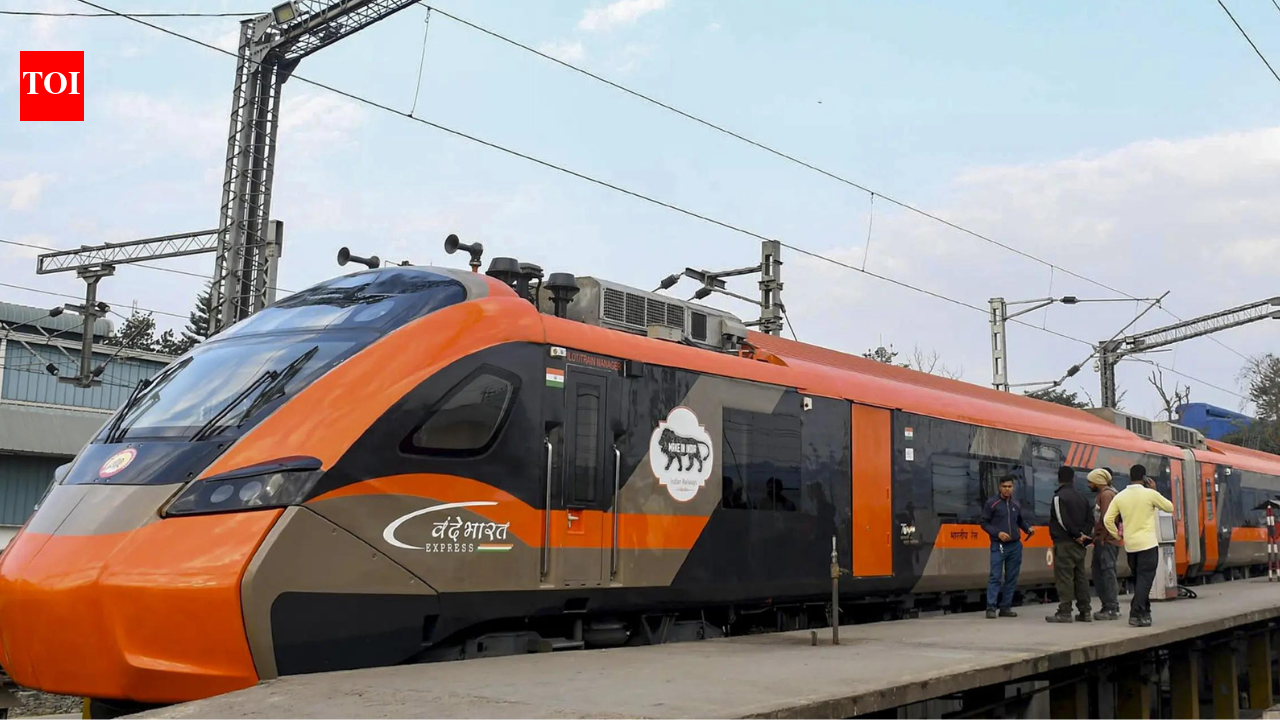
Rail modernisation: Railways plans 260 Vande Bharat sleeper rakes; phased rollout with advanced safety, comfort features


Rail modernisation: Railways plans 260 Vande Bharat sleeper rakes; phased rollout with advanced safety, comfort features

The government has planned to manufacture 260 rakes of Vande Bharat Sleeper trainsets as part of efforts to upgrade long-distance rail travel with advanced safety systems and passenger comfort features, according to Union minister Ashwini Vaishnaw in a written reply in the Lok Sabha.The programme will be executed in phases covering prototype development, testing, trials and series production. The sleeper variant is being developed through a coordinated manufacturing effort involving BEML, Integral Coach Factory (ICF), Chennai and technology partners.

India Reveals First Vande Bharat Sleeper Offering Faster Overnight Travel On Kolkata-Guwahati Line

According to the official statement, the “development of new rolling stocks like Vande Sleeper necessitates a holistic approach, combining technological innovation, strategic planning and manufacturing to ensure a safe, reliable and comfortable travel.”The government said induction of Vande Bharat Sleeper trainsets into passenger services will be carried out in phases based on demand and operational readiness.“The process involves development of prototype, extensive testing and trials followed by series production,” the statement said.The project is part of the broader push to enhance passenger experience while improving operational efficiency and safety standards across the railway network.The new sleeper trainsets are being equipped with multiple advanced safety and passenger-centric features.These include semi-permanent jerk-free couplers and anti-climbers, KAVACH safety systems, and crashworthy coach design complying with EN safety standards. The trainsets will have fire barrier doors, aerosol-based fire detection and suppression systems in electrical cabinets and lavatories, and CCTV coverage across all coaches.The trains will also feature regenerative braking systems for energy efficiency and higher acceleration with a design speed of 180 kmph and operating speed of 160 kmph.Passenger comfort upgrades include centrally controlled automatic plug doors, fully sealed wider gangways, centrally monitored coach systems, and air-conditioning units fitted with indigenously developed UV-C lamp-based disinfection technology to improve hygiene inside coaches.Special provisions have been made for Divyangjan passengers, including dedicated lavatories in driving coaches, along with emergency talk-back units for passenger communication with the train manager or loco pilot during emergencies.


Source link

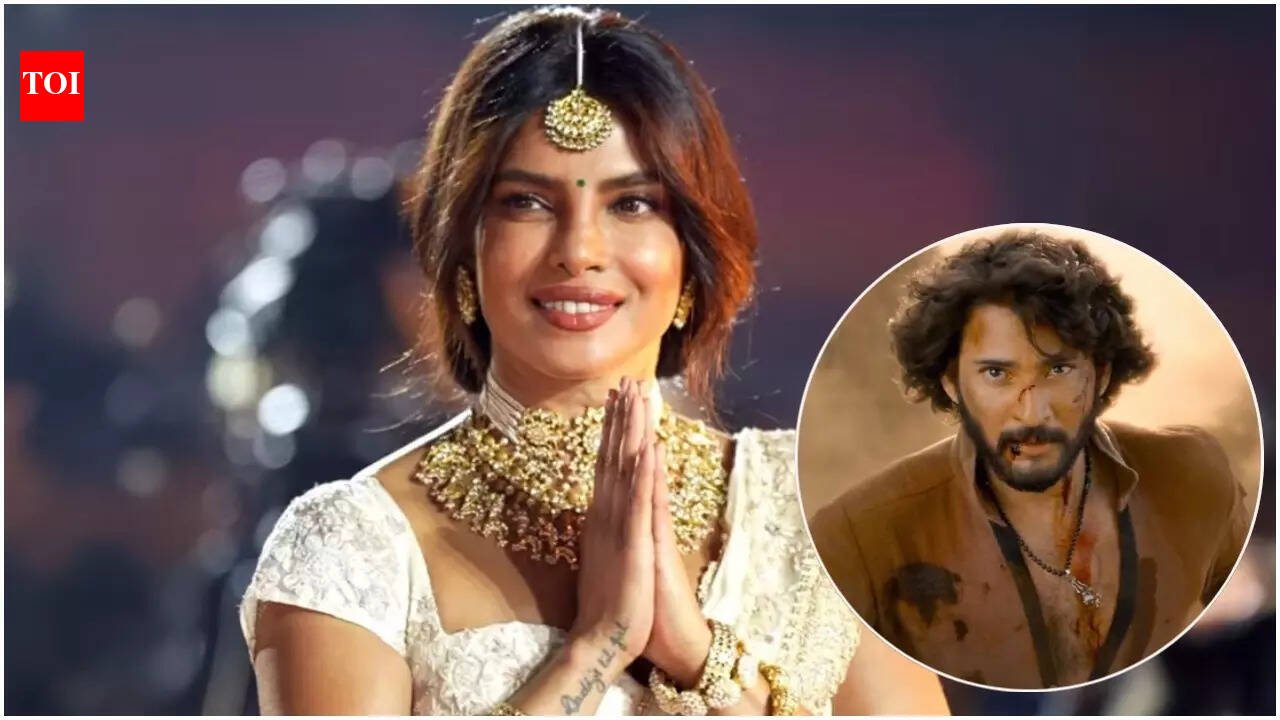
‘Varanasi’: Priyanka Chopra’s one demand to SS Rajamouli for coming on board made Mahesh Babu bear the consequences |


Priyanka Chopra makes a highly anticipated comeback to Indian cinema with SS Rajamouli’s epic ‘Varanasi’, where she portrays the enchanting Mandakini. Impressively, her only condition for taking on the role was to be part of a lively dance sequence, resulting in an ambitious filming process.

Priyanka Chopra is set to return to Indian movies with SS Rajamouli’s magnum opus, ‘Varanasi’. The actress will be playing the role of Mandakini in the movie. However, before agreeing to come on board for the project, the actress put forth one condition. Here’s what happened next.

Priyanka Chopra’s condition for agreeing to ‘Varanasi’

In an interview with Cinema Blend, Priyanka Chopra shared that she has not done any Indian films in the last six years. The actress recalled, “So when he called me, and he was like, ‘Oh, you know, this female character’s really cool, and you have to do it,’ and whatever, I was like, ‘I have one request: will you make me dance? Please, because I haven’t danced for so long.”

Ss Rajamouli’s ‘I Don’t Believe In God’ Remarks Spark Outrage!

Priyanka Chopra then shared, “Whoa, I should not have asked, because we be dancing. Oh my gosh, there’s a lot. And poor Mahesh was like, ‘It’s because of you. Because of you, I have to do it too.'”

Mahesh Babu talks about the dance number

Mahesh Babu was also part of the interview, and he called the song “sensational.” The Telugu superstar added that they have already shot for the song and “it just keeps playing in our minds.”He further added that Priyanka Chopra keeps singing the track all the time. He clarified again that the song “was because she wanted to dance and… and he made her dance.”

More about ‘Varanasi’

Directed by SS Rajamouli, the movie will star Mahesh Babu as Rudra, Priyanka Chopra as Mandakini, and Prithviraj Sukumaran as Kumbha, the main antagonist.As per the reports and fan theories, the movie will showcase time travel. Earlier, the filmmaker had confirmed that in one of the scenes in the movie, Mahesh Babu will be seen as Lord Rama. While the title reveal teaser was dropped last year, the makers recently unveiled the new poster of the film, confirming the release date. The film is set to arrive in cinemas on April 7, 2027.


Source link

9 editions, no home winners: The strange history of the T20 World Cup | Cricket News


9 editions, no home winners: The strange history of the T20 World Cup
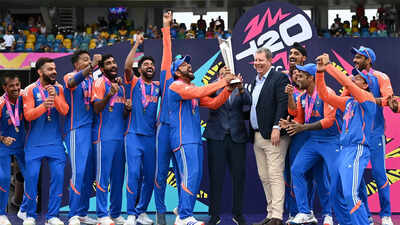
With the 10th edition set to be jointly hosted by India and Sri Lanka, the big question remains — will a host finally break the jinx? (Image credit: ICC)

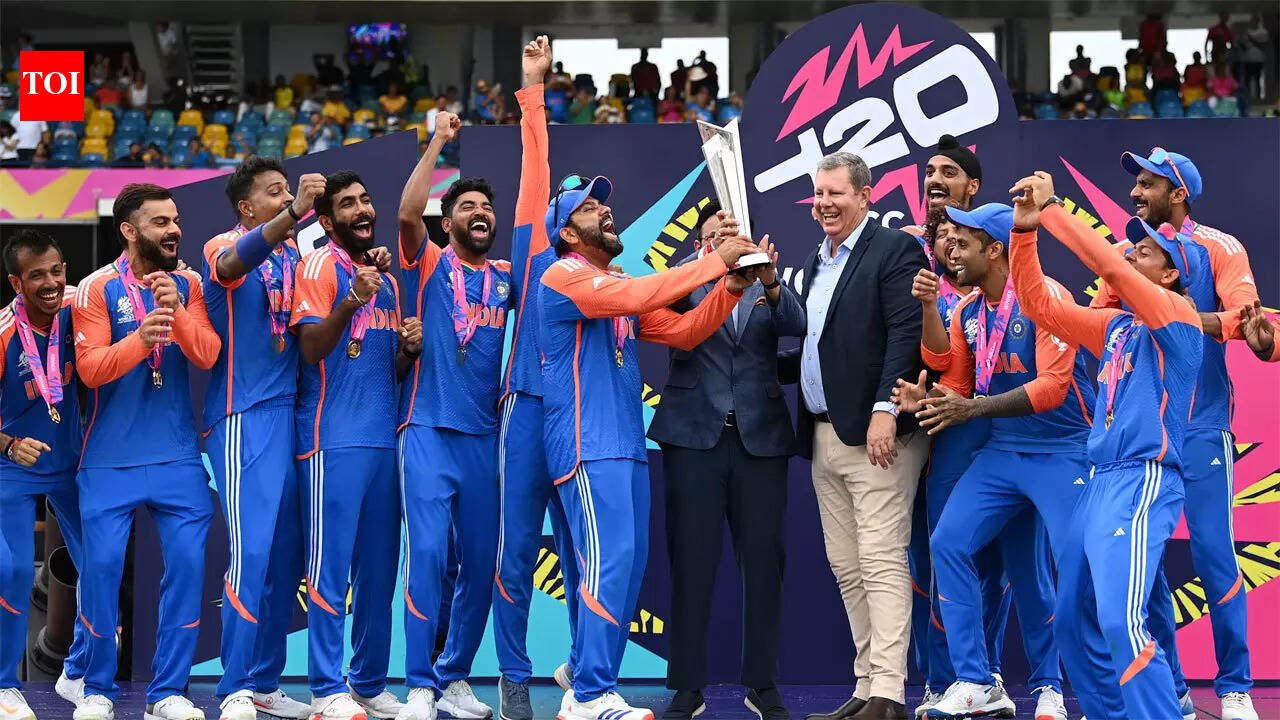
Since the ICC Men’s T20 World Cup was launched in 2007 in South Africa, nine editions of the marquee tournament have been completed, producing six different champions and countless unforgettable moments. India, West Indies and England have each lifted the trophy twice, while Pakistan, Australia and Sri Lanka have tasted success once.India scripted history in the inaugural edition under Mahendra Singh Dhoni, edging past arch-rivals Pakistan by five runs in a nerve-shredding final at Johannesburg’s Wanderers Stadium. The Men in Blue had to wait nearly 17 years to reclaim the crown, finally doing so in 2024 when Rohit Sharma’s side defeated South Africa by seven runs in a thrilling summit clash at Kensington Oval in Bridgetown, Barbados.

T20 World Cup: Squads, Full Schedule, Venues and Key Details Explained

India enter the upcoming tournament as defending champions after their triumph across the Caribbean and the United States. Playing in familiar conditions, they start as strong contenders, although T20 cricket’s inherent unpredictability promises another gripping contest.A curious trend has also defined the competition so far: none of the host nations have ever won the T20 World Cup. South Africa (2007), England (2009), West Indies (2010), Sri Lanka (2012), Bangladesh (2014), India (2016), UAE & Oman (2021), Australia (2022), and USA & West Indies (2024) all staged the event, yet the trophy always travelled elsewhere.With the 10th edition set to be jointly hosted by India and Sri Lanka, the big question remains — will a host finally break the jinx?Here’s a look back at the finals from the first nine editions:2007 T20 World CupChampions: IndiaRunners-up: PakistanHosts: South AfricaIndia sealed a thrilling five-run victory over Pakistan to lift the inaugural ICC World Twenty20 title in front of a frenzied crowd at the Wanderers, producing what many still regard as one of the greatest finals in major tournament history. With six needed off four balls, Misbah-ul-Haq attempted a risky scoop over short fine leg off Joginder Sharma, only to send the ball straight up in the air. Sreesanth settled under it and completed the catch, triggering wild celebrations as India were crowned champions.“It’s one of the things I will treasure for the rest of my life,” Dhoni said after the match.The five-run victory handed India their first T20 World Cup crown.2009 T20 World CupChampions: PakistanRunners-up: Sri LankaHosts: EnglandAfter missing the World Cup by a whisker in 2007, Pakistan didn’t let the chance slip this time. The side, which had fallen agonisingly short two years earlier, lifted the trophy at the iconic Lord’s Cricket Ground.After Abdul Razzaq’s three-wicket burst restricted Sri Lanka to 138/6 in 20 overs, Pakistan’s swashbuckling batter Shahid Afridi guided his team home in the 19th over with an unbeaten 54. Pakistan captain Younis Khan raised the trophy in front of a roaring Lord’s crowd.

T20 World Cup winners list

Year Winner Runners-Up Hosts
2007 India Pakistan South Africa
2009 Pakistan Sri Lanka England
2010 England Australia West Indies
2012 West Indies Sri Lanka Sri Lanka
2014 Sri Lanka India Bangladesh
2016 West Indies England India
2021 Australia New Zealand UAE and Oman
2022 England Pakistan Australia
2024 India South Africa USA and West Indies

2010 T20 World CupChampions: EnglandRunners-up: AustraliaHosts: West IndiesAfter failing to reach the knockouts in 2009 as hosts, England learned from their mistakes and turned the tables in the 2010 edition. They defeated Australia in the final to lift their maiden T20 World Cup trophy under Paul Collingwood’s captaincy.Electing to field first, England, riding on Ryan Sidebottom’s two wickets and tight bowling from Graeme Swann (1/17), limited Australia to 147/6 in 20 overs.In reply, Craig Kieswetter scored 63, while Kevin Pietersen smashed 47 to help England chase down the target in 17 overs and win the title.2012 T20 World CupChampions: West IndiesRunners-up: Sri LankaHosts: Sri LankaMarlon Samuels and Darren Sammy helped West Indies clinch their first world title since 1979. The wait was long, and tears of joy flowed for the Men in Maroon. West Indies elected to bat first against Sri Lanka in Colombo. Ajantha Mendis (4/12) did the job for Sri Lanka, restricting West Indies to 137/6. Samuels blasted 78 off 56 balls, while Sammy scored an unbeaten 26 off 15.Despite posting a modest total, West Indies, riding on Sunil Narine’s 3/9 and Darren Sammy’s 2/6, bowled Sri Lanka out for 101 to win the final by 36 runs.2014 T20 World CupChampions: Sri LankaRunners-up: IndiaHosts: BangladeshIndia entered the final as favourites to repeat their 2007 success. Sri Lanka elected to field first and restricted India to 130/4. Virat Kohli top-scored with 77 off 58 balls. In reply, Kumar Sangakkara struck a brilliant unbeaten 52 off 35 balls to take Sri Lanka home in Dhaka.2016 T20 World CupChampions: West IndiesRunners-up: EnglandHosts: IndiaThe 2016 final is regarded as one of the greatest in T20 World Cup history. West Indies were pushed all the way and eventually prevailed in trademark fashion. The hero was Carlos Brathwaite.After England posted 155/9, West Indies suffered a poor start, losing Johnson Charles, Chris Gayle and Lendl Simmons with just 11 on the board. Marlon Samuels’ brilliant unbeaten 85 kept them in the hunt.The final over equation read: Windies needed 19 off six balls. Brathwaite was on strike, Ben Stokes had the ball — and the rest is history. Brathwaite smashed four consecutive sixes to seal the title.2021 T20 World CupChampions: AustraliaRunners-up: New ZealandHosts: UAE and OmanBoth New Zealand and Australia were chasing their first T20 World Cup title, and it was Australia who emerged victorious. New Zealand, put in to bat, scored 172/4, with Kane Williamson making 85 off 48 balls. In reply, David Warner hit 53 while Mitchell Marsh smashed an unbeaten 77 to guide Australia to their maiden crown.2022 T20 World CupChampions: EnglandRunners-up: PakistanHosts: AustraliaBoth England and Pakistan were aiming for a second T20 World Cup title. England prevailed by five wickets. After electing to field, England rode on fine spells from Sam Curran (3/12), Adil Rashid (2/22) and Chris Jordan (2/27) to restrict Pakistan to 137/8. Ben Stokes then scored an unbeaten 52 to steer England to victory.2024 T20 World CupChampions: IndiaRunners-up: South AfricaHosts: USA and West IndiesIt was a pulsating final between India and South Africa, with India snatching victory from the jaws of defeat. The Men in Blue won by seven runs to reclaim the T20 crown and end India’s 11-year trophy drought. Following the triumph, Virat Kohli, Rohit Sharma and Ravindra Jadeja announced their retirement from the shortest format of the game.


Source link

From Arshdeep Singh to Wanindu Hasaranga: Leading wicket-takers in each edition of T20 World Cup


ICC Men’s T20 World Cup has always been a battleground where the batter-dominated narrative goes to die. While the shortest format is often celebrated for its towering sixes and lightning-fast hundreds, the history of the tournament proves that it is the bowlers who truly dictate the destination of the trophy. From the swing-friendly conditions of South Africa in 2007 to the slow, turning tracks of the Caribbean in 2024, the leading wicket-takers have consistently been the tactical pivots for their teams.

As we stand on the cusp of the 10th edition in 2026, hosted by India and Sri Lanka, the legacy of these record holders offers a fascinating roadmap of how T20 bowling has evolved from raw pace to mystery spin and, eventually, to the era of the high-skill left-armers.

Leading wicket-takers in each edition of the T20 World Cup

The history of the T20 World Cup is a chronicle of bowling innovation. Below is a detailed breakdown of the masters who topped the charts in every edition to date.

2007 T20 World Cup – Umar Gul (Pakistan)

(Image source: X)

The inaugural edition in South Africa was the stage where Umar Gul perfected the art of the death-over yorker. He was the spearhead of Pakistan’s journey to the final, finishing with 13 wickets. Gul’s campaign was defined by his incredible ability to reverse the ball, most notably against New Zealand in the semi-final, where his 3/15 earned him the Player of the Match. Despite his heroics, including three wickets in the final against India, Gul finished as a runner-up. He ended with an average of 11.92 and a staggering economy of 5.60.

2009 T20 World Cup – Umar Gul (Pakistan)

2009 T20 World Cup Umar Gul Pakistan
(Image source: X)

Making history, Gul became the first and only bowler to lead the wicket-taking charts in consecutive editions. In 2009, he again claimed 13 wickets, but this time, he walked away with the trophy. His career-best 5/6 against New Zealand at The Oval remains one of the most iconic spells in the tournament’s history. Gul’s relentless accuracy ensured Pakistan’s dominance, as he led a pack that included Ajantha Mendis and Lasith Malinga.

2010 T20 World Cup – Dirk Nannes (Australia)

2010 T20 World Cup Dirk Nannes (Australia)
(Image source: X)

As the tournament moved to the Caribbean, Australia’s Dirk Nannes brought searing pace to the fore. Nannes finished with 14 wickets at an average of 13.07. His ability to extract bounce on the West Indies tracks made him a nightmare for top orders, particularly against Pakistan and India. Although he went wicketless in the final as Australia lost to England, Nannes’ performance remains the high-water mark for Australian fast bowling in T20 World Cups.

2012 T20 World Cup – Ajantha Mendis (Sri Lanka)

2012 T20 World Cup Ajantha Mendis (Sri Lanka)
(Image source: X)

The 2012 edition belonged to the mystery of Ajantha Mendis. Playing on home soil, Mendis dismantled batting lineups to finish with 15 wickets. He began the tournament with a world-record 6/8 against Zimbabwe, a record that stood for seven years. In the final, he was nearly untouchable, taking 4/12 against a powerhouse West Indies lineup, though the West Indies eventually snatched the title.

2014 T20 World Cup – Imran Tahir (South Africa) & Ahsan Malik (Netherlands)

2014 T20 World Cup Imran Tahir (South Africa) & Ahsan Malik (Netherlands)
(Image source: X)

The 2014 edition in Bangladesh saw a rare tie at the top, with both Imran Tahir and Ahsan Malik taking 12 wickets. Tahir was the heartbeat of the Proteas’ spin attack, while Malik became the face of Associate nation excellence. Malik’s 5/19 against South Africa was a historic performance, highlighting the narrowing gap between the established giants and rising teams.

2016 T20 World Cup – Mohammad Nabi (Afghanistan)

2016 T20 World Cup Mohammad Nabi (Afghanistan)
(Image source: X)

This tournament marked the arrival of Afghanistan as a global bowling powerhouse. Mohammad Nabi topped the list with 12 wickets, outshining even his teammate Rashid Khan. Nabi’s veteran intelligence was on full display in the Super 10s, where his calm final over against the West Indies (the eventual champions) secured a historic win for Afghanistan.

2021 T20 World Cup – Wanindu Hasaranga (Sri Lanka)

2021 T20 World Cup Wanindu Hasaranga (Sri Lanka)
(Image source: X)

Wanindu Hasaranga redefined the role of the modern leg-spinner in the UAE, claiming 16 wickets in just 8 matches. His campaign included a hat-trick against South Africa and a brilliant 3/21 against England. Hasaranga’s economy of 5.20 and average of 9.75 showcased a level of dominance rarely seen in the format.

2022 T20 World Cup – Wanindu Hasaranga (Sri Lanka)

2022 T20 World Cup Wanindu Hasaranga (Sri Lanka)
(Image source: X)

Proving his 2021 performance was no fluke, Hasaranga topped the charts again in Australia with 15 wickets. His wily variations worked even on the larger Australian grounds, making him the only spinner to rival Umar Gul’s record of leading back-to-back tournaments.

2024 T20 World Cup – Fazalhaq Farooqi (Afghanistan) & Arshdeep Singh (India)

2024 T20 World Cup Fazalhaq Farooqi (Afghanistan) & Arshdeep Singh (India)
(Image source: X)

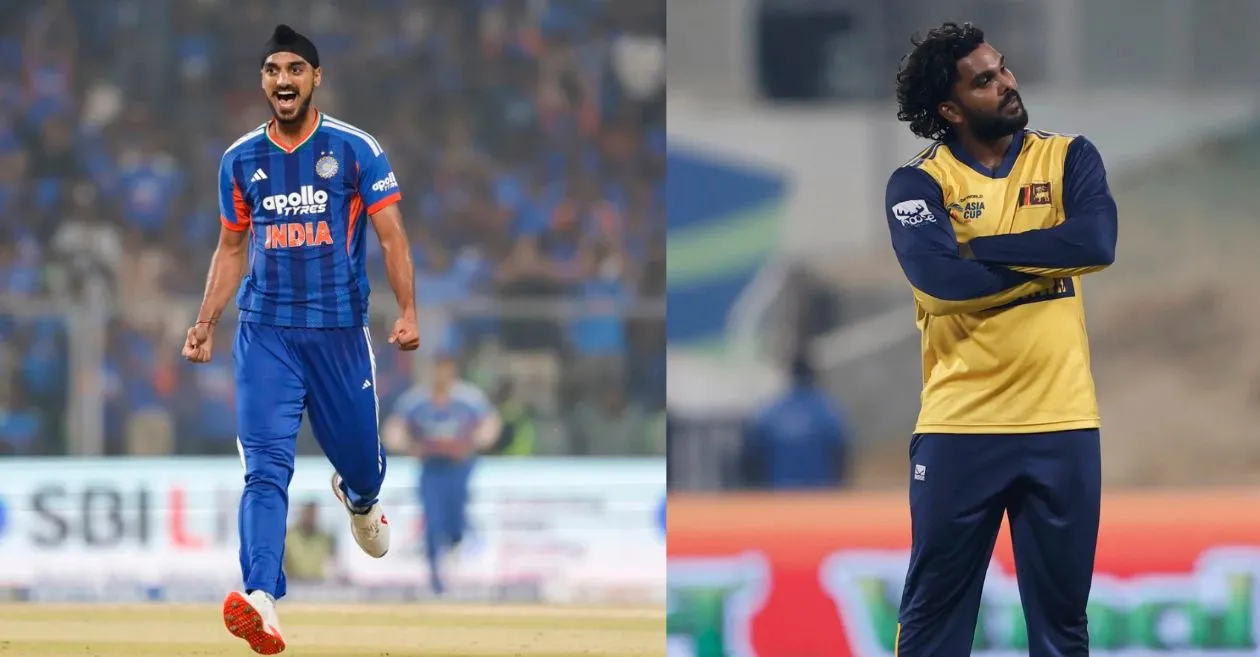
The most recent edition in the USA and Caribbean saw a new benchmark set. Afghanistan’s Fazalhaq Farooqi and India’s Arshdeep Singh shared the honors with 17 wickets each, the most ever in a single edition. Farooqi’s 5/9 against Uganda and Arshdeep’s match-winning 2/20 in the final against South Africa proved that left-arm pace is currently the most lethal weapon in T20 cricket.

Also READ: From Virat Kohli to Babar Azam: Leading run-scorers in each edition of T20 World Cup

Who will lead the numbers game in 2026?

With the 2026 T20 World Cup held in India and Sri Lanka, the subcontinental conditions will undoubtedly favor spin-heavy attacks and masters of change-of-pace. Rashid remains a perennial favorite; his unmatched experience and recent form make him a prime candidate to reclaim the top spot. However, the emergence of Varun Chakaravarthy, currently the world’s top-ranked T20 bowler, suggests he could be India’s greatest weapon on home soil.

Don’t overlook the defending champions’ pace duo; Arshdeep Singh has a knack for peaking at ICC events, while Jasprit Bumrah continues to be the gold standard for economy and breakthroughs. From Sri Lanka, Wanindu Hasaranga will be hunting for a third most wickets title in front of his home crowd. On these turning tracks, the battle for the most wickets will likely be a high-stakes chess match between elite wrist-spinners and crafty left-arm seamers.

Also READ: T20 World Cup 2026: Complete squads of all teams along with their captains


Source link

‘Medical condition is not good’: SC asks Centre to rethink Sonam Wangchuk’s detention | India News


'Medical condition is not good': SC asks Centre to rethink Sonam Wangchuk's detention

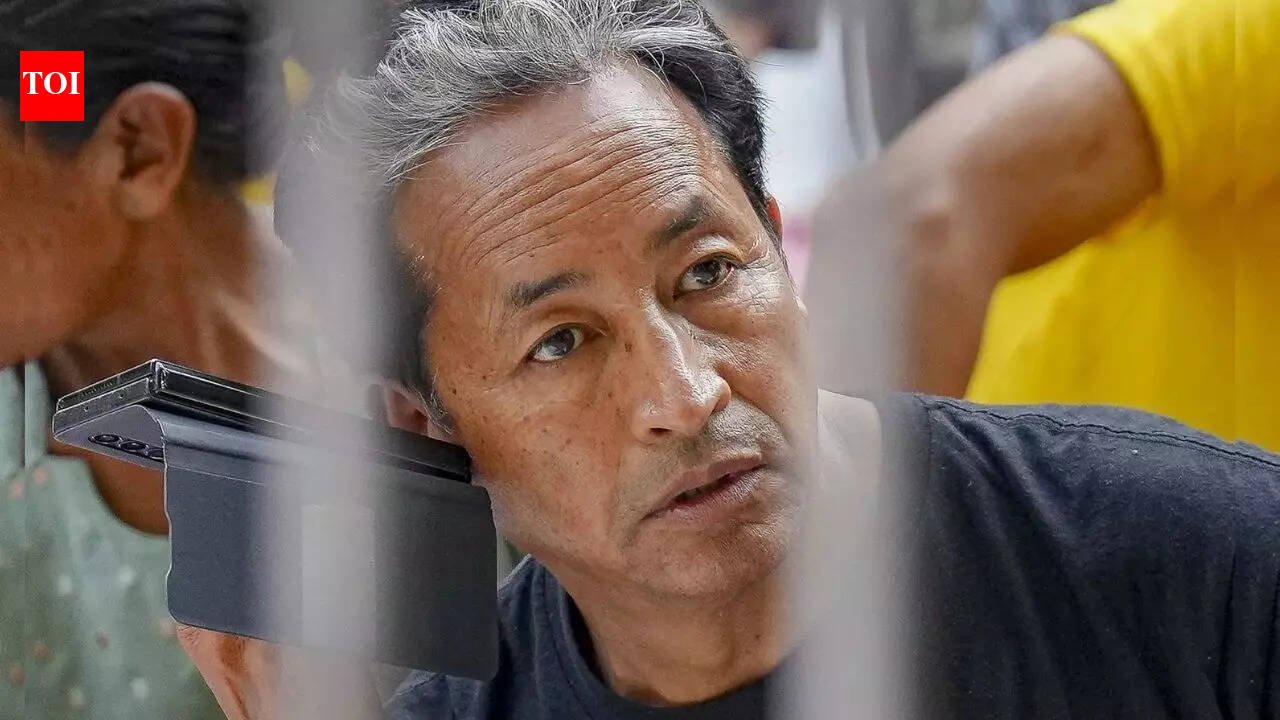
NEW DELHI: The Supreme Court on Wednesday asked the Centre whether there was any possibility of it rethinking or relooking at the detention of climate activist Sonam Wangchuk, saying that “his medical condition is not that good”.The top court also asked the Centre to brief it on the government’s stand on the next date of hearing and directed the authorities to place before it the original file related to Wangchuk’s detention.The observation came a day after the Centre and the Union Territory administration of Ladakh told the top court that Sonam was detained for allegedly instigating people in a sensitive border area.Justifying the detention, Solicitor General Tushar Mehta told a bench of Justices Aravind Kumar and P B Varale that all procedural safeguards were followed while invoking the National Security Act (NSA).“This court is dealing with a person who is instigating people in a border area, adjacent to Pakistan and China, where regional sensitivity is involved,” Mehta said, adding that all provisions of the NSA had been “scrupulously complied with” and that Sonam was being treated fairly.The arguments remained inconclusive and will continue on the next date of hearing, PTI reported.Earlier, the Centre had claimed that Sonam attempted to instigate Gen Z and had referred to protests such as those seen in Nepal and Bangladesh, including mentions of “Arab Spring-like agitations.”The court was hearing a plea filed by Sonam Wangchuk’s wife, Gitanjali J Angmo, challenging his detention under the NSA.She has alleged that the detention is illegal, arbitrary and violative of his fundamental rights. Senior advocate Kapil Sibal, appearing for Angmo, argued that the police relied on “borrowed material” and selective videos to mislead the detaining authority.The plea further said it was wholly “preposterous” that Sonam was being targeted after more than three decades of work and recognition at the state, national and international levels for his contributions to grassroots education, innovation and environmental conservation in Ladakh and across India.Sonam, who is lodged in Jodhpur Central Jail, was detained on September 26 last year, two days after violent protests demanding statehood and Sixth Schedule status for Ladakh left four people dead and 90 injured.The government has accused him of inciting the violence, a charge Angmo has denied, stating that Sonam had himself condemned the violence and said it would lead to the failure of Ladakh’s peaceful movement.


Source link

Rahul Gandhi ‘traitor’ remark against Bittu snowballs into huge controversy, protests – top developments | India News


Political Storm Erupts As Rahul Gandhi, Ravneet Bittu Clash, Cong Targets PM Modi On Epstein Files

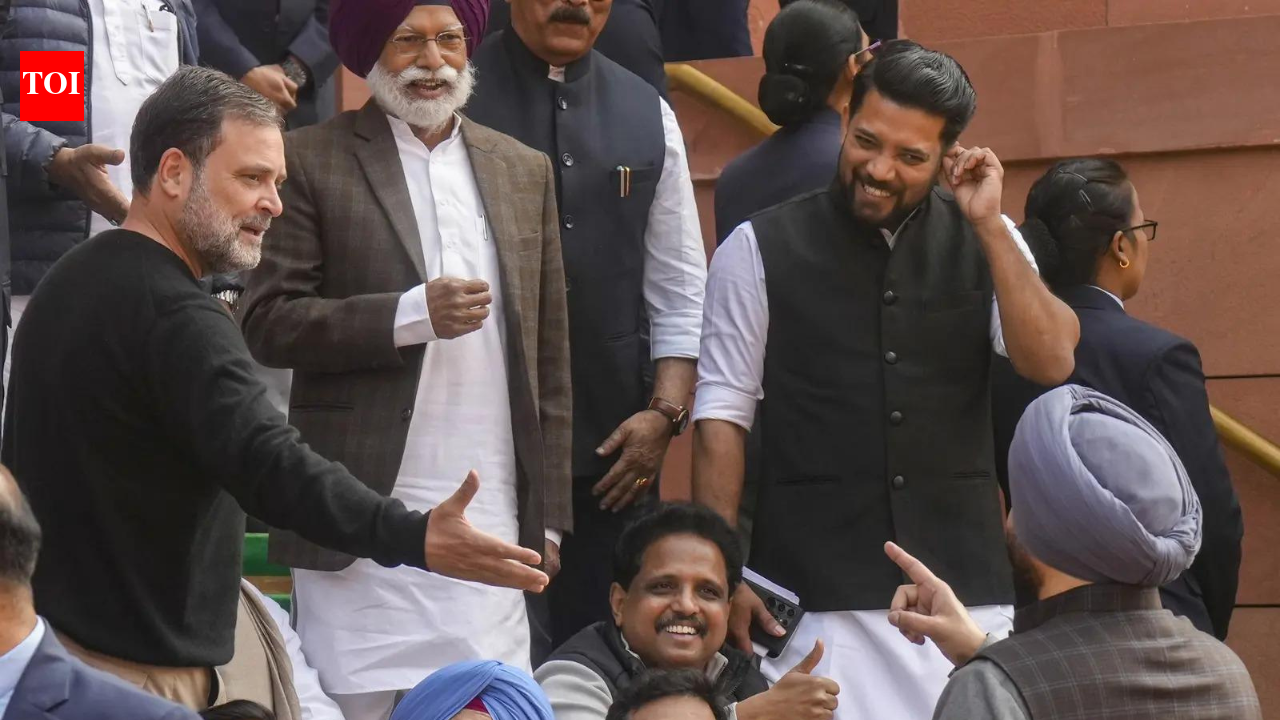
NEW DELHI: Congress leader Rahul Gandhi on Wednesday stirred a fresh controversy after he took a jibe at BJP MP Ravneet Singh Bittu and called him “traitor friend.”While protesting at the Makar Dwar of the parliament complex over the suspension of Congress MPs, Rahul and Bittu engaged in a verbal altercation. While the Congress leader called Bittu a “traitor”, Bittu retorted by calling Rahul Gandhi and Congress MPs “Sadak ka gunda”.

Political Storm Erupts As Rahul Gandhi, Ravneet Bittu Clash, Cong Targets PM Modi On Epstein Files

Reportedly, the war of words began when Bittu commented on the MPs protesting outside Parliament, saying, “They are sitting as if they won a war.”‘Unacceptable’Taking offence to the remarks, the Sikh leaders of BJP launched a sharp attack against Rahul Gandhi, calling the remark “unacceptable” and deeply offensive to the Sikh community.During a press conference, Union minister Hardeep Singh Puri demanded an apology from the Congress leader and “This word, traitor, can not be taken lightly. The word is used for someone who has betrayed his country. This is a very sensitive issue for the Sikh community,” Puri said.Ravneet Singh Bittu is not just an MP elected from Ludhiana, he is not just a member of a Sikh family that has served the country, his grandfather, Sardar Beant Singh, who was the chief minister of Punjab, fell to an assassin’s bullet. And you call him a traitor. This is unacceptable,” he added.‘You were fine when I was with you’Countering Rahul Gandhi, Bittu recalling the anti-Sikh riots in 1984 and accused Congress of indulging in attrocities on Sikhs.“They think they are the biggest patriots. I said, you are the biggest traitor of this country, the murderers of Sikhs. His goons killed thousands of Sikhs in this country. They vandalised our most sacred Gurudwara. When workers used to chant ‘shaheed’ for Rajiv Gandhi, they also used to also call Sardar Beant Singh ‘Shaheed-e-azam’. The problems in Punjab, the terrorism there – Sikhs were called, but action was not taken. So, it was Sardar Beant Singh who calmed Punjab,” Bittu said“You were fine when I was with you, but now that I am in the BJP, you are using such language. After such remarks, he is offering his hand as if he were a king,” the Union MoS added.BJP stages protest at Congress HQBJP leaders and workers staged a protest near the Congress headquarters on Akbar Road against Rahul Gandhi The protesters gathered at Mansingh Road near Congress headquarters, raising slogans “Sikh Sardar Hai, Rahul Gandhi Gaddar Hai”, and demanded an apology from the from the Congress leader in the Lok Sabha.Leading the protest, Delhi BJP president Virendra Sachdeva said that “Gandhi not just abused an individual but the entire Sikh community, which is the pride of the country.”


Source link