Breaking News
India begins human trials of new indigenous vaccine for forest fever | India News


India begins human trials of new indigenous vaccine for forest fever

NEW DELHI: India has moved a step closer to strengthening its defence against Kyasanur Forest Disease (KFD), a tick-borne viral infection that has long troubled forest-edge communities in the Western Ghats. The Indian council of medical research (ICMR) has initiated Phase I human clinical trials of a newly developed, fully indigenous vaccine after completing key laboratory and animal studies.The vaccine programme was taken up at the request of the Karnataka government, one of the states most affected by recurring KFD outbreaks. The disease is endemic to parts of Karnataka, Tamil Nadu, Kerala, Goa and Maharashtra, and is associated with high fever, severe weakness and, in some cases, fatal complications.Developed under the Department of Health Research, Ministry of Health and Family Welfare, the candidate vaccine is a collaborative effort involving Indian immunologicals limited and the ICMR- National institute of Virology. It is a two-dose, adjuvanted, inactivated vaccine, with doses administered 28 days apart.Officials said animal challenge and toxicity studies have been successfully completed, and GLP-grade vaccine material has already been produced. Following approval from the national drug regulator, the Central Drugs Standard Control Organisation, the first phase of human trials has now begun to assess safety and early immune response.If the Phase I trial shows the vaccine to be safe and immunogenic, it will progress to larger clinical trials before seeking full regulatory approval. Scientists say the new candidate aims to overcome limitations of the existing KFD vaccine, which requires repeated booster doses and has shown variable effectiveness in the field.The government said it will continue to support state governments in addressing difficult public health challenges, with the KFD vaccine effort seen as part of a broader push to develop solutions for region-specific infectious diseases using indigenous research and manufacturing capacity.


Source link

Fasting sugar, post-meal sugar, HbA1c: Why one blood sugar test is not enough


Blood sugar testing seems simple, right? You prick your finger, see a number, and know if you’re “good” or “bad.” But anyone who’s ever tried to make sense of fasting glucose, post-meal readings, HbA1c, random tests, or oral glucose tolerance tests knows it’s anything but simple. And that confusion is exactly why so many people stay in the dark about their risk for diabetes.“Glucose levels in the bloodstream change constantly throughout the day and can vary based on food and drinks consumed, activity levels, stress, and hormonal fluctuations. Because of these fluctuations, to get an accurate picture of your risk for having diabetes, long-term control of glucose, a single glucose test is not sufficient. For this reason, we recommend the following three tests, each of which will measure a different aspect of glucose metabolism, so together they create a better and more accurate picture of how efficiently the body is using glucose,” says Dr. Nandini Shankara Narayana, Consultant – Endocrinology & Andrology, KIMS Hospitals, Electronic City, Bengaluru and explains what each test result reveals and when they should be done.

What is the Fasting Blood Sugar test?

A fasting blood glucose test measures your glucose level after fasting for 8 to 10 hours (most often, from dinner the night before until the test the next morning). This will give you a reading of how well your body can regulate glucose overnight in a steady, basal state.

  • Normal: between 70 and 99 mg/dL
  • Prediabetes: between 100 and 125 mg/dL
  • Diabetes: 126 mg/dL or higher

The fasting blood sugar test does not reveal any spikes in blood glucose that can occur after eating.15 lakh new cancer cases in India every year: Don’t ignore these 3 early warning signs, doctor says

Understanding Post-Meal (Postprandial) Sugar

A postprandial blood glucose test (PPB) is taken 2 hours after you eat a meal and will measure how well your body is able to metabolize carbohydrates from the food you ate. At the time of diagnosis, your doctor may ask for a more specific test, which is often done on a fixed glucose load, called Oral Glucose Tolerance Test (OGTT). Here the fasting glucose is measured first followed by a drink with 75 gm of glucose in it. Blood glucose is measured at 1 or 2 hours after this 75gm glucose drink.Statin pills safer than you think and most side-effects not caused by the drugs, doctors say, backed by new findings published in LancetUp to 40% of India’s colorectal cancer patients are under 40: The profile of the country’s fourth most common cancer is shiftingIs home-cooked food always healthy?

  • Normal: below 140 mg/dL
  • Prediabetes is defined as 140-200mg/dl
  • Diabetes is defined as >200mg/dl

This test will help to identify hidden high blood glucose levels that may occur as a result of a carbohydrate meal with carbohydrates or if your body has trouble producing enough insulin. Fasting tests would not necessarily capture these problems in well-controlled diabetes because PPB is often closely correlated with HbA1c (long-term blood glucose control).

The role of the HbA1c test

The HbA1c test measures average level of blood sugar from the last 2 to 3 months by measuring how much glucose has been bound to hemoglobin in the red blood cells.

  • Normal is defined as < 5.7%
  • Prediabetes is defined as 5.7-6.4%
  • Diabetes is defined as > 6.5%

While the HbA1c measures blood glucose over an extended period, it does not reflect daily variations. However, if you are anemic, have a hemoglobin variant, or have other medical conditions, this result may be affected.

Limitations of relying on a single test example

“The limitations of each of the tests is unique. Fasting glucose can be impacted by your body’s biological rhythms, stress, and dehydration, which can lead to false positive and false negative results. The post-prandial blood glucose test does not establish a baseline, and HbA1c may not indicate recent elevation in blood glucose levels or improvement in blood glucose levels over a short-term period of time. Repeated testing or confirmation using multiple methods may be recommended (e.g., fasting glucose and HbA1c) prior to making the diagnosis of diabetes,” explains Dr. Nandini Shankara Narayana.

Why the use of all three tests are important

Utilization of fasting, post-prandial, and HbA1c test measurements together reflect the inherent “roller-coaster” nature of blood glucose changes as a result of food intake, medications, sleep, and exercise. In early diabetes, post-prandial blood glucose raise can constitute a greater portion of the HbA1c than fasting blood glucose; therefore, all three tests are critical for effective management and prevention of complications (e.g., heart disease, nerve damage, kidney failure), the doctor says. People with diabetes have had success managing their diabetes because of the effective use of monitoring FBG, PPBG, and HbA1c to provide personalized and individualized diabetes care.

Simple ways to ensure you get accurate test results

The doctor recommends the right way to do each test:

  • Fast for at least eight hours before taking an FBG test.
  • Check your PPBG, test 2 hours after eating.
  • Your doctor should discuss your glucose level and discuss how your age, medications, and other health conditions affect your target numbers.
  • You should focus on the long term when you make changes to your lifestyle or treatments to make decisions based on glucometers.

“Using a mixed method of testing means providing an accurate diagnosis, improving your glucose control, and reducing your chance of complications associated with diabetes, which makes it the most dependable method for your overall health and quality of life,” recommends the doctor. Medical experts consulted This article includes expert inputs shared with TOI Health by:Dr. Nandini Shankara Narayana, Consultant – Endocrinology & Andrology, KIMS Hospitals, Electronic City, BengaluruInputs were used to explain why three blood sugar tests are important to determine the progress of diabetes.


Source link

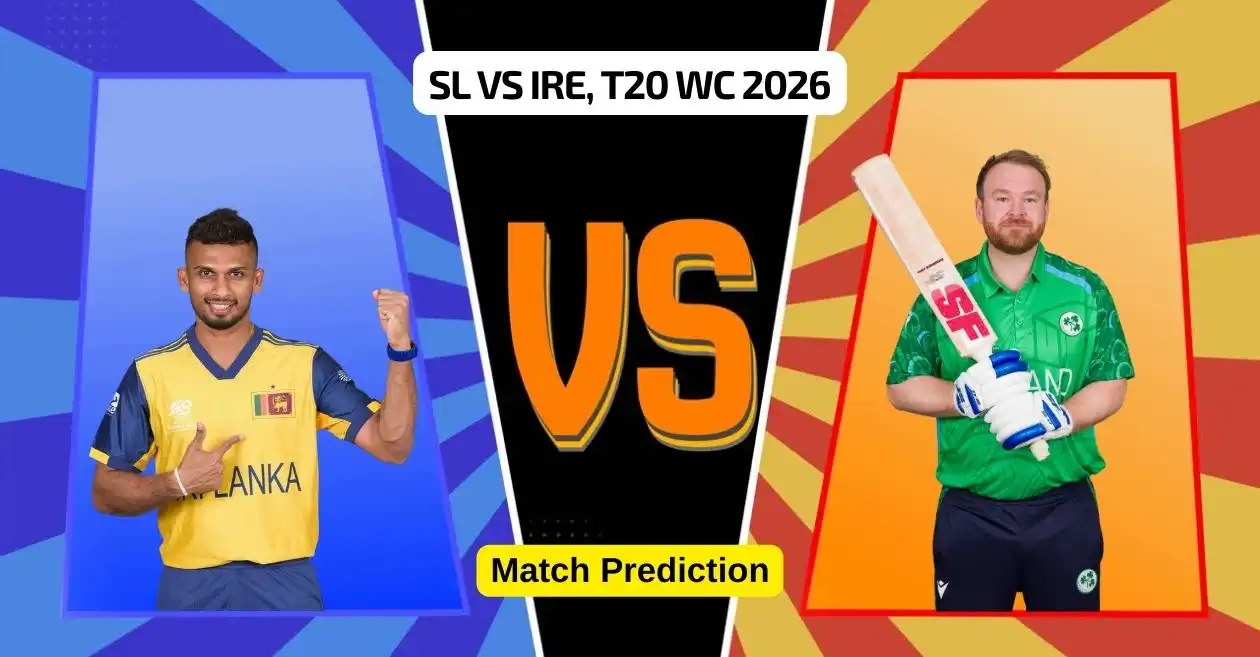
SL vs IRE, T20 World Cup 2026 Match Prediction: Who will win today’s game between Sri Lanka and Ireland?


As the ICC Men’s T20 World Cup 2026 kicks into high gear, co-hosts Sri Lanka begin their campaign at home against Ireland. While the Lions are favorites on paper, their recent 0-3 whitewash against England has left them searching for answers, while Ireland arrives with momentum from a series win in the UAE.

For Sri Lanka, the pressure of being co-hosts is immense. Captain Dasun Shanaka leads a squad that is a blend of explosive hitting and “mystery” spin, but the team’s Achilles’ heel remains consistency. The late exclusion of pacer Eshan Malinga due to a shoulder injury is a blow, though the experienced Pramod Madushan has been drafted in as a capable replacement.

Ireland, led by the veteran Paul Stirling, thrives on the ‘underdog’ tag. They famously stunned England in 2022 and have spent the last few years developing a potent spin department. With Harry Tector in the form of his life, the Irish will fancy their chances of an upset if the Colombo deck slows down.

SL vs IRE, T20 World Cup 2026: Match details

  • Date and Time: February 8; 7:00 pm IST / 1:30 pm GMT
  • Venue: R. Premadasa Stadium, Colombo

SL vs IRE, Head-to-Head Record in T20Is

Matches played: 03 | Sri Lanka won: 03 | Ireland won: 0 | No result: 0

R. Premadasa Stadium Pitch Report

The Premadasa is a traditional “spinner’s paradise.” Expect the ball to grip and turn as the game progresses. Interestingly, the last eight T20Is at this venue have been won by the chasing side. Captains will likely look to bowl first to avoid the humidity of the first innings. Regarding the weather, it would be mostly clear with a minimal (10%) chance of rain. It will be hot and humid, testing the fitness of the seamers.

Squads

Sri Lanka: Dasun Shanaka (c), Pathum Nissanka, Kamil Mishara, Kusal Mendis, Kamindu Mendis, Kusal Janith Perera, Charith Asalanka, Janith Liyanage, Pavan Rathnayake, Wanindu Hasaranga, Dunith Wellalage, Maheesh Theekshana, Dushmantha Chameera, Matheesha Pathirana, Pramod Madushan

Ireland: Paul Stirling (c), Mark Adair, Ross Adair, Ben Calitz, Curtis Campher, Gareth Delany, George Dockrell, Matthew Humphreys, Josh Little, Barry McCarthy, Harry Tector, Tim Tector, Lorcan Tucker, Ben White, Craig Young

Also READ: Sri Lanka Cricket recalls 2009 Lahore terror attack amid standoff with PCB over India game boycott in T20 World Cup 2026

SL vs IRE, T20 World Cup 2026: Today’s Match Prediction

Case 1:

  • Sri Lanka wins the toss and bowl first
  • Ireland’s powerplay score: 30-40
  • Ireland’ total score: 140-150

Case 2:

  • Ireland wins the toss and bowl first
  • Sri Lanka’s powerplay score: 50-60
  • Sri Lanka’s total score: 170-180

Match result: Team bowling first to win the contest.

Also READ: Fans react as Faheem Ashraf’s explosive cameo helps Pakistan avoid Netherlands scare in T20 World Cup 2026


Source link

BMC infra spend at 19.4k cr as rds, bridges lead capital outlay | Mumbai News


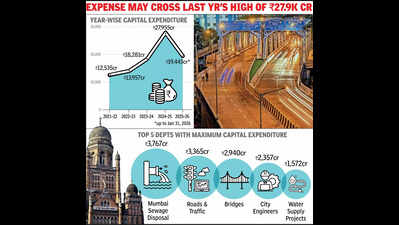
MUMBAI: As the BMC prepares to table its 2026-27 financial budget later this month, a reply to a Right to Information (RTI) query filed by the TOI offers a snapshot of how aggressively the country’s richest civic body spent on infrastructure this year.In the 2025-26 budget, the BMC earmarked a hefty Rs 43,162 crore for capital expenditure. The total budget size was Rs 74,427.41 crore. An RTI seeking department-wise spending details shows that Rs 19,443 crore was already spent so far this financial year. Infrastructure-heavy departments account for the bulk of the expenditure. The Roads and Traffic Department saw the highest outlay, with projects worth Rs 3,365 crore, followed by bridges (Rs 2,940 crore) and the Mumbai Sewage Disposal Department (Rs 3,767 crore). These departments are currently at the heart of some of the city’s largest ongoing works. Road concretisation – an ambitious push to convert all of Mumbai’s roads into concrete – is underway across the city.Several key bridge projects also moved closer to completion, with the Carnac Bridge (now renamed the Indore Bridge) already opened last year. Bellasis Bridge and the Goregaon Flyover were completed this year and are expected to open soon, while work on the Sion Bridge is expected to wrap up before the onset of the monsoon. Meanwhile, sewerage infrastructure is also seeing a major push, with the Sewerage Disposal Department working at full pace to construct 7 sewage treatment plants across Mumbai. With a large chunk of contractor bills typically cleared towards the end of the financial year, civic officials indicate that capital expenditure in 2025-26 could comfortably cross Rs 27,955 crore-the amount spent in 2024-25-signalling yet another year of record infrastructure spending by the civic body. Last year, the BMC spent the largest amount in its history as capital expenditure.The past year’s capital expenditure spending showed that the civic body spent year-on-year below Rs 20,000 crore, barring the last financial year, on capital expenditure, which largely involved infrastructure-related works done in the city. However, large-scale works, including the Goregaon Mulund Link Road (GMLR), for which work is in progress, and the upcoming coastal road north from Versova to Bhayander, taken up by the civic body, saw it allocate large sums to capital expenditure.However, with all this, the civic body’s liability sharply increased, crossing Rs 2 lakh crore, forcing the BMC to consider floating bonds, something that it did not yet do. An official said, “There are discussions around looking at InvITs that are commonly used in India in case of highways (NHAI’s InvIT is the biggest example). InvIT (Infrastructure Investment Trusts) pools money from investors and uses it to own or finance revenue-generating infrastructure assets.

Banner Insert


Source link

After tariff cutdown by US, India likely to scale down Russian oil buys


After tariff cutdown by US, India likely to scale down Russian oil buys

India will reportedly reduce its Russian oil imports following the deal with the US, who has agreed to cut trade tariffs in exchange. US President Donald Trump signed an order removing the additional 25 per cent duty on Indian imports after India promised to decrease Russian oil purchases. While refiners haven’t received official orders to stop buying Russian oil, they’ve been informally told to scale back, according to sources quoted by PTI.

‘Reasons For Reducing Russian Oil Imports Are…’ Foreign Expert Explains India-US Trade Framework

Officially, when asked during the MEA briefing last week about India putting a stop on buying Russian oil, spokesperson Rabdhir Jaiwal cited energy security guiding India’s decisions. “The government has stated publicly on several occasions that ensuring the energy security of 1.4 billion Indians is the supreme priority of our government. Diversifying our energy sourcing in keeping with objective market conditions and evolving international dynamics is at the core of our strategy to ensure this. All of India’s decisions were taken and will be taken with this in mind,” he said.Most Indian refiners will honor their existing orders but won’t place new ones. Companies like HPCL, MRPL, and HMEL already stopped buying Russian oil after US sanctions last year. IOC and BPCL are planning to wind down their purchases. Reliance Industries, India’s biggest buyer, will likely stop after receiving its final shipment of 150,000 barrels.Nayara Energy stands as an exception. The company faces sanctions from the EU and UK due to its Russian connections, with Rosneft holding a 49.13 per cent stake. This has left Nayara with limited options, forcing it to continue buying Russian oil from non-sanctioned entities.India’s Russian oil imports have been falling since US sanctions hit Rosneft and Lukoil. December 2025 saw imports of 1.2 million barrels per day, down from 2.1 million in May 2023. January saw further decline to 1.1 million barrels. Experts expect this number to drop below 1 million soon.“Russian volumes remain largely locked in for the next 8-10 weeks and continue to be economically critical for India’s complex refining system,” said Sumit Ritolia from Kpler. He expects imports to stay between 1.1-1.3 million barrels daily through early Q2.India, which imports 90% of its oil needs, benefited from discounted Russian oil after Western sanctions following the Ukraine invasion. The new US deal might include increased American oil purchases and potential Venezuelan oil imports.Prashant Vasisht from Icra noted that replacing Russian oil shouldn’t significantly impact India’s import bill, estimating an increase of less than 2%. He suggested Venezuelan crude, being cheaper and suitable for Indian refineries, could be a viable alternative.


Source link

When three words can shatter a life: How triple talaq robs women of their ‘haq’ | India News


When three words can shatter a life: How triple talaq robs women of their 'haq'

Instant triple talaq isn’t some abstract religious custom — it’s a brutal power play that shatters lives in seconds. A husband utters three words, and a woman loses her home, income, and future. “Some marriages are 6 months old, but some are also 10 years old. It all ended in a moment,” says Nazreen Ansari, national president of Muslim Mahila Foundation. “In one instance, a husband living in Saudi Arabia divorced his wife through an email message. The woman was uneducated and helpless — she had no means of seeking justice.”When a marriage ends impulsively, women bear the full blow. Joint accounts freeze, bills mount, and “adjusting” becomes code for suffering silently to avoid scandal. Even with adult children or parents, support often evaporates. Priyanka Sharma, counselor at Shanti Sahyog, shares: “Who bears the blow of impulsive actions? The woman does. The man can break away, but her family may refuse to remarry her.”The real question isn’t “What does the law say?”—it’s “Where will she go?” and “Who will pay?” This isn’t courtroom theater; it’s a doorstep disaster. Picture a ration list slashed, a landlord pounding for rent, school fees piling up unpaid, and a phone buzzing with sympathy laced with judgment. At the centre of the churn is a simple idea that India has still not made emotionally uncomplicated: maintenance is not charity. It is the legal recognition that unpaid labour, shared households, and dependent lives do not disappear the moment a husband says the marriage is over.Yet time and again, a woman’s survival claim—food, rent, medicines, children’s fees—has been recast as a political dispute about identity, community autonomy and the state’s limits.The topic has forever garnered public attention, but with the release of the movie ‘Haq’, this discourse has yet again found its way to the people’s domain.

A doorstep economy, not a court debate

In separation and divorce, the loss is immediate and material.Women in such disputes often describe a sudden stop in cash flow. The joint account that becomes inaccessible, the monthly expenses that remain stubbornly monthly, and the social pressure to “adjust” because litigation is seen as a public scandal.Even when adult children exist, they are not always economically stable; even when parents exist, they are not always willing or able to take a daughter back.“I remember one case where a woman faced triple talaq in anger. Her husband said it impulsively. Later, her parents insisted she reconcile, but she had suffered a lot. In such cases, women endure the most. They’re pressured by society and family alike,” Priyanka recalls.For many, the marital home is not just a place—it is the only affordable roof.“Who bears the blow of impulsive actions? The woman does, of course. The man in the relationship can break away from the marriage, but in many cases, the girl’s family do not even want her to get married to someone else,” explains Priyanka Sharma, counsellor and community mobiliser at Shanti Sahyog.While some families insist their daughters to reconcile, in other cases, the husband himself has a change of heart. Ansari shares the scenario for women who have to remarry their husbands.“If he later regrets it and wishes to return, the practice of halala becomes another form of exploitation for women,” Nazreen says.She further goes on to elaborate on the other side of the case.“Even after a marriage is ended completely, for how long can the woman sustain herself? Or for how long can her parents look after her and her kids?” Nazreen questions the fate of women who are then left with an uncertain future.That is why maintenance matters. For the woman who has not been earning, or earns too little to restart life overnight, maintenance is what stands between dignity and destitution.The politics begins when this basic safety net is framed not as a welfare-like protection in a modern republic but as an intrusion into personal law.

The conflict

Both Nazreen Ansari and Priyanka Sharma have had encounters with cases of women who had to go through triple talaq. Many cases came after the divorce; however, many also came before the divorce.“We first ask the women what they want—whether they wish to continue living with their families or not. Then, we call both parties for counselling sessions. Many families reconcile and continue living together after such sessions,” Sharma says, “If reconciliation fails, the cases are referred to CAW Cells or legal authorities for divorce proceedings.”Nazreen shares two cases she saw. “In the first case, a woman I knew personally was expecting her first child when her husband stopped speaking to her. His family pressured him to divorce her,” she says.“We intervened and guided her to approach the family court. Over time, the couple reconciled and is now living happily with two children — a son and a daughter,” Ansari shared the story of reconciliation.“In the second case,” she adds, “a woman who was abandoned by her husband had no means to support herself or her child.”In those cases, Ansari’s NGO help women counsel and guide them to get back on their feet.“Initially, she depended on her parents, but that wasn’t sustainable. We counselled her and helped her set up a small shop. Today, she is financially independent and raising her child on her own.”

Why Section 125 became a flashpoint

In the Indian legal system, Section 144 of the Bharatiya Nagarik Suraksha Sanhita (BNSS), earlier Section 125 of the Criminal Procedure Code, has often been described in plain terms as an anti-destitution measure. It is meant to prevent dependents—wives, children, parents—from being left without support.Its logic is secular: the state steps in so that private abandonment does not become public poverty.But when women from religious minorities invoke a provision that looks “uniform” in its application, the argument quickly leaves the home and enters the arena of identity. Critics see it as the state imposing a one-size-fits-all morality; supporters see it as the state finally doing what it is supposed to do—protect vulnerable citizens regardless of faith.The woman, meanwhile, is usually asking for something less philosophical. She asks for a sum that can keep a family afloat.

Shah Bano: One woman, many anxieties

The Shah Bano case became the national turning point because it placed these questions under the harshest light.Shah Bano Begum, an elderly divorced Muslim woman, sought maintenance under Section 125 of the Code of Criminal Procedure. The dispute moved through the courts until it reached the Supreme Court, which ruled in her favour—affirming, in effect, that a religion-neutral maintenance provision could apply and that the prevention of destitution was a constitutional and civic concern.The verdict did more than decide one case. It signalled that the language of equality and welfare could reach into domains governed by religious personal law.For many women’s rights advocates, it looked like overdue justice. For many within the community, it felt like a warning bell: if the state can do this on maintenance, what comes next?Those “what next” anxieties—never purely legal, always political—helped convert a maintenance dispute into a referendum on minority identity and state power.

How politics diluted the judgment

The backlash to Shah Bano was swift and loud.Protests, public mobilisation and political messaging turned the case into a pressure test for the government of the day: stand by a court’s expansive reading of women’s protection, or defuse community anger by narrowing the verdict’s effect.Parliament’s response—the Muslim Women (Protection of Rights on Divorce) Act, 1986—was widely read by critics as a rollback that diluted the Supreme Court’s reasoning. Supporters defended it as necessary to respect Muslim personal law.Courts, over time, tried to interpret the law in ways that did not abandon the goal of preventing destitution.But the damage to the larger idea was already done. It told the country that even the highest court’s gender-justice moment could be politically “managed” into something smaller.

Triple talaq: When a word becomes a weapon

Decades after Shah Bano, the conversation returned through a different door: instant triple talaq—talaq pronounced thrice in one sitting, treated by some as an immediate end to marriage. For women, the complaint was not abstract theology; it was lived harm.A marriage could be terminated abruptly, often without due process, without meaningful negotiation, and with the woman suddenly pushed into economic and social free fall.The moral and political arguments split predictably. Reformers called it arbitrary and cruel. Defenders warned against state interference and majoritarian impulses. But again, the practical issue was urgent: in many cases, the instantness of the divorce multiplied vulnerability—especially where women had limited income, limited family support, and limited access to legal help.

What changed, and when

Legal change came in two steps.First, in 2017, the Supreme Court set aside instant triple talaq, holding that it could not survive constitutional scrutiny in the form it was being defended. In plain terms, the practice was invalidated: a pronouncement could not, by itself, instantly snap a marriage in a way that left women without protection.Second, in 2019, Parliament enacted a law that made the pronouncement of instant triple talaq void and illegal, adding criminal penalties.This is where a new—and politically charged—question emerged.Should a civil vulnerability be addressed through criminal law?Supporters argued that strong deterrence was necessary because women had been ignored for too long. Critics argued that criminalisation could create fresh risks. It could harden family conflict, it could be misused, and it could complicate the very maintenance and support women need by pushing the husband into the criminal justice system.

The unresolved ‘what now’

The law on paper is only the beginning. The lived reality depends on access: whether a woman can find a lawyer, whether she can afford repeated court dates, whether the police station feels like protection or intimidation, whether family pressure forces an out-of-court settlement that leaves her short-changed, and whether a maintenance order is actually enforced.Politically, personal law reform remains high-voltage.Every intervention is interpreted through partisan lenses. Every verdict is packaged into slogans. And every woman who steps into the system is quietly asked to carry the weight of a national argument she did not start.

Back to the doorstep

The country’s big debates—personal law, religious law, minority rights—often arrive at a woman’s home in small, sharp ways: the neighbour’s whisper, the relative’s ultimatum, the landlord’s deadline.The question she lives with is not whether India will one day have uniform family law. It is whether her children will stay in school, whether she can afford medicine, and whether she has a bed to sleep on next month.In India’s personal-law battles, the loudest slogans are rarely the ones that keep a woman housed.




Source link

New Zealand vs Afghanistan Live Score, T20 World Cup 2026: New Zealand seek all-round improvement against dangerous Afghanistan


head of Afghanistan’s ICC T20 World Cup clash against New Zealand, captain Rashid Khan downplayed the significance of personal milestones, saying his focus remains on delivering for the team in challenging situations. Just four wickets short of the 700-mark in T20 cricket, Rashid also jokingly spoke about hoping to touch the 7,000-wicket milestone.

Afghanistan, who stunned the cricketing world in the previous T20 World Cup by beating heavyweights such as New Zealand and Australia to reach the semifinals, will look to recreate that magic — and possibly go a step further — when they open their campaign against New Zealand in Chennai on Sunday. Rashid currently boasts 696 wickets in 515 T20 matches at an average of 18.49, including 18 four-wicket hauls and four five-fors, making him the leading wicket-taker in the format. At just 27, time remains firmly on his side to scale even greater heights.

Addressing the milestone during the pre-match press conference, Rashid said, “I only played 9-10 years of international cricket overall and then to be someone leading wicket taker is something more than a dream for me, T20 cricket came I do not know around 2004-05, we had players playing and played a lot, but for me to achieve that (highest wickets in T20s) was something very special, but I never counted my wickets, I only knew it in the media, ok I have reached 400, 500, 600, but I really do not think about it much, I only try my best, every single day, I have to keep performing well for the team, I have to pick up wickets, I want to bowl in a tough situation where team needs and that made me focused, but what I achieved, I still sometimes thinking like 700 wickets is not something small, getting there it needs lots of time and lots of hard work, but I am blessed and I am so, so happy that reaching that milestone and hopefully we will make it to 7,000.”

Rashid also brushed aside discussions about Afghanistan shedding their underdog tag, insisting that labels mean little compared to on-field performances.

“Sometime you perform, you become number one, when you do not perform, you become number two or number three or number ten, it all depends on what you do in the middle, you get that names, what you do in the middle and for me, we are not much believing on these things, we can be like a team to upset people, things like that, I do not really trust these things, as long you are fully committed in the ground, giving 100 per cent, you will be the best team, does not matter you lose as well, but you will still – people will see you put the effort on and you had all the efforts there in the ground and I think that is more important, but the tags you get, it is just like a media stuff,” he added.

He further noted that expectations naturally rise as teams begin beating established sides, something Afghanistan has experienced after recent victories over New Zealand, Australia, South Africa, England, Pakistan and Sri Lanka.

“Twelve years ago, you would not have thought that Afghanistan would reach the semi-final and even for us, just participating in the World Cup was the biggest thing, but now it is not just about participating, you have enough skills to beat the team, but as long you are very strong mentally and physically, and you put the efforts in the ground,” Rashid concluded.


Source link

‘Wife hunt’: Norway’s crown princess faces backlash over Epstein link; issues apology


'Wife hunt': Norway's crown princess faces backlash over Epstein link; issues apology

Norway’s royal family faced renewed scrutiny this week as charities reviewed or cut ties with Crown Princess Mette-Marit over her past contact with late sex offender Jeffrey Epstein, while critics questioned her suitability as Norway’s future queen. The Crown Princess issued a “profound apology” to Norwegians after it emerged she had exchanged messages with Epstein for three years.

Fergie’s ‘Secret Epstein Messages’ Ignite Crisis As Expert Warns Of Congress Showdown | WATCH

“I also apologise for the situation in which I have placed the Royal House, especially the King and Queen,” she said in a palace statement.Hundreds of emails exchanged between Crown Princess Mette-Marit and Jeffrey Epstein between 2011 and 2014 were revealed in files released by the US Justice Department last week. Some messages discussed plans to meet in person and showed that the crown princess spent four days at Epstein’s Palm Beach home in Florida while he was reportedly not present.Emails sent in 2012 from “H K H Kronprinsessen” — Norwegian for “Her Royal Highness The Crown Princess”, show Mette-Marit referring to Jeffrey Epstein as “sweetheart” and “soft hearted,” as cited by CNN.In another exchange the same year, she described Epstein as “very charming,” and wrote: “Is it inappropriate for a mother to suggest two naked women carrying a surfboard for my 15-year-old sons wallpaper?”A separate 2012 conversation records Epstein saying he was on a “wife hunt,” adding: “Paris is proving interesting but I prefer scandinavians (sic).” Mette-Marit replied that Paris was “good for adultery” and that “Scandis better wife material.”The tone of the correspondence surprised many in Norway, and the messages indicate she was aware Epstein had served a jail term in 2008. In an October 2011 email, she wrote: “Googled u after last email… Agree didn’t look too good.”The palace initially issued a statement last week in which the crown princess expressed regret and acknowledged “poor judgment”, but it faced pressure to clarify the nature of her relationship with Epstein.In a further statement on Friday, the palace said she was “deeply saddened” that she had not realised earlier what kind of person Epstein was. It added that she wanted to provide a more detailed explanation but was in a “very difficult situation” and needed time to “gather herself.”

Crown Princess’s son denies rape charges

Another controversy surrounding Norway’s royal family centres on Crown Princess Mette-Marit’s 29-year-old son, Marius Borg Høiby, who broke down in tears during his first day of testimony this week as he denied four counts of rape in an Oslo court.Høiby is not in the line of succession, having been born before Mette-Marit married Crown Prince Haakon in 2001.Ahead of the trial beginning on Tuesday, Crown Prince Haakon issued a rare statement reaffirming Høiby’s status as a private citizen, saying his stepson was “not a member of the Royal House of Norway and is therefore autonomous.”


Source link

‘Right time to step aside’: Days after mass layoffs, Washington Post CEO Will Lewis resigns


'Right time to step aside': Days after mass layoffs, Washington Post CEO Will Lewis resigns

Will Lewis, publisher and CEO of The Washington Post (AP file photo)

The Washington Post’s publisher and CEO Will Lewis resigned on Saturday, just days after laying off 300 journalists. His sudden departure comes amid strong criticism from staff over his handling of the newspaper’s financial troubles and recent mass layoffs. Jeff D’Onofrio, the company’s CFO, will take over as acting publisher and CEO immediately.Lewis announced his exit in a brief note to staff, thanking owner Jeff Bezos and claiming the “difficult decisions” were needed for the Post’s future. “After two years of transformation at The Washington Post, now is the right time for me to step aside,” Lewis wrote Saturday in a brief note to staff. “I want to thank Jeff Bezos for his support and leadership throughout my tenure as CEO and Publisher. The institution could not have a better owner,” he added.Further continuing his message he added, “During my tenure, difficult decisions have been taken in order to ensure the sustainable future of The Post so it can for many years ahead publish high-quality nonpartisan news to millions of customers each day.”However, Lewis’ leadership came with controversies, according to CNN. Even during the Wednesday layoffs, his absence and subsequent appearance at a Super Bowl event in San Francisco reportedly caused anger.The Washington Post announced what it called a “significant restructuring” of its operations, including the closure of its standalone Sports desk and a reduction in its international reporting presence. According to Fox News, roughly a third of the organisation’s workforce which is nearly 300 employees were affected.Bezos broke his silence since the layoffs, stating in a statement that “The Post has an essential journalistic mission and an extraordinary opportunity.” He expressed confidence in the new leadership team of D’Onofrio, executive editor Matt Murray, and Opinion editor Adam O’Neal.Lewis’s 15-month tenure was rocky from the start. He joined in November 2023 after working at The Wall Street Journal and within Rupert Murdoch’s media empire. His reputation took hits when NPR reported his alleged involvement in covering up a phone-hacking scandal at Murdoch’s UK tabloids, which he denied. He also reportedly tried to stop NPR from publishing that story.The Washington Post Guild responded to Lewis’s departure with sharp criticism. “His legacy will be the attempted destruction of a great American journalism institution,” the union said, calling on Bezos to reverse the layoffs or sell the paper to someone willing to invest in its future.Despite attempts to improve the Post’s business side and develop new revenue streams, Lewis struggled to win over the newsroom. His decision to fire executive editor Sally Buzbee and his handling of the recent layoffs, where he was notably absent from communicating with staff, further damaged his standing with employees.


Source link

Gurgaon shocker: 10-year-old girl battles for life after being hit, dragged by speeding Scorpio | Gurgaon News


Image Credit: Screengrab from CCTV

GURGAON: A 10-year-old girl on her way to school was critically injured after being hit and dragged by a speeding black Scorpio in a narrow residential lane of Adarsh Nagar in Sector 12 on Friday morning.Police said the victim, a Class VI student of a private school, was walking to school when the incident took place around 7.23am, barely 200 metres from her home.

Gurgaon: Club Remains Shut, FIRs Planned For Waste Dumping, HC Orders Illegal Mining Probe

The SUV, driven at high speed inside the narrow lane, allegedly went out of control and struck the girl, dragging her along and also hitting several motorcycles parked outside houses.The driver fled the spot with the vehicle soon after the accident. Local residents rushed to help the injured child and took her to a private hospital after alerting the police control room.An FIR has been registered against the unidentified Scorpio driver under sections 281 (rash driving) and 125 (act endangering life or personal safety of others) of the Bharatiya Nyaya Sanhita at Sector-14 police station on the complaint of the girl’s family.Police said the child sustained grievous head injuries and remains under treatment. CCTV footage of the incident has surfaced, capturing the entire accident. With the help of the footage, police are trying to identify the registration number of the vehicle and arrest the driver at the earliest.

Banner Insert


Source link